


Product Monograph - Fluphenazine
RECENT MAJOR LABEL CHANGES
| 2 Contraindications | 02/2023 |
|---|---|
| 3 Serious Warnings and Precautions Box | 05/2022 |
| 4 Dosage and Administration, 4.1 Dosing Considerations | 05/2022 |
| 7 Warnings and Precautions, General | 02/2023 |
| 7 Warnings and Precautions, Neurologic | 05/2022 |
| 7 Warnings and Precautions, Ophthalmologic | 02/2023 |
| 7 Warnings and Precautions, 7.1.4 Geriatrics | 05/2022 |
TABLE OF CONTENTS
Sections or subsections that are not applicable at the time of authorization are not listed.
RECENT MAJOR LABEL CHANGES ........................................................................................... 2
TABLE OF CONTENTS ............................................................................................................. 2
PART I: HEALTH PROFESSIONAL INFORMATION ..................................................................... 4
1 INDICATIONS .............................................................................................................. 4
1.1 Pediatrics ................................................................................................................... 4
1.2 Geriatrics ................................................................................................................... 4
2 CONTRAINDICATIONS ................................................................................................. 4
3 SERIOUS WARNINGS AND PRECAUTIONS BOX ............................................................ 5
4 DOSAGE AND ADMINISTRATION ................................................................................. 5
4.1 Dosing Considerations .............................................................................................. 5
4.2 Recommended Dose and Dosage Adjustment ......................................................... 5
4.5 Missed Dose .............................................................................................................. 6
5 OVERDOSAGE ............................................................................................................. 6
6 DOSAGE FORMS, STRENGTHS, COMPOSITION AND PACKAGING ................................. 7
7 WARNINGS AND PRECAUTIONS .................................................................................. 7
7.1 Special Populations ................................................................................................. 11
7.1.1 Pregnant Women .............................................................................................. 11
7.1.2 Breast-feeding ................................................................................................... 11
7.1.3 Pediatrics ........................................................................................................... 11
7.1.4 Geriatrics ........................................................................................................... 12
8 ADVERSE REACTIONS................................................................................................ 12
8.1 Adverse Reaction Overview .................................................................................... 12
8.5 Post-Market Adverse Reactions .............................................................................. 14
9 DRUG INTERACTIONS ............................................................................................... 14
9.4 Drug-Drug Interactions ........................................................................................... 14
9.5 Drug-Food Interactions ........................................................................................... 18
9.6 Drug-Herb Interactions ........................................................................................... 18
9.7 Drug-Laboratory Test Interactions.......................................................................... 19
10 CLINICAL PHARMACOLOGY ....................................................................................... 19
10.1 Mechanism of Action ........................................................................................ 19
10.2 Pharmacodynamics ........................................................................................... 19
10.3 Pharmacokinetics .............................................................................................. 19
11 STORAGE, STABILITY AND DISPOSAL ......................................................................... 19
12 SPECIAL HANDLING INSTRUCTIONS ........................................................................... 19
PART II: SCIENTIFIC INFORMATION ...................................................................................... 20
13 PHARMACEUTICAL INFORMATION ........................................................................... 20
14 CLINICAL TRIALS ....................................................................................................... 20
15 MICROBIOLOGY ....................................................................................................... 20
16 NON-CLINICAL TOXICOLOGY ..................................................................................... 21
PATIENT MEDICATION INFORMATION ................................................................................. 22
PART I: HEALTH PROFESSIONAL INFORMATION
1 INDICATIONS
FLUPHENAZINE (fluphenazine hydrochloride) is indicated for:
- Management of manifestations of psychotic disorders.
- Treatment of behavioral disorders in adults.
1.1 Pediatrics
Pediatrics (<18 years of age): Based on the data submitted and reviewed by Health Canada, the safety and efficacy of FLUPHENAZINE in pediatric patients has not been established; therefore, Health Canada has not authorized an indication for pediatric use. See 7.1.3 Pediatrics and 8 ADVERSE REACTIONS.
1.2 Geriatrics
Geriatrics (>60 years of age): Evidence from clinical studies and experience suggests that use in the geriatric population is associated with differences in safety or effectiveness. See 3 SERIOUS WARNINGS AND PRECAUTIONS BOX; 4.2 Recommended Dose and Dosage Adjustment and 7.1.4 Geriatrics.
2 CONTRAINDICATIONS
Fluphenazine is contraindicated in:
- Patients who are hypersensitive to fluphenazine or cross sensitivity to other phenothiazines or to any ingredient in the formulation, including any non-medicinal ingredient, or component of the container. For a complete listing, see 6 DOSAGE FORMS, STRENGTHS, COMPOSITION AND PACKAGING.
- Comatose or depressed states due to CNS depressants, alcohol; blood dyscrasias, bone marrow depression, liver damage.
- Patients with suspected or established subcortical brain damage with or without hypothalamic damage, since a hyperthermic reaction with temperatures in excess of 40°C may occur in such patient, sometimes not until 14 to 16 hours after drug administration. Total body ice packing is recommended for such a reaction; antipyretics may also be useful.
- Patients receiving large doses of hypnotics due to the possibility of potentiation.
- Patients with pheochromocytoma, cerebrovascular or renal insufficiency, or severe cardiac reserve deficiency such as mitral insufficiency, as well as patients who have exhibited idiosyncrasy to other centrally-acting drugs may experience severe reactions to phenothiazine compounds and are particularly prone to hypotensive reactions.
- Patients who will receive spinal or general anesthesia.
- Patients with risk of urinary retention related to urethroprostatic disorders.
- Patients with risk of closed angle glaucoma.
- Concomitant use of dopaminergics. See 9.4 Drug-Drug Interactions, Cabergoline, Quinagolide.
3 SERIOUS WARNINGS AND PRECAUTIONS BOX
Serious Warnings and Precautions
Increased Mortality in Elderly Patients with Dementia Elderly patients with dementia treated with antipsychotic drugs are at an increased risk of death compared to those treated with placebo (see 7.1.4 Geriatrics). FLUPHENAZINE is not approved for use in elderly patients with dementia. |
|---|
4 DOSAGE AND ADMINISTRATION
4.1 Dosing Considerations
Patients should have baseline and periodic monitoring of blood glucose and body weight.
Neutropenia, granulocytopenia and agranulocytosis have been reported during antipsychotic use. It is recommended that patients have their complete blood count (CBC), WBC, differential counts and liver function tests prior to starting FLUPHENAZINE and then periodically throughout treatment.
All potential risk factors for venous thromboembolism (VTE) should be identified and preventative measures undertaken when prescribing FLUPHENAZINE.
4.2 Recommended Dose and Dosage Adjustment
Initial Dose
Mental disorders and behavioral problems: depending on severity and duration of symptoms, the daily dosage for psychotic patients may range initially from 2.5 to 10 mg in divided doses given at 6 to 8 hour intervals.
The smallest amount that will produce the desired results must be carefully determined for each individual, since the optimal dosage varies from patient to patient.
Treatment is best instituted with the initial dosage, which may be increased, if necessary, until the desired clinical effects are achieved.
Maximum Dose
Daily dosages exceeding 20 mg should be used with caution.
Maintenance Dose
When symptoms are controlled, dosage can generally be reduced gradually to daily maintenance doses of 1 to 5 mg, often given as a single daily dose. Continued treatment is needed to achieve maximum therapeutic benefits; further adjustments in dosage may be necessary during the course of therapy to meet the patient’s requirements.
Dosing Considerations in Special Populations
Patients ≥60 years of age: The suggested starting dose is 1 to 2.5 mg daily, adjusted according to the response of the patient.
Pediatrics (<18 years of age): Health Canada has not authorized an indication for pediatric use.
Renal impairment: Treatment with FLUPHENAZINE is contraindicated in patients with renal insufficiency (see 2 CONTRAINDICATIONS).
Hepatic impairment: Patients with hepatic impairment should receive FLUPHENAZINE with caution (see 2 CONTRAINDICATIONS).
4.5 Missed Dose
If the patient misses a dose, instruct the patient to take the dose as soon as they remember. If it is almost time for the next dose, inform the patient to skip the missed dose and continue the regular dosing schedule.
5 OVERDOSAGE
Symptoms: Overdosage is usually signified by parkinsonism, hypotension and sedation.
Treatment: Essentially supportive and symptomatic; the drug should be discontinued or the dosage reduced, and in severe cases, vomiting should be induced or gastric lavage should be instituted if the patient is conscious. Maintain the airway by any means necessary. Hypotension calls for the immediate use of an i.v. vasopressor drug such as levarterenol bitartrate USP. Epinephrine should not be used, as a further lowering of blood pressure may result. Symptoms of parkinsonism may be treated with such agents as benztropine mesylate of diphenhydramine HCl. CNS symptoms of anticholinergic type toxic effects can be reversed by physostigmine salicylate.
| For management of a suspected drug overdose, contact your regional poison control centre. |
|---|
6 DOSAGE FORMS, STRENGTHS, COMPOSITION AND PACKAGING
Table 1 – Dosage Forms, Strengths, Composition and Packaging
| Route of Administration | Dosage Form / Strength/Composition | Non-medicinal Ingredients |
| Oral | Tablet 1 mg, 2 mg, 5 mg of fluphenazine hydrochloride | Carnauba wax, cornstarch, D&C red #30 aluminum lake 30% (2 mg only), erythrosine lake 40% (1 mg only), hydroxypropyl methylcellulose, lactose monohydrate, magnesium stearate, microcrystalline cellulose, polyethylene glycol and titanium dioxide. |
FLUPHENAZINE (fluphenazine hydrochloride) 1 mg tablet: Each bright pink, round, biconvex, film-coated tablet, engraved “1” on one side, other side plain, contains 1 mg fluphenazine hydrochloride. Available in bottles of 100 tablets.
FLUPHENAZINE (fluphenazine hydrochloride) 2 mg tablet: Each pink, round, biconvex, film-coated tablet, engraved “2” on one side, other side plain, contains 2 mg fluphenazine hydrochloride. Available in bottles of 100 tablets.
FLUPHENAZINE (fluphenazine hydrochloride) 5 mg tablet: Each white, round, biconvex, film-coated tablet, engraved “5” on one side, other side plain, contains 5 mg fluphenazine hydrochloride. Available in bottles of 100 tablets.
7 WARNINGS AND PRECAUTIONS
See 3 SERIOUS WARNINGS AND PRECAUTIONS BOX.
General
FLUPHENAZINE may increase the effects of general anesthetics, opiates, barbiturates, alcohol and other CNS depressants as well as atropine and phosphorus insecticides. (See 9.4 Drug-Drug Interactions)
The antiemetic effect of FLUPHENAZINE can obscure signs of toxicity due to overdosage of other drugs, or mask the symptoms of disease.
Use with caution in patients exposed to extreme heat.
Prostatic hypertrophy: FLUPHENAZINE should be avoided in prostate hypertrophy.
Because of its anticholinergic effects, FLUPHENAZINE must be administered with caution in patients with prostatic hypertrophy.
Careful monitoring of treatment with FLUPHENAZINE is required in elderly patients exhibiting greater susceptibility to orthostatic hypotension, sedation and extrapyramidal effects; chronic constipation (risk of paralytic ileus); possible prostatic hypertrophy.
Cardiovascular
Hypotension: Hypotension, which is typically orthostatic, may occur especially in elderly and in alcoholic patients. This effect may be additive with other hypotensive agents. Exercise special care in those patients in whom a hypotensive crisis would be undesirable, such as those with arteriosclerosis or other cardiovascular diseases.
QT Interval: Prolongation of the QT interval, flattening and inversion of the T wave and appearance of a wave tentatively identified as a bifid T or a U wave have been observed in some patients receiving phenothiazines. These changes appear to be reversible and related to a disturbance in repolarization. Give phenothiazines cautiously to patients with heart disease.
Anginal Pain: The occasional increase in physical activity resulting from FLUPHENAZINE administration may augment the severity of anginal pain. Observe affected patients carefully and withdraw the drug if necessary.
Dependence/Tolerance
In general, phenothiazines do not produce psychic dependence. However, gastritis, nausea, vomiting, dizziness, and tremulousness have been reported following abrupt cessation of high dose therapy.
Driving and Operating Machinery
Where patients are participating in activities requiring complete mental alertness, such as driving an automobile or operating machinery, administer the phenothiazine cautiously, forewarn the patient, and increase the dosage gradually.
Endocrine and Metabolism
Hyperglycemia: Diabetic ketoacidosis (DKA) has occurred in patients with no reported history of hyperglycemia. Patients should have baseline and periodic monitoring of blood glucose and body weight.
Hyperprolactinemia: Long-standing hyperprolactinemia when associated with hypogonadism may lead to decreased bone mineral density in both female and male subjects.
Gastrointestinal
Use with caution in patients with a history of ulcer disease.
Paralytic ileus, even resulting in death, may occur, especially in the elderly. This possibility should be kept in mind and appropriate measures should be taken if constipation develops.
Genitourinary
Rare cases of priapism have been reported with antipsychotic use, such as FLUPHENAZINE. This adverse reaction, as with other psychotropic drugs, did not appear to be dose-dependent and did not correlate with the duration of treatment.
Hematologic
Most reported cases of agranulocytosis associated with the administration of phenothiazine derivatives have occurred between the fourth and tenth week of treatment. Therefore, observe patients on prolonged therapy with particular care during that time for the appearance of such signs as sore throat, fever and weakness. If these symptoms appear, discontinue the drug and perform liver function tests. It is also advisable to perform WBC and differential counts and liver function tests periodically during therapy.
Neutropenia, granulocytopenia and agranulocytosis have been reported during antipsychotic use. Therefore, it is recommended that patients have their complete blood count (CBC) tested prior to starting FLUPHENAZINE and then periodically throughout treatment.
Venous thromboembolism (VTE), including fatal pulmonary embolism, has been reported with antipsychotic drugs, including FLUPHENAZINE, in case reports and/or observational studies. When prescribing FLUPHENAZINE all potential risk factors for VTE should be identified and preventative measures undertaken.
Monitoring and Laboratory Tests
- Blood glucose and body weight at baseline and periodically throughout treatment.
- Complete blood count (CBC) at baseline and periodically throughout treatment.
- WBC and differential counts and liver function tests periodically during therapy
- Sore throat, fever and weakness in patients on prolonged therapy may indicate agranulocytosis. If these symptoms appear, discontinue the drug and perform liver function tests.
- Renal function of patients on prolonged therapy. If abnormal values are observed, discontinue the drug.
Neurologic
Neuroleptic Malignant Syndrome: A potentially fatal symptom complex sometimes referred to as neuroleptic malignant syndrome (NMS) has been reported in association with antipsychotic drugs.
Clinical manifestations of NMS are hyperpyrexia, muscle rigidity, altered mental status (including catatonic signs) and evidence of autonomic instability (irregular pulse or blood pressure, tachycardia, diaphoresis, and cardiac dysrhythmias). Additional signs may include elevated creatine phosphokinase, myoglobinuria (rhabdomyolysis), and acute renal failure.
The diagnostic evaluation of patients with this syndrome is complicated. In arriving at a diagnosis, it is important to identify cases where the clinical presentation includes both serious medical illness (e.g., pneumonia, systemic infection, etc.) and untreated or inadequately treated extrapyramidal signs and symptoms (EPS). Other important considerations in the differential diagnosis include central anticholinergic toxicity, heat stroke, drug fever and primary central nervous system (CNS) pathology.
The management of NMS should include: (1) immediate discontinuation of antipsychotic drugs and other drugs not essential to concurrent therapy; (2) intensive symptomatic treatment and medical monitoring; and (3) treatment of any concomitant serious medical problems for which specific treatments are available. There is no general agreement about specific pharmacological treatment regimens for uncomplicated NMS.
If a patient requires antipsychotic drug treatment after recovery from NMS, the potential reintroduction of drug therapy should be carefully considered. The patient should be carefully monitored, since recurrences of NMS have been reported.
Tardive Dyskinesia: (See also 8.1 Adverse Reaction Overview, Tardive Dyskinesia). A syndrome consisting of potentially irreversible, involuntary, dyskinetic movements may develop in patients treated with conventional antipsychotic drugs. Although the prevalence of tardive dyskinesia with conventional antipsychotics appears to be highest among the elderly, especially elderly women, it is impossible to rely upon prevalence estimates to predict, at the beginning of treatment, which patients are likely to develop the syndrome.
Both the risk of developing tardive dyskinesia and the likelihood that it will become irreversible are believed to increase as the duration of treatment and the total cumulative dose of antipsychotic drugs administered to the patient increase. However, the syndrome can develop, although much less commonly, after relatively brief treatment periods at low doses.
There is no known treatment for established cases of tardive dyskinesia, although the syndrome may remit, partially or completely, if antipsychotic drug treatment is withdrawn.
Antipsychotic drug treatment itself, however, may suppress (or partially suppress) the signs and symptoms of tardive dyskinesia and thereby may possibly mask the underlying process.
The effect that symptom suppression has upon the long-term course of the syndrome is unknown.
Given this consideration, Fluphenazine should be prescribed in a manner that is most likely to minimize the risk of the occurrence of tardive dyskinesia. As with any antipsychotic drug, chronic Fluphenazine use should be reserved for patients who appear to be obtaining substantial benefit from the drug. In such patients, the smallest dose and the shortest duration of treatment should be sought. The need for continued treatment should be reassessed periodically. If signs and symptoms of tardive dyskinesia appear in a patient on Fluphenazine, drug discontinuation should be considered. However, some patients may require treatment with Fluphenazine despite the presence of the syndrome.
Seizures: Use FLUPHENAZINE cautiously in patients with a history of seizures since grand mal convulsions have been known to occur.
Ophthalmologic
Phenothiazines have been associated with retinopathy and lenticular or corneal deposits. Discontinue FLUPHENAZINE if retinal changes are observed.
Angle-Closure Glaucoma: As with other antipsychotics, FLUPHENAZINE can cause mydriasis, which may trigger an angle-closure attack in a patient with anatomically narrow ocular angles.
Healthcare professionals should inform patients to seek immediate medical assistance if they experience eye pain, changes in vision or swelling or redness in or around the eye.
Peri-Operative Considerations
Psychotic patients on large doses of a phenothiazine drug who are undergoing surgery should be watched carefully for possible hypotensive phenomena. Moreover, it should be remembered that reduced amounts of anesthetics or CNS depressants may be required.
Renal
Monitor the renal function of patients on long-term therapy since elevation of BUN has been reported. If abnormal values are observed, discontinue the drug. Patients who may develop urinary retention should be carefully observed. This drug should not be used in patients with renal insufficiency (see 2 CONTRAINDICATIONS).
Reproductive Health: Female and Male Potential
Teratogenic Risk
Non-Teratogenic Effects: Neonates exposed to antipsychotic drugs (including FLUPHENAZINE) during the third trimester of pregnancy are at risk for extrapyramidal and/or withdrawal symptoms following delivery. There have been reports of agitation, hypertonia, hypotonia, tremor, somnolence, respiratory distress and feeding disorder in these neonates. These complications have varied in severity; while in some cases symptoms have been self-limited, in other cases neonates have required intensive care unit support and prolonged hospitalization.
7.1 Special Populations
7.1.1 Pregnant Women
FLUPHENAZINE should not be used during pregnancy unless the expected benefits to the mother markedly outweigh the potential risks to the fetus.
Safe use of FLUPHENAZINE in pregnancy has not been established. Therefore, it should not be administered to women of childbearing potential, particularly during the first trimester of pregnancy, unless the expected benefit to the patient outweighs the potential risk to the fetus.
7.1.2 Breast-feeding
Use of FLUPHENAZINE during breast-feeding should be avoided.
7.1.3 Pediatrics
Pediatrics (<18 years of age): The safety and efficacy of FLUPHENAZINE in pediatric patients have not been established, as there has been inadequate experience with the drug in this age group, therefore, Health Canada has not authorized an indication for pediatric use.
7.1.4 Geriatrics
Patients ≥60 years of age: Paralytic ileus, even resulting in death, may occur, appropriate measures should be taken if constipation develops.
Use in Geriatrics with Dementia
Overall Mortality
FLUPHENAZINE is not indicated for the treatment of elderly patients with dementia.
In a meta-analysis of 13 controlled clinical trials, elderly patients with dementia treated with atypical antipsychotic drugs had an increased risk of mortality compared to placebo.
Observational studies suggest that, similar to atypical antipsychotic drugs, treatment with conventional antipsychotic drugs may increase mortality.
The extent to which the findings of increased mortality in observational studies may be attributed to the antipsychotic drug as opposed to some characteristic(s) of the patients is not clear.
8 ADVERSE REACTIONS
8.1 Adverse Reaction Overview
Adverse effects with different phenothiazines vary in type, frequency, and mechanism of occurrence, i.e., some are dose-related, while others involve individual patient sensitivity. Some adverse effects may be more likely to occur, or occur with greater intensity, in patients with special medical problems, e.g., patients with mitral insufficiency or pheochromocytoma have experienced severe hypotension following recommended doses of certain phenothiazines.
In general, members of the piperazine group of phenothiazines have more marked stimulating effects, are more likely to cause motor disorders associated with extrapyramidal reactions, particularly in children, but are less likely to cause blood dyscrasias, hypotension, tachycardia, and drowsiness than the members of the other phenothiazine groups.
Not all of the following adverse reactions have been reported with every phenothiazine derivative, but they have been reported with one or more, and should be borne in mind when drugs of this class are administered.
Behavioral Reactions: oversedation; impaired psychomotor function; paradoxical effects, such as agitation, excitement, insomnia, bizarre dreams, aggravation of psychotic symptoms; toxic confusional states.
CNS Effects: extrapyramidal reactions, including pseudoparkinsonism (with motor retardation, rigidity, mask- like facies, pill rolling and other tremors, drooling, shuffling gait); dystonic reactions (including perioral spasms, and trismus, tics, torticollis, oculogyric crises, protrusion of the tongue, difficulty swallowing, carpopedal spasm and opisthotonas of the back muscles); and akathisia. Persistent dyskinesias resistant to treatment have been reported, particularly in elderly patients with previous brain damage. In addition, altered EEG tracings, disturbed body temperature and lowering of the convulsive threshold have occurred. Dizziness has been reported.
Tardive Dyskinesia: May appear in some patients on long-term antipsychotic therapy, or may appear after drug therapy has been discontinued. The risk appears to be greater in elderly patients on high-dose therapy, especially females. The symptoms are persistent and in some patients appear to be irreversible.
The syndrome is characterized by rhythmical involuntary movements of the tongue, face, mouth or jaw (e.g., protrusion of tongue, puffing of cheeks, puckering of mouth, chewing movements). Sometimes these may be accompanied by involuntary movements of extremities.
There is no known effective treatment for tardive dyskinesia; antiparkinsonian agents usually do not alleviate the symptoms of the syndrome. All antipsychotic agents should be discontinued if these symptoms appear. Should it be necessary to reinstitute treatment, or increase the dosage of the agent, or switch to a different antipsychotic agent, the syndrome may be masked. The physician may be able to reduce the risk of this syndrome by minimizing the unnecessary use of neuroleptics and reducing the dose or discontinuing the drug, if possible, when manifestations of the syndrome are recognized, particularly in patients over the age of 50. Fine vermicular movements of the tongue may be an early sign of the syndrome. If the medication is stopped at that time, the syndrome may not develop.
Autonomic Nervous System: dry mouth, fainting, stuffy nose, photophobia, blurred vision, miosis, hypertension, hypotension (see 7 WARNINGS AND PRECAUTIONS) salivation, perspiration, headache.
Gastrointestinal Effects: anorexia, increased appetite, gastric irritation, nausea, vomiting, constipation, paralytic ileus.
Endocrine Effects: altered libido, menstrual irregularities, lactation, false positive pregnancy tests, inhibition of ejaculation, gynecomastia, weight gain.
Dermatological Effects: itching rash, hypertrophic papillae of the tongue, angioneurotic edema, erythema, allergic purpura, exfoliative dermatitis, contact dermatitis.
Cardiovascular Effects: hypotension, tachycardia, ECG changes. See 7 WARNINGS AND PRECAUTIONS.
Blood Dyscrasias: agranulocytosis, leukopenia, granulocytopenia, eosinophilia, thrombocytopenia, anemia, aplastic anemia, pancytopenia.
Allergic Reactions: fever, laryngeal edema, angioneurotic edema, asthma.
Hepatotoxicity: jaundice, biliary stasis.
Urinary Disturbances: retention, incontinence.
Abnormal Pigmentation: Recently, a peculiar skin eye syndrome has been recognized as an adverse effect following long-term treatment with phenothiazines. This reaction is marked by progressive pigmentation of areas of skin or conjunctiva and/or discoloration of the exposed sclera and cornea. Opacities of the anterior lens and cornea described as irregular or stellate in shape have also been reported. Patients receiving higher doses of phenothiazines for prolonged periods should have periodic complete eye examinations.
Miscellaneous: Sudden unexpected and unexplained deaths have been reported in hospitalized psychotic patients receiving phenothiazines. Previous brain damage or seizures may be predisposing factors; high doses should be avoided in known seizure patients. Several patients have shown flare-ups of psychotic behavior patterns shortly before death. Autopsy findings have usually revealed acute fulminating pneumonia or pneumonitis, aspiration of gastric contents or intramyocardial lesions. The physician should therefore be alert to the possible development of "silent pneumonias".
The following have also occurred with the phenothiazines: systemic lupus erythematosus like syndrome, altered CSF proteins, cerebral edema.
Patients should be advised of the risk of severe constipation during FLUPHENAZINE treatment, and that they should tell their doctor if constipation occurs or worsens, as they may need laxatives.
8.5 Post-Market Adverse Reactions
Information is not available.
9 DRUG INTERACTIONS
9.4 Drug-Drug Interactions
The drugs listed in this table are based on either drug interaction case reports or studies, or potential interactions due to the expected magnitude and seriousness of the interaction (i.e., those identified as contraindicated).
Table 2 - Established or Potential Drug-Drug Interactions
| Common name | Source of Evidence | Effect | Clinical comment |
| General anesthetics, opiates, barbiturates, alcohol, other CNS depressants. | T | Phenothiazines may increase the effects of general anesthetics, opiates, barbiturates, alcohol and other CNS depressants. Other CNS depressants include morphine derivatives (analgesics, antitussives and substitution treatments), barbiturates, benzodiazepines, anxiolytics other than benzodiazepines, hypnotics, sedative anti-depressants, histamine H1 receptor antagonists, central antihypertensive agents increased central depression. Changes in alertness can make it dangerous to drive or operate machinery. | Dosage adjustment may be necessary. |
| Anticholinergics (muscle relaxants) | T | Phenothiazines have mild anticholinergic activity which may be enhanced by other anticholinergic drugs. Anticholinergic drugs may decrease the antipsychotic effect of phenothiazines. | Dosage adjustment may be necessary. |
| Atropine and atropine-like substances | T | Phenothiazines may increase the effects of atropine. Cumulative adverse effects related to atropine-like substances such as urinary retention, constipation, dry mouth, etc. | Dosage adjustment may be necessary. |
| Common name | Source of Evidence | Effect | Clinical comment |
| Antiepileptics | T | Phenothiazines, including FLUPHENAZINE, may lower the seizure threshold. Serum levels of phenytoin may be raised or lowered by the use of FLUPHENAZINE. | Dosage adjustment may be necessary. |
| Antihypertensive agents | T | Enhanced antihypertensive effect and higher risk of postural hypotension (cumulative effects). | Combination of antihypertensive agents with phenothiazines should be taken into consideration. |
| Cabergoline, Quinagolide | T | Dopaminergics (cabergoline, quinagolide), not including dopaminergic antiparkinsonism agents, are contraindicated: reciprocal antagonism of the dopaminergic agent and neuroleptic. | If treatment with neuroleptics is required in patients with Parkinson's Disease treated with dopaminergics, the latter should be tapered off gradually, as sudden discontinuation of dopaminergic agents exposes the patient to a risk of NMS. |
| Dantrolene (calcium channel blocker, muscle relaxant) | T | Drowsiness may occur with dantrolene sodium therapy, and the concomitant administration of CNS depressants such as sedatives and tranquilizing agents may result in further drowsiness. | Dosage adjustment may be necessary. Caution should be exercised in the concomitant administration of tranquilizing agents. |
| Guanethidine, Guanadrel | T | Inhibition of the antihypertensive effect of guanethidine and guanadrel (inhibition of guanethidine, guanadrel uptake into sympathetic fibre, its site of action). | Combination of guanethidine, or guanadrel with phenothiazines should be taken into consideration. |
| Common name | Source of Evidence | Effect | Clinical comment |
| Lithium | T | Weakness, dyskinesias, increased extrapyramidal symptoms, encephalopathy, and brain damage. Coadministration of lithium and a number of antipsychotic drugs has caused a wide variety of encephalopathic symptoms, brain damage, extrapyramidal symptoms, and dyskinesias in isolated case reports. In most cases, these effects have occurred with therapeutic lithium levels. However, many series and trials have reported using such combinations with no severe adverse consequences. | Monitor patients closely for any signs of toxicity or extrapyramidal symptoms. Serum lithium levels should be monitored periodically. Some clinicians advocate maintaining levels in the low therapeutic range. |
| Oral contraceptives | T | Estrogen potentiates the hyperprolactinemia effect of phenothiazines. | Dosage adjustment may be necessary. If galactorrhea or hyperprolactinemia occurs, use other non-hormonal method of contraception. |
| Phosphorus insecticides | T | Phenothiazines may increase the effects of phosphorus insecticides | Dosage adjustment may be necessary. |
| Epinephrine | T | Phenothiazines may reverse epinephrine's action and thereby cause a further fall in blood pressure. | Avoid epinephrine in the treatment of phenothiazine induced hypotension. |
| Common name | Source of Evidence | Effect | Clinical comment |
| Hydromorphone | T | Increase in CNS or respiratory depression. The concomitant use of hydromorphone and other CNS depressants, such as antipsychotics, may result in additive CNS depressant effects, including respiratory depression, hypotension, profound sedation, and coma. | When administering hydromorphone and an antipsychotic together, dose reduction of one or both of the medications should be considered. |
| Tramadol | T | Increased risk of seizures. Seizures have been reported in patients using tramadol. | Caution should be used if tramadol is to be administered to patients receiving neuroleptic therapy. If possible, avoid this combination, especially in patients with underlying conditions that might predispose to seizures. |
Legend: C = Case Study; CT = Clinical Trial; T = Theoretical
9.5 Drug-Food Interactions
Interactions with food have not been established.
9.6 Drug-Herb Interactions
Betel Nut: Case reports have described increased extrapyramidal side effects when betel nut was chewed by patients taking fluphenazine and fluphenthixol for schizophrenia. The extrapyramidal effects were not improved with anticholinergic therapy with procyclidine, and resolved with betel nut discontinuation.
The cholinergic activity of betel nut has been attributed to the arecoline content. When given with peripheral anticholinergics, arecoline increased the heart rate due to central muscarinic agonist activity. Case reports suggest the onset of betel nut activity to be within 2 weeks with resolution within 4 to 7 days after discontinuation.
9.7 Drug-Laboratory Test Interactions
False positive or negative pregnancy tests have occurred in patients receiving phenothiazine therapy.
10 CLINICAL PHARMACOLOGY
10.1 Mechanism of Action
Phenothiazine derivatives appear to act on the hypothalamus, depressing various components of the mesodiencephalic activating system which is involved in the control of basal metabolism and body temperature, wakefulness, vasomotor tone, emesis and hormonal balance. In addition, the drugs exert a peripheral autonomic effect in varying degrees. However, the site and mode of action of the phenothiazine derivatives have not been completely elucidated.
10.2 Pharmacodynamics
In the treatment of psychotic disorders, FLUPHENAZINE, like other phenothiazine derivatives, alleviates many of the psychotic symptoms, although it does not substantially alter the basic psychotic process. The drug is primarily effective in reducing hostility, anxiety, agitation and hyperactivity; confusion, hallucinations and delusions are affected to a lesser degree. In general, the psychotic patient becomes more cooperative, more responsive to social situations, and more subject to basic therapy.
10.3 Pharmacokinetics
Information is not available.
11 STORAGE, STABILITY AND DISPOSAL
Store at room temperature 15 to 30°C. Keep container tightly closed. Protect from light.
FLUPHENAZINE should never be disposed of in household trash. Disposal via a pharmacy take back program is recommended.
12 SPECIAL HANDLING INSTRUCTIONS
None
PART II: SCIENTIFIC INFORMATION
13 PHARMACEUTICAL INFORMATION
Drug Substance
| Proper name: | Fluphenazine hydrochloride |
|---|---|
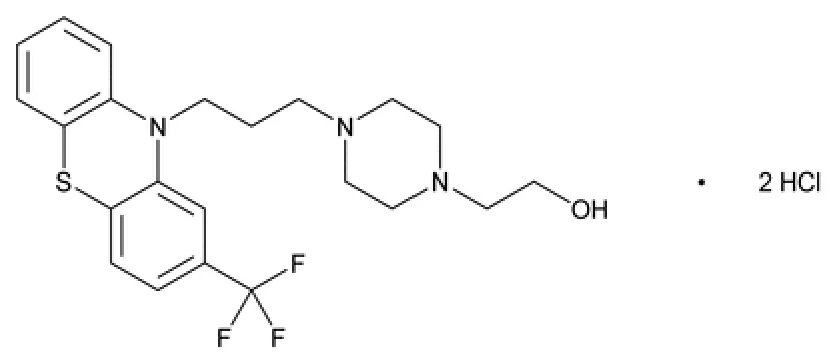
| Chemical name: | 2-[4-[3-[2-(Trifluoromethyl)-10H-phenothiazin-10-yl]-propyl]piperazin-1-yl]ethanol dihydrochloride |
| Molecular formula and molecular mass: | C22H26F3N3OS. 2 HCl and 510.44 g/mol |
| Structural formula: | |
| Physicochemical properties: | A white or almost white crystalline powder. It is freely soluble in water, sparingly soluble in ethanol, very slightly soluble in acetone, very slightly soluble in chloroform, practically insoluble in benzene and ether. pKa as follows pKa1 = 3.65, pKa2 = 5.95, pKa3 = 7.93. |
| Pharmaceutical standard: | USP |
Product Characteristics:
In addition to the active ingredient, fluphenazine hydrochloride, each tablet also contains the non-medicinal ingredients: carnauba wax, cornstarch, D&C red #30 aluminum lake 30% (2 mg only), erythrosine lake 40% (1 mg only), hydroxypropyl methylcellulose, lactose monohydrate, magnesium stearate, microcrystalline cellulose, polyethylene glycol and titanium dioxide.
14 CLINICAL TRIALS
The clinical trial data on which the original indication was authorized is not available.
15 MICROBIOLOGY
No microbiological information is required for this drug product.
 |
16 NON-CLINICAL TOXICOLOGY
Information is not available.