


Product Monograph - Fosaprepitant
SUMMARY PRODUCT INFORMATION
| Route of Administration | Dosage Form / Strength | Non-medicinal Ingredients |
| Intravenous | Lyophilized powder / 150 mg per vial | Edetate disodium, lactose anhydrous, polysorbate 80 and sodium hydroxide and/or hydrochloric acid (for pH adjustment). |
INDICATIONS AND CLINICAL USE
FOSAPREPITANT (fosaprepitant dimeglumine), in combination with a 5-HT3 antagonist class of antiemetics and dexamethasone, is indicated for the:
- 1. prevention of acute and delayed nausea and vomiting due to highly emetogenic cancer chemotherapy.
- 2. prevention of nausea and vomiting due to treatment with moderately emetogenic cancer chemotherapy.
Geriatrics (≥65 years of age): In clinical studies, the efficacy and safety of aprepitant in the elderly (≥65 years) were comparable to those seen in younger patients (<65 years). No dosage adjustment is necessary in elderly patients.
Pediatrics (<18 years of age): No data available.
CONTRAINDICATIONS
- Patients who are hypersensitive to fosaprepitant, aprepitant, polysorbate 80, or to any ingredient in the formulation. For a complete listing, see the DOSAGE FORMS, COMPOSITION AND PACKAGING section of the product monograph.
- FOSAPREPITANT should not be used concurrently with pimozide, terfenadine, astemizole, or cisapride. Inhibition of cytochrome P450 isoenzyme 3A4 (CYP3A4) by aprepitant could result in elevated plasma concentrations of these drugs, potentially causing serious or life- threatening reactions (see DRUG INTERACTIONS).
WARNINGS AND PRECAUTIONS
Serious Warnings and Precautions Drug interactions may occur with:
The following are clinically significant adverse events:
|
Hypersensitivity Reactions
Serious hypersensitivity reactions, including anaphylaxis and anaphylactic shock, during or soon after infusion of fosaprepitant have occurred. Symptoms including flushing, erythema, dyspnea, hypotension and syncope have been reported. Patients should be monitored during and after infusion. These hypersensitivity reactions have generally responded to discontinuation of the infusion and administration of appropriate therapy. The infusion should not be reinitiated in patients who experience hypersensitivity reactions (see CONTRAINDICATIONS).
Infusion site reactions (ISRs) have been reported with the use of fosaprepitant (see ADVERSE REACTIONS). The majority of severe ISRs, including thrombophlebitis and vasculitis, were reported with concomitant vesicant (e.g., anthracycline-based) chemotherapy administration, particularly when associated with extravasation. Necrosis was also reported in some patients with concomitant vesicant chemotherapy. Most ISRs occurred with the first, second or third exposure to single doses of fosaprepitant and in some cases, reactions persisted for two weeks or longer. Treatment of severe ISRs consisted of medical, and in some cases surgical, intervention.
Avoid infusion of fosaprepitant into small veins or through a butterfly catheter. If a severe ISR develops during infusion, discontinue the infusion and administer appropriate medical treatment.
Drug Interactions
CYP3A4 substrates: fosaprepitant is a weak inhibitor of CYP3A4. Caution should be used when fosaprepitant is coadministered with CYP3A4 substrates, including chemotherapeutic agents (see DRUG INTERACTIONS).
Serious post-marketing reports of neurotoxicity, a potential adverse reaction of ifosfamide, have been reported in patients after oral aprepitant and ifosfamide coadministration. As fosaprepitant is rapidly converted to aprepitant after administration, caution and careful monitoring are advised if coadministered with ifosfamide. Refer to IFEX (ifosfamide for injection) product monograph. (see ADVERSE REACTIONS / Post-Market Adverse Drug Reactions and DRUG INTERACTIONS).
Warfarin: Coadministration of fosaprepitant with warfarin may cause a clinically significant decrease in the INR. In patients on chronic warfarin therapy, the INR should be closely monitored in the 2-week period, particularly at 7 to 10 days, following initiation of FOSAPREPITANT with each chemotherapy cycle (see DRUG INTERACTIONS).
Hormonal contraception: Fosaprepitant may reduce the efficacy of hormonal contraception. Alternative or backup methods should be used during and for 1 month following the last dose of FOSAPREPITANT (see DRUG INTERACTIONS).
Special Populations
Pregnant Women: There are no adequate and well-controlled studies in pregnant women; therefore, FOSAPREPITANT is not recommended for use during pregnancy unless clearly necessary (see TOXICOLOGY, Reproduction and Development).
Nursing Women: Fosaprepitant, when administered intravenously, is rapidly converted to aprepitant. Aprepitant is excreted in the milk of lactating rats. It is not known whether this drug is excreted in human milk; therefore, breastfeeding is not recommended during treatment with FOSAPREPITANT.
Pediatrics (<18 years of age): Safety and effectiveness of fosaprepitant in pediatric patients have not been established.
Geriatrics (≥65 years of age): In 2 well-controlled clinical studies, of the total number of patients (N=544) treated with aprepitant, 31% were 65 and over, while 5% were 75 and over. No overall differences in safety or effectiveness were observed between these subjects and younger subjects. Greater sensitivity of some older individuals cannot be ruled out. Dosage adjustment in the elderly is not necessary.
Hepatic Impairment: There are no clinical data or pharmacokinetic data in patients with severe hepatic impairment (Child-Pugh score >9). FOSAPREPITANT should be used with caution in these patients (see ACTION AND CLINICAL PHARMACOLOGY, Special Populations and Conditions).
ADVERSE REACTIONS
Clinical Trial Adverse Experiences
The overall safety of fosaprepitant was evaluated in approximately 1600 individuals.
Moderately Emetogenic Chemotherapy (MEC)
In an active-controlled clinical trial in patients receiving MEC, safety was evaluated in 504 patients receiving a single dose of fosaprepitant in combination with ondansetron and dexamethasone (fosaprepitant regimen) compared to 497 patients receiving ondansetron and dexamethasone alone (control regimen).
Table 1 shows the percent of patients with clinical adverse experiences reported with fosaprepitant at an incidence ≥ 3%, regardless of causality.
Table 1 – All adverse experiences, regardless of causality (incidence ≥3%), occurring in patients receiving moderately emetogenic chemotherapy who were treated with fosaprepitant for chemotherapy induced nausea and vomiting (CINV) in a clinical study
Fosaprepitant Regimen N = 504 % | Control Regimen N = 497 % | |
|---|---|---|
Blood and lymphatic system disorders Neutropenia Gastrointestinal disorders Abdominal pain Constipation Diarrhoea Nausea | 8.1 3.4 9.3 12.7 3.2 | 7.4 3.0 10.5 11.3 4.2 |
General disorders and administration site conditions Asthenia Fatigue Metabolism and nutrition disorders Decreased appetite Musculoskeletal and connective tissue disorders Arthralgia Nervous system disorders Dysgeusia Headache | 4.0 15.1 5.4 3.6 3.6 6.0 | 3.2 12.9 6.4 3.8 4.4 7.0 |
Since fosaprepitant is converted to aprepitant, those adverse experiences associated with aprepitant might also be expected to occur with fosaprepitant. The following additional adverse experiences occurring at ≥3% in patients receiving oral aprepitant with moderately emetogenic chemotherapy and not already reported above include:
Gastrointestinal disorders: dyspepsia, stomatitis.
Nervous system disorders: dizziness.
Psychiatric disorders: insomnia.
Skin and subcutaneous tissue disorders: alopecia.
Additional Clinical Trial Adverse Experiences (>0.5% and greater than standard therapy), Regardless of Causality, Occurring in Patients Receiving Moderately Emetogenic Chemotherapy who were treated with Fosaprepitant
Blood and lymphatic system disorders: anemia, leukopenia.
Gastrointestinal disorders: abdominal discomfort, dry mouth, dyspepsia, dysphagia haemorrhoidal haemorrhage.
General disorders and administration site: chest pain, chills, influenza like illness, infusion site pain, mucosal inflammation, pain.
Infections and Infestations: oral candidiasis, urinary tract infection.
Investigations: blood glucose increased, weight decreased.
Metabolism and nutrition disorders: dehydration, hypokalemia.
Musculoskeletal and connective tissue disorders: pain in extremity.
Nervous system disorders: neuropathy peripheral, peripheral sensory neuropathy, syncope.
Psychiatric disorders: anxiety.
Respiratory, thoracic and mediastinal disorder: dyspnea, epistaxis, haemoptysis, hiccups, rhinorrhea.
Skin and subcutaneous tissue disorders: erythema.
Vascular disorders: thrombophlebitis.
Abnormal Hematologic and Clinical Chemistry Findings
No laboratory adverse experiences were reported at an incidence ≥3% in patients receiving moderately emetogenic chemotherapy.
Other Abnormal Hematological and Clinical Chemistry Findings Observed in Clinical Trials in Patients Receiving Moderately Emetogenic Chemotherapy
The following additional laboratory adverse experiences, regardless of causality, were reported at an incidence >0% in patients treated with the fosaprepitant regimen: alanine aminotransferase increased, aspartate aminotransferase increased, blood albumin decreased, blood creatinine increased, blood glucose increased, blood magnesium decreased, fibrin D dimer increased, gamma-glutamyltransferase increased, international normalized ratio increased, lymphocyte count decreased, neutrophil count decreased, platelet count decreased, urine analysis abnormal, weight decreased, white blood cell count decreased.
Highly Emetogenic Chemotherapy
In an active-controlled clinical study in patients receiving highly emetogenic chemotherapy, safety was evaluated for 1143 patients receiving a single dose of fosaprepitant 150 mg compared to 1169 patients receiving the 3-day regimen of fosaprepitant (aprepitant). The safety profile was generally similar to that seen in the MEC study with fosaprepitant.
Infusion-site reactions occurred at a higher incidence in the fosaprepitant group (3.0%) compared to those in the aprepitant group (0.5%), and there were significantly more cases of infusion-associated thrombophlebitis and infusion-site pain in the fosaprepitant group compared to those in the aprepitant group (thrombophlebitis: 0.8% vs. 0.1%; infusion-site pain: 1.4% vs. 0.1%). Infusion-site reactions included infusion-site erythema, infusion-site pruritus, infusion-site pain, infusion-site induration, and infusion-site thrombophlebitis.
In addition, there were more patients with adverse events of hypertension in the fosaprepitant group (1.5%) than in the aprepitant group (0.6%), as well as more patients with potential hypersensitivity adverse events in the fosaprepitant group (3.7%) than in the aprepitant group (3.1%).
Table 2 shows the percent of patients with clinical adverse experiences reported with fosaprepitant at an incidence ≥ 3%, regardless of causality.
Table 2 - All adverse experiences, regardless of causality (incidence ≥3%), occurring in patients receiving highly emetogenic chemotherapy who were treated with fosaprepitant for CINV in a clinical study
Fosaprepitant Regimen N=1143 % | Aprepitant Regimen N=1169 % | |
|---|---|---|
Blood and lymphatic system disorders Neutropenia | 3.9 | 3.3 |
Gastrointestinal disorders Abdominal pain Abdominal pain upper Constipation Diarrhea Dyspepsia Nausea Vomiting | 3.1 4.0 10.6 7.8 4.4 5.9 6.6 | 3.3 2.6 9.6 8.7 3.3 6.9 5.6 |
General disorders and administration site conditions Asthenia Fatigue | 8.6 4.6 | 11.6 4.9 |
Metabolism and nutrition disorders Anorexia | 6.6 | 9.1 |
Nervous system disorders Dizziness Headache | 3.3 4.0 | 3.0 4.1 |
Respiratory, thoracic, and mediastinal disorders Hiccups | 5.6 | 6.3 |
Clinically significant laboratory analysis during the follow-up time period (Day 6 to 29) indicated a higher incidence of serum alanine aminotransferase >5X ULN in patients treated with the fosaprepitant regimen (1.8%) compared to patients treated with the aprepitant regimen (0.5%).
Since fosaprepitant is converted to aprepitant, those adverse experiences associated with aprepitant might also be expected to occur with fosaprepitant. Adverse experiences occurring at ≥3% in patients receiving oral aprepitant with highly emetogenic chemotherapy, and not already reported above include:
Gastrointestinal disorders: gastritis, stomatitis.
General disorders and administration site conditions: pyrexia.
Metabolism and nutrition disorders: decreased appetite, dehydration.
Ear and labyrinth disorders: tinnitus.
Psychiatric disorders: insomnia.
Other Clinical Trials
Isolated cases of serious adverse experiences, regardless of causality, of bradycardia, disorientation, and perforating duodenal ulcer were reported in highly emetogenic CINV clinical studies.
Stevens-Johnson syndrome was reported as a serious adverse experience in a patient receiving oral aprepitant with cancer chemotherapy in another CINV study.
In addition to those adverse experiences listed above, clinical trial adverse experiences occurring at >0.5% and greater than standard therapy, in patients receiving highly and moderately emetogenic chemotherapy who were treated with oral aprepitant for CINV include:
Neutropenia, thrombocytopenia, epigastric discomfort, eructation, flatulence, gastroesophageal reflux disease, odynophagia, salivary hypersecretion, edema peripheral, malaise, pharyngitis, septic shock, diabetes mellitus, musculoskeletal pain, dysgeusia, confusion, depression, cough, oral pharyngeal pain, pneumonitis, pulmonary embolism, respiratory insufficiency, vocal disturbance, hyperhidrosis, acne, rash, deep vein thrombosis, flushing, hot flush, hypertension, hypotension, dysuria, renal insufficiency, myocardial infarction, palpitations, tachycardia, conjunctivitis, weight decreased.
See the product monograph for fosaprepitant for complete safety information regarding studies performed with oral aprepitant.
Post-Market Adverse Drug Reactions
Regardless of causality, the following post-marketing adverse events have been reported rarely or very rarely and occur with multiple confounding factors: loss of consciousness, depressed level of consciousness, convulsion, somnolence, paresthesia, syndrome of inappropriate antidiuretic hormone, hallucination, pruritus, rash, urticaria, Stevens-Johnson syndrome/toxic epidermal necrolysis, and hypersensitivity reactions including anaphylactic reactions/anaphylactic shock.
Serious post-marketing events of neurotoxicity, a potential adverse reaction of ifosfamide, have been reported in patients after oral aprepitant and ifosfamide coadministration including acute psychosis, encephalopathy, toxic encephalopathy, delirium, convulsion, decreased level of consciousness and hallucination (see DRUG INTERACTIONS).
Immediate hypersensitivity reactions have been observed during the infusion of fosaprepitant which may include the following: flushing, erythema, dyspnea (see WARNINGS AND PRECAUTIONS).
DRUG INTERACTIONS
Following the infusion of fosaprepitant 150 mg, a higher aprepitant Cmax (~ 2.6-fold) was observed compared to oral aprepitant (125 mg). A theoretical risk for increased adverse experiences due to a higher peak aprepitant exposure cannot be ruled out.
Serious Drug Interactions
|
Overview
Drug interactions following administration of fosaprepitant are likely to occur with drugs that interact with oral aprepitant. The following information was derived from studies conducted with oral aprepitant and studies conducted with fosaprepitant coadministered with dexamethasone, midazolam or diltiazem.
Aprepitant is a substrate, a moderate inhibitor, and an inducer of CYP3A4 when administered as a 3-day antiemetic dosing regimen for CINV. Aprepitant is also an inducer of CYP2C9.
Fosaprepitant 150 mg, given as a single dose, is a weak inhibitor of CYP3A4, and does not induce CYP3A4.
Chronic continuous use of fosaprepitant is not recommended because it has not been studied and because the drug interaction profile may change during chronic dosing.
Effect of fosaprepitant/aprepitant on the pharmacokinetics of other agents
Aprepitant, as a moderate inhibitor of CYP3A4, and fosaprepitant 150 mg, as a weak inhibitor of CYP3A4, can increase plasma concentrations of orally coadministered medicinal products that are metabolized through CYP3A4 (see CONTRAINDICATIONS). Aprepitant may increase the plasma concentration of orally administered CYP3A4 substrates to a greater extent than if the substrate was administered intravenously.
Aprepitant has been shown to induce the metabolism of S(-) warfarin and tolbutamide, which are metabolized through CYP2C9. Coadministration of fosaprepitant or oral aprepitant with these drugs or other drugs that are known to be metabolized by CYP2C9, such as phenytoin, may result in lower plasma concentrations of these drugs.
Effect of other agents on the pharmacokinetics of aprepitant
Aprepitant is a substrate for CYP3A4; therefore, coadministration of fosaprepitant with drugs that inhibit CYP3A4 activity may result in increased plasma concentrations of aprepitant. Consequently, concomitant administration of fosaprepitant with strong CYP3A4 inhibitors (e.g., ketoconazole, itraconazole, nefazodone, troleandomycin, clarithromycin, ritonavir, nelfinavir) should be approached cautiously. Moderate CYP3A4 inhibitors (e.g., diltiazem) resulted in a 2- fold increase in plasma concentrations of aprepitant; therefore, concomitant administration should also be approached with caution.
Aprepitant is a substrate for CYP3A4; therefore, coadministration of fosaprepitant with drugs that strongly induce CYP3A4 activity (e.g., rifampin, carbamazepine, phenytoin) may result in reduced plasma concentrations and decreased efficacy.
Drug-Drug Interactions
Chemotherapeutic agents: Chemotherapy agents that are known to be metabolized by CYP3A4 include docetaxel, paclitaxel, etoposide, irinotecan, ifosfamide, imatinib, vinorelbine, vinblastine and vincristine. In clinical studies, the oral aprepitant regimen was administered commonly with etoposide, vinorelbine, paclitaxel and cyclophosphamide. The doses of these agents were not adjusted to account for potential drug interactions.
In separate pharmacokinetic studies, oral aprepitant did not influence the pharmacokinetics of IV administered vinorelbine or docetaxel. However, fosaprepitant may increase the plasma concentration of oral CYP3A4 substrates to a greater extent than if the substrates were administered intravenously. No additional drug-drug interaction studies with chemotherapeutic agents metabolized by CYP3A4 were carried out.
Serious post-marketing events of neurotoxicity, a potential adverse reaction of ifosfamide, have been reported in patients after oral aprepitant and ifosfamide coadministration. Refer to IFEX (ifosfamide for injection) product monograph.
Caution and careful monitoring are advised in patients receiving chemotherapy agents metabolized by CYP3A4, particularly those that were not studied in the clinical trials (see WARNINGS AND PRECAUTIONS).
Established or potential drug-drug interactions:
| Proper name | Ref | Effect | Clinical comment |
|---|---|---|---|
| Pimozide | T | ↑ pimozide concentration | Potentially causing serious or life-threatening reactions. |
| Terfenadine | T | ↑ terfenadine concentration | Potentially causing serious or life-threatening reactions. |
| Astemizole | T | ↑ astemizole concentration | Potentially causing serious or life-threatening reactions. |
| Cisapride | T | ↑ cisapride concentration | Potentially causing serious or life-threatening reactions. |
| Warfarin | CT | ↓ Warfarin concentration ↓ INR | In patients on chronic warfarin therapy, the INR should be closely monitored in the 2-week period, particularly at 7 to 10 days, following initiation of fosaprepitant with each |
| Proper name | Ref | Effect | Clinical comment | |
|---|---|---|---|---|
| chemotherapy cycle (see WARNINGS AND PRECAUTIONS and DETAILED PHARMACOLOGY). | ||||
| tolbutamide | CT | ↓ tolbutamide concentration | Aprepitant induces the metabolism of drugs metabolized by CYP2C9 (see DETAILED PHARMACOLOGY). | |
| Phenytoin | T | ↓ phenytoin concentration | Aprepitant induces the metabolism of drugs metabolized by CYP2C9. | |
| dexamethasone | CT | ↑ dexamethasone concentration | The usual oral dexamethasone dose on Days 1 and 2 should be reduced by approximately 50% when coadministered with fosaprepitant 150 mg IV on Day 1 to achieve exposures of dexamethasone similar to those obtained when it is given without fosaprepitant 150 mg (see DETAILED PHARMACOLOGY). | |
| methylprednisolone | CT | ↑ methylprednisolone concentration | See DETAILED PHARMACOLOGY. | |
hormone contraceptives with all routes of administration | CT | ↓ hormone concentration | The efficacy of hormonal contraceptives during and for 28 days after administration of fosaprepitant may be reduced. Alternative or back-up methods of contraception should be used during treatment with fosaprepitant and for 1 month following administration (see WARNINGS AND PRECAUTIONS and DETAILED PHARMACOLOGY). | |
| Midazolam oral and IV | CT | ↑ midazolam concentration | The potential effects of increased plasma concentrations of midazolam or other benzodiazepines metabolized via CYP3A4 (alprazolam, triazolam) should be considered when coadministering these agents with fosaprepitant. Fosaprepitant 150 mg IV as a single dose is a weak CYP3A4 inhibitor on Day 1 with no evidence of inhibition or induction of CYP3A4 observed on Day 4 (see DETAILED PHARMACOLOGY). | |
| ketoconazole | CT | ↑ aprepitant concentration | Concomitant administration of fosaprepitant with strong CYP3A4 inhibitors should be approached cautiously (see DETAILED PHARMACOLOGY). | |
| Rifampin | CT | ↓ aprepitant concentration | Coadministration of fosaprepitant with drugs that induce CYP3A4 activity may result in reduced plasma concentrations and decreased efficacy of fosaprepitant (see DETAILED PHARMACOLOGY). | |
| Proper name | Ref | Effect | Clinical comment |
|---|---|---|---|
| Diltiazem | CT | ↑ aprepitant and diltiazem concentration | No clinically meaningful changes in ECG, heart rate, PR interval or blood pressure beyond those changes induced by diltiazem alone (see DETAILED PHARMACOLOGY). |
| paroxetine | CT | ↓ aprepitant and paroxetine concentration | See DETAILED PHARMACOLOGY. |
Legend: CT = Clinical Trial; T = Theoretical
5-HT3 antagonists: In clinical drug interaction studies, oral aprepitant did not have clinically important effects on the pharmacokinetics of ondansetron administered intravenously, granisetron administered orally, or hydrodolasetron (the active metabolite of dolasetron) following oral administration of dolasetron.
P-glycoprotein transporter substrates: Fosaprepitant is unlikely to interact with drugs that are substrates for the P-glycoprotein transporter, as demonstrated by the lack of interaction of oral aprepitant with digoxin in a clinical drug interaction study.
Drug-Food Interactions
Fosaprepitant may be administered with or without food.
Drug-Herb Interactions
Interactions with herbal products have not been established.
Drug-Laboratory Interactions
Interactions with laboratory tests have not been established.
DOSAGE AND ADMINISTRATION
Dosing Consideration
FOSAPREPITANT is available as a 150 mg for IV infusion.
FOSAPREPITANT has not been demonstrated to be effective as a single anti-emetic agent and must be administered with other anti-emetic agents.
Recommended Dose and Dosage Adjustment
FOSAPREPITANT 150 mg is administered on Day 1 only as an infusion over 20 - 30 minutes initiated approximately 30 minutes prior to chemotherapy. FOSAPREPITANT should be administered in conjunction with a corticosteroid and a 5-HT3 antagonist as specified in the tables below. The package insert for the coadministered 5-HT3 antagonist must be consulted prior to initiation of treatment with FOSAPREPITANT 150 mg.
Table 3 - Recommended dosing for the prevention of nausea and vomiting associated with highly emetogenic cancer chemotherapy
| Day 1 | Day 2 | Day 3 | Day 4 | |
| FOSAPREPITANT | 150 mg IV | none | none | none |
| Dexamethasone* | 12 mg orally | 8 mg orally | 8 mg orally bid | 8 mg orally bid |
| 5-HT3 antagonist | See the package insert for the selected 5-HT3 antagonist for the appropriate dosing information. | none | none | none |
* Dexamethasone should be administered 30 minutes prior to chemotherapy treatment on Day 1 and in the morning on Days 2 through 4. Dexamethasone should also be administered in the evenings on Days 3 and 4. The dose of dexamethasone accounts for drug interactions.
Table 4 - Recommended dosing for the prevention of nausea and vomiting associated with moderately emetogenic cancer chemotherapy
| Day 1 Only | |
| FOSAPREPITANT | 150 mg IV |
| Dexamethasone* | 12 mg orally |
| 5-HT3 antagonist | See the package insert for the selected 5-HT3 antagonist for appropriate dosing information. |
* Dexamethasone should be administered 30 minutes prior to chemotherapy treatment on Day 1. The dose of dexamethasone accounts for drug interactions.
For highly emetogenic chemotherapy, there is only limited efficacy data with aprepitant or fosaprepitant in combination with oral ondansetron or other 5-HT3 antagonist class of antiemetics and dexamethasone. In the highly emetogenic chemotherapy clinical trials, the 5-HT3 antagonist studied was ondansetron administered by intravenous route. However, the dose was 32 mg and is no longer a recommended dose due to the dose-dependent risk of QTc prolongation (see the package insert for ondansetron for additional details).
For moderately emetogenic chemotherapy, there is only limited efficacy data with aprepitant and fosaprepitant in combination with other 5-HT3 antagonist class of antiemetics and dexamethasone. In the moderately emetogenic trials, the 5-HT3 antagonist studied was ondansetron administered by the oral route.
Dosage Adjustment
See DRUG INTERACTIONS for additional information on the administration of fosaprepitant or aprepitant with corticosteroids.
Refer to each product’s respective Product Monograph for additional information on coadministered antiemetic agents.
No dosage adjustment is necessary based on age, gender, race or Body Mass Index (BMI).
No dosage adjustment is necessary for patients with severe renal insufficiency (creatinine clearance <30 mL/min) or for patients with end stage renal disease undergoing hemodialysis.
No dosage adjustment is necessary for patients with mild to moderate hepatic insufficiency (Child-Pugh score 5 to 9). There are no clinical data in patients with severe hepatic insufficiency (Child-Pugh score >9).
Administration
FOSAPREPITANT is for IV infusion only, upon reconstitution and dilution and for single use only.
Instructions for reconstitution and dilution
- 1. Aseptically inject 5 mL 0.9% Sodium Chloride for injection (saline) into the vial. Assure that saline is added to the vial along the vial wall in order to prevent foaming. Swirl the vial gently. Avoid shaking and jetting saline into the vial.
- 2. Aseptically prepare an infusion bag filled with 145 mL 0.9% NaCl for injection.
- 3. Aseptically withdraw the entire volume from the vial and transfer it into an infusion bag containing 145 mL of saline to yield a total volume of 150 mL and a final concentration of approximately 1 mg fosaprepitant/mL. Gently invert the bag 2 - 3 times.
The reconstituted and diluted solutions should be used immediately; however, after reconstitution and dilution the final drug solution is stable for 24 hours at ambient room temperature (at or below 25°C).
Reconstituted and diluted solutions should be inspected for discoloration, cloudiness and particulate matter before administration whenever solution and container permit. Discard unused portion.
FOSAPREPITANT is incompatible with any solutions containing divalent cations (e.g., Ca2+, Mg2+), including Hartman’s and Lactated Ringer’s Solution. FOSAPREPITANT must not be reconstituted or mixed with solutions for which physical and chemical compatibility have not been established.
OVERDOSAGE
| For management of a suspected drug overdose, contact your regional Poison Control Centre. |
No specific information is available on the treatment of overdosage. Single doses up to 200 mg of fosaprepitant IV and 600 mg of aprepitant were generally well tolerated in healthy subjects.
Three out of 33 subjects receiving 200 mg of fosaprepitant experienced mild injection site thrombosis. Aprepitant was generally well tolerated when administered as 375 mg once daily for up to 42 days to patients in non-CINV studies. In 33 cancer patients, administration of a single 375 mg dose of aprepitant on Day 1 and 250 mg once daily on Days 2 to 5 was generally well tolerated.
Drowsiness and headache were reported in one patient who ingested 1440 mg of aprepitant.
In the event of overdose, FOSAPREPITANT should be discontinued and general supportive treatment and monitoring should be provided. Because of the antiemetic activity of aprepitant, drug-induced emesis may not be effective.
Aprepitant cannot be removed by hemodialysis.
ACTION AND CLINICAL PHARMACOLOGY
Mechanism of Action
Fosaprepitant is a prodrug of aprepitant and accordingly, its antiemetic effects are attributable to aprepitant.
Aprepitant has a unique mode of action; it is a selective high affinity antagonist at human substance P neurokinin 1 (NK1) receptors. Counter-screening assays showed that aprepitant was at least 3,000-fold selective for the NK1 receptor over other enzyme, transporter, ion channel and receptor sites including the dopamine and serotonin receptors that are targets for existing CINV therapies.
NK1-receptor antagonists have been shown pre-clinically to inhibit emesis induced by cytotoxic chemotherapeutic agents, such as cisplatin, via central actions. Preclinical and human Positron
Emission Tomography (PET) studies with aprepitant have shown that it is brain penetrant and occupies brain NK1 receptors. Preclinical studies show that aprepitant has a long duration of central activity, inhibits both the acute and delayed phases of cisplatin-induced emesis, and augments the antiemetic activity of the 5-HT3-receptor antagonist ondansetron and the corticosteroid dexamethasone against cisplatin-induced emesis.
Pharmacokinetics
Table 5 - Summary of pharmacokinetic parameters of aprepitant in healthy subjects
Cmax (mcg/mL) | AUC0-24hr (mcg•hr/mL) | |
| Day 1 oral dose aprepitant 125 mg | 1.5 | 19.5 |
| Day 3 oral dose aprepitant 80 mg | 1.4 | 20.1 |
Absorption: Following a single intravenous 150 mg dose of fosaprepitant administered as a 20-minute infusion to healthy volunteers, the mean AUC0-∞ of aprepitant was 37.38 (±14.75) mcg•hr/mL and the mean maximal aprepitant concentration was 4.15 (± 1.15) mcg/mL.
The mean absolute oral bioavailability of aprepitant is approximately 60 to 65% and the mean peak plasma concentration (Cmax) of aprepitant occurred at approximately 4 hours (Tmax). Oral administration of the capsule with a standard breakfast had no clinically meaningful effect on the bioavailability of aprepitant.
The pharmacokinetics of aprepitant are non-linear across the clinical dose range. In healthy young adults, the increase in AUC0-∞ was 26% greater than dose proportional between 80-mg and 125-mg single doses administered in the fed state.
Following oral administration of a single 125 mg dose of aprepitant on Day 1 and 80 mg once daily on Days 2 and 3, the AUC0-24hr was approximately 19.5 mcg•hr/mL and 20.1 mcg•hr/mL on Day 1 and Day 3, respectively. The Cmax of 1.5 mcg/mL and 1.4 mcg/mL were reached in approximately 4 hours (Tmax) on Day 1 and Day 3, respectively.
Distribution: Fosaprepitant is rapidly converted to aprepitant.
Aprepitant is greater than 95% bound to plasma proteins. The geometric mean apparent volume of distribution at steady state (Vdss) is approximately 66 L in humans.
Aprepitant crosses the placenta in rats, and crosses the blood brain barrier in rats and ferrets. PET studies in humans indicate that aprepitant crosses the blood brain barrier (see ACTION AND CLINICAL PHARMACOLOGY).
Metabolism: Fosaprepitant was rapidly converted to aprepitant in in vitro incubations with liver preparations from nonclinical species (rat and dog) and humans. Furthermore, fosaprepitant underwent rapid and nearly complete conversion to aprepitant in S9 preparations from multiple other human tissues including kidney, lung and ileum. Thus, it appears that the conversion of fosaprepitant to aprepitant can occur in multiple extrahepatic tissues in addition to the liver. In humans, fosaprepitant administered intravenously was rapidly converted to aprepitant within 30 minutes following the end of infusion.
Aprepitant undergoes extensive metabolism. In healthy young adults, aprepitant accounts for approximately 24% of the radioactivity in plasma over 72 hours following a single oral 300 mg dose of [14C]-aprepitant, indicating a substantial presence of metabolites in the plasma. Seven metabolites of aprepitant, which are only weakly active, have been identified in human plasma.
The metabolism of aprepitant occurs largely via oxidation at the morpholine ring and its side chains. In vitro studies using human liver microsomes indicate that aprepitant is metabolized primarily by CYP3A4 with minor metabolism by CYP1A2 and CYP2C19, and no metabolism by CYP2D6, CYP2C9, or CYP2E1.
All metabolites observed in urine, feces and plasma following an intravenous 100-mg [14C]-fosaprepitant dose were also observed following an oral dose of [14C]-aprepitant. Upon conversion of 245.3 mg of fosaprepitant dimeglumine (equivalent to 150 mg fosaprepitant free acid) to aprepitant, 23.9 mg of phosphoric acid and 95.3 mg of meglumine are liberated.
Excretion: Following administration of a single IV 100 mg dose of [14C]-fosaprepitant to healthy subjects, 57% of the radioactivity was recovered in urine and 45% in feces.
Aprepitant is eliminated primarily by metabolism; aprepitant is not renally excreted. Following administration of a single oral 300 mg dose of [14C]-aprepitant to healthy subjects, 5% of the radioactivity was recovered in urine and 86% in feces.
The apparent plasma clearance of aprepitant ranged from approximately 60 to 84 mL/min. The apparent terminal half-life ranged from approximately 9 to 13 hours.
Pharmacodynamics
NK1 Receptor Occupancy: A positron emission tomography study in healthy young men administered a single intravenous dose of 150 mg fosaprepitant (N=8) with coadministration of 32 mg IV ondansetron on Day 1 and oral dexamethasone (12/8/16/16-mg) on Days 1, 2, 3, and 4 demonstrated mean brain NK1 receptor occupancy values (%) and corresponding mean aprepitant plasma concentrations (mcg/mL) at Tmax, 24, 48, and 120 hours post-dose, as shown below in Table 6.
Table 6 - Brain NK1-Receptor Occupancy (%) and Aprepitant Plasma Concentration (mcg/mL) Following Intravenous Administration of 150 mg Fosaprepitant
Postdose Time Points | N | Brain NK1-Receptor Occupancy Arithmetic Mean (%) | Aprepitant Plasma Concentration Arithmetic Mean (mcg/mL) |
| Tmax | 2 | 100 | 2.4 |
| 24 hours | 5 | 100 | 0.8 |
| 48 hours | 4 | 99 | 0.3 |
| 120 hours | 3 | 62 | BLOQ |
| BLOQ: Below the Limit of Quantitation of the Assay (<0.01 mcg/mL). | |||
However, the relationship between NK1 receptor occupancy and the clinical efficacy of aprepitant has not been established.
Cardiac Electrophysiology: In a randomized, double-blind, positive-controlled, thorough QTc study, a single 200 mg dose of fosaprepitant had no effect on the QTc interval.
Special Populations and Conditions
Pediatrics: The pharmacokinetics of aprepitant and FOSAPREPITANT have not been evaluated in patients below 18 years of age.
Geriatrics: Following oral administration of a single 125 mg dose of aprepitant on Day 1 and 80 mg once daily on Days 2 through 5, the AUC0-24hr of aprepitant was 21% higher on Day 1 and 36% higher on Day 5 in elderly (≥65 years) relative to younger adults. The Cmax was 10% higher on Day 1 and 24% higher on Day 5 in elderly relative to younger adults. These differences are not considered clinically meaningful. No dosage adjustment for aprepitant is necessary in elderly patients.
Gender: Following oral administration of a single dose of aprepitant, the AUC0-24hr and Cmax for aprepitant are 9% and 17% higher, respectively, in females as compared with males. The half-life of aprepitant is approximately 25% lower in females as compared with males and its Tmax occurs at approximately the same time. No dosage adjustment is necessary based on gender.
Race: Following oral administration of a single dose of aprepitant, there was no difference in the AUC0-24hr or Cmax between Caucasians and Blacks. Single dose administration of oral aprepitant in Hispanics resulted in a 27% and 19% increase in AUC0-24hr and Cmax, respectively, as compared to Caucasians. Single dose administration of oral aprepitant in Asians resulted in a 74% and 47% increase in AUC0-24hr and Cmax, respectively, as compared to Caucasians. These differences are not considered clinically meaningful. No dosage adjustment is necessary based on race.
Body Mass Index (BMI): For every 5 kg/m2 increase in BMI, AUC0-24h decreased by 8.5% and Cmax decreased by 10.2%. These differences are not considered clinically meaningful. No dosage adjustment is necessary based on BMI.
Hepatic Insufficiency: Fosaprepitant is metabolized in various extrahepatic tissues; therefore hepatic insufficiency is not expected to alter the conversion of fosaprepitant to aprepitant.
Oral aprepitant was well tolerated in patients with mild to moderate hepatic insufficiency. Following administration of a single 125 mg dose of oral aprepitant on Day 1 and 80 mg once daily on Days 2 and 3 to patients with mild hepatic insufficiency (Child-Pugh score 5 to 6), the AUC0-24hr of aprepitant was 11% lower on Day 1 and 36% lower on Day 3, as compared with healthy subjects given the same regimen. In patients with moderate hepatic insufficiency (Child-
Pugh score 7 to 9), the AUC0-24hr of aprepitant was 10% higher on Day 1 and 18% higher on Day 3, as compared with healthy subjects given the same regimen. These differences in AUC0-24hr are not considered clinically meaningful; therefore, no dosage adjustment is necessary in patients with mild to moderate hepatic insufficiency.
There are no clinical or pharmacokinetic data in patients with severe hepatic insufficiency (Child- Pugh score >9).
Renal Insufficiency: A single 240 mg dose of aprepitant was administered to patients with severe renal insufficiency (CrCl<30 mL/min) and to patients with end stage renal disease (ESRD) requiring hemodialysis.
In patients with severe renal insufficiency, the AUC0-∞ of total aprepitant (unbound and protein bound) decreased by 21% and Cmax decreased by 32%, relative to healthy subjects. In patients with ESRD undergoing hemodialysis, the AUC0-∞ of total aprepitant decreased by 42% and Cmax decreased by 32%. Due to modest decreases in protein binding of aprepitant in patients with renal disease, the AUC of pharmacologically active unbound drug was not significantly affected in patients with renal insufficiency compared with healthy subjects. Hemodialysis conducted 4 or 48 hours after dosing had no significant effect on the pharmacokinetics of aprepitant; less than 0.2% of the dose was recovered in the dialysate.
No dosage adjustment is necessary for patients with severe renal insufficiency or for patients with ESRD undergoing hemodialysis.
STORAGE AND STABILITY
Vials: store at 2°C to 8°C.
DOSAGE FORMS, COMPOSITION AND PACKAGING
FOSAPREPITANT is available as a 150 mg single dose per 10 mL glass vial as a white lyophilized powder or cake to be administered intravenously as an infusion, upon reconstitution and dilution. One vial per carton.
Active ingredients:
Each vial of FOSAPREPITANT 150 mg for intravenous administration contains 245.3 mg of fosaprepitant dimeglumine equivalent to 150 mg of fosaprepitant free acid.
Inactive ingredients:
Each vial of FOSAPREPITANT for intravenous administration contains the following inactive ingredients: edetate disodium, lactose anhydrous, polysorbate 80 and sodium hydroxide and/or hydrochloric acid (for pH adjustment).
PART II: SCIENTIFIC INFORMATION
PHARMACEUTICAL INFORMATION
Drug Substance
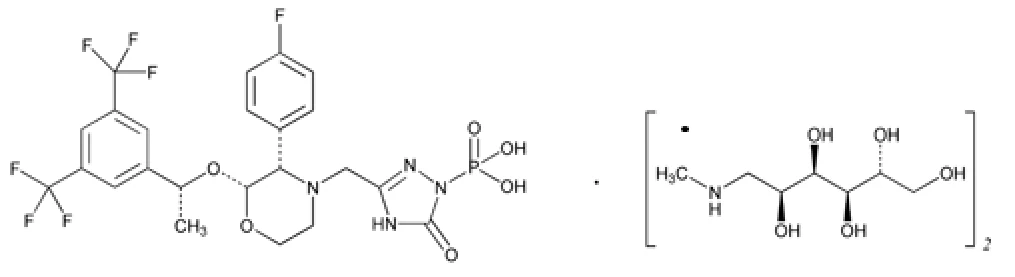
| Common name: | Fosaprepitant dimeglumine | |
| Chemical name: | Fosaprepitant dimeglumine is a prodrug of aprepitant and is chemically described as 1-Deoxy-1-(methylamino)-D-glucitol [3-[[(2R,3S)-2-[(1R)-1-[3,5- bis(trifluoromethyl)phenyl]ethoxy]-3-(4- fluorophenyl)-4-morpholinyl]methyl]-2,5-dihydro-5-oxo-1H-1,2,4-triazol-1-yl]phosphonate (2:1) (salt). | |
| Molecular formula: | C23H22F7N4O6 P•2 (C7H17NO5) | |
| Molecular mass: | 1004.83 g/mol | |
| Structural formula: | ||
 | ||
Physicochemical properties: | Description: Fosaprepitant dimeglumine is a white to off-white powder. | |
| Solubilities: It is freely soluble in water, soluble in N, N-Dimethylsufoxide and insoluble in n-hexane. | ||
| pH (1 % w/v Aqueous solution): Between 6.5 and 8.5. | ||
| pKa: 5.40. | ||
CLINICAL TRIALS
Fosaprepitant, a prodrug of aprepitant, when administered intravenously is rapidly converted to aprepitant.
Oral administration of aprepitant in combination with ondansetron and dexamethasone has been shown to prevent nausea and vomiting associated with highly emetogenic and moderately emetogenic chemotherapy in well-controlled clinical studies. An active-controlled non-inferiority study comparing fosaprepitant 150 mg with oral aprepitant demonstrated efficacy of fosaprepitant 150 mg in the prevention of nausea and vomiting associated with highly emetogenic chemotherapy. A separate active-controlled study of fosaprepitant 150 mg in combination with ondansetron and dexamethasone has demonstrated efficacy in the prevention of nausea and vomiting associated with moderately emetogenic chemotherapy.
Study Demographics and Trial Design
Table 7 - Summary of patient demographics for clinical trials in highly emetogenic and moderately emetogenic chemotherapy (HEC and MEC)
| Study # | Trial design | Dosage, route of administration and duration | Study subjects (n=number) | Mean age (Range) | Gender |
|---|---|---|---|---|---|
| P031 | Randomized, double-blind, active-controlled, parallel group | Fosaprepitant 150 mg IV on Day 1 in combination with oral ondansetron 8 mg x 2 doses on Day 1 and oral dexamethasone 12 mg on Day 1. Days 2 and 3: placebo for ondansetron twice daily OR Standard therapy which consisted of 150 mg fosaprepitant placebo IV on Day 1 with oral ondansetron 8 mg x 2 doses on Day 1 and oral dexamethasone 20 mg on Day 1 Days 2 and 3: 8 mg ondansetron twice daily | 1000 | 59.6. range (23-88) | Male: 409 Female: 591 |
| P017L1*( HEC) | Randomized, double-blind, active-controlled, parallel-group, non-inferiority | Fosaprepitant 150 mg on Day 1 in combination with ondansetron 32 mg IV on Day 1 and dexamethasone 12 mg on Day 1, 8 mg on Day 2, and 8 mg twice daily on Days 3 and 4. | 2322 | 55 (19-86) | Male: 1470 Female: 852 |
| Study # | Trial design | Dosage, route of administration and duration | Study subjects (n=number) | Mean age (Range) | Gender | |
|---|---|---|---|---|---|---|
OR Aprepitant 125 mg on Day 1 and 80 mg/day on Days 2 and 3 in combination with ondansetron 32 mg IV on Day 1 and dexamethasone 12 mg on Day 1 and 8 mg once daily on Days 2 through 4. | ||||||
*Although a 32 mg IV dose of ondansetron was used in clinical trials, this is no longer a recommended dose due to the dose-dependent risk of QTc prolongation (see the package insert for ondansetron for additional details).
Moderately Emetogenic Chemotherapy (MEC)
In a randomized, parallel, double-blind, active comparator-controlled study, fosaprepitant 150 mg as a single intravenous infusion (N=502) in combination with ondansetron and dexamethasone (fosaprepitant regimen) was compared with ondansetron and dexamethasone alone (control regimen) (N=498) (see Table 8) in patients receiving a moderately emetogenic chemotherapy regimen. The most commonly administered MEC chemotherapeutic agents were carboplatin, oxaliplatin, and cyclophosphamide.
Table 8 - Treatment Regimens in MEC Trial*
| Day 1 | Day 2 | Day 3 | |
CINV Fosaprepitant Regimen | |||
| Fosaprepitant | 150 mg intravenously over 20 to 30 minutes approximately 30 minutes prior to chemotherapy | none | none |
| Oral Dexamethasone† | 12 mg | none | none |
| Oral Ondansetron‡ | 8 mg for 2 doses | none | none |
| CINV Control Regimen | |||
| Oral Dexamethasone | 20 mg | none | none |
| Oral Ondansetron‡ | 8 mg for 2 doses | 8 mg twice daily | 8 mg twice daily |
*Fosaprepitant placebo and dexamethasone placebo (on Day 1) were used to maintain blinding.
†Dexamethasone was administered 30 minutes prior to chemotherapy treatment on Day 1. The 12 mg dose reflects a dosage adjustment to account for a drug interaction with the fosaprepitant regimen (see DETAILED PHARMACOLOGY).
‡The first ondansetron dose was administered 30 to 60 minutes prior to chemotherapy treatment on Day 1 and the second dose was administered 8 hours after first ondansetron dose.
The efficacy of fosaprepitant was evaluated based on the primary and secondary endpoints listed in Table 9 and was shown to be superior to the control regimen with regard to complete response in the delayed and overall phases.
| Table 9 – Percent of Patients Receiving Moderately Emetogenic Chemotherapy Responding by Treatment Group and Phase – Cycle 1 | ||||||||||
| ENDPOINTS* | Fosaprepitant | Control | Difference† | |||||||
| Regimen | Regimen | (95% CI) | ||||||||
| (N=502) ** | (N=498) ** | |||||||||
| % | % | |||||||||
| Complete Response‡ | ||||||||||
| Delayed phase§ | 78.9 | 68.5 | 10.4 (5.1, 15.9) | |||||||
| Complete Response‡ | ||||||||||
| Overall§§ | 77.1 | 66.9 | 10.2 (4.8, 15.8) | |||||||
| Acute Phase¶ | 93.2 | 91 | 2.3 (-1.1, 5.7) | |||||||
* Primary endpoint is bolded.
** N: Number of patients included in the intention to treat population
†Difference and Confidence interval (CI) were calculated using the Miettinen and Nurminen method and adjusted for Gender
‡Complete Response = no vomiting and no use of rescue therapy.
§Delayed phase = 25 to 120 hours post-initiation of chemotherapy.
§§Overall = 0 to 120 hours post-initiation of chemotherapy.
¶Acute phase = 0 to 24 hours post-initiation of chemotherapy.
The Kaplan-Meier curves in Figure 1 show that the time to first vomiting was longer in subjects in the fosaprepitant regimen compared with the control regimen (nominal p-value<0.001 by log-rank test).
Figure 1: Percent of Patients Receiving Moderately Emetogenic Chemotherapy Who Remain Emesis Free Over Time
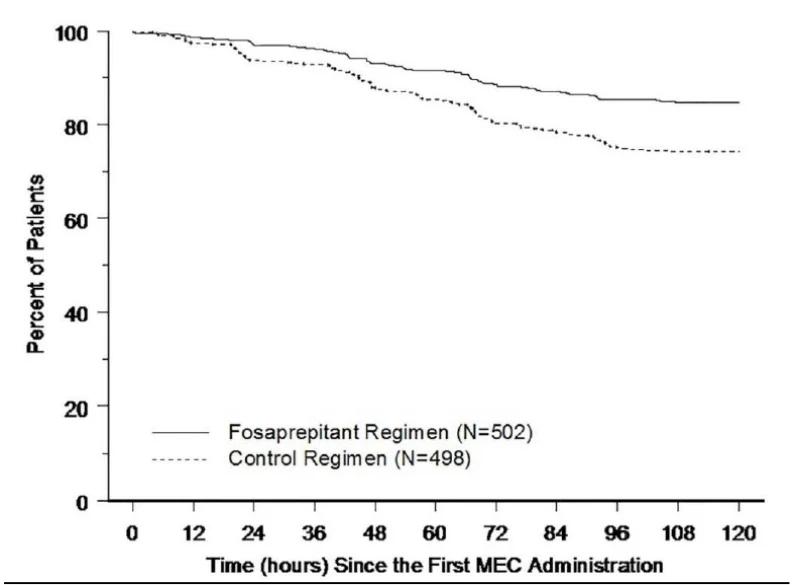
Fosaprepitant Regimen: fosaprepitant 150 mg on Day 1 in combination with ondansetron 16 mg orally on Day 1 and dexamethasone 12 mg on Day 1. Days 2-3: placebo for ondansetron every 12 hours.
Control Regimen: 16 mg ondansetron orally on Day 1 in combination with 20 mg dexamethasone orally on Day 1. Days 2-3: 8 mg ondansetron orally twice daily.
Highly Emetogenic Chemotherapy (HEC)
Study P017L
In a randomized, parallel, double-blind, active-controlled non-inferiority study, fosaprepitant 150 mg (N=1147) as a single intravenous infusion was compared with a 3-day oral aprepitant regimen (N=1175) in patients receiving a highly emetogenic chemotherapy regimen that included cisplatin (≥70 mg/m2). Other concomitant chemotherapy agents commonly administered were fluorouracil, gemcitabine, paclitaxel, and etoposide. All patients in both groups received dexamethasone and ondansetron (see Table 10).
Table 10 - Treatment Regimens in HEC Trial*
| Day 1 | Day 2 | Day 3 | Day 4 | |
CINV Fosaprepitant Regimen | ||||
| Fosaprepitant | 150 mg intravenously over 20 to 30 minutes approximately 30 minutes prior to chemotherapy | none | none | none |
| Oral dexamethasone† | 12 mg | 8 mg | 8 mg twice daily | 8 mg twice daily |
| Ondansetron | Ondansetron‡ | none | none | none |
| CINV Oral Aprepitant Regimen | ||||
| Aprepitant capsules | 125 mg | 80 mg | 80 mg | none |
| Oral dexamethasone§ | 12 mg | 8 mg | 8 mg | 8 mg |
| Ondansetron | Ondansetron‡ | none | none | none |
*Fosaprepitant placebo, aprepitant capsules placebo and dexamethasone placebo (in the evenings on Days 3 and 4) were used to maintain blinding.
†Dexamethasone was administered 30 minutes prior to chemotherapy treatment on Day 1 and in the morning on Days 2 through 4. Dexamethasone was also administered in the evenings on Days 3 and 4. The 12 mg dose of dexamethasone on Day 1 and the 8 mg once daily dose on Day 2 reflects a dosage adjustment to account for a drug interaction with the fosaprepitant regimen (see DETAILED PHARMACOLOGY).
‡Ondansetron 32 mg intravenous was used in the clinical trials of fosaprepitant and aprepitant. Although this dose was used in clinical trials, this is no longer a recommended dose due to the dose-dependent risk of QTc prolongation (see the package insert for ondansetron for additional details).
§Dexamethasone was administered 30 minutes prior to chemotherapy treatment on Day 1 and in the morning on Days 2 through 4. The 12 mg dose of dexamethasone on Day 1 and the 8 mg once daily dose on Days 2 through 4 reflects a dosage adjustment to account for a drug interaction with the oral aprepitant regimen (see DETAILED PHARMACOLOGY).
Efficacy was based on the evaluation of the following composite measures: complete response in both the overall and delayed phases and no vomiting in the overall phase. The pre-specified non-inferiority margins were as follows: complete response in the overall phase -7 percentage points; complete response in the delayed phase -7.3 percentage points; and no vomiting in the overall phase-8.2 percentage points. Fosaprepitant 150 mg was shown to be non-inferior to that of the 3-day regimen of aprepitant. A summary of the results is shown in Table 11.
| Table 11 - Percent of Patients Receiving Highly Emetogenic Chemotherapy Responding by Treatment Group and Phase — Cycle 1 | |||||||
| ENDPOINTS* | Fosaprepitant Regimen (N =1106) ** % | Aprepitant Regimen (N =1134) ** % | Difference† (95% CI) | ||||
| Complete Response‡ | |||||||
| Overall§ | 71.9 | 72.3 | -0.4 (-4.1, 3.3) | ||||
| Delayed phase§§ | 74.3 | 74.2 | 0.1 (-3.5, 3.7) | ||||
| No Vomiting | |||||||
| Overall§ | 72.9 | 74.6 | -1.7 (-5.3, 2.0) | ||||
* Primary endpoint is bolded.
**N: Number of patients included in the primary analysis of complete response.
†Difference and confidence interval (CI) were calculated using the method proposed by Miettinen and
Nurminen and adjusted for Gender.
‡Complete Response: no vomiting and no use of rescue therapy.
§Overall: 0 to 120 hours post-initiation of cisplatin chemotherapy.
§§Delayed phase: 25 to 120 hours post-initiation of cisplatin chemotherapy.
DETAILED PHARMACOLOGY
Fosaprepitant, a prodrug of aprepitant, when administered intravenously is rapidly converted to aprepitant, a substance P/neurokinin 1 (NK1) receptor antagonist. Plasma concentrations of fosaprepitant are below the limits of quantification (10 ng/mL) within 30 minutes of the completion of infusion.
Dexamethasone: Fosaprepitant 150 mg administered as a single intravenous dose on Day 1 increased the AUC0-24hr of dexamethasone, a CYP3A4 substrate, by approximately 2.01, 1.86 and 1.18-fold on Days 1, 2 and 3 respectively when dexamethasone was coadministered as a single 8 mg oral dose on Days 1, 2, and 3. The oral dexamethasone dose on Days 1 and 2 should be reduced by approximately 50% when coadministered with fosaprepitant 150 mg IV on Day 1 to achieve exposures of dexamethasone similar to those obtained when given without fosaprepitant 150 mg.
Oral aprepitant, when given as a regimen of 125 mg with dexamethasone coadministered orally as 20 mg on Day 1, and oral aprepitant when given as 80 mg/day with dexamethasone coadministered orally as 8 mg on Days 2 through 5, increased the AUC of dexamethasone, a CYP3A4 substrate by 2.2-fold, on Days 1 and 5. The daily dose of dexamethasone administered in clinical CINV studies with oral aprepitant reflects an approximate 50% reduction of the dose of dexamethasone (see DOSAGE AND ADMINISTRATION).
Methylprednisolone: Oral aprepitant, when given as a regimen of 125 mg on Day 1 and 80 mg/day on Days 2 and 3, increased the AUC of methylprednisolone, a CYP3A4 substrate, by 1.3- fold on Day 1 and by 2.5-fold on Day 3, when methylprednisolone was coadministered intravenously as 125 mg on Day 1 and orally as 40 mg on Days 2 and 3.
Warfarin: A single 125 mg dose of aprepitant was administered on Day 1 and 80 mg/day on Days 2 and 3 to healthy subjects who were stabilized on chronic warfarin therapy. Although there was no effect of oral aprepitant on the plasma AUC of R(+) or S(-) warfarin determined on Day 3, there was a 34% decrease in S(-) warfarin (a CYP2C9 substrate) trough concentration accompanied by a 14% decrease in the prothrombin time (reported as International Normalized Ratio or INR) 5 days after completion of dosing with oral aprepitant. In patients on chronic warfarin therapy, the prothrombin time (INR) should be closely monitored in the 2-week period, particularly at 7 to 10 days, following initiation of fosaprepitant with each chemotherapy cycle (see WARNINGS AND PRECAUTIONS).
Tolbutamide: Oral aprepitant, when given as 125 mg on Day 1 and 80 mg/day on Days 2 and 3, decreased the AUC of tolbutamide (a CYP2C9 substrate) by 23% on Day 4, 28% on Day 8, and 15% on Day 15, when a single dose of tolbutamide 500 mg was administered orally prior to the administration of the 3-day regimen of oral aprepitant and on Days 4, 8, and 15.
Oral contraceptives: Aprepitant, when given once daily for 14 days as a 100-mg capsule with an oral contraceptive containing 35 mcg of ethinyl estradiol and 1 mg of norethindrone, decreased the AUC of ethinyl estradiol by 43%, and decreased the AUC of norethindrone by 8%; therefore the efficacy of hormonal contraceptives during and for 28 days after administration of fosaprepitant may be reduced. Alternative or back-up methods of contraception should be used during treatment with fosaprepitant and for 1 month following administration (see WARNINGS AND PRECAUTIONS).
Midazolam: Fosaprepitant 150 mg administered as a single intravenous dose on Day 1 increased the AUC0-∞ of midazolam by approximately 1.8-fold on Day 1 and had no effect (1.0-fold) on Day 4 when midazolam was coadministered as a single oral dose of 2 mg on Days 1 and 4. Fosaprepitant 150 mg IV is a weak CYP3A4 inhibitor as a single dose on Day 1 with no evidence of inhibition or induction of CYP3A4 observed on Day 4.
In addition, when fosaprepitant was administered as a dose of 100 mg over 15 minutes along with a single dose of midazolam 2 mg, the plasma AUC of midazolam was increased by 1.6-fold.
Oral aprepitant increased the AUC of midazolam, a sensitive CYP3A4 substrate, by 2.3-fold on Day 1 and 3.3-fold on Day 5, when a single oral dose of midazolam 2 mg was coadministered on Day 1 and Day 5 of a regimen of oral aprepitant 125 mg on Day 1 and 80 mg/day on Days 2 through 5. The potential effects of increased plasma concentrations of midazolam or other benzodiazepines metabolized via CYP3A4 (alprazolam, triazolam) should be considered when coadministering these agents with fosaprepitant or aprepitant.
In another study with intravenous administration of midazolam, oral aprepitant was given as 125 mg on Day 1 and 80 mg/day on Days 2 and 3, and midazolam 2 mg IV was given prior to the administration of the 3-day regimen of oral aprepitant and on Days 4, 8, and 15. Oral aprepitant increased the AUC of midazolam by 25% on Day 4 and decreased the AUC of midazolam by 19% on Day 8 relative to the dosing of oral aprepitant on Days 1 through 3. These effects were not considered clinically important. The AUC of midazolam on Day 15 was similar to that observed at baseline.
An additional study was completed with intravenous administration of midazolam and oral aprepitant. Intravenous midazolam 2 mg was given 1 hour after oral administration of a single dose of oral aprepitant 125 mg. The plasma AUC of midazolam was increased by 1.5-fold. Depending on clinical situations (e.g., elderly patients) and degree of monitoring available, dosage adjustment for intravenous midazolam may be necessary when it is coadministered with aprepitant for the chemotherapy induced nausea and vomiting indication (125 mg on Day 1 followed by 80 mg on Days 2 and 3).
Ketoconazole: When a single 125 mg dose of oral aprepitant was administered on Day 5 of a 10-day regimen of 400 mg/day of ketoconazole, a strong CYP3A4 inhibitor, the AUC of aprepitant increased approximately 5-fold and the mean terminal half-life of aprepitant increased approximately 3-fold. Concomitant administration of fosaprepitant with strong CYP3A4 inhibitors should be approached cautiously.
Rifampin: When a single 375 mg dose of oral aprepitant was administered on Day 9 of a 14-day regimen of 600 mg/day of rifampin, a strong CYP3A4 inducer, the AUC of aprepitant decreased approximately 11-fold and the mean terminal half-life decreased approximately 3-fold. Coadministration of fosaprepitant with drugs that induce CYP3A4 activity may result in reduced plasma concentrations and decreased efficacy.
Diltiazem: In a study in 10 patients with mild to moderate hypertension, intravenous infusion of 100 mg of fosaprepitant over 15 minutes with diltiazem 120 mg 3 times daily, resulted in a 1.5- fold increase of aprepitant AUC and a 1.4-fold increase in diltiazem AUC. It also resulted in a small but clinically meaningful further maximum decrease in diastolic blood pressure [mean (SD) of 24.3 (± 10.2) mm Hg with fosaprepitant versus 15.6 (± 4.1) mm Hg without fosaprepitant] and resulted in a small further maximum decrease in systolic blood pressure [mean (SD) of 29.5 (± 7.9) mm Hg with fosaprepitant versus 23.8 (± 4.8) mm Hg without fosaprepitant], which may be clinically meaningful, but did not result in a clinically meaningful further change in heart rate or PR interval, beyond those changes induced by diltiazem alone.
Paroxetine: Coadministration of once daily doses of aprepitant, as a tablet formulation comparable to 85 mg or 170 mg of the capsule formulation, with paroxetine 20 mg once daily, resulted in a decrease in AUC by approximately 25% and Cmax by approximately 20% of both aprepitant and paroxetine.
TOXICOLOGY
Animal Toxicology
Acute Toxicity
The approximate oral LD50 of aprepitant was >2000 mg/kg in female mice and rats. The approximate intraperitoneal LD50 of aprepitant was >800 mg/kg, but <2000 mg/kg in female rats and >2000 mg/kg in female mice.
The approximate LD50 of fosaprepitant following intravenous administration was >500 mg/kg in female mice and >200 mg/kg in female rats
Chronic Toxicity
Fosaprepitant, when administered intravenously, is rapidly converted to aprepitant.
The toxicity potential of aprepitant was evaluated in a series of repeated-dose oral toxicity studies in rats and in dogs for up to 1 year.
In rats, oral administration of aprepitant for 6 months at doses up to the maximum feasible dose of 1000 mg/kg twice daily (approximately equivalent to [females] or lower than [males] the adult human dose based on systemic exposure following oral aprepitant 125 mg) produced increased hepatic weights that correlated with hepatocellular hypertrophy, increased thyroidal weights that correlated with thyroid follicular cell hypertrophy and/or hyperplasia, and pituitary cell vacuolation. These findings are a species-specific consequence of hepatic CYP enzyme induction in the rat, and are consistent with changes observed in rats with other structurally and pharmacologically dissimilar compounds that have been shown to induce hepatic CYP enzymes.
In dogs administered aprepitant orally for 9 months at doses ≥5 mg/kg twice daily (greater than or equal to 13 times the adult human dose based on systemic exposure following oral aprepitant 125 mg), toxicity was characterized by slight increases in serum alkaline phosphatase activity and decreases in the albumin/globulin ratio. Significantly decreased body weight gain, testicular degeneration, and prostatic atrophy were observed at doses ≥25 mg/kg twice daily (greater than or equal to 31 times the adult human dose based on systemic exposure following oral aprepitant 125 mg). A slight increase in hepatic weights with no histologic correlate was seen at 500 mg/kg twice daily (70 times the adult human dose based on systemic exposure following oral aprepitant 125 mg). No toxicity was observed in dogs administered 32 mg/kg/day (6 times the adult human dose based on systemic exposure following oral aprepitant 125 mg) for 1 year.
Local Tolerance
In rabbits, fosaprepitant caused initial focal acute inflammation when administered intravenously, paravenously, and subcutaneously. Focal skeletal muscle degeneration and necrosis with associated neutrophilic inflammation were noted with intramuscular injection. At the end of the follow-up period (post-dose day 8), paravenous injection sites showed focal subacute inflammation. Intramuscular injection site changes consisted of focal skeletal muscle necrosis and mineralization bordered by subacute inflammation and focal skeletal muscle regeneration.
Carcinogenesis
Carcinogenicity studies were conducted in mice and rats for approximately 2 years with oral aprepitant. In mice, aprepitant was not carcinogenic at doses up to 500 mg/kg/day (approximately 2 times the adult human dose based on systemic exposure). Rats developed hepatocellular adenomas at a dose of 25 mg/kg twice daily (females) and 125 mg/kg twice daily (females and males), thyroid follicular cell adenomas at a dose of 125 mg/kg twice daily (females and males), and thyroid follicular cell carcinomas at a dose of 125 mg/kg twice daily (males). Systemic exposures at these doses in rats were approximately equivalent to or lower than exposures in humans at the recommended dose. Tumors of these types are a species-specific consequence of hepatic CYP enzyme induction in the rat, and are consistent with changes observed in rats with other structurally and pharmacologically dissimilar compounds that have been shown to induce hepatic CYP enzymes. Carcinogenicity studies were not conducted with fosaprepitant.
Mutagenesis
Fosaprepitant and aprepitant were neither mutagenic nor genotoxic in assays conducted to detect mutagenicity, DNA strand breaks, and chromosomal aberrations. Aprepitant was negative in the in vitro microbial and TK6 human lymphoblastoid cell mutagenesis assays, the in vitro alkaline elution/rat hepatocyte DNA strand break test, the in vitro chromosomal aberration assay in Chinese hamster ovary cells, and the in vivo mouse micronucleus assay in bone marrow.
Reproduction
Fosaprepitant, when administered intravenously, is rapidly converted to aprepitant. In the fertility studies conducted with fosaprepitant and aprepitant, the highest systemic exposures to aprepitant were obtained following oral administration of aprepitant.
Aprepitant administered to female rats at doses up to the maximum feasible dose of 1000 mg/kg twice daily (approximately equivalent to the adult human dose based on systemic exposure following oral aprepitant 125 mg) had no effects on mating performance, fertility, or embryonic/fetal survival.
Administration of aprepitant to male rats at doses up to the maximum feasible dose of 1000 mg/kg twice daily (lower than the adult human dose based on systemic exposure following oral aprepitant 125 mg) produced no effects on mating performance, fertility, embryonic/fetal survival, sperm count and motility, testicular weights, or the microscopic appearance of the testes and epididymides.
Development
Fosaprepitant, when administered intravenously, is rapidly converted to aprepitant. In the teratology studies conducted with fosaprepitant and aprepitant, the highest systemic exposures to aprepitant were obtained following oral administration of aprepitant.
In rats and rabbits administered oral doses of aprepitant up to 1000 mg/kg twice daily and 25 mg/kg/day, respectively (up to 1.5 times the systemic exposure at the adult human dose following oral aprepitant 125 mg), there was no evidence of developmental toxicity as assessed by embryonic/fetal survival, fetal body weight, and fetal external, visceral, and skeletal morphology. Placental transfer of aprepitant occurred in rats and rabbits at these doses. Concentrations of aprepitant in fetal plasma were approximately 27% and 56% of maternal plasma concentrations in rats and rabbits, respectively.
Significant concentrations of aprepitant were observed in the milk of lactating rats administered 1000 mg/kg twice daily. At this dose, the mean milk drug concentration was 90% of the mean maternal plasma concentration.
REFERENCES
- 1. de Wit R, Herrstedt J, Rapoport B, Carides AD, Guoguang-Ma J, Elmer M et al. The oral NK(1) antagonist, aprepitant, given with standard antiemetics provides protection against nausea and vomiting over multiple cycles of cisplatin-based chemotherapy: a combined analysis of two randomised, placebo-controlled phase III clinical trials. Eur J Cancer 2004;40:403–10.
- 2. Gralla RJ, de Wit R, Herrstedt J. Carides AD, Ianus J, Guoguang-Ma J et al. Antiemetic Efficacy of the Neurokinin-1 Antagonist, Aprepitant, Plus a 5HT3 Antagonist and a Corticosteroid in Patients Receiving Anthracyclines or Cyclophosphamide in Addition to High-Dose Cisplatin. Cancer 2005 Aug 15;104(4):864-8.
- 3. Grunberg S, Chua D, Maru A, Dinis J, DeVandry S, Boice JA et al. Single-Dose Fosaprepitant for the Prevention of Chemotherapy-Induced Nausea and Vomiting AssociatedWith Cisplatin Therapy: Randomized, Double-Blind Study Protocol—EASE. J Clin Oncol 2011; 29: 1495-1501.
- 4. Hesketh PJ, Grunberg SM, Gralla RJ, Warr DG, Roila F, de Wit R et al. The oral neurokinin-1 antagonist aprepitant for the prevention of chemotherapy-induced nausea and vomiting: a multinational, randomized, double-blind, placebo-controlled trial in patients receiving high- dose cisplatin—the Aprepitant Protocol 052 Study Group. J Clin Oncol 2003;21:4112–9.
- 5. Hesketh PJ, Grunberg, SM, Herrstedt J, de Wit R, Gralla RJ, Carides AD. Combined data from two phase III trials of the NK1 antagonist aprepitant plus a 5HT3 antagonist and a corticosteroid for prevention of chemotherapy-induced nausea and vomiting: effect of gender on treatment response. Support Care Cancer 2006;14:354–60.
- 6. Poli-Bigelli S, Rodrigues-Pereira J, Carides AD, Guoguang-Ma J, Eldridge K, Hipple A et al. Addition of the neurokinin 1 receptor antagonist aprepitant to standard antiemetic therapy improves control of chemotherapy-induced nausea and vomiting. Results from a randomized, double-blind, placebo-controlled trial in Latin America. Cancer 2003;97:3090–8.
- 7. Rapoport BL, Jordan K, Boice JA, Taylor A, Brown C, Hardwick JS et al. Aprepitant for the prevention of chemotherapy-induced nausea and vomiting associated with a broad range of moderately emetogenic chemotherapies and tumor types: a randomized, double blind study. Support Care Cancer 2009 Jul 01; published on line.
- 8. Warr DG, Hesketh PJ, Gralla RJ, Muss HB, Herrstedt J, Eisenbert PD et al. Efficacy and tolerability of aprepitant for the prevention of chemotherapy-induced nausea and vomiting in patients with breast cancer after one cycle of moderately emetogenic chemotherapy. J Clin Oncol 2005;23:2822–30.
- 9. Weinstein C, Jordan K, Green SA, Camacho E, Khanani S, Beckford-Brathwaite E et al. Single-dose fosaprepitant for the prevention of chemotherapy-induced nausea and vomiting associated with moderately emetogenic chemotherapy: results of a randomized, double-blind phase III trial. Ann Oncol 2016;27:172-178.
- 10. Product Monograph – PrEMEND® IV (fosaprepitant for injection) 150 mg fosaprepitant/vial (as fosaprepitant dimeglumine) (Merck Canada Inc.), Date of Revision: October 17, 2018, control number: 218162.