


Product Monograph - Foundayo
Recent Major Label Changes
| Not applicable |
|---|
Certain sections or subsections that are not applicable at the time of the preparation of the most recent authorized product monograph are not listed.
Table of Contents
Recent Major Label Changes ....................................................................................... 2
Table of Contents .......................................................................................................... 2
Part 1: Healthcare Professional Information ............................................................... 4
- 1.
Indications ............................................................................................................... 4
1.1. Pediatrics .......................................................................................... 4
1.2. Geriatrics ........................................................................................... 4
- 2. Contraindications ................................................................................................... 4
- 3. Serious Warnings and Precautions Box ............................................................... 5
- 4.
Dosage and Administration ................................................................................... 5
4.1. Dosing Considerations ...................................................................... 5
4.2. Recommended Dose and Dosage Adjustment ................................. 5
4.4. Administration ................................................................................... 6
4.5. Missed Dose ..................................................................................... 6
- 5. Overdose ................................................................................................................. 6
- 6. Dosage Forms, Strengths, Composition, and Packaging ................................... 7
- 7.
Warnings and Precautions ..................................................................................... 7
Carcinogenesis and Genotoxicity ................................................................... 7
Cardiovascular ............................................................................................... 8
Driving and Operating Machinery ................................................................... 8
Endocrine and Metabolism ............................................................................. 8
Gastrointestinal .............................................................................................. 8
Hepatic/Biliary/Pancreatic .............................................................................. 9
Immune .......................................................................................................... 9
Ophthalmologic .............................................................................................. 9
Perioperative Considerations ....................................................................... 10
Psychiatric .................................................................................................... 10
Renal ........................................................................................................ 10
Reproductive Health ..................................................................................... 10
7.1. Special Populations ......................................................................... 11
7.1.1. Pregnancy ....................................................................................... 11
7.1.2. Breastfeeding .................................................................................. 11
7.1.3. Pediatrics ........................................................................................ 11
7.1.4. Geriatrics ......................................................................................... 11
7.1.5. Hepatic Impairment ......................................................................... 11
7.1.6. Renal Impairment ............................................................................ 12
- 8.
Adverse Reactions................................................................................................ 12
8.1. Adverse Reaction Overview ............................................................ 12
8.2. Clinical Trial Adverse Reactions ...................................................... 12
8.3. Less Common Clinical Trial Adverse Reactions .............................. 17
8.4. Abnormal Laboratory Findings: Hematologic, Clinical Chemistry, and Other Quantitative Data .......................................................................................... 18
8.5. Post-Market Adverse Reactions ...................................................... 18
- 9.
Drug Interactions .................................................................................................. 18
9.2. Drug Interactions Overview ............................................................. 18
9.3. Drug-Behaviour Interactions ............................................................ 18
9.4. Drug-Drug Interactions .................................................................... 19
9.5. Drug-Food Interactions .................................................................... 21
9.6. Drug-Herb Interactions .................................................................... 21
9.7. Drug-Laboratory Test Interactions ................................................... 21
9.8. Drug-Lifestyle Interactions ............................................................... 21
- 10.
Clinical Pharmacology ......................................................................................... 21
10.1. Mechanism of Action ....................................................................... 21
10.2. Pharmacodynamics ......................................................................... 21
10.3. Pharmacokinetics ............................................................................ 22
- 11. Storage, Stability, and Disposal .......................................................................... 23
Part 2: Scientific Information ..................................................................................... 24
- 13. Pharmaceutical Information ................................................................................. 24
- 14.
Clinical Trials ........................................................................................................ 25
14.1. Clinical Trials by Indication .............................................................. 25
- 16. Non-Clinical Toxicology ....................................................................................... 39
Patient Medication Information .................................................................................. 41
Part 1: Healthcare Professional Information
1. Indications
FOUNDAYO (orforglipron) is indicated as an adjunct to healthy diet and physical activity:
For weight management, including weight loss and weight maintenance in adults with an initial body mass index (BMI) of:
- 30 kg/m2 or greater (obesity), or
- 27 kg/m2 to less than 30 kg/m2 (overweight) in the presence of at least one weight-related comorbid condition (e.g., hypertension, dyslipidemia, prediabetes, type 2 diabetes, obstructive sleep apnea, or cardiovascular disease).
For the treatment of adult patients with type 2 diabetes to improve glycemic control:
- As monotherapy when metformin is considered inappropriate due to intolerance or contraindication.
- In combination with other medicinal products for the treatment of diabetes (see 14 Clinical Trials)
Limitations of Use:
- Concomitant use of FOUNDAYO with other medicines having glucagon-like peptide-1 (GLP-1) receptor agonist activity is not recommended.
- FOUNDAYO has not been studied in combination with dipeptidyl peptidase-4 (DPP-4) inhibitors.
- FOUNDAYO has not been studied in combination with short-acting, medium-acting, or dual formulation insulins.
- FOUNDAYO should not be used in patients with type 1 diabetes mellitus (formerly known as insulin-dependent diabetes mellitus or IDDM).
- FOUNDAYO should not be used for the treatment of diabetic ketoacidosis.
1.1. Pediatrics
Pediatrics (< 18 years of age): The safety and efficacy of FOUNDAYO have not been studied in pediatric patients. FOUNDAYO is not indicated for use in pediatric patients.
1.2. Geriatrics
Geriatrics (≥ 65 years of age): No overall differences in safety or efficacy were observed in clinical trial patients ≥ 65 years of age compared to younger patients (see 4 Dosage and Administration, 7.1.4 Geriatrics, and 10.3 Pharmacokinetics).
2. Contraindications
FOUNDAYO is contraindicated:
- In patients with known serious hypersensitivity to this product or any of its components. (For a complete listing of the ingredients, see 6 Dosage Forms, Strengths, Composition and Packaging).
- In patients with a personal or family history of medullary thyroid carcinoma (MTC) or in patients with Multiple Endocrine Neoplasia syndrome type 2 (MEN 2) (see 3 Serious Warnings and Precautions Box).
- During pregnancy (see 7.1.1. Pregnancy).
3. Serious Warnings and Precautions Box
RISK OF THYROID C-CELL TUMORS
|
|---|
4. Dosage and Administration
4.1. Dosing Considerations
- Coadministration with other orforglipron-containing products, any GLP-1 receptor agonist, or molecules with GLP-1 agonism activity is not recommended.
- In patients with type 2 diabetes, an increased risk of hypoglycemia was seen with concomitant use of a sulfonylurea or insulin with FOUNDAYO. FOUNDAYO lowers blood glucose. When initiating FOUNDAYO, consider reducing the dose of concomitantly administered insulin secretagogues (e.g., sulfonylureas) or insulin to reduce the risk of hypoglycemia (see 7 Warnings and Precautions).
4.2. Recommended Dose and Dosage Adjustment
- The recommended starting dose of FOUNDAYO is 1 mg once daily.
- After at least 30 days, increase the dose to 3 mg.
- After at least 30 days on the current dose, the dose may be increased to the next dose (6 mg, 12 mg, 24 mg or 36 mg).
- The maximum dose of FOUNDAYO is 36 mg once daily.
Weight Management
The recommended maintenance doses are 6 mg, 12 mg, 24 mg, or 36 mg once daily. (see 14 Clinical Trials for the strengths studied in confirmatory trials).
Type 2 Diabetes
The recommended maintenance doses are 3 mg, 6 mg, 12 mg, 24 mg, or 36 mg once daily. (see 14 Clinical Trials for the strengths studied in confirmatory trials).
Dosage Adjustments:
The dose of FOUNDAYO should be escalated according to the needs and goals of the patient. The dosage may be increased to the next level after at least 30 days on the current dosage, based on treatment response and tolerability.
Advise patients not to take more than one capsule to achieve the effect of a higher dose.
Special Populations
Renal Insufficiency: No dose adjustment is required in patients with renal impairment (see 10.3 Pharmacokinetics).
Hepatic Insufficiency: No dose adjustment is required in patients with mild or moderate hepatic impairment (see 7.1 Special Populations and 10.3 Pharmacokinetics).
Severe Hepatic Impairment: FOUNDAYO is not recommended for use in patients with severe hepatic impairment (see 7.1 Special Populations and 10.3 Pharmacokinetics).
Geriatrics (≥ 65 years): No dose adjustment is required in patients over 65 years of age (see 7.1.4 Geriatrics and 10.3 Pharmacokinetics).
Pediatrics (< 18 years): The safety and efficacy of FOUNDAYO in children and adolescents below 18 years have not been studied. FOUNDAYO is not indicated for pediatric use (see 1.1 Pediatrics and 7.1.3 Pediatrics).
Gender, Race, Ethnicity, And Body Weight: No dose adjustment is needed based on sex, race/ethnicity, or body weight (see 7.1 Special Populations and 10.3 Pharmacokinetics).
Dosage Modifications for Concomitant Use of Strong CYP3A4 Inhibitors
FOUNDAYO dose adjustment may be required to manage interactions with some concomitant medications (see 9.4 Drug-Drug Interactions and 10 Clinical Pharmacology).
- For patients taking a strong CYP3A4 inhibitor, consider an alternative medicine to the strong CYP3A4 inhibitor or consider a FOUNDAYO dose reduction.
- The maximum FOUNDAYO dose should be the 12 mg capsule dose when coadministered with a strong CYP3A4 inhibitor.
- Strong CYP3A4 inhibitors that also inhibit OATP1B should be avoided when taking FOUNDAYO (see 9.4 Drug-Drug Interactions).
4.4. Administration
Instruct your patients on the following:
- Take FOUNDAYO orally once daily at any time of day, with or without food, and no restriction on the volume of water.
- Swallow FOUNDAYO capsules whole with water. Do not open, break, crush, or chew.
- Do not take more than one FOUNDAYO capsule per day.
4.5. Missed Dose
If a dose is missed, resume dosing as soon as possible. Do not take more than one FOUNDAYO capsule per day.
If 7 or more consecutive doses are missed, reinitiate dosage escalation at a lower dosage to reduce the risk of gastrointestinal adverse reactions (See 8 Adverse Reactions)
5. Overdose
Potential symptoms from an overdose could be gastrointestinal related (e.g., nausea). In the event of overdose, appropriate supportive care (including frequent blood glucose monitoring) should be initiated according to the patient’s clinical signs and symptoms.
| For the most recent information in the management of a suspected drug overdose, contact your regional poison control centre or Health Canada’s toll-free number, 1-844 POISON-X (1-844-764-7669). |
|---|
- 6. Dosage Forms, Strengths, Composition, and Packaging
Table 1. Dosage Forms, Strengths, Composition
The physical characteristics of FOUNDAYO capsules are as follows:
1 mg:
Light yellow and white capsules imprinted with "Lilly" on the body and "G1" on the cap
3 mg:
Light yellow and yellow capsules imprinted with "Lilly" on the body and "G2" on the cap
6 mg:
Light yellow and pink capsules imprinted with "Lilly" on the body and "G3" on the cap
12 mg:
Light yellow and red capsules imprinted with "Lilly" on the body and "G4" on the cap
24 mg:
Light yellow and light brown capsules imprinted with "Lilly" on the body and "G5" on the cap
36 mg:
Light yellow and light purple capsules imprinted with "Lilly" on the body and "G6" on the cap
Description
FOUNDAYO capsules are supplied in blister packages of 30 capsules (5x6).
7. Warnings and Precautions
See 3 Serious Warnings and Precautions Box.
Carcinogenesis and Genotoxicity
Risk of Thyroid C-Cell Tumors
In products with GLP-1 receptor agonist activity that are pharmacologically active in rats and mice, rodent thyroid C-cell tumors (adenomas and carcinomas) have been observed at clinically relevant exposures and are considered GLP-1 receptor-dependent effects in rodents. Orforglipron is not pharmacologically active in rats or mice and did not cause an increase in tumor incidence in rodents (see 16 Non-Clinical Toxicology). While orforglipron is pharmacologically active at the human GLP-1 receptor, the human relevance of GLP-1 receptor-dependent thyroid C-cell tumors observed in rodents has not been determined (see 16 Non-Clinical Toxicology).
Cases of MTC in patients treated with liraglutide, another GLP-1 receptor agonist, have been reported in the postmarketing period; the data in these reports are insufficient to establish or exclude a causal relationship between MTC and GLP-1 receptor agonist use in humans.
FOUNDAYO is contraindicated in patients with a personal or family history of MTC or in patients with MEN 2. Counsel patients regarding the potential risk for MTC with the use of FOUNDAYO and inform them of symptoms of thyroid tumors (e.g., a mass in the neck, dysphagia, dyspnea, or persistent hoarseness).
Routine monitoring of serum calcitonin or using thyroid ultrasound is of uncertain value for early detection of MTC in patients treated with FOUNDAYO. Such monitoring may increase the risk of unnecessary procedures, due to the low test specificity for serum calcitonin and a high background incidence of thyroid disease. Significantly elevated serum calcitonin values may indicate MTC and patients with MTC usually have calcitonin values >50 ng/L. If serum calcitonin is measured and
| Route of Administration | Dosage Form / Strength / Composition | Non-Medicinal Ingredients |
| oral | Capsule / 1 mg, 3 mg, 6 mg, 12 mg, 24 mg, 36 mg / orforglipron (as orforglipron calcium) | Black ink, copovidone, dimethicone, hypromellose, iron oxide black (24 mg and 36 mg only), iron oxide red (6 mg, 12 mg, 24 mg and 36 mg only), iron oxide yellow, sodium bicarbonate, and titanium dioxide. |
found to be elevated, the patient should be further evaluated. Patients with thyroid nodules noted on physical examination or neck imaging should also be further evaluated.
Cardiovascular
There is no experience in patients with congestive heart failure NYHA class IV and orforglipron is therefore not recommended in these patients.
Heart Rate Increase
FOUNDAYO causes an increase in heart rate (see 10 Clinical Pharmacology). Caution should be observed in patients who have cardiac conditions that might be worsened by an increase in heart rate (see 8 Adverse Reactions)
Hypotension
FOUNDAYO may lead to a decrease in blood pressure. Adverse events related to hypotension have been reported in patients treated with FOUNDAYO. Hypotension occurred more frequently in patients receiving concomitant antihypertensive therapy. Consider that adjustment of antihypertensive medications may be needed.
Driving and Operating Machinery
No studies on the effects of the ability to drive and use machines have been performed. Patients with obesity/overweight and/or type 2 diabetes (T2D) taking FOUNDAYO in combination with a sulfonylurea or insulin should be advised to take precautions to avoid hypoglycemia while driving and using machines.
Endocrine and Metabolism
Hypoglycemia with Concomitant Use of Insulin Secretagogues or Insulin
Patients taking FOUNDAYO in combination with an insulin secretagogue (for example, a sulfonylurea) or insulin may have an increased risk of hypoglycemia. The risk of hypoglycemia may be lowered by a reduction in the dose of the insulin secretagogue or insulin (see 8 Adverse Reactions). Inform patients of the risk of hypoglycemia and educate them on the signs and symptoms of hypoglycemia. Consider reducing the dose of insulin secretagogues or insulin when initiating FOUNDAYO.
Use with Other Incretin Medicines
The use of FOUNDAYO in combination with other incretin medicines (e.g., GLP-1 receptor agonists or DPP-4 inhibitors) has not been studied and FOUNDAYO should not be used in combination with those drugs. It is unknown if concomitant use of drugs acting via similar pathways affects the efficacy and safety of FOUNDAYO.
Gastrointestinal
Severe Gastrointestinal Adverse Reactions
Use of FOUNDAYO has been associated with gastrointestinal adverse reactions, sometimes severe. In clinical trials, severe gastrointestinal adverse reactions were reported more frequently among patients receiving FOUNDAYO (2.4%) than placebo (0.5%) (see 8 Adverse Reactions).
FOUNDAYO has not been studied in patients with severe gastrointestinal disease, including severe gastroparesis. FOUNDAYO should be used with caution in patients with severe gastrointestinal disease. Events related to impaired gastric emptying, including severe gastroparesis, have been reported with the use of GLP-1 receptor agonists. The use of FOUNDAYO in patients with severe gastroparesis is not recommended.
Monitor and consider dose modification or discontinuation in patients who develop severe gastrointestinal symptoms while on treatment.
Hepatic/Biliary/Pancreatic
Acute Pancreatitis
FOUNDAYO has not been studied in patients with a history of pancreatitis and should be used with caution in these patients. Acute pancreatitis has been reported in patients treated with FOUNDAYO. Patients should be informed of the symptoms of pancreatitis. Necrotizing pancreatitis and pancreatitis with a fatal outcome have also been reported in patients treated with GLP-1 receptor agonists. If pancreatitis is suspected, FOUNDAYO should be discontinued. If the diagnosis of pancreatitis is confirmed, FOUNDAYO should not be restarted. In the absence of other signs and symptoms of pancreatitis, elevations in pancreatic enzymes alone are not predictive of pancreatitis.
In a pool of placebo-controlled trials for weight management 6 orforglipron participants (0.19%) had adjudication-confirmed acute pancreatitis versus 1 participant (0.06%) in the placebo group. In a pool of placebo-controlled trials for T2D, no adjudication-confirmed acute pancreatitis cases occurred. Across all T2D studies, a total of 4 orforglipron participants (0.17%) had adjudication-confirmed acute pancreatitis. The exposure-adjusted incidence rate of adjudication-confirmed acute pancreatitis was 0.14 participants per 100 participant-years for weight management and 0.19 participants per 100 participant-years for T2D.
Acute Gallbladder Disease
Acute gallbladder disease has been reported in patients receiving GLP-1 receptor agonists, including FOUNDAYO. Acute gallbladder events were associated with weight reduction. If cholecystitis is suspected, gallbladder diagnostic studies and appropriate clinical follow-up are indicated.
Immune
Hypersensitivity Reactions
Serious hypersensitivity reactions (e.g., anaphylaxis, angioedema) have been reported with GLP-1 receptor agonists. If hypersensitivity reactions occur, advise the patient to promptly seek medical attention and discontinue use of FOUNDAYO.
FOUNDAYO is contraindicated in patients with a prior serious hypersensitivity reaction to orforglipron or to any of the excipients in FOUNDAYO.
Use caution in a patient with a history of anaphylaxis or angioedema with other medicines having GLP-1 receptor agonist activity because it is unknown whether such patients will be predisposed to these reactions with FOUNDAYO.
Ophthalmologic
Diabetic Retinopathy Complications in Patients with Type 2 Diabetes
Rapid improvement in glucose control has been associated with a temporary worsening of diabetic retinopathy. Patients with a history of diabetic retinopathy should be monitored for progression of diabetic retinopathy. Orforglipron has not been studied in patients currently receiving or planning to receive treatment for diabetic retinopathy and/or macular edema and should be used with caution in these patients.
Non-arteritic anterior ischemic optic neuropathy (NAION)
Events of non-arteritic anterior ischemic optic neuropathy (NAION) have been reported in patients treated with GLP-1 receptor agonist products. There is no identified time interval for when NAION may develop following treatment start. Patients reporting a sudden loss of vision (including partial loss) should be urgently referred for ophthalmological examination and treatment with orforglipron should be discontinued if NAION is confirmed.
Perioperative Considerations
Pulmonary Aspiration During General Anesthesia or Deep Sedation
GLP-1 receptor agonists including FOUNDAYO delay gastric emptying. Pulmonary aspiration has been reported in patients receiving GLP-1 receptor agonists undergoing general anesthesia or deep sedation. This should be considered prior to such procedures.
Available data are insufficient to inform recommendations to mitigate the risk of pulmonary aspiration during general anesthesia or deep sedation in patients taking FOUNDAYO, including whether modifying preoperative fasting recommendations or temporarily discontinuing FOUNDAYO could reduce the incidence of retained gastric contents. Instruct patients to inform healthcare providers prior to any planned surgeries or procedures if they are taking FOUNDAYO.
Psychiatric
Suicidal Behaviour and Ideation
Suicidal behaviour and ideation have been reported with products which induce weight reduction. Monitor patients for the emergence or worsening of depression, suicidal thoughts or behaviours, and/or any unusual changes in mood or behaviour. Consider the benefits and risks for individual patients prior to initiating or continuing therapy in patients with suicidal thoughts or behaviours, or who have a history of suicidal attempts.
Renal
Acute Kidney Injury Due to Volume Depletion
FOUNDAYO has been associated with gastrointestinal adverse reactions, which include nausea, vomiting, and diarrhea (see 8 Adverse Reactions). These events may lead to dehydration and volume depletion, which could cause a deterioration in renal function, including acute kidney injury.
In patients treated with GLP-1 receptor agonists, there have been postmarketing reports of acute kidney injury and worsening of chronic renal failure, which may sometimes require hemodialysis. Some of these events have been reported in patients without known underlying renal disease. A majority of the reported events occurred in patients who had experienced nausea, vomiting, diarrhea, or dehydration. Monitor renal function in patients reporting adverse reactions to FOUNDAYO that could lead to volume depletion.
Reproductive Health
Women of childbearing potential should use effective contraception when treated with FOUNDAYO.
Because delayed gastric emptying may affect the absorption of oral medications, advise patients using oral hormonal contraceptives to switch to a non-oral contraceptive method, or add a barrier method of contraception for 30 days after initiation with FOUNDAYO and for 30 days after each dose escalation (see 9.4 Drug-Drug Interactions).
- Fertility
The effect of orforglipron on fertility in humans is unknown. Animal studies with orforglipron did not indicate harmful effects with respect to fertility (see 16 Non-Clinical Toxicology).
7.1. Special Populations
7.1.1. Pregnancy
There are no adequate and well-controlled studies of orforglipron in pregnant persons. FOUNDAYO should not be used during pregnancy (see 2 Contraindications).
Studies in animals have shown reproductive toxicity (see 16 Non-Clinical Toxicology). In animal reproduction studies in pregnant cynomolgus monkeys, no embryofetal development toxicity was observed at exposures that were lower than the maximum recommended human dose (MRHD) (see 16 Non-Clinical Toxicology). Higher dose levels and exposures cannot be achieved in monkeys due to on-target body weight effects.
Orforglipron is not pharmacologically active in rabbits. In a rabbit pilot dose-range finding study, slight decreases in fetal and placental weights with external malformations in 2 fetuses from 2 dams were observed at an exposure that was 13-fold higher than the MRHD. No embryofetal effects were observed in the definitive rabbit study conducted at exposures up to 6-fold higher than the MRHD.
In a tissue distribution study, [14C]orforglipron-derived radioactivity was not distributed to fetal tissues in pregnant rats.
7.1.2. Breastfeeding
It is not known whether FOUNDAYO is excreted in human milk.
Based on animal data, orforglipron was excreted into rat breast milk, with concentrations in milk 3-fold higher than in plasma (see 16 Non-Clinical Toxicology). A risk to the newborn or infant cannot be excluded.
Orforglipron should not be used during breastfeeding.
7.1.3. Pediatrics
The safety and effectiveness of FOUNDAYO have not been established in pediatric patients less than 18 years of age. FOUNDAYO is not indicated for use in pediatric patients.
7.1.4. Geriatrics
No dose adjustment is required in patients over 65 years of age (see 10.3 Pharmacokinetics).
In the clinical trials for the approval of FOUNDAYO, 1101 (18.0%) orforglipron-treated patients were 65 years of age or older and 145 (2.4%) orforglipron-treated patients were 75 years of age or older at baseline.
No overall differences in safety or efficacy were detected between these patients and younger patients.
7.1.5. Hepatic Impairment
In a clinical pharmacology study in subjects with varying degrees of hepatic impairment, orforglipron exposure increased in patients with moderate (Child Pugh B) and severe (Child Pugh C) hepatic impairment (see 10.3 Pharmacokinetics). Orforglipron is not recommended for use in patients with severe hepatic impairment (see 4 Dosage and Administration and 10.3 Pharmacokinetics). Orforglipron exposure was similar in patients with mild hepatic impairment and normal hepatic function.
7.1.6. Renal Impairment
Renal impairment does not impact the pharmacokinetics of orforglipron. In a clinical pharmacology study in subjects with severe renal impairment and end-stage renal disease (ESRD), no change in orforglipron pharmacokinetics (PK) was observed compared with subjects who had normal renal function (see 10.3 Pharmacokinetics). Data from clinical studies have also shown that renal impairment in patients with overweight or obesity does not impact the pharmacokinetics of orforglipron.
8. Adverse Reactions
8.1. Adverse Reaction Overview
The most frequently reported adverse reactions in clinical trials were gastrointestinal disorders and these were mostly mild to moderate in severity. The incidence of nausea, vomiting, and diarrhea was higher during the dose escalation period and decreased over time.
The following serious adverse reactions are described below or elsewhere in the Product Monograph (see 7 Warnings and Precautions):
- Acute Gallbladder Disease
- Acute Kidney Injury Due to Volume Depletion
- Acute Pancreatitis
- Diabetic Retinopathy Complications in Patients with T2D
- Hypersensitivity Reactions
- Hypoglycemia with Concomitant Use of Insulin Secretagogues or Insulin
- Hypotension
- Pulmonary Aspiration during General Anesthesia or Deep Sedation
- Severe Gastrointestinal Adverse Reactions
- Suicidal Ideation and Behaviour
8.2. Clinical Trial Adverse Reactions
Clinical trials are conducted under very specific conditions. Therefore, the frequencies of adverse reactions observed in the clinical trials may not reflect frequencies observed in clinical practice and should not be compared to frequencies reported in clinical trials of another drug. Adverse reaction information from clinical trials may be useful in identifying and approximating rates of adverse drug reactions in real-world use.
Adverse Reactions in Patients for Weight Reduction
FOUNDAYO was evaluated for safety in a pool of 2 randomized, double-blind, placebo-controlled trials that included 3155 adult patients with obesity or overweight treated with FOUNDAYO for up to 72 weeks and a 2-week off drug follow-up period (ATTAIN-1 and ATTAIN-2) (see 14 Clinical Trials).
The mean age of patients was 49 years and 41% were male. The population was 60% White, 25% Asian, 8% Black or African American, and 0.3% American Indian or Alaska Native; 35% identified as Hispanic or Latino ethnicity. At baseline, patients had an average BMI of 36.5 kg/m2, 24.7% with a BMI ≥ 40 kg/m2, 50.2% with hypertension, 48.8% with dyslipidemia, 31.1% with type 2 diabetes, 11.4% with obstructive sleep apnea, 3.2% with coronary artery disease, and 2.7% with cerebrovascular disease.
Across both trials, 5.5%, 8.8%, and 10.4% of patients treated with FOUNDAYO 6 mg capsule, FOUNDAYO 12 mg capsule and FOUNDAYO 36 mg capsule, respectively, permanently discontinued treatment as a result of adverse reactions compared to 3.4% of patients treated with placebo. The majority of patients (5.4%) who discontinued FOUNDAYO due to adverse reactions did so due to gastrointestinal adverse reactions.
Table 2 - Adverse Reactions in Pool of Phase 3 Placebo-Controlled Trials Reported in ≥ 1% of FOUNDAYO-treated Adult Patients with Obesity or Overweight (ATTAIN-1 and ATTAIN-2)
| Adverse Reaction | FOUNDAYO 6 mg N = 1051 n (%) | FOUNDAYO 12 mg N = 1055 n (%) | FOUNDAYO 36 mg N = 1049 n (%) | Placebo N = 1576 n (%) | ||||||||
| Cardiac disorders | ||||||||||||
| Tachycardiaa | 23 (2.2) | 34 (3.2) | 33 (3.1) | 13 (0.9) | ||||||||
| Gastrointestinal disorders | ||||||||||||
| Nausea | 275 (25.9) | 363 (34.3) | 362 (34.6) | 152 (9.8) | ||||||||
| Constipation | 215 (20.3) | 286 (26.9) | 257 (24.4) | 137 (8.8) | ||||||||
| Diarrhea | 222 (21.1) | 247 (23.5) | 256 (24.6) | 185 (11.4) | ||||||||
| Vomiting | 136 (12.9) | 222 (21.0) | 249 (23.7) | 57 (3.6) | ||||||||
| Dyspepsia | 125 (11.8) | 168 (15.9) | 138 (13.0) | 69 (4.5) | ||||||||
| Abdominal painb | 133 (12.6) | 144 (13.7) | 145 (13.6) | 111 (7.1) | ||||||||
| Abdominal distension | 75 (7.1) | 91 (8.6) | 89 (8.5) | 54 (3.4) | ||||||||
| Eructation | 65 (6.2) | 81 (7.8) | 83 (8.0) | 14 (0.9) | ||||||||
| Gastroesophageal reflux disease | 59 (5.6) | 65 (6.2) | 68 (6.5) | 39 (2.4) | ||||||||
| Flatulence | 55 (5.3) | 63 (6.0) | 64 (6.2) | 34 (2.1) | ||||||||
| General disorders and administration site conditions | ||||||||||||
| Fatiguec | 66 (6.3) | 70 (6.7) | 93 (8.9) | 59 (3.7) | ||||||||
| Hepatobiliary disorders | ||||||||||||
| Cholelithiasis | 10 (1.0) | 18 (1.7) | 13 (1.2) | 10 (0.7) | ||||||||
| Nervous system disorders | ||||||||||||
| Dizziness | 47 (4.5) | 39 (3.7) | 49 (4.8) | 42 (2.6) | ||||||||
| Headache | 79 (7.4) | 94 (8.8) | 93 (8.8) | 104 (6.7) | ||||||||
| Dysgeusiad | 11 (1.1) | 6 (0.6) | 12 (1.2) | 4 (0.3) | ||||||||
| Dysesthesiae | 0 (0) | 3 (0.3) | 13 (1.3) | 1 (0.1) | ||||||||
| Skin and subcutaneous tissue disorders | ||||||||||||
| Hair loss | 34 (3.2) | 42 (3.9) | 48 (4.5) | 28 (1.9) | ||||||||
| Vascular disorders | ||||||||||||
| Hypotensionf | 22 (2.1) | 21 (2.0) | 29 (2.8) | 7 (0.5) | ||||||||
a Includes tachycardia, heart rate increased, sinus tachycardia.
b Includes abdominal pain, abdominal pain upper, abdominal discomfort, gastrointestinal pain, abdominal rigidity, epigastric discomfort, abdominal tenderness, abdominal pain lower.
c Includes fatigue, asthenia, malaise, lethargy, listless.
d Includes dysgeusia, ageusia.
e Includes burning sensation, dysesthesia, hyperesthesia, pain of skin, sensitive skin, skin burning sensation, skin discomfort.
f Includes hypotension, orthostatic hypotension, blood pressure decreased, blood pressure diastolic decreased, blood pressure systolic decreased.
Gastrointestinal Adverse Reactions
In the pool of phase 3 placebo-controlled trials, gastrointestinal adverse reactions occurred more frequently among patients receiving FOUNDAYO than patients receiving placebo: FOUNDAYO 6 mg (59.9%), FOUNDAYO 12 mg (68%), FOUNDAYO 36 mg (68.5%), Placebo (37%).
More patients receiving FOUNDAYO 6 mg (3.4%), FOUNDAYO 12 mg (6.2%), and FOUNDAYO 36 mg (6.4%) discontinued treatment due to gastrointestinal adverse reactions compared to patients receiving placebo (0.7%).
Of the FOUNDAYO-treated patients who reported GI adverse reactions, 60.3%, 35.6%, and 4.1% reported mild or moderate or severe events, respectively. The incidence of nausea, vomiting, and diarrhea was higher during the dose escalation period and decreased over time.
Hypoglycemia
In ATTAIN-2, a trial of patients with type 2 diabetes and BMI ≥ 27 kg/m2, hypoglycemia (glucose < 3.0 mmol/L) was reported in 2% of FOUNDAYO-treated patients versus 0.2% of placebo-treated patients. One patient receiving FOUNDAYO 6 mg, and no patients receiving placebo, reported severe hypoglycemia in ATTAIN-2. In the subset of patients taking sulfonylurea (n=388) in this trial, 6.7% of patients taking FOUNDAYO in combination with sulfonylurea reported hypoglycemia compared with 0.5% of patients not taking a sulfonylurea. No patients reported severe hypoglycemia in combination with sulfonylurea.
Other Adverse Reactions
The following adverse reactions were observed in a pool of patients from the 2 pivotal trials, ATTAIN-1 and ATTAIN-2:
Acute Pancreatitis
There were 6 events of acute pancreatitis confirmed by adjudication in 6 FOUNDAYO-treated patients (0.14 patients per 100 years of exposure) versus 2 events in 1 placebo-treated patient (0.04 patients per 100 years of exposure).
Acute Kidney Injury
Acute kidney injury was reported in 0.2% of FOUNDAYO-treated patients compared to 0.05% of placebo-treated patients.
Hypotension
Hypotension occurred more frequently among patients taking FOUNDAYO (2.3%) than patients taking placebo (0.5%). Hypotension was more frequently seen in FOUNDAYO-treated patients on concomitant antihypertensive therapy (3.7%) compared to FOUNDAYO-treated patients not on antihypertensive therapy (1.1%).
Acute Gallbladder Disease
Cholelithiasis was reported in 1.3% of FOUNDAYO-treated patients and 0.7% of placebo-treated patients, and acute cholecystitis was reported in 0.4% of FOUNDAYO-treated patients and 0.2% of placebo-treated patients.
Tachycardia
Tachycardia (tachycardia, heart rate increased, and sinus tachycardia) was reported in 2.8% of participants treated with FOUNDAYO and 0.9% receiving placebo. Treatment with FOUNDAYO resulted in a mean increase in heart rate of 4 to 5 beats per minute from baseline compared to 0.5 beat per minute with placebo.
Hair Loss
Hair loss adverse reactions in FOUNDAYO-treated patients were transient and associated with weight reduction. In the pivotal trials hair loss was reported more frequently in female than male patients in the FOUNDAYO (6.6% female versus 0.9% male) and placebo (2.7% female versus 0.7% male) treatment groups. The events were mainly of mild severity and most patients recovered or were recovering while on continued treatment.
Dizziness
Dizziness was reported in 4.3% of FOUNDAYO-treated patients and 2.6% of placebo-treated patients.
Dysgeusia
Dysgeusia was reported in 0.8% of FOUNDAYO-treated patients and 0.3% of placebo-treated patients.
Dysesthesia
Dysesthesia was reported in 0.3% and 1.3% of patients treated with FOUNDAYO 12 mg, and 36 mg, respectively, and 0.1% of patients receiving placebo. No patients taking FOUNDAYO 6 mg reported dysesthesia.
Hypersensitivity Reactions
Hypersensitivity reactions, including anaphylactic reaction, occurred in 0.5% of FOUNDAYO-treated patients compared to 0.3% of placebo-treated patients.
Adverse Reactions in Patients with Type 2 Diabetes
Pool of Placebo-Controlled Trials
The placebo-controlled data in Table 3 are derived from 2 trials (1 monotherapy trial [ACHIEVE-1] and 1 trial in combination with basal insulin with or without metformin and/or sodium-glucose cotransporter 2 inhibitor (SGLT-2i) [ACHIEVE-5]) in adult patients with type 2 diabetes (see 14 Clinical Trials). These data reflect exposure of 825 patients to FOUNDAYO for up to 52 weeks and a 2-week off drug follow-up period.
The mean age of patients was 57 years and 53% were male. The population was 42% White, 35% Asian, 7% Black or African American, and 13% American Indian or Alaska Native; 40% identified as Hispanic or Latino ethnicity. At baseline, patients had an average HbA1c of 8.3% and average BMI of 31.9 kg/m2.
Across both trials, 4.6%, 6.3%, and 9.1% of patients treated with FOUNDAYO 3 mg, FOUNDAYO 12 mg and FOUNDAYO 36 mg, respectively, permanently discontinued treatment as a result of adverse reaction compared to 2.5% of patients treated with placebo. The majority of patients (4.1%) who discontinued FOUNDAYO due to adverse reactions did so due to gastrointestinal adverse reactions.
Pool of Phase 3 Placebo and Active-Controlled Trials
In a pool of 4 placebo- or active- controlled phase 3 trials (ACHIEVE-1, ACHIEVE-2, ACHIEVE-3, and ACHIEVE-5), a total of 2394 patients with type 2 diabetes were treated with FOUNDAYO as monotherapy and add-on therapy to oral glucose-lowering medications or insulin (see 14 Clinical Trials).
The mean age of patients was 55 years and 51% were male. The population was 51% White, 22% Asian, 5% Black or African American, and 19% American Indian or Alaska Native; 54% identified as Hispanic or Latino ethnicity. At baseline, patients had an average HbA1c of 8.2% and average BMI of 33.2 kg/m2.
Across these 4 trials, 8.8% of patients treated with FOUNDAYO, permanently discontinued treatment as a result of adverse reaction. The majority of patients (5.7%) who discontinued FOUNDAYO due to adverse reactions did so due to gastrointestinal adverse reactions.
Common Adverse Reactions
Table 3 shows common adverse reactions, excluding hypoglycemia (shown in Table 4), associated with the use of FOUNDAYO in the pool of placebo-controlled trials. These adverse reactions occurred more commonly with FOUNDAYO than with placebo and occurred in at least 1% of patients treated with FOUNDAYO.
Table 3 - Adverse Reactions in Pool of Phase 3 Placebo-Controlled Trials Reported in ≥ 1% of FOUNDAYO-Treated Adult Patients with Type 2 Diabetes (ACHIEVE-1 and ACHIEVE-5)
| Adverse Reaction | FOUNDAYO 3 mg N = 280 n (%) | FOUNDAYO 12 mg N = 269 n (%) | FOUNDAYO 36 mg N = 276 n (%) | Placebo N = 278 n (%) |
| Cardiac disorders | ||||
| Tachycardiaa | 3 (1.1) | 6 (2.2) | 5 (1.8) | 1 (0.4) |
| Gastrointestinal Disorders | ||||
| Nausea | 46 (16.4) | 62 (23.0) | 64 (23.2) | 9 (3.2) |
| Diarrhea | 53 (18.9) | 47 (17.5) | 58 (21.0) | 21 (7.6) |
| Vomiting | 18 (6.4) | 29 (10.8) | 48 (17.4) | 2 (0.7) |
| Dyspepsia | 23 (8.2) | 41 (15.2) | 29 (10.5) | 13 (4.7) |
| Constipation | 31 (11.1) | 38 (14.1) | 29 (10.5) | 11 (4.0) |
| Abdominal painb | 11 (3.9) | 24 (8.9) | 27 (9.8) | 11 (4.0) |
| Abdominal distension | 10 (3.6) | 16 (5.9) | 26 (9.4) | 13 (4.7) |
| Eructation | 10 (3.6) | 14 (5.2) | 12 (4.3) | 0 (0) |
| Gastroesophageal reflux disease | 6 (2.1) | 11 (4.1) | 12 (4.3) | 2 (0.7) |
| Flatulence | 8 (2.9) | 5 (1.9) | 9 (3.3) | 3 (1.1) |
| General disorders and administration site conditions | ||||
| Fatiguec | 9 (3.2) | 13 (4.8) | 15 (5.4) | 8 (2.9) |
| Hepatobiliary disorders | ||||
| Cholelithiasis | 0 (0) | 3 (1.1) | 2 (0.7) | 0 (0) |
| Nervous system disorders | ||||
| Dizziness | 14 (5.0) | 7 (2.6) | 9 (3.3) | 8 (2.9) |
| Headache | 12 (4.3) | 12 (4.5) | 18 (6.5) | 8 (2.9) |
| Dysgeusia | 1 (0.4) | 3 (1.1) | 0 (0) | 0 (0) |
| Skin and subcutaneous tissue disorders | ||||
| Hair loss | 0 (0) | 1 (0.4) | 3 (1.1) | 1 (0.4) |
| Vascular disorders | ||||
| Hypotensiond | 2 (0.7) | 7 (2.6) | 2 (0.7) | 3 (1.1) |
a Include tachycardia, heart rate increased, and sinus tachycardia.
b Includes abdominal pain, abdominal pain upper, abdominal discomfort, epigastric discomfort.
c Includes fatigue, asthenia, malaise.
d Includes hypotension, orthostatic hypotension, blood pressure decreased, blood pressure diastolic decreased, blood pressure systolic decreased.
In the pool of placebo and active-controlled trials, the types and frequency of common adverse reactions among FOUNDAYO-treated participants, excluding hypoglycemia, were similar to those listed in Table 3.
Gastrointestinal Adverse Reactions
In the pool of 2 phase 3 placebo-controlled trials, gastrointestinal adverse reactions occurred more frequently among patients receiving FOUNDAYO than patients receiving placebo: FOUNDAYO 3 mg (43.2%), FOUNDAYO 12 mg (57.6%), FOUNDAYO 36 mg (59.1%), placebo (25.9%). More patients receiving FOUNDAYO 3 mg (2.1%), FOUNDAYO 12 mg (4.1%), and FOUNDAYO 36 mg (6.2%) discontinued treatment due to gastrointestinal adverse reactions compared to patients receiving placebo (0.4%). Of the FOUNDAYO-treated patients who reported GI adverse reactions, 64.7%, 33.5%, and 1.8% reported mild or moderate or severe events, respectively. The incidence of nausea, vomiting, and diarrhea was higher during the dose escalation period and decreased over time.
In a pool of 4 phase 3 studies (placebo-controlled plus active comparator), gastrointestinal events occurred in 44.8% of patients on FOUNDAYO 3 mg, 55.2% of patients on FOUNDAYO 12 mg, and 57.2% of patients on FOUNDAYO 36 mg. Of the FOUNDAYO-treated patients who reported GI adverse reactions, 59.3%, 37.2%, 3.5% reported mild or moderate or severe events, respectively.
Hypoglycemia
Table 4 summarizes the incidence of hypoglycemic events in the placebo-controlled trials.
Table 4 - Hypoglycemia Adverse Reactions in Placebo-Controlled Trials in Patients with Type 2 Diabetes (ACHIEVE-1 and ACHIEVE-5)
FOUNDAYO 3 mg | FOUNDAYO 12 mg | FOUNDAYO 36 mg | Placebo | ||||||||
|---|---|---|---|---|---|---|---|---|---|---|---|
| ACHIEVE-1: Monotherapy (40 Weeks)a | |||||||||||
| Number of participants | 143 | 136 | 141 | 138 | |||||||
| Severe hypoglycemia (%)b | 0% | 0% | 0% | 0% | |||||||
| Severe hypoglycemia or hypoglycemia with glucose level < 3 mmol/L (%) | 1.4% | 0% | 0.7% | 0.7% | |||||||
| ACHIEVE-5: Add-on to Basal Insulin with or without Metformin and/or SGLT-2i (40 Weeks)a | |||||||||||
| Number of participants | 137 | 132 | 135 | 140 | |||||||
| Severe hypoglycemia (%)b | 0% | 1.5% | 0.7% | 0% | |||||||
| Severe hypoglycemia or hypoglycemia with glucose level < 3 mmol/L (%) | 19% | 12.9% | 17.8% | 20.7% | |||||||
a Data includes events occurring during 2 weeks of treatment-free safety follow-up. Events after the introduction of a new glucose-lowering treatment are excluded.
b Episodes requiring the assistance of another person to actively administer carbohydrate, glucagon, or other resuscitative actions.
Add-on to metformin
In ACHIEVE-2 study the percentages and rates of participants reporting severe hypoglycemia or hypoglycemia with glucose level < 3 mmol/L were similar in FOUNDAYO groups compared to dapagliflozin 10 mg group: FOUNDAYO 3 mg (0.4%), FOUNDAYO 12 mg (1.2%), FOUNDAYO 36 mg (1.2%), dapagliflozin 10 mg (1.2%).
In ACHIEVE-3 study, the percentages and rates of participants reporting severe hypoglycemia or hypoglycemia with glucose level < 3 mmol/L were numerically higher in the FOUNDAYO groups compared with oral semaglutide groups: FOUNDAYO 12 mg (0.7%), FOUNDAYO 36 mg (1.2%), oral semaglutide 7 mg (0.5%), oral semaglutide 14 mg (0.2%).
8.3. Less Common Clinical Trial Adverse Reactions
Nervous system disorders: dysesthesia
8.4. Abnormal Laboratory Findings: Hematologic, Clinical Chemistry, and Other Quantitative Data
Clinical Trial Findings
Pancreatic Enzymes
Treatment with FOUNDAYO for weight reduction and maintenance resulted in mean increases from baseline in serum pancreatic amylase concentrations of 16.2% to 19.8% and serum lipase concentrations of 25.6% to 31.1%. Treatment with FOUNDAYO for type 2 diabetes resulted in mean increases from baseline in serum pancreatic amylase concentrations of 20.9% to 29.8% and serum lipase concentrations of 24% to 30.7%. The clinical significance of elevations in amylase or lipase with FOUNDAYO is unknown in the absence of other signs and symptoms of pancreatitis (see 7 Warnings and Precautions).
8.5. Post-Market Adverse Reactions
The following events have been reported with relevant medications with similar structure, activity, target engagement, etc. or have been reported during post-approval use of FOUNDAYO. Because these reactions are reported voluntarily from a population of uncertain size, it is not always possible to reliably estimate their frequency or to establish a causal relationship to drug exposure.
Eye disorders: Events of non-arteritic anterior ischemic optic neuropathy (NAION), a rare condition associated with the potential for decreased vision, including permanent loss of vision, have been reported in patients treated with products with GLP-1 receptor agonist activity.
Gastrointestinal disorders: acute pancreatitis, hemorrhagic and necrotizing pancreatitis sometimes resulting in death; ileus, intestinal obstruction, severe constipation including fecal impaction.
Hypersensitivity: anaphylaxis, angioedema.
Pulmonary: Pulmonary aspiration has occurred in patients receiving GLP-1 RAs undergoing elective surgeries or procedures requiring general anesthesia or deep sedation.
Renal and urinary disorders: acute renal failure or worsening of chronic renal failure, sometimes requiring hemodialysis.
9. Drug Interactions
9.2. Drug Interactions Overview
Orforglipron is a moderately sensitive substrate of CYP3A4. Orforglipron is a substrate of P-gp, OATP1B1, and OATP1B3.
Coadministration of FOUNDAYO with strong CYP3A4 inhibitors significantly increased orforglipron exposure.
Coadministration of FOUNDAYO with strong and moderate CYP3A4 inducers significantly decreased orforglipron exposure.
Concomitant use of FOUNDAYO with simvastatin significantly increased simvastatin acid exposure.
9.3. Drug-Behaviour Interactions
The interaction of FOUNDAYO with individual behavioural risks (e.g. cigarette smoking, cannabis use, and/or alcohol consumption) has not been studied.
9.4. Drug-Drug Interactions
The effects of other drugs on FOUNDAYO are listed in Table 5. The effects of FOUNDAYO on other drugs are listed in Table 6. The drugs listed in these tables are based on either drug interaction case reports or studies, or potential interactions due to the expected magnitude and seriousness of the interaction. This list is not exhaustive.
Table 5 - Effects of Other Drugs on FOUNDAYO
| Common Name | Source of evidence | Effect | Clinical comment |
| Drugs that may increase orforglipron plasma concentrations | |||
| Strong CYP3A4 inhibitors | CT | Coadministration of the strong CYP3A4 inhibitor clarithromycin (500 mg twice daily) with orforglipron increased orforglipron AUC(0-∞) and Cmax by 3.5-fold and 1.9-fold, respectively. | Consider an alternative medicine to the strong CYP3A4 inhibitor or consider FOUNDAYO dose reduction (see 4 Dosage and Administration). |
| Moderate CYP3A4 inhibitors | PBPK | PBPK modeling of coadministration of moderate CYP3A4 inhibitor verapamil (80 mg three times daily) predicts an increase of orforglipron AUC(0-∞) of 2.0-fold and Cmax of 1.6-fold. | No dose adjustment of FOUNDAYO is necessary when coadministered with moderate CYP3A4 inhibitors. |
| OATP1B inhibitors | CT | Coadministration of cyclosporine, a clinical OATP1B inhibitor and weak CYP3A4 inhibitor (200 mg twice daily), with orforglipron increased orforglipron AUC(0-∞) and Cmax by 2.6-fold and 1.3-fold, respectively. | No dose adjustment of FOUNDAYO is necessary when coadministered with OATP1B inhibitors unless they are also strong inhibitors of CYP3A4 (see 4 Dosage and Administration) |
| Drugs that may decrease orforglipron plasma concentrations | |||
| Strong or Moderate CYP3A4 inducers | CT | Coadministration of the strong CYP3A4 inducer carbamazepine (300 mg twice daily) with orforglipron decreased orforglipron AUC(0-∞) and Cmax by 82% and 55%, respectively. | Coadministration of a strong or moderate CYP3A inducer may reduce the effectiveness of FOUNDAYO. Monitor FOUNDAYO effectiveness and adjust dose as needed (see 4 Dosage and Administration) |
| P-gp inhibitors | CT | Coadministration of the P-gp inhibitor quinidine (200 mg twice daily) decreased orforglipron AUC(0-∞) and Cmax by 12% and 26%, respectively. | No dose adjustment of FOUNDAYO is necessary when coadministered with P-gp inhibitors unless they are also strong inhibitors of CYP3A4 (see 4 Dosage and Administration) |
| Acid reducing agents | CT | Coadministration of the proton pump inhibitor esomeprazole had no clinically meaningful effect on orforglipron pharmacokinetics. | Coadministration of acid-reducing agents are not believed to have a clinically meaningful effect on FOUNDAYO pharmacokinetics. |
Legend: CT = Clinical Trial; PBPK = Physiologically based pharmacokinetic modeling.
Table 6 - Effects of FOUNDAYO on Other Drugs
| Common Name | Source of evidence | Effect | Clinical comment |
| CYP3A substrates | CT | Coadministration of the sensitive CYP3A substrate midazolam with daily dosing of 36 mg orforglipron increased midazolam AUC(0-∞) by 1.1-fold with no effect on midazolam Cmax. | FOUNDAYO has no clinically meaningful effect on CYP3A activity. |
| P-gp substrates | CT | Coadministration of the P-gp substrate digoxin with daily dosing of 36 mg orforglipron increased digoxin AUC(0-∞) and Cmax by 1.2-fold and 1.2-fold. | FOUNDAYO has no clinically meaningful effect on P-gp activity. |
| OATP1B substrates | CT | Plasma concentrations of endogenous OATP1B biomarker coproporphyrin-1 were not significantly affected following administration of orforglipron at doses up to 24 mg daily. | FOUNDAYO does not affect OATP1B activity. |
| Simvastatin | CT | Coadministration of simvastatin with daily dosing of 24 mg or 36 mg orforglipron had no clinically meaningful effect on simvastatin pharmacokinetics. Exposure of the active metabolite simvastatin acid was increased by approximately 2-fold when simvastatin was coadministered with orforglipron or administered 2 hours after orforglipron. | The dose of simvastatin should be halved when administered with FOUNDAYO. |
| Rosuvastatin | CT | Coadministration of rosuvastatin, a clinical BCRP substrate, with daily dosing of 36 mg orforglipron increased rosuvastatin AUC(0-∞) and Cmax by 1.7-fold and 1.3-fold, respectively. | No dose adjustment of rosuvastatin is necessary with FOUNDAYO administration. |
| Atorvastatin | CT | Coadministration of atorvastatin with daily dosing of 24 mg orforglipron had no clinically meaningful effect on the pharmacokinetics of atorvastatin or its metabolites. | No dose adjustment of atorvastatin is necessary with FOUNDAYO administration. |
Legend: CT = Clinical Trial
Potential drug interactions due to gastric emptying delay: FOUNDAYO delays gastric emptying and has the potential to affect the rate of absorption of other orally administered drugs. The delay is largest after the first 1 mg capsule dose and diminishes over time. No clinically relevant effect of orforglipron-mediated gastric emptying delay on the pharmacokinetics of commonly administered comedications is expected, based on PBPK modeling, following either a single 1 mg dose or with daily dosing up to the maximum approved dose of 36 mg.
Oral contraceptives: FOUNDAYO has no clinically meaningful effect on CYP3A activity and is not expected to affect oral contraceptive metabolism. However, because delayed gastric emptying may affect the absorption of oral medications, use of orforglipron may reduce the efficacy of oral hormonal contraceptives. Patients using oral hormonal contraceptives should be advised to switch to a non-oral contraceptive method or add a barrier method of contraception for 30 days after initiation with orforglipron and for 30 days after each dose escalation.
CYP enzymes: Orforglipron does not inhibit or induce CYP1A2, CYP2B6, CYP2C8, CYP2C9, CYP2C19, or CYP2D6 at clinically relevant concentrations. Orforglipron is a substrate of CYP3A4 and CYP2J2, and is not a substrate of CYP1A2, CYP2B6, CYP2C8, CYP2C19, CYP2D6, and CYP3A5.
Transporter systems: Orforglipron does not inhibit OATP1B1, OATP1B3, OATP2B1, OAT1, OAT3, OCT1, OCT2, MATE1, or MATE2K at clinically relevant systemic concentrations. Orforglipron is a substrate of P-gp, OATP1B1, OATP1B3, and is not a substrate of BCRP or OCT1.
Drugs that may be sensitive to elevated gastric pH: Drugs for which oral absorption is known to be sensitive to elevated gastric pH should not be taken within 2 hours of swallowing a FOUNDAYO capsule.
9.5. Drug-Food Interactions
This drug may be taken with or without food (see 4 Dosage and Administration).
9.6. Drug-Herb Interactions
Coadministration of St. John's Wort (Hypericum perforatum), a strong CYP3A inducer, may decrease orforglipron plasma concentrations and decrease the effectiveness of orforglipron. Monitor FOUNDAYO effectiveness and adjust dose as needed.
9.7. Drug-Laboratory Test Interactions
Interactions with laboratory tests have not been established.
9.8. Drug-Lifestyle Interactions
No studies have been conducted to determine the effects of FOUNDAYO on the ability to drive and use machines. When FOUNDAYO is coadministered with a sulfonylurea or insulin, advise patients to take precautions to avoid hypoglycemia while driving and using machines.
10. Clinical Pharmacology
10.1. Mechanism of Action
Orforglipron is an oral high-affinity nonpeptide GLP-1 receptor agonist that binds to and activates the human GLP-1 receptor.
GLP-1 receptors are expressed in brain regions that regulate appetite. In animal studies, orforglipron distributed to and activated neurons in brain regions that regulate appetite and decreased food intake.
GLP-1 receptors are also expressed in the pancreas and GLP-1 agonism mediates glucose-stimulated insulin secretion. In animal studies, orforglipron increased insulin secretion in a glucose-dependent manner.
10.2. Pharmacodynamics
Orforglipron reduces body weight, with greater fat mass loss than lean mass loss. Orforglipron reduces visceral adipose tissue. These effects may lead to increased insulin sensitivity and improved lipid profiles. Orforglipron decreases food intake. These effects are likely mediated by decreased appetite.
Orforglipron improves glycemic measures by lowering fasting, pre- and postprandial glucose concentration in patients with type 2 diabetes through several mechanisms including increased glucose-dependent insulin secretion, decreased fasting glucagon, and increased insulin sensitivity.
Orforglipron delays gastric emptying. The delay is largest after the first dose, and this effect diminishes over time.
In the pooled placebo-controlled Phase 3 studies, treatment in adult patients across orforglipron doses resulted in a mean decrease in systolic and diastolic blood pressure.
Treatment across orforglipron doses resulted in a mean increase in heart rate.
Cardiac Electrophysiology
The effect of orforglipron on cardiac repolarization was evaluated through clinical and nonclinical studies and an integrated risk assessment. At an average Cmax concentration 3-fold higher than expected with the 36 mg capsule once daily dose, orforglipron does not have a QT prolongation risk.
10.3. Pharmacokinetics
Pharmacokinetic information summarized below is based on the orforglipron capsule formulation unless otherwise specified. The pharmacokinetics of orforglipron is similar among healthy participants and patients with overweight or obesity and patients with type 2 diabetes.
Absorption
Maximum concentration of orforglipron is reached 4 to 8 hours post dose. For capsule dosing, orforglipron exposure increases in a manner that is less than proportional to the dose. The geometric mean absolute bioavailability of orforglipron was 77% after a 1 mg oral capsule dose.
Effect of food
No clinically relevant food effect on orforglipron exposure was observed. Orforglipron can be taken with or without food.
Following multiple doses of 36 mg orforglipron, the AUC(0-24h) decreased by 8%, and Cmax decreased by 10% with food compared to fasted state. The tmax was delayed by approximately 2 hours compared with administration under fasted conditions.
Distribution
The mean steady-state volume of distribution of orforglipron is approximately 285 L, following intravenous dosing in healthy participants. Orforglipron is highly bound in human plasma with a mean percent bound of 99.89%.
Metabolism
Orforglipron is metabolized primarily via hepatic CYP3A4 to several oxidative metabolites. These oxidative metabolites undergo further reduction in the intestinal lumen. Orforglipron represents approximately 93% of total orforglipron-related material in plasma. Two minor circulating oxidative metabolites account for approximately 5% of total orforglipron-related material in plasma.
Elimination
The mean systemic clearance of orforglipron is 7.15 L/hour with an elimination half-life of approximately 29 to 49 hours, enabling daily administration. Steady state exposure is achieved after approximately 1 week of once daily administration.
Excretion
Orforglipron is eliminated by metabolism. The primary excretion route of orforglipron metabolites is feces. Less than 1% of an orforglipron oral dose is excreted into urine. Intact orforglipron is not observed in feces following oral administration.
Special populations and conditions
The intrinsic factors of age, sex, race, ethnicity, body weight, renal impairment, or mild to moderate hepatic impairment do not have a clinically relevant effect on the pharmacokinetics of orforglipron.
- Pediatrics: Studies characterizing the pharmacokinetics of orforglipron in pediatric patients are not available to Health Canada.
- Geriatrics: Age had no clinically meaningful effect on the pharmacokinetics of orforglipron based on population PK modeling.
- Sex: Sex had no clinically meaningful effect on the pharmacokinetics of orforglipron based on population PK modeling.
- Pregnancy and breastfeeding: Studies characterizing the pharmacokinetics of orforglipron in pregnant and breastfeeding patients have not been performed.
- Race: Race had no clinically meaningful effect on the pharmacokinetics of orforglipron based on population PK modeling.
- Hepatic Insufficiency: The pharmacokinetics of orforglipron after a single oral 1 mg capsule dose was evaluated in patients with mild, moderate, and severe hepatic impairment (Child-Pugh Class A, B, and C, respectively) and in subjects with normal hepatic function. Orforglipron exposure was similar in patients with mild hepatic impairment and normal hepatic function. Orforglipron AUC(0-∞) increased by 1.7-fold and 4.6-fold in patients with moderate and severe hepatic impairment, respectively, compared to subjects with normal hepatic function. Cmax in patients with moderate and severe hepatic impairment was similar to Cmax in subjects with normal hepatic function. Orforglipron is not recommended for use in patients with severe hepatic impairment.
- Renal Insufficiency: Renal impairment does not impact the pharmacokinetics of orforglipron.
- Body weight: Body weight had no clinically meaningful effect on the pharmacokinetics of orforglipron.
- Storage, Stability, and Disposal
Store FOUNDAYO at room temperature (15°C to 30°C).
FOUNDAYO capsules are light sensitive. Store FOUNDAYO capsules in the original blister package to protect from light.
Part 2: Scientific Information
13. Pharmaceutical Information
Drug Substance
Non-proprietary name of the drug substance(s): orforglipron calcium
Chemical name: calcium bis{3-[(1S,2S)-1-({2-(4-fluoro-3,5-dimethylphenyl)-3-({3-[3-(4-fluoro-1-methyl-1H-indazol-5-yl)-2-oxo-2,3-dihydro-1H-imidazol-1-yl]-4-methyl-2,4,6,7-tetrahydro-5H-pyrazolo[4,3-c]pyridine-5-yl}carbonyl)-5-[(4S)-2,2-dimethyloxan-4-yl]-1H-indol-1-yl}-2-methylcyclopropyl]-5-oxo-1,2,4-oxadiazol-4(5H)-ide}
Molecular formula: C48H47F2N10O5.[0.5]Ca
Molecular weight: 902.00 g/mol
Structural formula:
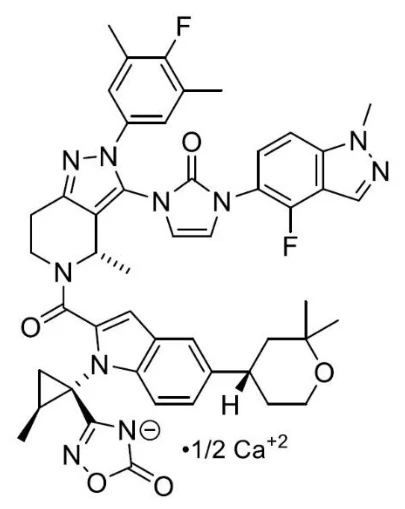
Physicochemical properties: Orforglipron calcium is a white to practically white to light brown solid that is hygroscopic. Orforglipron calcium is insoluble in water.
14. Clinical Trials
14.1. Clinical Trials by Indication
Weight Reduction and Weight Maintenance
Table 7 - Summary of Patient Demographics for Clinical Trials in Adult Patients with Either Obesity (BMI ≥ 30 kg/m2), or Overweight (BMI ≥ 27 to < 30 kg/m2) and at Least One Weight-Related Comorbidity
| Study | Study design and duration | Dosage, Route of administration | Study subjects (n) | Age (range) | Sex |
| ATTAIN-1 | Phase 3, 72-week randomized, double-blind, placebo-controlled | FOUNDAYO capsules: 6 mg, 12 mg, 36 mg, oral, daily Placebo capsules: oral, daily | 3127 | 45 years (18 - 88) | 64% female 36% male |
| ATTAIN-2 | Phase 3, 72-week randomized, double-blind, placebo-controlled, in patients with Type 2 Diabetes | FOUNDAYO capsules: 6 mg,12 mg, 36 mg, oral, daily Placebo capsules: oral, daily | 1613 | 57 years (20 - 92) | 47% female 53% male |
The effectiveness of FOUNDAYO for weight reduction and maintenance in conjunction with a healthy diet and physical activity was studied in two randomized, double-blind, placebo-controlled trials (ATTAIN-1 and ATTAIN-2) in adults aged 18 years and older. In these studies, all patients received standard lifestyle intervention which included instruction on healthy diet and physical activity counseling (recommended minimum of 150 minutes/week) that began with the first dose of study medication or placebo and continued throughout the trial. In ATTAIN-1 patients were randomized in a 3:3:3:4 ratio to FOUNDAYO 6 mg capsule, FOUNDAYO 12 mg capsule, FOUNDAYO 36 mg capsule, or placebo once daily. In ATTAIN-2 patients were randomized in a 1:1:1:2 ratio to FOUNDAYO 6 mg capsule, FOUNDAYO 12 mg capsule, FOUNDAYO 36 mg capsule, or placebo once daily.
In these trials, the primary efficacy endpoint was the mean percent change in body weight compared with placebo from baseline to Week 72 for orforglipron 6 mg, 12 mg, and 36 mg in the Intent-to-Treat (ITT) population and treatment regimen estimand data points set. The ITT population consists of all randomized patients. The treatment-regimen estimand represents the estimated average treatment effect regardless of adherence to study intervention or initiation of prohibited weight management treatments. Missing data were imputed from retrieved patients of the same randomized treatment group when the missingness was possibly related to study treatment; otherwise, missing data were imputed using observed data from the same randomized treatment group (primary multiple imputation, PMI).
ATTAIN-1
ATTAIN-1 was a 72-week trial that enrolled 3127 adult patients with obesity (BMI ≥ 30 kg/m2), or with overweight (BMI 27 to < 30 kg/m2) and at least one weight-related comorbid condition, such as dyslipidemia, hypertension, obstructive sleep apnea, or cardiovascular disease; patients with type 2 diabetes were excluded. At baseline, mean age was 45 years (range 18 to 88 years), 64% were female, 56% were White, 28% were Asian, 9% were Black or African American, and 0.4% were American Indian/Alaska Native. A total of 38% were Hispanic or Latino ethnicity. Mean baseline body weight was 103.2 kg and mean BMI was 37.0 kg/m2. At baseline, 40% of patients had hypertension, 39% had dyslipidemia, 11% had obstructive sleep apnea, 1.4% had coronary artery disease, and 1.5% had cerebrovascular disease. The proportions of patients who discontinued study drug in ATTAIN-1 were 21.9%, 22.5%, and 24.4% for the 6 mg capsule, 12 mg capsule, and 36 mg capsule FOUNDAYO-treated groups, respectively, and 29.9% for the placebo-treated group.
ATTAIN-2
ATTAIN-2 was a 72-week trial that enrolled 1613 adult patients with BMI ≥ 27.0 kg/m2 and type 2 diabetes. Patients included in the trial had baseline HbA1c 7% to 10% and were treated with either diet and exercise alone, or any oral anti-hyperglycemic agent except dipeptidyl peptidase-4 (DPP-4) inhibitors or GLP-1 receptor agonists. Patients who were taking injectable glucose lowering agents, including insulin, GLP-1 receptor agonists, or pramlintide were also excluded. At baseline, mean age was 57 years (range 20 to 92 years), 47% were female, 71% were White, 17% were Asian, 7% were Black or African American, and 0.3% were American Indian/Alaska Native. A total of 30% were of Hispanic or Latino ethnicity. Mean baseline body weight was 101.4 kg, mean BMI was 35.6 kg/m2, and mean HbA1c was 8.05%. At baseline, 83.8% of patients were receiving metformin, 32.1% an SGLT2-inhibitor, 13.9% a sulfonylurea, and 4.8% pioglitazone. At baseline, 74% of patients had hypertension, 71% had dyslipidemia, 13% had obstructive sleep apnea, 7% had coronary artery disease, 5% had cerebrovascular disease, and 11% had diabetic retinopathy. The proportion of patients who discontinued study drug in ATTAIN-2 were 19.1%, 22.3%, and 20.5% for the 6 mg capsule, 12 mg capsule, and 36 mg capsule FOUNDAYO-treated groups, respectively, and 20.0% for the placebo-treated group.
Study results
Effect of FOUNDAYO on Body Weight and Waist Circumference
After 72 weeks of treatment in ATTAIN-1 and ATTAIN-2, FOUNDAYO resulted in a statistically significant reduction in body weight compared with placebo. Among patients treated with FOUNDAYO 6 mg, 12 mg, and 36 mg, greater proportions of patients achieved at least 5%, 10%, 15%, and 20% weight reduction compared to placebo (see Table 8). A reduction in body weight was observed with FOUNDAYO regardless of age, sex, race, ethnicity, baseline BMI, and glycemic status.
Table 8 - Changes in Body Weight and Waist Circumference at Week 72 in ATTAIN-1 and ATTAIN-2 in Patients with Obesity or Overweight
| ATTAIN-1 | ATTAIN-2 | |||||||||||||||||||||||||||||||
|---|---|---|---|---|---|---|---|---|---|---|---|---|---|---|---|---|---|---|---|---|---|---|---|---|---|---|---|---|---|---|---|---|
| ITT Population | Pbo N = 949 | FOUNDAYO 6 mg N = 723 | FOUNDAYO 12 mg N = 725 | FOUNDAYO 36 mg N = 730 | Pbo N = 630 | FOUNDAYO 6 mg N = 329 | FOUNDAYO 12 mg N = 332 | FOUNDAYO 36 mg N = 322 | ||||||||||||||||||||||||
| Primary Endpoint: | ||||||||||||||||||||||||||||||||
| Body Weight | ||||||||||||||||||||||||||||||||
| Baseline mean (kg) | 103.9 | 103.2 | 102.2 | 103.1 | 101.2 | 102.3 | 102.7 | 99.8 | ||||||||||||||||||||||||
| Change from baseline (%)a | -2.1 | -7.5 | -8.4 | -11.2 | -2.5 | -5.1 | -7.0 | -9.6 | ||||||||||||||||||||||||
| Difference (%) from Pbo (95% CI)a | NA | -5.5b (-6.5, -4.5) | -6.3b (-7.3, -5.4) | -9.1b (-10.1, -8.1) | NA | -2.7b (-3.7, -1.6) | -4.5b (-5.5, -3.6) | -7.1b (-8.2, -6.1) | ||||||||||||||||||||||||
| Key Secondary Endpoints | ||||||||||||||||||||||||||||||||
| Patients (%) Achieving Body Weight Reduction | ||||||||||||||||||||||||||||||||
| ≥ 5%c | 27 | 61b | 64b | 72b | 27 | 48b | 55b | 67b | ||||||||||||||||||||||||
| ≥ 10%c | 13 | 33b | 40b | 55b | 9 | 23b | 31b | 46b | ||||||||||||||||||||||||
| ≥ 15%c | 6 | 15b | 20b | 36b | 3 | 7d | 14b | 26b | ||||||||||||||||||||||||
| ≥ 20%c | 3 | 6d | 9b | 18b | 1 | 3d | 4d | 11d | ||||||||||||||||||||||||
| Waist Circumference (cm) | ||||||||||||||||||||||||||||||||
| Baseline mean | 112.8 | 112.2 | 112.0 | 112.4 | 115.0 | 116.8 | 116.2 | 114.7 | ||||||||||||||||||||||||
| Change from baselinea | -3.1 | -7.1 | -8.2 | -10.0 | -2.8 | -5.4 | -6.3 | -8.3 | ||||||||||||||||||||||||
| Difference from placebo (95% CI)a | NA | -4.0b (-4.9, -3.1) | -5.1b (-6.0, -4.2) | -6.9b (-7.9, -6.0) | NA | -2.6d (-3.6, -1.5) | -3.5d (-4.5, -2.5) | -5.5b (-6.5, -4.5) | ||||||||||||||||||||||||
Abbreviations: ANCOVA = analysis of covariance; CI = confidence interval; ITT = intent-to-treat; N = number of patients randomly assigned to study drug; NA = Not Applicable; Pbo = Placebo.
a Unconditional average treatment effect estimated using ANCOVA adjusted for baseline value and other stratification factors.
b p< 0.001 (unadjusted 2-sided) compared to placebo for superiority; controlled for multiplicity.
c Unconditional average treatment effect estimated using logistic regression adjusted for baseline value and other stratification factors.
d Not controlled for multiplicity.
The time courses of weight reduction with FOUNDAYO and placebo from baseline through Week 72 are depicted in Figure 1 for ATTAIN-1 and Figure 2 for ATTAIN-2. Among all FOUNDAYO groups, statistically significant reductions in body weight compared to placebo were observed as early as Week 4. Weight reduction was maintained through 72-weeks in both studies.
Figure 1. Change Over Time in Body Weight in ATTAIN-1 in Patients with Obesity or Overweight (without Type 2 Diabetes)
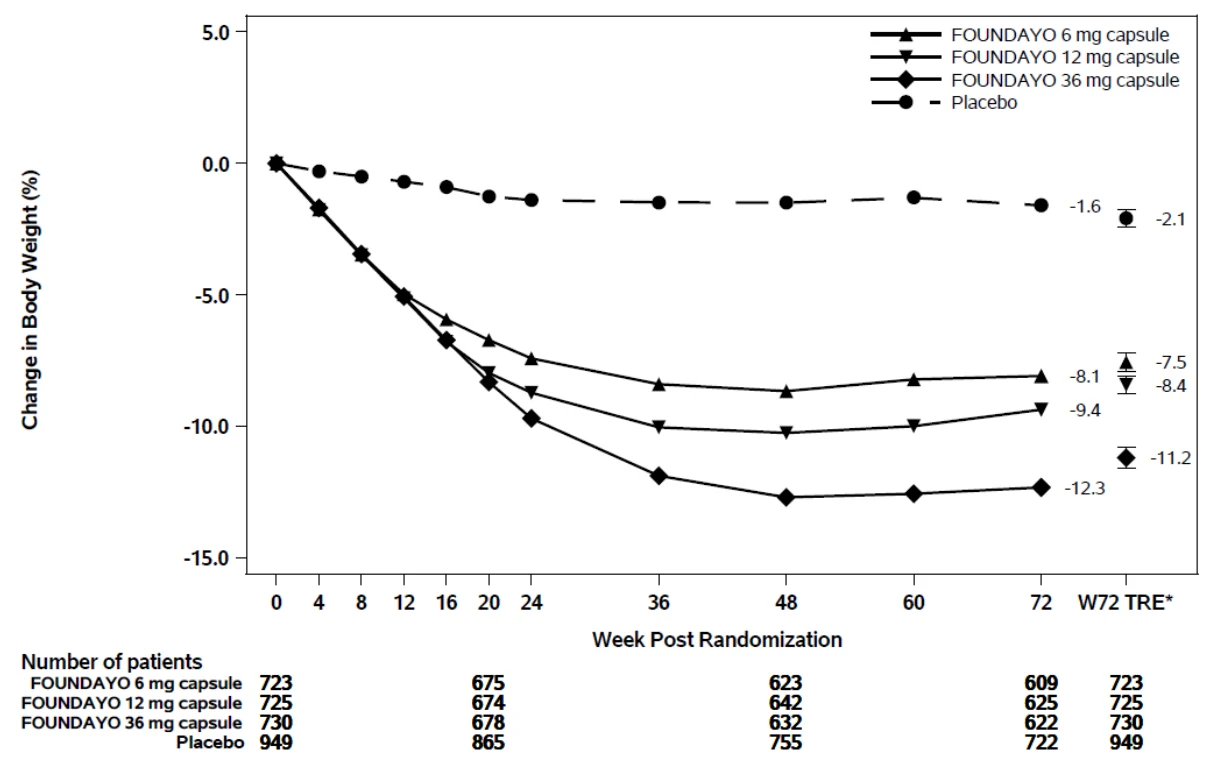
Abbreviation: W72 TRE = treatment regimen estimand at Week 72.
Displayed results are from randomized participants and treatment regimen estimand data points set.
Observed mean value from Week 0 to Week 72
* Model based estimate ± standard error at Week 72 using primary multiple imputation.
Figure 2. Change Over Time in Body Weight in ATTAIN-2 in Patients with Obesity or Overweight and Type 2 Diabetes
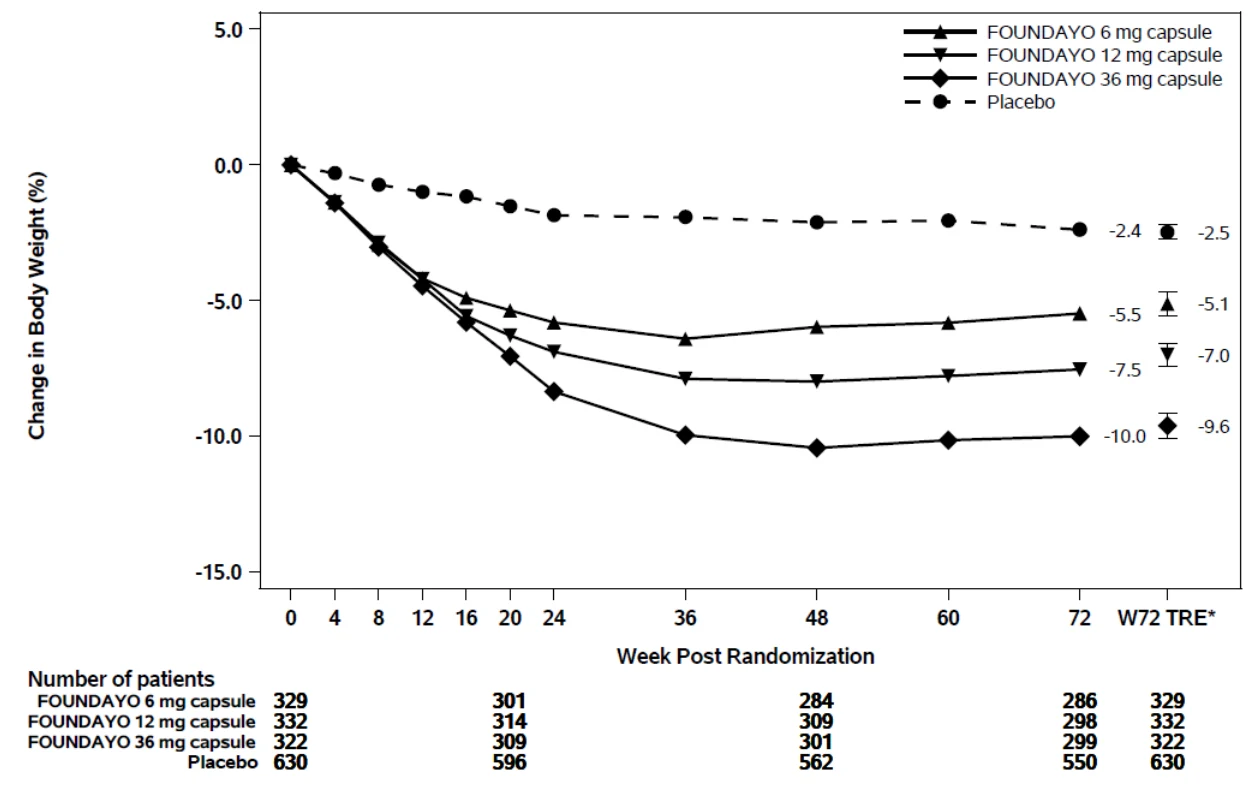
Abbreviation: W72 TRE = treatment regimen estimand at Week 72.
Displayed results are from randomized participants and treatment regimen estimand data points set.
Observed mean value from Week 0 to Week 72
* Model based estimate ± standard error at Week 72 using primary multiple imputation.
Effect of FOUNDAYO on Cardiometabolic Parameters
Changes in key secondary cardiometabolic parameters with FOUNDAYO are shown in Table 9 for ATTAIN-1 and ATTAIN-2.
Table 9 - Changes in Key Secondary Cardiometabolic Parameters at Week 72 in ATTAIN-1 and ATTAIN-2 in Patients with Obesity or Overweight
| ATTAIN-1 | ATTAIN-2 | ||||||||||||||||||
|---|---|---|---|---|---|---|---|---|---|---|---|---|---|---|---|---|---|---|---|
| ITT Population | Pbo N = 949 | FOUNDAYO Pooled Doses N = 2178 | Pbo N = 630 | FOUNDAYO Pooled Doses N = 983 | |||||||||||||||
| Systolic Blood Pressure (mmHg) | |||||||||||||||||||
| Baseline mean | 125.8 | 125.4 | 130.6 | 132.0 | |||||||||||||||
| Change from baselinea | -1.4 | -5.7 | -1.6 | -4.2 | |||||||||||||||
| Difference from Pbo (95% CI)a | NA | -4.2 (-5.3, -3.2)b | NA | -2.6 (-4.0, -1.3)b | |||||||||||||||
| Non-HDL Cholesterol (mmol/L) | |||||||||||||||||||
| Baseline meanc | 3.7 | 3.7 | 3.2 | 3.1 | |||||||||||||||
| % change from baselinea | -1.9 | -6.7 | -2.5 | -6.2 | |||||||||||||||
| Relative difference from Pbo (95% CI)a | NA | -4.9 (-6.7, -3.1)b,d | NA | -3.8 (-6.6, -0.8)b,d | |||||||||||||||
| Triglycerides (mmol/L) | |||||||||||||||||||
| Baseline meanc | 1.4 | 1.4 | 1.8 | 1.8 | |||||||||||||||
| % change from baselinea | -3.8 | -14.8 | -4.2 | -16.0 | |||||||||||||||
| Relative difference from Pbo (95% CI)a | NA | -11.5 (-14.5, -8.3)b,d | NA | -12.2 (-15.9, -8.4)b,d | |||||||||||||||
Abbreviations: ANCOVA = analysis of covariance; CI = confidence interval; ITT = intent-to-treat; N = number of patients randomly assigned to study drug; NA = Not Applicable; Pbo = Placebo.
a Unconditional average treatment effect estimated using ANCOVA adjusted for baseline value and other stratification factors.
b p< 0.001 (unadjusted 2-sided) compared to placebo for superiority; controlled for multiplicity.
c Baseline value is the geometric mean.
d Analyzed using log-transformed data.
Table 10 - Changes in Key Secondary Endpoints at Week 72 in Patients with Obesity or Overweight with Type 2 Diabetes in ATTAIN-2
| ITT Population | Pbo N = 630 | FOUNDAYO 6 mg N = 329 | FOUNDAYO 12 mg N = 332 | FOUNDAYO 36 mg N = 322 | ||||||||
|---|---|---|---|---|---|---|---|---|---|---|---|---|
| HbA1c (%) | ||||||||||||
| Baseline mean | 8.0 | 8.0 | 8.1 | 8.1 | ||||||||
| Change from baselinea | -0.5 | -1.2 | -1.5 | -1.7 | ||||||||
| Difference from placebo (95% CI)a | NA | -0.8 (-0.9, -0.6)b | -1.0 (-1.2, -0.9)b | -1.2 (-1.4, -1.0)b | ||||||||
| Patients (%) achieving HbA1c | ||||||||||||
| < 7%c | 30 | 65b | 76b | 76b | ||||||||
| ≤ 6.5%c | 15 | 53b | 58b | 67b | ||||||||
| Fasting Serum Glucose (mmol/L) | ||||||||||||
| Baseline mean | 8.4 | 8.5 | 8.6 | 8.6 | ||||||||
| Change from baselinea | -0.5 | -1.7 | -2.1 | -2.4 | ||||||||
| Difference from placebo (95% CI)a | NA | -1.2 (-1.5, -0.9)b | -1.6 (-1.9, -1.4)b | -1.8 (-2.1, -1.5)b | ||||||||
Abbreviations: ANCOVA = analysis of covariance; CI = confidence interval; ITT = intent-to-treat; N = number of patients randomly assigned to study drug; NA - Not Applicable, Pbo = Placebo.
a Unconditional average treatment effect estimated using ANCOVA adjusted for baseline value and other stratification factors.
b p< 0.001 (unadjusted 2-sided) compared to placebo for superiority; controlled for multiplicity.
c Unconditional average treatment effect estimated using logistic regression adjusted for baseline value and other stratification factors.
Other information
In ATTAIN-1, reductions in LDL cholesterol were greater with pooled orforglipron doses than with placebo (−4.8% vs. −1.3%; nominal p<0.001), an additional secondary endpoint not included in the multiplicity-controlled testing hierarchy.
In ATTAIN-2, FOUNDAYO (pooled doses) was associated with reductions in HbA1c from baseline to Week 72 compared with placebo that were generally consistent across subgroups defined by background antihyperglycemic therapy at baseline, including metformin (-1.5% versus -0.4%), SGLT2 inhibitors (-1.3% versus -0.3%), sulfonylureas (-1.4% versus -0.4%), or pioglitazone (-1.4% versus -0.4%). Participants may have been receiving more than one background antihyperglycemic medication and could therefore be included in more than one subgroup. These analyses were not pre-specified and were not controlled for type 1 error.
Glycemic Control in Adult Patients with Type 2 Diabetes
Table 11 - Summary of Patient Demographics for Clinical Trials in Adult Patients with Type 2 Diabetes
| Study | Study design and duration | Dosage, Route of administration | Background therapy | Study subjects (n) | Age (range) | Sex |
| ACHIEVE-1 | Phase 3, multicenter, 40-week, randomized, parallel-arm, double-blind, placebo-controlled | FOUNDAYO capsules: 3 mg, 12 mg 36 mg, oral, daily Placebo capsules: oral, daily | None | 559 | 53 years (18 - 83) | 48% female 52% male |
| ACHIEVE-2 | Phase 3, multicenter, 40-week, randomized, parallel-arm, open label (orforglipron dose blinded), active comparator-controlled | FOUNDAYO capsules: 3 mg, 12 mg, 36 mg, oral, daily Dapagliflozin tablets: 10 mg oral, daily | Metformin (100%) | 962 | 56 years (19 - 85) | 49% female 51% male |
| ACHIEVE-3 | Phase 3, multicenter, 52-week, randomized, parallel-arm, open-label (orforglipron dose blinded), active comparator-controlled | FOUNDAYO capsules: 12 mg, 36 mg, oral, daily Semaglutide tablets: 7 mg, 14 mg oral, daily | Metformin (100%) | 1698 | 54 years (17 - 83) | 49% female 51% male |
| ACHIEVE-5 | Phase 3, multicenter, 40-week randomized, parallel-arm, double-blind, placebo-controlled | FOUNDAYO capsules: 3 mg, 12 mg, 36 mg, oral, daily Placebo capsules: oral, daily | Insulin glargine (100%) with/without metformin and/or SGLT2i Metformin only (38%) SGLT-2i only (15%) Metformin and SGLT-2i (39%) Neither (8%) | 546 | 60 years (26 - 95) | 47% female 53% male |
Abbreviations: SGLT-2i = Sodium-glucose cotransporter 2 inhibitor.
A total of 3765 adult patients with type 2 diabetes and inadequate glycemic control were randomized, of whom 2395 were treated with FOUNDAYO, in 4 placebo- and/or active-controlled, glycemic control global phase 3 studies to evaluate the safety and efficacy of FOUNDAYO.
Primary efficacy analyses were conducted in the ITT population and treatment regimen estimand data points set. The ITT population consists of all randomized participants. The treatment-regimen estimand represents the estimated average treatment effect regardless of adherence to study intervention or initiation of additional glucose-lowering medications. Missing data were imputed from retrieved patients of the same randomized treatment group when the missingness was possibly related to study treatment; otherwise, missing data were imputed using observed data from the same randomized treatment group (primary multiple imputation, PMI).
Monotherapy Use of FOUNDAYO in Patients with Type 2 Diabetes
ACHIEVE-1
In this 40-week double-blind trial, 559 patients with type 2 diabetes with inadequate glycemic control with healthy diet and physical activity, were randomised to FOUNDAYO 3 mg, 12 mg, or 36 mg once daily or placebo.
Patients had a mean age of 53 years and 52% were men. The mean duration of type 2 diabetes was 4.4 years and the mean BMI was 33 kg/m2. Overall, 26% were White, 4% were Black or African American, and 44% were Asian; 40% identified as Hispanic or Latino ethnicity.
In this trial, the primary efficacy endpoint was the change from baseline in HbA1c compared with placebo from baseline to Week 40 for orforglipron 3 mg, 12 mg, and 36 mg in the ITT population.
Monotherapy with FOUNDAYO 3 mg, 12 mg, or 36 mg once daily for 40 weeks resulted in a statistically significant reduction in HbA1c compared with placebo (see Table 12 and Figure 3).
Table 1 - Results at Week 40 of FOUNDAYO as Monotherapy in Adult Patients with Type 2 Diabetes with Inadequate Glycemic Control with Healthy Diet and Physical Activity in ACHIEVE-1
| ITT Population | Pbo N = 138 | FOUNDAYO 3 mg N = 143 | FOUNDAYO 12 mg N = 137 | FOUNDAYO 36 mg N = 141 | ||||||||||||||
|---|---|---|---|---|---|---|---|---|---|---|---|---|---|---|---|---|---|---|
| Primary Endpoint | ||||||||||||||||||
| HbA1c (%) | ||||||||||||||||||
| Baseline mean | 8.0 | 7.9 | 8.0 | 8.1 | ||||||||||||||
| Change from baselinea | -0.4 | -1.2 | -1.5 | -1.5 | ||||||||||||||
| Difference from placebo (95% CI)a | NA | -0.8 (-1.1, -0.6)b | -1.1 (-1.3, -0.8)b | -1.1 (-1.3, -0.8)b | ||||||||||||||
| Key Secondary Endpoints | ||||||||||||||||||
| Patients (%) achieving HbA1c | ||||||||||||||||||
| < 7%c | 33 | 68b | 73b | 73b | ||||||||||||||
| ≤ 6.5%c | 15 | 57b | 58b | 62b | ||||||||||||||
| Fasting Serum Glucose (mmol/L) | ||||||||||||||||||
| Baseline mean | 8.0 | 7.9 | 8.6 | 8.3 | ||||||||||||||
| Change from baselinea | -0.6 | -1.7 | -2.0 | -1.9 | ||||||||||||||
| Difference from placebo (95% CI)a | NA | -1.1 (-1.6, -0.6)b | -1.4 (-1.8, -1.0)b | -1.3 (-1.9, -0.8)b | ||||||||||||||
| Body Weight (%) | ||||||||||||||||||
| Baseline mean (kg) | 90.0 | 90.3 | 90.6 | 90.1 | ||||||||||||||
| % change from baselinea | -1.7 | -4.5 | -5.8 | -7.6 | ||||||||||||||
| Difference from placebo (95% CI)a | NA | -2.8 (-4.0, -1.5)d | -4.1 (-5.4, -2.7)b | -5.9 (-7.4, -4.4)b | ||||||||||||||
| Body Weight (kg) | ||||||||||||||||||
| Baseline mean | 90.0 | 90.3 | 90.6 | 90.1 | ||||||||||||||
| Change from baselinea | -1.5 | -4.2 | -5.2 | -7.2 | ||||||||||||||
| Difference from placebo (95% CI)a | NA | -2.7 (-3.8, -1.5)d | -3.7 (-4.9, -2.5)b | -5.6 (-7.1, -4.2)b | ||||||||||||||
| Triglycerides (mmol/L) | ||||||||||||||||||
| Baseline meane | 1.6 | 1.7 | 1.7 | 1.9 | ||||||||||||||
| % change from baselinea,f | -4.2 | -8.8 | -14.9 | -14.0 | ||||||||||||||
| Relative difference from placebo (95% CI)a,f | NA | -4.8 (-13.0, 4.1)d | -11.1 (-18.6, -3.0)g | -10.2 (-17.5, -2.2)h | ||||||||||||||
| Non-HDL Cholesterol (mmol/L) | ||||||||||||||||||
| Baseline meane | 3.5 | 3.5 | 3.5 | 3.5 | ||||||||||||||
| % change from baselinea,f | 0.8 | -2.4 | -4.2 | -8.5 | ||||||||||||||
| Difference from placebo (95% CI)a,f | NA | -3.2 (-8.2, 2.0)d | -5.0 (-9.9, 0.2) | -9.3 (-13.8, -4.5)b | ||||||||||||||
Abbreviations: ANCOVA = analysis of covariance; CI = confidence interval; ITT = intent-to-treat; N = number of patients randomly assigned to study drug; NA = Not Applicable; Pbo = Placebo.
a Unconditional average treatment effect estimated using ANCOVA adjusted for baseline value and other stratification factors.
b p< 0.001 (unadjusted 2-sided) compared to placebo for superiority; controlled for multiplicity.
c Unconditional average treatment effect estimated using logistic regression adjusted for baseline value and other stratification factors.
d Not controlled for multiplicity.
e Baseline value is the geometric mean.
f Analyzed using log-transformed data.
g p< 0.01 (unadjusted 2-sided) compared to placebo for superiority; controlled for multiplicity.
h p< 0.05 (unadjusted 2-sided) compared to placebo for superiority; controlled for multiplicity.
Figure 3. Mean HbA1c (%) Over Time - Baseline to Week 40 (ACHIEVE-1)
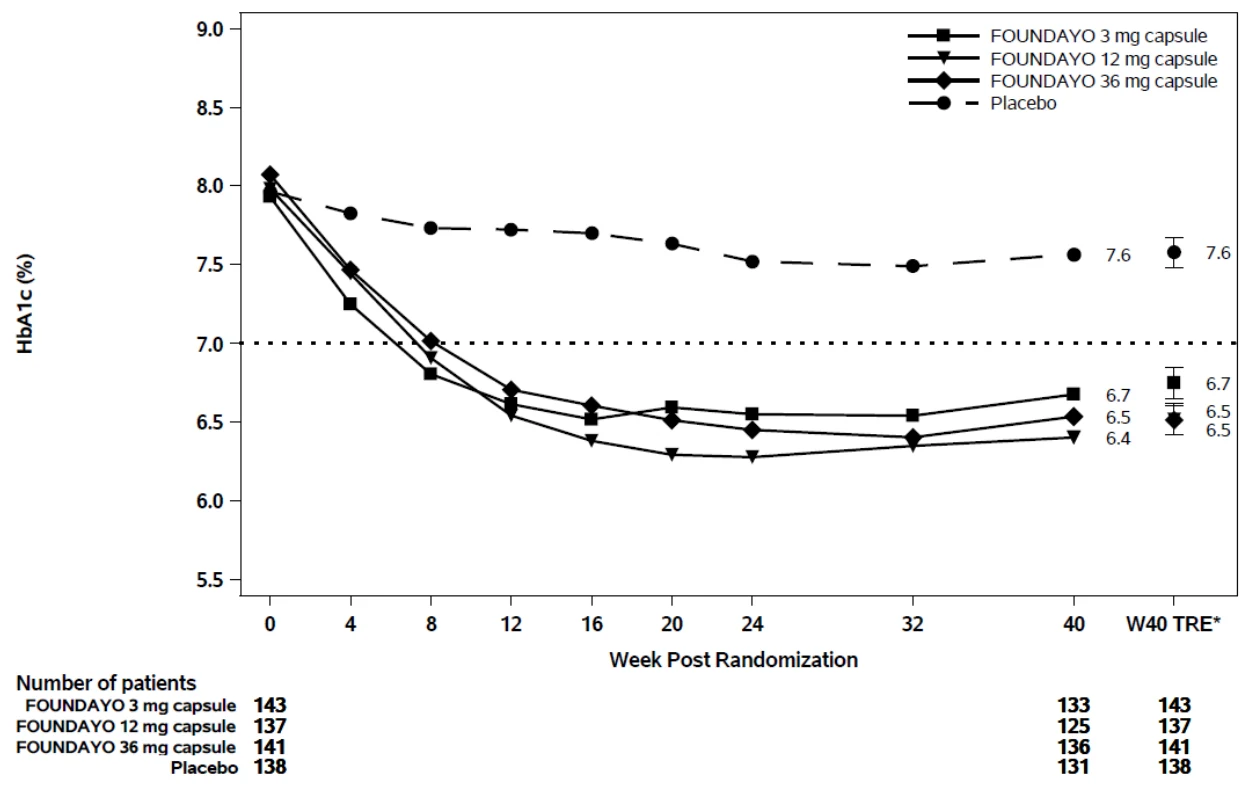
Abbreviation: W40 TRE = treatment regimen estimand at Week 40.
Displayed results are from randomized participants and treatment regimen estimand data points set.
Observed mean value from Week 0 to Week 40
* Model based estimate ± standard error at Week 40 using primary multiple imputation.
Combination Therapy Use of FOUNDAYO in Patients with Type 2 Diabetes
Combination with Metformin Compared to Dapagliflozin (ACHIEVE-2)
ACHIEVE-2 was a 40-week open label trial (double-blind with respect to FOUNDAYO dose assignment) that randomized 962 adult patients with type 2 diabetes with inadequate glycemic control on stable doses of metformin alone to once daily FOUNDAYO 3 mg, 12 mg, or 36 mg or dapagliflozin 10 mg, all in combination with metformin.
Patients had a mean age of 56 years and 51% were men. The mean duration of type 2 diabetes was 8.0 years and the mean BMI was 32.6 kg/m2. Overall, 52% were White, 2% were Black or African American, and 18% were Asian; 48% identified as Hispanic or Latino ethnicity.
The primary objective of this study was to demonstrate that orforglipron 3 mg, 12 mg and/or 36 mg are non-inferior to dapagliflozin in glycemic control, using a non-inferiority margin of 0.3%. The primary endpoint was the change from baseline in HbA1c at week 40 in the ITT population.
Treatment with FOUNDAYO 3 mg, 12 mg, or 36 mg once daily for 40 weeks resulted in a statistically significant reduction in HbA1c compared with dapagliflozin 10 mg once daily (see Table 13 and Figure 4).
Table 2 - Results at Week 40 of FOUNDAYO versus Dapagliflozin 10 mg in Adult Patients with Type 2 Diabetes in Combination with Metformin in ACHIEVE-2
| ITT Population | FOUNDAYO 3 mg N = 240 | FOUNDAYO 12 mg N = 241 | FOUNDAYO 36 mg N = 241 | DAPA 10 mg N = 240 | |||||||||||||
|---|---|---|---|---|---|---|---|---|---|---|---|---|---|---|---|---|---|
| Primary Endpoint | |||||||||||||||||
| HbA1c (%) | |||||||||||||||||
| Baseline mean | 8.2 | 8.1 | 8.2 | 8.1 | |||||||||||||
| Change from baselinea | -1.2 | -1.5 | -1.6 | -0.8 | |||||||||||||
| Difference from dapagliflozin (95% CI)a | -0.4 (-0.6, -0.2)b | -0.7 (-0.9, -0.5)b | -0.8 (-1.0, -0.5)b | NA | |||||||||||||
| Key Secondary Endpoints | |||||||||||||||||
| Patients (%) achieving HbA1c | |||||||||||||||||
| < 7%c | 59b | 70b | 69b | 37 | |||||||||||||
| ≤ 6.5%c | 50b | 57b | 58b | 20 | |||||||||||||
| Body Weight (%) | |||||||||||||||||
| Baseline mean (kg) | 90.1 | 92.0 | 88.1 | 89.4 | |||||||||||||
| % change from baselinea | -3.4 | -5.7 | -6.8 | -2.4 | |||||||||||||
| Difference from dapagliflozin (95% CI)a | -1.0 (-2.0, 0.1) | -3.3 (-4.4, -2.2)b | -4.4 (-5.6, -3.2)b | NA | |||||||||||||
| Body Weight (kg) | |||||||||||||||||
| Baseline mean | 90.1 | 92.0 | 88.1 | 89.4 | |||||||||||||
| Change from baselinea | -3.1 | -5.2 | -6.3 | -2.2 | |||||||||||||
| Difference from dapagliflozin (95% CI)a | -0.8 (-1.8, 0.1) | -3.0 (-4.0, -2.0)b | -4.1 (-5.2, -3.0)b | NA | |||||||||||||
| Triglycerides (mmol/L) | |||||||||||||||||
| Baseline meand | 1.7 | 1.7 | 1.7 | 1.7 | |||||||||||||
| % change from baselinea,e | -9.6 | -9.9 | -14.1 | -2.4 | |||||||||||||
| Relative difference from dapagliflozin (95% CI)a,e | -7.4 (-13.7, -0.6)f | -7.7 (-14.7 -0.1)f | -12.0 (-18.2, -5.4)b | NA | |||||||||||||
| Non-HDL Cholesterol (mmol/L) | |||||||||||||||||
| Baseline meane | 3.1 | 3.2 | 3.2 | 3.1 | |||||||||||||
| % change from baselinea,e | -2.4 | -5.4 | -5.2 | -0.1 | |||||||||||||
| Relative difference from dapagliflozin (95% CI)a,e | -2.3 (-6.8, 2.4) | -5.3 (-9.7, -0.7)f | -5.1 (-9.5, -0.5)g | NA | |||||||||||||
| Systolic Blood Pressure (mmHg) | |||||||||||||||||
| Baseline mean | 127.6 | 128.1 | 127.7 | 128.3 | |||||||||||||
| Change from baselinea | -3.1 | -4.6 | -5.4 | -3.0 | |||||||||||||
| Difference from dapagliflozin (95% CI)a | -0.0 (-1.9, 1.8) | -1.5 (-3.4, 0.3) | -2.4 (-4.2, -0.5)g | NA | |||||||||||||
Abbreviations: ANCOVA = analysis of covariance; CI = confidence interval; DAPA = dapagliflozin; ITT = intent-to-treat; N = number of patients randomly assigned to study drug; NA = not applicable.
a Unconditional average treatment effect estimated using ANCOVA adjusted for baseline value and other stratification factors.
b p< 0.001 (unadjusted 2-sided) compared to dapagliflozin for superiority; controlled for multiplicity.
c Unconditional average treatment effect estimated using logistic regression adjusted for baseline value and other stratification factors.
d Baseline value is the geometric mean.
e Analyzed using log-transformed data.
f Not controlled for multiplicity.
g p< 0.05 (unadjusted 2-sided) compared to dapagliflozin for superiority; controlled for multiplicity.
Figure 4. Mean HbA1c (%) Over Time - Baseline to Week 40 (ACHIEVE-2)
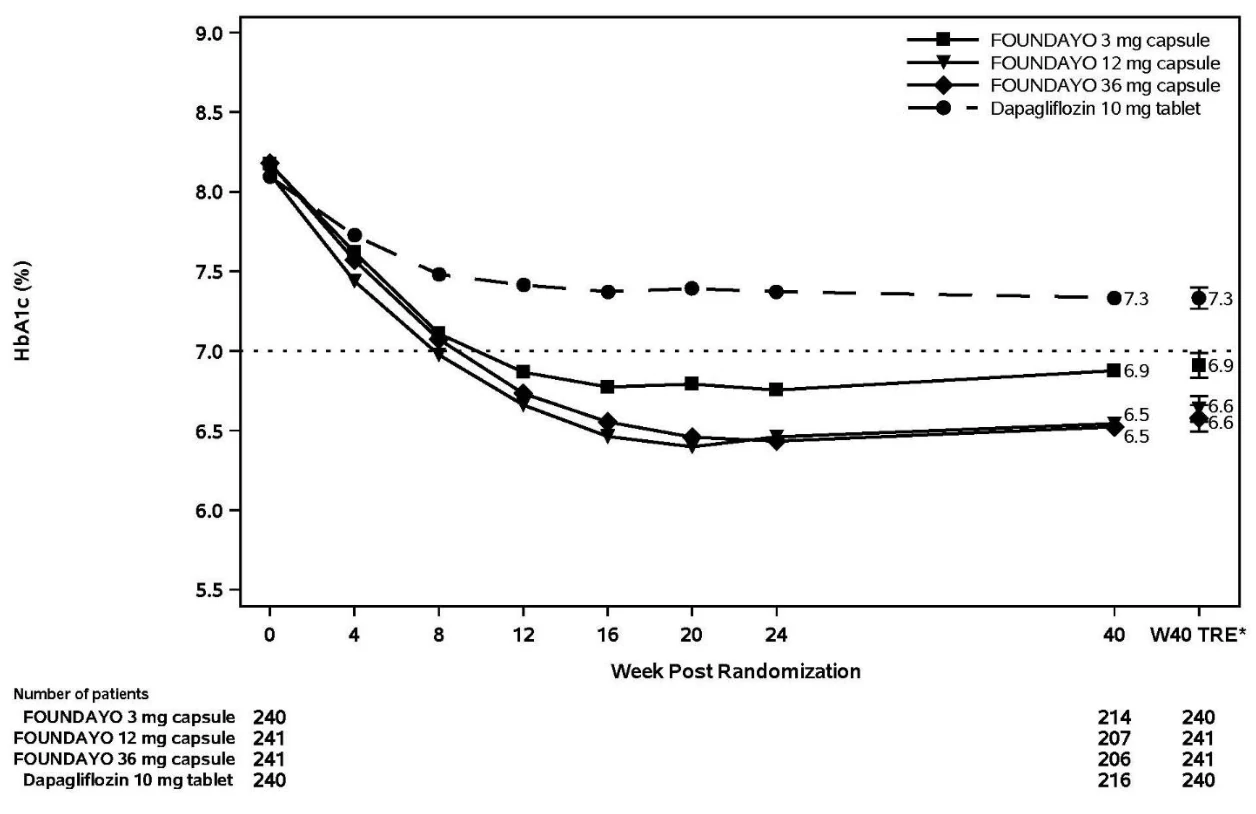
Abbreviation: W40 TRE = treatment regimen estimand at Week 40.
Displayed results are from randomized participants and treatment regimen estimand data points set.
Observed mean value from Week 0 to Week 40
* Model based estimate ± standard error at Week 40 using primary multiple imputation.
Combination with metformin compared to oral semaglutide (ACHIEVE-3)
ACHIEVE-3 was a 52-week open label trial that randomized 1698 adult patients with type 2 diabetes with inadequate glycemic control on stable doses of metformin alone to once daily FOUNDAYO 12 mg or 36 mg or oral semaglutide 7 mg or 14 mg, all in combination with metformin.
Patients had a mean age of 54 years and 51% were men. The mean duration of type 2 diabetes was 8.6 years and the mean BMI was 35.1 kg/m2. Overall, 62% were White, 4% were Black or African American, and 12% were Asian; 73% identified as Hispanic or Latino ethnicity.
The primary objective of this study was to demonstrate that orforglipron 36 mg is non-inferior to semaglutide 14 mg, and that orforglipron 12 mg is non-inferior to semaglutide 7 mg in glycemic control, using a non-inferiority margin of 0.3%. The primary end-point was the change from baseline in HbA1c at week 52 in the ITT population.
Treatment with FOUNDAYO 12 mg or 36 mg once daily for 52 weeks resulted in a statistically significant reduction in HbA1c compared with oral semaglutide 7 mg or 14 mg once daily (see Table 14 and Figure 5).
Table 3 - Results at Week 52 of FOUNDAYO versus oral semaglutide 7 mg or 14 mg in Adult Patients with Type 2 Diabetes in Combination with Metformin in ACHIEVE-3
| ITT Population | FOUNDAYO 12 mg capsule N = 424 | FOUNDAYO 36 mg capsule N = 423 | Semaglutide 7 mg tablet N = 426 | Semaglutide 14 mg tablet N = 425 | |||||||
|---|---|---|---|---|---|---|---|---|---|---|---|
| Primary Endpoint | |||||||||||
| HbA1c (%) | |||||||||||
| Baseline mean | 8.3 | 8.3 | 8.3 | 8.3 | |||||||
| Change from baselinea | -1.7 | -1.9 | -1.2 | -1.5 | |||||||
| Difference from oral semaglutide 7 mg (95% CI)a | -0.5 (-0.6 -0.3)b | -0.7 (-0.9, -0.5)b | NA | NA | |||||||
| Difference from oral semaglutide 14 mg (95% CI)a | -0.2 (-0.4, -0.1)c | -0.4 (-0.6, -0.3)b | NA | NA | |||||||
| Key Secondary Endpoints | |||||||||||
| Patients (%) achieving HbA1c | |||||||||||
| < 7%d,e | 72b,c | 76b,b | 54 | 64 | |||||||
| ≤ 6.5%d, e | 63b,b | 68b,b | 38 | 48 | |||||||
| Body weight (%) | |||||||||||
| Baseline mean (kg) | 96.1 | 96.5 | 97.1 | 98.4 | |||||||
| % change from baselinea | -6.1 | -8.2 | -3.9 | -5.3 | |||||||
| Difference from oral semaglutide 7 mg (95% CI)a | -2.3 (-3.2, -1.3)b | -4.3 (-5.3, -3.3)b | NA | NA | |||||||
| Difference from oral semaglutide 14 mg (95% CI)a | -0.8 (-1.7, 0.2) | -2.8 (-3.9, -1.8)b | NA | NA | |||||||
| Body Weight (kg) | |||||||||||
| Baseline mean | 96.1 | 96.5 | 97.1 | 98.4 | |||||||
| Change from baselinea | -6.2 | -8.1 | -3.8 | -5.2 | |||||||
| Difference from oral semaglutide 7 mg (95% CI)a | -2.4 (-3.4, -1.4)b | -4.2 (-5.2, -3.2)b | NA | NA | |||||||
| Difference from oral semaglutide 14 mg (95% CI)a | -1.1 (-2.0, -0.1)f | -2.9 (-3.9, -1.9)b | NA | NA | |||||||
Abbreviations: ANCOVA = analysis of covariance; CI = confidence interval; ITT = intent-to-treat; N = number of patients randomly assigned to study drug; NA = not applicable.
a Unconditional average treatment effect estimated using ANCOVA adjusted for baseline value and other stratification factors.
b p< 0.001 (unadjusted 2-sided) compared to oral semaglutide for superiority; controlled for multiplicity.
c p< 0.01 (unadjusted 2-sided) compared to oral semaglutide for superiority; controlled for multiplicity.
d Unconditional average treatment effect estimated using logistic regression adjusted for baseline value and other stratification factors.
e Comparison with oral semaglutide 7 mg and oral semaglutide 14 mg, respectively.
f Not controlled for multiplicity.
Figure 5. Mean HbA1c (%) Over Time - Baseline to Week 52 (ACHIEVE-3)
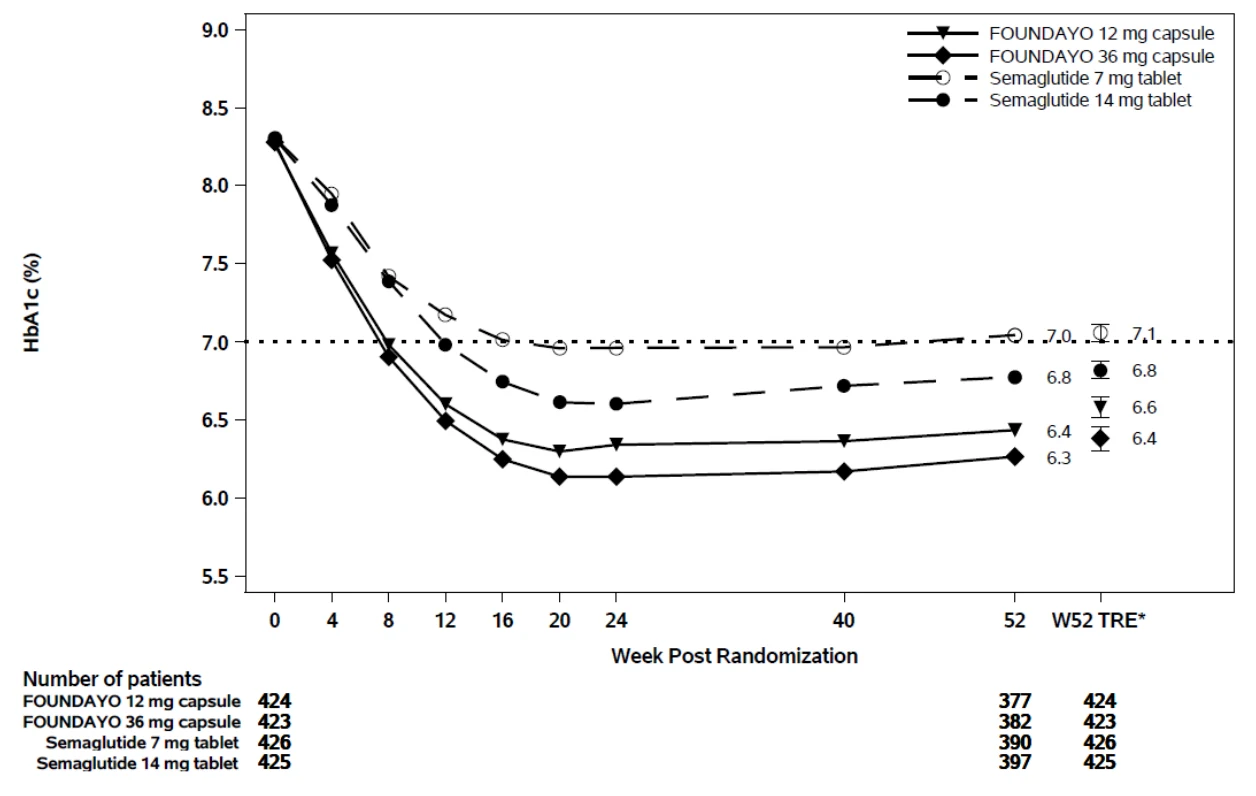
Abbreviation: W52 TRE = treatment regimen estimand at Week 52.
Displayed results are from randomized participants and treatment regimen estimand data points set.
Observed mean value from Week 0 to Week 52
* Model based estimate ± standard error at Week 52 using primary multiple imputation.
Combination with basal insulin with or without metformin and/or SGLT-2 Inhibitor (ACHIEVE-5)
ACHIEVE-5 was a 40-week double-blind trial that randomized 546 patients with type 2 diabetes with inadequate glycemic control on insulin glargine 100 units/mL, with or without metformin and/or sodium-glucose cotransporter 2 inhibitor (SGLT-2i), to FOUNDAYO 3 mg, 12 mg, 36 mg once daily, or placebo. The dose of background insulin glargine was adjusted using a treat-to-target algorithm based on self-measured fasting blood glucose values, targeting < 5.5 mmol/L.
Patients had a mean age of 60 years and 53% were men. The mean duration of type 2 diabetes was 15.0 years and the mean BMI was 31 kg/m2. Overall, 58% were White, 10% were Black or African American, and 26% were Asian; 41% identified as Hispanic or Latino ethnicity.
The mean starting dose of insulin glargine was 38, 36, 36, and 36 units/day for patients receiving FOUNDAYO 3 mg, 12 mg, 36 mg, and placebo, respectively. At week 40, mean dose of insulin glargine was 46, 46, 42, and 56 units/day for patients receiving FOUNDAYO 3 mg, 12 mg, 36 mg, and placebo, respectively.
The primary objective of this study was to demonstrate that orforglipron 12 mg and 36 mg is superior to placebo in glycemic control. The primary end-point was the change from baseline in HbA1c in the ITT population.
Treatment with FOUNDAYO 3 mg, 12 mg or 36 mg once daily for 40 weeks resulted in a statistically significant reduction in HbA1c compared with placebo (see Table 15 and Figure 6).
Table 4 - Results at Week 40 of FOUNDAYO with Insulin Glargine in Adult Patients with Type 2 Diabetes with or without Metformin and/or SGLT-2 inhibitor in ACHIEVE-5
| ITT Population | Pbo N = 141 | FOUNDAYO 3 mg N = 137 | FOUNDAYO 12 mg N = 132 | FOUNDAYO 36 mg N = 136 | ||||||||||
|---|---|---|---|---|---|---|---|---|---|---|---|---|---|---|
| Primary Endpoint | ||||||||||||||
| HbA1c (%) | ||||||||||||||
| Baseline mean | 8.4 | 8.6 | 8.6 | 8.5 | ||||||||||
| Change from baselinea | -0.8 | -1.6 | -1.9 | -1.8 | ||||||||||
| Difference from placebo (95% CI)a | NA | -0.8 (-1.0, -0.6)b | -1.1 (-1.3, -0.8)b | -1.0 (-1.3, -0.8)b | ||||||||||
| Key Secondary Endpoints | ||||||||||||||
| Patients (%) achieving HbA1c | ||||||||||||||
| < 7%c | 25 | 57b | 70b | 65b | ||||||||||
| ≤ 6.5%c | 12 | 43b | 60b | 55b | ||||||||||
| Fasting Serum Glucose (mmol/L) | ||||||||||||||
| Baseline mean | 8.0 | 8.3 | 8.3 | 8.0 | ||||||||||
| Change from baselinea | -1.9 | -2.2 | -2.5 | -2.3 | ||||||||||
| Difference from placebo (95% CI)a | NA | -0.4 (-0.7, 0.0) | -0.6 (-1.1, -0.2)d | -0.4 (-0.9, -0.0)d | ||||||||||
| Body weight (%) | ||||||||||||||
| Baseline mean (kg) | 85.7 | 86.1 | 86.2 | 82.9 | ||||||||||
| % change from baselinea | 0.2 | -2.6 | -4.8 | -5.4 | ||||||||||
| Difference from placebo (95% CI)a | NA | -2.8 (-4.4, -1.3)b | -5.0 (-6.7, -3.4)b | -5.6 (-7.4, -3.8)b | ||||||||||
| Body Weight (kg) | ||||||||||||||
| Baseline mean | 85.7 | 86.1 | 86.2 | 82.9 | ||||||||||
| Change at from baselinea | -0.0 | -2.3 | -4.3 | -4.6 | ||||||||||
| Difference from placebo (95% CI)a | NA | -2.2 (-3.7, -0.8)e | -4.3 (-5.8, -2.8)b | -4.6 (-6.2, -2.9)b | ||||||||||
Abbreviations: ANCOVA = analysis of covariance; CI = confidence interval; ITT = intent-to-treat; N = number of patients randomly assigned to study drug; NA = not applicable; Pbo = Placebo.
a Unconditional average treatment effect estimated using ANCOVA adjusted for baseline value and other stratification factors.
b p< 0.001 (unadjusted 2-sided) compared to placebo for superiority; controlled for multiplicity.
c Unconditional average treatment effect estimated using logistic regression adjusted for baseline value and other stratification factors.
d Not controlled for multiplicity.
e p< 0.01 (unadjusted 2-sided) compared to placebo for superiority; controlled for multiplicity.
Figure 6. Mean HbA1c (%) Over Time - Baseline to Week 40 (ACHIEVE-5)
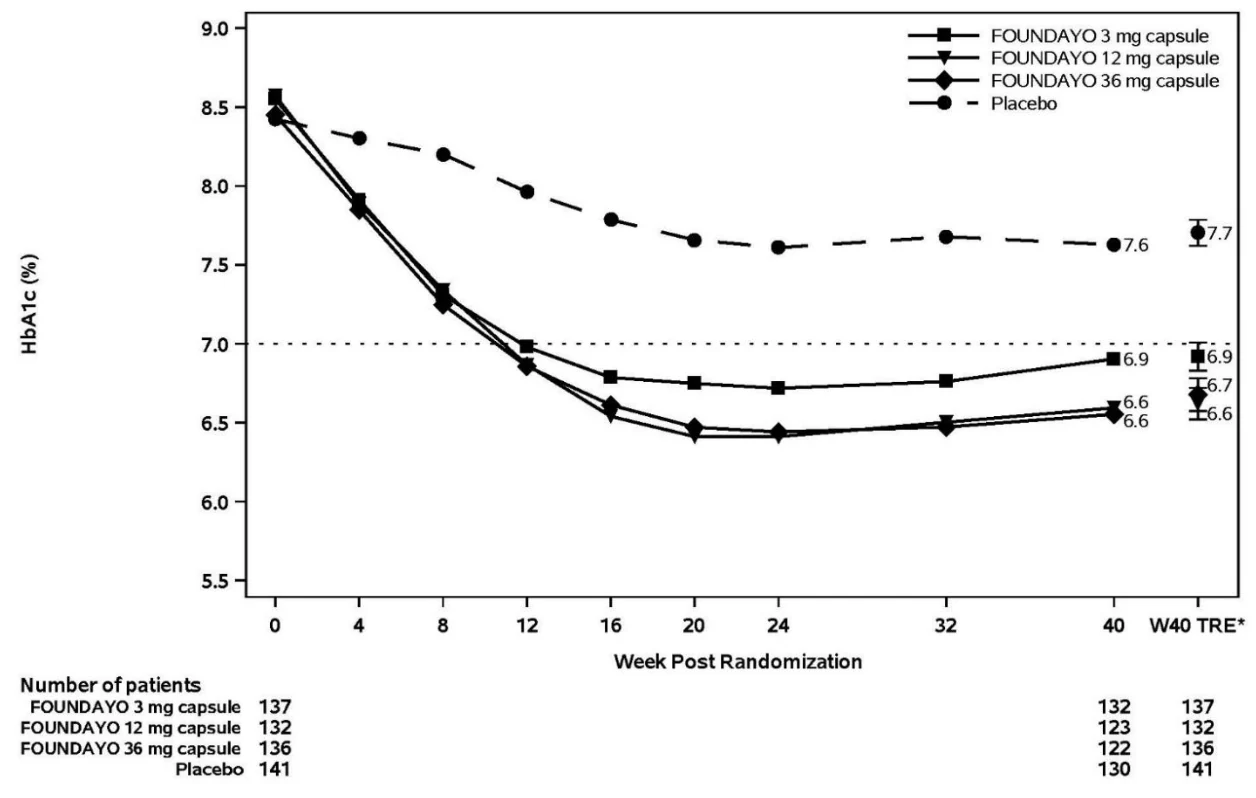
Abbreviation: W40 TRE = treatment regimen estimand at Week 40.
Displayed results are from randomized participants and treatment regimen estimand data points set.
Observed mean value from Week 0 to Week 40
* Model based estimate ± standard error at Week 40 using primary multiple imputation.
Other information
In the ACHIEVE-1, -2, and -5 studies, mean change from baseline in HbA1c (primary efficacy endpoint) was similar between patients receiving the 12 mg and 36 mg doses.
In the ACHIEVE-3 study, greater reductions in mean HbA1c from baseline were observed with the 36-mg dose compared to the 12-mg dose. In the ACHIEVE-1, -2, -3, and -5 studies, greater reductions in mean body weight and waist circumference were observed with the 36 mg dose compared to the 12-mg dose. In the ATTAIN-2 study, greater reductions in mean HbA1c, weight and waist circumference were observed with the 36-mg dose compared to the 12-mg dose.
Fasting serum glucose
Across ACHIEVE-1, -2, -3 and -5 trials, treatment with FOUNDAYO resulted in significant reductions from baseline in fasting serum glucose (FSG) (changes from baseline to primary end point were -1.7 mmol/L to -2.9 mmol/L). Significant reductions from baseline in FSG could be observed as early as 4 weeks. Further improvement in FSG was seen through to 40 weeks then was sustained through the longest study duration of 52 weeks.
Postprandial glucose
In ACHIEVE-1, -2, -3, and -5 studies all doses of FOUNDAYO showed statistically significant decreases compared with placebo or active comparators in the change from baseline in average 7-Point Self-Monitored Blood Glucose (SMBG) overall daily mean, premeal daily mean, and post meal daily mean. In ACHIEVE-1, -2, -3 and -5, for participants assigned to the FOUNDAYO 12 mg and 36 mg groups, all 7-point SMBG mean postprandial values remained below 7.8 mmol/L, except for the evening 2-hour post meal value in ACHIEVE-5.
Proportion of patients reaching HbA1c < 7 % and ≤ 6.5% without clinically significant hypoglycemia
In the 3 type 2 diabetes studies without basal insulin or sulfonylurea (ACHIEVE-1, -2 and -3), 99 % to 100 % of patients who achieved an HbA1c < 7 % or ≤ 6.5 % at the primary endpoint visit with FOUNDAYO treatment did so without clinically significant hypoglycemia (severe hypoglycemia or hypoglycemia with glucose level < 3 mmol/L).
In ACHIEVE-5 where FOUNDAYO was combined with titrated basal insulin, 82 % of patients who achieved an HbA1c < 7 % and 81 % of patients who achieved an HbA1c ≤ 6.5 % at the primary endpoint visit with FOUNDAYO treatment did so without clinically significant hypoglycemia.
Weight loss
Across ACHIEVE-1, -2, -3, and -5 trials, treatment with FOUNDAYO 12 mg and 36 mg resulted in statistically significant greater proportions of patients achieving weight reduction thresholds of ≥ 5 %, ≥ 10 %, and ≥ 15 % at primary endpoint visit compared with placebo and active comparators (dapagliflozin and semaglutide), based on the efficacy estimand. For the FOUNDAYO 3 mg, statistically significant greater proportions of patients achieved weight reduction thresholds of ≥ 5 % and ≥ 10 %, based on the efficacy estimand. The efficacy estimand represents efficacy had all randomized participants remained on study intervention (with possible dose interruptions) without initiating additional antihyperglycemic medications (> 14 days of use).
Blood Pressure
In ACHIEVE-1, FOUNDAYO compared to placebo reduced systolic blood pressure by up to -5.7 mmHg, with statistically significant reductions for the 12 mg and 36 mg doses. In ACHIEVE-3, FOUNDAYO 12 mg and 36 mg produced statistically significant reductions (up to -4.4 mmHg) compared with both oral semaglutide doses (up to -2.9 mmHg); these comparisons were not multiplicity-controlled.
Lipids
In ACHIEVE-3, FOUNDAYO 12 mg and 36 mg produced statistically significantly greater reductions (up to -14.8%) in triglycerides than oral semaglutide 7 mg (-6.5%), and the reduction was numerically greater than with oral semaglutide 14 mg (-13.3%). FOUNDAYO also produced greater reductions from baseline in non-HDL cholesterol (up to -5.8%) than oral semaglutide 7 mg and 14 mg (up to -2.9%). In ACHIEVE-5, FOUNDAYO 12 mg produced statistically significantly greater reductions in triglycerides (-15.6%) and non-HDL cholesterol (-8.8%) than placebo (-4.6% and -1.4% respectively).
16. Non-Clinical Toxicology
General Toxicology
In the 26-week rat study, orforglipron was administered orally to female and male Wistar Han rats at doses of 5, 30 and 200 mg/kg/day (2-, 6- and 25-fold the maximum recommended human dose [MRHD] based on AUC).
In the 39-week monkey study, orforglipron was administered orally to female and male cynomolgus monkeys at doses of 1.35 and 3 mg/kg/day (0.4- and 0.9-fold the MRHD based on AUC). Primary findings were consistent with the activity of GLP-1R agonists and included decreased body weight and food consumption. At both dose levels, slight to moderate increases in heart rate were observed on Days 27/28, 85/86, and 181/182, and were considered related to treatment. Gastrointestinal clinical signs were noted at 3 mg/kg/day in males and resolved during the recovery phase.
Genotoxicity
Orforglipron was not genotoxic at maximum tested limits. Orforglipron was not mutagenic with or without metabolic activation in an in vitro bacterial reverse mutation assay in five bacteria strains. Orforglipron was not clastogenic in an in vitro micronucleus assay using human lymphoblastoid TK6 cells, and it did not induce micronuclei formation following oral dosing up to 200 mg/kg/day in an in vivo micronucleus assay integrated in the rat 28-day general toxicity study.
Carcinogenicity
Orforglipron is not pharmacologically active in rats or mice.
In a 2-year rat carcinogenicity study, orforglipron was not carcinogenic at oral doses of 5, 30, and 200 mg/kg/day (3-, 9-, and 24-fold the MRHD based on AUC).
In a 26-week study in Tg.RasH2 transgenic mice, orforglipron was not carcinogenic at oral doses of 5, 30, and 200 mg/kg/day (3-, 14-, and 49-fold the MRHD based on AUC). For other GLP-1 receptor agonists that are pharmacologically active in rats, thyroid C-cell hyperplasia and neoplasia have been observed and are considered an on-target effect for other GLP-1 receptor agonists. The human relevance of these findings is unknown.
Reproductive and Developmental Toxicology
Orforglipron did not indicate harmful effects with respect to fertility in either rats or monkeys.
In animal reproduction studies in pregnant cynomolgus monkeys, no embryofetal development toxicity was observed at exposures that were lower than the MRHD. Higher dose levels and exposures cannot be achieved in monkeys due to on-target body weight effects.
Orforglipron is not pharmacologically active in rabbits. In a rabbit pilot dose-range finding study, slight decreases in fetal and placental weights with external malformations in 2 fetuses from 2 dams were observed at an exposure that was 13-fold higher than the MRHD. No embryofetal effects were observed in the definitive rabbit study conducted at exposures up to 6-fold higher than the MRHD.
Following a single oral dose administration of 15 mg/kg of radiolabeled orforglipron to lactating Sprague-Dawley rats on Days 10 to 11 post-parturition, orforglipron, orforglipron metabolites, or both were excreted into the breast milk. Orforglipron-derived radioactivity in the excreted milk was approximately 3-fold greater than that in plasma from lactating rats.