


Product Monograph - Fucidin H
Recent Major Label Changes
| None at time of the most recent authorisation. |
|---|
Table of Contents
Certain sections or subsections that are not applicable at the time of the preparation of the most recent authorized product monograph are not listed.
Recent Major Label Changes .................................................................................................... 2
Table of Contents .................................................................................................................... 2
Part 1: Healthcare Professional Information ............................................................................ 4
- 1.
Indications ............................................................................................................................. 4
1.1. Pediatrics ...................................................................................................................... 4
- 2. Contraindications .................................................................................................................. 4
- 4.
Dosage and Administration ................................................................................................... 5
4.1. Dosing Considerations ..................................................................................................... 5
4.2. Recommended Dose and Dosage Adjustment ................................................................ 5
4.4. Administration ................................................................................................................ 5
4.5. Missed Dose .................................................................................................................... 5
- 5. Overdose ................................................................................................................................ 5
- 6. Dosage Forms, Strengths, Composition, and Packaging ..................................................... 6
- 7.
Warning and Precautions ...................................................................................................... 6
General .................................................................................................................................. 6
Endocrine and Metabolism .................................................................................................... 6
Immune ………………………………………………………….………………………………………………………………….6
Reproductive Health .............................................................................................................. 7
Sensitivity/Resistance ............................................................................................................ 7
Skin …………………………………………………………………………………………………………………………………….7
7.1 Special Populations .......................................................................................................... 7
7.1.1 Pregnancy ................................................................................................................. 7
7.1.2 Breastfeeding ........................................................................................................... 8
7.1.3 Pediatrics ....................................................................................................................... 8
- 8.
Adverse Reactions ................................................................................................................. 8
8.1 Adverse Reaction Overview ............................................................................................. 8
8.2 Clinical Trial Adverse Reactions ........................................................................................ 8
8.5 Post-Market Adverse Reactions ....................................................................................... 9
- 9.
Drug Interactions .............................................................................................................. 9
9.2. Drug Interactions Overview............................................................................................. 9
9.3. Drug-Behaviour Interactions ........................................................................................... 9
9.4 Drug-Drug Interactions ..................................................................................................... 9
9.5. Drug-Food Interactions ................................................................................................... 9
9.6. Drug-Herb Interactions ................................................................................................... 9
9.7. Drug-Laboratory Test Interactions ................................................................................ 10
- 10.
Clinical Pharmacology ..................................................................................................... 10
10.1 Mechanism of Action ................................................................................................... 10
- 11. Storage, Stability, and Disposal ........................................................................................ 10
Part 2: Scientific Information ................................................................................................. 11
- 13. Pharmaceutical Information ............................................................................................ 11
- 14. Clinical Trials .................................................................................................................... 11
- 15. Microbiology ................................................................................................................... 12
- 16. Non-Clinical Toxicology .................................................................................................... 14
Patient Medication Information ............................................................................................ 18
Part 1: Healthcare Professional Information
1. Indications
FUCIDIN® H (Fusidic acid and Hydrocortisone acetate) is indicated for:
- the treatment of mild to moderately severe atopic dermatitis where Staphylococcus aureus is suspected as a contributing factor. The presence of Staph. aureus may be associated with crusting of lesions and/or erythema.
To reduce the development of drug-resistant bacteria and maintain the effectiveness of FUCIDIN® H and other antibacterial drugs, FUCIDIN® H should be used only to treat infections that are proven or strongly suspected to be caused by susceptible bacteria. When culture and susceptibility information are available, they should be considered in selecting or modifying antibacterial therapy. In the absence of such data, local epidemiology and susceptibility patterns may contribute to the empiric selection of therapy.
1.1. Pediatrics
Pediatrics (3 years of age and older): Based on the data submitted and reviewed by Health Canada, the safety and efficacy of FUCIDIN® H in pediatric patients has been established. However, FUCIDIN® H should be used with care in children as paediatric patients may be more susceptible to topical corticosteroid-induced HPA axis suppression and Cushing’s syndrome than adult patients (see 7 Warnings and Precautions, Endocrine and Metabolism and 7.1.3 Pediatrics).
2. Contraindications
- FUCIDIN® H is contraindicated in patients who are hypersensitive to this drug or to any ingredient in the formulation, including any non-medicinal ingredient, or component of the container. For a complete listing, see 6 Dosage Forms, Strengths, Composition, and Packaging.
Due to the content of corticosteroid, FUCIDIN® H is contraindicated in the following conditions:
- Primary skin infections caused by fungi, virus or bacteria, either untreated or uncontrolled by appropriate treatment (see 7 Warnings and Precautions, Immune).
- Skin manifestations in relation to tuberculosis, either untreated or uncontrolled by appropriate therapy.
- Eruptions following vaccinations.
- Perioral dermatitis and rosacea.
4. Dosage and Administration
4.1. Dosing Considerations
- FUCIDIN® H is for topical use only.
4.2. Recommended Dose and Dosage Adjustment
- FUCIDIN® H should be applied 3 times daily and gently massaged into the affected areas. In clinical trials the treatment period was 14 days. A shorter course should be considered if symptoms improve.
- Long-term continuous topical therapy for more than 14 days with FUCIDIN® H should be avoided (see 7 Warnings and Precautions, General).
- There are no data from randomized, controlled clinical trials on use of FUCIDIN® H in children under 3 years of age (see 7.1.3 Pediatrics).
4.4. Administration
Due to content of corticosteroid, FUCIDIN® H should be used with care near the eyes (see 7 Warning and Precautions, Skin).
4.5. Missed Dose
In the event of a missed dose, the patient should be instructed to apply FUCIDIN H as soon as they remember, then continue with the next scheduled application as usual.
5. Overdose
For topically applied fusidic acid, no information concerning potential symptoms and signs due to overdose administration is available. Cushing's syndrome and adrenocortical insufficiency may develop following topical application of corticosteroids in large amounts and for more than three weeks.
Systemic consequences of an overdose of the active substances after accidental oral intake are unlikely to occur. The amount of fusidic acid in one tube of FUCIDIN® H does not exceed the oral daily dose of systemic treatment. A single oral overdose of corticosteroids is rarely a clinical problem.
For the most recent information in the management of a suspected drug overdose, contact your regional poison control centre or Health Canada’s toll-free number, 1-844 POISON-X (1-844-764-7669).
- 6. Dosage Forms, Strengths, Composition, and Packaging
Table1 – Dosage Forms, Strengths, and Composition
Description
FUCIDIN® H is a white cream available in aluminium tubes of 30 g covered with internal epoxyphenol lacquer. The tube has re-closable high density polyethylene screw cap.
7. Warning and Precautions
General
Long-term continuous topical therapy for more than 14 days with FUCIDIN® H should be avoided.
Depending on the application site, possible systemic absorption of hydrocortisone acetate should always be considered during treatment with FUCIDIN® H.
Endocrine and Metabolism
Reversible hypothalamic-pituitary-adrenal (HPA) axis suppression may occur following systemic absorption of topical corticosteroids. Application to extensive areas, too frequent application, or application under occlusive dressings may result in systemic absorption with symptoms of adrenal suppression (see 8.5 Post-Market Adverse Reactions).
When used under occlusive dressing, over extensive areas, or on the face, scalp, axillae and scrotum, sufficient absorption may occur giving rise to adrenal suppression and other systemic effects.
FUCIDIN® H should be used with care in children as paediatric patients may be more susceptible to topical corticosteroid-induced HPA axis suppression and Cushing’s syndrome than adult patients.
Immune
Due to the immunosuppressant effect of corticosteroids, FUCIDIN® H may be associated with increased susceptibility to infection, aggravation of existing infection, and activation of latent infection. It is advised to switch to systemic therapy if infection cannot be controlled with topical treatment (see 2 Contraindications).
This also prevents the risk that the immunosuppressive action of corticosteroid might mask any potential symptoms of infections due to antibiotic-resistant bacteria. Similarly, steroids also mask hypersensitivity reactions.
| Route of Administration | Dosage Form / Strength/Composition | Non-Medicinal Ingredients |
| Topical | Cream, 2% Fusidic acid and 1% Hydrocortisone acetate | Butylated hydroxyanisol, cetyl alcohol, glycerol (85%), liquid paraffin, polysorbate 60, potassium sorbate, purified water and, white soft paraffin. |
Reproductive Health
- Fertility
There are no clinical studies with topical FUCIDIN® H regarding fertility.
Sensitivity/Resistance
Development of Drug Resistant Bacteria
Prescribing FUCIDIN® H in the absence of a proven or strongly suspected bacterial infection is unlikely to provide benefit to the patient and risks the development of drug-resistant bacteria.
Potential for Microbial Overgrowth
Bacterial resistance has been reported to occur with the topical use of fusidic acid. As with all antibiotics, extended or recurrent use of fusidic acid may increase the risk of developing antibiotic resistance. Limiting therapy with topical fusidic acid and hydrocortisone acetate to no more than 14 days at a time will minimise the risk of developing resistance.
Skin
FUCIDIN® H contains butyl hydroxyanisole, cetyl alcohol and potassium sorbate. These excipients may cause local skin reactions (e.g. contact dermatitis). Butyl hydroxyl-anisole may also cause irritation to the eyes and mucous membranes. Due to content of corticosteroid, FUCIDIN® H should be used with care near the eyes. Avoid getting FUCIDIN® H into the eyes. Application of topical corticosteroids near the eye can potentially cause increased intraocular pressure, glaucoma, or cataracts. (see 8.5 Post-Market Adverse Reactions).
Sensitization and irritation due to dermal applications of topical corticosteroids have been noted in rare instances.
Localized atrophy and striae, particularly on the flexor surfaces and on the face, may also develop.
7.1 Special Populations
7.1.1 Pregnancy
The safety of fusidic acid and/or topical hydrocortisone during pregnancy has not been established. The use of FUCIDIN® H during pregnancy requires that the potential benefits be weighed against the risks to the foetus.
Fusidic acid
Following systemic administration fusidic acid has been shown to penetrate the placental barrier. Animal studies have not demonstrated teratogenicity with fusidic acid (see 16 Non-Clinical Toxicology, Reproductive and developmental toxicology).
Hydrocortisone acetate
Topical administration of corticosteroids to pregnant animals can cause abnormalities of foetal development, including cleft palate and intra-uterine growth retardation. There may, therefore, be a risk of such effects to the human foetus.
7.1.2 Breastfeeding
The safety of fusidic acid and/or topical hydrocortisone during lactation has not been established.
Following systemic administration Fusidic acid has been detected in the milk of nursing mothers.
The use of FUCIDIN® H during lactation requires that the potential benefits be weighed against the risks to the nursing infant.
It is recommended to avoid applying FUCIDIN® H on the breast to protect the nursing infant from unintentional oral drug uptake.
7.1.3 Pediatrics
Clinical trials with FUCIDIN® H have not demonstrated any increased incidence of adverse effects in children 3 years and over. Paediatric patients may, however, demonstrate greater susceptibility to topical corticosteroid-induced hypothalamic-pituitary-adrenal axis suppression and to exogenous corticosteroid effects than mature patients because of greater absorption due to a larger skin surface area to body weight ratio. Therefore, excessive and prolonged use of FUCIDIN® H, especially under occlusive conditions, should be avoided. There are no data from randomized, controlled clinical trials on the safety and efficacy of FUCIDIN® H in children under 3 years of age.
8. Adverse Reactions
8.1 Adverse Reaction Overview
Fusidic acid has been reported to cause mild irritation at the application site but did not usually require discontinuation of therapy. Reports of hypersensitivity reactions have been rare.
Adverse effects are generally local and include dryness, itching, burning, local irritation, striae, skin atrophy, atrophy of subcutaneous tissues, telangiectasia, hypertrichosis, change in pigmentation and secondary infection. If applied to the face, acne rosacea or perioral dermatitis can occur.
8.2 Clinical Trial Adverse Reactions
Clinical trials are conducted under very specific conditions. Therefore, the frequencies of adverse reactions observed in the clinical trials may not reflect frequencies observed in clinical practice and should not be compared to frequencies reported in clinical trials of another drug.
Clinical trials demonstrated that FUCIDIN® H is well tolerated and associated with few adverse effects. In clinical trials, only 3.2% of patients experienced adverse effects. Adverse effects were not serious, consisting of irritation at the application site (1.6%) and flare up of dermatitis (1.6%).
8.5 Post-Market Adverse Reactions
The following post-market adverse drug reactions have been reported from world wide experience with FUCIDIN® H:
General disorders and administration site conditions: Application site reaction (incl. pruritus, burning and irritation)
Immune system disorders: Hypersensitivity
Skin and subcutaneous tissue disorders: Dermatitis contact, Eczema, Rash
Systemic undesirable class effects of mild corticosteroids, like hydrocortisone, include
adrenal suppression especially during prolonged topical administration (see 7 Warnings and Precautions, Endocrine and Metabolism).
Raised intra-ocular pressure and glaucoma may also occur after topical use of corticosteroids near the eyes, particularly with prolonged use and in patients predisposed to developing glaucoma (see 7 Warnings and Precautions, Skin).
Dermatological class adverse reactions of mild corticosteroids like hydrocortisone include: Atrophy, dermatitis (incl. dermatitis contact, dermatitis acneiform and perioral dermatitis), skin striae, telangiectasia, rosacea, erythema, depigmentation, hypertrichosis and hyperhidrosis. Ecchymosis may also occur with prolonged use of topical corticosteroids.
9. Drug Interactions
9.2. Drug Interactions Overview
No interaction studies have been performed.
9.3. Drug-Behaviour Interactions
The interaction of FUCIDIN H with individual behavioral risks (e.g. cigarette smoking, cannabis use, and/or alcohol consumption) has not been studied.
9.4 Drug-Drug Interactions
No interaction studies have been performed. Interactions with systemically administered medicinal products are considered unlikely.
9.5. Drug-Food Interactions
Interactions with food have not been established.
9.6. Drug-Herb Interactions
Interactions with herbal products have not been established.
9.7. Drug-Laboratory Test Interactions
Interactions with laboratory tests have not been established.
10. Clinical Pharmacology
10.1 Mechanism of Action
FUCIDIN® H combines the antibacterial activity of fusidic acid with the anti-inflammatory activity of the mild potency corticosteroid hydrocortisone acetate.
The antibacterial action of fusidic acid results from inhibition of bacterial protein synthesis. The drug interferes with amino acid transfer from aminoacyl-tRNA to protein on the ribosomes. The spectrum of antibacterial activity of fusidic acid is primarily toward Gram positive organisms, demonstrating particularly high activity against Staph. aureus. Hydrocortisone acetate has anti-inflammatory, anti-pruritic, and vasoconstrictive properties. The mechanism of the anti-inflammatory activity of topical corticosteroids is generally unclear. However, corticosteroids are thought to induce phospholipase A2 inhibitor proteins, preventing arachidonic acid release and the biosynthesis of potent mediators of inflammation.
Skin penetration by fusidic acid is comparable to that of glucocorticoids. As much as 2% of the amount of topically applied fusidic acid penetrates intact skin. Dermal absorption of hydrocortisone is considered to be approximately 1-5% of the administered dose. Absorption of hydrocortisone may be higher in certain body areas such as the face, groin, axilla, when the skin barrier is defective or on inflamed skin such as the lesions of atopic dermatitis.
The efficacy of FUCIDIN® H in the treatment of mild to moderately severe atopic dermatitis has been compared with that of its' individual components, fusidic acid and hydrocortisone in clinical studies.
For patients with Staph. aureus present on the lesions, FUCIDIN® H was more effective than either hydrocortisone or fucidic acid based on a single efficacy criterion for alleviation of classical symptoms (erythema, scaling, oedema, itch, serous discharge, and crusting) and bacteriological eradication at completion of 14 days of treatment. There is no data available regarding relapse rate.
- 11. Storage, Stability, and Disposal
Store below 30 °C. Use within 3 months of first opening the tube.
Part 2: Scientific Information
13. Pharmaceutical Information
Drug Substance
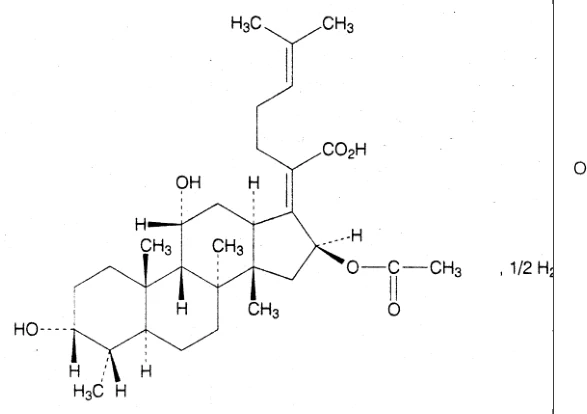
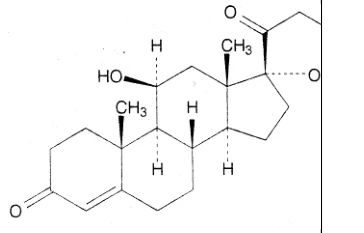
Non-proprietary name of the drug substance(s): | Fusidic acid | Hydrocortisone acetate |
|---|---|---|
| Chemical name: | ent-(17Ζ)-16α-(Acetyloxy)-3β,11β-dihydroxy-4β,8,14-trimethyl-18-nor-5β,10α-cholesta-17(20),24-dien-21-oic acid hemihydrate | 11β,17-dihydroxy-3,20-dioxopregn-4-en-21-yl acetate |
| Molecular formula and molecular mass: | C31H48O6, ½ H2O 525.7 | C23H32O6 404.5 |
| Structural formula: | ||
| Physicochemical properties: | White or almost white crystalline powder. Insoluble in water. Freely soluble in alcohol or chloroform. | White or almost white crystalline powder. Slightly soluble in ethanol or chloroform |
14. Clinical Trials
The clinical trial data on which the original indication was authorized is not available.
 |  |
15. Microbiology
The microbiological effect of FUCIDIN® H is attributed to fusidic acid.
In Vitro Studies with Fusidic Acid
Fusidic acid has potent antibacterial activity toward Gram-positive bacteria and Neisseria species. Fusidic acid is most notable for its activity against Staphylococci, whether coagulase-positive or negative, and regardless of resistance to methicillin and related penicillins. It is also active against Corynebacteria and against many genera of strict anaerobes and microaerophiles. The efficacy of fusidic acid against different microorganisms is outlined in Table 2. However, fusidic acid has almost no antibacterial activity against Gram-negative organisms such as E. Coli, Proteus, Klebsiella and Salmonella. Fungi are also insensitive to fusidic acid.
Table 2. Antimicrobial Spectrum of Fusidic Acid
| Microorganisms | MIC90%* | MIC-range* | MBC-range* | |||||
| Microorganisms | MIC90%* | MIC-range* | MBC-range* | |||||
Sensitive Gram-positive: Staph. aureus (methicillin-susceptible) Staph. aureus (methicillin-resistant) Staph. epi. (methicillin-susceptible) Staph. epi. (methicillin-resistant) Corynebacterium diptheriae Clostridium tetani Clostridium perfringens Propionibacterium acnes Other Corynebacterium spp. Clostridium difficile Other Clostridium spp. Staphylococcus saprophyticus Streptococcus faecalis Streptococcus pyogenes Streptococcus pneumoniae JK diphteroids Gram-negative Neisseria meningitidis Legionella pneumophila | 0.06 0.12 0.25 0.50 0.0044 (a) 0.05 (a) 0.5 1.0 2.0 2.0 <1.0 3.12 6.25 12.5 25.0 32.0 0.12 <0.25 (a) | 0.007-0.195 0.015-8.0 0.024-8.0 0.03->32 ND ND 0.06- 1.0 <0.06- 2.0 <0.04- 12.5 <0.25- 64 <0.06- 1.0 0.048-6.25 1.56- 6.25 <1.6 - 50 <0.25->64 0.015- 0.5 ND | 0.097-25.0 0.040-12.5 0.024-12.5 ND ND ND ND ND ND ND ND 0.097-12.5 1.56 -50.0 ND ND ND ND | |||||
Neisseria gonorrhoeae Bacteroides fragilis Other Bacteroides spp. Others Mycoplasma spp. Mycobacterium tuberculosis Nocardia asteroids Other Nocardia spp. RESISTANT Other Gram-Negative E. coli Pseudomonas Klebsiella Proteus Salmonella Shigella Pasteurella | 1.0 2.0 <2.0 <0.8 (a) 3.0 (a) 16.0 32.0 | <0.03- 8.0 0.5- 4.0 <0.06- 8.0 ND ND <0.5 - 32.0 <0.5 - >32.0 | ND ND ND ND ND ND ND | |||||
| *ug/mL (a) MIC-value ND - No data | ||||||||
Resistance to Fusidic Acid
During more than 30 years of therapeutic use of fusidic acid, resistance by Staph. aureus has remained extremely low (<2%). An ongoing Canadian program has monitored resistance of clinical isolates of Staph. aureus to fusidic acid since 1986. As of 1994, over 12,500 strains of Staph. aureus have been tested with an overall resistance rate of 1.47%. The annual resistance rate has never exceeded 2%, indicating the stability of the anti-staphylococcal activity of fusidic acid.
Two mechanisms explain emergence of resistance to fusidic acid in Staph. aureus strains. The first one is chromosomal mutation. All populations of Staph. aureus produce resistant variants by chromosomal mutation at a frequency of 1 in 106 to 107. This type of resistance is readily detected in vitro, and is due to a modification of elongation factor G, the target at which fusidic acid inhibits bacterial protein synthesis. Such variants appear to be defective in that they grow more slowly than the parent strain, have a lower pathogenicity and subsequently revert to full sensitivity in the absence of fusidic acid. This type of mutation occurs at a high rate in vitro, but emergence of resistance in the clinical setting occurs less readily than is indicated by this observation. The second mechanism is plasmid-mediated resistance. These strains have been shown to be distinct from the chromosomal variants, as they do not have a modification of elongation factor G. Protein synthesis of cell free extracts is still inhibited by fusidic acid and there is no evidence of enzyme-mediated inactivation of fusidic acid. However, it has been suggested that there may be a permeability barrier at the cell surface, which reduces entry of the antibiotic. This theory is supported by the fact that they grow normally and are pathogenic. However, some plasmids that confer resistance to fusidic acid are unstable, which may make them inefficient at transmitting resistance.
No cross resistance between fusidic acid and other antibiotics has been found.
16. Non-Clinical Toxicology
General Toxicology
Single-dose Toxicity of Fusidic Acid
Mice and Rats: The signs and symptoms of toxicity of fusidic acid and its salts in mice were decreased activity, ataxia, staggering, tremors, convulsions and increased respiratory rate in a few cases; in rats, the only symptoms preceding death were decreased activity, slight salivation and in some cases coma and increased respiration.
Dogs: Sodium fusidate was administered as a 10% solution by stomach tube to 2 fasted dogs in single doses of 250 and 500 mg/kg, respectively. Two other fasted dogs received the drug in the form of gelatin capsules in doses of 500 and 1500 mg/kg, respectively. No effects were noted in the dog receiving 500 mg/kg by capsules. The remaining 3 dogs vomited within 8 to 60 minutes; the dog given 1500 mg/kg was lethargic for 12 hours, but no other effects were observed during a 7-day observation period. A dose dependent increase in BSP retention times was observed.
Repeat-dose Toxicity of Sodium Fusidate
Rats: Sodium fusidate was administered in the diet of 2 groups composed of 5 male and 5 female rats at doses of 0 or 270 mg/kg/day for 4 weeks. A similar group received 500 mg/kg/day for 1 week and subsequently 1200 mg/kg/day for 3 weeks. None of the animals died during testing and no significant lesions attributable to the drug were found. Except for a slight to moderate weight retardation in males in the high dose group, the average rates of growth of the treated animals were comparable to that of the controls.
In a more recent study, sodium fusidate was administered intravenously for 2 weeks to 2 groups of rats composed of 10 males and 10 females in a dose of 21.5 mg/kg per day diluted with saline to a concentration of 2.15 mg/mL. There were no mortalities and no changes in appearance or behaviour in any of the animals. No toxic or other adverse effects attributable to the drug were seen.
Dogs: Sodium fusidate was administered in the diet of 3 groups of 2 dogs each. One group served as the control, another group was dosed at 110 mg/kg/day for 4 weeks and the third group at 250 mg/kg/day for 1 week followed by 470 mg/kg/day for the next 3 weeks. None of the dogs showed any significant gross or micropathological alterations which were considered to be drug-related.
During the second and third weeks, the 2 dogs on the low dose showed reductions in appetite which were apparently due to poor palatability of the drug. One of the 2 dogs showed a slight weight loss. In the high dose group reductions in appetite limited drug intake to an average of 470 mg/kg/day. Both these animals had small weight losses, probably associated with reduced food intake.
Sodium fusidate was also administered intravenously to 2 male and 2 female dogs for 2 weeks at a dose of 21.5 mg/kg per day given in two equal doses of 62.5 mL each. Apart from local swelling at the site of catherization, no changes were seen which were considered to be related to the administration of the sodium fusidate compound by gross or histopathological examination.
In a further study, 2 male dogs received daily, for 2 weeks, 2 infusions of 10.75 mg/kg of sodium fusidate in a volume of 62.5 mL administered by slow infusion over a period of 90 minutes. The infusion of sodium fusidate provoked a local intolerance manifested by a reddening and swelling at the site of cannulation. At the histological level, a venous intolerance reaction was noted.
Rats: Sodium fusidate was administered in the diet to 4 groups of 40 rats at doses of 0, 200, 420 or 840 mg/kg daily for 34 weeks. High dose females and to a lesser degree, high dose males showed a small retardation of weight gain. Slight neutrophilia was also noted in both high dose males and females. Ten of the 14 high dose males showed mild fatty metamorphosis of the liver without significant cytopathological change.
In another study, rats received sodium fusidate administered orally at a dose of 200 mg/kg/day for 24 weeks. No influence on growth or haematology and no other toxic effects were observed.
In a final study, fusidic acid was administered orally to a group of 25 male and 25 female rats at a dose of 400 mg/kg/day, 6 days a week for 5 months. No haematological changes or other toxic effects were noted.
Guinea Pigs: No toxic effects were seen when sodium fusidate was administered orally to guinea pigs at doses of 80 mg/kg/day for 50 days.
Dogs: Sodium fusidate was included daily in the diet of 4 groups of 5 dogs in amounts to result in doses of 0, 90, 190 or 300 mg/kg for 26 weeks. Significant changes observed were: i) weight loss with significantly reduced appetite in one animal on the high dose; however, all other test animals maintained or gained weight comparable to the control group in spite of slightly reduced food intake ascribed by the investigator to poor palatability, ii) one dog on the high dose showed definite increases in plasma bilirubin and BSP; one dog on the intermediate dose showed slight to moderate increases in BSP, SGPT and alkaline phosphatase; one dog on the low dose showed a moderate increase in alkaline phosphatase and a slight increase in plasma bilirubin.
In another study, post-mortem examination revealed mild to moderate liver cell damage in one high dose dog (400 mg/kg/day) at 26 weeks, but the other animals showed no morphological changes with this dose attributable to the drug.
Genotoxicity
No studies have been performed to evaluate the genotoxic potential of fusidic acid and hydrocortisone acetate.
Carcinogenicity
No long-term animal studies have been performed to evaluate the carcinogenic potential of fusidic acid and hydrocortisone acetate.
Reproductive and developmental toxicology
Fertility and Reproduction Studies with Sodium Fusidate
Rats: Two groups, each comprised of 20 male and 20 female rats, received either 0 or 400 mg/kg sodium fusidate per day from 2 weeks before mating to weaning. Caesarian sections were performed on half the dams on the 20th day; the remainder were allowed to deliver naturally.
There were no significant differences between the treated and control dams with respect to percent resorptions, the condition of the uteri or the number and weights of the pups. No soft tissue abnormalities were found in the pups of either group but skeletal anomalies (control group 2 pups missing ribs and dosed group 1 pup occipital bone formation incomplete and 1 pup rib deformities) appeared in 4% of the pups in both groups. These rates were similar to that seen in the control group. The viability and lactation indices, reflecting neonatal development, were higher in the treated group than the control group, but all values were within normal limits.
Teratology Studies with Sodium Fusidate
Mice: Pregnant mice were divided into 3 groups of 16-19 animals each and given daily doses of 20, 100 and 200 mg/kg sodium fusidate by gavage from the 6th to 15th day of gestation. Another group of 23 pregnant mice, serving as controls, received just water by gavage. On the 18th day of pregnancy, half the dams were sacrificed. The remainder were allowed to go to term.
Sex distribution of fetuses and young, fetal weight, birth weight and weight increase were normal and similar for all groups. The mean incidence of resorption was 1.2, 1, 0.5 and 0.6 per dam for the 20, 100 and 200 mg/kg groups and control group, respectively. Average litter size in the treated group did not differ significantly from that of the controls. No fetal abnormalities were detected in any of the groups.
Rats: Pregnant rats were divided into 3 groups of 29-31 animals each and given daily doses of 20, 100 or 200 mg/kg sodium fusidate by gavage from the 3rd to the 15th day of gestation. Another group of 59 pregnant rats, serving as controls, received just water by gavage. On the 21st day of pregnancy, half the dams were sacrificed. The remaining dams were allowed to go to term.
Litter size and sex distribution of the fetuses and young of the dosed animals were comparable to the controls with no dose-related differences. Birth weights and weight gain over a 4-month period were comparable for all groups. No fetal deformities were observed in any group.
Rabbits: Eighteen pregnant rabbits were treated orally with 125 mg sodium fusidate in tablet form once per day from the 6th to the 18th day of pregnancy. Eleven pregnant animals, serving as controls, received a placebo tablet each day. On the 30th day of pregnancy 9 treated animals and 3 controls were sacrificed. The remaining animals were allowed to go to term.
Sex distribution of fetuses and young, fetal and birth weights and weight gain were normal and similar for both groups. Three dead fetuses were found in each of 2 treated animals and in 1 control animal. Average litter size was lower in the treated group (4.8 young per litter) than in the control group (7.6 young per litter). Macroscopic examination of the young failed to reveal any teratogenic or other abnormalities.
Special toxicology
Skin Tolerance Studies
Daily application of FUCIDIN (sodium fusidate) ointment to the ears of rabbits for a period of one month evolved neither general intolerance, local irritation to the eye, change in capillary permeability of the treated region, nor sensitization to the irritant effects of locally applied chloroform.