


Product Monograph - Hydralazine
1. Indications
HYDRALAZINE (hydralazine hydrochloride tablets) is indicated for:
- Treatment of essential hypertension. It is used in conjunction with other antihypertensives such as beta-blockers and diuretics.
1.1. Pediatrics
Pediatrics (<18 years of age): Based on the data submitted and reviewed by Health Canada, the safety and efficacy of hydralazine hydrochloride in pediatric patients has not been established; therefore, Health Canada has not authorized an indication for pediatric use. See 7.1.3 Pediatrics.
1.2. Geriatrics
Geriatrics (>65 years of age): Evidence from clinical studies and experience suggests that use in the geriatric population is associated with differences in safety or effectiveness. See 4.2 Recommended Dose and Dosage Adjustment and 7.1.4 Geriatrics.
2. Contraindications
HYDRALAZINE (hydralazine hydrochloride tablets) is contraindicated in:
- Patients with known hypersensitivity to hydralazine or other hydrazinophthalazine derivatives, or to any ingredient in the formulation, including any non-medical ingredient, or component of the container. For a complete listing, see 6 Dosage Forms, Strengths, Composition, and Packaging. • Idiopathic systemic lupus erythematosus (SLE) and related diseases.
- Severe tachycardia and heart failure with a high cardiac output (e.g., in thyrotoxicosis) • Myocardial insufficiency due to mechanical obstruction (e.g., in the presence of aortic or mitral stenosis or constrictive pericarditis)
- Isolated right-ventricular heart failure due to pulmonary hypertension (cor pulmonale) • Acute dissecting aneurysm of the aorta
- Coronary artery disease.
- Porphyria
4. Dosage and Administration
4.1. Dosing Considerations
- The dose of HYDRALAZINE (hydralazine hydrochloride tablets) must always be individualized and adjusted according to the patient's blood pressure response.
4.2. Recommended Dose and Dosage Adjustment
- Initially, one 10 mg tablet 4 times daily for the first 2 to 4 days. The dose is increased to 25 mg 4 times daily for the remainder of the first week. Dosage is then increased to 50 mg 4 times daily for the second and subsequent weeks of treatment.
- For maintenance, adjust dosage to lowest effective levels. The incidence of toxic reactions, particularly the lupus erythematosus syndrome, is highest in the group of patients receiving large doses of hydralazine.
- The usual effective maintenance daily dose ranges from 50 to 200 mg. However, the dose should not be increased above 100 mg per day without determining the acetylator phenotype. • After the titration period, some patients may be maintained on a twice daily schedule. • The influence of food on the bioavailability of hydralazine is uncertain. Contradictory results have been obtained. HYDRALAZINE should be taken at a consistent time with respect to meals.
Pediatrics: Health Canada has not authorized an indication for pediatric use. See 7.1.3 Pediatrics.
Geriatrics: Geriatric patients may be more sensitive to the effects of the usual adult dose. Response should be monitored and the dosage adjusted accordingly to lowest effective levels.
Renal impairment: In patients with renal impairment the dose or the dosing interval should be adapted according to the clinical response, in order to avoid accumulation of the “apparent” active substance.
Hepatic dysfunction: In patients with hepatic dysfunction the dose or the dosing interval should be adapted according to the clinical response, in order to avoid accumulation of the “apparent” active substance.
4.4. Administration
No special considerations regarding administration.
4.5. Missed Dose
If the patient misses a dose, inform the patient to skip the missed dose and take the next dose at the regular dosing schedule.
5. Overdose
Symptoms: Hypotension, tachycardia, headache, generalized skin flushing, sweating, nausea and dizziness. Myocardial ischemia with angina pectoris, cardiac arrhythmia and profound shock can develop.
Further signs may include impairment of consciousness, vomiting, tremor, convulsions, oliguria and hypothermia.
Treatment: There is no known specific antidote.
Evacuate gastric contents by induction of emesis or gastric lavage, taking adequate precautions against aspiration and for protection of the airway. If general conditions permit, administer activated charcoal slurry and possibly an osmotic cathartic. These procedures may have to be omitted or carried out after cardiovascular status has been stabilized, since they might precipitate cardiac arrhythmias or increase the depth of shock.
Support of the cardiovascular system is of primary importance. Shock should be treated with volume expanders without resorting to use of vasopressors. The use of dopamine to elevate systolic blood pressure to 90 mmHg may be considered in an emergency. If a vasopressor drug is required, a type that is least likely to precipitate or aggravate cardiac arrhythmia should be used, and the ECG should be monitored while it is being administered. Digitalization may be necessary. Renal function must be monitored and supported as required.
No experience has been reported with extracorporeal or peritoneal dialysis.
For the most recent information in the management of a suspected drug overdose, contact your regional poison control centre or Health Canada’s toll-free number, 1-844 POISON-X (1-844-764-7669).
- 6. Dosage Forms, Strengths, Composition, and Packaging
Table 1 - Dosage Forms, Strengths, and Composition
| Route of | Dosage Form / | Non-Medicinal Ingredients |
| Administration | Strength/Composition | |
| Oral | Tablet, 10 mg, 25 mg, and 50 mg of hydralazine hydrochloride | Anhydrous lactose, microcrystalline cellulose, sodium starch glycolate, stearic acid, and FD&C Yellow #6. |
HYDRALAZINE 10 mg: Orange, round, scored tablets debossed with ‘H’ on one side and ‘38’ on another side. Available in bottles of 100 tablets.
HYDRALAZINE 25 mg: Orange, round, unscored tablets debossed with ‘H’ on one side and ‘39’ on another side. Available in bottles of 100 tablets.
HYDRALAZINE 50 mg: Orange, round, unscored tablets debossed with ‘H’ on one side and ‘40’ on another side. Available in bottles of 100 tablets.
7. Warnings and Precautions
Carcinogenesis and Genotoxicity
Hydralazine hydrochloride in chronic toxicity studies has been shown to increase the incidence of some tumors in aging rodents. A mutagenic potential was observed in some but not all mutagenicity tests See 16 Non-Clinical Toxicology, Genotoxicity. The extent to which these findings indicate a risk to man is uncertain. While long-term clinical observations have not suggested that human cancer is associated with hydralazine hydrochloride tablets use, epidemiologic studies have so far been insufficient to arrive at any conclusion. See 16 Non-Clinical Toxicology, Carcinogenicity.
Cardiovascular
The chronotropic and inotropic effects of hydralazine hydrochlorideincrease myocardial oxygen requirements. It can cause electrocardiographic changes of myocardial ischemia, and in patients with coronary artery disease may precipitate angina pectoris or congestive heart failure. Hydralazine hydrochloride has been implicated in the production of myocardial infarction.
HYDRALAZINE must therefore be used with caution in patients with suspected coronary artery disease. It should be given only in combination with a beta-blocker or other suitable sympatholytic agents. The beta-blocker medication should be commenced a few days before the start of treatment with HYDRALAZINE.
Patients who have survived a myocardial infarction should not receive HYDRALAZINE until post-infarction stabilization has been achieved.
The “hyperdynamic” circulation caused by hydralazine hydrochloride may accentuate specific cardiovascular inadequacies (e.g. HYDRALAZINE may increase pulmonary artery pressure in patients with mitral valvular disease).
Postural hypotension may result from HYDRALAZINE but is less common than with ganglionic blocking agents. The drug should be used with caution in patients with cerebral vascular disease since abrupt decreases in blood pressure should be avoided in these patients.
Driving and Operating Machinery
A pronounced lowering of the blood pressure may adversely affect the patient's reactions (e.g. as in driving or operating machinery).
Hematologic
Blood dyscrasias consisting of reduction in hemoglobin and red cell count, leukopenia, agranulocytosis and purpura have been reported. Periodic blood counts are advised during therapy. If such abnormalities develop, therapy should be discontinued.
Hepatic/Biliary/Pancreatic
In patients with hepatic dysfunction, serum levels of hydralazine increased as compared to those in patients with normal hepatic function, therefore the dose or the dosing interval has to be adapted according to the clinical response, in order to avoid accumulation of the “apparent” active substance.
Immune
Prolonged treatment with hydralazine hydrochloride tablets (i.e. usually treatment for more than 6 months) may provoke a systemic lupus erythematosus (SLE)-like syndrome including glomerulonephritis. In its mild form this syndrome is reminiscent of rheumatoid arthritis (arthralgia, sometimes associated with fever, anaemia, leucopenia, thrombocytopenia and skin rash) and proves reversible after withdrawal of the medicine. In its more severe form it resembles acute SLE (similar manifestations as the milder form, plus pleurisy, pleural effusions and pericarditis; nervous system and renal involvement are rarer than in idiopathic lupus.) and may be life-threatening and sometimes fatal.
Should this SLE-like syndrome develop, treatment should be discontinued immediately. Symptoms and signs usually regress when the drug is discontinued but residua have been detected many years later. Long-term treatment with adrenocorticosteroids may be necessary.The frequency of these untoward effects increases with dosage and duration of exposure to the drug and is higher in slow than in fast acetylators. When treated with the same dosage, slow acetylators have higher serum concentrations than fast acetylators. The lowest effective dosage should therefore be used for maintenance therapy. If 100 mg daily fails to elicit an adequate clinical effect, the patient's acetylator status should be evaluated.
Slow acetylators and women run a greater risk of developing this SLE-like syndrome. In such cases dosage should be kept below 100 mg daily and the patients carefully monitored for clinical signs and symptoms suggestive of this syndrome.
Rapid acetylators, by contrast, often respond inadequately even to dosages of 100 mg daily. In these patients, the dosage can be raised with only a slightly increased risk of an SLE-like syndrome.
Treatment with hydralazine may induce systemic vasculitis, including ANCA (anti-neutrophil cytoplasmic antibody)-positive vasculitis, leading to pulmonary renal syndrome which is a combination of diffuse alveolar hemorrhage and rapidly progressive glomerulonephritis. Patients may present with severe respiratory and /or renal failure and require treatment in an intensive care unit. The syndrome is characterised by a fulminant course if left untreated, and may sometimes be fatal.
Monitoring and Laboratory Tests
Complete blood counts, examination of lupus erythematosus cell preparations, antinuclear antibody titer determinations and urine analysis are indicated before and periodically (e.g. every 6 months) during prolonged therapy with hydralazine even though the patient is asymptomatic. These tests are also indicated if the patient develops arthralgia, fever, chest pain, continued malaise or other unexplained signs or symptoms. If the results of these tests are abnormal, treatment should be discontinued.
Antinuclear antibody may be found in the blood of as many as 50 percent of patients receiving hydralazine hydrochloride tablets who remain asymptomatic. A positive antinuclear antibody titer requires that the physician carefully weigh the implications of the test results against the benefits to be derived from antihypertensive therapy with hydralazine hydrochloride tablets.
Microhematuria and/or proteinuria, in particular together with positive titres of antinuclear antibodies, may be initial signs of immune-complex glomerulonephritis associated with the SLE-like syndrome.
Neurologic
Peripheral neuritis, evidenced by paresthesias, numbness and tingling in the extremities has been observed. Published evidence suggests an antipyridoxine effect and the addition of pyridoxine to the regimen if symptoms develop.
Perioperative Considerations
When undergoing surgery, patients treated with hydralazine hydrochloride tablets may show a fall in blood pressure, in which case one should not use adrenaline to correct the hypotension, since it enhances the cardiac-accelerating effects of hydralazine.
Renal
In hypertensive patients with normal kidneys who are treated with hydralazine, there is evidence of increased renal blood flow and a maintenance of glomerular filtration rate. In some instances improved renal function has been noted where control values were below normal prior to hydralazine hydrochloride tablets administration. However, as with any antihypertensive agent, HYDRALAZINE should be used with caution in patients with advanced renal damage.
In patients with renal impairment, serum levels of hydralazine increased as compared to those in patients with normal renal function, therefore the dose or the dosing interval has to be adapted according to the clinical response, in order to avoid accumulation of the “apparent” active substance.
Skin
Skin rash, febrile reactions
7.1. Special Populations
7.1.1. Pregnancy
Animal studies indicate that high doses of hydralazine hydrochloride tablets are teratogenic in mice, possibly in rabbits, but not in rats. See 16 Non-Clinical Toxicology, Reproductive and Developmental Toxicology. Teratogenic effects observed were cleft palate and malformation of facial and cranial bones. There are no adequate and well-controlled studies in pregnant women. Although clinical experience does not include any positive evidence of adverse effects on the human fetus, HYDRALAZINE should be used during pregnancy only if the benefit clearly justifies the potential risk to the fetus.
7.1.2. Breastfeeding
Hydralazine passes into breast milk. Alternatives to HYDRALAZINE should be considered in nursing mothers.
7.1.3. Pediatrics
Pediatrics (<18 years of age): No data are available to Health Canada; therefore, Health Canada has not authorized an indication for pediatric use.
7.1.4. Geriatrics
The elderly may be more sensitive to the hypotensive effects. In addition the risk of hydralazine-induced hypothermia may be increased in elderly patients.
8. Adverse Reactions
8.1. Adverse Reaction Overview
The most common adverse reactions are tachycardia, palpitation, anginal symptoms, flushing, headache and gastro-intestinal disturbances. These are more frequent at the start of treatment, especially if the dosage is raised rapidly. However, such reactions generally subside in the further course of treatment or following a reduction of dosage.
The most severe adverse reactions are neuropathy, blood dyscrasias, and an acute rheumatoid state resulting in a syndrome resembling disseminated lupus erythematosus. See 7 Warnings and Precautions, Immune.
Blood and lymphatic system disorders: Anemia, leukopenia, neutropenia, thrombocytopenia with or without purpura, hemolytic anemia, leucocytosis, lymphadenopathy, pancytopenia, splenomegaly, agranulocytosis, eosinophilia.
Cardiac disorders: Tachycardia, palpitation, angina pectoris, cardiac failure.
Eye disorders: Lacrimation increased, conjunctivitis, blurred vision, exophthalmos.
Gastrointestinal disorders: Gastrointestinal disorder, diarrhea, constipation, nausea, vomiting, paralytic ileus, pancreatitis, retroperitoneal fibrosis.
General disorders and administration site conditions: Edema, chills, fever, malaise.
Hepatobiliary disorders: Jaundice, liver enlargement, hepatic function abnormal sometimes in association with hepatitis, hepatitis, hepatosplenomegaly (usually associated with SLE-like symptoms).
Immune system disorders: Systemic lupus erythematosus (see 7 Warnings and Precautions, Immune), vasculitis.
Investigations: Plasma creatinine increased, antinuclear antibody positive, weight decreased.
Metabolism and nutrition disorders: Anorexia, hyperuricemia, hyperglycemia and hypokalemia.
Musculoskeletal and connective tissue disorders: Arthralgia, joint swelling, myalgia, muscle cramps.
Nervous system disorders: Headache, dizziness, peripheral neuritis evidenced by paresthesia, numbness and tingling, polyneuritis, tremor.
Psychiatric disorders: Agitation, anxiety, depression, hallucinations, disorientation, sleep disturbances, libido decreased.
Renal and urinary disorders: Proteinuria, hematuria sometimes in association with glomerulonephritis, acute renal failure, urinary retention, dysuria, pulmonary renal syndrome.
Respiratory, thoracic, and mediastinal disorders: Dyspnea, pleural pain, nasal congestion.
Skin and subcutaneous tissue disorders: Rash, hypersensitivity reactions such as pruritus, urticaria.
Vascular disorders: Flushing, hypotension, paradoxical pressor responses, orthostatic hypotension.
9. Drug Interactions
9.1. Drug-Behaviour Interactions
Consumption of alcohol may potentiate the hypotensive effect of hydralazine.
9.2. Drug-Drug Interactions
The drugs listed in this table are based on either drug interaction case reports or studies, or potential interactions due to the expected magnitude and seriousness of the interaction (i.e., those identified as contraindicated).
Table 2 – Established or Potential Drug-Drug Interactions
| Non-proprietary | Source of | ||
| names of the drug | Effect | Clinical comment | |
| evidence | |||
| products | |||
| Beta blockers | T | Concurrent administration of hydralazine hydrochloride tablets with beta blockers subject to a strong first pass effect (e.g. propranolol) may increase their bioavailability. | Downward dosage adjustment of beta blockers may be required when they are given concomitantly. |
| Corticosteroids (e.g. hydrocortisone or prednisolone). | T | There is potential for the hypotensive effect of hydralazine to be antagonised when used concomitantly with corticosteroids (e.g. hydrocortisone or prednisolone). | Dosage adjustment may be required. |
| Non-proprietary | Source of | ||
| names of the drug | Effect | Clinical comment | |
| evidence | |||
| products | |||
| Diazoxide | T | Administration of hydralazine hydrochloride shortly before or after diazoxide may lead to marked hypotension. | When potent antihypertensive drugs, such as diazoxide, are used in combination with HYDRALAZINE, patients should be continuously observed for several hours for any excessive fall in blood pressure. |
| Epinephrine | T | Adrenaline (epinephrine) enhances the cardiac- accelerating effects of hydralazine hydrochloride | Patients taking HYDRALAZINE who develop hypotension should not be treated with sympathomimetics, e.g. adrenaline (epinephrine), as hydralazine hydrochloride can cause tachycardia, and sympathomimetics could enhance this. |
| Glucose infusion solutions | T | Glucose infusion solutions are not compatible with HYDRALAZINE because contact between hydralazine and glucose causes the active substance to be rapidly broken down. | |
| Indomethacin | T | Concurrent administration of indomethacin can reduce hypotensive effect of hydralazine. | Combination with indomethacin may require dosage adjustments. |
| Monoamine oxidase (MAO) inhibitors | T | Monoamine oxidase (MAO) inhibitors should be used with caution in patients receiving HYDRALAZINE. |
| Non-proprietary | Source of | ||
| names of the drug | Effect | Clinical comment | |
| evidence | |||
| products | |||
Non-steroidal anti- inflammatory drugs (NSAIDs) (e.g. ibuprofen or diclofenac) | T | There is potential for the hypotensive effect of hydralazine to be antagonised when used concomitantly with NSAIDs. | Dosage adjustment may be required. |
| Estrogens | T | There is potential for the hypotensive effect of hydralazine to be antagonised when used concomitantly with estrogens. | Dosage adjustment may be required. |
| Other vasodilators, calcium antagonists, ACE inhibitors, diuretics, antihypertensives, tricyclic antidepressants, major tranquilizers | T | May potentiate the hypotensive effect of hydralazine. |
Legend: T = Theoretical
9.3. Drug-Food Interactions
The influence of food on the bioavailability of hydralazine is uncertain. Contradictory results have been obtained.
9.4. Drug-Herb Interactions
Interactions with herbal products have not been established.
9.5. Drug-Laboratory Test Interactions
Interactions with laboratory tests have not been established.
10. Clinical Pharmacology
10.1. Mechanism of Action
Although the precise mechanism of action of hydralazine hydrochloride is not fully understood, the major effects are on the cardiovascular system. Hydralazine apparently lowers blood pressure by exerting a peripheral vasodilating effect through a direct relaxation of vascular smooth muscle. Hydralazine, by altering cellular calcium metabolism, interferes with the calcium movements within the vascular smooth muscle that are responsible for initiating or maintaining the contractile state.
The peripheral vasodilating effect of hydralazine results in decreased arterial blood pressure (diastolic more than systolic); decreased peripheral vascular resistance; and an increased heart rate, stroke volume, and cardiac output. The vasodilating effect is much greater on arterioles than on veins, and vascular resistance decreases more in the coronary, cerebral, splanchnic and renal circulations than in skin and muscle.
Hydralazine usually increases renin activity in plasma, presumably as a result of increased secretion of renin by the renal juxtaglomerular cells in response to reflex sympathetic discharge. This increase in renin activity leads to the production of angiotensin II, which then causes stimulation of aldosterone and consequent sodium reabsorption and fluid retention.
Sodium retention and excessive sympathetic stimulation of the heart caused by hydralazine may be precluded by co-administration of a thiazide diuretic and a beta-blocker. Beta-adrenergic blocking drugs and hydralazine are complementary in their pharmacologic effects, a beta-adrenergic blocking agent minimizes hydralazine-induced increases in cardiac rate and output, and hydralazine prevents the reflex increase in peripheral resistance induced by beta-blockers.
10.2. Pharmacodynamics
Hydralazine acts directly on peripheral arterioles, where it has a relaxing effect on the smooth muscle of the vessel wall, with a resultant decrease in arteriolar resistance, decreasing arterial blood pressure, diastolic often more than systolic.
Hydralazine exerts no direct actions on the heart. When the drug decreases arterial pressure and thereby activating the baroreceptors, cardiovascular reflexes result in increased sympathetic discharge. Since hydralazine does not increase venous capacitance or depress cardiac function, sympathetic stimulation increases heart rate, left ventricular velocity, stroke volume and cardiac output.
10.3. Pharmacokinetics
Absorption
Hydralazine is rapidly and fairly completely absorbed after oral administration. In the plasma only small amounts of the free drug can be traced, the bulk circulating in conjugated form, i.e. pyruvic acid hydrazone. Peak serum concentrations are reached within one to two hours after a dose.
Distribution
Hydralazine is widely distributed in the body. The apparent volume of distribution of hydralazine is approximately 50% body weight. Binding to plasma proteins (chiefly albumin) is 85 - 90%.
Metabolism
Plasma levels of hydralazine vary widely among individuals. Orally administered hydralazine undergoes extensive, saturable first-pass metabolism (systemic availability: 26 - 55%), this first- pass effect being dependent on the individual's acetylator status. In response to the same oral dose, slow-acetylators show higher “apparent” plasma hydralazine levels than rapid acetylators and require lower doses to maintain control of blood pressure.
After intravenous administration of hydralazine no first-pass effect occurs; acetylator status therefore has no influence on the plasma levels.
Elimination
Hydralazine and its metabolites are rapidly excreted by the kidney and 80% of the oral dose appears in the urine within 48 hours. The bulk of the hydralazine excreted is in the form of acetylated and hydroxylated metabolites, some of which are conjugated with glucuronic acid; 2 - 14% is excreted as “apparent” hydralazine.
Special populations and conditions
- Pediatrics: The safety and efficacy of hydralazine hydrochloride tablets in pediatric patients has not been established. See 7.1.3 Pediatrics.
- Geriatrics: Evidence from clinical studies and experience suggests that use in the geriatric population is associated with differences in safety or effectiveness. See 4.2 Recommended Dose and Dosage Adjustment and 7.1.4 Geriatrics.
- Sex: This information is not available for this drug product.
- Pregnancy and breastfeeding : Hydralazine crosses the placental barrier and is excreted in the breast milk. See 7.1.2 Breast-feeding.
- Genetic polymorphism: The pattern of the metabolites depends on the subject's acetylator and presumably hydroxylator status. The main metabolite, NAc-HPZ (N-acetyl-hydrazine-phthalazinone), was found to be the relevant indicator for the drug-related phenotype. The plasma half-life generally ranges between 1.7 and 3.0 hours in most subjects, but in rapid acetylators it is shorter, averaging 45 minutes.
- Ethnic origin: This information is not available for this drug product.
- Hepatic Insufficiency: See 7 Warnings and Precautions, Hepatic/Biliary/Pancreatic.
- Renal Insufficiency: See 7 Warnings and Precautions, Renal.
- Obesity: This information is not available for this drug product.
- Storage, Stability, and Disposal
Store at room temperature (15 - 30°C). Preserve in tight containers and protect from light. Part 2: Scientific Information
13. Pharmaceutical Information
Drug Substance
Non-proprietary name of the drug substance: Hydralazine Hydrochloride
Chemical name: 1(2H)-Phthalazine hydrazone Hydrochloride
Molecular formula and molecular mass: C8H8N4·HCl and 196.64 g/mol
Structural formula:
Physicochemical properties: Hydralazine hydrochloride is a white to off-white crystalline powder. Its melting point is 265°C - 275°C. It is soluble in water and slightly soluble in alcohol
Pharmaceutical standard: USP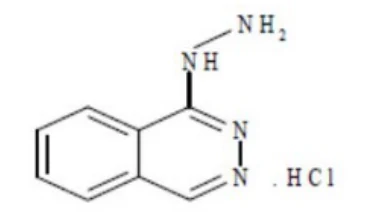
14. Clinical Trials
14.2. Comparative Bioavailability Studies
Comparative Bioavailability Studies
A randomized, two-period, two-way crossover, single dose (50 mg dose as 1 x 50 mg), comparative oral bioavailability study of PrHYDRALAZINE (Sanis Health Inc.) and PrHYDRALAZINE (AA Pharma Inc.) was conducted in healthy adult subjects under fasting conditions. Comparative bioavailability data from the 23 subjects that completed the study is presented in the following table:
SUMMARY TABLE OF THE COMPARATIVE BIOAVAILABILITY DATA
| Free Hydralazine | ||||||||
| (1 x 50 mg) | ||||||||
| Geometric Mean | ||||||||
| Arithmetic Mean (%CV) | ||||||||
| Parameter | Test1 | Reference2 | % Ratio of | 90% Confidence Interval | ||||
| Geometric | ||||||||
| Means | ||||||||
AUCT (ng·h/mL) | 39.6 48.6 (59.0) | 36.8 48.3 (65.0) | 107.1 | 94.7 - 121.1 | ||||
AUCI (ng·h/mL) | 41.6 50.8 (58.3) | 38.9 50.3 (63.9) | 106.5 | 94.9 - 119.4 | ||||
CMAX (ng/mL) | 43.9 57.3 (66.9) | 43.3 62.1 (73.8) | 100.4 | 83.5 - 120.7 | ||||
| TMAX3 (h) | 0.3 (0.2 - 1.5) | 0.5 (0.3 - 0.8) | ||||||
T1/24 (h) | 5.0 (60.7) | 5.2 (49.4) | ||||||
1 HYDRALAZINE (hydralazine hydrochloride) tablets, 50 mg (Sanis Health Inc.) 2 HYDRALAZINE (hydralazine hydrochloride) tablets, 50 mg (AA PHARMA INC.) 3 Expressed as the median (range) only
4 Expressed as the Arithmetic mean (%CV) only
15. Microbiology
No microbiological information is required for this drug product.
16. Non-Clinical Toxicology
General toxicology
Acute Toxicity
Rats: The acute toxicity of hydralazine, as determined intravenously in female white rats is comparatively low: the LD50 is 34 mg/kg.
Dogs: Single doses of 20 mg/kg intravenously and 200 mg/kg orally were tolerated. The test animals manifested tachycardia, depression and emesis. Vomiting occurred at doses of 8 and 16 mg/kg and central nervous system stimulation at 32 and 64 mg/kg.
Sub-acute Toxicity
Dogs: Hydralazine in oral doses of 30 mg/kg given 5 days per week for 3 months was well tolerated.
Long-term Toxicity
Mice: Doses of 7.4 mg/day to males and 5.4 mg/day to females administered orally throughout the lifespan resulted in increased incidence of lung tumors (classified as adenomas and adenocarcinomas).
Dogs: Hydralazine was given in oral doses of 1, 3 and 10 mg/kg per day for 6 months. Heinz bodies were detected in the erythrocytes of the high dosage group. Other changes observed included: reversible elevations and depressions of the ST-segment; dose-related tachycardia; dose-related conjunctivitis and in one animal conjunctivitis sicca with pannus formation; in one intermediate dose animal, a small area of subendocardial fibrosis was observed histologically.
Carcinogenicity
Mice: In a lifetime study in Swiss albino mice, there was a statistically significant increase in the incidence of lung tumors (adenomas and adenocarcinomas) of both male and female mice given hydralazine hydrochloride continuously in their drinking water at a dosage of about 250 mg/kg.
Rat: In a 2-year carcinogenicity study of Sprague-Dawley albino rats given hydralazine hydrochloride by gavage at dose levels of 15, 30 and 60 mg/kg/day, microscopic examination of the liver revealed a small but statistically significant increase in benign neoplastic nodules in male and female high-dose rats, and in female rats from the intermediate dose group. Benign interstitial (Leydig) cell tumors of the testes were also significantly increased in male rats from the high-dose group. The tumors observed were common in aged rats and the increased incidence was not observed until 18 months of treatment.
Reproductive and Developmental Toxicology
Mice: Doses of 20, 60, 120 and 150 mg/kg were used. Somnolence and dyspnea, as well as death, at the highest doses indicate that maximum tolerated doses had been exceeded. A dose-related increase in the incidence of cleft palate, agnathia and hypognathia was observed.
Rats: Doses of 20, 60 and 180 mg/kg were used. Maximum tolerated doses were again exceeded, but teratogenic manifestations were not observed, although there was a delay in ossification characterized by unossified calcanei, sternebrae and phalangeal nuclei.
Rabbits: Doses of 10, 30 and 60 mg/kg were used. At the high dose level, some somnolence, as well as one apparent drug-related death, indicated that doses were in the maximum tolerated range. In the 60 mg/kg dose group one out of 84 fetuses showed mandibular aplasia (agnathia inferior). This malformation is considered to be of spontaneous origin, however, a drug related effect cannot be entirely discounted.