


Product Monograph - Hydrochlorothiazide
SUMMARY PRODUCT INFORMATION
Route of Administration | Dosage Form/ Strength | Clinically Relevant Nonmedicinal Ingredients |
| Oral | Tablet / 25 mg and 50 mg | colloidal silicon dioxide, FD&C Yellow #6, lactose, magnesium stearate, microcrystalline cellulose and sodium starch glycolate. |
INDICATIONS AND CLINICAL USE
HYDROCHLOROTHIAZIDE (Hydrochlorothiazide) is indicated for the treatment of:
- Edema
- Hypertension
- Toxemia of Pregnancy
Edema
HYDROCHLOROTHIAZIDE (hydrochlorothiazide) is indicated in edema associated with congestive heart failure, hepatic cirrhosis, corticosteroid and estrogen therapy, premenstrual tension with edema and in edema of renal origin (i.e. nephrotic syndrome, acute glomerulonephritis and chronic renal disease). In obese patients in whom fluid retention is a complicating factor, it may help to initiate a loss of fluid and, thus of weight.
Hypertension
HYDROCHLOROTHIAZIDE may be used alone or as an adjunct to other antihypertensive drugs. Since it enhances the action of these agents, their dosage must be reduced to avoid an excessive drop in pressure and other unwanted side effects.
Toxemia of Pregnancy
HYDROCHLOROTHIAZIDE may be effective in the treatment of toxemia of pregnancy (including eclampsia).
Geriatrics (> 65 years of age): No data is available.
Pediatrics (0 to 12 years of age): See WARNINGS AND PRECAUTIONS, Special Populations, Pediatrics; and DOSAGE AND ADMINISTRATION, Infants and Children.
CONTRAINDICATIONS
- HYDROCHLOROTHIAZIDE (hydrochlorothiazide), as all diuretics, is contraindicated in anuria.
- HYDROCHLOROTHIAZIDE should be discontinued if increasing azotemia and oliguria occur during treatment of severe progressive renal disease.
HYDROCHLOROTHIAZIDE is contraindicated in persons known to be sensitive to
hydrochlorothiazide or to other sulfonamide-derived drugs.
- Patients who are hypersensitive to any ingredient in the formulation of HYDROCHLOROTHIAZIDE or component of the container. For a complete listing, see the DOSAGE FORMS, COMPOSITION AND PACKAGING section of the product monograph.
WARNINGS AND PRECAUTIONS
General
Patients on long therapy with hydrochlorothiazide are required to be on potassium rich diet. Periodic determinations of serum electrolytes to detect possible electrolyte imbalance should be performed.
The antihypertensive effects of the drug may be enhanced in the postsympathectomy patient.
Carcinogenesis and Mutagenesis
Non-melanoma skin cancer:
An increased risk of non-melanoma skin cancer (NMSC) [basal cell carcinoma (BCC) and squamous cell carcinoma (SCC) of the skin] after hydrochlorothiazide therapy was reported in some epidemiological studies. The risk may be higher with increasing cumulative use. The certainty of the evidence was assessed by Health Canada (see ADVERSE REACTIONS, Post Market Adverse Drug Reactions). The photosensitizing action of hydrochlorothiazide may be a possible mechanism for NMSC (see TOXICOLOGY, Carcinogenicity – Hydrochlorothiazide).
Patients taking hydrochlorothiazide should be informed of the potential risk of NMSC and advised to regularly check their skin for new lesions as well as changes to existing ones and promptly report any suspicious skin lesions. Patients should be advised to limit exposure to sunlight, to avoid the use of indoor tanning equipment, and to use adequate protection (e.g. a broad-spectrum sunscreen with a SPF of 30 or higher, clothing, and a hat) when exposed to minimize the risk of skin cancer.
Alternatives to hydrochlorothiazide may be considered for patients who are at a particularly high risk for NMSC (e.g., light coloured skin, known personal or family history of skin cancer, ongoing immunosuppressive therapy, etc.) (see ADVERSE REACTIONS, Post Market Adverse Drug Reactions).
Cardiovascular
No data available.
Ear/Nose/Throat
No data available.
Endocrine and Metabolism
Calcium: Calcium excretion is decreased by thiazides.
Chloride: Chloride deficiency is generally mild and does not require specific treatment except under special conditions such as renal or/and hepatic disease.
Dilutional Hyponatremia: Dilutional hyponatremia may occur in edematous patients in hot weather; appropriate therapy is water restriction rather than administration of salt except when hyponatremia is life threatening. In actual salt depletion, appropriate replacement is the therapy of choice.
Fluid and electrolyte imbalance: All patients receiving thiazide should be observed for clinical signs of fluid or electrolyte imbalance: namely hyponatremia, hypochloremic alkalosis, and hypokalemia. Serum and urine electrolyte determinations are particularly important when the patient is vomiting excessively, or receiving parenteral fluids. Warning signs of serum electrolyte imbalance, irrespective of cause are: dryness of mouth, thirst, weakness, lethargy, drowsiness, restlessness, muscle pains or cramps, muscular fatigue, hypotension, oliguria, tachycardia, and gastrointestinal disturbances such as nausea and vomiting. Serum electrolytes may also be influenced by medication such as digitalis.
Hyperuricemia: Hyperuricemia may occur or frank gout may be precipitated in certain patients receiving thiazide therapy.
Hypokalemia: Hypokalemia may develop, especially with rapid diuresis, when severe cirrhosis is present or during concomitant use of corticosteroids or ACTH. Deficient oral electrolyte intake will also contribute to hypokalemia. Hypokalemia may sensitize or exaggerate the response of the heart to the toxic effects of digitalis (e.g. increased ventricular irritability). Hypokalemia may be avoided or treated by the use of potassium supplements.
Insulin: Insulin requirements in diabetic patients may be increased, decreased, or remain unchanged. Latent diabetes mellitus may become manifest during thiazide therapy. Concomitant therapy with lithium is not recommended with diuretics because of the reduction of renal clearance of lithium and therefore an added risk of lithium toxicity.
Parathyroid gland: Pathological changes in the parathyroid gland with hypercalcemia and hypophosphatemia have been observed in a few patients on prolonged thiazide therapy. The common complications of hyperparathyroidism such as renal lithiasis, bone resorption, and peptic ulceration have not been reported. Use of thiazides should be discontinued before carrying out tests for parathyroid function.
Protein bound iodine (PBI): Thiazides may decrease serum PBI levels without signs of thyroid disturbance.
Gastrointestinal
Non-specific small bowel lesions consisting of stenosis with or without ulceration, may occur in association with the administration of enteric coated potassium salts, alone or with oral diuretics. These small bowel lesions have caused obstruction, hemorrhage and perforation. Surgery was frequently required and deaths have occurred. Available information tends to implicate enteric coated potassium salts, although lesions of this type also occur spontaneously. Such preparations should be used only when adequate dietary supplementation is not practical, and should be discontinued immediately if abdominal pain, distention, nausea, vomiting or gastrointestinal bleeding occur.
Genitourinary
No data available.
Hematologic
No data available.
Hepatic/biliary/Pancreatic
HYDROCHLOROTHIAZIDE should be used with caution in patients with impaired hepatic function or progressive liver disease, since minor alterations of fluid and electrolyte balance or of serum ammonia may precipitate hepatic coma.
Immune
The possibility of exacerbation or activation of systemic lupus erythematosus has been reported.
Sensitivity reactions may occur in patients with or without a history of allergy or bronchial asthma.
Neurologic
No data available.
Ophthalmologic
Acute Myopia and Secondary Angle-Closure Glaucoma
Hydrochlorothiazide, a sulfonamide, can cause an idiosyncratic reaction, resulting in acute transient myopia and acute angle-closure glaucoma. Symptoms include acute onset of decreased visual acuity or ocular pain and typically occur within hours to weeks of drug initiation. Untreated acute angle-closure glaucoma can lead to permanent vision loss.
The primary treatment is to discontinue hydrochlorothiazide as rapidly as possible. Prompt medical or surgical treatments may need to be considered if the intraocular pressure remains uncontrolled. Risk factors for developing acute angle-closure glaucoma may include a history of sulphonamide or penicillin allergy.
Peri-Operative Considerations
No data available.
Photosensitivity
Photosensitivity reactions have been reported with the use of thiazide diuretics. If the photosensitivity reactions occur during treatment with hydrochlorothiazide-containing drugs, termination of the treatment is recommended.
Psychiatric
No data available.
Renal
In progressive renal impairment, therapy with HYDROCHLOROTHIAZIDE should be withheld or discontinued.
Hydrochlorothiazide may commence or precipitate azotemia. It should be used with caution in patients with severely impaired renal function to avoid toxic or cumulative effect. If azotemia becomes more severe and oliguria occurs during treatment of patients with severe renal disease, administration of the diuretic must be stopped.
Respiratory
No data available.
Sensitivity/Resistance
No data available.
Sexual Function/Reproduction
No data available.
Skin
No data available.
Special Populations
Pregnant Women
Thiazides cross the placental barrier and appear in cord blood. When hydrochlorothiazide is used in pregnancy or in women of child-bearing age, the potential benefits of the drug should be weighed against the possible hazards to the fetus. These hazards include fetal or neonatal jaundice, thrombocytopenia, and possibly other adverse reactions which have occurred in the adult.
The routine use of diuretics in otherwise healthy pregnant women with or without mild edema is not indicated.
Nursing Women
Since thiazides appear in breast milk, hydrochlorothiazide is contraindicated in nursing mothers. If use of the drug is deemed essential, the patient should stop nursing.
Pediatrics (0 to 12 years of age)
There is no well controlled clinical trial in pediatric patients. Information on dosing in this age group is supported by evidence from empiric use in pediatric patients and published literature regarding the treatment of hypertension in such patients (See DOSAGE AND ADMINISTRATION: Infants and Children).
Geriatrics
Safety and effectiveness in adults over 65 years of age have not been established.
ADVERSE REACTIONS
Whenever adverse reactions are moderate or severe, thiazide dosage should be reduced or therapy withdrawn.
Cardiovascular: Orthostatic hypotension (may be aggravated by alcohol, barbiturates, or narcotics).
Central nervous system: Dizziness, vertigo, paresthesias, headache, xanthopsia.
Gastrointestinal system: Anorexia, gastric irritation, nausea, vomiting, cramps, diarrhea, constipation, jaundice (intrahepatic cholestatic jaundice), pancreatitis, sialadenitis.
Hematologic: Leukopenia, agranulocytosis, thrombocytopenia, aplastic anemia.
Hypersensitivity: Purpura, photosensitivity, rash, urticaria, necrotizing angitis (vasculitis), fever, respiratory distress including pneumonitis, anaphylactic reactions.
Other: Hyperglycemia, glycosuria, hyperuricemia, muscle spasm, weakness, restlessness, transient blurred vision.
Post-Market Adverse Drug Reactions
Non-melanoma skin cancer
Some pharmacoepidemiological studies have suggested a higher risk of squamous cell carcinoma (SCC) and basal cell carcinoma (BCC) of the skin with increasing use of hydrochlorothiazide. Noting substantial uncertainty, a systematic review and meta-analysis undertaken by Health Canada suggested that the use of hydrochlorothiazide for several years (>3 years) could lead to:
- 122 additional cases (95% CI, from 112 to 133 additional cases) of SCC per 1000 treated patients compared with non-use of hydrochlorothiazide (meta-analysis of 3 observational studies);
- 31 additional cases (95% CI, from 24 to 37 additional cases) of BCC per 1000 treated patients compared with non-use of hydrochlorothiazide (meta-analysis of 2 observational studies).
DRUG INTERACTIONS
Hydrochlorothiazide adds to or potentiates the action of other antihypertensive drugs. Potentiation occurs especially with ganglionic or peripheral adrenergic blocking drugs.
Drug-Drug Interactions
| Proper Name | Ref. | Effect | Clinical comment |
| Norepinephrine | C | Thiazides may decrease arterial responsiveness to norepinephrine. This diminution is not sufficient to preclude effectiveness of the pressor agent for therapeutic use. | |
| Alcohol, barbiturates, or narcotics | C | Potentiation of orthostatic hypotension may occur. | Avoid alcohol, barbiturates or narcotics, especially with initiation of therapy. |
| Amphotericin B | T | Amphotericin B increases the risk of hypokalemia induced by thiazide diuretics | Monitor serum potassium level. |
Antidiabetic agents (e.g. insulin and oral hypoglycemic agents) | CT | Thiazide-induced hyperglycemia may compromise blood sugar control. Depletion of serum potassium augments glucose intolerance. | Monitor glycemic control, supplement potassium if necessary, to maintain appropriate serum potassium levels, and adjust diabetes medications as required. |
| Antihypertensive drugs | CT | Hydrochlorothiazide may potentiate the action of other antihypertensive drugs (e.g. guanethidine, methyldopa, beta- blockers, vasodilators, calcium channel blockers, ACEI, ARB, and direct renin inhibitors). | |
Antineoplastic drugs, including cyclophosphamide and methotrexate | C | Concomitant use of thiazide diuretics may reduce renal excretion of cytotoxic agents and enhance their myelosuppressive effects. | Hematological status should be closely monitored in patients receiving this combination. Dose adjustment of cytotoxic agents may be required. |
| Bile acid sequestrants, e.g. cholestyramine | CT | Bile acid sequestrants bind thiazide diuretics in the gut and impair gastrointestinal absorption by 43-85%. Administration of thiazide 4 hours after a bile acid sequestrant reduced absorption of hydrochlorothaizide by 30-35%. | Give thiazide 2-4 hours before or 6 hours after the bile acid sequestrant. Maintain a consistent sequence of administration. Monitor blood pressure, and increase dose of |
| thiazide, if necessary. | |||
| Calcium and vitamin D supplements | C | Thiazides decrease renal excretion of calcium and increase calcium release from bone. | Monitor serum calcium, especially with concomitant use of high doses of calcium supplements. Dose reduction or withdrawal of calcium and/or vitamin D supplements may be necessary. |
| Carbamazepine | C | Carbamazepine may cause clinically significant hyponatremia. Concomitant use with thiazide diuretics may potentiate hyponatremia. | Monitor serum sodium levels. Use with caution. |
| Corticosteroids, and adrenocorticotropic hormone (ACTH) | T | Intensified electrolyte depletion, particularly hypokalemia, may occur. | Monitor serum potassium, and adjust medications, as required. |
| Digoxin | CT | Thiazide-induced electrolyte disturbances, i.e. hypokalemia, hypomagnesemia, increase the risk of digoxin toxicity, which may lead to fatal arrhythmic events. | Concomitant administration of hydrochlorothiazide and digoxin requires caution. Monitor electrolytes and digoxin levels closely. Supplement potassium or adjust doses of digoxin or thiazide, as required. Dose adjustment of thiazide may be required. |
Drugs that alter GI motility, i.e., anti- cholinergic agents, such as atropine and prokinetic agents, such as metoclopramide, domperidone | CT, T | Bioavailability of thiazide diuretics may be increased by anticholinergic agents due to a decrease in gastrointestinal motility and gastric emptying. Conversely, prokinetic drugs may decrease the bioavailability of thiazide diuretics. | Dosage adjustment of thiazides may be required |
Gout medications (allopurinol, uricosurics, xanthine oxidase inhibitors) | T, RC | Thiazide-induced hyperuricemia may compromise control of gout by allopurinol and probenecid. The co-administration of hydrochlorothiazide | Dosage adjustment of gout medications may be required. |
| and allopurinol may increase the incidence of hypersensitivity reactions to allopurinol. | |||
| Lithium | CT | Thiazide diuretics reduce the renal clearance of lithium and add a high risk of lithium toxicity. | Concomitant use of thiazide diuretics with lithium is generally not recommended. If such use is deemed necessary, reduce lithium dose by 50% and monitor lithium levels closely. |
| Nonsteroidal anti-inflammatory drugs (NSAID) | CT | NSAID-related retention of sodium and water antagonises the diuretic and antihypertensive effects of thiazides. NSAID-induced inhibition of renal prostaglandins leading to decreases of renal blood flow, along with thiazide-induced decreases in GFR may lead to acute renal failure. Patients with heart failure may be at particular risk. | If combination use is necessary, monitor renal function, serum potassium, and blood pressure closely. Dose adjustments may be required. |
| Selective serotonin reuptake inhibitors (SSRIs, e.g. citalopram, escitalopram, sertraline) | T, C | Concomitant use with thiazide diuretics may potentiate hyponatremia. | Monitor serum sodium levels. Use with caution. |
Skeletal muscle relaxants of the curare family, e.g., tubocurare | C | Thiazide drugs may increase the responsiveness of some skeletal muscle relaxants, such as curare derivatives | |
| Topiramate | CT | Additive hypokalemia. Possible thiazide-induced increase in topiramate serum concentrations. | Monitor serum potassium and topiramate levels. Use potassium supplements, or adjust topiramate dose as necessary. |
Legend: C = Case Study; RCS =Retrospective Cohort Study; CT = Clinical Trial; T =Theoretical
Drug-Food Interactions
Interactions with food have not been established.
Drug-Herb Interactions
Interactions with herbal products have not been established.
Drug-Laboratory Test Interactions
There are no known interactions of hydrochlorothiazide with commonly used laboratory tests.
DOSAGE AND ADMINISTRATION
Therapy should be individualized according to the patients requirement. Use the smallest dosage necessary to achieve the required response.
Dosing Considerations
Adult patients
- Diuresis
The recommended adult dosage is 50 mg to 100 mg once or twice a day. Many patients respond to intermittent therapy, i.e. administration on alternate days or on three to five days each week.
With an intermittent schedule, excessive response and the resulting undesirable electrolyte imbalance are less likely to occur.
- Toxemia of pregnancy
The recommended dosage is 100 mg daily or, in severe cases and for brief periods, 200 mg daily (in divided doses). Frequency of administration may range from once every four days to daily.
- Premenstrual tension with edema
The recommended dosage is 25 mg to 50 mg once or twice a day from the first appearance of symptoms until onset of the menses.
- Control of Hypertension
The usual recommended starting dosage is 50 mg or 100 mg a day as a single or divided dose. Dosage is increased or decreased according to the blood pressure response of the patient. Some patients may require doses of 200 mg a day in divided doses.
Careful observation for changes in blood pressure must be made when HYDROCHLOROTHIAZIDE (hydrochlorothiazide) is used with other antihypertensive drugs, especially during initial therapy. The dosage of other agents must be reduced by at least 50%, as soon as it is added to the regimen, to prevent excessive drop in blood pressure. As the blood pressure falls under the potentiating effect of this agent, a further reduction in dosage, or discontinuation of other antihypertensive drugs may be necessary. A single daily dose as low as 12.5 mg of hydrochlorothiazide could be used in combination with another antihypertensive.
In the case of hypertension monotherapy, doses as low as a single daily dose 12.5 mg may be effective (especially in the elderly or as a starting dose), as well as a daily dose of 25 mg given in two divided doses.
Infants and Children
The usual recommended pediatric dosage is based on 1.0 mg of HYDROCHLOROTHIAZIDE per pound of body weight per day in two doses. Infants under 6 months of age may require up to 1.5 mg per pound per day in two doses.
On this basis, infants up to 2 years of age may be given 12.5 mg to 37.5 mg daily in two doses. Children from 2 to 12 years of age may be given 37.5 mg to 100 mg daily in two doses. Dosage in both age groups should be based on body weight. (See WARNINGS AND PRECAUTIONS, Special Populations, Pediatrics).
OVERDOSAGE
Symptoms
Overdosage of hydrochlorothiazide may produce diuresis accompanied with electrolyte imbalance (hypokalemia, hyponatremia and hypochloremic alkalosis) and dehydration.
The symptoms are as follows: dryness of mouth, thirst, weakness, lethargy, drowsiness, restlessness, muscle pains or cramps, muscular fatigue, hypotension, oliguria, tachycardia, gastrointestinal disturbances, menta1 confusion, delirium, convulsions, shock, coma.
Hypokalemia can sensitize or exaggerate the response of the heart to the toxic effects of digitalis (e.g. increased ventricular irritability).
Hydrochlorothiazide may precipitate hepatic coma in patients with cirrhosis; increase the effect of other antihypertensive agents and decrease arterial responsiveness to norepinephrine.
Treatment
No specific antidote is available.
Treatment is symptomatic and supportive. Induce emesis or perform gastric lavage. Correct dehydration, electrolyte imbalance, hepatic coma, and hypotension by established procedures. Administer oxygen or artificial respiration for respiratory impairment.
For management of a suspected drug overdose, contact your regional poison control centre.
ACTION AND CLINICAL PHARMACOLOGY
Mechanism of Action
Hydrochlorothiazide is a diuretic and an antihypertensive agent. The exact mechanism of the antihypertensive effect is unknown. Hydrochlorothiazide has no effect on normal blood pressure.
Hydrochlorothiazide affects the renal tubular mechanism of electrolyte reabsorption. It increases excretion of sodium and chloride in approximately equivalent amounts and reduces the rate of formation of solute-free water. Natriuresis causes a secondary loss of potassium and bicarbonate.
Pharmacokinetics
Absorption: Hydrochlorothiazide is rapidly absorbed from the gastrointestinal tract. Onset of action after oral administration occurs in 2 hours and the peak effect at approximately 4 hours. Duration of action persists for approximately 6 to 12 hours.
Distribution: The drug is distributed throughout the extracellular space and does not accumulate in tissues other than the kidney. It passes readily through the placental barrier to the fetus.
Metabolism: Hydrochlorothiazide is not metabolized.
Excretion: Hydrochlorothiazide is eliminated rapidly by the kidney.
STORAGE AND STABILITY
HYDROCHLOROTHIAZIDE (hydrochlorothiazide) tablets should be stored at controlled room temperature (15°C to 30°C) away from heat and light.
DOSAGE FORMS, COMPOSITION AND PACKAGING
HYDROCHLOROTHIAZIDE (hydrochlorothiazide) tablets are available for oral use in two dosage strengths of 25 mg and 50 mg hydrochlorothiazide, USP.
Availability of Dosage Forms
HYDROCHLOROTHIAZIDE (hydrochlorothiazide) tablets are supplied as:
25 mg tablets: Small, light orange-colored, round, flat-faced, bevel-edged compressed tablets, with engraved bisect on one side and plain on the reverse.
Supplied in bottles of 100 and 1000 tablets.
50 mg tablets: Light orange-colored, round, flat-faced, bevel-edged compressed tablets, engraved novo on one side and 50 under bisect on the reverse. The tablets should not be split or divided. Supplied in bottles of 100 tablets.
Composition
HYDROCHLOROTHIAZIDE (hydrochlorothiazde) 25 mg and 50 mg tablets contain 25 mg, 50 mg of Hydrochlorothiazide, respectively. Non medicinal ingredients (alphabetical): colloidal silicon dioxide, FD&C Yellow #6, lactose, magnesium stearate, microcrystalline cellulose and sodium starch glycolate.
 PART II: SCIENTIFIC INFORMATION
PHARMACEUTICAL INFORMATION
Drug Substance
Proper Name: Hydrochlorothiazide
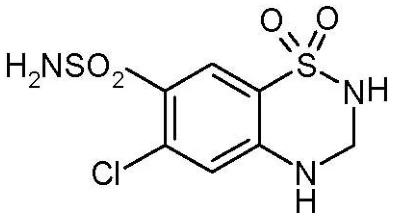
Chemical Name: 6-chloro-3,4-dihydro-2H-1,2,4-benzothiadiazine-7-sulfonamide 1,1-dioxide
Molecular formula and molecular mass: C7H8ClN3O4S2 ; 297.72 g/mol
Structural formula:
Physicochemical properties: Hydrochlorothiazide is a white or almost white odourless, crystalline powder with a slightly bitter taste. It is almost insoluble in water, benzene, chloroform, ether and dilute mineral acids, and soluble 1 in 500 of alcohol and 1 in 50 of acetone. It is freely soluble in dimethyl formamide; n-butylamine and solutions of alkali hydroxides.
DETAILED PHARMACOLOGY
Orally, hydrochlorothiazide is an effective diuretic and antihypertensive agent. Diuresis is effected by inhibition of tubular resorption of electrolytes and an accompanying volume of water. Hydrochlorothiazide increases the excretion of sodium and chloride in approximately equivalent amounts and causes a simultaneous, usually minimal loss of bicarbonate. The excretion of ammonia is reduced slightly as a consequence of which concentrations of ammonia in the blood may be increased. Hydrochlorothiazide slightly increases the excretion of potassium. Calcium excretion is decreased and magnesium excretion is increased.
TOXICOLOGY
Acute Toxicity:
SPECIES ROUTE LD50 (mg/kg)
MOUSE ORAL 10,000*
MOUSE I.V. 884
RAT ORAL 10,000*
RAT I.P. 3,130*
RABBIT I.V. 461
DOG I.V. 1,000
Dogs tolerated at least 2,000 mg/kg orally without signs of toxicity.
*Hydrocholorothiazide was administered as a suspension.
Subacute Toxicity:
Rat
Hydrochlorothiazide administered to rats, orally as a suspension at doses of 500, 1,000 and 2,000 mg/kg/day, 5 days/week, for 3 weeks did not produce any toxic symptoms. Three of the ten rats which received 2,000 mg/kg/day of sodium hydrochlorothiazide salt died after the 5th day of treatment. The mortality was attributed to pneumonia.
Dog
Hydrochlorothiazide administered to dogs, orally at doses of 250, 500 and 1,000 mg/kg, 7 days/week for 8 weeks did not produce any observable adverse effects or gross signs of drug toxicity except for electrolytic imbalance.
Chronic Toxicity
Rat and Dog
The results of 6-month chronic oral toxicity on hydrochlorothiazide in rats and dogs indicated no toxicity attributable to the drug administered to rats at doses of up to 2 grams/kg/day and to dogs at doses of up to 250 mg/kg/day. On gross examination the following changes were observed in the dog: slight depression of plasma potassium; small amounts of yellow crystalline precipitate in the bladder in two of twelve dogs tested. Histomorphologic studies did not show any drug related changes.
Carcinogenicity
Hydrochlorothiazide
According to the experimental data available, hydrochlorothiazide revealed mitigated evidence of carcinogenic activity in rats and mice, with conflicting evidence of hepatic adenoma in male mice at the highest dose and adrenal pheocytochroma in one rat study but not in another. Current evidence is inadequate to draw a clear conclusion for a carcinogenic effect of hydrochlorothiazide in animals.
The mutagenic potential was assessed in a series of in vitro and in vivo test systems. While some positive results were obtained in vitro, all in vivo studies provided negative results. Hydrochlorothiazide enhanced the UVA-induced formation of pyrimidine dimers in vitro and in the skin of mice following oral treatment. It is therefore concluded that although there is no relevant mutagenic potential in vivo, hydrochlorothiazide could enhance the genotoxic effects of UVA light. This mechanism of photosensitization could be associated with a higher risk for non-melanoma skin cancer.
REFERENCES
- 1.
Applied Pharmacology. The Kidneys, Ch. 310. Classification of Diuretics, pp. 587-589. W.B.
Saunders Company, Philadelphia; Toronto, 1976.
- 2.
Physicians' Desk Reference (PDR), 1977, pp. 1090. HydroDiuril (hydrochlorothiazide, MSD)
U.S.P.
- 3.
FROHLICH, E.D. Hypertension pp. 208-213. Current Therapy, 1976. Conn, F. Editor. W.B.
Saunders Company, Philadelphia, London, Toronto
- 4.
MUDGE, G.H. Diuretics and other agents employed in the mobilization of edema fluid. The
Pharmacological Basis of Therapeutics, Ch. 39, pp. 854-858. Goodman & Gilman, 4th Edition, 1970.
- 5. SACKNER, M.A.; WALLACK, A.A. BELLETS, S. The Diuretic Effects of hydrochlorothiazide in Congestive Heart Failure, Cirrhosis, Chronic Renal Disease & Hypertension: Preliminary Report based on a study of 28 cases. Am. J. M. Sc., 237; 575-584, May 1959.
- 6.
ZATUCHNI; J.; KING, W.; RESINSKI, M. Hydrochlorothiazide, A new Saluretic. Am. J. M .
Sc., 237; 479, April 1959.
- 7.
FORD, R.V. Comparative Studies of The Newer Diuretics. Annals New York Academy of
Sciences, 88, 809-814, 1960.
- 8.
FUCHS, M; MOYER, J.H.; NEWMAN, B.E. Human Clinical Pharmacology of the Newer
Diuretics: Benzothiadiazine & Phthalimidine. Annals New York Academy of Sciences, 88, 795-808, October 1960.
- 9.
RENNICK, B. Animal Pharmacology of the New Diuretics: Benzothiadiazines, Spirolactones &
Phthalimidines. Annals New York Academy of Sciences, 88, 785-794, October 1960.
- 10.
GROLLMAN, A.; FURNESS, F. Present concept of the Mechanism of Urine Formation and of
Diuretic Action. Annals of the New York Academy of Sciences, 88 (4): 771-1020, Oct. 1960.
- 11. BORHANI, N.O. Chlorothiazide & Hydrochlorothiazide: A Comparative Study of their hypotensive, Saluretic & Hyperuricemic action. Ann Int. Med., 53, 342, 1960.
- 12. WINER, B.N. The Antihypertensive Actions of Benzothiadiazines.Circulation 23: 211, Feb. 1961.
- 13.
ROSENBLOOM, S.E.; SHAPERA, R.P.; GOLDSBLOOM, S.; PINCUS, J.; SHAPIRO, A.P. II.
Comparison of Chlorothiazide, Hydrochlorothiazide and a Placebo in the Hypertensive Patient. New England J. Med; 264, 164, Jan. 1961
- 14.
KJELLBO, H.; STAKEBERG, H.; MELLGREN, J. Possibly Thiazide - Induced Renal
Necrotising Vasculitis. Lancet; 1, 1034, May 1965.
- 15. CAFRUNY, E.J. How Diuretics work. Geriatrics; 22, 107, Jan. 1967.
- 16.
BRYANT, J.M. SCHVARTZ, N.; ROQUE, M.; FLETCHER, L.; FERTIG, H.; LAULER,
D.P. The Hypotensive Effects of Chlorothiazide and Hydrochlorothiazide. Am. J. Cardiol.; 7, 392, March 1961.
- 17.
WOLF, R.L.; MENDLOWITZ, M.; ROBOZ, J.; GITLOW, S.E. Treatment of Hypertension with
Antihypertensive Diuretic Drugs. Am. Heart H.; 72, 692, Nov. 1966.
- 18. TANNENBAUM, P.J.; CROSLEY, A.P. A Comparison of the Effects of Hydrochlorothiazide and Hydrochlorothiazide in Combination with Triamterene on Electrolyte Balance. Clin. Pharmacol. & Therap.: 7, 777, Nov.-Dec. 1966.
- 19.
KOLODNY, A.L Technic of Drug Evaluation in Hypertension.. New York J. Med., 62, 1585,
May 1962.
- 20.
SALERNO, L.J.: STONE, M.L. The Use of Diuretics in the Pregnant Patient. Annals of the New
York, Academy of Sciences, 88, 881-889, Oct. 1960.
- 21.
Product Monograph for pms-HYDROCHLOROTHIAZIDE, Pharmascience Inc., Montreal,
Quebec, Canada. Control # 232155, 232159; Date of Revision: January 27, 2020.