


Patient Medication Information: uses, side effects, how to take - Hyoscine Butylbromide Injection BP
WARNINGS AND PRECAUTIONS
General
Hyoscine Butylbromide Injection BP should not be taken on a continuous daily basis or for extended periods without investigating the cause of abdominal pain.
Patients intolerant of one belladonna alkaloid or derivative may also be intolerant of other belladonna alkaloids or derivatives such as hyoscine butylbromide.
Because of the potential risk of anticholinergic complications, caution should be used in patients prone to narrow angle glaucoma as well as in patients susceptible to intestinal or urinary outlet obstructions and in those inclined to tachyarrhythmia.
After parenteral administration of hyoscine butylbromide, cases of anaphylaxis, including episodes of shock have been observed. As with all drugs causing such reactions, patients receiving Hyoscine Butylbromide Injection USP should be kept under observation.
Hyoscine Butylbromide Injection BP can cause serious and severe cardiac adverse reactions consisting of tachycardia and hypotension (see CONTRAINDICATIONS and Cardiovascular).
Cardiovascular
Hyoscine Butylbromide Injection BP can cause adverse reactions of tachycardia and hypotension, which may be more serious or more severe in patients with cardiac conditions such as coronary heart disease, cardiac arrhythmias, hypertension, and mitral stenosis, and in cardiac surgery. Monitoring of these patients is advised until conditions return to normal. Emergency equipment and personnel trained in its use must be readily available.
Hyoscine Butylbromide Injection BP should be used with caution in patients with cardiac conditions. Hyoscine Butylbromide Injection BP is contraindicated in patients with tachycardia, angina, and cardiac failure (see CONTRAINDICATIONS).
The increase in heart rate may also be undesirable in patients with unstable cardiovascular status in an acute hemorrhage situation.
Gastrointestinal
Exercise caution in patients with reflux esophagitis or gastrointestinal tract obstructive disease (i.e., achalasia and pyloroduodenal stenosis) due to the ability of anticholinergics/systemic antispasmodics to decrease smooth muscle motility and tone resulting in gastric retention.
Anticholinergics may aggravate hiatal hernia associated with reflux esophagitis, myasthenia gravis or pyloric obstruction.
In patients with ulcerative colitis, large anticholinergic doses may suppress intestinal motility, possibly causing paralytic ileus or resulting in obstruction; also, use may precipitate or aggravate toxic megacolon.
In case severe, unexplained abdominal pain persists or worsens, or occurs together with symptoms like fever, nausea, vomiting, changes in bowel movements, abdominal tenderness, decreased blood pressure, fainting or blood in stool, medical advice should immediately be sought.
Genitourinary
Hyoscine Butylbromide Injection BP (hyoscine butylbromide) should be used with caution in patients with prostatic enlargement. Hyoscine Butylbromide Injection BP may precipitate or aggravate urinary retention in patients with the following conditions: non-obstructive prostatic hypertrophy, urinary retention (or the predisposition to) or obstructive uropathy such as a bladder neck obstruction due to prostatic hypertrophy (see CONTRAINDICATIONS).
Ophthalmologic
The parenteral administration of hyoscine butylbromide, particularly of higher doses, has been reported to cause transient disturbances of accommodation which recede spontaneously. Therefore, patients should be cautioned about potential visual problems and the need to exercise care while driving or operating machinery after receiving Hyoscine Butylbromide Injection BP.
Therapy should be discontinued if the patient reports any unusual visual disturbances or pressure pain within the eyes.
Elevation of intraocular pressure may be produced by the administration of anticholinergic agents such as Hyoscine Butylbromide Injection BP in patients with undiagnosed and therefore untreated narrow angle glaucoma. Therefore, patients should seek urgent ophthalmological advice in case they should develop a painful, red eye with loss of vision whilst or after taking Hyoscine Butylbromide Injection BP.
Special Populations
Fertility, pregnancy and nursing:
There is limited data from the use of hyoscine butylbromide in pregnant women.
Animal studies do not indicate direct or indirect harmful effects with respect to reproductive toxicity.
There is insufficient information on the excretion of hyoscine butylbromide and its metabolites in human milk.
As a precautionary measure, it is preferable to avoid the use of Hyoscine Butylbromide Injection BP during pregnancy and nursing.
No studies on the effects on human fertility have been conducted.
Pediatrics:
Hyoscine Butylbromide Injection BP is not currently recommended for use in children.
Geriatrics:
Geriatric patients are especially susceptible to the anticholinergic side effects of constipation, dryness of mouth and urinary retention (especially in males). If these side effects continue or are severe, discontinuation of medication should be considered.
Due care is necessary when anticholinergics are administered to geriatric patients due to the danger of precipitating undiagnosed acute angle-closure glaucoma.
Administration of anticholinergics/systemic antispasmodics to elderly patients with intestinal atony or in debilitated patients may result in intestinal obstruction.
Effects on ability to drive and use machines
No studies on the effects on the ability to drive and use machines have been performed.
However, patients should be advised that they may experience undesirable effects such as accommodation disorder or dizziness during treatment with Hyoscine Butylbromide Injection BP. Therefore, caution should be recommended when driving a car or operating machinery. If patients experience accommodation disorder or dizziness, they should avoid potentially hazardous tasks such as driving or operating machinery.
ADVERSE REACTIONS
Adverse Drug Reaction Overview
Many of the listed undesirable effects can be assigned to the anticholinergic properties of Hyoscine Butylbromide Injection BP. Anticholinergic side effects of Hyoscine Butylbromide Injection BP are generally mild and self-limited.
Accumulated clinical and postmarketing experience indicates that the following adverse reactions can be expected with the use of Hyoscine Butylbromide Injection BP:
Cardiac disorders
Tachycardia
Eye disorders
Visual accommodation disorders, mydriasis, increased intraocular pressure.
Gastrointestinal disorders
Xerostomia (dry mouth)
Immune system disorders
There have been very rare reports of anaphylactic reactions and anaphylactic shock including fatal outcome.
Skin reactions (e.g. urticaria, rash, erythema, pruritus), and other hypersensitivity, angioedema and fixed drug eruptions have been reported rarely.
Dyspnea
Renal and urinary disorders
Urinary retention
Skin and subcutaneous tissue disorders
Hypohidrosis, heat sensation/transpiration.
Vascular disorders
There have been rare reports of dizziness, blood pressure decreased and flushing.
DRUG INTERACTIONS
Overview
As hyoscine butylbromide can reduce the motility and secretory activity of the gastrointestinal system, the systemic absorption and pharmacologic effects of other oral medications may be delayed.
Drug-Drug Interactions
Table 1 - Established or Potential Drug-Drug Interactions
| Hyoscine Butylbromide | Effect | Clinical comment |
|---|---|---|
Tri-and tetracyclic antidepressants Antipsychotics Atropine-like compounds | Can potentiate the anticholinergic effect. | |
| Antihistamines | Can potentiate the anticholinergic effect. | |
| Quinidine | Can potentiate the anticholinergic effect. | |
| Disopyramide | Can potentiate the anticholinergic effect. | |
| Amantadine | Can potentiate the anticholinergic effect. | |
| MAO inhibitors | May result in intensified anticholinergic side effects. Also, may block detoxification of anticholinergics thus potentiating their action. | |
| Anticholinergics | May intensify anticholinergic effects. | |
| Potassium chloride | May increase the severity of potassium chloride induced gastrointestinal lesions. | |
| Dopamine antagonists such as metoclopramide. | May result in diminution of the effects of both drugs on the gastrointestinal tract. | |
| Beta-adrenergic agents | May enhance tachycardic effects. | |
Antacids or adsorbent antidiarrheals | May reduce the absorption of anticholinergics, resulting in decreased therapeutic effectiveness. | Anticholinergics such as hyoscine butylbromide should be given at least one hour before these medications. |
Drug-Food Interactions
Interactions with food have not been established.
Drug-Herb Interactions
Interactions with herbs have not been established.
Drug-Laboratory Interactions
Interactions with laboratory tests have not been established.
DOSAGE AND ADMINISTRATION
Dosing Considerations
Individual response to Hyoscine Butylbromide Injection BP may vary and doses should be adjusted accordingly.
Recommended Dose and Dosage Adjustment
One half (10 mg / 0.5mL) to one vial (20 mg / 1mL) administered parenterally by intramuscular, subcutaneous, or intravenous routes, at a slow injection rate of 1 mL/min. No dilution of the solution is necessary prior to administration. The maximum dose should not exceed 100 mg/day (5 vials).
Missed Dose
In case a dose has been missed, take the next dose as scheduled. Do not double the dose.
Administration
The rapid action of Hyoscine Butylbromide Injection BP is advantageous in acutely ill patients and in those situations where prompt spasmolytic activity facilitates diagnostic procedures such as radiological examinations. Hyoscine Butylbromide Injection BP may also be used intramuscularly 10-15 minutes before radiological examinations of the stomach to slow peristaltic movements.
Dilution and Stability of Parenteral Hyoscine Butylbromide Injection BP:
Although dilution prior to administration is not required, Hyoscine Butylbromide Injection BP is compatible with the following solutions, should dilution be desirable:
Ringers Solution
Ringers Lactate
NaCl 0.9%
Laevulose 5%
Glucose 10%
Solutions must be mixed under sterile conditions and are stable for 8 hours.
OVERDOSAGE
| For management of a suspected drug overdose, contact your regional Poison Control Centre immediately. |
|---|
Symptoms
In the case of overdose, anticholinergic effects may be observed.
Single oral doses of up to 590 mg and quantities of active drug up to 1090 mg within 5 hours have produced dry mouth, tachycardia, slight drowsiness and transient visual disorders. Other symptoms include urinary retention, reddening of the skin, and inhibition of gastrointestinal motility.
Other symptoms which occurred in animals and which may be encountered in humans include: shock, Cheyne-Stokes respiration, respiratory paralysis, clonic spasms, paresis of the striated muscle, coma, paralytic ileus and cystoparalysis.
Treatment
In the case of an oral overdose, perform gastric lavage with activated charcoal followed by magnesium sulfate (15%). Hyoscine Butylbrodmide Injection BP overdose symptoms respond to parasympathomimetics.
For patients with glaucoma, administer pilocarpine locally. If necessary, parasypathomimetics should be administered, e.g. neostigmine 0.5-2.5 mg i.m. or i.v.. Cardiovascular complications should be treated according to usual therapeutic principles. In case of respiratory paralysis: intubation, artificial respiration.
Catheterisation may be required for urinary retention.
Other overdosage symptoms should be treated with standard supportive therapy.
ACTION AND CLINICAL PHARMACOLOGY
Mechanism of Action
Hyoscine butylbromide is an antispasmodic agent which relaxes the smooth muscle of the gastrointestinal, biliary and urinary (parenteral formulation) tracts. It is believed to act predominantly at the parasympathetic ganglia in the walls of the viscera of these organs. Structurally, hyoscine butylbromide exists as a quaternary ammonium compound and as a single positively charged cation throughout the entire pH range.
Pharmacokinetics
Absorption and distribution
After intravenous administration hyoscine butylbromide is rapidly distributed (t1/2α = 4 min, t1/2β= 29 min) into the tissues. The volume of distribution (Vss) is 128 L (corresponding to approx.1.7 L/kg). Because of its high affinity for muscarinic receptors and nicotinic receptors, hyoscine butylbromide is mainly distributed on muscle cells of the abdominal and pelvic area as well as in the intramural ganglia of the abdominal organs. Plasma protein binding (albumin) of hyoscine butylbromide is approximately 4.4%. Animal studies demonstrate that hyoscine butylbromide does not pass the blood-brain barrier, but no clinical data to this effect is available. Hyoscine butylbromide (1 mM) has been observed to interact with the choline transport (1.4 nM) in epithelial cells of human placenta in vitro.
Metabolism and elimination
The main metabolic pathway is the hydrolytic cleavage of the ester bond. The half-life of the terminal elimination phase (t1/2γ) is approximately 5 hours. The total clearance is 1.2 L/min. Clinical studies with radiolabeled hyoscine butylbromide show that after intravenous injection 42 to 61% of the radioactive dose is excreted renally and 28.3 to 37% faecally.
The portion of unchanged active ingredient excreted in the urine is approximately 50%. The metabolites excreted via the renal route bind poorly to the muscarinic receptors and are therefore not considered to contribute to the effect of the hyoscine butylbromide.
STORAGE AND STABILITY
Hyoscine Butylbromide Injection BP should be protected from light and heat. Hyoscine Butylbromide Injection BP should be protected from freezing. Product should be stored at 15 – 30°C and is stable up to the expiration date indicated on the label.
DOSAGE FORMS, COMPOSITION AND PACKAGING
Dosage Forms
Solution: Containing 20 mg of hyoscine butylbromide in 1 mL aqueous solution.
Composition
Hyoscine butylbromide
Non-medicinal ingredients include sodium chloride, hydrochloric acid and water for injection.
Packaging
Packages of 10 vials. The stopper is not made with natural rubber latex.
PART II: SCIENTIFIC INFORMATION
PHARMACEUTICAL INFORMATION
Drug Substance
Proper name: hyoscine butylbromide
Chemical name: (1S,3S,5R,6R,7S)-8-Butyl-6,7-epoxy-3-[(S)-tropoyloxy] tropanium bromide
Chemical structure:
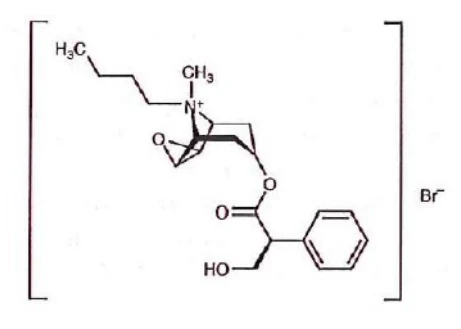
Molecular formula and molecular mass: C21H30BrNO4, 440.4 g/mol
Physicochemical properties: A white or almost white, odourless or almost odourless, crystalline powder, soluble 1 to 1 in water, 1 in 50 of alcohol, and 1 in 5 of chloroform. A 10% solution in water has a pH of 5.5 to 6.5.
REFERENCES
- 1.
Buscopan® Product Monograph (Sanofi Consumer Health Inc.). Control Number: 245198. Date of Revision: March 31, 2021.
READ THIS FOR SAFE AND EFFECTIVE USE OF YOUR MEDICINE
PATIENT MEDICATION INFORMATION
PrHyoscine Butylbromide Injection BP
Hyoscine Butylbromide Injection
Read this carefully before you start taking Hyoscine Butylbromide Injection BP. This leaflet is a summary and will not tell you everything about this drug. Talk to your healthcare professional about your medical condition and treatment and ask if there is any new information about Hyoscine Butylbromide Injection BP.
What is Hyoscine Butylbromide Injection BP used for?
For the relief of abdominal spasms (cramps), pain and discomfort in the:
- stomach,
- gut (intestines / bowel),
- biliary tract,
- bladder or
- uterus.
Before medical tests, to relax the smooth muscles of the:
- stomach,
- gut (intestines / bowel),
- biliary tract,
- urinary tract.
How does Hyoscine Butylbromide Injection BP work?
- Abdominal cramps (spasms) are caused by sudden, strong tightening of muscles.
Relieves cramps (spasms), pain, discomfort by relaxing tight muscles of the:
- stomach,
- gut (intestines / bowel),
- biliary tract,
- bladder or
- uterus.
What are the ingredients in Hyoscine Butylbromide Injection BP?
Medicinal ingredient: Hyoscine butylbromide.
Non-medicinal ingredients: Sodium chloride, hydrochloric acid and water for injection.
Hyoscine Butylbromide Injection BP comes in the following dosage form:
Solution, 20 mg / mL.
Do not use Hyoscine Butylbromide Injection BP if you:
are allergic to:
- hyoscine butylbromide.
- atropinics.
any of the ingredients in the product (see list in What are the ingredients in
Hyoscine Butylbromide Injection BP).
- are taking this drug by injection into the muscle and you are taking blood thinners (anticoagulants). Taking the drugs at the same time may cause bleeding in the muscle.
have any of the below conditions:
- muscle wasting disease (myasthenia gravis).
- untreated high pressure inside of your eye (closed-angle glaucoma).
- problems with urination due to prostate issues.
- narrowing parts of the gastrointestinal tract (stenosis).
- fast heartbeat (tachycardia).
- heart failure.
- chest pain and short breath (angina).
your intestine stopped working or may be blocked;
Symptoms include:
- severe abdominal pain with absence of stools,
- and/or nausea,
- and/or vomiting.
- enlarged bowel (megacolon).
- are pregnant, likely to get pregnant, or are breast-feeding.
To help avoid side effects and ensure proper use, talk to your healthcare professional before you take Hyoscine Butylbromide Injection BP. Talk about any health conditions or problems you may have, including if you:
- are a man and have prostate problems.
- have stomach acid backing up in your throat (reflux-esophagitis).
- have any blockage in your gastrointestinal tract. This includes your esophagus, stomach, intestines and anus.
- have inflamed bowels (e.g. ulcerative colitis).
- have any heart problems
Other warnings you should know about:
Do not drive or operate machinery if you suffer:
- dizziness.
- blurred vision.
After you receive Hyoscine Butylbromide Injection BP injection, your health care professional should keep you under observation for any signs of an allergic reaction.
If the following occurs after you receive Hyoscine Butylbromide Injection BP injection, get medical help immediately:
- if you have severe and unexplained stomach pain that does not go away or gets worse
if you have severe and unexplained stomach pain that occurs with other symptoms such as:
- fever
- nausea
- vomiting
- changes in bowel movements
- abdominal tenderness
- decreased blood pressure
- fainting
- blood in stool
- if you have painful, red eye(s) with loss of vision
Tell your healthcare professional about all the medicines you take, including any drugs, vitamins, minerals, natural supplements or alternative medicines. The following may interact with Hyoscine Butylbromide Injection BP:
|
|
If you are taking antacids or adsorbent anti-diarrheals, your healthcare professional may tell you to take them at least 1 hour before taking Hyoscine Butylbromide Injection BP.
How to take Hyoscine Butylbromide Injection BP:
Usual dose (Adults):
Administer one-half (10 mg / 0.5 mL) to 1 vial (20 mg / mL) at a slow injection rate of 1 mL/min by one of the following routes:
- intramuscular.
- subcutaneous.
- intravenous.
No dilution of solution is needed. The maximum dose should not exceed 100 mg/day (5 vials).
What are the possible side effects from using Hyoscine Butylbromide Injection BP?
This drug may sometimes cause:
- dry mouth.
- feeling hot and decreased sweating.
- increased heart rate.
- not being able to pass urine.
- increase fluid pressure inside your eyes, mydriasis (dilated pupils), or problems with your vision.
other rare side effects may occur such as:
- dizziness.
- flushing.
- allergic reactions (skin rash, itching).
- skin reactions (e.g. hives, rash, skin redness, itching).
- rapid swelling of the skin and skin tissue (angioedema).
- decreased blood pressure.
- difficulty in breathing (usually in patients who suffer with asthma or allergy).
There have been very rare reports of severe, allergic reactions and severe allergic shock including death.
Should you have a painful, red eye with loss of vision, seek urgent medical advice.
If you experience any of these effects which persist or become troublesome or any side effects not listed here, talk to your healthcare professional.
Reporting Side Effects
You can report any suspected side effects associated with the use of health products to Health Canada by:
NOTE: Contact your health professional if you need information about how to manage your side effects. The Canada Vigilance Program does not provide medical advice. |
|---|
Storage:
Protect from freezing, light and heat. Store at room temperature (15 - 30°C). Product is stable up to the labelled expiry.
Keep out of reach and sight of children.
If you want more information about Hyoscine Butylbromide Injection BP:
- Talk to your healthcare professional.
- Find the full Product Monograph that is prepared for healthcare professionals by visiting the Health Canada website (https://www.canada.ca/en/health-canada/services/drugs-health-products/drug-products/drug-product-database.html); or by contacting the sponsor, Omega Laboratories Limited, by visiting https://www.omegapharma.ca/ or by calling: 1-800-363-0584.
Omega Laboratories Limited
11177 Hamon
Montreal, Canada
H3M 3E4