


Product Monograph - Inluriyo
1. Indications
INLURIYO (imlunestrant tablets) is indicated for:
- the treatment of adults with estrogen receptor positive (ER+), human epidermal growth factor receptor 2 negative (HER2-), estrogen receptor 1 (ESR1)-mutated locally advanced or metastatic breast cancer that has progressed after an endocrine-based regimen.
1.1. Pediatrics
Pediatrics (< 18 years of age): No data are available to Health Canada; therefore, Health Canada has not authorized an indication for pediatric use.
1.2. Geriatrics
Geriatrics (≥65 years of age): Overall, no differences in safety or effectiveness of INLURIYO were observed between patients ≥65 years of age and younger patients with advanced or metastatic breast cancer.
2. Contraindications
INLURIYO is contraindicated in patients who are hypersensitive to this drug or to any ingredient in the formulation, including any non-medicinal ingredient, or component of the container. For a complete listing, (see 6. Dosage Forms, Strengths, Composition, and Packaging).
3. Serious Warnings and Precautions Box
|
|---|
4. Dosage and Administration
4.1. Dosing Considerations
- Prior to the initiation of INLURIYO a validated assay is required to confirm the presence of an ESR1 gene mutation.
- Pre/perimenopausal women and men treated with INLURIYO should be treated with a gonadotropin-releasing hormone agonist (GnRH) according to current clinical practice standards.
- Patients with moderate or severe hepatic impairment require INLURIYO dose adjustment (see 4.2. Recommended Dose and Dosage Adjustment, and 10. Clinical Pharmacology).
- Patients with concomitant use of strong CYP3A inhibitors and inducers require INLURIYO dose adjustment (see 4.2. Recommended Dose and Dosage Adjustment and 10. Clinical Pharmacology).
4.2. Recommended Dose and Dosage Adjustment
The recommended dose of INLURIYO is 400 mg (take two, 200 mg tablets) taken orally, once daily.
The recommended INLURIYO dose modifications are provided in Table 1 and Table 2. If a dose reduction is necessary, reduce the dose by 200 mg. Discontinue INLURIYO for patients unable to tolerate 200 mg once daily dose.
Table 1: Dose Modifications Guidelines – Adverse Reactions (except hepatotoxicity)
| CTCAE Grade | INLURIYO Dose Modifications |
|---|---|
| Persistent or recurrent Grade 2 that does not resolve with maximal supportive measures within 7 days to baseline or Grade 1 | Suspend until toxicity resolves to baseline or ≤ Grade 1. Resume INLURIYO at the same dose level. |
| Grade 3 or Grade 4 (except non-hepatic asymptomatic laboratory changes) | Suspend until toxicity resolves to baseline or ≤ Grade 1. Resume INLURIYO at next lower dose level. |
Abbreviation: CTCAE = Common Terminology Criteria for Adverse Events.
Table 2: Dose Modifications Guidelines – Hepatotoxicity
| Monitor alanine aminotransferase (ALT) / aspartate aminotransferase (AST) during imlunestrant therapy as clinically indicated. | |||||||
|---|---|---|---|---|---|---|---|
| Liver Transaminase | INLURIYO Dose Modifications | ||||||
Persistent or recurrent: AST/ALT >3.0-5.0×ULN | Suspend until toxicity resolves to baseline or to >ULN-3.0×ULN. Resume INLURIYO at the same dose level. | ||||||
If AST/ALT at baseline is within the normal range: AST/ALT >5.0-20×ULN Or If AST/ALT at baseline is above ULN: AST/ALT ≥3 × baseline (if AST/ALT≥1.5 x ULN at baseline) Or AST/ALT >8 × ULN (whichever is the lower threshold) | Suspend until toxicity resolves to baseline or to >ULN-3.0×ULN. Resume INLURIYO at next lower dose level or discontinue if receiving 200 mg daily. | ||||||
AST/ALT >20.0×ULN Or ALT or AST ≥ 3×ULN concurrent with TBL ≥ 2×ULN (if ALT or AST < 1.5 × ULN at baseline), in the absence of cholestasis Or ALT or AST ≥ 2×baseline concurrent with TBL ≥ 2×ULN (if ALT or AST ≥ 1.5 × ULN at baseline), in the absence of cholestasis | Discontinue INLURIYO. | ||||||
Abbreviation: ALT = alanine aminotransferase, AST = aspartate aminotransferase, CTCAE = Common Terminology Criteria for Adverse Events, ULN = upper limit of normal.
Hepatic Impairment:
The recommended dosage of INLURIYO for patients with moderate (Child-Pugh B) or severe (Child-Pugh C) hepatic impairment is 200 mg once daily. No dosage adjustment is recommended for patients with mild hepatic impairment (Child-Pugh A) (see 10. Clinical Pharmacology). Monitor for increased adverse reactions.
Strong CYP3A Inhibitors:
Avoid concomitant use of strong CYP3A inhibitors with INLURIYO and consider alternative agents. If concomitant use is unavoidable, decrease the INLURIYO dosage to 200 mg once daily (see 10. Clinical Pharmacology).
Strong CYP3A inducers:
Avoid concomitant use of strong CYP3A inducers with INLURIYO and consider alternative agents. If concomitant use is unavoidable, consider increasing the INLURIYO dose by 200 mg once daily up to a total daily dose of 600 mg (see 10. Clinical Pharmacology).
Renal Impairment:
No dosage adjustment required in patients with mild or moderate (eGFR 30 to 89 mL/min, estimated by CKD-EPI equation) renal impairment. The effect of severe (15 mL/minute ≤ eGFR < 30 mL/minute) renal impairment and patients on dialysis on the pharmacokinetics of imlunestrant is unknown. (see 10. Clinical Pharmacology).
Pediatrics (< 18 years of age):
Health Canada has not authorized an indication for pediatric use (see 7.1.3. Pediatrics).
Geriatrics (≥65 years of age):
No dosage adjustment required in patients in patients ≥ 65 years of age (see 10. Clinical Pharmacology).
4.4. Administration
Patients should take their dose of INLURIYO at approximately the same time each day.
Take on an empty stomach, at least 2 hours before food or 1 hour after food. It is important to take INLURIYO on an empty stomach, considering the high exposures that may occur when it is taken with food (see 10. Clinical Pharmacology).
Swallow the tablets whole. Do not split, crush, or chew the tablets. Instruct patients not to ingest INLURIYO tablets if broken, cracked or otherwise not fully intact.
Continue treatment until disease progression or unacceptable toxicity.
4.5. Missed Dose
If a dose of INLURIYO is missed by 6 or more hours, skip the dose and take the next dose the following day at the regularly scheduled time. The patient should not take the missed dose. If vomiting occurs after taking a dose, do not take an additional dose, take the next dose the following day at the regularly scheduled time.
5. Overdose
There is no known antidote for INLURIYO overdose. The treatment of overdose of INLURIYO should consist of general supportive measures.
| For the most recent information in the management of a suspected drug overdose, contact your regional poison control centre or Health Canada’s toll-free number, 1-844 POISON-X (1-844-764-7669). |
|---|
- 6. Dosage Forms, Strengths, Composition, and Packaging
Table 3: Dosage Forms, Strengths, and Composition
Description
INLURIYO, 200 mg, is white, film coated-capsule shaped tablet, with “LILLY” on one side and “1717” and elongated 4-point starburst on the other side.
Packaging of the finished dosage form(s) for INLURIYO may include blister packages of 14 (1x14) or 28 (2x14) and bottles containing 28 or 56 tablets.
7. Warnings and Precautions
Please see 3. Serious Warnings and Precautions Box.
Reproductive Health
Fertility
Based on findings in animals, INLURIYO may impair fertility in females and males of reproductive potential (see 16. ). The effects of INLURIYO on fertility were not assessed in humans.
Contraception
Advise females of reproductive potential to use effective contraception during treatment with INLURIYO and for 1 week after the last dose. Advise male patients with female partners of reproductive potential to use effective contraception during treatment with INLURIYO and for 1 week after the last dose (see 7.1. Special Populations and 16. ).
| Route of Administration | Dosage Form / Strength/Composition | Non-Medicinal Ingredients |
| Oral | Tablets, 200 mg imlunestrant (as imlunestrant tosylate) |
|
Verify the pregnancy status in females of reproductive potential prior to initiating treatment with INLURIYO.
7.1. Special Populations
7.1.1. Pregnancy
Based on findings in animals and its mechanism of action, INLURIYO can cause fetal harm when administered to a pregnant woman. There are no available human data on the use of INLURIYO in pregnant women to inform the drug-associated risk. In an animal reproduction study, oral administration of imlunestrant to pregnant rats during the period of organogenesis led to maternal toxicity, early delivery, teratogenic effects, and embryo lethality at maternal exposures below the human AUC at the recommended dose (see 16. ).
Advise pregnant women and women of reproductive potential of the potential risk to a fetus.
7.1.2. Breastfeeding
It is unknown if INLURIYO is excreted in human milk. Precaution should be exercised because many drugs can be excreted in human milk. Because of the potential for adverse effects in nursing infants from exposure to INLURIYO, advise lactating females not to breastfeed during treatment with INLURIYO and for at least 1 week after the last dose.
7.1.3. Pediatrics
Pediatrics (< 18 years of age): No data are available to Health Canada; therefore, Health Canada has not authorized an indication for pediatric use.
7.1.4. Geriatrics
Of 327 patients who received INLURIYO in the EMBER-3 study, 118 patients were ≥ 65 years of age and 37 patients were ≥ 75 years of age. No overall differences in safety or effectiveness of INLURIYO have been observed between patients 65 years of age and older and younger adult patients.
8. Adverse Reactions
8.1. Adverse Reaction Overview
The safety of INLURIYO was assessed in 327 patients treated in EMBER-3, a randomized Phase 3 study of patients with ER-positive, HER2-negative, locally advanced or metastatic breast cancer previously treated with endocrine based therapy, with or without a CDK4/6 inhibitor.
The most common (≥10%) adverse reactions, including laboratory abnormalities, reported in patients receiving INLURIYO were, joint and musculoskeletal pain, AST increased, fatigue, diarrhea, ALT increased, triglycerides increased, nausea, constipation, and abdominal pain.
Serious adverse reactions occurred in 10% of patients who received INLURIYO. Serious adverse reactions in >1% of patients included pleural effusion (1.2%). Fatal adverse reactions occurred in 5 (1.5%) patients who received INLURIYO including cardiac arrest, acute myocardial infarction, right ventricular failure, hypovolemic shock, and upper gastrointestinal hemorrhage.
Permanent treatment discontinuations of INLURIYO due to an adverse reaction were reported in 4.6% of patients receiving INLURIYO. Adverse reactions leading to permanent discontinuation of INLURIYO were alanine aminotransferase increased (0.9%), abdominal pain, asthenia, fractured sacrum, hepatotoxicity, neuropathy peripheral, and pyrexia (each 0.3%).
Dosage interruptions of INLURIYO due to an adverse reaction occurred in 10% of patients. Adverse reactions leading to INLURIYO dose interruption in ≥2 patients were vomiting (1.5%), aspartate aminotransferase increased and COVID-19 (each 0.9%), and alanine aminotransferase increased, anemia, diarrhea, neutrophil count decreased, and pyrexia (each 0.6%).
Dose reductions of INLURIYO due to an adverse reaction occurred in 2.4% of patients. Adverse reactions leading to INLURIYO dose reductions were aspartate aminotransferase increased (0.6%); alanine aminotransferase increased, anemia, fatigue, interstitial lung disease, nausea, neutropenia, and vomiting (each 0.3%).
8.2. Clinical Trial Adverse Reactions
Clinical trials are conducted under very specific conditions. Therefore, the frequencies of adverse reactions observed in clinical trials may not reflect the frequencies observed in clinical practice and should not be compared to frequencies reported in clinical trials of another drug.
The safety of INLURIYO was assessed in EMBER-3, a randomized, open-label, active-controlled, multicenter study that enrolled adult patients with ER+, HER2- locally advanced or metastatic breast cancer (MBC), who were previously treated with an aromatase inhibitor either alone or in combination with a CDK4/6 inhibitor (see 14. Clinical Trials). Patients received INLURIYO 400 mg orally, once daily (n=327), or standard of care (n=324) consisting of either fulvestrant (n=292) or exemestane (n=32). Among patients who were treated with INLURIYO, the median duration of exposure was 5.6 months in EMBER-3.
Table 4: Adverse Reactions (≥ 10%) in Patients with ER-positive, HER2-negative, Advanced or Metastatic Breast Cancer Who Received INLURIYO in EMBER-3
| Adverse Reactiona | INLURIYO N=327 | Fulvestrant or Exemestane N=324 | |||||||||
|---|---|---|---|---|---|---|---|---|---|---|---|
| All Grades % | Grades ≥3 % | All Grades % | Grades ≥3 % | ||||||||
| Gastrointestinal Disorders | |||||||||||
| Diarrhea | 21 | 0.3 | 12 | 0.0 | |||||||
| Nausea | 17 | 0.3 | 13 | 0.0 | |||||||
| Constipation | 10 | 0 | 6 | 0.3 | |||||||
| Abdominal painb | 10 | 0.3 | 6 | 0.6 | |||||||
| General Disorders and Administration Site Conditions | |||||||||||
| Fatiguec | 23 | 0.3 | 14 | 0.6 | |||||||
| Musculoskeletal Disorders | |||||||||||
| Joint and Musculoskeletal Paind | 28 | 2.4 | 27 | 0.9 | |||||||
a Adverse reactions were graded using NCI CTCAE version 5.0.
b Includes abdominal pain, abdominal pain upper, abdominal pain lower, abdominal discomfort, abdominal rigidity, abdominal tenderness, epigastric discomfort, gastrointestinal pain
c Includes fatigue, asthenia, lethargy, malaise
d Includes arthralgia, back pain, myalgia, musculoskeletal discomfort, musculoskeletal chest pain, musculoskeletal pain, pain in extremity, neck pain
8.3. Less Common Clinical Trial Adverse Reactions
Less common treatment-emergent adverse reactions (all grades) occurring at an overall incidence <10% and ≥1% of patients who received INLURIYO included:
Gastrointestinal Disorders: vomiting (9%)
Nervous System Disorders: headache (9%)
Respiratory, Thoracic and Mediastinal Disorders: cough (9%)
Metabolism and Nutrition Disorders: decreased appetite (8%)
Vascular Disorders: hot flush (7%)
8.4. Abnormal Laboratory Findings: Hematologic, Clinical Chemistry and Other Quantitative Data
Lab abnormalities for INLURIYO are presented in Table 5.
Table 5: Lab Abnormalities (≥10%) Worsening from Baseline in Patients Treated with INLURIYO in EMBER-3
| Lab Abnormalitya | INLURIYOb | Fulvestrant or Exemestaneb | |||||||||||
|---|---|---|---|---|---|---|---|---|---|---|---|---|---|
| All Grades % | Grades ≥3 % | All Grades % | Grades ≥3 % | ||||||||||
| Hematology | |||||||||||||
| Leukocyte decreased | 31 | 2.2 | 34 | 1.3 | |||||||||
| Hemoglobin decreased | 30 | 1.2 | 35 | 3.4 | |||||||||
| Lymphocyte decreased | 27 | 1.5 | 30 | 4.1 | |||||||||
| Neutrophil decreased | 27 | 4.0 | 29 | 4.7 | |||||||||
| Platelet decreased | 16 | 1.8 | 14 | 1.3 | |||||||||
| Chemistry | |||||||||||||
| Alanine aminotransferase increased | 33 | 1.3 | 31 | 1.0 | |||||||||
| Aspartate aminotransferase increased | 32 | 1.9 | 32 | 2.3 | |||||||||
| Calcium decreased | 26 | 0 | 19 | 0.6 | |||||||||
| Triglycerides increased | 21 | 0 | 22 | 1.2 | |||||||||
| Calcium increased | 21 | 0 | 20 | 1.0 | |||||||||
| Potassium increased | 14 | 0 | 10 | 1.9 | |||||||||
| Sodium decreased | 13 | 0 | 16 | 1.3 | |||||||||
| Cholesterol increased | 10 | 0 | 12 | 0 | |||||||||
a Graded according to NCI CTCAE version 5
b The denominator used to calculate the rate varied from 252 to 329 based on the number of patients with a baseline value and at least one post-treatment value.
9. Drug Interactions
9.2. Drug Interactions Overview
INLURIYO is a CYP3A substrate.
Concomitant use of a strong CYP3A inducer decreases INLURIYO exposure, which may decrease effectiveness of INLURIYO. Avoid concomitant use of strong CYP3A inducers with INLURIYO and consider alternative agents. If concomitant use is unavoidable, consider increasing the INLURIYO dose by 200 mg once daily up to a total daily dose of 600 mg.
Concomitant use of a strong CYP3A inhibitor increased INLURIYO exposure, which may increase the risk of adverse reactions of INLURIYO. Avoid concomitant use of strong CYP3A inhibitors with INLURIYO and consider alternative agents. If concomitant use cannot be avoided, decrease the INLURIYO dosage to 200 mg once daily.
INLURIYO is an inhibitor of both P-gp and BCRP which increased the plasma concentration of P-gp and BCRP substrate, which may increase the risk of adverse reactions associated with P-gp or BCRP substrates. Avoid concomitant use of INLURIYO with P-gp or BCRP substrates where a small change in substrate plasma concentration may lead to serious toxicities.
INLURIYO is a CYP2D6 inhibitor that increased the plasma concentration of a CYP2D6 substrate, which may increase the adverse reactions associated with CYP2D6 substrates. Avoid concomitant use of INLURIYO with CYP2D6 substrates where a small increase in concentration may lead to serious toxicities.
9.4. Drug-Drug Interactions
The drugs listed in this table are based on either drug interaction case reports or studies, or potential interactions due to the expected magnitude and seriousness of the interaction (i.e., those identified as contraindicated).
Table 6: Established or Potential Drug-Drug Interactions
| Non-proprietary name of the drug product | Source of evidence | Effect | Clinical comment |
| Strong CYP3A Inhibitors | CT | Co-administration of imlunestrant with itraconazole (strong CYP3A4 inhibitor) increased AUC and Cmax of imlunestrant by 111% and 87%, respectively. | Avoid concomitant use of strong CYP3A inhibitors with INLURIYO and consider alternative agents. If concomitant use cannot be avoided, decrease the INLURIYO dosage to 200 mg once daily. |
| Strong CYP3A inducers | CT | Coadministration of imlunestrant with carbamazepine (a strong CYP3A4 inducer) decreased the AUC and Cmax of imlunestrant by 42% and 29%, respectively. | Avoid concomitant use of strong CYP3A inducers with INLURIYO and consider alternative agents. If concomitant use is unavoidable, consider increasing the INLURIYO dosage by 200 mg once daily up to a total daily dose of 600 mg. |
| CYP2D6 Substrates | CT | Imlunestrant increased the AUC and Cmax of dextromethorphan (sensitive CYP2D6 substrate) by 33% and 43%, respectively. | Avoid concomitant use of INLURIYO with CYP2D6 substrates where a small increase in concentration may lead to serious toxicities. |
| P-gp Substrates | CT | Imlunestrant increased the AUC and Cmax of digoxin (a P-gp substrate) by 39% and 60%, respectively. | Avoid concomitant use of INLURIYO with P-gp substrates where a small change in substrate plasma concentration may lead to serious toxicities. |
| BCRP Substrates | CT | Imlunestrant increased the AUC and Cmax of rosuvastatin (a BCRP substrate) by 49% and 65%, respectively. | Avoid concomitant use of INLURIYO with BCRP substrates where a small change in substrate plasma concentration may lead to serious toxicities. |
Legend: C = Case Study; CT = Clinical Trial; T = Theoretical
There were no clinically significant differences in the pharmacokinetics of imlunestrant observed when co-administered with omeprazole (a gastric acid-reducing agent) or quinidine (a P-gp inhibitor). There were no clinically significant differences in the pharmacokinetics of repaglinide (a CYP2C8 substrate), omeprazole (a CYP2C19 substrate) and midazolam (a CYP3A4 substrate) observed when co-administered with imlunestrant.
Based on in vitro data, imlunestrant is not a substrate of BCRP, OCT1, OATP1B1 or OATP1B3. Imlunestrant is a reversible inhibitor of CYP2B6 (IC50 = 18 ± 2 µM) and CYP2C9 (IC50 >20 µM) but is not an inhibitor of CYP1A2. Imlunestrant is not an inducer of CYP1A2, CYP2B6, CYP2C9, or CYP3A5.
9.5. Drug-Food Interactions
INLURIYO should be taken on an empty stomach (see 4. Dosage and Administration). Imlunestrant exposures in the presence of a high-fat meal are unknown (see 10. Clinical Pharmacology).
Avoid coadministration of INLURIYO with strong CYP3A inhibitors, including grapefruit or grapefruit juice (see 9.4. Drug-Drug Interactions).
9.6. Drug-Herb Interactions
Avoid coadministration of INLURIYO with strong CYP3A inducers, including St. John’s wort (see 9.4. Drug-Drug Interactions).
9.7. Drug-Laboratory Test Interactions
Interactions with laboratory tests have not been established.
10. Clinical Pharmacology
10.1. Mechanism of Action
Imlunestrant is an estrogen receptor (ER) antagonist that binds to estrogen receptor α (ERα). In vitro, imlunestrant induced degradation of ERα, leading to inhibition of ER-dependent gene transcription and cellular proliferation in ER+ breast cancer cells. Imlunestrant demonstrated in vitro and in vivo anti-tumour activity in multiple ER+ breast cancer xenograft models, including models with ESR1 mutations.
10.2. Pharmacodynamics
Cardiac Electrophysiology
The effect of imlunestrant on the QTc interval was evaluated in 79 patients given 200 mg to 1200 mg imlunestrant daily with matching PK and QTcF samples from the multicentered, open-label, uncontrolled Phase 1a/1b EMBER study. At 2 times the mean maximum concentration observed with the recommended dose, a mean increase in the QTc interval >20 msec was not observed.
10.3. Pharmacokinetics
The pharmacokinetics of imlunestrant were characterized in patients with advanced or metastatic breast cancer and healthy women of non child-bearing potential across a 200 to 1200 mg dose range.
Table 7: Summary of Imlunestrant pharmacokinetic parameters in patients with advanced or metastatic breast cancer
| Dose | Cmax,ss (ng/mL) (%CV) | Tmax (hours; range) | t½ (h) (hours) (%CV) | AUC0-24,ss (ng*h/mL) (%CV) | CL/F (L/h) (%CV) | Vd/F (L) (%CV) |
400 mg once daily | 141 (45%) | 4 (2-7.5) | 30 (27%) | 2400 (46%) | 166 (51%) | 4310 (69%) |
Note: Data are based on simulations using the population pharmacokinetic model (except Tmax, which are the observed data from EMBER study). Data are presented as geometric means (%CV), except for Tmax which is provided as the median (range)
The Cmax and AUC of imlunestrant increase proportionally over a dosage range from 200 mg to 1200 mg once daily (0.5 to 3 times the approved recommended dosage). Steady-state is reached in 7 days and the accumulation is 2-3 fold.
Absorption
The mean (CV%) absolute bioavailability of imlunestrant after a single oral 400 mg dose is 10.5% (32%). The median time to reach peak plasma concentration (tmax) is approximately 4 hours (range: 2-7.5 hours).
Effect of Food
Administration of imlunestrant 400 mg with a low-fat, low-calorie meal increased Cmax by approximately 3-fold and AUC by approximately 2-fold compared to fasted administration. Imlunestrant exposures after a high-fat, high-calorie meal were not determined.
Distribution
The mean (CV%) apparent central volume of distribution of imlunestrant is 4310 L (69%) in patients with advanced or metastatic breast cancer. Human protein binding of imlunestrant is >99% and independent of concentration. The blood to plasma ratio is approximately 0.99.
Metabolism
Imlunestrant is metabolized by direct glucuronidation (UGT1A1, 1A3, 1A8, 1A9, 1A10), sulfation, and CYP3A4-mediated oxidation.
Elimination
The elimination half-life of imlunestrant is approximately 30 hours (27% CV) and the mean (CV%) apparent clearance is 166 L/h (51%).
Following a single radiolabeled dose of imlunestrant 400 mg, 97.3% of the dose was recovered in feces (61.8% unchanged) and 0.278% was recovered in urine.
Special populations and conditions
- Pediatrics: Imlunestrant has not been studied in pediatric patients.
- Age (range: 28 years to 95 years): There were no clinically significant differences in the pharmacokinetics of imlunestrant based on age based on population pharmacokinetic analysis.
- Ethnic origin: There were no clinically significant differences in the pharmacokinetics of imlunestrant based on race (64% White, 23% Asian, 5% Black or African American, and 4% other) and ethnicity (74% non-Hispanic/Latino, 17% Hispanic/Latino) based on population pharmacokinetic analysis.
- Body weight (range: 36 kg to 145 kg): There were no clinically significant differences in the pharmacokinetics of imlunestrant based on body weight based on population pharmacokinetic analysis.
- Hepatic Insufficiency: In a clinical hepatic impairment study following a single oral dose administration of 200 or 400 mg imlunestrant, the AUC of imlunestrant increased by 122% in subjects with moderate hepatic impairment (Child-Pugh B) and dose-normalized AUC increased by 206% in subjects with severe hepatic impairment (Child-Pugh C). Patients with moderate or severe hepatic impairment require INLURIYO dose adjustment (see 4. Dosage and Administration and 7.1. Special Populations). No clinically significant differences in the pharmacokinetics of imlunestrant were observed in subjects with mild hepatic impairment (Child-Pugh A).
- Renal Insufficiency: There were no clinically significant differences in the pharmacokinetics of imlunestrant in patients with mild (60 mL/minute ≤ eGFR < 90 mL/minute estimated by CKD-EPI equation) or moderate (30 mL/minute ≤ eGFR < 60 mL/minute) renal impairment based on population pharmacokinetic analysis. The effect of severe (15 mL/minute ≤ eGFR < 30 mL/minute) renal impairment and patients on dialysis on the pharmacokinetics of imlunestrant is unknown.
- Genetic polymorphism (UGT1A1): Reduced function UGT1A1 genetic polymorphisms (UGT1A1*1/*28 or UGT1A1*28/*28) had no clinically meaningful effect on the pharmacokinetics of imlunestrant.
- Storage, Stability, and Disposal
Store at room temperature (15°C to 30°C).
Keep out of sight and reach of children.
INLURIYO should not be disposed of via wastewater or household waste.
Healthcare professionals should advise their patients to return all unused or expired medications to pharmacy for proper disposal according to local requirements.
Part 2: Scientific Information
13. Pharmaceutical Information
Drug Substance
Non-proprietary name: Imlunestrant tosylate
Chemical name: (5R)-5-(4-(2-(3-(flouromethyl)azetidin-1-yl)ethoxy)phenyl)-8-(trifluoromethyl)-5H-(1)benzopyrano(4,3-c)quinolin-2-ol, tosylate salt (1:1).
Molecular formula and molecular mass: The empirical formula is C29H24F4N2O3.C7H8O3S and a molecular weight 696.71 g/mol.
Structural formula:
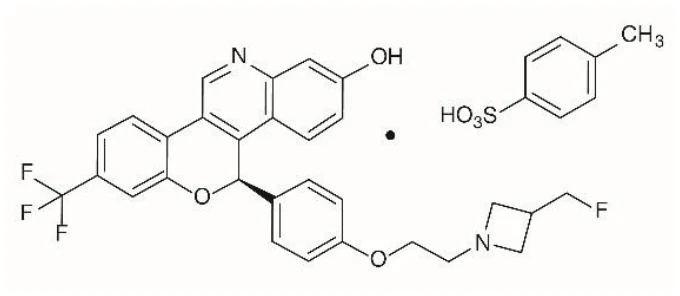
Physicochemical properties: Imlunestrant tosylate is a white to practically white to yellow powder. The aqueous solubility of imlunestrant tosylate is slightly soluble at low pH, insoluble at neutral pH, and sparingly soluble at high pH.
14. Clinical Trials
14.1. Clinical Trials by Indication
ESR1m locally advanced or metastatic breast cancer previously treated with an aromatase inhibitor.
Table 8: Summary of Patient Demographics for EMBER-3 – Advanced Breast Cancer
| Study # | Study design | Dosage, route of administration and duration | Study subjects (n) | Median Age (range) | Sex |
| EMBER-3 | A Phase 3 randomized (1:1:1)a, open-label, active-controlled, global, multicenter trial Patients were randomized to: Arm A
Arm B
Arm C
| Dosage: Arm A: INLURIYO 400 mg orally, once daily Arm B: Standard of Care which included Investigator’s Choice of ET
Arm C: INLURIYO 400 mg orally, once daily + Abemaciclib 150 mg orally, twice daily | 874 | 61.0 (27, 89) | Female: 99% Male: 1% |
Abbreviations: ET = endocrine therapy
The efficacy of INLURIYO single agent and in combination with abemaciclib was evaluated in EMBER-3, a randomized, open-label, active-controlled, multicenter trial that enrolled adult patients with ER+, HER2- locally advanced or metastatic breast cancer (MBC), who were previously treated with an aromatase inhibitor either alone or in combination with a CDK4/6 inhibitor. Patients were excluded if they were eligible to receive a PARP inhibitor. Patients were required to have progressed:
- Within 12 months of completing neoadjuvant or adjuvant aromatase inhibitor therapy with no systemic treatment for recurrent disease or
- Greater than 12 months after neoadjuvant or adjuvant endocrine therapy or de novo metastatic disease and had progressed on only one line of aromatase inhibitor therapy.
A total of 874 patients were randomized 1:1:1 between 3 treatment arms:
- Arm A (N=331): INLURIYO 400 mg orally, once daily
- Arm B (N=330): Standard of Care (SOC) which included Investigator’s Choice of Endocrine Therapy (fulvestrant 500 mg IM or exemestane 25 mg orally, once daily)
- Arm C (N=213): INLURIYO 400 mg orally, once daily + Abemaciclib 150 mg orally, twice daily
Randomization was stratified by previous treatment with CDK4/6 inhibitor (yes vs no), presence of visceral metastasis (yes vs no), and region (East Asia vs North America/Western Europe vs Others). ESR1m status was detected using the Guardant360 CDx assay (except in China), which allowed for testing for 34 specific variants (single nucleotide and small deletions) annotated as oncogenic or likely oncogenic by the OncoKB™ database.
Across the Arms, 37% (N=323) patients had a detectable ESR1 mutation, including:
- Arm A: 42% (n=138)
- Arm B: 36% (n=118)
- Arm C: 32% (n=67)
In the overall population, 64% (N=561), were enrolled following locally advanced or metastatic disease progression (including patients that presented with de novo MBC). In addition, 32% (N=282) of patients were enrolled after early breast cancer disease recurrence. Of all patients in any setting, 29% were previously treated with 2 or more lines of ET.
Of the patients with a detectable ESR1 mutation (N=323), 75% (N=243), were enrolled following locally advanced or metastatic disease progression (including patients that presented with de novo MBC). Within this population, 21% (N=67) of patients were enrolled after early breast cancer disease recurrence. Of all patients with a detectable ESR1 mutation, 28% were previously treated with 2 or more lines of ET.
Pre/perimenopausal women and men enrolled in the study were administered the gonadotropin-releasing hormone agonist for at least 4 weeks prior to and for the duration of EMBER-3.
Patients were treated until disease progression, treatment discontinuation, or death.
The primary efficacy endpoint for EMBER-3 was investigator-assessed progression-free survival (PFS) according to Response Evaluation Criteria in Solid Tumors (RECIST) version 1.1. Secondary endpoints included overall survival (OS), blinded independent review committee (BIRC)-assessed PFS, and objective response rate (ORR).
Demographics and Baseline Disease characteristics were generally balanced across treatment arms for the ESR1m-detected population (see Table 9).
Table 9: Baseline Disease and Demographic Characteristics for the ESR1m-detected population in EMBER-3
| Parameter | INLURIYO | Fulvestrant or Exemestane |
| N=138 | N=118 | |
| Age (years) | ||
| Median (range) | 61.0 (28-85) | 59.5 (33-85) |
| <65, n (%) | 91 (66) | 78 (66) |
| ≥65, n (%) | 47 (43) | 40 (34) |
| Sex, n (%) | ||
| Female | 138 (100) | 118 (100) |
| Race, n (%) | ||
| White | 80 (58) | 76 (64) |
| Black or African American | 7 (5) | 3 (2.5) |
| Asian | 35 (25) | 31 (26) |
| American Indian or Alaska native | 7 (5) | 3 (2.5) |
| Multiple | 1 (0.7) | 1 (0.8) |
| Missing | 8 (5.8) | 4 (3.4) |
| ECOG performance status, n (%) | ||
| 0 | 85 (62) | 77 (65) |
| 1 | 53 (38) | 41 (35) |
| Progesterone receptor-positive, n (%) | 109 (79) | 97 (82) |
| PI3K pathway mutations, n (%)b | 72 (52) | 57 (48) |
| Measurable disease at baseline, n (%) | 112 (81) | 91 (77) |
| Site of metastases, n (%) | ||
| Visceral | 84 (61) | 67 (57) |
| Liver | 57 (41) | 47 (40) |
| Bone-only | 27 (20) | 30 (25) |
| Endocrine resistance, n (%)c | ||
| Primary | 0 | 0 |
| Secondary | 138 (100) | 118 (100) |
| Most recent ET, n (%) | ||
| Adjuvant | 29 (21) | 23 (20) |
| ABC | 101 (73) | 91 (77) |
| Previous CDK4/6i in any setting, n (%) | ||
| Overall | 93 (67) | 85 (72) |
| Adjuvant | 3 (2.2) | 3 (2.5) |
| ABC | 90 (65) | 82 (70) |
| Previous CDK4/6i therapy in any setting, n (%) | ||
| Palbociclib | 64 (46) | 61 (52) |
| Ribociclib | 22 (16) | 22 (19) |
| Abemaciclib | 7 (5.1) | 2 (1.7) |
| Previous CDK4/6i duration, n (%) | ||
| ≥12 months | 76 (55) | 66 (56) |
| <12 months | 14 (10) | 16 (14) |
Abbreviation: CDK = cyclin dependent kinase; ECOG = Eastern Cooperative Oncology Group; ET = endocrine therapy.
Study Results
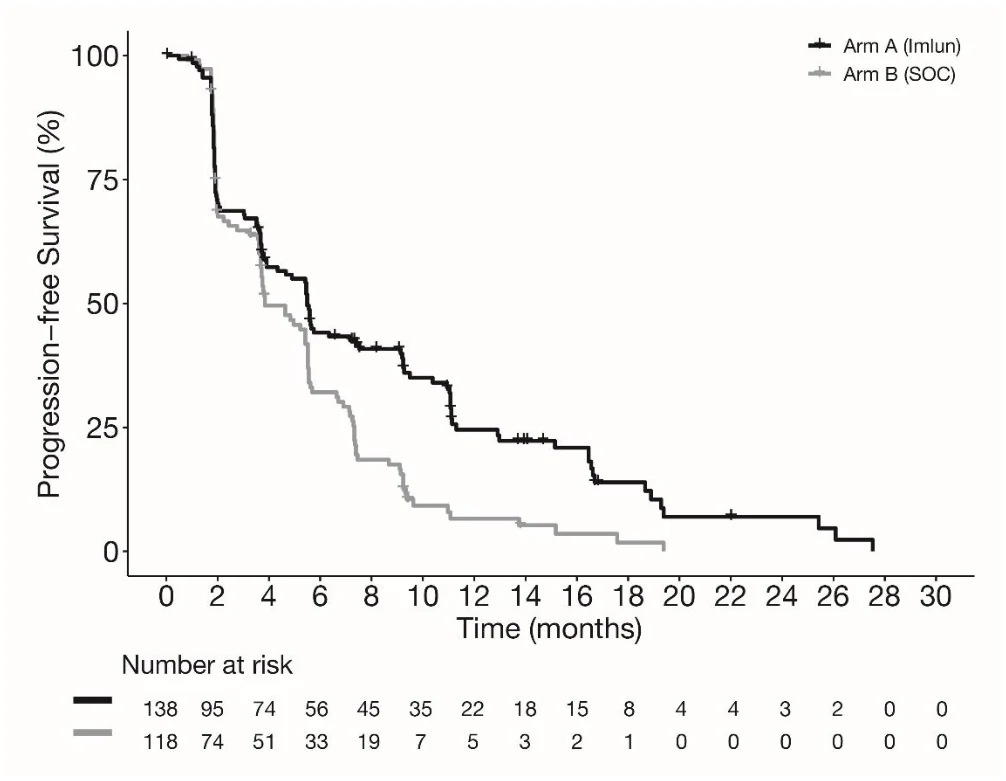
At the time of the efficacy analysis the median follow-up time for this patient population enrolled in EMBER-3 was 17 months. The primary endpoint of investigator-assessed PFS, demonstrated a statistically significant difference in the ESR1m-detected population treated with INLURIYO as compared to the SOC (fulvestrant or exemestane). Patients treated with INLURIYO had a 38% reduction in the risk of progression or death compared to patients treated with SOC. The BIRC assessed PFS was consistent with the investigator assessed PFS. The OS data were not mature at the time of the final PFS analysis.
Table 10 provides efficacy results for patients treated with INLURIYO that had a detectable ESR1 mutation.
Table 10: Efficacy Results for ESR1m-detected Population in EMBER-3
| INLURIYO | Fulvestrant or Exemestane | |||||||||||||||
| N=138 | N=118 | |||||||||||||||
| Progression-free Survivala,b,c | ||||||||||||||||
| Number of Events, n (%) | 109 (79) | 102 (86) | ||||||||||||||
| Median, months (95% CI)d | 5.5 (3.9, 7.4) | 3.8 (3.7, 5.5) | ||||||||||||||
| HR stratifiede(95% CI) | 0.62 (0.46, 0.82) | |||||||||||||||
| p-value (2-sided) log rank stratifiede | 0.0008 | |||||||||||||||
| Objective Response Ratec, (%) | ||||||||||||||||
| Patients with Measurable Disease | n=112 | n=91 | ||||||||||||||
| ORRf, 95% CI | 14 (8, 21) | 8 (2.2, 13) | ||||||||||||||
| Complete Response | 0.9 | 0 | ||||||||||||||
| Partial Response | 13.4 | 7.7 | ||||||||||||||
Abbreviations: CI = confidence interval; ESR1m = estrogen receptor 1-mutation; HR = hazard ratio; INV = investigator; N = number of patients; n = number of patients in the specific category; PFS = progression-free survival.
a Investigator assessed
b Estimate based on the Kaplan-Meier method.
c per RECIST v1.1.
d 95% CI was calculated using the Brookmeyer and Crowley method.
e Stratified by visceral metastases status from Interactive Web Response System (IWRS) and prior CDK6/4i treatment from IWRS.
f Complete response + partial response.
Figure 1: Kaplan-Meier Plot of Investigator-Assessed PFS for ESR1m-detected Population in EMBER-3
Based on Investigator assessment
Abbreviations: ESR1m = estrogen receptor 1-mutation; Imlun = imlunestrant; PFS = progression-free survival; SOC = standard of care.
15. Microbiology
No microbiological information is required for this drug product.
16. Non-Clinical Toxicology
General toxicology
Following repeat-dose oral administration of imlunestrant daily for up to 3 months in monkeys and 6 months in rats, adverse findings were observed in female reproductive organs including cysts in the ovary and atrophy of the epithelium of the cervix, uterus, and vagina in rats and monkeys; hyperplasia of ovarian granulosa cells and hypertrophy/hyperplasia of the mammary glands in rats. These effects were observed at exposures in rats and in monkeys corresponding to ≥ 4 times and ≥ 0.9 times the human AUC at the recommended dose, respectively. In male rats, spermatid retention in the testes and cellular debris in the epididymis were observed at exposures corresponding to ≥ 4 times the human AUC at the recommended dose. Effects on the male and female reproductive tracts were generally reversible in rats. Reversibility was not evaluated in monkeys.
Other relevant findings were observed in the eye and urinary tract, and were limited to rats at exposures ≥ 4 times the human AUC at the recommended dose. Ocular effects consisted of minimal to mild lens fiber degeneration with or without increased cortical opacity, which were considered as reversible in the recovery period. Urinary tract findings were transitional cell hyperplasia in the urinary bladder and renal tubular degeneration/regeneration, which were considered as partially reversible in the recovery period.
Genotoxicity
Imlunestrant was not mutagenic in the Ames bacterial reverse mutation assay. Imlunestrant was clastogenic in the in vitro human lymphocyte micronucleus assay. Imlunestrant was not genotoxic in the in vivo rat bone marrow micronucleus assay and did not induce DNA breaks in the rat liver and duodenum comet assays.
Carcinogenicity
Carcinogenicity studies have not been conducted with imlunestrant.
Reproductive and developmental toxicology
Fertility studies with imlunestrant in animals have not been conducted. In an embryofetal development study, oral administration of imlunestrant up to 30 mg/kg/day to pregnant rats during the period of organogenesis produced adverse maternal effects and embryo-lethality at exposures 0.1 times the human AUC at the recommended dose. Early delivery, fetal malformations, and fetal variations were observed at exposures 0.9 times the human AUC at the recommended dose.