


Product Monograph - Isotamine B 300
CLINICAL PHARMACOLOGY
Absorption
Isoniazid is readily absorbed from the GI tract. When given with food, the extent of absorption and peak plasma concentrations of the drug may be reduced. Following oral application of the drug, peak plasma concentrations are attained within 1-2 hours. Plasma concentrations of the drug in rapid isoniazid inactivators are 20-50 % of those in slow isoniazid inactivators.
Distribution
Isoniazid is distributed into all body tissues and fluids (including cerebrospinal fluid, pleural and ascitic fluids, skin, sputum, saliva, lungs, muscle, and caseous tissue). The drug concentrations found in the cerebrospinal fluid are reported to be 90-100 % of concurrent plasma concentrations. Isoniazid is not substantially bound to plasma proteins (0-10 %). Isoniazid readily crosses the placenta. Isoniazid is distributed into milk in concentrations approximately equal to maternal concentrations.
Biotransformation
Biotransformation of isoniazid occurs mainly in the liver. Isoniazid is acetylated by N-acetyl transferase to N-acetylisoniazid; it is the biotransformed to isonicotinic acid and monoacetylhydrazine. Monoacetylhydrazine is associated with hepatotoxicity via formation of a reactive intermediate metabolite when N-hydroxylated by the cytochrome P-450 mixed oxidase system. The rate of acetylation is genetically determined; slow acetylators are characterized by a relative lack of hepatic N-acetyl transferase.
Half-life
Adults, including elderly patients:
Fast acetylators
0.5 to 1.6 hours.
Slow acetylators
2 to 5 hours.
Acute and chronic liver disease
May be prolonged to 6.7 hrs vs 3.2 hrs in controls.
Children (age 1.5 to 15 years)
2.3 to 4.9 hours.
Neonates
7.8 and 19.8 hours found in 2 newborns who received isoniazid transplacentally. The long half-life may be due to the limited acetylation capacity of neonates.
Peak serum concentrations
3 to 7 mcg per mL after a single 300 mg oral dose.
Time to peak serum concentrations
1 to 2 hours.
Elimination
The plasma half-life of isoniazid in patients with normal renal and hepatic function ranges from 1-4 hours, depending on the rate of metabolism. In patients with severely impaired renal or hepatic function, the plasma half-life may be prolonged.
The rate of isoniazid acetylation does not appear to alter efficacy when the drug is administered daily or 2 or 3 times weekly; however, a relationship between rapid inactivation and poor therapeutic response has been noted in once-weekly intermittent regimens.
In adults with normal renal function, approximately 75-96 % of a 5 mg/kg oral dose of isoniazid is excreted in urine within 24 hours as unchanged drug and metabolites. Small amounts of the drug are also excreted in saliva, sputum and feces. Isoniazid is removed by hemodialysis or peritoneal dialysis.
INDICATIONS AND CLINICAL USE
Treatment of Mycobacterial Infections
Isoniazid is used in conjunction with at least one other antituberculosis agent in the treatment of clinical tuberculosis. Isoniazid is also used in conjunction with other antituberculosis agents in the treatment of diseases caused by other mycobacteria.
Prevention of Tuberculosis
- household members and other close contacts of individuals with recently diagnosed clinical tuberculosis.
- individuals with a significant reaction to the standard Mantoux tuberculin skin test and with findings on chest radiograph consistent with nonprogressive tuberculosis in whom there are neither positive bacteriologic findings nor a history of adequate chemotherapy.
- newly infected individuals with a tuberculin skin test conversion within the last 2 years.
- individuals with a significant reaction to the standard Mantoux tuberculin skin test in special clinical situations, including those who are receiving prolonged corticosteroid or immunosuppressive therapy, have hematologic and reticuloendothelial diseases such as leukemia or Hodgkin's disease, or have diabetes mellitus, end-stage renal disease or silicosis. Individuals with clinical situations associated with substantial, rapid weight loss or chronic undernutrition, including intestinal bypass surgery for obesity, the postgastrectomy state, chronic peptic ulcer disease or malabsorption syndromes, or carcinomas of the oropharynx and upper GI tract that prevent adequate nutrition, should also receive isoniazid preventive therapy if they have a significant reaction to the standard Mantoux tuberculin skin test.
- individuals with known or suspected human immunodeficiency virus infection.
- other individuals with a significant reaction to the standard Mantoux tuberculin skin test.
- Preventive therapy is indicated for individuals with a significant reaction who are younger than 35 years of age, even when none of the risk factors listed above is present.
ISOTAMINE B 300 contains an antibacterial agent, isoniazid. To reduce the development of drug-resistant bacteria and maintain the effectiveness of isoniazid, ISOTAMINE B 300 should be used for the authorized indication and clinical use. When culture and susceptibility information are available, they should be considered in selecting or modifying antibacterial therapy. In the absence of such data, local epidemiology and susceptibility patterns may contribute to the empiric selection of therapy.
CONTRAINDICATIONS
Isoniazid is contraindicated in patients with chronic or acute liver disease or a history of previous isoniazid-associated hepatic injury and should be discontinued if serum aminotransferase concentrations are more than 3 times higher than the upper limit of the normal range.
Isoniazid is also contraindicated in patients with a history of severe adverse reactions to the drug, including severe hypersensitivity reactions or drug fever, chills, and arthritis.
PRECAUTIONS
Susceptibility / Resistance
Development of Drug Resistant Bacteria
Prescribing ISOTAMINE B 300 in the absence of authorized indications is unlikely to provide benefit to the patient and risks the development of drug-resistant bacteria.
The use of isoniazid may promote the selection of non-susceptible organisms. Should superinfection occur during therapy, appropriate measures should be taken.
Natural and acquired resistance to isoniazid have been demonstrated in vitro and in vivo in strains of M. tuberculosis. In vitro, resistance to isoniazid develops in a stepwise manner. The mechanism of resistance may be related to failure of the drug to penetrate or be taken up by the resistant bacteria. Resistant strains of initially susceptible bacteria develop rapidly if isoniazid is used alone in the treatment of clinical tuberculosis; however, development of resistance does not appear to be a major problem when the drug is used alone in preventive therapy. When isoniazid is combined with other antituberculosis agents in the treatment, of clinical tuberculosis, emergence of resistant strains may be delayed or prevented. There is no evidence of cross-resistance between isoniazid and other antituberculosis agents currently available.
Liver function tests should be performed periodically in patients receiving isoniazid. In addition, patients should be questioned monthly for signs and symptoms of liver disease and should be instructed to report to their physician any of the prodromal symptoms of hepatitis (e.g., fatigue, weakness, malaise, nausea, vomiting, anorexia).
Isoniazid should be used with caution in daily users of alcohol and patients with chronic liver disease or severe renal impairment. Minor dosage adjustments may be necessary in patients with severe renal impairment.
Periodic ophthalmologic examinations should be performed in patients who develop visual symptoms while receiving the drug.
When isoniazid is used in patients who are malnourished or predisposed to neuropathy (e.g., diabetes, alcoholics), pyridoxine should generally be administered concomitantly.
ADVERSE REACTIONS
Nervous System Effects
Peripheral neuritis, usually preceded by paresthesia of the feet and hands, is the most common adverse effect of isoniazid and occurs most frequently in malnourished patients and those predisposed to neuritis (e.g., alcoholics, diabetics). Rarely, other nervous system side effects have also occurred including seizures, toxic encephalopathy, muscle twitching, ataxia, stupor, tinnitus, euphoria, memory impairment, separation of ideas and reality, loss of self-control, dizziness, and toxic psychosis. Neurotoxic effects may be prevented or relieved by the administration of 10-50 mg of pyridoxine hydrochloride daily during isoniazid therapy. In addition, optic neuritis and atrophy have been reported with isoniazid.
Hepatic Effects
Mild hepatic dysfunction (mild and transient increases in serum SGOT, SGPT and bilirubin concentrations, has occurred in approx. 10-20 % of patients receiving isoniazid, usually during the first 4-6 months of therapy. In most cases, enzyme concentrations return to pre-treatment values despite continuation of isoniazid, but progressive liver dysfunction, bilirubinuria, jaundice, and severe and sometimes fatal hepatitis have occurred rarely. If symptoms of hepatitis or signs suggestive of hepatic damage occur during isoniazid therapy, the drug should be discontinued promptly.
Sensitivity Reactions
Hypersensitivity reactions include fever, skin eruptions (morbilliform, maculopapular, purpuric, exfoliative), lymphadenopathy, vasculitis, and, rarely, hypotension, usually 3-7 weeks following initiation of therapy. At the first sign of hypersensitivity reaction, all drugs should be discontinued. If isoniazid is reinstituted, the drug should be restarted in small and gradually increasing doses only after symptoms have cleared. If there is any indication of recurrence of hypersensitivity, isoniazid should be discontinued immediately.
Hematologic Effects
Adverse hematologic effects include agranulocytosis, eosinophilia, thrombocytopenia, methemoglobinemia, and hemolytic, sideroblastic, or aplastic anemia.
Other Adverse Effects
Reported have been in addition; nausea, vomiting, epigastric distress, dryness of the mouth, pyridoxine deficiency, pellagra, hyperglycemia, metabolic acidosis, and urinary retention and gynecomastia in males. A systemic lupus erythematosus-like syndrome and a rheumatic syndrome with arthralgia have also occurred.
DRUG INTERACTIONS
The following drug interactions and/or related problems have been reported:
Note: combinations containing any of the following medications, depending on the amount present, may also interact with this medication.
Acetaminophen: potential of increased hepatotoxicity and, possibly, nephrotoxicity.
Adrenocorticoids, Glucocorticoids: increased hepatic metabolism and/or excretion of isoniazid, leading to decreased plasma concentrations and effectiveness of isoniazid, especially in rapid acetylators.
Alcohol: concurrent daily intake of alcohol may result in increased incidence of isoniazid-induced hepatotoxicity and increased metabolism of isoniazid.
Alfentanil: chronic preoperative or perioperative use of isoniazid, a hepatic enzyme inhibitor, may decrease the plasma clearance and prolong the duration of action of alfentanil.
Antacids: antacids may delay and decrease absorption and serum concentrations of orally administered isoniazid.
Anticoagulants: may result in increased anticoagulant effect because of the inhibition of enzymatic metabolism of anticoagulants.
Benzodiazepines: isoniazid may decrease the hepatic metabolism of benzodiazepines.
Carbamazepine: serum carbamazepine levels and toxicity may be increased by isoniazid.
Cheese (Swiss, Cheshire) or Fish (tuna, skipjack Sardinella): redness or itching of skin, hot feeling, rapid or pounding heartbeat, seating, chills or clammy feeling, headache, light-headedness due to the inhibition of plasma monoamine oxidase and diamine oxidase by isoniazid.
Cycloserine: increased incidence of central nervous system effects such as dizziness or drowsiness may occur.
SYMPTOMS AND TREATMENT OF OVERDOSAGE
Symptoms
Symptoms of overdosage usually occur within 30 minutes to 3 hours following ingestion of the drug. Overdosage of isoniazid has produced nausea, vomiting, dizziness, slurred speech, blurred vision, and visual hallucinations, including bright colours and strange designs. After marked overdosage, respiratory distress and CNS depression, progressing rapidly from stupor to coma, severe intractable seizures, metabolic acidosis, acetonuria, and hyperglycemia have occurred. If untreated or treated inadequately, isoniazid overdosage may be fatal. Isoniazid-induced seizures are thought to be associated with decreased g-aminobutyric acid (GABA) concentrations in the CNS, possibly resulting from inhibition by isoniazid of brain pyridoxal-5-phosphate activity.
Treatment
In the management of isoniazid overdosage, an airway should be secured, and adequate respiratory exchange established immediately. Seizures may be controlled with IV administration of diazepam or short-acting barbiturates and a dosage of pyridoxine hydrochloride equal to the amount of isoniazid ingested. Generally, 1-4 g of pyridoxine hydrochloride is given IV followed by 1 g IM every 30 minutes until the entire dose has been given. If seizures are controlled and overdosage is recent, within the last 2-3 hours, the stomach should be emptied by gastric lavage. Blood gases, serum electrolytes, glucose, and BUN determinations should be performed. Blood should be typed and cross matched in case hemodialysis is required. Intravenous administration of sodium bicarbonate should be considered to control metabolic acidosis and repeated as needed; dosage should be adjusted on the basis of laboratory test results. Pyridoxine has also had a beneficial effect in correcting acidosis in some patients, possibly by controlling seizures and resulting lactic acidosis. Pyridoxine has been effective in treating isoniazid-induced seizures as well as other mental status changes associated with isoniazid overdosage. In several patients who remained comatose following initial treatment of seizures with diazepam and pyridoxine, administration of an additional 3- to 5 g dose of pyridoxine hydrochloride after 36-42 hours of coma resulted in complete awakening within 30 minutes. The fact that administration of high doses of pyridoxine can result in adverse neurologic effects should be considered whenever the drug is used in the treatment of isoniazid-induced seizures and/or coma.
Forced osmotic diuresis should be initiated as soon as possible following isoniazid overdosage to increase renal clearance of the drug and should be continued several hours after clinical improvement to ensure complete clearance of the drug and prevent relapse. Fluid intake and output should be monitored. In severe cases, hemodialysis or, if hemodialysis is not available, peritoneal dialysis should be used in conjunction with forced diuresis. In addition, measures should be taken to protect against hypoxia, hypotension, and aspiration pneumonia.
DOSAGE AND ADMINISTRATION
Isoniazid is usually administered orally. The drug may be given by IM injection when oral therapy is impossible. Oral and IM dosages of isoniazid are identical.
Treatment of Tuberculosis
In the treatment of clinical tuberculosis and other mycobacterial diseases, isoniazid should not be given alone. Therapy should be continued long enough to prevent relapse.
The usual adult dosage of isoniazid for the treatment of tuberculosis is 5-10 mg/kg bodyweight once daily up to a maximum of 300 mg daily.
Children and infants tolerate larger doses of isoniazid than do adults and may be given 10-20 mg/kg of bodyweight once daily, depending on the severity of the disease. The maximum dosage for children is 300-500 mg daily.
When isoniazid is used in combination with rifampin in children, limiting isoniazid dosage to 10 mg/kg and rifampin dosage to 15 mg/kg daily may minimize the risk of hepatotoxicity. When isoniazid is used in combination with other anti-tuberculosis drugs and the drugs are administered twice weekly, the usual adult dosage is 15 mg/kg (up to 900 mg) twice weekly and the usual dosage for children is 20-40 mg/kg (up to 900 mg) twice weekly.
Prevention of Tuberculosis
For tuberculosis preventive therapy, isoniazid usually is given alone. Preventive therapy generally should be continued for 6-12 months. The usual adult dosage of isoniazid for preventive therapy is 300 mg once daily.
Children and infants receive for preventive therapy isoniazid in a dosage of 10-15 mg/kg (up to 300 mg) once daily.
PHARMACEUTICAL INFORMATION
Drug Substance
Isoniazid, USP
(1) 4-Pyridinecarboxylic acid
(2) Isonicotinic acid hydrazide
Empirical Formula: C6H7N30
Structural Formula:
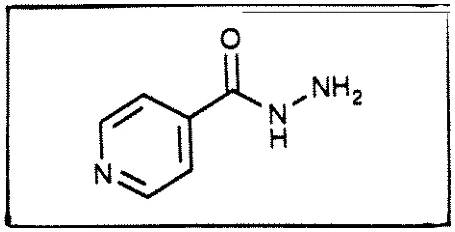
Molecular Weight: 137.14 g/mol
Physicochemical Properties
Description: Isoniazid is a synthetic, isonicotinic acid-derivative antituberculosis agent. The drug occurs as colourless or white crystals or as a white, crystalline powder.
Solubility: Solubility of approximately 125 mg/mL in water and 20 mg/mL in alcohol at 25 ºC.
Stability
Isoniazid preparations should be protected from light, air, and excessive heat. Isoniazid tablets should be stored in well-closed, light-resistant containers at controlled room temperature (15 – 30 ºC).
Composition: ISOTAMINE B 300 Tablet contains :
- Isoniazid, USP
- Pyridoxine HCl, USP
- Colloidal Silicon Dioxide, NF
- Magnesium stearate, USP
- Starch
- Stearic Acid
Talc, USP
AVAILABILITY
ISOTAMINE B-300 Tablets: Each yellow, scored, compressed tablets contain isoniazid USP 300 mg and pyridoxine HCl 15 mg (imprinted ICN). Bottles of 100 and 1000 Tablets.
MICROBIOLOGY
In Vitro Activity
Isoniazid is both tuberculostatic and tuberculocidal in vitro; the minimal tuberculostatic limit is 0.025 to 0.05 mcg/mL. The drug does not produce immediate inhibition of growth of M. tuberculosis, regardless of the concentration to which the organisms are exposed, the bacteria undergo one or two division before multiplication is inhibited. The bactericidal effects of isoniazid are exerted only against actively growing tubercle bacilli. Resting organisms resume normal multiplication when removed from contact with the drug. Isoniazid readily penetrates cells and is effective against intracellularly located bacilli as well as in culture media. Isoniazid is not effective on the atypical mycobacteria.
In Vitro Resistance
Static or growing cultures of M. tuberculosis contain about 60 % isoniazid-sensitive and 40 % isoniazid-resistant organisms at a given time. As multiplication progresses, and if the generation time for the culture is 24 hours, almost all the cells become susceptible to the drug over this period. If growth does not take place, a change toward a predominance of sensitive organisms does not develop.
Repeated subculture of tubercle bacilli in increasing concentration of isoniazid yields strains that are insensitive to large concentrations of the drug. Cross resistance between isoniazid and aminosalicylic acid or streptomycin does not occur.
In Vivo Activity
Isoniazid is effective in the treatment of experimental tuberculosis in animals. Control of induced infection in guinea pigs is achieved with doses as low as 1 mg per day. Treated animals reveal no gross and only minimal microscopic evidence of the disease. Infections produced with tubercle bacilli resistant to aminosalicylic acid and streptomycin are effectively controlled by isoniazid.
In Vivo Resistance
Treatment with isoniazid leads to large production of resistant cell populations which are initially small in the lesions of patients with tuberculosis. However, there exists considerable subject variation in the time of their appearance. Strains of M. tuberculosis that become resistant in this fashion in man are non-pathogenic or possess less invasive capacity in guinea pigs than do the parent sensitive bacteria. However, they remain pathogenic for humans. Isoniazid-insensitive tubercle bacilli isolated from patients with active infection who have never received this drug are highly pathogenic for guinea pigs, and the response to treatment with isoniazid is significantly reduced.
PHARMACOLOGY
Isoniazid is readily absorbed when administered either orally or parenterally. Peak plasma concentrations develop 1 to 2 hours after oral ingestion and fall to about 50 % or less in 6 hours. The administration of 8 mg/kg to children produces plasma levels of at least 1.6 mg/mL (0.2 to 3.2 mg/mL) in 97 % of children at 6 hours after treatment. In some individuals, tuberculostatic levels are still detectable in the blood as long as 24 hours after a single oral dose of 3 mg/kg, however, in many the quantity of circulating drug is well below that required to inhibit the organisms. Pyridoxine does not lower plasma levels of isoniazid. The simultaneous administration of aminosalicylic acid produces higher concentrations of free active isoniazid in the blood by reducing the degree of acetylation.
Isoniazid diffuses readily into all body fluids and cells and is present, in varying concentrations in all organs of humans. The drug is detectable in significant quantities in pleural and ascitic fluids, saliva and feces. Substantial levels are present in the cerebrospinal fluid of individuals with normal meninges and in those with tuberculous meningitis. Isoniazid penetrates well into caseous material. The concentration of the agent is initially higher in the plasma and muscle than in the infected tissue, but the latter retains the drug for a long time in quantities well above those required for bacteriostasis. Skin contains large amounts of isoniazid and acts as a storage depot.
From 50 % to 79 % of a dose of isoniazid is excreted in the urine in 24 hours. Part of the drug is present in the urine in the unchanged form, the percentage varies from one individual to another. Although the main excretion products in man are acetylisoniazid and isonicotinic acid, small quantities of an isonicotinic acid conjugate, probably isonicotinyl glycine, one or more isonicotinyl hydrazones. and traces of N-methylisoniazid are also detectable in the urine. Patients may be divided into two distinct groups on the basis of the manner in which they metabolize isoniazid. In one group, all the drug is present in the urine as free isoniazid and its hydrazones, acetylisoniazid and isonicotinic acid; in the other, these compounds represent 38 % to 84 % of a dose of the agent and the quantity of free isoniazid is greater and that of acetylisoniazid is lower than in the first group. Individuals tend to maintain a constant metabolic pattern for isoniazid, and this is unrelated to the quantity administered. The incidence of peripheral neuritis appears to be higher in patients in whom urinary levels of acetylisoniazid are low and those of free isoniazid are high. Although the acetyl derivative of isoniazid is about 1/10 as toxic, it is less than 1/100 as tuberculostatic as the parent compound.
The rate of acetylation of isoniazid appears to be under genetic control. Acetylation produces at two rates, "slow" and "rapid". Plasma concentrations of the drug in a large group of individuals 6 hours after an oral dose show a bimodal distribution curve. The rate of acetylation is not influenced by sex or age but appears to be conditioned by race; it tends to be slowest in Blacks and Caucasians, most rapid in Eskimos and intermediate in Orientals. The incidence of " slow acetylators" among Americans is 44 to 54 % while in the more northern races it ranges from 7 to 27 %.
Six hours after oral administration of 4 mg/kg of isoniazid to individuals who acetylate the drug slowly, plasma concentrations are higher than 0.8 mcg/mL, while in rapid acetylators they are 0.2 mcg/mL or less. Blood levels in the latter group at 6 hours are about 50 % of peak values. In general, the concentration of active isoniazid in the circulation of rapid acetylators is about one fifth to one half of that present in persons who acetylate the drug slowly. Patients who inactivate isoniazid at a slow rate tend to develop polyneuritis more often and to experience a high frequency and more rapid reversal of infectiousness than do those who acetylate the drug rapidly. There appears to be no relation between the development of isoniazid resistance in tubercle bacilli and the inactivator phenotype.
BIBLIOGRAPHY
- 1. American Hospital Formulary Service: Antituberculosis Agents. American Society of Hospital Pharmacists 1992: 341-363
- 2. Bailey L.C. and Abdou H. High-Performance Liquid Chromatographic Analysis of Isoniazid and its Dosage Forms. Journal of Pharmaceutical Sciences 1977; 66 (4): 564-567
- 3. Lewin P.K. and McGreal D. Isoniazid toxicity with cerebellar ataxia in a child. Can Med Assoc J. 1993; 148 (1): 49-50
- 4. Mandell G.L. and Sande M.A.; Antimicrobial Agents; Drugs used in the Chemotherapy of Tuberculosis and Leprosy. In: Goodman and Gilman's The Pharmacological Basis of Therapeutics. 8th Edition, Pergamon Press 1990; 1146-1164
- 5. Mannisto P., Mantyla R., Klinge E., Nykanen S., Koponen A. and Lamminsivu U. Influence of various diets on the bioavailability of isoniazid. J of Antimicrobial Chemotherapy 1982; 10: 427-434
- 6. Martindale The Extra Pharmacopoeia: Antimycobacterial Agents. 29th Edition, The Pharmaceutical Press 1989; 546-579
- 7. Melander A., Danielson K., Hanson A., Jansson L., Rerup C., Schersten B., Thulin T. and Wahlin E. Reduction of Isoniazid Bioavailability in Normal Men by Concomitant Intake of Food. Acta Med Scan 1976; 200: 93-97
- 8. Meyers F.H., Jawetz E. and Goldfien A. Review of Medical Pharmacology: Antituberculosis Drugs. 6th Edition Lange Medical Publications 1978; 569-573
- 9. The Pharmaceutical Codex. Isoniazid. 11th Edition, The Pharmaceutical Press London, 1979: 470-472