


Product Monograph - Jamp Atenolol Tablets (Jamp Pharma, 100 mg, 50 mg)
RECENT MAJOR LABEL CHANGES
N/A
TABLE OF CONTENTS
Sections or subsections that are not applicable at the time of authorization are not listed.
RECENT MAJOR LABEL CHANGES .......................................................................................... 2
TABLE OF CONTENTS ............................................................................................................ 2
PART I: HEALTH PROFESSIONAL INFORMATION .................................................................... 4
1 INDICATIONS ............................................................................................................ 4
1.1 Pediatrics ................................................................................................................ 4
1.2 Geriatrics ................................................................................................................ 4
2 CONTRAINDICATIONS ............................................................................................... 4
3 SERIOUS WARNINGS AND PRECAUTIONS BOX ........................................................... 5
4 DOSAGE AND ADMINISTRATION ............................................................................... 5
4.1 Dosing Considerations ........................................................................................... 5
4.2 Recommended Dose and Dosage Adjustment ...................................................... 6
4.4 Administration ....................................................................................................... 7
4.5 Missed Dose ........................................................................................................... 7
5 OVERDOSAGE ........................................................................................................... 7
6 DOSAGE FORMS, STRENGTHS, COMPOSITION AND PACKAGING ................................ 8
7 WARNINGS AND PRECAUTIONS ................................................................................ 9
7.1 Special Populations .............................................................................................. 11
7.1.1 Pregnant Women ............................................................................................. 11
7.1.2 Breast-feeding .................................................................................................. 12
7.1.3 Pediatrics .......................................................................................................... 12
7.1.4 Geriatrics .......................................................................................................... 12
7.1.5 Ethnic Origin ..................................................................................................... 13
8 ADVERSE REACTIONS .............................................................................................. 13
8.1 Adverse Reaction Overview ................................................................................. 13
8.3 Less Common Clinical Trial Adverse Reactions .................................................... 13
8.5 Post-Market Adverse Reactions ........................................................................... 13
9 DRUG INTERACTIONS .............................................................................................. 14
9.4 Drug-Drug Interactions ........................................................................................ 14
9.5 Drug-Food Interactions ........................................................................................ 17
9.6 Drug-Herb Interactions ........................................................................................ 17
9.7 Drug-Laboratory Test Interactions ....................................................................... 17
10 CLINICAL PHARMACOLOGY ............................................................................................ 17
10.1 Mechanism of Action ............................................................................................... 17
10.2 Pharmacodynamics .................................................................................................. 18
10.3 Pharmacokinetics..................................................................................................... 18
11 STORAGE, STABILITY AND DISPOSAL .............................................................................. 19
12 SPECIAL HANDLING INSTRUCTIONS ................................................................................ 19
PART II: SCIENTIFIC INFORMATION ..................................................................................... 20
13 PHARMACEUTICAL INFORMATION ................................................................................. 20
14 CLINICAL TRIALS ............................................................................................................ 20
14.2 Study Results ........................................................................................................... 20
14.3 Comparative Bioavailability Studies ........................................................................ 21
15 MICROBIOLOGY ............................................................................................................. 22
16 NON-CLINICAL TOXICOLOGY .......................................................................................... 22
17 SUPPORTING PRODUCT MONOGRAPH ........................................................................... 26
PATIENT MEDICATION INFORMATION ................................................................................ 27
PART I: HEALTH PROFESSIONAL INFORMATION
1 INDICATIONS
JAMP Atenolol Tablets (atenolol tablets) is indicated for:
- patients with mild or moderate hypertension.
- the long-term management of patients with angina pectoris due to ischemic heart disease.
Hypertension
It is usually used in combination with other drugs, particularly a thiazide diuretic. However, it may be tried alone as an initial agent in those patients in whom, in the judgement of the physician, treatment should be started with a beta-blocker rather than a diuretic. JAMP Atenolol Tablets may be used in combination with diuretics and/or vasodilators to treat severe hypertension.
The combination of atenolol tablets with a diuretic or peripheral vasodilator has been found to be compatible. Limited experience with other antihypertensive agents has not shown evidence of incompatibility with atenolol tablets.
JAMP Atenolol Tablets is not recommended for the emergency treatment of hypertensive crises.
1.1 Pediatrics
Pediatrics (< 18 years old): No data are available to Health Canada; therefore, Health Canada has not authorized an indication for pediatric use (see 7.1.3 Pediatrics).
1.2 Geriatrics
Geriatrics: Clinical studies of atenolol tablets did not include sufficient numbers of subjects aged 65 and over to determine whether they respond differently from younger subjects (see 7.1.4 Geriatrics).
2 CONTRAINDICATIONS
JAMP Atenolol Tablets is contraindicated in patients:
- who are hypersensitive to this drug or to any ingredient in the formulation, including any nonmedicinal ingredient, or component of the container. For a complete listing, see 6 DOSAGE FORMS, STRENGTHS, COMPOSITION AND PACKAGING.
- With sinus bradycardia, or bradycardia of other origin
- with second and third degree A-V block
- with of sick sinus syndrome
- with right ventricular failure secondary to pulmonary hypertension
- with uncontrolled heart failure
- with cardiogenic shock
- with hypotension
- with severe peripheral arterial disorders
- under anesthesia with agents that produce myocardial depression
- with pheochromocytoma, in the absence of alpha-blockade
- with metabolic acidosis
3 SERIOUS WARNINGS AND PRECAUTIONS BOX
Serious Warnings and Precautions
Abrupt Cessation of Therapy with JAMP Atenolol Tablets
Patients with angina should be warned against abrupt discontinuation of JAMP Atenolol Tablets. There have been reports of severe exacerbation of angina and of myocardial infarction or ventricular arrhythmias occurring in patients with angina pectoris, following abrupt discontinuation of betablocker therapy. The last two complications may occur with or without preceding exacerbation of angina pectoris. Therefore, when discontinuation of JAMP Atenolol Tablets is planned in patients with angina pectoris, the dosage should be gradually reduced over a period of about two weeks and the patient should be carefully observed and advised to limit physical activity to a minimum. The same frequency of administration should be maintained. In situations of greater urgency, JAMP Atenolol Tablets should be discontinued stepwise over a shorter time and under closer observation. If angina markedly worsens or acute coronary insufficiency develops, it is recommended that treatment with JAMP Atenolol Tablets be reinstituted promptly, at least temporarily.
4 DOSAGE AND ADMINISTRATION
4.1 Dosing Considerations
Hypertension
JAMP Atenolol Tablets is usually used in conjunction with other antihypertensive agents, particularly a thiazide diuretic, but may be used alone (see 1 INDICATIONS).
The dose of JAMP Atenolol Tablets should be administered in accordance with individual patient’s needs.
4.2 Recommended Dose and Dosage Adjustment
Hypertension
The initial dose of JAMP Atenolol Tablets is 50 mg administered as one tablet a day either added to diuretic therapy or alone. The full effect of this dose will usually be seen within one to two weeks. If an adequate response is not achieved, the dose should be increased to JAMP Atenolol Tablets 100 mg once daily. Increasing the dose beyond 100 mg a day is unlikely to produce any further benefit.
If further lowering of the blood pressure is required, another antihypertensive agent should be added to the regimen.
Angina Pectoris
The initial dose of JAMP Atenolol Tablets is 50 mg given as one tablet a day. The full effect of this dose will usually be seen within one to two weeks. If an optimal response is not achieved within one week, the dosage should be increased to JAMP Atenolol Tablets 100 mg given as one tablet a day or 50 mg twice daily. Some patients may require a dosage of 200 mg a day for optimal effect.
Patients with Renal Impairment
Since atenolol is eliminated predominantly via the kidneys, dosage should be adjusted in patients with severe renal impairment. Significant accumulation of atenolol occurs when creatinine clearance falls below 35 mL/min/1.73m2 (normal range is 100-150 mL/min/1.73m2).
The following maximum dosages are recommended for patients with renal impairment:
Creatinine Clearance(mL/min/1.73m2)
Atenolol Elimination Half-
Life(hr)
Maximum Dosage
15-35
16-27
50 mg daily
<15
>27
50 mg every other day
Patients on hemodialysis should be given 50 mg after each dialysis; this should be done under hospital supervision as marked falls in blood pressure can occur.
Dosage requirements may be reduced in the elderly, especially in patients with impaired renal function.
4.4 Administration
JAMP Atenolol Tablets should be swallowed whole with water.
4.5 Missed Dose
In case of missed dose, the next dose should be taken as scheduled. A double dose should not be taken.
5 OVERDOSAGE
Limited information is available with regard to overdosage with atenolol tablets in humans. Overdosage with atenolol has been reported with patients surviving acute doses as high as 5 g. One death was reported in a man who may have taken as much as 10 g acutely.
The predominant symptoms reported following atenolol overdosage are lethargy, disorder of respiratory drive, wheezing, sinus pause, and bradycardia. Additionally, common effects associated with overdosage of any beta-adrenergic blocking agent are congestive heart failure, hypotension, bronchospasm, and/or hypoglycemia.
Treatment should be symptomatic and supportive and directed to the removal of any unabsorbed drug by induced emesis, or administration of activated charcoal. Atenolol can be removed from the general circulation by hemodialysis. Further consideration should be given to dehydration, electrolyte imbalance and hypotension by established procedures.
Other treatment modalities should be employed at the physician’s discretion and may include:
BRADYCARDIA:
Atropine 1-2 mg intravenously. If there is no response to vagal blockade, give isoproterenol cautiously. In refractory cases, a transvenous cardiac pacemaker may be indicated. Glucagon in a 10 mg intravenous bolus has been reported to be useful. If required, this may be repeated or followed by an intravenous infusion of glucagon 1-10 mg/h depending on response. If no response to glucagon occurs or if glucagon is unavailable, a beta-adrenoceptor stimulant such as dobutamine 2.5 to 10 micrograms/kg/minute by intravenous infusion or isoproterenol 10 to 25 micrograms given as an infusion at a rate not exceeding 5 micrograms/minute may be given, although larger doses may be required.
HEART BLOCK:
(second or third degree)
Isoproterenol, or transvenous pacemaker.
CONGESTIVE HEART FAILURE:
Digitalize the patient and administer a diuretic. Glucagon has been reported to be useful.
HYPOTENSION:
Vasopressors such as dopamine or norepinephrine. Monitor blood pressure continuously.
BRONCHOSPASM:
A beta2-stimulant such as isoproterenol or terbutaline and/or intravenous aminophylline.
HYPOGLYCEMIA:
Intravenous glucose.
Based on the severity of symptoms, management may require intensive support care and facilities for applying cardiac and respiratory support.
For the most recent information in the management of a suspected drug overdose, contact your regional poison control centre or Health Canada’s toll-free number, 1-844 POISON-X
(1-844-764-7669).
6 DOSAGE FORMS, STRENGTHS, COMPOSITION AND PACKAGING
Table 1– Dosage Forms, Strengths, Composition and Packaging
| Route of Administration | Dosage Form/ Strength/Composition | Non-medicinal Ingredients |
|---|---|---|
| Oral | Tablets 50 mg or 100 mg | Hypromellose, macrogol, magnesium carbonate, magnesium stearate, sodium lauryl sulfate, starch-maize and titanium dioxide. |
50 mg tablets – white to off-white round, biconvex, film coated tablets embossed with ‘50’ on one side and ‘J scored P’ on other side. Available in bottles of 100 and 500 tablets and blister packs of 30 tablets.
100 mg tablets – white to off-white round, biconvex, film coated tablets embossed with ‘100’ on one side and ‘J scored P’ on other side. Available in bottles of 100 and 500 tablets and blister packs of 30 tablets.
7 WARNINGS AND PRECAUTIONS
Cardiovascular
Cardiac Failure
Special caution should be exercised when administering JAMP Atenolol Tablets to patients with a history of heart failure. Sympathetic stimulation is a vital component supporting circulatory function in congestive heart failure and inhibition with beta blockade always carries the potential hazard of further depressing myocardial contractility and precipitating cardiac failure. Atenolol acts selectively without abolishing the inotropic action of digitalis on the heart muscle. However, the positive inotropic action of digitalis may be reduced by the negative inotropic effect of atenolol when the two drugs are used concomitantly. The effects of beta-blockers and digitalis are additive in depressing A-V conduction. In patients without a history of cardiac failure, continued depression of the myocardium over a period of time can, in some cases, lead to cardiac failure. Therefore, at the first sign or symptom of impending cardiac failure, patients should be fully digitalised and/or given a diuretic and the response observed closely. If cardiac failure continues, despite adequate digitalisation and diuretic therapy, JAMP Atenolol Tablets therapy should be immediately withdrawn.
First Degree Heart Block
Due to its negative effect on A-V conduction time, JAMP Atenolol Tablets should be used with caution in patients with first degree block.
Peripheral Arterial Circulatory Disorders
Atenolol may aggravate less severe peripheral arterial circulatory disorders (see 2 CONTRAINDICATIONS).
Prinzmetal’s Angina
JAMP Atenolol Tablets may increase the number and duration of angina attacks in patients with Prinzmetal's angina due to unopposed alpha-receptor mediated coronary artery vasoconstriction. JAMP Atenolol Tablets, therefore, should only be used in these patients with the utmost care.
Sinus Bradycardia
Severe sinus bradycardia may occur with the use of JAMP Atenolol Tablets from unopposed vagal activity remaining after blockade of beta1-adrenergic receptors; in such cases, dosage should be reduced.
Driving and Operating Machinery
Use of JAMP Atenolol Tablets are unlikely to result in any impairment of the ability of patients to drive or operate machinery. However, it should be taken into account that dizziness or fatigue may occur.
Endocrine and Metabolism
In patients with thyrotoxicosis, possible deleterious effects from long-term use of atenolol tablets have not been adequately appraised. Beta-blockade may mask the clinical signs of continuing hyperthyroidism or its complications and give a false impression of improvement. Therefore, abrupt withdrawal of JAMP Atenolol Tablets may be followed by an exacerbation of the symptoms of hyperthyroidism, including thyroid storm.
Hepatic/Biliary/Pancreatic
JAMP Atenolol Tablets should be administered with caution to patients subject to spontaneous hypoglycemia, or to diabetic patients (especially those with labile diabetes) who are receiving insulin or oral hypoglycemic agents. Beta-adrenergic blockers may mask the premonitory signs (e.g. tachycardia) and symptoms of acute hypoglycemia.
Immune
There may be increased difficulty in treating an allergic type reaction in patients on beta blockers. In these patients, the reaction may be more severe due to pharmacological effects of beta-blockers and problems with fluid changes. Epinephrine should be administered with caution since it may not have its usual effects in the treatment of anaphylaxis. On the one hand, larger doses of epinephrine may be needed to overcome the bronchospasm, while on the other, these doses can be associated with excessive alpha adrenergic stimulation with consequent hypertension, reflex bradycardia and heartblock and possible potentiation of bronchospasm. Alternatives to the use of large doses of epinephrine included vigorous supportive care such as fluids and the use of beta agonists including parenteral salbutamol or isoproterenol to overcome bronchospasm, and norepinephrine to overcome hypotension.
Peri-Operative Considerations
It is not advisable to withdraw beta-adrenoceptor blocking drugs prior to surgery in the majority of patients. However, care should be taken when using JAMP Atenolol Tablets with anaesthetic agents such as those which may depress the myocardium. Vagal dominance, if it occurs, may be corrected with atropine (1-2 mg i.v.).
Some patients receiving beta-adrenergic blocking agents have been subject to protracted severe hypotension during anesthesia. Difficulty in restarting and maintaining the heartbeat has also been reported.
In emergency surgery, since atenolol is a competitive inhibitor of beta-adrenergic receptor agonists, its effects may be reversed, if necessary, by sufficient doses of such agonists as isoproterenol or norepinephrine.
Renal
JAMP Atenolol Tablets should be used with caution in patients with impaired renal function (see 4 DOSAGE AND ADMINISTRATION).
When renal function is impaired, clearance of atenolol is closely related to the glomerular filtration rate; however, significant accumulation does not occur until the creatinine clearance falls below 35 mL/min/1.73 m2.
Respiratory
Patients with bronchospastic diseases should, in general, not receive beta-blockers. Due to the relative beta1-selectivity of atenolol, JAMP Atenolol Tablets may be used with caution in patients with bronchospastic disease who do not respond to, or cannot tolerate, other antihypertensive treatment. Since beta1-selectivity is not absolute, a beta2-stimulating agent should be administered concomitantly, the lowest possible dose of JAMP Atenolol Tablets should be used. Despite these precautions, the respiratory status of some patients may worsen, and, in such cases, JAMP Atenolol Tablets should be withdrawn.
Skin
Various skin rashes and conjunctival xerosis have been reported with beta-blockers, including atenolol tablets. A severe syndrome (oculomucocutaneous syndrome) whose signs include conjunctivitis sicca and psoriasiform rashes, otitis, and sclerosing serositis has occurred with the chronic use of one beta-adrenergic blocking agent (practolol). This syndrome has not been observed with atenolol tablets or any other such agent. However, physicians should be alert to the possibility of such reactions and should discontinue treatment in the event that they occur.
7.1 Special Populations
7.1.1 Pregnant Women
Atenolol can cause fetal harm when administered to a pregnant woman. Atenolol crosses the placental barrier and appears in the cord blood.
No randomised controlled studies have been performed on the use of atenolol in the first trimester and the possibility of fetal injury cannot be excluded. Administration of atenolol, starting in the second trimester of pregnancy, has been associated with the birth of infants that are small for gestational age. In general, β-blockers reduce placental perfusion, which has been associated with growth retardation, intrauterine death, abortion and early labour.
Studies in humans have shown that transplacental passage of atenolol does occur in pregnant women, with fetal drug serum levels equal to those of the mother. In a limited number of patients who were given the drug during the last trimester of pregnancy, low birth weight, neonatal hypoglycemia, bradycardia in the fetus/newborn, and placental insufficiency were observed.
Neonates born to mothers who are receiving JAMP Atenolol Tablets at parturition or breast-feeding may be at risk for hypoglycemia and bradycardia. JAMP Atenolol Tablets should not be given during pregnancy or to a woman who is breast-feeding unless its use is essential. (See 7 WARNINGS AND PRECAUTIONS, 7.1.2 Breastfeeding). JAMP Atenolol Tablets should be used in pregnancy only if the potential benefit justifies the potential risk to the fetus.
Atenolol has been shown to produce a dose-related increase in embryo/fetal resorptions in rats at doses equal to or greater than 50 mg/kg/day or 25 or more times the maximum recommended human dose.
7.1.2 Breast-feeding
In humans, there is a significant accumulation of atenolol in the breast milk of lactating women. Neonates born to mothers who are breastfeeding may be at risk for hypoglycemia and bradycardia. If the use of JAMP Atenolol Tablets is considered essential, then mothers should stop nursing.
7.1.3 Pediatrics
Pediatrics (< 18 years): There is no experience with atenolol tablets in the treatment of pediatric age groups.
7.1.4 Geriatrics
Clinical studies of atenolol tablets did not include sufficient numbers of subjects aged 65 and over to determine whether they respond differently from younger subjects. Other reported clinical experience has not identified differences in responses between elderly and younger patients. In general, dose selection for an elderly patient should be cautious, usually starting at the low end of the dosing range, reflecting the greater frequency of decreased hepatic renal, or cardiac function, and concomitant diseases or other drug therapy.
7.1.5 Ethnic Origin
Atenolol tablets appears to be effective and well-tolerated in most ethnic populations, although the responses may be less in black patients than in Caucasians.
8 ADVERSE REACTIONS
8.1 Adverse Reaction Overview
The most serious adverse reactions encountered are congestive heart failure, A-V block and bronchospasm. Bronchospasm may occur in patients with bronchial asthma or a history of asthmatic complaints.
The most common adverse reactions reported in clinical trials with oral atenolol tablets in 2500 patients are bradycardia (3%), dizziness (3%), vertigo (2%), fatigue (3%), diarrhea (2%) and nausea (3%).
8.3 Less Common Clinical Trial Adverse Reactions
Adverse reactions occurring with an incidence of less than 1%, grouped by system, are as follows:
Cardiovascular: Heart failure deterioration (see 7 WARNINGS AND PRECAUTIONS), heart block, palpitations, lengthening of P-R interval, chest pain, lightheadedness, postural hypotension which may be associated with syncope, Raynaud’s phenomenon, intermittent claudication, or worsening of preexisting intermittent claudication, leg pain and cold extremities and edema.
Central Nervous System: Faintness, ataxia, tiredness, lethargy, nervousness, depression, drowsiness, vivid dreams, insomnia, paresthesia, headache, tinnitus, mood changes, visual disturbances, psychoses and hallucinations.
Gastrointestinal: Constipation, anorexia, abdominal discomfort and digestion.
Miscellaneous: Skin rash, itchy and/or dry eyes, psoriasiform skin reactions, exacerbation of psoriasis, decreased exercise tolerance, alopecia, epistaxis, flushes, impotence, decreased libido, sweating, general body aches, thrombocytopenia and purpura.
Respiratory: Dyspnea, wheeziness, cough and bronchospasm.
8.5 Post-Market Adverse Reactions
During the post-marketing experience with atenolol tablets, cold extremities, gastrointestinal disturbances and fatigue were commonly reported. The following have been reported in temporal relationship to the use of the drug: elevated liver enzymes and/or bilirubin, headache, confusion, nightmares, impotence, Peyronie's disease, psoriasiform rash or exacerbation of psoriasis, purpura, reversible alopecia and thrombocytopenia. Rare cases of hepatic toxicity including intrahepatic cholestasis have been reported. Atenolol tablets, like other beta blockers, has been associated with the development of antinuclear antibodies (ANA) and lupus syndrome.
In a long-term, well-controlled trial of 1627 elderly patients with systolic hypertension, the incidence of dry mouth was significantly higher in patients taking atenolol (12.2%).
The following adverse reactions have occurred with other beta-blockers but have not been reported with atenolol tablets:
Allergic: Laryngospasm, status asthmaticus and fever combined with aching and sore throat
Cardiovascular: Pulmonary edema, cardiac enlargement, hot flushes and sinus arrest
Central Nervous System: Aggressiveness, anxiety, short term memory loss, and emotional lability with slightly clouded sensorium
Dermatological: Exfoliative dermatitis
Gastrointestinal: Mesenteric arterial thrombosis and ischemic colitis
Hematological: Agranulocytosis
Ophthalmological: Blurred vision, burning, and grittiness
9 DRUG INTERACTIONS
9.4 Drug-Drug Interactions
The drugs listed in this table are based on either drug interaction case reports or studies, or potential interactions due to the expected magnitude and seriousness of the interaction (i.e., those identified as contraindicated).
Table 2 - Established or Potential Drug-Drug Interactions
| Proper/Common name | Source of Evidence | Effect | Clinical comment |
|---|---|---|---|
| Proper/Common name | Source of Evidence | Effect | Clinical comment |
| Proper/Common name | Source of Evidence | Effect | Clinical comment |
| Clonidine | T | Beta-blockers may exacerbate the rebound hypertension which can follow the withdrawal of clonidine. | If the two drugs are co-administered, the beta-blocker should be withdrawn several days before discontinuing clonidine. If replacing clonidine by betablocker therapy, the introduction of beta-blockers should be delayed for several days after clonidine administration has stopped. (See prescribing information for clonidine) |
| Reserpine or Guanethdine | T | The added beta-adrenergic blocking action of atenolol tablets may produce an excessive reduction of sympathetic activity. | Patients receiving catecholamine-depleting drugs, such as reserpine or guanethidine, should be closely monitored. JAMP Atenolol Tablets should not be combined with other betablockers. |
| Antiarrhythmic Agents | T | Class I anti-arrhythmic drugs (e.g. disopyramide) and amiodarone may have potentiating effect on atrial conduction time and induce negative inotropic effect. | Caution is warranted. |
| Calcium Channel Blockers | T | Combined use of beta-blockers and calcium channel blockers with negative inotropic effects can lead to prolongation of S-A and A-V conduction, particularly in patients with impaired ventricular function, conduction abnormalities, or diminished cardiac output. This may result in severe hypotension, bradycardia and cardiac failure. Concomitant therapy with dihydropyridines, e.g., nifedipine, may increase the risk of hypotension, and cardiac failure may occur in patients with latent cardiac insufficiency. | Caution is warranted. |
Digitalis Glycosides | T | Digitalis glycosides may potentiate the bradycardia of beta1-blockade. | Caution is warranted. |
Non-Steroidal Anti- Inflammatory Agents | T | The concomitant use of nonsteroidal anti-inflammatory agents may blunt the antihypertensive effects of beta-blockers. | Caution is warranted. |
| Anaesthetic Agents | T | Anaesthetics can produce a hypotensive state with associated reflex tachycardia. Since beta-blockade will inhibit reflex tachycardia, the hypotensive potential of anaesthetic agents is increased with concomitant use of atenolol tablets. | The anaesthetist should be informed and the choice of anaesthetic should be an agent with as little negative inotropic activity as possible (see CONTRAINDICATIONS and PRECAUTIONS, Elective or Emergency Surgery). |
| Fingolimod | T | Concomitant use of fingolimod with beta blockers may potentiate bradycardic effects and is not recommended. | Where such co-administration is considered necessary, appropriate monitoring at treatment initiation, i.e. at least overnight monitoring, is recommended. |
Legend: C = Case Study; CT = Clinical Trial; T = Theoretical
9.5 Drug-Food Interactions
Interactions with food have not been established.
9.6 Drug-Herb Interactions
Interactions with herbal products have not been established.
9.7 Drug-Laboratory Test Interactions
Interactions with laboratory tests have not been established.
10 CLINICAL PHARMACOLOGY
10.1 Mechanism of Action
Atenolol is a beta1-selective, beta adrenergic blocking agent, devoid of membrane stabilizing or intrinsic sympathomimetic (partial agonist) activities. It is a racemic mixture and the beta1 properties reside in the S(-) enantiomer. Beta1-selectivity decreases with increasing dose.
The mechanism of the antihypertensive effect has not been established. Among the factors that may be involved are:
- (a) competitive ability to antagonize catecholamine-induced tachycardia at the beta-receptor sites in the heart, thus decreasing cardiac output;
- (b) inhibition of renin release by the kidneys;
- (c) inhibition of the vasomotor centres.
The mechanism of the anti-anginal effect is also uncertain. An important factor may be the reduction of myocardial oxygen requirements by blocking catecholamine-induced increases in heart rate, systolic blood pressure, and the velocity and extent of myocardial contraction.
10.2 Pharmacodynamics
In man atenolol reduces both isoproterenol- and exercise-induced increases in heart rate over the dose range of 50 to 200 mg. At an oral dose of 100 mg the beta1 blocking effects persist for at least 24 hours; the reduction in exercise-induced heart rate increase being about 32% and 13%, 2 and 24 hours after dosing, respectively. The logarithm of the plasma atenolol level correlates with the degree of beta1 blockade but not with the antihypertensive effect.
10.3 Pharmacokinetics
Absorption
Approximately 40 to 50% of an oral dose of atenolol is absorbed from the gastrointestinal tract, the remainder being excreted unchanged in the feces.
Distribution:
Peak plasma concentrations occur 2-4 hours after dosing and are subject to a 4-fold variability. The plasma levels are proportional to dose over the range 50-400 mg and 6 to 16% of atenolol is bound to plasma proteins. The mean peak plasma concentrations of atenolol were approximately 300 and 700 nanogram/mL following 50 and 100 mg, respectively. The plasma half-life is approximately 6-7 hours. Atenolol is extensively distributed to extravascular tissues, but only a small amount is found in the central nervous system.
Following intravenous administration, peak plasma levels were reached within 5 minutes. Declines from peak plasma levels are rapid (5- to 10-fold) during the first 7 hours; thereafter, plasma levels decay with a half-life similar to that of orally administered drug.
Atenolol is excreted in human breast milk and crosses the placental barrier - the maternal to cord blood ratio being about unity.
Metabolism:
There is no significant hepatic metabolism of atenolol in man and more than 90% of the absorbed dose reaches the systemic circulation unaltered. Small quantities of a hydroxy metabolite and a glucuronide are produced but neither has major pharmacological activity. As a consequence no accumulation occurs in patients with liver disease and no dosage adjustment is required.
Elimination
Approximately 47 and 53% of the oral dose is eliminated in the urine and feces, respectively. Recovery is complete after 72 hours.
Atenolol is primarily eliminated by the kidney, predominantly by glomerular filtration. The normal elimination half-life may increase in severe renal impairment but no significant accumulation occurs in patients who have creatinine clearance greater than 35 mL/min. The oral dose should be reduced in patients with a creatinine clearance less than 35 mL/min (see DOSAGE and ADMINISTRATION).
Over 85% of an intravenous dose is excreted in urine within 24 hours.
11 STORAGE, STABILITY AND DISPOSAL
JAMP Atenolol Tablets should be stored at room temperature, 15-25°C.
Protect from light and moisture.
Do not take your tablets after the expiry date on the container.
Keep out of reach and sight of children.
12 SPECIAL HANDLING INSTRUCTIONS
Not applicable.
PART II: SCIENTIFIC INFORMATION
13 PHARMACEUTICAL INFORMATION
Drug Substance
Proper name:
Atenolol
Chemical name:
4-[2'-hydroxy-3'-[(1-methylethyl) amino] propoxy]-benzeneacetamide
Molecular formula and molecular mass:
C14H22N2O3, 266.3 g/mol
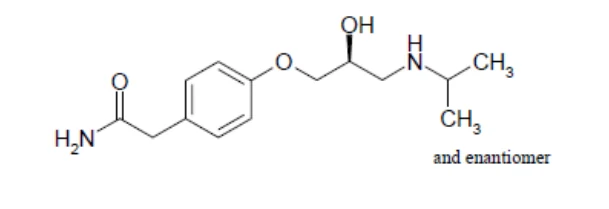
Structural formula:
Physicochemical properties:
Atenolol is a white or almost white powder. It is sparingly soluble in water, soluble in anhydrous ethanol, slightly soluble in methylene chloride. The melting point for atenolol is 152°C-155°C.
14 CLINICAL TRIALS
14.2 Study Results
Effects on the Cardiovascular System
Single oral doses of 100 mg atenolol given to volunteers reduced exercise-induced tachycardia by 31% at 4 hours and by 15% at 24 hours after administration. The maximal suppression of the systolic blood pressure response to exercise was 21% at 4 hours.
Effects on Plasma Renin Activity
Studies in hypertensive patients have shown that the antihypertensive effect of atenolol is associated with a decrease in plasma renin activity.
Effects on Pulmonary Function
The effects of a single 100 mg dose of atenolol on forced expiratory volume (FEV1) and airways resistance (AWR) were assessed in ten patients with labile asthma. The cardioselective agents tested in this comparative trial, including atenolol, usually had a lesser dose-related effect on airway function than non-selective beta-blockers. Atenolol produced a smaller decrease in FEV1 than did the nonselective agents and did not inhibit the bronchodilator response to isoprenaline. The decrease in FEV1 was 8-9%. Other studies in asthmatic patients have reported similar decreases in FEV1 with atenolol.
Dose-effect comparisons with cardioselective agents have shown a fall in FEV1 values at the higher doses, indicating some beta2-blocking effect.
Metabolic Effects
Atenolol tablets did not potentiate the hypoglycemic effects of insulin in 12 patients with diabetes.
14.3 Comparative Bioavailability Studies
A double-blind, balanced, randomized, two-treatment, two-period, two-sequence, single-dose, crossover, comparative bioavailability study of PrJAMP Atenolol Tablets, 100 mg (JAMP Pharma Corporation) and PrTENORMIN® (Atenolol Tablets), 100 mg (AstraZeneca Canada Inc.) was conducted in healthy, adult, Asian male subjects under fasting conditions. A summary of the bioavailability data from the 36 subjects who completed the study is presented in the following table:
SUMMARY TABLE OF THE COMPARATIVE BIOAVAILABILITY DATA
Atenolol (1 x 100 mg) Geometric Mean Arithmetic Mean (CV %) | ||||
|---|---|---|---|---|
| Parameter | Test1 | Reference2 | % Ratio of Geometric Means | 90% Confidence Interval |
AUCT (ng·h/mL) | 8166.52 8459.60 (26.7) | 7929.86 8186.95 (25.2) | 103.0 | 96.3 - 110.1 |
AUCI (ng·h/mL) | 8408.02 8699.88 (26.4) | 8141.25 8404.42 (25.2) | 103.3 | 96.8 - 110.2 |
Cmax (ng/mL) | 874.52 924.86 (33.1) | 837.33 876.26 (28.3) | 104.4 | 95.9 - 113.8 |
Tmax3 (h) | 3.00 (1.33 – 6.00) | 3.00 (1.00 - 5.00) | ||
T½4 (h) | 6.71 (15.2) | 6.68 (12.4) | ||
1 PrJAMP Atenolol Tablets, 100 mg (JAMP Pharma Corporation).
2 PrTENORMIN® (Atenolol Tablets), 100 mg (AstraZeneca Canada Inc.).
3 Expressed as the median (range) only.
4 Expressed as the arithmetic mean (CV %) only.
15 MICROBIOLOGY
No microbiological information is required for this drug product.
16 NON-CLINICAL TOXICOLOGY
General Toxicology:
Acute Toxicity
Species
Sex
Concentration
Route
LD50 (mg/kg)
Mouse
M/F
20% (1)
Oral
>2000
Species
Sex
Concentration
Route
LD50 (mg/kg)
Mouse
M/F
0.8-1.2% (2)
i.v.
100
Rat
M/F
30% (1)
Oral
>3000
Rat
Male
21.3% (3)
Oral
4960
Rat
Female
21.3% (3)
Oral
6600
Rat
M/F
1.0-4.0% (2)
i.v.
50-60
Rat
Male
0.5% (2)
i.v.
129(±25)
Rat
Female
0.5% (2)
i.v.
114(±30)
Rhesus Monkey
M/F
Variable (1)
Oral
>6000
(1) Suspension (2) Solution (3) Formulated Tablet
Toxic signs in rats were: depression, ataxia, labored respiration, cyanosis, tremors and convulsions. Effects occurred within 5 minutes following intravenous administration and surviving rats appeared normal after 2 hours. Effects following oral administration occurred within 1 hour and some persisted through 48 hours. Surviving rats appeared normal within 72 hours.
Following intravenous administration, all mice convulsed immediately and those animals dying did so within 5 minutes.
Toxic signs in monkeys following oral administration were emesis, lethargy, slight mydriasis, occasional ptosis, salivation and decreased respiration. Surviving monkeys appeared normal within 24 hours.
Subacute Toxicity
Dose
Duration
Species Sex
M
F
mg/kg/day
Route
Route
Effect
Strain
(mo)
Rat Alderly
PK.
Strain 1
40
40
0, 5, 50, 200
oral
3
High and intermediate groups showed increased heart and spleen weights. High dose males (3/10) showed focal myocarditis. (1 male control showed focal myocardial necrosis.)
Dose
Duration
Species Sex
M
F
mg/kg/day
Route
Route
Effect
Strain
(mo)
Dog Beagle
16
16
0, 5, 50, 100
oral
3
High and intermediate dose females showed increased liver weights. Mean heart rate and blood pressure decreased in high and inter-mediate dose animals.
Chronic Toxicity
Dose
Duration
Species
Sex
M
F
mg/kg/day
Route
Route
Effect
Strain
(mo)
Rat
Alderly PK.
Strain 1
80
80
0, 75, 150, 300
oral
6
Reduction in heart rate. High and intermediate dose showed decreased blood pressure. Spleen and heart weights increased. Chronic myocarditis was seen in all groups including controls. Three high dose and 2 mid-dose animals were killed in moribund state.
Dog
Beagle
20
20
0, 50, 100, 200
oral
12
Decreased heart rate.
Prolongation of PR interval on ECG. Vacuolation of epithelial cells of duodenal Brunner's glands: 5/10 low dose, 2/10 mid-dose, 7/10 high dose.
One high dose female died.
Dog
Beagle
15
15
0, 15, 200
oral
12
Vacuolation of epithelium of Brunner's glands 9/10 high dose; 1/10 low dose.
Carcinogenicity:
Atenolol was administered to 3 groups of 65 male and 65 female CR7B1/10J mice at dietary levels of 0, 150 and 300 mg/kg/day for 18 months followed by the control diet for an additional three months. A fourth group received 2-AAF (positive control) and a fifth was the negative control group. Retardation in weight gain was observed. There was no statistically significant difference in mortality, number of tumor bearers, number of tumors in each animal or the total number of tumors in treated and negative control animals.
Two studies were conducted in Alderley Park Strain I rats. One study employed doses of 150 and 300 mg/kg/day for 18 months followed by the control diet for an additional six months, while the second study used doses of 75, 150 and 300 mg/kg/day for 24 months. Results from the two studies showed no significant difference in mortality for treated and control groups. No apparent carcinogenic potential was observed.
Mutagenic Potential:
Atenolol was negative in the mouse dominant lethal test, the Chinese hamster in vivo cytogenetic test and the Salmonella Amery back mutation test (Ames test), with or without metabolic activation.
Reproductive and Developmental Toxicology:
Atenolol associated malformations were not observed when atenolol was administered at oral doses of up to 200 mg/kg/day, days 6-15 of gestation in rats or at doses of up to 25 mg/kg/day, days 6-18 of gestation in rabbits.
Dose levels of 50 or more mg/kg/day were, however, associated with an increased incidence of resorptions in rats. Although a similar effect was not seen in rabbits, it should be noted that the compound was not evaluated in rabbits at doses above 25 mg/kg/day. Atenolol, administered at doses of up to 200 mg/kg/day, for 11 weeks prior to mating in males or 2 weeks prior to mating in females, did not adversely affect fertility of male or female rats. Growth or survival of offspring were not affected when pregnant females were exposed at 200 mg/kg/day from day 15 of gestation to day 21 post partum.
Special toxicology:
Chronic studies performed in animals have revealed the occurrence of vacuolation of epithelial cells of Brunner's glands in the duodenum of both male and female dogs at all tested dose levels of atenolol (starting at 15 mg/kg/day or 7.5 times the maximum recommended human dose) and an increased incidence of atrial degeneration of hearts of male rats at 300 but not 150 mg atenolol/kg/day (150 and 75 times the maximum recommended human dose, respectively).
Effects on the Cardiovascular System
In anesthetized cats, atenolol infusion reduces the chronotropic response to isoproterenol and right cardiac sympathetic nerve stimulation.
In anesthetized dogs, atenolol 0.03 mg/kg i.v. depresses the heart rate by 22%, cardiac contractile force by 16% and diastolic blood pressure by 11%.
Studies in rats showed that atenolol was devoid of intrinsic sympathomimetic activity.
Atenolol in concentrations up to 10 mg/mL had no local anesthetic effect on the isolated sciatic nerve of the frog.
Atenolol (5-20 mg/kg i.v.) was without effect on the ventricular tachycardia produced by toxic levels of ouabain in anesthetized dogs. Atenolol (0.2 mg/kg i.v.) protected coronary ligated dogs from the arrhythmogenic activity of adrenaline on the fourth day after ligation (when the cardiac rhythm was predominantly sinus).
17 SUPPORTING PRODUCT MONOGRAPH
1.
PrTENORMIN® (Tablets, 50 mg and 100 mg), submission control 270737, Product Monograph, Searchlight Pharma Inc. (May 31, 2023)