


Product Monograph - Jamp-Cholestyramine
RECENT MAJOR LABEL CHANGES
TABLE OF CONTENTS
Sections or subsections that are not applicable at the time of authorization are not listed.
RECENT MAJOR LABEL CHANGES ............................................................................................ 2
TABLE OF CONTENTS .............................................................................................................. 2
PART I: HEALTH PROFESSIONAL INFORMATION ...................................................................... 4
1 INDICATIONS ..................................................................................................................... 4
1.1 Pediatrics ........................................................................................................................... 4
1.2 Geriatrics ............................................................................................................................ 4
2 CONTRAINDICATIONS ..................................................................................................... 4
3 SERIOUS WARNINGS AND PRECAUTIONS BOX ................................................................. 5
4 DOSAGE AND ADMINISTRATION ..................................................................................... 5
4.1 Dosing Considerations ....................................................................................................... 5
4.2 Recommended Dose and Dosage Adjustment .................................................................. 5
4.3 Reconstitution ................................................................................................................... 5
4.4 Administration ................................................................................................................... 6
4.5 Missed Dose ....................................................................................................................... 6
5 OVERDOSAGE ................................................................................................................. 6
6 DOSAGE FORMS, STRENGTHS, COMPOSITION AND PACKAGING ...................................... 6
7 WARNING AND PRECAUTIONS ........................................................................................ 7
7.1 Special Populations ............................................................................................................ 9
7.1.1 Pregnant Women ............................................................................................................... 9
7.1.2 Breast-feeding .................................................................................................................. 9
7.1.3 Pediatrics .......................................................................................................................... 9
7.1.4 Geriatrics .......................................................................................................................... 9
8 ADVERSE REACTIONS ..................................................................................................... 9
8.1 Adverse Reaction Overview ................................................................................................ 9
8.2 Clinical Trial Adverse Reactions ........................................................................................ 10

8.5 Post-Market Adverse Reactions......................................................................................... 10
9 DRUG INTERACTIONS ...................................................................................................... 11
9.2 Drug interactions Overview ............................................................................................. 11
9.3 Drug-Behavioural Interactions ........................................................................................ 12
9.4 Drug-Drug Interactions .................................................................................................... 12
9.5 Drug-Food Interactions .................................................................................................... 12
9.6 Drug-Herb Interactions .................................................................................................... 12
9.7 Drug-Laboratory Test Interactions .................................................................................. 12
10 CLINICAL PHARMACOLOGY .............................................................................................. 13
10.1 Mechanism of Action ....................................................................................................... 13
10.2 Pharmacodynamics .......................................................................................................... 13
10.3 Pharmacokinetics ............................................................................................................. 18
11 STORAGE, STABILITY AND DISPOSAL ................................................................................ 18
12 SPECIAL HANDLING INSTRUCTIONS .................................................................................. 18
PART II: SCIENTIFIC INFORMATION ........................................................................................ 19
13 PHARMACEUTICAL INFORMATION ................................................................................. 19
14 CLINICAL TRIALS ............................................................................................................. 19
14.2 COMPARATIVE BIOAVAILABILITY STUDIES ....................................................................... 19
15 MICROBIOLOGY ............................................................................................................. 20
16 NON-CLINICAL TOXICOLOGY ......................................................................................... 20
17 SUPPORTING PRODUCT MONOGRAPH .......................................................................... 21
PATIENT MEDICATION INFORMATION ................................................................................... 22
PART I: HEALTH PROFESSIONAL INFORMATION
1 INDICATIONS
JAMP-Cholestyramine (cholestyramine resin) is indicated in adults:
- As adjunctive therapy to diet and exercise for the reduction of elevated serum cholesterol in patients with primary hypercholesterolemia (elevated low-density lipoproteins). Such reduction of serum cholesterol may reduce the risks of atherosclerotic coronary artery disease and myocardial infarction.
- For lowering elevated cholesterol in patients with combined hypercholesterolemia and hypertriglyceridemia. JAMP-Cholestyramine is not indicated where hypertriglyceridemia is the abnormality of most concern.
- As a symptomatic control of bile acid induced diarrhea due to short bowel syndrome.
- For the relief of pruritus associated with partial biliary obstruction.
1.1 Pediatrics
Pediatrics (birth to 18 year of age): Based on the data submitted and reviewed by Health Canada, the safety and efficacy of cholestyramine resin in pediatric patients has not been established; therefore, Health Canada has not authorized an indication for pediatric use (see 4.2 Special Populations and Conditions; 7.1.3 Pediatrics).
1.2 Geriatrics
Geriatrics (over 65 years of age): Evidence from clinical studies and experience suggests that use in the geriatric population is associated with differences in safety or effectiveness (see 7.1.4 Geriatrics; 8.1 Adverse Reaction Overview).
2 CONTRAINDICATIONS
JAMP-Cholestyramine is contraindicated in patients:
- who are hypersensitive to this drug or to any ingredient in the formulation, including any non-medicinal ingredient, or component of the container. For a complete listing, see 6 DOSAGE FORMS, STRENGTHS, COMPOSITION AND PACKAGING.
- with complete biliary obstruction where bile is not excreted into the intestine.
3 SERIOUS WARNINGS AND PRECAUTIONS BOX
Serious Warnings and Precautions
|
|---|
4 DOSAGE AND ADMINISTRATION
4.1 Dosing Considerations
- To familiarize the patient with JAMP-Cholestyramine and to minimize gastrointestinal side effects, it is desirable to begin all therapy with one dose daily. Dosage is then increased within a day or two to the desired level for effective control.
- Motivation of the patient to continue the prescribed regimen despite gastrointestinal problems is important. Physician encouragement and supervision are essential for successful management.
- The colour of cholestyramine resin may vary somewhat from batch to batch, but this variation does not affect the performance of the product.
4.2 Recommended Dose and Dosage Adjustment
Adults
The recommended dose is 4 grams of cholestyramine resin, one to six times daily. Dosages may be adjusted as required to meet the patient's needs.
Special Populations and Conditions
Pediatrics:
Health Canada has not authorized an indication for pediatric use (see 1.2 Pediatrics; 7.1.3 Pediatrics).
Geriatrics:
- Evidence from clinical studies and experience suggests that use in the geriatric population is associated with differences in safety or effectiveness (see 7.1.4 Geriatrics)
4.3 Reconstitution
- Place the contents of one pouch of JAMP-Cholestyramine on the surface of 120 mL - 180 mL of water, or non-carbonated beverage such as milk or fruit juice. After 1-2 minutes mix thoroughly by stirring.
- JAMP-Cholestyramine may also be mixed in highly fluid soups or pulpy fruits with high moisture content such as applesauce or crushed pineapple.
4.4 Administration
- JAMP-Cholestyramine Light and Regular Powders (cholestyramine resin) are administered orally and should not be taken in its dry form; always mix the powder with water or other fluids before ingestion (see 3 SERIOUS WARNINGS AND PRECAUTIONS BOX).
4.5 Missed Dose
If a dose is missed, patients are advised to take the dose as soon as remembered, unless it is almost time for the next dose. Patients are advised not to take extra medicine to make up the missed dose.
5 OVERDOSAGE
One case of overdosage with cholestyramine resin has been reported in a patient taking 150% of the maximum recommended daily dosage for several weeks. No ill effects were observed. Should overdosage occur, the chief potential harm would be obstruction of the gastrointestinal tract. The location of such potential obstruction, the degree of obstruction, and the presence or absence of normal gut motility would determine treatment.
| For management of suspected drug overdose, contact your regional poison control centre. |
|---|
6 DOSAGE FORMS, STRENGTHS, COMPOSITION AND PACKAGING
Table – Dosage Forms, Strengths, Composition and Packaging
| Route of Administration | Dosage Form / Strength/Composition | Non-medicinal Ingredients |
|---|---|---|
| oral | Cholestyramine for Oral Suspension (Light Powder) 4 g Cholestyramine Resin / Dose | Aspartame (each unit of JAMP-Cholestyramine Light Powder contains 33.68 mg phenylalanine), Citric Acid Anhydrous, Colloidal anhydrous silica, FD&C Yellow #6, Orange Flavor, Lemon Flavor and Propylene Glycol Alginate. |
| oral | Cholestyramine for Oral | Citric Acid Anhydrous, Colloidal |
| Suspension (Regular Powder) 4 g Cholestyramine Resin / Dose | anhydrous silica, D&C Yellow No. 10, D&C Yellow No. 10 Lake, Sunset yellow supra, confectioner’s sugar (contains corn starch), Orange Flavour, Lemon Flavor, Propylene Glycol Alginate and Sucrose. |
Description
- JAMP-Cholestyramine Light Powder is available in cartons of 30 pouches (each pouch contains one dose of cholestyramine resin). Each dose contains 4 grams of cholestyramine resin (dried basis). Sugar free.
- JAMP-Cholestyramine Regular Powder is available in cartons of 30 pouches (each pouch contains one dose of cholestyramine resin). Each dose contains 4 grams of cholestyramine resin (dried basis).
7 WARNING AND PRECAUTIONS
Please see 3 SERIOUS WARNINGS AND PRECAUTIONS BOX.
General
Before instituting therapy with JAMP-Cholestyramine, an attempt should be made to control serum cholesterol by appropriate dietary regimen, weight reduction, and the treatment of any underlying disorder such as hypothyroidism, diabetes mellitus, nephrotic syndrome, dysproteinemias and obstructive liver disease which might be the cause of hypercholesterolemia. In addition, the current medications of the patient should be reviewed for their potential to increase serum LDL-C or total cholesterol. A favorable trend in cholesterol reduction should occur during the first month of cholestyramine therapy. The therapy should be continued to sustain cholesterol reduction.
Carcinogenesis and Mutagenesis
Please see section 16 NON-CLINICAL TOXICOLOGY, Carcinogenicity / Genotoxicity.
Driving and Operating Machinery
JAMP-Cholestyramine has not been shown to impair the patient’s ability to drive or use machines.
Endocrine and Metabolism
There is a possibility that prolonged use of cholestyramine resin, since it is a chloride form of anion exchange resin, may produce hyperchloremic acidosis. This would especially be true in younger and smaller patients where the relative dosage may be higher.
Because cholestyramine binds bile acids, it may interfere with normal fat digestion and absorption and thus may prevent absorption of fat-soluble vitamins such as A, D and K. When JAMP-Cholestyramine is given for long periods of time, concomitant supplementation of water-miscible parenteral forms of vitamins A and D should be considered.
Chronic use of JAMP-Cholestyramine may be associated with increased bleeding tendency due to hypoprothrombinemia associated with vitamin K deficiency. This will usually respond promptly to parenteral vitamin K1 and recurrences can be prevented by oral administration of vitamin K1.
Reduction of serum or red cell folate has been reported over long-term administration of cholestyramine resin. Supplementation with folic acid should be considered in these cases.
Gastrointestinal
Cholestyramine resin may produce or worsen pre-existing constipation. Dosage should be reduced or discontinued in such cases. Fecal impaction and aggravation of hemorrhoids may occur. Every effort should be made to avert severe constipation and its inherent problems in those patients with clinically symptomatic coronary artery disease.
Cholestyramine potentially may cause steatorrhea or accentuate pre-existing steatorrhea and this may require reduction and adjustment of dosage.
Hepatic/Biliary/Pancreatic
Occasional calcified material has been observed in the biliary tree, including calcification of the gallbladder, in patients to whom cholestyramine resin has been given. This may be manifestation of the liver disease and not drug related.
Monitoring and Laboratory Tests
Serum cholesterol levels should be determined frequently during the first few months of therapy and periodically thereafter. Serum triglyceride levels should be measured periodically to detect whether significant changes have occurred.
Reproductive Health: Female and Male Potential
Fertility
The effect of cholestyramine resin on human fertility is unknown (see 16 Reproductive and Developmental Toxicology).
Teratogenic Risk
There is non-clinical evidence suggesting that cholestyramine is not embryotoxic or teratogenic (see 16 Reproductive and Developmental Toxicology). There are, however, no adequate and well controlled studies in pregnant women and fetal health (see 7.1.1 Pregnant Women).
7.1 Special Populations
7.1.1 Pregnant Women
Since cholestyramine is not absorbed systemically, it is not expected to cause fetal harm when administered during pregnancy in recommended dosages. There are, however, no adequate and well controlled studies in pregnant women. Use in pregnancy or lactation requires that the potential benefits of drug therapy be weighed against the possible hazards to the mother and child. The known interference with absorption of fat-soluble vitamins may be detrimental even in the presence of supplementation.
7.1.2 Breast-feeding
Caution should be exercised when cholestyramine resin is administered to a nursing mother. The possible lack of proper vitamin absorption (see 7 Endocrine and Metabolism) may have an effect on nursing infants. Use in pregnancy or lactation requires that the potential benefits of drug therapy be weighed against the possible hazards to the mother and child.
7.1.3 Pediatrics
Pediatrics (birth to 18 year of age): Based on the data submitted and reviewed by Health Canada, the safety and efficacy of cholestyramine resin in pediatric patients has not been established; therefore, Health Canada has not authorized an indication for pediatric use.
The effects of long-term drug administration, as well as its effect in maintaining lowered cholesterol levels in pediatric patients, are unknown. A pediatric dosage schedule has not been established.
7.1.4 Geriatrics
- Appropriate studies on the relationship of age to the effects of cholestyramine have not been performed in the geriatric population. However, patients over 60 years of age may be more likely to experience gastrointestinal side effects. (See 1.2 Geriatrics; 8.1 Adverse Reaction Overview.)
8 ADVERSE REACTIONS
8.1 Adverse Reaction Overview
The most frequent adverse effect of cholestyramine resin is constipation (see 8.5 Post-Market Adverse Reactions). When used as a cholesterol lowering agent, predisposing factors for most complaints of constipation [*] are high dose and increased age (more than 60 years old). Most instances of constipation are mild, transient, and controlled with conventional therapy. Some patients require a temporary decrease in dosage or discontinuation of therapy.
[*] The percentage of complaints that are associated with these predisposing factors is unknown.
8.2 Clinical Trial Adverse Reactions
The clinical trial data on which the original indication was authorized is not available.
8.5 Post-Market Adverse Reactions
The following table presents a listing of post-market adverse reactions with their frequency of occurrence in patients treated with cholestyramine.
Adverse Reactions
| Categorized by System Organ Class | Very Common (≥ 1/10) | Common (≥ 1/100 to < 1/10) | Uncommon (≥ 1/1,000 to < 1/100) | Rare (≥ 1/10,000 to < 1/1,000) | |||
|---|---|---|---|---|---|---|---|
| Blood and lymphatic system disorders | |||||||
| Bleeding tendencies due to hypoprothrombinaemia (Vitamin K deficiency) | ✓ | ||||||
| Vitamin A and vitamin D deficiencies | ✓ | ||||||
| Night blindness | ✓ | ||||||
| Gastrointestinal disorders | |||||||
| Constipation | ✓ | ||||||
| Abdominal discomfort | ✓ | ||||||
| Flatulence | ✓ | ||||||
| Nausea | ✓ | ||||||
| Vomiting | ✓ | ||||||
| Diarrhea | ✓ | ||||||
| Heartburn | ✓ | ||||||
| Dyspepsia | ✓ | ||||||
| Steatorrhea | ✓ | ||||||
| Intestinal obstruction | ✓ | |||
|---|---|---|---|---|
| Metabolism and nutrition disorders | ||||
| Anorexia | ✓ | |||
| Musculoskeletal and connective tissue disorders | ||||
| Osteoporosis | ✓ | |||
| Skin and subcutaneous tissue disorders | ||||
| Rash and irritation of skin, tongue and perianal area | ✓ | |||
The frequency of the following post-market adverse reactions is unknown.
- Gastrointestinal: gastrointestinal-rectal bleeding, black stools, hemorrhoidal bleeding, bleeding from known duodenal ulcer, dysphagia, hiccups, ulcer attack, sour taste, pancreatitis, rectal pain, diverticulitis, eructation
- Hematological: decreased or increased prothrombin time, ecchymosis, anemia, dental bleeding
- Hypersensitivity: asthma, wheezing, shortness of breath
- Monitoring and Laboratory Tests: liver function abnormalities
- Musculoskeletal: backache, muscle and joint pain, arthritis
- Neurological: headache, anxiety, vertigo, dizziness, fatigue, tinnitus, syncope, drowsiness, femoral nerve pain, paresthesia
- Ophthalmologic: uveitis
- Renal: hematuria, dysuria, burnt odour of urine, diuresis
- Other: weight loss, weight gain, increased libido, swollen glands, edema, dental caries.
9 DRUG INTERACTIONS
9.2 Drug interactions Overview
Since cholestyramine resin is an anion-exchange resin, it may have strong affinity for anions other than the bile acids. Drug that are affected by co-administration of bile acid sequestrants vary widely in pharmacologic effect and mechanisms, magnitude of doses, and chemical characteristics. Therefore, it is not possible to predict a priori whether co-administration with cholestyramine will interfere with absorption. It should be assumed that concomitantly administered drugs have the potential interacting with cholestyramine unless clinical studies have shown otherwise.
Drug Interaction studies have been conducted with cholestyramine and various HMG-CoA reductase inhibitors. Although cholestyramine has been shown to reduce the bioavailability of HMG-CoA reductase inhibitors, the clinical cholesterol-lowering effects of an HMG-CoA reductase inhibitor and cholestyramine have been shown to be additive.
9.3 Drug-Behavioural Interactions
The effect of lifestyle choices (e.g., alcohol consumption, sexual activity, smoking) on the use of cholestyramine resin has not been established.
9.4 Drug-Drug Interactions
- Cholestyramine resin may delay or reduce the absorption of concomitant oral medication such as:
- thyroid and thyroxine preparations
- warfarin
- chlorothiazide (acidic)
- phenylbutazone
- phenobarbital
- tetracycline
- penicillin G
- digitalis
- The discontinuance of cholestyramine could pose a hazard to health if a potentially toxic drug such as digitalis has been titrated to maintenance level while the patient was taking cholestyramine. The concomitant drug should be re-titrated to avoid over-dosage when cholestyramine is discontinued.
- Cholestyramine may interfere with the pharmacokinetics of drugs (e.g., estrogens) that undergo enterohepatic recirculation.
9.5 Drug-Food Interactions
Interactions with food have not been established.
9.6 Drug-Herb Interactions
Interactions with herbal products have not been established.
9.7 Drug-Laboratory Test Interactions
Interactions with laboratory tests have not been established.
10 CLINICAL PHARMACOLOGY
10.1 Mechanism of Action
Cholestyramine is a quaternary ammonium anion exchange resin with a polystyrene polymer skeleton. As the chloride salt, it binds bile acids both in vitro and in vivo, exchanging chloride for bile acid. Cholesterol is probably the sole precursor of bile acids. During normal digestion, bile acids are secreted into the intestines. A major portion of the bile acids is absorbed from the intestinal tract and returned to the liver via the enterohepatic circulation. Only very small amounts of bile acids are found in normal serum.
Cholestyramine resin absorbs and combines with the bile acids in the intestine to form an insoluble complex which is excreted in the feces. This results in a partial removal of bile acids from the enterohepatic circulation by preventing their absorption.
The increased fecal loss of bile acids due to cholestyramine resin administration leads to an increased oxidation of cholesterol to bile acids, a decrease in beta lipoprotein or low-density lipoprotein plasma levels and a decrease in serum cholesterol levels. Although in humans cholestyramine resin produces an increase in hepatic synthesis of cholesterol, plasma cholesterol levels fall.
10.2 Pharmacodynamics
Animal Pharmacology
Binding of Bile Acids
Since cholestyramine is an anion exchange resin, the chloride anion attached the quaternary ammonium groups of the resin can be replaced by other anions - usually those with a greater affinity for the resin than chloride. Bile acids are strongly bound by the resin as shown in vitro studies.
Figure 1 Binding of Sodium Chelate by Cholestyramine In Vitro
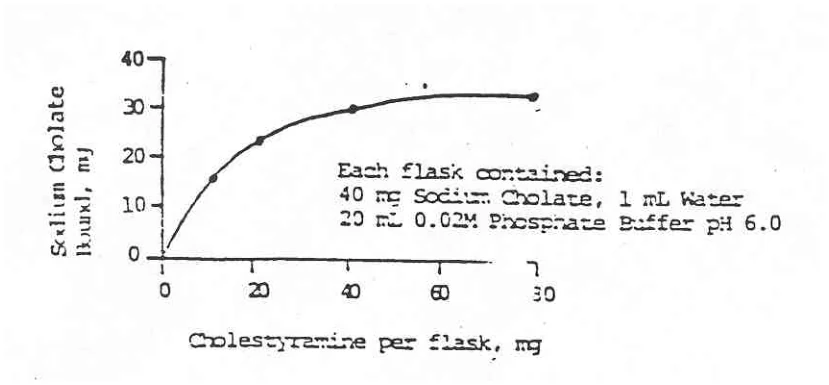
A 3-fold increase in fecal bile acid excretion after 10 days was reported. This effect continued during nine weeks of administration of a normal diet, containing 2% cholestyramine, fed to male albino rats of 130-140 grams.
Binding of Drugs
Since cholestyramine is an anion exchange resin, it has a strong affinity for acidic materials. It may also absorb neutral or, less likely, basic materials to some extent.
Eleven drugs have been studied in vivo and in vitro for possible binding with cholestyramine:
| Basic | Neutral | Acidic |
|---|---|---|
| Chlorpheniramine maleates | Digoxin | Acetylsalicylic Acid |
| Dextromethorphan | Chlorothiazide | |
| Dihydrocodeinone bitartrates | Phenobarbital | |
| Quinidine sulfate | Phenylbutazone | |
| Tetracycline | ||
| Warfarin |
The basic and neutral drugs were not bound, or bound only slightly, by cholestyramine in vitro. Those which were weakly bound were very easily washed from the resin with buffer at various pH levels.
Acetylsalicylic Acid, although an acidic drug, had much less affinity and was more easily eluted form cholestyramine than cholic acid. In support of these in vitro results, the blood level of salicylic acid was only moderately depressed in the first half hour following the concomitant oral administration of acetylsalicylic acid, at a dose of 4.65 mg/kg and cholestyramine, at a dose of 71.5 mg/kg, to rats. After two hours, blood salicylate levels were not affected by the resin.
Similar in vivo and in vitro results were observed with phenobarbital and tetracycline.
The absorption of phenylbutazone may be delayed (but not decreased) when taken with cholestyramine, as suggested by studies in the rat.
No significant effects on chlorothiazide absorption or excretion were observed in dogs given chlorothiazide 30 minutes before the administration of cholestyramine.
In rats, the anticoagulant activity of a large single dose of warfarin was unaffected by the administration of cholestyramine, whether warfarin was given 30 minutes before or simultaneously within the resin. Plasma warfarin levels were lower when the two drugs were given together.
Fat Absorption
In a study with male weanling rats, the administration of 5% cholestyramine decreased the absorption of medium chain triglycerides by 3%, whereas absorption of the other dietary fats was more markedly affected. Five percent cholestyramine decreased net absorption of coconut oil by 15%, the highly unsaturated vegetable oils by 19 to 40%, olive oil by 40% and butter and lard by 47 and 55%, respectively.
Fat-Soluble Vitamins A and K Absorption
The inclusion of 1 or 2% cholestyramine in rations containing 5-20% fat and minimal levels of vitamin A led to decreased liver stores of vitamin A in young rats. No overt evidence of a nutritional deficiency of this essential vitamin was observed. Rates of weight gain and efficiency of caloric utilization were unaffected at the lower levels of dietary fat intake.
In studies of 1 to 8-day old chicks fed minimal or adequate amounts of menadione (a synthetic analog of vitamin K), the addition of 2% cholestyramine to the diet had no significant effect on prothrombin time after 2 or 4 weeks.
Human Pharmacology
Binding of Bile Acids
Cholestyramine is a quaternary ammonium anion exchange resin with a polystyrene polymer skeleton. As the chloride salt, it binds bile acids both in vitro and in vivo, exchanging chloride for bile acid. When the resin is administered to certain animals used for experimental purposes and to man, it sequesters bile acids in the gut, preventing their reabsorption and thereby promoting their excretion in the feces.
Fat Absorption
Clinical investigators induced gross steatorrhea in two healthy subjects by the administration of a large daily dose (30 g) of cholestyramine for 11-17 days. Fecal fat excretion increased by factors of 4 and 5, respectively, returning promptly to pre-treatment values when cholestyramine was withdrawn.
Studies in 5 healthy subjects, maintained on regular diet and given radioactive labelled triolein, before and during administration of 30 g/day of cholestyramine, demonstrated that there was a depression in the level of blood radioactivity over the 8-hour sampling period, and significant increase in fecal radioactivity during the 48-hour period of cholestyramine administration.
In contrast, in 7 subjects maintained on regular diet and given radioactive labeled oleic acid, there was no significant difference in radioactivity of blood and feces between control and experimental periods.
The investigators suggested that the binding of bile acids by cholestyramine prevents their participation in the hydrolytic digestion of dietary triglycerides. This, in turn, leads to the steatorrhea induced by large doses of cholestyramine.
Studies in a limited number of patients with partial biliary obstruction have demonstrated that serum bile acids, phospholipids, triglycerides, cholesterol and total lipids may be lowered during treatment with cholestyramine, although another investigator reported significant decreases in serum triglyceride levels in only 4 of 15 patients.
Fat-Soluble Vitamins A and K Absorption
Using four healthy young adult subjects, investigators reported that when 8 grams of cholestyramine was ingested simultaneously with a normal meal with 250,000 U.S.P. Units of vitamin A acetate, during a 9-hour post-prandial period, the plasma vitamin A levels were significantly reduced (below the values obtained with the control meal). The 4 grams addition of cholestyramine had no significant effect.
Clinical Studies
- 1. Hypercholesterolemia
In proper dosage, cholestyramine usually leads to a significant reduction (15% or more) in serum cholesterol levels. This result from the increased fecal loss of bile acids bound to the resin, and the compensatory formation of additional bile acids from cholesterol. The lowering of serum cholesterol levels has been observed both in subjects with "normal" cholesterol levels (100-250 mg/100 mL) as well as in patients with elevated values.
In a careful, long-term metabolic study of 10 patients with hypercholesterolemia, investigators reported that over periods of 12 months for 7 patients and 6 months for 3 patients with varying dosage levels of cholestyramine (12-24 g/day) the decrease in cholesterol ranged from 15 to 76% of an average of pre-treatment values. The mean decrease was 43%. Another investigator reported studies on 17 patients with varying degrees of hypercholesterolemia, for most of whom he prescribed 4-8 grams cholestyramine daily. (Two patients received 12 g/day). Significant cholesterol reductions occurred in many of these patients with an average reduction of 23.5%.
One investigator emphasized the importance of carefully determining the etiology of the hypercholesterolemia that is to be treated. He finds that patients who are truly idiopathic, and not basically hypertriglyceridemic, respond to cholestyramine with significant lowering of serum cholesterol. This investigator observed 13 patients with idiopathic hypercholesterolemia who experienced an average cholesterol reduction of 26% with dosage of 8 to 16 g daily, for a period of one month to two years.
The National Institutes of Health have concluded a 10-year randomized double-blind placebo-controlled study, in men, at 12 lipid research clinics on the effect of lowering plasma cholesterol on the risk of coronary heart disease defined as CHD death and/or non-fatal myocardial infarction. The 3,806 participants who took part in this study were preponderantly college- or high school-educated whites. Their mean age was 47.8 years. Upon entering the study, all participants had a plasma cholesterol level of 265 mg/dL or greater and an LDL-C level of 190 mg/dL or greater. Participants with coronary heart disease or conditions associated with secondary hyperlipoproteinemia were excluded from the study. The effect of Total-C on incidence of CHD is illustrated in Table 2.
Table 2 Cholesterol Lowering and Coronary Heart Disease
| N | Mean Total-C* | No. of CHD Cases** | |
|---|---|---|---|
| Cholestyramine Group | 1,906 | 251 | 155 |
| Placebo Group | 1, 900 | 276 | 187 |
|---|
* Average of annual posttreatment levels for participants attending clinic. TOTAL-C indicates plasma total cholesterol.
** Definite non-fatal myocardial infarction or CHD death.
Plasma cholesterol was lowered by a combination of a modest cholesterol-lowering diet and cholestyramine. The dose response relationship between the amount of cholestyramine ingested daily, the lowering of total plasma cholesterol, and the reduction in CHD risk is summarized Table 3.
Table 3 Relation of Reduction of Cholesterol to Reduction in Coronary Heart Disease Risk
| Dose of Cholestyramine | Package Count | Patient Population | Total Cholesterol Lowering | Reduction in CHD Risk |
|---|---|---|---|---|
0 - 8 g 8 - 20 g 20 - 24 g | 0 - 2 2 - 5 5 - 6 | 439 496 965 | 4.4% 11.5% 19.0% | 10.9% 20.1% 39.3% |
- 2. Partial Biliary Obstruction
Bile acids are formed in the liver from cholesterol and excreted via the bile into the intestine. Here they are involved in the digestive processes, emulsifying the fats and fatty materials present in ingested foods. A large proportion of the bile acids is reabsorbed and returned via the portal circulation to the liver.
Very small amounts of bile acids are found in normal sera. When the normal secretion of bile is partially blocked, however, serum concentrations may increase 10 to 20-fold or more. When this occurs an intractable pruritus often intervenes. This pruritus may be so severe that some patients become extremely depressed.
Several recent reports show that administration of cholestyramine reduced serum bile acids and relieved pruritus in such patients. Withholding the resin for a few days led to a return of pruritus and increased serum bile acid levels.
These observations support the hypothesis of a causal relationship between high serum bile acid concentrations and the pruritus of jaundice. The lag periods of several days between administration of the resin and relief of itching, and between withholding cholestyramine and the return of itching, suggest that the causative factor may not be bile acid in the serum, but that which accumulated in the skin or adjacent tissues.
Increased fecal bile acid excretion after cholestyramine administration to man has been consistently observed. One investigator reported an increase in fecal bile acid from 54 to 500 mg/day, in a patient, following the ingestion of cholestyramine.
Investigators observed an increase in fecal bile acids from a mean of 81 mg/day during a 10-day control period to 364 mg/day during 54 days of cholestyramine therapy (dosage 1.7 - 6.6 g/day).
Other investigators reported that four patients with pruritus associated with partial biliary obstruction had an average serum bile acid concentration of 25 mcg/mL. During treatment with cholestyramine, the itching was relieved, and serum bile acids averaged only 6 mcg/mL.
Abundant data in human studies demonstrate conclusively that an important effect of cholestyramine is to increase fecal bile acid excretion and reduce serum bile acids.
- 3. Diarrhea in Post-Ileal Resection Patients
Investigators reported that on fifteen patients with persistent diarrhea of more than one year's duration following ileal resection, 13 patients had a 50% reduction in stool frequency and 14 had an improvement in consistency on an average dose of 5.4 g of cholestyramine per day. Urgency, perianal soreness and flatus also decreased in most cases.
Other investigators observed that the stool frequency decreased in 11 patients when cholestyramine was added to the diet and was further decreased when Portagen® was substituted for part of the dietary fat.
10.3 Pharmacokinetics
Pharmacokinetic studies have not been carried out with cholestyramine resin as cholestyramine is not absorbed from the GI tract.
11 STORAGE, STABILITY AND DISPOSAL
Store at room temperature (15-30°C). Protect from moisture.
Keep out of reach and sight of children.
12 SPECIAL HANDLING INSTRUCTIONS
Bring unused and expired prescription drugs to your local pharmacist for proper disposal.
No further special handling instructions are required for this product.
PART II: SCIENTIFIC INFORMATION
13 PHARMACEUTICAL INFORMATION
Drug Substance
Proper Name: Cholestyramine Resin
Chemical Name: Styrene-divinylbenzene copolymer with quaternary ammonium functional groups.
Structural Formula:
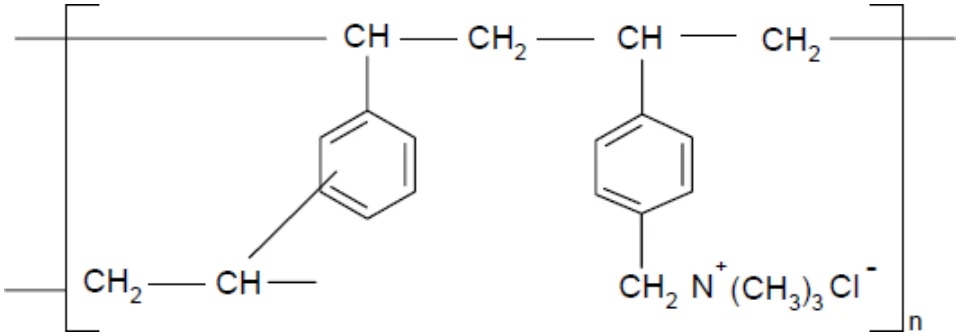
Physicochemical properties: The drug is the chloride form of a basic quaternary ammonium anion- exchange resin in which the basic groups are attached to a styrene- divinylbenzene copolymer. Cholestyramine resin occurs as a white to buff-coloured, fine, hygroscopic powder which may have a slight, amine-like odour and is insoluble in water and in alcohol.
14 CLINICAL TRIALS
The clinical trial data on which the original indication was authorized is not available.
14.2 COMPARATIVE BIOAVAILABILITY STUDIES
PIVOTAL EQUIVALENCE STUDIES
Cholestyramine resin is not absorbed from the gastrointestinal (GI) tract but passes through the GI tract and complexes with bile acids. The complexes are then excreted with unchanged resin in the feces. Consequently, conventional comparative bioavailability studies are not considered to be a valid test of product performance for the purpose of demonstrating bioequivalence.
Comparative in vitro equilibrium and kinetic binding studies with bile acids were conducted in order to demonstrate bioequivalence between JAMP-Cholestyramine Light Powder and OLESTYR® Light Powder, and between JAMP-Cholestyramine Regular Powder and OLESTYR® Regular Powder (Pharmascience INC. Montreal, Canada).
15 MICROBIOLOGY
No microbiological information is required for this drug product.
16 NON-CLINICAL TOXICOLOGY
General Toxicology
Oral chronic toxicity studies lasting for one year were conducted in rats and in dogs. Dosages of cholestyramine greatly in excess of those used in man exhibited no toxic manifestations and caused no observable histological changes in either species.
In these studies, the rats were fed 0.5, 1 or 2 g of cholestyramine per kg of body weight each day. The beagle dogs received 5, 10, or 20 g daily. No adverse effects on weight or other gross clinical signs of toxicity were observed in either species.
In the dogs, periodic measurements of total red cells, hematocrit, hemoglobin, sedimentation rate and differential leucocyte counts were made. Serum glucose, BUN, carbonate, chloride, sodium, potassium and pH measurements were not remarkable; nor were urinary tests for protein, sugar, pH, chloride, sodium and potassium. Similar measurements were made on the rats during the year as far as samples of blood and urine could be obtained. No abnormal values attributable to cholestyramine administration were observed.
Carcinogenicity / Genotoxicity
Studies were conducted in rats in which cholestyramine resin was used as a tool to investigate the role of various intestinal factors (e.g., fat, bile salts, GI flora). The incidence of intestinal tumors, induced by potent carcinogens, was observed to be greater in cholestyramine resin treated rats, than in control rats.
This observation was not evident in all studies conducted in rats, as results from one study indicated a statistically insignificant increase in tumor incidence whereas a more recent study did not demonstrate any presence of tumors following ingestion of cholestyramine. The relevance of this laboratory observation from studies in rats to the clinical use of cholestyramine resin is not known.
Reproductive and Developmental Toxicology
Three successive litters of rats were bred, whelped, and weaned from dams and sires fed 2 grams of cholestyramine per kg of body weight daily, beginning 60 days before the initial breeding and continuing through all periods of pregnancy, lactation, and intervening rest. There was no evidence of gross toxicity among the parent animals. Reproductive performance was normal, and pregnancy and lactation proceeded smoothly. Fetal development was normal. No gross teratogenic effects were observed to be associated with cholestyramine administration. Pup growth rates, and body weights at birth and weaning were normal.
Occasional oral, nasal and ocular porphyrin discharges were observed both in control and treated animals. One treated animal exhibited corneal opacity, and another, a growth on the right side, toward the end of the 37-week study. Neither was considered unusual nor cholestyramine-induced. Other anomalous changes common in rats included hydronephrosis and diaphragmatic hernia in a few animals, observed in proportionately equivalent numbers among the control and experimental groups. No gross pathology due to cholestyramine was observed in any parental animals, and no evaluation of possible skeletal anomalies was made in the offspring.
Extra care was required to assure the nutritional adequacy of the ration for the cholestyramine-fed animals, as evidenced by decreased pup mortality when the standard diet was supplemented with vitamins.
Under the conditions of these studies, when cholestyramine was fed at levels 10 times the usual human dose, the only adverse effects were nutritional, due to sequestration of one or more essential vitamins by the agent.
17 SUPPORTING PRODUCT MONOGRAPH
- 1. PrOLESTYR® Light Powder 4 g / 5 g dose, Regular Powder 4 g / 9 g dose, submission control 256040, Product Monograph, Pharmascience Inc. February 9, 2022