


Product Monograph - Jamp Mifepristone / Misoprostol
Recent Major Label Changes
None at time of the most recent authorization.
Table of Contents
Recent Major Label Changes ............................................................................................................... 2
Table of Contents ................................................................................................................................ 2
Part 1: Healthcare Professional Information ............................................................................... ....... 4
- 1
Indications .............................................................................................................................. 4
- 1.1 Pediatrics ............................................................................................................................... 4
- 1.2 Geriatrics ............................................................................................................................... 4
- 2 Contraindications ................................................................................................................... 4
- 3 Serious Warnings And Precautions Box………………………………………………………… ....................... ..5
- 4
Dosage and Administration……………………………………………………………………………………………………5
- 4.1 Dosing Considerations ........................................................................................................... 5
- 4.2 Recommended Dose and Dosage Adjustment ...................................................................... 6
4.4 Administration ....................................................................................................................... 6
4.5 Missed Dose .......................................................................................................................... 7
- 5 Overdose ................................................................................................................................ 7
- 6 Dosage Forms, Strengths, Composition, and Packaging ........................................................... 7
- 7
Warnings and Precautions ...................................................................................................... 8
- 7.1 Special Populations .......................................................................................................... 11
- 7.1.1 Pregnant Women ....................................................................................................... 11
- 7.1.2 Breast-feeding ............................................................................................................ 12
- 7.1.3 Pediatrics .................................................................................................................... 12
- 7.1.4 Geriatrics .................................................................................................................... 12
- 8
Adverse Reactions ................................................................................................................ 12
- 8.1 Adverse Reaction Overview ................................................................................................ 12
- 8.2 Clinical Trial Adverse Reactions ........................................................................................... 13
- 8.2.1 Clinical Trial Adverse Reactions – Pediatrics .............................................................. 14
8.5 Post-Market Adverse Reactions ........................................................................................ 14
- 9
Drug Interactions .................................................................................................................. 15
- 9.2 Drug Interactions Overview .............................................................................................. 15
- 9.3 Drug-Behavioural Interactions .......................................................................................... 15
- 9.4 Drug-Drug Interactions ..................................................................................................... 16
- 9.5 Drug-Food Interactions ..................................................................................................... 16
- 9.6 Drug-Herb Interactions ..................................................................................................... 17
- 9.7 Drug-Laboratory Test Interactions .................................................................................... 17
- 10
Clinical Pharmacology ........................................................................................................... 17
- 10.1 Mechanism of Action .................................................................................................. 17
- 10.2 Pharmacodynamics .................................................................................................... 17
- 10.3 Pharmacokinetics ....................................................................................................... 18
- 11 Storage, Stability, and Disposal ............................................................................................. 22
- 12 Special Handling Instructions ................................................................................................ 22
Part 2: Scientific Information ............................................................................................................ 23
- 13 Pharmaceutical Information ................................................................................................. 23
- 14
Clinical Trials ........................................................................................................................ 24
- 14.1 Clinical Trials by Indication ......................................................................................... 24
Study Results……………………………………………………………………………………………………………………………25
- 14.3 Comparative bioavailability studies ........................................................................... 28
- 15 Microbiology ........................................................................................................................ 29
- 16 Non-Clinical Toxicology ......................................................................................................... 29
- 17 Supporting Product Monographs .......................................................................................... 33
Patient Medication Information ........................................................................................................ 34
Part 1: Healthcare Professional Information
1 Indications
JAMP Mifepristone / Misoprostol (mifepristone tablet / misoprostol tablets) is indicated for:
- medical termination of a developing intra-uterine pregnancy with a gestational age up to 63 days as measured from the first day of the Last Menstrual Period (LMP) in a presumed 28-day cycle.
JAMP Mifepristone / Misoprostol is not intended for routine use as a contraceptive.
1.1 Pediatrics
Pediatrics (<15 years of age): There are insufficient data in patients less than 15 years old to establish efficacy and safety. JAMP Mifepristone / Misoprostol is not indicated in the prepubertal population.
Pediatrics (>15 and <18 years of age): Compared to adults, patients less than 18 years of age reported vomiting and pain more frequently (see Warnings and Precautions, Special populations, Pediatrics ).
1.2 Geriatrics
Geriatrics (>65 years of age): JAMP Mifepristone / Misoprostol is not indicated in post-menopausal women.
2 Contraindications
JAMP Mifepristone / Misoprostol should not be prescribed to patients who:
- have a confirmed or suspected ectopic pregnancy;
- have an Intrauterine Device (IUD) in place;
- have unconfirmed gestational age;
- have chronic adrenal failure;
- are on concurrent long term systemic corticosteroid therapy;
- have haemorrhagic disorders or using concurrent anticoagulation therapy;
- have inherited porphyria;
- have uncontrolled asthma;
- have known hypersensitivity to mifepristone, misoprostol, other prostaglandins, or any of the excipients used in JAMP Mifepristone / Misoprostol. For a complete listing, see Dosage Forms, Strengths, Composition, and Packaging.
3 Serious Warnings And Precautions Box
- It is important that all patients be followed by a health professional 7 to 14 days after taking mifepristone to confirm safety and complete pregnancy termination (see Warnings and Precautions, Genitourinary and Monitoring and Laboratory Tests).
- Risk of infection and sepsis: Cases of serious bacterial infection, including very rare cases of fatal septic shock, have been reported following the use of mifepristone tablet / misoprostol tablets. Some patients presented without fever, with or without abdominal pain, but with leukocytosis with a marked left shift, tachycardia, hemoconcentration, and general malaise. A high index of suspicion is needed to rule out sepsis (from e.g. Clostridium sordellii) if a patient reports abdominal pain or discomfort or general malaise (including weakness, nausea, vomiting or diarrhea) more than 24 hours after taking misoprostol (see warnings And Precautions, Genitourinary).
- Risk of skin reactions: Serious skin reactions including toxic epidermal necrolysis and acute generalized exanthematous pustulosis have been reported in association with mifepristone tablet / misoprostol tablets treatment (see Warnings and Precautions, Skin).
- Risk of bleeding: Prolonged heavy bleeding may be a sign of incomplete abortion or other complications and prompt medical or surgical intervention may be needed. These patients must seek immediate medical attention (see Warnings and Precautions, Genitourinary).
- Embryotoxicity: Patients should be counselled that once the treatment is started, there are risks of embryotoxicity if the pregnancy is not terminated. Both mifepristone and misoprostol are embryotoxic and have been associated with fetal abnormalities (see Non-Clinical Toxicology, Reproductive And Developmental Toxicology).
- Return to fertility: Patients should be advised of their immediate return to fertility after JAMP Mifepristone / Misoprostol administration. To avoid the potential exposure of a subsequent pregnancy to mifepristone and misoprostol, it is recommended that conception be avoided during the next menstrual cycle. Reliable contraceptive methods should therefore commence as early as possible (see Warnings and Precautions, Special Populations, Pregnant Woman).
4 Dosage and Administration
4.1 Dosing Considerations
Prior to prescribing JAMP Mifepristone / Misoprostol, health professionals must:
- Ensure that patients have access to emergency medical care in the 14 days following administration of mifepristone;
- Schedule follow-up 7 to 14 days after patients take mifepristone to confirm complete pregnancy termination;
- Exclude ectopic pregnancy and confirm gestational age by an appropriate method;
- Counsel each patient on the risks and benefits of JAMP Mifepristone / Misoprostol, including bleeding, infection and incomplete abortion;
- Obtain the patient’s informed consent to take the drugs.
JAMP Mifepristone / Misoprostol should be prescribed by health professionals with adequate knowledge of medical abortion and / or who have completed a JAMP Mifepristone / Misoprostol education program.
Before starting JAMP Mifepristone / Misoprostol, patients must be informed of the following:
- Mifepristone and misoprostol must be taken in sequence according to instructions;
- Follow-up within 7 to 14 days after intake of mifepristone to confirm pregnancy termination and complete abortion is required;
- Return to fertility is expected immediately after JAMP Mifepristone / Misoprostol administration and reliable contraceptive methods should be started as early as possible;
- Failure of JAMP Mifepristone / Misoprostol may require surgical termination of pregnancy (see Clinical Trials);
- Signs and symptoms they may experience;
- How to access emergency medical care by telephone or local access.
Each patient should be provided with a printed copy of the JAMP Mifepristone / Misoprostol Patient Medication Information and a Patient Information Card. The Patient Information Card should be completed by the health professional. These documents as well as a consent form can be obtained and / or ordered from www.jampinfo.com or by phone at 1-866-399-9091. The JAMP Mifepristone / Misoprostol Patient Medication Information and the Patient Information Card are also included in the box.
Hepatic impairment
Mifepristone and its metabolites showed a decrease in both overall peak and exposure in patients with moderate hepatic impairment compared to healthy-matched participants. However, no dose adjustments are recommended in this population (see 10.3 Pharmacokinetics, Special Populations and Conditions, Hepatic Insufficiency).
4.2 Recommended Dose and Dosage Adjustment
- 200 mg of mifepristone (1 tablet)
- 800 mcg of misoprostol (4 tablets, each tablet containing 200 mcg)
There are no data available on the effect of food intake on the absorption of mifepristone or misoprostol.
4.4 Administration
Step 1 Mifepristone:
- 200 mg of mifepristone (1 tablet) should be taken orally, followed 24 to 48 hours (1 to 2 days) later by the administration of misoprostol.
- Mifepristone should be administered as directed by the prescribing health professional.
Step 2 Misoprostol:
- 800 mcg of misoprostol (4 tablets, each tablet containing 200 mcg) should be taken in a single intake by buccal route (kept between the cheek and the gum for 30 minutes before any remaining fragments are swallowed with water).
4.5 Missed Dose
Step 1 Mifepristone tablet
Patients should be advised to contact their health professional immediately if they delay or do not take the Mifepristone tablet at the time and date directed by the health professional. This information can be found on the completed Patient Information Card.
Step 2 Misoprostol tablets
Patients should be advised to contact their health professional immediately if they forget to take the Misoprostol tablets and it is more than 48 hours after they have taken the Mifepristone tablet.
If it is less than 48 hours since the patient took Step 1 but after the time and date on the Patient Information Card, clinical trial data indicates that health professionals can instruct patients to take the Misoprostol tablets (Step 2) right away.
5 Overdose
Mifepristone
No cases of overdose have been reported.
In the event of massive ingestion of mifepristone signs of adrenal failure may occur. Signs of acute intoxication may require specialist treatment including the administration of dexamethasone.
Misoprostol
Cumulative total daily doses of 1600 mcg have been tolerated, with only symptoms of gastrointestinal discomfort reported.
Possible symptoms of an overdose are sedation, tremor, convulsions, dyspnoea, abdominal pain, diarrhea, fever, palpitations, hypotension or bradycardia. Hypertension and tachycardia have also been reported.
There is no specific antidote. Treatment should be symptomatic and supportive. Consider administration of activated charcoal in the event of a potentially toxic ingestion. Activated charcoal may reduce absorption of misoprostol if given within one or two hours after ingestion. In patients who are not fully conscious or have impaired gag reflex, consideration should be given to administering activated charcoal via a nasogastric tube, once the airway is protected.
For the most recent information in the management of a suspected drug overdose, contact your regional poison control centre or Health Canada's toll-free number, 1-844 POISON-X (1-844-764-7669).
6 Dosage Forms, Strengths, Composition, and Packaging
Table 1– Dosage Forms, Strengths, and Composition
| Route of Administration | Dosage Form / Strength / Composition | Non-medicinal Ingredients |
|---|---|---|
| Route of Administration | Dosage Form / Strength / Composition | Non-medicinal Ingredients |
| Oral | Tablet, 200 mg Mifepristone | Colloidal silica gel, magnesium stearate, microcrystalline cellulose, povidone K-30, waxy maize starch. |
| Buccal | Tablet, 200 mcg Misoprostol | Hydrogenated castor oil, hypromellose (HPMC), microcrystalline cellulose, sodium starch glycolate. |
Description
JAMP Mifepristone / Misoprostol (mifepristone tablet / misoprostol tablets) is a composite pack containing one mifepristone 200 mg tablet and four misoprostol 200 mcg tablets. The two products are provided in two different boxes which are packed together.
Mifepristone 200 mg tablets
Mifepristone tablets are white to off white coloured, round shaped, biconvex, uncoated tablets, engraved with “MF 200” on one side and “JP” on the other side.
Mifepristone is packaged as 1 tablet in a blister pack, presented in a green box.
Misoprostol 200 mcg tablets
Misoprostol tablets are white to off white coloured, round shaped, flat with beveled edges, uncoated tablets, engraved with “MIS over 200” on one side and “JP” on the other side.
Misoprostol tablets are packaged as 4 tablets in a blister pack, presented in an orange box.
7 Warnings and Precautions
General
Please see Serious Warnings and Precautions Box.
A patient’s ability to comply with the requirements of the regimen, especially the need for a follow-up visit, should be considered prior to administering JAMP Mifepristone / Misoprostol.
Patients should be advised to take their Patient Information Card with them if they visit an emergency room or another health professional who did not prescribe JAMP Mifepristone / Misoprostol, so that the health professional will be aware that the patient is undergoing a medical abortion.
Rhesus alloimmunisation
The use of JAMP Mifepristone / Misoprostol requires measures to prevent rhesus alloimmunisation.
Carcinogenesis and Genotoxicity
See Section Non-Clinical Toxicology for the carcinogenesis and mutagenesis on animals.
Cardiovascular
Rare serious cardiovascular accidents (cardiac arrest, myocardial infarction and/or spasm of the coronary arteries and severe hypotension) have been reported following administration of prostaglandins including misoprostol. Mifepristone tablet / Misoprostol tablets has not been studied, and is therefore not recommended, in women with cardiovascular disease.
Women with risk factors for cardiovascular disease (hypertension, diabetes or who are over the age of 35 and are heavy smokers) should be treated with caution.
Driving and Operating Machinery
Caution is warranted when driving or operating a vehicle or potentially dangerous machinery. Dizziness, fatigue, headache, and fainting can occur. The side effects diminish after Day 3 and are gone by Day 14. The patient must rest 3 hours after taking the misoprostol tablets.
Endocrine and Metabolism
Patients with suspected acute adrenal failure were excluded from trials and therefore should be treated with caution. If treatment with JAMP Mifepristone / Misoprostol is required, therapy should be adjusted. The safety and efficacy have not been studied in women suffering from malnutrition. Treatment with JAMP Mifepristone / Misoprostol is therefore not recommended.
Genitourinary
Gestational age should be confirmed by an appropriate method. Ultrasound imaging is recommended before prescribing JAMP Mifepristone / Misoprostol when an ectopic pregnancy is suspected or gestational age is uncertain. Health professionals should remain alert to the possibility that a patient who is undergoing a medical abortion could have an undiagnosed ectopic pregnancy, since some of the symptoms of a medical abortion may be similar to those of a ruptured ectopic pregnancy. The presence of an ectopic pregnancy may have been missed even if the patient underwent ultrasonography prior to being prescribed JAMP Mifepristone / Misoprostol.
Treatment failures
Failures in clinical studies occurred in 2.7 to 5.1% of cases prior to 63 days of gestation (see Clinical Trials). The rate of failure increases with advancing gestational age. Reasons for failure requiring a surgical termination of pregnancy included persistent non-viable pregnancies, continuing pregnancies and persistent heavy vaginal bleeding. Follow-up is mandatory to ensure that the expulsion is completed.
In the event of an ongoing pregnancy, pregnancy termination should be completed by another method (see Warnings And Precautions, Special Populations, Pregnant Woman). Animal studies have shown that, if a pregnancy continues after exposure to mifepristone or misoprostol, fetal abnormalities may occur (see Non-Clinical Toxicology, Reproductive and Developmental Toxicology).
Bleeding
Bleeding occurs in almost all cases and is not proof of complete expulsion (see Clinical Trials). Prolonged heavy vaginal bleeding may occur and can be a sign of incomplete expulsion. Bleeding can lead to a significant decrease in hemoglobin levels and may necessitate a blood transfusion.
Persistent bleeding should be monitored closely.
The patient should have access to emergency medical care until complete termination of pregnancy is confirmed at a follow-up visit.
Infections
Cases of serious bacterial infection, including very rare cases of fatal septic shock, have been reported following the use of mifepristone and misoprostol. A sustained fever of 38oC or higher, severe abdominal pain or pelvic tenderness in the days after a medical abortion may be an indication of infection.
Sepsis (from e.g., Clostridium sordellii or other species e.g., Streptococcus) should be highly suspected if a patient reports abdominal pain or discomfort or general malaise (including weakness, nausea, vomiting or diarrhea) more than 24 hours after taking misoprostol. However, the symptoms of Clostridium sordellii infection are sometimes not the usual symptoms of sepsis. Very rarely, deaths have been reported. Therefore, the possibility of sepsis should be considered in all women who present with nausea, vomiting, diarrhea and weakness with or without abdominal pain or fever. Strong consideration should be given to obtaining a complete blood count in these patients. Significant leukocytosis with a marked left shift and hemoconcentration may be indicative of sepsis. Health professionals should consider immediately initiating treatment with antibiotics that include coverage of anaerobic bacteria such as Clostridium sordellii.
Hematologic
Heavy bleeding requiring curettage occurred in some patients in clinical trials. Patients with anemia should be treated with caution. Patients with severe anemia were excluded from clinical trials and administration of JAMP Mifepristone / Misoprostol in these patients is not recommended.
Hepatic/Biliary/Pancreatic
The safety and efficacy have not been studied in women suffering from hepatic failure. Treatment with JAMP Mifepristone / Misoprostol is therefore not recommended.
Immune
Cases of skin rash following misoprostol administration were reported by patients in clinical trials. Angioedema of the face, lips, tongue, and / or larynx, including cases of anaphylaxis have been reported in post-market surveillance with the use of mifepristone tablet / misoprostol tablets, including angioedema occurring within an hour of misoprostol intake. Angioedema associated with upper airway swelling may be life threatening. If the tongue, hypopharynx, or larynx has been involved, appropriate therapy and / or measures necessary to ensure a patent airway should be promptly provided.
Monitoring and Laboratory Tests
Follow-up must take place within a period of 7 to 14 days after administration of JAMP Mifepristone / Misoprostol to verify that expulsion has been completed (i.e., clinical examination, ultrasound scan or beta-hCG measurement). Persistent bleeding should be monitored closely for a decrease in hemoglobin concentration, hematocrit and red blood cell count.
Neurologic
Seizures have been reported with prostaglandins and prostaglandin analogues, and therefore this possibility should be considered when treating patients with a history of a seizure disorder.
Renal
The safety and efficacy have not been studied in women suffering from renal failure. Treatment with JAMP Mifepristone / Misoprostol is therefore not recommended.
Reproductive Health
- Fertility
During clinical trials, pregnancies occurred between embryo expulsion and the resumption of menses. To avoid the potential exposure of a subsequent pregnancy to mifepristone and misoprostol, conception should be avoided during the next menstrual cycle. Reliable contraceptive precautions should commence as early as possible after JAMP Mifepristone / Misoprostol administration (see Warnings And Precautions, Special Populations, Pregnant Women).
- Teratogenic Risk
Reproductive studies conducted in rabbits and monkeys have shown that if a pregnancy continues after exposure to mifepristone, abnormalities in fetal skull, brain and developmental markers may occur.
Use of misoprostol has been associated with birth defects. When used alone to induce an abortion, the following effects of misoprostol have been reported: malformations of limbs, abnormalities of fetal movements and of cranial nerves (hypomimia, abnormalities in suckling, deglutition, and eye movements).
Misoprostol was shown to be embryotoxic in rabbits, rats and mice, when exposure occurred during embryogenesis. There was also an increase in skeletal abnormalities in rabbits and cleft palate in mice.
Respiratory
Due to the antiglucocorticoid activity of mifepristone, the efficacy of corticosteroid therapy, including inhaled corticosteroids, may be decreased temporarily following intake of mifepristone. Therapy should be adjusted.
Bronchospasm may occur with some prostaglandins and prostaglandin analogues. Caution should be exercised in patients with a history of asthma (see Contraindications).
Skin
Severe cutaneous adverse reactions, including toxic epidermal necrolysis and acute generalised exanthematous pustulosis, have been reported in association with mifepristone (see Adverse Reactions). In patients who experience severe cutaneous adverse reactions, re- treatment with mifepristone is not recommended.
7.1 Special Populations
7.1.1 Pregnant Women
Mifepristone
A review of births from 105 pregnancies exposed during first trimester of pregnancy to mifepristone alone (46 cases) or to both mifepristone and misoprostol (59 cases) has been published. There were 94 live births (90.4%) and 10 (9.6%) miscarriages (including one with major malformation). Elective termination of pregnancy was performed after the subsequent diagnosis of trisomy 21 in one case. The overall rate of major congenital malformations was 4.2% (95% CI: 1.2 – 10.4%), with two cases among 38 patients exposed to mifepristone alone and two cases among 57 patients exposed to both mifepristone and misoprostol.
Misoprostol
Use of misoprostol has been associated with birth defects. When used alone to induce an abortion, the following effects of misoprostol have been reported: malformations of limbs, abnormalities of fetal movements and of cranial nerves (hypomimia, abnormalities in suckling, deglutition, and eye movements).
JAMP Mifepristone / Misoprostol
Due to the risk of failure of the medical method of pregnancy termination and to the unknown risk to the fetus, follow-up is mandatory (see Serious Warnings And Precautions Box).
Should a failure of JAMP Mifepristone / Misoprostol be diagnosed at follow-up (viable ongoing pregnancy), it is recommended that pregnancy termination should be completed by another method.
Should the patient wish to continue with the pregnancy, she should be appropriately counselled as to the risk of birth defects and appropriate ultra-sonographic monitoring of the pregnancy should be carried out.
7.1.2 Breastfeeding
JAMP Mifepristone / Misoprostol use should be avoided during breast-feeding.
Mifepristone is lipophilic and may be excreted in the mother's milk. Misoprostol is rapidly metabolised in the mother to misoprostol acid, which is biologically active and is excreted in breast milk. This could cause undesirable effects such as diarrhea in breastfeeding infants.
7.1.3 Pediatrics
Pediatrics (<15 years of age): There are insufficient data in patients less than 15 years old to establish efficacy and safety. JAMP Mifepristone / Misoprostol is not indicated in the prepubertal population.
Pediatrics (>15 and <18 years of age): Patients 15 to 17 years of age had similar efficacy to that seen in the adult population. More pain than expected was reported more frequently in this population, as well as vomiting, compared with adults (see Clinical Trials). Careful counselling should be provided to adjust patients’ expectations from the procedure and identification of safety issues requiring immediate medical attention.
7.1.4 Geriatrics
JAMP Mifepristone / Misoprostol is not indicated in post-menopausal women.
8 Adverse Reactions
8.1 Adverse Reaction Overview
The most frequent undesirable effects which were observed during treatment with mifepristone tablet / misoprostol tablets were:
- Reproductive system disorders: vaginal bleeding, sometimes heavy and prolonged uterine cramping (see warnings And Precautions, Genitourinary).
- Gastrointestinal disorders: nausea, vomiting, diarrhea and abdominal pain.
- General disorders: headache, dizziness, chills and fever.
Bleeding was occasionally observed after mifepristone alone. Misoprostol administration resulted in vaginal bleeding, abdominal pain and cramping. In some patients, persistent or heavy vaginal bleeding required treatment with intravenous fluids or blood transfusion. On average, bleeding lasted for 11.4 days and was heavier than a normal period for 2.2 days.
Infectious complications, including sometimes fatal sepsis, have been observed. Patients typically presented with abdominal pain or discomfort, fever or general malaise (including weakness, nausea, vomiting or diarrhea) more than 24 hours after taking misoprostol. Clostridium sordellii infection was observed in some women without abdominal pain or fever, that progressed rapidly to multi-organ failure and death.
The adverse events reported with mifepristone tablet / misoprostol tablets, classified according to frequency and system organ class, are summarized as shown in Table 2.
Table 2: Adverse Events for the Use of Mifepristone and Misoprostol
| MedDRA | Adverse events (frequency) | |||
|---|---|---|---|---|
| System Organ Class | Very common (≥ 1 / 10) | Common (> 1 / 100 to < 1 / 10) | Uncommon (≥ 1 / 1000 to < 1 / 100) | Rare ( ≥1/10,000 and <1/1,000) |
| Gastro-intestinal disorders | Nausea; Vomiting; Diarrhea; Gastric discomfort; Abdominal pain | Cramping, light or moderate | ||
| Cardiac disorders | Arrhythmia | Cardiac arrest; Myocardial infarction | ||
| Nervous system disorders | Headache | |||
| Reproductive system & breast disorders | Vaginal bleeding; Spotting; Uterine contractions or cramping | Prolonged post- abortion bleeding; Severe hemorrhage; Endometritis; Breast tenderness; Heavy bleeding; Heavy bleeding requiring surgical termination of pregnancy | Hemorrhagic shock; Salpingitis; Heavy bleeding requiring IV fluids or blood transfusion | |
| General disorders and administration site conditions | Fatigue; Chills / fever; Dizziness | Syncope | ||
| Infections and infestations | Infection | |||
| Vascular disorders | Hot flush; Hypotension | Spasm of coronary arteries and severe hypotension | ||
| Respiratory, thoracic and mediastinal disorders | Bronchospasm | |||
8.2 Clinical Trial Adverse Reactions
Clinical trials are conducted under very specific conditions. The adverse reaction rates observed in the clinical trials; therefore, may not reflect the rates observed in practice and should not be compared to the rates in the clinical trials of another drug. Adverse reaction information from clinical trials may be useful in identifying and approximating rates of adverse drug reactions in real-world use.
Mifepristone tablet / misoprostol tablets were studied in three open-label multi-center prospective studies. In these studies, a total of 1,596 women were included in the safety analysis. The mean age of women who received mifepristone and misoprostol was 26.0, 26.7 and 25.4 years for Studies 1, 2 and 3, respectively. Treatment-emergent adverse events reported in clinical trials are reported in Table 3. Nausea and vomiting tended to increase slightly with advancing gestational age.
Table 3: Treatment-Emergent Adverse Events Occurring in Clinical Trials, %
| Adverse Events | Study 1 | Study 2 | Study 3 |
|---|---|---|---|
| N = 212 | N = 415 | N = 969 | |
| Nausea | 70.8 | 66.0 | 34.2 |
| Vomiting | 37.7 | 40.2 | 26.4 |
| Diarrhea | 36.8 | 33.7 | 59.5 |
| Pain | 93.4 | - | - |
| Fever | 42.9 | 18.6 | 45.3 |
| Chills | - | 36.9 | |
| Headache | 44.3 | 34.0 | 13.9 |
| Dizziness | 41.5 | 32.8 | 13.1 |
| Weakness | 55.7 | 45.1 | 21.3 |
- 8.2.1 Clinical Trial Adverse Reactions – Pediatrics Study results in women less than 18 years of age
Of the 1,000 women enrolled in Study 3, 67 were less than 18 years of age. The reported frequent adverse events are detailed below. Women less than 18 years old reported vomiting more frequently than women 18 years and older.
Table 4: Adverse events by women age, % (N=969)
| Adverse Events | < 18 years | ≥ 18 years | ||||
|---|---|---|---|---|---|---|
| N = 67 | N = 902 | |||||
| Nausea | 29.9 | 34.5 | ||||
| Vomiting | 43.3 | 25.2 | ||||
| Diarrhea | 62.7 | 59.3 | ||||
| Fever / chills | 41.8 | 45.6 | ||||
| Headache | 11.9 | 14.1 | ||||
| Dizziness | 16.4 | 12.9 | ||||
| Weakness | 17.9 | 21.6 | ||||
8.5 Post-Market Adverse Reactions
The following adverse reaction have been identified during the post-marketing experience in association with mifepristone tablet / misoprostol tablets use.
Skin and subcutaneous tissue disorders: Skin rash / pruritus and acute generalized exanthematous pustulosis.
9 Drug Interactions
9.2 Drug Interactions Overview
No interaction studies have been performed with mifepristone and misoprostol.
Mifepristone
In vitro studies and in vivo data showed mifepristone to be metabolized by CYP3A4 and that co- administration of other CYP3A4 substrates inhibited metabolite formation. CYP3A4 inhibitors, such as ketoconazole, itraconazole and erythromycin may inhibit mifepristone metabolism, whereas CYP3A4 inducers, such as rifampicin, dexamethasone, and certain anticonvulsants (phenytoin, phenobarbital, carbamazepine), may increase its metabolism.
In vitro studies also showed mifepristone to be a competitive inhibitor of CYP3A4 and, to a lesser extent, of CYPs 1A, 2B, 2D6, and 2E1.
Due to the irreversible nature of the CYP binding and the slow elimination of mifepristone from the body, such interaction may be observed for a prolonged period after its administration. Therefore, caution should be exercised when mifepristone is administered with drugs that are CYP3A4 substrates and have narrow therapeutic range, including some agents used during general anaesthesia.
In an open-label, cross-over, phase 1 DDI Study done in healthy female subjects, the co-administration of mifepristone with rifampicin (strong CYP3A4 inducer) was shown to decrease mifepristone AUC by 6.3-fold, and thus a reduced efficacy may be expected. Therefore, in patients treated with strong or moderate CYP3A4 inducers, a different termination of pregnancy procedure might be warranted. In case of concomitant administration with CYP3A4 inducers, a follow-up appointment with the patient is needed to ensure the pregnancy has completely ended. In the event of method failure, a different termination of pregnancy procedure is to be suggested to the patient.
Due to the antiglucocorticoid activity of mifepristone, the efficacy of corticosteroid therapy, including inhaled corticosteroids, may be temporarily decreased following intake of mifepristone. Therapy should be adjusted.
Misoprostol
Limited studies investigating the metabolism of misoprostol were conducted in the rat. Misoprostol was not found to affect hepatic drug metabolism.
No drug interactions have been attributed to misoprostol in extensive clinical trials.
9.3 Drug-Behaviour Interactions
Mifepristone and misoprostol may cause dizziness, which could have an effect on the ability to drive and use machines.
9.4 Drug-Drug Interactions
Table 5: Established or Potential Drug-Drug Interactions
Mifepristone
Non-proprietary name(s) of the drug product(s) | Source of Evidence | Effect | Clinical comment |
|---|---|---|---|
| CYP3A4 inhibitors (such as ketoconazole, itraconazole and erythromycin) | CT | ↑ mifepristone plasma concentration | Mifepristone is metabolized by CYP3A4. Co-administration of mifepristone with itraconazole (strong CYP3A4 inhibitor) was shown to increase mifepristone AUC by 2.6- fold. No dose adjustment is recommended when mifepristone is given concomitantly with a CYP3A4 inhibitor, but caution is warranted. |
CYP3A4 inducers (such as rifampicin, dexamethasone and certain anticonvulsants (phenytoin, phenobarbital, carbamazepine) | CT | ↓ mifepristone plasma concentration | Mifepristone is metabolized by CYP3A4. Co-administration of mifepristone with rifampicin (strong CYP3A4 inducer) was shown to decrease mifepristone AUC by 6.3- fold. Therefore, a reduced efficacy may be expected when mifepristone is co-administered with a strong or moderate CYP3A4 inducer. |
Corticosteroid therapy, including inhaled corticosteroids | T | ↓ corticosteroid | Mifepristone has antiglucocorticoid activity. The efficacy of corticosteroid therapy may be temporarily decreased following intake of mifepristone. Therapy should be adjusted. |
| CYP3A4 substrates that have narrow therapeutic range (including some agents used during general anaesthesia) | T | Due to the irreversible nature of the CYP binding and the slow elimination of mifepristone from the body, such interaction may be observed for a prolonged period after its administration. Caution should be exercised when mifepristone is administered with drugs that are CYP3A4 substrates and have narrow therapeutic range. |
Legend: C = Case Study; CT = Clinical Trial; T = Theoretical
9.5 Drug-Food Interactions
Grapefruit juice may inhibit mifepristone’s metabolism, increasing its serum levels.
9.6 Drug-Herb Interactions
The concomitant use of St. John’s Wort may increase mifepristone metabolism, lowering its serum levels.
9.7 Drug-Laboratory Test Interactions
There are no known effects of mifepristone or misoprostol on laboratory tests.
10 Clinical Pharmacology
10.1 Mechanism of Action
When mifepristone blocks progesterone receptors, the endometrium can no longer sustain the growing embryo. Without the effect of progesterone, the lining of the uterus breaks down, and bleeding begins. Mifepristone also triggers an increase in prostaglandin levels and dilates the cervix, facilitating abortion. Misoprostol then induces contractions of the smooth muscle fibers in the myometrium, relaxation of the uterine cervix and evacuation of intrauterine content.
10.2 Pharmacodynamics
Mifepristone
Mifepristone is an orally active antiprogestogen which acts by competing with progesterone for receptor binding. It also possesses antiglucocorticoid and antiandrogenic activity. It is devoid of estrogenic, antiestrogenic, mineralocorticoid and antimineralocorticoid properties. Its ability to block the action of progesterone on the pregnant uterus provides a medical approach to termination of early pregnancy. In normally menstruating women, the effect of mifepristone depends on the timing of administration. When administered in the first half of the luteal phase, menstrual induction occurs independently of luteolysis; mifepristone administration during the mid-luteal phase produced bleeding within a few days in most women but there was a second bleed at the time of expected menses in about two-thirds. The first episode of bleeding occurred in the presence of elevated progesterone and estrogen concentrations. Administration during the late luteal phase resulted in bleeding within 1 to 3 days, shortening the luteal phase of the treatment cycle and lengthening of the subsequent follicular phase. Administration on the first 3 days of the menstrual cycle had no effect on cycle length but when given in the late follicular phase, mifepristone prolonged the follicular phase by preventing the development of a normal LH surge and delaying the new surge for about 15 days.
In the first trimester of pregnancy, mifepristone induced uterine activity in virtually all women 36 and 48 hours after administration, and increased the sensitivity of myometrium to exogenous prostaglandins (PG). The accompanying increase in decidual PGF2α production was attenuated by indomethacin, but the increase in uterine activity was not: thus, mechanisms other than an increase in decidual PG production contribute to the abortifacient effect of mifepristone. Mifepristone administration also resulted in cervical ripening in pregnant women.
Single doses of mifepristone of 4.5 and 6 mg / kg increase plasma levels of cortisol, ACTH and lipotrophin, and in patients with unresectable meningioma treated with 200 mg mifepristone daily for prolonged periods, increases in plasma cortisol, ACTH and urinary cortisol are maximal at 3 weeks and remain unchanged thereafter. Dosages of mifepristone required to exert antiglucocorticoid effects, which are achieved by disruption of the negative pituitary feedback, are higher than those needed for antiprogestogen activity. In subjects with normal adrenal function, the increase in ACTH produced by mifepristone compensates for its antiglucocorticoid activity and there have been no reports of acute adrenal insufficiency at dosages used to terminate early pregnancy.
Mifepristone inhibited estrous cycling in rats at oral doses of 0.3-1 mg/kg/day (less than the clinical dose adjusted for body surface area) in a 3-week study. This was reversed over the following 2-3 weeks and no subsequent effects on reproductive performance were found.
Mifepristone binds to human progesterone receptors with nanomolar affinity. In animals, oral administration was shown to inhibit the action of endogenous or exogenous progesterone in multiple species.
In women administered 1 mg / kg or greater, mifepristone antagonises the endometrial and myometrial effects of progesterone. During pregnancy it sensitises the myometrium to the contraction-inducing action of prostaglandins. During the first trimester, administration of mifepristone allows cervical dilatation.
In vitro studies showed mifepristone to also bind to the glucocorticoid and androgen receptors with high affinity, comparable to that for the progesterone receptor. In toxicological studies in rats and monkeys up to a duration of 6 months, mifepristone produced effects related to its antihormonal (antiprogesterone, antiglucocorticoid and antiandrogenic) activity.
In man the antiglucocorticoid action is manifested at a dose equal to or greater than 4.5 mg / kg by a compensatory elevation of ACTH and cortisol.
Misoprostol
Misoprostol is a synthetic analogue of prostaglandin E1. At the recommended dosages, misoprostol induces contractions of the smooth muscle fibers in the myometrium and relaxation of the uterine cervix. The uterotonic properties of misoprostol should facilitate cervical opening and evacuation of intrauterine content. In the event of an early termination of pregnancy, the combination of misoprostol used in a sequential regimen after mifepristone leads to an increase in the success rate and accelerates the expulsion of the conceptus. Among other effects, misoprostol inhibits the acid gastric secretion and increases the digestive peristalsis.
Uterine contractility following administration of misoprostol via the buccal route was investigated with an intrauterine pressure transducer in women seeking termination of pregnancy. Results indicated that the average time to onset of increased tone and first uterine contraction were 41.2 and 67.1 minutes, respectively. Sustained uterine activity was observed on average after 90.0 minutes and peak uterine activity after 264.0 minutes.
In fertility studies in rats in which treated females were mated with treated males, increased pre- implantation losses were observed with misoprostol at oral doses greater than 1 mg/kg/day (11 times the recommended human dose, on a mg / m2 basis). Post-implantation loss was also increased at 10 mg/kg/day (114 times the recommended human dose, on a mg / m2 basis).
10.3 Pharmacokinetics
Mifepristone
The pharmacokinetic properties of mifepristone have been studied mostly following oral administration in healthy women, although studies were also conducted in pregnant women and a few male volunteers. Plasma concentrations of mifepristone and its metabolites were measured by radioimmuno- and radioreceptor assays, or High Performance Liquid Chromatography (HPLC), and pharmacokinetic parameters calculated employing one- and two-compartment models as well as non- compartmental analysis.
The pharmacokinetics of mifepristone and its metabolites are not linear.
Absorption
After oral administration of a single dose of 200 mg, mifepristone is rapidly absorbed. The peak concentration of 2.3 to 2.7 mg / L is reached after 0.75 hours (mean of 49 subjects). The half-life of mifepristone is 36.5 to 38.3 hours.
Following oral administration of single doses of mifepristone 100, 400, 600 and 800 mg to healthy female volunteers maximum plasma concentrations were about 2.5 mg / L (2,500 ng / mL) and differed between the 100 and 800 mg doses only 2 hours after ingestion. After a single 600 mg dose maximum plasma concentration was about 2 mg / L (2,000 ng / mL) at 1.35 hours. High doses of 10 and 25 mg / kg in healthy female and male volunteers produced maximum plasma concentrations of progesterone receptor-reactive material of 5.17 to 7.5 mg / L. Maximum plasma concentrations were attained 0.7 to 1.5 hours after oral administration. The parent drug and its metabolites were still detectable 6 to 7 days after a single dose using HPLC and for 10 days using radioimmunoassay.
Administration of 12.5, 25, 50 or 100 mg twice daily for 4 days to healthy female volunteers resulted in similar plasma concentrations of 1.4 to1.7 mg / L (1,400 to 1,700 ng / mL) at dosages > 50 mg twice daily, and it was suggested that the lack of increase in plasma drug concentration when dosage increased above 50 mg twice daily is partly explained by saturation of α-I-acid glycoprotein (AAG), the serum binding protein for mifepristone in man, which has a binding capacity lower than the therapeutic dose.
Plasma concentration and clinical efficacy: a study conducted in 17 women less than 56 days pregnant who were administered mifepristone 600 mg for termination of pregnancy, found no correlation between clinical efficacy (13 responders) and plasma concentration of mifepristone or circulating metabolites, protein binding, or plasma AAG.
The absolute bioavailability of a low oral dose of 20 mg is 69 %.
Distribution
Mifepristone is 99% bound to plasma proteins, albumin and α1-acid glycoprotein in man. Binding to the latter protein is saturable, and the drug displays nonlinear kinetics with respect to plasma concentration and clearance. Animal studies found mifepristone to be widely distributed, initially having high extravascular concentration, but shifting to greater erythrocyte concentration over 24 hrs. Studies in pregnant animals have shown mifepristone to cross the placental barrier.
Apparent initial volume of distribution after intravenous administration of mifepristone 280 mg was low (8 L) but at steady state was 25.7 L. The volume of distribution and clearance of mifepristone were inversely proportional to the plasma concentration of AAG, being greater in subjects with low AAG levels, and are dose and time-dependent. At plasma concentrations of up to 0.8 mg / L mifepristone is about 98 % bound to plasma proteins in the blood. Its binding to erythrocytes is negligible. A value of 94 % was reported at a plasma mifepristone concentration of 5 mg / L. It is considered that AAG is the principal binding protein for mifepristone. When binding to AAG is saturated, mifepristone and its metabolites bind to albumin.
Metabolism
Metabolism of mifepristone is primarily via pathways involving N-demethylation and terminal hydroxylation of the 17-propynyl chain. In vitro studies have shown that CYP450 3A4 is primarily responsible for the metabolism. The three major metabolites identified in humans are: (1) N- monodemethylated metabolite, the most widely found in plasma; (2) N-didemethylated mifepristone, which results from the loss of two methyl groups from the 4-dimethylaminophenyl in position 11 ß; and (3) terminal hydroxylation of the 17-propynyl chain.
Metabolites are detectable in plasma 1 hour after ingestion of mifepristone. Their concentrations increase dose-dependently with those of the monodemethylated metabolite sometimes exceeding those of the parent compound. The plasma concentrations of the didemethylated compound rises gradually over the first 10 hours following mifepristone administration. The binding affinity of the metabolites to progesterone receptors is about 10 to 20% of that of mifepristone and it is not known whether they contribute to the pharmacological effects of mifepristone.
Effect of CYP3A4 on the oxidation of mifepristone in human liver microsomes: Using in vitro techniques, it has been demonstrated that human liver microsomes catalyzed the demethylation of mifepristone with mean (+ SD) apparent Km and Vmax values of 10.6 + 3.8 mcM and 4920 + 1340 pmol/min/mg protein. CYP3A4 substrates progesterone and midazolam inhibited metabolite formation by up to 77 %. Other isoenzymes (CYP1A2, CYP2C9, CYP2C19, CYP2E1) had apparently no action on mifepristone metabolism. CYP3A4 appears as the isoenzyme primarily responsible for mifepristone demethylation and hydroxylation in human liver microsomes.
Elimination
Elimination of mifepristone is slow at first (50% eliminated between 12 and 72 hours) and then becomes more rapid with a terminal elimination half-life of 18 hours. Mifepristone shows non-linear pharmacokinetics. Eleven days after a 600 mg dose of tritiated compound, 83% of the drug has been accounted for in the feces and 9% in the urine. Serum levels are undetectable at 11 days.
Total plasma clearance of mifepristone was reported to be 3 L / h. Following oral administration of titrated mifepristone to healthy volunteers, 90% of the dose was recovered in the feces over a period of 6 to 7 days. As mifepristone was completely absorbed, the principal route of elimination was biliary. The urinary route was secondary and renal clearance was negligible relative to total clearance.
In studies employing long sampling periods, the elimination half-life of mifepristone was reported to be 24 to 54 hours.
Special Populations and Conditions
- Hepatic Insufficiency: A study has been done on 8 women with moderate hepatic impairment versus 8 women with normal hepatic function, treated with a single oral dose of mifepristone 200 mg to assess the mifepristone and its metabolites (N-demethylated metabolite, hydroxylated metabolite and di-demethylated metabolite) pharmacokinetic. The total Cmax of mifepristone and its metabolites were reduced by half in patients with moderate hepatic impairment compared to normal hepatic function participants. Similarly, the total AUC∞ was reduced by 43% and 50% for mifepristone and N-demethylated metabolite in patients with moderate hepatic impairment compared to normal hepatic function participants. This decrease in exposure could be caused by a decrease in absorption and / or protein binding. However, the assessment of mifepristone and its metabolites unbound fractions (0.2 to 6%) could not be performed with enough accuracy to be able to discriminate any significant variation between the two groups. Considering the above, the clinical consequences of 200 mg mifepristone administration in patient with moderate hepatic impairment are still unknown.
Misoprostol
Absorption
When administered orally, misoprostol is rapidly absorbed (Tmax: 30 minutes) and metabolized. Peak concentrations around 1.1 ng / mL were reached about 15 minutes after a 400 mcg dose in the fasting state. Plasma concentrations of its main degradation metabolite, misoprostol acid, reach their peak of 2 - 2.5 ng / mL after a 2 mcg / kg oral dose within approximately 30 minutes and rapidly decline thereafter. As a result, uterine contractility increases and then plateaus after about one hour.
Absorption is almost complete, measured at levels between 64 - 73% from urinary data.
Overall, areas under curve tend to be higher when misoprostol is administered via vaginal, sublingual or buccal routes when compared to oral administration. A study compared the pharmacokinetics of misoprostol (800 mcg) administered either sublingually or buccally in non-pregnant women: misoprostol plasma concentrations were higher for the sublingual vs. the buccal route. The misoprostol AUC0–∞ (1,910 vs. 484 pg / mL, sublingual and buccal, respectively, p<0.04) and AUC0–4h (1600 vs. 380 pg / mL, sublingual and buccal, respectively, p<0.03) were lower when given by the buccal route. Sublingual misoprostol administration achieved a higher Cmax compared to buccal (1,140 vs. 229 pg / mL, p<0.03). No difference was found when comparing sublingual and buccal Cmin or half-life.
Parametric confidence intervals were used for the evaluation of the relative bioavailability as the ANOVA residuals did not deviate from normal distribution. The following formal preconditions for the evaluation of the relative bioavailability were checked and found to be met.
A terminal elimination half-life of < 2.5 h was observed in all subjects. The wash-out phase of at least 1 week was adequate, corresponding to at least 60 times the apparent terminal disposition half-life in the subjects. A carry over from one treatment to the other thus was methodologically excluded by an adequate wash-out. The ANOVA revealed, correspondingly no significant sequence effect for any of the pharmacokinetic characteristics. Also no period effect occurred.
An adequate portion of the total area under the curve of >80% was covered by measured concentrations in all subjects.
The 90% confidence intervals of the AUC0-t ratio (89.4-101%), AUC0-∞ ratio (90.4- 102%) and Cmax ratio (83.4-105%) were included by the acceptance range of 80- 125%.
Table 6: Summary of Pharmacokinetic Parameters of Oral Misoprostol 200 mcg Tablets in Healthy Women
| Mean | Median | SD | Q1 | Q3 | |
|---|---|---|---|---|---|
AUC0-t (h*ng / mL) | 0.710 | 0.650 | 0.247 | 0.523 | 0.862 |
AUC0 (h*ng / L) | 0.746 | 0.674 | 0.259 | 0.545 | 0.918 |
| Cmax (ng / mL) | 1.10 | 1.07 | 0.42 | 0.871 | 1.28 |
| MRT (h) | 0.776 | 0.690 | 0.428 | 0.589 | 0.764 |
| Tmax (h) | 0.246 | 0.250 | 0.129 | 0.167 | 0.333 |
| T1/2 (h) | 0.581 | 0.476 | 0.444 | 0.379 | 0.524 |
Distribution
Serum protein binding of labeled misoprostol acid was studied in man and was similar in young (81- 88%) and elderly (81-89%) subjects. Accumulation in erythrocytes was not seen.
Metabolism
Metabolism of misoprostol to misoprostol acid is rapid with no intact misoprostol found in plasma consistent with an in vitro half-life of 6.4 minutes for the de-esterification of misoprostol in human plasma at 37°C.
Elimination
Elimination of misoprostol and its metabolites is also rapid with a plasma elimination half-life of 21 minutes in man. 1-4% of misoprostol acid is excreted in the urine.
After administration of radio-labeled misoprostol, approximately 80% of radioactive products are eliminated in the urine and feces, respectively. Approximately 56 % of the product is eliminated in the urine within 8 hours after intake.
11 Storage, Stability, and Disposal
JAMP Mifepristone / Misoprostol should be stored between 15-25°C in its original outer carton to protect from light. Keep out of reach and sight of children.
Storage of mifepristone 200 mg tablet
When separated, mifepristone should be stored in the green box between 15-30°C to protect from light.
Storage of misoprostol 200 mcg tablets
When separated, misoprostol should be stored in the orange box between 15-25°C to protect from light.
12 Special Handling Instructions
No special handling instructions are required.
Part 2: Scientific Information
13 Pharmaceutical Information
Drug Substance
Mifepristone
Common name: Mifepristone
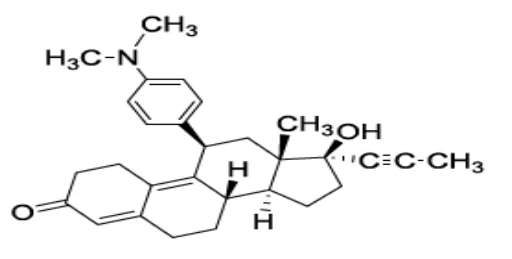
Chemical name: (11β,17β)-11-[4-(Dimethylamino)phenyl]-17-hydroxy-17-(1-propynyl)estra-4,9-dien-3- one
Molecular formula and molecular mass: C29H35NO2; 429.60 g/mol Structural formula:
Physicochemical properties:
The compound is a light-yellow to yellow powder with a melting point of 192-196 °C. It is very soluble in methanol, chloroform, acetone, and poorly soluble in water, hexane and isopropyl ether.
The absolute configuration of the chiral centers is as follows: 8S, 11R, 13S, 14S, 17S.
Misoprostol
Proper name: Misoprostol
Chemical name: (±)-Methyl (1R,2R,3R)-3-hydroxy-2-[(E)-(4RS)-4-hydroxy-4-methyl-1-octenyl]-5- oxocyclopentaneheptanoate (USP)
Molecular formula and molecular mass: C22H38O5; 382.5 g/mol Structural formula:
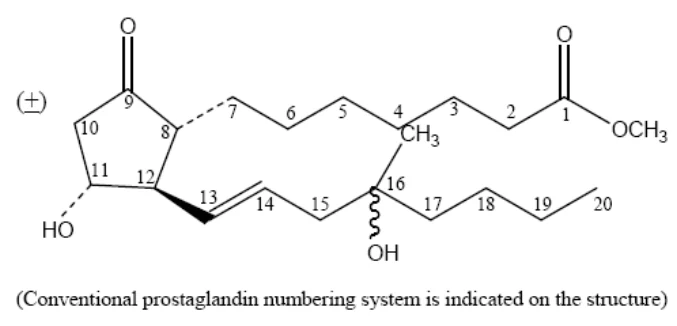
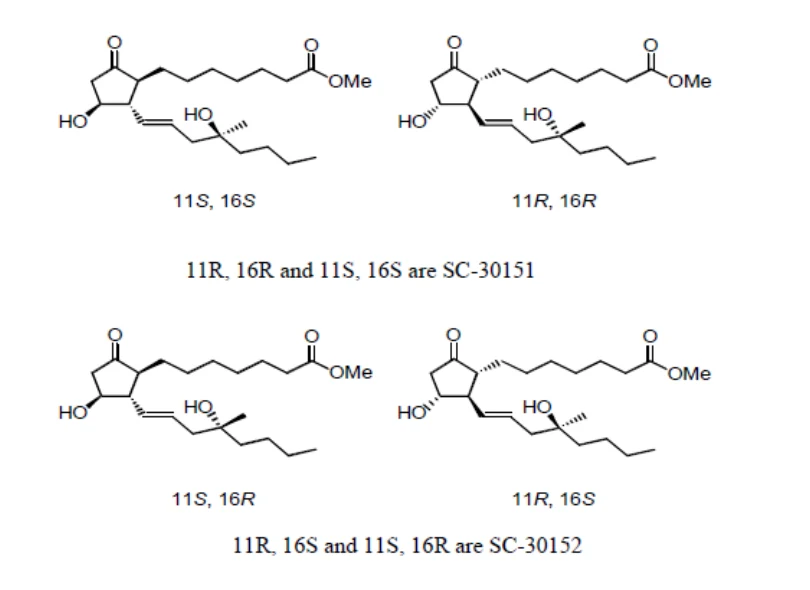
Misoprostol structure has four chiral centres. The centre at C16 is racemic and the centres at C8, C11 and C12 are controlled relative to each other with cis substitution on the cyclopentanone ring. Misoprostol is therefore a mixture of four stereo isomers:
Physicochemical properties: Misoprostol is a clear, colorless or yellowish, oily liquid. Practically insoluble in water, soluble in ethanol (96%), sparingly soluble in acetonitrile.
14 Clinical Trials
14.1 Clinical Trials by Indication
Medical Termination of a Developing Intra-Uterine Pregnancy Study Design and Demographics
Table 7: Summary of patient demographics for clinical trials
| Study # | Study design | Dosage, route of administration and duration | Study subjects (n) | Age (Range) | Sex |
|---|---|---|---|---|---|
| Study 1 | Open-label, randomized study | 200 mg mifepristone tablet oral 800 mcg misoprostol tablet buccal | 223 | 17 years or older Age: ≤ 24 year old: 51.1% 25-29 year old: 19.7% 30-34 year old: 19.7% ≥ 35 year old: 9.4% | F |
| Study 2 | Open-label, randomized study | 200 mg mifepristone tablet oral 800 mcg misoprostol tablet buccal | 421 | 17 years or older Age: ≤ 24 year old: 44.9% 25-29 year old: 25.2% 30-34 year old: 16.2% ≥ 35 year old: 13.8% | F |
| Study 3 | Open-label, single arm, prospective study | 200 mg mifepristone tablet oral 800 mcg misoprostol tablet buccal | 1000 | 13 years or older Age: ≤ 24 year old: 52.8% 25-29 year old: 21.3% 30-34 year old: 14.6% ≥ 35 year old: 11.4% | F |
Study 1 (Middleton et al. 2005)
This study was an open-label trial conducted in two family planning clinics in the United States. Healthy women (N = 223) with an intra-uterine pregnancy up to 56 days since the first day of the last menstrual period (LMP) verified by ultrasonography, requesting a termination of pregnancy received 200 mg oral mifepristone followed after 24 to 72 hours by 800 mcg buccal misoprostol. The efficacy of the procedure was assessed by vaginal ultrasound and adverse events were evaluated during a follow-up visit 4 to 15 days after mifepristone administration.
Study 2 (Winikoff et al. 2008)
This open-label randomized seven-site study conducted in the United States compared the efficacy and safety of 200 mg oral mifepristone followed 24 to 36 hours later by 800 mcg buccal or oral misoprostol for early termination of pregnancy. Healthy women (N = 421) with an intra-uterine pregnancy up to 63 days LMP, determined by clinical examination and / or ultrasonography, were enrolled. The efficacy of the procedure was established by ultrasonography, and adverse events were assessed during a 7 to 14 days follow-up, after the intake of mifepristone.
Study 3 (Pena et al. 2014)
This open-label single-arm study was conducted in three sites in Mexico. Its objective was to evaluate the safety and efficacy of mifepristone (200 mg oral) followed 24 to 48 hours by misoprostol (800 mcg buccal) for early pregnancy termination. Gestational age was determined by physical examination, menstrual history and ultrasound and 1,000 healthy women with pregnancy up to 63 days LMP were enrolled. Pregnancy termination was confirmed by ultrasound and clinical exam 8 days after study enrollment.
Study Results
Results from the three phase 3 pivotal trials are summarized in Table 8 to Table 12.
Clinical efficacy in the three pivotal trials was defined as complete abortion without surgical intervention. In the three studies, women presenting at follow-up with an on-going viable pregnancy were offered surgical termination of pregnancy. Ultrasound was performed in 96.7% of patients in clinical trials. Women presenting with a persistent gestational sac at first follow-up visit could opt for surgical intervention or wait and follow-up at a next visit for a spontaneous resolution on Day 15 to 36 post- mifepristone. In studies 2 and 3, women with a persistent gestational sac at the first follow-up visit could also choose to receive a second dose of 800 mcg buccal misoprostol. Of the 12 women choosing a second misoprostol dose, 9 had a complete abortion without surgery at next follow-up visit and 3 required a surgical intervention.
Table 8: Outcome of women undergoing medical termination of pregnancy
| Study | |||||||||||
|---|---|---|---|---|---|---|---|---|---|---|---|
1 (N = 215)* | 2 (N = 421) | 3 (N = 971)* | |||||||||
Termination of pregnancy without surgical procedure ≤49 days of gestation 50-56 days of gestation 56-63 days of gestation | 94.9% 95.1% 94.3% | 96.2% 97.2% 95.7% 94.8% | 97.3% 98.0% 96.8% 95.9% | ||||||||
| Surgical termination of pregnancy: | 5.1% | 3.8% | 2.7% | ||||||||
Indication for surgery: Incomplete abortion | 4.2% | - | - | ||||||||
| Persistent gestational sac | - | 1.0% | 0.2% | ||||||||
| Ongoing viable pregnancy | 0.9% | 1.0% | 0.6% | ||||||||
| Persistent heavy bleeding | - | 1.9%** | 1.6% | ||||||||
| Abdominal Pain | - | - | 0.2% | ||||||||
| Patient lost to follow-up | 8 | 47 | 29 | ||||||||
* Patients were mistakenly enrolled (1 in Study 1, 56-63 days of gestation and 2 in Study 3, ≥ 64 days of gestation [data not presented])
** Medically necessary (e.g., excessive bleeding)
The results from the three trials indicate that a regimen of 200 mg oral mifepristone followed by 800 mcg buccal misoprostol is efficient for the termination of a pregnancy with a gestational age of 63 days or less. Stratification of the efficacy by age and ethnicity revealed no clinically meaningful difference in termination of pregnancy outcome. In trials 2 and 3, patients with a gravidity of 4 or more tended to have a higher failure rate in the 50 to 63 days of gestational age group (failure rate 3.1-3.4% vs 6.3%, in women with gravidity of 1-3 (N = 465) or 4 and over (N = 142)), but not in women with a gestation of 49 days or less (failure rate 1.9-2.5% vs 2.3% in women with gravidity of 1-3 (N = 592) or 4 and over (N = 172)).
Table 9: Total bleeding time from treatment and type of bleeding, in days: mean ± SD, median (range)
| Study | ||||||||||
|---|---|---|---|---|---|---|---|---|---|---|
1 (N = 212) | 2 (N = 414) | 3 (N = 969) | ||||||||
| Total bleeding time | NA | 11.4 ± 4.0, 12 (0-37) | NA | |||||||
| Type of bleeding | ||||||||||
| Heavy bleeding | 2.3±2.1, 2 (0-15) | 2.2 ± 2.2, 2 (0-15) | NA | |||||||
| Normal bleeding | 5.2±3.0, 5 (0-14) | 4.5 ± 3.0, 4 (0-15) | NA | |||||||
| Spotting | 3.8±2.6, 4 (0-12) | 4.8 ± 3.4, 4 (0-14) | NA | |||||||
N / A = not available
One patient in Study 1 and one in Study 3 required a blood transfusion due to excessive bleeding.
Pediatric Study Results (≥13 and <18 years of age)
Of the 1,000 women enrolled in Study 3, 67 were less than 18 years of age. The number of participants is stratified by age below:
Table 10: Number of participants <18 years, by age
| Age <18 | n |
|---|---|
| 13 | 1 |
| 14 | 6 |
| 15 | 16 |
| 16 | 20 |
| 17 | 24 |
| Total | 67 |
In that population, all women (100 %) had termination of pregnancy without the need for a surgical intervention. Women less than 18 years old tended to rate pain intensity higher and to report more frequently “feeling more pain than expected” than women 18 years and older.
Table 11: Outcome of woman undergoing medical termination of pregnancy, by age (N=971)
| Age | Efficacy % (n) |
|---|---|
| <18 years | 100% (67) |
| ≥18 years | 97.1% (878) |
Table 12: Reported pain and bleeding, by age (N=969)
| < 18 years | ≥ 18 years | |
|---|---|---|
| Reported pain | (n=67) | (n=887) |
Mean pain score (SD) (range 1-7) | 5.60 (1.3) | 5.06 (1.7) |
| Pain perception, %(n)* | (n=66) | (n=896) |
| Less than expected | 12.1 (8) | 27.6 (247) |
| Same as expected | 19.7 (13) | 27.7 (248) |
| More than expected | 68.2 (45) | 44.8 (401) |
| Bleeding perception, %(n)* | (n=67) | (n=894) |
| Less than expected | 14.9 (10) | 32 (286) |
| Same as expected | 50.7 (34) | 41.3 (369) |
| More than expected | 34.3 (23) | 26.7 (239) |
SD=standard deviation, *Excludes “Don’t know” responses
Observational Studies
Authorised Prescriber Program Study
This retrospective observational study conducted in 15 clinics in Australia reported the outcome of 5,730 patients having termination of pregnancy of less than 63 days since last menstrual period with a regimen of 200 mg mifepristone followed 24-48 hours later by 800 mcg buccal misoprostol. 121 patients of less than 18 years of age were enrolled and one woman (0.8%) received a surgical intervention for retained products of conception. No other serious adverse events were reported in pediatric patients.
Australia Phase IV Study
This observational study conducted in women’s health clinics in Australia reported the outcome of 10,822 patients having termination of pregnancy of 63 days since last menstrual period or less with a regimen of 200 mg mifepristone followed 24-48 hours later by 800 mcg buccal misoprostol. In the study, 138 women of less than 18 years of age were enrolled and 2.8% reported a method failure and required a surgical termination of pregnancy. Two patients reported an incomplete abortion and one patient a continuing pregnancy. All three required surgical termination of pregnancy. No serious haemorrhage or infection was reported in pediatric patients.
Table 13 : Number of participants <18 years in Australian Phase IV Study, by age
| Age <18 | n |
|---|---|
| 13 | 0 |
| 14 | 2 |
| 15 | 16 |
| 16 | 32 |
| 17 | 86 |
- 14.3 Comparative Bioavailability studies
A randomized, two-treatment, four period, two-sequence, single-dose (1 x 200 mg mifepristone tablet, oral administration), crossover, bioequivalence study of PrJAMP Mifepristone / Misoprostol (JAMP Pharma Corporation) and PrMifegymiso (Linepharma International Inc.) was conducted in healthy, adult, male subjects under fasting conditions. A summary of the bioavailability data from the 33 subjects included in the statistical analysis is presented in the following table.
SUMMARY TABLE OF THE COMPARATIVE BIOAVAILABILITY DATA
Mifepristone (1 x 200 mg) From measured data Arithmetic Mean (CV %) | ||||
| Parameter | Test1 | Reference2 | % Ratio of Geometric Means | 90% Confidence Interval |
| AUC0-72h (ng·h/mL) | 56275.82 61820.32 (42.57) | 57830.28 62081.47 (40.91) | 97.3 | 91.8 – 103.1 |
Cmax (ng/mL) | 3081.21 3334.18 (37.13) | 2990.42 3170.34 (35.47) | 103.0 | 94.9 – 111.9 |
Tmax3 (h) | 1.02 (0.50 – 24.02) | 0.75 (0.50 – 24.00) | ||
1 PrJAMP Mifepristone / Misoprostol (mifepristone tablet and misoprostol tablets) mifepristone 200 mg tablet (JAMP Pharma Corporation)
2 PrMifegymiso (mifepristone tablet and misoprostol tablets) mifepristone 200 mg tablet (Linepharma International Inc.)
3 Expressed as the median (range) only
Due to the long elimination half-life of mifepristone, AUCI and T1/2 could not be accurately calculated from the data obtained in this study.
A randomized, two-treatment, two-period, two-sequence, single-dose (2 x 200 mcg misoprostol tablet, buccal administration), crossover, bioequivalence study of JAMP Mifepristone / Misoprostol (JAMP Pharma Corporation) and PrMifegymiso (Linepharma International Inc.) was conducted in healthy, adult, female subjects under fasting conditions. A summary of the bioavailability data from the 30 subjects included in the statistical analysis is presented in the following table.
SUMMARY TABLE OF THE COMPARATIVE BIOAVAILABILITY DATA
Misoprostol Acid (2 x 200 mcg) Geometric Mean Arithmetic Mean (CV %) | ||||
| Parameter | Test1 | Reference2 | % Ratio of Geometric Means | 90% Confidence Interval |
AUCT (pg·h/mL) | 933.77 967.18 (27.32) | 922.00 950.92 (24.63) | 101.3 | 96.9 – 105.8 |
AUCI (pg·h/mL) | 964.97 997.49 (26.60) | 952.00 980.90 (24.30) | 101.4 | 97.2 – 105.7 |
Cmax (pg/mL) | 1075.42 1186.66 (44.24) | 1057.13 1140.81 (43.04) | 101.7 | 93.5 – 110.7 |
Tmax3 (h) | 0.33 (0.17 – 0.83) | 0.33 (0.25 – 1.33) | ||
T1/24 (h) | 1.41 (31.03) | 1.38 (32.18) | ||
1 PrJAMP Mifepristone / Misoprostol (mifepristone tablet and misoprostol tablets) misoprostol 200 mcg tablet (JAMP Pharma Corporation)
2 PrMifegymiso (mifepristone tablet and misoprostol tablets) misoprostol 200 mcg tablet (Linepharma International Inc.)
3 Expressed as the median (range) only
4 Expressed as the arithmetic mean (CV %)
15 Microbiology
No microbiological information is required for this drug product.
16 Non-Clinical Toxicology
General Toxicology:
Single dose studies
Mifepristone
Mice, rats and dogs were administered single p.o. and i.p. doses of 1,000 mg / kg of mifepristone, resulting in severe toxicities (arched back, locomotor problems and abdominal distension) and one animal died. The drug dose used in these studies was about 300 fold greater (on a mg / kg basis) than would be administered to patients.
Misoprostol
Studies were performed in mice, rats and dogs. Oral LD50 values in mice and rats were 27-138 and 81- 100 mg / kg, respectively, with corresponding values after i.p. dosing of 70-160 and 40-62 mg / kg. No deaths were reported in dogs up to 10 mg / kg, the maximum administered dose. The most prominent clinical signs were diarrhea and reduced motor activity in rodents and, in dogs, emesis, tremors, mydriasis and diarrhea. Most deaths occurred within 24 hours of dosing and surviving animals appeared normal within 3-4 days. The drug dose used in these studies was at least >750 fold greater (on an mg / kg basis) than would be administered to patients.
Long term studies
Mifepristone
Repeat dose toxicology studies were conducted in the rat and the monkey for 30 days and 6 months. A range of doses from 5 - 200 mg/kg/day were administered orally.
Monkeys administered 100 mg/kg/day had severe toxicity, where 3 were sacrificed moribund and the primary toxicological effects were vomiting, diarrhea, reduced appetite and body weight loss. Mid and high dose animals had reduced food consumption and loss of body weight. Serum ACTH levels were increased, cholesterol reduced, triglycerides had a transient rise and cortisol was increased. Both progesterone and estrogen levels were lower and LH levels were higher in females. Urinary excretion of potassium and chloride was reduced at all dose levels and sodium only at the high dose. In both sexes, kidney and adrenal weights were increased at all dose levels, liver weights were increased at the mid- and high-dose and pancreas reduced at the high-dose. Histopathology showed (i) non dose-related increased amounts and incidence of lipofucsin in liver, (ii) non dose-related increase in cortical scarring, cortical cysts and subcapsular foci of fibrosis in kidneys, (iii) increased eosinophilia of adrenal zona fasciculata in high-dose males and females and in one mid-dose male; high-dose females had an increased width of the zona reticularis, and (iv) increased incidence of brown pigment within the thyroid follicular epithelium in high-dose animals.
With regard to changes in reproductive organs in female monkeys, the following observations were made: (i) dilated ovarian follicles and an absence of corpora lutea, (ii) thinning of uterine endometrium; focal mucosal hyperplasia, squamous metaplasia and inflammatory cell infiltration (iii) non dose-related squamous metaplasia and inflammatory cell infiltration in the cervix, (iv) moderately keratinised vagina, (v) dilated lumen of fallopian tubes, (vi) slight increase in the degree of development of mammary glands.
Rats administered mid and high doses had reduced weight gain. Haematological measures showed reduced red cell parameters and reduced clotting time. Plasma glucose was dose-dependently reduced and serum protein and cholesterol increased. Urinalysis showed increased protein and increased urine volume, presumably due to increased water intake. Histopathology showed (i) dose-related increase in centrilobular enlargement in livers, (ii) dose-related increase in hemosiderosis in adrenals, (iii) dose- related increase in foci of basophilic / dilated kidney tubules containing colloid, glomerular hyalinization / sclerosis, and interstitial fibrosis (iv) increased thyroid weight, increased height of the thyroid follicular epithelium; a thyroid follicular adenoma was observed in one high-dose female.
With regard to changes in reproductive organs in female rats, the following observations were made: (i) inhibition of oestrus cyclicity and reduction in corpora lutea, (ii) dose-related increase in ovarian cysts,
(iii) reduction in endometrial stroma in all groups and dose-related dilatation of endometrial glands, (iv) striated squamous epithelium of the cervix / vagina, and (v) dose-related increase in distension of mammary acini and ducts.
The Cmax of single-dose oral mifepristone administration in rats and monkeys was compared to the Cmax in women administered 200 mg. Rats and monkeys were observed to have different mifepristone metabolism, as compared to humans, making it challenging to compare the doses used in animal studies to those proposed for human use.
Table 14: Comparative Cmax of single-dose mifepristone
| Dose (mg / kg) | Cmax (ng / ml) | Cmax:Dose | |
|---|---|---|---|
| Rat | 200 | 3,000 | 15 |
| Monkey | 90 | 160 | 1.7 |
| Human | 4 | 2,686 | 671.5 |
Misoprostol
Repeat dose studies were conducted in rats and dog for 5, 13 and 52 weeks and covered a dose range of 30 – 9000 mcg/kg/day via oral administration.
In rats, the major clinical signs were diarrhea, salivation, vaginal dilation and discharge, decreased body weight and increased food consumption. Principal clinical biochemistry changes were decreases in serum total protein and increases in serum iron, with any changes in other parameters remaining within normal limits and considered incidental. The decrease in protein levels may be a consequence of poor absorption of nutrients resulting from diarrhea. Stomach weights and stomach to body weight ratios were increased and hyperkeratosis of the aglandular part of the stomach and mucosal epithelial hyperplasia of the glandular part were confirmed by electron microscopy. It may be that misoprostol increased cell survival and decreased cell shedding. The changes were reversible upon cessation of treatment.
Pharmacokinetic exposure data for misoprostol was limited, making it challenging to compare the doses used in animal studies to those proposed for human use.
Genotoxicity:
Mifepristone
Mifepristone was tested for genotoxicity using both in vitro and in vivo studies. It showed no evidence of genotoxicity.
Misoprostol
Misoprostol was tested for genotoxic potential in a Ames test in five strains of Salmonella typhimurium, a mouse lymphoma TK+/- assay, a mitotic gene conversion in Saccharomyces cerevisiae, a sister chromatid exchange assay in CHO cells, a C3H/10T 1/2 cell transformation assay and an in vivo mouse micronucleus test. Misoprostol showed no evidence of genotoxicity.
Carcinogenicity:
Mifepristone
Carcinogenicity studies were not conducted in animals.
Misoprostol
The carcinogenicity potential of misoprostol has been evaluated in both mice and rats. The study in mice was of 21 months duration and administered doses of 0, 160, 1600 and 16000 mcg/kg/day by oral gavage.
In the rat study, doses of 0, 24, 240 and 2400 mcg/kg/day were administered for 24 months by oral gavage. There was no indication of a carcinogenic effect in either species.
Reproductive and Developmental Toxicology:
Mifepristone
Oral administration of mifepristone to rats disrupted the oestrus cycle at both dose levels, 0.3 and 1 mg/kg/day within 10 days of treatment, with a gradual restoration of the cycle over the 2-3 weeks after stopping dosing. There were no residual effects on reproductive performance, fertility or the wellbeing of offspring.
When administered to at a dose of 2.5 mg/kg/day for 24 days, starting 8 days before mating, with pregnancy status assessed on the day after final treatment, mifepristone did not affect the pregnancy rate, as compared to a concurrent control group. However, the mean number of normal implantation sites per pregnant rate was significantly reduced.
Mifepristone is embryotoxic and its administration to pregnant mice, rats and rabbits at doses lower than those proposed for human use (on a mg / kg basis) resulted in fetal loss. There were fetal anomalies reported in rabbits following mifepristone exposure of the dams during pregnancy: failure of closure of the cranium and haemorrhagic destruction of the upper part of the head or brain, no spinal column, no closure of the eyelids, exencephaly, interventricular communication in the heart, cleft palate, generalised eczema and celosomia. In monkeys embryos exposed to mifepristone showed compromised developmental potential. These anomalies may be a consequence of progesterone withdrawal, as progesterone is needed to maintain uterine accommodation during pregnancy, rather than direct teratogenic effect.
In a neonatal exposure study in rats, the administration of a subcutaneous dose of mifepristone up to 100 mg / kg on the first day after birth resulted in delays in the development of the righting reflex and the responses in the rotarod and water maze tests in pups. The onset of puberty was observed to be slightly premature in female rats neonatally exposed to mifepristone. However, reproductive function in males or females was normal.
In a separate study neonatal rats received 1 mg of mifepristone every second day from day 1 to day 15 or day 4 to day 18 of life. Female rats developed abnormalities of the oviduct and ovarian capsule and during adulthood anovulatory polyfollicular ovaries developed. Males showed retardation of testicular growth and delay of puberty. Sexual behaviour in adulthood was deficient in that ejaculations only rarely occurred; when they did occur, however, fertility was unimpaired. Adrenal gland development was also impacted but this recovered after the cessation of treatment whereas the effects on reproduction continued into adulthood.
Misoprostol
The effect of misoprostol on female cyclicity, mating and fertility was not studied.
In two fertility studies, female rats were administered misoprostol by oral gavage from 15 days premating to parturition and from 14 days premating to day 7 of gestation. The number of implantations was decreased at 1,600 and 10,000 mcg/kg/day and an increase in resorptions occurred at 1,000 and 10,000 mcg/kg/day. As a consequence, there were a decreased number of live foetuses or pups at 10,000 mcg/kg/day and a decreased number of foetuses at 1,600 mcg/kg/day. Foetal and pup survival and development were not affected.
In two teratology studies in rats pregnant dams were dosed on days 6 to 15 or 7 to 17 of gestation up to 10,000 mcg/kg/day via oral gavage; there was no evidence of embryotoxicity, fetotoxicity or teratogenicity. Two rabbit studies used doses up to 1,000 mcg/kg/day via oral gavage on days 6 to 18 of gestation and also showed no evidence of fetotoxicity or teratogenicity, although there was an increased number of resorptions at 1,000 mcg/kg/day in one study.
However, a more recent study in mice treated with single doses of 20 or 30 mg / kg of misoprostol on day 10 of pregnancy showed an increase in resorptions at 30 mg / kg and an increased occurrence of cleft palate as well as other skeletal abnormalities in surviving fetuses. The link between misoprostol exposure during pregnancy and congenital malformations might be attributed to disturbances in blood supply to the foetus.
A retrospective analysis of human data also determined there to be a link between misoprostol exposure during pregnancy and congenital malformation.
Special Toxicology:
Phototoxicity
Mifepristone
No evidence of phototoxicity was observed with mifepristone being tested up to a concentration of 8 mcg / mL in Balb / c 3T3 fibroblasts, the limit of solubility under the conditions of the assay.
17 Supporting Product Monographs
- 1. PrMIFEGYMISO (tablets, 200 mg and 200 mcg), control 289927, Product Monograph, Linepharma International Limited. (FEB. 11, 2025)