


Product Monograph - Jamp Rivastigmine Capsules
RECENT MAJOR LABEL CHANGES
NA
TABLE OF CONTENTS
RECENT MAJOR LABEL CHANGES ................................................................................................... 2
TABLE OF CONTENTS ..................................................................................................................... 2
PART I: HEALTH PROFESSIONAL INFORMATION ............................................................................ 4
1 INDICATIONS ..................................................................................................................... 4
1.1 Pediatrics ..................................................................................................................... 4
1.2 Geriatrics ..................................................................................................................... 4
2 CONTRAINDICATIONS ........................................................................................................ 4
4 DOSAGE AND ADMINISTRATION ........................................................................................ 4
4.1 Dosing Considerations ................................................................................................. 4
4.2 Recommended Dose and Dosage Adjustment ............................................................ 5
4.5 Missed Dose ................................................................................................................. 6
5 OVERDOSAGE .................................................................................................................... 6
6 DOSAGE FORMS, STRENGTHS, COMPOSITION AND PACKAGING ........................................ 7
7 WARNINGS AND PRECAUTIONS ......................................................................................... 8
7.1 Special Populations ................................................................................................... 14
7.1.1 Pregnant Women ...................................................................................................... 14
7.1.2 Breast-feeding ........................................................................................................... 14
7.1.3 Pediatrics ................................................................................................................... 14
7.1.4 Geriatrics ................................................................................................................... 14
8 ADVERSE REACTIONS ....................................................................................................... 15
8.1 Adverse Reaction Overview ...................................................................................... 15
8.2 Clinical Trial Adverse Reactions ................................................................................. 15
8.3 Less Common Clinical Trial Adverse Reactions .......................................................... 24
8.4 Abnormal Laboratory Findings: Hematologic, Clinical Chemistry and Other Quantitative Data ...................................................................................................... 28
8.5 Post-Market Adverse Reactions ................................................................................ 28
9 DRUG INTERACTIONS ....................................................................................................... 28
9.2 Drug Interactions Overview....................................................................................... 28
9.3 Drug-Behavioural Interactions .................................................................................. 29
9.4 Drug-Drug Interactions .............................................................................................. 29
9.5 Drug-Food Interactions ............................................................................................. 30
9.6 Drug-Herb Interactions .............................................................................................. 30
9.7 Drug-Laboratory Test Interactions ............................................................................ 30
10 CLINICAL PHARMACOLOGY .............................................................................................. 30
10.1 Mechanism of Action ................................................................................................ 30
10.3 Pharmacokinetics ..................................................................................................... 30
11 STORAGE, STABILITY AND DISPOSAL ................................................................................ 33
PART II: SCIENTIFIC INFORMATION .............................................................................................. 34
13 PHARMACEUTICAL INFORMATION ................................................................................... 34
14 CLINICAL TRIALS ............................................................................................................... 35
14.1 Trial Design and Study Demographics ....................................................................... 35
14.2 Study Results ............................................................................................................. 38
14.3 Comparative Bioavailability Studies .......................................................................... 43
15 MICROBIOLOGY ............................................................................................................... 44
16 NON-CLINICAL TOXICOLOGY ............................................................................................ 44
17 SUPPORTING PRODUCT MONOGRAPH ............................................................................ 48
PATIENT MEDICATION INFORMATION ........................................................................................ 49
PART I: HEALTH PROFESSIONAL INFORMATION
1 INDICATIONS
JAMP Rivastigmine Capsules (rivastigmine capsules) is indicated for:
- The symptomatic treatment of patients with mild to moderate dementia of the Alzheimer's type.
- JAMP Rivastigmine Capsules is indicated for the symptomatic treatment of patients with idiopathic Parkinson’s disease, and mild to moderate dementia, with onset at least 2 years after the initial diagnosis of Parkinson’s disease, and in whom other causes of dementia have been ruled out.
Rivastigmine capsule has not been studied in controlled clinical trials for longer than 6 months. JAMP Rivastigmine Capsules should only be prescribed by (or following consultation with) clinicians who are experienced in the diagnosis and management of dementia.
1.1 Pediatrics
Pediatrics (< 18 years of age): No data are available to Health Canada; therefore, Health Canada has not authorized an indication for pediatric use.
1.2 Geriatrics
Geriatrics (≥ 65 years of age): Dose escalation in patients >85 years old should proceed with caution.
2 CONTRAINDICATIONS
- Patients with known hypersensitivity to rivastigmine, to other carbamate derivatives or to the excipients of the formulation. For a complete listing, see the 6 DOSAGE FORMS, STRENGTHS, COMPOSITION AND PACKAGING.
- Patients with severe liver impairment since rivastigmine has not been studied in this population.
- Patients with previous history of application site reactions with rivastigmine transdermal patch suggestive of allergic contact dermatitis or other severe skin reactions (e.g., allergic dermatitis (disseminated), Stevens-Johnson syndrome) with rivastigmine, oral or transdermal patch (see 7 WARNINGS AND PRECAUTIONS, Skin).
- Patients with history of QT prolongation and / or torsade de pointes, including congenital long QT syndromes, history of cardiac arrhythmias (see 7 WARNINGS AND PRECAUTIONS and 9 DRUG INTERACTIONS).
4 DOSAGE AND ADMINISTRATION
4.1 Dosing Considerations
Dose escalation for patients with serious comorbid diseases should be undertaken with particular caution. For elderly patients (>85 years old) with low body weight (especially females) or serious comorbid diseases (see 7 WARNINGS AND PRECAUTIONS), it is
- escalate dosage at a slower rate than for adults (see 7 WARNINGS AND PRECAUTIONS).
- Low Body Weight: Patients with body weight below 50 kg may experience more adverse events and may be more likely to discontinue due to adverse events. Particular caution should be exercised when titrating these patients to the maintenance dose.
- For patients with renal or hepatic impairment (see 7 WARNINGS AND PRECAUTIONS, Renal; 7 WARNINGS AND PRECAUTIONS, Hepatic/Biliary/Pancreatic) it is recommended that treatment be started with less frequent dosing (1.5 mg once a day) and that dose escalation be slower than that recommended for adults. Caution should be used when titrating renal or hepatically impaired patients (see 10 CLINICAL PHARMACOLOGY).
- In a population of cognitively-impaired individuals, safe use of this and all other medications may require supervision (see 7 WARNINGS AND PRECAUTIONS, Patient and Caregiver Counselling Information).
- Adverse effects (e.g. hypertension and hallucinations in patients with Alzheimer’s dementia, and worsening of extrapyramidal symptoms, in particular tremor, in patients with dementia associated with Parkinson’s disease) have been observed shortly after dose increase. They may respond to a dose reduction. In other cases, JAMP Rivastigmine Capsules has been discontinued.
4.2 Recommended Dose and Dosage Adjustment
JAMP Rivastigmine Capsules (rivastigmine capsules) should only be prescribed by (or following consultation with) clinicians who are experienced in the diagnosis and management of dementia.
JAMP Rivastigmine Capsules should be taken with food in divided doses in the morning and evening.
Adults
The usual maintenance dose range for JAMP Rivastigmine Capsules is 6-12 mg / day. The following dosage escalation recommendations, derived from clinical trial data, are provided as a guide only, as individual tolerance to dose increases will vary. The incidence of cholinergic adverse events associated with JAMP Rivastigmine Capsules increase with dose and are more prevalent in females (see 8 ADVERSE REACTIONS).
Dementia of the Alzheimer’s Type
The starting dose of JAMP Rivastigmine Capsules is 1.5 mg b.i.d. (3 mg / day). If this initial dose is well tolerated, after a minimum of 2 weeks the dose may be increased to 3 mg b.i.d. (6 mg / day). Dose increases above 6 mg / day should proceed cautiously. Increases to 4.5 mg b.i.d. (9 mg / day) and then 6 mg b.i.d. (12 mg / day) should also be based on good tolerability of the current dose and should only be considered after a minimum of two weeks treatment at that dose level. The maximum dose should not exceed 6 mg b.i.d. (12 mg / day).
Dementia Associated with Parkinson’s Disease
In dementia associated with Parkinson’s disease, the starting dose of JAMP Rivastigmine Capsules is 1.5 mg b.i.d.; subsequently, the dose may be increased to 3 mg b.i.d.; and further to 4.5 mg b.i.d.; and 6 mg b.i.d.; based on tolerability, with a minimum of 4 weeks at each dose.
4.5 Missed Dose
The missed dose should be taken at the next scheduled dose. Doses should not be doubled. Following initiation of therapy or any dosage increase, patients should be closely monitored for adverse effects. If adverse effects (e.g. nausea, vomiting, abdominal pain, loss of appetite) are observed during treatment, the patient should be instructed to stop treatment for several doses and then restart at the same dose level, or lower, as clinically indicated. Anytime treatment is interrupted for longer than three days, patients should be instructed to reinitiate treatment with the lowest daily dose (i.e. 1.5 mg b.i.d. or 1.5 mg o.d., as clinically indicated) and be re- titrated to their maintenance dose as described above (see 7 WARNINGS AND PRECAUTIONS, Gastrointestinal). If side effects persist, the drug should be discontinued.
5 OVERDOSAGE
Symptoms: Manifestations include nausea, vomiting, diarrhea, abdominal pain, dizziness, tremor, headache, somnolence, bradycardia, confusional state, hyperhidrosis, hypertension, hallucinations and malaise. Overdosage with cholinesterase inhibitors can result in cholinergic crisis characterised by severe nausea, vomiting, salivation, sweating, bradycardia, hypotension, respiratory depression, collapse and convulsions. Increasing muscle weakness is a possibility and may result in death if respiratory muscles are involved. Atypical responses in blood pressure and heart rate have been reported with other cholinomimetics when co-administered with quaternary anticholinergics such as glycopyrrolate. In a documented case of extreme overdose with transdermal rivastigmine additional symptoms have been observed including fall, elevated creatinine level, signs of urinary infection and acute renal failure with anuria.
Due to the known vagotonic effect of cholinesterase inhibitors on heart rate, bradycardia and / or syncope may also occur.
In a documented case of a 46 mg overdose with rivastigmine capsules, a 69 year old female patient experienced vomiting, incontinence, hypertension, psychomotor retardation and loss of consciousness. The patient was managed conservatively with only supportive measures and fully recovered within 24 hours.
Dose-related signs of toxicity in animals included lacrimation, excessive salivation, vomiting, decreased locomotor activity, ataxia, twitches / flutters, tremors and clonic convulsions.
Treatment: JAMP Rivastigmine Capsules (rivastigmine capsules) has a short plasma half-life (about 1- 2 hours) and a moderate duration of cholinesterase inhibition of 8-12 hours. It is recommended that in cases of asymptomatic overdoses, no further dose of JAMP Rivastigmine Capsules should be administered for the next 24 hours and that patients be monitored.
As in any case of overdose, general supportive measures should be utilised. Tertiary anticholinergics such as atropine may be used as an antidote for JAMP Rivastigmine Capsules overdosage. Intravenous atropine sulfate titrated to effect is recommended: an initial dose of 1.0 to 2.0 mg IV with subsequent doses based upon clinical response. Due to the short half-life of JAMP Rivastigmine Capsules, dialysis (hemodialysis, peritoneal dialysis, or hemofiltration) would not be clinically indicated in the event of an overdose.
In overdoses accompanied by severe nausea and vomiting, the use of antiemetics should be considered. Symptomatic treatment for other adverse events should also be given as necessary.
6 DOSAGE FORMS, STRENGTHS, COMPOSITION AND PACKAGING
Table 1 – Dosage Forms, Strengths, Composition and Packaging
JAMP Rivastigmine Capsules (rivastigmine capsules) is supplied as hard-gelatin capsules containing either 1.5 mg, 3 mg, 4.5 mg, or 6 mg of rivastigmine base.
The 1.5 mg capsules are white to off white powder filled in size “2” hard gelatin capsules with yellow opaque colour cap and yellow opaque colour body imprinted “RIV 1.5” on cap and “JP” on body. Available in HDPE bottle of 60 capsules, 100 capsules and 500 capsules.
The 3.0 mg capsules are white to off white powder filled in size “2” hard gelatin capsules with orange opaque colour cap and orange opaque colour body imprinted “RIV 3” on cap and “JP” on body. Available in HDPE bottle of 60 capsules, 100 capsules and 500 capsules.
The 4.5 mg capsules are white to off white powder filled in size “2” hard gelatin capsules with red opaque colour cap and red opaque colour body imprinted “RIV 4.5” on cap and “JP” on body. Available in HDPE bottle of 60 capsules, 100 capsules and 500 capsules.
The 6.0 mg capsules are white to off white powder filled in size “2” hard gelatin capsules with
Route of Administration | Dosage Form / Strength/Composition | Non-medicinal Ingredients |
|---|---|---|
| Oral | Capsules, 1.5 mg, 3 mg, 4.5 mg, 6 mg | Colloidal silicon dioxide, hydroxypropyl methylcellulose; magnesium stearate; microcrystalline cellulose; hard gelatin capsule contain: gelatin, iron oxide red and iron oxide yellow (for the 3 mg, 4.5 mg and 6 mg strengths), iron oxide yellow (only for the 1.5 mg strength) and titanium dioxide. The ingredients of the imprinting ink: For the 1.5 mg, 3 mg, 6 mg strengths: FD&C Red No. 40 Aluminum Lake, povidone, propylene glycol, shellac, sodium hydroxide and titanium dioxide. For the 4.5 mg strength: potassium hydroxide, propylene glycol, shellac, strong ammonia solution and titanium dioxide. |
For management of a suspected drug overdose, contact your regional poison control centre.
red opaque colour cap and orange opaque colour body imprinted “RIV 6” on cap and “JP” on body. Available in HDPE bottle of 60 capsules, 100 capsules and 500 capsules.
7 WARNINGS AND PRECAUTIONS
General
In a population of cognitively-impaired individuals, safe use of this medication may require supervision. Patients and caregivers should be instructed in the proper use of JAMP Rivastigmine Capsules (see 7 WARNINGS AND PRECAUTIONS, Patient and Caregiver Counselling Information).
Rivastigmine capsule has not been studied in patients with moderately severe or severe Alzheimer’s disease, moderately severe or severe dementia associated with Parkinson’s disease, or other dementias. The efficacy and safety of rivastigmine capsule in these patient populations is unknown.
As with other cholinergic substances care must be taken when prescribing JAMP Rivastigmine Capsules:
- to patients predisposed to urinary obstruction.
- patients with body weight below 50 kg may experience more adverse events and may be more likely to discontinue therapy (4 DOSAGE AND ADMINISTRATION, Dosing considerations). See 7 WARNINGS AND PRECAUTIONS, Metabolism and Nutrition Disorders and 8 ADVERSE REACTIONS, Clinical Trial Adverse Reactions, for additional information on weight loss.
As with other cholinomimetics, adverse effects have been observed shortly after dose increase. They may respond to a dose reduction. In other cases, JAMP Rivastigmine Capsules has been discontinued (see 4 DOSAGE AND ADMINISTRATION).
Patient and Caregiver Counselling Information: Patient Medication Information is included in the package of JAMP Rivastigmine Capsules dispensed to the patient. Caregivers should be advised to read this sheet prior to administering JAMP Rivastigmine Capsules. Caregivers should be instructed in the correct procedure for administering JAMP Rivastigmine Capsules.
Patients receiving JAMP Rivastigmine Capsules and caregivers should be given the following instructions by the physician and / or pharmacist:
- 1.
Concomitant Use of Drugs with Cholinergic Action
Patients or caregivers should be told that while taking JAMP Rivastigmine Capsules they should not be wearing rivastigmine PATCH or take other drugs with cholinergic effects.
- 2.
Gastrointestinal Adverse Events
Patients or caregivers should be informed of the potential gastrointestinal adverse events such as nausea, vomiting and diarrhea. Patients and caregivers should be instructed to observe for these adverse reactions at all times, and in particular when treatment is initiated, or the dose is increased. Patients and caregivers should be instructed to inform their physician if these adverse events persist as a dose adjustment / reduction may be required.
- 3.
Monitoring the Patient’s Weight
Patients or caregivers should be informed that the JAMP Rivastigmine Capsules may affect the patient’s
appetite and / or the patient’s weight. Any loss of appetite or weight reduction needs to be monitored.
- 4.
Skin Reactions
Patients or caregivers should be advised that skin reactions may develop any time during treatment with JAMP Rivastigmine Capsules. These may include non-serious rashes and skin irritation or potentially more serious skin reactions. Patients or caregivers should be instructed to immediately inform a physician if any skin reactions happen during treatment with JAMP Rivastigmine Capsules.
- 5.
Missed Doses
If the patient has missed a dose, he / she should be instructed to take the next scheduled dose. Patients should not double the doses to make up for one missed. If treatment has been missed for longer than three days, the patient or caregiver should be instructed to reinitiate treatment with the lowest daily dose (i.e. 1.5 mg b.i.d. or 1.5 mg o.d., as clinically indicated) and be re-titrated to their maintenance dose as described above (see 4 DOSAGE AND ADMINISTRATION).
Cardiovascular
Because of their pharmacological action, cholinomimetics may have vagotonic effects on heart rate (e.g., bradycardia). The potential for this action may be particularly important to patients with “sick sinus syndrome” or other supraventricular cardiac conduction conditions. In clinical trials patients with serious cardiovascular disease were excluded. Caution should therefore be exercised in treating patients with active coronary artery disease or congestive heart failure.
Syncopal episodes have been reported in association with the use of rivastigmine. It is recommended that JAMP Rivastigmine Capsules not be used in patients with cardiac conduction abnormalities (except for right bundle branch block) including “sick sinus syndrome” and those with unexplained syncopal episodes.
There have been post-marketing reports of QTc prolongation and or torsade de pointes in patients using rivastigmine. Rivastigmine should therefore be used with caution in patients with pre-existing or family history of QTc prolongation, in patients treated with drugs affecting the QTc interval, or in patients with relevant pre-existing cardiac disease (e.g. uncompensated heart failure, recent myocardial infarction, bradyarrhythmias), or electrolyte disturbances (e.g., hypokalaemia, hypomagnesaemia).
Driving and Operating Machinery
Alzheimer’s disease may cause gradual impairment of driving performance or compromise the ability to use machinery. Rivastigmine may induce dizziness and somnolence, mainly when initiating treatment or increasing the dose. Therefore, in patients with dementia treated with rivastigmine, the ability to continue driving or operating complex machines should be routinely evaluated by the treating physician.
Endocrine and Metabolism
Genetic Polymorphism: The effect of genetic polymorphism of butyrylcholinesterase enzyme on rivastigmine metabolism is unknown.
Gastrointestinal
Rivastigmine is associated with significant gastrointestinal adverse reactions including nausea and vomiting which may occur when initiating treatment and / or increasing the dose. Patients may respond to a dose reduction, or in other cases, discontinue therapy. Patients who show signs or symptoms of dehydration resulting from prolonged vomiting or diarrhea can be managed with iv fluids and dose reduction or discontinuation if recognized and treated promptly. Dehydration can be associated with serious outcomes (see 8 ADVERSE REACTIONS).
Treatment with JAMP Rivastigmine Capsules should always be started at a dose of 1.5 mg b.i.d. or 1.5 mg o.d., as clinically indicated, and patients titrated to their maintenance dose.
If treatment with JAMP Rivastigmine Capsules is interrupted for longer than three days, patients should be instructed to reinitiate treatment with the lowest daily dose and be retitrated (see 4 DOSAGE AND ADMINISTRATION) to reduce the possibility of severe vomiting and its potentially serious sequelae (e.g. there have been very rare post-marketing reports of severe vomiting with esophageal rupture).
Caregivers should be advised of the high incidence of nausea and vomiting associated with the use of the JAMP Rivastigmine Capsules (see 8 ADVERSE REACTIONS). Caregivers should be encouraged to monitor for these adverse events and inform the physician if they occur. It is critical to inform caregivers that if therapy has been interrupted for more than three days, the next dose should not be administered until they have discussed this with the physician.
Nausea and Vomiting: Gastrointestinal disorders such as nausea, vomiting and diarrhea may occur when initiating treatment and / or increasing the dose. Patients may respond to a dose reduction. In other cases, use of JAMP Rivastigmine Capsules has been discontinued. Patients who show signs or symptoms of dehydration resulting from prolonged vomiting or diarrhea can be managed with iv fluids and dose reduction or discontinuation if recognized and treated promptly. Dehydration can be associated with serious outcomes (see 8 ADVERSE REACTIONS).
Females are more sensitive to the cholinergic adverse effects associated with cholinesterase inhibitors and in general are more likely to experience nausea and vomiting than are males. In most cases these effects were of mild to moderate intensity and transient, and they resolved during continued rivastigmine treatment or upon treatment discontinuation.
Diarrhea: In the controlled clinical trials in the AD and PDD indications, 14% of the patients treated with the rivastigmine capsule at doses up to 6 mg BID developed diarrhea, as compared with 9% of those who received placebo.
Peptic Ulcers / Gastrointestinal Bleeding: Through their primary action, cholinesterase inhibitors may be expected to increase gastric acid secretion due to increased cholinergic activity.
Therefore, patients should be monitored for symptoms of active or occult gastrointestinal bleeding, especially those at increased risk for developing ulcers, e.g., those with a history of ulcer disease or those receiving concurrent nonsteroidal anti-inflammatory drugs (NSAIDS). In controlled clinical studies with rivastigmine in Alzheimer’s disease patients, patients with a past history (last 2 years) of peptic ulceration and chronic diseases of the gastrointestinal tract were excluded. In the trial population who received rivastigmine there was no significant increase, relative to placebo, in the incidence of peptic ulcer disease. The incidence of GI hemorrhage, in controlled clinical trials was <1% (n = 6 / 1923) for rivastigmine and 0% (n=0 / 868) for placebo.
Genitourinary
Although not reported in clinical trials of rivastigmine, cholinomimetics may cause bladder spasms.
Hepatic/Biliary/Pancreatic
Hepatic impairment: There is limited information on the pharmacokinetics of rivastigmine in hepatically impaired subjects (see 10 CLINICAL PHARMACOLOGY, Special Populations and Conditions). It is therefore recommended that dose escalation with rivastigmine in hepatically impaired patients be undertaken according to individual tolerability and under conditions of close monitoring for adverse effects as these patients might experience more adverse events (see 4 DOSAGE AND ADMINISTRATION, Dosing considerations).
JAMP Rivastigmine Capsules is contraindicated in patients with severe hepatic impairment since it has not been studied in this population (see 2 CONTRAINDICATIONS).
Pancreatic: In the pivotal clinical trials involving AD patients treated with rivastigmine capsules, acute pancreatitis was reported as an adverse event in no patient treated with JAMP Rivastigmine Capsules (0%) and in one patient treated with placebo (<1%). Cases of pancreatitis have been reported during post- marketing experience with rivastigmine capsules and transdermal rivastigmine, shortly after initial use as well as after several months or years of use.
Patients experiencing persistent and unexplained upper abdominal pain, that may or may not be accompanied by vomiting and confusion, should promptly seek medical attention.
Metabolism and Nutrition Disorders
Anorexia / decreased appetite and weight loss may occur when initiating treatment and / or increasing the dose.
Anorexia / Decreased Appetite: In the controlled clinical trials in the AD and PDD indications, 12% of the patients treated with the rivastigmine capsule at doses up to 6 mg BID were recorded as developing decreased appetite (anorexia), as compared with 3% of those who received placebo.
Weight Loss: Cholinesterase inhibitors as well as Alzheimer’s disease and dementia associated with Parkinson’s disease can be associated with significant weight loss. Patients may lose weight while taking cholinesterase inhibitors, including rivastigmine. Therefore, the patient’s weight should be monitored during therapy with JAMP Rivastigmine Capsules.
In controlled clinical trials of Alzheimer’s disease patients, the use of rivastigmine was associated with weight loss. Women exposed to doses of rivastigmine at the higher end of the therapeutic range, i.e. usual maintenance dose range of 6-12 mg / day were at greater risk for weight loss. Approximately 24% of women on 6-12 mg / day doses of rivastigmine had weight loss of equal to or greater than 7% of their baseline weight compared to 6% on placebo. For males, 16% (6-12 mg / day) experienced a similar degree of weight loss compared to 4% on placebo.
In dementia associated with Parkinson’s disease, in a single trial of n = 541 patients, at a similar dose range as for Alzheimer’s disease patients 16.3% of patients had weight loss equal to or greater than 7% of their baseline weight compared to 14% in the placebo group (21.1 % drug vs 8.1 % placebo for women, and 13.7 % drug vs 17.1 % placebo for men). The rates in the drug- treated group are similar to those seen in Alzheimer’s disease trial (as above), although the relativities with placebo are not.
Low Body Weight: Patients with body weight below 50 kg may experience more adverse events and may be more likely to discontinue due to adverse events. Particular caution should be exercised when titrating these patients to the maintenance dose.
Monitoring and Laboratory Tests
Elevations in Serum Amylase / Lipase levels in Patients with Dementia Associated with
Parkinson’s Disease: Of patients with normal levels at baseline, 17% receiving rivastigmine and 10% receiving placebo showed amylase levels beyond the normal range at the second measurement at the end of the Study (Week 24), and 9% and 4% respectively showed lipase levels beyond the normal range. Elevations beyond 2x normal range occurred in 2 of the rivastigmine patients with respect to amylase levels, 7 with respect to lipase levels, and in 0 placebo patients. Elevations in both amylase and lipase levels occurred in 12 rivastigmine patients, and in 0 placebo patients; pancreatitis was not recorded as an AE for any patient in the study.
Neurologic
Worsening of Tremor and Other Extrapyramidal Symptoms: Like other cholinomimetics, JAMP Rivastigmine Capsules may exacerbate or induce extrapyramidal symptoms. Worsening of these symptoms (including bradykinesia, dyskinesia, gait abnormality) and an increased incidence of, or severity of, tremor have been observed in patients with dementia associated with Parkinson’s disease treated with rivastigmine. Particularly in the case of tremor, events were observed shortly after dose increase, and may respond to dose reduction (see also 8 ADVERSE REACTIONS, Dementia associated with Parkinson’s Disease, Extrapyramidal Symptoms; 4 DOSAGE AND ADMINISTRATION, Dosing considerations).
Clinical monitoring is recommended for these adverse events.
Seizures: In placebo controlled clinical trials with rivastigmine cases of seizures were reported. Cholinomimetics are believed to have some potential to cause generalized convulsions.
However, seizure activity also may be a manifestation of Alzheimer’s disease. The risk / benefit of JAMP Rivastigmine capsule treatment for patients with a history of seizure disorder must therefore be carefully evaluated.
Peri-Operative Considerations
JAMP Rivastigmine Capsules (rivastigmine capsules) as a cholinesterase inhibitor, is likely to exaggerate succinylcholine-type muscle relaxation during anesthesia.
Renal
Renal impairment: There is limited information on the pharmacokinetics of rivastigmine in renally impaired subjects (see 10 CLINICAL PHARMACOLOGY, Special Populations and Conditions). It is therefore recommended that dose escalation with rivastigmine in renally impaired patients be undertaken according to individual tolerability and under conditions of close monitoring for adverse effects as these patients might experience more adverse events (see 4 DOSAGE AND ADMINISTRATION, Dosing considerations).
Reproductive Health: Female and Male Potential
Fertility: In male and female rats, no adverse effects of rivastigmine were observed on fertility or reproductive performance of either the parent generation or the offspring of the parents (see 16 NON-CLINICAL TOXICOLOGY, Reproductive and Developmental Toxicology). There is no information available on the effects of rivastigmine on human fertility.
Respiratory
Like other cholinomimetic drugs, JAMP Rivastigmine Capsules should be used with care in patients with a history of asthma or obstructive pulmonary disease. No clinical trial experience is available in treating patients with these conditions.
Skin
Skin Reactions: Skin hypersensitivity reactions, including blister (e.g., generalized blistering), allergic dermatitis (disseminated), and Stevens-Johnson syndrome, have been reported in patients treated with oral or transdermal rivastigmine. In these cases, treatment should be discontinued (see 2 CONTRAINDICATIONS; 7 WARNINGS AND PRECAUTIONS, Patient and Caregiver Counselling Information; 8 ADVERSE REACTIONS, Post-Market Adverse Drug Reactions, Skin and subcutaneous tissue disorder). During post-marketing experience there have been reports of hypersensitivity type skin reactions with rivastigmine PATCH that worsened when patients were switched to oral rivastigmine capsules (see 8 ADVERSE REACTIONS, Post-Market Adverse Drug Reactions).
Skin reactions (application site reactions with transdermal rivastigmine and / or generalized skin reactions with oral or transdermal rivastigmine) may develop at any time during treatment.
Allergic contact dermatitis has been reported with the use of rivastigmine patch. For patients who develop application site reactions with rivastigmine PATCH that are suggestive of allergic contact dermatitis, treatment with rivastigmine PATCH should be discontinued (see 2 CONTRAINDICATIONS). If treatment with rivastigmine is still required, a switch to oral rivastigmine should only be made after negative chest pain testing and under close medical supervision. Some patients sensitized to rivastigmine by exposure to rivastigmine patch may not be able to tolerate rivastigmine in any form.
7.1 Special Populations
7.1.1 Pregnant Women
In pregnant animals, rivastigmine and / or metabolites crossed the placenta. It is not known if this occurs in humans. The safety of rivastigmine capsules in pregnant women has not been established. There is no information available on the effects of rivastigmine in women of child-bearing potential. JAMP Rivastigmine Capsules should not be used in women of childbearing potential unless, in the opinion of the physician, the potential benefit to the patient justifies the potential risk to the fetus.
7.1.2 Breast-feeding
In animals, rivastigmine and / or metabolites were excreted in breast milk. In rats given rivastigmine orally, concentrations of rivastigmine plus metabolites were approximately two times higher in milk than in plasma. It is not known whether rivastigmine is excreted into human milk, and therefore JAMP Rivastigmine Capsules should not be used in nursing mothers. (See 10 CLINICAL PHARMACOLOGY, Pharmacokinetics, and 16 NON-CLINICAL TOXICOLOGY, Reproductive and Developmental Toxicology).
7.1.3 Pediatrics
Pediatrics (< 18 years of age): No data are available to Health Canada; therefore, Health Canada has not authorized an indication for pediatric use.
7.1.4 Geriatrics
Geriatrics (≥ 65 years of age): Use in patients > 85 years old: In controlled clinical studies in
Alzheimer’s disease patients, the number of patients over 85 years old who received rivastigmine in the therapeutic dose range of 6-12 mg / day was 68. Of these patients, 12 received high doses of rivastigmine (>9-12 mg / day). The safety of rivastigmine in this patient population has not been adequately characterized. In Alzheimer’s disease patients in controlled clinical trials, nausea, diarrhea, vomiting, dizziness, anorexia, fatigue, dyspepsia and weakness increased with dose. Dose escalation in patients >85 years old should thus proceed with caution (see 4 DOSAGE AND ADMINISTRATION, Dosing considerations).
Comorbid Disease: There is limited information on the safety of rivastigmine treatment in elderly patients with mild to moderate Alzheimer’s disease, or mild to moderate dementia associated with Parkinson’s disease, and serious comorbid disease. The use of JAMP Rivastigmine Capsules in Alzheimer’s disease patients, or in patient with dementia associated with Parkinson’s disease, with chronic illnesses common among the geriatric population, should be considered only after careful risk / benefit assessment and include close monitoring for adverse events. Dose escalation in this patient population should proceed with caution (see 4 DOSAGE AND ADMINISTRATION, Dosing considerations).
Patients with vascular dementia: Patients diagnosed with probable vascular dementia, according to NINDS-AIREN criteria, were randomized to double-blind treatment with rivastigmine (3-12 mg / day, N=363) or placebo (N=344) for 6 months in a controlled clinical trial. The NINDS- AIREN criteria are designed to identify patients with dementia that appear to be due primarily to vascular causes, and to exclude patients with Alzheimer’s disease. Overall, rivastigmine was not shown to be an effective treatment for patients with vascular dementia in this study.
The study also showed that the overall rate of occurrence of treatment emergent adverse events was lower in vascular dementia patients than what was observed previously in
Alzheimer’s disease patients. However, rates of serious adverse events were generally greater for vascular dementia patients compared to mild to moderate Alzheimer’s disease patients for both rivastigmine and placebo groups and may relate to the greater number of co-morbid medical conditions in the vascular dementia population.
In vascular dementia patients, higher rates of all-cause mortality (2.2% on rivastigmine vs. 1.2% on placebo) and certain cardiovascular and cerebrovascular adverse events such as, angina pectoris, myocardial infarction, coronary artery disease, hypertension, dysarthria and cerebrovascular accident were observed in patients who were treated with rivastigmine compared to those who received placebo. The majority of deaths in patients taking either rivastigmine or placebo resulted from either cardiovascular or cerebrovascular disorders or respiratory failures.
8 ADVERSE REACTIONS
8.1 Adverse Reaction Overview
The most common adverse events, defined as those occurring at a frequency of at least 5% and twice the placebo rate, are largely predicted by rivastigmine cholinomimetic effects. These include nausea, vomiting, dizziness, diarrhea, anorexia, weight loss of > 7% of baseline weight, abdominal pain and tremor.
8.2 Clinical Trial Adverse Reactions
Clinical trials are conducted under very specific conditions. The adverse reaction rates observed in the clinical trials; therefore, may not reflect the rates observed in practice and should not be compared to the rates in the clinical trials of another drug. Adverse reaction information from clinical trials may be useful in identifying and approximating rates of adverse drug reactions in real-world use.
Dementia of the Alzheimer’s Type
A total of 1923 patients with mild to moderate Alzheimer’s disease were treated in controlled clinical studies with rivastigmine. Of these patients, 1417 (74%) completed the studies. The mean duration of treatment for all rivastigmine groups was 154 days (range 1-255 days).
Adverse Events Leading to Discontinuation: Overall, 18% (340 / 1923) of patients treated with rivastigmine discontinued from Phase III controlled clinical trials due to adverse events compared to 9% (75 / 868) in the placebo group. During the titration phases of controlled clinical trials the incidence of discontinuations due to adverse events was 5% for placebo, 5% for rivastigmine 1-4 mg / day and 21% for rivastigmine 6-12 mg / day. During the maintenance phases, 3% of patients who received placebo, 3% of patients who received 1-4 mg / day rivastigmine and 6% of patients who received rivastigmine 6-12 mg / day withdrew from studies due to adverse events.
Female patients treated with rivastigmine were approximately twice as likely to discontinue study participation due to adverse events than were male patients [Females: 21%; Males: 12%].Female patients in clinical studies were found to be more susceptible to gastrointestinal adverse drug reactions and weight loss.
The most common adverse events leading to discontinuation, defined as those occurring in at least 2% of patients and at twice the incidence seen in placebo patients, are shown in Table 2.
Table 2. Most frequent adverse events (≥2% and twice the rate in the placebo group) leading to withdrawal from randomized placebo controlled clinical trials B351, B352, and B303 during titration and maintenance phases†
| Titration phase (Weeks 1-12) | Maintenance phase (Weeks 13-26) | |||||
|---|---|---|---|---|---|---|
| Placebo n=646 | 1-4 mg / day n=644 | 6-12 mg / day n=824 | Placebo n=588 | 1-4 mg / day n=587 | 6-12 mg / day n=601 | |
| All events | 5% | 5% | 21% | 3% | 3% | 6% |
| Gastrointestinal Disorders | ||||||
| Nausea | 1% | 1% | 10% | 0% | <1% | 1% |
| Vomiting | 0% | <1% | 5% | 0% | <1% | 2% |
Abdominal pain | <1% | <1% | 2% | <1% | <1% | <1% |
| General Disorders and Administration Site Conditions | ||||||
| Asthenia | 0% | 0% | 2% | 0% | 0% | <1% |
| Fatigue | <1% | <1% | 2% | 0% | 0% | <1% |
| Metabolism and Nutrition Disorders | ||||||
| Anorexia | 0% | <1% | 3% | <1% | <1% | <1% |
| Nervous System Disorders | ||||||
| Dizziness | <1% | <1% | 3% | <1% | 0% | 1% |
†All patients who received at least one dose of study medication were included in the results for the titration phase. All patients who entered the maintenance phase were represented in the results for the maintenance phase.
Titration and maintenance dosing should remain flexible and be adjusted according to individual needs.
Most Frequent Adverse Clinical Events Seen in Association with the Use of rivastigmine : Table 3 presents a comparison of common adverse events (≥ 5% incidence and twice the placebo rate) by treatment group during titration (Weeks 1-12) and maintenance (Weeks 13-26). The adverse events were generally mild in intensity, more frequent at higher doses, of short duration, and attenuated with continued dosing or discontinuation of drug.
Table 3. Common adverse events (≥5% and twice the rate in the placebo group) in randomized placebo controlled clinical trials B351, B352, and B303 during titration and maintenance phases†
| Titration phase (Weeks 1-12) | Maintenance phase (Weeks 13-26) | |||||
|---|---|---|---|---|---|---|
| Adverse event | Placebo n=646 | 1-4 mg / day n=644 | 6-12 mg / day n=824 | Placebo n=588 | 1-4 mg /day n=587 | 6-12 mg / day n=601 |
| Gastrointestinal Disorders | ||||||
| Nausea | 9% | 15% | 40% | 4% | 8% | 15% |
| Vomiting | 3% | 5% | 23% | 3% | 5% | 14% |
| Diarrhea | 9% | 8% | 16% | 4% | 5% | 9% |
Abdominal pain | 4% | 5% | 10% | 3% | 3% | 4% |
| General Disorders and Administration Site Conditions | ||||||
| Fatigue | 4% | 4% | 8% | 1% | 2% | 3% |
| Asthenia | 2% | 1% | 6% | 1% | 2% | 3% |
| Metabolism and Nutrition Disorders | ||||||
| Anorexia | 2% | 5% | 13% | 1% | 2% | 4% |
| Nervous System Disorders | ||||||
| Dizziness | 10% | 10% | 19% | 4% | 6% | 10% |
| Somnolence | 2% | 4% | 5% | 1% | 1% | 1% |
†All patients who received at least one dose of study medication were included in the results for the titration phase. All patients who entered the maintenance phase were represented in the results for the maintenance phase.
Titration and maintenance dosing should remain flexible and be adjusted according to individual needs.
In an open label study involving 305 patients with Alzheimer’s disease the tolerability of a 1.5 mg b.i.d. (3 mg / day) starting dose and dose escalation of 1.5 mg b.i.d. (3 mg / day) at a minimum interval of every two weeks were assessed. A total of 40 of these patients (13%) discontinued the study due to adverse events. The type and incidence of common adverse events reported did not appear to differ substantially from those noted in placebo-controlled studies.
Adverse Events Reported in Controlled Trials: The events cited reflect experience gained under closely monitored condition of clinical trials in a highly selected patient population. In actual clinical practice or in other clinical trials, these frequency estimates may not apply, as the conditions of use, reporting behavior, and the kinds of patients treated may differ. Table 4 lists treatment emergent signs and symptoms that were reported in at least 2% of patients in Phase 3 placebo-controlled trials for which the rate of occurrence was greater for rivastigmine assigned than placebo assigned patients. There were too few non Caucasian patients enrolled to assess the effect of race on the incidence of adverse events in the Phase III controlled studies.
Similarly, there were too few patients aged more than 85 years to systematically assess the effect of advanced age. Female patients were more susceptible to nausea, vomiting, loss of appetite and weight loss.
Table 4. Adverse Events Reported in Controlled Clinical Trials in at Least 2% of Patients Receiving rivastigmine and at a Higher Frequency than Placebo-treated Patients
| Body System / Adverse Event | Placebo (n=868) | Rivastigmine (n=1923) |
|---|---|---|
| Percent of Patients with any Adverse Event | 79 | 87 |
| Cardiac Disorders | ||
| Hypertension | 2 | 3 |
| Eye Disorders | ||
| Vision Abnormal | 1 | 2 |
| Gastrointestinal Disorders | ||
| Nausea | 12 | 37 |
| Vomiting | 6 | 23 |
| Diarrhea | 11 | 16 |
| Abdominal Pain | 6 | 11 |
| Dyspepsia | 4 | 8 |
| Constipation | 4 | 5 |
| Flatulence | 2 | 4 |
| Eructation | 1 | 2 |
| General Disorders and Administration Site Conditions | ||
| Hyperhidrosis | 1 | 3 |
| Fatigue | 5 | 7 |
| Asthenia | 2 | 5 |
| Malaise | 2 | 4 |
| Investigations | ||
| Weight Decrease | <1 | 2 |
| Metabolism and Nutrition Disorders | ||
| Anorexia | 3 | 13 |
| Body System / Adverse Event | Placebo (n=868) | Rivastigmine (n=1923) |
|---|---|---|
| Nervous System Disorders | ||
| Dizziness | 11 | 19 |
| Headache | 12 | 15 |
| Somnolence | 3 | 5 |
| Tremor | 1 | 3 |
| Psychiatric Disorders | ||
| Insomnia | 7 | 8 |
| Depression | 4 | 5 |
| Anxiety | 3 | 4 |
| Hallucination | 3 | 4 |
| Nervousness | 3 | 4 |
| Aggressive Reaction | 2 | 3 |
| Renal and Urinary Disorders | ||
| Urinary Incontinence | 2 | 3 |
| Micturition Frequency | 1 | 2 |
| Respiratory, Thoracic and Mediastinal Disorders | ||
| Rhinitis | 3 | 4 |
| Dyspnea | 1 | 2 |
| Skin and Subcutaneous Tissue Disorders | ||
| Pruritus | 1 | 2 |
Dementia Associated with Parkinson’s Disease
In the 24 week, double-blind, placebo-controlled trial, n= 541 patients were randomized to drug or placebo (2:1 ratio). Of these, 73% of patients in the drug arm completed the study (i.e. did not discontinue from drug treatment), and 82% in the placebo arm. The mean duration of treatment for rivastigmine treated patients was 144 days (range 4-197 days).
The overall AE profile of rivastigmine in this study was consistent with the known profile of patients with Alzheimer’s disease, with the exception that frequency of tremor and worsening of Parkinson’s disease symptoms in general, is greater compared to placebo. A number of factors beyond that of differing patient populations may affect comparison of AE rates between Alzheimer’s disease and Parkinson’s disease, including the protocol-specified differences in dosing between the Alzheimer’s disease studies, and the sole Parkinson’s disease study: a) greater time between dose escalations for the Parkinson’s disease patients (4 weeks for Parkinson’s disease patients vs 1-2 weeks for Alzheimer’s disease patients) and b) lower doses specified for some Alzheimer’s disease patients (minimum of 3 mg / day for the Parkinson’s disease patients, vs minimum of 1 mg / day for some Alzheimer’s disease patients).
Adverse Events leading to discontinuation: The rate of discontinuation due to adverse events in the single placebo-controlled trial of rivastigmine was 18.2% for patients receiving 3-12 mg / day compared to 11.2% for patients on placebo during the 24 week study. The most frequent adverse events that led to discontinuation from this study, defined as those occurring in at least 1% of patients receiving rivastigmine and more frequent than those receiving placebo, were nausea (3.6% rivastigmine vs. 0.6% placebo), vomiting (1.9% rivastigmine vs 0.6% placebo), and tremor (1.7% rivastigmine vs. 0.0% placebo).
Most Frequent Adverse Clinical Events: Table 5 presents a comparison of common adverse events (≥ 5% incidence and twice the placebo rate) by treatment group during titration (Weeks 1-16) and maintenance (Weeks 17-24).
Table 5. Common adverse events (≥5% and twice the rate in the placebo group) during the single controlled clinical trial, breakdown by titration and maintenance phases†
| Titration phase (Weeks 1-16) | Maintenance phase (Weeks 17-24) | |||
|---|---|---|---|---|
| Adverse event | Placebo n=179 | Rivastigmine n=362 | Placebo n=158 | Rivastigmine n=281 |
| Gastrointestinal Disorders | ||||
| Nausea | 11% | 27% | 1% | 5% |
| Vomiting | 2% | 14% | 0% | 4% |
| Metabolism and Nutrition Disorders | ||||
| Anorexia | 2% | 5% | 1% | 2% |
| Nervous System Disorders | ||||
| Tremor | 3% | 9% | 1% | 1% |
| Dizziness | 1% | 6% | 0% | <1% |
†All patients who received at least one dose of study medication were included in the results for the titration phase. All patients who entered the maintenance phase were represented in the results for the maintenance phase.
Adverse Events Reported in the Controlled Trial: The events cited reflect experience gained under the closely monitored condition of a clinical trial, in a highly selected patient population. In actual clinical practice or in other clinical trials, these frequency estimates may not apply, as the conditions of use, reporting behavior, and the kinds of patients treated may differ. Table 6 lists treatment emergent signs and symptoms that were reported in at least 2% of patients in the rivastigmine arm (doses of 3-12 mg / day) in a single placebo-controlled trial for which the rate of occurrence was greater for patients treated with rivastigmine than for those treated with placebo in the placebo-controlled trial. There were too few non-Caucasian patients enrolled to assess the effect of race on the incidence of adverse events in the study. Similarly, there were too few patients aged more than 85 years to systematically assess the effect of advanced age. Female patients were more susceptible to nausea, vomiting, loss of appetite and weight loss.
In general, adverse reactions were less frequent later in the maintenance phase of the treatment.
Table 6. Adverse Events Reported during 24-week period in a Placebo-Controlled Clinical Trial in at Least 2% of Patients Receiving rivastigmine (3-12 mg / day) and at a Higher Frequency than Placebo-treated Patients.
| Placebo-Controlled Study | ||||
|---|---|---|---|---|
| Body System / Adverse Event | Placebo (n=179) | Rivastigmine (n=362) | ||
| Percent of Patients with any Adverse Event | 71 | 84 | ||
| Gastrointestinal Disorders | ||||
| Nausea | 11 | 29 | ||
| Vomiting | 2 | 17 | ||
| Diarrhea | 4 | 7 | ||
| Upper Abdominal Pain | 1 | 4 | ||
| Saliva hypersecretion | 0 | 1 | ||
| General Disorders and Administration Site Conditions | ||||
| Fall | 6 | 6 | ||
| Fatigue | 3 | 4 | ||
| Asthenia | 1 | 2 | ||
| Metabolism and Nutritional Disorders | ||||
| Anorexia | 3 | 6 | ||
| Decreased Appetite | 5 | 8 | ||
| Dehydration | 1 | 2 | ||
| Nervous System Disorders | ||||
| Tremor | 4 | 10 | ||
| Dizziness | 1 | 6 | ||
| Headache | 3 | 4 | ||
| Somnolence | 3 | 4 | ||
| Parkinson’s Disease (worsening) | 1 | 3 | ||
| Bradykinesia | 2 | 3 | ||
| Dyskinesia | 1 | 1 | ||
| Hypokinesia | 0 | 0.3† | ||
| Parkinsonism | 1 | 2 | ||
| Psychiatric Disorders | ||||
| Anxiety | 1 | 4 | ||
| Insomnia | 2 | 3 | ||
| Restlessness | 2 | 3 | ||
| Skin and Subcutaneous Tissue Disorders | ||||
| Hyperhidrosis | 1 | 2 | ||
† The 0.3% incidence for the hypokinesia in the rivastigmine capsule group (placebo-controlled study) was not rounded up compared to the other values presented in Table 7 as this would imply that there was no such event reported in the study which is not the case.
Extrapyramidal symptoms: Like other cholinomimetics rivastigmine capsule may exacerbate or induce extrapyramidal symptoms. Worsening of these symptoms (including bradykinesia, dyskinesia, gait abnormality) and an increased incidence of, or severity of, tremor have been observed in patients with dementia associated with Parkinson’s disease treated with rivastigmine. These events led to discontinuation of rivastigmine in some cases (eg discontinuations due to tremor 1.7% on rivastigmine capsule vs 0% on placebo).
Table 7 lists the number and percentage of patients, from a specific 24-week clinical study conducted with rivastigmine in patients with dementia associated with Parkinson’s disease, who experienced pre-defined adverse events that may reflect worsening of Parkinson symptoms. Percentages are listed for those events for which rivastigmine was numerically higher than placebo; the remaining pre-defined events are listed at the end.
Table 7. Pre-defined adverse events that may reflect worsening of parkinsonian symptoms in patients with dementia associated with Parkinson’s disease in the 24 week placebo-controlled study†.
| Placebo-Controlled Study | ||
|---|---|---|
Placebo n (%) | Rivastigmine n (%) | |
| Total patients studied | 179 (100) | 362 (100) |
| Total patients with pre-defined AE(s) | 28 (15.6) | 99 (27.3) |
| Total patients with pre-defined AE(s)¥ | 64 (17.7) | 19 (10.6) |
| Tremor | 7 (3.9) | 37 (10.2) |
| Worsening of PD / parkinsonism | 3 (1.7) | 20 (5.5) |
| Bradykinesia | 3 (1.7) | 9 (2.5) |
| Fall | 11 (6.1) † | 21 (5.8) † |
| Salivary hypersecretion | 0 | 5 (1.4) |
| Dyskinesia | 1 (0.6) | 5 (1.4) |
| Gait abnormality / disturbance | 0 | 5 (1.4) |
| Dystonia | 1 (0.6) | 3 (0.8) |
| Musculoskeletal stiffness | 0 | 3 (0.8) |
| Extrapyramidal Disorder | 0 | 1 (0.3) |
| Hypokinesia | 0 | 1 (0.3) |
| Movement disorder | 0 | 1 (0.3) |
| Muscle rigidity | 0 | 1 (0.3) |
| Rigors | 0 | 1 (0.3) |
| Placebo-Controlled Study | ||
|---|---|---|
Placebo n (%) | Rivastigmine n (%) | |
| Motor dysfunction | 0 | 1 (0.3) |
† Pre-defined events that were observed in the rivastigmine group, but not at a higher rate than for the placebo group, include fall, balance disorders, drooling, on and off phenomena, freezing phenomenon, hypertonia and dysarthria.
Of the reported tremor cases, approximately 90% represent one episode, and 47.5% occurred within a week of a dose increase.
Analysis of data on extrapyramidal symptoms utilizing sub-populations of mild (Hoehn and Yahr stage 1.0 to 2.5) vs moderate to severe (Hoehn and Yahr stage 3.0 to 5.0) Parkinson’s disease showed no apparent difference between the two sub-groups, except for
- a)
From Table 7 above, a greater percentage of rivastigmine -treated patients in the moderate / severe group experienced the symptoms reflective of worsening of parkinsonian symptoms (32% vs 23%); this was due primarily to the AE “fall” (10% vs
1.6%, respectively) and the AE “worsening of parkinsonian symptoms” (4% vs 0.5%). This pattern was not apparent in the patients who were treated with placebo.
- b) The percentage of patients for whom the AE of tremor was resolved during the study was less for the moderate to severe Parkinson’s disease group compared to the mild group (47% vs 62%)
Clinical monitoring is recommended for these adverse events (see also 7 WARNINGS AND PRECAUTIONS, Neurologic, Worsening of Tremor and Other Extrapyramidal Symptoms; 4 DOSAGE AND ADMINISTRATION, Dosing considerations).
8.3 Less Common Clinical Trial Adverse Reactions
Dementia of the Alzheimer’s Type
Rivastigmine capsules have been administered to over 5297 individuals during clinical trials worldwide. Of these, 4326 patients have been treated for at least 3 months, 3407 patients have been treated for at least 6 months, 2150 patients have been treated for 1 year, 1250 have been treated for 2 years, and 168 have been treated for over 3 years. With regard to exposure to the highest dose, 1679 patients were exposed to mean daily doses of 10-12 mg, 1659 patients treated for 3 months, 1504 patients treated for 6 months, 885 patients treated for 1 year, 629 patients treated for 2 years, and 86 treated for over 3 years.
Treatment emergent signs and symptoms that occurred during 8 controlled clinical trials and 9 open-label trials in North America, Western Europe, Australia, South Africa and Japan were recorded as adverse events by the clinical investigators using terminology of their own choosing. To provide an overall estimate of the proportion of individuals having similar types of events, the events were grouped into a smaller number of standardized categories using a modified WHO dictionary, and event frequencies were calculated across all studies. These categories are used in the listing below. The frequencies represent the proportion of 5297 patients from these trials who experienced that event while receiving rivastigmine. All adverse events occurring at least 6 times are included, except for those already listed in Table 4, WHO terms too general to be informative, or events less likely to be drug caused. Events are classified by body system and listed using the following definitions: frequent adverse events - those occurring in at least 1 / 100 patients; infrequent adverse events - those occurring in 1 / 100 to 1 / 1000 patients. These adverse events are not necessarily related to JAMP Rivastigmine Capsules treatment and in most cases were observed at a similar frequency in placebo-treated patients in the controlled studies.
Blood and Lymphatic System Disorders: Frequent: Anemia. Infrequent: Anemia B12 deficiency, hypochromic anemia, leukocytosis, lymphadenopathy, thrombocytopenia.
Cardiac Disorders: Frequent: Angina pectoris, bradycardia, cardiac failure, fibrillation atrial, hypotension, myocardial infarction, palpitation, peripheral edema, postural hypotension. Infrequent: Arrhythmia, AV block, bundle branch block, cardiac arrest, chest pain, coronary artery disorder, ECG abnormal, edema, extrasystoles, generalized edema, heart sounds abnormal, myocardial ischemia, sick sinus syndrome, supraventricular tachycardia, tachycardia. Ear and Labyrinth Disorders: Frequent: Tinnitus. Infrequent: Deafness, earache, ear disorder unspecified, vestibular disorder.
Endocrine Disorders: Infrequent: Goiter, hypothyroidism.
Eye Disorders: Frequent: Cataract, conjunctivitis. Infrequent: Abnormal lacrimation, blepharitis, conjunctival hemorrhage, diplopia, eye abnormality, eye pain, glaucoma.
Gastrointestinal Disorders: Frequent: Fecal incontinence, gastritis, tooth disorder. Infrequent: Colitis, colorectal polyp, diverticulitis, duodenal ulcer, dysphagia, esophagitis, gastric ulcer, gastroenteritis, gastroesophageal reflux, GI hemorrhage, gingivitis, glossitis, halitosis, hematemesis, hernia, hiccup, increased appetite, intestinal obstruction, melena, pancreatitis, peptic ulcer, rectal disorder, rectal hemorrhage, tenesmus, tooth caries, ulcerative stomatitis. General Disorders and Administration Site Conditions: Frequent: chest pain, edema, fever, hot flushes, influenza-like symptoms, rigors. Infrequent: chest pain substernal, facial edema, feeling cold, hypothermia, inflammatory reaction unspecified, pain, pallor.
Hepatobiliary Disorders: Infrequent: Abnormal hepatic function, cholecystitis, cholelithiasis, increased gamma-glutamyl transferase, increased hepatic enzymes.
Immune System Disorders: Frequent: allergy. Infrequent: Allergic reaction, edema periorbital, rheumatoid arthritis.
Infections and Infestations: Frequent: Infection, pneumonia, upper respiratory tract infection, urinary tract infection, viral infection. Infrequent: Bacterial infection, cellulitis, cystitis, fungal infection, herpes simplex, herpes zoster, moniliasis, onychomycosis, otitis media, parasitic infection, sepsis.
Injury, Poisoning and Procedural Complications: Frequent: Accidental trauma, overdose.
Infrequent: Fall.
Investigations: Infrequent: weight increase.
Metabolism and Nutrition Disorders: Frequent: Dehydration, hypokalemia. Infrequent:
Cachexia, diabetes mellitus, gout, hypercholesterolemia, hyperglycemia, hyperlipidemia, hypoglycemia, hyponatremia, thirst.
Musculoskeletal and Connective Tissue Disorders: Frequent: Arthralgia, arthritis, back pain, bone fracture, leg cramps, leg pain, myalgia, pain. Infrequent: Arthropathy, arthrosis, bone disorder, bone pain, bursitis, cramps, hernia, joint malformation, muscle weakness, osteoporosis, spine malformation, stiffness, tendinitis, tendon disorder, vertebral disc disorder. Neoplasms Benign, Malignant and Unspecified (incl cysts and polyps): Frequent: Basal cell carcinoma. Infrequent: Bladder carcinoma, carcinoma, colon carcinoma, malignant breast neoplasm (female), malignant skin neoplasm, tumor unspecified, unspecified adenocarcinoma, unspecified neoplasm.
Nervous System Disorders: Frequent: Abnormal gait, ataxia, convulsions, extrapyramidal disorder, paresthesia, syncope, vertigo. Infrequent: Abnormal coordination, aphasia, apraxia, cerebrovascular accident, cold clammy skin, coma, dry mouth, dysphonia, flushing, hyperkinesia, hyperreflexia, hypertonia, hypoesthesia, hypokinesia, hyporeflexia, increased saliva, involuntary muscle contractions, loss of taste, migraine, neuralgia, neuropathy, nystagmus, paresis, peripheral neuropathy, perversion of taste, speech disorder.
Psychiatric Disorders: Frequent: Agitation, behavioral disturbance, confusion, anxiety, delusion, paranoid reaction, paranoia. Infrequent: Abnormal dreaming, amnesia, apathy, decreased libido, delirium, dementia, depersonalization, emotional lability, impaired concentration, increased libido, neurosis, psychosis, sleep disorder, stress reaction, suicidal ideation.
Renal and Urinary Disorders: Frequent: Hematuria. Infrequent: Acute renal failure, albuminuria, dysuria, micturition disorder, micturition urgency, nocturia, polyuria, pyuria, renal calculus, renal cyst, renal function abnormal, unspecified bladder disorder, urethral disorder, urinary retention.
Reproductive System and Breast Disorders: Frequent: Prostatic disorder. Infrequent: Atrophic vaginitis, breast pain (female), impotence, intermenstrual bleeding, unspecified uterine disorder, vaginal hemorrhage, vaginitis.
Respiratory, Thoracic and Mediastinal Disorders: Frequent: Bronchitis, coughing, pharyngitis, sinusitis. Infrequent: Abnormal chest sounds, apnea, bronchospasm, emphysema, hyperventilation, increased sputum, laryngitis, pleural effusion, pulmonary disorder, pulmonary edema, respiratory disorder, respiratory insufficiency.
Skin and Subcutaneous Tissue Disorders: Frequent: Rash, skin disorder, skin ulceration. Infrequent: Abscess, acne, alopecia, bullous eruption, contact dermatitis, dermatitis, dry skin, eczema, erythematous rash, furunculosis, genital pruritus, hyperkeratosis, maculo-papular rash, nail disorder, otitis externa, psoriaform rash, seborrhea, skin cyst, skin discoloration, skin exfoliation, skin hypertrophy, sunburn, unspecified eyelid disorder, urticaria, verruca, skin irritation, toxic epidermal necrolysis, erythema, dermatitis allergic.
Vascular Disorders: Frequent: Cerebrovascular disorder, epistaxis. Infrequent: Aneurysm, circulatory disorder, hematoma, hemorrhoids, intracranial hemorrhage, peripheral ischemia, phlebitis, pulmonary embolism, purpura, thrombophlebitis deep, thrombosis, unspecified hemorrhage, varicose vein, vascular disorder.
Nightmares: There have been serious and non-serious reports of nightmares both in post- marketing and clinical trials of rivastigmine capsules. In controlled clinical trials, 1.2% of rivastigmine capsules-treated patients reported nightmares vs 0.2% in placebo. In some cases, causal relationship could not be ruled out. In majority of the cases, rivastigmine capsules dose reduction or discontinuation led to relief of symptoms.
The following additional adverse drug reaction has been identified in a controlled clinical trial with rivastigmine PATCH in patients with mild to moderate dementia of the Alzheimer’s type and is not already listed.
Uncommon: psychomotor hyperactivity.
Dementia Associated with Parkinson’s Disease
Rivastigmine capsules have been administered to 779 individuals with dementia associated with Parkinson’s disease during clinical trials worldwide. Of these, 663 patients have been treated for at least 3 months, 253 patients have been treated for at least 6 months, and 313 patients have been treated for 1 year.
Additional treatment emergent adverse events in patients with dementia associated with Parkinson’s disease, occurring in at least 0.3% are listed below, excluding events that are already listed above for the dementia of the Alzheimer’s type or elsewhere in labeling, WHO terms too general to be informative, relatively minor events, or events unlikely to be drug- caused. Events are classified by body system and listed using the following definitions: frequent adverse events – those occurring in at least 1 / 100 patients; infrequent adverse events – those occurring in 1 / 100 to 1 / 1,000 patients. These adverse events are not necessarily related to rivastigmine capsule treatment and in most cases were observed at a similar frequency in placebo-treated patients in the controlled studies.
Cardiac Disorders: Frequent: Chest pain, hypertension. Infrequent: Adams-Stokes syndrome, sudden cardiac death.
Gastrointestinal Disorders: Frequent: Dyspepsia. Infrequent: Faecaloma, dysphagia, diverticulitis, peritonitis.
Ear and Labyrinth Disorders: Frequent: Vertigo. Infrequent: Meniere’s disease.
Endocrine Disorders: Infrequent: Elevated prolactin level.
Eye Disorders: Infrequent: Blurred vision, blepharospasm, conjunctivitis, retinopathy. Hepatobiliary Disorders: Infrequent: Elevated alkaline phosphatase level, elevated gamma- glutamyl transferase level.
Musculoskeletal and Connective Tissue Disorders: Frequent: Back pain. Infrequent: Muscle stiffness, myoclonus, freezing phenomenon.
Nervous System Disorders: Frequent: Dyskinesia, transient ischemic attack, cogwheel rigidity.
Infrequent: Dystonia, hemiparesis, epilepsy, restless leg syndrome.
Psychiatric Disorders: Frequent: Agitation, depression. Infrequent: Delusion, insomnia.
Renal and Urinary Disorders: Infrequent: Urinary incontinence, neurogenic bladder. Reproductive System and Breast Disorders: Infrequent: endometrial hypertrophy, mastitis, prostatic adenoma.
Respiratory, Thoracic and Mediastinal Disorders: Frequent: Dyspnoea. Infrequent: Cough.
Vascular Disorders: Infrequent: Vasovagal syncope, vasculitis.
8.4 Abnormal Laboratory Findings: Hematologic, Clinical Chemistry and Other Quantitative Data
Refer to 7 WARNINGS AND PRECAUTIONS, Monitoring and Laboratory Tests for information on abnormal laboratory findings.
8.5 Post-Market Adverse Reactions
Rivastigmine capsules: The following additional adverse events, temporally associated with rivastigmine, have been identified based on post-marketing spontaneous reports and are not listed above. Because these reactions are reported voluntarily from a population of uncertain size, it is not always possible to reliably estimate their frequency.
Cardiac disorders: sick sinus syndrome.
Gastrointestinal Disorders: Severe vomiting with esophageal rupture (see 7 WARNINGS AND PRECAUTIONS, Gastrointestinal).
Hepatobiliary Disorders: hepatitis.
Psychiatric Disorders: aggression, extrapyramidal symptoms in patients with Alzheimer’s dementia.
Skin and Subcutaneous Tissue Disorders: Stevens-Johnson syndrome, blister, allergic dermatitis (disseminated). Worsening of cutaneous hypersensitivity reactions has been reported when patients who were treated with transdermal rivastigmine were switched to oral rivastigmine.
The following additional adverse events have been reported during postmarketing experience with transdermal rivastigmine.
Hepatobiliary Disorders: hepatic failure.
Nervous system Disorders: worsening of Parkinson’s disease in patients with Parkinson’s disease; seizure.
Skin and Subcutaneous Tissue Disorders: urticaria.
9 DRUG INTERACTIONS
9.2 Drug Interactions Overview
In view of its pharmacodynamic effects, rivastigmine should not be given concomitantly with other cholinomimetic drugs due to possible additive effects leading to increased cholinergic activity. A synergistic effect may be expected when cholinesterase inhibitors are given concurrently with succinylcholine, similar neuromuscular blocking agents or cholinergic agonists such as bethanechol.
Caution is advised when rivastigmine is used in combination with other medicinal products known to prolong the QTc interval and clinical monitoring (ECG) may be required. Examples may include but are not limited to: Class IA antiarrhythmics (e.g. quinidine), Class III antiarrhythmics (e.g. amiodarone, sotalol), certain antidepressants (e.g. citalopram, escitalopram, amitriptyline), other antipsychotics (e.g. phenothiazine derivatives, sertindole, pimozide, ziprasidone), gastroprokinetic agents (e.g. cisapride), antihistamines (e.g. mizolastin), certain antibiotics (e.g. clarithromycin, erythromycin, levofloxacin, moxifloxacin) and antimalarials (e.g. halofrantrine).
9.3 Drug-Behavioural Interactions
Interaction with nicotine: A population pharmacokinetic analysis showed that nicotine use increases the oral clearance of rivastigmine by 23% in patients with Alzheimer’s dementia (n=75 smokers and 549 non-smokers) following rivastigmine oral capsule doses of up to 12 mg / day.
9.4 Drug-Drug Interactions
Studies to assess the potential of rivastigmine capsules for interaction with digoxin, warfarin, diazepam or fluoxetine were limited to short term, single-dose studies in young healthy volunteers. No significant effects on the pharmacokinetics of these drugs or on the metabolism of rivastigmine were observed. Similar studies in elderly patients were not done.
Anesthesia: JAMP Rivastigmine Capsules as a cholinesterase inhibitor, is likely to exaggerate succinylcholine-type muscle relaxation during anesthesia.
Anticholinergics: Because of their mechanism of action, cholinesterase inhibitors have the potential to interfere with the activity of anticholinergic medications (eg. oxybutynin, tolterodine), and their concomitant use should be avoided.
Beta-blockers: Additive effects leading to bradycardia (which may result in syncope) have been reported with the combined use of various beta-blockers (including atenolol) and rivastigmine. Cardioselective beta-blockers are expected to be associated with the greatest risk, but reports have also been received in patients using other beta-blockers.
Cholinomimetics and Other Cholinesterase Inhibitors: In view of its pharmacodynamic effects, rivastigmine should not be given concomitantly with other cholinomimetic drugs due to possible additive effects leading to increased cholinergic activity. A synergistic effect may be expected when cholinesterase inhibitors are given concurrently with succinylcholine, similar neuromuscular blocking agents or cholinergic agonists such as bethanechol.
Metoclopramide: Considering the possibility of an additive extra-pyramidal effect the concomitant use of metoclopramide and rivastigmine is not recommended.
Other Psychoactive Drugs: In controlled clinical trials with rivastigmine capsule few patients received neuroleptics, antidepressants or anticonvulsants, there is thus limited information concerning the interaction of JAMP Rivastigmine Capsules with these drugs.
Effect of JAMP Rivastigmine Capsules on the Metabolism of Other Drugs: Rivastigmine is mainly metabolised through hydrolysis by esterases. No in vivo studies have investigated the effects of rivastigmine on the clearance of drugs metabolised by CYP450. Based on evidence from animal studies, the major cytochrome P450 isozymes are minimally involved in rivastigmine metabolism. Based on in vitro studies, no pharmacokinetic drug interactions with drugs metabolised by the following isoenzyme systems are expected: CYP1A2, CYP2D6, CYP3A4 / 5, CYP2E1, CYP2C9, CYP2C8, CYP2C19 or CYP2B6.
Rivastigmine may inhibit the butyrylcholinesterase mediated metabolism of other drugs (see 10 CLINICAL PHARMACOLOGY, Pharmacokinetics, Metabolism).
Effect of Other Drugs on the Metabolism of JAMP Rivastigmine Capsules: Drugs which induce or inhibit CYP450 metabolism are not expected to alter the metabolism of rivastigmine. Formal pharmacokinetic studies to assess the potential for drug interaction with other medications commonly taken by the elderly were not done. Population-pharmacokinetic analyses of a subset (n = 359; 6-12mg / day) of patients with Alzheimer’s disease in controlled clinical trials do not suggest that the oral administration of rivastigmine capsules with some commonly prescribed medications is associated with an alteration in the kinetics of rivastigmine, or an increased risk of clinically relevant untoward effects. However, the number of patients who received concomitant medications chronically was as follows: anilides (e.g. acetaminophen) (10%), antacids (12%), antianginals (6%), antihistamines (2%), antihypertensives (12%), benzodiazepines (<1%), ß-blockers (7%), calcium channel blockers (12%), digitalis glycosides (5%), non-steroidal anti-inflammatory drugs (13%), oral hypoglycemics (3%), and salicylic acid and derivatives (28%).
9.5 Drug-Food Interactions
Interactions with food have not been established.
9.6 Drug-Herb Interactions
Interactions with herbal products have not been established.
9.7 Drug-Laboratory Test Interactions
Interactions with laboratory tests have not been established.
10 CLINICAL PHARMACOLOGY
10.1 Mechanism of Action
Pathological changes in Dementia of the Alzheimer type involve cholinergic neuronal pathways that project from the basal forebrain to the cerebral cortex and hippocampus. A decrease in the function of these cholinergic pathways has been proposed to account for some of the clinical manifestations of dementia. Rivastigmine, a reversible cholinesterase inhibitor of the carbamate-type, is thought to enhance cholinergic neurotransmission by slowing the degradation of acetylcholine released by cholinergic neurons through the inhibition of acetylcholinesterase. If this proposed mechanism of action is correct, rivastigmine’s effect may lessen as the disease process advances and fewer cholinergic neurons remain functionally intact.
There is no evidence that rivastigmine alters the course of the underlying dementing process.
10.3 Pharmacokinetics
Absorption
Rivastigmine is well absorbed and peak plasma concentrations (Cmax) are reached in approximately 1 hour. A doubling of the dose within the recommended dose range yields an increase in bioavailability by approximately 3 times the expected increase indicating non-linear pharmacokinetics. The estimated absolute bioavailability for a 3 mg dose in healthy young patients is low (<35%). The elimination half-life (t1/2) of rivastigmine is about 1 to 2 hours in both the young and elderly. Plasma clearance is dose dependent and is approximately 1 L/h/kg at 3 mg in healthy young subjects. In healthy elderly male patients, plasma rivastigmine levels are approximately 30% higher than that noted in young subjects (see 10 CLINICAL PHARMACOLOGY, Pharmacokinetics, Special Populations and Conditions, Geriatrics). When administered with food to healthy young subjects the absorption (Tmax) of rivastigmine was delayed by 90 min, and Cmax was lowered while the AUC0-¥ was increased by approximately 25%.
Distribution
Rivastigmine is approximately 40% bound to plasma proteins over a concentration range of 1- to-400 ng / mL. Rivastigmine distributes equally between blood and plasma with a blood-to plasma partition ratio of 0.9 at concentrations which cover the therapeutic range (1 - 400 ng / mL). The apparent volume of distribution is 5 ± 3 L / kg. Rivastigmine can be detected in the CSF, reaching peak concentrations in 1-4 hours. Mean AUC0-12hr ratio of CSF / plasma averaged 40 ±0.5% following 1-6 mg bid doses.
Metabolism
Rivastigmine is subject to first pass clearance and is rapidly and extensively metabolised, primarily via esterase, including acetylcholinesterase, mediated hydrolysis to a decarbamylated phenolic metabolite. In vitro preclinical studies suggest that the decarbamylated phenolic metabolite has approximately 10% the activity of the parent compound. The plasma half-life of the decarbamylated phenolic metabolite ranges from 2.5 to 4 hours. Additional metabolites include a sulphate conjugate, a demethylated sulfate conjugate and several unidentified minor metabolites.
Based on in vitro studies, no pharmacokinetic drug interactions are expected with drugs metabolized by the following cytochrome isoenzymes: CYP1A2, CYP2D6, CYP3A4 / 5, CYP2E1, CYP2C9, CYP2C8, CYP2C19, or CYP2B6. Evidence from in vitro and animal studies suggest that the major cytochrome P450 isozymes are minimally involved in rivastigmine metabolism (see 9 DRUG INTERACTIONS, Overview).
Rivastigmine inhibits acetylcholinesterase (AChE) and butyrylcholinesterase (BuChE) activity. In patients with Alzheimer’s disease significant dose-dependent inhibition of AChE and BuChE activity were noted in cerebrospinal fluid, with comparable maximum mean inhibition (62%). In plasma, significant inhibition of BuChE activity is generally observed from 1.5 hours post-dose up to 8 hours post-dose, with a maximum observed inhibition of 51% at 5 mg b.i.d.
Rivastigmine may therefore inhibit the butyrylcholinesterase mediated metabolism of other drugs (see 9 DRUG INTERACTIONS, Overview).
Elimination
Unchanged rivastigmine is not found in the urine; renal excretion is the major route of elimination of the metabolites. Following administration of a single 1 mg or 2.5 mg dose of 14C- labelled rivastigmine, excretion of radioactivity in the urine (expressed as a percent of the administered dose) is over 90% within 24 hours. Approximately 7% of the decarbamylated phenolic metabolite is found in the urine. The sulfate conjugates account for about 40% of the dose. Less than 1% of the administered dose is excreted in the faeces. The accumulation potential of rivastigmine and its decarbamylated phenolic metabolite in patients with Alzheimer’s disease has not been systematically studied however, population pharmacokinetic analyses suggest that no accumulation is expected.
Special Populations and Conditions
- Pediatrics: No data are available in children.
- Geriatrics: In a study in which the effect of age on the pharmacokinetics of rivastigmine was assessed, 24 healthy male elderly (age range: 61 - 71 years) and 24 healthy young patients (age range: 19 - 40 years) received 1.0 mg or 2.5 mg single oral doses of rivastigmine under fasted conditions. Plasma concentrations of rivastigmine exhibited a wider range of values and tended to be higher in the elderly as compared to young subjects after the 1 mg dose. This difference was more pronounced with the higher dose (2.5 mg) at which rivastigmine plasma concentrations were 30% greater in the healthy elderly than in healthy young subjects. Plasma levels of the decarbamylated phenolic metabolite were not substantially affected by age.
- Sex: No specific pharmacokinetic study was conducted to investigate the effect of gender on the disposition of rivastigmine. However, retrospective pharmacokinetic analyses suggest that gender will not affect the clearance of rivastigmine.
- Ethnic Origin: No specific pharmacokinetic study was conducted to investigate the effect of race on the disposition of rivastigmine. However, retrospective pharmacokinetic analyses suggest that race (Blacks, Oriental, and Caucasians) will not affect the clearance of rivastigmine.
- Genetic Polymorphism: The pharmacokinetics of rivastigmine in patients with butyrylcholinesterase enzyme deficiency are unknown (see 7 WARNINGS AND PRECAUTIONS, Genetic Polymorphism).
- Hepatic Insufficiency: After oral administration of either single or multiple (b.i.d.) doses of 3 or 6 mg rivastigmine, Cmax of rivastigmine was approximately 60% higher and the AUC up to more than twice as high in subjects with mild to moderate hepatic impairment compared to healthy subjects. Oral clearance of rivastigmine was approximately 60-65% lower in mild (n=7, Child-Pugh score 5-6) and moderate (n=3, Child-Pugh score 7-9) hepatically impaired subjects (n=10, biopsy proven) than in healthy subjects (n=10). Plasma levels of the inactive metabolite NAP226-90 (decarbamylated phenolic metabolite) were lower in subjects with hepatic impairment compared to healthy subjects with a metabolite-to-parent AUC ratio being statistically significantly lower (approximately 3-fold lower), indicating a less extensive metabolism of rivastigmine in subjects with liver disease conditions. These pharmacokinetic changes had no effect on either the incidence or severity of adverse effects. The safety and efficacy of rivastigmine in patients with hepatic impairment have not been studied (see 7 WARNINGS AND PRECAUTIONS, Hepatic/Biliary/Pancreatic).
Renal Insufficiency: In a single oral dose (1, 2 and 3 mg) study of 8 subjects with moderate
- impairment (GFR = 10-50 mL / min) mean peak plasma concentrations of rivastigmine after oral administration were increased by almost 2.5 fold and overall plasma levels (AUC) of the decarbamylated phenolic metabolite were increased by approximately 50% compared to levels in age, weight, and gender matched control subjects. In this same study, subjects with severe renal impairment (GFR <10 mL / min, n= 8) showed no difference in rivastigmine blood levels compared to controls. The reason for this discrepancy is unclear. The safety and efficacy of rivastigmine in patients with renal impairment have not been studied (see 7 WARNINGS AND PRECAUTIONS, Renal).
- Nicotine Use: Population PK analysis showed that nicotine use increases the clearance of oral rivastigmine by 23% (Smokers: n = 75; Nonsmokers: n = 549).
11 STORAGE, STABILITY AND DISPOSAL
Capsules: Store at room temperature (15 - 30°C).
PART II: SCIENTIFIC INFORMATION
13 PHARMACEUTICAL INFORMATION
Drug Substance
Proper name: Rivastigmine hydrogen tartrate
Chemical name: (S)-N-Ethyl-N-methyl-3-[1-(dimethylamino)ethyl]-phenylcarbamate hydrogen- (2R,3R)-tartrate, also referred to as (+)(S)-N-Ethyl-3[(1-dimethyl-amino)ethyl] -
N-methyl-phenylcarbamate hydrogen tartrate. The optical rotation of the base is (-); the optical rotation of the (+) hydrogen tartrate salt is (+).
Molecular formula and molecular mass: C14H22N2O2.C4H6O6; 400.42 g / mol Structural formula:
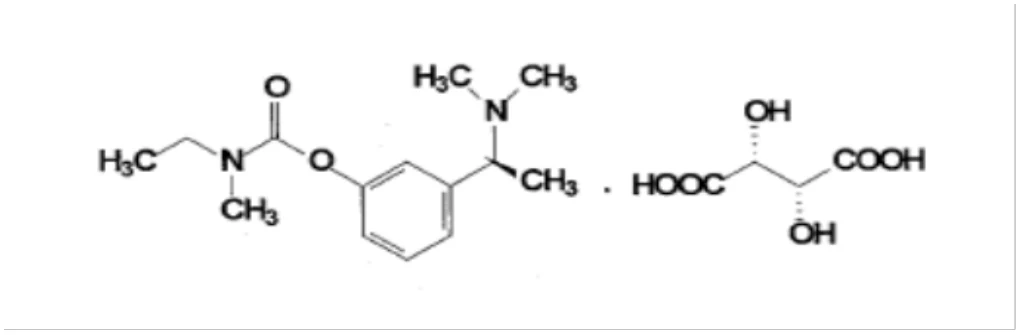
Physicochemical properties:
Description: white to off-white powder.
Melting Point: 123-125°C
Solubilities: very soluble in water, sparingly soluble in methanol, practically insoluble in ethyl acetate.
pKa: 8.85
14 CLINICAL TRIALS
14.1 Trial Design and Study Demographics
Dementia of the Alzheimer’s Type- Studies I and II
Demographics and Trial Design: Efficacy data for rivastigmine in the symptomatic treatment of patients with mild to moderate dementia of the Alzheimer’s type (diagnosed by DSM-IV and
NINCDS criteria, Mini Mental State Examination (MMSE) ≥10 and ≤26) were derived from four clinical trials. These studies were randomized, double-blind, and placebo controlled. The mean age of patients was 73 years (range: 41 to 95). Approximately 59% of the patients were women and 41% were men, while the racial distribution was: 87% Caucasian, 4% Black and 9% Other. In these clinical studies, the effectiveness of rivastigmine was evaluated using the following criteria: for primary efficacy two measures were used, (1) the cognitive subscale of the Alzheimer's Disease Assessment Scale (ADAS-Cog), a widely used and well validated multi-item instrument which samples cognitive domains affected by the disease and (2) the CIBIC-Plus (Clinician Interview Based Impression of Change that required caregiver information). The
CIBIC-Plus evaluates four major areas of functioning: general, cognition, behaviour and activities of daily living. As a secondary efficacy measure, the Progressive Deterioration Scale (PDS) was used. The PDS is a caregiver-rated evaluation which yields a compound score derived from a visual analogue scale of 29 items concerning participation in activities of daily living.
Results for two of these studies, in which a flexible maintenance-dose regimen was used, are presented here.
Table 8 - Summary of patient demographics for Study I and Study II in patients with dementia of the Alzheimer’s type
| Study # | Study design | Dosage, route of administration and duration | Study subjects (n) | Mean age (Range) | Sex Male / Female (%) |
|---|---|---|---|---|---|
| Study I (B352) | Randomized, double-blind, placebo- controlled (USA) | Rivastigmine capsules 1-4 mg daily, oral Rivastigmine capsules 6-12 mg daily, oral Placebo, oral 26-week study (up to 12- week titration phase, and 14-week maintenance) | n=233 n=231 n=235 | 74.9+7.2 73.8+7.6 74.8+7.5 | 43% / 57% 32% / 68% 42% / 58% |
| Study # | Study design | Dosage, route of administration and duration | Study subjects (n) | Mean age (Range) | Sex Male / Female (%) |
|---|---|---|---|---|---|
| Study II (B303) | Multinational , randomized, double-blind, placebo- controlled | Rivastigmine capsules 1-4 mg daily, oral Rivastigmine capsules 6-12 mg daily, oral Placebo, oral 26-week study (up to 12- week titration phase, and 14-week maintenance) | n=243 n=243 n=239 | 72.3+8.1 71.3+8.3 72.4+7.87 | 44% / 56% 39% / 61% 41% / 59% |
Dementia Associated with Parkinson’s Disease- Study B2311
The dementia which occurs in patients with an established diagnosis of idiopathic Parkinson’s disease is purportedly characterized by impairments in memory retrieval, executive function, and attention. However, based on clinical pathologic data for 110 cases of “Parkinson’s disease dementia” (PDD) from 3 well-designed studies, it is internationally recognized that the differential diagnosis of this type of dementia from Alzheimer’s disease can reliably be made without the necessity to document the specific deficits described above. Instead, the diagnostic criteria are: patients in whom a progressive dementia syndrome occurs at least 2 years after a diagnosis of Parkinson’s disease has been made, and in whom other causes of dementia have been ruled out (see 1 INDICATIONS).
Demographics and Trial Design
The efficacy of rivastigmine in the symptomatic treatment of patients with mild to moderate dementia with onset at least 2 years after the initial diagnosis of idiopathic Parkinson’s disease was demonstrated by the results of one 24-week randomized, double-blind, placebo-controlled trial, with n = 541 patients randomized in a ratio of 2:1 to an rivastigmine or placebo arm.
The diagnosis of idiopathic Parkinson’s disease was based on the United Kingdom Parkinson’s Disease Society Brain Bank clinical criteria. The diagnosis of dementia was based on the criteria stipulated under the DSM-IV category “Dementia Due To Other General Medical Condition” (code 294.1), with the additional requirements, as described above, that the dementia must have occurred at least 2 years after a diagnosis of Parkinson’s disease has been made, and alternate causes of dementia were excluded by clinical history, physical and neurological examination, brain imaging, and relevant blood tests. Thus, patients were not required to have a distinctive pattern of cognitive deficits as part of the dementia. Patients enrolled in the study had a MMSE score ≥10 and ≤24 at entry. At baseline 70% of patients had mild dementia (MMSE 17-24) and in 71% of patients severity of Parkinson’s disease was moderate (Hoehn and Yahr stage 2.5 to 4). The mean age of patients participating in this trial was 72.7 years (range: 50 to 91). Approximately 65% of patients were men, and 99.6% were Caucasian.
A flexible maintenance-dose regimen was used, with rivastigmine capsule ranging from 3-12 mg per day, divided doses. The 24-week study was divided into a 16-week titration phase, with dose increases every 4 weeks to achieve a maximum well-tolerated dose, followed by an 8-week maintenance phase. The patients in the active treatment arm of the study were maintained at their highest tolerated dose within the specified dose range.
Table 9 - Summary of patient demographics for Study B2311 in patients with dementia associated with Parkinson’s disease
| Study # | Study design | Dosage, route of administration and duration | Study subjects (n) | Mean age (Range) | Sex |
|---|---|---|---|---|---|
| Study (B2311) | Randomized, double-blind, placebo- controlled study | rivastigmine capsule 3 mg daily, oral or rivastigmine capsule 12 mg daily, oral Placebo, oral 24-week study (16- week titration phase, and 8-week maintenance) | n=362 n=179 | 72.7 (50 to 91) | Male: 65% Female: 35% |
Efficacy measures: As with the Alzheimer’s type dementia studies, the outcome data were obtained from the Intent-to-Treat population (ITT analysis, i.e., all patients who were randomized to treatment, and received at least one dose of medication, regardless of whether or not they were able to complete the study. For patients unable to complete the study, their last observation while on treatment was carried forward and used at endpoint ie LOCF).
This study used a dual outcome assessment strategy to measure the efficacy of rivastigmine capsule,
- 1) The ability of rivastigmine capsule to improve cognitive performance was assessed with the ADAS- cog. This instrument is validated for assessment of cognitive domains affected by dementia of the Alzheimer’s type.
- 2)
The ability of rivastigmine capsule to produce an overall clinical effect was assessed using the
Alzheimer’s Disease Cooperative Study - Clinician’s Global Impression of Change (ADCS- CGIC). The ADCS-CGIC is a more standardized form of CIBIC-Plus that focuses on clinicians' observations of change in the patient's cognitive, functional and behavioral performance.
Secondary efficacy measures that focused on cognitive impairments typically observed in patients with PDD included the Cognitive Drug Research (CDR) Computerized Assessment System for assessment of attentional deficit, and the Delis-Kaplan Executive Function System (D- KEFS) for assessment of executive dysfunction.
14.2 Study Results
Dementia of the Alzheimer’s Type- Studies I and II
Results for two of these studies, in which a flexible maintenance-dose regimen was used, are presented here. The data shown below were obtained from the Intent-to-Treat population (ITT analysis, i.e., all patients who were randomized to treatment, regardless of whether or not they were able to complete the study. For patients unable to complete the study, their last observation while on treatment was carried forward and used at endpoint).
STUDY I (B352)
This trial was of 26 weeks duration and was conducted in the USA. The study was subdivided into two phases, a forced titration phase, which could last up to 12 weeks, followed by a 14 week maintenance flexible-dose phase. A total of 699 patients were randomized to a 1-4 mg daily dose (n= 233) or a 6-12 mg daily dose (n = 231) of rivastigmine or placebo (n = 235) to be taken with food in two divided doses. Patients in the active treatment groups must have been able to tolerate the minimum dose in their assigned group (i.e. 0.5 mg bid or 3 mg bid) by titration Week 7 or they were discontinued. The dose escalation rate for the 1-4 mg / day group was: Starting dose 0.5 mg bid with 0.5 mg bid increases every one or two weeks according to tolerability. The dose escalation rate for the 6-12 mg / day group was: Starting dose 1 mg bid increased to 1.5 mg bid after 3 days. Subsequent dose increases were at 0.5 mg bid or 0.75 mg bid every one or two weeks according to patient tolerability. The baseline mean Mini Mental State Exam (MMSE) score of patients was 19.7 and the mean score on the Global Deterioration Scale (GDS) was 4.0.
Effects on ADAS-cog: At baseline, mean ADAS-cog scores (mean ± SE) were for the placebo group: 20.88 ± 0.72 units; for the 1-4 mg / day group: 22.65 ± 0.79 units and for the 6-12 mg / day group: 22.70 ± 0.84 units. At the first measurement of efficacy (Week 12) mean ADAS-cog change scores from placebo (mean ± standard error) were: 0.82 ± 0.52 units for the 1-4 mg / day group and 3.24 ± 0.54 units for the 6-12 mg / day dose groups. Differences from placebo were statistically significantly different only for the 6-12 mg / day group. At Week 18, mean change scores from placebo were significant for both rivastigmine dose groups (1-4 mg / day: 1.67 ± 0.54 units; 6-12 mg / day: 3.83 ± 0.57 units). Both rivastigmine treated groups also showed significant differences from placebo in ADAS-cog mean change scores at Week 26: (1-4 mg / day: 1.66 ± 0.57 units; 6-12 mg / day: 4.32 ± 0.60 units). A greater treatment effect size is noted for the 6-12 mg / day treatment. At the end of the 26-week treatment period, either no evidence of deterioration or an improvement was observed in 27% of the placebo group, 35% (1-4 mg / day) and 51% (6-12 mg / day) in the rivastigmine groups. The difference between the 6-12 mg / day group and the placebo group was statistically significant. A 4 point improvement in ADAS-cog score from baseline was observed in 6% of placebo patients, 12% (1-4 mg / day) and 23% (6-12 mg / day) of rivastigmine treated patients at the end of the 26 week period. Statistical significance from placebo for this categorical measure was noted for both the 1-4 mg / day and 6- 12 mg / day group.
Figure 1 illustrates the time course for the change from baseline in ADAS-cog scores for all three dose groups over the 26 weeks of the study. At 26 weeks of treatment, the mean differences in the ADAS-cog change scores for the rivastigmine -treated patients compared to the patients treated with placebo were 1.7 and 4.3 units for the 1-4 mg and 6-12 mg treatments, respectively. Both treatments were statistically significantly superior to placebo and the 6-12 mg / day range was significantly superior to the 1-4 mg / day range.
Figure 1: Time-course of the Change from Baseline in ADAS-cog Score (ITT-LOCF Population)
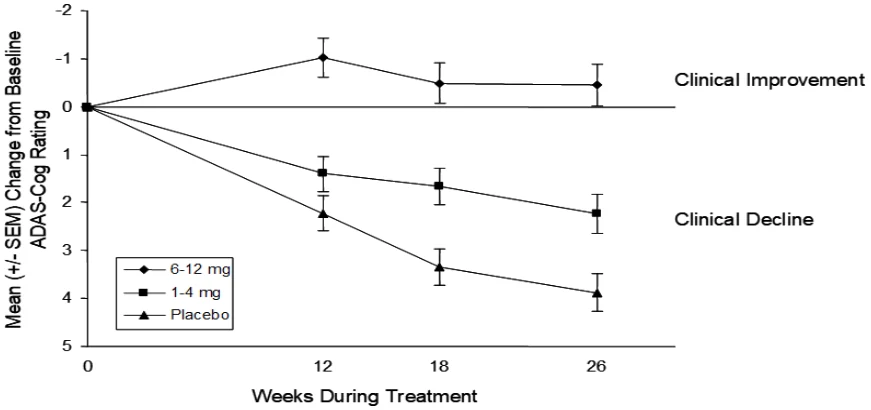
Effects on CIBIC-Plus: At Week 26 the mean drug-placebo differences were 0.22 ± 0.11 units for the 1-4 mg / day group and 0.36 ± 0.12 units for the 6-12 mg / day group. Differences from placebo were statistically significant, however, there was no statistically significant difference between the two active treatments. A histogram of the frequency distribution of CIBIC-Plus scores achieved at Week 26 by patients assigned to each of the three treatment groups is shown in Figure 2.
Figure 2: Frequency Distribution of CIBIC-Plus Scores at Week 26 (ITT-LOCF)
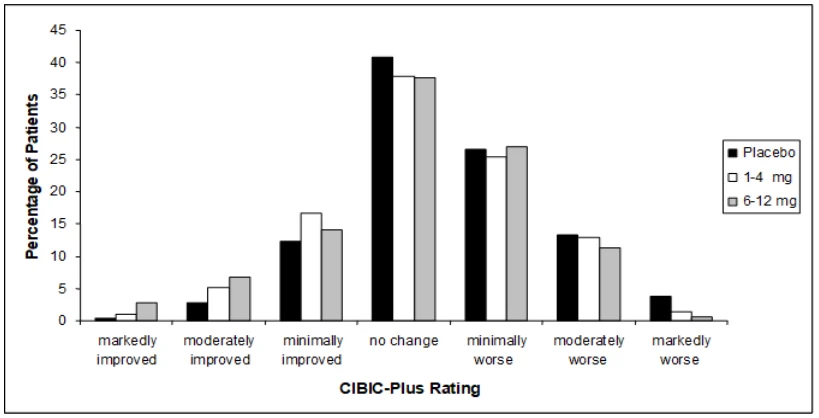
Effects on PDS: The progressive deterioration scale was used as a secondary efficacy measure. At baseline, mean PDS scores (mean ± SE) were for the placebo group: 53.7 ± 1.2 units; for the 1-4 mg / day group: 54.7 ± 1.2 units; for the 6-12 mg / day group: 52.0 ± 1.2 units. At Week 26, the placebo group declined an average of 5.2 ± 0.7 units, the 1-4 mg / day group declined 5.3 ± 0.7 units and the 6-12 mg / day group deteriorated minimally (1.0 ± 0.8 units). The difference between the 6-12 mg / day group and the placebo group was statistically significant.
STUDY II (B303)
This trial of 26 weeks duration was a multinational study (Austria, Canada, France, Germany,
Switzerland and USA). A total of 725 patients were randomized into three different treatment arms: Placebo: n = 239; 1-4 mg / day rivastigmine: n = 243; 6-12 mg / day rivastigmine: n = 243. As in Study I, this trial was comprised of two phases, a forced titration phase, which could last up to 12 weeks, followed by a maintenance flexible-dose phase. Patients in the active treatment groups must have been able to tolerate the minimum dose in their assigned group (i.e. 0.5 mg bid or 3 mg bid) by titration Week 7 or they were discontinued. The baseline mean Mini Mental State Exam (MMSE) score was 20 and the mean score on the Global Deterioration Scale (GDS) was 4.0.
Effects on ADAS-cog: At baseline, mean ADAS-cog scores (mean ± SE) were for the placebo group: 23.22 ± 0.75 units; for the 1-4 mg / day group: 24.05 ± 0.77 units and for the 6-12 mg / day group: 23.73 ± 0.84 units. At the first measurement of efficacy (Week 12) the difference in mean ADAS-cog change scores (mean ± standard error) for rivastigmine treated patients compared to placebo treated patients for the ITT-LOCF population were for the 1-4 mg / day group: 0.19 ± 0.55 units and for the 6-12 mg / day group: 1.71 ± 0.57 units. Only the difference between the 6-12 mg / day group and placebo was significant at this time point. At Weeks 18 and 26 mean ADAS-cog change scores from placebo were for the 1-4 mg / day group: 0.57 ± 0.59 (Week 18); 0.22 ± 0.67 units (Week 26) and for the 6-12 mg / day group: 1.77±0.60 units (Week 18); 2.29 ± 0.69 units (Week 26). As for Week 12, only the difference between the 6-12 mg / day group and placebo was statistically significant. At the end of the 26-week treatment period, either no evidence of deterioration or an improvement was observed in 40% of the placebo group, 45% (1-4 mg / day) and 52% (6-12 mg / day) in the rivastigmine groups. A 4 point improvement in ADAS-cog score from baseline was observed in 18% of patients who received placebo, 16% (1-4 mg / day) and 27% (6-12 mg / day) of rivastigmine treated patients at Week 26. Differences between rivastigmine (6-12 mg / day) and placebo treated groups were significant for both categorical measures.
Figure 3 illustrates the time course for the change from baseline in ADAS-cog scores for all three dose groups over the 26 weeks of the study. At 26 weeks of treatment, the mean differences in the ADAS-cog change scores for the rivastigmine capsule -treated patients compared to the patients treated with placebo were 0.2 and 2.3 units for the 1 -4 mg and 6-12 mg treatments, respectively. The 6-12 mg / day group was statistically significantly superior to placebo, as well as to the 1-4 mg / day group. The difference between the 1-4 mg / day group and placebo was not statistically significant.
Figure 3: Time-course of the Change from Baseline in ADAS-cog Score (ITT-LOCF Population)
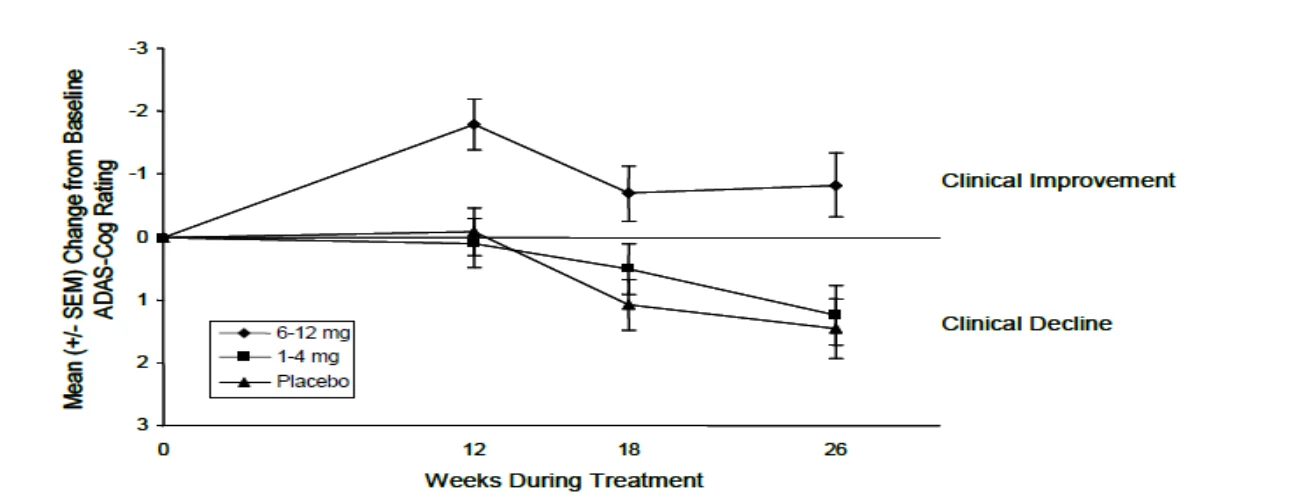
Effects on CIBIC-Plus: At Week 26 the mean drug-placebo differences were 0.15 ± 0.14 units for the 1-4 mg / day group and 0.44 ± 0.15 units for the 6-12 mg / day group. Differences from placebo were statistically significant only for the 6-12 mg / day dose group. A histogram of the frequency distribution of CIBIC Plus scores achieved at Week 26 by patients assigned to each of the three treatment groups is shown in Figure 4.
Figure 4: Frequency Distribution of CIBIC-Plus Scores at Week 26 (ITT-LOCF)
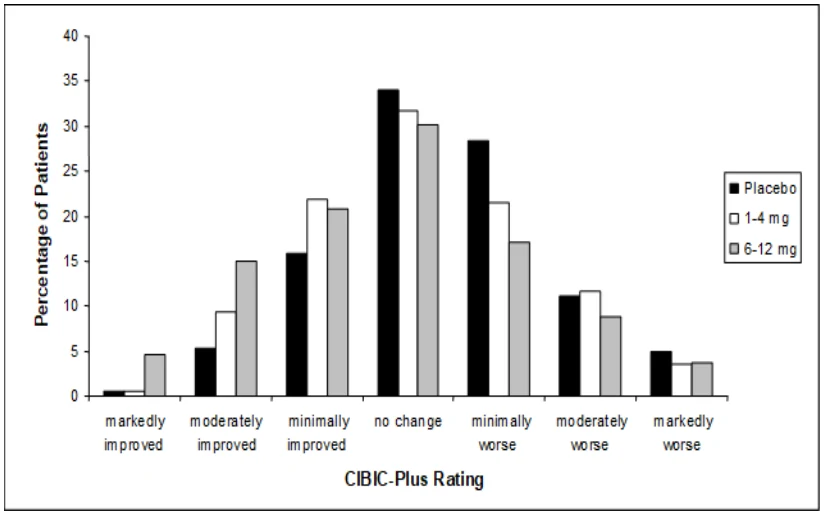
Effects on PDS: The progressive deterioration scale was used as a secondary efficacy measure. At baseline, mean PDS scores (mean ± SE) were for the placebo group: 54.8 ± 1.3 units; for the 1-4 mg / day group: 53.8 ± 1.3 units; for the 6-12 mg / day group: 55.2 ± 1.2 units. At Week 26, while the placebo group declined an average of 2.2 ± 0.9 units and the 1-4 mg / day group deteriorated by 3.3 ± 0.9 units, the 6-12 mg / day group improved by 0.5 ± 1.0 units, which was a statistically significant difference. The 6-12 mg / day group was statistically significantly superior to placebo as well as the lower dose range.
Data from these controlled clinical trials suggest that rivastigmine doses between 6-12 mg / day are more likely to result in beneficial symptomatic effects.
Dementia Associated with Parkinson’s Disease- Study B2311
Effects on the ADAS-cog: At baseline, mean ADAS-cog scores (mean ± SD) were 24.5 ± 10.6 points for the placebo-treated group and 24.0 ± 10.3 points for the rivastigmine capsule -treated group. At the first measurement of efficacy (Week 16), mean ADAS-cog change scores from placebo for the r rivastigmine capsule -treated patients was 2.74 (95% C.I. 1.42; 4.06; p<0.001). At 24 weeks of treatment, the mean difference in the ADAS-cog change scores for the rivastigmine capsule -treated patients compared to the patients on placebo was 3.54 (95% C.I. 2.05; 5.04; p<0.001). This treatment difference was statistically significant in favor of rivastigmine capsule when compared to placebo. At the end of the 24-week treatment period, a 4-point improvement in ADAS-cog score from baseline was observed in 29% of placebo-treated patients compared to 40% of rivastigmine capsule -treated patients. Statistical significance from the placebo-treated group for this categorical measure was noted. Figure 5 illustrates the time course for the change from baseline in ADAS-cog scores for both treatment groups over the 24-week study. At 24 weeks of treatment, the mean difference in the ADAS-cog change scores for the rivastigmine capsule -treated patients compared to the patients on placebo was 3.6 points. This treatment difference was statistically significant in favor of rivastigmine capsule when compared to placebo.
Figure 5: Time course of the Change from Baseline in ADAS-cog (ITT-LOCF Population)
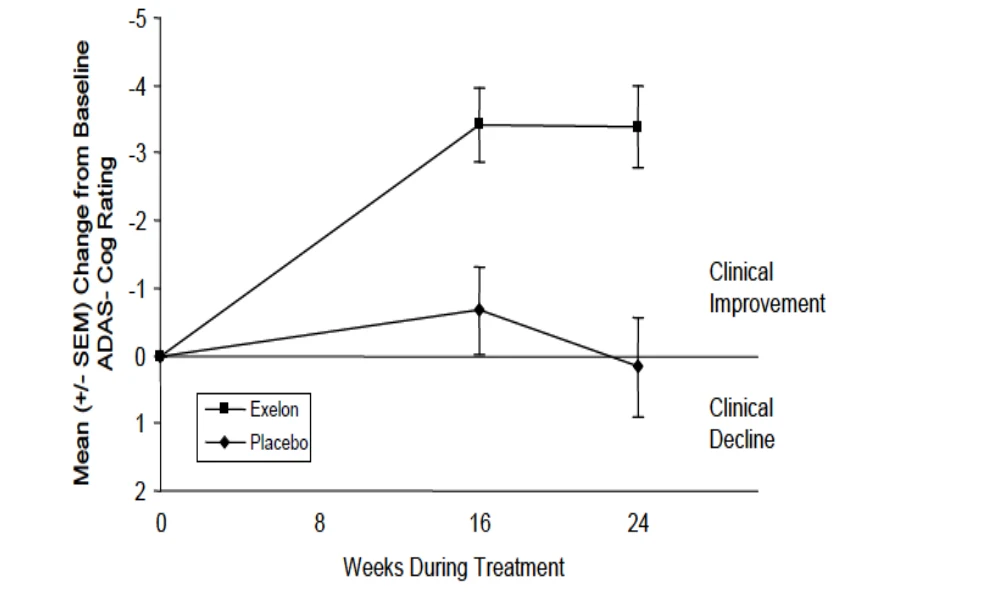
Effects on the ADCS-CGIC: At 24 weeks, the mean difference in change scores between the rivastigmine capsules -treated group and the placebo-treated group from baseline was 0.6 points.
The categorical analysis showed statistically significantly more patients who improved and less patients who had worsening in the rivastigmine capsules treated group, compared to those treated with placebo (p<0.001). A histogram of the distribution of patients’ scores on the ADCS-CGIC at Week-24 is shown in Figure 6.
Figure 6: Frequency Distribution of ADCS-CGIC Scores at Week 24 (ITT-LOCF)


Secondary cognitive efficacy measures
Results of the analysis of secondary efficacy measures (change from baseline at 24 weeks) for CDR power of attention score and for D-KEFS verbal fluency test supported the co-primary outcomes.
14.3 Comparative Bioavailability Studies
A randomized, balanced, double blinded, two-treatment, two-period, two-sequence, single-dose, crossover, bioequivalence study of PrJAMP Rivastigmine Capsules, 6 mg (JAMP Pharma Corporation) and PrEXELON ®/MD Rivastigmine capsules 6 mg, (Novartis Pharmaceuticals Canada Inc.) was conducted in healthy, adult, human subjects under fasting conditions.
SUMMARY TABLE OF THE COMPARATIVE BIOAVAILABILITY DATA
Rivastigmine (1 x 6 mg) From measured data Geometric Mean1 Arithmetic Mean (CV %) | ||||
| Parameter | Test2 | Reference3 | % Ratio of Geometric Means | 90% Confidence Interval |
AUCT (ng.h / ml) | 99.99 127.25 (82.7) | 95.29 116.26 (72.1) | 104.9 | 97.4 - 113.1 |
AUCI (ng.h / ml) | 102.54 130.37 (83.9) | 98.09 119.35 (72.5) | 104.5 | 97.1 - 112.5 |
Cmax (ng / ml) | 33.61 36.76 (45.3) | 31.53 33.87 (40.2) | 106.6 | 97.2 - 116.8 |
Tmax4 (hr) | 1.25 (0.500- 3.50) | 1.25 (0.75 - 2.00) | ||
Rivastigmine (1 x 6 mg) From measured data Geometric Mean1 Arithmetic Mean (CV %) | ||||
| Parameter | Test2 | Reference3 | % Ratio of Geometric Means | 90% Confidence Interval |
T1/25 (hr) | 1.72 (22.9) | 1.71 (24.6) | ||
1 Expressed as Geometric least square mean
2 prJAMP Rivastigmine Capsules, 6 mg (JAMP Pharma Corporation)
3 PrEXELON ®/MD Rivastigmine capsules 6 mg, (Novartis Pharmaceuticals Canada Inc.)
4 Expressed as the median (range) only
5 Expressed as the arithmetic mean (CV%)
15 MICROBIOLOGY
No microbiological information is required for this drug product.
16 NON-CLINICAL TOXICOLOGY
Animal Pharmacodynamics
IC50 values for rivastigmine-induced inhibition of AChE activity in vitro in various rat brain areas were as follows: Cortex: 1.7 x 10⁻⁵M; Hippocampus: 1.5 x 10⁻⁵M, Striatum: 2.0 x 10⁻⁵M and Pons / Medulla: 2.0 x 10⁻⁵M.
AChE activity measured ex vivo was inhibited in several rat brain regions following p.o. administration of single rivastigmine doses. The effect of rivastigmine single p.o. doses on enzyme activity was noted to be more pronounced in the hippocampus and cortex than in the striatum and pons / medulla of these rats (IC50 : Cortex: 0.5 mg / kg, p.o.; Hippocampus: 1 mg / kg, p.o.; Striatum: 1.75 mg / kg, p.o. and Pons / Medulla: 2mg / kg, p.o.). Physostigmine, administered s.c., inhibited AChE activity to an equal degree in all rat brain regions examined (IC50: Cortex: 0.22 mg / kg; Hippocampus: 0.27 mg / kg; Striatum: 0.28 mg / kg and Pons / Medulla: 0.27mg / kg).
Single p.o. doses of rivastigmine also resulted in an increased accumulation of ACh levels in the rat brain which were more pronounced in the cortex than the hippocampus or striatum.
When administered s.c., a single dose (0.75 mg / kg) of rivastigmine inhibited AChE activity in the periphery (Heart: 55% control values; Blood: 34% control values) to an equivalent degree as in brain (Cortex: 37% control values; Hippocampus 45% control values).
Chronic continuous dosing with rivastigmine also resulted in diminished selectivity of the drug for AChE activity in brain versus the periphery (heart / blood). Similarly, the apparent selectivity of rivastigmine for AChE within specific rat brain areas was also lost with chronic continuous dosing (14 days).
Induction of slow rhythmic activity in the hippocampal EEG (synchronization of theta-waves) has been proposed to reflect increased central muscarinic activity. Rivastigmine synchronized rhythmical slow wave activity in the hippocampal EEG in rats at a threshold dose of 75 mcg / kg both i.p. and p.o. Similar effects were noted with physostigmine at a dose of 75 mcg / kg i.p.
The pulmonary effects of rivastigmine were assessed using the ventilated guinea-pig model. Rivastigmine at doses of 0.01 to 1 mg / kg i.v. did not affect airway resistance. However, pretreatment with 0.1 mg / kg i.v. rivastigmine resulted in a potentiation of ACh-induced bronchospasm at all ACh doses tested (3.2 mcg / kg, 5.6 mcg / kg and 10 mcg / kg, i.v.).
It was concluded that rivastigmine is an acetylcholinesterase inhibitor of the carbamate type. Its main preclinical properties are:
- high central to peripheral cholinergic activity ratio after a single p.o. dose;
- selectivity for cortical and hippocampal brain regions after a single p.o. dose;
- prolonged duration of action (hours); and
Animal Pharmacokinetics
The studies performed to evaluate the pharmacokinetics in animals with rivastigmine allow the following conclusions to be drawn concerning rivastigmine:
- total radioactivity rapidly and widely distributed into tissues in rodents;
- metabolic clearance linear except in the dog;
- accumulation and hepatic enzyme induction does not present after repeated oral dosing;
- good brain penetration.
General Toxicology
Acute Toxicology: The estimated oral LD50 values in mice were 5.6 mg / kg (males) and 13.8 mg / kg (females). The estimated oral LD50 values in rats were 8.1 mg / kg (males) and 13.8 mg / kg (females). These dose levels are more than 20 times the maximum recommended human dose of 12 mg / day (assuming a 50 kg body weight). The LD50 values determined in these studies are summarised Table 11.
Table 11
| Species | Strain | Sex | Route | Dose Levels (mg / kg) | LD50 value (mg / kg) |
|---|
| Mouse | CD-1 | M | Oral | 0.63, 6.25, 31.25 | 5.6 |
|---|---|---|---|---|---|
| F | Oral | 0.63, 6.25, 31.25 | 13.8 | ||
| CD-1 | M | i.v. | 1.25, 3.13, 3.75 | 2.8 | |
| F | i.v. | 3.13, 3.75, 5.0 | 4.1 | ||
| Rat | CD | M | Oral | 0.63, 6.25, 31.25 | 8.1 |
| F | Oral | 0.63, 6.25, 31.25 | 13.8 | ||
| Mouse | CD-1 | M | i.p. | 0.63, 6.25, 31.25 | 1.9 |
| F | i.p. | 0.63, 6.25, 31.25 | 1.9 | ||
| Rat | CD | M | i.p. | 0.63, 6.25, 31.25 | 4.4 |
| F | i.p. | 0.63, 6.25, 31.25 | 1.9 | ||
| Dog | Beagl e | M | Oral | 0.31, 1.25, 5.0 | >1 and < 5 |
The results of these studies demonstrate the moderate toxicity of ENA 713 following acute oral, i.v., and i.p. administration to mice, rats or dogs.
Long Term Toxicology: Table 12 outlines the long-term toxicology studies done in rats, mice, dogs and monkeys with rivastigmine.
Table 12
| Species | Duration of Study Weeks | Route of Administration | No. of animals / group | Dose Levels (mg/kg/day) |
|---|---|---|---|---|
| Mouse | 8 13 104 | oral (gav) oral (diet) oral (gav) | 5M, 5F 10M, 10F 70M, 70F | 0, 0.38, 0.78, 1.56, 2.5, 3.13, 6.25 0, 0.13, 0.5-75.0, 1.5 0, 0.25, 0.63, 1.56 |
| Rat | 2 2 4 13 26 52+ 104 | oral (gav) i.v. oral (gav) oral (gav) oral (gav) oral (gav) oral (gav) | 10M 15M, 15F 10M, 10F 10M 15M, 15F 25M, 25F 75M, 75F | 0.03, 0.25, 2.50 0, 0.5, 2.5 0, 0.38, 1.5, 3.75 0, 0.13, 0.5-6.0, 1.50 0, 0.11, 0.45, 1.50 0, 0.13, 0.38, 1.13, 1.88 0, 0.13, 0.38, 1.13 |
| Species | Duration of Study Weeks | Route of Administration | No. of animals / group | Dose Levels (mg/kg/day) |
|---|---|---|---|---|
| Dog | 2 2 4 4 26 52 | oral (gav) i.v. oral (gav) oral (gav) oral (gav) oral (gav) | 1M, 1F 2M, 2F 3M, 3F 3M, 3F 3M, 3F 4M, 4F | 0.06, 0.63, 2.50-1.88 0, 0.09, 0.47 0, 0.04, 0.38, 2.25-1.88 0, 0.11, 0.19, 0.26 0, 0.11, 0.45, 1.58 0, 0.19, 0.38, 1.56-1.31 |
| Monkey | 2 | oral (gav) | 1M, 1F | 1.88 (days 1-7) 2.50 (days 8-10) 3.75 (days 11-13) 6.25 (day 14) |
Mice: In multidose studies in mice, the toxic dose for rivastigmine was 2.5 mg/kg/day by oral gavage; oral admixture doses up to 75 mg/kg/day resulted in one mortality during Week 14 at a dose of 75 mg/kg/day.
Clinical signs were typical of cholinergic stimulation and statistically significant decreases in body weights and food consumption were seen at doses of 2.5 mg/kg/day and higher. Plasma (butyryl) and acetylcholinesterase activities were decreased in the 13-week study in the 0.5-75 mg/kg/day group. Selected tissue cholinesterase activity (liver, brain, and psoas muscle) was reduced at doses of 1.5 and 0.5-75 mg/kg/day.
Rats: One mortality in rats at 0.11 mg/kg/day was of unknown causes and was considered to be of questionable biological significance. There were no treatment-related effects on mortality at doses as high as 1.13 mg/kg/day. Treatment related dose-dependent clinical signs were consistent with excessive cholinergic stimulation of the peripheral and central nervous systems and were observed at a dose as low as 0.11 mg/kg/day. Statistically significant decreases in body weight gains and food consumption were observed at 1.13 mg/kg/day. Statistically significant decreases in triglycerides were observed at doses of 1.13, 1.5, 1.88, and 3.75 mg/kg/day in the 4- and 52-week studies and were considered to be related to rivastigmine.
Significant decrease in butylcholinesterase activities was observed at 2.5 and 3.75 mg/kg/day in the 15-day and 4-week studies; and in urinary pH at 3.75 mg/kg/day in males in the 4-week study, considered to be of minimal biological significance. Effects on plasma cholinesterase activity were not observed at doses below 2.5 mg/kg/day in any oral gavage study.
Dogs: Doses were lowered in three studies due to overt clinical signs. Treatment related unscheduled deaths occurred in two dog studies at doses of 1.56 / 1.31 or 2.25 / 1.88 mg/kg/day. Treatment related dose-dependent clinical signs were observed at doses as low as 0.19 mg/kg/day and were typical of excessive cholinergic stimulation. Clonic / tonic convulsion was observed in one 0.38 mg/kg/day male on one episode and one female (1.56 / 1.31 mg/kg/day) on two episodes. Statistically significant dose-related decreases in butylcholinesterase activity were observed at doses as low as 0.04 mg/kg/day. Statistically significant decreases in liver and brain cholinesterase activity at 2.25/1.88 mg/kg/day and liver cholinesterase at 0.45 and 1.58 mg/kg/day were observed in the 4-week and 26-week studies. In life pathology findings revealed that dogs were very sensitive to rivastigmine, particularly on the GI tract.
Monkeys: There was no mortality in the monkey study, however only 2 animals were treated for a period of 2 weeks (see Table 12). There appeared to be slight reduction in body weight and food consumption. Plasma (butyryl) cholinesterase activity was reduced by 15% or 29% and 6% or 14% on Days 6 and 14, respectively. Erythrocyte cholinesterase activity was reduced by 60% or 90% and 40% or 60% at the same time points. It was concluded that rivastigmine was better tolerated in monkeys for up to 2 weeks, than in rats or dogs.
Genotoxicity
Rivastigmine was not mutagenic in the Ames test, a test for induction of DNA repair synthesis, the in vivo micronucleus test in mice, and the HGPRT test in V79 Chinese hamster cells. The in vitro chromosomal aberration test in V79 Chinese hamster cells showed an increase in aberrations only in the presence of liver metabolic enzymes and at a concentration at least 10 000 times greater than that likely to be found in human plasma.
Carcinogenicity
No evidence of carcinogenicity was found in oral and topical studies in mice and in oral study in rats at the maximum tolerated dose. The exposure to rivastigmine and its major metabolite was approximately equivalent to human exposure with highest doses of rivastigmine capsules and patches (i.e. 12 mg rivastigmine / 70kg human).
Reproductive and Developmental Toxicology
Oral studies in pregnant rats at dose levels up to 2.3 mg-base/kg/day and pregnant rabbits at dose levels up to 2.3 mg-base/kg/day gave no indication of a teratogenic potential for rivastigmine. Similarly, there was no evidence of adverse effects of rivastigmine on fertility and reproductive performance in the rat at dose levels up to 1.1 mg-base/kg/day. A minor delay in development up to mating was noted for the F1 generation, however, no teratological changes were reported.
Special Toxicology
Eye Irritation: Rivastigmine in concentrated liquid form caused mild reversible irritation to rabbit eyes which may indicate some potential for eye irritation in patients should contact occur.
- 17. SUPPORTING PRODUCT MONOGRAPH
PrEXELON® (Capsules, 1.5 mg, 3 mg, 4.5 mg, 6 mg and Solution, 2mg/mL), submission control No. 273941, Product Monograph, Knight Therapeutics Inc. (Oct 03, 2023)