


Product Monograph - Keflex
INDICATIONS
KEFLEX® (cephalexin) may be indicated for the treatment of bacterial infections of the respiratory tract (1, 12) (l3, l4), including otitis media (1,2), genitourinary tract (3) , bones and joints (4,5), skin and soft tissue (6,7) when the infection is caused by susceptible organisms. Culture and susceptibility studies should be performed.
To reduce the development of drug-resistant bacteria and maintain the effectiveness of KEFLEX® and other antibacterial drugs, KEFLEX® should be used only to treat infections that are proven or strongly suspected to be caused by susceptible bacteria. When culture and susceptibility information are available, they should be considered in selecting or modifying antibacterial therapy. In the absence of such data, local epidemiology and susceptibility patterns may contribute to the empiric selection of therapy.
CONTRAINDICATIONS
KEFLEX® (cephalexin) is contraindicated in patients with known allergy to the cephalosporin group of antibiotics.
WARNINGS
Before therapy with KEFLEX® (cephalexin) is instituted, careful inquiry should be made concerning previous hypersensitivity reactions to cephalosporins, penicillins or other drugs. KEFLEX® should be given only with caution to penicillin-sensitive patients. There is some evidence of cross-allergenicity between the penicillins and the cephalosporins. Patients have been reported to have had severe reactions (including anaphylaxis) to both.
Antibiotics including KEFLEX® should be administered with caution, and then only when absolutely necessary, to any patient who has demonstrated some form of allergy, particularly to drugs. Of 12,917 clinical trial patients, 462 had histories of penicillin allergy (8). Twenty-one of them (about 4.6 percent) were among those in whom possible allergic reactions to cephalexin were observed.
Severe Cutaneous Adverse Reactions
Severe cutaneous adverse reactions (SCAR) such as acute generalized exanthematous pustulosis (AGEP), drug reaction with eosinophilia and systemic symptoms (DRESS), Stevens-Johnson syndrome (SJS), and toxic epidermal necrolysis (TEN) have been reported in association with beta-lactam treatment. When SCAR is suspected, KEFLEX® should be discontinued and appropriate therapy and/or measures should be taken.
Gastrointestinal
Clostridium difficile-associated disease
Clostridium difficile-associated disease (CDAD) has been reported with use of many antibacterial agents, including KEFLEX®. CDAD may range in severity from mild diarrhea to fatal colitis. It is important to consider this diagnosis in patients who present with diarrhea, or symptoms of colitis, pseudomembranous colitis, toxic megacolon, or perforation of colon subsequent to the administration of any antibacterial agent. CDAD has been reported to occur over 2 months after the administration of antibacterial agents.
Treatment with antibacterial agents may alter the normal flora of the colon and may permit overgrowth of Clostridium difficile. C. difficile produces toxins A and B, which contribute to the development of CDAD. CDAD may cause significant morbidity and mortality. CDAD can be refractory to antimicrobial therapy.
If the diagnosis of CDAD is suspected or confirmed, appropriate therapeutic measures should be initiated. Mild cases of CDAD usually respond to discontinuation of antibacterial agents not directed against Clostridium difficile. In moderate to severe cases, consideration should be given to management with fluids and electrolytes, protein supplementation, and treatment with an antibacterial agent clinically effective against Clostridium difficile. Surgical evaluation should be instituted as clinically indicated, as surgical intervention may be required in certain severe case (see ADVERSE REACTIONS).
Susceptibility/Resistance
Development of Drug-Resistant Bacteria
Prescribing KEFLEX® in the absence of' a proven or strongly suspected bacterial infection is unlikely to provide benefit to the patient and risks the development of drug-resistant bacteria.
PRECAUTIONS
As is the case with all drugs, patients should be followed carefully so that adverse reactions or unusual manifestations of drug idiosyncrasy may be detected. If an allergic reaction to KEFLEX® (cephalexin) occurs, the drug should be discontinued and the patient treated with the usual agents (e.g., epinephrine or other pressor amines, antihistamines, or corticosteroids).
Prolonged use of KEFLEX® may result in overgrowth of non-susceptible organisms. Careful observation of the patient is essential. If super infection occurs during therapy, appropriate measures should be taken.
KEFLEX® should be administered with caution in the presence of markedly impaired renal function. Under such conditions, careful clinical observation and laboratory studies should be made because safe dosage may be lower than that usually recommended.
If KEFLEX® is to be used for long term therapy, periodic monitoring of hematology, renal and hepatic functions should be done.
Indicated surgical procedures should be performed in conjunction with antibiotic therapy; e.g., the incision and drainage of abscesses.
Safety of this product for use during pregnancy has not been established.
Positive direct Coombs' tests have been reported during treatment with the cephalosporin antibiotics. In hematologic studies or in transfusion cross-matching procedures when antiglobulin tests are performed on the minor side or in Coombs' testing of newborns whose mothers have received cephalosporin antibiotics before parturition, it should be recognized that a positive Coombs' test may be due to the drug.
In patients being treated with KEFLEX®, a false-positive reaction for glucose in the urine may occur with Benedict's or Fehling's solutions or with Clinitest tablets, but not with Tes-Tape® (Glucose Enzymatic Test Strip, USP).
ADVERSE REACTIONS
Of 12,917 patients treated with KEFLEX® (cephalexin) in formal clinical trials, 771(6%) reported adverse events, of which 385 (3%) were judged to be drug related (8). Four hundred and sixty-two of these patients had known sensitivity to penicillin, 4.6% reacted. The incidence of reported side effects is shown in Table 1.
TABLE 1: Adverse Events Reported in 12,917 Patients Treated With KEFLEX®
| Relationship to Drug | ||||||||||
| Probable/definite | Uncertain | Discontinued Treatment | Total Reports | Percent | ||||||
| Gastrointestinal | ||||||||||
| Diarrhea | 87 | 77 | 31 | 164 | 1.3 | |||||
| Nausea | 72 | 62 | 24 | 134 | 1.0 | |||||
| Vomiting | 38 | 44 | 24 | 82 | 0.6 | |||||
| Dyspepsia/G.I. upset | 24 | 7 | 5 | 31 | 0.2 | |||||
| Abdominal cramp/pain | 9 | 8 | 5 | 17 | 0.1 | |||||
| Anorexia | 11 | 6 | 2 | 17 | 0.1 | |||||
| Hypersensitivity | ||||||||||
| Skin rash | 52 | 42 | 42 | 94 | 0.7 | |||||
| Urticaria | 22 | 12 | 19 | 34 | 0.3 | |||||
| Central Nervous System | ||||||||||
| Headache | 7 | 11 | 6 | 18 | 0.1 | |||||
| Genitourinary | ||||||||||
| Genital Moniliasis | 42 | 11 | 6 | 53 | 0.8 | |||||
| Vaginitis | 15 | 11 | 4 | 26 | 0.4 | |||||
| Pruritus Vulvae | 10 | 5 | - | 15 | 0.2 | |||||
Other adverse reactions experienced less frequently include: glossitis/stomatitis, oral moniliasis, pruritus ani, gastroenteritis, fever, pruritus, a positive direct Coombs', allergy/anaphylaxis, intertrigo, angioedema, dizziness, paresthesia, somnolence, visual hallucination/diplopia, insomnia, tremor, leucorrhea, dysuria, malaise/fatigue, super infection, myalgia/back pain, nuchal swelling, dyspnea, cardiac arrhythmia and vasodilatation.
One hundred and seventy patients (1.3%) had abnormal laboratory values. There was no consistent pattern of abnormality and only 2 patients were withdrawn from studies as a result of these findings.
TABLE 2: Abnormal Laboratory Values
| Relationship to drug | |||||||||
| Probable/Definite | Uncertain | Total Reports | Percent | ||||||
| Hematological | |||||||||
| Eosinophilia | 27 | 18 | 45 | 0.4 | |||||
| Biochemical | |||||||||
| Elev. Alk Phosphatase. | 9 | 15 | 24 | 0.2 | |||||
| Elev. SGOT | 11 | 21 | 32 | 0.3 | |||||
| Elev. SGPT | 6 | 16 | 22 | 0.2 | |||||
| Renal | |||||||||
| Elev. BUN | 3 | 11 | 14 | 0.1 | |||||
Other abnormal values reported less frequently included: elevated creatinine, bilirubin and cholesterol; decreased platelets, hemoglobin and/or hematocrit.
The following adverse reactions have been reported during postmarketing experience:
Gastrointestinal
Symptoms of pseudomembranous colitis may appear either during or after antibiotic treatment. Nausea and vomiting have been reported. The most frequent side effect has been diarrhea. It was very rarely severe enough to warrant cessation of therapy. Dyspepsia and abdominal pain have also occurred. As with some penicillins and some other cephalosporins, transient hepatitis and cholestatic jaundice have been reported.
Hypersensitivity
Allergic reactions in the form of rash, urticaria, angioedema, erythema multiforme, Stevens-Johnson syndrome, or toxic epidermal necrolysis have been observed. These reactions usually subsided upon discontinuation of the drug. In some of these reactions, supportive therapy may be necessary. Anaphylaxis has also been reported.
Other reactions have included genital and anal pruritus, genital moniliasis, vaginitis and vaginal discharge, dizziness, fatigue, headache, agitation, confusion, hallucinations, arthralgia, arthritis, and joint disorder. Reversible interstitial nephritis, eosinophilia, neutropenia, leukopenia, thrombocytopenia, and slight elevations in SGOT and SGPT have been reported.
Vertigo, tinnitus, hearing loss and behavioural changes in young children have been reported with cephalexin use.
OVERDOSAGE
Activated charcoal may be administered to aid in the removal of unabsorbed drug. General supportive measures are recommended.
Signs and Symptoms
Symptoms of oral overdose may include nausea, vomiting, epigastric distress, diarrhea, and hematuria. If other symptoms are present, it is probably secondary to an underlying disease state, an allergic reaction, or toxicity due to ingestion of a second medication.
Treatment
Unless 5 to 10 times the normal dose of cephalexin has been ingested, gastrointestinal decontamination should not be necessary.
Protect the patient's airway and support ventilation and perfusion. Meticulously monitor and maintain, within acceptable limits, the patient's vital signs, blood gases, serum electrolytes, etc. Absorption of drugs from the gastrointestinal tract may be decreased by giving activated charcoal, which, in many cases, is more effective than emesis or lavage; consider charcoal instead of or in addition to gastric emptying. Repeated doses of charcoal over time may hasten elimination of some drugs that have been absorbed. Safeguard the patient's airway when employing gastric emptying or charcoal.
Forced diuresis, peritoneal dialysis, hemodialysis, or charcoal hemoperfusion have not been established as beneficial for an overdose of cephalexin; however, it would be extremely unlikely that one of these procedures would be indicated.
For management of a suspected drug overdose, contact your regional Poison Control Centre.
DOSAGE AND ADMINISTRATION
KEFLEX® (cephalexin) is administered orally. The adult dosage ranges from 1 to 4 g daily in divided doses. The usual adult dose is 1 g/day in divided doses every 6 hours. For more severe infections or those caused by less susceptible organisms, larger doses may be needed. If daily doses of KEFLEX® greater than 4 g are required, parenteral cephalosporins, in appropriate doses should be considered. The recommended daily dosage for children is 25 to 50 mg/kg/day in divided doses every 6 hours.
For the treatment of bacterial pharyngitis caused by Streptococcus pyogenes group A, and, acute cystitis, the daily dosage may be divided into two and given every 12 hours.
KEFLEX® SUSPENSION
| CHILD’S WEIGHT | 125 mg/5 mL | 250 mg/5 mL |
| 10 kg (22 lb) | 1/2 to 1 tsp. q.i.d. | -- |
| 20 kg (44 lb) | 1 to 2 tsp. q.i.d. | 1/2 to 1 tsp. q.i.d. |
| 40 kg (88 lb) | 2 to 4 tsp. q.i.d. | 1 to 2 tsp. q.i.d. |
| OR | ||
| 10 kg (22 lb) | 1 to 2 tsp. b.i.d. | - |
| 20 kg (44 lb) | 2 to 4 tsp. b.i.d. | 1 to 2 tsp. b.i.d. |
| 40 kg (88 lb) | 4 to 8 tsp. b.i.d. | 2 to 4 tsp. b.i.d |
In severe infections, the dosage may be doubled.
In the treatment of beta hemolytic streptococcal infections, KEFLEX® therapy should be administered for at least ten days.
To obtain maximum peak levels, KEFLEX® should be administered on an empty stomach.
PHARMACEUTICAL INFORMATION
Drug Substance
Trade Name: KEFLEX®
Common Name: Cephalexin Monohydrate
Chemical Name: 7- (D-2-amino-2-phenyl--acetamido) - 3-methyl-3-cephem-4-carboxylic acid monohydrate.
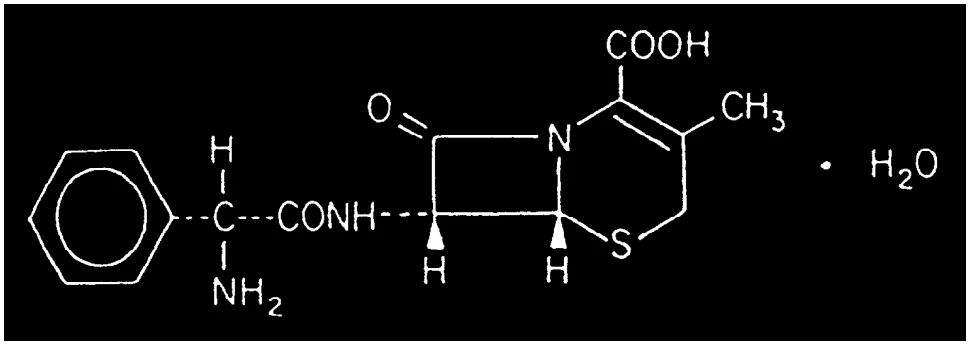
Molecular Formula: C16Hl7N3O4S • H2O
Molecular Weight: 365.40 g/mol
Physicochemical Properties
Description: Cephalexin is an off-white crystalline solid with a bitter taste and faintly sulfurous odor. It is zwitterion and exists essentially as an inner salt at pH levels of 3 to 7. It is supplied as the monohydrate. The dry compound is relatively stable and may be stored at room temperature (25°C).
AVAILABILITY OF DOSAGE FORMS
Each 250 mg tablet of KEFLEX® contains 250 mg of cephalexin (No. 1894), Identi-Code U-57 and contains the following the non-medicinal ingredients: Glycerin, Hydroxypropyl Methylcellulose, Starch, Magnesium Stearate, Methyl Cellulose, Pregelatinized Maize Starch, Red Iron Oxide, Sodium Starch Glycolate, Stearic Acid Powder, Talc, Titanium Dioxide and Yellow Iron Oxide. KEFLEX® 250 mg tablets are supplied in bottles of 100 and 500 tablets.
Each 500 tablet of KEFLEX® contains 500 mg of cephalexin (No. 1895), Identi-Code U-49 and contains the following the non-medicinal ingredients: Glycerin, Hydroxypropyl Methylcellulose, Magnesium Stearate, Methyl Cellulose, Povidone, Red Iron Oxide, Sodium Starch Glycolate, Talc, Titanium Dioxide and Yellow Iron Oxide. KEFLEX® 500 mg tablets supplied in bottles of 100 and 250 tablets.
KEFLEX® Oral Suspension 125 mg/5mL contains 125 mg of cephalexin per 5 mL (No. M-201), Identi-Code W-21 and contains the following the non-medicinal ingredients: FD&C Red No. 40, Imitation Guarana Flavour, Methylcellulose, Sodium Lauryl Sulfate, Sucrose Fine Granulated and Sucrose Silicone. KEFLEX® Oral Suspension 125 mg/5mL is supplied in 100 and 200 mL bottles.
KEFLEX® Oral Suspension 250mg/5mL contains 250 mg of cephalexin per 5 mL (No. M-202), Identi-Code W-68 and contains the following the non-medicinal ingredients: FD&C Yellow No. 6, Imitation Guarana Flavour, Methylcellulose, Sodium Lauryl Sulfate, Sucrose Fine Granulated and Sucrose Silicone. KEFLEX® Oral Suspension 250 mg/5mL is supplied in 100 and 200 mL bottles.
MICROBIOLOGY
KEFLEX® (cephalexin) is active against the following organisms in vitro:
Beta-hemolytic and other streptococci (many strains of enterococci; e.g., Streptococcus faecalis, are resistant).
Staphylococci, including coagulase-positive, coagulase-negative, and penicillinase-producing strains (a few strains of staphylococci are resistant to cephalexin).
Streptococcus pneumonia Proteus mirabilis
Escherichia coli Klebsiella pneumonia
Hemophilus influenzae Branhamella catarrhalis
KEFLEX® is not active against most strains of Enterobacter sp., Pr. morganii, and Pr. vulgaris. It has no activity against Pseudomonas or Herellea species. When tested by in vitro methods, staphylococci exhibit cross-resistance between KEFLEX® and methicillin-type antibiotics.
Table 3 shows the tube dilution sensitivity data as supplied by several investigators.
TABLE 3 (11): Susceptibility of Clinically Isolated Bacteria to KEFLEX® Expressed as Cumulative Percent
MINIMUM INHIBITORY CONCENTRATION (mcg/mL) |
| ORGANISM | NO. OF ISOLATES | #2 | 2.5 - 4 | 5-8 | 10-16 | 20-32 | 40-64 |
Staph. aureus (unspecified) | 458 | 31 | 58 | 81 | 92 | 97 | 99 |
Staph. aureus (penicillin-resistant) | 158 | 41 | 82 | 88 | 98 | 99 | 100 |
Staph. aureus (penicillin-sensitive) | 171 | 68 | 84 | 98 | 100 | 100 | 100 |
| Staph. epidermidis | 42 | 29 | 62 | 83 | 91 | 95 | 95 |
| Str. pneumoniae | 259 | 57 | 94 | 100 | 100 | 100 | 100 |
| Str. pyogenes (group A) | 262 | 84 | 91 | 96 | 99 | 100 | 100 |
| E. coli | 1165 | 1 | 9 | 40 | 76 | 88 | 92 |
| Klebsiella sp. | 533 | 1 | 9 | 55 | 78 | 86 | 88 |
| Pr. mirabilis | 535 | - | 3 | 14 | 56 | 77 | 84 |
| H. influenzae | 258 | 18 | 33 | 62 | 88 | 99 | 100 |
| B. catarrhalis | 14 | 64 | 100 | 100 | 100 | 100 | 100 |
PHARMACOLOGY
Animal
In the dog, there is evidence to show that KEFLEX® is absorbed primarily at the site of the duodenum. In dogs given 10 mg/kg of KEFLEX® intravenously, intramuscularly and orally, the blood serum level was approximately the same after 1 hour and 45 minutes (9). Most of the drug is excreted in the urine. In rats, 5% of the administered dose was recovered in the bile. The serum half-life in rats and mice is 1.5 hours and 45 minutes respectively. Insignificant amounts enter the cerebrospinal fluid of dogs and monkeys. Variable amounts can be recovered from the breast milk of rats. KEFLEX® distributes well to various tissues of rats, particularly the liver and kidney (see Table 4).
TABLE 4: Cephalexin-14C tissue levels in rats and in mice after a single oral dose of cephalexin-14C
(46 mcmoles/kg)
| mcg Cephalexin/g Tissue |
| TISSUE | RAT | RAT | MOUSE | MOUSE |
| 1 Hour | 4 Hours | 1 Hour | 4 Hours | |
| Blood | 3.71 | 2.09 | 3.59 | 0.53 |
| Liver | 17.11 | 7.25 | 12.96 | 1.93 |
| Spleen | 2.21 | 1.45 | 1.45 | 0.4 |
| Kidney | 39.93 | 23.69 | 27.23 | 3.53 |
| Lung | 3.38 | 2.58 | 1.63 | 0.30 |
| Heart | 1.52 | 1.09 | 3.31 | 1.07 |
| Fat | 1.54 | 0.80 | 1.41 | 0.34 |
| Muscle | 1.16 | 0.76 | 1.11 | 0.32 |
| Brain | 0.53 | 0.24 | 0.30 | 0.11 |
Human
KEFLEX® is well absorbed orally to produce effective peak blood levels within 1 hour. (Figure 1)
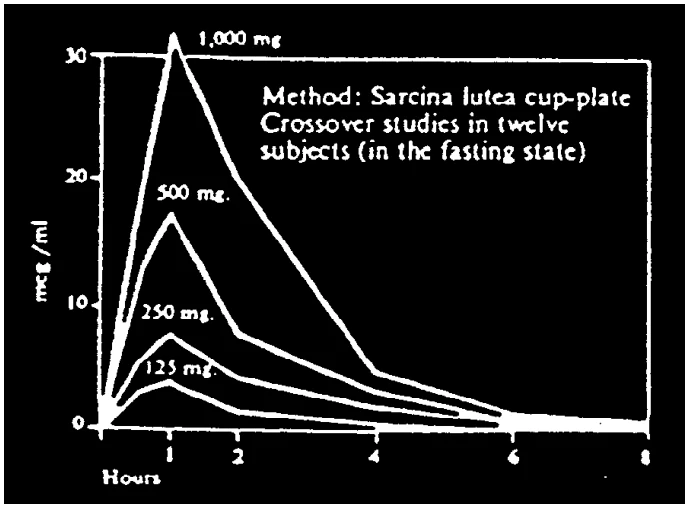
Figure 1: Cephalexin Blood Levels with Various Doses (Fasting Subjects)
Less than 10% of absorbed KEFLEX® is bound to serum protein in concentrations above 1g/mL (10). More than 80% is excreted as cephalexin in the urine. Reflex is acid stable. Food in the stomach causes a delay in onset, a lower peak and a prolongation of blood levels. Approximately 10% less KEFLEX® is excreted in the urine of patients taking food than in that of fasting subjects.
TOXICOLOGY
Acute Toxicity
Table 5 summarizes the acute toxicity data(9), which indicate a low order of toxicity in mice, rats, cats, dogs, and monkeys when the drug is given orally. No toxicity was demonstrated until very high doses were reached. Only after single oral doses of 2 to 4.5 g/kg were employed in mice did lethargy or depression and anorexia persist for twenty-four hours. Diuresis was noted.
TABLE 5: Acute Toxicity of Cephalexin
LD50 (g/kg)
| SPECIES | ORAL | INTRAPERITONEAL | INTRAVENOUS |
| Mouse | 1.6-6.2 | 0.4-1.6 | ≥ 0.7 |
| Rat | ≥ 5.0 (LD0) | ≥ 3.65 | ≥ 0.7(LD0) |
| (Weanling) | ≥ 4.0 | ||
| (Newborn) | ≥ 3.0 | ||
| Cat | ≥ 1.0 (LD0) | ≥ 1.0 | ≥ 0.1(LD0) |
| Dog | ≥ 2.0 (LD0)* | ≥ 0.5 - ≥ 1.0 | ≥ 0.1(LD0) |
| Monkey | ≥ 1.0 (LD0)* |
* Emesis precluded a study of lethality in these species.
Although histological examination of the kidneys of animals that died revealed slight hydropic degeneration of the tubular epithelium, the cause or causes of death remain uncertain. Kidneys of some of the surviving animals showed regeneration in the tubular epithelium. Kidneys of the other mice surviving these high doses appeared normal. All blood chemistry parameters except BUN were unaffected by a 1000 mg/kg dose. The BUN concentrations increased to 200 mg in the mouse after 30 hours, but the concentrations at 72 hours were normal.
The rat was even less sensitive to cephalexin administered orally. All rats survived a 5 g/kg dose. Kidneys of these animals were found to be free of injury when examined microscopically.
In cats, dogs and monkeys, oral doses of 500 mg/kg produced salivation, emesis, and diarrhea; therefore a satisfactory study of the lethality in these species was precluded. Blood serum concentrations in the dogs and cats were as high as 200 g/mL after one and one-half hours. Twenty-four-hour trough levels were 4 g/mL or less.
A single oral dose of 400 mg/kg was well tolerated in the monkey.
From oral administration to animals, there was no indication that the pediatric formulation enhanced the toxicity of cephalexin. The largest practical dose, 40 mL/kg (1.0 g/kg), caused no deaths.
Intraperitoneal injections produced toxic effects similar to those seen after oral administration.
Subacute and Chronic Toxicity
In animal toxicology studies, organic toxicity was not encountered at doses of 400 mg/kg administered over periods of one year.
The long-term safety of cephalexin was demonstrated in one-month studies in rats, dogs, and monkeys, and one-year studies in rats and dogs. The maximum daily doses of 1000 mg/kg for dogs and monkeys were well tolerated.
The only drug-related effects in the rats were transitory growth suppression, slight diarrhea of short duration, and enlargement of caecums and colons. The dogs developed transitory appetite suppression, salivation, occasional emesis, and occasional diarrhea. Histopathologic findings were normal, although blood concentrations were as high as 200 g/mL. Short-term studies showed that dogs can tolerate even larger doses (1000 to 2000 mg/kg) with salivation and emesis as the most serious side-effects. Salivation and moderate diarrhea were the only side-effects observed in monkeys.
Intravenous doses of 15 to 60 mg/kg/day of cephalexin were well tolerated for fourteen days by rats; dogs tolerated daily intravenous injections of 7.5 to 30 mg/kg. No apparent adverse effects were observed.
Reproduction and Teratology
The fertility and reproduction of rats and mice were not affected by daily oral doses of cephalexin as great as 500 mg/kg. Skeletal abnormalities occurring in two out of twenty-two litters of mice included wavy ribs and varus limb conditions, but were not considered drug related(9). The survival of the rat progeny at twelve and twenty-one days of age was significantly less than that of the control animals in one study, but was similar to the control animals in another study.
BIBLIOGRAPHY
- 1. Disney, FA: Cephalexin in the treatment of upper respiratory tract infections. Postgraduate Medical Journal 1983;59(6):28-31.
- 2. McLinn SE, Daly Jr. JF, and Jones JE: Cephalexin monohydrate suspension - treatment of otitis media. JAMA 1975;234(2):171- 173.
- 3. Weinstein AJ: Cephalexin in the therapy of infections of the urinary tract. Postgraduate Medical Journal 1983;59(5):40-42.
- 4. Herrell WE: Cephalexin in chronic bone infections. Clinical Medicine 1971;78:15-16.
- 5. Nelson JD, Bucholz RW, Kllsmiesz H. et al: Benefits and risks of sequential parenteral-oral cephalosporin therapy for suppurative bone and joint infections. Journal of Pediatric Orthopedics 1982;2(3):255-262.
- 6. Dillon, Jr. HC: Treatment of staphylococcal skin infections: a comparison of cephalexin and dicloxacillin. Journal of the American Academy of Dermatology 1983;8(2) 177-181.
- 7. Dimattia AF, Sexton MJ, Smialowicz CR, et al: Efficacy of two dosage schedules of cephalexin in dermatologic infections. The Journal of Family Practice 1981;12(4):649-652.
- 8. Burt RAP: A review of the drug events reported by 12,917 patients treated with cephalexin. Postgraduate Medical Journal 1983;59(5):47-50.
- 9. Welles JS, Froman RO, Gibson WR, et al: Toxicology and pharmacology of cephalexin in laboratory animals. Antimicrobial Agents and Chemotherapy 1968;489.
- 10. Griffith RS, Black HR: Ten years of cephalosporins. Infectious Disease Reviews 1976;4:275-310.
- 11. Jones RN, Preston DA: The antimicrobial activity of cephalexin against old and new pathogens. Postgraduate Medical Journal 1983;59(5):9-15.
- 12. Smith IM: Cephalexin: clinical effectiveness in geriatric patients. Geriatrics 1977;32(3):91-99.
- 13. Stillerman M, Aronovitz GH, Durnell MD, et al: Comparison between cephalexin two- and four-time per day regimens in group a streptococcal pharyngitis. Clinical Pediatrics 1984;23(6):348-351.
- 14. Maguire GP, Lee M, Lyons HA: Effectiveness of twice-daily cephalexin in the treatment of pneumococcal pneumonia. Current Therapeutic Research 1986;39(4):549-553.
- 15.
Speight TM, Brogden RN, Avery GS: Cephalexin: a review of its antibacterial,
- pharmacological and therapeutic properties. Drugs 1972;3(1--2):9-78.