


Patient Medication Information: uses, side effects, how to take - Leqvio
What LEQVIO is used for:
LEQVIO is used in adults to further lower your LDL (“bad” cholesterol) levels. It is for patients who are currently taking a statin (a medicine used to treat high cholesterol), sometimes in combination with another cholesterol-lowering medicine.
LEQVIO is used in addition to lifestyle changes, including diet in patients who have:
- Heterozygous familial hypercholesterolemia (HeFH) (an inherited genetic disorder that causes extremely high cholesterol levels), or
- Non-familial hypercholesterolemia (a condition that affects the way your body processes cholesterol) with atherosclerotic cardiovascular disease (a hardening of the arteries).
The effect of LEQVIO on heart problems such as heart attacks, stroke, or death is not known.
How LEQVIO works:
LEQVIO contains inclisiran. Inclisiran lowers levels of “bad” cholesterol by interfering with RNA (a molecule present in your body’s cells) to break down a protein called PCSK9. This protein can increase “bad” cholesterol levels. By limiting the amount of PCSK9, LEQVIO can lower your levels of “bad” cholesterol.
The ingredients in LEQVIO are:
Medicinal ingredient: inclisiran sodium
Non-medicinal ingredients: phosphoric acid and sodium hydroxide (to adjust pH), and water for injection.
LEQVIO comes in the following dosage form:
Solution: 284 mg / 1.5 mL inclisiran (as inclisiran sodium)
Do not use LEQVIO if:
- you are allergic to inclisiran or any of the other ingredients in LEQVIO.
You will be receiving LEQVIO along with a statin, sometimes in combination with another cholesterol- lowering medicine. Please read the Patient Medication Information of those particular medicines.
To find this information:
- go online: https://www.canada.ca/en/health-canada/services/drugs-health-products/drug-products/drug-product-database.html
- contact your healthcare professional
To help avoid side effects and ensure proper use, talk to your healthcare professional before you take LEQVIO. Talk about any health conditions or problems you may have, including if you:
- are at a high risk of diabetes.
- have liver problems.
- have kidney problems.
Other warnings you should know about:
Pregnancy: If you are pregnant, think you may be pregnant or planning to become pregnant talk to your healthcare professional. LEQVIO should not be used if you are pregnant.
- Breastfeeding: It is not known whether LEQVIO passes into breast milk. It is important to tell your healthcare professional if you are breastfeeding or plan to do so. You and your healthcare professional will decide if you should stop breastfeeding, or stop taking LEQVIO, considering the benefits of breastfeeding for your baby and the benefits of LEQVIO to you.
Tell your healthcare professional about all the medicines you take, including any drugs, vitamins, minerals, natural supplements or alternative medicines.
LEQVIO is not expected to interact with other medicines even though it has not been tested. This includes statins such as atorvastatin, rosuvastatin or simvastatin.
How to take LEQVIO:
Before starting LEQVIO, you should be on a cholesterol-lowering diet and taking a statin, sometimes in combination with another cholesterol-lowering medicine. You should stay on the cholesterol-lowering diet and keep taking the statin (and cholesterol- lowering medicine) while you receive LEQVIO.
LEQVIO is given:
- by your healthcare professional.
- as an injection under the skin (subcutaneous injection) in your stomach (abdomen).
Usual dose:
After you receive your first injection, you will be given your next dose at 3 months and then every 6 months.
Overdose:
| If you think you, or a person you are caring for, has received too much LEQVIO, contact a healthcare professional, hospital emergency department, regional poison control centre or Health Canada’s toll- |
|---|
| free number, 1-844 POISON-X (1-844-764-7669) immediately, even if there are no signs or symptoms. |
|---|
Missed dose:
If you miss the appointment for your next dose, contact your healthcare professional as soon as you remember. Depending on how long it has been since your last injection, your dosing schedule may change.
Possible side effects from using LEQVIO:
These are not all the possible side effects you may have when taking LEQVIO. If you experience any side effects not listed here, tell your healthcare professional.
- Pain, redness or rash at the site of the injection
- Common cold, such as runny nose, sore throat or sinus infections (nasopharyngitis or upper respiratory tract infections)
- Pneumonia
- Diarrhea
- Cough
- Shortness of breath (dyspnea)
- Feeling dizzy
- Nausea
- Headache
- Back pain
- Joint pain (arthralgia)
- Pain in the hands and feet
- Urinary tract infection
- Lung infection (bronchitis)
- High blood sugar levels (diabetes)
- Stiff joints
- Muscle spasms
- Trouble sleeping
- Asthma
- Allergic reactions (hypersensitivity) such as mild skin rash, itching, hives
Serious side effects and what to do about them
| Frequency/Side Effect/Symptom | Talk to your healthcare professional | Stop taking this drug and get immediate medical help |
|---|---|---|
| Only if severe | In all cases | |
| Unknown | ||
| Serious allergic reactions (including anaphylaxis and angioedema): difficulty swallowing or breathing, wheezing, feeling sick to your stomach and throwing up, severe itching, hives or rash, swelling of the face, lips, tongue or | ||
| ✓ | ||
| Frequency/Side Effect/Symptom | Talk to your healthcare professional | Stop taking this drug and get immediate medical help |
|---|---|---|
| Only if severe | In all cases | |
| throat, dizziness and near fainting (due to decrease in blood pressure). | ||
If you have a troublesome symptom or side effect that is not listed here or becomes bad enough to interfere with your daily activities, tell your healthcare professional.
Reporting side effects
You can report any suspected side effects associated with the use of health products to Health Canada by:
NOTE: Contact your healthcare professional if you need information about how to manage your side effects. The Canada Vigilance Program does not provide medical advice. |
Storage:
- Store between 15°C to 25°C. Do not freeze.
- Keep out of reach and sight of children.
If you want more information about LEQVIO:
- Talk to your healthcare professional
- Find the full product monograph that is prepared for healthcare professionals and includes the Patient Medication Information by visiting the Health Canada Drug Product Database website (https://www.canada.ca/en/health-canada/services/drugs-health-products/drug-products/drug-product-database.html); the manufacturer’s website (www.novartis.ca); or by calling 1-800-363-8883.
Date of Authorization: 2026-08-27
LEQVIO is a registered trademark
INSTRUCTIONS FOR USE AND HANDLING (For Healthcare Professionals)
Pre-Filled Syringes with Needle Guards
Important information you need to know before injecting LEQVIO
- Do not use the pre-filled syringe if any of the seals on the outer carton or the seal of the plastic tray are broken.
- Do not remove the needle cap until you are ready to inject.
- Do not use if the pre-filled syringe has been dropped onto a hard surface or dropped after removing the needle cap.
- Do not try to re-use or take apart the pre-filled syringe.
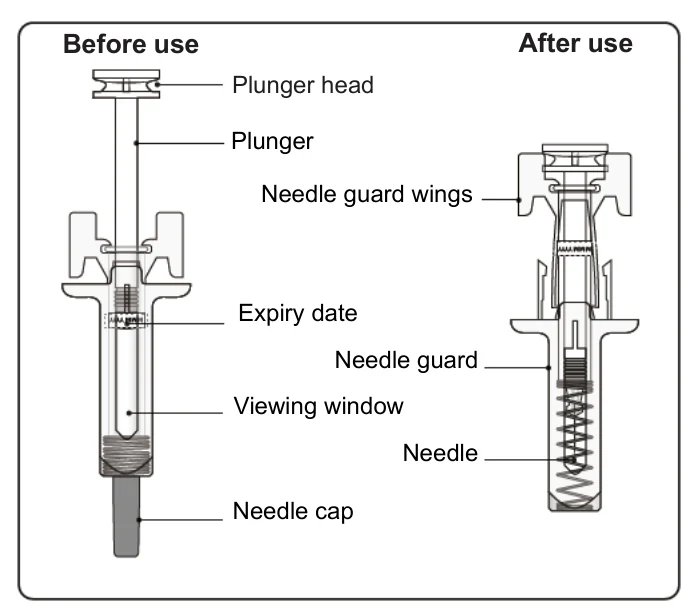
- The pre-filled syringe has a needle guard that will be activated to cover the needle after the injection is finished. The needle guard will help to prevent needle stick injuries to anyone who handles the pre-filled syringe after injection.
Step 1. Inspect the pre-filled syringe
You may see air bubbles in the liquid, which is normal. Do not try to remove the air.
- Do not use the pre-filled syringe if it looks damaged or if any of the solution for injection has leaked out of the pre-filled syringe.
Do not use the pre-filled syringe after the expiration date (EXP), which is printed on the pre-filled syringe label and carton.
Plunger
Before use
Needle guard wings
After use
Plunger head
Expiry date
Needle guard
Viewing window
Needle
Needle cap
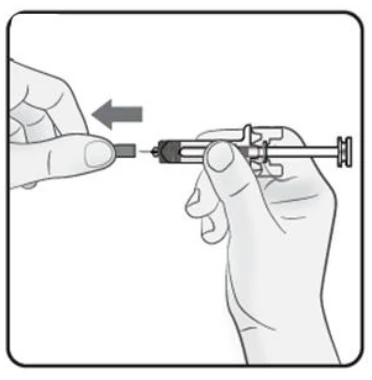
Step 2. Remove needle cap Firmly pull straight to remove the needle cap from the pre-filled syringe (see Figure A). You may see a drop of liquid at the end of the needle. This is normal. Do not put the needle cap back on. Throw it away. Note: Do not remove the needle cap until you are ready to inject. Early removal of the needle cap prior to injection can lead to drying of the drug product within the needle, which can result in needle clogging. | Figure A |
|---|---|
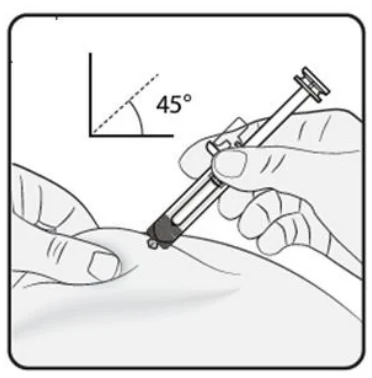
Step 3. Insert needle Gently pinch the skin at the injection site and hold the pinch throughout the injection. With the other hand insert the needle into the skin at an angle of approximately 45 degrees as shown (see Figure B). | Figure B |
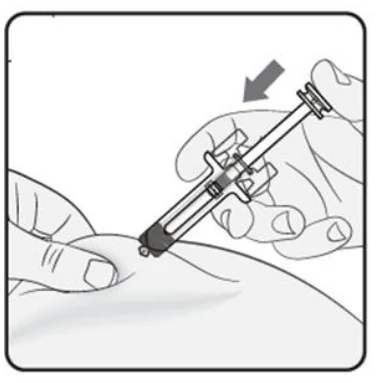
Step 4. Start injection Continue to pinch the skin. Slowly press the plunger as far as it will go (see Figure C). This will make sure that a full dose is injected. Note: If you cannot depress the plunger following insertion of the needle, use a new pre-filled syringe. | Figure C |
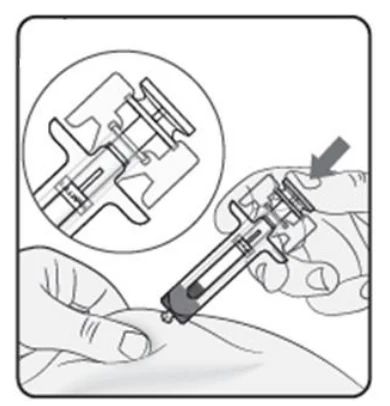
Step 5. Complete injection Confirm that the plunger head is between the needle guard wings as shown (see Figure D). This will make sure that the needle guard has been activated and will cover the needle after the injection is finished. | Figure D |
|---|---|
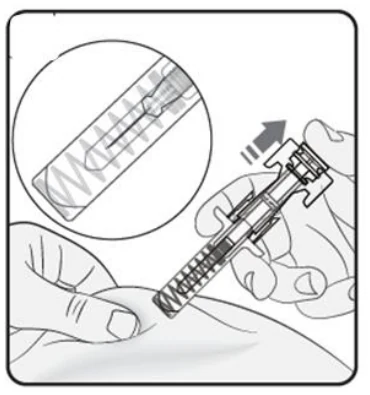
Step 6. Release plunger Keeping the pre-filled syringe at the injection site, slowly release the plunger until the needle is covered by the needle guard (see Figure E). Remove the pre-filled syringe from the injection site. | Figure E |
Step 7. Dispose of the pre-filled syringe
Dispose of the syringe and needle in a sharps container.