


Product Monograph - Locacorten Vioform Eardrops
RECENT MAJOR LABEL CHANGES
| 1 INDICATION | 2025-04 |
|---|---|
| 7 WARNINGS AND PRECAUTIONS, Sensitivity/Resistance | 2025-04 |
TABLE OF CONTENTS
Certain sections or subsections that are not applicable at the time of the preparation of the most recent authorized product monograph are not listed.
RECENT MAJOR LABEL CHANGES ............................................................................................ 2
TABLE OF CONTENTS .............................................................................................................. 2
PART I: HEALTH PROFESSIONAL INFORMATION ...................................................................... 4
1 INDICATIONS ............................................................................................................... 4
1.1 Pediatrics .............................................................................................................. 4
1.2 Geriatrics .............................................................................................................. 4
2 CONTRAINDICATIONS ................................................................................................. 4
4 DOSAGE AND ADMINISTRATION ................................................................................. 4
4.1 Dosing Considerations .......................................................................................... 4
4.2 Recommended Dose and Dosage Adjustment ..................................................... 5
4.4 Administration ...................................................................................................... 5
5 OVERDOSE .................................................................................................................. 5
6 DOSAGE FORMS, STRENGTHS, COMPOSITION AND PACKAGING ................................. 6
7 WARNINGS AND PRECAUTIONS .................................................................................. 6
7.1 Special Populations ............................................................................................... 6
7.1.1 Pregnancy ............................................................................................................. 6
7.1.2 Breastfeeding ....................................................................................................... 7
7.1.3 Pediatrics .............................................................................................................. 7
7.1.4 Geriatrics .............................................................................................................. 7
8 ADVERSE REACTIONS .................................................................................................. 7
8.1 Adverse Reaction Overview .................................................................................. 7
8.2 Clinical Trial Adverse Reactions ............................................................................ 7
9 DRUG INTERACTIONS .................................................................................................. 8
9.3 Drug-Behavioural Interactions .............................................................................. 8
9.4 Drug-Drug Interactions ......................................................................................... 8
9.5 Drug-Food Interactions ......................................................................................... 8
9.6 Drug-Herb Interactions ......................................................................................... 8
9.7 Drug-Laboratory Test Interactions ........................................................................ 8
10 CLINICAL PHARMACOLOGY ......................................................................................... 8
10.1 Mechanism of Action ............................................................................................ 8
10.2 Pharmacodynamics .............................................................................................. 9
11 STORAGE, STABILITY AND DISPOSAL ........................................................................... 9
12 SPECIAL HANDLING INSTRUCTIONS ............................................................................. 9
PART II: SCIENTIFIC INFORMATION ....................................................................................... 10
13 PHARMACEUTICAL INFORMATION ............................................................................ 10
14 CLINICAL TRIALS ........................................................................................................ 10
15 MICROBIOLOGY ........................................................................................................ 10
16 NON-CLINICAL TOXICOLOGY ..................................................................................... 11
PATIENT MEDICATION INFORMATION .................................................................................. 12
PART I: HEALTH PROFESSIONAL INFORMATION
1 INDICATIONS
LOCACORTEN VIOFORM EARDROPS (flumethasone pivalate and clioquinol drops) is indicated for:
- otitis externa
- otomycosis including that due to Aspergillus niger
To reduce the development of drug-resistant bacteria and maintain the effectiveness of LOCACORTEN VIOFORM EARDROPS and other antibacterial drugs, LOCACORTEN VIOFORM EARDROPS should be used only to reduce the risk of infections that are proven or strongly suspected to be caused by susceptible bacteria.
1.1 Pediatrics
Pediatrics (< 2 years of age): Health Canada has not authorized an indication in children under 2 years of age.
1.2 Geriatrics
Geriatrics (>65 years of age): LOCACORTEN VIOFORM EARDROPS should be used with caution in geriatric patients, taking into consideration the greater frequency of decreased hepatic or renal function, of cardiovascular disease, and of concomitant disease or other drug therapy in this patient population.
2 CONTRAINDICATIONS
LOCACORTEN VIOFORM EARDROPS is contraindicated in:
- patients with perforation of the eardrum (suspected or verified)
- patients with viral (e.g., chicken pox) or syphilitic skin infections, tuberculosis of the skin or skin eruptions following vaccination
- patients with known hypersensitivity to flumethasone pivalate or to corticosteroids in general, to hydroxyquinolines, clioquinol, or other quinoline derivatives, iodine, as well as to any other components of LOCACORTEN VIOFORM EARDROPS including any non-medicinal ingredient or component of the container. For a complete listing, see 6 DOSAGE FORMS, STRENGTHS, COMPOSITION AND PACKAGING.
- application to the eye
- use in children under 2 years of age
4 DOSAGE AND ADMINISTRATION
4.1 Dosing Considerations
- Thorough cleansing of the external ear is essential for successful treatment. If a large amount of discharge is present, the meatus may initially require gentle syringing. Thereafter, the passage may be kept clean by wiping as necessary.
- Free drainage of the ear encourages healing. However, in severe cases, it may be desirable to pack the ear lightly with a gauze strip moistened with the solution, replacing this dressing as necessary, at least once every 24 hours.
4.2 Recommended Dose and Dosage Adjustment
Two to three drops of LOCACORTEN VIOFORM EARDROPS should be instilled twice daily.
Treatment should normally not exceed 10 days. If no improvement occurs within 1 week, therapy should be discontinued. The pathogens should then be identified and treated.
4.4 Administration
- The solution may be warmed to body temperature prior to application by holding the bottle in the hands. Heating above body temperature should be avoided
- To ensure correct administration of the drug, the patient or another person should be instructed both on how to clean the outer ear and apply the eardrops. The patient should be either sitting or lying down with the treated ear turned upwards during application. This position should be maintained for 1-2 minutes following the application.
- To avoid contamination of the eardrops, contact of the dropper with any surface (including the ear) should be avoided.
- LOCACORTEN VIOFORM EARDROPS may turn yellow when exposed to air and may cause staining of the skin, nails, hair or fabrics.
5 OVERDOSE
Poisoning due to accidental ingestion is not expected since a bottle of LOCACORTEN VIOFORM EARDROPS contains far less active ingredients than the upper safe limit of a single oral dose for either component.
Application of clioquinol-containing preparations to extensive or eroded areas of skin may lead to increased protein-bound iodine (PBI) within 1 week, see 9.7 Drug-Laboratory Test Interaction.
If signs and symptoms resembling those if thyrotoxicosis occur, the preparation should be withdrawn at once.
| For the most recent information in the management of a suspected drug overdose, contact your regional poison control centre or Health Canada’s toll-free number, 1-844 POISON-X (1-844-764-7669). |
|---|
6 DOSAGE FORMS, STRENGTHS, COMPOSITION AND PACKAGING
Table 1 – Dosage Forms, Strengths, Composition and Packaging
LOCACORTEM VIOFORM EARDROPS is available in plastic bottles supplied with a controlled-drop dispenser. Each bottle contains 11 mL of solution.
7 WARNINGS AND PRECAUTIONS
General
Patients should be advised to inform subsequent healthcare professionals of the prior use of corticosteroids.
Endocrine and Metabolism
Adrenal function: Clinically important effects on adrenocortical function are possible, particularly in pediatric use and in patients undergoing prolonged therapy.
Thyroid function: Topical use of clioquinol-containing preparations may lead to a marked increase in protein
-bound iodine (PBI), see
5 OVERDOSAGE and 9.7 Drug-Laboratory Test Interactions.
Ophthalmologic
LOCACORTEN VIOFORM EARDROPS should not come into contact with the conjunctiva, see 2 CONTRAINDICATIONS.
Sensitivity/Resistance
Development of Drug Resistant Bacteria: Prescribing LOCACORTEN VIOFORM EARDROPS in the absence of a proven or strongly suspected bacterial infection is unlikely to provide benefit to the patient and risks the development of drug-resistant bacteria.
7.1 Special Populations
7.1.1 Pregnancy
There are no adequate data to establish the safety of LOCACORTEN VIOFORM EARDROPS during pregnancy. Studies have shown that corticosteroids may induce fetal abnormalities in pregnant animals. The relevance of this finding to human use has not been elucidated.
| Route of Administration | Dosage Form / Strength / Composition | Non-medicinal Ingredient |
| Otic | Drops 0.02% flumethasone pivalate and 1% clioquinol | polyethylene glycol |
The potential benefit of LOCACORTEN VIOFORM EARDROPS during pregnancy (particularly during the first three months) should be weighed against possible hazard to the fetus.
7.1.2 Breastfeeding
The safety of LOCACORTEN VIOFORM EARDROPS during lactation has not been established. It is not known whether flumethasone pivalate and/or clioquinol pass into breast milk when applied in the ear. The potential benefit of LOCACORTEN VIOFORM EARDROPS during lactation should be weighed against possible hazard to the nursing infant.
7.1.3 Pediatrics
Pediatrics (<2 years of age): Health Canada has not authorized an indication in children under 2 years of age.
7.1.4 Geriatrics
Geriatrics (>65 years of age): LOCACORTEN VIOFORM EARDROPS should be used with caution in geriatric patients, taking into consideration the greater frequency of decreased hepatic or renal function, of cardiovascular disease, and of concomitant disease or other drug therapy in this patient population.
8 ADVERSE REACTIONS
8.1 Adverse Reaction Overview
Occasionally: Signs of irritation such as burning sensation, itching or skin rash at the site of application; hypersensitivity reactions.
If an exacerbation or allergic type reaction occurs, treatment with LOCACORTEN VIOFORM EARDROPS should be discontinued.
8.2 Clinical Trial Adverse Reactions
In human toxicity and absorption studies no systemic or pituitary-adrenal effects were noted. The only significant abnormalities found were elevated 17-ketosteroid levels and elevated serum protein-bound iodine (PBI) levels following topical administration.
No systemic toxic effects due to absorption of LOCACORTEN VIOFORM EARDROPS from the auditory canal were reported in clinical trials. However, transient reversible adrenocortical suppression occurred in three patients while using large amounts of 0.03% flumethasone pivalate cream, i.e., 90 g per day for 7 days over the entire body with about half the skin occluded at all times.
9 DRUG INTERACTIONS
9.3 Drug-Behavioural Interactions
Interactions with individual behaviour risks such as alcohol consumption, sexual activity and smoking have not been established.
9.4 Drug-Drug Interactions
Interactions with other drugs have not been established.
9.5 Drug-Food Interactions
Interactions with food have not been established.
9.6 Drug-Herb Interactions
Interactions with herbal products have not been established.
9.7 Drug-Laboratory Test Interactions
Thyroid function test: Topical use of clioquinol, as well as other iodine-containing compounds, may increase the amount of protein-bound iodine (PBI) in patients with normal thyroid function and therefore may interfere with some thyroid function tests (such as PBI, radioactive iodine and butanol
-extractable iodine). These tests should not be performed within 1 month of LOCACORTEN VIOFORM EARDROPS use.
Other thyroid function tests, such as the T3 resin sponge test or the T4 determination, are unaffected by clioquinol.
Phenylketonuria test: The ferric chloride test for phenylketonuria may yield a false-positive result when clioquinol is present in the urine.
10 CLINICAL PHARMACOLOGY
10.1 Mechanism of Action
Flumethasone pivalate is a moderately potent difluorinated glucocorticoid with anti-inflammatory, antipruritic, and vasoconstrictive properties. As it is a pivalate, its action is concentrated at the site of application. This local effect on diseased areas results in a decrease in inflammation, exudation and itching.
Clioquinol, the antimicrobial component of LOCACORTEN VIOFORM EARDROPS, is active against a broad spectrum of pathogenic microorganisms, including fungi (e.g., Candida, Microsporum, Trichophyton) and gram-positive bacteria (e.g., Staphylococci). Clioquinol has only a slight inhibitory effect on gram-negative bacteria. Clioquinol exerts a bacteriostatic rather than a bactericidal action.
The polyethylene glycol vehicle is inert, non-irritant and viscous. This vehicle softens the cerumen and ensures prolonged contact of the active ingredients with the surface of the ear canal.
10.2 Pharmacodynamics
Flumethasone pivalate has marked local anti-inflammatory activity. Activity was quantified by comparing the degree of foreign body granuloma formation caused by implantation of a sterile cotton pellet versus a sterile cotton pellet impregnated with flumethasone pivalate or other corticoids, for 6 days under the skin of the back of male rats.
Flumethasone pivalate was more than 800 times as active as cortisol acetate, about 70 times as active as prednisolone trimethylacetate and about 10 times as active as dexamethasone trimethylacetate. In doses with an optimal local effect, flumethasone pivalate did not exert any remarkable effect on the contralateral control granuloma, and produced only insignificant changes of body weight, thymus and adrenal weight. This demonstrates the absence of systemic effects.
In normal male rats loaded orally with 20 mg/kg of a 0.85% NaCl solution, appreciable diuresis occurred within four hours after the administration of flumethasone pivalate in doses ≥ 0.02 mg/animal. Such effect is typical for this type of compounds in rats.
Comparison to above data shows that the dose exerting a clear-cut inhibiting effect on the formation of foreign body granulomata is about 80 times smaller than that necessary to alter water and salt excretion in the same animal.
11 STORAGE, STABILITY AND DISPOSAL
Store between 15-30 oC. Protect from heat and light.
12 SPECIAL HANDLING INSTRUCTIONS
Not applicable
PART II: SCIENTIFIC INFORMATION
13 PHARMACEUTICAL INFORMATION
Drug Substances
Proper name: Flumethasone pivalate
Chemical name: 6α, 9-difluoro-11β, 17α-dihydroxy-16α-methyl-21-trimethylacetoxy-1,4-pregnadiene-3,20-dione
Molecular formula and molecular mass: C27H36F2O6; 494.6 g/mol
Structural formula:
Physicochemical properties: Virtually white, odorless, fine crystalline powder. Slightly soluble in methanol and ethanol, very slightly soluble in chloroform and methylene chloride, and is insoluble in carbon tetrachloride and isooctane.
Proper name: Clioquinol
Chemical name: 5-chloro-7-iodo-8-quinolinol
Molecular formula and molecular mass: C9H5ClINO; 305.5 g/mol
Structural formula:
Physicochemical properties: Practically white to faintly yellowish powder. Freely soluble in pyridine, soluble in dimethylformamide and hot ethyl acetate, sparingly soluble in dioxane, slightly soluble in ethanol, practically insoluble in water.
14 CLINICAL TRIALS
The clinical trial data on which the original indication was authorized is not available.
15 MICROBIOLOGY
The antifungal and antibacterial activities of clioquinol are shown in the following tables:
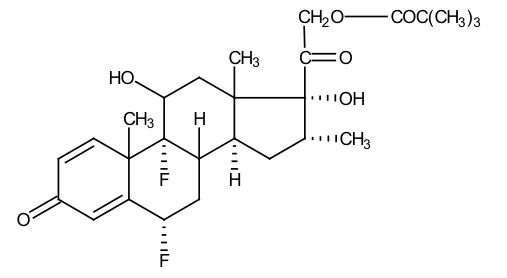
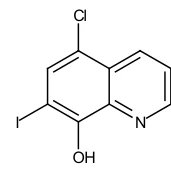
Table 2 – Clioquinol antifungal activities
| Antifungal Spectrum | |
|---|---|
| Fungus | Effect of clioquinol |
| Trichophyton Quinckeanum | ++ |
| Epidermophyta | ++ |
| Scopulariopsis brevicaulis | ++ |
| Candida albicans* | ++ |
| Aspergillus niger* | ++ |
++ = considerably decreased growth rate
* = organisms commonly occurring in ear infections
Table 3 – Clioquinol antibacterial activities
| Antibacterial Spectrum | |
|---|---|
| Bacterium | Effect of clioquinol |
| Staphylococcus* | +++ |
| Streptococcus* | ++ |
| Ps. pyocyanea* | + |
| E. Coli* | ++ |
| B. anthracis | ++ |
| Kl. pneumonia | ++ |
| Pneumococcus* | +++ |
| Salmonella typhi | +++ |
| Salmonella paratyphi | +++ |
| Dysentery bacillus | +++ |
| Meningococcus | +++ |
| B. pseudodiphtheria | ++ |
| B. subtilis | ++ |
| Tubercle bacillus | ++ |
+++ = complete growth inhibition in appropriate concentration
++ = considerably decreased growth rate
+ = slight growth inhibition
* = organisms commonly occurring in ear infections
16 NON-CLINICAL TOXICOLOGY
General Toxicology
The LD50 for flumethasone pivalate is >1000 mg/kg in the mouse, and >500 mg/kg in the rat. In dogs 0.01 mg/kg/day s.c. was well tolerated. This represents a dose 400-700 times greater than that needed to exert an optimal local effect.