


Product Monograph - Loniten 10mg
SUMMARY PRODUCT INFORMATION
| Route of Administration | Dosage Form / Strength | Nonmedicinal Ingredients |
| oral | tablet 2.5 mg , 10 mg | Colloidal silicon dioxide, corn starch, lactose, magnesium stearate, microcristaline cellulose |
INDICATIONS AND CLINICAL USE
Because of the potential for serious adverse effects, LONITEN (minoxidil) is indicated only for:
- The treatment of severe hypertension that is symptomatic or associated with target organ damage and is not manageable with maximum therapeutic doses of a diuretic plus two other antihypertensive drugs.
At the present time, use in milder degrees of hypertension is not recommended because of the benefit-risk relationship in such patients has not been defined.
CONTRAINDICATIONS
- Patients who are hypersensitive to this drug or to any ingredient in the formulation or component of the container. For a complete listing, see the Dosage Forms, Composition and Packaging section of the product monograph.
- In pheochromocytoma because it may reflexively stimulate secretion of catecholamines from the tumor.
- In pulmonary hypertension associated with mitral stenosis.
- In patients with severe hepatic impairment.
WARNINGS AND PRECAUTIONS
SERIOUS WARNINGS AND PRECAUTIONS
LONITEN is not recommended during pregnancy and in women of childbearing potential not using contraception. Neonatal hypertrichosis has been reported following exposure to minoxidil during pregnancy.
General
Salt and Water Retention:
Congestive Heart Failure - Concomitant use of an adequate diuretic is required. LONITEN (minoxidil) must usually be administered concomitantly with a diuretic adequate to prevent fluid retention and possible congestive heart failure, a high-ceiling (loop) diuretic is almost always required. Hemodilution may occur leading to a temporary (during the first 28 weeks of treatment) decrease in hematocrit, hemoglobin, and erythrocyte count (by approximately 7% initially which then recovers to pretreatment levels). Fluid and electrolyte balance and body weight should be monitored closely.
When using a concomitant diuretic to prevent or treat fluid retention, careful attention to adjusting the dosage of the diuretic is required for maximum safety and efficacy (See DOSAGE AND ADMINISTRATION: Concomitant Therapy).
If LONITEN is used without a diuretic, retention of several hundred mili-equivalents of salt and corresponding volumes of water can occur within a few days, leading to increased plasma and interstitial fluid volume and local and generalized edema. Diuretic treatment, alone or in combination with restricted salt intake, will usually minimize fluid retention, although reversible edema did develop in approximately 10% of non-dialysis patients so treated. Diuretic effectiveness was limited mostly by disease-related impaired renal function. The condition of patients with pre-existing congestive heart failure occasionally deteriorated in association with fluid retention although because of the fall in blood pressure (reduction of afterload), more than twice as many improved than worsened. Rarely, refractory fluid retention may require discontinuation of LONITEN.
Provided that the patient is under close medical supervision, it may be possible to resolve refractory salt retention by discontinuing LONITEN for 1 or 2 days and then resuming treatment in conjunction with vigorous diuretic therapy.
Cardiovascular
Tachycardia: LONITEN increases the heart rate. This increase can be partly or entirely prevented by the concomitant administration of a beta-adrenergic blocking drug or other sympathetic nervous system suppressant. Round-the-clock effectiveness of the sympathetic suppressant should be assured. In addition, angina may worsen or appear for the first time during LONITEN treatment, probably because of the increased oxygen demands associated with increased heart rate and cardiac output. This can usually be prevented by sympathetic blockade. Concomitant treatment to prevent tachycardia is usually required.
When using a concomitant sympatholytic to prevent tachycardia, careful attention to adjusting the dosages of the beta blocker or other sympathetic nervous system suppressant is required for maximum safety and efficacy (see DOSAGE AND ADMINISTRATION: Concomitant Therapy).
Myocardial Infarction: LONITEN has not been used in patients who have had a myocardial infarction within the preceding month. It is possible that a reduction of arterial pressure with LONITEN might further limit blood flow to the myocardium, although this might be compensated by decreased oxygen demand because of lower blood pressure.
Pericarditis, Pericardial Effusion and Tamponade: Observe patients for signs and symptoms of pericardial effusion.
Although there is no evidence of a causal relationship, there have been multiple reports of pericarditis occurring in association with minoxidil.
Pericardial effusion, occasionally with tamponade, has been observed in about 3% of treated patients not on dialysis, especially those with inadequate or compromised renal function. Although in many cases the pericardial effusion was associated with a connective tissue disease, the uremic syndrome, congestive heart failure, or marked fluid retention, there have been instances in which these potential causes of effusion were not present. Patients should be observed closely for any suggestion of a pericardial disorder, and echocardiographic studies should be carried out if suspicion arises. More vigorous diuretic therapy, dialysis, pericardiocentesis, or surgery may be required. If the effusion persists, withdrawal of LONITEN should be considered in light or other means of controlling the hypertension and the patient's clinical status.
Endocrine and Metabolism
Hair Change
Abnormal hair growth is a common occurrence with LONITEN (minoxidil) treatment (See ADVERSE REACTIONS). This is especially disturbing to women and children and patients should be thoroughly informed about this effect before therapy with LONITEN is begun.
Skin
Hypersensitivity
Hypersensitivity to LONITEN, manifested as a skin rash including rare reports bullous eruptions and Stevens-Johnson syndrome, has been seen.
Special Populations
Pregnant Women: The safety for use of LONITEN in pregnancy has not been established. Studies in animals have shown reproductive toxicity (see TOXICOLOGY). Minoxidil has been shown to reduce the conception rate in rats and to show evidence of increased fetal absorption in rabbits when administered at five times the human dose. There was no evidence of teratogenic effects in rats and rabbits. LONITEN is not recommended during pregnancy and in women of childbearing potential not using contraception. Neonatal hypertrichosis has been reported following exposure to minoxidil during pregnancy.
Nursing Women: Minoxidil has been reported to be excreted in human milk. A risk to the suckling child cannot be excluded. As a general rule, nursing should not be undertaken while a patient is on LONITEN.
Hypertension: Hazard of Rapid Control of Blood Pressure in patients with severe/malignant hypertension- In patients with very severe blood pressure elevation, too rapid control of blood pressure, especially with intravenous agents, can precipitate cerebrovascular accidents and myocardial infarction. Although such events have not been unequivocally associated with LONITEN use, total experience is limited at present.
Any patient with malignant hypertension should have initial treatment with LONITEN carried out in a hospital setting, both to assure that blood pressure is falling and to assure that it is not falling more rapidly than intended.
Renal Impairment: Renal failure or dialysis patients may require smaller doses of LONITEN and should have close medical supervision to prevent exacerbation of renal failure or precipitation of cardiac failure. If LONITEN therapy must be discontinued in a patient who has been treated effectively, the drug should be phased out gradually or replaced with another antihypertensive agent. Careful monitoring of the patient's blood pressure during the treatment adjustment is necessary.
Hepatic Impairment: LONITEN is contraindicated in patients with severe hepatic impairment. For mild and moderate hepatic impairment, dosage adjustment should be considered, starting therapy at a reduced dosage and titrating up to the lowest effective dose to obtain desired therapeutic effect. (See DOSAGE and ADMINISTRATION section).
Pediatrics (< 18 years of age): Use in children has been limited to date, particularly in infants. The recommendations under DOSAGE AND ADMINISTRATION can be considered only a rough guide and careful titration is essential.
Geriatrics (> 65 years of age): Clinical studies of LONITEN Tablets did not include sufficient numbers of subjects aged 65 and over to determine whether they respond differently from younger subjects. Other reported clinical experience has not identified differences in responses between the elderly and younger patients. In general, dose selection for an elderly patient should be cautious, usually starting at the low end of the dosing range, reflecting the greater frequency of decreased hepatic, renal, or cardiac function, and of concomitant disease or other drug therapy.
Monitoring and Laboratory Tests
Salt and Water Retention: fluid and electrolyte balance and body weight should be closely monitored (see WARNINGS AND PRECAUTIONS, Salt and Water Retention).
Pericardial Effusion: Patients should be observed for signs and symptoms of pericardial effusion (see WARNINGS AND PRECAUTIONS, Cardiovascular, Pericarditis, Pericardial Effusion, and Tamponade).
Myocardial Infarction: Use after myocardial infarction-LONITEN Tablets have not been used in patients who have had a myocardial infarction within the preceding month. It is possible that a reduction of arterial pressure with LONITEN might further limit blood flow to the myocardium, although this might be compensated by decreased oxygen demand because of lower blood pressure (see WARNINGS AND PRECAUTIONS – Cardiovascular, Myocardial Infarction)
Renal failure/dialysis: patients may require smaller doses of LONITEN and should have close medical supervision to prevent exacerbation of renal failure or precipitation of cardiac failure.
ECG Changes: Changes in direction and magnitude of the ECG T-waves occur in approximately 60% of patients treated with LONITEN. In rare instances, large negative amplitude of the T-wave may encroach upon the ST segment, but the ST segment is not independently altered. These changes usually disappear with continuance of treatment and revert to the pre-treatment state if LONITEN is discontinued. No symptoms have been associated with these changes.
Laboratory tests: Those laboratory tests which are abnormal at the time of initiation of minoxidil therapy, such as urinalysis, renal function tests, EKG, chest X-ray, echocardiogram, etc., should be repeated at intervals to ascertain whether improvement or deterioration is occurring under minoxidil therapy. Initially such tests should be performed frequently, e.g., 1-3 month intervals; later as stabilization occurs, at intervals of 6-12 months.
ADVERSE REACTIONS
Adverse Drug Reaction Overview
Elongation, thickening, and enhanced pigmentation of fine body hair (hypertrichosis), are seen in about 80% of patients taking LONITEN (minoxidil). This develops within 3 to 6 weeks after starting therapy. It is usually first noticed on the temples, between the eyebrows, between the hairline and the eyebrows, or in the sideburn area of the upper lateral cheek, later extending to the back, arms, legs and scalp. Upon discontinuation of LONITEN, new hair growth stops, but 1 to 6 months may be required for restoration to pretreatment appearance. No endocrine abnormalities have been found to explain the abnormal hair growth; thus, it is hypertrichosis without virilism.
Clinical Trial Adverse Drug Reactions
Because clinical trials are conducted under very specific conditions the adverse reaction rates observed in the clinical trials may not reflect the rates observed in practice and should not be compared to the rates in the clinical trials of another drug. Adverse drug reaction information from clinical trials is useful for identifying drug-related adverse events and for approximating rates.
Common Clinical Trial Adverse Drug Reactions (≥1%)
General Disorders: Edema associated with or independent of weight gain (See WARNINGS AND PRECAUTIONS, Salt and Water Retention) - Concomitant Use of Adequate Diuretic is Required). Temporary edema, developed in 7% of patients who were not edematous at the start of therapy.
Cardiac Disorders: Tachycardia (see WARNINGS AND PRECAUTIONS, Cardiovascular, tachycardia. Concomitant Treatment to Prevent Tachycardia is usually required); Pericarditis (≥10%); Pericardial effusion, Cardiac tamponade; Angina pectoris (frequency unknown)
Gastro-intestinal Disorders: Gastro-intestinal Disorders
Metabolism and Nutrition Disorders: Fluid retention
Skin and Subcutaneous Tissue Disorders: Hypertrichosis, Hair changes (≥10%)
Less Common Clinical Trial Adverse Drug Reactions (<1%)
Blood and Lymphatic System Disorder: Leukopenia, Thrombocytopenia; Anemia (frequency unknown)
Cardiovascular: Pleural effusion
Reproductive System and Breast Disorders: Breast tenderness
Skin and Subcutaneous Tissue Disorders: Stevens - Johnson syndrome, dermatitis bullous, rash; Toxic Epidermal Necrolysis (frequency unknown)
Abnormal Hematologic and Clinical Chemistry Findings
Electrocardiogram abnormal (≥10%) (T wave, ST interval) (see WARNINGS AND PRECAUTIONS, Monitoring and Laboratory Tests);
Hemo-dilution-hematocrit, hemoglobin and erythrocyte count (temporary decrease); Alkaline phosphatase increased, (≥1%)
Blood creatinine increased, blood urea increased (frequency unknown)
DRUG INTERACTIONS
Drug-Drug Interactions
Glucuronidation
Minoxidil is metabolized in the liver predominantly by conjugation with glucuronic acid to form minoxidil O-glucuronide, the primary metabolite. As a result, strong UDP glucuronosyl transferase (UGT) inhibitors (e.g. probenecid, valproic acid, and atazanavir) may increase plasma concentrations of minoxidil. Therefore, a dose adjustment and safety monitoring is advised when initiating treatment or avoid coadministration with minoxidil. (See DOSAGE and ADMINISTRATION and ACTION and CLINICAL PHARMACOLOGY –Pharmacokinetics - Metabolism sections).
Guanethidine - Although LONITEN does not itself cause orthostatic hypotension, its administration to patients already receiving guanethidine can result in profound orthostatic effects. If at all possible guanethidine should be discontinued well before LONITEN is begun. Where this is not possible, LONITEN therapy should be started in the hospital and the patient should remain institutionalized until severe orthostatic effects are no longer present or the patient has learned to avoid activities that provoke them.
Drug-Food Interactions
Interactions with food have not been established.
Drug-Herb Interactions
Interactions with herbal products have not been established.
Drug-Laboratory Interactions
Drug-laboratory interactions have not been established.
Drug-Lifestyle Interactions
Effects on ability to drive and use machines
No studies on the effect of minoxidil on the ability to drive or use machines have been performed. The ability to drive or operate machinery may be influenced by the individual response to treatment, particularly at the start of therapy. Caution is advised.
DOSAGE AND ADMINISTRATION
Dosing Considerations
If LONITEN therapy must be discontinued in a patient who has been treated effectively, the drug should be phased out gradually or replaced with another antihypertensive agent. Careful monitoring of the patient's blood pressure during the treatment adjustment is necessary.
Recommended Dose and Dosage Adjustment
Patients over 12 Years of Age:
The recommended initial daily dosage of LONITEN (minoxidil) is 5 mg given in two divided doses. Daily dosage can be increased to 10, 20 and then to 40 mg per day in divided doses, at 3 day intervals or longer, if required for optimum blood pressure control. The effective dosage range is usually 10 to 40 mg per day. In certain patients, doses up to a maximum of 100 mg per day may be attempted, recognizing the probability of an increase in the incidence and severity of adverse reactions.
Patients under 12 Years of Age: The initial recommended daily dosage is 0.2 mg/kg LONITEN in two divided doses. The dosage may be increased by 0.1 to 0.2 mg/kg/day increments, at 3 day intervals or longer, until optimum blood pressure control is achieved. The effective dosage range is usually 0.25 to 1.0 mg/kg/day. The maximum recommended dose is 50 mg/day.
Dose Regimen: The magnitude of within-day fluctuation of arterial pressure during therapy with LONITEN is directly proportional to the extent of pressure reduction. When the targeted blood pressure has been reached, a change from twice daily to once daily dosing with LONITEN may be tried in those patients in whom the diastolic pressure has been reduced less than 30 mm Hg. If supine diastolic pressure has been reduced more than 30 mm Hg, the twice daily dosage schedule should be maintained.
Dosage Adjustment: Dosage must be titrated carefully according to individual response. Intervals between dosage adjustments normally should be at least 3 days since the full response to a given dose is not obtained for at least that amount of time.
Where a more rapid management of hypertension is required, a 5 mg dose can be given every 6 hours if the patient is hospitalized and carefully monitored (See WARNINGS).
Special Population:
Renal Impairment: Renal failure or dialysis patients may require smaller doses of LONITEN and should have close medical supervision to prevent exacerbation of renal failure or precipitation of cardiac failure.
Mild to moderate Hepatic Impairment: Dosage adjustment should be considered, starting therapy at a reduced dosage and titrating to the lowest dose to obtain desired therapeutic effect. See
WARNINGS and PRECAUTIONS section.
Dosage Adjustment with concomitant therapy:
Strong UGT inhibitors: Consider lower doses when initiating treatment or avoid coadministration with minoxidil (See Drug Interactions section).
Diuretics: To prevent fluid retention and possible congestive heart failure, LONITEN must be used in conjunction with a high ceiling (loop) diuretic in patients relying on renal function for maintaining salt and water balance. Diuretics have been used at the following dosages when starting therapy with LONITEN: hydrochlorothiazide (50 mg b.i.d.) or other thiazides at equi-effective dosage; chlorthalidone (50 to 100 mg once daily); furosemide (40 mg b.i.d).
If excessive salt and water retention results in a weight gain of more than 2.0 kg, diuretic therapy should be changed to furosemide; if the patient is already taking furosemide, dosage should be increased in accordance with the patient's requirements. Rarely, refractory fluid retention may require discontinuation of LONITEN. Provided that the patient is under close medical supervision, it may be possible to resolve refractory fluid retention by discontinuing LONITEN for 1 or 2 days and then resuming treatment in conjunction with vigorous diuretic therapy.
In dialysis patients also receiving diuretic therapy, use of LONITEN may create the need to raise diuretic dosage or to increase the frequency or duration of dialysis in order to maintain salt and water balance.
Sympathetic Nervous System Suppressants: The preferred agent to achieve sympathetic nervous system suppression is a ß-blocker equivalent to an adult propranolol dosage of 80 to 160 mg/day. Higher doses may be required when patients, pretreated with a ß-blocker, have an increase in heart rate exceeding 20 beats per minute or when simultaneous introduction of LONITEN and a ß-blocker causes an increase in heart rate exceeding 10 beats per minute.
If beta blockers are contraindicated, methyldopa (250 to 750 mg b.i.d.) may be used instead. Methyldopa must be given for at least 24 hours before starting therapy with LONITEN because of the delay in the onset of methyldopa's action. Limited clinical experience indicates that clonidine may also be used to prevent tachycardia induced by LONITEN; the usual dosage is 0.1 to 0.2 mg twice daily.
Sympathetic nervous system suppressants may not completely prevent an increase in heart rate due to LONITEN but usually do prevent tachycardia. Typically, patients receiving a beta blocker prior to initiation of therapy with LONITEN have a bradycardia and can be expected to have an increase in heart rate toward normal when LONITEN is added. When treatments with LONITEN and a beta blocker, or other sympathetic nervous system suppressant, are begun simultaneously, their opposing cardiac effects usually nullify each other, leading to little change in heart rate.
OVERDOSAGE
There have been only a few instances of deliberate or accidental overdosage with LONITEN (minoxidil). When exaggerated hypotension is encountered, it is most likely to occur in association with residual sympathetic nervous system blockade from previous therapy (guanethidine-like effects of α-adrenergic blockade). The recommended treatment is intravenous administration of normal saline.
Sympathomimetic drugs, such as norepinephrine or epinephrine, should be avoided because of their excessive cardiac-stimulating action. Phenylephrine, angiotensin II, vasopressin and dopamine, which reverse the effects of LONITEN, should only be used if inadequate perfusion of a vital organ is evident.
| For management of a suspected drug overdose, contact your regional Poison Control Centre. |
ACTION AND CLINICAL PHARMACOLOGY
Mechanism of Action
LONITEN (minoxidil) is an orally effective direct acting peripheral vasodilator that reduces elevated systolic and diastolic blood pressure by decreasing peripheral vascular resistance. The smooth musculature of the resistance vessels is considered to be the site of action for the relaxant effect of minoxidil. The active metabolite of minoxidil activates the ATP-modulated potassium
(K+ATP) channel causing K+ efflux, hyperpolarization, and smooth muscle relaxation.
Pharmacodynamics
Because of peripheral vasodilatation, sympathetic reflexes mediated by baroreceptors secondarily increase heart rate and myocardial contractility, thereby increasing cardiac output. In addition, the plasma renin activity is increased via sympathetic nervous system stimulation, which results in an increased angiotensin II concentration with subsequent increased aldosterone secretion. In this way, the renal sodium excretion is reduced and extracellular volume increased. The pulmonary artery pressure may occasionally increase after the administration of minoxidil alone. However, these adverse effects are decreased with the recommended concomitant therapy (beta-blocker plus diuretic).
Pharmacokinetics
Absorption: Absorption: After oral administration in humans, minoxidil is at least 90% absorbed in the gastrointestinal tract. Minoxidil is detected within 30 minutes in the plasma. Maximum plasma levels of the parent drug are reached within the first hour after administration and decline rapidly thereafter.
Bioavailability: Comparative studies on the bioavailability of tablets and oral solutions (each containing 5 mg minoxidil) in hypertensive patients showed bioequivalent behaviour with regard to the average area under the serum level curve (AUC), maximum blood concentrations, time until reaching them (approximately 40 minutes), and the type of effect (antihypertensive). The chronic oral administration of minoxidil leads neither to accumulation nor to a change of the availability compared with administration of a single dose.
Distribution: Minoxidil is not bound to plasma proteins and does not cross the blood-brain barrier.
Metabolism: At least 90% of the administered drug is metabolized in the liver, predominantly by conjugation with glucuronic acid at the N-oxide position in the pyrimidine ring, but also by conversion to more polar products. The primary metabolite in humans is the minoxidil O-glucuronide. Some polar metabolites are also produced.
Avoid coadministration of minoxidil with strong UDP glucuronosyl transferase (UGT) inhibitors (e.g. probenecid, valproic acid, and atazanavir) which may increase plasma concentrations of minoxidil or adjust dosage and monitor safety when coadministration is considered. (See WARNINGS and PRECAUTIONS, DRUG INTERACTIONS, DOSAGE and ADMINISTRATION and Special Populations and Conditions below).
Excretion: Known metabolites exert much less pharmacologic effect than minoxidil itself, and all are excreted principally in the urine. Minoxidil does not bind to plasma proteins, and its renal clearance corresponds to the glomerular filtration rate. In the absence of functional renal tissue, minoxidil and its metabolites can be removed by hemo-dialysis, although this does not rapidly reverse its pharmacological effect.
The extent and time-course of blood pressure reduction by minoxidil do not correspond closely to its concentration in plasma. After a single oral dose, blood pressure usually starts to decline within one-half hour, reaches a minimum between 2 and 3 hours, and recovers at an arithmetically linear rate of about 30% / day. The average plasma half-life in man is approximately 4 hours. The total duration of effect is several days (approximately 72 hours). When minoxidil is administered chronically, the time required to achieve maximum effect on blood pressure is inversely related to the size of the dose.
Special Populations and Conditions
Renal Insufficiency: Pericardial effusion, occasionally with tamponade, has been observed in about 3% of treated patients not on dialysis, especially those with inadequate or compromised renal function. Patients should be observed closely for any suggestion of a pericardial disorder, and echocardiographic studies should be carried out if suspicion arises. More vigorous diuretic therapy, dialysis, pericardiocentesis, or surgery may be required (see WARNINGS AND PRECAUTIONS).
To prevent fluid retention and possible congestive heart failure, LONITEN must be used in conjunction with a high ceiling (loop) diuretic in patients relying on renal function for maintaining salt and water balance (see DOSAGE AND ADMINISTRATION).
Hepatic Impairment: The pharmacokinetics of minoxidil has not been studied in patients with moderate to severe hepatic impairment. In a pharmacokinetic study in patients with mild cirrhosis, eight patients with biopsy-proven mild cirrhosis and eight healthy subjects received minoxidil 5 mg. The elimination rate constant of minoxidil was significantly reduced by approximately 21% and AUC increased approximately 50% in patients with cirrhosis relative to healthy controls. (See WARNINGS and PRECAUTIONS and DOSAGE and ADMINISTRATION sections). Minoxidil is contraindicated in patients with severe hepatic impairment. For mild and moderate hepatic impairment, dosage adjustment should be considered, starting therapy at a reduced dosage and titrating up to the lowest effective dose to obtain desired therapeutic effect. (See WARNINGS & PRECAUTIONS-SPECIAL POPULATIONS section).
STORAGE AND STABILITY
LONITEN should be stored at controlled room temperature (15 to 30oC).
DOSAGE FORMS, COMPOSITION AND PACKAGING
LONITEN tablets are supplied as 2.5 mg and 10 mg tablets, in bottles of 100
LONITEN 2.5 mg tablets: each round, white tablet is scored and embossed with a “U” and 121 on one side and 2 ½ on the other side.
LONITEN 10 mg tablets: each round, white tablet is scored and embossed with a “U” and 137 on one side and 10 on the other side.
Non-medicinal ingredients (both strengths): cornstarch, lactose, magnesium stearate, microcrystalline cellulose and silicon dioxide.
PART II: SCIENTIFIC INFORMATION
PHARMACEUTICAL INFORMATION
Drug Substance
Proper name: minoxidil
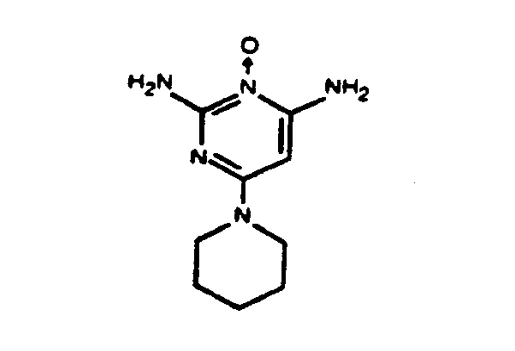
Chemical name: 2,4,-Pyrimidinediamine,6-(1-piperidinyl)-3,oxide
Molecular formula and molecular mass: C9H15N5O
209.25
Structural formula:
Physicochemical properties: A white or off-white, odourless, crystalline solid that is soluble in water to the extent of approximately 2 mg/mL; it is readily soluble in propylene glycol or ethanol, and is almost insoluble in acetone, chloroform or ethyl acetate. It has a melting point of 248oC, a pKa of 4.60, a logP of 0.6 (octanol/water pertition coefficient), and pH in aqueous solution of 7.0 (due to very low solubility in water).
DETAILED PHARMACOLOGY
Non-clinical Pharmacology
Minoxidil produces a dose-related reduction in mean arterial blood pressure following oral administration to rats, dogs, monkeys, and minipigs. The onset of action was within 2 hours regardless of the route of administration, and the activity persisted at near maximum for more than 24 hours.
Minoxidil acts on vascular smooth muscle to reduce resistance to blood flow. This effect appears to be direct since it was not antagonized by beta-adrenergic, cholinergic, or histaminergic blocking agents or by decentralization with higher spinal anesthesia. The vasculature of dogs remained responsive to the vasoconstrictor action of norepinephrine, angiotensin II and vasopressin and to vasodilator action of acetylcholine, histamine, glyceryl-trinitrate, and isoproterenol.
In dogs measurements with radio-labelled microspheres indicated that minoxidil increased blood flow to the myocardium 8-11 fold, 60-70% to skin, skeletal muscle, pancreas and gastrointestinal tract whereas blood flow to the adrenals, kidneys, spleen, liver and the central nervous system was unchanged. Vascular resistance was reduced in all tissues studied with the exception of the liver.
The administration of minoxidil to intact dogs markedly increased cardiac output, heart rate and left ventricular dP/dt in association with the decreased total peripheral resistance. These changes in cardiac function did not appear to be a direct effect. Sympathetic nerve tone was increased as evidenced by increased urinary excretion of norepinephrine and augmented blood pressure reduction in response to ganglionic blockade, but sympathetic activity alone did not account for the increase in heart rate and cardiac output. Chronic stimulation of the carotid sinus nerves or ganglionic blockade more effectively prevented the cardiac hyperactivity associated with minoxidil treatment suggesting an important component of the heart changes is a withdrawal of vagal tone.
Minoxidil produced an acute reduction in renal salt and water excretion in rats and dogs but did not significantly influence renal hemodynamics.
At approximately a 15% expansion of total body exchangeable sodium, in chronically treated animals, salt and water balance were re-established at an expanded, extracellular fluid volume. Hypersecretion of mineralocorticosteroids, which occurred during minoxidil treatment, did not explain this salt retaining action. Also, sodium clearance increased when minoxidil was delivered directly into the renal artery and, thus, direct activation of electrolyte reabsorptive transport in the kidney did not account for the retention phenomenon. Minoxidil-induced salt and water retention and attendant extracellular fluid volume expansion was reduced by concomitant administration of hydrochlorothiazide.
Minoxidil elevated plasma glucose concentration in rats at doses of 1.5 mg/kg. Minoxidil did not alter intravenous glucose tolerance to any extent unless very large doses (100 mg/kg) were used.
TOXICOLOGY
General Overview:
In non-clinical studies in a variety of species, minoxidil induces several types of cardiac lesions including epicarditis, necrotic and hemorrhagic lesions of the myocardium and papillary muscles, and cardiac hypertrophy and dilation. These changes occur only in the context of profound hypotension and tachycardia and reflect haemodynamic and/or hypoxic stress rather than direct cytotoxicity. As extensive clinical experience with the drug has accumulated, it has become apparent that these cardiac lesions do not occur in humans treated with minoxidil.
Non-clinical Toxicology
Acute Toxicity
| SPECIES | ROUTE | LD50 (mg/kg) | ||
| Mouse | Oral | 2457 | ||
| Intraperitoneal | 1001 | |||
| Intravenous | 51 | |||
| Rat | Oral | 1321 | ||
| Intraperitoneal | 759 | |||
| Intravenous | 49 | |||
Signs of toxicity: CNS depression and acute pulmonary congestion
Concomitant therapy with either prednisone and anti-thymocyte globulin, hydrochlorothiazide and propranolol or digoxin, and furosemide did not appreciably alter the LD50 for minoxidil.
Repeat-Dose Toxicity Studies
3 - Day Studies (Rat, Dog)
Minoxidil was administered orally to rats and dogs at daily doses up to 100 and 10 mg/kg respectively for 3 days. In rats, a dose related slight increase in the number of mitoses in hepatocytes was seen. In Beagle dogs, epicardial and myocardial cellular infiltrations, hypertrophy and hyperplasia of the mesothelial cells, small focal hemorrhages and myocardial atrial lesions were observed at 1.0 and 10 mg/kg doses. These findings were more frequent and severe at the higher dose. In mongrel dogs, there were minimal to mild sub-epicardial hemorrhages present in the right atrium and/or right auricle which may represent the early stages of right atrial lesions as seen in the longer term studies.
1 - Month Studies (Monkey, Dog, Mini-pig and Rat)
Minoxidil was administered orally to monkeys at 20 mg/kg/day; to dogs at 0.5 and 1 mg/kg/day, and at 20 and 100 mg/kg/day; to mini-pigs at 20 mg/kg/day and to rats at 300 mg/kg/day. Grossly observed cardiac hypertrophy was reported in the monkey study (the 4-OH metabolite of minoxidil at the same dose showed no effect). In dogs, lesions of the right atrium and/or auricle were seen at all doses. Local myocardial cell atrophy and/or degeneration was reported at doses as low as 1 mg/kg/day. The 20 mg/kg dose produced degenerative right auricular heart lesions as did the 4-OH metabolite of minoxidil. The high dose resulted in the death of all dogs probably due to profound alteration in electrolyte balance. In the mini-pig study blood pressure was depressed, heart rate elevated and total body water and exchangeable sodium were increased. Cardiac hypertrophy was observed. In rats, repression of body weight gain, decreased food consumption reduced erythrocyte levels, increased liver and heart weights, indications of cardiac hypertrophy and electrolyte imbalance were observed.
1-Year Studies (Rat, Monkey, Dog)
Minoxidil was administered orally to rats at 10, 30, and 100 mg/kg/day, monkeys at 3.5, 7 and 14 mg/kg/day and dogs at 3, 10 and 30 mg/kg/day. In rats, repression in body weight gain occurred at 100 mg/kg/day and a dose related increase in liver, kidney, adrenal and heart weights were seen. One high dose female monkey with chronic glomerulonephritis died from cardiac failure and minoxidil probably contributed because of its salt and water retaining action. In the dog study, degenerative right auricular heart lesions were found at all dose levels. Evidence of chronic electrolyte disturbance was noted in dogs at the highest dose.
22-Month Study (Rat)
Minoxidil was administered orally to rats at 3, 10 and 30 mg/kg/day. Increased heart weights were observed at the highest dose.
No carcinogenic potential was apparent.
Mutagenicity
Minoxidil did not prove to be mutagenic in any of the numerous tests for mutagenic potential. An equivocal result was recorded in an in vitro cytogenetic assay using Chinese hamster cells at long exposure times, but a similar assay using human lymphocytes was negative.
Carcinogenicity
In oral carcinogenicity studies in rats and mice, considered most relevant to orally administered minoxidil, no carcinogenic potential was identified in rats, while tumors observed in mice were considered incidental. A dermal carcinogenicity study in mice showed an increased incidence of hormone-mediated tumors (mammary adenomas and adenocarcinomas in the females at all dose levels (8, 25 and 80 mg/kg/day) was attributed to Hyperprolactinemia), which were not considered relevant to humans when treated topically with minoxidil for hair loss.
Dietary administration of minoxidil to mice for up to 2 years was associated with an increased incidence of malignant lymphomas in females at all dose levels (10, 25 and 63 mg/kg/day) and an increased incidence of hepatic nodules in males (63 mg/kg/day). There was no effect of dietary minoxidil on the incidence of malignant liver tumors.
Reproduction and Teratology
In a fertility study with male and female rats that received one to five times the maximum recommended human oral antihypertensive dose of minoxidil (multiples based on a 50 Kg patient), a dose-dependent reduction of the conception rate was found. The no observed adverse effect level (NOAEL) for this finding was 1 mg/kg per day in treated rats.
Male rats received minoxidil in oral doses of 3 or 10 mg/kg/day for 60 days prior to and during the 14 day breeding period. Female rats received the same dose for 14 days prior to and during breeding, and throughout gestation. A reduction in conception rate was observed. No increase in the incidence of fetal resorption in treated dams was seen. The average number of live pups per litter was significantly decreased in both treatment groups, but live pups from treated dams were significantly heavier than live pups from control dams.
Minoxidil, when given orally to pregnant rats and rabbits on gestation days 6 through 15 and 18 respectively, at dose levels of 3 and 10 mg/kg/day showed no teratogenic effect. Increased fetal resorption occurred in rabbits. The same dose administered to rats from the 15th day of gestation until pups were weaned at 21 days showed no effect of treatment on various parameters related to gestation, parturition and lactation.
When a minoxidil suspension was given subcutaneously to pregnant rats in doses of 0,1,11, and 120 mg/kg, no teratogenic changes were found in the fetuses from the rats dosed at 0, 1 and 11 mg/kg of minoxidil. Increased fetal mortality, still birth, external malformations and skeletal anomalies and variations were observed at 120 mg/kg. This dose also caused decreased maternal weight gain and food consumption and thus the fetal effects noted could have resulted from maternal toxicity.
Teratogenicity has been demonstrated in the rat at doses above 80mg/kg/day. Oral administration of minoxidil has been associated with evidence of increased fetal resorption in rabbits at doses associated with maternal toxicity. Teratogenicity was not demonstrated in the rabbit.
Cardiac Lesions
Cardiac Lesions in Animals – In non-primate animal studies LONITEN produced several types of myocardial lesions as well as other adverse cardiac effects. These included necrotic and hemorrhagic lesions of the myocardium and papillary muscles and cardiac hypertrophy and dilation.
Dog Atrial Lesion: Oral doses of 0.5 mg/kg for several days up to 1 month or longer produced a grossly visible hemorrhagic lesion of the right atrium of the dog. Replacement of myocardial cells by proliferating fibroblasts and angioblasts;
- phagocytosis; and hemosiderin accumulation in macrophages was observed.
- Papillary Muscle Lesion: In dog, rat and minipig necrosis of the papillary muscles and, in some cases, sub-endocardial areas of the left ventricle were seen following a few days treatment. Beta-adrenergic receptor blockade reduced the incidence and severity.
- Hemorrhagic Lesions: were seen in the epicardium, endocardium and walls of small coronary arteries and arterioles after acute minoxidil treatment in dogs. Left atrial hemorrhagic lesions were seen in mini-pigs.
Longer term treatment in rats, dogs and monkeys showed cardiac hypertrophy and cardiac dilation (in rats). Hydrochlorothiazide partly reversed the increased heart weight in monkeys.
Cardiac Lesions in Humans- As greater experience with minoxidil has accumulated, it has become apparent that these cardiac lesions so described in the dog, mini-pig, and other non-primates, do not occur in humans. Human autopsy experience has revealed the following: Among 242 autopsies performed on patients who received LONITEN Tablets, cardiac pathology was detected in only 8 instances. In every instance, the conclusion has been reached that the human heart lesions were decidedly different in individual elements and constellation of changes from both the atrial and ventricular lesions seen in animals. Among 224 autopsies performed on patients never exposed to LONITEN Tablets, the cardiac pathology observed, especially in the right atrium, entirely encompassed the pathologic findings seen in the LONITEN cases. The inference of these observations is that the pathologic findings in hearts of LONITEN treated hypertensive patients were not attributable to LONITEN administration, but rather to disease processes which were common to patients in these two studies.
Drug Interaction Studies:
No evidence of alteration in toxicity when minoxidil was given concomitantly with (a) hydrochlorothiazide and propranolol in rats and monkeys for up to 1 month, and (b) furosemide and digoxin in rats for 1 month. Hydrochlorothiazide partially reduced increases in heart weight and total body exchangeable sodium produced by minoxidil in a 1 month monkey study. (See DRUG INTERACTIONS).
REFERENCES
- 1. Bryan RK, Hoobler SW, Rosenweig J, Weller JM. Effect of Minoxidil on blood pressure and hemodynamics in severe hypertension. Am J Cardiol 1977; 39:796.
- 2. Dargie HJ, Dollery CT, Daniel J. Minoxidil in resistant hypertension. Lancet 1977; 515.
- 3. Dormois JC, Young JL, Nies A. Minoxidil in severe hypertension: Value when conventional drugs have failed. Am Heart J 1976; 90:360.
- 4. Ducharme DW, Freyburger WA, Graham BE, Carlson RG. Pharmacologic properties of minoxidil: a new hypotensive agent. J Pharmacol Exp Ther 1973; 184:662.
- 5. Klotman PE, Grim CE, Weinberger MH, Judson WE. The effect of minoxidil on pulmonary and systemic hemodynamics in hypertensive man. Circulation 1977; 55:294.
- 6. Mitchell HC, Pettinger WA. Long-term treatment of refractory hypertensive patients with Minoxidil. JAMA 1978; 239:2131.
- 7. Mutterperl RE, Diamond FB, Lowenthal DT. Long-term effects of minoxidil in the treatment of malignant hypertension in chronic renal failure. J Clin Pharmacol 1976; 16(10):498.
- 8. Nawar T, Nolin L, Plante GE, Caron C, Monthambault P. Long-term treatment of severe hypertension with minoxidil. CMAJ 1977; 19:1178.
- 9. O'Mally K, and McNay JL. A method for achieving blood pressure control expeditiously with oral minoxidil. Clin Pharmacol Ther 1975; 18:39.
- 10. Pennisi AJ, Singsen BH, Ettenger RB, Hanson V, Fine RN. Minoxidil therapy in children with severe hypertension. J Pediatr 1977; 90:813.
- 11. Pettinger WA, Mitchell HC. Minoxidil - an alternative to nephrectomy for refractory hypertension. N Engl J Med 1973; 289:167.
- 12. Shen D, O'Mally K, Gibaldi M, McNay JL. Pharmacodynamics of minoxidil as a guide for individualizing dosage regimens in hypertension. Clin Pharmacol Res 1975; 17:593.
- 13. Sinaiko AR, Mirkin BL. Management of severe childhood hypertension with minoxidil: A controlled clinical study. J Pediatr 1977; 91:138.
- 14. Zins GR. Alterations in renal function during vasodilator therapy. Recent Advances in renal physiology and pharmacology. University Park Press Baltimore 1974;165