


Product Monograph - Lovastatin (AA Pharma)
Recent Major Label Changes
| 2025-07 |
|---|
Table of Contents
Certain sections or subsections that are not applicable at the time of the preparation of the most recent authorized product monograph are not listed.
Recent Major Label Changes ................................................................................................. 2
Table of Contents.................................................................................................................. 2
Part 1: Healthcare Professional Information .......................................................................... 4
- 1.
Indications ..................................................................................................................... 4
1.1. Pediatrics ..................................................................................................................... 5
1.2. Geriatrics ..................................................................................................................... 5
- 2. Contraindications ............................................................................................................ 5
- 4.
Dosage and Administration ............................................................................................. 5
4.1. Dosing Considerations ................................................................................................. 5
4.2. Recommended Dose and Dosage Adjustment ........................................................... 6
4.5. Missed Dose ................................................................................................................ 6
- 5. Overdose ........................................................................................................................ 6
- 6. Dosage Forms, Strengths, Composition, and Packaging .................................................... 7
- 7.
Warnings and Precautions ............................................................................................... 7
General..................................................................................................................................... 7
Endocrine and Metabolism ...................................................................................................... 8
Hepatic/Biliary/Pancreatic ....................................................................................................... 8
Immune .................................................................................................................................... 9
Musculoskeletal ....................................................................................................................... 9
Ophthalmologic ..................................................................................................................... 12
Renal ...................................................................................................................................... 12
Skin ......................................................................................................................................... 13
7.1. Special Populations ................................................................................................... 13
7.1.1. Pregnancy .......................................................................................................... 13
7.1.2. Breastfeeding .................................................................................................... 13
7.1.3 Pediatrics ........................................................................................................... 13
7.1.4 Geriatrics ........................................................................................................... 14
- 8.
Adverse Reactions......................................................................................................... 14
8.2. Clinical Trial Adverse Reactions ................................................................................ 14
8.3. Less Common Clinical Trial Adverse Reactions ......................................................... 15
8.4. Abnormal Laboratory Findings: Hematologic, Clinical Chemistry, and Other Quantitative Data .................................................................................................................. 15
8.5. Post-Market Adverse Reactions ................................................................................ 16
- 9.
Drug Interactions .......................................................................................................... 16
9.1. Serious Drug Interactions .......................................................................................... 16
9.4. Drug-Drug Interactions .............................................................................................. 17
9.5. Drug-Food Interactions ............................................................................................. 22
9.6. Drug-Herb Interactions ............................................................................................. 22
9.7. Drug-Laboratory Test Interactions ............................................................................ 22
- 10.
Clinical Pharmacology ................................................................................................... 22
10.1 Mechanism of Action ................................................................................................ 22
10.2 Pharmacodynamics ................................................................................................... 22
10.3 Pharmacokinetics ...................................................................................................... 25
11 Storage, Stability, and Disposal...................................................................................... 27
Part 2: Scientific Information ................................................................................................ 28
- 13. Pharmaceutical Information .......................................................................................... 28
- 14.
Clinical Trials ................................................................................................................. 29
14.1. Clinical Trials by Indication ........................................................................................ 29
- 16. Non-Clinical Toxicology ................................................................................................. 33
- 17. Supporting Product Monographs .................................................................................. 36
Patient Medication Information ........................................................................................... 37
Part 1: Healthcare Professional Information
1. Indications
LOVASTATIN (lovastatin tablets) is indicated for:
Hyperlipidemia
LOVASTATIN (lovastatin tablets) is indicated as an adjunct to diet, at least equivalent to the American Heart Association (AHA) Step 1 diet, for the reduction of elevated total and Low Density Lipoprotein Cholesterol (LDL-C) levels in patients with primary hypercholesterolemia (Types IIa and IIb), (a disorder of lipid metabolism characterized by elevated serum cholesterol levels in association with normal triglyceride levels (Type IIa) or with increased triglyceride levels [Type IIb]) when the response to diet and other nonpharmacological measures alone has been inadequate.
After establishing that the elevation in plasma lipids represents a primary disorder not due to secondary conditions such as poorly-controlled diabetes mellitus, hypothyroidism, the nephrotic syndrome, liver disease, or dysproteinemias, prospective patient should have an elevated LDL-C level as the cause for an elevated total serum cholesterol. This may be particularly relevant for patients with total triglycerides (TG) over 4.52 mmol/L (400 mg/dL) or with markedly elevated High Density Lipoprotein Cholesterol (HDL-C) values, where non-LDL lipoprotein fractions may contribute significantly to total cholesterol levels without apparent increase in cardiovascular risk. In general, LDL-C may be estimated according to the following equations:
LDL-C (mmol/L) = Total cholesterol - [(0.37 x triglycerides) + HDL-C]
LDL-C (mg/dL) = Total cholesterol - [(0.16 x triglycerides) + HDL-C]
When total triglycerides are greater than 4.52 mmol/L (400 mg/dL) this equation is not applicable. In such patients, LDL-C may be obtained by ultracentrifugation.
Coronary Heart Disease
LOVASTATIN was also found to slow the progression of coronary atherosclerosis in patients with coronary heart disease as part of a treatment strategy to lower total and LDL-C to the desired levels. In two trials including this type of patient, i.e. in a secondary prevention intervention, lovastatin monotherapy was shown to slow the progression of coronary atherosclerosis as evaluated by computerized quantitative coronary angiography (QCA). This effect, however, was not accompanied by an improvement in the clinical endpoints (death, fatal/nonfatal myocardial infarction, hospitalization for unstable angina, and coronary revascularization procedure [PTCA and CABG]) within the 2 to 2½ years' trial period. These trials, however, were not designed to demonstrate a reduction in the risk of coronary morbidity and mortality.
The effect of lovastatin tablets on the progression of atherosclerosis in the coronary arteries has been corroborated by similar findings in carotid vasculature. In the Asymptomatic Carotid Artery Progression Study (ACAPS) which included hyperlipidemic patients with early asymptomatic carotid lesions and without known coronary artery disease, the effect of therapy with lovastatin tablets on carotid atherosclerosis was assessed by B-mode ultrasonography. There was a significant regression of carotid lesions in patients receiving lovastatin alone compared to those receiving placebo alone. The predictive value of changes in the carotid vasculature for stroke has not yet been established. In the lovastatin group there was a significant reduction in the number of patients with major cardiovascular events relative to the placebo group (5 vs 14) and a significant reduction in all-cause mortality (1 vs 8) however, it was not powered to demonstrate a reduction in the risk of coronary morbidity and mortality. This trial should be viewed as supportive and complementary to the others mentioned above (see 14. Clinical Trials).
1.1. Pediatrics
Pediatrics (0>18 years): No data are available to Health Canada; therefore, Health Canada has not authorized an indication for pediatric use (see 7.1.3. Pediatrics).
1.2. Geriatrics
Geriatrics (> 60 years of age): Evidence from clinical studies and experience suggests that use in the geriatric population is associated with differences in safety or effectiveness (see 7.1.4. Geriatrics).
2. Contraindications
- LOVASTATIN is contraindicated in: patients who are hypersensitive to this drug or to any ingredient in the formulation, including any non-medicinal ingredient, or component of the container. For a complete listing, see 6. Dosage Forms, Strengths, Composition, and Packaging.
- Active liver disease or unexplained persistent elevations of serum transaminases.
- Concomitant administration of potent CYP3A4 inhibitors (e.g., itraconazole, ketoconazole, posaconazole, voriconazole, HIV protease inhibitors, boceprevir, telaprevir, erythromycin, clarithromycin, telithromycin1 and nefazodone1, and drugs containing cobicistat) (see 7. Warnings and Precautions, Musculoskeletal).
- Pregnant and nursing women. Cholesterol and other products of cholesterol biosynthesis are essential components for fetal development (including synthesis of steroids and cell membranes). LOVASTATIN should be administered to women of childbearing age only when such patients are highly unlikely to conceive and have been informed of the possible harm. If the patient becomes pregnant while taking LOVASTATIN, the drug should be discontinued immediately and the patient appraised of the potential harm to the fetus. Atherosclerosis being a chronic process, discontinuation of lipid metabolism regulating drugs during pregnancy should have little impact on the outcome of long-term therapy of primary hypercholesterolemia (see 7.1.1. Pregnancy and 7.1.2. Breastfeeding).
- Concomitant administration of cyclosporine (see 7. Warnings and Precautions, Musculoskeletal and 9.1 Serious Drug Interactions).
4. Dosage and Administration
4.1. Dosing Considerations
- Patients should be placed on a standard cholesterol-lowering diet before receiving LOVASTATIN and should continue on this diet during treatment with LOVASTATIN. If appropriate, a program of weight control and physical exercise should be implemented.
- Prior to initiating therapy with LOVASTATIN, secondary causes for elevations in plasma lipid levels should be excluded. A lipid profile should also be performed.
- 1 not marketed in Canada
4.2. Recommended Dose and Dosage Adjustment
- Patients with Hypercholesterolemia: The usual starting dose is 20 mg/day given as a single dose with the evening meal. Single daily doses given with the evening meal have been shown to be more effective than the same dose given with the morning meal. Adjustments of dosage, if required, should be made at intervals of not less than 4 weeks, to a maximum of 80 mg daily given in single doses or divided doses with the morning and evening meals (see 7. Warnings and Precautions, Musculoskeletal and 9. Drug Interactions). Divided doses (i.e., twice daily) tend to be slightly more effective than single daily doses.
- Patients with Severe Hypercholesterolemia: In patients with severe hypercholesterolemia, higher doses (80 mg/day) may be required (see 7. Warnings and Precautions, Musculoskeletal and 9. Drug Interactions). Cholesterol levels should be monitored periodically and consideration should be given to reducing the dosage of LOVASTATIN if cholesterol levels fall below the desired range.
- Patients with Established Coronary Heart Disease: In the trials involving patients with coronary heart disease and administered lovastatin tablets with (colestipol) [Familial Atherosclerosis Treatment Study (FATS)] or without concomitant therapy, the dosages used were 20 to 80 mg daily, given in single or divided doses. In the two trials which utilized lovastatin tablets alone, the dose was reduced if total plasma cholesterol decreased to below 2.85 mmol/L or if LDL-C decreased to below 2.1 mmol/L, respectively.
Concomitant Therapy: (see 9.4. Drug-Drug Interactions, Concomitant Therapy with Other Lipid Metabolism Regulators).
In patients taking danazol, verapamil, diltiazem, or fibrates (other than gemfibrozil) or lipid lowering doses (≥ 1 g/day) of niacin concomitantly with LOVASTATIN, the dose of LOVASTATIN should not exceed 20 mg/day. In patients taking amiodarone concomitantly with LOVASTATIN, the dose of LOVASTATIN should not exceed 40 mg/day (see 7. Warnings and Precautions, Musculoskeletal and 9.4. Drug-Drug Interactions).
The dosage of LOVASTATIN should be individualized according to baseline LDL-C, total- C/HDL-C ratio and/or TG levels to achieve the recommended desired lipid values at the lowest possible dose and the patient response. Lipid levels should be monitored periodically and, if necessary, the dose of LOVASTATIN adjusted based on desired lipid levels.
4.5. Missed Dose
If a tablet is missed at its usual time, it should be taken as soon as possible. But, if it is too close to the time of the next dose: only the prescribed dose should be taken at the appointed time. A double dose should not be taken.
5. Overdose
Five healthy human volunteers have received up to 200 mg of lovastatin tablets as a single dose without clinically significant adverse experiences. A few cases of accidental overdosage have been reported; no patients had any specific symptoms and all patients recovered without sequelae. The maximum dosage taken was 5 to 6 g.
In the event of overdosage, treatment should be symptomatic and supportive, liver function should be monitored, and appropriate therapy instituted. Until further experience is obtained, no specific therapy of overdosage can be recommended.
The dialyzability of lovastatin tablets and its metabolites in man is not known.
For the most recent information in the management of a suspected drug overdose, contact your regional poison control centre or Health Canada’s toll-free number, 1-844 POISON-X (1-844-764-7669).
- 6. Dosage Forms, Strengths, Composition, and Packaging
Table 1 – Dosage Forms, Strengths, and Composition
| Route of Administration | Dosage Form / Strength/Composition | Non-Medicinal Ingredients |
| Oral | tablet 20 mg, 40 mg | Croscarmellose sodium, D & C yellow #10 (in 40 mg tablet only), FD & C blue #1 (in 20 mg tablet only), FD & C blue #2, lactose, magnesium stearate, microcrystalline cellulose |
Description
LOVASTATIN 20 mg tablets are light blue, octagonal, flat-faced, bevelled-edge tablet, engraved APO on one side, scored and engraved LOVA over 20 on other side. Available in bottles of 100, 250 and 500 tablets.
LOVASTATIN 40 mg tablets are light green, octagonal, flat-faced, bevelled-edge tablet, engraved APO on one side and LOVA over 40 on other side. Available in bottles of 100 and 250 tablets.
7. Warnings and Precautions
General
Before instituting therapy with LOVASTATIN, an attempt should be made to control hypercholesterolemia with appropriate diet, exercise, weight reduction in overweight and obese patients, and to treat other underlying medical problems (see 1. Indications). The patient should be advised to inform subsequent physicians of the prior use of LOVASTATIN or any other lipid metabolism regulator.
The effects of lovastatin-induced changes in lipoprotein levels, including reduction of serum cholesterol, on cardiovascular morbidity or mortality or total mortality has not been established.
Use in Homozygous Familial Hypercholesterolemia (FH): LOVASTATIN is not effective or is less effective in patients with rare homozygous familial hypercholesterolemia.
(For Heterozygous Familial Hypercholesterolemia (FH), see 14. Clinical Trials).
Patients with Severe Hypercholesterolemia: Higher dosages (80 mg/day) required for some patients with severe hypercholesterolemia are associated with increased plasma levels of lovastatin tablets.
Caution should be exercised in such patients who are also significantly renally impaired, elderly or are concomitantly administered P-450 inhibitors (see 7. Warnings and Precautions, Musculoskeletal and 9.1. Serious Drug Interactions).
Endocrine and Metabolism
Endocrine Function: HMG-CoA reductase inhibitors interfere with cholesterol synthesis and as such might theoretically blunt adrenal and/or gonadal steroid production. Clinical studies with lovastatin tablets have shown that this agent does not reduce plasma cortisol concentration or impair adrenal reserve, and does not reduce basal plasma testosterone concentration. However, the effects of HMG-CoA reductase inhibitors on male fertility have not been studied in an adequate number of patients. The effects, if any, on the pituitary-gonadal axis in premenopausal women are unknown.
Patients treated with lovastatin tablets who develop clinical evidence of endocrine dysfunction should be evaluated appropriately. Caution should be exercised if an HMG-CoA reductase inhibitor or other agent used to lower cholesterol levels is administered to patients receiving other drugs (e.g. spironolactone, or cimetidine) that may decrease the levels of endogenous steroid hormones (see 9.1. Serious Drug Interactions, Cytochrome P-450 Inhibitors [CYP3A4]).
Increases in fasting glucose and HbA1c levels have been reported with inhibitors of HMG-CoA reductase as a class. For some patients, at high risk of diabetes mellitus, hyperglycemia was sufficient to shift them to the diabetes status. The benefit of treatment continues to outweigh the small increased risk. Periodic monitoring of these patients is recommended.
Effect on Lipoprotein(a) [Lp(a)]: In some patients the beneficial effect of lowered total cholesterol and LDL-C levels may be partly blunted by a concomitant increase in the Lp(a) levels. Until further experience is obtained from controlled clinical trials, it is suggested, where feasible, that Lp(a) measurements be carried out in patients placed on therapy with LOVASTATIN.
Effect on CoQ10 Levels (Ubiquinone): A significant decrease in plasma CoQ10 levels in patients treated with lovastatin tablets and other statins has been observed in short-term clinical trials. The clinical significance of a potential long-term statin-induced deficiency of CoQ10 has not yet been established.
Hepatic/Biliary/Pancreatic
In the initial controlled clinical trials performed in 695 patients, marked persistent increases (to more than 3 times the upper limit of normal) in serum transaminases occurred in 1.6% of adult patients who received lovastatin tablets for at least one year (see 8.4. Abnormal Laboratory Findings: Hematologic, Clinical Chemistry, and Other Quantitative Data, Laboratory Tests). When the drug was interrupted or discontinued in these patients, the transaminase levels fell slowly to pretreatment levels. The increases usually appeared 3 to 12 months after the start of therapy with lovastatin tablets. In most cases they were not associated with jaundice or other clinical signs or symptoms (see 9. Drug Interactions and 8.5. Post-Market Adverse Reactions).
In the 48-week EXCEL study performed in 8245 patients suffering from moderate hypercholesterolemia, the incidence of marked (more than 3 times the upper limit of normal) increases in serum transaminases on successive testing was 0.1% in patients receiving a placebo and 0.1% at 20 mg/day, 0.9% at 40 mg/day and 1.5% at 80 mg/day in patients administered lovastatin tablets (see 14. Clinical Trials).
It is recommended that liver function tests be performed at baseline and periodically thereafter in all patients. Particular attention should be paid to patients who develop elevated serum transaminase levels and in patients in whom the dose is increased to 40 mg/day or more. In these patients, measurements should be repeated promptly and then performed more frequently.
There have been rare postmarketing reports of fatal and non-fatal hepatic failure in patients taking statins, including lovastatin tablets. If serious liver injury with clinical symptoms and/or hyperbilirubinemia or jaundice occurs during treatment with LOVASTATIN, promptly interrupt therapy. If an alternate etiology is not found, do not restart LOVASTATIN.
If the transaminase levels show evidence of progression, particularly if they rise to three times the upper limit of normal and are persistent, the drug should be discontinued.
LOVASTATIN, as well as other HMG-CoA reductase inhibitors, should be used with caution in patients who consume substantial quantities of alcohol and/or have a past history of liver disease. Active liver disease or unexplained serum transaminase elevations are contraindications to the use of LOVASTATIN; if such condition develops during therapy, the drug should be discontinued.
Moderate elevations of serum transaminases (less than three times the upper limit of normal) have been reported following therapy with lovastatin tablets (see 8. Adverse Reactions). These changes were not specific to lovastatin tablets and were also observed with comparative lipid metabolism regulators. They generally appeared within the first 3 months after initiation of therapy, were often transient and were not accompanied by any other symptoms. They did not necessitate interruption of treatment.
Immune
There have been rare reports of immune-mediated necrotizing myopathy (IMNM), an autoimmune myopathy associated with statin use. IMNM is characterized by:
- proximal muscle weakness and elevated creatine kinase, which persist despite discontinuation of statin treatment
- muscle biopsy showing necrotizing myopathy without significant inflammation
- improvement with immunosuppressive agents.
Musculoskeletal
Myasthenia Gravis/Ocular Myasthenia: Statins may in rare instances induce or aggravate the conditions in patients with myasthenia gravis or ocular myasthenia (see 8.5. Post-Market Adverse Reactions) including causing recurrence when the same or a different statin was administered. LOVASTATIN should be used with caution in patients with these conditions and should be discontinued if the symptoms are induced or aggravated.
Myopathy/Rhabdomyolysis: Effects on skeletal muscle such as myalgia, myopathy and, rarely, rhabdomyolysis have been reported in patients treated with lovastatin tablets.
Rare cases of rhabdomyolysis with acute renal failure secondary to myoglobinuria, have been reported with lovastatin tablets and with other HMG-CoA reductase inhibitors.
Myopathy, defined as muscle pain or muscle weakness in conjunction with increases in creatine phosphokinase (CK) values to greater than ten times the upper limit of normal (ULN), should be considered in any patient with diffuse myalgias, muscle tenderness or weakness, and/or a marked elevation of CK. Patients should be advised to report promptly any unexplained muscle pain, tenderness or weakness, particularly if associated with malaise or fever. Patients who develop any signs or symptoms suggestive of myopathy should have their CK levels measured. LOVASTATIN therapy should be immediately discontinued if markedly elevated CK levels are measured or myopathy is diagnosed or suspected. Myopathy sometimes takes the form of rhabdomyolysis with or without acute renal failure secondary to myoglobinuria, and rare fatalities have occurred. The risk of myopathy is increased with dosage and by high levels of HMG-CoA reductase inhibitory activity in plasma.
Pre-disposing Factors for Myopathy/Rhabdomyolysis: LOVASTATIN, as with other HMGCoA reductase inhibitors, should be prescribed with caution in patients with pre-disposing factors for myopathy/rhabdomyolysis. Such factors include:
- Personal or family history of hereditary muscular disorders
- Previous history of muscle toxicity with another HMG-CoA reductase inhibitor
- Concomitant use of a fibrate or niacin
- Hypothyroidism
- Alcohol abuse
- Excessive physical exercise
- Age >70 years
- Renal impairment
- Hepatic impairment
- Diabetes with hepatic fatty change
- Surgery and trauma
- Frailty
- Situations where an increase in plasma levels of active ingredient may occur (see 9.4. Drug-Drug Interactions)
LOVASTATIN therapy should be temporarily withheld or discontinued in any patient with an acute serious condition suggestive of myopathy or predisposing to the development of rhabdomyolysis (e.g. sepsis, hypotension, major surgery, trauma, severe metabolic endocrine and electrolyte disorders, or uncontrolled seizures).
Myopathy/Rhabdomyolysis Caused by Drug Interactions
Pharmacokinetic Interactions: The use of HMG-CoA reductase inhibitors has been associated with severe myopathy, including rhabdomyolysis, which may be more frequent when they are co-administered with drugs that inhibit the cytochrome P-450 enzyme system. Lovastatin is metabolized by the cytochrome P-450 isoform 3A4 and as such may interact with agents which inhibit this enzyme (see 2. Contraindications; 7. Warnings and Precautions, Musculoskeletal and 9.1. Serious Drug Interactions, Cytochrome P-450 Inhibitors [CYP3A4]).
The risk of myopathy/rhabdomyolysis is increased by concomitant use of lovastatin tablets with the following:
- Potent inhibitors of CYP3A4: Concomitant use with medicines labeled as having a potent inhibitory effect on CYP3A4 at therapeutic doses, e.g., the antifungal azoles itraconazole, ketoconazole, posaconazole, voriconazole, antibiotics erythromycin, clarithromycin and telithromycin1, the HIV protease inhibitors, boceprevir, telaprevir, the antidepressant nefazodone1, or drugs containing cobicistat, is contraindicated (see 2. Contraindications; 9.1. Serious Drug Interactions, Cytochrome P-450 Inhibitors [CYP3A4] and 10.3. Pharmacokinetics).
- Gemfibrozil: The combined use of lovastatin with gemfibrozil should be avoided.
- Cyclosporine: Concomitant use of this drug with lovastatin is contraindicated (see 2. Contraindications and 9.1. Serious Drug Interactions).
- 1 not marketed in Canada
- Colchicine: Cases of myopathy, including rhabdomyolysis, have been reported with lovastatin coadministered with colchicine, and caution should be exercised when prescribing lovastatin with colchicine (see 9.4. Drug-Drug Interactions, Colchicine).
- Lipid-lowering drugs that can cause myopathy when given alone: Other fibrates or lipid-lowering doses (≥ 1 g/day) of niacin (see 9.4. Drug-Drug Interactions, Gemfibrozil and Other Fibrates, Lipid-Lowering Doses [≥ 1 g/day] of Niacin [nicotinic acid]).
- Fusidic Acid (oral1 or IV1): The risk of myopathy/rhabdomyolysis is increased when fusidic acid (oral1 or IV1) is used concomitantly with a closely related member of the HMG- CoA reductase inhibitor class (see 7. Warnings and Precautions, 2. Measures to reduce the risk of myopathy/rhabdomyolysis caused by drug interactions and 9.4. Drug-Drug Interactions).
- Danazol, verapamil, or diltiazem particularly with higher doses of lovastatin tablets (see 9. Drug Interactions and 10.3. Pharmacokinetics).
- Amiodarone with higher doses of a closely related member of the HMG-CoA reductase inhibitor class (see 9. Drug Interactions).
- Moderate Inhibitors of CYP3A4: Patients taking other medicines labeled as having a moderate inhibitory effect on CYP3A4 concomitantly with lovastatin tablets, particularly higher lovastatin doses, may have an increased risk of myopathy. When coadministering lovastatin tablets with a moderate inhibitor of CYP3A4, a dose adjustment of lovastatin tablets may be necessary.
The risk of myopathy/rhabdomyolysis is dose related. In a clinical study Expanded Clinical Evaluation of Lovastatin (EXCEL) in which patients were carefully monitored and some interacting drugs were excluded, there was one case of myopathy among 4933 patients randomized to lovastatin tablets 20 to 40 mg daily for 48 weeks, and 4 among 1649 patients randomized to 80 mg daily.
Reducing the Risk of Myopathy/Rhabdomyolysis
- 1.
General measures
All patients starting therapy with LOVASTATIN, or whose dose of LOVASTATIN is being increased, should be advised of the risk of myopathy and told to report promptly any unexplained muscle pain, tenderness or weakness. LOVASTATIN therapy should be discontinued immediately if myopathy is diagnosed or suspected. The presence of these symptoms, and/or a CK level >10 times the upper limit of normal indicates myopathy. In most cases, when patients were promptly discontinued from treatment, muscle symptoms and CK increases resolved (see 8. Adverse Reactions). Periodic CK determinations may be considered in patients starting therapy with LOVASTATIN or whose dose is being increased, but there is no assurance that such monitoring will prevent myopathy.
Many of the patients who have developed rhabdomyolysis on therapy with lovastatin tablets have had complicated medical histories, including renal insufficiency usually as a consequence of longstanding diabetes mellitus. Such patients merit closer monitoring. Therapy with LOVASTATIN should be temporarily stopped a few days prior to elective major surgery and when any major medical or surgical condition supervenes.
- 2. Measures to reduce the risk of myopathy/rhabdomyolysis caused by drug interactions (see above)
- 1 not marketed in Canada
Use of LOVASTATIN concomitantly with potent CYP3A4 inhibitors (e.g., itraconazole, ketoconazole, posaconazole, voriconazole, erythromycin, clarithromycin, telithromycin1, HIV protease inhibitors, boceprevir, telaprevir, nefazodone1 or drugs containing cobicistat) is contraindicated. If short-term treatment with potent CYP3A4 inhibitors is unavoidable, therapy with LOVASTATIN should be suspended during the course of treatment. Concomitant use with other medicines labeled as having a potent inhibitory effect on CYP3A4 at therapeutic doses should be avoided unless the benefits of combined therapy outweigh the increased risk (see 2. Contraindications, 9. Drug Interactions and 10.3. Pharmacokinetics).
The combined use of lovastatin with gemfibrozil should be avoided.
The combined use of lovastatin with cyclosporine is contraindicated.
Fusidic acid (oral1 or IV1) must not be co-administered with statins. There have been reports of rhabdomyolysis (including some fatalities) in patients receiving this combination. In patients where the use of systemic fusidic acid is considered essential, LOVASTATIN should be discontinued throughout the duration of fusidic acid treatment. In exceptional circumstances, where prolonged systemic fusidic acid is needed, e.g. for the treatment of severe infections, the physician decision and justification for co-administration of LOVASTATIN and fusidic acid is required, which may only be considered on a case-by-case basis under close medical supervision, and after assessment of the risk involved to the patient (see 9.4. Drug-Drug Interactions).
The dose of LOVASTATIN should not exceed 20 mg daily in patients receiving concomitant medication with danazol, verapamil, diltiazem, or other fibrates (except gemfibrozil), or lipid-lowering doses (≥ 1 g/day) of niacin. The benefits of the use of lovastatin tablets in patients receiving these other fibrates, danazol, verapamil, or diltiazem should be carefully weighed against the risks of these drug combinations.
The dose of LOVASTATIN should not exceed 40 mg daily in patients receiving concomitant medication with amiodarone. The combined use of LOVASTATIN at doses higher than 40 mg daily with amiodarone should be avoided unless the clinical benefit is likely to outweigh the increased risk of myopathy.
Caution should be used when prescribing fenofibrate or lipid-lowering doses (≥ 1 g/day) of niacin with lovastatin, as these agents can cause myopathy when given alone. The benefits of the use of lovastatin tablets in patients receiving fenofibrate or niacin, should be carefully weighed against the risks of these drug combinations. Addition of fibrates or niacin to lovastatin typically provides little additional reduction in LDL-C, but further reductions of TG and further increases in HDLC may be obtained. Combinations of fibrates or niacin with low doses of lovastatin have been used without myopathy in small, short-term clinical studies with careful monitoring.
Ophthalmologic
Current long-term data from clinical trials do not indicate an adverse effect of lovastatin tablets on the human lens.
Renal
Because LOVASTATIN does not undergo significant renal excretion, modification of dosage should not be
1 not marketed in Canada
necessary in patients with moderate renal insufficiency.
In patients with severe renal insufficiency (creatinine clearance < 0.5 mL/s [30 mL/min]), dosages above 20 mg/day should be carefully considered and, if deemed necessary, implemented cautiously (see 7. Warnings and Precautions, Musculoskeletal, and 14. Clinical Trials).
Skin
To date, hypersensitivity syndrome has not been described. In a few instances eosinophilia and skin eruptions appear to be associated with lovastatin tablets treatment. If hypersensitivity is suspected, LOVASTATIN should be discontinued.
7.1. Special Populations
7.1.1. Pregnancy
LOVASTATIN is contraindicated during pregnancy (see 16. Non-clinical Toxicology, Reproductive and developmental toxicology).
Safety in pregnant women has not been established. No controlled clinical trials with lovastatin tablets have been conducted in pregnant women. Rare reports of congenital anomalies following intrauterine exposure to HMG-CoA reductase inhibitors have been received. However, in an analysis of approximately 200 prospectively followed pregnancies exposed during the first trimester to lovastatin or another closely related HMG-CoA reductase inhibitor, the incidence of congenital anomalies was comparable to that seen in the general population. This number of pregnancies was statistically sufficient to exclude a 2.5-fold or greater increase in congenital anomalies over the background incidence.
Atherosclerosis is a chronic process, and ordinarily, discontinuation of lipid-lowering drugs during pregnancy should have little impact on the long-term risk associated with primary hypercholesterolemia. Although there is no evidence that the incidence of congenital anomalies in offspring of patients taking lovastatin tablets or another closely related HMG-CoA reductase inhibitor differs from that observed in the general population, maternal treatment with lovastatin tablets may reduce the fetal levels of mevalonate which is a precursor of cholesterol biosynthesis. For these reasons, LOVASTATIN should not be used in women who are pregnant, trying to become pregnant or suspect they are pregnant. Treatment with LOVASTATIN should be suspended for the duration of pregnancy or until it has been determined that the woman is not pregnant (see 2. Contraindications).
7.1.2. Breastfeeding
It is not known whether lovastatin is excreted in human milk. Because many drugs are excreted in human milk and because of the potential for serious adverse reactions in nursing infants from lovastatin, women taking lovastatin tablets should not nurse their infant (see 2. Contraindications).
7.1.3 Pediatrics
Pediatrics (0>18 years): No data are available to Health Canada; therefore, Health Canada has not authorized an indication for pediatric use.
7.1.4 Geriatrics
Geriatrics (> 60 years of age): In patients over 60 years, efficacy appeared similar to that seen in the population as a whole, with no apparent increase in the frequency of clinical or laboratory adverse findings.
Elderly patients may be more susceptible to myopathy (see 7. Warnings and Precautions, Musculoskeletal - Pre-disposing Factors for Myopathy/Rhabdomyolysis).
8. Adverse Reactions
8.2. Clinical Trial Adverse Reactions
Clinical trials are conducted under very specific conditions. Therefore, the frequencies of adverse reactions observed in the clinical trials may not reflect frequencies observed in clinical practice and should not be compared to frequencies reported in clinical trials of another drug.
Lovastatin tablets was compared to placebo in 8245 patients with hypercholesterolemia (total cholesterol 6.2 to 7.8 mmol/L) in a randomized, double-blind, parallel, 48-week expanded clinical evaluation of lovastatin (EXCEL study). Clinical adverse reactions reported as possible, probably or definitely drug-related in any treatment group are shown in the table below:
Table 2 - Drug-Related Adverse reactions Reported in EXCEL study
PLACEBO (n = 1663) % | Lovastatin tablets 20 mg q.p.m. (n = 1642) % | Lovastatin tablets 40 mg q.p.m. (n = 1645) % | Lovastatin tablets 20 mg b.i.d (n = 1646) % | Lovastatin tablets 40 mg b.i.d (n = 1649) % | |
|---|---|---|---|---|---|
PLACEBO (n = 1663) % | Lovastatin tablets 20 mg q.p.m. (n = 1642) % | Lovastatin tablets 40 mg q.p.m. (n = 1645) % | Lovastatin tablets 20 mg b.i.d (n = 1646) % | Lovastatin tablets 40 mg b.i.d (n = 1649) % | |
| Eye disorders | |||||
| Blurred vision | 0.8 | 1.1 | 0.9 | 0.9 | 1.2 |
| Gastrointestinal disorders | |||||
| Abdominal pain | 1.6 | 2.0 | 2.0 | 2.2 | 2.5 |
| Constipation | 1.9 | 2.0 | 3.2 | 3.2 | 3.5 |
| Diarrhea | 2.3 | 2.6 | 2.4 | 2.2 | 2.6 |
| Dyspepsia | 1.9 | 1.3 | 1.3 | 1.0 | 1.6 |
| Flatulence | 4.2 | 3.7 | 4.3 | 3.9 | 4.5 |
| Nausea | 2.5 | 1.9 | 2.5 | 2.2 | 2.2 |
| General disorders and administration site conditions | |||||
| Asthenia | 1.4 | 1.7 | 1.4 | 1.5 | 1.2 |
| Musculoskeletal and connective tissue disorders | |||||
| Muscle cramps | 0.5 | 0.6 | 0.8 | 1.1 | 1.0 |
| Myalgia | 1.7 | 2.6 | 1.8 | 2.2 | 3.0 |
| Nervous System disorders | |||||
| Dizziness | 0.7 | 0.7 | 1.2 | 0.5 | 0.5 |
| Headache | 2.7 | 2.6 | 2.8 | 2.1 | 3.2 |
| Skin and subcutaneous tissue disorders | |||||
| Rash | 0.7 | 0.8 | 1.0 | 1.2 | 1.3 |
8.3. Less Common Clinical Trial Adverse Reactions
Other clinical adverse reactions reported as possibly, probably or definitely drug-related in 0.5 to 1.0% of patients in any drug-treated group are listed below. In all these cases the incidence with drug or placebo was not statistically different.
Eye disorders: Eye irritation
Gastrointestinal disorders: Acid regurgitation, dry mouth, vomiting
General disorders and administration site conditions: Chest pain
Musculoskeletal and connective tissue disorders: Leg pain, shoulder pain, arthralgia
Nervous system disorders: Insomnia, paresthesia
Skin and subcutaneous tissue disorders: Alopecia, pruritus
No significant difference was found among the different treatment groups including placebo in the incidence of serious clinical adverse experiences including death due to CHD, nonfatal myocardial infarction, cancer, and deaths due to all causes. This study was not designed or powered to evaluate the incidence of these serious clinical adverse experiences. The EXCEL study included a minority of patients at risk of or with coronary artery disease; however, its findings cannot be extrapolated in this respect to other segments of the high-risk population.
8.4. Abnormal Laboratory Findings: Hematologic, Clinical Chemistry, and Other Quantitative Data
Clinical Trial Findings
Laboratory Tests: Marked persistent increases of serum transaminases have been noted (see 7. Warnings and Precautions, Musculoskeletal).
Other liver function test abnormalities including elevated alkaline phosphatase and bilirubin have been reported. In the EXCEL study, 7.3% of the patients on lovastatin had elevations of CK levels of at least twice the normal value on one or more occasions compared to 6.2% on placebo.
The EXCEL study, however, excluded patients with factors known to be associated with an increased risk of myopathy (see 7. Warnings and Precautions, Musculoskeletal and 9.7. Drug-Laboratory Test Interactions).
Nervous System: Visual evoked response, nerve conduction measurements and electromyography in over 30 patients showed no evidence of neurotoxic effects of lovastatin.
Effect on the Lens: (see 7. Warnings and Precautions, Ophthalmologic).
8.5. Post-Market Adverse Reactions
The following adverse events have also been reported during post-marketing experience with lovastatin tablets: hepatitis, fatal and non-fatal hepatic failure (very rarely), cholestatic jaundice, vomiting, anorexia, paresthesia, peripheral neuropathy, psychiatric disturbances including anxiety, depression, erectile dysfunction, alopecia, erythema multiforme, including Stevens-Johnson syndrome and toxic epidermal necrolysis.
There have been rare postmarketing reports of cognitive impairment (e.g., memory loss, forgetfulness, amnesia, memory impairment, confusion) associated with statin use. These cognitive issues have been reported for all statins. The reports are generally nonserious, and reversible upon statin discontinuation, with variable times to symptom onset (1 day to years) and symptom resolution (median of 3 weeks).
Endocrine disorders:
Increases in fasting glucose and HbA1c levels have been reported with lovastatin tablets.
Gynecomastia has been reported following treatment with other HMG-CoA reductase inhibitors.
An apparent hypersensitivity syndrome has been reported rarely which has included one or more of the following features: anaphylaxis, angioedema, lupus-like syndrome, polymyalgia rheumatica, dermatomyositis, vasculitis, thrombocytopenia, leukopenia, eosinophilia, hemolytic anemia, positive ANA, ESR increase, arthritis, arthralgia, urticaria, asthenia, photosensitivity, fever, flushing, chills, dyspnea and malaise.
The following adverse events have been reported with some statins:
Eye disorders: Ocular myasthenia.
Musculoskeletal and connective tissue disorders:
There have been rare reports of immune-mediated necrotizing myopathy with statins (see 7. Warnings and Precautions, Musculoskeletal).
Myasthenia gravis.
Psychiatric disorders:
Sleep Disturbances, including insomnia and nightmares.
Mood related disorders.
Respiratory, thoracic and mediastinal disorders:
Interstitial lung disease: very rare cases of interstitial lung disease, especially with long term therapy. If it is suspected a patient has developed interstitial lung disease, statin therapy should be discontinued.
9. Drug Interactions
9.1. Serious Drug Interactions
Contraindicated drugs
Concomitant use of the following drugs is contraindicated:
Cytochrome P-450 Inhibitors (CYP3A4): LOVASTATIN has no CYP3A4 inhibitory activity; therefore, it is not expected to affect the plasma levels of other drugs metabolized by CYP3A4. However, lovastatin itself is a substrate for CYP3A4. Potent inhibitors of CYP3A4 increase the risk of myopathy by increasing the plasma levels of HMG-CoA reductase inhibitory activity during lovastatin therapy. Concomitant use of drugs labeled as having a potent inhibitory effect on CYP3A4 (e.g. itraconazole, ketoconazole, posaconazole, voriconazole, erythromycin, clarithromycin, telithromycin1, HIV protease inhibitors, boceprevir, telaprevir, nefazodone1, drugs containing cobicistat is contraindicated (see 2. Contraindications; 7. Warnings and Precautions, Musculoskeletal and 10.3. Pharmacokinetics).
Erythromycin, Clarithromycin and Telithromycin1: (see 2. Contraindications and 7. Warnings and Precautions, Musculoskeletal).
Cyclosporine: The risk of myopathy/rhabdomyolysis is increased by concomitant administration of cyclosporine. Concomitant use of this drug with lovastatin tablets is contraindicated (see 2.Contraindications; 7. Warnings and Precautions, Musculoskeletal and 10.3. Pharmacokinetics).
9.4. Drug-Drug Interactions
The drugs listed in this table are based on either drug interaction case reports or studies, or potential interactions due to the expected magnitude and seriousness of the interaction (i.e., those identified as contraindicated).
Table 3 – Established or Potential Drug-Drug Interactions
| Non-proprietary name of the drug products | Source of evidence | Effect | Clinical comment |
| Amiodarone | T | The risk of myopathy/rhabdomyolysis is increased when amiodarone is used concomitantly with higher doses of a closely related member of the HMG-CoA reductase inhibitor class (see 7. Warnings and Precautions, Musculoskeletal). | |
| Angiotensin-Converting Enzyme Inhibitors | C | Hyperkalemia associated with myositis (myalgia and elevated CK) has been reported in the case of a single patient with insulin-dependent diabetes mellitus and mild renal insufficiency who received lovastatin tablets concomitantly with an angiotensin-converting enzyme inhibitor (lisinopril). |
1 not marketed in Canada
| Non-proprietary name of the drug products | Source of evidence | Effect | Clinical comment |
| Non-proprietary name of the drug products | Source of evidence | Effect | Clinical comment |
| Non-proprietary name of the drug products | Source of evidence | Effect | Clinical comment |
| Non-proprietary name of the drug products | Source of evidence | Effect | Clinical comment |
| Bile Acid Sequestrants | T | Preliminary evidence suggests that the cholesterol-lowering effects of lovastatin tablets and the bile acid sequestrant, cholestyramine, are additive. | When LOVASTATIN is used concurrently with cholestyramine or any other resin, an interval of at least two hours should be maintained between the two drugs, since the absorption of lovastatin tablets may be impaired by the resin. |
| Beta-Adrenergic Blocking Drugs | CT | In healthy volunteers, the coadministration of propranolol and lovastatin tablets resulted in a slight decrease of the AUC of lovastatin and its metabolites as well as in a significant decrease of the Cmax for the lovastatin metabolites. However there was no clinically relevant interaction reported in patients who have been receiving lovastatin tablets concomitantly with beta-adrenergic blocking agents. Patients taking other medicines labeled as having a moderate inhibitory effect on CYP3A4 concomitantly with lovastatin, particularly higher lovastatin tablets doses, may have an increased risk of myopathy. | |
| Colchicine | C | Cases of myopathy, including rhabdomyolysis, have been reported with lovastatin tablets coadministered with colchicine. | Caution should be exercised when prescribing lovastatin tablets with colchicine |
| Concomitant Therapy with Other Lipid Metabolism Regulators | CT | Combined drug therapy should be approached with caution as information from controlled studies is limited. Based on post-marketing surveillance, gemfibrozil, other fibrates and lipid lowering doses of niacin (nicotinic acid) may increase the risk of myopathy when given concomitantly with HMG-CoA reductase inhibitors, probably because they can produce myopathy when given alone (see 7. Warnings and Precautions, Musculoskeletal). | Combined drug therapy should be approached with caution. |
| Coumarin Anticoagulants | C | Clinically evident bleeding and/or increased prothrombin time have been reported occasionally in patients taking coumarin anticoagulants concomitantly with lovastatin tablets. Lovastatin tablets therapy has not been associated with bleeding or with changes in prothrombin time in patients not taking anticoagulants. | It is recommended that in patients taking anticoagulants, prothrombin time be determined before starting lovastatin tablets and frequently enough during early therapy to ensure that no significant alteration of prothrombin time occurs. Once a stable prothrombin time has been documented, prothrombin times can be monitored at intervals usually recommended for patients on coumarin anticoagulants. If the dose of lovastatin tablets is changed, the same procedure should be repeated. |
| Danazol, Verapamil or Diltiazem | T | The risk of myopathy/rhabdomyolysis is increased by concomitant administration of danazol, verapamil, or diltiazem particularly with higher doses of lovastatin tablets (see 7. Warnings and Precautions, Musculoskeletal). | |
| Digoxin | C | In patients with hypercholesterolemia, concomitant administration of lovastatin tablets and digoxin had no effect on digoxin plasma concentrations. | |
| Fusidic Acid (oral1 or IV1) | CT | The risk of myopathy/rhabdomyolysis is increased when fusidic acid (oral1 or IV1) is used concomitantly with a closely related member of the HMG-CoA reductase inhibitor class (see 7. Warnings and Precautions, Musculoskeletal). No clinical data is available regarding drug interaction between fusidic acid and lovastatin tablets. | |
| Gemfibrozil and Other Fibrates, Lipid-Lowering Doses (≥ 1 g/day) of Niacin (nicotinic acid) | T | These drugs increase the risk of myopathy when given concomitantly with lovastatin tablets, probably because they can produce myopathy when given alone (see 7. Warnings and Precautions, Musculoskeletal). There is no evidence to suggest that these agents affect the pharmacokinetics of lovastatin. Myopathy, including rhabdomyolysis, has occurred in patients who were receiving coadministration of lovastatin tablets with fibric acid derivatives or niacin, particularly in subjects with pre-existing renal insufficiency (see 7. Warnings and Precautions, Musculoskeletal). | |
| Moderate Inhibitors of CYP3A4 | CT | Patients taking other medicines labeled as having a moderate inhibitory effect on CYP3A4 concomitantly with lovastatin tablets, particularly higher lovastatin doses, may have an increased risk of myopathy (see 7. Warnings and Precautions, Musculoskeletal). | |
| Other Concomitant Therapy | CT | Although specific interaction studies were not performed, in clinical studies, lovastatin tablets was used concomitantly with a number of diuretics and nonsteroidal anti-inflammatory drugs (NSAIDs), hypoglycemic drugs (chlorpropamide, glipizide1, glyburide, insulin), without evidence, to date, of clinically significant adverse interactions. |
Legend: C = Case Study; CT = Clinical Trial; T = Theoretical;
1 not marketed in Canada
9.5. Drug-Food Interactions
Grapefruit juice contains one or more components that inhibit CYP3A4 and can increase the plasma levels of drugs metabolized by CYP3A4. The effect of typical consumption (one 250-mL glass daily) is minimal (34% increase in active plasma HMG-CoA reductase inhibitory activity as measured by the area under the concentration-time curve) and of no clinical relevance. However, because larger quantities (over 1 liter daily) significantly increase the plasma levels of HMG-CoA reductase inhibitory activity, grapefruit juice should be avoided during LOVASTATIN therapy.
9.6. Drug-Herb Interactions
Interactions with herbal products have not been established.
9.7. Drug-Laboratory Test Interactions
Lovastatin tablets may elevate creatine phosphokinase and transaminase levels (see 8.4. Abnormal Laboratory Findings: Hematologic, Clinical Chemistry, and Other Quantitative Data, Laboratory Tests). In the differential diagnosis of chest pain in a patient on therapy with lovastatin, cardiac and non cardiac fractions of these enzymes should be determined.
10. Clinical Pharmacology
10.1. Mechanism of Action
LOVASTATIN is a cholesterol-lowering agent isolated from a strain of Aspergillus terreus. After oral ingestion, lovastatin, which is an inactive lactone, is hydrolyzed to the corresponding β-hydroxy acid form. This principal metabolite is a specific inhibitor of 3-hydroxy-3-methylglutaryl-coenzyme A (HMG-CoA) reductase.
This enzyme catalyzes the conversion of HMG-CoA to mevalonate, which is an early and rate-limiting step in the biosynthesis of cholesterol.
10.2. Pharmacodynamics
LOVASTATIN reduces cholesterol production by the liver and induces some changes in cholesterol transport and disposition in the blood and tissues. The mechanism(s) of this effect is believed to involve both reduction of the synthesis of Low Density Lipoprotein (LDL), and an increase in LDL catabolism as a result of induction of the hepatic LDL receptors.
Human Pharmacology
Lovastatin tablets has been shown to reduce both normal and elevated LDL-C concentrations. The effect of lovastatin-induced changes in lipoprotein levels, including reduction of serum cholesterol, on cardiovascular morbidity or mortality, as well as on total mortality, has not been established.
LDL is formed from VLDL and is catabolized predominantly by the high affinity LDL receptor. The mechanism of the LDL-lowering effect of lovastatin may involve both reduction of VLDL-cholesterol concentration, and induction of the LDL receptor leading to reduced production and/or increased catabolism of LDL-cholesterol.
Apolipoprotein B also falls substantially during treatment with lovastatin tablets. Since each LDL particle contains one molecule of apolipoprotein B, and little apolipoprotein B is found in other lipoproteins, this strongly suggests that lovastatin does not merely cause cholesterol to be lost from LDL, but also reduces the concentration of circulating LDL particles. However, a change in the composition of the LDL particle (lipid/protein ratio) cannot be excluded during treatment with LOVASTATIN. In addition, LOVASTATIN slightly increases HDL-cholesterol and reduces VLDL-cholesterol and plasma triglycerides (see Tables 6-9 under 14. Clinical Trials).
The active form of lovastatin is a specific reversible inhibitor of HMG-CoA reductase, the enzyme which catalyzes the conversion of HMG-CoA to mevalonate. However, at therapeutic doses, the enzyme is not completely blocked, thereby allowing biologically necessary amounts of mevalonate to be available. Because the conversion of HMG-CoA to mevalonate is an early step in the biosynthetic pathway for cholesterol, therapy with lovastatin would not be expected to cause an accumulation of potentially toxic sterols.
Although cholesterol is the precursor of all steroid hormones, lovastatin, at therapeutic doses, has been shown to have no effect on steroidogenesis (see 7. Warnings and Precautions, Endocrine and Metabolism, Endocrine Function).
Animal Pharmacology
Cell Culture: Lovastatin tablets was shown to be a potent reversible inhibitor of sterol synthesis from 14C-acetate in cell cultures using a mouse fibroblast line (L-M cells) and a rat liver cell line (GAI cells).
It was found that lovastatin is a potent inhibitor of sterol synthesis from 14C-acetate with IC50 values of 11.1 and 2.7 nM respectively. The incorporation of 3H-mevalonate, the product of the HMG-CoA reductase reaction into sterols, was not affected in either cell line while incorporation of 14C-acetate into fatty acids was slightly stimulated. These results demonstrate that lovastatin does not inhibit the enzymes of cholesterol biosynthesis after the formation of mevalonate nor does it inhibit the enzymes required for the biosynthesis of fatty acids.
In the HMG-CoA reductase assay, lovastatin (a lactone) had 1/75 of the activity of its corresponding open hydroxy acid (to which it is converted after oral ingestion in man).
Rats
Lovastatin and its open acid form metabolite were administered to male rats (10/group) at doses of 0.01 to 1.25 mg/kg. The open acid was more active in inhibiting cholesterol synthesis from acetate.
In male rats (n=10/group), administration of lovastatin in the diet at concentrations of 0.003 to 0.075%, for 7 days, resulted in an 8 to 51% decrease in total serum cholesterol as seen in Table 4.
Table 4 - Plasma Cholesterol Lowering in Rats; Percent Inhibition as a Function of Percent Dietary Lovastatin
Serum Cholesterol (% Lowering from Control) | |||
|---|---|---|---|
Lovastatina (% in diet) | Total-C | LDL + VLDL | HDL |
| 0.00312 | -8 | -8 | +8 |
| 0.00625 | -12 | -16 | +9 |
| 0.0125 | -29 | -45 | +17 |
| 0.025 | -28 | -50 | +13 |
| 0.05 | -45 | -74 | +24 |
| 0.075 | -51 | -78 | +32 |
a Rats (n=10/group) treated for 7 days with indicated levels of lovastatin. Animals maintained on a reverse lighting schedule (lights off at 4:00 a.m and on at 4:00 p.m.). Assays were carried out 5 to 6 hours into lights out cycle.
Dogs
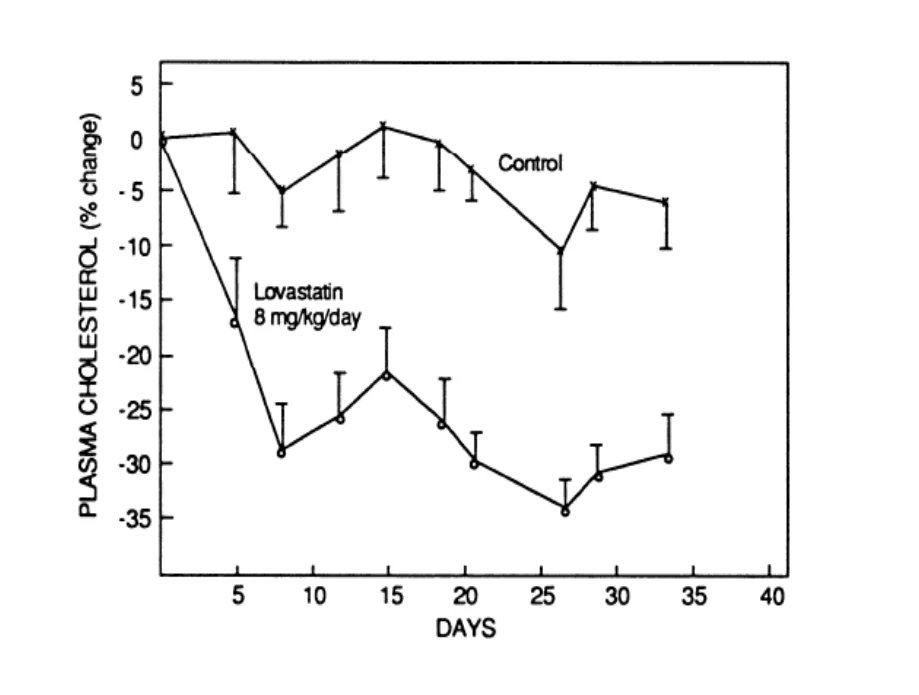
Eight dogs received 8 mg/kg/day, p.o. of lovastatin tablets in their diet for a period of 34 days and 4 dogs served as controls. The maximum decrease was obtained by Day 8 of treatment and remained relatively constant for the remainder of the experiment. Decreases in plasma cholesterol ranged from 18.3% to 42.1% (mean 27.6 ± S.E. of 2.8%). The results of this study are illustrated in Figure 1.
Figure 1 - Effect of lovastatin tablets on plasma cholesterol levels in dogs
In four male beagle dogs, cholestyramine, a bile acid sequestrant, administered at a dose of 12 g/day resulted in an average sustained reduction in total plasma cholesterol of approximately 35%.
Two of these dogs later received 8 mg/kg/day of lovastatin tablets. In the treated animals, there was a rapid response to treatment with cholesterol levels decreasing from an average value of 2.39 mmol/L (92.4 mg/dL) prior to treatment to 1.20 mmol/L (46.5 mg/dL) after treatment. The results of this study are illustrated in Figure 2.
Figure 2 - Plasma cholesterol lowering following oral administration of 8 mg/kg/day
Lovastatin tablets in cholestyramine treated dogs (n=2).
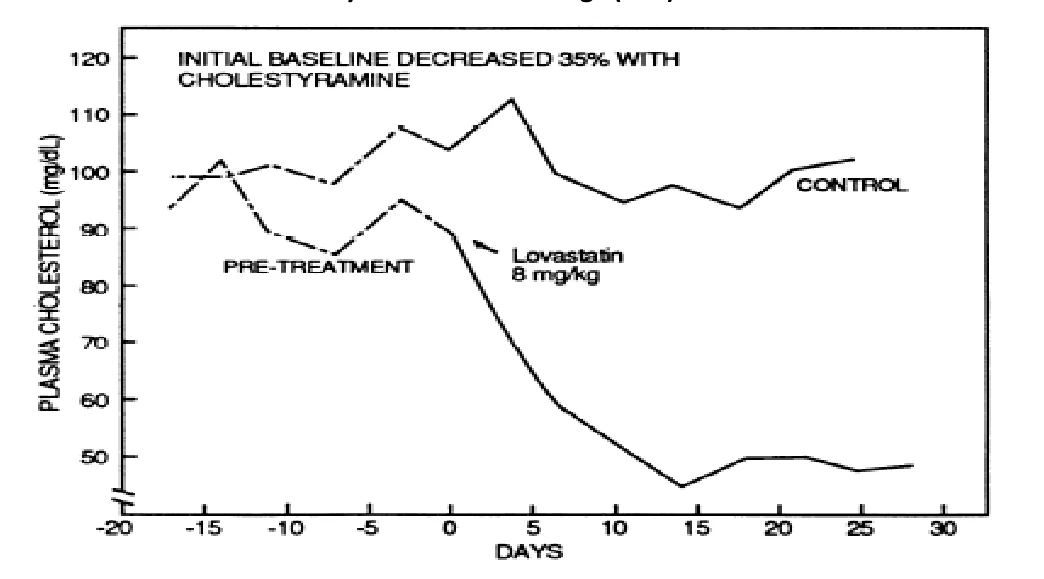
Addition of lovastatin tablets to the diet of cholestyramine primed dogs at levels of 1 to 8 mg/kg/day (2 dogs/dose group) resulted in a further dose-dependent decrease in plasma cholesterol of 14.2% (at 1 mg/kg/day) to 49.3% (at 8 mg/kg/day) below the levels established with cholestyramine alone. Withdrawal of lovastatin led to a gradual increase in plasma cholesterol levels to the original cholestyramine-induced values. Under these conditions there was a log-dose response.
Rabbits
Four male hypercholesterolemic Watanabe strain rabbits received lovastatin at a dose of 6 mg/kg/day, p.o. (administered by stomach tube) for a period of 21 days and four other hypercholesterolemic rabbits served as controls. Cholesterol levels of treated rabbits decreased by an average of 61.2 (±11.0)% compared to 13.6% for the control rabbits.
LDL decreased markedly and HDL remained constant or increased.
Lovastatin tablets administered at a dose of 20 mg/animal/day, p.o., (4 rabbits/group) prevents the increase of LDL-C in rabbits fed with a casein diet.
This effect is shown to be mediated through regulation of the levels of hepatic LDL-binding sites and increase in the rate of catabolism of LDL by the liver.
10.3. Pharmacokinetics
Pharmacokinetics
The pharmacokinetic profile of lovastatin tablets has been investigated in mice, rats, dogs and monkeys. About 30% of an oral dose is absorbed and lovastatin is rapidly hydrolysed, probably in the plasma and in the liver, to an active open hydroxy acid metabolite. In the dog the availability of the absorbed drug to the general circulation is limited by its extensive first-pass extraction in the liver, probably its primary site of action, with subsequent excretion of drug equivalents in the bile. The major pharmacokinetic parameters in the animals are presented in Table 5.
Table 5 - Pharmacokinetic Parameters in Animals
| INTRAVENOUS | ORAL | ||||||||||
|---|---|---|---|---|---|---|---|---|---|---|---|
| DOSE | AUC | DOSE | TMAX | AUC | |||||||
| MOUSE | Lovastatin | 0.6 | 0.38 | 50 | 2 | 8.65 | |||||
| RAT | Lovastatin | 0.8 | 0.776 | 8 | 2 | 1.91 | |||||
| Open hydroxy acid metabolite | 5 | 10.4 | 5 | 0.5 | 5.5 | ||||||
| DOG | Lovastatin | 0.8 | 1.64 | 8 | 2 | 1.4 | |||||
| Open hydroxy acid metabolite | 5 | 17.5 | 5 | 0.25 | 16.4 | ||||||
| MONKEY | Lovastatin | 0.8 | 1.17 | 8 | 2 | 0.82 | |||||
| Open hydroxy acid metabolite | 5 | 5.9 | 5 | 1 | 4.1 | ||||||
Doses are expressed in mg/kg
AUC values are in mcgEq.hr.mL-1 and are for 0-24 hr
Lovastatin has complex pharmacokinetic characteristics.
Lovastatin is a lactone which is readily hydrolyzed in vivo to the corresponding β-hydroxy acid, a potent inhibitor of HMG-CoA reductase. Inhibition of HMG-CoA reductase is the basis for an assay in pharmacokinetic studies of the β-hydroxy acid metabolites (active inhibitors) and, following base hydrolysis, active plus latent inhibitors (total inhibitors) in plasma following administration of lovastatin tablets.
Absorption
As a consequence of extensive hepatic extraction of lovastatin tablets, its systemic availability is low and variable. Less than 5% of an oral dose of lovastatin reaches the general circulation as active inhibitors. Following administration of lovastatin tablets, intersubject coefficient of variation was approximately 40% for the area under the curve of total inhibitory activity in the general circulation.
Distribution
Both lovastatin and its β-hydroxy acid metabolite are highly bound (> 95%) to human plasma proteins. Animal studies demonstrated that lovastatin crosses the blood-brain and placental barriers.
In all species studied, lovastatin and its active metabolite are > 95% bound to plasma albumin.
The apparent volumes of distribution of lovastatin tablets administered p.o. are 5 L/kg, 4 L/kg and 10 L/kg in rats, dogs and monkeys respectively. The apparent volumes of distribution of the open hydroxy acid metabolite administered intravenously are 2, 0.5 and 18 L/kg in rats, dogs and monkeys respectively.
Metabolism
Lovastatin tablets is metabolized by the microsomal hepatic enzyme system (Cytochrome P-450 isoform 3A4 system). The major active metabolites present in human plasma are the β-hydroxy acid of lovastatin, its 6'-hydroxy, 6'-hydroxymethyl, and 6'-exomethylene derivatives. Peak plasma concentrations of both active and total inhibitors were attained within 2 to 4 hours of oral administration. While the recommended therapeutic dose range is 20 to 80 mg/day, linearity of inhibitory activity in the general circulation was confirmed by a single dose study employing lovastatin tablet dosages from 60 to as high as 120 mg. With a once-a-day dosing regimen, plasma concentrations of total inhibitors over a dosing interval achieved a steady state between the second and third days of therapy and were about 1.5 times those following a single dose. When lovastatin tablets was given under fasting conditions, plasma concentrations of both active and total inhibitors were on average about two-thirds those found when lovastatin tablets was administered immediately after a standard test meal.
Although the mechanism is not fully understood, cyclosporine increases the AUC of lovastatin acid presumably due, in part, to inhibition of CYP3A4.
The risk of myopathy is increased by high levels of HMG-CoA reductase inhibitory activity in plasma. Potent inhibitors of CYP3A4 can increase the plasma levels of HMG-CoA reductase inhibitory activity and increase the risk of myopathy (see 7. Warnings and Precautions, Musculoskeletal and 9 Drug Interactions).
In animal studies, after oral dosing, lovastatin tablets had high selectivity for the liver, where it achieved substantially higher concentrations than in non-target tissues. Lovastatin undergoes extensive first-pass extraction in the liver, the primary site of action, with subsequent excretion of drug in the bile.
Elimination
Following an oral dose of 14C-labeled lovastatin to man, 10% of the dose was excreted in urine and 83% in feces. The latter represents absorbed drug excreted in bile, together with unabsorbed drug.
In animal studies about 90% of an oral dose of lovastatin tablets is recovered in the feces and less than 2% in the urine.
Special populations and conditions
- Renal Insufficiency: In a study of patients with severe renal insufficiency (creatinine clearance 0.167 to 0.5 mL/s [10 to 30 mL/min]), the plasma concentrations of total inhibitors after a single dose of lovastatin tablets were approximately two-fold higher than those in healthy volunteers.
- Storage, Stability, and Disposal
Store at room temperature (15°C - 30°C). Protect from light.
Part 2: Scientific Information
13. Pharmaceutical Information
Drug Substance
Non-proprietary name of the drug substance: Lovastatin
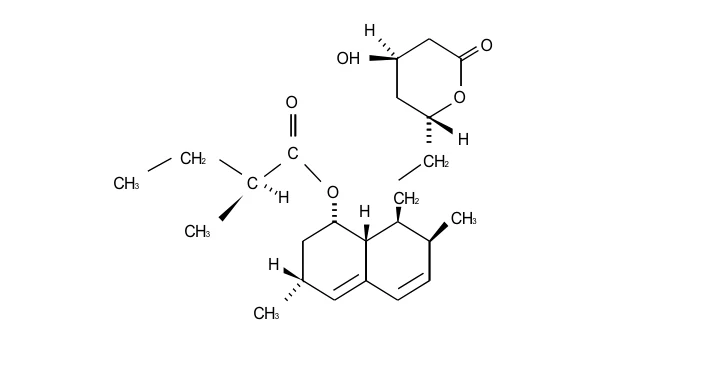
Chemical Name: Butanoic acid, 2-methyl-, 1,2,3,7,8,8a-hexahydro-3,7-dimethyl-8-[2-(tetrahydro-4-hydroxy-6-oxo-2H-pyran-2-yl) ethyl]-1-naphthalenyl ester, [1S-[1α(R*), 3 α,7β,8β(2S*,4S*), 8aβ]]-;
Molecular formula and molecular mass: C24H36O5 and 404.55 g/mol
Structural formula:
Physicochemical properties: Lovastatin is a white, odourless, non-hygroscopic crystalline powder.
Solubilities:
Solvent
Solubility (mg/mL)
Acetonitrile
Ethanol
Methanol
Water
28
16
28
0.44 x 10⁻³
The partition coefficient Kp (concentration in organic phase/concentration in aqueous phase) for lovastatin in the octyl alcohol - water system (pH 7 phosphate buffer) is (1.2 ± 0.9) x 104.
Pharmaceutical standard: USP
14. Clinical Trials
14.1. Clinical Trials by Indication
Hypercholesterolemia
A randomized, double-blind, controlled, parallel study was performed to assess the relative efficacy of LOVASTATIN versus Mevacor® in subjects with moderate primary hypercholesterolemia.The total cholesterol was measured and LDL-cholesterol levels of each subject were calculated and compared to baseline during a 6 week treatment period of lovastatin tablets 20 mg/day as either LOVASTATIN or Mevacor® 20 mg tablets. The results are summarized as follows:
| Mean Maximal % Decrease From Baseline (CV) | ||||||
| LOVASTATIN | Mevacor® | Relative Mean* | ||||
| Total cholesterol | 25.4 (25) | 25.8 (28) | 94.0 | |||
| LDL-cholesterol | 35.5 (24) | 35.2 (21) | 96.2 | |||
| Mean AUC of the Profile of % Decrease (CV) | ||||||
| LOVASTATIN | Mevacor® | Relative Mean* | ||||
| Total cholesterol | 104 (31) | 100 (33) | 97.8 | |||
| LDL-cholesterol | 149 (28) | 141 (28) | 101.0 | |||
| * based on the least squares estimate of the geometric means | ||||||
Lovastatin tablets has been shown to be highly effective in reducing total and LDL-C in heterozygous familial and non-familial forms of hypercholesterolemia and in mixed hyperlipidemia. A significant response was seen within 2 weeks, and the maximum therapeutic response occurred within 4 to 6 weeks. The response was maintained during continuation of therapy. Single daily doses given in the evening were more effective than the same dose given in the morning, perhaps because cholesterol is synthesized mainly at night. When therapy with lovastatin is stopped, total cholesterol has been shown to return to pre-treatment levels.
In patients with heterozygous FH, optimal reduction in total and LDL cholesterol is not usually achieved and combination drug therapy is normally required (For homozygous FH see 7. Warnings and Precautions, Use in Homozygous Familial Hypercholesterolemia).
In multicenter, double-blind studies in over 200 patients with familial or non-familial hypercholesterolemia, lovastatin tablets, administered in doses ranging from 20 mg q.p.m. to 40 mg b.i.d., was compared to placebo. Lovastatin consistently and significantly decreased total plasma cholesterol (TOTAL-C), LDL-cholesterol (LDL-C), total cholesterol/HDL-cholesterol (TOTAL-C/HDL-C) ratio and LDL-cholesterol/HDL-cholesterol (LDL-C/HDL-C) ratio (p <0.01). In addition, lovastatin tablets increased total HDL-cholesterol (HDL-C) and decreased VLDL-cholesterol (VLDL-C) and plasma triglycerides (TG) (see Tables 6 and 7 for dose response results).
Table 6 - FH Study: Dose Response of Lovastatin Tablets
(Percent Change from Baseline after 6 Weeks)
| DOSAGE | N | TOTAL-C (mean) | LDL-C (mean) | HDL-C (mean) | LDL-C/ HDL-C (mean) | TOTAL-C/ HDL-C (mean) | TG (median) |
|---|---|---|---|---|---|---|---|
| Placebo | 21 | -1 | -2 | +1 | -1 | 0 | +3 |
| Lovastatin Tablets | |||||||
| 20 mg q.p.m. | 20 | -18 | -19 | +10 | -26 | -24 | -7 |
| 40 mg q.p.m. | 21 | -24 | -27 | +10 | -32 | -29 | -22 |
| 10 mg b.i.d. | 18 | -22 | -25 | +6 | -28 | -25 | -11 |
| 20 mg b.i.d. | 19 | -27 | -31 | +12 | -38 | -34 | -18 |
| 40 mg b.i.d. | 20 | -34 | -39 | +8 | -43 | -38 | -12 |
Table 7 - Non-FH Study: Dose Response of Lovastatin Tablets
(Percent Change from Baseline after 6 Weeks)
| DOSAGE | N | TOTAL-C (mean) | LDL-C (mean) | HDL-C (mean) | LDL-C/ HDL-C (mean) | TOTAL-C/ HDL-C (mean) | VLDL-C (median) | TG (median) |
|---|---|---|---|---|---|---|---|---|
| Placebo | 20 | +5 | +9 | +4 | +7 | +3 | -14† | -3 |
| Lovastatin Tablets | ||||||||
| 20 mg q.p.m. | 19 | -18 | -22 | +11 | -29 | -24 | -30†† | -17 |
| 40 mg q.p.m. | 20 | -19 | -21 | +4 | -20 | -19 | -31† | -20 |
| 10 mg b.i.d. | 19 | -18 | -24 | +3 | -25 | -20 | -2†† | -15 |
| 20 mg b.i.d. | 17 | -29 | -34 | +6 | -36 | -31 | -31† | -23 |
| 40 mg b.i.d. | 20 | -32 | -39 | +13 | -46 | -39 | -31†† | -27 |
† N = 17
††N = 18
Lovastatin tablets was compared to cholestyramine in an open parallel study in patients with hypercholesterolemia who were at high risk of myocardial infarction. At all dosage levels, Lovastatin produced a significantly greater reduction of total plasma cholesterol, LDL-cholesterol, VLDL-cholesterol, triglycerides, and total cholesterol/HDL-cholesterol ratio when compared to cholestyramine. The increases in HDL-cholesterol achieved with lovastatin and cholestyramine were similar (see Table 8).
Table 8 - Lovastatin vs Cholestyramine
(Percent Change from Baseline after 12 Weeks)
| DOSAGE | N | TOTAL-C (mean) | LDL-C (mean) | HDL-C (mean) | LDL-C/ HDL-C (mean) | TOTAL-C/ HDL-C (mean) | VLDL-C (median) | TG (median) |
|---|---|---|---|---|---|---|---|---|
| Lovastatin | ||||||||
| 20 mg b.i.d. | 85 | -27 | -32 | +9 | -36 | -31 | -34 | -21 |
| 40 mg b.i.d. | 88 | -34 | -42 | +8 | -44 | -37 | -31 | -27 |
| Cholestyramine | ||||||||
| 12 g b.i.d. | 88 | -17 | -23 | +8 | -27 | -21 | +2 | +11 |
An expanded clinical evaluation of lovastatin (EXCEL study) was performed comparing lovastatin to placebo in 8245 patients with hypercholesterolemia, total cholesterol 6.2 to 7.8 mmol/L and LDL cholesterol > 4.1 mmol/L. This was a randomized, double-blind, parallel study, which extended over 48 weeks. The patient population was selected with or without other risk factors and with or without evidence of coronary disease. Lovastatin was the sole hypolipidemic agent used in virtually all patients in this study. Total, LDL- and HDL-cholesterol and triglycerides were measured. All changes in plasma levels were dose-related, similar to those shown in the initial clinical trials, and significantly different from those with placebo (≤ 0.001) (Table 9).
Table 9 - Lovastatin vs Placebo
(Percent Change from Baseline - Average Values between Weeks 12 and 48)
| DOSAGE | N* | TOTAL-C (mean) | LDL-C (mean) | HDL-C (mean) | LDL-C/ HDL-C (mean) | TOTAL-C/ HDL-C (mean) | TG (median) |
|---|---|---|---|---|---|---|---|
| Placebo | 1663 | +0.7 | +0.4 | +2.0 | +0.2 | +0.6 | +4 |
| Lovastatin | |||||||
| 20 mg (with evening meal) | 1642 | -17 | -24 | +6.6 | -27 | -21 | -10 |
| 40 mg (with evening meal) | 1645 | -22 | -30 | +7.2 | -34 | -26 | -14 |
| 20 mg b.i.d. | 1646 | -24 | -34 | +8.6 | -38 | -29 | -16 |
| 40 mg b.i.d. | 1649 | -29 | -40 | +9.5 | -44 | -34 | -19 |
* Patients enrolled
Coronary Heart Disease
The effect of treatment with lovastatin tablets on coronary atherosclerosis was evaluated in three randomized, double-blind, placebo-controlled trials of 2 to 2½ years' duration. All patients had coronary atherosclerosis on angiograms evaluated by computerized quantitative coronary angiography (QCA).
In the first trial, the effect of lovastatin 20 to 80 mg daily was studied in 331 patients with serum total cholesterol 5.70 to 7.77 mmol/L. Lovastatin significantly slowed the progression of lesions and decreased the number of patients with new lesions. This effect was not accompanied by an improvement in the clinical endpoints (death, fatal/non fatal myocardial infarction, hospitalization for unstable angina, and coronary revascularization procedures) within the two years' duration of treatment (see 1. Indications).
In the second trial, the effect of treatment with lovastatin 40 mg b.i.d. was studied in 270 patients with serum total cholesterol 4.92 to 7.64 mmol/L. By QCA, there was no statistically significant difference between groups in change of percent stenosis for all lesions (the primary endpoint). However, angiograms were also evaluated by expert angiographers who formed a consensus opinion of overall angiographic change - the Global Change Score (a secondary endpoint). By this method, it was shown that lovastatin significantly slowed the progression of disease overall and doubled the number of patients who showed regression of lesions. No difference in clinical events were detected during the 2.2 years of double-blind therapy (see 1. Indications).
The trials described above were not designed or powered to demonstrate a reduction in the risk of coronary morbidity and mortality as well as total mortality.
In the third trial (Familial Atherosclerosis Treatment Study [FATS]), the effect of combined therapy with lovastatin and colestipol was studied in 98 patients with a family history of premature vascular disease, apolipoprotein B levels ≥1.3 g/L and an average total cholesterol of 6.99 mmol/L. Lovastatin and colestipol significantly reduced the frequency of progression and increased the frequency of regression of coronary lesions.
The effect of lovastatin tablets on the progression of atherosclerosic plaques in the coronary arteries has been corroborated by similar findings in another vasculature. In the Asymptomatic Carotid Artery Plaque Study (ACAPS), the effect of therapy with lovastatin on carotid atherosclerosis was assessed by B-mode ultrasonography in patients with early, asymptomatic carotid lesions, with mean serum total cholesterol of 6.1 mmoL/L (235 mg/dL) and without known coronary heart disease at baseline. In this double-blind, controlled clinical trial, 919 patients were randomized in a 2 x 2 factorial design to placebo, lovastatin tablets 10 to 40 mg daily and/or warfarin. Ultrasonograms of the carotid walls were used to determine the change per patient from baseline to three years in mean maximum intimal-medial thickness (IMT) of 12 measured segments.
There was a significant regression of carotid lesions in patients receiving lovastatin tablets alone compared to those receiving placebo alone. The predictive value of changes in IMT for stroke has not yet been established. In the lovastatin group there was a significant reduction in the number of patients with major cardiovascular events (5 vs 14, p = 0.04) and a significant reduction in all-cause mortality (1 vs 8, p = 0.02) relative to the placebo group. This trial should be viewed as supportive and complementary to the others mentioned above. However, it was not powered to demonstrate a reduction in the risk of coronary morbidity and mortality. A larger trial of longer duration is needed to clarify the effect of lovastatin in monotherapy on clinical events (see 7. Warnings and Precautions and 1. Indications).
Lovastatin tablets has been shown to be effective in uncomplicated, well controlled insulin dependent (Type 1) and non-insulin dependent (Type 2) diabetic patients with primary hypercholesterolemia. Reductions of plasma lipids were comparable to that reported in non-diabetic patients. Glucose control was not adversely affected.
In one controlled study in elderly patients over the age of 60, efficacy appeared similar to that seen in the population as a whole, and there was no apparent increase in the frequency of clinical or laboratory adverse findings.
16. Non-Clinical Toxicology
General toxicology
Acute Toxicity
Table 10 – Acute Toxicity
| Lovastatin | |||
|---|---|---|---|
| Species | Sex | Route | LD50 mg/kg (95% confidence limits) |
| Rat | Female | Oral | >5000 |
| Rat | Male | Oral | >5000 |
| Mouse | Female | Oral | >20000 |
| Mouse | Male | Oral | >20000 |
Open Hydroxy Acid Form of Lovastatin
L-154,819
Mouse
Female
Oral
1230 – 1380
Mouse
Male
Oral
1230 – 1380
Mouse
Female
Intravenous
272 – 287
Mouse
Male
Intravenous
272 – 287
Rat
Female
Oral
~ 1260
Rat
Male
Oral
~ 1260
Rat
Female
Intraperitoneal
~ 113
Rat
Male
Intraperitoneal
~ 113
Subacute and Chronic Toxicity Studies
The spectrum of effects produced by lovastatin tablets in mice, rats, rabbits, dogs and monkeys shown on Table 8 below is not unexpected in view of the magnitude of the dosage levels employed and the potency of lovastatin against the HMG-CoA reductase.
Table 11 – Lovastatin Tablets: Target Organs Observed in Animal Studies
| Organ | Mouse | Rat | Rabbit | Dog | Monkey |
|---|---|---|---|---|---|
| Liver, neoplastic effect | + | - | - | - | - |
| Liver, non-neoplastic effect | + | + | + | + | - |
| Kidney | - | - | + | - | - |
| Gallbladder | - | NA | + | - | - |
| Stomach (non-glandular) | + | + | NA | NA | NA |
| Fetus | + | + | - | NT | NT |
| Eye (lens) | - | - | - | + | - |
| Brain (vasculature, optic tract) | - | - | - | + | - |
| Testes | - | - | - | + | - |
+= Organ affected in some way by drug treatment
-= No effect observed in this organ in this species
NT = Not tested
NA = Not applicable (organ does not exist in this species)
The following table summarizes the significant adverse changes noticed during the long-term toxicology studies with lovastatin tablets.
Table 12 – Lovastatin Tablets: Significant Adverse Changes
MINIMAL TOXIC DOSE (mg/kg/day) | NO-EFFECT DOSE (mg/kg/day) | |
|---|---|---|
| MICE | ||
| Hepatic tumors | 500 | 100 |
| Non-glandular gastric mucosa | ||
| 100 | 20 |
| 100 | 20 |
| Pulmonary adenoma | 500 | 100 |
| RATS | ||
| Morphologic abnormalities in liver | ||
| 30 | 5 |
| 30 | 5 |
| Teratology | ||
| 800 | 80 |
| Non-glandular gastric mucosa | ||
| 200 | 180 |
| Elevated serum transaminase activity | 30 | 5 |
| RABBITS | ||
| Hepatocellular necrosis | 100 | 25 |
| Renal tubular necrosis | 100 | 25 |
| DOGS | ||
| Death | 180 | 60 |
| CNS pathology | ||
| 180 | 60 |
| 60 | 30 |
| Cataracts | 60 | 30 |
| Testicular degeneration | 20 | 5 |
| Elevated serum transaminase activity | 20 | 5 |
An extensive series of studies were performed with the specific intent of exploring the relationship between the adverse changes and inhibition of HMG CoA-reductase with the goal of providing the necessary perspective for human risk assessment.
The results of these studies are shown on the table below:
Table 13 - Lovastatin: Key Issues Identified in Safety Assessment – Relationship to Inhibition of HMG-CoA Reductase
Clearly Mechanism-Based
- Hepatic morphologic changes in rats
- Hepatic necrosis in rabbits
- Teratology in rats
- Hyperplasia of gastric non-glandular mucosa in rodents
Most Probably Mechanism-Based
- Cataracts in dogs
- Papillomas in non-glandular gastric mucosa in mice
- Elevated serum transaminase activity in rats and dogs
- Renal tubular necrosis in rabbits
Relationship to Mechanism of Action Unknown; Possibly Mechanism-Based
Associated with marked lowering of serum lipids
- Vascular and neuronal degeneration in CNS of dogs
Not associated with marked lowering of serum lipids
- Liver tumors in mice
- Testicular degeneration in dogs
Genotoxicity
No evidence of mutagenicity was observed in a microbial mutagen test using mutant strains of Salmonella typhimurium with or without rat or mouse liver metabolic activation. In addition, no evidence of damage to genetic material was noted in an in vitro alkaline elution assay using rat or mouse hepatocytes, a V-79 mammalian cell forward mutation study, an in vitro chromosome aberration study in CHO cells, or an in vivo chromosomal aberration assay in mouse bone marrow.
Carcinogenicity
In a 21-month carcinogenic study in mice, a statistically significant (p ≤ 0.05) increase in the incidence of spontaneous hepatocellular carcinomas and adenomas was observed at doses of 500 mg/kg/day of lovastatin (312 times the maximum recommended human dose). These changes were not seen in mice given doses of 20 and 100 mg/kg/day (12.5 and 62.5 times the maximum recommended human dose).
A statistically significant increase (p ≤ 0.05) in the spontaneous incidence of pulmonary adenomas was seen in female mice receiving 500 mg/kg/day (312 times the maximum recommended human dose); no similar changes were seen in males at any dose or in females receiving 20 or 100 mg/kg/day (12.5 or 62.5 times the maximum recommended human dose). Because the incidence of pulmonary tumors was within the range of untreated animals in studies of similar duration, the relationship of this latter change to treatment is not known.
In addition, an increase in the incidence of papilloma in the non-glandular mucosa of the stomach was observed in mice receiving 100 and 500 mg/kg/day (62.5 and 312 times the maximum recommended human dose); no increase was seen at a dosage of 20 mg/kg/day (12.5 times the maximum recommended human dose). The glandular mucosa was not affected. The human stomach contains only glandular mucosa. Importantly, there is a strong association between this change and hyperplasia of the squamous epithelium (acanthosis) in this region; acanthosis is a characteristic change observed in the non-glandular mucosa of rodents treated with HMG-CoA reductase inhibitors and is most probably a result of inhibition of the reductase in this tissue.
Similar squamous epithelium is found in the oesophagus and ano-rectal junction of the mouse, rat, dog and monkey; however, no evidence of a similar drug-induced hyperplastic response was observed in these tissues in studies of up to 21 months in the mouse given up to 500 mg/kg/day (312 times the maximum recommended human dose), or in a study of 24 months in the rat given 180 mg/kg/day (112 times the maximum recommended human dose).
Reproductive and developmental toxicology
In rats, maternal treatment with lovastatin tablets at dosages of 80 and 400 mg/kg/day (10- and 52-fold the maximum recommended therapeutic dose based on mg/m2 body surface area) has been shown to reduce the fetal plasma levels of mevalonate. Developmental studies in mice and rats at daily oral doses of 80 mg/kg/day (5- and 10-fold, respectively, the maximum recommended therapeutic dose based on mg/m2 body surface area) had no effect on the incidence of congenital malformations. In mice, an oral dose of 800 mg/kg/day (47 times the maximum recommended therapeutic dose based on mg/m2 body surface area) resulted in a slight increase in the incidence of skeletal malformations compared with controls but the incidence of these skeletal malformations was within the range observed spontaneously in this strain of mouse. However, in rats, an oral dose of 800 mg/kg/day (103 times the maximum recommended therapeutic dose based on mg/m2 body surface area) resulted in a higher incidence of skeletal malformations compared with controls. Subsequent studies conducted at dosages of up to 800 mg/kg/day (103 times the maximum recommended therapeutic dose based on mg/m2 body surface area) showed that these skeletal malformations were consequences of maternal toxicity (forestomach lesions associated with maternal weight loss), peculiar to rodents and are highly unlikely to be due to a direct effect on the developing fetus. No developmental toxicity was noted in rabbits at a maximum tolerated dose of 15 mg/kg/day (approximately 2-fold the maximum recommended therapeutic dose based on mg/m2 body surface area).
No drug-related effects on fertility were found in studies with rats. Lovastatin is excreted in rat milk.
17. Supporting Product Monographs
- 1. MEVACOR® (lovastatin tablets, USP 20 mg and 40 mg), control number 169342, product monograph, Merck Canada Inc. 2014-01-13.