


Product Monograph - Lysteda
SUMMARY PRODUCT INFORMATION
Route of Administration | Dosage Form / Strength | Clinically Relevant Nonmedicinal Ingredients |
| Oral | tablet 650 mg | hypromellose, pregelatinized corn starch microcrystalline cellulose, povidone, stearic acid, magnesium stearate and colloidal silicone dioxide. See Dosage Forms, Composition and Packaging section. |
INDICATIONS AND CLINICAL USE
LYSTEDA (tranexamic acid) tablet is indicated for the treatment of cyclic heavy menstrual bleeding (menorrhagia).
Prior to prescribing LYSTEDA, exclude endometrial pathology that can be associated with heavy menstrual bleeding.
Geriatrics
LYSTEDA is indicated for women of reproductive age and is not intended for use by postmenopausal women.
Pediatrics
LYSTEDA is indicated for women of reproductive age and is not intended for use in premenarcheal girls. LYSTEDA has not been studied in adolescents under age 18 with heavy menstrual bleeding.
CONTRAINDICATIONS
- Active thromboembolic disease (e.g., deep vein thrombosis, pulmonary embolism, or cerebral thrombosis)
- A history of thrombosis or thromboembolism, including retinal vein or artery occlusion
- An intrinsic risk of thrombosis or thromboembolism (e.g., thrombogenic valvular disease, thrombogenic cardiac rhythm disease, or hypercoagulopathy). Venous and arterial thrombosis or thromboembolism, as well as cases of retinal artery and retinal vein occlusions, have been reported with tranexamic acid.
- Known hypersensitivity to tranexamic acid or to any of the nonmedicinal ingredients. For a complete listing, see the Dosage Forms, Composition and Packaging section of the product monograph.
- Active subarachnoid hemorrhage.
WARNINGS AND PRECAUTIONS
General
Patients with irregular menstrual bleeding should not use LYSTEDA until the cause of irregular bleeding has been established. If menstrual bleeding is not adequately reduced by LYSTEDA after 2 menstrual cycles or seems to stop working, an alternative treatment should be considered.
Cardiovascular
Thromboembolic Risk
Concomitant Use of Hormonal Contraceptives
Combination hormonal contraceptives are known to increase the risk of venous thromboembolism, as well as arterial thromboses such as stroke and myocardial infarction. Because LYSTEDA is antifibrinolytic, the risk of venous thromboembolism, as well as arterial thromboses such as stroke, may increase further when hormonal contraceptives are administered with LYSTEDA. This is of particular concern in women who are obese or smoke cigarettes, especially smokers over 35 years of age [see Contraindications and Drug Interactions].
Women using hormonal contraception were excluded from the clinical trials supporting the safety and efficacy of LYSTEDA, and there are no clinical trial data on the risk of thrombotic events with the concomitant use of LYSTEDA with hormonal contraceptives. There have been US post marketing reports of venous and arterial thrombotic events in women who have used LYSTEDA concomitantly with combined hormonal contraceptives. Women using hormonal contraception, especially those who are obese or smoke, should use LYSTEDA only if there is a strong medical need and the benefit of treatment will outweigh the potential increased risk of a thrombotic event. Do not use LYSTEDA in women who are taking more than the approved dose of a hormonal contraceptive.
Factor IX Complex Concentrates or Anti-Inhibitor Coagulant Concentrates
LYSTEDA is not recommended for women taking either Factor IX complex concentrates or anti-inhibitor coagulant concentrates because the risk of thrombosis may be increased [see Drug Interactions and Clinical Pharmacology].
All-Trans Retinoic Acid (Oral Tretinoin)
Exercise caution when prescribing LYSTEDA to women with acute promyelocytic leukemia taking all-trans retinoic acid for remission induction because of possible exacerbation of the procoagulant effect of all-trans retinoic acid [see Drug Interactions and Clinical Pharmacology].
Subarachnoid Hemorrhage
Cerebral oedema and cerebral infarction may be caused by use of LYSTEDA in women with subarachnoid haemorrhage.
Haematuria
LYSTEDA should not be prescribed in patients with unexplained haematuria. In cases of haematuria of renal origin, antifibrinolytic therapy carries the risk of mechanical anuria due to formation of a ureteral clot.
Immune
Severe Allergic Reaction
In case of severe allergic reaction, discontinue LYSTEDA and seek immediate medical attention.
A case of severe allergic reaction to LYSTEDA was reported in the clinical trials, involving a subject who experienced dyspnea, tightening of her throat, and facial flushing that required emergency medical treatment. A case of anaphylactic shock has also been reported in the literature, involving a patient who received an intravenous bolus of tranexamic acid.
Ophthalmologic
Ligneous Conjunctivitis
Ligneous conjunctivitis has been reported in patients taking tranexamic acid. The conjunctivitis resolved following cessation of the drug.
Ocular Effects
Retinal venous and arterial occlusion has been reported in patients using tranexamic acid. Patients should be instructed to report visual and ocular symptoms promptly. In the event of such symptoms, patients should be instructed to discontinue LYSTEDA immediately and should be referred to an ophthalmologist for a complete ophthalmic evaluation, including dilated retinal examination, to exclude the possibility of retinal venous or arterial occlusion.
Special Populations
Pregnant Women:
LYSTEDA is not indicated for use in pregnant women. The safety of tranexamic acid during pregnancy has not yet been established. No harmful effects have been reported. Reproduction studies have been performed in mice, rats and rabbits and have revealed no evidence of impaired fertility or harm to the fetus due to tranexamic acid. However, tranexamic acid is known to cross the placenta and appears in cord blood at concentrations approximately equal to, or lower than the maternal concentration. There are no adequate and well-controlled studies in pregnant women.
An embryo-fetal developmental toxicity study in rats and a perinatal developmental toxicity study in rats were conducted using tranexamic acid. No adverse effects were observed in either study at doses up to 4 times the recommended human oral dose of 3900 mg/day based on mg/m2 (actual animal dose 1500 mg/kg/day).[see Toxicology].
Nursing Women:
Tranexamic acid is present in the mother’s milk at a concentration of about one hundredth of the corresponding serum concentration. LYSTEDA should be used during lactation only if clearly needed.
Paediatrics:
LYSTEDA is indicated for women of reproductive age and is not intended for use in premenarcheal girls. LYSTEDA has not been studied in adolescents under age 18 with heavy menstrual bleeding.
Geriatrics:
LYSTEDA is indicated for women of reproductive age and is not intended for use by postmenopausal women.
ADVERSE REACTIONS
Adverse Drug Reaction Overview
The most common adverse events reported in patients treated with LYSTEDA were headache, nasal and sinus symptoms, abdominal pain, back pain, musculoskeletal pain, arthralgia, diarrhoea, muscle cramps and spasms and migraine. Rare but serious adverse events in patients taking LYSTEDA include venous and arterial thrombosis, visual and ocular symptoms and allergic reactions involving angioedema and airway obstruction.
Clinical Trial Adverse Drug Reactions
Because clinical trials are conducted under very specific conditions the adverse reaction rates observed in the clinical trials may not reflect the rates observed in practice and should not be compared to the rates in the clinical trials of another drug. Adverse drug reaction information from clinical trials is useful for identifying drug-related adverse events and for approximating rate.
A list of adverse events occurring during dosing in ≥ 3% of subjects and more frequently in LYSTEDA treated subjects receiving 3900 mg/day compared to placebo is provided in Table 1. These events were reported in the two Phase 3 placebo controlled short-term studies.
Short-term Studies
The safety of LYSTEDA in the treatment of heavy menstrual bleeding (HMB) was studied in two randomized, double-blind, placebo-controlled studies. One study compared the effects of two doses of LYSTEDA (1950 mg and 3900 mg given daily for up to 5 days during each menstrual period) versus placebo over a 3-cycle treatment duration. A total of 304 women were randomized to this study, with 115 receiving at least one dose of 3900 mg/day of LYSTEDA. A second study compared the effects of LYSTEDA (3900 mg/day) versus placebo over a 6-cycle treatment duration. A total of 196 women were randomized to this study, with 117 receiving at least one dose of LYSTEDA. In both studies, subjects were generally healthy women who had menstrual blood loss of ≥ 80 mL.
In these studies, subjects were 18 to 49 years of age with a mean age of approximately 40 years, had cyclic menses every 21-35 days, and a BMI of approximately 32 kg/m2. On average, subjects had a history of HMB for approximately 10 years and 40% had fibroids as determined by transvaginal ultrasound. Approximately 70% were Caucasian, 25% were Black, and 5% were Asian, Native American, Pacific Islander, or Other. Seven percent (7%) of all subjects were of Hispanic origin. Women using hormonal contraception were excluded from the trials.
The rates of discontinuation due to adverse events during the two clinical trials were comparable between LYSTEDA and placebo. In the 3-cycle study, the rate in the 3900 mg LYSTEDA dose group was 0.8% as compared to 1.4% in the placebo group. In the 6-cycle study, the rate in the LYSTEDA group was 2.4% as compared to 4.1% in the placebo group. Across the studies, the combined exposure to 3900 mg/day LYSTEDA was 947 cycles and the average duration of use was 3.4 days per cycle.
Long-term Studies
Long-term safety of LYSTEDA was studied in two open-label studies. In one study, subjects with physician-diagnosed heavy menstrual bleeding (not using the alkaline hematin methodology) were treated with 3900 mg/day for up to 5 days during each menstrual period for up to 27 menstrual cycles. A total of 781 subjects were enrolled and 239 completed the study through 27 menstrual cycles. A total of 12.4% of the subjects withdrew due to adverse events. Women using hormonal contraception were excluded from the study. The total exposure in this study to 3900 mg/day LYSTEDA was 10,213 cycles. The average duration of LYSTEDA use was 2.9 days per cycle.
A long-term open-label extension study of subjects from the two short-term efficacy studies was also conducted in which subjects were treated with 3900 mg/day for up to 5 days during each menstrual period for up to 9 menstrual cycles. A total of 288 subjects were enrolled and 196 subjects completed the study through 9 menstrual cycles. A total of 2.1% of the subjects withdrew due to adverse events. The total exposure to 3900 mg/day LYSTEDA in this study was 1,956 cycles. The average duration of LYSTEDA use was 3.5 days per cycle.
The types and severity of adverse events in these two long-term open-label trials were similar to those observed in the double-blind, placebo-controlled studies although the percentage of subjects reporting them was greater in the 27-month study, most likely because of the longer study duration.
A case of severe allergic reaction to LYSTEDA was reported in the extension trial, involving a subject on her fourth cycle of treatment that experienced dyspnoea, tightening of her throat, and facial flushing that required emergency medical treatment.
Table 1: All treatment-emergent adverse events reported by ≥ 1% of subjects in short-term trials.
| LYSTEDA | Placebo n (%) (N=139) | ||||||||||
| (3900 mg/day) | |||||||||||
| n (%) | |||||||||||
| (N=232) | |||||||||||
| Total number of Adverse Events | 1094 | 646 | |||||||||
| Number of subjects with at least one Adverse Event | 203 (87.5%) | 119 (85.6%) | |||||||||
BLOOD & LYMPHATIC SYSTEM DISORDERS Anaemia 8 (3.5%) 4 (2.9%) | |||||||||||
CARDIAC DIORDERS Palpitations 1 (0.4%) 2 (1.4%) | |||||||||||
EAR & LABRYNTH DISORDERS Ear pain 3 (1.3%) 2 (1.4%) | |||||||||||
EYE DISORDERS Dry eye 0 (0.0%) 2 (1.4%) Vision blurred 1 (0.4%) 4 (2.9%) | |||||||||||
GASTROINTENSTINAL DISORDERS Abdominal pain a 43 (18.5%) 23 (16.5%) Constipation 3 (1.3%) 2 (1.4%) Diarrhoea 15 (6.5%) 8 (5.8%) Dyspepsia 6 (2.6%) 6 (4.3%) Nausea 17 (7.3%) 12 (8.6%) Toothache 3 (1.3%) 8 (5.8%) Vomiting 7 (3.0%) 3 (2.2%) | |||||||||||
GENERAL DISORDERS Chest pain 1 (0.4%) 2 (1.4%) Fatigue 11 (4.7%) 5 (3.6%) Influenza like illness 3 (1.3%) 2 (1.4%) Pyrexia 2 (0.9%) 4 (2.9%) | |||||||||||
IMMUNE SYSTEM DISORDERS Multiple allergies b 16 (6.9%) 7 (5.0%) | |||||||||||
INFECTIONS & INFESTATIONS Genital infection fungal 3 (1.3%) 1 (0.7%) Influenza 5 (2.2%) 2 (1.4%) Otitis media 3 (1.3%) 0 (0.0%) Sinusitis 7 (3.0%) 3 (2.2%) Upper respiratory tract infection c 17 (7.3%) 10 (7.2%) | |||||||||||
| LYSTEDA | Placebo n (%) (N=139) | ||||||||||
| (3900 mg/day) | |||||||||||
| n (%) | |||||||||||
| (N=232) | |||||||||||
| Total number of Adverse Events | 1094 | 646 | |||||||||
| Number of subjects with at least one Adverse Event | 203 (87.5%) | 119 (85.6%) | |||||||||
INJURY, POISONING & PROCEDURAL COMPLICATIONS Post procedural pain 0 (0.0%) 2 (1.4%) | |||||||||||
INVESTIGATIONS Blood cholesterol increased 8 (3.5%) 2 (1.4%) Blood triglycerides increased 4 (1.7%) 3 (2.2%) Haematocrit decreased 1 (0.4%) 3 (2.2%) Haemoglobin decreased 1 (0.4%) 2 (1.4%) Mean cell volume decreased 1 (0.4%) 2 (1.4%) Serum ferritin decreased 8 (3.5%) 6 (4.3%) | |||||||||||
MUSCULOSKELATAL & CONNECTIVE TISSUE DISOREDRS Arthralgia 14 (6.0%) 4 (2.9%) Arthritis 0 (0.0%) 2 (1.4%) Back Pain 42 (18.1%) 17 (12.2%) Flank pain 1 (0.4%) 3 (2.2%) Muscle cramps d 14 (6.0%) 7 (5.0%) Musculoskeletal pain e 38 (16.4%) 7 (5.0%) | |||||||||||
NERVOUS SYSTEM DISORDERS Dizziness 3 (1.3%) 7 (5.0%) Headache f 124 (53.4%) 61 (43.9%) Lethargy 3 (1.3%) 1 (0.7%) Migraine 14 (6.0%) 8 (5.8%) Sedation 0 (0.0%) 2 (1.4%) | |||||||||||
PSYCHIATRIC DISORDERS Anxiety 6 (2.6%) 2 (1.4%) Depression 8 (3.5%) 3 (2.2%) Insomnia 8 (3.5%) 5 (3.6%) Mood swings 4 (1.7%) 0 (0.0%) | |||||||||||
REPRODUCTIVE SYSTEM & BREAST DISORDERS Breast tenderness g 5 (2.2%) 2 (1.4%) Dysmenorrhoea 7 (3.0%) 5 (3.6%) Menorrhagia 0 (0.0%) 2 (1.4%) Menstrual discomfort 104 (44.8%) 63 (45.3%) Menstrual disorder 2 (0.9%) 2 (1.4%) Pelvic pain 2 (0.9%) 2 (1.4%) Premenstrual syndrome 3 (1.3%) 1 (0.7%) | |||||||||||
| LYSTEDA | Placebo n (%) (N=139) | ||||||||
| (3900 mg/day) | |||||||||
| n (%) | |||||||||
| (N=232) | |||||||||
| Total number of Adverse Events | 1094 | 646 | |||||||
| Number of subjects with at least one Adverse Event | 203 (87.5%) | 119 (85.6%) | |||||||
RESPIRATORY, THORACIC & MEDIASTINAL DISOREDRS Cough 4 (1.7%) 6 (4.3%) Nasal & sinus congestion 10 (4.3%) 5 (3.6%) Rhinorrhoea 5 (2.2%) 2 (1.4%) Throat irritation 1 (0.4%) 3 (2.2%) SKIN & SUBCUTANEOUS TISSUE DISOREDRS Acne 2 (0.9%) 3 (2.2%) Rash 3 (1.3%) 1 (0.7%) VASCULAR DISORDERS Hot flush 3 (1.3%) 0 (0.0%) | |||||||||
a
includes abdominal discomfort, abdominal pain upper, abdominal pain lower and epigastric pain b
includes seasonal allergy
c
includes viral upper respiratory tract infections
d
includes muscle spasms and muscle tightness
e
includes musculoskeletal discomfort, myalgia, neck pain and pain in extremity f
includes cluster, tension and sinus headaches
g
includes breast pain
Less Common Clinical Trial Adverse Drug Reactions (<1%)
The following adverse drug reactions were seen in <1% of LYSTEDA treated subjects in the Phase 3 short-term clinical studies.
Cardiac Disorders: palpitations
Ear and Labyrinth Disorders: sensation of pressure in ear
Eye Disorders: blurred vision, visual disturbance
Gastrointestinal Disorders: loose stools, tongue disorder
General Disorders: chest pain, feeling hot, pyrexia
Investigations: gamma-glutamyltransferase increased, hematocrit and hemoblobin decreased, intraocular pressure increased, mean cell haemoglobin concentration (MCHC) decreased, mean cell volume (MCV) decreased
Metabolism and Nutrition Disorders: decreased appetite, food craving
Musculoskeletal and Connective Tissue Disorders: flank pain, musculoskeletal stiffness, pain in jaw
Nervous System Disorders: paraesthesias
Psychiatric Disorders: irritability
Renal and Urinary Disorders: polyuria
Reproductive System and Breast Disorders: menstrual disorder, pelvic pain, uterine enlargement
Respiratory, Thoracic and Mediastinal Disorders: throat irritation, throat tightness
Skin and Subcutaneous Tissue Disorders: acne, ecchymosis, pruritus, rash, urticaria
Abnormal Hematologic and Clinical Chemistry Findings
Blood triglycerides increased, blood cholesterol increased, gamma-glutamyl transferase increased, mean cell volume decreased mean, cell haemoglobin concentration (MCHC) decreased.
Post-Market Adverse Drug Reactions
The following adverse reactions have been identified from postmarketing experience with tranexamic acid. Because these reactions are reported voluntarily from a population of uncertain size, it is not always possible to reliably estimate their frequency or establish a causal relationship to drug exposure.
Based on worldwide postmarketing reports, the following have been reported in patients receiving tranexamic acid for various indications:
- Thromboembolic events (e.g., deep vein thrombosis, pulmonary embolism, jugular vein thrombosis, cerebral thrombosis, acute renal cortical necrosis, and central retinal artery and vein obstruction)
- Allergic skin reactions, anaphylactic shock and anaphylactoid reactions
- Impaired colour vision and other visual disturbances
- Nausea, vomiting, diarrhoea, abdominal discomfort, abdominal distension and abdominal pain
- Dizziness, headache, paraesthesia, mood swings
- Dyspnoea, increased blood pressure and peripheral oedema
- Menstrual disorders (e.g. polymenorrhoea, oligomenorrhoea, irregular menstruation, dysmenorrhoea)
- Arthralgia
- Tinnitus
DRUG INTERACTIONS
Drug-Drug Interactions
No drug-drug interaction studies were conducted with LYSTEDA.
Hormonal Contraceptives
Because LYSTEDA is antifibrinolytic, concomitant use of hormonal contraception and LYSTEDA may further exacerbate the increased thrombotic risk associated with combination hormonal contraceptives. Women using hormonal contraception should use LYSTEDA only if there is a strong medical need and the benefit of treatment will outweigh the potential increased risk of a thrombotic event [see Warnings and Precautions and Action and Clinical Pharmacology].
Factor IX Complex Concentrates or Anti-Inhibitor Coagulant Concentrates
LYSTEDA is not recommended for women taking either Factor IX complex concentrates or anti-inhibitor coagulant concentrates because the risk of thrombosis may be increased [see Warnings and Precautions and Action and Clinical Pharmacology].
Tissue Plasminogen Activators
Concomitant therapy with tissue plasminogen activators may decrease the efficacy of both LYSTEDA and tissue plasminogen activators. Therefore, exercise caution if a woman taking LYSTEDA therapy requires tissue plasminogen activators [see Action and Clinical Pharmacology].
All-Trans Retinoic Acid (Oral Tretinoin)
Exercise caution when prescribing LYSTEDA to women with acute promyelocytic leukemia taking all-trans retinoic acid for remission induction because of possible exacerbation of the procoagulant effect of all-trans retinoic acid [see Warnings and Precautions and Action and Clinical Pharmacology].
DOSAGE AND ADMINISTRATION
Recommended Dose and Dosage Adjustment
The recommended dose of LYSTEDA for women with normal renal function is two 650 mg tablets taken three times daily (3900 mg/day) for a maximum of 5 days during monthly menstruation. LYSTEDA may be administered without regard to meals. Tablets should be swallowed whole and not chewed or broken apart.
Dosing Considerations
Renal Impairment
In patients with renal impairment, the plasma concentration of tranexamic acid increased as serum creatinine concentration increased [see Action and Clinical Pharmacology]. Dosage adjustment is needed in patients with serum creatinine concentration higher than 120 µmol/L (Table 2).
Table 2: Dosage of LYSTEDA in Patients with Renal Impairment
| LYSTEDA | ||||||||
| Serum Creatinine | Adjusted Dose | Total Daily | ||||||
| (µmol/L) | Dose | |||||||
| Cr of 120 – 250 µmol/L | 1300 mg (two 650 mg tablets) two times a day for a maximum of 5 days during menstruation | 2600 mg | ||||||
| Cr of 250 – 500 µmol/L | 1300 mg (two 650 mg tablets) once a day for a maximum of 5 days during menstruation | 1300 mg | ||||||
| Cr above 500 µmol/L | 650 mg (one 650 mg tablet) once a day for a maximum of 5 days during menstruation | 650 mg | ||||||
Missed Dose
If a patient misses a dose, the patient should be instructed to take the dose as soon as she remembers. After the missed dose is taken, the patient should be instructed not to take the next dose until at least 6 hours later. The patient should also be instructed not to use more than her daily dose and not to double dose.
Administration
LYSTEDA may be taken without regard to meals. Tablets should be swallowed whole and not chewed or broken apart.
OVERDOSAGE
There are no known cases of intentional overdose with LYSTEDA and no subjects in the clinical program took more than 2 times the prescribed amount of LYSTEDA in a 24-hour period (>7800 mg/day). However, cases of overdose of tranexamic acid have been reported. Based on these reports, symptoms of overdose may include gastrointestinal (nausea, vomiting, diarrhea); hypotension (e.g. orthostatic symptoms); thromboembolic (arterial, venous, embolic); visual impairment; mental status changes; myoclonus; or rash. No specific information is available on the treatment of overdose with LYSTEDA. In the event of overdose, employ the usual supportive measures (e.g., clinical monitoring and supportive therapy) as dictated by the patient's clinical status.
For management of a suspected drug overdose, contact your regional Poison Control Centre.
ACTION AND CLINICAL PHARMACOLOGY
Mechanism of Action
Tranexamic acid is a synthetic lysine amino acid derivative, which diminishes the dissolution of hemostatic fibrin by plasmin. In the presence of tranexamic acid, the lysine receptor binding sites of plasmin for fibrin are occupied, preventing binding to fibrin monomers, thus preserving and stabilizing fibrin’s matrix structure.
The antifibrinolytic effects of tranexamic acid are mediated by reversible interactions at multiple binding sites within plasminogen. Native human plasminogen contains 4 to 5 lysine binding sites with low affinity for tranexamic acid (Kd = 750 umol/L) and 1 with high affinity (Kd = 1.1 umol/L). The high affinity lysine site of plasminogen is involved in its binding to fibrin. Saturation of the high affinity binding site with tranexamic acid displaces plasminogen from the surface of fibrin. Although plasmin may be formed by conformational changes in plasminogen, its binding to and dissolution of the fibrin matrix is inhibited.
Pharmacodynamics
Tranexamic acid, at in vitro concentrations of 25 - 100 μM, reduces by 20 - 60% the maximal rate of plasmin lysis of fibrin catalyzed by tissue plasminogen activator (tPA).
Elevated concentrations of endometrial, uterine, and menstrual blood tPA are observed in women with heavy menstrual bleeding (HMB) compared to women with normal menstrual blood loss. The effect of tranexamic acid on lowering endometrial tPA activity and menstrual fluid fibrinolysis is observed in women with HMB receiving tranexamic acid total oral doses of 2-3 g/day for 5 days.
In healthy subjects, tranexamic acid at blood concentrations less than 10 mg/mL has no effect on the platelet count, the coagulation time or various coagulation factors in whole blood or citrated blood. Tranexamic acid, however, at blood concentrations of 1 and 10 mg/mL prolongs the thrombin time.
Cardiac Electrophysiology
The effect of LYSTEDA on the QTc interval was evaluated in a randomized, single-dose, double blind 4-way crossover study in 48 healthy females aged 18 to 49 years. Subjects received (1) LYSTEDA 1300 mg (two 650 mg tablets), (2) LYSTEDA 3900 mg (six 650 mg tablets; three times the recommended single dose), (3) moxifloxacin 400 mg, and (4) placebo. There were no significant changes in the Fridericia corrected QT interval or heart rate at any time up to 24 hours after the administration of either dose of LYSTEDA
Pharmacokinetics
Absorption:
After a single oral administration of two 650 mg tablets of LYSTEDA, the peak plasma concentration (Cmax) occurred at approximately 3 hours (Tmax). The absolute bioavailability of LYSTEDA in women aged 18-49 is approximately 45%. Following multiple oral doses (two 650 mg tablets three times daily) administration of LYSTEDA for 5 days, the mean Cmax increased by approximately 19% and the mean area under the plasma concentration-time curve (AUC) remained unchanged, compared to a single oral dose administration (two 650 mg tablets). Plasma concentrations reached steady state at the 5th dose of LYSTEDA on Day 2.
The mean plasma pharmacokinetic parameters of tranexamic acid determined in 19 healthy women following a single (two 650 mg tablets) and multiple (two 650 mg tablets three times daily for 5 days) oral dose of LYSTEDA are shown in Table 3.
Table 3: Mean (CV %) Pharmacokinetic Parameters Following a Single (two 650 mg tablets) and Multiple Oral Dose (two 650 mg tablets three time daily for 5 days) Administration of LYSTEDA in 19 Healthy Women under Fasting Conditions
| Parameter | Arithmetic Mean (CV%) | |||||
| Single dose | Multiple dose | |||||
| Cmax (mcg/mL) | 13.83 (32.14) | 16.41 (26.19) | ||||
| AUCtldc (mcg·h/mL) | 77.96 (31.14) | 77.67 a (29.39) | ||||
| AUCinf (mcg·h/mL) | 80.19 (30.43) | - | ||||
| Tmax (h)b | 2.5 (1 – 5) | 2.5 (2 – 3.5) | ||||
| t1/2 (h) | 11.08 (16.94) | - | ||||
Cmax = maximum concentration
AUCtldc = area under the drug concentration curve from time 0 to time of last determinable concentration AUCinf = area under the drug concentration curve from time 0 to infinity
Tmax = time to maximum concentration
t1/2 = terminal elimination half-life
a
AUC0-tau (mcg·h/mL) = area under the drug concentration curve from time 0 to 8 hours
b
Data presented as median (range)
Effect of food: LYSTEDA may be administered without regard to meals. A single dose administration (two 650 mg tablets) of LYSTEDA with food increased both Cmax and AUC by 7% and 16%, respectively.
Distribution:
Tranexamic acid is 3% bound to plasma proteins with no apparent binding to albumin. Tranexamic acid is distributed with an initial volume of distribution of 0.18 L/kg and steady-state apparent volume of distribution of 0.39 L/kg.
Tranexamic acid crosses the placenta. The concentration in cord blood after an intravenous injection of 10 mg/kg to pregnant women is about 30 mg/L, as high as in the maternal blood.
Tranexamic acid concentration in cerebrospinal fluid is about one tenth of the plasma concentration.
The drug passes into the aqueous humor of the eye achieving a concentration of approximately one tenth of plasma concentrations.
Metabolism:
A small fraction of the tranexamic acid is metabolized.
Excretion:
Tranexamic acid is eliminated by urinary excretion primarily via glomerular filtration with more than 95% of the dose excreted unchanged. Excretion of tranexamic acid is about 90% at 24 hours after intravenous administration of 10 mg/kg. Most elimination post intravenous administration occurred during the first 10 hours giving an apparent elimination half-life of approximately 2 hours. The mean terminal half-life of LYSTEDA is approximately 11 hours. Plasma clearance of tranexamic acid is 110- 116 mL/min.
Special Populations and Conditions
Pregnant Women:
LYSTEDA is not indicated for use in pregnant women. The safety of tranexamic acid during pregnancy has not yet been established. No harmful effects have been reported. Reproduction studies have been performed in mice, rats and rabbits and have revealed no evidence of impaired fertility or harm to the fetus due to tranexamic acid. However, tranexamic acid is known to cross the placenta and appears in cord blood at concentrations approximately equal to or lower than the maternal concentration. There are no adequate and well-controlled studies in pregnant women.
An embryo-fetal developmental toxicity study in rats and a perinatal developmental toxicity study in rats were conducted using tranexamic acid. No adverse effects were observed in either study at doses up to 4 times the recommended human oral dose of 3900 mg/day based on mg/m2
(actual animal dose 1500 mg/kg/day). [see Toxicology].
Nursing Women:
Tranexamic acid is present in the mother’s milk at a concentration of about one hundredth of the corresponding serum concentration. LYSTEDA should be used during lactation only if clearly needed.
Paediatrics:
LYSTEDA is indicated for women of reproductive age and is not intended for use in premenarcheal girls. LYSTEDA has not been studied in adolescents under age 18 with heavy menstrual bleeding.
Geriatrics:
LYSTEDA is indicated for women of reproductive age and is not intended for use by postmenopausal women.
Hepatic Insufficiency:
The effect of hepatic impairment on the disposition of LYSTEDA has not been evaluated. One percent and 0.5 percent of an oral dose are excreted as a dicarboxylic acid and acetylated metabolite, respectively. Because only a small fraction of the drug is metabolized, no dose adjustment is needed in patients with hepatic impairment.
Renal Insufficiency:
The effect of renal impairment on the disposition of LYSTEDA has not been evaluated. Urinary excretion following a single intravenous injection of tranexamic acid declines as renal function decreases. Following a single 10 mg/kg intravenous injection of tranexamic acid in 28 patients, the 24-hour urinary fractions of tranexamic acid with serum creatinine concentrations 120 – 250, 250 – 500, and greater than 500 µmol/L were 51, 39, and 19%, respectively. The 24-hour tranexamic acid plasma concentrations for these patients demonstrated a direct relationship to the degree of renal impairment. Therefore, dose adjustment is needed in patients with renal impairment [see Dosage and Administration].
STORAGE AND STABILITY
LYSTEDA is stable for 3 years when stored at room temperature 25° C (77° F); excursions permitted to 15-30° C (59-86° F).
DOSAGE FORMS, COMPOSITION AND PACKAGING
LYSTEDA (tranexamic acid) tablets are provided as white oval-shaped tablets. Each tablet is debossed with the marking “FP650”and are supplied in HDPE bottles containing 6, 30, 90 or 100 tablets.
Nonmedicinal ingredients: hypromellose, pregelatinized corn starch, microcrystalline cellulose, povidone, stearic acid, magnesium stearate and colloidal silicon dioxide.
LYSTEDA does not contain gluten.
PART II: SCIENTIFIC INFORMATION
PHARMACEUTICAL INFORMATION
Drug Substance
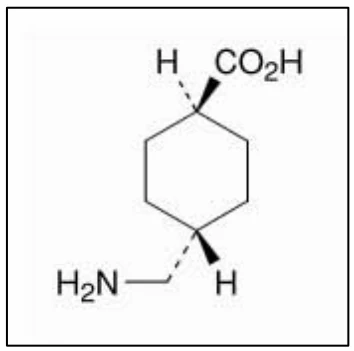
Proper name: tranexamic acid
Chemical name: trans-4-aminomethyl-cyclohexanecarboxylic acid
Molecular formula: C8H15NO2
Molecular mass: 157.2
Structural formula:
Physicochemical properties: White crystalline powder. It is freely soluble in water and in glacial acid and very slightly soluble in ethanol and practically insoluble in ether.
CLINICAL TRIALS
Study demographics and trial design
The efficacy and safety of LYSTEDA in the treatment of heavy menstrual bleeding (HMB) was demonstrated in one 3-cycle treatment and one 6-cycle treatment, randomized, double-blind, placebo-controlled study. In these studies, HMB was defined as an average menstrual blood loss of ≥ 80 mL as assessed by alkaline hematin analysis of collected sanitary products over two baseline menstrual cycles. Subjects were 18 to 49 years of age with a mean age of approximately 40 years, had cyclic menses every 21-35 days, and a BMI of approximately 32 kg/m2
. On average, subjects had an HMB history of approximately 10 years and 40% had fibroids as determined by transvaginal ultrasound. Approximately 70% were Caucasian, 25% were Black, and 5% were Asian, Native American, Pacific Islander, or Other. Seven percent (7%) of all subjects were of Hispanic origin.
In these studies, the primary outcome measure was menstrual blood loss (MBL), measured using the alkaline hematin method. The endpoint was change from baseline in MBL, calculated by subtracting the mean MBL during treatment from the mean pretreatment MBL.
The key secondary outcome measures were based on specific questions concerning limitations in social or leisure activities (LSLA) and limitations in physical activities (LPA). Large stains (soiling beyond the undergarment) were also included as a key secondary outcome measure.
Three-Cycle Treatment Study
This study compared the effects of two doses of LYSTEDA (1950 mg and 3900 mg given daily for up to 5 days during each menstrual period) versus placebo on MBL over a 3-cycle treatment duration. Of the 294 evaluable subjects, 115 LYSTEDA 1950 mg/day subjects, 112 LYSTEDA 3900 mg/day subjects and 67 placebo subjects took at least one dose of study drug and had post-treatment data available.
Results are shown in Table 4. MBL was statistically significantly reduced in patients treated with 3900 mg/day LYSTEDA compared to placebo. Study success also required achieving a reduction in MBL that was determined to be clinically meaningful to the subjects. The 1950 mg/day LYSTEDA dose did not meet the criteria for success.
Table 4: Mean Reduction from Baseline in MBL
| Treatment Arm | N | Baseline Mean MBL (mL) | Least Squares Mean | Percent Reduction in MBL | ||
| Reduction in MBL | ||||||
| (mL) | ||||||
| LYSTEDA 3900 mg/day | 112 | 169 | 65* | 39% | ||
| LYSTEDA 1950 mg/day | 115 | 178 | 44 | 25% | ||
| Placebo | 67 | 154 | 7 | 5% | ||
* p<0.001 versus placebo
LYSTEDA also statistically significantly reduced limitations on social, leisure, and physical activities in the 3900 mg/day dose group compared to placebo (see Table 5). No statistically significant treatment difference was observed in response rates on the number of large stains.
Table 5: Secondary Outcomes in 3-Cycle Study
| Outcome Measure | N | Baseline | Least Squares Mean | ||||
| Meana | Reductionb | ||||||
| Social and Leisure Activities | |||||||
| 3900 mg/day LYSTEDA | 112 | 3.00 | 0.98c | ||||
| Placebo | 66 | 2.85 | 0.39 | ||||
| Physical Activities | |||||||
| 3900 mg/day LYSTEDA | 112 | 3.07 | 0.94c | ||||
| Placebo | 66 | 2.96 | 0.34 | ||||
| N | Respondersd | ||||||
| Reduction in Large Stains | |||||||
| 3900 mg/day LYSTEDA | 111 | 64%e | |||||
| Placebo | 67 | 52% | |||||
a
Response categories: 1=not at all limited; 2=slightly limited; 3=moderately limited; 4=quite a bit limited; 5=extremely limited
b
Positive means reflect an improvement from baseline.
c
p-value <0.05 versus placebo
d
Responders are defined as subjects who experienced a reduction from baseline in frequency of large stains. e
Non-significant difference versus placebo
Six-Cycle Treatment Study
This study compared the effects of LYSTEDA 3900 mg/day given daily for up to 5 days during each menstrual period versus placebo on MBL over a 6-cycle treatment duration. Of the 187 evaluable subjects, 115 LYSTEDA subjects and 72 placebo subjects took at least one dose of study drug and had post-treatment data available.
Results are shown in Table 6. MBL was statistically significantly reduced in patients treated with 3900 mg/day LYSTEDA compared to placebo. Study success also required achieving a reduction in MBL that was determined to be clinically meaningful to the subjects.
Table 6: Mean Reduction from Baseline in MBL
| Treatment Arm | N | Baseline Mean MBL (mL) | Least Squares Mean | Percent | ||||
| Reduction in MBL | Reduction in | |||||||
| (mL) | MBL | |||||||
| LYSTEDA 3900 mg/day | 115 | 172 | 66* | 38% | ||||
| Placebo | 72 | 153 | 18 | 12% | ||||
* p<0.001 versus placebo
Limitations on social, leisure, and physical activities were also statistically significantly reduced in the LYSTEDA group compared to placebo (see Table 7). No statistically significant treatment difference was observed in response rates on the number of large stains.
Table 7: Secondary Outcomes in 6-Cycle Study
| Outcome Measure | N | Baseline Meana | Least Squares Mean | ||
| Reductionb | |||||
| Social and Leisure Activities | |||||
| 3900 mg/day LYSTEDA | 115 | 2.92 | 0.85c | ||
| Placebo | 72 | 2.74 | 0.44 | ||
| Physical Activities | |||||
| 3900 mg/day LYSTEDA | 115 | 3.05 | 0.87c | ||
| Placebo | 72 | 2.90 | 0.40 | ||
| N | Respondersd | ||||
| Reduction in Large Stains | |||||
| 3900 mg/day LYSTEDA | 115 | 57%e | |||
| Placebo | 72 | 51% | |||
Response categories: 1=not at all limited; 2=slightly limited; 3=moderately limited; 4=quite a bit limited; 5=extremely limited
b
Positive means reflect an improvement from baseline
c
p-value <0.05 versus placebo
d
Responders are defined as subjects who experienced a reduction from baseline in frequency of large stains e
Non-significant difference versus placebo
MBL Results over Time
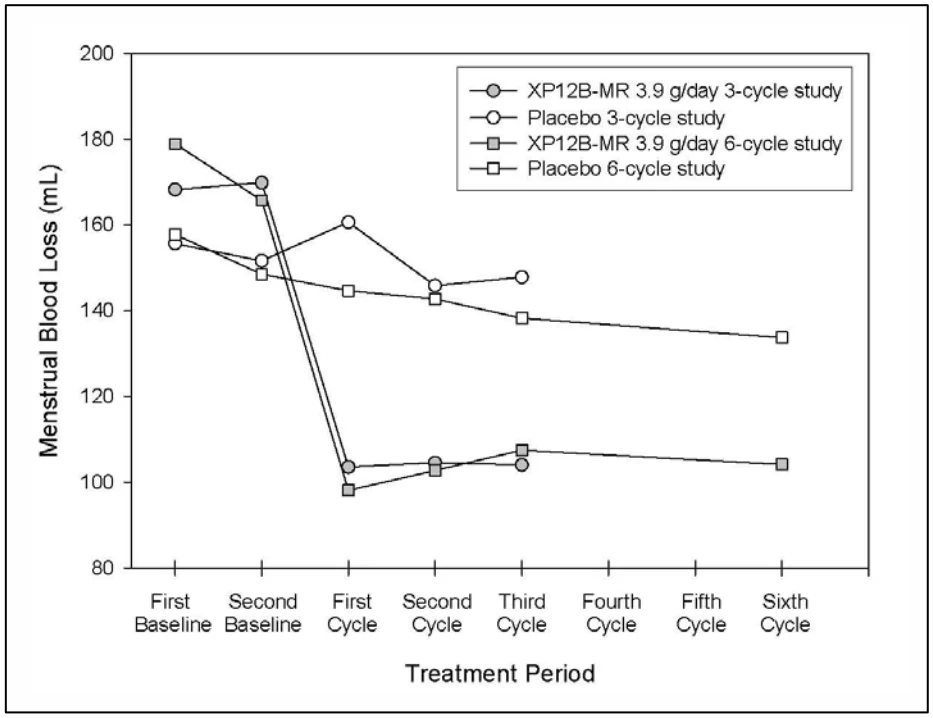
The efficacy of LYSTEDA 3900 mg/day over 3 menstrual cycles and over 6 menstrual cycles was demonstrated versus placebo in the double-blind, placebo-controlled efficacy studies (see Figure 1). The change in MBL from baseline was similar across all post-baseline treatment cycles.
Figure 1: MBL Levels over Duration of Therapy
DETAILED PHARMACOLOGY
Animal Toxicology and/or Pharmacology
Ocular Effects
In a 9-month toxicology study, dogs were administered tranexamic acid in food at doses of 0, 200, 600, or 1200 mg/kg/day. These doses are approximately 1.5, 4 and 7 times, respectively, the recommended human oral dose of 3900 mg/day based on AUC. At 7 times the human dose, some dogs developed reversible reddening and gelatinous discharge from the eyes. Ophthalmologic examination revealed reversible changes in the nictitating membrane/conjunctiva. In some female dogs, the presence of inflammatory exudate over the bulbar conjunctival mucosa was observed. Histopathological examinations did not reveal any retinal alteration. No adverse effects were observed at 4 times the human dose. The eye findings in the present dog study were reversible.
In other studies, focal areas of retinal degeneration were observed in cats, dogs and rats following oral or intravenous tranexamic acid doses at 6-40 times the recommended usual human dose based on mg/m2
(actual animal doses between 250-1600 mg/kg/day).
TOXICOLOGY
Carcinogenesis
Carcinogenicity studies with tranexamic acid in male mice at doses as high as 6 times the recommended human dose of 3900 mg/day showed an increased incidence of leukemia which may have been related to treatment. Female mice were not included in this experiment The dose multiple referenced above is based on body surface area (mg/m2
). Actual daily dose in mice was up to 5000 mg/kg/day in food.
Hyperplasia of the biliary tract and cholangioma and adenocarcinoma of the intrahepatic biliary system have been reported in one strain of rats after dietary administration of doses exceeding the maximum tolerated dose for 22 months. Hyperplastic, but not neoplastic, lesions were reported at lower doses. Subsequent long-term dietary administration studies in a different strain of rat, each with an exposure level equal to the maximum level employed in the earlier experiment, have failed to show such hyperplastic/neoplastic changes in the liver.
Mutagenesis
Tranexamic acid was neither mutagenic nor clastogenic in the in vitro Bacterial Reverse Mutation Assay (Ames test), in vitro chromosome aberration test in Chinese hamster cells, and in in vivo chromosome aberration tests in mice and rats
Impairment of Fertility
Reproductive studies performed in mice, rats and rabbits have not revealed any evidence of impaired fertility or adverse effects on the fetus due to tranexamic acid.
In a rat embryo-fetal developmental toxicity study, tranexamic acid had no adverse effects on embryo-fetal development when administered during the period of organogenesis (from gestation days 6 through 17) at doses 1, 2 and 4 times the recommended human oral dose of 3900 mg/day. In a perinatal-postnatal study in rats, tranexamic acid had no adverse effects on pup viability, growth or development when administered from gestation day 6 through postnatal day 20 at doses 1, 2 and 4 times the recommended human oral dose of 3900 mg/day.
The dose multiples referenced above are based on body surface area (mg/m2
). Actual daily doses in rats were 300, 750 or 1500 mg/kg/day.
REFERENCES
- 1. Achiron A, Gornish M, Melamed E. Cerebral sinus thrombosis as a potential hazard of antifibrinolytic treatment in menorrhagia. Stroke 1990;21(5):817-19.
- 2.
Albrechtsen OK (a). The fibrinolytic activity of menstrual blood. Acta Endocrinol
1956;23(2):21926.
- 3.
Albrechtsen OK (b). The fibrinolytic activity of the human endometrium. Acta
Endocrinol 1956;23(2):207-18.
- 4. Andersson L, Nilsson IM, Colleen S, Grandstrand B, Melander B. Role of urokinase and tissue activator in sustaining bleeding and the management thereof with EACA and AMCA. Ann NY Acad Sci 1968;146:642-58.
- 5. Bonnar J, Sheppard BL. Treatment of menorrhagia during menstruation: randomized controlled trial of ethamsylate, mefenamic acid, and tranexamic acid. BMJ 1996;313:579-82.
- 6. Callender ST, Warner GT, Cope E. Treatment of menorrhagia with tranexamic acid. A doubleblind trial. BMJ 1970:4(5729);214-6.
- 7. Dockeray CJ, Sheppard BL, Daly L, Bonnar J. The fibrinolytic enzyme system in normal menstruation and excessive uterine bleeding and the effect of tranexamic acid. Eur J Obstet Gynecol Reprod Biol 1987;24(4):309-18.
- 8. Duckitt K, Collins S. Menorrhagia. BMJ Clin Evid 2008;09:805:1-23.
- 9. Fraser IS, Warner P, Marantos PA. Estimating menstrual blood loss in women with normal and excessive menstrual fluid volume. Obstet Gynecol 2001;98 (5 Pt 1):806-14.
- 10. Gleeson NC, Buggy F, Sheppard BL, Bonnar J. The effect of tranexamic acid on measured menstrual loss and endometrial fibrinolytic enzymes in dysfunctional uterine bleeding. Acta Obstet Gynecol Scand 1994;73(3):274-7.
- 11. Hallberg L, Högdahl AM, Nilsson L, Rybo G. Menstrual blood loss–A population study. Variation at different ages and attempts to define normality. Acta Obstet Gynecol Scand 1966;45(3):320-51.
- 12.
Lethaby A, Farquhar C, Cooke I. Antifibrinolytics for heavy menstrual bleeding.
Cochrane Database Syst Rev 2000;(2):CD000249.
- 13.
Lukes AS, Moore KA, Muse KN, Gersten JK, Hecht BR, Edlund M, Richter HE, Eder SE,
Attia GR, Patrick DL, Rubin A, Shangold GA. Tranexamic acid treatment for heavy menstrual bleeding: a randomized controlled trial. Obstet Gynecol 2010:116(4):865-75.
- 14.
Meniru GI, Hopkins MP. Abnormal uterine bleeding. In: RH Glass, MG Curtis, S.
Overholt, MP Hopkins, editors. Glass’ Office Gynecology. 6th ed. Philadelphia: Lippencott, Williams & Wilkins; 2005. p. 176-201.
- 15. Nilsson L, Rybo G. Treatment of menorrhagia with an antifibrinolytic agent, tranexamic acid (AMCA). Acta Obstet Gynecol Scand 1967;46:572-80.
- 16.
Oehler MK, Rees MC. Menorrhagia: an update. Acta Obstet Gynecol Scand
2003;82(5):405-22.
- 17. Pilbrant A, Schannong M, Vessman J. Pharmacokinetics and bioavailability of tranexamic acid. Eur J Clin Pharmacol 1981;20(1):65-72.
- 18.
Rybo G. Plasminogen activators in the endometrium. Acta Obstet Gynecol Scand
1966;45:429-450.
- 19. Vermylen J, Verhaegen-Declercq ML, Verstraete M, Fierens F. A double blind study of the effect of tranexamic acid in essential menorrhagia. Thromb Diath Haemorrh 1968;20(3):583-7.