


Product Monograph - M-Tranylcypromine
RECENT MAJOR LABEL CHANGES
| N/A |
|---|
TABLE OF CONTENTS
Sections or subsections that are not applicable at the time of authorization are not listed.
RECENT MAJOR LABEL CHANGES ........................................................................................2
TABLE OF CONTENTS ..............................................................................................................2
PART I: HEALTH PROFESSIONAL INFORMATION .................................................................4
1 INDICATIONS ..................................................................................................................4
1.1 Pediatrics ................................................................................................................4
1.2 Geriatrics ................................................................................................................4
2 CONTRAINDICATIONS ..................................................................................................4
3 SERIOUS WARNINGS AND PRECAUTIONS BOX .......................................................5
4 DOSAGE AND ADMINISTRATION .................................................................................5
4.1 Dosing Considerations ...........................................................................................5
4.2 Recommended Dose and Dosage Adjustment ......................................................5
4.4 Administration .........................................................................................................6
4.5 Missed Dose ...........................................................................................................6
5 OVERDOSAGE ...............................................................................................................7
6 DOSAGE FORMS, STRENGTHS, COMPOSITION AND PACKAGING ........................7
7 WARNINGS AND PRECAUTIONS .................................................................................7
7.1 Special Populations ..............................................................................................11
7.1.1 Pregnant Women ............................................................................................11
7.1.2 Breast-feeding ................................................................................................11
7.1.3 Pediatrics ........................................................................................................11
7.1.4 Geriatrics ........................................................................................................11
8 ADVERSE REACTIONS ................................................................................................11
9 DRUG INTERACTIONS .................................................................................................12
9.1 Serious Drug Interactions .....................................................................................12
9.2 Drug Interactions Overview ..................................................................................12
9.4 Drug-Drug Interactions .........................................................................................12
9.5 Drug-Food Interactions .........................................................................................14
9.6 Drug-Herb Interactions .........................................................................................16
9.7 Drug-Laboratory Test Interactions ........................................................................16
10 CLINICAL PHARMACOLOGY ......................................................................................16
10.1 Mechanism of Action ......................................................................................16
10.2 Pharmacodynamics ........................................................................................16
10.3 Pharmacokinetics ...........................................................................................16
11 STORAGE, STABILITY AND DISPOSAL .....................................................................16
PART II: SCIENTIFIC INFORMATION ......................................................................................17
13 PHARMACEUTICAL INFORMATION ...........................................................................17
14 CLINICAL TRIALS ........................................................................................................18
14.2 Comparative Bioavailability Studies ...............................................................18
16 NON-CLINICAL TOXICOLOGY ....................................................................................18
17 SUPPORTING PRODUCT MONOGRAPHS .................................................................18
PATIENT MEDICATION INFORMATION .................................................................................19
PART I: HEALTH PROFESSIONAL INFORMATION
1 INDICATIONS
M-TRANYLCYPROMINE (tranylcypromine sulfate) is indicated for the treatment of major depressive disorder (MDD) in adult patients who have not responded adequately to other antidepressants. M-TRANYLCYPROMINE is not indicated for the initial treatment of MDD due to the potential for serious adverse reactions and drug interactions, and the need for dietary restrictions.
1.1 Pediatrics
Pediatrics (<18 years of age): M-TRANYLCYPROMINE is not indicated for use in children or adolescents less than 18 years of age.
1.2 Geriatrics
Geriatrics: No data are available.
2 CONTRAINDICATIONS
M-TRANYLCYPROMINE is contraindicated in patients who are hypersensitive to this drug or to any ingredient in the formulation, including any non-medicinal ingredient, or component of the container. For a complete listing, see 6 DOSAGE FORMS, STRENGTHS, COMPOSITION AND PACKAGING.
M-TRANYLCYPROMINE is contraindicated in patients with the following (see 7 WARNINGS AND PRECAUTIONS):
- Cerebrovascular or cardiovascular disorders (e.g., arteriosclerosis, hypertension).
- History of recurrent or frequent headaches.
- Liver damage or blood dyscrasias.
- Phaeochromocytoma and catecholamine-releasing paragangliomas.
M-TRANYLCYPROMINE is contraindicated in combination with the following medications (before, during or shortly after). (see 9 DRUG INTERACTIONS):
- Other monoamine oxidase inhibitors (MAOIs) (e.g. phenelzine sulphate, isocarboxazid, nialamide, pargyline)
- Selective serotonin reuptake inhibitors (SSRIs) or serotonin and noradrenaline reuptake inhibitors (SNRIs) (e.g. venlafaxine)
- Tricyclic antidepressants (dibenzazepine derivatives, e.g. amitriptyline, nortriptyline, protriptyline, desipramine, imipramine, doxepin, perphenazine, carbamazepine, cyclobenzaprine, amoxapine, maprotiline, trimipramine, and clomipramine hydrochloride)
- Other antidepressant drugs (e.g. amoxapine, bupropion, maprotiline, nefazodone, trazodone, vilazodone, vortioxetine)
- Serotonin releasing agents (e.g. amphetamine and methylphenidate and their derivatives)
- Triptans (e.g. sumatriptan or rizatriptan)
- Sympathomimetics (e.g. pseudoephedrine, phenylephedine, ephedrine, methyldopa, dopamine, and levodopa and tryptophan), including those contained in cold, hay fever or weight-reducing products, herbal products, and diet supplements
- Other individual drugs in the following list: buspirone, carbamazepine, cyclobenzaprine, dextromethorphan, dopamine, hydroxytryptophan, levodopa, meperidine, methyldopa, milnacipran, rasagiline, reserpine, s-adenosyl-L-methionine (SAM-e), tapentadol, tetrabenazine, tryptophan
- Foods and beverages with a high tyramine content
3 SERIOUS WARNINGS AND PRECAUTIONS BOX
Serious Warnings and Precautions
|
|---|
4 DOSAGE AND ADMINISTRATION
4.1 Dosing Considerations
Dosage should be adjusted to the requirements of the individual patient. If the patient responds to therapy, the response is usually seen within 48 hours to 3 weeks after starting medication.
4.2 Recommended Dose and Dosage Adjustment
Recommended starting dosage is 20 mg per day (10 mg in the morning and 10 mg in the afternoon).
If no signs of a response appear within 2 to 3 weeks, increase dosage to 30 mg daily (20 mg in the morning and 10 mg in the afternoon). Continue this dosage for at least 1 week. If no improvement occurs, continued administration is unlikely to be beneficial. Although dosages above 30 mg per day have been used, consider that the incidence and severity of side effects may increase as dosage is raised.
Dosage increases should be made in increments of 10 mg per day at intervals of 1 to 3 weeks to a maximum daily dose of 60 mg.
When a satisfactory response is obtained, dosage may be reduced to a maintenance level. Some patients will be maintained on 20 mg per day; many will need only 10 mg daily.
When Electroconvulsive therapy (ECT) is being administered concurrently with M-TRANYLCYPROMINE, 10 mg BID can usually be given during the series, then reduced to 10 mg daily for maintenance therapy.
Switching to or from other Contraindicated Drugs
Allow 1 week to elapse between the discontinuance of M-TRANYLCYPROMINE and the administration of any other drug that is contraindicated with M-TRANYLCYPROMINE. The prescribing information for individual products should be consulted.
Because the effect of many antidepressant drugs may persist for 10 to 20 days, do not start M-TRANYLCYPROMINE treatment within less than 1 week of discontinuing treatment with such drugs; then use half the normal dosage for the first week.
Discontinuing Treatment
Consider discontinuing M-TRANYLCYPROMINE therapy by slow, gradual dosage reduction.
Withdrawal effects, including delirium, have been reported with abrupt discontinuation of tranylcypromine tablets therapy. Higher daily doses and longer duration of use appear to be associated with a higher risk of withdrawal effects.
When tranylcypromine is withdrawn, monoamine oxidase activity is recovered in 3 to 5 days, although the drug is excreted in 24 hours; however, inhibition of MAO activity may persist for up to 1 week.
Geriatrics (>60 years of age): Use with caution. Consider more gradual dosage increases as this population may have an increased risk for hypotension (see 7 WARNINGS AND PRECAUTIONS, Special Populations, Geriatrics).
Pediatrics (<18 years of age): M-TRANYLCYPROMINE is not indicated for use in children or adolescents less than 18 years of age.
4.4 Administration
Instruct patients to:
- avoid foods and beverages with high tyramine content while being treated with M-TRANYLCYPROMINE and for 2 weeks after stopping M-TRANYLCYPROMINE (see 2 CONTRAINDICATIONS)
- avoid use of all alcoholic beverages while taking M-TRANYLCYPROMINE
- take their dose of M-TRANYLCYPROMINE at approximately the same time each day. Taking the last dose before 3 p.m. may be a potential method for managing insomnia.
4.5 Missed Dose
In the case of a missed dose of M-TRANYLCYPROMINE, instruct patients to take their next dose at its regularly scheduled time.
5 OVERDOSAGE
Symptoms
The characteristic symptoms are usually those which have already been described under 7 WARNINGS AND PRECAUTIONS and 8 ADVERSE REACTIONS; however, an intensification of these symptoms and sometimes severe additional manifestations may be seen, depending on the degree of overdosage and on individual susceptibility.
Some patients exhibit insomnia, restlessness and anxiety, progressing in severe cases to agitation, mental confusion and incoherence. Hypotension, dizziness, weakness and drowsiness may occur, progressing in severe cases to extreme dizziness and shock. A few patients have displayed hypertension with severe headache and other symptoms. Rare instances have been reported in which hypertension was accompanied by twitching or myoclonic fibrillation of skeletal muscles with hyperpyrexia, sometimes progressing to generalized rigidity and coma.
Treatment
Treatment normally consists of general supportive measures, close observation of vital signs and steps to counteract specific symptoms as they occur. The management of hypertensive crisis is described in 7 WARNINGS AND PRECAUTIONS, Cardiovascular, Hypertensive Crisis.
| For management of a suspected drug overdose, contact your regional poison control centre. |
|---|
6 DOSAGE FORMS, STRENGTHS, COMPOSITION AND PACKAGING
Table 1 – Dosage Forms, Strengths, Composition and Packaging
M-TRANYLCYPROMINE 10 mg film-coated tablets are red, round, biconvex, and debossed with “10” on one side, plain on the other side.
M-TRANYLCYPROMINE tablets are available in white HDPE bottles of 100 tablets.
7 WARNINGS AND PRECAUTIONS
Please see the 3 SERIOUS WARNINGS AND PRECAUTIONS BOX at the beginning of Part I: Health Professional Information.
Cardiovascular
Hypertensive crisis: The most important adverse reaction associated with tranylcypromine tablets is hypertensive crisis, which has sometimes been fatal. This response is not usually dose-related. It is associated with a distinctive reaction characterized by some or all of the
| Route of Administration | Dosage Form / Strength/Composition | Non-medicinal Ingredients |
| Oral | Tablet / 10 mg tranylcypromine (as tranylcypromine sulfate) | Carmine, colloidal silicon dioxide, FD&C Red No. 40 aluminum lake, magnesium stearate, microcrystalline cellulose, polyethylene glycol, polyvinyl alcohol, pregelatinized starch, talc, titanium dioxide |
following symptoms: occipital headache which may radiate frontally, palpitation, neck stiffness or soreness, nausea or vomiting, sweating (sometimes with fever and sometimes with cold, clammy skin) with early pallor followed later by flushing, and photophobia. Either tachycardia or bradycardia may be present, sometimes associated with constricting chest pain. Mydriasis may occur.
The occipital headache, together with pain and stiffness in the cervical muscles, may mimic subarachnoid hemorrhage, but can equally be associated with actual intracranial bleeding, as in other conditions where a sudden rise in blood pressure occurs. Cases of such bleeding have been reported, some of which have been fatal.
Blood pressure should be followed closely in patients taking M-TRANYLCYPROMINE to detect evidence of any pressor response. It is emphasized that full reliance should not be placed on blood pressure readings, but that the patient should also be observed frequently.
If a hypertensive reaction occurs, M-TRANYLCYPROMINE should be discontinued. Patients should be managed according to standard of care.
Hypotension: Hypotension, which may be postural, has been observed during tranylcypromine tablets therapy, particularly at doses above 30 mg daily. It is seen most commonly (but not exclusively) in patients with pre-existing hypertension. In most instances, it affects the systolic readings. Rare instances of syncope have been seen. Dosage increases should be made more gradually in patients showing a tendency toward hypotension at the starting dose. Postural hypotension can usually be relieved by having the patient lie down until blood pressure returns to normal. This side effect is usually temporary, but if it persists, M-TRANYLCYPROMINE should be discontinued. Blood pressure usually returns rapidly to pre-treatment levels upon discontinuation of M-TRANYLCYPROMINE.
When M-TRANYLCYPROMINE is combined with phenothiazine derivatives (e.g. triluoperazine) or other compounds known to cause hypotension, the possibility of additive hypotensive effects should be considered (see 9 DRUG INTERACTIONS).
Angina: MAOIs may have the capacity to suppress anginal pain that would otherwise serve as a warning of myocardial ischemia.
Dependence/Tolerance
There have been reports of drug dependency in patients using doses of tranylcypromine tablets significantly in excess of the therapeutic range. Some of these patients had a history of previous substance abuse.
M-TRANYLCYPROMINE should be tapered according to the patient’s clinical reaction when discontinuation is necessary. Symptoms reported after stopping tranylcypromine tablets without tapering include sleep disturbances, depression, confusion, delirium, tremor, agitation, convulsion, anxiety, hallucinations, fatigue, and headache.
Driving and Operating Machinery
Some M-TRANYLCYPROMINE adverse reactions (e.g. dizziness, drowsiness, etc.) may affect the patient’s ability to drive or operate machinery. For patients who experience these symptoms, due caution should be exercised when driving or operating a vehicle or potentially dangerous machinery.
Endocrine and Metabolism
Hyperthyroidism: Use M-TRANYLCYPROMINE with caution in hyperthyroid patients because of their increased sensitivity to pressor amines.
Hematologic
Diabetes: Some MAOIs have contributed to hypoglycemic episodes in diabetic patients receiving insulin or oral hypoglycemic agents. Therefore, M-TRANYLCYPROMINE should be used with caution in diabetics under treatment with these drugs.
Hepatic/Biliary/Pancreatic
Patients with liver damage or blood dyscrasias: Extensive clinical use and laboratory tests have revealed no evidence of liver toxicity or blood dyscrasias due to tranylcypromine tablets therapy. Because rare cases of hepatitis have been reported, it is recommended that patients with known liver damage or blood dyscrasias should not be treated with M-TRANYLCYPROMINE.
Immune
Hypersensitivity: The tablet coating contains an azo dye (FD&C Red No. 40 Aluminum Lake) which may cause allergic reactions.
Monitoring and Laboratory Tests
Cardiovascular Monitoring: Blood pressure should be followed closely in patients taking M-TRANYLCYPROMINE to detect evidence of any pressor response. It is emphasized that full reliance should not be placed on blood pressure readings, but that the patient should also be observed frequently.
Neurologic
Epilepsy: Because the influence of tranylcypromine tablets on the convulsive threshold is variable in animal experiments, suitable precautions should be taken if epileptic patients are treated.
Ophthalmologic
Angle-closure Glaucoma: As with other antidepressants, M-TRANYLCYPROMINE can cause mydriasis, which may trigger an angle-closure attack in a patient with anatomically narrow ocular angles. Patients should be examined to determine whether they are susceptible to angle-closure and be informed to seek immediate medical assistance if they experience eye pain, changes in vision or swelling or redness in or around the eye.
Peri-Operative Considerations
Discontinue M-TRANYLCYPROMINE at least 7 days before elective surgery because of possible interference with the action of certain anesthetics and analgesics.
As with other MAOIs, M-TRANYLCYPROMINE should be discontinued at least 48 hours before myelography and should not be resumed for at least 24 hours after the procedure.
Psychiatric
Potential Association with the Occurrence of Behavioral and Emotional Changes, Including
Self-Harm: It is unknown whether increased risk of suicidal ideation and behavior is associated with the use of tranylcypromine sulfate in pediatric patients and/ or adults.
However, recent analyses of placebo-controlled clinical trial safety databases from SSRIs and other newer antidepressants suggest that use of these drugs in patients under the age of 18 may be associated with behavioral and emotional changes, including an increased risk of suicidal ideation and behavior over that of placebo. Thus, rigorous clinical monitoring for suicidal ideation or other indicators of potential for suicidal behavior is advised in patients of all ages given any antidepressant drug. This includes monitoring for emotional and behavioral changes.
Clinical worsening and suicide risk in adults with psychiatric disorders: Patients with depression may experience worsening of their depressive symptoms and/or the emergence of suicidal ideation and behaviours (suicidality) whether or not they are taking antidepressant medications. This risk persists until significant remission occurs. As improvement may not occur during the first few weeks or more of treatment, patients should be closely monitored for clinical worsening (including development of new symptoms) and suicidality, especially at the beginning of a course of treatment, or at the time of dose changes, either increases or decreases. It is general clinical experience with all antidepressant therapies that the risk of suicide may increase in the early stages of recovery.
Patients with a history of suicidal behaviour or thoughts, and those patients exhibiting a significant degree of suicidal ideation prior to commencement of treatment, are at a greater risk of suicidal thoughts or suicide attempts and should receive careful monitoring during treatment.
Patients (and caregivers of patients) should be alerted about the need to monitor for any worsening of their condition (including development of new symptoms) and / or the emergence of suicidal ideation / behaviour or thoughts of harming themselves and to seek medical advice immediately if these symptoms present. It should be recognized that the onset of some neuropsychiatric symptoms could be related either to the underlying disease state or the drug therapy (see Mania and bipolar disorder below).
Consideration should be given to changing the therapeutic regimen, including possibly discontinuing the medication, in patients who experience clinical worsening (including development of new symptoms) and / or the emergence of suicidal ideation / behaviour, especially if these symptoms are severe, abrupt in onset, or were not part of the patient's presenting symptoms.
Depression: M-TRANYLCYPROMINE may aggravate coexisting symptoms in depression, such as anxiety and agitation. In depressed patients, the possibility of suicide should always be considered, and adequate precautions taken. Exclusive reliance on drug therapy to prevent suicidal attempts is unwarranted, as there may be a delay in the onset of therapeutic effect or an increase in anxiety and agitation. Also, some patients fail to respond to drug therapy or may respond only temporarily.
Mania and bipolar disorder: A major depressive episode may be the initial presentation of bipolar disorder. It is generally believed (though not established in controlled trials) that treating such an episode with an antidepressant alone can increase the likelihood of precipitation of a mixed/manic episode in patients at risk for bipolar disorder. Prior to initiating treatment with an antidepressant, patients should be adequately screened to determine if they are at risk for bipolar disorder; such screening should include a detailed psychiatric history, including a family history of suicide, bipolar disorder, and depression. As with all antidepressants, tranylcypromine should be used with caution in patients with a history of mania.
Insomnia: It is the most frequent adverse reaction to M-TRANYLCYPROMINE, which can usually be overcome by giving the last dose of the day no later than 3 p.m., by reducing the dose, or other measures of standard of care.
Renal
The usual precautions should be observed in patients with impaired renal function since there is a possibility of cumulative effects in such patients.
7.1 Special Populations
7.1.1 Pregnant Women
Adequate human data on use during pregnancy and adequate animal reproduction studies are not available. Tranylcypromine sulfate has been shown to pass through the placental barrier to the fetus of the rat. M-TRANYLCYPROMINE is not recommended for a pregnant patient.
7.1.2 Breast-feeding
Adequate human data on use during lactation are not available. Tranylcypromine sulfate has been shown to pass into the human milk. M-TRANYLCYPROMINE is not recommended for a breast-feeding patient.
7.1.3 Pediatrics
Pediatrics (<18 years of age): No data are available. M-TRANYLCYPROMINE is not indicated for use in children or adolescents less than 18 years of age.
7.1.4 Geriatrics
Geriatrics (>60 years of age): Caution is advised in this population because of higher risks of cardiovascular abnormalities. (see 7 WARNINGS AND PRECAUTIONS, Cardiovascular).
8 ADVERSE REACTIONS
The most serious adverse reactions are as follows:
- Hypertensive crisis (see 3 SERIOUS WARNINGS AND PRECAUTIONS BOX)
- New or Worsened Emotional or Behavioral Problems (see 3 SERIOUS WARNINGS AND PRECAUTIONS BOX)
- Hypotension (see 7 WARNINGS AND PRECAUTIONS, Cardiovascular, Hypotension)
The following adverse reactions have been identified in clinical trials or during post-approval use of tranylcypromine tablets.
Blood and lymphatic system disorders: agranulocytosis, leukopenia, thrombocytopenia, anemia
Metabolism and nutrition disorders: anorexia
Psychiatric disorders: overstimulation, manic symptoms, agitation, insomnia, anxiety, confusion, depression, delirium, hallucinations, habituation
Nervous system disorders: dizziness, restlessness, tremor, muscle spasm, paresthesia, drowsiness, headaches (without blood pressure elevation), convulsion
Eye disorders: blurred vision
Ear and labyrinth disorders: tinnitus
Cardiac disorders: tachycardia, palpitations
Vascular disorders: hypertensive crisis, hypotension
Gastrointestinal disorders: diarrhea, constipation, nausea, abdominal pain, dry mouth
Hepatobiliary disorders: hepatitis
Skin and subcutaneous tissue disorders: rash, alopecia, sweating
Renal and urinary disorders: urinary retention, micturition
Reproductive system and breast disorders: impotence
General disorders and administration site conditions: edema, chills, weakness, fatigue, sleep disturbances
9 DRUG INTERACTIONS
9.1 Serious Drug Interactions
Serious Drug Interactions Foods and Beverages with a High Tyramine Content: When excessive amounts of tyramine are consumed in conjunction with M-TRANYLCYPROMINE, or within 2 weeks of stopping treatment, a serious and sometimes fatal hypertensive reaction may occur (see 2 CONTRAINDICATIONS) |
|---|
9.2 Drug Interactions Overview
In general, the physician should bear in mind the possibility of a lowered margin of safety when M-TRANYLCYPROMINE (tranylcypromine sulfate) is administered in combination with potent drugs and should adjust dosage accordingly.
9.4 Drug-Drug Interactions
The drugs listed in this Table 2 are based on either drug interaction case reports or studies, or potential interactions due to the expected magnitude and seriousness of the interaction (i.e., those identified as contraindicated).
Table 2 - Established or Potential Drug-Drug Interactions
| Drug Class and/or Product | Clinical comment | Effect |
Other monoamine oxidase inhibitors (MAOIs) (e.g. phenelzine sulphate, isocarboxazid, nialamide, pargyline). | Contraindicated | Increased MAO inhibition and risk of adverse reactions, serotonin syndrome and hypertensive reaction |
Selective serotonin reuptake inhibitors (SSRIs) Serotonin and noradrenaline reuptake inhibitors (SNRIs) (e.g. venlafaxine) Serotonin releasing agents (e.g. amphetamine and derivatives). Other antidepressants, such as tricyclics, tetracyclics, etc. | Contraindicated | Serotonin Syndrome |
Dibenzazepine derivatives (e.g. amitriptyline, nortriptyline, protriptyline, desipramine, imipramine, doxepin, perphenazine, carbamazepine, cyclobenzaprine, amoxapine, maprotiline, trimipramine, and clomipramine hydrochloride). | Contraindicated | Hypertensive crises or severe convulsive seizures Clomipramine hydrochloride, when used in combination with a MAOI, has been reported to result in hyperpyrexia, diffuse intravascular coagulation, and status epilepticus. |
Triptans (e.g. sumatriptan or rizatriptan). | Contraindicated | Serotonin Syndrome |
Sympathomimetics – (e.g. amphetamines, ephedrine, methyldopa, dopamine, and levodopa and tryptophan). Other products that may contain sympathomimetics: Medication without prescription for cold or hay fever (including nose drops or sprays); Herbal products or supplements; energy-enhancing or weight-reducing products; recreational drugs such as 3,4-Methy-lenedioxy-methamphetamine (MDMA, ecstasy) | Contraindicated | These may result in potentiation, precipitating hypertension, severe headache, and hyperpyrexia. Cerebral (subarachnoid) hemorrhage may also occur. The combination of MAOIs and tryptophan has been reported to cause behaviour and neurologic syndromes including disorientation, confusion, amnesia, delirium, agitation, hypomanic signs, ataxia, myoclonus, hyperreflexia, shivering, ocular oscillations and Babinski signs. |
| Dextromethorphan | Contraindicated | Serotonin Syndrome |
| Drug Class and/or Product | Clinical comment | Effect |
| buspirone HCl | Contraindicated | Hypertensive Reaction |
Central Nervous System (CNS) depressants (e.g. morphine, opioids, meperidine, barbiturates) | Use with caution | Increased CNS depression |
Hypotensive agents (e.g. guanethidine, reserpine, alpha-methyldopa) | Use with caution | Additive hypotensive effects |
Antidiabetic Drugs - Insulin or oral hypoglycemic agents | Use not recommended unless benefits out weight risks | Some MAOIs have contributed to hypoglycemic episodes |
Phenothiazine drugs (e.g. trifluoperazine, chlorpromazine) | Use not recommended unless benefits out weight risks | Risks of hypotension and hypertensive crisis. |
Treatments for Parkinson’s disease Note: Levodopa, as a sympathomimetic, is contraindicated to be combined with M-TRANYLCYPROMINE. | Use not recommended unless benefits out weight risks | Combination may result in potentiation, with profuse sweating, tremulousness, and a rise in body temperature |
| Disulfiram | Use with caution | Combination may result in severe toxicity. |
9.5 Drug-Food Interactions
Tranylcypromine sulfate inhibits intestinal MAO, which is responsible for the catabolism of tyramine in food and beverages. As a result of this inhibition, large amounts of tyramine may enter the systemic circulation and precipitate a sudden elevation in blood pressure or hypertensive crisis (see 7 WARNINGS AND PRECAUTIONS). Instruct M-TRANYLCYPROMINE -treated patients to avoid foods and beverages with significant tyramine content during treatment with M-TRANYLCYPROMINE or within 2 weeks of stopping treatment (see Table 3 for a list of food and beverages containing significant amounts of tyramine).
Table 3 - Foods and Beverages with and without Significant Amounts of Tyramine
| Class of Food or Beverage | Tyramine-Rich Foods and Beverages to Avoid | Acceptable Foods and Drinks, Containing No or Little Tyramine |
|---|---|---|
| Meat, Poultry, and Fish | Air dried, aged and fermented meats, sausages and salamis (including cacciatore, hard salami and mortadella); pickled herring; | Fresh meat, poultry, and fish, including fresh processed meats (e.g., lunch meats, hot dogs, breakfast sausage, and cooked sliced ham) |
| Class of Food or Beverage | Tyramine-Rich Foods and Beverages to Avoid | Acceptable Foods and Drinks, Containing No or Little Tyramine | ||
|---|---|---|---|---|
| and any spoiled or improperly stored meat, poultry, and fish (e.g., foods that have undergone changes in coloration, odor, or become moldy); spoiled or improperly stored animal livers | ||||
| Vegetables | Broad bean pods (fava bean pods) | All other vegetables | ||
| Dairy | Aged cheeses | Processed cheeses, mozzarella, ricotta cheese, cottage cheese, and yogurt | ||
| Beverages | All varieties of tap beer and beers that have not been pasteurized so as to allow for ongoing fermentation and excessive amounts of caffeine. | Concomitant use of alcohol with M-TRANYLCYPROMINE is not recommended. (Bottled and canned beers and wines contain little or no tyramine.) | ||
| Other | Concentrated yeast extract (e.g., Marmite), sauerkraut, most soybean products (including soy sauce and tofu), OTC supplements containing tyramine, and chocolate | Brewer’s yeast, baker’s yeast, soy milk, commercial chain restaurant pizzas prepared with cheeses low in tyramine | ||
Foods may be deliberately aged as part of their processing and should be avoided (see list above). Foods may also naturally age over time, even if they are refrigerated. It is therefore extremely important that patients are instructed to buy and eat only fresh foods or those which have been properly frozen. They should avoid eating foods if they are unsure of their storage conditions or freshness and they should be cautious of foods of unknown age or composition even if refrigerated.
The longer food is left to deteriorate and the larger the quantity of food eaten, the greater the potential quantity of tyramine ingested. Where there is any doubt, patients should be advised to either avoid the food or consume in strict moderation.
Patients should also be warned that tyramine levels may vary by brand or even batch and a person may absorb different amounts of tyramine from a particular food at different times. Therefore, if they have accidentally consumed a prohibited food on one occasion and not had a reaction, this does not mean that they will not have a serious hypertensive reaction if they consume the same food on a different occasion.
M-TRANYLCYPROMINE may potentiate the effects of alcoholic beverages.
9.6 Drug-Herb Interactions
Caution should be exercised when giving M-TRANYLCYPROMINE with St. John’s wort, as the development of serotonin toxicity has been reported with MAOIs when given before, with, or shortly after discontinuation of this drug. Observation of tranylcypromine washout period of at least 1 week is recommended.
9.7 Drug-Laboratory Test Interactions
Drugs which lower the seizure threshold, including MAO inhibitors, should not be used with metrizamide.
10 CLINICAL PHARMACOLOGY
10.1 Mechanism of Action
The mechanism of action of tranylcypromine sulfate as an antidepressant is not fully understood but is presumed to be linked to potentiation of monoamine neurotransmitter activity in the central nervous system (CNS) resulting from its irreversible inhibition of the enzyme monoamine oxidase (MAO).
10.2 Pharmacodynamics
When tranylcypromine is withdrawn, monoamine oxidase activity is gradually restored within a week, although the drug is excreted in 24 hours.
10.3 Pharmacokinetics
Absorption: Tranylcypromine is rapidly absorbed from the gastrointestinal tract following oral administration. Peak plasma concentrations occur within 1 hour of dosing.
Distribution: Tranylcypromine is distributed widely throughout the body.
Metabolism: No text available.
Elimination: The drug is excreted in the urine, mainly in the form of metabolites.
11 STORAGE, STABILITY AND DISPOSAL
Store between 15°C - 30°C. Keep in tight closed container. Keep out of the sight and reach of children.
PART II: SCIENTIFIC INFORMATION
13 PHARMACEUTICAL INFORMATION
Drug Substance
| Proper name: | tranylcypromine sulfate |
|---|---|
| Chemical name: | (±)-trans-2-phenylcyclopropylamine sulfate (2:1) |
| Molecular formula and molecular mass: | (C9H11N)2. H2SO4 (364.5 g/mol) |
| Structural formula | 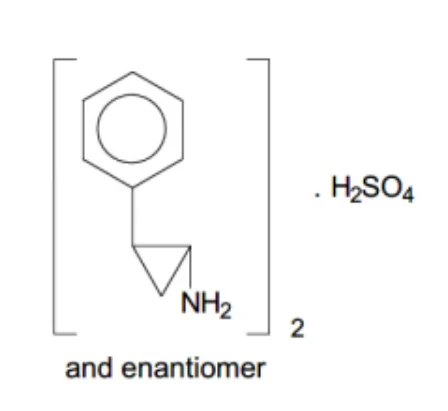 |
| Physicochemical properties: | A white or almost white, crystalline powder. It is soluble in water, very slightly soluble in ethanol (96%) and in ether, practically insoluble in chloroform. |
14 CLINICAL TRIALS
Not Available.
14.2 Comparative Bioavailability Studies
A randomized, two-treatment, two-period, two-sequence, single-dose, crossover comparative bioavailability study of M-TRANYLCYPROMINE 10 mg tablets (Mantra Pharma Inc.) with PARNATE® 10 mg tablets (Concordia Pharmaceuticals Inc.) was conducted in healthy, adult, male and female subjects under fasting conditions. Comparative bioavailability data from 20 subjects that were included in the statistical analysis are presented in the following table:
SUMMARY TABLE OF THE COMPARATIVE BIOAVAILABILITY DATA
Tranylcypromine (1 x 10 mg) Geometric Mean Arithmetic Mean (CV %) | ||||
| Parameter | Test1 | Reference2 | % Ratio of Geometric Means | 90% Confidence Interval |
AUCT (ng·h/mL) | 94.17 95.89 (19.00) | 91.02 95.02 (30.10) | 103.47 | 98.60 - 108.58 |
AUCI (ng·h/mL) | 95.60 97.40 (19.30) | 92.59 96.71 (30.50) | 103.26 | 98.48 - 108.26 |
Cmax (ng/mL) | 34.56 34.95 (14.50) | 32.45 34.07 (29.10) | 106.50 | 96.26 - 117.83 |
Tmax3 (h) | 1.00 (0.75–1.67) | 1.00 (0.75-1.67) | ||
T½4 (h) | 1.80 (12.1) | 1.81 (14.40) | ||
1 M-TRANYLCYPROMINE (tranylcypromine as tranylcypromine sulfate) tablets, 10 mg (Mantra Pharma Inc.)
2 PARNATE® (tranylcypromine as tranylcypromine sulfate) tablets, 10 mg (Concordia Pharmaceuticals Inc., USA)
3 Expressed as the median (range) only
4 Expressed as the arithmetic mean (CV%) only
16 NON-CLINICAL TOXICOLOGY
No further information of clinical relevance.
17 SUPPORTING PRODUCT MONOGRAPHS
- 1. PARNATE© (tranylcypromine tablets, 10 mg tranylcypromine [as tranylcypromine sulfate]), submission control 230098, Product Monograph, GlaxoSmithKline Inc. (NOV 19, 2019)