


Product Monograph - Malarone
Recent Major Label Changes
| 2026/03 |
|---|
Table of Contents
Certain sections or subsections that are not applicable at the time of the preparation of the most recent authorized product monograph are not listed.
Recent Major Label Changes ................................................................................................... 2
Table of Contents ................................................................................................................... 2
Part 1: Healthcare Professional Information ........................................................................... 4
- 1.
Indications ....................................................................................................................... 4
1.1. Pediatrics .................................................................................................................. 4
1.2. Geriatrics .................................................................................................................. 4
- 2. Contraindications ............................................................................................................ 4
- 4.
Dosage and Administration ............................................................................................. 5
4.2. Recommended Dose and Dosage Adjustment ......................................................... 5
4.4. Administration .......................................................................................................... 6
4.5. Missed Dose ............................................................................................................. 6
- 5. Overdose ......................................................................................................................... 6
- 6. Dosage Forms, Strengths, Composition, and Packaging ................................................... 7
- 7.
Warnings and Precautions ............................................................................................... 8
General ................................................................................................................................. 8
Hepatic/Biliary/Pancreatic .................................................................................................... 8
Renal ..................................................................................................................................... 9
Sensitivity/Resistance ........................................................................................................... 9
Skin ....................................................................................................................................... 9
7.1. Special Populations .................................................................................................. 9
7.1.1. Pregnancy ........................................................................................................ 9
7.1.2. Breastfeeding ................................................................................................ 10
7.1.3. Pediatrics ....................................................................................................... 10
7.1.4. Geriatrics ....................................................................................................... 10
- 8.
Adverse Reactions ......................................................................................................... 10
8.1. Adverse Reaction Overview .................................................................................... 10
8.2. Clinical Trial Adverse Reactions .............................................................................. 11
8.2.1. Clinical Trial Adverse Reactions – Pediatrics .................................................. 14
8.5. Post-Market Adverse Reactions ............................................................................. 16
- 9.
Drug Interactions ........................................................................................................... 16
9.2. Drug Interactions Overview .................................................................................... 16
9.4. Drug-Drug Interactions ........................................................................................... 16
- 10.
Clinical Pharmacology ................................................................................................... 17
10.1. Mechanism of Action .............................................................................................. 17
10.3. Pharmacokinetics ................................................................................................... 17
- 11. Storage, Stability, and Disposal ...................................................................................... 22
Part 2: Scientific Information ................................................................................................ 23
- 13. Pharmaceutical Information .......................................................................................... 23
- 14.
Clinical Trials .................................................................................................................. 24
14.1. Clinical Trials by Indication ..................................................................................... 24
14.2. Comparative Bioavailability Studies ....................................................................... 24
- 15. Microbiology ................................................................................................................. 24
- 16. Non-Clinical Toxicology .................................................................................................. 25
Patient Medication Information ........................................................................................... 28
Part 1: Healthcare Professional Information
1. Indications
MALARONE (atovaquone and proguanil hydrochloride) is indicated for:
- Prevention of Malaria: the prophylaxis of P. falciparum malaria including areas where chloroquine resistance has been reported.
- Treatment of Malaria: the treatment of acute, uncomplicated P. falciparum malaria when oral treatment is appropriate.
MALARONE has been shown to be effective in areas where P. falciparum may be resistant to some other antimalarials.
1.1. Pediatrics
Prophylaxis of Malaria (≥11 kg bodyweight)
Based on the data submitted and reviewed by Health Canada, the safety and effectiveness of MALARONE for the prophylaxis of malaria have not been established in children who weigh less than 11 kg (see 14. Clinical Trials); therefore, Health Canada has not authorized an indication for prophylactic use in pediatric patients weighing less than 11 kg.
Treatment of Malaria (≥3 years of age OR ≥11 kg bodyweight)
Based on the data submitted and reviewed by Health Canada, the safety and effectiveness of MALARONE for treatment of acute, uncomplicated P. falciparum malaria in children under 3 years of age or who weigh less than 11 kg have not been established; therefore, Health Canada has not authorized an indication for treatment of malaria in pediatric patients less than 3 years of age or weighing less than 11 kg.
1.2. Geriatrics
A single-dose pharmacokinetic study indicates that no dosage adjustments are needed in the healthy elderly (see 10.3. Pharmacokinetics, Special populations and conditions, Geriatrics).
2. Contraindications
MALARONE (atovaquone and proguanil hydrochloride) is contraindicated in individuals with known hypersensitivity to atovaquone or proguanil hydrochloride or to any component of the formulation (see 13. Pharmaceutical Information), including any non-medicinal ingredient, or component of the container. For a complete listing, see 6. Dosage Forms, Strengths, Composition, and Packaging.
MALARONE is contraindicated for prophylaxis of P. falciparum malaria in patients with severe renal impairment (creatinine clearance < 30 mL/min). In patients with severe renal impairment, an alternative to MALARONE should be recommended for treatment of P. falciparum malaria whenever possible (see 10.3. Pharmacokinetics, Special populations and conditions, Renal Insufficiency and 7. Warnings and Precautions, Renal).
4. Dosage and Administration
4.2. Recommended Dose and Dosage Adjustment
PROPHYLAXIS
Prophylaxis with MALARONE should start 1 to 2 days before entering a malaria endemic area and any other non-endemic area where prophylaxis for malaria is recommended by international travel Health Authorities (such as Public Health Agency of Canada (PHAC), United States Centers for Disease Control and Prevention (CDC), World Health Organization (WHO), etc.). Prophylaxis should be continued daily throughout the stay and for 7 additional days after leaving the area of concern.
Dosage in Adults
Instruct patients to take 1 tablet of MALARONE (adult strength = 250 mg atovaquone and 100 mg proguanil hydrochloride) daily.
Dosage in Children (see 7.1.3. Pediatrics, and 10.3. Pharmacokinetics, Special populations and conditions, Pediatrics)
The dosage for prevention of malaria in children is based upon body weight (see Table 1).
Table 1 – Recommended Dosage for Children by Body Weight
| Body Weight | Recommended Dose |
|---|---|
| 11-20 kg | 1 tablet of MALARONE PEDIATRIC daily. |
| 21-30 kg | 2 tablets of MALARONE PEDIATRIC as a single dose daily. |
| 31-40 kg | 3 tablets of MALARONE PEDIATRIC as a single dose daily. |
| >40 kg | 1 tablet of MALARONE (adult strength) daily. |
MALARONE is not recommended for malaria prophylaxis in children weighing less than 11 kg.
TREATMENT
Dosage in Adults
Instruct patients to take 4 tablets of MALARONE (adult strength) as a single dose for 3 consecutive days.
Dosage in Children (see 7.1.3. Pediatrics, and 10.3. Pharmacokinetics, Special populations and conditions, Pediatrics)
The dosage for treatment of acute malaria in children is based upon body weight (see Table 2).
Table 2 – Recommended Dosage for Children by Body Weight
| Body Weight | Recommended Dose |
|---|---|
| 11-20 kg | 1 tablet of MALARONE (adult strength) daily for 3 consecutive days. |
| 21-30 kg | 2 tablets of MALARONE (adult strength) as a single dose for 3 consecutive days. |
| 31-40 kg | 3 tablets of MALARONE (adult strength) as a single dose for 3 consecutive days. |
| >40 kg | Dose as for adults. |
Dosage Adjustment
Patients with Renal Insufficiency: There are no studies in children with renal impairment. However, pharmacokinetic studies in adults indicate that no dosage adjustments are needed in patients with mild to moderate renal impairment. MALARONE should not be used for malaria prophylaxis in patients with severe renal impairment (creatinine clearance < 30 mL/min), and alternatives to MALARONE should be recommended for treatment of acute P. falciparum malaria whenever possible (see 2. Contraindications, 7. Warnings and Precautions, Renal, and 10.3. Pharmacokinetics, Special populations and conditions).
Patients with Hepatic Insufficiency: There are no studies in children with hepatic impairment. However, a pharmacokinetic study in adults indicates that no dosage adjustments are needed in patients with mild to moderate hepatic impairment. No studies have been conducted in patients with severe hepatic impairment (see 7. Warnings and Precautions, Hepatic/Biliary/Pancreatic, and 10.3. Pharmacokinetics, Special populations and conditions).
4.4. Administration
The daily dose should be taken with food or a milky drink (to ensure maximum absorption) at the same time each day (see 7. Warnings and Precautions, General). In the event of vomiting within 1 hour of dosing a repeat dose should be taken. Should vomiting continue, alternative therapy should be considered or the patient’s parasitemia should be monitored.
MALARONE tablets (adult strength) and MALARONE PEDIATRIC tablets should preferably be swallowed whole. Either tablet may be crushed and mixed with condensed milk just prior to administration for children who may have difficulty swallowing tablets.
4.5. Missed Dose
If a dose is missed, it should be taken as soon as remembered unless it is almost time for the next dose. The dose should not be doubled to make up for a missed dose.
5. Overdose
There is limited information regarding overdosage from the administration of MALARONE (atovaquone and proguanil hydrochloride). In cases of suspected overdosage symptomatic and supportive therapy should be given as appropriate.
There is no known antidote for atovaquone, and it is currently unknown if atovaquone is dialyzable. The median lethal dose is higher than the maximum oral dose tested in mice and rats (1,825 mg/kg/day). Overdoses up to 31,500 mg of atovaquone have been reported. In one such patient who also took an unspecified dose of dapsone, methemoglobinemia occurred. Rash has also been reported after overdose.
Overdoses of proguanil hydrochloride as large as 1,500 mg have been followed by complete recovery, and doses as high as 700 mg twice daily have been taken for over 2 weeks without serious toxicity. Adverse events occasionally associated with proguanil hydrochloride doses of 100 to 200 mg/day, such as epigastric discomfort and vomiting, would be likely to occur with overdose. There are also reports of reversible hair loss and scaling of the skin on the palms and/or soles, reversible aphthous ulceration, and hematologic side effects.
For the most recent information in the management of a suspected drug overdose, contact your regional poison control centre or Health Canada’s toll-free number, 1-844 POISON-X (1-844-764-7669).
- 6. Dosage Forms, Strengths, Composition, and Packaging
Table 3 – Dosage Forms, Strengths, and Composition
Description
MALARONE (atovaquone and proguanil hydrochloride) tablets are branded GX CM3, pink, round biconvex film-coated tablets available in PVC/Aluminum blister packs of 12.
MALARONE PEDIATRIC (atovaquone and proguanil hydrochloride) tablets are branded GX CG7, pink, round, biconvex, film-coated tablets available in PVC/Aluminum blister packs of 12. MALARONE
| Route of Administration | Dosage Form/ Strength/Composition | Non-Medicinal Ingredients |
| Oral | MALARONE tablet, 250 mg atovaquone and 100 mg proguanil hydrochloride (equivalent to 87.4 mg proguanil base) MALARONE PEDIATRIC tablet, 62.5 mg atovaquone and 25 mg proguanil hydrochloride (equivalent to 21.86 mg proguanil base) | Hypromellose, low substituted hydroxypropyl cellulose, macrogol 400, magnesium stearate, microcrystalline cellulose, poloxamer 188, polyethylene glycol 8000, povidone K30, red iron oxide, sodium starch glycollate, and titanium dioxide. |
PEDIATRIC tablets are smaller in size than MALARONE tablets (adult strength).
7. Warnings and Precautions
General
MALARONE has not been evaluated for the treatment of cerebral malaria or other severe manifestations of complicated malaria including hyperparasitemia, pulmonary oedema or renal failure. Patients with severe malaria are not candidates for oral therapy.
In the event of recrudescent infections due to P. falciparum, or failure of chemoprophylaxis, patients should be treated with a different antimalarial.
Absorption of atovaquone may be reduced in patients with diarrhoea or vomiting, but diarrhoea or vomiting was not associated with reduced efficacy in clinical trials of MALARONE for malaria prophylaxis. Persons taking MALARONE for prophylaxis or treatment of malaria should take a repeat dose if they vomit within 1 hour of dosing. In the event of diarrhoea, normal dosing should be continued. As with other antimalarial agents, patients with diarrhoea or vomiting should be reminded to continue to comply with personal protection measures (repellants, bednets).
Absorption of orally administered atovaquone is significantly reduced when fasting. Therefore alternative therapy with other agents should be considered for patients who are not able to consume food (see 10.3. Pharmacokinetics, Absorption).
In patients with acute malaria who present with diarrhoea or vomiting, alternative therapy should be considered. If MALARONE is used to treat malaria in these patients, parasitemia should be closely monitored.
Parasitemia should be closely monitored in patients receiving concurrent tetracycline or metoclopramide (see 9. Drug Interactions).
Parasite relapse occurred commonly when P. vivax malaria was treated with MALARONE alone. Travellers with intense exposure to P. vivax or P. ovale, and those who develop malaria caused by either of these parasites, will require additional treatment with a drug, such as primaquine, that is active against hypnozoites.
The concomitant administration of MALARONE and rifampicin or rifabutin is not recommended (see 9. Drug Interactions).
Hepatic/Biliary/Pancreatic
There are no studies in children with hepatic impairment (see 10.3. Pharmacokinetics, Special populations and conditions, Hepatic Insufficiency).
A single dose pharmacokinetic study in adults indicates that no dosage adjustments are needed in patients with mild to moderate hepatic impairment. No studies have been conducted in patients with severe hepatic impairment (see 10.3. Pharmacokinetics, Special populations and conditions, Hepatic Insufficiency).
Neurologic/Psychiatric
Patients who have a history of epilepsy or psychiatric illness should take MALARONE (atovaquone and proguanil hydrochloride) with caution. During clinical trials, one adult and one child receiving atovaquone/proguanil hydrochloride for the treatment of malaria had seizures; the child successfully continued treatment. Both subjects had a prior history of seizures and the investigators did not consider the events to be exacerbated by treatment with MALARONE. Two adult subjects receiving atovaquone monotherapy experienced psychiatric symptoms. One subject had a history of psychiatric illness and the other a history of drug and alcohol abuse (see 8. Adverse Reactions).
Cases of psychiatric disorders have been reported post-market with atovaquone-proguanil therapy (see 8.5 Post-Market Adverse Reactions).
Renal
There are no studies in children with renal impairment (see 10.3. Pharmacokinetics, Special populations and conditions, Renal Insufficiency).
A single-dose pharmacokinetic study in adults indicates that no special precautions or dosage adjustments are needed in patients with mild to moderate renal impairment.
MALARONE is not recommended in patients with severe renal impairment (see 10.3. Pharmacokinetics, Special populations and conditions, Renal Insufficiency, and 2. Contraindications).
Sensitivity/Resistance
Serious hypersensitivity reactions, including angioedema and anaphylaxis, have been reported rarely following the use of MALARONE (atovaquone and proguanil hydrochloride) for treatment and prophylaxis of malaria. These reactions may occur after the administration of the first dose. In this event, MALARONE should be discontinued immediately and supportive medical treatment should be sought.
Skin
Severe Cutaneous Adverse Reactions (SCARs): Cases of SCARs, including Stevens-Johnson syndrome (SJS), drug reaction with eosinophilia and systemic symptoms (DRESS) and erythema multiforme (EM) have been reported in patients treated with atovaquone-proguanil.
As SCARs can be life-threatening or fatal, if signs and symptoms suggestive of SCARs appear, treatment with atovaquone-proguanil must be discontinued immediately, and alternative treatment should be given. Patients who have developed SCARs with the use of atovaquone-proguanil must not receive atovaquone-proguanil (see 2. Contraindications & 8. Adverse Reactions).
7.1. Special Populations
7.1.1. Pregnancy
There are no studies in pregnant women. The safety of atovaquone and proguanil hydrochloride when administered concurrently for use in human pregnancy has not been established. MALARONE should be considered for use in pregnancy only if the expected benefit to the mother justifies the potential risk to the foetus.
Reproductive toxicity studies in animals did not indicate any teratogenic potential at dosages of atovaquone:proguanil hydrochloride of up to 50:20 mg/kg/day in the rat or 100:40 mg/kg/day in the rabbit. In rabbits given atovaquone alone at doses up to 1,200 mg/kg/day, an increased incidence of resorptions and decrease in length and weight of fetuses was noted. These effects were likely to be secondary to toxicity of atovaquone in maternal animals. However, animal studies are not always predictive of human response.
The proguanil component of MALARONE acts by inhibiting parasitic dihydrofolate reductase. There are no clinical data indicating that folate supplementation diminishes drug efficacy. For women of childbearing age receiving folate supplements to prevent neural tube birth defects, such supplements may be continued while taking MALARONE.
7.1.2. Breastfeeding
It is not recommended that mothers receiving MALARONE breastfeed their babies. It is not known whether atovaquone is excreted in human milk. Proguanil is excreted in human milk in small quantities. In a rat study, the atovaquone concentrations in milk were 30% of the concurrent atovaquone concentrations in maternal plasma.
The amount of atovaquone or proguanil found in human breast milk would not provide adequate treatment for the infant against malaria.
7.1.3. Pediatrics
Prophylaxis of Malaria (≥11 kg bodyweight)
Based on the data submitted and reviewed by Health Canada, the safety and effectiveness of MALARONE for the prophylaxis of malaria have not been established in children who weigh less than 11 kg (see 14. Clinical Trials); therefore, Health Canada has not authorized an indication for prophylactic use in pediatric patients weighing less than 11 kg.
Treatment of Malaria (≥3 years of age OR ≥11 kg bodyweight)
Based on the data submitted and reviewed by Health Canada, the safety and effectiveness of MALARONE for treatment of acute, uncomplicated P. falciparum malaria in children under 3 years of age or who weigh less than 11 kg have not been established; therefore, Health Canada has not authorized an indication for treatment of malaria in pediatric patients less than 3 years of age or weighing less than 11 kg.
7.1.4. Geriatrics
A single-dose pharmacokinetic study indicates that no dosage adjustments are needed in the healthy elderly (see 10.3. Pharmacokinetics, Special populations and conditions, Geriatrics).
8. Adverse Reactions
8.1. Adverse Reaction Overview
As MALARONE contains atovaquone and proguanil hydrochloride, the type and severity of adverse reactions associated with each of the compounds may be expected. At the doses employed for the treatment and prophylaxis of malaria, adverse reactions have generally been mild and of limited duration. There has been no evidence of increased toxicity following concurrent administration of the two compounds.
A summary of adverse events associated with the use of MALARONE, atovaquone, or proguanil hydrochloride is provided below.
Blood and Lymphatic: Anemia, neutropenia. Pancytopenia in patients with severe renal impairment
Endocrine and Metabolic: Anorexia, hyponatremia
Gastrointestinal: Abdominal pain, nausea, vomiting, diarrhoea, gastric intolerance, oral ulceration, stomatitis
Hepatobiliary Tract and Pancreas: Elevated liver enzyme levels and reports of hepatitis, cholestasis, elevated amylase levels. Clinical trial data for MALARONE indicated that abnormalities in liver function tests (elevated bilirubin and transaminases) were reversible and not associated with untoward clinical events.
Immune System/Hypersensitivity: Allergic reactions: including rash, urticaria, pruritus, angioedema, isolated reports of anaphylaxis, and vasculitis
Lower Respiratory: Cough
Neurologic: Headache, insomnia, dizziness, asthenia
Non-Site Specific: Fever
Skin: Rash, hair loss
Other events seen in clinical trials with MALARONE include:
Body as a Whole: Back pain, lethargy
Cardiovascular: Hypotension, palpitations
Erythropoietic: Splenomegaly
Gastrointestinal: Hepatomegaly, constipation, dyspepsia
Musculoskeletal: Myalgia
Neuro-Psychiatric: Strange or vivid dreams, visual difficulties, depression, anxiety
Of the seven severe or treatment-limiting adverse experiences reported in clinical trials with atovaquone and proguanil hydrochloride, three were considered to be treatment related; two were reports of nausea and/or vomiting and one, a report of an anaphylactic reaction (see 7. Warnings and Precautions). Two subjects, one adult and one 4-year-old child, receiving atovaquone/proguanil hydrochloride for the treatment of malaria had seizures; the child successfully continued treatment. Both subjects had a prior history of seizures and the investigators did not consider the events to be exacerbated by treatment with MALARONE. During clinical trials, two adult subjects receiving atovaquone monotherapy experienced psychiatric symptoms. One subject had a history of psychiatric illness and the other a history of drug and alcohol abuse. Studies of this size and design would only be able to detect adverse events at a rate of 1:150 (95% CI).
8.2. Clinical Trial Adverse Reactions
Clinical trials are conducted under very specific conditions. Therefore, the frequencies of adverse reactions observed in the clinical trials may not reflect frequencies observed in clinical practice and should not be compared to frequencies reported in clinical trials of another drug.
Treatment of Malaria
Table 4 provides a summary of the adverse events considered by investigators to be attributable to study medication and reported in clinical trials for the treatment of malaria with MALARONE tablets. Abdominal pain, headache, anorexia, nausea, vomiting, diarrhoea, asthenia and abnormal liver function tests were the most commonly reported adverse experiences.
Table 4 – Adverse Events Considered by Investigators to be Attributable to Study Medication, Occurring in ≥ 1% of Adults with Malaria in Completed Phase III Treatment Studies
| System organ class/Preferred term | MALARONE (N = 304) n (%) | PYR + S (N = 81) n (%) | MFQ (N = 91) n (%) | ADQ (N = 71) n (%) | C±PYR+S* (N = 55) n (%) | ||||||
| System organ class/Preferred term | MALARONE (N = 304) n (%) | PYR + S (N = 81) n (%) | MFQ (N = 91) n (%) | ADQ (N = 71) n (%) | C±PYR+S* (N = 55) n (%) | ||||||
| Gastrointestinal | |||||||||||
| Abdominal Pain | 45 (15) | 17 (21) | 0 (0) | 6 (8) | 0 (0) | ||||||
| Vomiting | 35 (12) | 12 (15) | 0 (0) | 18 (25) | 1 (2) | ||||||
| Nausea | 32 (11) | 11 (14) | 2 (2) | 15 (21) | 1 (2) | ||||||
| Diarrhoea | 25 (8) | 9 (11) | 0 (0) | 5 (7) | 1 (2) | ||||||
| Anorexia | 15 (5) | 4 (5) | 1 (1) | 9 (13) | 1 (2) | ||||||
| Hepatomegaly | 6 (2) | 5 (6) | 0 (0) | 0 (0) | 0 (0) | ||||||
| Constipation | 2 (1) | 0 (0) | 0 (0) | 0 (0) | 0 (0) | ||||||
| Dyspepsia | 2 (1) | 0 (0) | 0 (0) | 0 (0) | 0 (0) | ||||||
| Nervous/Psychiatric | |||||||||||
| Headache | 25 (8) | 25 (31) | 1 (1) | 5 (7) | 0 (0) | ||||||
| Dizziness | 8 (3) | 9 (11) | 0 (0) | 8 (11) | 1 (2) | ||||||
| Insomnia | 3 (1) | 3 (4) | 0 (0) | 18 (25) | 0 (0) | ||||||
| Body as a Whole | |||||||||||
| Asthenia | 20 (7) | 13 (16) | 0 (0) | 2 (3) | 0 (0) | ||||||
| Back Pain | 2 (1) | 3 (4) | 0 (0) | 0 (0) | 0 (0) | ||||||
| Abnormal liver function tests | |||||||||||
| ALT | 18 (6) | 5 (6) | 6 (7) | 0 (0) | 0 (0) | ||||||
| AST | 16 (5) | 4 (5) | 6 (7) | 0 (0) | 0 (0) | ||||||
| Bilirubin | 7 (2) | 0 (0) | 1 (1) | 0 (0) | 0 (0) | ||||||
| Cardiovascular | |||||||||||
| Hypotension, postural | 6 (2) | 14 (17) | 0 (0) | 0 (0) | 0 (0) | ||||||
| Palpitations | 5 (2) | 0 (0) | 0 (0) | 4 (6) | 0 (0) | ||||||
| Cutaneous | |||||||||||
| Pruritus | 6 (2) | 2 (2) | 0 (0) | 33 (46) | 0 (0) | ||||||
| Rash | 2 (1) | 0 (0) | 0 (0) | 0 (0) | 0 (0) | ||||||
| Musculoskeletal | |||||||||||
| Myalgia | 8 (3) | 5 (6) | 0 (0) | 3 (4) | 0 (0) | ||||||
| Erythropoietic | |||||||||||
| Splenomegaly | 4 (1) | 2 (2) | 0 (0) | 0 (0) | 0 (0) | ||||||
| Respiratory | |||||||||||
| Coughing | 3 (1) | 0 (0) | 0 (0) | 2 (2) | 0 (0) | ||||||
PYR = pyrimethamine S = sulfadoxine MFQ = mefloquine ADQ = amodiaquine C = chloroquine
N = sample size n = number of patients who experienced the designated adverse event
* Data for both comparator groups of chloroquine alone plus pyrimethamine and sulfadoxine.
A similar profile of clinical adverse events was reported in children with malaria treated with atovaquone and proguanil hydrochloride in phase III trials as occurred in the adult studies.
Prophylaxis of Malaria
In clinical trials of MALARONE for prophylaxis of malaria in adults weighing above 40 kg, the most commonly reported adverse events, independent of attributability, were headache, abdominal pain and diarrhoea, and were reported in a similar proportion of subjects receiving MALARONE tablets or placebo.
In clinical trials of MALARONE for prophylaxis of malaria in children weighing between 11 and 40 kg, residents of malaria-endemic areas, the most commonly reported adverse events, regardless of drug relationship, were abdominal pain, headache, cough, vomiting and fever. Abdominal pain was reported more commonly in the children receiving MALARONE PEDIATRIC tablets than in the placebo group (21% versus 16%, respectively), whereas fever was reported more commonly in the placebo group than in the group receiving MALARONE PEDIATRIC Tablets (11% versus 5%, respectively). The reported incidence of other events was identical or similar between the two groups.
Table 5 provides a summary of the most common drug-related adverse events reported in clinical trials of MALARONE tablets for the prophylaxis of malaria in non-immune travellers weighing above 40 kg.
Table 5 – Common Drug-Related, Treatment-Emergent Adverse Events (≥5%) in Non-Immune Travellers Weighing Above 40 kg (MALARONE Tablets vs Mefloquine and MALARONE Tablets vs Chloroquine/Proguanil)
| System organ class | MALARONE1 N = 993 | Mefloquine2 N = 471 | Chloroquine3/Proguanil4 N = 511 | |||
|---|---|---|---|---|---|---|
Active5 n (%) | All6 n (%) | Active5 n (%) | All6 n (%) | Active5 n (%) | All6 n (%) | |
| Any Adverse Event | 256 (26) | 336 (34) | 204 (43) | 205 (44) | 142 (28) | 142 (28) |
| Digestive System | 135 (14) | 173 (17) | 94 (20) | 96 (20) | 100 (20) | 100 (20) |
| Neuro-Psychiatric* | 117 (12) | 165 (17) | 139 (30) | 139 (39) | 53 (10) | 54 (11) |
| Body as a Whole | 55 (6) | 84 (8) | 58 (12) | 58 (12) | 34 (7) | 34 (7) |
| Skin and Appendages | 32 (3) | 39 (4) | 23 (5) | 23 (5) | 14 (3) | 14 (3) |
* Neuro-Psychiatric adverse events include strange or vivid dreams, dizziness, insomnia, visual difficulties, psychiatric depression and anxiety.
11-2 days before travel until 7 days after travel.
2Weekly from 1-3 weeks before travel until 4 weeks after travel.
31 week before until 4 weeks after travel.
41-2 days before travel until 4 weeks after travel.
5Active - includes adverse events that occurred while the active study drug was being administered.
6All - includes adverse events that occurred while any study drug (active or placebo) was being administered.
N = sample size n = number of patients who experienced the designated adverse event
8.2.1. Clinical Trial Adverse Reactions – Pediatrics
In clinical trials of MALARONE for prophylaxis of malaria in travellers to endemic areas, the most commonly (≥ 5%) reported adverse events, regardless of drug relationship, in children weighing between 11 and 40 kg receiving MALARONE PEDIATRIC tablets or chloroquine + proguanil were diarrhoea, fever, abdominal pain, nausea, vomiting and headache. Each of these events was reported in a similar or lower percentage of subjects who received MALARONE PEDIATRIC tablets than who received chloroquine + proguanil.
Table 6 provides a summary of the most common drug-related adverse events reported in clinical trials of MALARONE PEDIATRIC tablets for the prophylaxis of malaria in non-immune travellers weighing between 11 and 40 kg.
Table 6 – Most Common1 Drug-Related Adverse Events (> 1 subject) in Non-Immune Pediatric Travellers Weighing 11-40 kg
| System organ class/Preferred term | 11-20 kg | >20-30 kg | >30-40 kg | Total | |
|---|---|---|---|---|---|
MALARONE (N=18) | MALARONE (N=45) | MALARONE (N=30) | MALARONE (N=93) | chlor + prog (N=81) | |
| T+7 | RX | ||||
| T+7 | RX | ||||
| T+7 | RX | ||||
| T+7 | RX | ||||
| T+7 | RX | ||||
| n (%) | n (%) | n (%) | n (%) | n (%) | n (%) |
| At least one drug-related AE | |||||
| 2 (11) | 3 (7) | 4 (13) | 5 (17) | ||
| 9 (10) | 10 (11) | ||||
| 7 (9) | 13 (16) | ||||
Digestive system Diarrhoea Oral ulceration Vomiting Abdominal pain Nausea | |||||
2 (11) 2 (11) 0 1 (6) 0 0 | 3 (7) 2 (4) 1 (2) 0 0 0 | 2 (7) 0 1 (3) 0 0 0 | 7 (8) 4 (4) 2 (2) 1 (1) 0 0 | ||
6 (7) 2 (2) | 12 (15) 3 (4) | ||||
| 2 (2) | |||||
3 (4) 3 (4) 2 (2) | 5 (6) 7 (9) 7 (9) | ||||
Nervous system Dreams | 0 0 | 1 (2) 1 (2) | 2 (7) 2 (7) | 3 (3) 3 (3) | 1 (1) 0 |
Skin and Appendages Pruritus | 0 0 | 0 0 | 2 (7) 2 (7) | 2 (2) 2 (2) | 1 (1) 1 (1) |
Body as a whole Lethargy | |||||
1 (6) 0 | 0 0 | ||||
0 0 | 2 (7) 2 (7) | ||||
1 (1) 0 | 3 (3) 2 (2) | 1 (1) 0 | |||
Special senses Visual impairment | 0 0 | 0 0 | 0 0 | 0 0 | 2 (2) 2 (2) |
1 Most common was defined as reporting in more than one subject in any treatment group. prog = proguanil chlor = chloroquine T+7 = Travel Period + 7 days (adverse events starting between start of travel and 7 days post travel) RX = Treatment Period (MALARONE: 1-2 days before travel until 7 days after travel; Chloroquine:
1 week before travel until 4 weeks after travel; Proguanil: 1-2 days before travel until 4 weeks after travel)
N = sample size n = number of patients who experienced the designated adverse event
Over a similar duration of exposure, the reported incidence of drug-related adverse events was similar between groups (10% for those receiving MALARONE PEDIATRIC tablets compared to 9% for those receiving chloroquine + proguanil). During the treatment period, the reported incidence was higher in subjects receiving chloroquine + proguanil than those receiving MALARONE PEDIATRIC tablets (16% versus 11%, respectively).
8.5. Post-Market Adverse Reactions
- during worldwide post-approval use of MALARONE. Because they are reported voluntarily from a population of unknown size, estimates of frequency cannot be made. These events have been chosen for inclusion due to a combination of their seriousness, frequency of reporting, or potential causal connection to MALARONE.
- Cutaneous reactions ranging from rash, photosensitivity, and urticaria to cases of erythema multiforme and Stevens-Johnson syndrome, drug reaction with eosinophilia and systemic symptoms (see 7. Warnings and Precautions, Skin).
- Cases of seizures and psychotic events (such as hallucinations); however, a causal relationship has not been established.
- Allergic reactions: including rash, urticaria, pruritus, angioedema and isolated reports of anaphylaxis (see 7. Warnings and Precautions).
Hepatobiliary Tract and Pancreas: Elevated liver enzyme levels and reports of hepatitis, elevated amylase levels.
Psychiatric: abnormal dreams, depression, anxiety, panic attacks, crying, nightmares, psychotic disorders were observed.
9. Drug Interactions
9.2. Drug Interactions Overview
Atovaquone is highly protein bound (> 99%) but does not displace other highly protein bound drugs in vitro, indicating that significant drug interactions arising from displacement are unlikely. Proguanil is metabolized primarily by CYP2C19. Potential pharmacokinetic interactions with other substrates or inhibitors of this pathway are unknown.
9.4. Drug-Drug Interactions
Use with Anticoagulants
Proguanil may potentiate the anticoagulant effect of warfarin and other coumarin based anticoagulants. The mechanism of this potential drug interaction has not been established. Caution is advised when initiating or withdrawing malaria prophylaxis or treatment with atovaquone-proguanil in patients on continuous treatment with coumarin based anticoagulants.
Use with Efavirenz
Coadministration of efavirenz with MALARONE resulted in a decrease in exposures to atovaquone and proguanil. When given with efavirenz or boosted protease-inhibitors, atovaquone concentrations have been observed to decrease as much as 75%. Since decreased concentrations of atovaquone and proguanil may result in a decrease of antimalarial efficacy, concomitant administration should be avoided whenever possible.
Use with Rifampicin, Rifabutin, Tetracycline or Metoclopramide
Parasitemia should be closely monitored in patients receiving tetracycline or metoclopramide concurrently with MALARONE.
The concomitant administration of MALARONE and rifampicin or rifabutin is not recommended.
Concomitant treatment with tetracycline, metoclopramide, rifabutin and rifampicin has been associated with significant decreases in plasma concentrations of atovaquone. Increased clearance of atovaquone when coadministered with tetracycline, leading to 40% lower atovaquone concentrations, has been observed. Concomitant administration of rifampicin or rifabutin is known to reduce atovaquone levels by approximately 50% and 34% respectively.
Use with Indinavir
Concomitant administration of atovaquone and indinavir results in a decrease in the Cmin of indinavir (23% decrease; 90% CI 8-35%). Caution should be exercised when prescribing atovaquone with indinavir due to the decrease in trough levels of indinavir.
Use with Other Antimalarial Agents
MALARONE should not be administered in combination with other antimalarial drugs. Interactions between MALARONE and other antimalarial drugs have not been studied.
10. Clinical Pharmacology
10.1. Mechanism of Action
The constituents of MALARONE (a fixed combination product with each tablet containing atovaquone and proguanil hydrochloride), interfere with two different pathways involved in the biosynthesis of pyrimidines required for nucleic acid replication. The mechanism of action of atovaquone against P. falciparum is via inhibition of mitochondrial electron transport, at the level of the cytochrome bc1 complex, and collapse of mitochondrial membrane potential. One mechanism of action of proguanil, via its metabolite cycloguanil, is inhibition of dihydrofolate reductase, which disrupts deoxythymidylate synthesis. Proguanil also has antimalarial activity independent of its metabolism to cycloguanil, and proguanil, but not cycloguanil, is able to potentiate the ability of atovaquone to collapse mitochondrial membrane potential in malaria parasites. This latter mechanism may explain the synergy seen when atovaquone and proguanil are used in combination.
Both atovaquone and proguanil are active against the hepatic stages of P. falciparum and against asexual blood stage malarial parasites.
10.3. Pharmacokinetics
In the fed state, atovaquone shows linear pharmacokinetic behaviour at doses up to 750 mg but less than dose proportional for doses greater than 750 mg. In a study, 15 to 20 patients were given atovaquone tablets once daily over 2 weeks in a cross-over design over the dose range of 750 to 3,000 mg. Main pharmacokinetic parameters were derived under steady-state conditions and are shown below.
Table 7 – Mean ± SD Atovaquone Pharmacokinetic Parameter Estimates at Steady State
| Parameter | 750 mg qd (N=15) | 1,500 mg qd (N=15) | 3,000 mg qd (N=14) |
|---|---|---|---|
| AUC(0-24h) (μg.h/mL) | 181 ± 84 | 253 ± 126 | 322 ± 135 |
| Cmax (μg/mL) | 9.10 ± 3.99 | 13.2 ± 6.26 | 6.2 ± 6.56 |
| Cmin (μg/mL) | 6.29 ± 3.13 | 9.03 ± 4.89 | 11.5 ± 5.20 |
| CL/F (mL/min/kg) | 1.34 ± 0.63 | 2.10 ± 1.55 | 2.96 ± 1.68 |
SD = standard deviation qd = once daily dose AUC = area under the concentration curve
Cmax = peak concentration Cmin = trough concentration CL/F = apparent clearance
N= Number of evaluable subjects
The population estimate of oral clearance (CL/F) for atovaquone is 3.28 L/h in a typical 70 kg person. Food increases atovaquone Cmax (5-fold) and AUC (2-fold) compared to fasted state. Population analysis showed that steady-state CL/F of atovaquone is linearly related to body weight with a population mean CL/F estimate of 1.65 L/h for a child with a mean body weight of 25 kg.
Proguanil exhibits linear pharmacokinetics with increase in dose from 100 mg to 400 mg and its systemic exposure is not dependent on food intake. As with atovaquone, the oral clearance of proguanil is dependent on body weight. The population estimates of CL/F for a typical 70 kg adult and 30 kg child are approximately 72 L/h and 45 L/h, respectively.
Average plasma concentrations of cycloguanil, the major metabolite of proguanil, is approximately 3-fold lower than for proguanil.
There are no pharmacokinetic interactions between atovaquone and proguanil at the recommended dose. A population pharmacokinetic analysis in adults and children was used to characterize the pharmacokinetics of atovaquone and proguanil. In clinical trials, trough levels of atovaquone, proguanil and cycloguanil in children (weighing 11-40 kg) are within the range observed in adults after adjusting for body weight.
Table 8 summarizes the pharmacokinetic parameters from an atovaquone-proguanil interaction study using dose levels of MALARONE tablets utilized in the treatment of malaria.
Table 8 – Atovaquone, Proguanil and Cycloguanil Geometric Mean Parameters and Point Estimates for MALARONE Tablets (4 x 250 mg Atovaquone / 100 mg Proguanil HCl) versus Atovaquone Tablets (4 x 250 mg) alone, and Proguanil HCl Tablets (4 x 100 mg) alone in Healthy Adults following Daily Administration for 3 Days in the Fed State
| Parameter | Geometric Means | Combined/Alone ratio x 100 (%) | 90% Confidence Interval (%) | ||||||||
|---|---|---|---|---|---|---|---|---|---|---|---|
| Combined | Alone | ||||||||||
| Atovaquone | |||||||||||
| AUC0-24 (h.µg/mL)1 | 193 | 180 | 108 | (100, 116) | |||||||
| AUC0-∞ (h.µg/mL)2 | 510 | 549 | 93 | (79, 110) | |||||||
| Cmax (µg/mL)3 | 11.5 | 10.5 | 110 | (102, 118) | |||||||
| t1/2 (h)4 | 59 | 57.1 | 103 | (96, 111) | |||||||
| Proguanil (PG) | |||||||||||
| AUC0-24 (h.µg/mL)1 | 5.82 | 6.30 | 92 | (86, 99) | |||||||
| AUC0-∞ (h.µg/mL)2 | 6.00 | 6.44 | 93 | (84, 103) | |||||||
| Cmax (µg/mL)3 | 0.509 | 0.548 | 93 | (87, 99) | |||||||
| t1/2 (h)4 | 14.5 | 13.7 | 106 | (100, 113) | |||||||
| Cycloguanil (CG) | |||||||||||
| AUC0-24 (h.µg/mL)1 | 1.19 | 1.30 | 92 | (86, 98) | |||||||
| AUC0-∞ (h.µg/mL)2 | 1.20 | 1.36 | 89 | (79, 99) | |||||||
| Cmax (µg/mL)3 | 0.0792 | 0.0821 | 97 | (92, 101) | |||||||
| t1/2 (h)4 | 11.8 | 11.1 | 106 | (93, 120) | |||||||
| AUCCG/AUCPG5 | 0.21 | 0.22 | 94 | (86, 103) | |||||||
1 AUC0-24: Trapezoidal area under plasma curve from last dose until 24h post dose.
2 AUC0-∞: Trapezoidal area under plasma curve from last dose until final measured concentration, extrapolated from last concentration to infinity, corrected for concentration pre-dose. At true steady state, this is equivalent to AUC0-∞ for a single dose.
3 Cmax: peak concentration
4 t1/2: half-life
5 Ratio of AUC0-∞ for cycloguanil to proguanil.
Absorption
Atovaquone is a highly lipophilic compound with low aqueous solubility. The pharmacokinetics of atovaquone are comparable between healthy subjects and HIV-infected patients. Although there are no absolute bioavailability data for atovaquone in healthy subjects, in HIV-infected patients the absolute bioavailability of a 750 mg single dose of atovaquone tablets taken with food is 21% (90% CI: 17% - 27%). Dietary fat taken with atovaquone increases the rate and extent of absorption. When taken with a standard breakfast containing 23 g of fat, AUC was increased 2-3 times and Cmax 5 times compared to the fasting state. Patients should take MALARONE with food or a milky drink (see 4. Dosage and Administration).
Proguanil hydrochloride is rapidly and extensively absorbed regardless of food intake.
Distribution
The apparent volume of distribution of atovaquone and proguanil is a function of body weight. Atovaquone is highly protein bound (> 99%) but does not displace other highly protein bound drugs in vitro, indicating that significant drug interactions arising from displacement are unlikely. The volume of distribution of atovaquone following oral administration in both adults and children is approximately 8.8 L/kg. Proguanil is 75% protein bound. The volume of distribution of proguanil following oral administration is 42 to 27 L/kg in adults (weighing 41-80 kg) and 42 to 20 L/kg in children (weighing 11-40 kg). In human plasma the binding of atovaquone and proguanil were unaffected by the presence of the other.
Metabolism
There is no evidence that atovaquone is metabolised and there is negligible excretion of atovaquone in urine with the parent drug being predominantly (> 90%) eliminated unchanged in faeces.
Proguanil hydrochloride is partially metabolised with less than 40% being excreted unchanged in the urine. Proguanil is metabolized to cycloguanil (primarily via CYP2C19) and 4-chlorophenylbiguanide, and these are also excreted unchanged in the urine.
Elimination
The oral clearance of atovaquone and proguanil is a function of body weight. The elimination half-life of atovaquone is about 2-3 days in adults and 1-2 days in children 6 to 12 years of age. The elimination half-lives of proguanil and cycloguanil are about 12-15 hours in both adults and children 6 to 12 years of age. Following oral administration, the clearance of atovaquone in adults and children (weighing 41-80 kg) is approximately 0.16 to 0.05 L/h/kg. In children (weighing 11-40 kg), the clearance is approximately 0.21 to 0.06 L/h/kg. Following oral administration, the clearance of proguanil in adults (weighing 41-80 kg) is 1.6 to 0.85 L/h/kg. In children (weighing 11-40 kg), the oral clearance is approximately 2.2 to 1.0 L/h/kg.
Special populations and conditions
Pediatrics
The pharmacokinetics of atovaquone, proguanil, and cycloguanil were characterized following the daily oral administration of separate tablets of atovaquone and proguanil hydrochloride for 3 consecutive days. The dose was based on body weight. The pharmacokinetics of proguanil and cycloguanil were found to be similar in adult and pediatric patients. However, the elimination half-life of atovaquone was shorter in pediatric patients (1 to 2 days) than in adult patients (2 to 3 days), resulting in a lower Cmax and AUC in children (i.e., lower systemic exposure to atovaquone in children than in adults). Clinical cure rates, however, were not affected.
Geriatrics
A single oral dose pharmacokinetic study indicates that no dosage adjustments are needed in the healthy elderly. There is no clinically significant change in the average rate or extent of absorption of atovaquone or proguanil between healthy elderly and young patients. Systemic availability of cycloguanil is higher in the elderly compared to young subjects, but there is no clinically significant change in its elimination half-life. However, since geriatric patients may have reduced renal function, caution should be taken when treating geriatric patients with MALARONE (see 7.1.4. Geriatrics, 7. Warnings and Precautions, Renal, and 10.3. Pharmacokinetics, Special populations and conditions, Renal Insufficiency).
Hepatic Insufficiency
There are no studies in children with hepatic impairment. In a single-dose study, the pharmacokinetics of atovaquone, proguanil, and cycloguanil were compared in 13 adult patients with hepatic impairment (9 mild, 4 moderate, as indicated by the Child-Pugh method) with 13 adult subjects with normal hepatic function. In patients with mild or moderate hepatic impairment there were no marked differences in the rate or extent of systemic exposure to atovaquone (based on Cmax, Tmax, and AUC values). There was also no marked difference in the elimination half-life of atovaquone in these patients. There were no marked changes in the Cmax, Tmax, and elimination half-life of proguanil in patients with mild or moderate hepatic impairment. However, there was a marked increase (85%) in proguanil AUC in these patients, which is not considered to be clinically relevant due to proguanil’s wide therapeutic range. Consistent with the increase in proguanil AUC, there were marked decreases in the systemic exposure to cycloguanil (Cmax and AUC). This was particularly evident in patients with moderate hepatic impairment, where few measurable cycloguanil concentrations were seen. The decrease in the systemic exposure to cycloguanil is unlikely to be clinically relevant based on evidence from in vitro and clinical data (in more than 100 patients), which indicate that phenotypic status of proguanil metabolism (i.e., low exposure to cycloguanil in poor metabolizers) does not influence the efficacy of MALARONE (see 7. Warnings and Precautions, Hepatic/Biliary/Pancreatic).
The pharmacokinetics of MALARONE have not been studied in patients with severe hepatic impairment.
Renal Insufficiency
There are no studies in children with renal impairment. The effect of renal impairment was evaluated after single-dose oral administration of MALARONE in adults. In patients with mild to moderate renal impairment, oral clearance and/or AUC data for atovaquone, proguanil, and cycloguanil are within the range of values observed in patients with normal renal function. In patients with severe renal impairment (creatinine clearance < 30 mL/min), atovaquone Cmax and AUC are reduced, while the elimination half-lives for proguanil and cycloguanil are prolonged, with corresponding increases in AUC, resulting in the potential for drug accumulation with repeated dosing (see 2. Contraindications and 7. Warnings and Precautions, Renal).
Animals
In the rodent model, primary pharmacological studies have shown that the antimalarial effect of atovaquone and proguanil is unaffected when the two compounds are administered together.
Secondary pharmacology studies in conscious dogs examined the cardiovascular and behavioural effects (and pharmacokinetics), of orally administered atovaquone (20 mg/kg) and proguanil hydrochloride (8 mg/kg), given either alone or in combination. Their administration achieved plasma levels in the expected therapeutic range; such levels were well tolerated with no overt signs of clinically significant cardiovascular, central or autonomic nervous system or respiratory effects.
- 11. Storage, Stability, and Disposal
Store between 15°C – 30°C.
Part 2: Scientific Information
13. Pharmaceutical Information
Drug Substance
Non-proprietary name of the drug substance(s): Atovaquone + Proguanil Hydrochloride
Chemical name:
Atovaquone: trans-2-[4-(4-chlorophenyl)-cyclohexyl]-3-hydroxy-1,4- naphtalenedione
Proguanil Hydrochloride: 1-(4-chlorophenyl)-5-isopropyl-biguanide hydrochloride
Molecular formula and molecular mass:
Atovaquone: C22H19ClO3
366.84
Proguanil: C11H16ClN5 . HCl
290.2
Structural formula:
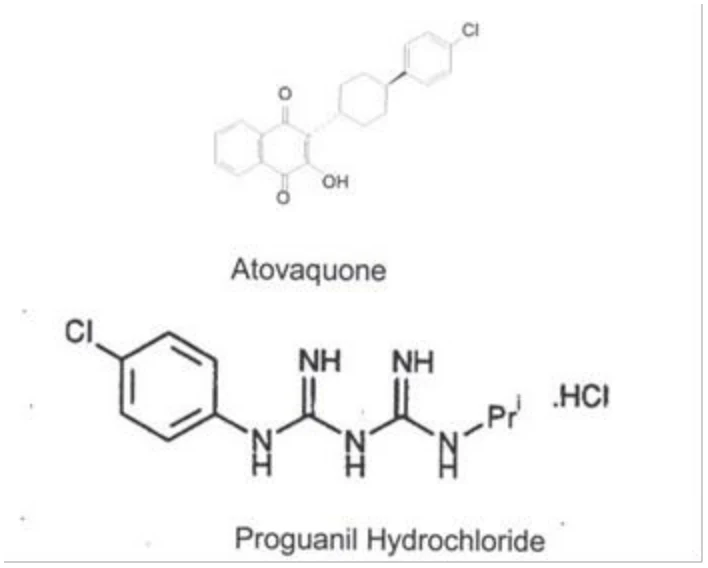
Product Characteristics:
Atovaquone: Atovaquone is a yellow crystalline solid with a melting point of ≈ 221°C. It is practically insoluble in water (< 2 x 10⁻⁴ mg/mL) and in 0.1 M HCl (< 2 x 10⁻⁴ mg/mL), and slightly soluble in 0.1 M NaOH (1.7 mg/mL).
Proguanil Hydrochloride: A white crystalline powder, odorless or almost odorless with a melting point of 243°C to 244°C. It is slightly soluble in water, more soluble in hot water and sparingly soluble in 96% ethanol. It is practically insoluble in chloroform and in ether.
14. Clinical Trials
14.1. Clinical Trials by Indication
Prevention of Malaria
The prophylaxis indication for adults weighing above 40 kg is based on 3 placebo-controlled studies of 10 to 12 weeks duration conducted in endemic areas with over 700 subjects and 2 active-controlled studies in non-immune travellers which enrolled more than 2000 non-immune travellers to a malaria-endemic country.
The prophylaxis indication for children weighing between 11 and 40 kg is based on 2 placebo-controlled studies of 12 weeks duration conducted in endemic areas with over 500 subjects aged 4 to 15 years, and 2 active-controlled studies in more than 180 non-immune travellers aged 2 to 14 years who visited a malaria-endemic country.
Treatment of Malaria
The treatment indication is based on 5 controlled clinical studies conducted in 466 patients (adults and children) receiving concurrent atovaquone and proguanil hydrochloride at the recommended dose (see 4. Dosage and Administration). Most of the patients were residents of malaria-endemic areas and may have had previous malaria infections that could have conferred a degree of immunity.
14.2. Comparative Bioavailability Studies
Bioavailability
In a comparative bioavailability study in healthy adult volunteers, MALARONE administered as a single dose was bioequivalent to separate tablets of atovaquone 250 mg and proguanil 100 mg given concomitantly. In healthy adult subjects treated for 3 days, the pharmacokinetics of atovaquone and proguanil and its metabolite cycloguanil were not modified when atovaquone and proguanil were given alone or in combination as MALARONE.
15. Microbiology
Atovaquone has activity against P. falciparum (in vitro IC50 against P. falciparum 0.23-1.43 ng/mL).
Atovaquone has a unique mechanism of action and is not cross-resistant with any other antimalarial drugs in current use.
The antimalarial activity of proguanil is exerted via the primary metabolite cycloguanil (in vitro IC50 against various P. falciparum strains of 4-20 ng/mL; some activity of proguanil and another metabolite, 4-chlorophenylbiguanide, is seen in vitro at 600-3,000 ng/mL).
In in vitro studies of P. falciparum the combination of atovaquone and proguanil was shown to be synergistic.
Because P. vivax cannot be cultured, in vitro susceptibility cannot be determined. However, clinical studies have demonstrated that atovaquone/proguanil has activity against blood stages of P. vivax, but not against hypnozoites.
16. Non-Clinical Toxicology
General toxicology
Acute toxicity:
At higher doses of proguanil in mice (30 mg/kg), ataxic and respiratory difficulties were seen after 2 to 4 hours and deaths 4 to 24 hours after dosing. In rats (dosed at 200 mg/kg), respiratory difficulties were followed by death 4 to 48 hours after dosing. In addition, surviving rats had slight body weight loss and decreased activity.
In the dog and rhesus monkey, proguanil appeared to be more toxic intramuscularly than orally. After oral doses of 200 and 400 mg/kg/day of proguanil, emesis was repeatedly observed 2 to 4 hours after dosing. There were no delayed signs of toxicity noted during the postdose observation period. Proguanil administration intramuscularly in monkeys and dogs resulted in mortalities at a dose of 160 mg/kg. Deaths occurred between 3 to 4 hours after dosing and were preceded by profound lethargy, slowing of heart rate, and respiratory difficulties ending in a coma. At a dose of 80 mg/kg, profound decreased activity lasting 8 to 12 hours postdose was reported.
In acute toxicity experiments with atovaquone in rats and mice, the oral LD50 was in excess of 1,825 mg/kg, the highest dose tested. No deaths or other treatment-related effects were observed.
Multidose toxicity:
In 30-day studies in rats and dogs, primary drug-related effects were seen in animals given 40 mg/kg/day proguanil hydrochloride alone or in combination with 100 mg/kg/day atovaquone. These changes in the intestinal tract and bone marrow were essentially antiproliferative. In the intestine, the maturation arrest enteritis seen in the dog was similar to that described in dogs given dihydrofolate reductase inhibitors and nucleoside analogs. It was characterized by a blunting of the intestinal villi and flattening of the epithelium covering these blunted villi. This reflects a process whereby the normal turnover rate in the intestinal epithelium has been interfered with by the drug and the response is to try and cover the same amount of surface by using fewer cells than normal. Hence, the villi reduce in height and the covering cells flatten. In the rat, the effect was seen in the cecum only, but was not as severe. The bone marrow was hypocellular and there were fewer cells seen in the erythroid and myeloid series. Further, there was a decrease in maturation of the more immature erythroid and myeloid cells into mature erythrocytes and leucocytes.
Kidney changes consisted of acute tubular necrosis, basophilic (regenerative) tubular epithelium, and tubular dilatation. Renal changes were considered to be secondary to diarrhoea, inanition, and dehydration. Since these effects were seen in animals treated with proguanil hydrochloride either alone or in combination with atovaquone, the toxicities seen in the combination groups for rats and dogs were solely due to proguanil hydrochloride. These findings were fully reversible when the animals were evaluated after the drug-free recovery period.
The treatment of rats with proguanil hydrochloride for 6 months at dose levels up to 20 mg/kg/day, either alone or in combination with atovaquone, produced only very slight lesions in the caecum, which were reversible, or slight kidney tubular basophilia. Treatment with atovaquone alone at a dose level of 50 mg/kg/day produced no adverse effects, indicating that toxicity is proguanil related. These observations are consistent with the findings from the 1-month study in the rat, and are considered proguanil related.
In a 6-month repeat-dose toxicity study in dogs, with the exception of microscopic findings in the heart, liver, lungs and gall bladder, findings were consistent with those from the 1-month study. Slight changes in the liver and gall bladder were present at the low dose combination of 10 mg/kg/day atovaquone and 4 mg/kg/day proguanil hydrochloride at a systemic exposure approximately twice the exposures seen at the clinical dose in humans. Evidence of reversible biliary hyperplasia was seen in female dogs. The finding noted in the heart (atrial fibrovascular proliferation) is considered species-specific to the dog and is thus not of clinical relevance. In lungs, the observed interstitial pneumonia in the proguanil-treated groups was considered an exacerbation of a pre-existing condition. The toxicities observed following 6 months administration to dogs are considered proguanil related.
Genotoxicity
Mutagenicity:
A range of mutagenicity tests (Ames Test, mouse lymphoma assay and mouse micronucleus assay) have shown no evidence that atovaquone or proguanil up to a concentration of 74 mg/mL have mutagenic activity as single agents. Mutagenicity studies have not been performed with atovaquone in combination with proguanil.
Cycloguanil, the active metabolite of proguanil, was also negative in the Ames test, but was positive in the Mouse Lymphoma assay (0.075 μg/mL) and the Mouse Micronucleus assay (at ≥150 mg/kg). These positive effects with cycloguanil (a dihydrofolate antagonist) were reduced or abolished with folinic acid supplementation.
Carcinogenicity
Oncogenicity studies of atovaquone alone in mice showed a treatment-related increased incidence of hepatocellular adenomas and carcinomas at all dose levels tested (20, 50, 100, 200, 500 mg/kg/day) for a period up to 744 consecutive days. No such findings were observed in rats. These findings appear to be due to the inherent susceptibility of mice to atovaquone and are considered of no relevance in the clinical situation. Oncogenicity studies in proguanil alone showed no evidence of carcinogenicity in rats (at doses up to 20 mg/kg/day) and in mice (at doses up to 16 mg/kg/day).
In the pre-oncogenicity study in mice with proguanil hydrochloride alone, dosing at 40 mg/kg/day was not tolerated and administration was ceased on Day 12. Treatment-related microscopic changes were noted in the gall bladder, kidney and liver, and stress-related lymphoid depletion in various lymphoid tissues. Similar effects were seen following dosing at 8 and 20 mg/kg/day but with less severity and lower incidence. No adverse effects were noted at 4 mg/kg/day.
Reproductive and developmental toxicology
In a teratology study conducted in rats, oral doses of up to 20 mg/kg/day proguanil hydrochloride alone or in combination with 50 mg/kg/day atovaquone were not teratogenic.
A study in male and female CD rats revealed no effect on fertility following oral dosing with proguanil hydrochloride alone at dose levels up to 16 mg/kg/day.
In an embryofetal development study carried out in rabbits, oral doses up to 100 mg/kg/day atovaquone or 40 mg/kg/day proguanil hydrochloride, either each component alone or in combination, was not toxic towards the rabbit fetus, and had no effect on the incidence of malformations or variations in this species. However, maternal toxicity was seen at 100:40 mg/kg/day atovaquone:proguanil hydrochloride, an effect enhanced by combined administration as compared to the administration of either drug alone.
In a pre- and post-natal toxicity study in the rat with proguanil hydrochloride alone at doses up to 16 mg/kg/day, there were no adverse effects on reproductive function in either the F0 or F1 generation, or on development or behaviour in F1 pups, although maternal toxicity (reduced body weight gain) was observed at the high dose.