


Product Monograph - Mefloquine
RECENT MAJOR LABEL CHANGES
| None | N/A |
|---|
TABLE OF CONTENTS
Sections or subsections that are not applicable at the time of authorization are not listed.
RECENT MAJOR LABEL CHANGES..............................................................................................2
TABLE OF CONTENTS ................................................................................................................2
PART I: HEALTH PROFESSIONAL INFORMATION .......................................................................4
1 INDICATIONS ................................................................................................................4
1.1 Pediatrics ............................................................................................................4
1.2 Geriatrics.............................................................................................................4
2 CONTRAINDICATIONS ...................................................................................................4
3 SERIOUS WARNINGS AND PRECAUTIONS BOX ..............................................................5
4 DOSAGE AND ADMINISTRATION...................................................................................5
4.2 Recommended Dose and Dosage Adjustment.......................................................5
4.4 Administration.....................................................................................................7
4.5 Missed Dose ........................................................................................................8
5 OVERDOSAGE ...............................................................................................................8
6 DOSAGE FORMS, STRENGTHS, COMPOSITION AND PACKAGING ...................................8
7 WARNINGS AND PRECAUTIONS ....................................................................................8
7.1 Special Populations ............................................................................................ 12
7.1.1 Pregnant Women .........................................................................................12
7.1.2 Breast-feeding..............................................................................................12
7.1.3 Pediatrics .....................................................................................................12
7.1.4 Geriatrics .....................................................................................................13
8 ADVERSE REACTIONS .................................................................................................. 13
8.1 Adverse Reaction Overview................................................................................ 13
8.2 Clinical Trial Adverse Reactions .......................................................................... 13
8.3 Less Common Clinical Trial Adverse Reactions .................................................... 14
8.5 Post-Market Adverse Drug Reactions ................................................................. 14
9 DRUG INTERACTIONS.................................................................................................. 16
9.1 Serious Drug Interactions ................................................................................... 16
9.2 Drug Interactions Overview................................................................................ 16
9.3 Drug-Behavioural Interactions............................................................................ 16
9.4 Drug-Drug Interactions ...................................................................................... 16
9.5 Drug-Food Interactions ...................................................................................... 21
9.6 Drug-Herb Interactions ...................................................................................... 21
9.7 Drug-Laboratory Test Interactions ...................................................................... 21
10 CLINICAL PHARMACOLOGY ......................................................................................... 21
10.1 Mechanism of Action ......................................................................................... 21
10.2 Pharmacodynamics............................................................................................ 21
10.3 Pharmacokinetics .............................................................................................. 21
11 STORAGE, STABILITY AND DISPOSAL ........................................................................... 23
12 SPECIAL HANDLING INSTRUCTIONS............................................................................. 23
PART II: SCIENTIFIC INFORMATION ........................................................................................ 24
13 PHARMACEUTICAL INFORMATION.............................................................................. 24
14 CLINICAL TRIALS.......................................................................................................... 24
14.2 Comparative Bioavailability Studies .................................................................. 24
15 MICROBIOLOGY .......................................................................................................... 25
16 NON-CLINICAL TOXICOLOGY ....................................................................................... 29
17 SUPPORTING PRODUCT MONOGRAPHS...................................................................... 29
PATIENT MEDICATION INFORMATION ................................................................................... 30
PART I: HEALTH PROFESSIONAL INFORMATION
1 INDICATIONS
MEFLOQUINE (mefloquine tablets) is indicated for:
- Prophylaxis: Prophylaxis of P. falciparum and P. vivax malaria infections, including prophylaxis of chloroquine-resistant strains of P. falciparum.
- Treatment of Acute Malaria Infections: Treatment of mild to moderate acute malaria caused by mefloquine-susceptible strains of P. falciparum (both chloroquine- susceptible and resistant strains) or by P. vivax.
1.1 Pediatrics
Pediatrics (< 18 years of age): Based on the data submitted and reviewed by Health Canada, the safety and efficacy of mefloquine tablets in pediatric patients has been established. Therefore, Health Canada has authorized an indication for pediatric use. See 7.1.3 Pediatrics.
Experience with mefloquine in infants less than 3 months old or weighing less than 5 kg is limited.
1.2 Geriatrics
Geriatrics (≥ 65 years of age): Evidence from clinical studies and experience is limited in this age group. Use in the geriatric population may be associated with differences in safety or effectiveness. See 7.1.4 Geriatrics.
2 CONTRAINDICATIONS
MEFLOQUINE (mefloquine tablets) is contraindicated in:
- Patients with known hypersensitivity to mefloquine or related compounds, (e.g. quinine, quinidine, chloroquine) or to any components contained in the formulation including any non-medicinal ingredient, or component of the container. For a complete listing, see 6 DOSAGE FORMS, STRENGTHS, COMPOSITION AND PACKAGING.
- Patients with active depression or a history of psychiatric disturbances (including depression, generalized anxiety disorder, psychosis, schizophrenia or other major psychiatric disorders) or a history of convulsions should not be prescribed MEFLOQUINE prophylactically since MEFLOQUINE may precipitate these conditions.
Checklist for the Prescription of MEFLOQUINE Chemoprophylaxis:
The following checklist provides a brief guide to conditions that are contraindications to MEFLOQUINE chemoprophylaxis. The checklist is designed to assist in determining the patient’s eligibility for MEFLOQUINE chemoprophylaxis. All items should be checked in the presence of the patient or his/her caregiver. If one of the checklist questions 1 to 4 is answered with “Yes” then the patient is ineligible for MEFLOQUINE chemoprophylaxis.
| No. | Question | YES | NO |
|---|---|---|---|
| 1. | Does the patient have any known hypersensitivity to mefloquine or related compounds, (e.g. quinine, quinidine, chloroquine) or to any excipients of the tablet formulation? | ||
| 2. | Does the patient suffer from active depression or have a history of depression, generalized anxiety disorder, psychosis, schizophrenia or other psychiatric disorders? | ||
| 3. | Does the patient have a history of convulsions of any origin? | ||
| 4. | Does the patient have a history of self-endangering behaviour, suicide attempts or suicidal ideations? |
For more information, please visit www.aapharma.ca.
Patient should be advised to consult a healthcare professional if any neurological and / or psychiatric symptoms occur during the prophylactic use of mefloquine as healthcare professionals may have to discontinue MEFLOQUINE and prescribe an alternative medicine for the prevention of malaria.
3 SERIOUS WARNINGS AND PRECAUTIONS BOX
Serious Warnings and Precautions
|
|---|
4 DOSAGE AND ADMINISTRATION
4.2 Recommended Dose and Dosage Adjustment
Prophylaxis
The recommended prophylactic dose of MEFLOQUINE is approximately 5 mg/kg once weekly (to a maximum of 250 mg).
- 1.
Adults and children weighing over 45 kg
In persons over 45 kg, the prophylactic dose is 250 mg of mefloquine (one MEFLOQUINE tablet) once weekly.
- 2.
Children and adults weighing less than 45 kg
The weekly dose decreases in proportion to bodyweight.
| Weight (kg) | Dose |
|---|---|
| > 30-45 kg | ¾ tablet |
| > 20-30 kg | ½ tablet |
| 5 to 20 kg | ¼ tablet |
Experience with mefloquine in infants less than 3 months old or weighing less than 5 kg is limited. Children weighing between 5 to 10 kg will receive a higher prophylactic dose of mefloquine than the recommended 5 mg/kg; however the tablet cannot be accurately subdivided into less than ¼ tablet.
The first dose should be taken at least one week before arrival in an endemic area. Weekly doses should always be taken on the same day of the week. To reduce the risk of malaria after leaving an endemic area, prophylaxis must be continued for 4 additional weeks.
Consideration may also be given to initiating mefloquine prophylaxis 2 to 3 weeks prior to departure in order to determine tolerance to MEFLOQUINE and allow time to substitute other antimalarials if required.
Unexpected Travel - Loading Dose: If it is not possible to initiate therapy one week before arrival in an endemic area, data from the literature indicate that a loading dose of mefloquine can be given in order to rapidly achieve effective blood levels of the drug; in adults weighing over 45 kg this is one MEFLOQUINE tablet (250 mg mefloquine) daily for 3 days, followed thereafter by standard weekly dosing during exposure and for 4 weeks after leaving an endemic area.
| Day 1 | 1st Dose |
|---|---|
| Day 2 | 2nd Dose |
| Day 3 | 3rd Dose |
| Thereafter | Regular weekly doses |
The use of a loading dose may also permit an assessment of drug tolerance before travel and allows a change to a suitable alternative if required. The use of a loading dose may be associated with an increased incidence of adverse events. See 8 ADVERSE REACTIONS.
When prophylaxis with MEFLOQUINE fails, physicians should carefully evaluate which antimalarial to use for malaria treatment. Regarding the use of halofantrine, See 7 WARNINGS AND PRECAUTIONS, Cardiovascular.
Treatment
The recommended total therapeutic dose of mefloquine for non-immune patients is 20 to 25 mg/kg. A lower total dose of 15 mg/kg may suffice for partially immune individuals. Thus, non-immunes weighing over 45 kg should receive a total of 1250 to 1500 mg mefloquine (5 to 6 MEFLOQUINE tablets) while partially immune patients of the same weight should receive 750 to 1000 mg (3 to 4 MEFLOQUINE tablets). (See following table.)
Table 1 - Recommended total therapeutic dosages of MEFLOQUINE tablets relative to body weight and immune status *
| Non-immune patients | Partially immune patients | |
|---|---|---|
| < 20 kg** | ¼ Tablet per 2.5 - 3 kg of weight 1 tablet per 10 - 12 kg of weight | ¼ tablet per 4 kg of weight 1 tablet per 16 kg of weight |
| 20-30 kg | 2-3 tablets | 1½-2 tablets |
| 30-45 kg | 3-4 tablets | 2-3 tablets |
| 45-60 kg | 5 tablets | 3 tablets |
| > 60 kg *** | 6 tablets | 4 tablets |
* Splitting the total curative dosages into 2 to 3 doses (e.g. 3 + 1, 3 + 2, 3 + 2 + 1 tablets) taken 6 to 8 hours apart may reduce the occurrence or severity of adverse effects. See 8 ADVERSE REACTIONS.
** Experience with mefloquine in infants less than 3 months old or weighing less than 5 kg is limited.
*** There is no specific experience with total dosages of more than 6 tablets in very heavy patients.
A second full dose should be given to patients who vomit less than 30 minutes after receiving the drug. If vomiting occurs 30 to 60 minutes after a dose, an additional half-dose should be given.
Patients with acute P. vivax malaria treated with MEFLOQUINE are at high risk of relapse because MEFLOQUINE does not eliminate exoerythrocytic (hepatic phase) parasites. To avoid relapse after initial treatment of the acute infection with MEFLOQUINE, patients should subsequently be treated with an 8-aminoquinoline (e.g. primaquine) in order to eliminate liver forms.
If a full treatment course with MEFLOQUINE does not lead to improvement within 48 to 72 hours, alternative treatments should be considered. When break through malaria occurs during MEFLOQUINE prophylaxis, physicians should carefully evaluate which antimalarial to use for therapy. Regarding the use of halofantrine, See 7 WARNINGS AND PRECAUTIONS, Cardiovascular.
MEFLOQUINE can be given for severe acute malaria after an initial course of intravenous quinine lasting at least 2 to 3 days. Interactions leading to adverse events can largely be prevented by allowing an interval of at least 12 hours after the last dose of quinine.
4.4 Administration
MEFLOQUINE (mefloquine tablets) should be taken with food, and with at least 8 oz (240 mL) of liquid. All dosage instructions relate to the mefloquine base. The tablets may be crushed and suspended in a small amount of water, milk or other beverage for administration to small children and other persons unable to swallow them whole.
4.5 Missed Dose
If the patient misses a dose, inform the patient to skip the missed dose and take the next dose at the regular dosing schedule.
5 OVERDOSAGE
Symptoms and signs
In cases of overdosage with MEFLOQUINE (mefloquine tablets), the symptoms mentioned under 8 ADVERSE REACTIONS may be more pronounced.
Treatment
Patients should be managed by symptomatic and supportive care following MEFLOQUINE overdose, particularly for cardiovascular disturbances. There are no specific antidotes. The use of activated charcoal to limit mefloquine absorption may be considered within one hour of ingestion of an overdose. Monitor cardiac function (if possible by ECG) and neuropsychiatric status for at least 24 hours. Provide symptomatic and intensive supportive treatment as required.
| For management of a suspected drug overdose, contact your regional poison control centre. |
|---|
6 DOSAGE FORMS, STRENGTHS, COMPOSITION AND PACKAGING
Table 2 - Dosage Forms, Strengths, Composition and Packaging
MEFLOQUINE 250 mg: Each white, round, flat-faced, bevelled-edged tablet, cross-scored on one side, other side plain, contains 250 mg mefloquine (base) as mefloquine hydrochloride. Available in blister packs of 8 tablets.
7 WARNINGS AND PRECAUTIONS
Please see 3 SERIOUS WARNINGS AND PRECAUTIONS BOX.
General
- In case of life-threatening, serious or overwhelming malaria infections due to P. falciparum, patients should be treated with an intravenous antimalarial drug. Following completion of initial intravenous treatment, MEFLOQUINE may be given orally to complete the course of therapy.
| Route of Administration | Dosage Form / Strength/Composition | Non-medicinal Ingredients |
| Oral | Tablet 250 mg of mefloquine hydrochloride | Colloidal silicon dioxide, croscarmellose sodium, magnesium stearate and microcrystalline cellulose. |
- Patients with acute P. vivax malaria treated with MEFLOQUINE are at high risk of relapse because MEFLOQUINE does not eliminate exoerythrocytic (hepatic phase) parasites. To avoid relapse, after initial treatment of the acute infection with MEFLOQUINE, patients should subsequently be treated with an 8-aminoquinoline (e.g., primaquine).
- There are insufficient clinical data to document the effect of MEFLOQUINE in malaria caused by P. ovale or P. malariae.
- MEFLOQUINE has a long half-life; adverse reactions to MEFLOQUINE may occur or persist up to several weeks or months after discontinuation of the drug.
- In a small number of patients it has been reported that neuropsychiatric reactions (e.g., depression, tinnitus, dizziness, vertigo or loss of balance) may continue for months or years after discontinuation of MEFLOQUINE, and permanent vestibular damage has been seen in some cases. See 8.5 Post-Market Adverse Reactions.
Carcinogenesis and Genotoxicity
See 16 NON-CLINICAL TOXICOLOGY, Carcinogenicity and Genotoxicity.
Cardiovascular
Caution should be exercised in prescribing MEFLOQUINE to patients suffering from cardiac conduction disorders. In patients with cardiac disease, the benefits of mefloquine therapy should be weighed against the possibility of adverse cardiac effects.
Parenteral studies in animals show that mefloquine, a myocardial depressant, possesses 20% of the anti-fibrillatory action of quinidine and produces 50% of the increase in the PR interval reported with quinine. The effect of mefloquine on the compromised cardiovascular system has not been evaluated. However, transitory and clinically silent ECG alterations have been reported during the use of mefloquine; alterations included sinus bradycardia, sinus arrhythmia, first degree AV-block, prolongation of the QTc interval and abnormal T waves.
Concomitant administration of MEFLOQUINE and other drugs known to alter cardiac conduction, including quinine, quinidine or chloroquine, may produce electrocardiographic abnormalities or cardiac arrest. If quinine or quinidine are to be used in the initial treatment of severe malaria, mefloquine administration should be delayed for at least 12 hours after the final dose of either of these drugs. See 9.4 Drug-Drug Interactions.
Due to the risk of a potentially fatal prolongation of the QTc interval, halofantrine must not be given during MEFLOQUINE therapy for prophylaxis or treatment of malaria, or within 15 weeks after the last dose of MEFLOQUINE. The risk of QTc prolongation may also be expected if ketoconazole is taken during MEFLOQUINE therapy for prophylaxis or treatment of malaria, or within 15 weeks after the last dose of MEFLOQUINE, due to increased plasma concentrations and elimination half-life of mefloquine following co-administration with ketoconazole. See 10.3 Pharmacokinetics.
Patients should be advised to consult a healthcare professional if they experience palpitations or any arrhythmia during chemoprophylaxis with MEFLOQUINE.
Driving and Operating Machinery
Dizziness or vertigo, a disturbed sense of balance, tinnitus and other disorders of the central or peripheral nervous system have been reported during and after the use of mefloquine tablets. Caution should be exercised with regard to driving, piloting airplanes, operating machines, deep sea diving or any other activity requiring alertness and fine motor coordination. In a small number of patients it has been reported that dizziness or vertigo and loss of balance may continue for months or years after discontinuation of mefloquine, and in some cases vestibular damage may be permanent. See 8.5 Post-Market Adverse Reactions.
Hematologic
Cases of agranulocytosis and aplastic anemia have been reported. See 8.5 Post-Market Adverse Reactions.
In vitro and in vivo studies showed no hemolysis associated with glucose 6 phosphate dehydrogenase deficiency.
Hepatic/Biliary/Pancreatic
The pharmacokinetics of mefloquine in patients with compromised hepatic function have not been studied. Mefloquine is extensively metabolized in the liver by the cytochrome P450 system; in patients with impaired liver function, the elimination of mefloquine may be prolonged, leading to higher plasma levels.
Immune
Hypersensitivity reactions including anaphylaxis and pneumonitis have been associated with the use of mefloquine tablets. As with most medications, hypersensitivity reactions, ranging from mild cutaneous events to anaphylaxis, cannot be predicted.
Monitoring and Laboratory Tests
During clinical trials, this drug was not administered for longer than one year. If mefloquine tablets is to be administered for a prolonged period, periodic evaluations including liver function tests should be performed. Although retinal abnormalities seen in humans with long-term chloroquine use have not been observed with mefloquine tablets use, long-term feeding of mefloquine tablets to rats resulted in dose-related ocular lesions (retinal degeneration, retinal edema and lenticular opacity at 12.5 mg/kg/day and higher). Therefore, periodic ophthalmic examinations are recommended. See 16 NON-CLINICAL TOXICOLOGY, Special Toxicology.
Neurologic
Seizures: In patients with epilepsy, mefloquine may increase the risk of convulsions. Therefore in these patients, MEFLOQUINE should be used only for treatment of acute malaria infections and only if there are compelling medical reasons.
Concomitant administration of MEFLOQUINE and anticonvulsants may reduce seizure control by lowering the plasma levels of the anticonvulsants. Patients taking anti-seizure medication concurrently with MEFLOQUINE should have blood levels of their anti-seizure medication monitored and the dosage adjusted as necessary. See 9.4 Drug-Drug Interactions.
Concomitant administration of MEFLOQUINE and drugs known to lower the epileptogenic threshold may increase the risk of convulsions. See 9.4 Drug-Drug Interactions.
Ophthalmologic
Any patient presenting with a visual disorder should be referred to an ophthalmologist as certain conditions (retinal disorders or optic neuropathy) may require discontinuation of MEFLOQUINE. Periodic ophthalmologic examinations are recommended if mefloquine is to be administered for a prolonged period.
Psychiatric
Neuropsychiatric: MEFLOQUINE may cause neuropsychiatric adverse reactions in adults and children. Neuropsychiatric symptoms can be difficult to identify in children; vigilance is required to monitor for the occurrence of these symptoms, especially in non-verbal children.
Psychiatric symptoms ranging from anxiety, paranoia and depression to hallucinations and psychotic behavior, can occur with MEFLOQUINE use. Symptoms may occur early in the course of MEFLOQUINE use and on occasions, these symptoms have been reported to continue long after mefloquine tablets has been stopped. Rare cases of suicidal ideation and suicide have been reported though no relationship to drug administration has been confirmed. MEFLOQUINE should not be prescribed for prophylaxis in patients with active depression or with a history of psychiatric disturbances (including depression, generalized anxiety disorder, psychosis, schizophrenia or other major psychiatric disorders). During prophylactic use, if signs of acute anxiety, depression, restlessness or confusion occur, these may be considered prodromal to a more serious event. In these cases, the drug must be discontinued and an alternative medication should be substituted.
Polyneuropathy: Cases of polyneuropathy (based on neurological symptoms such as pain, burning, sensory disturbances or muscle weakness, alone or in combination) have been reported in patients receiving mefloquine tablets. During prophylactic use, if neurologic symptoms occur, the drug should be discontinued, and an alternative medication should be substituted.
Renal
No pharmacokinetic studies have been performed in patients with renal insufficiency since only a small proportion of the drug is eliminated renally. MEFLOQUINE and its main metabolite are not appreciably removed by hemodialysis.
Reproductive Health: Female and Male Potential
Fertility
Fertility studies with mefloquine tablets in rats have demonstrated adverse effects on fertility in males at the high dose (50 mg/kg/day) and in females at the mid and high dose (20 and 50 mg/kg/day). Administration of 250 mg/week of mefloquine tablets (base) to adult males for 22 weeks failed to reveal any deleterious effects on human spermatozoa.
Teratogenic Risk
See 7.1.1 Pregnant Women.
Sensitivity/Resistance
Resistance: Geographical drug resistance patterns of P. falciparum occur, and the preferred choice of malaria prophylaxis might be different from one area to another. For example, resistance of P. falciparum to mefloquine has been reported, predominantly in areas of multi-drug resistance in South-East Asia. Cross-resistance between mefloquine tablets and halofantrine and cross-resistance between mefloquine tablets and quinine have been observed in some regions. For current advice on geographical resistance patterns, national expert centres should be consulted.
7.1 Special Populations
7.1.1 Pregnant Women
Mefloquine tablets crosses the placenta. Administered at 5 to 20 times the therapeutic dose in man, mefloquine tablets was teratogenic in mice and rats, and embryotoxic in rabbits. However, data from published studies in pregnant women have shown no increase in the risk of teratogenic effects or adverse pregnancy outcomes following mefloquine tablets treatment or prophylaxis during pregnancy. Because the studies in humans cannot rule out the possibility of harm, mefloquine tablets should be used during pregnancy only if clearly needed.
Women of childbearing potential should be advised to practice contraception during malaria prophylaxis with MEFLOQUINE and for 3 months after the last dose. However, in the case of unplanned pregnancy, malaria prophylaxis with mefloquine is not considered an indication for pregnancy termination. Major congenital malformations occur with a frequency of about 2 to 5 in 100 live newborns in the population at large. The reported birth prevalence of malformations in association with mefloquine tablets falls within this range. No specific pattern of congenital malformations could be identified.
Pregnancy has no clinically relevant effect on the pharmacokinetics of mefloquine tablets.
7.1.2 Breast-feeding
Based on a study in a few subjects, low concentrations (3 to 4%) of mefloquine were excreted in human milk following a dose equivalent to 250 mg of the free base. The amount of mefloquine excreted in the milk is of no prophylactic value to the infant. Caution should be exercised when MEFLOQUINE is administered to a nursing woman.
7.1.3 Pediatrics
Pediatrics (< 18 years of age): No relevant age-related changes have been observed in the pharmacokinetics of mefloquine tablets. Therefore the dosage for children has been extrapolated from the recommended adult dose. Experience with mefloquine tablets in infants less than 3 months old or weighing less than 5 kg is limited.
Two studies were conducted to assess the effects of mefloquine tablets on children living in endemic areas for P. falciparum. All children in these studies had at least a low level of parasitemia and 18 to 40% had significant parasitemia with or without mild malaria symptoms. When given 20 to 30 mg/kg of mefloquine tablets as a single dose, nausea and vomiting occurred in approximately 10 to 20%, and dizziness was seen in approximately 40% of children. Early vomiting was cited in some reports as a possible cause of treatment failure. If a second dose is not tolerated, the patient should be monitored closely and alternative malaria treatment considered if improvement is not observed within a reasonable period of time.
The incidence of adverse reactions was higher than that observed in adults.
7.1.4 Geriatrics
Geriatrics (≥ 65 years of age): No relevant age-related changes have been observed in the pharmacokinetics of mefloquine tablets.
Clinical studies of mefloquine tablets did not include sufficient numbers of subjects aged 65 and older to determine whether they respond differently from younger subjects. Other reported clinical experience has not identified differences in responses between the elderly and younger patients. Since electrocardiographic abnormalities have been observed in individuals treated with mefloquine tablets and underlying cardiac disease is more prevalent in elderly than in younger patients, the benefits of mefloquine tablets therapy should be weighed against the possibility of adverse cardiac effects in elderly patients. See 7 WARNINGS AND PRECAUTIONS, Cardiovascular.
8 ADVERSE REACTIONS
8.1 Adverse Reaction Overview
At the doses used for treatment of acute malaria infections, the symptoms possibly attributable to drug administration cannot be distinguished from those symptoms usually attributable to the disease itself.
Among subjects who receive mefloquine tablets for prophylaxis of malaria, the most frequently observed adverse experiences are nausea, vomiting, headache and dizziness.
The profile of mefloquine tablets adverse events is characterized by a predominance of neuropsychiatric adverse events.
8.2 Clinical Trial Adverse Reactions
Clinical trials are conducted under very specific conditions. The adverse reaction rates observed in the clinical trials; therefore, may not reflect the rates observed in practice and should not be compared to the rates in the clinical trials of another drug. Adverse reaction information from clinical trials may be useful in identifying and approximating rates of adverse drug reactions in real-world use.
Among subjects who received mefloquine for prophylaxis of malaria, the most frequently observed adverse experience was vomiting (3%).
Among subjects who received mefloquine for treatment, the most frequently observed adverse experiences included:
Ear and labyrinth disorders: tinnitus.
Gastrointestinal Disorders: nausea, vomiting, diarrhea, abdominal pain.
General disorders and administration site conditions: chills, fever, fatigue.
Metabolic and Nutrition Disorders: loss of appetite.
Musculoskeletal and Connective Tissue Disorders: myalgia.
Nervous System Disorders: dizziness, headache.
Seizures have also been reported.
Skin and Subcutaneous Tissue Disorders: skin rash.
Two serious adverse reactions were cardiopulmonary arrest in one patient shortly after ingesting a single prophylactic dose of mefloquine tablets while concomitantly using propranolol (see 9.4 Drug-Drug Interactions), and encephalopathy of unknown etiology during prophylactic mefloquine tablets administration. The relationship of encephalopathy to drug administration could not be clearly established.
8.3 Less Common Clinical Trial Adverse Reactions
Among subjects who received mefloquine tablets for prophylaxis of malaria, dizziness, syncope, extrasystoles and other complaints affecting less than 1% were reported.
Among subjects who received mefloquine tablets for treatment, the side effects occurring in less than 1% included:
Cardiac Disorders: bradycardia.
General disorders and administration site conditions: asthenia.
Psychiatric Disorders: emotional problems.
Skin and Subcutaneous Tissue Disorders: hair loss, pruritus, and telogen effluvium (loss of resting hair).
8.5 Post-Market Adverse Drug Reactions
The most frequently reported adverse events are:
Ear and Labyrinth Disorders: vertigo.
Gastrointestinal Disorders: nausea, vomiting, loose stools or diarrhea and abdominal pain.
Nervous System Disorders: dizziness, loss of balance, headache and somnolence.
Psychiatric Disorders: sleep disorders (insomnia, abnormal dreams).
These adverse reactions may occur early in the course of mefloquine tablets use. It has been reported that dizziness or vertigo, tinnitus and hearing impairment, and loss of balance may continue for months or years after discontinuation of the drug and may be permanent in some cases.
Less frequently reported adverse events include:
Blood and Lymphatic System Disorders: agranulocytosis, aplastic anemia.
Cardiac Disorders: tachycardia, palpitation, QT prolongation, bradycardia, irregular heart rate, extrasystoles, A-V block and other transient cardiac conduction alterations.
Eye Disorders: visual disturbances, vision blurred, cataracts, retinal disorders, optic neuropathy.
Ear and Labyrinth Disorders: vestibular disorders including tinnitus and hearing impairment.
Gastrointestinal Disorders: dyspepsia.
General Disorders and Administration Site Disorders: edema, chest pain, asthenia, malaise, fatigue, chills, pyrexia.
Hepatobiliary Disorders: drug-related hepatic disorders from asymptomatic transient transaminase elevations to hepatic failure.
Immune System Disorders: hypersensitivity reactions ranging from mild cutaneous events to anaphylaxis.
Investigations: Decreased hematocrit, transient elevation of transaminases, leukopenia or leukocytosis, and thrombocytopenia.
Metabolic and Nutrition Disorders: anorexia.
Musculoskeletal and Connective Tissue Disorders: muscle weakness, muscle cramps, myalgia, arthralgia.
Nervous System Disorders: syncope, convulsions, abnormal co-ordination, memory impairment, sensory and motor neuropathies (including paresthesia, tremor and ataxia) and encephalopathy.
Psychiatric Disorders: emotional problems (agitation, restlessness, anxiety, depression, mood swings, panic attacks, aggression, psychotic or paranoid reactions), confusional state, hallucinations, suicidal ideation and suicide.
Note : In the literature, the incidence of serious neuropsychiatric adverse drug reactions (e.g., seizures, psychotic reactions) with mefloquine has been reported at 1/215 following treatment and 1/11,000 following prophylactic use.
Respiratory, Thoracic and Mediastinal Disorders: dyspnea, pneumonitis of possible allergic etiology.
Skin and Subcutaneous Tissue Disorders: rash, exanthema, erythema, urticaria, pruritus, alopecia, hyperhidrosis, erythema multiforme, and Stevens-Johnson syndrome.
Vascular Disorders: circulatory disturbances (hypotension, hypertension, flushing).
Adverse reactions to MEFLOQUINE may occur or persist up to several weeks after discontinuation of the drug due to the long half-life of mefloquine. In a small number of patients it has been reported that neuropsychiatric reactions (e.g., depression, tinnitus, dizziness or vertigo and loss of balance) may continue for months or years after discontinuation of MEFLOQUINE, and permanent vestibular damage has been seen in some cases.
9 DRUG INTERACTIONS
9.1 Serious Drug Interactions
Serious Drug Interactions Quinine, quinidine, or chloroquine: Concomitant administration of MEFLOQUINE and quinine, quinidine, or chloroquine may produce electrocardiographic abnormalities. See 9.4 Drug-Drug Interactions, Quinine, quinidine, or chloroquine. |
|---|
9.2 Drug Interactions Overview
Mefloquine is metabolized in the liver by the cytochrome P450 system. Mefloquine tablets does not inhibit or induce the cytochrome P450 enzyme system. It is therefore not expected that the metabolism of drugs given concomitantly with mefloquine is affected. However, inhibitors or inducers of the isoenzyme CYP3A4 may modify the pharmacokinetics/metabolism of mefloquine, leading to an increase or decrease in mefloquine plasma concentrations, respectively.
9.3 Drug-Behavioural Interactions
A controlled clinical study was carried out in 20 subjects to investigate a potential interaction between mefloquine tablets and alcohol. The blood alcohol concentrations attained in the patients taking mefloquine (0.3 to 0.5 mg/mL), did not impair coordinated psychomotor activities. A single case in the literature reports a transient severe psychiatric disturbance, suggesting an adverse reaction to mefloquine associated with a heavy ingestion of alcohol (600 mL of whisky).
9.4 Drug-Drug Interactions
Drug-drug interactions with mefloquine tablets have not been explored in detail.
The drugs listed in this table are based on either drug interaction case reports or studies, or potential interactions due to the expected magnitude and seriousness of the interaction (i.e., those identified as contraindicated).
Table 3 - Established or Potential Drug-Drug Interactions
| Proper/Common name | Source of Evidenc e | Effect | Clinical comment |
Antiepileptic drugs (e.g., valproic acid, carbamazepine, phenobarbital, and phenytoin) | T | Patients taking mefloquine tablets while taking valproic acid had loss of seizure control and lower than expected valproic acid blood levels. | Patients concurrently taking antiseizure medication, including valproic acid, carbamazepine, phenobarbital, and phenytoin, and MEFLOQUINE should have the blood level of their antiseizure medication monitored and the dosage adjusted appropriately. |
CYP3A4 inducers (e.g., Rifampicin) | CT | In another pharmacokinetic study in healthy volunteers (N=7) receiving a single dose of 500 mg mefloquine tablets plus a long-term administration of 600 mg of rifampicin a potent inducer of CYP3A4 reduced the plasma concentrations of mefloquine (AUC0-∞ by 68% and Cmax by 19%) and elimination half-life (t1/2 by 63%). |
| Proper/Common name | Source of Evidenc e | Effect | Clinical comment |
CYP3A4 inhibitors (e.g., Ketoconazole) | CT | In a pharmacokinetic study in healthy volunteers (N=8) receiving single dose of 500 mg mefloquine tablets alone or co-administration with 400 mg/day ketoconazole orally for 10 days showed that the co-administration of ketoconazole, a strong inhibitor of CYP3A4, increased the mean plasma concentrations of mefloquine tablets (AUC0-t by 79% and Cmax by 64%) and elimination half-life (t1/2 by 39%). Due to increased plasma concentrations and elimination half-life of mefloquine tablets following co-administration with ketoconazole, the risk of QTc prolongation may also be expected if ketoconazole is taken during mefloquine therapy for prophylaxis or treatment of malaria or within 15 weeks after the last dose of mefloquine tablets (see 7 WARNINGS AND PRECAUTIONS, Cardiovascular). Clinically significant QTc interval prolongation has not been found with mefloquine tablets alone. | Ketoconazole should not be administered with mefloquine or within 15 weeks of the last dose of mefloquine due to the risk of QTc interval prolongation. |
| Proper/Common name | Source of Evidenc e | Effect | Clinical comment |
| Drugs known to lower the epileptogenic threshold (antidepressants; bupropion; antipsychotics; tramadol; quinine, quinidine or chloroquine) | T | Concomitant administration of mefloquine tablets with drugs known to lower the epileptogenic threshold (antidepressants; bupropion; antipsychotics; tramadol; quinine, quinidine or chloroquine) may increase the risk of convulsions. | |
Drugs that prolong the QTc interval (e.g., anti-arrhythmics, β-adrenergic blocking agents, calcium channel blockers, antihistamines or H1-blocking agents (astemizole, terfenadine), tricyclic antidepressants and phenothiazines) | T | Drugs that alter cardiac conduction may contribute to a prolongation of the QTc interval. | Caution should also be exercised with drugs that alter cardiac conduction (e.g., anti-arrhythmics, β-adrenergic blocking agents, calcium channel blockers, antihistamines or H1-blocking agents (astemizole, terfenadine), tricyclic antidepressants and phenothiazines). |
| Halofantrine | T | There is evidence that the use of halofantrine during mefloquine therapy for prophylaxis or treatment of malaria, or within 15 weeks after the last dose of mefloquine tablets, causes a significant lengthening of the QTc interval (see 7 WARNINGS AND PRECAUTIONS, Cardiovascular). | Halofantrine should not be administered with mefloquine or within 15 weeks of the last dose of mefloquine due to the risk of QTc interval prolongation. |
| Proper/Common name | Source of Evidenc e | Effect | Clinical comment |
| Oral live typhoid vaccines | T | When MEFLOQUINE is taken concurrently with oral live typhoid vaccines, attenuation of immunization cannot be excluded. | Vaccinations with attenuated live bacteria should therefore be completed at least three days before the first dose of MEFLOQUINE. |
| P-glycoprotein substrates and inhibitors | CT | It has been shown in vitro that mefloquine tablets is a substrate and an inhibitor of P-glycoprotein. Therefore, drug-drug interactions could also occur with drugs that are substrates or are known to modify the expression of this transporter. The clinical relevance of these interactions is not known to date. | |
| Propranolol and chloroquine | C | A patient with previous myocardial infarction suffered a cardiopulmonary arrest five hours after taking MEFLOQUINE. Propranolol and chloroquine were also taken. That patient recovered fully. | |
| Quinine, quinidine, or chloroquine | T | Concomitant administration of MEFLOQUINE and quinine, quinidine, or chloroquine may produce electrocardiographic abnormalities. | If quinine or quinidine are to be used in the initial treatment of severe malaria, MEFLOQUINE administration should be delayed for at least 12 hours after the final dose of either of these drugs. |
| Proper/Common name | Source of Evidenc e | Effect | Clinical comment |
| Sulfadoxine and pyrimethamine | CT | In clinical trials, the concomitant administration of sulfadoxine and pyrimethamine did not alter the adverse reaction profile. |
Legend: C = Case Study; CT = Clinical Trial; T = Theoretical
Mefloquine tablets is highly bound (98%) to plasma proteins.
No other drug interactions have been reported. Nevertheless, the effects of MEFLOQUINE on travelers receiving co-medication, particularly diabetics or patients using anticoagulants, should be checked before departure.
9.5 Drug-Food Interactions
Interactions with food have not been established.
9.6 Drug-Herb Interactions
Interactions with herbal products have not been established.
9.7 Drug-Laboratory Test Interactions
The most frequently observed laboratory alterations which could be possibly attributable to drug administration were decreased hematocrit, transient elevation of transaminases, leukopenia and thrombocytopenia. Leukocytosis has also been observed.
10 CLINICAL PHARMACOLOGY
10.1 Mechanism of Action
Mefloquine, a fluorinated quinoline derivative, acts on the asexual intraerythrocytic forms of the human malaria parasites: Plasmodium falciparum, P. vivax, P. malariae and P. ovale.
10.2 Pharmacodynamics
See 15 MICROBIOLOGY.
10.3 Pharmacokinetics
Absorption
The absolute oral bioavailability of mefloquine tablets has not been determined since an intravenous formulation is not available. The bioavailability of the tablet formulation compared with an oral solution was over 85%. The presence of food significantly enhances the rate and extent of absorption, leading to about a 40% increase in bioavailability. Plasma concentrations peak 6 to 24 hours (median, about 17 hours) after a single oral dose of mefloquine. Maximum plasma concentrations in mcg/L are roughly equivalent to the dose in milligrams (for example, a single 1000 mg dose produces a maximum concentration of about 1000 mcg/L). At a dose of 250 mg once weekly, maximum steady state plasma concentrations of 1000 to 2000 mcg/L are reached after 7 to 10 weeks.
Distribution
In healthy adults, the apparent volume of distribution is approximately 20 L/kg, indicating extensive tissue distribution. Mefloquine tablets may accumulate in parasitized erythrocytes at an erythrocyte to plasma concentration ratio of about 2. Protein binding is about 98%. Mefloquine tablets blood concentrations of 620 ng/mL are considered necessary to achieve 95% prophylactic efficacy.
Metabolism
Mefloquine is extensively metabolized in the liver by the cytochrome P450 system. In vitro and in vivo studies strongly suggested that CYP3A4 is the major isoform involved. Two metabolites of mefloquine have been identified in humans. The main metabolite, 2-8-bis-trifluoromethyl-4-quinoline carboxylic acid, is inactive against P. falciparum. In a study in healthy volunteers, the carboxylic acid metabolite appeared in plasma 2 to 4 hours after a single oral dose of mefloquine tablets. Maximum plasma concentrations of the metabolite, which were about 50% higher than those of mefloquine, were reached after 2 weeks. Thereafter, plasma levels of the main metabolite and mefloquine declined at a similar rate. The area under the plasma concentration-time curve (AUC) of the main metabolite was 3 to 5 times larger than that of the parent drug. The other metabolite, an alcohol, was present in only minute amounts only.
Elimination
In several studies in healthy adults, the mean elimination half-life of mefloquine varied between 2 and 4 weeks, with an average of about 3 weeks. Total clearance, which is essentially hepatic, is in the order of 30 mL/min. There is evidence that mefloquine is excreted mainly in the bile and feces. In volunteers, urinary excretion of unchanged mefloquine and its main metabolite accounted for about 9% and 4% of the dose, respectively. Concentrations of their metabolites could not be measured in the urine.
During long-term prophylaxis the elimination half-life of mefloquine remains unchanged.
Special Populations and Conditions
- Pediatrics: No relevant age-related changes have been observed in the pharmacokinetics of mefloquine tablets. See 7.1.3 Pediatrics.
- Geriatrics: No relevant age-related changes have been observed in the pharmacokinetics of mefloquine tablets. See 7.1.4 Geriatrics.
- Sex: This information is not available for this drug product.
Pregnancy and Breast-feeding: Pregnancy has no clinically relevant effect on the pharmacokinetics of mefloquine tablets.
Mefloquine crosses the placenta. See 7.1.1 Pregnant Women. Excretion into breast milk appears to be minimal. See 7.1.2 Breast-feeding.
- Genetic Polymorphism: This information is not available for this drug product.
- Ethnic Origin: Pharmacokinetic differences have been observed between various ethnic populations. In practice, however, these are of minor importance in terms of drug efficacy compared with host immune status and sensitivity of the parasite.
- Hepatic Insufficiency: The pharmacokinetics of mefloquine tablets in patients with compromised hepatic function have not been studied. Mefloquine is extensively metabolized in the liver by the cytochrome P450 system; in patients with impaired liver function, the elimination of mefloquine may be prolonged, leading to higher plasma levels. See 7 WARNINGS AND PRECAUTIONS, Hepatic/Biliary/Pancreatic.
- Renal Insufficiency: No pharmacokinetic studies have been performed in patients with renal insufficiency since only a small proportion of the drug is eliminated renally. Mefloquine tablets and its main metabolite are not appreciably removed by hemodialysis. No special chemoprophylactic dosage adjustments are indicated for dialysis patients to achieve concentrations in plasma similar to those in healthy subjects. See 7 WARNINGS AND PRECAUTIONS, Renal.
- Obesity: This information is not available for this drug product.
11 STORAGE, STABILITY AND DISPOSAL
Store 15-30οC. Sensitive to moisture. Keep in the blister until consumed.
12 SPECIAL HANDLING INSTRUCTIONS
None.
PART II: SCIENTIFIC INFORMATION
13 PHARMACEUTICAL INFORMATION
Drug Substance
Proper name: Mefloquine Hydrochloride
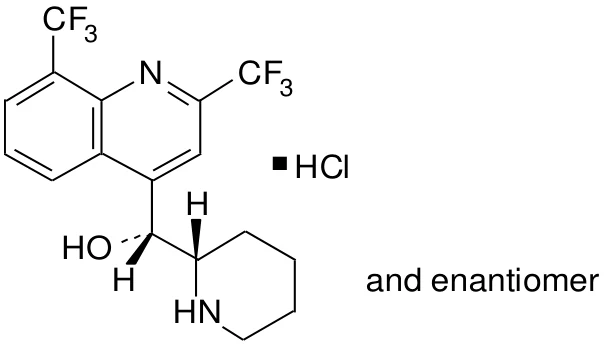
Chemical name: DL-Erythro-α-(2-piperidyl)-2, 8-bis(trifluoromethyl)-4-quinolinemethanol hydrochloride
Molecular formula and molecular mass: C17H16F6N2O·HCl and 414.79 g/mol
Structural formula:
Physicochemical properties: Mefloquine is a 4-quinoline methanol derivative. It is a 2-aryl substituted chemical structural analog of quinine. The drug is a white to almost white crystalline powder. The solubility in water is 0.35 g/100 mL at 25οC. The pH of a 1% aqueous suspension is 5.0-6.5. The pka value is approximately 9. The substance melts at approximately 252°C with decomposition.
14 CLINICAL TRIALS
14.2 Comparative Bioavailability Studies
A comparative bioavailability study was performed using healthy volunteers. The rate and extent of absorption of mefloquine HCl was measured and compared following oral administration of a single 1 x 250 mg dose of MEFLOQUINE (mefloquine HCl) tablets, or LARIAM® (mefloquine HCl) tablets, under fed conditions. The results from measured data are summarized below.
SUMMARY TABLE OF THE COMPARATIVE BIOAVAILABILITY DATA
| Mefloquine (Dose: 1 x 250 mg) From Measured Data – Under Fed Conditions | |||
| Parameter | Geometric Mean Arithmetic Mean (CV%) | Ratio of Geometric Means (%)** | |
| MEFLOQUINE | LARIAM®† | ||
AUCT (mcg·h/mL) | 17.4 18.0 (27) | 18.0 18.7 (27) | 96.4 (87.0 – 106.8) |
AUCI (mcg·h/mL) | 73.8 86.8 (65) | 65.7 75.4 (53) | 102.1# (89.6 – 116.3) |
Cmax (mcg/mL) | 0.344 0.355 (24) | 0.352 0.358 (19) | 97.9 (89.7 – 106.8) |
| Tmax (h)* | 8.29 (42) | 9.19 (102) | -- |
| T1/2 (h)* | 203 (73) | 180 (51) | -- |
* Arithmetic means (CV%). ** Based on the least squares estimate. # Based on Kel (λ) as the covariate † LARIAM® is manufactured by Hoffmann La Roche Limited, and was purchased in Canada. | |||
15 MICROBIOLOGY
Mechanism of Action
MEFLOQUINE is an antimalarial agent which acts as a blood schizonticide. Its exact mechanism of action is not known.
Activity In Vitro and In Vivo
In Vitro Studies
Below are results of mefloquine's ability, at varying concentrations, to inhibit the maturation of P. falciparum trophozoites formed in red blood cells.
| Strain | ED50 (mcg/L) |
| Drug-sensitive isolate from Africa | 41.5 |
| Drug-resistant isolate from South Vietnam | 46.2 |
More sophisticated in vitro studies were performed later by using parasites from continuous culture of P. falciparum. These studies also showed no significant cross resistance against isolates obtained from a patient with malaria caused by P. falciparum resistant to multiple drugs.
| Strain | ED50 (mcg/L) |
| Drug-sensitive isolate from Africa | 6.7 ± 1.0 |
| Drug-resistant isolate from South Vietnam | 7.8 ± 1.4 |
A study was performed to establish an in vitro culture system of four strains of P. falciparum to determine the antimalarial activity of mefloquine tablets and reference antimalarials employing incorporation of 3H-hypoxanthine into RNA and DNA of the parasite as an endpoint.
The rate of hypoxanthine uptake is taken as a measure of parasite growth. The ID50, i.e., the concentration causing 50% inhibition of uptake of [G-3H]-hypoxanthine in the four strains of P. falciparum by mefloquine is shown below.
| P. falciparum Isolate | ID50 (mcg/L) |
| Geneva 13 | 120.1 |
| East Africa | 138.0 |
| FD-III V | 127.0 |
| Z | 131.6 |
The in vitro culture of P. falciparum strains and inhibition of hypoxanthine incorporation into DNA and RNA of the parasite is a rapid reproducible assay for antimalarial activity that can supplement the in vitro mouse assay.
In Vivo Studies
Rodent Studies
Studies of the antimalarial activity of mefloquine tablets in mice were done with a variety of strains of rodent malaria with varying drug sensitivity patterns.
Mefloquine tablets showed marked prophylactic activity when given in single oral doses of 5 to 200 mg/kg 6 to 96 hours before infection.
A study was performed to determine the ability of mefloquine tablets to prevent malaria by exoerythrocytic effect (causal prophylaxis), and it was shown that mefloquine tablets, given at 300 to 1,000 mg/kg S.C. to mice infected with P.y. nigeriensis was minimally active at 300 and fully active at 1,000 mg/kg. Mefloquine tablets was not active when given to chicks infected with P. gallinaceum at 15 to 480 mg/kg in peanut oil. The apparent prophylactic activity against P.y. nigeriensis was probably related to persistence of the drug with resulting activity on erythrocytic forms. Studies in which mefloquine tablets was administered prior to inoculation of mice with P.y. yoelii showed such a persistent effect.
After infection was established, the onset of antimalarial activity was found to be slow and occurred 48 hours after drug treatment.
A study was performed to determine the chemotherapeutic activity of mefloquine tablets against P. berghei in mice using varying dosage regimens. Mice that were tested for suppressive activity were given I.P. erythrocytes that were infected with strain Anka of P. berghei and received four oral doses six hours before and 24, 48 and 72 hours after infection. The ED50 and ED90 of mefloquine tablets were 1.8 and 4.0 mg/kg, respectively.
Experimental studies were performed in mice infected with P. berghei to assess the activity of mefloquine tablets in combination with other potential new drugs. Results were additive when mefloquine tablets was combined with the following drugs: 5-Fluroorotic acid, two types of quinolinemethanols, a phenanthrenemethanol, pyrimethamine and sulfaphenazole.
Simian Studies
Antimalarial studies with mefloquine tablets were initially performed in rhesus monkeys infected with P. cynomolgi. The infections were cured by daily oral doses of 10 or 31.6 mg/kg/day for two days.
Mefloquine tablets was tested in 100 New World owl monkeys (Aotus trivirgatus) infected with Plasmodium falciparum and showed remarkable activity. Mefloquine was nearly equally effective against both drug sensitive and drug resistant strains of P. falciparum. There appeared to be little difference in cure rates whether the drug was given orally in single doses or whether the same dose was divided into daily increments. The results are shown below.
| Isolate | Total Dose (mg/kg) | Number of Daily Doses | Results Cured/Total |
| Chloroquine-susceptible | ≤ 2.74 5.48 5.48 10.94 10.94 10.94 21.9 ≥ 43.75 | 1-7 1 3 1 3 7 7 1-7 | 0/18 2/3 1/3 6/7 6/6 4/8 5/6 19/19 |
Chloroquine- Resistant OK strain | ≤ 5.48 10.94 10.94 10.94 21.9 21.9 ≥ 43.75 | 1-7 1 3 7 3 7 1-7 | 0/25 3/3 3/6 5/7 2/3 2/5 18/19 |
The activity of mefloquine tablets administered intravenously was also studied in the New World owl monkey. Doses of 30 mg/kg, administered as a single dose or divided into equal daily doses of 10 mg/kg/day for three days, was uniformly curative.
The activity of mefloquine tablets against relapsing malaria was assessed in sporazoite induced infections in monkeys. The initial studies used P. cynomolgi in rhesus monkeys. When the drug was administered for nine days beginning two days before sporozoite inoculation, no causal prophylactic activity was detected at doses up to 20 mg/kg/day.
Additional studies in the same model were performed to evaluate the effect of mefloquine tablets on persistent exoerythrocytic forms (hypnozoite). Chloroquine was administered in doses known to eliminate erythrocytic forms of the parasite. Concurrently, mefloquine tablets was administered in daily oral doses up to 40 mg/kg/day for seven days. All infections reoccurred indicating that mefloquine tablets has no significant exoerythrocytic activity. However, doses of 10 mg of mefloquine tablets per kg per day for seven days were uniformly curative in this model when given in combination with primaquine, a drug with known exoerythrocytic activity.
The activity against erythrocytic forms of P. vivax was studied in owl monkeys infected with this parasite. The drug was found to be more effective against this parasite than against P. falciparum.
Cross-Resistance Studies
MEFLOQUINE is active against malarial parasites resistant to other antimalarials such as chloroquine and other 4-aminoquinoline derivatives, proguanil pyrimethamine and pyrimethamine-sulfonamide combinations.
Resistance to a variety of standard antimalarial drugs was induced in strains of rodent malaria in order to determine cross-resistance with new antimalarial drugs. Results of various studies for cross-resistance with mefloquine tablets are shown in Table 4.
TABLE 4
| Strain | Cross-Resistance Factor* |
chloroquine-resistant P. berghei chloroquine-resistant P. vinckei triazine-resistant P. berghei sulphone-resistant P. berghei quinine-resistant P. berghei pyrimethamine-resistant P. berghei | 20, > 91, 1.8, 2.4 2 1.3, 0.8 1.1 > 83 0.7 |
* Cross-resistance factor obtained by dividing the dose mefloquine required for 90% suppression of parasitemia (SD90) in the resistant strain by the SD90 of mefloquine in the parent or drug-sensitive strain.
Resistance to mefloquine tablets was induced in mice infected with P. berghei. After nine weekly passages, a greater than 20-fold degree of resistance had developed. The rate of induction was faster than with chloroquine. By combining mefloquine tablets with pyrimethamine, primaquine or sulfaphenazole, the rate of the development of resistance to mefloquine tablets was decreased.
Cross-resistance between mefloquine tablets and halofantrine and cross-resistance between mefloquine tablets and quinine have been observed in some regions.
16 NON-CLINICAL TOXICOLOGY
Carcinogenicity: Two year studies were performed with both BDF1 mice and Long Evans Hooded rats with the maximum dose group receiving 30 mg/kg/day. Carcinogenic effects related to mefloquine tablets administration were not observed.
Genotoxicity: Mefloquine was not found to be mutagenic in the following tests: Ames Test, Fluctuation Test, Host (Mouse) Mediated Assay, Micronucleus Test, Induction of Point Mutations, Yeast Treat and Plate Test.
Reproductive and Developmental Toxicology: Mefloquine tablets administered to pregnant mice, rats, and rabbits was teratogenic at doses similar to the clinical acute treatment dose of 21 to 25 mg/kg, based on body surface area comparisons. In all three animal species, CNS effects (e.g., exencephaly, hydrocephaly or partially missing medulla oblongata) and craniofacial malformations were observed. At the same doses, mefloquine was also embryotoxic in mice and rabbits. All of these findings were observed at doses that were maternally toxic.
Special Toxicology: Ocular lesions were observed in rats fed mefloquine tablets daily for 2 years. All surviving rats given 30 mg/kg/day had ocular lesions in both eyes characterized by retinal degeneration, opacity of the lens, and retinal edema. Similar but less severe lesions were observed in 80% of female and 22% of male rats fed 12.5 mg/kg/day for 2 years. At doses of 5 mg/kg/day, only corneal lesions were observed. They occurred in 9% of rats studied.
Male Wistar rats orally administered-mefloquine tablets daily for 22 days at the equivalent human therapeutic plasma concentration showed CNS penetration of mefloquine, with a 30 to 50 fold greater brain/plasma drug ratio up to 10 days after the final dose administered.
17 SUPPORTING PRODUCT MONOGRAPHS
- 1. LARIAM® (mefloquine hydrochloride tablets, 250 mg), submission control 126525, Product Monograph, Hoffmann-La Roche Limited. (MAR 03, 2011)