


Product Monograph - Methacholine Omega
RECENT MAJOR LABEL CHANGES
| [04/2023] |
|---|---|
| [04/2023] |
| [04/2023] |
| [04/2023] |
| [04/2023] |
TABLE OF CONTENTS
Sections or subsections that are not applicable at the time of authorization are not listed.
RECENT MAJOR LABEL CHANGES .......................................................................................... 2
TABLE OF CONTENTS ................................................................................................................ 2
PART I: HEALTH PROFESSIONAL INFORMATION ................................................................... 4
- 1.
INDICATIONS ..................................................................................................................... 4
1.1 Pediatrics ...................................................................................................................... 4
1.2 Geriatrics ....................................................................................................................... 4
- 2. CONTRAINDICATIONS ..................................................................................................... 4
- 3. SERIOUS WARNINGS AND PRECAUTIONS BOX ........................................................... 5
- 4.
DOSAGE AND ADMINISTRATION .................................................................................... 5
4.1 Dosing Considerations .................................................................................................. 5
4.2 Recommended Dose and Dosage Adjustment .............................................................. 6
4.3 Reconstitution ............................................................................................................... 6
4.4 Administration ............................................................................................................... 8
- 5. OVERDOSAGE ................................................................................................................ 11
- 6. DOSAGE FORMS, STRENGTHS, COMPOSITION AND PACKAGING .......................... 11
- 7.
WARNINGS AND PRECAUTIONS .................................................................................. 12
7.1 Special Populations ..................................................................................................... 13
7.1.1 Pregnant Women ..................................................................................................... 13
7.1.2 Breast-feeding .......................................................................................................... 14
7.1.3 Pediatrics ................................................................................................................. 14
7.1.4 Geriatrics .................................................................................................................. 14
- 8. ADVERSE REACTIONS ................................................................................................... 14
- 9.
DRUG INTERACTIONS .................................................................................................... 14
9.2 Drug Interactions Overview ......................................................................................... 14
9.4 Drug-Drug Interactions ................................................................................................ 14
9.5 Drug-Food Interactions ................................................................................................ 15
9.6 Drug-Herb Interactions ................................................................................................ 15
9.7 Drug-Laboratory Test Interactions ............................................................................... 15
- 10.
CLINICAL PHARMACOLOGY ......................................................................................... 15
10.1 Mechanism of Action ................................................................................................. 15
10.2 Pharmacodynamics ................................................................................................... 16
10.3 Pharmacokinetics ...................................................................................................... 16
- 11. STORAGE, STABILITY AND DISPOSAL ........................................................................ 16
- 12. SPECIAL HANDLING INSTRUCTIONS ........................................................................... 16
PART II: SCIENTIFIC INFORMATION ....................................................................................... 17
- 13. PHARMACEUTICAL INFORMATION ............................................................................. 17
- 14.
CLINICAL TRIALS ........................................................................................................... 17
14.1 Clinical Trials by lndication ....................................................................................... 17
- 15. MICROBIOLOGY ............................................................................................................. 18
- 16. NON-CLINICAL TOXICOLOGY ....................................................................................... 18
- 17. SUPPORTING PRODUCT MONOGRAPHS ................................................................... 19
PATIENT MEDICATION INFORMATION ................................................................................... 20
PART I: HEALTH PROFESSIONAL INFORMATION
1. INDICATIONS
Methacholine Omega (methacholine chloride) is indicated for the diagnosis of bronchial airway hyperresponsiveness (using a methacholine challenge test) in adults and pediatric patients five years of age and older who do not have clinically apparent asthma.
Methacholine Omega is to be administered only by inhalation. Methacholine Omega is a bronchoconstrictor agent for diagnostic purposes only and should not be used as a therapeutic agent.
The product should be administered under the supervision of a qualified health professional who is experienced in the use of inhalation agents and in the management of patients experiencing severe bronchoconstriction. Appropriate management of therapy and complications is only possible when adequate diagnostic and treatment facilities are readily available.
1.1 Pediatrics
Pediatrics < 5 years of age: Based on the data submitted and reviewed by Health Canada, the safety and efficacy of methacholine chloride for the methacholine challenge test in pediatric patients below the age of 5 years has not been established; therefore, Health Canada has not authorized an indication for pediatric use< 5 years of age.
1.2 Geriatrics
Geriatrics: No data are available to Health Canada in patients 65 years of age or older; therefore, Health Canada has not authorized an indication for geriatric use.
2. CONTRAINDICATIONS
- Methacholine Omega is contraindicated in patients who are hypersensitive to this drug or other parasympathomimetic agents, or to any ingredient in the formulation, including any non-medicinal ingredient, or component of the container. For a complete listing, see 6. DOSAGE FORMS, STRENGTHS, COMPOSITION AND PACKAGING.
- A repeat challenge test on the same day is contraindicated.
- β-agonists, anticholinergics and theophylline may be contraindicated (See 9. DRUG INTERACTIONS)
- The use of Methacholine Omega is contraindicated in pediatric and adult patients with baseline FEV1<70% predicted or adults with FEV1 <1.5 L.
- SERIOUS WARNINGS AND PRECAUTIONS BOX
Serious Warnings and Precautions
WARNING: SEVERE BRONCHOCONSTRICTION
|
|---|
4. DOSAGE AND ADMINISTRATION
4.1 Dosing Considerations
Use of Methacholine Omega is not recommended in patients with clinically apparent asthma or wheezing. Only consider Methacholine Omega use in patients on chronic asthma drugs if the accuracy of the asthma diagnosis is in doubt. ln these patients, only administer Methacholine Omega if spirometry is normal after supervised withdrawal of asthma drugs.
Methacholine Omega should be administered in a methacholine challenge test in a pulmonary function laboratory or clinic, by adequately trained personnel, for safety and accuracy, and should be performed only under the responsibility of a healthcare practitioner trained in and thoroughly familiar with all aspects of the technique of the methacholine challenge test and the management of respiratory distress.
Before starting a methacholine challenge test, baseline spirometry must be performed. For a patient to be able to undergo the test, he or she must present with baseline FEV1 (Forced Expiratory Volume in 1 second) greater than or equal to 70% of the predicted value (in adults and children) and greater than or equal to 1.5 L (in adults).
At commencement of the methacholine challenge test and prior to nebulization with Methacholine Omega, FEV1 must be measured following exposure to nebulized diluent to obtain the post-diluent FEV1 using the following solution:
- 0.9% sodium chloride with 0.9% benzyl alcohol (0.9% saline with 0.9% benzyl) when using Methacholine Omega powder. Use the same diluent that is used to reconstitute the Methacholine Omega powder.
The methacholine challenge test is considered positive if there is a reduction in FEV1 of 20% or more from post-diluent FEV1. The test should be stopped at this point. The reduction value must be calculated and recorded before starting the test with Methacholine Omega.
- For the methacholine challenge test, use Methacholine Omega powder to prepare the methacholine chloride concentrations/ doses (See 4.2 Recommended Dose and Dosage Adjustment).
- The methacholine challenge test is performed by giving a subject increasing serial concentrations of Methacholine Omega (4.2 Recommended Dose and Dosage Adjustment). Administer Methacholine Omega concentrations/ doses by oral inhalation using either the 5- Breath Dosimeter Dosing Method or the 2-Minute Tidal Breathing Dosing method (4.4 Administration).
- An inhaled β-agonist must be administered after a methacholine challenge test with Methacholine Omega to expedite the return of the FEV1 to baseline and to relieve any discomfort of the subject. Most patients revert to normal pulmonary function within 10 to 20 minutes following administration of a β-agonist.
4.2 Recommended Dose and Dosage Adjustment
For the methacholine challenge test using Methacholine Omega powder, adults and children (5 years or older) are exposed to increasing concentrations of nebulized methacholine chloride solutions using either doubling dosing or quadrupling dosing.
Methacholine Omega powder requires reconstitution and dilution before use. See Section 4.3.1 Preparation of Methacholine Omega Powder Solutions.
Quadrupling Dosing:
0.0625, 0.25, 1, 4, and 16 mg/mL.
Doubling Dosing:
0.03125, 0.0625, 0.125, 0.25, 0.5, 1, 2, 4, 8 and 16 mg/mL.
4.3 Reconstitution
4.3.1 Preparation of Methacholine Omega Powder Solutions
Methacholine Omega powder requires reconstitution and dilution before use. Refer to specific instructions below for reconstitution and dilution of either 100 mg, 480 mg or 1600 mg vial of Methacholine Omega powder. All dilutions using Methacholine Omega powder should be made with 0.9% sodium chloride solution for injection with 0.9% benzyl alcohol (saline with 0.9% benzyl).
Use sterile USP Type I glass vials for the dilution preparations. After adding 0.9% saline with 0.9% benzyl, shake each vial to obtain a clear solution. Check the date of preparation or expiry before using dilutions that are not freshly prepared. {Note: When preparing dilutions, use only the same kind of diluent to prepare all concentrations}.
Reconstitution and Dilution of Methacholine Omega Solutions using 100 mg vial of Methacholine Omega Powder.
Refer to Table 1 for the preparation of the solutions for the doubling dosing using the 100 mg vial of Methacholine Omega powder.
Table 1: Preparation of Doubling Dose Serial Dilutions Using a Single 100 mg Vial of Methacholine Omega Powder
| TAKE | ADD 0.9% saline with 0.9% benzyl | OBTAIN DILUTION |
|---|---|---|
| 100 mg Methacholine Omega | 6.25 mL | 16 mg/ mL (A) |
| 3 mL of dilution A | 3 mL | 8 mg/ mL (B) |
| 3 mL of dilution B | 3 mL | 4 mg/ mL (C) |
| 3 mL of dilution C | 3 mL | 2 mg/ mL (D) |
| 3 mL of dilution D | 3 mL | 1 mg/ mL (E) |
| 3 mL of dilution E | 3 mL | 0.5 mg/ mL (F) |
| 3 mL of dilution F | 3 mL | 0.25 mg/ mL (G) |
| 3 mL of dilution G | 3 mL | 0.125 mg/ mL (H) |
| 3 mL of dilution H | 3 mL | 0.0625 mg/ mL (I) |
| 3 mL of dilution I | 3 mL | 0.03125 mg/ mL (J) |
Refer to Table 2 for the preparation of the solutions for the quadrupling dosing using the 100 mg vial of Methacholine Omega powder.
Table 2: Preparation of Quadrupling Dose Serial Dilutions Using a Single 100 mg Vial of Methacholine Omega Powder
| TAKE | ADD 0.9% saline with 0.9% benzyl | OBTAIN DILUTION |
|---|---|---|
| 100 mg Methacholine Omega | 6.25 mL | 16 mg/ mL (A) |
| 3 mL of dilution A | 9 mL | 4 mg/ mL (B) |
| 3 mL of dilution B | 9 mL | 1 mg/ mL (C) |
| 3 mL of dilution C | 9 mL | 0.25 mg/ mL (D) |
| 3 mL of dilution D | 9 mL | 0.0625 mg/ mL (E) |
Reconstitution and Dilution of Methacholine Omega Solutions using 480 mg vials of Methacholine Omega powder
Refer to Table 3 for the reconstitution of the 480 mg vials of Methacholine Omega powder to obtain a solution of 16 mg / mL concentration of Methacholine Omega. This 16 mg/ mL solution can be used to prepare dilutions to obtain the doubling or quadrupling doses as shown in Tables 1 and 2, respectively.
Table 3: Reconstitution of a Single 480 mg Vial of Methacholine Omega Powder
| TAKE | ADD 0.9% saline with 0.9% benzyl | OBTAIN DILUTION |
|---|---|---|
| 480 mg Methacholine Omega | 30 mL | 16 mg/mL |
Reconstitution and Dilution of Methacholine Omega Solutions using 1600 mg Vials of Methacholine Omega Powder
Refer to Table 4 for the reconstitution and dilution of the 1600 mg vials of Methacholine Omega powder to obtain a solution of 16 mg / mL concentration of Methacholine Omega. For the remaining dilutions using the 16 mg / mL solution to obtain either doubling or quadrupling dose solutions, prepare as shown, in Tables 1 and 2 respectively.
NOTE: The initial dilution of 1600 mg vials to obtain a solution of 32 mg/ mL (1600 mg) is NOT to be administered to the patient during the methacholine challenge test with Methacholine Omega. It is only used in the preparation of the 16 mg/ mL dilutions.
Table 4: Reconstitution of a Single 1600 mg Vial of Methacholine Omega Powder
| TAKE | ADD 0.9% saline with 0.9% benzyl | OBTAIN DILUTION |
|---|---|---|
| 1600 mg Methacholine Omega | 50 mL | 32 mg/ mL (Y) |
| 3 mL of dilution Y | 3 mL | 16 mg/mL |
4.4 Administration
Two methods of administration of the methacholine challenge test with Methacholine Omega have been widely used in current clinical practice: the tidal breathing method and the dosimeter method.
The tidal breathing technique requires the patient to breathe normally, over a two-minute period, an aerosol of Methacholine Omega. By contrast, the dosimeter method requires the patient to take five full breaths of Methacholine Omega aerosol generated by an appropriate dosimeter. Approved manufacturer's instructions should be followed when using these devices. The test is stopped if the FEV1 falls by 20% or more from the post-diluent FEV1. The concentration and the percent fall in FEV1 are then used to calculate the provocative concentration to cause a fall in FEV1 of 20% (PC20).
4.4.1 Two (2)-minute Tidal Breathing Method
The following method is based on the use of the English Wright nebulizer. Ensure device output and particle size are characterized for the nebulizer being used.
Prior to administering the Methacholine Omega dose (s), determine the post-diluent FEV1 required for the methacholine challenge test as follows:
- When using Methacholine Omega solutions prepared from Methacholine Omega powder, administer the same diluent used to reconstitute the Methacholine Omega powder.
Administration of the Diluent to Obtain Post-Diluent FEV1 Value
- 1. When using Methacholine Omega Powder:
Using a 3 mL syringe and needle, draw up 2 to 3 mL of the diluent (0.9% saline with 0.9% benzyl). Dispense into the nebulizer using a sterile bacterial-retentive filter (porosity 0.22 mcm).
Administration of Methacholine Omega in a Methacholine Challenge Test
- 1. When using Methacholine Omega Powder:
Using a 3 mL syringe and needle, draw up the appropriate Methacholine Omega concentration starting with the lowest dose and dispense into the nebulizer using a sterile bacterial- retentive filter (porosity 0.22 mcm). See Table 1 for preparation of the Methacholine Omega solution per the doubling dose method and Table 2 for preparation of the Methacholine Omega solution per the quadrupling dose method.
4.4.2 Five (5)-Breath Dosimeter Dosing Method
The following method is based on the use of a five-breath dosimeter.
Prior to administering the Methacholine Omega dose(s), determine the post-diluent FEV1 required for the methacholine challenge test as follows:
- When using Methacholine Omega solutions prepared from Methacholine Omega powder, administer the same diluent used to reconstitute the Methacholine Omega powder.
Administration of the Diluent or 0 mg/mL Solution to obtain Post-Diluent FEV1 Value
- 1. When using Methacholine Omega Powder:
Using a 3 mL syringe and needle, draw up 2 to 3 mL of the diluent (0.9% saline with 0.9% benzyl). Dispense into the nebulizer using a sterile bacterial-retentive filter (porosity 0.22 mcm).
Administration of Methacholine Omega in a Methacholine Challenge Test
- 1. When using Methacholine Omega Powder:
Using a 3 mL syringe and needle, draw up the appropriate Methacholine Omega concentration starting with the lowest dose and dispense into the nebulizer using a sterile bacterial- retentive filter (porosity 0.22 mcm). See Table 1 for preparation of the Methacholine Omega solution per the doubling dose method and Table 2 for preparation of the Methacholine Omega solution per the quadrupling dose method.
Calculation and lnterpretation of Results:
The provocative concentration (PC20) or the provocative dose (PD20) causing a 20% fall in FEV1 may be calculated as described below:
- 1. Calculation of PC20
With either the tidal breathing method or the dosimeter method, airway responsiveness may be expressed as that concentration of Methacholine Omega provoking a fall in FEV1 of 20% (PC20). The percent fall in FEV1 can be calculated using the post-diluent FEV1, as shown below:
% fall in FEV1 = post-diluent FEV1 - lowest FEV1 post-Methacholine Omega x 100 post-diluent FEV1
The percent fall in is then plotted against the rising concentration of Methacholine Omega (log scale). The PC20 is obtained by linear interpolation between the last two points, as shown in Figure 1
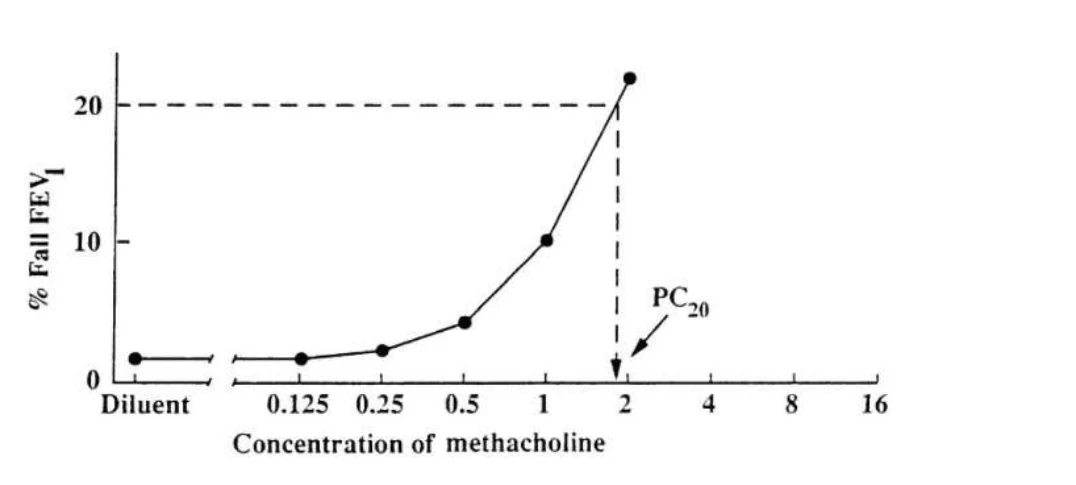
Figure 1: Calculation of PC20
Alternatively, the PC20 may be calculated as follows:

Where:
C1 = second last concentration (<20% FEV1 fall)
C2 = last concentration (>20% FEV1 fall)
R1 = % fall FEV1 after C1
R2 = % fall FEV1 after C2
- 2. Calculation of PD20
The PD20 may be calculated as follows:

Where:
D1 = second last dose (<20% FEV1 fall)
D2 = last dose (>20% FEV1 fall)
R1 = % fall FEV1 after D1
R2 = % fall FEV1 after D2
Substituting nebuliser devices with different characteristics (output rate and particle size distribution) would be expected to deliver a different Methacholine Omega dose at the same solution concentration. ln the case of substitution of the nebuliser device and to improve test standardisation, it will be important to report aerosol amount/airway responsiveness to Methacholine Omega in terms of dose/PD20 and not concentration/PC20. Knowledge of the device relating to device output per minute, the particle size distribution, time of tidal breathing and ratio of inspiratory time to total breathing time will enable the calculation of the dose.
- 3. Interpretation of Results
A negative (normal) methacholine challenge result is defined as FEV1 reduction of< 20% after all the doses (doubling or quadrupling dose increments) up to 16 mg/ mL have been administered.
If asthma drugs are discontinued prior to the methacholine challenge test, consider the possibility of rebound airway hyperresponsiveness in the interpretation of the test results. The methacholine challenge test may occasionally be falsely positive after an influenza infection or upper respiratory infection, immunizations, in very young or very old patients, in patients with chronic lung disease (e.g., cystic fibrosis, sarcoidosis, tuberculosis, chronic obstructive pulmonary disease), in patients with allergic rhinitis without asthma symptoms, in smokers, or in patients after exposure to air pollutants.
5. OVERDOSAGE
Methacholine Omega is to be administered only by inhalation. When administered orally or by injection, overdosage with Methacholine Omega can result in a syncopal reaction, with cardiac arrest and loss of consciousness. Serious toxic reactions should be treated with 0.5 mg to 1 mg of atropine sulfate, administered intramuscular or intravenous.
6. DOSAGE FORMS, STRENGTHS, COMPOSITION AND PACKAGING
Table 5- Dosage Forms, Strengths, Composition and Packaging
| Route of Administration | Dosage Form / Strength/Composition | Non-medicinal ingredients |
|---|---|---|
| Inhalation | Powder 100 mg, 480 mg and 1600 mg | No excipients. |
Methacholine Omega:
- 100 mg - in 30 mL amber glass vials in carton of 1 vial
- 480 mg - in 30 mL amber glass vials in carton of 1 vial
- 1600 mg - in 50 mL amber glass vials in carton of 1 vial
7. WARNINGS AND PRECAUTIONS
Please see 3. SERIOUS WARNINGS AND PRECAUTIONS BOX at the beginning of Part I: Health Professional Information.
General
Methacholine Omega is to be administered only by inhalation. Methacholine Omega is a bronchoconstrictor agent for diagnostic purposes only and should not be used as a therapeutic agent.
Administration of Methacholine Omega to patients with epilepsy, cardiovascular disease accompanied by bradycardia, vagotonia, peptic ulcer disease, thyroid disease, urinary tract obstruction or other condition that could be adversely affected by a cholinergic agent should be undertaken only if the physician feels the benefit to the individual outweighs the potential risks.
It is essential that the baseline spirometry is accurate. If the baseline spirometry is not performed or measured accurately, and the initial FEV1 is underestimated, subsequent falls after inhaling Methacholine Omega solutions may not be detected, resulting in too high a dose and excessive bronchoconstriction.
Methacholine challenge test with Methacholine Omega should be performed only under the supervision of a physician trained in and thoroughly familiar with all aspects of the technique of methacholine challenge, all contraindications, warnings and precautions, and the management of respiratory distress. A physician responsible for the tests must be present in the building when tests are carried out, and available to be contacted quickly if necessary. If the physician is performing the test, another person must be available in the building to give assistance if required. The patient must never be left unattended during the test.
Emergency medication and equipment should be immediately available to treat acute respiratory distress.
Carcinogenesis and Mutagenesis
There have been no studies with methacholine chloride that would permit an evaluation of its carcinogenic or mutagenic potential or of its effect on fertility.
Cardiovascular
Administration of Methacholine Omega to patients with cardiovascular disease accompanied by bradycardia, which couId be adversely affected by a cholinergic agent, should be undertaken only if the physician feels benefit to the individual outweighs the potential risks.
Endocrine and Metabolism
Administration of Methacholine Omega to patients with thyroid disease, which could be adversely affected by a cholinergic agent, should be undertaken only if the physician feels benefit to the individual outweighs the potential risks.
Gastrointestinal
Administration of Methacholine Omega to patients with peptic ulcer disease, which could be adversely affected by a cholinergic agent, should be undertaken only if the physician feels benefit to the individual outweighs the potential risks.
Genitourinary
Administration of Methacholine Omega to patients with urinary tract obstruction, which could be adversely affected by a cholinergic agent, should be undertaken only if the physician feels benefit to the individual outweighs the potential risks.
Neurologic
Administration of Methacholine Omega to patients with epilepsy, which could be adversely affected by a cholinergic agent, should be undertaken only if the physician feels benefit to the individual outweighs the potential risks.
Respiratory
Severe bronchoconstriction can result from the administration of Methacholine Omega, if guidelines for careful administration are not followed. The use of Methacholine Omega is contraindicated in pediatric and adult patients with baseline FEV1 <70% predicted or adults with FEV1 <1.5 L. Because of the potential for severe bronchoconstriction, the use of Methacholine Omega in patients with clinically apparent asthma or wheezing is not recommended.
Patients with severe hyperresponsiveness of the airways can experience bronchoconstriction at the lowest dosages of Methacholine Omega, or with the diluent (or placebo, as applicable) alone. Emergency equipment and medication should be immediately available to treat acute respiratory distress. If severe bronchoconstriction occurs, it should be reversed immediately by the administration of a rapid acting inhaled bronchodilator agent (β-agonist).
If baseline spirometry is not performed or measured inaccurately, the initial FEV1 may be underestimated. In this situation, decreases in FEV1 may not be detected after administration of escalating Methacholine Omega doses, which may result in administration of unnecessary higher doses and an increased risk for excessive bronchoconstriction.
Fertility
There have been no studies with methacholine chloride that would permit an evaluation of its effect on fertility
7.1 Special Populations
7.1.1 Pregnant Women
Teratogenic Effects- Animal reproduction studies have not been conducted with methacholine chloride. It is not known whether methacholine chloride can cause fetal harm when administered to a pregnant patient or affect reproductive capacity. Methacholine Omega should be given to a pregnant woman only when the benefits clearly outweigh the risks.
7.1.2 Breast-feeding
It is not known if methacholine chloride when inhaled is excreted in breast milk. Methacholine challenge test with Methacholine Omega should be administered to nursing mothers only when the benefits clearly outweigh the risks.
7.1.3 Pediatrics
The safety and efficacy of methacholine challenge tests with methacholine chloride have not been established in children below the age of 5 years.
7.1.4 Geriatrics
The safety and efficacy of methacholine challenge tests with methacholine chloride have not been established in the geriatric population (≥ 65 years).
8. ADVERSE REACTIONS
The following adverse reactions associated with the use of methacholine chloride were identified in clinical studies or post marketing reports. Because some of these reactions were reported voluntarily from a population of uncertain size, it is not always possible to reliably estimate their frequency or establish a causal relationship to drug exposure.
Bronchospasm symptoms such as chest tightness, cough or wheezing.
Rare adverse reactions associated with inhaled methacholine chloride used in methacholine challenge tests include incidences of headache, throat irritation, light-headedness and itching.
9. DRUG INTERACTIONS
9.2 Drug Interactions Overview
Methacholine Omega is a parasympathomimetic (cholinergic) bronchoconstrictor agent to be administered in solution only, by inhalation. Methacholine chloride is the β methyl homolog of acetylcholine, is slowly hydrolysed by acetylcholinesterase and almost totally resistant to inactivation by non-specific cholinesterase or pseudocholinesterase.
9.4 Drug-Drug Interactions
Beta-Adrenergic Blockers
The use of beta-adrenergic blockers may impair reversal of Methacholine Omega -caused bronchoconstriction.
Beta-Agonists, Anticholinergics, and Theophylline
Beta-agonists, anticholinergics, and theophylline inhibit the response of airways to Methacholine Omega; therefore, hold these drugs before Methacholine Omega use for the following duration:
- Short-acting β-agonists (e.g., salbutamol): 6 hours
- Long-acting β-agonists (e.g., salmeterol): 36 hours
- Short-acting anti-cholinergics (e.g., ipratropium): 12 hours
- Long-acting anti-cholinergics (e.g., tiotropium): 168 hours
- Oral theophylline: 12-48 hours
Oral or Inhaled Corticosteroids and Inhaled Cromoglycate
Regular use of oral or inhaled corticosteroids and inhaled cromoglycate may acutely decrease bronchial responsiveness to Methacholine Omega. However, these drugs may be continued with Methacholine Omega use.
9.5 Drug-Food Interactions
Methacholine Omega can be administered without regards to timing of meals.
9.6 Drug-Herb Interactions
The interactions of methacholine chloride with herbal medications or supplements have not been established.
9.7 Drug-Laboratory Test Interactions
The interactions of methacholine chloride with laboratory tests have not been established.
10. CLINICAL PHARMACOLOGY
10.1 Mechanism of Action
Methacholine Omega is a parasympathomimetic (cholinergic) bronchoconstrictor agent to be administered in solution only, by inhalation, for diagnostic purposes.
Methacholine chloride is the β methyl homolog of acetylcholine and differs from the latter primarily in its greater duration and selectivity of action. Bronchial smooth muscle contains significant parasympathetic (cholinergic) innervation. Bronchoconstriction occurs when the vagus nerve is stimulated and acetylcholine is released from the nerve endings. Muscle constriction is essentially confined to the local site of release because acetylcholine is rapidly inactivated by acetylcholinesterase.
Compared with acetylcholine, methacholine chloride is more slowly hydrolysed by acetylcholinesterase and is almost totally resistant to inactivation by non-specific cholinesterase or pseudocholinesterase.
10.2 Pharmacodynamics
After oral inhalation of Methacholine Omega, patients with asthma are more sensitive to Methacholine Omega - induced bronchoconstriction than are healthy subjects. This difference in response is the pharmacological basis for Methacholine Omega in the methacholine challenge test.
Certain drugs can affect the pharmacodynamic response to Methacholine Omega (See 9.4 Drug-Drug Interactions).
10.3 Pharmacokinetics
There are no metabolic and pharmacokinetic data available on methacholine chloride.
11. STORAGE, STABILITY AND DISPOSAL
Temperature:
- Store unopened vials of Methacholine Omega powder at room temperature (between 15 to 30°C).
Reconstituted Solutions:
- Methacholine Omega powder reconstituted with 0.9% saline with 0.9% benzyl, using aseptic technique, may be stored under refrigeration (2° to 8°C) for up to 2 weeks. After this time, discard the vials and prepare new dilutions. Do not freeze the dilutions.
12. SPECIAL HANDLING INSTRUCTIONS
Methacholine Omega is a potent bronchoconstrictor. Do not inhale the powder. Do not handle this material if you have asthma or hay fever. A low resistance filter should be applied to an expiratory port of any dosing apparatus, as necessary, to prevent Methacholine Omega aerosol from being released into the air of the room.
PART II: SCIENTIFIC INFORMATION
13. PHARMACEUTICAL INFORMATION
Drug Substance
Proper Name: Methacholine Chloride
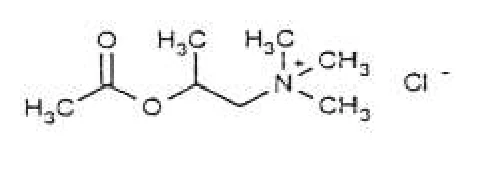
Chemical Name: 1-Propanaminium, 2-(acetyloxy)-N,N,N-trimethyl-chloride
Molecular formula and molecular mass: C8H18ClNO2 and 195.69 g/mol
Structural Formula:
Physicochemical properties: Methacholine Chloride is a white to practically white deliquescent compound that is soluble in water, alcohol and chloroform and insoluble in ether. Aqueous solutions are neutral to litmus.
Product Characteristics
Methacholine Omega powder in vials of either 100 mg, 480 mg and 1600 mg methacholine chloride must be reconstituted and diluted with 0.9% saline with 0.9% benzyl. The solutions are administered via inhalation using a nebulizer.
14. CLINICAL TRIALS
14.1 Clinical Trials by Indication
Diagnosis of Bronchial Airway Hyperresponsiveness
Summary of patient demographics for clinical trials in Diagnosis of Bronchial Airway Hyperresponsiveness
In 1,500 patients with asthma and 500 non asthmatics (either atopic or nonatopic), over 90% of asthmatics had high- or medium-positive responsiveness to methacholine chloride. Less than 5% of individuals with hay fever or nonatopic normal subjects showed a high-positive response. Twenty-seven percent of hay fever patients had a negative response compared to 49% of normal subjects. Hay fever patients and normal subjects had about the same incidence of low-positive responses. Thirty percent of hay fever patients had a medium-positive response compared to 18% of normal subjects from families with a history of asthma and 8% of normal subjects from control families. Asthmatics were different from all other groups. Hay fever patients were different from normal subjects of normal families only.
Among current asthmatics, the severity of asthma determined the bronchial sensitivity of subjects to methacholine challenge. This sensitivity varied from 100 to several thousand times that of normal subjects. However, in former asthmatics, the degree of bronchoconstriction was also related to the severity of past asthma symptoms. The mean sensitivity of former asthmatics was approximately one tenth that of current asthmatics.
Population studies in patients with asthma and in non-asthmatics (atopic and non- atopic).
In population-based studies, the prevalence of methacholine chloride hyperresponsiveness is 8 to 15%. While the degree of responsiveness of asthmatics does not distinguish them from non-asthmatics, asthmatics respond to a lower mean dose. Asthmatics that are less responsive generally have milder and more stable disease. Interpretation is easiest when the result is either substantially positive (a PC20 < 1 mg/mL or a PD20 < 0.13 µmoles), or decidedly negative (minimal change in the FEV1 with the highest dose delivered). The cut-off point between normal and increased responsiveness is considered to be a PC20 of 4-16 mg/mL (when using the English Wright 2-min tidal protocol) or a PD20 of 0.5-2 µmoles.
Results of studies in Diagnosis of Bronchial Airway Hyperresponsiveness
A dosimeter technique was used to test 766 children aged 9 years, who showed symptoms of asthma but had normal resting pulmonary function. Within two months, the dosimeter method was used to retest 79 of these patients. A further 30, 22 of whom showed reactivity, were challenged with the tidal breathing method. Twenty-five percent of the children had evidence of airway reactivity, revealed either by resting airflow obstruction relieved by salbutamol or by responsiveness to inhalation of methacholine chloride. The dosimeter method was suitably repeatable, and the tidal breathing method was equally sensitive in detecting reactivity to methacholine chloride. In only four children was the difference in PC20 between the two techniques greater than a two-fold concentration step. A paired t test showed no bias from one method to the other.
The usefulness of the methacholine challenge test with methacholine chloride in confirming suspected asthma was determined in 1,105 subjects of 5 to 80 years of age; 189 were current asthmatics and 916 were non-asthmatics. Non-asthmatics were further categorized as: 143 atopics from asthma families; 66 atopics from normal families; 326 nonatopics from asthma families; and 381 nonatopics from normal families. Subjects were challenged with methacholine chloride, using the dosimeter method. Methacholine chloride challenge was shown to be helpful tool in affirming the pretest probability of asthma.
15. MICROBIOLOGY
No microbiological information is required for this drug product
16. NON-CLINICAL TOXICOLOGY
The acute (24-hour) oral LD50 of methacholine chloride and related compounds is 1100 mg / kg in the mouse and 750 mg/ kg in the rat. Cynomolgus monkeys were exposed to a 2% (20 mg / mL) aerosol of methacholine chloride in acute (10-minute) and subchronic (7-day) inhalation toxicity studies. In the former study, animals exposed to the aerosol for up to 10 minutes demonstrated an increase in respiratory rate and decrease in tidal volume after 30 seconds. These changes peaked at 2 minutes and were followed by a rise in pulmonary resistance and a decrease in compliance. Pulmonary function returned to normal 20 to 25 minutes after exposure ended. In the 7-day study, monkeys were given daily inhalations equivalent to the maximum and roughly five times the maximum standard human dose. Although the typical pulmonary response / recovery sequence was observed, distinct changes in airway resistance were noted at the end of the study. These changes were not rapidly reversed in the maximum equivalent standard-dose group, which was observed for 9 weeks.
17. SUPPORTING PRODUCT MONOGRAPHS
- 1. Provocholine (Powder, 100 mg, 160 mg, 320 mg, 1280 mg and 1600 mg), Submission Control 249113, Product Monograph, Methapharm Inc. (OCT 28, 2022)