


Product Monograph - Methohexital Sodium for Injection USP
Recent Major Label Changes
Not applicable.
Table of Contents
Certain sections or subsections that are not applicable at the time of the preparation of the most recent authorized product monograph are not listed.
Recent Major Label Changes ................................................................................................... 2
Table of Contents ................................................................................................................... 2
Part 1: Healthcare Professional Information ........................................................................... 4
- 1.
Indications ....................................................................................................................... 4
1.1. Pediatrics .................................................................................................................. 4
1.2. Geriatrics .................................................................................................................. 4
- 2. Contraindications ............................................................................................................ 4
- 3. Serious Warnings and Precautions Box ............................................................................ 4
- 4.
Dosage and Administration ............................................................................................. 4
4.1. Dosing Considerations .............................................................................................. 4
4.2. Recommended Dose and Dosage Adjustment ......................................................... 5
4.3. Reconstitution .......................................................................................................... 6
4.4. Administration .......................................................................................................... 7
4.5. Missed Dose ............................................................................................................. 7
- 5. Overdose ......................................................................................................................... 7
- 6. Dosage Forms, Strengths, Composition, and Packaging ................................................... 7
- 7.
Warnings and Precautions ............................................................................................... 8
General ................................................................................................................................. 8
Cardiovascular ...................................................................................................................... 8
Dependence, Tolerance and/or Abuse Liability .................................................................... 9
Driving and Operating Machinery ......................................................................................... 9
Hepatic/Biliary/Pancreatic .................................................................................................... 9
Monitoring and Laboratory Tests ......................................................................................... 9
Neurologic ............................................................................................................................ 9
Perioperative Considerations ............................................................................................... 9
Respiratory ......................................................................................................................... 10
7.1. Special Populations ................................................................................................ 10
7.1.1. Pregnancy ...................................................................................................... 10
7.1.2. Breastfeeding ................................................................................................ 11
7.1.3. Pediatrics ....................................................................................................... 11
7.1.4. Geriatrics ....................................................................................................... 11
- 8.
Adverse Reactions ......................................................................................................... 11
8.1. Adverse Reaction Overview .................................................................................... 11
8.5. Post-Market Adverse Reactions ............................................................................. 11
- 9.
Drug Interactions ........................................................................................................... 13
9.2. Drug Interactions Overview .................................................................................... 13
9.3. Drug-Behaviour Interactions .................................................................................. 14
9.4. Drug-Drug Interactions ........................................................................................... 14
9.5. Drug-Food Interactions........................................................................................... 17
9.6. Drug-Herb Interactions ........................................................................................... 17
9.7. Drug-Laboratory Test Interactions ......................................................................... 17
- 10.
Clinical Pharmacology ................................................................................................... 17
10.1. Mechanism of Action .............................................................................................. 17
10.2. Pharmacodynamics ................................................................................................ 18
10.3. Pharmacokinetics ................................................................................................... 18
- 11. Storage, Stability, and Disposal ...................................................................................... 18
Part 2: Scientific Information ................................................................................................ 20
- 13. Pharmaceutical Information .......................................................................................... 20
- 14.
Clinical Trials .................................................................................................................. 20
14.1. Clinical Trials by Indication ..................................................................................... 20
- 15. Microbiology ................................................................................................................. 23
- 16. Non-Clinical Toxicology .................................................................................................. 23
Patient Medication Information ........................................................................................... 25
Part 1: Healthcare Professional Information
1. Indications
Methohexital Sodium for Injection USP (methohexital sodium) is indicated for:
- induction of anesthesia for short surgical, diagnostic, or therapeutic procedures associated with minimal painful stimuli
- induction of anesthesia and as an adjunct to subpotent inhalational anesthetic agents (such as nitrous oxide in oxygen) for short surgical procedures
1.1. Pediatrics
Pediatrics (<18 Years of age): No data are available to Health Canada; therefore, Health Canada has not authorized an indication for pediatric use.
1.2. Geriatrics
Geriatrics (>65 years of age): Evidence from clinical studies and experience could not determine whether use in the geriatric population is associated with differences in safety or effectiveness (see 7.1.4 Warnings and Precautions, Geriatrics).
2. Contraindications
Methohexital Sodium for Injection USP is contraindicated in patients:
- Who are hypersensitive to this drug, or to any ingredient in the formulation, including any non-medicinal ingredient, or component of the container. For a complete listing, see 6 Dosage Forms, Strengths, Composition, and Packaging.
- With known hypersensitivity to barbiturates.
- In whom general anesthesia is contraindicated.
- With latent or manifest porphyria.
3. Serious Warnings and Precautions Box
|
|---|
4. Dosage and Administration
4.1. Dosing Considerations
For use during surgical/diagnostic procedures, Methohexital Sodium for Injection USP should be administered only by persons trained in the administration of general anaesthesia and not involved in the conduct of surgical/diagnostic procedures. Patients should be continuously monitored and facilities for maintenance of a patent airway, artificial ventilation, and oxygen enrichment and circulatory resuscitation must be immediately available.
Dosage and rate of administration should be individualized and titrated to the desired effect according to clinically relevant factors including pre-induction and concomitant medications, age, ASA status and level of debilitation of the patient. In heavily premedicated patients, both the induction and maintenance doses should be reduced.
Preanesthetic medication is generally advisable. Methohexital Sodium for Injection USP may be used with any of the recognized preanesthetic medications.
Methohexital Sodium for Injection USP has no analgesic action. Appropriate analgesics should be used in procedures involving painful stimuli.
Danger of Intra-arterial injection: Unintended intra-arterial injection of barbiturate solutions may be followed by the production of platelet aggregates and thrombosis, starting in arterioles distal to the site of injection. The resulting necrosis may lead to gangrene, which may require amputation. The first sign in conscious patients may be a complaint of fiery burning that roughly follows the distribution path of the injected artery; if noted, the injection should be stopped immediately, and the situation reevaluated. Transient blanching may or may not be noted very early; blotchy cyanosis and dark discoloration may then be the first sign in anesthetized patients. There is no established treatment other than prevention. The following should be considered prior to injection:
The extent of injury is related to concentration. The concentration for the intermittent direct intravenous injection of methohexital is 1%. Higher concentrations should be avoided. Check to ensure that the needle is in the lumen of a vein before injection. It should be remembered that the characteristic bright-red color of arterial blood is often altered by contact with drugs. The possibility of aberrant arteries should always be considered.
Possible treatment approaches are largely empirical with the goal of maintaining perfusion distal to the site of injury. Prior to treatment, the health care provider is recommended to consult the most current protocols regarding management of inadvertent intra-arterial injection. Based on results from animal experiments and published clinical case reports pertaining to a variety of arteriolar irritants, including barbiturates, possible treatment strategies may include immediate anticoagulation, urgent infusion of thrombolytics and prostaglandins through an intra-arterial catheter, supportive pain control, warm compresses, and close neurovascular monitoring to reduce thrombotic complications and prevent progression to tissue damage. There is currently little evidence from case studies to support use of vasodilators, steroids, or sympathetic blocks.
4.2. Recommended Dose and Dosage Adjustment
Methohexital Sodium for Injection USP is administered as an intermittent direct intravenous injection in a concentration of no higher than 1%. Higher concentrations markedly increase the incidence of muscular movements and irregularities in respiration and blood pressure.
For induction of anesthesia, a 1% solution is administered at a rate of about 1 mL/5 seconds. The dose required for induction may range from 50 to 120 mg or more but averages about 70 mg. The usual dosage in adults ranges from 1 to 1.5 mg/kg. The induction dose usually provides anesthesia for 5 to 7 minutes.
For use as an adjunct to subpotent inhalational anesthetic agents (such as nitrous oxide in oxygen), incremental doses of 1% methohexital may be administered. Intermittent injections of about 20 to 40 mg (2 to 4 mL of a 1% solution) may be given as required. The dosage employed under these circumstances, although usually lower than the original induction dose, must be individualized. There are insufficient data to support the use of Methohexital Sodium for Injection USP for longer procedures, therefore, such use is not recommended.
Gaseous anesthetics and/or skeletal muscle relaxants may be administered concomitantly.
Health Canada has not authorized an indication for pediatric use (1.1 Pediatrics).
4.3. Reconstitution
Solutions of Methohexital Sodium for Injection USP should be freshly prepared and used promptly. Reconstituted solutions of Methohexital Sodium for Injection USP are chemically stable at room temperature for 24 hours (see 11 Storage, Stability, and Disposal).
Dilution Instructions:
Do not use diluents containing bacteriostatics.
Preferred diluent: Sterile Water for Injection
Acceptable diluents: 5% Dextrose Injection, 0.9% Sodium Chloride Injection
Incompatible diluents: Lactated Ringer’s Injection
Table 1 – Reconstitution
| Vial Size | Volume of Diluent To Be Added to Vial | Approximate Available Volume | Concentration Per mL |
500 mg/vial: 50 mL | 50 mL | 50 mL | 10 mg/mL |
The reconstituted solution must be clear and colorless, otherwise it should not be used. Unused portion should be discarded after 24 hours.
Solutions of Methohexital Sodium for Injection USP should not be mixed in the same syringe or administered simultaneously during intravenous infusion through the same needle with acid solutions, such as atropine sulfate, metocurine iodide, and succinylcholine chloride. Alteration of pH may cause free barbituric acid to be precipitated. Solubility of the soluble sodium salts of barbiturates, including methohexital sodium, is maintained only at a relatively high (basic) pH.
4.4. Administration
Methohexital Sodium for Injection USP is administered by intermittent direct intravenous injection. For induction of anesthesia, a 1% solution is administered at a rate of about 1 mL/5 seconds.
Parenteral drug products should be inspected visually for particulate matter and discoloration prior to administration.
4.5. Missed Dose
Not applicable.
5. Overdose
Symptoms: The onset of toxicity following an overdose of intravenously administered methohexital sodium will be within seconds of the injection. The manifestations of an ultrashort-acting barbiturate in overdose include central nervous system depression, respiratory depression, hypotension, loss of peripheral vascular resistance, and muscular hyperactivity ranging from twitching to convulsive-like movements. Other findings may include convulsions and allergic reactions. Following massive exposure to any barbiturate, pulmonary edema, circulatory collapse with loss of peripheral vascular tone, and cardiac arrest may occur.
Treatment:
Treatment of barbiturate toxicity consists mainly of supportive care as there is no specific antidote for barbiturate drugs. In managing overdosage, consider the possibility of multiple drug overdoses, interaction among drugs, and unusual drug kinetics in the patient. Severe poisoning can produce coma, apnea, and cardiovascular collapse. Initial management should include protection of the patient’s airway, ventilation, and perfusion support. If seizures occur, they should be managed according to currently accepted seizure protocols. Consultation with a poison centre or medical toxicologist is recommended if considering modalities to increase elimination.
| For the most recent information in the management of a suspected drug overdose, contact your regional poison control centre or Health Canada’s toll-free number, 1-844 POISON-X (1-844-764-7669). |
|---|
- 6. Dosage Forms, Strengths, Composition, and Packaging
Table 2 – Dosage Forms, Strengths, and Composition
Methohexital Sodium for Injection USP contains 500 mg of methohexital sodium for reconstitution (see 4 Dosage and Administration, 4.3 Reconstitution).
Description
| Route of Administration | Dosage Form/ Strength/Composition | Non-Medicinal Ingredients |
| Intermittent Direct Intravenous Injection | Powder for Solution, 500 mg per vial | sodium carbonate anhydrous and sodium hydroxide (pH adjuster) |
Methohexital Sodium for Injection USP is supplied as a sterile powder for injection in 50 mL stoppered, multi-dose glass vials. The stopper is not made with natural rubber latex.
7. Warnings and Precautions
Please see 3 Serious Warnings and Precautions Box.
General
Methohexital Sodium for Injection USP should only be administered by persons trained in the administration of general anesthesia and not involved in the conduct of the surgical/diagnostic procedures. Methohexital sodium causes reduction in cardiovascular and respiratory function as well as rapid loss of consciousness. Patients should be continuously monitored and facilities for maintenance of a patent airway, artificial ventilation, cardiovascular monitoring, oxygen enrichment and circulatory resuscitation must be immediately available.
Patients should remain under medical supervision until protective airway reflexes, mental alertness, and cardiorespiratory function have adequately recovered.
Administration of methohexital sodium is often associated with hiccups, coughing, muscle twitching, and laryngospasm which may also impair pulmonary ventilation. Following induction, temporary hypotension and tachycardia may occur.
Prolonged administration may result in cumulative effects, including extended somnolence, protracted unconsciousness, and respiratory and cardiovascular depression. Respiratory depression in the presence of an impaired airway may lead to hypoxia, cardiac arrest, and death.
Nausea and vomiting may occur during recovery from anesthesia but incidence may be reduced if administered to fasting patients. Postanesthetic shivering can occur.
Caution should be exercised in debilitated patients or in those with impaired function of respiratory, circulatory, renal, hepatic, or endocrine systems.
Cardiovascular
Extreme care should be used in administering Methohexital Sodium for Injection USP in patients with impaired left ventricular function because methohexital sodium may produce a negative inotropic effect.
Extreme care should be used in administering Methohexital Sodium for Injection USP in patients who are hypotensive, hypovolemic or in shock because methohexital sodium may cause excessive arterial hypotension.
Methohexital sodium may produce dose-dependent decreases in systemic vascular resistance, myocardial contractility, and arterial blood pressure. Transient hypotension and compensatory tachycardia are common during the induction of anesthesia. Rapid bolus administration or the use of elevated concentrations increases the severity of these cardiorespiratory effects and may lead to peripheral vascular collapse or cardiorespiratory arrest.
Barbiturates may enhance preexisting circulatory depression; therefore, severe cardiovascular instability or a shock-like condition may be reason for selecting another induction agent.
Dependence, Tolerance and/or Abuse Liability
Prolonged use of Methohexital Sodium for Injection USP may lead to physical and psychological dependence.
Driving and Operating Machinery
When appropriate, patients should be instructed as to the hazards of drowsiness that may follow use of Methohexital Sodium for Injection USP. Outpatients should be released in the company of another individual, and no skilled activities, such as operating machinery or driving a motor vehicle, should be engaged in for 8 to 12 hours, and until the effects of methohexital sodium have completely subsided.
Hepatic/Biliary/Pancreatic
The administration of Methohexital Sodium for Injection USP to patients with hepatic insufficiency has not been evaluated. Because the liver is involved in demethylation and oxidation of methohexital sodium, severe hepatic dysfunction may be reason for selecting another induction agent. Patients with impaired hepatic function may exhibit reduced clearance, prolonged recovery, and increased sensitivity to repeated doses.
Methohexital Sodium for Injection USP is contraindicated in patients with latent or manifest porphyrias (see 2 Contraindications).
Monitoring and Laboratory Tests
Vital signs should be monitored continuously in all patients receiving Methohexital Sodium for Injection USP.
Patients should be closely monitored for respiratory depression when initiating therapy with Methohexital Sodium for Injection USP.
Adequate facilities should be available for postoperative monitoring and ventilation of patients administered anesthetic doses of Methohexital Sodium for Injection USP. It is essential that these facilities be fully equipped to handle all degrees of respiratory depression.
Patients should be closely monitored for hemodynamic changes.
Neurologic
Methohexital sodium lowers the seizure threshold and may produce involuntary muscle movements, myoclonus, twitching, or hiccups during induction or emergence.
Patients with epilepsy or other seizure disorders should be carefully monitored. Seizures may be elicited in patients with a previous history of convulsive activity, especially partial seizure disorders.
The CNS-depressant effect of methohexital sodium may be additive with that of opioids and other CNS depressants, including ethyl alcohol and propylene glycol.
Perioperative Considerations
Methohexital Sodium for Injection USP should be administered only in facilities capable of providing:
- continuous cardiovascular monitoring
- pulse oximetry
- capnography
- airway management
- positive-pressure ventilation
- advanced cardiac life support
Repeated bolus administration may result in cumulative CNS depression and delayed recovery.
Methohexital sodium for Injection USP is a highly alkaline solution (see 13 Pharmaceutical Information, Drug Substance). Extreme care should be exercised to avoid extravasation or intra-arterial injection (see 4.1 Dosage and Administration, Dosing Considerations). If extravasation is noted during injection of Methohexital Sodium for Injection USP, the injection should be discontinued until the situation is remedied. Local irritation may result from extravasation; subcutaneous swelling may also serve as a sign of arterial or periarterial placement of the catheter.
Respiratory
Methohexital sodium produces respiratory depression and may cause airway obstruction, apnea, bronchospasm, hypoventilation, and/or laryngospasm. Maintenance of a patient airway and adequacy of ventilation must be ensured during induction of anesthesia with Methohexital Sodium for Injection USP. Laryngospasm is common during induction with all barbiturates and may be due to a combination of secretions and accentuated reflexes following induction or may result from painful stimuli during light anesthesia. Apnea/hypoventilation may be noted during induction, which may impair pulmonary ventilation; the duration of apnea may be longer than that produced by other barbiturate anesthetics. Cardiorespiratory arrest may occur.
Respiratory depression is more likely following rapid intravenous administration, high doses, repeated dosing, or concomitant administration of opioids, benzodiazepines, or other CNS depressants.
Supplemental oxygen and equipment for immediate assisted ventilation must be available (see 3 Serious Warnings and Precautions Box).
Patients with chronic pulmonary disease, obstructive sleep apnea, obesity, or compromised respiratory reserve require particular caution. Methohexital Sodium for Injection USP should be used with extreme caution in patients in status asthmaticus.
7.1. Special Populations
7.1.1. Pregnancy
Methohexital Sodium for Injection USP should be avoided during pregnancy unless its benefits outweigh its potential risks. There are no adequate and well-controlled studies in pregnant women. Due to solubility and lack of protein binding, methohexital sodium has been shown to readily and rapidly traverses the placenta.
Published studies in pregnant primates demonstrate that the administration of anesthetic and sedation drugs that block N-methyl-D-aspartate (NMDA) receptors and/or potentiate gamma-aminobutyric acid (GABA) activity during the period of peak brain development increases neuronal apoptosis in the developing brain of the offspring when used for longer than 3 hours. See 16 Non-Clinical Toxicology.
There are no data on pregnancy exposures in primates corresponding to periods prior to the third trimester in humans.
7.1.2. Breastfeeding
Methohexital sodium is excreted into human breastmilk. Due to the potential risk to the infant, breastfeeding should be avoided for at least 24 hours following administration.
A published study evaluating the excretion of methohexital into breast milk after general anesthesia was performed in 9 subjects (methohexital dose ranged from 120 mg to 150 mg). Methohexital was detected in breast milk an hour (100-407 ng/mL in 5 samples) and 8-10 hours (65 ng/mL or below in 9 samples) after anesthesia but was undetectable 24 hours after anesthesia.
7.1.3. Pediatrics
Pediatrics: (<18 years of age): No data are available to Health Canada; therefore, Health Canada has not authorized an indication for pediatric use.
7.1.4. Geriatrics
Geriatrics (> 65 years of age): Clinical studies of methohexital sodium did not include sufficient numbers of subjects aged 65 and over to determine whether they respond differently from younger subjects. Elderly subjects may commonly have conditions in which Methohexital Sodium for Injection USP should be used cautiously such as obstructive pulmonary disease, severe hypertension or hypotension, preexisting circulatory depression, myocardial disease, congestive heart failure, or severe anemia. Caution should be exercised in debilitated patients or in those with impaired function of respiratory, circulatory, renal, hepatic, or endocrine systems (see 7 Warnings and Precautions). Barbiturates may influence the metabolism of other concomitantly used drugs that are commonly taken by the elderly, such as anticoagulants and corticosteroids. In general, dose selection for an elderly patient should be cautious, usually starting at the low end of the dosing range, reflecting the greater frequency of decreased hepatic, renal, or cardiac function, and of concomitant disease or other drug therapy (see 9 Drug Interactions).
8. Adverse Reactions
8.1. Adverse Reaction Overview
Reactions to methohexital sodium are characteristic of those associated with other barbiturates.
The most commonly reported adverse reactions include pain on injection, apnea, coughing, hiccups, involuntary movements, and nausea and vomiting.
Serious adverse reactions include anaphylaxis, cardiac arrest, cardiorespiratory arrest, circulatory depression, respiratory depression, peripheral vascular collapse, and seizures/convulsions.
8.5. Post-Market Adverse Reactions
In market use, undesirable effects that have been observed are consistent with those observed in clinical studies. Because these reactions are reported voluntarily from a population of uncertain size, it is generally not possible to reliably estimate their frequency or establish causal relationship to drug exposure.
Table 3 – Post-Market Adverse Reactions
| System organ class | Preferred term |
|---|---|
| Cardiac disorders | Cardiac arrhythmias including dysrhythmias nodal, multiple ventricular extrasystoles, ventricular tachycardia, sinus bradycardia, ventricular contractions, ventricular ectopic beats, sinus tachycardia, nodal bradycardia |
| Multifocal extrasystoles | |
| Gastrointestinal disorders | Abdominal pain |
| Dry mouth | |
| Salivation | |
| General disorders and administration site conditions | Chest pain |
| Chills | |
| Discomfort | |
| Death | |
| Drug ineffective | |
| Drug interaction | |
| Injection site reaction | |
| Immune system disorders | Anaphylactoid reaction |
| Hypersensitivity | |
| Investigations | Blood pressure decreased |
| Liver function tests abnormal | |
| ST interval depression | |
| Musculoskeletal and connective tissue disorders | Masseter spasm |
| Muscle twitching | |
| Nervous system disorders | Coma |
| Dizziness | |
| Dystonia | |
| Headache | |
| Hypertonia or Generalized muscle hypertonus | |
| Injury to nerves adjacent to injection site | |
| Lethargy | |
| Myoclonia | |
| Other excitatory effects | |
| Restlessness | |
| Tremor | |
| Psychiatric disorders | Anxiety |
| Confusion/confusional state | |
| Delirium | |
| Respiratory, thoracic and mediastinal disorders | Airway obstruction |
| Asthma | |
| Bronchospasm | |
| Cyanosis | |
| Dyspneoa | |
| Hyperventilation | |
| Hypoventilation | |
| Hypoxia | |
| Laryngospasm or Laryngeal spasm or Laryngeal stridor | |
| Rhinitis | |
| Skin and subcutaneous tissue disorders | Dermatitis |
| Erythema | |
| Pruritus | |
| Rash | |
| Urticaria | |
| Vascular disorders | Flushing |
| Hypotension | |
| Phlebitis | |
| Thrombophlebitis |
9. Drug Interactions
9.2. Drug Interactions Overview
Most reports of clinically significant drug interactions occurring with the barbiturates have involved phenobarbital. The barbiturates are inducers of cytochrome P450 isoenzymes CYP1A2, CYP2C9, CYP2C19 and CYP3A4, and can increase the clearance of many hepatically metabolized drugs, such as phenytoin, anticoagulants, corticosteroids, tricyclic antidepressants, and carbamazepine.
CNS depressants, including other sedatives or hypnotics, opioids, antihistamines, or alcohol, may produce additive depressant effects
9.3. Drug-Behaviour Interactions
The interaction of methohexital sodium with individual behavioural risks (e.g. cigarette smoking, cannabis use, and/or alcohol consumption) has not been studied.
9.4. Drug-Drug Interactions
The drugs listed in this table are based on either drug interaction case reports or studies, or potential interactions due to the expected magnitude and seriousness of the interaction (i.e., those identified as contraindicated).
Table 4 – Established or Potential Drug-Drug Interactions
| [Non-proprietary name(s) of the drug product(s)] | Source of evidence | Effect | Clinical comment |
| [Non-proprietary name(s) of the drug product(s)] | Source of evidence | Effect | Clinical comment |
| [Non-proprietary name(s) of the drug product(s)] | Source of evidence | Effect | Clinical comment |
| [Non-proprietary name(s) of the drug product(s)] | Source of evidence | Effect | Clinical comment |
| Barbiturates (including phenobarbital) | SDC | Prior chronic administration of barbiturates appears to reduce the effectiveness of methohexital sodium. | Caution is warranted and therapeutic concentration monitoring is recommended |
| Phenytoin | SDC | Prior chronic administration of phenytoin appears to reduce the effectiveness of methohexital sodium | Caution is warranted and therapeutic concentration monitoring is recommended |
| Anticoagulants | SDC | Phenobarbital lowers the plasma levels of dicumarol and causes a decrease in anticoagulant activity as measured by the prothrombin time. Barbiturates can induce hepatic microsomal enzymes, resulting in increased metabolism and decrease anticoagulant response of oral anticoagulants (e.g., warfarin). | Patients stabilized on anticoagulant therapy may require dosage adjustments if barbiturates are added to or withdrawn from their dosage regimen. |
| Corticosteroids | SDC | Barbiturates appear to enhance the metabolism of exogenous corticosteroids, probably through the induction of hepatic microsomal enzymes. | Patients stabilized on corticosteroid therapy may require dosage adjustments if barbiturates are added to or withdrawn from their dosage regimen. |
| Doxycycline | SDC | Phenobarbital has been shown to shorten the half-life of doxycycline for as long as 2 weeks after barbiturate therapy is discontinued. | If methohexital sodium and doxycycline are administered concurrently, the clinical response to doxycycline should be monitored closely. |
| Phenytoin, Sodium Valproate, Valproic Acid | SDC | The effect of barbiturates on the metabolism of phenytoin appears to be variable. Some investigators report an accelerating effect, whereas others report no effect. | Because the effect of barbiturates on the metabolism of phenytoin is not predictable, phenytoin and barbiturate blood levels should be monitored more frequently if these drugs are given concurrently. Sodium valproate and valproic acid appear to increase the serum levels of barbiturates; therefore, methohexital sodium blood levels should be closely monitored, and appropriate dosage adjustments made as clinically indicated. |
| Carbamazepine | SDC | When phenobarbital and carbamazepine are used together, the metabolism of carbamazepine is usually accelerated, and plasma concentrations may be decreased. The clinical significance of this interaction is not known. | Plasma concentrations of methohexital sodium and carbamazepine should be monitored when any change in the therapeutic regimen occurs. |
| CNS Depressants | SDC | CNS depressants, including other sedatives or hypnotics, antihistamines, tranquilizers, or alcohol, may produce additive depressant effects | Caution is warranted and therapeutic concentration monitoring is recommended |
| Monoamine Oxidase Inhibitors (MAOIs) | SDC | MAOIs prolong the effects of barbiturates, probably because metabolism of the barbiturate is inhibited. | Caution is warranted and therapeutic concentration monitoring is recommended |
| Tricyclic Antidepressants | SDC | Phenobarbital may increase metabolism of tricyclic antidepressants resulting in lack of effect. The use of both drugs concomitantly may result in additive respiratory depressant effects. | Plasma tricyclic concentrations should be monitored, if possible, especially if the patient is not responding to standard dosages of antidepressant. |
| Estradiol, Estrone, Progesterone, and Other Steroidal Hormones | C | Pretreatment with or concurrent administration of phenobarbital may decrease the effect of estradiol by increasing its metabolism. | An alternate contraceptive method might be suggested to women taking barbiturates. |
Legend: C = Case Study; SDC = Similar Drug Class
9.5. Drug-Food Interactions
Interactions with food have not been established.
9.6. Drug-Herb Interactions
Interactions with herbal products have not been established.
9.7. Drug-Laboratory Test Interactions
Interactions with laboratory tests have not been established.
10. Clinical Pharmacology
10.1. Mechanism of Action
Methohexital sodium, like other barbiturates, produces its anesthetic effects by prolonging and potentiating the action of GABAA receptors. Barbiturates bind to and increase the open duration of the GABAA receptor without impacting opening frequency of conductance. The downstream effect causes the chloride channel to stay open longer causing a negative change on the inside of the membrane and resulting in hyperpolarization and post-synaptic neuron inhibition. Anesthesia or sedation is induced due to the activation of this inhibitory pathway.
10.2. Pharmacodynamics
In a dose-duration study, four doses of methohexital sodium (0.8, 1.1, 1.4, and 1.7 mg/kg) demonstrated a linear dose-duration relationship.
Compared with thiamylal and thiopental, methohexital sodium is at least twice as potent on a weight basis, and its duration of action is only about half as long. Although the metabolic fate of methohexital sodium in the body is not clear, the drug does not appear to concentrate in fat depots to the extent that other barbiturate anesthetics do. Thus, cumulative effects are fewer and recovery is more rapid with methohexital sodium than with thiobarbiturates. In experimental animals, the drug cannot be detected in the blood 24 hours after administration.
Methohexital sodium differs chemically from the established barbiturate anesthetics in that it contains no sulfur. Little analgesia is conferred by barbiturates; their use in the presence of pain may result in excitation.
10.3. Pharmacokinetics
Absorption
Direct intermittent intravenous injection of methohexital sodium results in rapid uptake by the brain (within 30 seconds) and rapid induction of sleep.
Distribution
With single doses, the rate of redistribution determines the duration of pharmacologic effect.
When methohexital sodium 2 to 3 mg/kg was administered in 9 patients undergoing surgeries (including herniorrhaphy or peripheral surgery), the mean±SD distribution half-life was 5.6±2.7 minutes, the volume of central compartment was 0.35±0.10 L/kg, and the volume of distribution at steady state was 2.2±0.7 L/kg.
Metabolism
Metabolism occurs in the liver through demethylation and oxidation. Side-chain oxidation is the most important biotransformation involved in termination of biologic activity.
Elimination
The measurement of hepatic blood flow in 10 patients undergoing coronary bypass surgery after a 1.5 mg/kg IV bolus of methohexital sodium found that the median hepatic clearance was 1.0 L/min and hepatic extraction was 87%. This demonstrated that methohexital sodium is subject to very high hepatic extraction and elimination is dependent on hepatic blood flow.
Methohexital sodium has a typical elimination half-life of 2-6 hours, clearance of 10-15 mL/kg/min and steady-state volume of distribution of 1.5-3 L/kg. Young adult and geriatric adult patients administered 2 mg/kg methohexital sodium prior to surgery had an elimination half-life of 3.85 ± 1.12h and 3.42 ± 0.53h and total body clearance of 8.69 ± 0.91 mL/kg*min and 9.28 ± 1.78 mL/kg*min, respectively. Excretion occurs via the kidneys through glomerular filtration.
- 11. Storage, Stability, and Disposal
Store between 15°C to 30°C.
After reconstitution according to the instructions in 4 Dosage and Administration, 4.3 Reconstitution,
Methohexital Sodium for Injection USP is chemically stable at room temperature (15°C to 30°C) for 24 hours.
Part 2: Scientific Information
13. Pharmaceutical Information
Drug Substance
Non-proprietary name of the drug substance(s): Methohexital sodium
Chemical name: Sodium (R)-5-allyl-5-((S)-hex-3-yn-2-yl)-1-methyl-4,6-dioxo-1,4,5,6-tetrahydropyrimidin-2-olate; and
Sodium (S)-5-allyl-5-((R)-hex-3-yn-2-yl)-1-methyl-4,6-dioxo-1,4,5,6-tetrahydropyrimidin-2-olate
Molecular formula and molecular mass: C14H17N2NaO3, 284.29 g/mol
Structural formula:
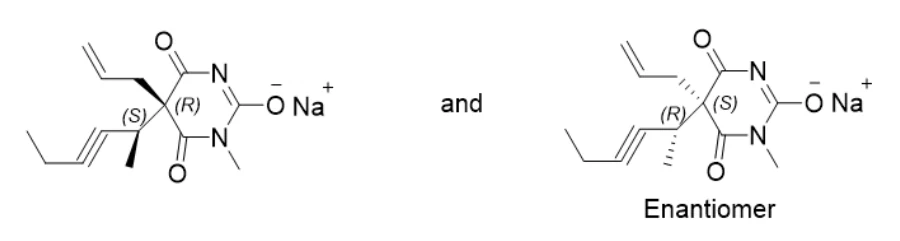
Physicochemical properties: Methohexital Sodium for Injection USP is a freeze-dried, sterile, nonpyrogenic mixture of methohexital sodium with 6% anhydrous sodium carbonate added as a buffer. It occurs as a white, freeze-dried plug that is freely soluble in water. This product is oxygen sensitive. The pH of the 1% solution in any of the diluents (see 4 Dosage and Administration, 4.3 Reconstitution) including sterile water for injection, 5% dextrose injection, or 0.9% sodium chloride injection is between 10 and 11.6.
14. Clinical Trials
The efficacy/effectiveness of Methohexital Sodium for Injection USP was supported using the totality of evidence provided by data from Canadian and international market experience as well as published literature.
The systematic review of published literature included 4 randomized, active-controlled clinical trials (RCTs) evaluating intravenous injection of methohexital sodium in adults undergoing various procedures. Treatment allocation was double-blind in all 4 studies. Study populations ranged from 19 to 71 subjects. The total number of participants in the 4 controlled studies was 168. Of these, 94 received methohexital sodium at doses from 0.5 to 1 mg/kg or 90 to 140 mg.
14.1. Clinical Trials by Indication
Anesthesia For Short Procedures
Table 5 – Summary of Patient Demographics for Clinical Trials in Anesthesia for Short Procedures
| Study | Study design | Procedure Type | Dosage, route of administration and duration | Study subjects (n) | Mean ± SD Age (range) | Sex |
| Osborne et al., 1963 | Randomized, double-blind, active-controlled, cross-over study. | Electro-convulsive therapy | Methohexital sodium: 1%; dose range: 90 to 140 mg Thiopental: 2.5%; dose range: 200 to 350 mg | N = 19 | Not reported | Not reported |
| Rasmussen et al., 2014 | Randomized, double-blind, active-controlled study. | Electro-convulsive therapy | Methohexital sodium:1.0 mg/kg Ketamine: 1.0 mg/kg | Metho-hexital sodium: N = 17 Ketamine N = 21 | Metho-hexital sodium: 48.6±7.2 (range not available) Ketamine: 47.0±13.2 (range not available) | Metho-hexital sodium: 9/8 Ketamine: 5/16 |
| Beaty et al., 2022 | Randomized, double-blind, active-controlled study. | Elective Direct Current Cardio-version | Methohexital sodium:0.5 mg/kg followed by 10 mg methohexital sodium every minute after 2 minutes Propofol: 0.8 mg/kg followed by 20 mg every minute after 2 minutes | Metho-hexital sodium: N = 38 Propofol N = 33 | Metho-hexital sodium: 78.5 (67.8 to 77) Propofol: 72 (62.5 to 78) | Metho-hexital sodium: 22/16 Propofol: 20/13 |
F = female; M = male; SD = standard deviation
Osborne et al., 1963
A double-blind, randomized, controlled cross-over trial, evaluated the efficacy of methohexital sodium and thiopental sodium in 130 electroconvulsive therapy treatments across 19 patients (range: 2 to 16 treatments per patients). Patients received 2.5% thiopental sodium (dose range: 200 to 350 mg) or 1% methohexital sodium (BREVITAL; dose range: 90 to 140 mg) for electroconvulsive therapy. All patients were premedicated with 0.4 mg atropine sulfate 30 minutes prior to therapy, and IV succinylcholine chloride was administered immediately after the anesthetic was injected.
The average duration of anesthesia (defined as the interval between administration of the anesthetic agent and the first verbal response) was 10 minutes and 36 seconds with thiopental sodium and 8 minutes with methohexital sodium (p<0.02). The average practical duration of anesthesia (defined as the time interval between administration of the anesthetic agent and the patient’s unassisted ambulation) was 20 minutes with thiopental sodium and 16 minutes for methohexital sodium (p<0.001).
Rasmussen et al., 2014
A double-blind randomized controlled trial evaluated 1.0 mg/kg of ketamine or 1.0 mg/kg methohexital sodium to induce anesthesia in 38 adult patients undergoing electroconvulsive therapy.
The patients were blinded to the study drug; however, anesthesiologists and psychiatrists were not blinded due to feasibility issues. There was no significant difference in time in the electroconvulsive therapy suite or time in recovery (±SD) between ketamine and methohexital sodium (13.19 (±4.49) and 12.38 (±3.60) minutes, respectively).
Beaty et al., 2022
A double-blind randomized controlled trial evaluated 0.5 mg/kg methohexital sodium bolus followed by 10 mg methohexital sodium every minute after 2 minutes until sedated, or an initial IV 0.8 mg/kg propofol dose followed by 20 mg every minute after 2 minutes until sedated in 73 adult patients (71 of which were analyzed) undergoing elective direct current cardioversion. Using a z value of <0.05 for nonparametric analyses, the median time from injection to recovery was 5.5 minutes (range: 3.1 to 28.3 minutes) with methohexital sodium and 7.6 minutes (range: 2.4 to 20.4 minutes) with propofol (z=0.004). Similarly, a significant decrease in time to eyes opening was observed for methohexital sodium compared to propofol (4.2 minutes (range: 3.3- to 6.4 minutes) vs. 7.0 minutes (5.7- to 9.3 minutes), z=0.0003). The time to sedation was 1.0 minute (range: 0.6 to 22.3 minutes) in the methohexital sodium group and 1.0 minute (range: 0.5 to 3.1 minutes) in the propofol group.
Induction of Anesthesia as an Adjunct to Subpotent Inhalation Anesthetic Agents
Table 6 – Summary of Patient Demographics for Clinical Trials in Induction of Anesthesia as an Adjunct to Subpotent Inhalation Anesthetic Agents
| Study | Study design | Procedure/ Surgery Type | Dosage | Study subjects (n) | Mean±SD (range) age | Sex (M/F) |
|---|---|---|---|---|---|---|
| Blankstein and Anderson, 1991 | Randomized, double-blind, active-controlled study. | Dental surgery | Metho-hexital sodium: 1 mg/kg (10 mg/mL) Ketamine: 0.5 mg/kg | Metho-hexital sodium: N = 20 Ketamine: N = 20 | Metho-hexital sodium: 25.5±5 Ketamine: 25.6±3.7 Overall range: (17 to 36) | Metho-hexital sodium: 12/8 Ketamine: 13/7 |
F = female; M = male; SD = standard deviation
Blankstein and Anderson, 1991
A double-blind randomized controlled trial evaluated the use of 1 mg/kg of methohexital sodium or 0.5 mg/kg ketamine in 40 adult patients undergoing third molar removal surgery. All patients also received 0.2 mg glycopyrrolate and 50 µg fentanyl, 30% nitrous oxide/70% oxygen, and 2 mg of midazolam. Additional methohexital sodium or ketamine was provided to maintain intraoperative patient compliance. Postoperative recovery (assessed using a psychomotor scale rating of 4 as the criteria for discharge based on the patients’ ability to walk normally with support for 6 feet), patients administered methohexital sodium were fit to discharge sooner compared to ketamine (average of 15 minutes vs. 30 minutes). Based on Digit Symbol Substitution Test scores, patients administered methohexital sodium returned to baseline psychomotor function between 30 and 45 minutes compared to ketamine where performance did not return to baseline by 60 minutes postoperatively. Amnesia was assessed by events recalled and were similar between methohexital sodium and ketamine (85% vs. 95% for IV being placed and 25% vs. 40% for transported to recovery). Neither methohexital sodium or ketamine had significant recall of local anesthetic administration (5% vs. 0%) or extraction of teeth (0%).
15. Microbiology
No microbiological information is required for this drug product.
16. Non-Clinical Toxicology
General toxicology
Methohexital sodium-related toxicity findings in animals involved the respiratory, central nervous, and cardiovascular systems. In dogs, impaired osmoregulation associated with increased renal sympathetic nerve activity was also observed, and singular episodes of vomiting or regurgitation occurred concurrently with convulsive activity. Excitatory central nervous system effects were observed in animals during recovery from anesthesia and may represent exaggerated pharmacological effects of methohexital. Toxicokinetic data are not available for methohexital sodium.
Genotoxicity
Methohexital was negative in the in vitro bacterial reverse mutation assay (Ames test) using Salmonella typhimurium strains TA97, TA98, TA100, and TA1535.
Carcinogenicity
No long-term animal studies have been performed to evaluate the carcinogenic potential of methohexital sodium.
Reproductive and Developmental Toxicology
Approximately 40 seconds following a 1 mg/kg methohexital IV administration to a pregnant ewe (n=1; >135 days gestation), fetal breathing decreased progressively and stopped. Although the duration of the depressed respiratory effects of methohexital in the fetus were not evaluated, fetal breathing also stopped following injections of thiopental (1 and 2 mg/kg) and pentobarbital (22 mg/kg) to pregnant ewes (n=1/dose level). The onset of the methohexital respiratory effects in the fetus followed a similar time course as that for thiopental, which halted fetal breathing movements for up to 60 minutes. No structural malformations or long-term developmental outcomes were evaluated.
In pregnant primates administered an anesthetic dose of ketamine for 24 hours on gestational day (GD) 122 increased neuronal apoptosis was observed in fetal brains. When either isoflurane or propofol was administered for 5 hours on GD 120, increased neuronal and oligodendrocyte apoptosis was observed in fetal brains. The GD 120 to 122 interval in primates corresponds in the human to the third trimester with respect to brain development. The clinical significance of these findings is not clear; however, studies in juvenile animals suggest neuronal apoptosis correlates with long-term cognitive deficits. In contrast to these studies, exposure to ketamine for a shorter duration of 3 hours, producing a light surgical anesthetic plane, did not increase neuronal cell loss.
Juvenile toxicity
No dedicated juvenile toxicity studies have been performed for Methohexital Sodium for Injection USP.
Published juvenile animal studies demonstrate that the administration of anesthetic and sedation drugs, such as methohexital sodium, that either block N-methyl-D-aspartate (NMDA) receptors or potentiate the activity of GABA during the period of rapid brain growth or synaptogenesis, results in widespread neuronal and oligodendrocyte cell loss in the developing brain and alterations in synaptic morphology and neurogenesis. Based on comparisons across species, the window of vulnerability to these changes is believed to correlate with exposures in the third trimester of gestation through the first several months of life, but may extend out to approximately 3 years of age in humans.