


Product Monograph - Mint-Buspirone
RECENT MAJOR LABEL CHANGES
| 1 Indications, 1.2 Geriatrics | 04/2023 |
|---|---|
| 2 Contraindications | 04/2023 |
| 3 Serious warnings and precautions box | 04/2023 |
| 4 Dosage and administration, 4.1 Dosing Considerations | 04/2023 |
| 7 Warnings and precautions, General | 04/2023 |
| 7 Warnings and Precautions, Serotonin Toxicity/Serotonin Syndrome | 04/2023 |
| 7 Warnings and precautions, Dependence/Tolerance | 04/2023 |
| 7 Warnings and precautions, Withdrawal | 04/2023 |
| 7 Warnings and precautions, Falls and Fractures | 04/2023 |
| 7 Warnings and precautions, 7.1.4 Geriatrics | 04/2023 |
TABLE OF CONTENTS
Sections or subsections that are not applicable at the time of authorization are not listed.
RECENT MAJOR LABEL CHANGES ............................................................................................ 2
TABLE OF CONTENTS .............................................................................................................. 2
PART I: HEALTH PROFESSIONAL INFORMATION ...................................................................... 4
1 INDICATIONS ............................................................................................................... 4
1.1 Pediatrics ................................................................................................................ 4
1.2 Geriatrics ................................................................................................................ 4
2 CONTRAINDICATIONS ................................................................................................. 4
3 SERIOUS WARNINGS AND PRECAUTIONS BOX ............................................................ 4
4 DOSAGE AND ADMINISTRATION ................................................................................. 5
4.1 Dosing Considerations ............................................................................................ 5
4.2 Recommended Dose and Dosage Adjustment ....................................................... 6
4.5 Missed Dose ........................................................................................................... 6
5 OVERDOSAGE .............................................................................................................. 6
6 DOSAGE FORMS, STRENGTHS, COMPOSITION AND PACKAGING ................................. 7
7 WARNINGS AND PRECAUTIONS .................................................................................. 7
7.1 Special Populations............................................................................................... 11
7.1.1 Pregnant Women ........................................................................................... 11
7.1.2 Breast-feeding ................................................................................................ 11
7.1.3 Pediatrics ........................................................................................................ 11
7.1.4 Geriatrics ........................................................................................................ 11
8 ADVERSE REACTIONS ................................................................................................ 12
8.1 Adverse Reaction Overview .................................................................................. 12
8.2 Clinical Trial Adverse Reactions ............................................................................ 12
8.5 Post-Market Adverse Reactions ........................................................................... 14
9 DRUG INTERACTIONS ................................................................................................ 14
9.1 Serious Drug Interactions ..................................................................................... 14
9.3 Drug-Behavioural Interactions .............................................................................. 15
9.4 Drug-Drug Interactions ......................................................................................... 15
9.5 Drug-Food Interactions ......................................................................................... 20
9.6 Drug-Herb Interactions ......................................................................................... 20
9.7 Drug-Laboratory Test Interactions ........................................................................ 20
10 CLINICAL PHARMACOLOGY ....................................................................................... 21
10.1 Mechanism of Action ...................................................................................... 21
10.2 Pharmacodynamics ........................................................................................ 21
10.3 Pharmacokinetics ........................................................................................... 22
11 STORAGE, STABILITY AND DISPOSAL ......................................................................... 23
12 SPECIAL HANDLING INSTRUCTIONS ........................................................................... 23
PART II: SCIENTIFIC INFORMATION ....................................................................................... 24
13 PHARMACEUTICAL INFORMATION ............................................................................ 24
14 CLINICAL TRIALS ........................................................................................................ 24
14.1 Clinical Trials by Indication ............................................................................. 24
14.3 Comparative Bioavailability Studies ................................................................ 24
15 MICROBIOLOGY ........................................................................................................ 25
16 NON-CLINICAL TOXICOLOGY ..................................................................................... 25
17 SUPPORTING PRODUCT MONOGRAPHS .................................................................... 27
PATIENT MEDICATION INFORMATION .................................................................................. 28
PART I: HEALTH PROFESSIONAL INFORMATION
1 INDICATIONS
MINT-BUSPIRONE (buspirone hydrochloride) is indicated for:
- short term symptomatic relief of excessive anxiety in patients with Generalized Anxiety Disorder
The effectiveness of buspirone hydrochloride in long-term use (i.e., more than 4 weeks) has not been evaluated in controlled clinical trials.
1.1 Pediatrics
Pediatrics (˂ 18 years of age): No data are available to Health Canada; therefore, Health Canada has not authorized an indication for pediatric use.
1.2 Geriatrics
Geriatrics: Buspirone has not been systematically evaluated in geriatric patients. Although it would appear from limited pharmacokinetic and clinical studies that buspirone does not behave differently in the elderly, there is little known about the effects of buspirone in this age group at doses above 30 mg/day (See 7.1.4 Geriatrics).
Long-term use of MINT-BUSPIRONE should be avoided in geriatric patients. Enhanced monitoring is recommended (see 7 WARNINGS AND PRECAUTIONS, Falls and Fractures; 4 .DOSAGE AND ADMINISTRATION, Dosing Considerations).
2 CONTRAINDICATIONS
MINT-BUSPIRONE (buspirone hydrochloride) is contraindicated in patients
- hypersensitive to buspirone hydrochloride or any ingredient in the formulation, including non-medicinal ingredients.
- with severe hepatic or severe renal impairment (see 7 WARNINGS AND PRECAUTIONS, Hepatic/Biliary/Pancreatic; 7 WARNINGS AND PRECAUTIONS, Renal).
- treated with monoamine oxidase (MAO) inhibitors in the last 14 days, including methylene blue (intravenous dye) and linezolid (an antibiotic which is a reversible non-selective MAO inhibitor)(see 9.4 Drug-Drug Interactions).
3 SERIOUS WARNINGS AND PRECAUTIONS BOX
Serious Warnings and Precautions
Addiction, Abuse and Misuse The use of benzodiazepines, including MINT-BUSPIRONE, can lead to abuse, misuse, addiction, physical dependence and withdrawal reactions. Abuse and misuse can result in overdose or death, especially when benzodiazepines are combined with other medicines, such as opioids, alcohol or illicit drugs. |
|---|
Withdrawal Benzodiazepines, like MINT-BUSPIRONE, can produce severe or life-threatening withdrawal symptoms.
(see 7 WARNINGS AND PRECAUTIONS, Dependence/Tolerance) Risks from Concomitant Use with Opioids Concomitant use of MINT-BUSPIRONE and opioids may result in profound sedation, respiratory depression, coma and death (see 7 WARNINGS AND PRECAUTIONS, General, Concomitant Use with Opioids).
|
|---|
4 DOSAGE AND ADMINISTRATION
4.1 Dosing Considerations
- MINT-BUSPIRONE (buspirone hydrochloride) dosage should be individually adjusted, according to tolerance and response.
- MINT-BUSPIRONE should always be prescribed at the lowest effective dose for the shortest duration possible.
- MINT-BUSPIRONE can produce withdrawal signs and symptoms or rebound phenomena following abrupt discontinuation or rapid dose reduction (see 3 SERIOUS WARNINGS AND PRECAUTIONS BOX, Withdrawal; 4 WARNINGS AND PRECAUTIONS, Dependence/Tolerance). Abrupt discontinuation should be avoided and treatment - even if only of short duration - should be terminated by gradually tapering the dosage schedule under close monitoring.
- Tapering should be tailored to the specific patient. Special attention should be given to patients with a history of seizure.
- If a patient experiences withdrawal signs and symptoms, consider postponing the taper or raising the benzodiazepine to the previous dosage prior to proceeding with a gradual taper.
- Geriatric patients in particular may be more sensitive to benzodiazepines (see 7 WARNINGS AND PRECAUTIONS, Falls and Fractures).
- Long term use of MINT-BUSPIRONE should be avoided in geriatric patients. Enhanced monitoring is recommended.
4.2 Recommended Dose and Dosage Adjustment
The recommended initial dose is 5 mg two to three times daily. This may be titrated according to the needs of the patient and the daily dose increased by 5 mg increments every two or three days up to a maximum of 45 mg daily in divided doses. The usual therapeutic dose is 20 to 30 mg daily in two or three divided doses.
Pediatric Patients: Health Canada has not authorized an indication for pediatric use
Geriatric Patients: It is recommended that the maximum daily dose should not exceed 30 mg for a duration not exceeding 4 weeks (see 7.14 Geriatrics).
Renal and hepatic impairment: Since it is metabolized by the liver and excreted by the kidneys, buspirone should be used with caution in patients with a history of hepatic or renal impairment. It is contraindicated in patients with severe hepatic or renal impairment. If buspirone is administered to patients with compromised hepatic or renal function, careful monitoring will be required together with appropriate dosage adjustment (see 7 WARNINGS AND PRECAUTIONS, Hepatic/Biliary/Pancreatic; Renal).
4.5 Missed Dose
IF A DOSE IS MISSED, INFORM THE PATIENT TO TAKE THE NEXT DOSE AT THE USUAL TIME.
5 OVERDOSAGE
Symptoms
Symptoms of overdosage may include: drowsiness, ataxia, nausea and vomiting, dizziness, clammy feeling, difficulty thinking, feeling "high", "rushing" sensation, gastric distress, headache, itching, miosis, hypotension, tremor, incoordination, insomnia, hallucinations and extrapyramidal symptoms.
Treatment
There is no specific antidote for buspirone. Management should, therefore, be symptomatic and supportive. Any patient suspected of having taken an overdose should be admitted to a hospital as soon as possible, and the stomach emptied by gastric lavage. Respiration, pulse and blood pressure should be monitored, as in all cases of drug overdosage. As with the management of intentional overdosage with any drug, the ingestion of multiple agents should be suspected. In six anuric patients, hemodialysis either had no effect on the pharmacokinetics of buspirone or decreased its clearance. The metabolite is partially removed by hemodialysis.
| For management of a suspected drug overdose, contact your regional poison control centre. |
|---|
6 DOSAGE FORMS, STRENGTHS, COMPOSITION AND PACKAGING
Table 1 – Dosage Forms, Strengths, Composition and Packaging
Description
MINT-BUSPIRONE 10 mg tablets: each white to off white, round, flat faced bevelled edge tablets, debossed with “245” on one side and “U" on either side of a scoreline on the other side, contains 10 mg buspirone hydrochloride. Available in HDPE Bottle pack of 100’s and 500’s count tablets.
7 WARNINGS AND PRECAUTIONS
Please see 3 SERIOUS WARNINGS AND PRECAUTIONS BOX.
General
Concomitant Use with Opioids
Concomitant use of benzodiazepines, including MINT-BUSPIRONE, and opioids may result in profound sedation, respiratory depression, coma, and death. Because of these risks, reserve concomitant prescribing of these drugs for use in patients for whom alternative treatment options are not possible (see 3 SERIOUS WARNINGS AND PRECAUTIONS BOX, Risks from Concomitant Use with Opioids; 9.1 Serious Drug Interactions).
Observational studies have demonstrated that concomitant use of opioid analgesics and benzodiazepines increases the risk of drug-related mortality compared to use of opioid analgesics alone. Because of similar pharmacological properties, it is reasonable to expect similar risk with the concomitant use of other CNS depressant drugs with benzodiazepines.
If a decision is made to prescribe MINT-BUSPIRONE concomitantly with opioids, prescribe the lowest effective dosages and minimum durations of concomitant use. In patients already receiving an opioid analgesic, prescribe a lower initial dose of MINT-BUSPIRONE than indicated, and titrate based on clinical response. If an opioid analgesic is initiated in a patient already taking MINT-BUSPIRONE, prescribe a lower initial dose of the opioid analgesic and titrate based on clinical response. Follow patients closely for signs and symptoms of respiratory depression and sedation (see 5 OVERDOSAGE).
Advise both patients and caregivers about the risks of respiratory depression and sedation when MINT- BUSPIRONE is used with opioids.
Advise patients not to drive or operate heavy machinery until the effects of concomitant use of the opioid have been determined.
MAO Inhibitors: The occurrence of elevated blood pressure and serotonin syndrome/toxicity in patients receiving both buspirone hydrochloride and a monoamine oxidase inhibitor (MAOI) has been reported. Therefore, it is recommended that MINT-BUSPIRONE (buspirone hydrochloride) should not be used within 14 days of treatment with an MAOI ( see 2 CONTRAINDICATIONS).
| Route of Administration | Dosage Form / Strength/Composition | Non-medicinal Ingredients |
| Oral | Tablets, 10 mg | Anhydrous lactose, microcrystalline cellulose, sodium starch glycolate Type A, colloidal silicon dioxide and magnesium stearate. |
Use of Buspirone in Patients Previously Treated with a Benzodiazepine: Patients who have previously taken benzodiazepines may be less likely to respond to buspirone than those who have not. In two clinical studies to date, substitution of buspirone did not ameliorate or prevent withdrawal symptoms in either abrupt or gradual withdrawal from various benzodiazepines following long-term use. Therefore, if it is considered desirable to switch a patient who has been receiving benzodiazepine therapy to buspirone, the benzodiazepine should first be withdrawn gradually. A drug-free interval is desirable between withdrawal of the benzodiazepine and initiation of buspirone, in order to increase the likelihood of distinguishing between benzodiazepine withdrawal effects and unrelieved anxiety due to possible failure of buspirone in this category of patients. In patients requiring continued therapy and where a benzodiazepine washout period is not feasible, gradual benzodiazepine taper/withdrawal may be overlapped by buspirone therapy over a few weeks. Buspirone should not, however, be used to detoxify patients addicted to benzodiazepines.
Benzodiazepine rebound or withdrawal symptoms may occur over varying time periods depending in part on the type of drug and its effective half-life of elimination. These symptoms may appear as any combination of irritability, anxiety, agitation, insomnia, tremor, abdominal cramps, muscle cramps, vomiting, sweating, flu-like symptoms without fever and, occasionally, seizures, and should be treated symptomatically.
Sensitivity/Resistance: MINT-BUSPIRONE Tablet contains lactose. Patients with rare hereditary problems of glucose intolerance, the Lapp lactase deficiency or glucose-galactose malabsorption should not take this product.
Dependence/Tolerance
Despite preliminary animal and human investigations suggesting that buspirone may be significantly devoid of potential for producing physical or psychological dependence, physicians should carefully evaluate patients for a history of drug abuse and follow such patients closely, observing them for signs of buspirone misuse and abuse.
Use of benzodiazepines, such as MINT-BUSPIRONE, can lead to abuse, misuse, addiction, physical dependence (including tolerance) and withdrawal reactions. Abuse and misuse can result in overdose or death, especially when benzodiazepines are combined with other medicines, such as opioids, alcohol, or illicit drugs.
The risk of dependence increases with higher doses and longer term use but can occur with short-term use at recommended therapeutic doses. The risk of dependence is greater in patients with a history of psychiatric disorders and/or substance (including alcohol) use disorder.
- Discuss the risks of treatment with MINT-BUSPIRONE with the patient, considering alternative (including non-drug) treatment options.
- Carefully evaluate each patient’s risk of abuse, misuse and addiction, considering their medical condition and concomitant drug use, prior to prescribing MINT-BUSPIRONE. In individuals prone to substance use disorder, MINT-BUSPIRONE should only be administered if deemed medically necessary, employing extreme caution and close supervision.
- MINT-BUSPIRONE should always be prescribed at the lowest effective dose for the shortest duration possible
All patients receiving benzodiazepines should be routinely monitored for signs and symptoms of misuse and abuse. If a substance use disorder is suspected, evaluate the patient and refer
- them for substance abuse treatment, as appropriate
Withdrawal
Benzodiazepines, such as MINT-BUSPIRONE, can produce withdrawal signs and symptoms, ranging from mild to severe and even life threatening, following abrupt discontinuation or rapid dose reduction. Other factors that may precipitate withdrawal are switching from a long-acting to a short-acting benzodiazepine, decreasing blood levels of the drug or administration of an antagonist. The risk of withdrawal is higher with higher dosages and/or prolonged use, but can occur with short-term use at recommended therapeutic doses.
The onset of withdrawal signs and symptoms can range from hours to weeks following drug cessation and occur even with tapered dosage. Some symptoms can persist for months. Since symptoms are often similar to those for which the patient is being treated, it may be difficult to distinguish from a relapse of the patient’s condition.
Severe or life-threatening signs and symptoms of withdrawal include catatonia, delirium tremens, depression, dissociative effects (e.g. hallucinations), mania, psychosis, seizures (including status epilepticus) and suicidal ideation and behaviour.
Other withdrawal signs and symptoms include abdominal cramps, cognitive impairment, diarrhea, dysphoria, extreme anxiety or panic attacks, headache, hypersensitivity to light, noise and physical contact, insomnia, irritability, muscle pain or stiffness, paresthesia, restlessness, sweating, tension, tremors and vomiting. There is also a possibility of rebound anxiety or rebound insomnia.
- Abrupt discontinuation should be avoided and treatment - even if only of short duration – should be terminated by gradually tapering the dosage schedule under close monitoring.
- Tapering should be tailored to the specific patient. Special attention should be given to patients with a history of seizure.
- If a patient experiences withdrawal symptoms, consider postponing the taper or raising the benzodiazepine to the previous dosage prior to proceeding with a gradual taper.
- Inform patients of risk of discontinuing abruptly, reducing dosage rapidly or switching medications.
- Stress the importance of consulting with their health care professional in order to discontinue safely.
Patients experiencing withdrawal symptoms should seek immediate medical attention. (see 3 SERIOUS WARNINGS AND PRECAUTIONS BOX, Addiction, Abuse and Misuse, Withdrawal; 4 DOSAGE AND ADMINISTRATION, Dosing Considerations)
Driving and Operating Machinery
In controlled studies in healthy volunteers, single doses of buspirone up to 20 mg had little effect on most tests of cognitive and psychomotor function, although performance on a vigilance task was impaired in a dose-related manner. The effect of higher single doses of buspirone on psychomotor performance has not been investigated.
Ten (10) mg of buspirone given three times daily for seven days to healthy volunteers produced considerable subjective sedation but no significant effect on psychomotor performance (no vigilance tasks were used in this study). It also caused transient dizziness, especially on standing and walking.
Until further experience is obtained with buspirone, patients should be warned not to operate an automobile or undertake activities requiring mental alertness, judgement and physical coordination, until they are reasonably certain that buspirone does not affect them adversely.
Endocrine and Metabolism
Single doses of 30 mg or higher of buspirone resulted in significantly elevated plasma prolactin and growth hormone concentrations in normal volunteers. No effect was seen at lower doses. In another study, no such increases were observed after buspirone was administered in divided doses (10 mg t.i.d.) for 28 days.
Falls and Fractures
There have been reports of falls and fractures among benzodiazepine users due to adverse reactions such as sedation, dizziness and ataxia. The risk is increased in those taking concomitant sedatives (including alcoholic beverages), geriatric or debilitated patients
Hepatic/Biliary/Pancreatic
Since it is metabolized by the liver, buspirone should be used with caution in patients with a history of hepatic impairment. It is contraindicated in patients with severe hepatic impairment (see 2 CONTRAINDICATIONS, 4.2 Recommended Dose and Dosage Adjustment, Renal and hepatic impairment).
Neurologic
Convulsive Disorders: Buspirone is not recommended for patients with a history of seizure disorders.
Long-Term Toxicity: Buspirone can bind to central serotonin and dopamine receptors. A question has been raised about its potential to cause acute and chronic changes in dopamine mediated neurological function (e.g. dystonia, pseudo-parkinsonism, akathisia, and tardive dyskinesia). Clinical experience in controlled trials has failed to identify any significant neuroleptic-like activity; however, a syndrome of restlessness, appearing shortly after initiation of treatment, has been reported in some small fraction of buspirone treated patients. The syndrome may be explained in several ways. For example, buspirone may increase central noradrenergic activity; alternatively, the effect may be attributable to dopaminergic effects (i.e., represent akathisia). Obviously, the question cannot be totally resolved at this point in time. Because its mechanism of action is not fully elucidated, long-term toxicity in the CNS or other organ systems cannot be predicted.
Serotonin Toxicity/Serotonin Syndrome: Serotonin toxicity, also known as serotonin syndrome, is a potentially life-threatening condition and has been reported with buspirone particularly during combined use with other serotonergic drugs (see 9.4 Drug-Drug Interactions).
Serotonin toxicity is characterised by neuromuscular excitation, autonomic stimulation (e.g. tachycardia, flushing) and altered mental state (e.g. anxiety, agitation, hypomania). In accordance with the Hunter Criteria, serotonin toxicity diagnosis is likely when, in the presence of at least one serotonergic agent, one of the following is observed:
- Spontaneous clonus
- Inducible clonus or ocular clonus with agitation or diaphoresis
- Tremor and hyperreflexia
- Hypertonia and body temperature >38°C and ocular clonus or inducible clonus.
If concomitant treatment with MINT-BUSPIRONE and other serotonergic agents is clinically warranted, careful observation of the patient is advised, particularly during treatment initiation and dose increases (see 9.4 Drug-Drug Interactions). If serotonin toxicity is suspected, discontinuation of the serotonergic agents should be considered.
Renal
Since it is excreted by the kidneys, buspirone should be used with caution in patients with a history of renal impairment. It is contraindicated in patients with severe renal impairment (see 2 CONTRAINDICATIONS, 4.2 Recommended Dose and Dosage Adjustment, Renal and hepatic impairment).
Reproductive Health: Female and Male Potential
Fertility: Data from preclinical studies does not suggest that buspirone would be associated with an increased risk of reduced fertility (see 16 NON-CLINICAL TOXICOLOGY, Reproductive and Developmental Toxicology).
Teratogenic Risk: There are no adequate and well-controlled studies of buspirone in pregnant women. However, based on animal studies, there is no evidence that buspirone has a teratogenic or embryotoxic effect (see 7.1.1 Pregnant Women, 16 NON-CLINICAL TOXICOLOGY, Reproductive and Developmental Toxicology).
7.1 Special Populations
7.1.1 Pregnant Women
The safety of buspirone during pregnancy has not been established and, therefore, it should not be used in women of childbearing potential , unless, in the opinion of the physician, the potential benefits to the patient outweigh the possible hazards to the fetus.
The effect of buspirone on labour and delivery is unknown.
7.1.2 Breast-feeding
The safety of buspirone during lactation has not been established and, therefore, it should not be used in nursing mothers, unless, in the opinion of the physician, the potential benefits to the patient outweigh the possible hazards to the baby. Buspirone and its metabolites are excreted in milk in rats. The extent of excretion in human milk has not yet been determined. Precaution should be exercised because many drugs can be excreted in human milk.
7.1.3 Pediatrics
Pediatrics (˂ 18 years of age): No data are available to Health Canada; therefore, Health Canada has not authorized an indication for pediatric use.
7.1.4 Geriatrics
Buspirone has not been systematically evaluated in geriatric patients. Although it would appear from limited pharmacokinetic and clinical studies that buspirone does not behave differently in the elderly, there is little known about the effects of buspirone in this age group at doses above 30 mg/day.
Therefore, it is recommended that buspirone should be used in the elderly at doses not exceeding 30 mg/day for a duration not exceeding 4 weeks.
Long-term use of MINT-BUSPIRONE should be avoided in geriatric or debilitated patients who may be more sensitive to benzodiazepines. There is an increased risk of cognitive impairment, delirium, falls, fractures, hospitalizations and motor vehicle accidents in these users. Enhanced monitoring is recommended in this population
8 ADVERSE REACTIONS
8.1 Adverse Reaction Overview
Side effects of buspirone, if they occur, are generally observed at the beginning of drug therapy and usually subside with use of the medication and/or decreased dosage.
8.2 Clinical Trial Adverse Reactions
Clinical trials are conducted under very specific conditions. The adverse reaction rates observed in the clinical trials; therefore, may not reflect the rates observed in practice and should not be compared to the rates in the clinical trials of another drug. Adverse reaction information from clinical trials may be useful in identifying and approximating rates of adverse drug reactions in real-world use.
Commonly Observed: When patients receiving buspirone were compared with patients receiving placebo, dizziness, headache, nervousness, light headedness, nausea, excitement, and sweating/clamminess were the only side effects occurring with significantly greater frequency (p<0.10) in the buspirone group than in the placebo group.
Associated with discontinuation of treatment: During controlled clinical efficacy trials, approximately 10% of 2200 anxious patients discontinued treatment due to an adverse event. The more common events associated with discontinuation included: central nervous system disturbances (3.4%), primarily dizziness, insomnia, nervousness, drowsiness and light-headed feeling; gastrointestinal disturbances (1.2%), primarily nausea; and miscellaneous disturbances (1.1%), primarily headache and fatigue.
Incidence in clinical trials: Adverse reactions reported in approximately 3000 subjects who participated in premarketing trials are listed below by body system. Frequent adverse events are defined as those occurring in at least 1/100 patients. Infrequent adverse events are those occurring in less than 1/100 but at least 1/1000 patients, while rare events are those occurring in less than 1/1000 patients. In the absence of appropriate controls in some of the studies, a causal relationship to buspirone cannot be determined.
| System Organ Class | Frequency | Adverse Reactions |
|---|---|---|
| Blood and lymphatic system disorders | Infrequent | Eosinophilia, leukopenia, thrombocytopenia |
| Cardiac disorder | Frequent | Tachycardia/palpitations, chest pain |
| Infrequent | Syncope | |
| Rare | Congestive heart failure, myocardial infarction, cardiomyopathy, bradycardia | |
| Ear disorders | Frequent | Tinnitus |
| System Organ Class | Frequency |
|---|
Adverse Reactions
| Infrequent | Noise intolerance |
| Rare | Inner ear abnormality |
| Eye disorders | |
|---|---|
| Frequent | Blurred vision |
| Infrequent | Redness/itching of eyes |
| Rare | Sore eyes, pressure on eyes, photophobia |
| Gastrointestinal disorders | |
| Frequent | Dry mouth, constipation, nausea, G.I. distress, diarrhea, vomiting |
| Infrequent | Flatulence, hypersalivation, rectal bleeding, irritable colon |
| Rare | Burning tongue, hiccups |
| General disorders and administration site conditions | |
| Frequent | Fatigue, weakness |
| Infrequent | Burning, malaise, slowed reaction time, edema/facial edema, chills/fever |
| Rare | Cold intolerance, flu-like symptoms |
| Investigations | |
| Frequent | Weight gain, weight loss |
| Infrequent | Increases in liver enzymes |
| Rare | Eosinophilia, leukopenia, thrombocytopenia, EKG Change |
| Metabolism and nutrition disorders | |
| Frequent | Weight gain, weight loss |
| Infrequent | Increased appetite and anorexia |
| Rare | Thyroid abnormality |
| Musculoskeletal and connective tissue disorders | |
| Frequent | Muscle aches/pains |
| Infrequent | Arthralgia, Muscle cramps and spasms, rigid/stiff muscles |
| Rare | Stiff neck, rigidity of jaw |
| Renal and urinary disorders | |
| Infrequent | Urinary frequency, urinary retention, urinary burning |
| Rare | Nocturia, enuresis |
| Reproductive system and breast disorders | |
| Frequent | Decreased and increased libido, menstrual irregularity/breakthrough bleeding |
| Rare | Delayed ejaculation, impotence, galactorrhea, amenorrhea |
| System Organ Class | Frequency | Adverse Reactions |
|---|---|---|
| Respiratory, thoracic and mediastinal disorders | Frequent | Nasal congestion, sore throat |
| Infrequent | Shortness of breath, chest congestion, hyperventilation | |
| Rare | Epistaxis, voice loss | |
| Skin and subcutaneous tissue disorders | Frequent | Sweating/clamminess, skin rash |
| Infrequent | Easy bruising, dry skin, blisters, hair loss, pruritus | |
| Rare | Acne, thinning of nails, erythema | |
| Vascular disorders | Infrequent | Flushing, hypotension, hypertension |
| Rare | Cerebrovascular accident |
8.5 Post-Market Adverse Reactions
Although treatment conditions and duration vary greatly, and a causal relationship of adverse events to buspirone cannot always be determined, spontaneous adverse event reports have included rare occurrences (less than 1/10,000) of the following adverse events:
Body as a whole: allergic reactions including urticaria, ecchymosis, angioedema.
CNS/Neurological: extrapyramidal symptoms, including dyskinesias (acute and delayed), dystonic reactions and cogwheel rigidity; depersonalization; emotional lability; hallucinations; psychosis, ataxias, and seizures; transient difficulty with recall; serotonin syndrome.
Injury, Poisoning and Procedural Complications: There have been reports of falls and fractures in benzodiazepine users due to adverse reactions such as sedation, dizziness and ataxia. The risk is increased in those taking concomitant sedatives (including alcoholic beverages), geriatric and debilitated patients.
Dependence/Withdrawal: Development of physical dependence and withdrawal following discontinuation of therapy has been observed with benzodiazepines such as MINT-BUSPIRONE. Severe and life-threatening symptoms have been reported. (see 3 SERIOUS WARNINGS AND PRECAUTIONS BOX, Addiction, Abuse and Misuse; 7 WARNINGS AND PRECAUTIONS, Dependence/Tolerance)
Miscellaneous: syncope; tunnel vision; urinary retention; and female galactorrhea.
9 DRUG INTERACTIONS
9.1 Serious Drug Interactions
Serious Drug Interactions Concomitant use of MINT-BUSPIRONE and opioids may result in profound sedation, respiratory depression, coma and death.
|
|---|
(see 7 WARNINGS AND PRECAUTIONS, General, Risks from Concomitant Use with Opioids) |
|---|
9.3 Drug-Behavioural Interactions
Alcohol
In laboratory studies in healthy volunteers, buspirone in doses up to 20 mg did not potentiate the psychomotor impairment produced by relatively modest doses of alcohol. However, decreased contentedness or dysphoria was observed with a combination of alcohol and a 20 mg single dose of buspirone. Since no data are available on concomitant use of higher doses of buspirone and alcohol, it is prudent to advise patients to avoid alcohol during buspirone therapy.
9.4 Drug-Drug Interactions
Table 3 - Established or Potential Drug-Drug Interactions
| [Proper/Common name] | Source of Evidence | Effect | Clinical comment |
| Amitriptyline | CT | ↔ Buspirone ↔ Amitriptyline | In a study in normal volunteers, no interaction of buspirone with amitriptyline was seen |
| CNS active drugs | T | The concomitant use of buspirone with other CNS active drugs should be approached with caution (see 7 WARNINGS AND PRECAUTIONS, Neurologic, Serotonin Toxicity/Serotonin Syndrome). | |
| Diazepam | CT | ↔ Diazepam ↑ Nordiazepam | After addition of buspirone to the diazepam dose regimen, no statistically significant differences in the steady-state pharmacokinetic parameters (Cmax, AUC, and Cmin) were observed for diazepam, but increases of about 15% were seen for nordiazepam, and minor adverse clinical effects (dizziness, headache, and nausea) were observed |
| [Proper/Common name] | Source of Evidence | Effect | Clinical comment |
| Haloperidol | CT | ↑ Haloperidol | In another study in normal volunteers, concomitant administration of buspirone and haloperidol resulted in increased serum haloperidol concentrations. The clinical significance of this finding is not clear. |
| Monoamine Oxidase Inhibitors | C | ↑ serotonin syndrome/toxicity ↑ blood pressure | Concomitant use of monoamine oxidase inhibitors and buspirone has been reported to cause an increased risk of serotonin syndrome/toxicity and elevated blood pressure. Therefore, it is recommended that buspirone should not be used within 14 days of treatment with an MAOI (see 2 CONTRAINDICATIONS). |
| Protein Binding | T | ↑Prothrombin time | Buspirone does not displace from serum proteins drugs like phenytoin, propranolol and warfarin that are highly protein-bound. However, there have been rare reports of prolonged prothrombin time when buspirone was added to the regimen of a patient treated with warfarin. In vitro, buspirone may displace less firmly protein-bound drugs like digoxin. The clinical significance of this property is unknown. Therapeutic levels of aspirin, desipramine, diazepam, flurazepam, ibuprofen, propranolol, thioridazine, and tolbutamide had only limited effect on the extent of binding of buspirone to plasma proteins |
| [Proper/Common name] | Source of Evidence | Effect | Clinical comment |
| Serotonergic agents | CS | ↑ Serotonin syndrome/toxicity | The development of a potentially life-threatening serotonin syndrome/toxicity has been reported with SNRIs, SSRIs, and other serotonergic drugs, including buspirone, alone but particularly with concomitant use of other serotonergic drugs (including triptans) (see 7 WARNINGS AND PRECAUTIONS, Neurologic, Serotonin Toxicity/Serotonin Syndrome). Seizures have been reported rarely in patients taking this combination. |
| Trazodone | C | ↑SGPT | There is one report suggesting that the concomitant use of trazodone and buspirone may have caused 3- to 6-fold elevations in SGPT (ALT) in a few patients. In a similar study, attempting to replicate this finding, no interactive effect on hepatic transaminases was identified. |
| Drugs That Inhibit Cytochrome P450 3A4 (CYP3A4) | T | ↑ Buspirone | Buspirone has been shown in vitro to be metabolized by CYP3A4. Substances that inhibit CYP3A4, such as ketoconazole or ritonavir, may inhibit buspirone metabolism and increase plasma concentrations of buspirone. This is consistent with the interaction observed between buspirone and erythromycin, itraconazole, or nefazodone, drugs that inhibit this isozyme. Consequently, when administered with a potent inhibitor of CYP3A4, a low dose of buspirone is recommended. Subsequent dose adjustments of either drug should be based on clinical response. |
| CT | ↑ Buspirone | Coadministration of buspirone and cimetidine was found to increase Cmax (40%) and Tmax (2-fold) of buspirone, but had minimal effect on AUC of buspirone. |
| [Proper/Common name] | Source of Evidence | Effect | Clinical comment |
| CT | ↑ Buspirone | In a study of nine healthy volunteers, administration of buspirone (10 mg as a single dose) with diltiazem (60 mg t.i.d.) increased plasma buspirone concentrations. The AUC and Cmax of buspirone were increased 5.3-fold and 4-fold, respectively. Enhanced effects and increased toxicity of buspirone may be possible when buspirone is administered with diltiazem. Subsequent dose adjustments of either drug should be based on clinical response. |
| CT | ↑ Buspirone | The coadministration of buspirone (10 mg as a single dose) and erythromycin (1.5 g/day for 4 days) to healthy volunteers increased plasma buspirone concentrations (5-fold increase in Cmax and a 6-fold increase in AUC). These pharmacokinetic interactions were accompanied by an increased incidence of adverse events attributable to buspirone. If buspirone and erythromycin are to be used in combination, a low dose of buspirone (e.g., 2.5 mg b.i.d.) is recommended. Subsequent dose adjustments of either drug should be based on clinical response. |
| CT | ↑ Buspirone | The coadministration of buspirone (10 mg as a single dose) and itraconazole (200 mg/day for 4 days) to healthy volunteers increased plasma buspirone concentrations (13-fold increase in Cmax and a 19-fold increase in AUC). These pharmacokinetic interactions were accompanied by an increased incidence of adverse events attributable to buspirone. If buspirone and itraconazole are to be used in combination, a low dose of |
| [Proper/Common name] | Source of Evidence | Effect | Clinical comment | |||||
| buspirone (e.g., 2.5 mg q.d.) is recommended. Subsequent dose adjustments of either drug should be based on clinical response | ||||||||
| CT | ↑ Buspirone ↓ 1-pyrimidinylpiperazine | The coadministration of buspirone (2.5 or 5 mg b.i.d.) and nefazodone (250 mg b.i.d) to healthy volunteers resulted in marked increases in plasma buspirone concentrations (increases up to 20-fold in Cmax and up to 50-fold in AUC) and statistically significant decreases (about 50%) in plasma concentrations of buspirone metabolite, 1-pyrimidinylpiperazine. With 5-mg b.i.d. doses of buspirone, slight increases in AUC were observed for nefazodone (23%) and its metabolites hydroxynefazodone (HO-NEF) (17%) and mCPP (9%). Slight increases in Cmax were observed for nefazodone (8%) and its metabolite HO-NEF (11%). The side effect profile for subjects receiving buspirone 2.5 mg b.i.d. and nefazodone 250 mg b.i.d. was similar to that for subjects receiving either drug alone. Subjects receiving buspirone 5 mg b.i.d. and nefazodone 250 mg b.i.d. experienced side effects such as lightheadedness, asthenia, dizziness, and somnolence. It is recommended that the dose of buspirone be lowered when administered with nefazodone. Subsequent dose adjustments of either drug should be based on clinical response | |||||
| CT | ↓ Buspirone | In a study in healthy volunteers, coadministration of buspirone (30 mg as a single dose) with rifampicin (600 mg/day for 5 days) decreased the plasma concentrations (83.7% | |||||
| [Proper/Common name] | Source of Evidence | Effect | Clinical comment | ||||
| decrease in Cmax and 89.6% decrease in AUC) and pharmacodynamic effects of buspirone. | |||||||
| CT | ↑ Buspirone | In a study of nine healthy volunteers, administration of buspirone (10 mg as a single dose) with verapamil (80 mg t.i.d.) increased plasma buspirone concentrations. The AUC and Cmax of buspirone were increased 3.4-fold. Enhanced effects and increased toxicity of buspirone may be possible when buspirone is administered with verapamil. Subsequent dose adjustments of either drug should be based on clinical response. | ||||
| Drugs That induce Cytochrome P450 3A4 (CYP3A4 | T | ↓ Buspirone | Substances that induce CYP3A4, such as dexamethasone, or certain anticonvulsants (phenytoin, phenobarbital, carbamazepine), may increase the rate of buspirone metabolism. Consequently, when used in combination with a potent inducer of CYP3A4, an adjustment of the dosage of buspirone may be necessary to maintain buspirone's anxiolytic effect. | ||||
Legend: C = Case Study; CT = Clinical Trial; T = Theoretical
9.5 Drug-Food Interactions
Food may decrease the extent of presystemic clearance of buspirone (see 10.3 Pharmacokinetics, Special Populations and Conditions, Effect on Food).
Grapefruit juice: In a study in healthy volunteers, coadministration of buspirone (10 mg as a single dose) with double-strength grapefruit juice (200 mL double-strength t.i.d. for 2 days) increased plasma buspirone concentrations (4.3-fold increase in Cmax and 9.2-fold increase in AUC). Patients receiving buspirone should be advised to avoid consuming large amounts of grapefruit juice.
9.6 Drug-Herb Interactions
Interactions with herbal products have not been established.
9.7 Drug-Laboratory Test Interactions
There have been no reports to date of interference of buspirone with commonly employed clinical laboratory tests.
10 CLINICAL PHARMACOLOGY
10.1 Mechanism of Action
Buspirone is a psychotropic drug with selective anxiolytic properties which belongs chemically to the class of compounds known as the azaspirodecanediones, not chemically or pharmacologically related to benzodiazepines, barbiturates, or other known psychotropic agents.
Buspirone shares some of the properties of the benzodiazepines and the neuroleptics, as well as demonstrating other pharmacological action. Buspirone attenuates punishment suppressed behaviour in animals and exerts a taming effect, but is devoid of anticonvulsant and muscle relaxant properties and does not bind to the benzodiazepine/GABA receptor complex. Buspirone affects a variety of dopamine mediated biochemical and behavioural events, but is free of cataleptic activity. Buspirone has an affinity for brain D2-dopamine receptors, where it acts as an antagonist and agonist, and for the 5-HT1A receptors, where it acts as an agonist. Buspirone does not block the neuronal reuptake of monoamines and, on chronic administration, it does not lead to changes in receptor density in the models investigated. However, the mechanism of action of buspirone in man remains to be elucidated.
10.2 Pharmacodynamics
Despite sharing some properties with both the benzodiazepines and the neuroleptics, buspirone has a distinct pharmacological profile.
Buspirone, like the benzodiazepines, is active in the Geller and Vogel conflict tests in which it attenuates punishment suppressed behaviours. In these procedures, doses as low as 0.5 mg/kg s.c. or p.o. were active in cynomolgus monkeys and rats, respectively. However, Ro 15-1788, the benzodiazepine antagonist, had no effect on the buspirone-elicited increased behavioural responding while it antagonized that elicited by the benzodiazepines. At somewhat higher doses, buspirone inhibited footshock-induced fighting behaviour in mice and exerted a taming effect in aggressive rhesus monkeys. Both effects are characteristic of the benzodiazepines. In contrast, buspirone did not antagonize either chemical (pentylenetetrazol, bicuculline, strychnine, picrotoxin) or electroshock-induced convulsions, possessed minimal sedative activity and exerted minimal muscle relaxant activity.
Buspirone, like neuroleptics, decreased conditioned avoidance behaviour, the minimal effective dose being approximately 1 mg/kg. At somewhat higher doses, buspirone protected against amphetamine-induced toxicity in aggregated mice and antagonized apomorphine- induced emesis in dogs. Intravenous buspirone (1.25 mcg/kg) increased the firing rate of dopamine (DA) neurons both in the zona compacta of the substantia nigra and the ventral tegmentum. Under these conditions, buspirone was equipotent with haloperidol. When applied iontophoretically, buspirone had little effect per se but it blocked the DA or GABA- induced inhibition of DA cells. Classical antipsychotic drugs affect only the DA elicited responses. Buspirone also produced a dose-dependent increase in rat plasma prolactin levels (the minimal effective dose being approximately 0.5 mg/kg) and blocked the inhibitory effect of DA on prolactin secretion.
In contrast to the neuroleptics, buspirone did not induce catalepsy in doses up to 200 mg/kg and did not increase the density of 3H-spiroperidol binding sites upon chronic administration.
Neurochemical studies revealed that buspirone was essentially devoid of in vitro interactions at the benzodiazepine/GABA receptor complex. Specifically, buspirone lacked affinity either for 3H-benzodiazepine binding sites (IC50 > 100 mcM) or for GABA binding sites.
Furthermore, while in the presence of GABA or GABA agonists the affinity of the receptors increased for benzodiazepines, buspirone had no significant effect on either receptor affinity or density in concentrations ranging from 0.1 to 100 mcM. The binding of a high affinity chloride ionophore radioligand also remained unaffected. However, under in vitro conditions, buspirone did enhance the binding of 3H-diazepam in the cortex and cerebellum, a finding which is opposite to that seen with most, but not all, benzodiazepines.
Buspirone, like the neuroleptics, inhibited the binding of 3H-spiperone and 3H-n- propylapomorphine (IC50 approximately 150 nM). Furthermore, the drug increased the rate of DA synthesis and turnover as shown by a significant increase in the levels of striatal HVA and DOPAC. The latter effects were brought about by doses of 5 and 10 mg/kg buspirone. However, buspirone was a weak inhibitor of dopamine-stimulated adenylate cyclase.
Buspirone was shown to have weak or no affinity in vitro to cortical 5-HT1 and 5-HT2 receptors, although it did bind to hippocampal 5-HT1 receptors (IC50 approximately 95 nM). More recently, buspirone has been identified as a 5-HT1A receptor agonist. This interaction results in attenuated serotonergic neurotransmission brought about by decreased serotonin synthesis and release.
Buspirone was inactive at all other receptor sites studied, which included the α1, α2 and β adrenergic, A1 and A2 adenosine, muscarinic cholinergic, H1 and H2 histamine, opiate, glycine and glutamate receptors. Buspirone did not inhibit the neuronal reuptake of DA, NE and 5- HT. The chronic administration of buspirone did not modify receptor density of α1, α2, β or 5- HT2 binding sites.
Based upon animal experiments, the abuse potential and dependence liability of buspirone seems to be minimal (see 16 NON-CLINICAL TOXICOLOGY, Special Toxicology, Abuse Liability)
10.3 Pharmacokinetics
Absorption
Buspirone is rapidly absorbed in man and undergoes extensive first pass metabolism. Following oral administration, low peak plasma levels of unchanged drug, of 1 to 6 ng/mL were observed 40 to 90 minutes after a single 20 mg dose. In a number of studies performed in healthy volunteers, the mean half-life of buspirone ranged from 2 to 3 hours up to approximately 11 hours with considerable variation in individual values. Multiple dose studies suggest that steady state plasma levels were usually achieved within a few days.
Distribution:
In man, approximately 95% of buspirone is plasma protein bound. Other highly bound drugs, e.g. phenytoin, propranolol and warfarin, are not displaced by buspirone from plasma protein binding in vitro at clinically relevant concentrations. However, in vitro binding studies show that buspirone does displace digoxin.
Metabolism:
Buspirone is metabolized primarily by oxidation which in vitro has been shown to be mediated by Cytochrome P450 3A4 (CYP3A4) (see 9.4 Drug-Drug Interactions), producing several hydroxylated derivatives and a pharmacologically active metabolite, 1-pyrimidinylpiperazine (1-PP). In animal models predictive of anxiolytic potential, 1-PP has about 25 % or less of the activity of buspirone. Peak plasma levels of 1-PP have been found to be higher than those of its parent drug and its half-life to be approximately double that of unchanged buspirone.
Buspirone is extensively metabolized and less than 1% of an oral dose is excreted unchanged. The major metabolites of buspirone are 5-hydroxybuspirone, which is pharmacologically essentially inactive, and its further oxidized derivatives and 1-(2-pyrimidinyl)-piperazine (1- PP) which is obtained by oxidative dealkylation. 1 -PP is an active metabolite; it has anticonflict activity, and in contrast to buspirone, is highly effective at central α2- adrenoceptors (IC50 approximately 25 nM) but virtually inactive at other binding sites.
Elimination
In a single dose study using 14C labelled buspirone, 29 to 63% of the dose was excreted in the urine within 24 hours, primarily as metabolites, while fecal excretion accounted for 18 to 38% of the dose.
Special Populations and Conditions
- Sex: No significant differences in buspirone pharmacokinetics as a function of age and./or sex were found.
- Hepatic/Renal Insufficiency: Buspirone had no effect on hepatic microsomal enzyme activity when administered to rats for 5 days. In man, the effect of buspirone on drug metabolism or concomitant drug disposition has not been studied. Buspirone clearance is reduced in patients with hepatic impairment as well as in patients with impaired or renal function.
- Effect on Food: The effects of food upon the bioavailability of buspirone have been studied in eight subjects. They were given a 20 mg dose with or without food. The AUC and Cmax of unchanged buspirone increased by 84% and 116%, respectively. The total amount of buspirone immunoreactive material did not change. This suggests that food may decrease the extent of presystemic clearance of buspirone.
11 STORAGE, STABILITY AND DISPOSAL
Storage: MINT-BUSPIRONE tablets should be stored at room temperature (15-30°C), in tight, light-resistant containers.
Disposal: MINT-BUSPIRONE should never be disposed of in household trash. Disposal via a pharmacy take back program is recommended.
12 SPECIAL HANDLING INSTRUCTIONS
MINT-BUSPIRONE should be kept in a safe place, such as under lock and out of the sight and reach of children.
PART II: SCIENTIFIC INFORMATION
13 PHARMACEUTICAL INFORMATION
Drug Substance
Proper name: Buspirone Hydrochloride
Chemical name: 1) 8-Azaspiro[4,5]decane-7,9-dione,8-[4-[4-(2-pyrimidinyl)-1-piperazinyl]butyl]- monohydrochloride;
- 2) N-[4-[4-(2-Pyrimidinyl)-1-piperazinyl]butyl]-1, 1- cyclopentanediacetamide monohydrochloride.
Molecular formula and molecular mass: C21H31N5O2HCl and 421.96 g/mol
Structural formula:
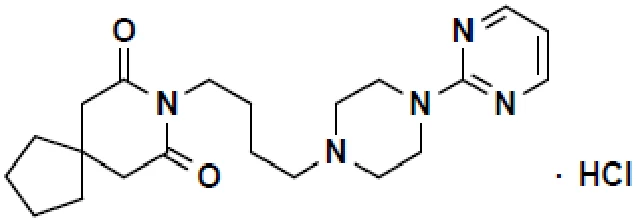
Physicochemical properties: White crystalline powder, very soluble in water; freely soluble in methanol and in methylene chloride; sparingly soluble in ethanol and in acetonitrile, practically insoluble in ethyl acetate hexanes
14 CLINICAL TRIALS
14.1 Clinical Trials by Indication
Eight three-way short term, controlled clinical trials involving buspirone, diazepam and placebo are considered central to the evaluation of buspirone as an anxiolytic agent. In four of the eight clinical trials, buspirone demonstrated a significant difference from placebo. In the other four trials, there was no significant difference between buspirone and placebo, but a significantly greater improvement was observed in two of these trials with diazepam than with placebo. The adverse effect profiles of buspirone and diazepam in these clinical trials were, however, different.
14.3 Comparative Bioavailability Studies
MINT-BUSPIRONE (buspirone hydrochloride) 10 mg tablets have satisfied the criteria for a Biopharmaceutics Classification System (BCS)-based biowaiver in comparison to the respective strength of Apo-Buspirone (buspirone hydrochloride) tablets (Apotex Inc.).
15 MICROBIOLOGY
No microbiological information is required for this drug product.
16 NON-CLINICAL TOXICOLOGY
General Toxicology:
Acute Toxicity:
| Species | Sex | Route | LD50 (95% Confidence Interval) mg/kg |
|---|---|---|---|
Rat (Adult) Rat (Adult) | Male Male/Female | Oral Oral | 265 (174-404) 196 (152-252) |
| Rat (Newborn) | Male/Female | Oral | 415 (332-520) |
| Mouse | Male | Oral | 655 (529-811) |
| Dog | Male/Female | Oral | 586 (371-925) |
| Monkey | Male/Female | Oral | 356 (302-420) |
| Rat (Adult) | Male/Female | i.p. | 136 (122-152) |
| Mouse | Male | i.p. | 164 (145-185) |
| Mouse | Male | i.v. | 73.3 (66.6-80.6) |
| Monkey | Male/Female | i.v. | 54.3 (47.6-61.9) |
| Dog | Female | i.v. infusion | 125.3 (lowest lethal dose-infused at 80 mg/kg/hr-30.8 mL/hr) |
Signs of toxicity in all species included hypoactivity, salivation, tremors, ataxia, opisthotonos and clonic convulsions.
In the dog intravenous infusion test, 10 mg/kg/hr for a total of 59 mg/kg produced an increase in blood pressure and a slight increase in the ST segment of the ECG. At 40 and 80 mg/kg/hr, an increase in heart rate and T-wave amplitude was also observed. The animals at the higher doses died following convulsions.
Subacute Toxicity
- Dog: In a two-week dose-ranging study, one male and one female dog per group received 73, 110 or 146 mg/kg buspirone orally immediately after feeding. Both high dose dogs died on day 5 following convulsions. The mid dose male died on day 11, probably due to acute gastric dilatation. Reddening of gastric mucosa was observed at necropsy in all three dogs that died.
- Rat: In a three month study, groups of 15 males and 15 females were administered 0, 50, 100 and 200 mg/kg/day of buspirone in the diet. Reduced weight gain was observed in all treated groups, as well as slight but significant decreases in erythrocyte and serum protein values. A significant decrease in serum glucose levels was seen in the mid and high dose groups.
Monkey: In a three-month study, 2 males and 2 females per group received 0, 37.5, 75 and 150 mg/kg of buspirone by gavage 3 hours after feeding. Hypoactivity, tremors and salivation were observed in all treated groups. Hypoactivity tended to increase with time. Other observations
- included catatonia in the mid dose group, ataxia in the high dose group, and general incoordination, in which the monkey would be in almost constant movement and unable to walk or grasp objects normally, in both mid and high dose groups.
Chronic Toxicity
- Rat: In a 2 year study, buspirone was administered in the diet to groups of 70 male and 70 female rats at doses of 0, 48, 80, and 160 mg/kg/day. Food consumption and weight gain were reduced in the treated animals in a dose-related manner. Rapid respiration, tremors and tachycardia were observed in all treated groups, hypersensitivity in mid and high dose groups, and hunched, thin appearance and red or mucoid nasal discharge in the high dose group. Findings at necropsy included a dose-related incidence of pulmonary histiocytosis and some decreases in organ weights.
Mouse: A 78 week study was conducted with groups of 65 male and 65 female mice, who received buspirone 0, 50, 100 and 200 mg/kg/day in the diet.
Food intake was not affected, but decreased weight gain was observed in all treated groups. Necropsy findings included an increased incidence of amyloid deposition in some tissues of the high dose animals, particularly in the renal, gastrointestinal and testicular tissues of males. An increased incidence of focal testicular atrophy was also observed in high dose males.
Monkey: Groups of 4 male and 4 female Rhesus monkeys were given buspirone orally at doses of 0, 35, 62 and 110 mg/kg/day. After 23 days, buspirone doses were reduced to 25 mg/kg once daily, 25 mg/kg twice daily and 50 mg/kg twice daily respectively, for the remainder of the one year study.
One male in the mid dose and 4 males and 2 females in the high dose group died relatively early during the study (2 more died at the end). Slight to marked weight loss was seen in some of the monkeys that died. Prior to dose reduction, sedation was moderate at the low dose and marked at the mid and high dose. For the remainder of the study, slight to marked dose related sedation as well as intention tremors were observed in all treated groups. Mid and high dose monkeys also showed lack of responsiveness to stimuli and partial to total anorexia. Chewing on the cage or on the wrist was noted in high dose monkeys.
Some monkeys at the mid and high dose levels showed lower hemoglobin, hematocrit and alkaline phosphatase levels than controls, while in the high dose group, SGOT and SGPT levels were slightly higher and serum cholesterol levels lower than in controls.
At necropsy, some changes in organ weights were observed, especially in the high dose group. Gross evidence of gastrointestinal irritation was found in all 7 monkeys that died during the study. A bloody diarrhea had been noted in 4 of the animals prior to death. One male monkey died at the end of the study with gross evidence of pericarditis and pleuritis. No distinct or consistent drug related histopathologic changes were found in this study.
Carcinogenicity:
One two year combined carcinogenicity and toxicity study has been carried out in rats (see Chronic Toxicity for details). No evidence was found of a drug-related effect on mortality, incidence of palpable tissue masses, gross pathologic findings, organ weights or microscopically detected neoplasms.
Reproductive and Developmental Toxicology:
The potential effect of buspirone on the fertility and reproductive performance of the rat was assessed by mating treated female rats with non-treated males and vice versa. Groups of rats were given 9, 18 or 36 mg/kg/day of buspirone for 14 days prior to mating and continuing until 21 days post partum. The only finding was that pup weights were statistically lower at birth and during weaning of the offspring from both the male and female rats treated with 9, 18 or 36 mg/kg/day of buspirone. This was due to a more pronounced effect on pup weight in the litters with greater numbers of pups. The survival index for pups from highest dose female treated rats was reduced. The lactation index was reduced at 36 mg/kg dose level and the survival index was reduced when both parents were treated with buspirone.
There were no skeletal or visceral abnormalities or other findings indicating a teratogenic or embryotoxic effect in rats or rabbits treated during embryogenesis with doses of 9, 18 or 36 mg/kg/day. Administration of buspirone to the pregnant rat at 36 mg/kg/day or less during the last third of pregnancy and throughout the 3 week post-natal period revealed no evidence of any adverse effect on fetal development, birth weights, post-natal growth or survival
Special Toxicology
Abuse Liability: The drug was not self-administered in monkeys trained to self- administer cocaine; it did not block convulsions precipitated in mice by the withdrawal of chronically administered phenobarbital and caused no weight loss when stopped abruptly after repeated administration. Furthermore, buspirone did not share discriminative stimulus properties with either oxazepam or pentobarbital.
17 SUPPORTING PRODUCT MONOGRAPHS
APO-BUSPIRONE Tablets, 10 mg, submission control number 259719, Product Monograph, APOTEX INC., (JUN 03, 2022).