


Product Monograph - Mint-Varenicline
SUMMARY PRODUCT INFORMATION
| Route of Administration | Dosage Form / Strength | All Non-medicinal Ingredients |
|---|---|---|
| Oral | Tablet: 0.5 mg and 1 mg | Microcrystalline cellulose, Maltodextrin, Croscarmellose sodium, Stearic acid The film-coating contains hydroxypropyl methylcellulose, hydroxypropyl cellulose, titanium dioxide, and talc. The 1 mg tablets also include FD&C Blue#2 Aluminum Lakeas a colouring agent. |
INDICATIONS AND CLINICAL USE
Adults
MINT-VARENICLINE (varenicline tartrate) is indicated for smoking-cessation treatment in adults, in conjunction with smoking-cessation counselling.
Geriatrics (>65 years of age): No dosage adjustment is necessary for healthy elderly patients. However, varenicline is known to be substantially excreted by the kidney, and the risk of toxic reactions to this drug may be greater in patients with impaired renal function. Because elderly patients are more likely to have decreased renal function, care should be taken in dose selection, and it may be useful to monitor renal function (see WARNINGS AND PRECAUTIONS, Special Populations: Geriatrics).
Pediatrics (<18 years of age): Based on the data submitted and reviewed by Health Canada, the safety and efficacy of varenicline tartrate in pediatric patients has not been established; therefore, Health Canada has not authorized an indication for pediatric use (see WARNINGS AND PRECAUTIONS, Special Populations: Pediatrics).
CONTRAINDICATIONS
Patients who are hypersensitive to varenicline or to any ingredient in the formulation or component of the container.
WARNINGS AND PRECAUTIONS
Psychiatric Symptoms (in Patients with and without Pre-existing Psychiatric Disorder or
Symptoms) (see also ADVERSE REACTIONS, Post-Marketing Experience)
There have been post-marketing reports of serious neuropsychiatric symptoms in patients being treated with varenicline tartrate, including anxiety, psychosis, mood swings, depressed mood, agitation, aggression, hostility, changes in behavior or thinking, suicidal ideation, suicidal behavior and suicide, as well as worsening of pre-existing psychiatric disorder (previously diagnosed or not). Not all patients had stopped smoking at the time of onset of symptoms, and not all patients had known pre-existing psychiatric illness, or were using concomitant CNS drugs.
Randomized Study Data: A large randomized, double-blind, active and placebo-controlled study (“EAGLES” study) was conducted to compare the risk of serious neuropsychiatric events in patients with and without a history of psychiatric disorder treated for smoking cessation with varenicline, bupropion, nicotine replacement therapy patch (NRT) or placebo. The primary safety endpoint was a composite of neuropsychiatric adverse events that have been reported in post-marketing experience. The findings were that the use of varenicline tartrate, in patients with or without a history of psychiatric disorder, was not associated with an increased risk of serious neuropsychiatric adverse events in the composite primary endpoint compared with placebo (See ACTION AND CLINICAL PHARMACOLOGY, Special Populations and Conditions, Neuropsychiatric Safety Study in Subjects with and without a History of Psychiatric Disorder).
Recommendations: Clinicians should be aware of the possible emergence of serious neuropsychiatric symptoms in patients attempting to quit smoking, with or without treatment.
Alcohol intake: There have been post-marketing reports of patients experiencing increased intoxicating effects of alcohol while taking varenicline tartrate. Some cases described unusual and sometimes aggressive behaviour, and were often accompanied by amnesia for the events.
Pre-existing Psychiatric Disorder or Symptoms: Smoking cessation, with or without pharmacotherapy, has been associated with exacerbation of underlying psychiatric illness (e.g. depression, anxiety). Patients with a history of psychiatric symptoms should be monitored for worsening or new symptoms when attempting to quit smoking, regardless of how well controlled symptoms may be when starting smoking cessation treatment. Patients should be instructed to report strongly atypical and concerning symptoms to their healthcare provider, so that dose adjustments of psychiatric medications or MINT-VARENICLINE may be considered.
General: Patients should be informed that if they experience thoughts, moods or behaviours that are strongly atypical and concerning while on smoking-cessation medication, including MINT-VARENICLINE, the medication should be discontinued immediately, with urgent medical help sought as needed, and the symptoms reported to their healthcare provider.
Angioedema and Hypersensitivity reactions
There have been post-marketing reports of hypersensitivity reactions, including angioedema, in patients treated with varenicline tartrate (see ADVERSE REACTIONS, Post-Marketing Experience). Clinical signs included swelling of the face, mouth (tongue, lips and gums), neck (pharynx and larynx) and extremities. There were rare reports of life-threatening angioedema requiring urgent medical attention due to respiratory compromise. Patients experiencing these symptoms should be instructed to discontinue treatment with MINT-VARENICLINE and contact a healthcare provider immediately.
Serious Skin Reactions
There have also been post-marketing reports of rare but severe cutaneous reactions, including Stevens-Johnson syndrome and erythema multiforme, in patients using varenicline tartrate (see ADVERSE REACTIONS, Post-Marketing Experience). As these skin reactions can be life- threatening, patients should be instructed to discontinue treatment at the first sign of rash or skin reaction and contact a healthcare provider immediately.
Seizures
In clinical trials and post-marketing experience there have been reports of seizures in patients treated with varenicline tartrate. Some patients had no history of seizures, whereas others had a history of seizure disorder that was remote or well-controlled. MINT-VARENICLINE should be used cautiously in patients with a history of seizures or other conditions that potentially lower the seizure threshold. Advise patients to discontinue MINT-VARENICLINE and immediately contact a healthcare provider if they experience a seizure while on treatment (see Special Populations, Use of MINT-VARENICLINE in Patients with Concomitant Conditions).
Somnambulism
Cases of somnambulism have been reported post-marketing in patients taking varenicline tartrate. Some cases described harmful behavior to self, others, or property. Instruct patients to discontinue MINT-VARENICLINE and notify their healthcare provider if they experience somnambulism.
Cardiovascular Events
In a placebo-controlled smoking cessation clinical trial in patients with stable cardiovascular disease (CVD), patients were treated with varenicline tartrate 1 mg BID or placebo for 12 weeks, and then followed for another 40 weeks. There were approximately 350 patients per arm.
Serious cardiovascular (CV) events that were reported more frequently in varenicline tartrate compared to placebo (difference > 2 subjects) were: non-fatal myocardial infarctions (4 vs. 1, on-treatment phase) and need for coronary revascularization (7 vs. 2, post-treatment phase). The total number of patients that experienced serious CV events in varenicline tartrate compared to placebo was: 10 vs. 9 on treatment phase, 16 vs. 11 post-treatment phase, for a total of 25 vs. 20 over the 52 week duration. The serious CV events occurring during the treatment and post-treatment phases were adjudicated by an independent blinded committee.
The study was powered for assessing efficacy (ie quit rates) but not for assessing differences in the occurrence of serious CV events between varenicline tartrate and placebo. Therefore, the study was not large enough to allow conclusions regarding the difference in the incidence of CV events reported in the two arms (See also ADVERSE EVENTS, Clinical Trial in Special Populations; and ACTION AND CLINICAL PHARMACOLOGY, Special Population). Physicians are to inform patients of the symptoms of a heart attack and stroke, and instruct them to get emergency medical help right away if they experience any of these symptoms (see also Patient Counselling Information).
The CV safety of varenicline tartrate was also evaluated in the Cardiovascular Safety Assessment Study in subjects with and without a history of psychiatric disorder that randomized subjects 1:1:1:1 to varenicline tartrate 1 mg BID, bupropion SR 150 mg BID, nicotine replacement therapy patch (NRT) 21 mg/day with taper or placebo for a treatment period of 12 weeks. Subjects were then followed post-treatment through a period of up to a total of 52 weeks (See ACTION AND CLINICAL PHARMACOLOGY, Special Populations and Conditions, Cardiovascular Safety Assessment Study in Subjects with and without a History of Psychiatric Disease). Major CV events (CV death, non-fatal MI, non-fatal stroke) were infrequent overall (1/2016 and 4/2014, for patients treated with varenicline tartrate and placebo, respectively) during the treatment period. However, because of the relatively low number of events overall and the lack of power for assessing differences between varenicline tartrate and placebo, an association between the use of varenicline tartrate and an increased risk of CV adverse events cannot be entirely ruled out.
Varenicline tartrate has not been studied in patients with unstable cardiovascular disease or those with cardiovascular events occurring within two months before study screening. Patients should be advised to notify a health care provider of new or worsening symptoms of cardiovascular disease. The risks of MINT-VARENICLINE should be weighed against the benefits of its use in smokers with cardiovascular disease. Smoking is an independent and major risk factor for cardiovascular disease. Varenicline tartrate has been demonstrated to increase the likelihood of abstinence from smoking for as long as one year compared to treatment with placebo.
Accidental Injury, including while Driving, Operating Machinery
There have been post-marketing reports of traffic accidents, near-miss incidents in traffic, and other accidental injuries in patients taking varenicline tartrate. In some cases, the patients reported somnolence, dizziness, loss of consciousness (blackouts), seizures or difficulty concentrating.
Therefore, patients should be advised not to engage in potentially hazardous activities, such as driving a car or operating dangerous machines, until they know how varenicline tartrate may affect them.
Concomitant Illness The full consequences of using this product in patients with concomitant illness have not been studied, and caution should be exercised (see Special Populations, Use of MINT-VARENICLINE in Patients with Concomitant Conditions).
Nicotine replacement therapy (NRT)
The concomitant use of NRT with MINT-VARENICLINE (varenicline tartrate) may result in an increase in adverse reactions. In a clinical drug interaction study (N=24), the incidences of nausea, headache, vomiting, dizziness, dyspepsia and fatigue were greater for the combination of NRT and varenicline than for NRT alone (see DRUG INTERACTIONS). The safety and efficacy of the combination treatment with varenicline tartrate and NRT have not been studied. Due to the proposed mechanism of action of varenicline, it is not anticipated that co-administration with NRT would confer additional benefit compared with varenicline tartrate alone.
Effect of smoking-cessation
Physiological changes resulting from smoking-cessation, with or without treatment with MINT-VARENICLINE, may alter the pharmacokinetics or pharmacodynamics of some drugs for which dosage adjustment may be necessary (examples include theophylline, warfarin and insulin). As smoking induces cytochrome P450 (CYP) isoenzyme 1A2, smoking-cessation may result in an increase of plasma levels of CYP1A2 substrates.
Nausea
Nausea was the most common adverse event associated with varenicline tartrate treatment. Nausea was generally described as mild or moderate and often transient; however, for some subjects, it was persistent over several months. The incidence of nausea was dose-dependent. Initial dose- titration was beneficial in reducing the occurrence of nausea. Nausea was reported by approximately 30% of patients treated with varenicline tartrate 1 mg BID after an initial week of dose titration. In patients taking varenicline tartrate 0.5 mg BID, the incidence of nausea was 16% following initial titration. Approximately 3% of subjects treated with varenicline tartrate 1 mg BID in studies involving 12 weeks of treatment discontinued treatment prematurely because of nausea. For patients with intolerable nausea, dose reduction should be considered (see DOSAGE AND ADMINISTRATION, Recommended Dose and Dosage Adjustment).
Carcinogenesis and Mutagenesis
For animal data, see Part II: TOXICOLOGY section.
Dependence/Tolerance
Animal Studies
The subjective nicotine-like effects of varenicline were investigated in drug discrimination studies. At 1 mg/kg, there was complete substitution of varenicline for nicotine in a paradigm of nicotine-associated lever pressing for food reward. In an efficacy model, varenicline pretreatment dose-dependently reduced nicotine self-administration under a fixed-ratio schedule. Under a progressive ratio schedule rats worked harder for nicotine than for varenicline.
Human Studies
The rewarding potential of varenicline (1 mg and 3 mg doses) was compared with that of amphetamines in subjects experienced with psychomotor stimulants. The pattern for both smokers and non-smokers was consistent with a profile of a drug that, while having some pharmacological activity, did not produce amphetamine-like subjective effects.
Patient Counselling Information
Consumer Information is included in the package of MINT-VARENICLINE dispensed to the patient. Prior to prescribing MINT-VARENICLINE, physicians should:
- Discuss with the patient the expected benefits and risks of MINT-VARENICLINE, as well as those of all smoking-cessation options.
- Inform the patients that quitting smoking, with or without treatment, may be associated with nicotine withdrawal symptoms (including depression, irritation or agitation) or exacerbation of pre-existing psychiatric disorder.
- Encourage the patient to reveal any history of psychiatric disorder prior to initiating treatment. Patients with such history who are trying to stop smoking should be monitored by their physician for new or worsened psychiatric events.
Advise patients:
- not to engage in potentially hazardous tasks, such as driving a car or operating dangerous machines, until they know how MINT-VARENICLINE may affect them. In some cases, patients have reported somnolence, dizziness, loss of consciousness, seizures or difficulty concentrating while driving.
- that some people have reported seizures while taking varenicline tartrate and encourage them to report any history of seizures or other factors that can lower seizure threshold. Instruct patients to discontinue MINT-VARENICLINE and immediately contact a healthcare provider if they experience a seizure while on treatment.
- that there have been post-marketing reports of serious neuropsychiatric symptoms in patients being treated with varenicline tartrate, including anxiety, psychosis, mood swings, aggression, depressed mood, agitation, hallucinations, hostility, changes in behavior or thinking, suicidal ideation, suicidal behavior and suicide, as well as worsening of pre-existing psychiatric disorder.
- that i) new or worse cardiovascular events (heart and stroke) have been reported, primarily in those who already have cardiovascular problems and ii) based on available data, it is not possible to determine whether varenicline tartrate increases the risk of cardiovascular events.
For those patients receiving MINT-VARENICLINE:
- Patients should also be provided with educational materials and necessary counselling to support an attempt at quitting smoking, including a review of the overall smoking cessation plan with the physician.
- Patients should call government-funded toll-free provincial Quit Lines which can be used to support a quit attempt.
- Patients should be informed that there are three choices in setting a quit date when using MINT-VARENICLINE, and discuss with their physician which one is best for them.
Patients should be instructed on how to titrate MINT-VARENICLINE:
- Begin at a dose of 0.5 mg per day. Prescribers should explain that one 0.5 mg tablet should be taken daily for the first three days, and then for the next four days, two 0.5 mg tablets should be taken daily: one in the morning and one in the evening.
Following this one week of titration, there are two dosing options: the dose can remain at 0.5 mg twice daily or can go up to 1 mg twice daily, depending on the physician judgment and patient preference. Based on the limited data available, the two doses do not appear different in terms of either quit rates, or rates of serious psychiatric side effects (see DOSAGE AND ADMINISTRATION, Dosing Considerations).
- If needed, the dose can be changed depending on how well the patient tolerates MINT-VARENICLINE and how effective the doctor and patient consider it is in helping the patient quit smoking.
- Patients should be informed that the maximum dose of MINT-VARENICLINE is 1 mg twice a day.
- Patients should be encouraged to continue in their quit attempt if they have early lapses after their quit date.
- Patients should be encouraged to inform friends and family members of their quit attempt which includes treatment with MINT-VARENICLINE and ask for their support and help in monitoring for any changes in behavior or thinking that are not typical for the patient.
- Patients should be advised that drinking alcohol may increase the risk of experiencing psychiatric adverse events during treatment with MINT-VARENICLINE.
- Patients with pre-existing psychiatric disorder should be instructed that if they develop worsened or new symptoms, to report these to their healthcare provider; dose adjustments of psychiatric medications or MINT-VARENICLINE may be considered.
- Patients should be informed that if they experience thoughts, moods or behaviours that are strongly atypical and concerning while on smoking-cessation medication, including MINT-VARENICLINE, the medication should be discontinued immediately, urgent medical help sought as needed, and the symptoms reported to their healthcare provider.
- Patients should be informed that:
- they may experience vivid, unusual or strange dreams during treatment with MINT-VARENICLINE.
- nausea is the most common adverse event associated with varenicline tartrate and is usually transient. MINT-VARENICLINE should be taken after eating and with a full glass of water. Patients should be advised that if they are persistently troubled by this symptom, a dose reduction may be considered.
- if they experience sleepwalking, they should discontinue MINT-VARENICLINE and notify their healthcare provider.
- there have been reports of angioedema, with swelling of the face, mouth (tongue, lips and gums) and neck (pharynx and larynx) that can lead to life-threatening respiratory compromise. Patients should be instructed to discontinue MINT-VARENICLINE and seek immediate emergency medical attention if they experience these symptoms.
- serious skin reactions, such as Stevens-Johnson syndrome and erythema multiforme, were reported by some patients taking varenicline tartrate. Patients should be advised to stop taking MINT-VARENICLINE at the first sign of rash with mucosal lesions or skin reaction and seek immediate emergency medical attention.
- Patients should be instructed to notify their healthcare providers of symptoms of new or worsening cardiovascular events and to seek immediate medical attention if they experience signs and symptoms of myocardial infarction or stroke.
Special Populations
Use of MINT-VARENICLINE in Patients with Concomitant Conditions:
Psychiatric Patients
Smoking-cessation with or without pharmacotherapy, has been associated with the exacerbation of underlying psychiatric illness. Patients with a history of psychiatric symptoms who are attempting to quit smoking should be monitored by a healthcare professional for new or worsened psychiatric events (see DOSAGE AND ADMINISTRATION, Special Populations, Psychiatric Patients; as well as WARNINGS AND PRECAUTIONS, Psychiatric Symptoms in Patients with and without Pre-existing Psychiatric Disorder or Symptoms).
In a large randomized, double-blind, active and placebo-controlled smoking cessation study, use of varenicline tartrate was not associated with an increased risk of serious neuropsychiatric adverse events in the composite endpoint compared with placebo, in patients with or without a history of psychiatric disorder (See ACTION AND CLINICAL PHARMACOLOGY, Special Populations and Conditions, Neuropsychiatric Safety Study in Subjects with and without a History of Psychiatric Disorder). Major depressive disorder, bipolar disorder I and II, anxiety, and schizophrenia were the primary baseline psychiatric conditions reported in the study; only patients judged to be clinically stable were included. Current substance abuse was among the conditions that were excluded.
Patients with Epilepsy
The use of varenicline tartrate has not been studied in patients with epilepsy. There have been post- marketing reports of seizures in patients using varenicline. It is not known for how many of these there is a prior history or risk of a seizure disorder (see WARNINGS AND PRECAUTIONS, Seizures).
Patients with Diabetes
Smoking cessation, with or without treatment, may be associated with altered glycemic control. There have been post-marketing reports of diabetic patients experiencing loss of glycemic control while taking varenicline tartrate. Therefore, increased glycemic monitoring is recommended in diabetic patients, with resultant adjustment of diabetic medications as necessary.
Patients with Irritable Bowel or Other Gastrointestinal (GI) Problems
The use of varenicline tartrate has not been studied in patients with irritable bowel syndrome or other GI problems. Post marketing reports of irritable bowel syndrome, abdominal pain, faecal incontinence and other GI issues have been reported in patients taking varenicline tartrate.
Patients Exposed to Chemotherapy
The use of varenicline tartrate has not been studied in patients exposed to emetogenic chemotherapy.
Pregnant Women
Studies in animals have shown reproductive toxicity (see TOXICOLOGY). The potential risk for humans is not fully known (See ACTION AND CLINICAL PHARMACOLOGY, Special
Populations: Pregnant Women). MINT-VARENICLINE should not be used during pregnancy.
Nonteratogenic Effects
Varenicline succinate has been shown to have an adverse effect on the fetus in animal reproduction studies. Administration of varenicline succinate to pregnant rabbits resulted in reduced fetal weights at an oral dose of 30 mg/kg/day (50 times the human AUC at 1 mg BID); this reduction was not evident following treatment with 10 mg/kg/day (23 times the maximum recommended daily human exposure based on AUC). In addition, in the offspring of pregnant rats treated with varenicline succinate there were decreases in fertility and increases in auditory startle response at an oral dose of 15 mg/kg/day (36 times the maximum recommended human daily exposure based on AUC at 1 mg BID).
Nursing Women
Animal studies have shown that varenicline can be transferred to nursing pups. It is not known whether varenicline is excreted in human milk. Because many drugs are excreted in human milk and because the potential for adverse reactions in nursing infants from varenicline tartrate is unknown, a decision should be made whether to discontinue nursing or to discontinue the drug.
Pediatrics (<18 years of age)
Based on the data submitted and reviewed by Health Canada, the safety and efficacy of varenicline tartrate in pediatric patients has not been established; therefore, Health Canada has not authorized an indication for pediatric use (see WARNINGS AND PRECAUTIONS, Special Populations: Pediatrics).
Geriatrics (>65 years of age)
A combined single and multiple-dose pharmacokinetic study demonstrated that the pharmacokinetics of 1 mg varenicline given once daily (QD) or BID to 16 healthy elderly male and female smokers (aged 65-75 years) for 7 consecutive days was similar to that of younger subjects. No overall differences in safety or effectiveness were observed between these subjects and younger subjects, and other reported clinical experience has not identified differences in responses between the elderly and younger patients, but greater sensitivity of some older individuals cannot be ruled out.
Varenicline is known to be substantially excreted by the kidney, and the risk of toxic reactions to this drug may be greater in patients with impaired renal function. Because elderly patients are more likely to have decreased renal function, care should be taken in dose selection, and it may be useful to monitor renal function (see DOSAGE AND ADMINISTRATION, Special Populations: Geriatrics).
Renal Impairment
A multiple dose pharmacokinetic study was conducted in patients with normal renal function, with mild, moderate, or severe renal impairment (estimated creatinine clearance: >80 mL/min,
>50 and ≤80 mL/min, ≥ 30 and ≤50 mL/min, and <30 mL/min, respectively) or end-stage renal disease (ESRD). Varenicline pharmacokinetics was unchanged in subjects with mild renal impairment. Relative to subjects with normal renal function, varenicline exposure increased 1.5- fold in patients with moderate renal impairment and 2.1-fold in patients with severe renal impairment. In subjects with ESRD, varenicline was efficiently removed by hemodialysis. The recommended dose of MINT-VARENICLINE is reduced in patients with severe renal impairment.
MINT-VARENICLINE is not recommended in patients with ESRD (see ACTION AND CLINICAL PHARMACOLOGY, Special Populations and Conditions: Renal Impairment, and DOSAGE AND ADMINISTRATION, Special Populations: Patients with Impaired Renal Function).
ADVERSE REACTIONS
Adverse Drug Reaction Overview
Clinical Trial Adverse Drug Reactions
Smoking-cessation with or without treatment is associated with various symptoms. For example, dysphoric or depressed mood, insomnia, irritability, frustration or anger, anxiety, difficulty concentrating, restlessness, decreased heart rate, increased appetite or weight gain have been reported in patients attempting to stop smoking.
Overview
Pre-marketing clinical trials included approximately 2300 patients treated for at least 12 weeks, approximately 700 for 6 months, and approximately 100 for one year. In general, onset of adverse events was in the first few weeks of therapy and severity was generally mild to moderate. No differences were observed by age, race or gender with regard to the incidence of adverse reactions, although patient numbers in elderly, and in non-caucasian races were too limited to allow conclusions.
Commonly Observed Adverse Events
The most commonly observed adverse events associated with varenicline tartrate (>5% and twice the rate seen in placebo-treated patients) were nausea, abnormal dreams, constipation, flatulence, and vomiting.
For patients exposed to the maximum recommended dose of 1 mg BID following initial dosage titration, the incidence of nausea was 30%, compared with 16% in 0.5 mg BID and approximately 10% in placebo-treated patients. Nausea was generally described as mild to moderate and often transient; however, for some subjects, it was persistent throughout the treatment period.
Adverse Events Leading to Discontinuation
In Phase 2 and 3 placebo-controlled studies, the treatment discontinuation rate due to adverse events in patients randomized to 12 weeks treatment with the recommended maximum dose of 1 mg BID was 12% for varenicline tartrate compared to 10% for placebo. In this group, the adverse events most frequently resulting in treatment discontinuation in varenicline tartrate treated patients were as follows: nausea (2.7% vs 0.6% for placebo), insomnia (1.3% vs 1.2% for placebo), fatigue/malaise/asthenia (1.0% vs 0.5% for placebo), and dizziness (0.7% vs 0.4% for placebo).
Table 1 shows the adverse events for varenicline tartrate and placebo in the 12-week fixed dose studies with titration in the first week (Studies 1 (titrated arm only), 3, and 4). MedDRA High Level Group Terms (HLGT) reported in ≥5% of patients in the varenicline tartrate 1 mg BID dose group, and more commonly than in the placebo group, are listed, along with subordinate Preferred Terms (PT) reported in ≥1% of varenicline tartrate patients (and at least 0.5% more frequently than placebo). Closely related Preferred Terms such as ‘Insomnia’, ‘Initial insomnia’, ‘Middle insomnia’, ‘Early morning awakening’ were grouped, but individual patients reporting two or more grouped events were only counted once.
Table 1. Common Treatment Emergent Adverse Events (%) in the 12-Week Fixed- Dose, Placebo-Controlled Studies (≥ 1% in the 1 mg BID Varenicline Tartrate Group, and 1 mg BID Varenicline Tartrate at least 0.5% more than Placebo)
SYSTEM ORGAN CLASS High Level Group Term Preferred Term | Varenicline tartrate 0.5 mg BID N=129 | Varenicline tartrate 1 mg BID N=821 | Placebo N=805 |
|---|---|---|---|
| GASTROINTESTINAL | |||
| GI Signs and Symptoms | |||
| Nausea | 16 | 30 | 10 |
| Abdominal Pain * | 5 | 7 | 5 |
| Flatulence | 9 | 6 | 3 |
| Dyspepsia | 5 | 5 | 3 |
| Vomiting | 1 | 5 | 2 |
| GI Motility/Defecation Conditions | |||
| Constipation | 5 | 8 | 3 |
| Gastroesophageal reflux disease | 1 | 1 | 0 |
| Salivary Gland Conditions | |||
| Dry mouth | 4 | 6 | 4 |
| PSYCHIATRIC DISORDERS | |||
Sleep Disorder/Disturbances Insomnia ** Abnormal dreams Sleep disorder Nightmare | 19 9 2 2 | 18 13 5 1 | 13 5 3 0 |
| NERVOUS SYSTEM | |||
Headaches Headache Neurological Disorders NEC Dysgeusia Somnolence Lethargy | 19 8 3 2 | 15 5 3 1 | 13 4 2 0 |
| GENERAL DISORDERS | |||
General Disorders NEC Fatigue/Malaise/Asthenia | 4 | 7 | 6 |
| RESPIR/THORACIC/MEDIAST | |||
Respiratory Disorders NEC Rhinorrhea Dyspnea Upper Respiratory Tract Disorder | 0 2 7 | 1 1 5 | 0 1 4 |
| SKIN/SUBCUTANEOUS TISSUE | |||
Epidermal and Dermal Conditions Rash Pruritus | 1 0 | 3 1 | 2 1 |
| METABOLISM & NUTRITION | |||
| Appetite/General Nutrition Disorders | |||
| Increased appetite | 4 | 3 | 2 |
| Decreased appetite/Anorexia | 1 | 2 | 1 |
* Includes PTs Abdominal (pain, pain upper, pain lower, discomfort, tenderness, distension) and Stomach discomfort
** Includes PTs Insomnia/Initial insomnia/Middle insomnia/Early morning awakening NEC: Not Elsewhere Classified
Initial dose titration was beneficial in reducing the occurrence of nausea.
An additional 12 weeks of varenicline tartrate 1 mg BID was well-tolerated in patients who had completed 12 weeks of treatment and had stopped smoking. Adverse events resulted in treatment discontinuation in 1.7% of patients who received varenicline tartrate compared with 1.3% of placebo patients.
Safety Study: One-Year, Double-Blind Drug-Treatment
The overall pattern and the frequency of adverse events during a 52-week trial with varenicline tartrate 1 mg BID (n=251 subjects randomized to varenicline tartrate arm, and n=126 to placebo arm) were similar to those described in Table 1, except for the following events which were seen to be increased relative to placebo, as compared to the profile for 12 week drug exposure: nausea (40% vs 8% placebo); and the pooled terms of: abdominal pain (17% vs 3% placebo), and increased blood pressure (11% vs 6% placebo). Few of these events were recorded as severe.
Neuropsychiatric Adverse Events in Randomized, Double-Blind, Placebo-Controlled Clinical Studies of Varenicline
Meta-Analysis of Columbia-Suicide Severity Rating Scale (C-SSRS)
A meta-analysis of 5 randomized, double blind, placebo controlled trials, including 1907 patients (1130 varenicline tartrate, 777 placebo), was conducted to assess suicidal ideation and behavior as reported on the C-SSRS. This meta-analysis included one trial (N=127) in patients with a history of schizophrenia or schizoaffective disorder and another trial (N=525) in patients with a history of depression. The results showed no increase in the incidence of suicidal ideation and/or behavior in patients treated with varenicline tartrate compared to patients treated with placebo, with a Risk Ratio (RR) of 0.79 (95% Confidence Interval [CI]: 0.46, 1.36), as shown in Table 2. Forty- eight (48) of the 55 patients who reported suicidal ideation or behavior (24 varenicline tartrate, 24 placebo) were from the two trials that enrolled patients with a history of schizophrenia, schizoaffective disorder, or depression (see ACTION AND CLINICAL PHARMACOLOGY, Special Populations and Conditions). Few patients reported these events in the other three trials (4 varenicline tartrate, 3 placebo).
Table 2. Number of Patients and Risk Ratio for Suicidal Ideation and/or Behavior Reported on C-SSRS from a Meta-Analysis of 5 Clinical Trials Comparing Varenicline Tartrate to Placebo
Varenicline Tartrate (N=1130) | Placebo (N=777) | |||||
|---|---|---|---|---|---|---|
| Patients with suicidal ideation and/or behavior* [n (%)]** | 28 (2.5) | 27 (3.5) | ||||
| Patient-years of exposure | 325 | 217 | ||||
| Risk Ratio # (RR; 95% CI) | 0.79 (0.46, 1.36) | |||||
* Of these, one patient in each treatment arm reported suicidal behavior
** Patients with events up to 30 days after treatment; % are not weighted by study # RR of incidence rates per 100 patient years.
Pooled Data including Ten Smoking Cessation Trials
Table 3 below provides the incidence of all causality, treatment-emergent neuropsychiatric adverse events with varenicline as compared to placebo (≥ 0.2% more than placebo) in adult smokers, adverse event summarized from all randomized, placebo-controlled, double-blind varenicline studies (10 studies) completed by 31 December 2008, regardless of Study Dose or Duration. Four of these are described in the CLINICAL TRIALS section. There were no suicidal and self-injurious behaviors reported (suicide ideation and suicide attempt) in the varenicline group versus 2 events (0.1%) in the placebo group.
Table 3: All-Causality Treatment-Emergent Neuropsychiatric Adverse Events (%) in Ten Completed Phase 2/4 Placebo-Controlled Studies (≥ 0.2% more than placebo)
| Neuropsychiatric Adverse Events | Varenicline (N =3091) | Placebo (N =2005) |
|---|---|---|
| % (n) | % (n) | |
| Psychiatric Disorders* | ||
| Depressed mood disorders and disturbances | 2.8 (88) | 1.9 (38) |
| Depression | 1.6 (51) | 1.2 (24) |
| Depressed mood | 1.0 (32) | 0.6 (12) |
| Disturbances in thinking and perception | 0.4 (13) | 0.1 (2) |
| Thinking abnormal | 0.2 (7) | -- (1) |
| Mood disorders and disturbances NEC | 2.4 (73) | 1.5 (30) |
| Affect lability | 0.6 (20) | 0.3 (6) |
| Mood swings | 0.3 (10) | 0.1 (2) |
| Apathy | 0.2 (5) | -- (1) |
| Psychiatric disorders NEC | 0.5 (16) | 0.3 (6) |
| Sleep disorders and disturbances | 25.1 (776) | 14.5 (291) |
| Insomnia | 13.9 (431) | 9.5 (191) |
| Abnormal dreams | 9.9 (305) | 3.6 (73) |
| Sleep disorder | 3.1 (97) | 1.7 (35) |
| Middle insomnia | 1.1 (35) | 0.3 (7) |
| Initial insomnia | 1.0 (30) | 0.6 (12) |
| Nightmare | 0.5 (17) | 0.3 (7) |
| Early morning awakening | 0.4 (13) | 0.1 (3) |
| Nervous System Disorders** | ||
| Mental impairment disorders | 4.0 (124) | 3.6 (73) |
| Disturbance in attention | 3.4(104) | 3.1 (63) |
| Amnesia | 0.3 (9) | 0.1 (2) |
| Neurological disorders NEC | 16.4 (507) | 13.0 (260) |
| Dysgeusia | 6.2 (193) | 3.2 (64) |
| Somnolence | 3.4 (105) | 2.4 (49) |
| Lethargy | 0.8 (25) | 0.4 (8) |
MedDRA version 11; included data up to 30 days after last dose of drug
NEC: Not Elsewhere Classified
Number (%) of Subjects with Adverse Events by:
* Psychiatric Disorders System Organ Class: All High Level Group Terms (HLGT) and Preferred Terms (PTs) reported in each HLGT that are ≥ 0.2 % greater than placebo.
** Nervous System Disorder System Organ Class Selected HLGTs and PTs reported in each HLGT that are ≥ 0.2 % greater than placebo.
Data from One Phase 2 Trial with Two Varenicline Doses
Data are shown from the Phase 2 trial (12 weeks duration) that included both efficacious doses,
- mg BID and 1 mg BID (see CLINICAL TRIALS, Study 1).
Table 4: All-Causality Treatment-Emergent Neuropsychiatric Adverse Events (%) in one Phase 2 Dose Response Study that included both, 0.5 mg BID and 1 mg BID doses, (≥ 1% greater than placebo for any varenicline dose regimen)
| Neuropsychiatric Adverse Events * | 0.5 mg BID (N= 253) | 1 mg BID (N=253) | Placebo (N= 121) |
|---|---|---|---|
| % (n) | % (n) | % (n) | |
| Total Psychiatric Disorders | |||
| Depressed mood disorders and disturbances | 4.3 (11) | 3.2 (8) | 3.3 (4) |
| Depressed mood | 1.2 (3) | 0.8 (2) | -- (0) |
| Disturbances in thinking and perception | 1.2 (3) | 0.8 (2) | -- (0) |
| Thinking abnormal | 1.2 (3) | -- (0) | -- (0) |
| Mood disorders and disturbances NEC | 2.8 (7) | 3.6 (9) | 3.3 (4) |
| Affect lability | 0.8 (2) | 2.0 (5) | 0.8 (1) |
| Sexual dysfunction, disturbances and gender identity disorders | 0.4 (1) | 1.6 (4) | -- (0) |
| Libido decreased | -- (0) | 1.6 (4) | -- (0) |
| Sleep disorders and disturbances | 34.4 (87) | 36.4 (92) | 15.7 (19) |
| Insomnia | 20.6 (52) | 22.9 (58) | 9.9 (12) |
| Abnormal dreams | 12.6 (32) | 18.2 (46) | 4.1(5) |
| Sleep disorder | 2.4 (6) | 4.0 (10) | 0.8 (1) |
| Initial insomnia | 3.2 (8) | 1.2 (3) | 1.7 (2) |
| Early morning awakening | 1.2 (3) | 0.8 (2) | -- (0) |
| Nervous System Disorders** | |||
| Mental impairment disorders | 6.3 (16) | 9.9 (25) | 4.1 (5) |
| Disturbance in attention | 5.9 (15) | 7.9 (20) | 4.1 (5) |
| Amnesia | -- (0) | 1.2 (3) | -- (0) |
| Neurological disorders NEC | 22.9 (58) | 24.9 (63) | 14.0 (17) |
| Dysgeusia | 11.9 (30) | 12.6 (32) | 4.1 (5) |
| Somnolence | 3.6 (9) | 7.1 (18) | 1.7 (2) |
| Lethargy | 1.2 (3) | 2.8 (7) | -- (0) |
| Hypoaesthesia | 0.4 (1) | 1.2 (3) | -- (0) |
MedDRA version 11; included data up to 30 days after last dose of drug
NEC: Not Elsewhere Classified
Number (%) of Subjects with Adverse Events by:
* Psychiatric Disorder System Organ Class: High Level Group Terms (HLGT) and Preferred Terms (PT) reported in each HLGT ≥ 1% greater than placebo.
** Nervous System Disorders System Organ Class: Selected HLGTs and PTs reported in each HLGT ≥ 1% greater than placebo.
Additional Clinical Trial Adverse Drug Reactions
The adverse drug reactions listed below are based on evaluation of data from pre-marketing phase 2-3 studies and updated based on a pooled database of a total of 18 placebo-controlled, pre- and post-marketing smoking cessation studies, with approximately 5,000 patients treated with varenicline tartrate. All reported events are included except those already listed in Table 1, those too general to be informative, and those not reasonably possibly associated with the use of the drug. In some cases, separate event terms have been consolidated to facilitate meaningful presentation. It is important to emphasize that although the events reported occurred during treatment with varenicline tartrate, they were not necessarily caused by it.
The ADRs listed below are presented by the Medical Dictionary for Regulatory Activities (MedDRA, Version 16) System Organ Class (SOC). The variability associated with adverse event reporting and the terminology used to describe adverse events limit the value of the quantitative frequency estimates provided. Events are further classified within system organ class categories and enumerated in order of decreasing frequency using the following definitions: very frequent (occurring in at least 1/10 patients), frequent (occurring in at least 1/100 patients), infrequent (occurring in <1/100 to 1/1000 patients) and rare (occurring in fewer than 1/1000 patients).
Blood and Lymphatic System Disorders: Infrequent: Anemia, Lymphadenopathy. Rare: Leukocytosis, Platelet count decreased, Thrombocytopenia, Splenomegaly.
Cardiac Disorders: Infrequent: Angina pectoris, Electrocardiogram abnormal, Heart rate increased, Myocardial infarction, Palpitations, Tachycardia. Rare: Arrhythmia, Atrial fibrillation, Bradycardia, Cardiac flutter, Coronary artery disease, Cor pulmonale, Acute coronary syndrome, Electrocardiogram ST segment depression, Electrocardiogram T wave amplitude decreased, Ventricular extrasystoles.
Ear and Labyrinth Disorders: Infrequent: Tinnitus, Vertigo. Rare: Deafness, Meniere’s disease.
Endocrine Disorders: Infrequent: Thyroid gland disorders.
Eye Disorders: Infrequent: Conjunctivitis, Eye irritation, Vision blurred, Visual impairment, Eye pain. Rare: Acquired night blindness, Blindness transient, Cataract subcapsular, Dry eye, Mydriasis, Myopia, Lacrimation increased, Ocular vascular disorder, Photophobia, Scleral discolouration, Scotoma, Vitreous floaters.
Gastrointestinal Disorders: Frequent: Diarrhea, Toothache. Infrequent: Change of bowel habit, Aphthous stomatitis, Gingival pain, Dysphagia, Eructation, Gastritis, Gastrointestinal hemorrhage, Hematochezia, Mouth ulceration. Rare: Abnormal feces, Enterocolitis, Esophagitis, Gastric ulcer, Hematemesis, Intestinal obstruction, Pancreatitis acute, Tongue coated.
General Disorders and Administration Site Conditions: Frequent: Chest pain, Irritability. Infrequent: Chest discomfort, Chills, Edema, Influenza like illness, Pyrexia, Thirst. Rare: Cyst, Feeling cold.
Hepatobiliary Disorders: Rare: Gall bladder disorder, Worsening of existing autoimmune hepatitis.
Immune System Disorders: Infrequent: Hypersensitivity. Rare: Drug hypersensitivity.
Infections and Infestations: Very frequent: Nasopharyngitis. Frequent: Bronchitis, Sinusitis.
Infrequent: Fungal infection, Gingivitis, Viral infection, Tooth abscess, Urinary Tract Infection.
Investigations: Frequent: Liver function test abnormal, alanine aminotransferase increased, Rare: Muscle enzyme increased, Semen abnormal, C-reactive protein increased, Blood calcium decreased, Urine analysis abnormal.
Metabolism and Nutrition Disorders: Frequent: Weight increased. Infrequent: Diabetes mellitus, Hypoglycemia. Rare: Hyperkalemia, Hyperlipidemia, Hypokalemia, Polydipsia.
Musculoskeletal and Connective Tissue Disorders: Frequent: Arthralgia, Back pain, Myalgia. Infrequent: Arthritis, Musculoskeletal chest pain, Muscle cramp, Musculoskeletal pain, Muscle spasms. Rare: Costochondritis, Joint stiffness, Myositis, Osteoporosis.
Nervous System Disorders: Frequent: Disturbance in attention, Dizziness, Somnolence. Infrequent: Amnesia, Convulsion, Hypoesthesia, Migraine, Parosmia, Syncope, Tremor. Rare: Balance disorder, Cerebrovascular accident, Circadian rhythm sleep disorder, Coordination abnormal, Dysarthria, Hypertonia, Hypogeusia, Mental impairment, Multiple sclerosis, VIIth nerve paralysis, Nystagmus, Psychomotor hyperactivity, Psychomotor skills impaired, Restless legs syndrome, Sensory disturbance, Transient ischemic attack, Visual field defect.
Psychiatric Disorders: Frequent: Agitation, Anxiety, Depression. Infrequent: Aggression, Dissociation, Libido decreased, Libido increased, Mood swings, Panic reaction, Restlessness, Suicidal ideation, Thinking abnormal. Rare: Bradyphrenia, Disorientation, Dysphoria, Emotional disorder, Euphoric mood, Hallucination, Psychotic disorder, Suicide attempt.
Renal and Urinary Disorders: Infrequent: Nocturia, Pollakiuria, Urine abnormality. Rare:
Glycosuria, Nephrolithiasis, Polyuria, Renal failure acute, Urethral syndrome, Urinary retention.
Reproductive System and Breast Disorders: Frequent: Menstrual disorder. Infrequent:
Erectile dysfunction, Menorrhagia. Rare: Sexual dysfunction, Vaginal discharge.
Respiratory, Thoracic and Mediastinal Disorders: Frequent: Cough, Respiratory disorders. Infrequent: Asthma, Dysphonia, Epistaxis, Rhinitis allergic, Throat irritation, Respiratory tract congestion, Sinus congestion, Rhinorrhea, Upper-airway cough syndrome, Upper respiratory tract inflammation. Rare: Laryngeal pain, Pleurisy, Pulmonary embolism, Snoring.
Skin and Subcutaneous Tissue Disorders: Frequent: Rash. Infrequent: Acne, Dry skin, Eczema, Erythema, Hyperhidrosis, Night sweats, Urticaria. Rare: Dermatitis, Photosensitivity reaction, Psoriasis.
Vascular Disorders: Frequent: Hypertension. Infrequent: Blood pressure increased, Hot flush, Hypotension. Rare: Peripheral ischemia, Thrombosis.
Clinical Trials in Special Populations
Adverse Events in Adolescents: (see ACTION AND CLINICAL PHARMACOLOGY, Special Populations and Conditions, Pediatrics).
Cardiovascular Adverse Events in Pooled Clinical Studies of Varenicline
In pooled data of 14 completed randomized double-blind placebo controlled smoking cessation trials (not including the study in patients with stable cardiovascular disease), the rate of reported treatment-emergent myocardial infarction (MI) or cerebrovascular accident (CVA) related adverse events was: 8 of 3317 (0.24%) patients on varenicline tartrate (>1 mg), compared to 4 of 2542 (0.16%) patients on placebo.
Study in patients with Cardiovascular Disease
Varenicline tartrate was evaluated in a randomized, double-blind, placebo-controlled study of 703 subjects aged 35 to 75 years with stable, documented cardiovascular disease (other than or in addition to hypertension) that had been diagnosed for more than 2 months. Patients were treated with varenicline tartrate 1 mg BID or placebo for 12 weeks, and then followed for another 40 weeks post-treatment (See WARNINGS AND PRECAUTIONS, Cardiovascular Events).
There are two partially overlapping data sets of cardiovascular events from the study:
- i) Treatment-emergent CV AEs captured via standard clinical trial AE reporting, while on drug treatment, (including, 30 days post-dose); and
- ii) Pre-specified serious CV events that were adjudicated by an independent blinded committee captured throughout the 52 week duration (ie both “on-treatment” [including 30 days post-dose], and “post-treatment”).
The study was powered for assessing efficacy (ie quit rates) but not for assessing differences in the occurrence of serious CV events between varenicline tartrate and placebo.
More cardiovascular events were reported in both arms compared to other studies, as expected due to underlying conditions.
Treatment-emergent cardiovascular events which occurred within 30 days after the last dose, and in at least 3 subjects in either arm, are shown in Table 5.
Table 5: Treatment-Emergent Cardiovascular Events that occurred within 30 days after the last dose and in at least 3 subjects in any treatment arm
| Cardiovascular Adverse Events | Varenicline (N = 353) | Placebo (N = 350) |
|---|---|---|
| n (%) | n (%) | |
| Angina pectoris | 13 (3.7) | 7 (2.0) |
| Chest pain | 9 (2.5) | 8 (2.3) |
| Peripheral edema | 7 (2.0) | 4 (1.1) |
| Arteriosclerosis | 3 (0.8) | 0 (0) |
| Hypertension | 5 (1.4) | 9 (2.6) |
| Palpitations | 2 (0.6) | 4 (1.1) |
The adjudicated serious cardiovascular events are shown below in Table 6. Patients are counted only once within each row per study phase.
As shown in Table 6, the individual serious cardiovascular (CV) events that were reported more frequently in varenicline tartrate compared to placebo (difference > 2 subjects) were: non-fatal myocardial infarctions (4 vs. 1, on-treatment phase) and need for coronary revascularization (7 vs. 2, post-treatment phase). Some of the patients requiring coronary revascularization underwent the procedure as part of management of nonfatal MI and hospitalization for angina.
Table 6: Summary of Adjudicated Cardiovascular Events (including CV death) over the 52 Weeks of the Study
Varenicline N=353 | Placebo N = 350 | ||||||||||||||||
|---|---|---|---|---|---|---|---|---|---|---|---|---|---|---|---|---|---|
| Study Treatment Phase | Study Post- Treatment Follow-Up Phase | Total Study Duration (52 Weeks) | Study Treatment Phase | Study Post- Treatment Follow-Up Phase | Total Study Duration (52 Weeks) | ||||||||||||
| Number of subjects with CV event, n (%) | |||||||||||||||||
| # of subjects with at least 1 CV event (including CV death) | 10 (2.8) | 16 (4.5) | 25 (7.1) | 9 (2.6) | 11 (3.1) | 20 (5.7) | |||||||||||
| Types of CV Events | |||||||||||||||||
| Nonfatal myocardial infarction | 4 (1.1) | 3 (0.8)a | 7 (2.0) | 1 (0.3) | 2 (0.6) b | 3 (0.9) | |||||||||||
| Need for coronary revascularization | 1 (0.3) | 7 (2.0)a | 8 (2.3) | 1 (0.3) | 2 (0.6) | 3 (0.9) | |||||||||||
| Hospitalization for angina pectoris | 2 (0.6) | 6 (1.7) | 8 (2.3) | 4 (1.1) | 4 (1.1) a | 8 (2.3) | |||||||||||
Hospitalization for congestive heart failure | 0 (0) | 0 (0) | 0 (0) | 2 (0.6) | 0 (0) | 2 (0.6) | |||||||||||
| Nonfatal stroke | 2 (0.6) | 0 (0) | 2 (0.6) | 0 (0) | 1 (0.3) | 1 (0.3) | |||||||||||
| Transient ischemic attack | 0 (0) | 1 (0.3) | 1 (0.3) | 1 (0.3) | 0 (0) | 1 (0.3) | |||||||||||
New diagnosis of peripheral vascular disease (PVD) or admission for a procedure for the treatment of PVD | 1 (0.3) | 5 (1.4) | 5 (1.4) | 1 (0.3) | 2 (0.6) | 3 (0.9) | |||||||||||
| Cardiovascular death | 0 (0) | 1 (0.3)a | 1 (0.3) | 1 (0.3) | 1 (0.3) | 2 (0.6) | |||||||||||
a one of the events occurred while the subject was taking during the post treatment phase "off-protocol" varenicline tartrate or
b varenicline tartrate and other smoking cessation medication.
Varenicline tartrate was not studied in patients with unstable cardiovascular disease or those with cardiovascular events occurring within two months before screening. (See also: WARNINGS AND PRECAUTIONS, Cardiovascular Events, and ACTION AND CLINICAL PHARMACOLOGY, Special Populations and Conditions)
Cardiovascular Safety Assessment Study in Patients with and without a History of Psychiatric Disorder
The cardiovascular (CV) safety of varenicline tartrate was evaluated in the Cardiovascular Safety Assessment Study in subjects with and without a history of psychiatric disorder. Subjects aged 18-75 years, smoking 10 or more cigarettes per day (N=8058) were randomized 1:1:1:1 to varenicline tartrate 1 mg BID, bupropion SR 150 mg BID, nicotine replacement therapy patch (NRT) 21 mg/day with taper or placebo for a treatment period of 12 weeks; they were then followed another 12 weeks post-treatment through a period of up to a total of 52 weeks. Of all treated subjects, 1749 (21.7%) had a medium CV risk and 644 (8.0%) had a high CV risk, as defined by Framingham score.
Major adverse cardiovascular event (MACE), were defined as cardiovascular death, non-fatal myocardial infarction or non-fatal stroke during treatment.
Deaths and cardiovascular events were adjudicated by a blinded, independent committee. The study was not powered for assessing differences between varenicline tartrate and placebo in the time to MACE.
The following table shows the incidence of MACE for all treatment groups during treatment, and cumulative for treatment plus 30 days and through end of study.
| Varenicline N=2016 | Bupropion N=2006 | NRT N=2022 | Placebo N=2014 | |
|---|---|---|---|---|
| During treatment | ||||
| MACE, n (%) | 1 (0.05) | 2 (0.10) | 1 (0.05) | 4 (0.20) |
| During treatment plus 30 days | ||||
| MACE, n (%) | 1 (0.05) | 2 (0.10) | 2 (0.10) | 4 (0.20) |
| Through end of study | ||||
| MACE, n (%) | 3 (0.15) | 9 (0.45) | 6 (0.30) | 8 (0.40) |
Because of the relatively low number of events overall and the lack of power for assessing differences between varenicline tartrate and placebo, an association between the use of varenicline tartrate and an increased risk of CV adverse events cannot be entirely ruled out.
Post-Marketing Experience
The following adverse events have been reported during post-approval use of varenicline tartrate. Because these events are reported voluntarily from a population of uncertain size, it is not always possible to reliably estimate their frequency or establish a causal relationship to drug exposure.
Psychiatric Symptoms
There have been reports of depressed mood, agitation, aggression, hostility, anxiety, changes in behavior or thinking, mania, psychosis, hallucinations, paranoia, delusions, homicidal ideation, mood swings, suicidal ideation and completed suicide in patients attempting to quit smoking while taking varenicline tartrate (see WARNINGS AND PRECAUTIONS, Psychiatric Symptoms in Patients with and without Pre-existing Psychiatric Disorder or Symptoms). Of the cases with information provided, the majority reported possible contributing factors, including primarily prior psychiatric history and/or concurrent psychiatric medications. Smoking status at the time of event onset was not reported in most cases. Patients should be advised that drinking alcohol may increase the risk of experiencing psychiatric adverse events. Smoking cessation with or without treatment is associated with nicotine withdrawal symptoms and the exacerbation of underlying psychiatric illness. The role of varenicline tartrate in these reports is not known (see also WARNINGS AND PRECAUTIONS, Psychiatric Symptoms in Patients with and without Pre-existing Psychiatric Disorder or Symptoms).
Hypersensitivity and Serious Skin Reactions
There have also been reports of hypersensitivity reactions, including angioedema and of rare but severe cutaneous reactions including Stevens-Johnson syndrome and erythema multiforme in patients taking varenicline tartrate (see WARNINGS AND PRECAUTIONS, Angioedema and Hypersensitivity Reactions and Serious Skin Reactions).
Myocardial Infarction and Cerebrovascular Accident
There have been reports of myocardial infarction (MI) and cerebrovascular accident (CVA) including ischemic and hemorrhagic events in patients taking varenicline tartrate. In the majority of the reported cases, patients had preexisting cardiovascular disease and/or other risk factors.
Although smoking is a risk factor for MI and CVA, a contributory role of varenicline cannot be ruled out, based on temporal relationship between medication use and events.
Hyperglycemia and Diabetes Mellitus
Smoking cessation, with or without treatment, may be associated with altered glycemic control. There have been reports of hyperglycemia in patients taking varenicline tartrate. While the majority of these cases involved diabetic patients experiencing loss of glycemic control (see Special Populations, Patients with Diabetes), there have also been reports of new onset diabetes in patients with no pre-existing diabetes or pre-diabetes.
DRUG INTERACTIONS
Overview
Based on varenicline pharmacokinetic characteristics, and clinical experience to date, it appears unlikely that varenicline tartrate would produce or be subject to clinically meaningful drug interactions.
Drug interaction studies were performed with varenicline and: cimetidine, metformin, digoxin, warfarin, transdermal nicotine and bupropion.
No clinically meaningful pharmacokinetic drug interactions have been identified, other than potential for interaction with cimetidine in patients with severe renal impairment (see Cimetidine, below).
Drugs cleared by, or which affect, cytochrome P450 enzymes
In vitro studies demonstrated that varenicline does not inhibit cytochrome P450 enzymes (IC50 >6400 ng/mL). The P450 enzymes tested for inhibition were: 1A2, 2A6, 2B6, 2C8, 2C9, 2C19, 2D6, 2E1, and 3A4/5. Also, in human hepatocytes in vitro, varenicline did not induce the activity of cytochrome P450 enzymes 1A2 and 3A4. Therefore, varenicline is unlikely to alter the pharmacokinetics of compounds that are primarily metabolized by cytochrome P450 enzymes.
Furthermore, since metabolism of varenicline represents less than 10% of its clearance, drugs known to affect the cytochrome P450 system are unlikely to alter the pharmacokinetics of varenicline tartrate (see ACTION AND CLINICAL PHARMACOLOGY: Pharmacokinetics) and therefore a dose adjustment of MINT-VARENICLINE should not be required for these types of drugs.
Drugs cleared by, or which affect, renal secretion
In vitro studies demonstrated that varenicline does not inhibit human renal transport proteins at therapeutic concentrations. Therefore, drugs that are cleared by renal secretion (eg, metformin - see below) are unlikely to be affected by varenicline.
In vitro studies demonstrated the active renal secretion of varenicline is mediated by the human organic cation transporter, hOCT2. In patients with normal renal function coadministration with inhibitors of hOCT2 does not require a dose adjustment of MINT-VARENICLINE as the increase in systemic exposure to varenicline tartrate is not expected to be clinically meaningful except in cases of severe renal impairment (see Cimetidine, and Other Inhibitors of hOCT2 below).
Drug-Drug Interactions
Alcohol
Patients should be advised that alcohol intake may increase the risk of experiencing psychiatric adverse events during treatment with MINT-VARENICLINE (See WARNINGS and PRECAUTIONS, Psychiatric Symptoms in Patients with and without Pre-existing Psychiatric Disorder or Symptoms ; see also Patient Counselling Information).
Drug-drug interaction studies were limited to approximately two-week studies in healthy young adult volunteers who smoked.
Single dosing for one of the two drugs:
Cimetidine: Co-administration of varenicline (2 mg single dose) with an hOCT2 inhibitor, cimetidine (300 mg four times daily (QID) at steady-state) to 12 smokers increased the systemic exposure of varenicline by 29% (90% CI: 21.5%, 36.9%) due to a reduction in varenicline renal clearance. No dosage adjustment is recommended based on concomitant cimetidine administration in subjects with normal renal function or in patients with mild to moderate renal impairment. In patients with severe renal impairment, the concomitant use of cimetidine and varenicline should be avoided (see DOSAGE AND ADMINISTRATION, Recommended Dose and Dosage Adjustment: Special Populations, Patients with Impaired Renal Function).
Other inhibitors of hOCT2: Other inhibitors of hOCT2 have not been directly studied. Cimetidine causes greater in vivo drug interactions with renally cleared compounds than other inhibitors of hOCT2. Consequently, co-administration of other inhibitors of hOCT2 with varenicline would not require dosage adjustment in patients with normal renal function or moderate renal impairment. In patients with severe renal impairment, the concomitant use of varenicline and other inhibitors of hOCT2, such as trimethoprim, ranitidine or levofloxacin should be avoided (see DOSAGE AND ADMINISTRATION, Recommended Dose and Dosage Adjustment: Special Populations, Patients with Impaired Renal Function).
Co-administration with Other Drugs Eliminated via hOCT2: Based on the lack of interaction between varenicline and metformin, interactions between varenicline and other cationic drugs eliminated via hOCT2 are unlikely.
Warfarin: Varenicline (1 mg BID steady-state) did not alter the pharmacokinetics of a single 25 mg dose of (R, S)-warfarin in 24 smokers. Prothrombin time (INR) was not affected by varenicline tartrate. Smoking-cessation itself may result in changes to warfarin pharmacokinetics (see WARNINGS AND PRECAUTIONS).
Multiple dosing for both drugs:
Metformin: When co-administered to 30 smokers, varenicline (1 mg BID) did not alter the steady-state pharmacokinetics of metformin (500 mg BID), which is a substrate of hOCT2. Metformin had no effect on varenicline steady-state pharmacokinetics.
Digoxin: Varenicline (1 mg BID) did not alter the steady-state pharmacokinetics of digoxin administered as a 0.25 mg daily dose in 18 smokers. Steady-state pharmacokinetics of varenicline remained unchanged by digoxin co-administration.
Use with other therapies for smoking-cessation:
Safety and efficacy of varenicline in combination with other smoking-cessation therapies, such as bupropion or nicotine replacement therapy, have not been studied.
Bupropion: Varenicline (1 mg BID) did not alter the steady-state pharmacokinetics of bupropion (150 mg BID) in 46 smokers. Steady-state pharmacokinetics of varenicline remained unchanged by bupropion co-administration.
Nicotine replacement therapy (NRT): When varenicline (1 mg BID) and NRT (transdermal, 21 mg/day) were co-administered to 24 smokers for 12 days, there was a statistically significant decrease in average systolic blood pressure (mean 2.6 mmHg) measured on the final day of the study. In this study, the incidence of nausea, headache, vomiting, dizziness, dyspepsia and fatigue were greater for the combination of varenicline and NRT than for NRT alone. Due to the partial agonist nicotinic activity of varenicline, it is not anticipated that co-administration with NRT would confer additional benefits compared with varenicline tartrate alone, and may result in increased side effects (see WARNINGS AND PRECAUTIONS).
Drug-Food Interactions
Oral bioavailability of varenicline tartrate is unaffected by food.
Drug-Herb Interactions
Varenicline tartrate has no known drug-herb interactions.
Drug-Laboratory Interactions
Varenicline tartrate has no known drug-laboratory test interactions.
DOSAGE AND ADMINISTRATION
Dosing Considerations
Smoking-cessation therapies are more likely to succeed for patients who are motivated to stop smoking and who are provided additional counselling and /or support services. In the clinical trials on which approval was based, varenicline tartrate was used with supportive counselling.
Physicians should review the patient’s overall smoking-cessation plan that includes treatment with MINT-VARENICLINE.
The majority of clinical evidence in efficacy and safety was based on a 1 mg BID dose (see CLINICAL TRIALS). There is little clinical experience with doses above the maximum recommended dose of 1 mg BID.
There is limited data available for dose comparison. In the one randomized clinical trial that included both 1 mg BID and 0.5 mg BID arms and that was designed to compare each of the two doses to placebo, and not to each other, the quit rates for 1 mg BID (n=253), 0.5 mg BID (n=253) and placebo (n=121) were:
- for Weeks 9 to 12: 51%, 45%, and 12% respectively, and
- for Weeks 9 to 52: 23%, 19% and 4% respectively.
For further information on this study, see CLINICAL TRIAL, study 1.
Based on the limited data available, it cannot be concluded that there is a difference between the two doses in the rate of serious neuropsychiatric events (see ADVERSE REACTIONS, Neuropsychiatric Adverse Events in Randomized Double Blind, Placebo Controlled Clinical Studies of Varenicline).
MINT-VARENICLINE should be taken after eating and with a full glass of water.
Patients with Severe Renal Impairment
The maximum recommended dose for this population is 0.5 mg twice daily (see below: Special Populations, Patients with Impaired Renal Function).
Recommended Dose and Dosage Adjustment
Adults
Setting a quit date:
There are three ways to set a quit date with MINT-VARENICLINE:
- Fixed quit approach: The patient sets a date to stop smoking. MINT-VARENICLINE dosing should start 1-2 Weeks before this date (see CLINICAL TRIALS).
or
- Flexible quit approach: The patient begins MINT-VARENICLINE and then quits smoking between days 8 and 35 of treatment (ie between Weeks 2 and 5) (see ACTION AND CLINICAL PHARMACOLOGY, Special Populations, Flexibility in Setting a Quit Date).
or
- Gradual quit approach: The patient starts taking MINT-VARENICLINE with a goal to quit smoking by end of 12 weeks of treatment. The patient should gradually reduce smoking during the first 12 weeks of treatment such as 50% reduction or more by 4 weeks of treatment, 75% or more by 8 weeks to reach 100% by 12 weeks (see ACTION AND CLINICAL PHARMACOLOGY, Special Populations).
Dosing Options
Following one week of titration, there is a choice of two doses for MINT-VARENICLINE: 0.5 mg BID or 1 mg BID.
As shown in the table below, the two titration schedules are identical from Day 1 to Day 7, separating at Day 8 when the patient either remains on 0.5 mg BID or moves up to 1 mg BID.
| Day | Dosing regimen 0.5 mg BID 1 mg BID | ||
|---|---|---|---|
| Days 1 – 3: | 0.5 mg once daily | 0.5 mg once daily | |
| Days 4 – 7: | 0.5 mg twice daily | 0.5 mg twice daily | |
| Day 8 – onward | 0.5 mg twice daily | 1 mg twice daily | |
The choice of dosing regimen should be based on physician judgment and patient preference, following discussion with the patient (see also Dosing Considerations).
Once MINT-VARENICLINE treatment is initiated, the dose may be changed, temporarily or permanently, according to patient and physician judgments on tolerability and efficacy.
Patients who follow one of the first 2 approaches to setting a quit date (1-2 weeks after starting the treatment or between days 8 and 35 of treatment) should be treated with MINT-VARENICLINE for 12 weeks. For patients who have successfully stopped smoking at the end of 12 weeks, an additional course of 12 weeks treatment with MINT-VARENICLINE may be considered. No data are available on the efficacy of an additional 12 week course of treatment with varenicline tartrate for patients who have not successfully stopped smoking at the end of 12 weeks.
Patients who follow the gradual quit approach (Week 12) should be treated with MINT-VARENICLINE for 24 weeks.
Dose tapering may be considered. Regardless of whether the treatment course is 12 or 24 weeks, risk of smoking-cessation relapse is elevated in the period immediately following the end of drug treatment (see CLINICAL TRIALS). In addition, dose tapering may help minimize discontinuation symptoms (eg, increase in irritability, urge to smoke, depression, and/or insomnia), observed in up to 3% of patients at the end of treatment.
Special Populations
Psychiatric Patients
Patients with a history of psychiatric symptoms who are attempting to quit smoking should be monitored by their healthcare professional for new or worsened psychiatric events. Those with a current condition should be clinically stable. Patients should be instructed that if they develop worsened or new symptoms, to report these to their healthcare provider, so that dose adjustments of psychiatric medications and/or MINT-VARENICLINE may be considered (see also WARNINGS AND PRECAUTIONS, Special Populations, Psychiatric Patients).
Patients with Impaired Renal Function:
No dosage adjustment is necessary for patients with mild (estimated creatinine clearance
>50 mL/min and < 80 mL/min) to moderate (estimated creatinine clearance ≥ 30 mL/min and
<50 mL/min) renal impairment. For patients who experience intolerable adverse events, dosing may be reduced.
For patients with severe renal impairment, the recommended dose of MINT-VARENICLINE is 0.5 mg twice daily. Dosing should begin at 0.5 mg once daily for the first 3 days then increased to 0.5 mg twice daily. Based on insufficient clinical experience with varenicline tartrate in patients with end-stage renal disease, treatment is not recommended in this patient population (see also WARNINGS AND PRECAUTIONS, Special Populations: Renal Impairment).
Patients with Hepatic Impairment:
No dosage adjustment is necessary for patients with hepatic impairment.
Patients with Epilepsy, Patients undergoing Chemotherapy, and Patients with GI disturbances such as irritable bowel: The use of varenicline tartrate has not been studied in these patient populations (see WARNINGS AND PRECAUTIONS, Special Populations).
Dosing in Elderly Patients:
No dosage adjustment is necessary for elderly patients with normal renal function. However, varenicline is known to be substantially excreted by the kidney, and the risk of toxic reactions to this drug may be greater in patients with impaired renal function. Because elderly patients are more likely to have decreased renal function, care should be taken in dose selection, and it may be useful to monitor renal function (see WARNINGS AND PRECAUTIONS, Special Populations: Geriatrics).
OVERDOSAGE
Symptoms
Consistent with its pharmacological profile, varenicline tartrate resulted in increased incidences of nausea and vomiting when given at doses greater than the recommended dose of 1 mg BID.
Treatment
Varenicline has been shown to be dialyzed in patients with end-stage renal disease (see ACTION AND CLINICAL PHARMACOLOGY, Special Populations and Conditions: Renal Insufficiency), however, there is no experience with dialysis following overdose.
ACTION AND CLINICAL PHARMACOLOGY
Mechanism of Action
The efficacy of varenicline tartrate in smoking-cessation is believed to be a result of varenicline's partial agonist activity at the α4β2 nicotinic acetylcholine receptor (ie, agonist activity to a lesser degree than nicotine), while simultaneously preventing nicotine binding (ie, antagonist activity).
In vitro, varenicline binds with higher affinity to the α4β2 receptor subtype than to other common nicotinic receptors (>500-fold α3β4; >3,500-fold α7; >20,000-fold α1βγδ), or to non- nicotinic receptors and transporters (> 2,000-fold).
Electrophysiology studies in vitro and neurochemical studies in vivo have shown that varenicline acts as a partial agonist at α4β2 nicotinic acetylcholine receptors. In the absence of nicotine, varenicline’s agonist activity is at a significantly lower level than nicotine, but sufficient to activate the central nervous mesolimbic dopamine system, believed to be the neuronal mechanism underlying reinforcement and reward experienced upon smoking. In the presence of nicotine, which competes for the same human α4β2 nicotinic acetylcholine receptor (nAChR) binding site, varenicline prevented nicotine from activating the α4β2 receptor, since it has higher affinity for this site and this prevented full stimulation of the central nervous mesolimbic dopamine system.
Varenicline is also a partial agonist at α3β4 receptors, but a full agonist at α7 receptors and a full agonist at 5-HT3 receptors.
Varenicline has moderate affinity for the 5-HT3 serotonergic receptor (Ki=350 nM), at which it acts as a weak, full agonist (EC50=0.96 μM). Varenicline-induced nausea shortly after dosing, when gastrointestinal levels are predicted to be temporarily high, may be due to activation of this peripheral receptor, in addition to a possible role for peripheral α3β4 and/or central α4β2 nAChRs.
For management of a suspected drug overdose, contact your regional Poison Control Centre.
Pharmacokinetics
Table 7. Summary of Mean with Standard Deviation Varenicline Pharmacokinetic Parameters in Adult Male and Female Smokers
| Cmax (ng/mL) | Tmaxb (hr) | AUC0-24 (ng·h/mL) | t½ (hr) | Clearancec (L/hr) | Volume of distributionc (L) | |||||||||
|---|---|---|---|---|---|---|---|---|---|---|---|---|---|---|
1 mg a BID | 9.22 | 3.00 | 194† | 33.0‡ | 10.4 | 337 | ||||||||
| (2.05) | (1.00-8.00) | (42.7) | (14.4) | (25% CV) | (50% CV) | |||||||||
aDerived from three multiple-dose studies (N=103); †N=64; ‡N=46
bTmax presented as median [range]
cApparent clearance and central volume of distribution estimated from a population PK analysis conducted on pooled data from 1878 subjects (49.2% females); presented as typical value (interindividual coefficient of variation)
Absorption: Maximum plasma concentrations of varenicline occur typically within 3-4 hours after oral administration. Following administration of multiple oral doses of varenicline to healthy volunteers, steady-state conditions were reached within 4 days. Varenicline exhibits linear kinetics when given as single (0.1 to 3 mg) or repeated (1 to 3 mg/day) doses.
In a mass balance study, absorption of varenicline is virtually complete after oral administration and systemic availability is high. Oral bioavailability of varenicline is unaffected by food or time-of-day dosing.
Distribution: Plasma protein binding of varenicline is low (<20%) and independent of both age and renal function.
Metabolism: Varenicline tartrate undergoes minimal metabolism, with approximately 92% of recovered drug-related entity in urine being unchanged varenicline. Metabolite profiles (for circulation and urine) were similar for smokers and non-smokers, and are from the following minor routes of metabolism: N-carbomyl glucuronidation, N-formylation and conjugation with a hexose sugar.
Elimination: The elimination half-life of varenicline tartrate is approximately 24 hours. Renal elimination of varenicline is the major elimination route, primarily through glomerular filtration along with active tubular secretion via the organic cationic transporter, OCT2.
Special Populations and Conditions
There were no clinically meaningful differences seen in varenicline tartrate pharmacokinetics due to being elderly, race, gender, smoking status, or use of concomitant medications, as demonstrated in specific pharmacokinetic studies and in population pharmacokinetic analyses.
Pediatrics:
Based on the data submitted and reviewed by Health Canada, the safety and efficacy of varenicline tartrate in pediatric patients has not been established; therefore, Health Canada has not authorized an indication for pediatric use.
Two pharmacokinetic studies have been conducted in adolescent smokers, aged 12-17 inclusive: a single dose study (n= 27), and a multiple dose study (n= 72). Pharmacokinetics were approximately dose-proportional over the 0.5 mg to 2 mg daily dose range studied. (see INDICATIONS AND CLINICAL USE, Special population: Pediatrics).
Steady-state systemic exposure: In the multiple-dose study, patients were stratified by bodyweight (> 55 kg; ≤ 55 kg), and within each bodyweight group, were randomized into three treatment arms (low dose of varenicline, high dose of varenicline and placebo) using a 2:2:1 randomization scheme. Dosing was as follows:
- >55 kg: 0.5 mg BID (n = 14), 1 mg BID (n = 14) and placebo (n = 7);
- ≤ 55 kg 0.5 mg QD (n = 15), 0.5 mg BID (n = 14) and placebo (n= 8).
The dosing period was 14 days, with all arms at target dose by Day 8. Patients were allowed to continue smoking at will throughout the study.
In adolescent patients of bodyweight >55 kg, steady-state systemic exposures, as assessed by AUC (0-24), were consistent with those previously observed in the adult population. In adolescent patients of ≤ 55 kg, steady-state systemic exposure for the 0.5 mg BID was on average approximately 40% higher compared to that previously observed in the adult population.
Individual adverse event terms (MedDRA-coded preferred terms) that were reported in more than one patient taking varenicline tartrate and more frequently than for placebo were: nausea (most frequent), headache, vomiting, dizziness, pharyngolaryngeal pain, abdominal pain upper, anorexia, flatulence, abnormal dreams, arthralgia, fatigue, and somnolence. Patients ≤55 kg reported more adverse events than patients > 55 kg.
Mood-related events were reported for three patients of 57 in the varenicline tartrate arms (anger, mood swings, irritability; none severe), compared with 0 reports in 15 patients in the placebo arms.
Geriatrics: A combined single and multiple-dose pharmacokinetic study demonstrated that the pharmacokinetics of 1 mg varenicline given once or twice daily to 16 healthy elderly male and female smokers (aged 65-75 years) for 7 consecutive days was similar to that of younger subjects.
Because elderly patients are more likely to have decreased renal function, care should be taken in dose selection, and it may be useful to monitor renal function (see DOSAGE AND ADMINISTRATION, Special Populations: Dosing in Elderly Patients).
Hepatic Insufficiency: Due to the absence of significant hepatic metabolism, varenicline tartrate pharmacokinetics should be unaffected in patients with hepatic insufficiency, except in the case that there is accompanying renal compromise (see DOSAGE AND ADMINISTRATION). The potential for clinically meaningful drug interactions between varenicline and metabolic inhibitors/inducers is low.
Renal Impairment: Varenicline tartrate pharmacokinetics were studied in subjects with normal, mild, moderate, severe renal impairment and end-stage renal disease (n=6 per arm), following 0.5 mg once daily administration for 12 days.
Varenicline pharmacokinetics were essentially unchanged in subjects with mild renal impairment (estimated creatinine clearance >50 mL/min and ≤80 mL/min).
In patients with moderate renal impairment (estimated creatinine clearance ≥30 mL/min and ≤50 mL/min), varenicline exposure [AUCτ] increased 1.5-fold compared with subjects with normal renal function (estimated creatinine clearance >80 mL/min).
In subjects with severe renal impairment (estimated creatinine clearance <30 mL/min), varenicline exposure [AUCτ] was increased 2.1-fold.
In subjects with end-stage renal disease (ESRD), undergoing a three-hour session of hemodialysis for three days a week, varenicline exposure [AUCτ] was increased 2.7-fold; varenicline was efficiently removed by hemodialysis (see DOSAGE AND ADMINISTRATION, Recommended Dose and Dosage Adjustment: Special Populations, Patients with Impaired Renal Function).
Patients with Cardiovascular Disease
Varenicline tartrate was evaluated in a randomized, double-blind, placebo-controlled smoking cessation study of subjects aged 35 to 75 years with stable, documented cardiovascular disease (other than or in addition to hypertension) that had been diagnosed for >2 months. Subjects were randomized to varenicline 1 mg BID (n=353) or placebo (n=350) for 12 weeks of treatment and then were followed for 40 weeks post-treatment. Quit rates were in the range of those from studies in the general population of smokers. Adverse events in this study were quantitatively and qualitatively similar to those observed in studies in the general population of smokers, other than cardiovascular-related events (see also WARNINGS AND PRECAUTIONS, Cardiovascular Events).
Patients with Chronic Obstructive Pulmonary Disease
Varenicline tartrate was evaluated in a randomized, double-blind, placebo-controlled smoking cessation study of 499 subjects with mild-to-moderate COPD with post-bronchodilator FEV1/FVC<70% and FEV1 ≥50% of predicted normal value, aged > 35 years. Subjects were randomized and treated with varenicline tartrate 1 mg BID (n=248) or placebo (n=251) for 12 weeks and then followed for 40 weeks post-treatment. Quit rates were in the range of those from studies in the general population of smokers. Adverse events in this one-year study were quantitatively and qualitatively similar to those observed in studies in the general population of smokers.
Patients with Stable Schizophrenia or Schizoaffective Disorder (See also below: Neuropsychiatric Safety Study in Subjects with and without a History of Psychiatric Disorder)
Varenicline tartrate safety and tolerability was assessed in a double-blind study of 128 smokers with stable schizophrenia or schizoaffective disorder, on antipsychotic medication, randomized 2:1 to varenicline (1 mg twice daily) or placebo for 12 weeks with 12-week non-drug follow-up.
Assessments including the Positive and Negative Symptom Scale (PANSS), standard questioning regarding adverse events, and the Columbia Suicide Severity Rating Scale (C-SSRS) occurred weekly through week 13 and at weeks 16, 20 and 24.
Based on adverse event rates, including neuropsychiatric, there were no new safety concerns compared to studies in the general population of smokers. The study discontinuation rate due to neuropsychiatric adverse events in the varenicline tartrate arm was 4% (3 /84), compared to 0 (0 /43) in the placebo group.
In this study, there was no overall worsening of schizophrenia in either treatment group as measured by PANSS scores nor worsening of extra-pyramidal signs.
Evaluation of suicidal ideation and behavior (including C-SSRS): Reported lifetime history of suicidality was higher in the patients randomized to the varenicline tartrate arm compared to placebo [62% (52 /84) and 51% (22/43) respectively]. During the active treatment period, the rate of C- SSRS endorsement was 11% (9/82) in the varenicline tartrate arm and 9% (4/43) in the placebo arm. There were two suicide-related actions by two patients treated with varenicline tartrate (attempt through overdose, and preparatory act of collecting pills); both patients had a lifetime history of similar behaviours.
During the 12 week post-treatment phase, the rate of C-SSRS endorsement decreased in the placebo arm to 5% (2/39), while the rate in the varenicline tartrate arm remained at 11% (8 / 70). For six of the cases, all in the varenicline tartrate arm, the C-SSRS endorsements were the first in the study for those individuals and occurred more than 30 days after last treatment dose.
All incidences of suicidal ideation or behavior during the study, except for one patient treated with varenicline tartrate, occurred in patients with a prior history of suicidality.
Patients with Major Depressive Disorder (See also below: Neuropsychiatric Safety Study in Subjects with and without a History of Psychiatric Disorder)
Varenicline tartrate was evaluated in a randomized, double-blind, placebo-controlled study of 525 subjects with major depressive disorder without psychotic features (DSM-IV TR), on stable antidepressant treatment and/or who experienced a major depressive episode (which was successfully treated) in the past 2 years. Subjects aged 18 to 75 years were randomized to varenicline tartrate 1 mg BID (n=256) or placebo (n=269) for a treatment of 12 weeks and then followed for 40 weeks post-treatment. Quit rates in this study were in the range of those from studies in the general population of smokers.
In general, the adverse events in this one-year study were quantitatively and qualitatively similar to those observed in studies in the general population of smokers.
The following psychiatric AEs were more frequent in the varenicline tartrate group vs placebo: agitation (6.6% vs. 4.1%), depression (6.6% vs. 4.8%), tension (3.5% vs. 3.0%), hostility (2.0% vs. 0.4%) and restlessness (2.0% vs. 1.9%). No overall worsening of depression was observed during the study in neither varenicline tartrate nor placebo treatment groups.
The percentage of subjects with suicidal ideation and/or behavior during treatment were 6.0% and 7.5% respectively for the varenicline tartrate and placebo groups and 6.2% vs 5.8% for the non-treatment follow-up period. There was one event of intentional self-injury/possible suicide attempt during treatment (Day 73) in a subject with history of alcohol abuse in the placebo group. A possible suicide could not be ruled out in one subject who died by an overdose of illicit drugs 76 days after last dose of study drug in the varenicline tartrate group.
Neuropsychiatric Safety Study in Subjects with and without a History of Psychiatric Disorder (see also WARNING AND PRECAUTIONS, Psychiatric Symptoms in Patients with and without Pre-existing Psychiatric Disorder or Symptoms)
Varenicline tartrate was evaluated in a randomized, double-blind, active and placebo-controlled study that included subjects with a history of psychiatric disorder (psychiatric cohort, N=4074) and subjects without a history of psychiatric disorder (non-psychiatric cohort, N=3984). Excluded psychiatric disorders included current substance abuse, dementias, impulse control and dissociative disorders. Subjects aged 18-75 years, smoking 10 or more cigarettes per day were randomized 1:1:1:1 to varenicline 1 mg BID, bupropion SR 150 mg BID, nicotine replacement therapy patch (NRT) 21 mg/day with taper or placebo for a treatment period of 12 weeks; they were then followed for another 12 weeks post-treatment.
The prospective primary safety endpoint was a composite of the following neuropsychiatric (NPS) adverse events (which mapped from 261 MedDRA preferred terms): severe events of anxiety, depression, feeling abnormal, or hostility; and moderate or severe events of agitation, aggression, delusions, hallucinations, homicidal ideation, mania, panic, paranoia, psychosis, suicidal ideation, suicidal behavior or completed suicide.
The primary diagnoses in the psychiatric cohort of the study were: Affective Disorders ~70%; Anxiety Disorders ~19%; Psychotic Disorders ~ 10%, and Borderline Personality Disorders ~ 1% with all patients judged to be clinically stable.
Table 8 shows the rates of the composite NPS adverse event primary end point by treatment group and the risk differences (RDs) (95% CI) vs placebo in each of the non-psychiatric and psychiatric cohort.
Table 8. Rates of Patients Reporting the Composite NPS AE Primary Endpoint by Treatment Group in Both Patient Cohorts
| Non-psychiatric Cohort N=3984 | ||||||||||
|---|---|---|---|---|---|---|---|---|---|---|
| Varenicline Tartrate | Bupropion | NRT | Placebo | |||||||
| Number of Patients Treated | 990 | 989 | 1006 | 999 | ||||||
| Composite NPS AE Primary Endpoint, % (n ) | 1.3% (13) | 2.2% (22) | 2.5% (25) | 2.4% (24) | ||||||
| RD (95% CI) vs Placebo | -1.28 (-2.40, -0.15) | -0.08 (-1.37, 1.21) | -0.21 (-1.54,1.12) | |||||||||
|---|---|---|---|---|---|---|---|---|---|---|---|---|
| Psychiatric Cohort N=4074 | ||||||||||||
| Varenicline Tartrate | Bupropion | NRT | Placebo | |||||||||
| Number of Patients Treated | 1026 | 1017 | 1016 | 1015 | ||||||||
| Composite NPS AE Primary Endpoint, % (n) | 6.5% (67) | 6.7% (68) | 5.2% (53) | 4.9% (50) | ||||||||
| RD (95% CI) vs Placebo | 1.59 (-0.42, 3.59) | 1.78 (-0.24, 3.81) | 0.37 (-1.53, 2.26) | |||||||||
NRT=Nicotine replacement therapy patch; AE=adverse event; RD = Risk Difference; CI = Confidence Interval.
In the psychiatric cohort, there were more events reported in patients in each treatment group compared with the non-psychiatric cohort, and the incidence of events in the composite endpoint was higher for each of the active treatments compared to placebo.
However, in neither cohort (psychiatric or non-psychiatric) was the use of varenicline or bupropion associated with a significantly increased risk, compared with placebo, of NPS primary endpoint AEs (95% CIs were lower than or included zero).
Various sensitivity analyses were performed, including different expansions of the selected AE definitions. The sensitivity analyses did not reveal significantly increased rates of psychiatric adverse events for varenicline tartrate compared to placebo, nor compared to the two other treatments (bupropion, NRT).
The totality of psychiatric adverse events in the study is shown below (Table 9) for reference.
Table 9. Incidence of Adverse Events Coding to Preferred Terms in the Psychiatric Disorder System Organ Class (SOC) and/or Preferred Terms Pre-specified for the Primary NPS Endpoint
| Cohort | Varenicline Tartrate | Bupropion | NRT | Placebo | ||||
|---|---|---|---|---|---|---|---|---|
| Totality of Psychiatric Adverse Events (All Causality, Any Severity) | ||||||||
Non-psychiatric Psychiatric | 32% 40% | 34% 43% | 30% 42% | 26% 35% | ||||
High Level Group Terms with Preferred Terms > 2% in any treatment group: Anxiety disorder & symptoms | ||||||||
Non-psychiatric Psychiatric | 9% 15% | 11% 18% | 8% 16% | 9% 13% | ||||
| Depressed Mood Disorder and disturbances | ||||||||
| Non-psychiatric Psychiatric | 6% 11% | 3% 11% | 4% 11% | 5% 11% | ||||
| Mood Disorder and disturbances NEC | ||||||||
Non-psychiatric Psychiatric | 6% 8% | 4% 7% | 6% 8% | 4% 9% | ||||
| Sleep disorders & disturbances | ||||||||
Non-psychiatric Psychiatric | 21% 22% | 22% 23% | 22% 26% | 14% 15% |
|---|
Suicidality
The percentage of subjects with suicidal ideation and/or behavior based on the Columbia- Suicide Severity Rating Scale (C-SSRS) was similar between the varenicline and placebo groups for both the non-psychiatric and psychiatric cohort, both during treatment and in the non-treatment follow-up, as shown in Table 10.
There was one completed suicide, which occurred during treatment in a subject treated with placebo, in the non-psychiatric cohort.
Table 10. Number of Patients Reporting Suicidal Ideation and/or Behavior on C-SSRS by Treatment Group in Both Patient Cohorts
| Non-psychiatric Cohort N=3984 | ||||||||||||||||||
|---|---|---|---|---|---|---|---|---|---|---|---|---|---|---|---|---|---|---|
Varenicline Tartrate N=990 n (%) | Bupropion N=989 n (%) | NRT N=1006 n (%) | Placebo N=999 n (%) | |||||||||||||||
| During treatment | ||||||||||||||||||
| Number assessed | 988 | 983 | 996 | 995 | ||||||||||||||
| Suicidal behavior and/or ideation | 7 (0.7) | 4 (0.4) | 3 (0.3) | 7 (0.7) | ||||||||||||||
| Suicidal behavior | 0 | 0 | 1 (0.1) | 1 (0.1) | ||||||||||||||
| Suicidal ideation | 7 (0.7) | 4 (0.4) | 3 (0.3) | 6 (0.6) | ||||||||||||||
| During follow up | ||||||||||||||||||
| Number assessed | 807 | 816 | 800 | 805 | ||||||||||||||
Suicidal behavior and/or ideation | 3 (0.4) | 2 (0.2) | 3 (0.4) | 4 (0.5) | ||||||||||||||
| Suicidal behavior | 0 | 1 (0.1) | 0 | 0 | ||||||||||||||
| Suicidal ideation | 3 (0.4) | 2 (0.2) | 3 (0.4) | 4 (0.5) | ||||||||||||||
| Psychiatric Cohort N=4074 | ||||||||||||||||||
Varenicline Tartrate N=1026 n (%) | Bupropion N=1017 n (%) | NRT N=1016 n (%) | Placebo N=1015 n (%) | |||||||||||||||
| During treatment | ||||||||||||||||||
| Number assessed | 1017 | 1012 | 1006 | 1006 | ||||||||||||||
| Suicidal behavior and/or ideation | 27 (2.7) | 15 (1.5) | 20 (2.0) | 25 ( 2.5) | ||||||||||||||
Suicidal behavior | 0 | 1 (0.1) | 0 | 2 (0.2) | ||||||||||||||
| Suicidal ideation | 27 (2.7) | 15 (1.5) | 20 (2.0) | 25 (2.5) | ||||||||||||||
| During follow up | ||||||||||||||||||
| Number assessed | 833 | 836 | 824 | 791 |
|---|---|---|---|---|
Suicidal behavior and/or ideation | 14 (1.7) | 4 (0.5) | 9 (1.1) | 11 (1.4) |
Suicidal behavior | 1 (0.1) | 0 | 1 (0.1) | 1 (0.1) |
| Suicidal ideation | 14 (1.7) | 4 (0.5) | 9 (1.1) | 11 (1.4) |
NRT=Nicotine replacement therapy patch
For both the psychiatric and non-psychiatric cohorts, the quit rates for all three treatments (varenicline, bupropion, and NRT patches) were significantly greater than those for placebo. The relative efficacy between treatment arms was evaluated. Quit rates for the non-psychiatric cohort were in the range of those from studies in the general population, as were relative rates between treatments for both cohorts (see CLINICAL TRIALS). Comparing the two cohorts, quit rates for the psychiatric cohort were diminished compared to non-psychiatric cohort for all treatment arms, including placebo. These data are limited to 6 months from the start of treatment.
Flexibility in Setting a Quit Date
Varenicline tartrate was evaluated in a double-blind, placebo-controlled study where patients were instructed to select a quit date between the start of Week 2 of treatment (Day 8) and the end of Week 5 (Day 35) of treatment. It was not required that the quit date be selected prior to starting treatment. Subjects were randomized 3:1 and treated for 12 weeks with varenicline tartrate 1 mg BID (n=486) or placebo (n=165) and followed for another 12 weeks post-treatment. Quit rates were in the range of those from studies with a fixed target quit date.
Setting a Quit Date at 12 Weeks of Treatment with a Gradual Reduction in Smoking Varenicline tartrate was evaluated in a 52-week double-blind, placebo-controlled trial of subjects who were willing to gradually reduce their smoking over a 12-week period before quitting. Subjects were randomized to either varenicline tartrate 1 mg twice daily (n=760) or placebo (n=750) for 24 weeks and followed up post-treatment through week 52. Subjects were instructed to reduce the number of cigarettes smoked by at least 50 percent by the end of the first four weeks of treatment, followed by a further 50 percent reduction from week four to week eight of treatment, with the goal of reaching complete abstinence by 12 weeks. After the initial 12-week reduction phase, subjects continued treatment for another 12 weeks. Quit rates were in the range of those from studies with a target quit date either at 1 week of treatment or between days 8 and 35 of treatment.
The varenicline tartrate safety profile in this study was consistent with premarketing studies.
Patients Re-treated with Varenicline Tartrate
Varenicline tartrate was evaluated in a double-blind, placebo-controlled trial of 494 patients who had made a previous attempt to quit smoking with varenicline tartrate, and either did not succeed in quitting or relapsed after treatment. Subjects were randomized 1:1 to varenicline tartrate 1 mg BID (n=249) or placebo (n=245) for 12 weeks of treatment and followed for up to 40 weeks post-treatment. Patients included in this study had taken varenicline tartrate for a smoking-cessation attempt in the past (for a total treatment duration of a minimum of two weeks), at least three months prior to study entry, and had been smoking for at least four weeks. Quit rates in this study were in the range of those from studies in subjects at their first attempt to quit smoking with varenicline tartrate.
Adverse events in this one-year study were quantitatively and qualitatively similar to those from studies in subjects at their first attempt to quit with varenicline tartrate.
Pregnant Women
A population-based cohort study compared infants exposed to varenicline tartrate in utero (N=335) with infants born to mothers who smoked during pregnancy (N=78,412) and infants born to non- smoking mothers (N=806,438). In this study, infants exposed to varenicline tartrate in utero were no more likely to have major congenital malformations (3.6%) than infants born to mothers who smoked during pregnancy (4.3%) or to non-smoking mothers (4.2%). Similarly, infants exposed to varenicline tartrate in utero, as compared to infants of smoking and non-smoking mothers, were not at increased risk of stillbirth, (0.3%, 0.5%, 0.3%, respectively), small for gestational age (12.5%, 17.1%, 9.1%), preterm birth (7.5%, 7.9%, 5.8%), or premature rupture of membrane (3.6%, 5.4%, 3.8%).
STORAGE AND STABILITY
Store at room temperature (15–30ºC).
DOSAGE FORMS, COMPOSITION AND PACKAGING
MINT-VARENICLINE is supplied for oral administration in two strengths:
0.5 mg: capsular biconvex, white to off-white, film-coated tablet debossed with "C2" on one side and plain on the other side. Each tablet contains 0.5 mg of varenicline (as tartrate). Supplied in high-density polyethylene (HDPE) bottles of 56 tablets and in blister packs containing 11 tablets or 28 tablets.
1 mg: capsular biconvex, light blue film-coated tablet debossed with "C1" on one side and plain on the other side. Each tablet contains 1 mg of varenicline (as tartrate). Supplied in high-density polyethylene (HDPE) bottles of 56 tablets and in blister packs containing 28 tablets or 56 tablets (continuation pack).
Initial dosing pack: Includes 1 blister strip of 11 tablets of the 0.5 mg strength and 3 strips of 14 tablets of the 1 mg strength.
Non-medicinal ingredients are microcrystalline cellulose, Maltodextrin, Croscarmellose sodium, Stearic acid. The film-coating contains hydroxypropyl methylcellulose, hydroxypropyl cellulose, titanium dioxide, and talc. The 1 mg tablets also include FD&C Blue#2 Aluminum Lake as a colouring agent.
PART II: SCIENTIFIC INFORMATION
PHARMACEUTICAL INFORMATION
Drug Substance
Proper name : Varenicline tartrate
Chemical name: 7,8,9,10-Tetrahydro- 6,10-methano-6H-pyrazino[2,3- h][3]benzazepine tartrate
Molecular formula: C17H19N3O6
Molecular weight: 361.35 g/mol
Structural formula:
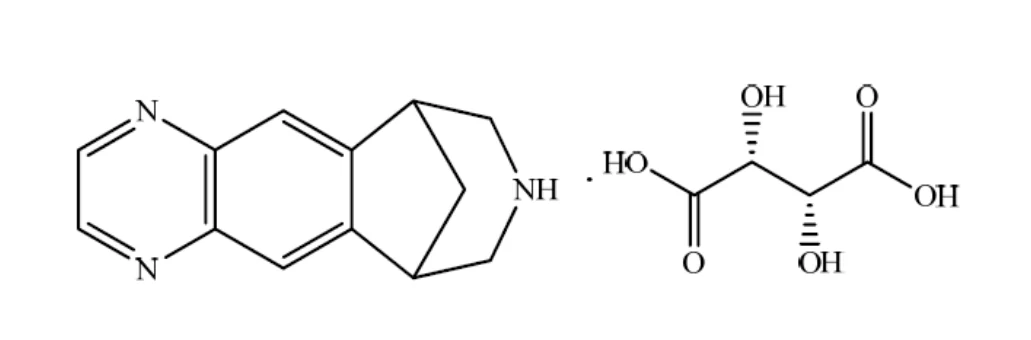
Physicochemical properties:
Varenicline tartrate powder is an off-white to white coloured powder which is freely soluble in water and very slightly soluble in methanol.
CLINICAL TRIALS
Comparative Bioavailability Study
PrMINT-VARENICLINE 0.5 mg and 1 mg tablets have satisfied the criteria for a Biopharmaceutics Classification System (BCS)-based biowaiver in comparison to the respective strengths of PrCHAMPIXR (varenicline tartrate tablets) (Pfizer Canada Inc.).
Clinical Trials
The efficacy of varenicline tartrate in smoking-cessation was demonstrated in five double-blind, placebo-controlled clinical trials in which a total of 4190 chronic cigarette smokers (about 10 cigarettes per day) received varenicline. Patients set a date to stop smoking (target quit date, or TQD) of 1 week after treatment initiation. For four of the studies, the primary outcome was based on 12 weeks of drug treatment, with a subsequent 40 weeks of double-blind assessment, post drug-treatment. Of these four, two included a bupropion SR arm. The fifth study assessed the effect of 12 weeks of double-blind treatment on maintenance of abstinence
.achieved during a prior 12 weeks of open-label varenicline.
The four smoking cessation studies with 12 weeks treatment:
Primary objective: A comparison of varenicline to placebo, and additionally in each of the two studies with a bupropion SR arm comparison of varenicline (1 mg BID) to buproprion SR.
Primary endpoint: Abstinence Responder rate was defined as % of patients for whom 4-week continuous abstinence from Week 9 through Week 12 (4 Week-Continuous Quit Rate, or 4W- CQR) was recorded. Abstinence from smoking was determined on a weekly basis, by patient self-report and measurement of expired carbon monoxide levels (CO). Abstinence was defined as self-report of not even a puff of a cigarette, and by having CO measurements of ≤ 10 ppm.
Intent-to-treat population was used, and patients who discontinued drug treatment early were eligible as responders, provided they chose to remain in the study.
Key secondary endpoint: Continuous Abstinence Rate (CAR) was defined as the proportion of all patients who reported that they did not smoke (not even a puff of a cigarette) from Week 9 through to Week 52 (ie, including the 40-week, non-drug treatment period), and had an exhaled CO measurement of ≤10 ppm.
Study 1; 12-week randomized dose comparison:
This study compared varenicline tartrate 0.5 mg BID (n=253) and 1 mg BID (n=253) with placebo (n=121). Each treatment arm had two different regimens - with or without a week of dose titration – in order to explore the effect on tolerability. The titrated and non-titrated groups were pooled for efficacy analysis.
Study 2; 12-week flexible dose study:
This study (n=312) examined the effect of patient-directed dosing strategy of varenicline tartrate or placebo. After an initial one week titration to a dose 0.5 mg BID, patients could adjust their dosage as often as they wished between 0.5 mg QD to 1 mg BID. Sixty-nine percent (69%) of patients titrated to the maximum allowable dose at any time during the study. For 44% of patients, the modal dose selected was 1 mg BID; for 52% of the study patients, the modal dose selected was 1 mg/day or less.
Study 3 and Study 4; Identical 12-week studies with active comparator arm:
Two identical double-blinded clinical trials prospectively compared the efficacy of varenicline tartrate (1 mg BID) to placebo, and to sustained release bupropion (150 mg BID) in the absence of NRT in smoking-cessation. Patients received treatment for 12 weeks and then were followed for a total study duration of 52 weeks. The varenicline tartrate dosage of 1 mg BID was achieved using a titration of 0.5 mg once daily for the initial 3 days followed by 0.5 mg BID for the next 4 days. The bupropion dosage of 150 mg BID was achieved using a 3-day titration of 150 mg once daily.
Study Results
Primary Endpoint
In all four studies, the primary endpoint for varenicline tartrate (ie, 4W-CQR from Week 9 to Week 12) demonstrated statistical superiority to placebo and in the subset of the two identical studies, statistical superiority to bupropion SR was also demonstrated with varenicline tartrate 1 mg BID dose. No patients were allowed to use NRT during the drug treatment phase, and those who did were considered treatment failures. The 4W-CQR (weeks 9-12) for all four studies are shown in Table 11.
Table 11. Continuous Quit Rate, Week 9 through 12 across different studies
| Studies | Varenicline Tartate 0.5 mg BID | Varenicline Tartrate 1 mg BID | Varenicline Tartrate Flexible | Bupropion SR | Placebo |
|---|---|---|---|---|---|
| Study 1 | 45%* n=253 | 51%* n=253 | 12% n=121 | ||
| Study 2 | 40%* n=157 | 12% n=155 | |||
| Study 3 | 44%*# n=349 | 30%†a n=329 | 17% n=344 | ||
| Study 4 | 44%*# n=343 | 30%†a n=340 | 18% n=340 |
* P<0.0001 Varenicline tartrate vs placebo
† P<0.001 Bupropion SR vs placebo
# P<0.0001 Varenicline tartrate 1 mg BID vs Bupropion SR
a Statistical comparison of bupropion SR vs placebo was not protocol-specified.
60%
50%

40%
30%


20%
10%
0%
STUDY 1
STUDY 2
STUDY 3
STUDY 4
Figure 1. Continuous Quit Rate, Week 9 through 12 across different studies
CQR 9-12
Secondary Endpoints:
In all four studies, a key secondary endpoint for varenicline tartrate (ie, CAR Week 9 through 52) demonstrated statistical superiority to placebo. The CAR Weeks 9 through 52 for all four studies are shown in Table 12.
Table 12. Continuous Abstinence Rate, Week 9 through 52 across different studies
| Studies | Varenicline Tartrate 0.5 mg BID | Varenicline Tartrate 1 mg BID | Varenicline Tartrate Flexible | Bupropion SR | Placebo |
|---|---|---|---|---|---|
| Study 1 | 19%* n=253 | 22.9%* n=253 | 4.1% n=121 | ||
| Study 2 | 22.3%* n=157 | 7.7% n=155 | |||
| Study 3 | 22.1%* n=349 | 16.4%† a n=329 | 8.4% n=344 |
Varenicline
0.5 mg
BID
Varenicline
1 mg
BID
Placebo
Varenicline
flexible
Placebo
Varenicline
1 mg
BID
Bupropion
SR 150 mg
BID
Placebo
Varenicline
1 mg
BID
Bupropion
SR 150 mg
BID
Placebo
0%
5%
0%


5%

0%
5%
STUDY 1
STUDY 2
STUDY 3
STUDY 4
| Studies | Varenicline Tartrate 0.5 mg BID | Varenicline Tartrate 1 mg BID | Varenicline Tartrate Flexible | Bupropion SR | Placebo |
|---|---|---|---|---|---|
| Study 4 | 23%* n=343 | 15% a n=340 | 10.3% n=340 |
* P<0.0001 Varenicline tartrate vs placebo
† P<0.001 Bupropion SR vs placebo
a Statistical comparison of bupropion SR vs placebo was not protocol-specified.
Figure 2. Continuous Abstinence Rate, Week 9 through 52 across different studies
CA 9-52
35%
3
2
2
1
1
Urge to Smoke and Withdrawal Symptoms
Based on the responses to the Brief Questionnaire of Smoking Urges and the Minnesota Nicotine Withdrawal Scale, as measured in the 12-week treatment period, craving and urge to smoke were significantly reduced in patients randomized to varenicline tartrate compared to those randomized to placebo, as were negative affect withdrawal symptoms (depressed mood; irritability, frustration, or anger; anxiety; difficulty concentrating).
Maintenance of Abstinence Study
The fifth study assessed the benefit of an additional 12 weeks of varenicline tartrate therapy on the maintenance of abstinence. Patients received open-label varenicline tartrate 1 mg BID for 12 weeks. Patients who were abstinent for 7 continuous days at Week 12 were then randomized to double- blind treatment with either varenicline tartrate (1 mg BID, n=602) or placebo (n=604) for an additional 12 weeks, and then followed for a total study duration of 52 weeks.
The primary study endpoint was the CO-confirmed CAR (defined as above) from Week 13
Varenicline
0.5 mg
BID
Varenicline
1 mg
BID
Placebo
Placebo
Varenicline
flexible
Bupropion
SR 150 mg
BID
Varenicline
1 mg
BID
Placebo
Varenicline
1 mg
BID
Bupropion
SR 150 mg
BID
Placebo
through Week 24 in the double-blind treatment phase. A key secondary endpoint was the CAR for Week 13 through Week 52.
Superiority to placebo was shown for both the primary and secondary endpoints (see Table 9). The CAR from Week 13 through Week 24 was higher for patients continuing treatment with varenicline tartrate (70.6%) than for patients switching to placebo (49.8%). Superiority to placebo was also maintained during the 28-week, post-treatment follow-up (varenicline tartrate 44.0% versus placebo 37.1% at Week 52). This study showed the benefit of an additional 12 weeks of treatment with varenicline tartrate 1 mg BID for the maintenance of smoking-cessation, compared to placebo. A statistically significant difference was maintained at Week 52, the final week of the study.
Table 13. Maintenance Study Results
Varenicline tartrate N=602 (%) | Placebo N=604 (%) | |
|---|---|---|
| CAR wk 13-24 | 70.6* | 49.8 |
| CAR wk 13-52 | 44.0** | 37.1 |
* P<0.0001 varenicline tartrate vs placebo ** P<0.01 varenicline tartrate vs placebo (CAR) continuous abstinence rate |
Figure 3. Continuous Abstinence Rate from Week 13 through Week 52 Maintenance Study


52
48
44
40
36
32
Study Week
28
24
20
16
12
10
80
70
60
50
40
30
20
100
90
Respo nders ( %)
Note: Subjects at Week 12 were those who were abstinent during the last week of open- label varenicline treatment and were randomized and received treatment in the double- blind phase.
DETAILED PHARMACOLOGY
Preclinical Pharmacology
In vitro and in vivo experiments demonstrate that varenicline performs as expected for a partial agonist of the α4β2 nicotinic receptor subtype. For example, dopamine turnover and microdialysis results in rats demonstrate that varenicline has a reduced ability to activate the mesolimbic dopamine system relative to nicotine, and in fact varenicline can attenuate the activating effects of nicotine on this system. While varenicline does substitute for nicotine in a discrimination paradigm, varenicline was shown to be less reinforcing than nicotine in rats trained to self-administer nicotine, and pretreatment with varenicline significantly decreased nicotine self-administration. Finally, in a withdrawal study in rats and a study assessing withdrawal in monkeys there were no observed behaviors or responses consistent with withdrawal effects.
In vivo and in vitro data demonstrate that varenicline is well absorbed after oral administration. Protein binding of varenicline is low and similar across species. It readily distributes throughout the body with increased but reversible association with melanin-containing tissues. Varenicline was shown to not interact with major human drug metabolizing CYPs. A substantial portion (75% - 93% of dose) of varenicline was excreted as unchanged drug in all species examined, with most drug-related material excreted in urine. Metabolites were minor and those observed in human circulation and excreta were also observed in one or more animal species. In vitro data suggest that renal excretion of varenicline occurs by both passive filtration and an active transport process (likely via renal transporter OCT2).
TOXICOLOGY
The toxicology program was conducted to characterize the toxicity and dose response in the appropriate nonclinical species of the rat and monkey. No evidence of any unique toxicity or adverse pharmacological effects of varenicline in the expected range of human plasma exposure was observed in animals.
Acute and Repeated-Dose Toxicity
The toxicology program was conducted to characterize the toxicity and dose response in the appropriate nonclinical species of the rat and monkey. Effects were seen primarily in the gastrointestinal tract and the central nervous system (CNS) ie, tremors and convulsions at exposure multiples greater than those observed in humans. These changes were reversible.
Acute Toxicity
Acute oral studies in rat (30, 100, 200, and 300 mg/kg) and monkey (3 mg/kg) and intravenous (IV) studies in monkeys (0.08-0.3 mg/kg) were conducted.
In the single-dose study in rats, the findings were in the gastrointestinal system (decreased body weight and loose stool) and CNS (tremors and convulsions). The onset of the CNS clinical signs was rapid and occurred immediately to 2.5 hours post-dosing. All findings were reversed by the end of the 14-day observation period. There was one death in rats dosed at 300 mg/kg PO, a dose associated with exposure approximately 300-fold above expected human exposure.
The single-dose no observed adverse effect level (NOAEL) in monkeys was 0.2 mg/kg (0.1 mg/kg BID) corresponding to an exposure of approximately 1.2-fold above expected human exposure. In a single-dose oral study in monkeys at 3 mg/kg, the findings were also in the gastrointestinal system (emesis) and CNS (tremors). In addition electrocardiogram changes (decreased HR and QT interval and increased PRQ and P wave) were observed. Clinical signs (emesis and tremors) occurred at similar exposures after both oral gavage and IV dosing, both associated with exposure approximately 2- to 4-fold above expected human exposure. All of the findings occurred within ~1-4 hours post-dosing and were not present the next day.
Repeated-Dose Toxicity
Table 14. Repeat-Dose Gavage Pivotal Studies in Rats and Monkeys
| Species | Duration | Dose (mg/kg/day) |
|---|---|---|
| Rats | ||
| 6 Weeks | 0.3, 3, 30 | |
| 3 Months | 3, 10, 30 | |
| 6 Months | 3, 10, 30 | |
| Monkeys | ||
| 6 Weeks | 0.01, 0.05, 0.2 (0.1 BID) | |
| 3 Months | 0.01, 0.05, 0.2 (0.1 BID) | |
| 9 Months | 0.01, 0.05, 0.2 (0.1 BID) | |
| 9 Months | 0.2 (0.1 BID), 0.4 (0.2 BID), 1.2 (0.6 BID) |
Rats:
The no-observed adverse effect level (NOAEL) in rats was 10 mg/kg/day in the 3- and 6-month studies, which corresponds to Cmax and AUC values that are 68 and 50 times those at the maximum recommended human dose (MRHD), respectively. The NOAELs in both studies were based on decreases in body weight and food consumption, which were attributed to decreases in gastric motility.
In the 6-week and 3-month rat studies at 30 mg/kg/day (associated with exposures of approximately 75- to 140-fold above expected human exposure) the findings were in the gastrointestinal tract; decreases in body weight, food consumption, and intestinal dilatation, which were consistent with decreases in gastric motility. At ≥ 10 mg/kg/day (associated with exposures of approximately 40- to 65-fold above expected human exposure), there were slight increases in alkaline phosphatase (ALP), alanine transaminase (ALT), and/or total bilirubin. In addition, hepatocellular single-cell necrosis was observed in a 10 day study, at 100 mg/kg/day.
At ≥30 mg/kg/day, there were slight increases in hematocrit and hemoglobin. Similar changes were seen in mice and other rat studies, but not monkeys. The changes may be secondary to stress of decreased food consumption and dehydration.
In the 6-month rat study, findings were also in the gastrointestinal tract (decreases in body weight and food consumption). In this study, there were no biologically meaningful hepatic changes as compared to the marginal hepatic findings observed in the shorter-term studies.
Monkeys:
The NOAEL in cynomolgus monkeys was 0.2 mg/kg/day (0.1 mg/kg BID) in the first 9-month study. There were also no findings in the second 9-month study at this dose, which was the low dose. The next dose up (0.4 mg/kg/day) showed sporadic emesis and loose stools. The Cmax and AUC at 0.2 mg/kg/day in monkeys was approximately 3-fold the human exposure at MRHD.
There were no findings in the 6-week, 3-month, or the first 9-month study, at doses up to 0.2 mg/kg/day. In the second 9-month monkey study, the main finding at 0.4 mg/kg/day (0.2 mg/kg BID) was sporadic emesis. One female monkey was found dead at this dose of megacolon, secondary to colonic torsion and ischemic necrosis. Megacolon is an uncommon spontaneous finding in monkeys. This finding was likely secondary to the gastrointestinal dysfunction (loose stools) that was evident prior to and during treatment, although drug treatment cannot be excluded.
Colonic torsion was not observed in other monkeys with equivalent or higher doses. At 1.2 mg/kg/day (0.6 mg/kg BID) – approximately 10- to 12-fold above expected human exposure – all animals were euthanized or removed from study after 3-8 weeks of treatment due to body weight loss (>15% in 10 of 12 monkeys) associated with emesis and decreased food consumption. Decreases in core body temperature of 1-2 degrees Celsius were observed (and had also been seen in an earlier monkey study at 0.6 mg/kg/day, and were also seen in mice; body temperature perturbation is a well-known effect of nicotine). There were no treatment- related microscopic findings in any of the animals. Dosing was discontinued and the surviving animals at 1.2 mg/kg/day (0.6 mg/kg BID) were monitored for ~1 month. The clinical signs ceased and body weight returned to pretreatment levels within a month.
Carcinogenesis: Lifetime carcinogenicity studies were performed in CD-1 mice and Sprague- Dawley rats. There was no evidence of a carcinogenic effect in mice administered varenicline by oral gavage for 2 years at doses up to 20 mg/kg/day (47 times the maximum recommended human daily exposure based on the area under the curve (AUC). Rats were administered varenicline (1, 5, and 15 mg/kg/day) by oral gavage for 2 years. In male rats (n=65 per sex per dose group), incidences of hibernoma (tumor of the brown fat) was increased at the mid dose (1 tumor, 5 mg/kg/day, 23 times the maximum recommended human daily exposure based on AUC) and at the maximum dose (2 tumors, 15 mg/kg/day, 67 times the maximum recommended human daily exposure based on AUC). The clinical relevance of this finding to humans has not been established. There was no evidence of carcinogenicity in female rats.
Mutagenesis: Varenicline was not genotoxic, with or without metabolic activation, in the following assays: Ames bacterial mutation assay; mammalian CHO/HGPRT assay; and tests for cytogenetic aberrations in vivo in rat bone marrow and in vitro in human lymphocytes.
Sexual Function / Reproduction
Impairment of Fertility: There was no evidence of impairment of fertility in either male or female Sprague-Dawley rats administered varenicline succinate up to 15 mg/kg/day (67 and 36 times, respectively, the maximum recommended human daily exposure based on AUC at 1 mg BID). However, a decrease in fertility was noted in the offspring of pregnant rats who were administered varenicline succinate at an oral dose of 15 mg/kg/day (36 times the maximum recommended human daily exposure based on AUC at 1 mg BID). This decrease in fertility in the offspring of treated female rats was not evident at an oral dose of 3 mg/kg/day (9 times the maximum recommended human daily exposure based on AUC at 1 mg BID).
REFERENCES
Acri JB, Grunberg NE, Morse DE. Effects of nicotine on the acoustic startle reflex amplitude in rats. Psychopharmacology (Berl). 1991;104(2):244-8.
Al-Hachim GM, Mahmoud FA. Prenatal nicotine and CNS development. Epilepsia. 1985 Nov- Dec; 26(6):661-5.
American Psychiatric Association. Diagnostic and Statistical Manual of Mental Disorders. 5th ed. Washington, DC: American Psychiatric Association; 2013.
Anthenelli RM, Benowitz NL, West R, St Aubin L, McRae T, Lawrence D, Ascher J, Russ C, Krishen A, Evins AE. Neuropsychiatric safety and efficacy of varenicline, bupropion, and nicotine patch in smokers with and without psychiatric disorders (EAGLES): a double-blind, randomised, placebo-controlled clinical trial. Lancet. 2016;387(10037):2507-20.
Anthenelli RM, Morris C, Ramey TS, Dubrava SJ, Tsilkos K, Russ C, Yunis C. Effects of varenicline on smoking cessation in adults with stable current or past major depression: A randomized trial. Ann Intern Med. 2013;159:390–400.
Baldi A, Santini M, Mellone P, Esposito V, Groeger AM, Caputi M, et al. Mediastinal hibernoma: a case report. J Clin Pathol. 2004 Sep;57(9):993-4.
Burstein AH, Fullerton T, Clark DJ, Faessel HM. Pharmacokinetics, safety, and tolerability after single and multiple oral doses of varenicline in elderly smokers. J Clin Pharmacol. 2006 Nov;46(11):1234-40.
Cappelleri JC, Bushmakin AG, Baker CL, Merikle E, Olufade AO, Gilbert DG. Revealing the multidimensional framework of the Minnesota nicotine withdrawal scale. Curr Med Res Opin. 2005 May;21(5):749-60.
Coe JW, Brooks PR, Vetelino MG, Wirtz MC, Arnold EP, Huang J, et al. Varenicline: an alpha4beta2 nicotinic receptor partial agonist for smoking-cessation. J Med Chem. 2005 May 19;48(10):3474-7.
Ebbert JO, Hughes JR, West RJ, Rennard SI, Russ C, McRae TD, Treadow J, Yu C, Dutro MP, Park PW. Effect of varenicline on smoking cessation through smoking reduction: A randomized clinical trial. JAMA. 2015;313(7):687-94
Faessel HM, Smith BJ, Gibbs MA, Gobey JS, Clark DJ, Burstein AH. Single-dose pharmacokinetics of varenicline, a selective nicotinic receptor partial agonist, in healthy smokers and nonsmokers. J Clin Pharmacol. 2006 Sep;46(9):991-8.
Faessel HM, Gibbs MA, Clark DJ, Rohrbacher K, Stolar M, Burstein AH. Multiple-dose pharmacokinetics of the selective nicotinic receptor partial agonist, varenicline, in healthy smokers. J Clin Pharmacol. 2006 Dec;46(12):1439-48.
Faessel H, Ravva P, Williams K. Pharmacokinetics, Safety and Tolerability of Varenicline in Healthy Adolescent Smokers: A Multicenter, Randomized, Double-Blind, Placebo-Controlled Parallel-Group Study. Clin Ther. 2009;31(1):177-86.
Gonzales D, Hajek P, Pliamm, Nackerts, Tseng L-J, McRae TD, Treadow J. Retreatment with Varenicline for Smoking Cessation in Smokers Who Have Previously Taken Varenicline: A Randomized, Placebo-Controlled Trial. Clin Pharmacol Ther. 2014;96(3): 390-6.
Gonzales D, Rennard SI, Nides M, Oncken C, Azoulay S, Billing CB, Watsky EJ, Gong J, Williams KE, Reeves KR. Varenicline, an alpha4beta2 nicotinic acetylcholine receptor partial agonist, vs sustained-release bupropion and placebo for smoking-cessation: a randomized controlled trial. JAMA. 2006 Jul 5;296(1):47-55.
Hughes JR, Keely JP, Niaura RS, Ossip-Klein DJ, Richmond RL, Swan GE. Measures of abstinence in clinical trials: issues and recommendations. Nicotine Tob Res. 2003 Feb;5(1):13-
- 25. Erratum in: Nicotine Tob Res. 2003 Aug;5(4):603.
Jorenby DE, Hays JT, Rigotti NA, Azoulay S, Watsky EJ, Williams KE, Billing CB, Gong J, Reeves KR. Efficacy of varenicline, an alpha4beta2 nicotinic acetylcholine receptor partial agonist, vs placebo or sustained-release bupropion for smoking-cessation: a randomized controlled trial. JAMA. 2006 Jul 5;296(1):56-63. Erratum in: JAMA. 2006 Sep 20;296(11):1355.
Lean ME, James WP, Jennings G, Trayhurn P. Brown adipose tissue uncoupling protein content in human infants, children and adults. Clin Sci (Lond). 1986 Sep;71(3):291-7.
Maskos U, Molles BE, Pons S, Besson M, Guiard BP, Guilloux JP, et al. Nicotine reinforcement and cognition restored by targeted expression of nicotinic receptors. Nature. 2005 Jul 7;436(7047):103-7.
Nides M, Oncken C, Gonzales D, Rennard S, Watsky EJ, Anziano R, Reeves KR. Smoking- cessation with varenicline, a selective alpha4beta2 nicotinic receptor partial agonist: results from a 7-week, randomized, placebo- and bupropion-controlled trial with 1-year follow-up. Arch Intern Med. 2006 Aug 14-28;166(15):1561-8.
Obach RS, Reed-Hagen AE, Krueger SS, Obach BJ, O'Connell TN, Zandi KS, et al. Metabolism and disposition of varenicline, a selective alpha4beta2 acetylcholine receptor partial agonist, in vivo and in vitro. Drug Metab Dispos. 2006 Jan;34(1):121-30.
Oncken C, Gonzales D, Nides M, Rennard S, Watsky E, Billing CB, Anziano R, Reeves K. Efficacy and safety of the novel selective nicotinic acetylcholine receptor partial agonist, varenicline, for smoking-cessation. Arch Intern Med. 2006 Aug 14-28;166(15):1571-7.
Rennard S, Hughes J, Cinciripini PM, Kralikova E, Raupach T, Arteaga C, St-Aubin LB, Russ
C. A randomized placebo-controlled trial of varenicline for smoking cessation allowing flexible quit dates. Nicotine Tob Res, 2012 Mar;14(3):343-50.
Rigotti NA, Pipe AL, Benowitz NL, Arteaga C, Garza D, Tonstad S. Efficacy and Safety of Varenicline for Smoking Cessation in Patients With Cardiovascular Disease. A Randomized Trial. Circulation, 2010, 121:221-229
Rollema H, Chambers LK, Coe JW, Glowa J, Hurst RS, Lebel LA, et al. Pharmacological profile of the alpha(4)beta(2) nicotinic acetylcholine receptor partial agonist varenicline, an effective smoking-cessation aid. Neuropharmacology. 2006 Dec 6; [Epub ahead of print http://dx.doi.org/10.1016/j.neuropharm.2006.10.016].
Sell H, Deshaies Y, Richard D. The brown adipocyte: update on its metabolic role. Int J Biochem Cell Biol. 2004 Nov;36(11):2098-104.
SRNT Subcommittee on Biochemical Verification. Biochemical verification of tobacco use and cessation. Nicotine Tob Res. 2002 May;4(2):149-59.
Tapper AR, McKinney SL, Nashmi R, Schwarz J, Deshpande P, Labarca C, et al. Nicotine activation of alpha4 receptors: sufficient for reward, tolerance, and sensitization. Science. 2004 Nov 5;306(5698):1029-32.
Tashkin D.P, Rennard S, Hays JT, Ma W, Lawrence D, and Lee T.C. Effects of varenicline on smoking cessation in mild-to-moderate COPD: A randomized controlled trial. Chest 2011; 139(3): 591-599.
Tonstad S, Tonnesen P, Hajek P, Williams KE, Billing CB, Reeves KR; Varenicline Phase 3 Study Group. Effect of maintenance therapy with varenicline on smoking-cessation: a randomized controlled trial. JAMA. 2006 Jul 5;296(1):64-71.
Tonstad S, Davies S, Flammer M, Russ C, and Hughes J; Psychiatric Adverse Events in Randomized, Double-Blind, Placebo-Controlled Clinical Trials of Varenicline. Drug Saf 2010; 33 (4): 289-301
Ward MM, Swan GE, Jack LM. Self-reported abstinence effects in the first month after smoking-cessation. Addict Behav. 2001 May-Jun;26(3):311-27.
West R, Hajek P, Stead L, Stapleton J. Outcome criteria in smoking-cessation trials: proposal for a common standard. Addiction. 2005 Mar;100(3):299-303.
Williams JM, Anthenelli RM, Morris CD, et al. A randomized, double-blind, placebo-controlled study evaluation the safety and efficacy of varenicline for smoking cessation in patients with schizophrenia or schizoaffective disorder. J Clin Psychiatry. 2012;73(5):654-60.
Champix® (Varenicline Tartrate Tablets, 0.5 mg and 1 mg), submission control 221214, Product Monograph, Pfizer Canada Inc. (Jan, 22, 2019)