


Patient Medication Information: uses, side effects, how to take - Morphine Sulfate Injection, USP (Fresenius Kabi Canada, 4 mg)
Serious Warnings and Precautions
- Even if you take Morphine Sulfate Injection, USP as prescribed you are at a risk for opioid addiction, abuse and misuse. This can lead to overdose and death.
- You may get life-threatening breathing problems while taking Morphine Sulfate Injection, USP. This is less likely to happen if you take it as prescribed by your doctor. Babies are at risk of life-threatening breathing problems if their mothers take opioids while pregnant or nursing.
- If a person has not been prescribed Morphine Sulfate Injection, USP taking even one dose can cause a fatal overdose. This is especially true for children.
If you took Morphine Sulfate Injection, USP while you were pregnant, whether for short or long periods of time or in small or large doses, your baby can suffer life-threatening withdrawal symptoms after birth. This can occur in the days after birth and for up to 4 weeks after delivery. If your baby has any of the following symptoms:
- has changes in their breathing (such as weak, difficult or fast breathing)
- is unusually difficult to comfort
- has tremors (shakiness)
- has increased stools, sneezing, yawning, vomiting, or fever
Seek immediate medical help for your baby.
Taking Morphine Sulfate Injection, USP with other opioid medicines, benzodiazepines, alcohol, or other central nervous system depressants (including street drugs) can cause severe drowsiness, decreased awareness, breathing problems, coma, and death.
What is Morphine Sulfate Injection, USP used for?
Morphine Sulfate Injection, USP is an injection containing morphine sulfate (an opioid analgesic) used to control your pain.
How does Morphine Sulfate Injection, USP work?
Morphine Sulfate Injection, USP is a painkiller belonging to the class of drugs known as opioids.
It relieves pain by acting on specific nerve cells of the spinal cord and brain.
What are the ingredients in Morphine Sulfate Injection, USP?
Medicinal ingredient: Morphine sulfate
Non-medicinal ingredients: Sodium chloride, Sodium Citrate Dihydrate, Citric Acid, Edetate Disodium, Calcium Chloride Dihydrate and water for injection
Morphine Sulfate Injection, USP comes in the following dosage form:
Sterile solution for injection of 2 mg / mL, 4 mg / mL and 10 mg / mL in SimplistTM prefilled single use syringes
Do not use Morphine Sulfate Injection, USP if:
- your doctor did not prescribe it for you
you are allergic to morphine sulfate or any of the other ingredients in Morphine Sulfate
Injection, USP
- you can control your pain by the occasional use of other pain medications. This includes those available without a prescription
- you have severe asthma, trouble breathing, or other breathing problems
- you have any heart problems
- you have bowel blockage or narrowing of the stomach or intestines
- you have severe pain in your abdomen
- you have a head injury
- you are at risk for seizures
- you suffer from alcoholism
- you are taking or have taken within the past 2 weeks a Monoamine Oxidase inhibitor (MAOi) (such as phenelzine sulphate, tranylcypromine sulphate, moclobemide or selegiline)
- you are going to have, or recently had, a planned surgery
To help avoid side effects and ensure proper use, talk to your healthcare professional before you take Morphine Sulfate Injection, USP. Talk about any health conditions or problems you may have, including if you:
- have a history of illicit or prescription drug or alcohol abuse
- have severe kidney, liver or lung disease
- have heart disease
- have low blood pressure
- have past or current depression
- suffer from chronic or severe constipation
- have problems with your thyroid, adrenal or prostate gland
- have, or had in the past hallucinations or other severe mental problems
- suffer from migraines
- are planning to become pregnant
Other warnings you should know about:
Opioid dependence and addiction: There are important differences between physical dependence and addiction. It is important that you talk to your doctor if you have questions or concerns about abuse, addiction or physical dependence.
Pregnancy, nursing, labour and delivery: Opioids can be transferred to your baby through breast milk, or while still in the womb. Morphine Sulfate Injection, USP can then cause life- threatening breathing problems in your unborn baby or nursing infant. Your doctor will determine if the benefits of using Morphine Sulfate Injection, USP outweigh the risks to your unborn baby or nursing infant.
If you are pregnant and are taking Morphine Sulfate Injection, USP, it is important that you don’t stop taking your medication all of a sudden. If you do, it can cause a miscarriage or a still-birth. Your doctor will monitor and guide you on how to slowly stop taking Morphine Sulfate Injection, USP. This may help avoid serious harm to your unborn baby.
Driving and using machines: Before you do tasks which may require special attention, you should wait until you know how you react to Morphine Sulfate Injection, USP. Morphine Sulfate Injection, USP can cause:
- drowsiness
- dizziness or
- lightheadedness
This can usually occur after you take your first dose and when your dose is increased.
Disorder of the adrenal gland: You may develop a disorder of the adrenal gland called adrenal insufficiency. This means that your adrenal gland is not making enough of certain hormones. You may experience symptoms such as:
- nausea, vomiting
- feeling tired, weak or dizzy
- decreased appetite
You may be more likely to have problems with your adrenal gland if you have been taking opioids for longer than one month. Your doctor may do tests, give you another medication, and slowly take you off Morphine Sulfate Injection, USP.
Serotonin Syndrome: Morphine Sulfate Injection, USP can cause Serotonin Syndrome, a rare but potentially life-threatening condition. It can cause serious changes in how your brain, muscles and digestive system work. You may develop Serotonin Syndrome if you take Morphine Sulfate Injection, USP with certain anti-depressants or migraine medications.
Serotonin Syndrome symptoms include:
- fever, sweating, shivering, diarrhea, nausea, vomiting;
- muscle shakes, jerks, twitches or stiffness, overactive reflexes, loss of coordination;
- fast heartbeat, changes in blood pressure;
- confusion, agitation, restlessness, hallucinations, mood changes, unconsciousness, and coma.
Sexual Function/Reproduction: Long term use of opioids may lead to a decrease in sex hormone levels. It may also lead to low libido (desire to have sex), erectile dysfunction or being infertile.
Tell your healthcare professional about all the medicines you take, including any drugs, vitamins, minerals, natural supplements or alternative medicines.
The following may interact with Morphine Sulfate Injection, USP:
Alcohol. This includes prescription and non-prescription medications that contain alcohol.
Do not drink alcohol while you are taking Morphine Sulfate Injection, USP. It can lead to:
- drowsiness
- unusually slow or weak breathing
- serious side effects or
- a fatal overdose
other sedative drugs which may enhance the drowsiness caused by Morphine Sulfate
Injection, USP
- other opioid analgesics (drugs used to treat pain)
- general anesthetics (drugs used during surgery)
- benzodiazepines (drugs used to help you sleep or that help reduce anxiety)
- antidepressants (for depression and mood disorders). Do not take Morphine Sulfate Injection, USP with MAO inhibitors (MAOi) or if you have taken MAOi’s in the last 14 days.
- drugs used to treat serious mental or emotional disorders (such as schizophrenia)
- antihistamines (drugs used to treat allergies)
- anti-emetics (drugs used for the prevention of vomiting)
- drugs used to treat muscle spasms and back pain
- drugs used to treat migraines (e.g. triptans)
- St. John’s Wort
How to take Morphine Sulfate Injection, USP:
Morphine Sulfate Injection, USP 2 mg / mL, 4 mg / mL and 10 mg / mL
Usual Adult dose: 5 mg to 20 mg by intravenous, intramuscular or subcutaneous every 4 hours.
Not for intrathecal or epidural use.
Usual Adult Starting Dose:
Your dose is tailored/personalized just for you.
Your doctor will prescribe the lowest dose that works to control your pain. It is recommended that you only take Morphine Sulfate Injection, USP for up to 7 days. If you need to take
Morphine Sulfate Injection, USP for longer, your doctor will determine the best dose for you to lower the risk of side effects and overdose. Higher doses can lead to more side effects and a greater chance of overdose.
Review your pain regularly with your doctor to determine if you still need Morphine Sulfate Injection, USP. Be sure to use Morphine Sulfate Injection, USP only for the condition for which it was prescribed.
If your pain increases or you develop any side effect as a result of taking Morphine Sulfate
Injection, USP tell your doctor immediately.
Administration
Parenteral drug products should be inspected visually for clarity of solutions, particulate matter, precipitate, discoloration, and leakage prior to administration whenever solution and container permit. Solutions showing haziness, particulate matter, precipitate, discolouration or leakage should not be used.
Instructions for Use:
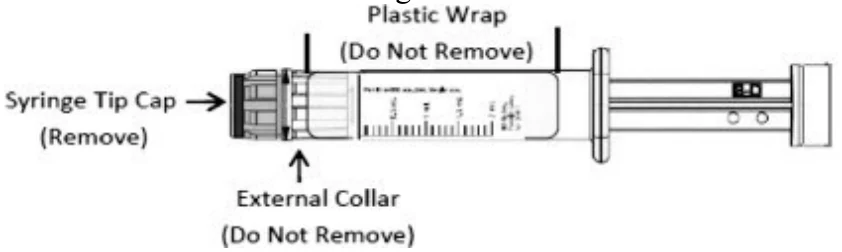
CAUTION: Certain glass syringes may malfunction, break or clog when connected to some Needleless Luer Access Devices (NLADs) and needles. This syringe has a larger internal syringe tip and an external collar (luer collar). The external collar must remain attached to the syringe. Data show that the syringe achieves acceptable connections with the BD Eclipse™ Needle and the Terumo SurGuard2™ Safety Needle and with the following non-center post NLADs: Alaris SMARTSITE™, B-Braun ULTRASITE™, BD-Q SYTE™, Maximum MAX PLUSTM and B-Braun SAFSITE™. The data also show acceptable connections are achieved to the center post ICU Medical CLAVE™. However, spontaneous disconnection of this glass syringe from needles and NLADs with leakage of drug product may occur. Assure that the needle or NLAD is securely attached before beginning the injection. Visually inspect the glass syringe-needle or glass syringe –NLAD connection before and during drug administration. Do not remove the clear plastic wrap around the external collar (see Figure 1).
Figure 1
- 1.
Inspect the outer packaging (blister pack) by verifying:
blister integrity
- drug name
- drug strength
- dose volume
- route of administration
- expiration date to be sure that the drug has not expired
- sterile field applicability
Do not use if package has been damaged.
- 2. Peel open the paper (top web) of the outer packaging that displays the product information to access the syringe. Do not pop syringe through.
- 3.
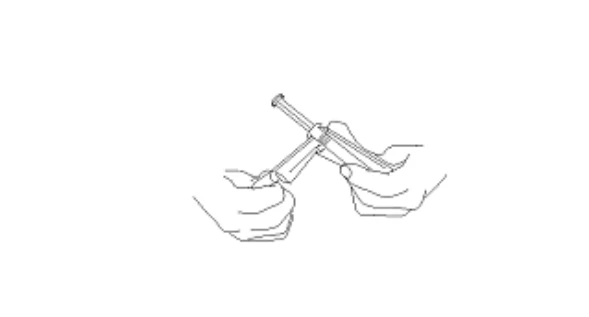
Bend the plastic part of the outer packaging (thermoform) so as to present the plunger rod for syringe removal (see Figure 2).
Figure 2
- 4.
Perform visual inspection on the syringe by verifying
Absence of syringe damage - Absence of external particles
- Absence of internal particles
- Proper drug colour
- Expiration date to be sure that the drug has not expired
- Drug name
- Drug strength
- Dose volume
- Route of administration
- Sterile field applicability
- Integrity of the plastic wrap around the external collar
- 5. Do not remove plastic wrap around the external collar. Push plunger rod slightly to break the stopper loose while tip cap is still on.
- 6.
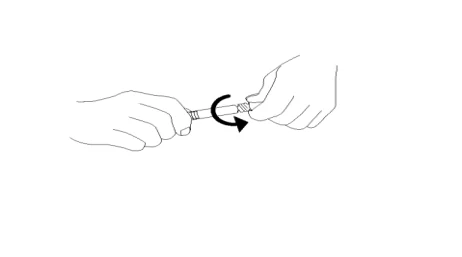
Do not remove plastic wrap around the external collar. Remove tip cap by twisting it off (see Figure 3).
Figure 3
- 7. Discard the tip cap.
- 8. Expel air bubble.
- 9. Adjust dose into sterile material (if applicable).
- 10. Connect the syringe to appropriate injection connection depending on route of administration. Before injection, ensure that the syringe is securely attached to the needle or needleless luer access device (NLAD).
- 11. Depress plunger rod to deliver medication. Ensure that pressure is maintained on the plunger rod during the entire administration.
- 12.
Remove syringe from NLAD (if applicable) and discard into appropriate receptacle. If delivering medication via intramuscular (IM) route, do not recap needle. To prevent needle-stick injuries, needles should not be recapped.
NOTES:
- All steps must be done sequentially.
- Do not autoclave syringe.
- Do not use this product on a sterile field.
- Do not introduce any other fluid into the syringe at any time.
- This product is for single use only
Simplist is a trademark of Fresenius Kabi USA, LLC.
Stopping your Medication
If you have been taking Morphine Sulfate Injection, USP for more than a few days you should not stop taking it all of a sudden. Your doctor will monitor and guide you on how to slowly stop taking Morphine Sulfate Injection, USP. You should do it slowly to avoid uncomfortable symptoms such as having:
- body aches
- diarrhea
- goosebumps
- loss of appetite
- nausea
- feeling nervous or restless
- runny nose
- sneezing
- tremors or shivering
- stomach cramps
- rapid heart rate (tachycardia)
- having trouble sleeping
- an unusual increase in sweating
- heart palpitations
- an unexplained fever
- weakness
- yawning
By reducing or stopping your opioid treatment, your body will become less used to opioids. If you start treatment again, you will need to start at the lowest dose. You may overdose if you restart at the last dose you took before you slowly stopped taking Morphine Sulfate Injection, USP.
Refilling your Prescription for Morphine Sulfate Injection, USP:
A new written prescription is required from your doctor each time you need more Morphine
Sulfate Injection, USP.
Only obtain prescriptions for this medicine from the doctor in charge of your treatment. Do not seek prescriptions from other doctors unless you switch to another doctor for your pain management.
Overdose:
If you think you have taken too much Morphine Sulfate Injection, USP contact your healthcare professional, hospital emergency department or regional Poison Control Centre immediately, even if there are no symptoms.
Signs of overdose may include:
- unusually slow or weak breathing
- dizziness
- confusion
- extreme drowsiness
What are possible side effects from using Morphine Sulfate Injection, USP?
These are not all the possible side effects you may feel when taking Morphine Sulfate Injection, USP. If you experience any side effects not listed here, contact your healthcare professional.
Side effects may include:
- Drowsiness
- Insomnia
- Dizziness
- Fainting
- Nausea, vomiting, or a poor appetite
- Dry mouth Headache
- Problems with vision
- Weakness, uncoordinated muscle movement
- Itching
- Sweating
- Constipation
- Low sex drive, impotence (erectile dysfunction), infertility
Talk with your doctor or pharmacist about ways to prevent constipation when you start using
Morphine Sulfate Injection, USP.
Serious side effects and what to do about them
| Symptom / effect | Talk to your healthcare professional | Stop taking drug and get immediate medical help | |
| Only if severe | In all cases | ||
RARE Overdose: hallucinations, confusion, inability to walk normally, slow or weak breathing, extreme sleepiness, sedation, or dizziness, floppy muscles/low muscle tone, cold and clammy skin. | ✓ | ||
| Respiratory Depression: slow, shallow or weak breathing. | ✓ | ||
| Allergic Reaction: rash, hives, swelling of the face, lips, tongue or throat, difficulty swallowing or breathing | ✓ | ||
| Bowel Blockage (impaction): abdominal pain, severe constipation, nausea | ✓ | ||
| Withdrawal: nausea, vomiting, diarrhea, anxiety, shivering, cold and clammy skin, body aches, loss of appetite, sweating. | ✓ | ||
Fast, Slow or Irregular Heartbeat: heart palpitations. | ✓ | ||
| Low Blood Pressure: dizziness, fainting, light-headedness. | ✓ | ||
| Serotonin Syndrome: agitation or restlessness, loss of muscle control or muscle twitching, tremor, diarrhea | ✓ | ||
If you have a troublesome symptom or side effect that is not listed here or becomes bad enough to interfere with your daily activities, talk to your healthcare professional.
Reporting Side Effects
You can report any suspected side effects associated with the use of health products to Health
Canada by:
- Visiting the Web page on Adverse Reaction Reporting (https://www.canada.ca/en/health-canada/services/drugs-health-products/medeffect-canada/adverse-reaction-reporting.html) for information on how to report online, by mail or by fax; or
- Calling toll-free at 1-866-234-2345.
NOTE: Contact your health professional if you need information about how to manage your side effects. The Canada Vigilance Program does not provide medical advice.
Storage:
- Keep unused or expired Morphine Sulfate Injection, USP in a secure place to prevent theft, misuse or accidental exposure.
- Store at 15 °C to 30 °C. Protect from light and freezing.
- Keep Morphine Sulfate Injection, USP under lock, out of sight and reach of children and pets.
Never take medicine in front of small children as they will want to copy you.
Accidental ingestion by a child is dangerous and may result in death. If a child accidentally takes Morphine Sulfate Injection, USP, get emergency help right away.
If you want more information about Morphine Sulfate Injection, USP:
- Talk to your healthcare professional
- Find the full Product Monograph that is prepared for healthcare professionals and includes this Patient Medication Information by visiting the Health Canada website (https://health-products.canada.ca/dpd-bdpp/index-eng.jsp); Fresenius Kabi Canada’s website (http://www.fresenius-kabi.com/en-ca/), or by calling 1-877-821-7724.
This information is current up to the time of the date of preparation shown below, but more current information may be available from Fresenius Kabi.
Fresenius Kabi Canada Ltd.
165 Galaxy Blvd, Suite 100
Toronto, ON M9W 0C8
Simplist is a trademark of Fresenius Kabi USA, LLC.
Date of Preparation: May 15, 2019