


Product Monograph - Mylan-Buspirone
CLINICAL TRIALS
Comparative Bioavailability Studies
A comparative, bioavailability study was conducted to compare the rate and extent of absorption of MYLAN-BUSPIRONE 10 mg tablets against the Canadian Reference Buspar® 10 mg tablets.
The pharmacokinetic data calculated for MYLAN-BUSPIRONE and Canadian Reference
Product are presented below.
Mean Pharmacokinetic Data for Plasma Buspirone
Buspirone Hydrochloride
(1 x 10 mg tablets) Fasting Conditions From measured data
Geometric Mean Arithrmetic Mean (CV%)
| Parameter | Test | Reference ‡Buspar® | %Ratio of | 95% Confidence Interval | ||||
| †Mylan- | Geometric | |||||||
| Buspirone | Means | |||||||
| AUC (0 - t hours) (ng•hr/mL) | 14.56 23.41 (99.04) | 14.00 22.70 (100.36) | 104.03 | 91.83% - 117.86% | ||||
| AUC (0 - infinity) (ng•hr/mL) | 15.50 24.24 (98.36) | 15.04 23.44 (98.50) | 103.03 | 91.36% - 116.19% | ||||
| Cmax (ng/mL) | 5.30 9.43 (109.65) | 4.54 7.73 (98.93) | 116.86 | 98.64% - 138.45% | ||||
| Tmax (ng/mL)* | 1.42 (1.71) | 1.21 (0.99) | ||||||
| T1/2 (ng/mL)* | 3.23 (2.12) | 3.16 (1.55) | ||||||
†Mylan-Buspirone 10 mg tablets, manufactured by Mylan Pharmaceuticals ULC Canada. ‡Buspar 10 mg tablets manufactured by Bristol was purchased from Kohlers Distributing, Hamilton Ontario, Canada * These are arithmetic means (standard deviation)
INDICATIONS AND CLINICAL USE
MYLAN-BUSPIRONE (buspirone hydrochloride) is indicated for the short term symptomatic relief of excessive anxiety in patients with Generalized Anxiety Disorder.
The effectiveness of MYLAN-BUSPIRONE in long-term use (i.e. more than 4 weeks) has not been evaluated in controlled clinical trials.
Eight three-way, short term, controlled clinical trials involving buspirone, diazepam and placebo are considered central to the evaluation of buspirone as an anxiolytic agent. In four of the eight clinical trials, buspirone demonstrated a significant difference from placebo. In the other four trials, there was no significant difference between buspirone and placebo, but a significantly greater improvement was observed with diazepam than with placebo. The adverse effect profiles of buspirone and diazepam in these clinical trials were, however, different.
CONTRAINDICATIONS
MYLAN-BUSPIRONE (buspirone hydrochloride) is contraindicated in patients hypersensitive to buspirone hydrochloride or any of the inactive ingredients.
MYLAN-BUSPIRONE is contraindicated in patients with severe hepatic or severe renal impairment.
WARNINGS
MAO Inhibitors
The occurrence of elevated blood pressure in patients receiving both buspirone hydrochloride and a monoamine oxidase inhibitor (MAOI) has been reported. Therefore, it is recommended that buspirone should not be used concomitantly with an MAOI.
Extrapyramidal Symptoms
Since buspirone can bind to central dopaminergic receptors, the possibility of acute and chronic changes in dopamine mediated neurological function (e.g. dystonia, pseudo-parkinsonism, akathisia and tardive dyskinesia) should be considered (see PRECAUTIONS).
Convulsive Disorders
MYLAN-BUSPIRONE (buspirone hydrochloride) is not recommended for patients with a history of seizure disorders.
Use of Buspirone in Patients Previously Treated with a Benzodiazepine
Patients who have previously taken benzodiazepines may be less likely to respond to buspirone than those who have not. In two clinical studies to date, substitution of buspirone did not ameliorate or prevent withdrawal symptoms in either abrupt or gradual withdrawal from various benzodiazepines following long-term use. Therefore, if it is considered desirable to switch a patient who has been receiving benzodiazepine therapy to buspirone, the benzodiazepine should first be withdrawn gradually. A drug-free interval is desirable between withdrawal of the
benzodiazepine and initiation of buspirone, in order to increase the likelihood of distinguishing between benzodiazepine withdrawal effects and unrelieved anxiety due to possible failure of buspirone in this category of patients. In patients requiring continued therapy and where a benzodiazepine washout period is not feasible, gradual benzodiazepine taper/withdrawal may be overlapped by buspirone therapy over a few weeks. Buspirone should not, however, be used to detoxify patients addicted to benzodiazepines.
Benzodiazepine rebound or withdrawal symptoms may occur over varying time periods depending in part on the type of drug and its effective half-life of elimination. These symptoms may appear as any combination of irritability, anxiety, agitation, insomnia, tremor, abdominal cramps, muscle cramps, vomiting, sweating, flu-like symptoms without fever and, occasionally, seizures, and should be treated symptomatically.
Use in Pregnancy, Lactation, Labor and Delivery
The safety of buspirone during pregnancy and lactation has not been established and, therefore, it should not be used in women of childbearing potential or nursing mothers, unless, in the opinion of the physician, the potential benefits to the patient outweigh the possible hazards to the fetus.
Buspirone and its metabolites are excreted in milk in rats. The extent of excretion in human milk has not yet been determined. The effect of Buspirone on labor and delivery is unknown.
PRECAUTIONS
Effects on Cognitive and Motor Performance
In controlled studies in healthy volunteers, single doses of buspirone up to 20 mg had little effect on most tests of cognitive and psychomotor function, although performance on a vigilance task was impaired in a dose-related manner. The effect of higher single doses of buspirone on psychomotor performance has not been investigated.
Ten (10) mg of buspirone given three times daily for seven days to healthy volunteers produced considerable subjective sedation but no significant effect on psychomotor performance (no vigilance tasks were used in this study). It also caused transient dizziness, especially on standing and walking.
Until further experience is obtained with buspirone, patients should be warned not to operate an automobile or undertake activities requiring mental alertness, judgement and physical coordination, until they are reasonably certain that buspirone does not affect them adversely.
Significant Interactions
Alcohol
In laboratory studies in healthy volunteers, buspirone in doses up to 20 mg did not potentiate the psychomotor impairment produced by relatively modest doses of alcohol. However, decreased contentedness or dysphoria was observed with a combination of alcohol and a 20 mg single dose
of buspirone. Since no data are available on concomitant use of higher doses of buspirone and alcohol, it is prudent to advise patients to avoid alcohol during buspirone therapy.
Food
Food may decrease the extent of presystemic clearance of buspirone.
Monoamine Oxidase Inhibitors
Concomitant use of monoamine oxidase inhibitors and buspirone has been reported to cause an increase in blood pressure. Therefore, concomitant use of these medications is not recommended
(see WARNINGS).
Amitriptyline
In a study in normal volunteers, no interaction of buspirone with amitriptyline was seen.
Haloperidol
In another study in normal volunteers, concomitant administration of buspirone and haloperidol resulted in increased serum haloperidol concentrations. The clinical significance of this finding is not clear.
Trazodone
There is one report suggesting that the concomitant use of trazodone and buspirone may have caused 3- to 6-fold elevations in SGPT (ALT) in a few patients. In a similar study, attempting to replicate this finding, no interactive effect on hepatic transaminases was identified.
The concomitant use of buspirone with other CNS active drugs should be approached with caution (see WARNINGS).
Protein Binding
Buspirone does not displace from serum proteins drugs like phenytoin, propranolol and warfarin that are highly protein-bound. However, there have been rare reports of prolonged prothrombin time when buspirone was added to the regimen of a patient treated with warfarin. In vitro, buspirone may displace less firmly protein-bound drugs like digoxin. The clinical significance of this property is unknown.
Therapeutic levels of aspirin, desipramine, diazepam, flurazepam, ibuprofen, propranolol, thioridazine, and tolbutamide had only limited effect on the extent of binding of buspirone to plasma proteins.
SSRIs
Overall, there have been no major safety problems reported with the combination of buspirone and selective serotonin reuptake inhibitor antidepressants. Seizures have been reported rarely in patients taking this combination.
Diazepam
After addition of buspirone to the diazepam dose regimen, no statistically significant differences in the steady-state pharmacokinetic parameters (Cmax, AUC, and Cmin) were observed for diazepam, but increases of about 15% were seen for nordiazepam, and minor adverse clinical effects (dizziness, headache, and nausea) were observed.
Potential Interaction with Drugs That Inhibit Cytochrome P450 3A4 (CYP3A4)
Buspirone has been shown in vitro to be metabolized by CYP3A4. This is consistent with the interaction observed between buspirone and erythromycin, itraconazole, or nefazodone, drugs
that inhibit this isozyme. Consequently, when administered with a potent inhibitor of CYP3A4, a low dose of buspirone is recommended. Subsequent dose adjustments of either drug should be based on clinical response.
Nefazodone
The coadministration of buspirone (2.5 or 5 mg b.i.d.) and nefazodone (250 mg b.i.d) to healthy volunteers resulted in marked increases in plasma buspirone concentrations (increases up to 20-fold in Cmax and up to 50-fold in AUC) and statistically significant decreases (about 50%) in plasma concentrations of buspirone metabolite, 1-pyrimidinylpiperazine. With 5-mg b.i.d. doses of buspirone, slight increases in AUC were observed for nefazodone (23%) and its metabolites hydroxynefazodone (HO-NEF) (17%) and mCPP (9%). Slight increases in Cmax were observed for nefazodone (8%) and its metabolite HO-NEF (11%).
The side effect profile for subjects receiving buspirone 2.5 mg b.i.d. and nefazodone 250 mg b.i.d. was similar to that for subjects receiving either drug alone. Subjects receiving buspirone 5 mg b.i.d. and nefazodone 250 mg b.i.d. experienced side effects such as lightheadedness, asthenia, dizziness, and somnolence. It is recommended that the dose of buspirone be lowered when administered with nefazodone. Subsequent dose adjustments of either drug should be based on clinical response.
Erythromycin
The coadministration of buspirone (10 mg as a single dose) and erythromycin (1.5 g/day for 4 days) to healthy volunteers increased plasma buspirone concentrations (5-fold increase in Cmax and a 6-fold increase in AUC). These pharmacokinetic interactions were accompanied by an
increased incidence of adverse events attributable to buspirone. If buspirone and erythromycin are to be used in combination, a low dose of buspirone (e.g., 2.5 mg b.i.d.) is recommended.
Subsequent dose adjustments of either drug should be based on clinical response.
Itraconazole
The coadministration of buspirone (10 mg as a single dose) and itraconazole (200 mg/day for 4 days) to healthy volunteers increased plasma buspirone concentrations (13-fold increase in Cmax and a 19-fold increase in AUC). These pharmacokinetic interactions were accompanied by an increased incidence of adverse events attributable to buspirone. If buspirone and itraconazole are to be used in combination, a low dose of buspirone (e.g., 2.5 mg q.d.) is recommended.
Subsequent dose adjustments of either drug should be based on clinical response.
Diltiazem
In a study of nine healthy volunteers, administration of buspirone (10 mg as a single dose) with diltiazem (60 mg t.i.d.) increased plasma buspirone concentrations. The AUC and Cmax of buspirone were increased 5.3-fold and 4-fold, respectively. Enhanced effects and increased toxicity of buspirone may be possible when buspirone is administered with diltiazem.
Subsequent dose adjustments of either drug should be based on clinical response.
Verapamil
In a study of nine healthy volunteers, administration of buspirone (10 mg as a single dose) with verapamil (80 mg t.i.d.) increased plasma buspirone concentrations. The AUC and Cmax of buspirone were increased 3.4-fold. Enhanced effects and increased toxicity of buspirone may be possible when buspirone is administered with verapamil. Subsequent dose adjustments of either drug should be based on clinical response.
Rifampicin
In a study in healthy volunteers, coadministration of BuSpar (30 mg as a single dose) with rifampicin (600 mg/day for 5 days) decreased the plasma concentrations (83.7% decrease in
Cmax and 89.6% decrease in AUC) and pharmacodynamic effects of buspirone.
Grapefruit juice
In a study in healthy volunteers, coadministration of BuSpar (10 mg as a single dose) with double-strength grapefruit juice (200 mL double-strength t.i.d. for 2 days) increased plasma buspirone concentrations (4.3-fold increase in Cmax and 9.2-fold increase in AUC). Patients receiving buspirone should be advised to avoid consuming large amounts of grapefruit juice.
Other Inhibitors and Inducers of CYP3A4
Substances that inhibit CYP3A4, such as ketoconazole or ritonavir, may inhibit buspirone metabolism and increase plasma concentrations of buspirone while substances that induce
CYP3A4, such as dexamethasone, or certain anticonvulsants (phenytoin, phenobarbital, carbamazepine), may increase the rate of buspirone metabolism. Consequently, when administered with a potent inhibitor of CYP3A4, a low dose of buspirone, used cautiously, is recommended. When used in combination with a potent inducer of CYP3A4, an adjustment of the dosage of buspirone may be necessary to maintain buspirone's anxiolytic effect.
Cimetidine
Coadministration of buspirone and cimetidine was found to increase Cmax (40%) and Tmax (2-fold) of buspirone, but had minimal effect on AUC of buspirone.
Laboratory Test
There have been no reports to date of interference of buspirone with commonly employed clinical laboratory tests.
Drug Abuse and Dependence
Preliminary animal and human investigations suggest that buspirone may be significantly devoid of potential for producing physical or psychological dependence, only extensive clinical experience with the drug will provide conclusive evidence. Meanwhile, physicians should carefully evaluate patients for a history of drug abuse and follow such patients closely, observing them for signs of buspirone misuse and abuse.
Use in Patients with Impaired Hepatic or Renal Function
Since it is metabolized by the liver and excreted by the kidneys, buspirone should be used with caution in patients with a history of hepatic or renal impairment. It is contraindicated in patients with severe hepatic or renal impairment.
Use in Children
The safety and effectiveness of buspirone in individuals below the age of 18 years have not been established.
Use in the Elderly
Buspirone has not been systematically evaluated in older patients. Although it would appear from limited pharmacokinetic and clinical studies that buspirone does not behave differently in the elderly, there is little known about the effects of buspirone in this age group at doses above
30 mg/day. Therefore, it is recommended that buspirone should be used in the elderly at doses not exceeding 30 mg/day for a duration not exceeding 4 weeks.
Neuroendocrine Effects
Single doses of 30 mg or higher of buspirone resulted in significantly elevated plasma prolactin and growth hormone concentrations in normal volunteers. No effect was seen at lower doses. In another study, no such increases were observed after buspirone was administered in divided doses (10 mg t.i.d.) for 28 days.
Buspirone can bind to central serotonin and dopamine receptors. A question has been raised about its potential to cause acute and chronic changes in dopamine mediated neurological function (e.g., dystonia, pseudo-parkinsonism, akathisia, and tardive dyskinesia). Clinical experience in controlled trials has failed to identify any significant neuroleptic-like activity;
however, a syndrome of restlessness, appearing shortly after initiation of treatment, has been reported in some small fraction of buspirone treated patients. The syndrome may be explained in several ways. For example, buspirone may increase central noradrenergic activity; alternatively, the effect may be attributable to dopaminergic effects (i.e., represent akathisia). Obviously, the question cannot be totally resolved at this point in time. Because its mechanism of action is not fully elucidated, long-term toxicity in the CNS or other organ systems cannot be predicted.
ADVERSE REACTIONS
Commonly Observed
Side effects of Buspirone, if they occur, are generally observed at the beginning of drug therapy and usually subside with use of the medication and/or decreased dosage.
When patients receiving Buspirone were compared with patients receiving placebo, dizziness, headache, nervousness, lightheadedness, nausea, excitement, and sweating/clamminess were the only side effects occurring with significantly greater frequency (p<0.10) in the buspirone group than in the placebo group.
Associated with discontinuation of treatment
During controlled clinical efficacy trials, approximately 10% of 2200 anxious patients discontinued treatment due to an adverse event. The more common events associated with discontinuation included: central nervous system disturbances (3.4%), primarily dizziness, insomnia, nervousness, drowsiness and light-headed feeling; gastrointestinal disturbances
(1.2%), primarily nausea; and miscellaneous disturbances (1.1%), primarily headache and fatigue.
Incidence in clinical trials
Adverse reactions reported in approximately 3000 subjects who participated in premarketing trials are listed below by body system. Frequent adverse events are defined as those occurring in
at least 1/100 patients. Infrequent adverse events are those occurring in less than 1/100 but at least 1/1000 patients, while rare events are those occurring in less than 1/1000 patients. In the absence of appropriate controls in some of the studies, a causal relationship to buspirone hydrochloride cannot be determined.
CNS
Frequent: Dizziness, headache, drowsiness, lightheadedness, insomnia, fatigue, nervousness, decreased concentration/abnormal thinking, excitement, depression, confusion, nightmares/vivid dreams, anger/hostility.
Infrequent: Depersonalization, noise intolerance, euphoria/feeling high, dissociative reaction, fear, loss of interest, dysphoria, hallucinations, seizures, suicidal thoughts.
Rare: Slurred speech, claustrophobia, cold intolerance, stupor, psychosis.
Neurologic
Frequent: Paresthesia, weakness, incoordination, tremor, numbness.
Infrequent: Muscle cramps and spasms, rigid/stiff muscles, involuntary movements, akathisia, slowed reaction time.
Rare: Tingling of limbs, stiff neck, rigidity of jaw.
Autonomic
Frequent: Dry mouth, sweating/clamminess, blurred vision, constipation.
Infrequent: Urinary frequency, retention and burning, flushing.
Cardiovascular
Frequent: Tachycardia/palpipations, chest pain.
Infrequent: Syncope, hypotension, hypertension.
Rare: Congestive heart failure, cerebrovascular accident, myocardial infarction, cardiomyopathy, bradycardia, EKG change.
Gastrointestinal
Frequent: Nausea, G.I. distress, diarrhea, vomiting.
Infrequent: Flatulence, increased appetite, anorexia, hypersalivation, rectal bleeding, irritable colon.
Rare: Burning tongue.
Respiratory
Frequent: Nasal congestion.
Infrequent: Shortness of breath, chest congestion, hyperventilation.
Rare: Epistaxis.
Endocrine
Infrequent: Decreased and increased libido, weight gain, weight loss, menstrual irregularity/breakthrough bleeding.
Rare: Delayed ejaculation, impotence, galactorrhea, amenorrhea, thyroid abnormality.
Allergic or Toxic
Frequent: Skin rash, sore throat.
Infrequent: Edema/facial edema, pruritus, chills/fever.
Rare: Photophobia, erythema, flu-like symptoms.
Clinical Laboratory
Infrequent: Increases in liver enzymes.
Rare: Eosinophilia, leukopenia, thrombocytopenia.
Miscellaneous
Frequent: Tinnitus, muscle aches/pains, headache.
Infrequent: Redness/itching of eyes, altered taste/smell, roaring sensation in head, malaise, easy bruising, dry skin, arthralgia, blisters, hair loss.
Rare: Acne, thinning of nails, sore eyes, inner ear abnormality, pressure on eyes, nocturia, enuresis, hiccups, voice loss, alcohol abuse.
POST-MARKETING EXPERIENCE
Although treatment conditions and duration vary greatly, and a causal relationship of adverse events to buspirone cannot always be determined, spontaneous adverse event reports have included rare occurrences (less than 1/10,000) of the following adverse events:
Body as a whole: allergic reactions including urticaria, ecchymosis, angioedema.
CNS/Neurological: extrapyramidal symptoms, including dyskinesias (acute and delayed), dystonic reactions and cogwheel rigidity; depersonalization; emotional lability; hallucinations;
psychosis, ataxias, and seizures; transient difficulty with recall; serotonin syndrome.
Miscellaneous: syncope; tunnel vision; urinary retention; and female galactorrhea.
REPORTING SUSPECTED SIDE EFFECTS
You can report any suspected adverse reactions associated with the use of health products to the Canada Vigilance Program by one of the following 3 ways:
- Report online at www.healthcanada.gc.ca/medeffect
- Call toll-free at 1-866-234-2345
Complete a Canada Vigilance Reporting Form and:
-Fax toll-free to 1-866-678-6789, or
-Mail to: Canada Vigilance Program
Health Canada
Postal Locator 0701D
Ottawa, ON K1A 0K9
Postage paid labels, Canada Vigilance Reporting Form and the adverse reaction reporting guidelines are available on the MedEffectTM Canada Web site at www.healthcanada.gc.ca/medeffect.
NOTE: Should you require information related to the management of side effects, contact your health professional. The Canada Vigilance Program does not provide medical advice.
SYMPTOMS AND TREATMENT OF OVERDOSAGE
| For management of a suspected drug overdose, contact your regional Poison Control Centre | ||
| immediately. |
Symptoms
In clinical pharmacology trials, buspirone hydrochloride up to 400 mg/day was administered to healthy male volunteers. As this dose was approached, the following symptoms were observed in descending order of frequency: drowsiness, ataxia, nausea and vomiting, dizziness, clammy feeling, difficulty thinking, feeling “high”, “rushing” sensation, gastric distress, headache, itching, miosis, hypotension, tremor, incoordination, insomnia and hallucinations. In a dose ranging study in acute psychotic patients, up to 2400 mg/day was administered. Dizziness, nausea and vomiting were the most common adverse effects. One patient developed extrapyramidal symptoms at 600 mg/day.
Treatment
There is no specific antidote for buspirone. Management should, therefore, be symptomatic and supportive. Any patient suspected of having taken an overdose should be admitted to a hospital as soon as possible, and the stomach emptied by gastric lavage. Respiration, pulse and blood pressure should be monitored, as in all cases of drug overdosage. As with the management of intentional overdosage with any drug, the ingestion of multiple agents should be suspected. In six anuric patients, hemodialysis either had no effect on the pharmacokinetics of buspirone or decreased its clearance. The metabolite is partially removed by hemodialysis.
DOSAGE AND ADMINISTRATION
MYLAN-BUSPIRONE (buspirone hydrochloride) dosage should be individually adjusted, according to tolerance and response.
The recommended initial dose is 5 mg two to three times daily. This may be titrated according to the needs of the patient and the daily dose increased by 5 mg increments every two or three days up to a maximum of 45 mg daily in divided doses. The usual therapeutic dose is 20 to 30 mg daily in two or three divided doses.
Elderly Patients
Limited pharmacokinetic and clinical data have shown no difference in the effects of buspirone between elderly patients and healthy adult volunteers. However, until more information has accumulated in the elderly, it is recommended that the maximum daily dose should not exceed
30 mg for a duration not exceeding 4 weeks.
Note: If buspirone is administered to patients with compromised hepatic or renal function, careful monitoring will be required together with appropriate dosage adjustment.
AVAILABILITY
MYLAN-BUSPIRONE (buspirone hydrochloride) 10 mg Tablets are white, barrel shaped tablets imprinted “B” scoreline “10" on one side and no markings on the other side. MYLAN-
BUSPIRONE Tablets are available in bottles of 100 tablets.
PHARMACEUTICAL INFORMATION
I DRUG SUBSTANCE
Trade Name: MYLAN-BUSPIRONE
Proper Name: Buspirone Hydrochloride, USP
Chemical Name: 8-(4[-4-(2-pyrimidinyl)-1-piperazinyl]butyl)-8-azaspiro[4.5]-decane-7,9-dione hydrochloride
Empirical Formula: C21H31N5O2•HCl
Structural Formula:
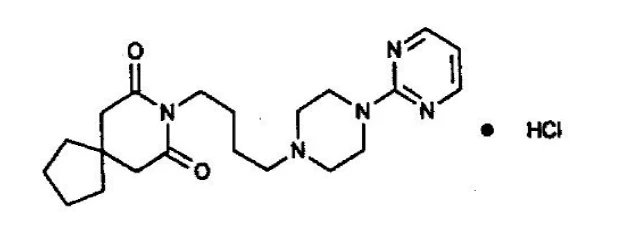
Molecular Weight: 421.97
Description: Buspirone Hydrochloride is a white crystalline powder which is very soluble in water.
Melting Point: 202 - 206°C
pH: 3.0 - 5.5 (1% w/v solution)
II COMPOSITION
In addition to the active ingredient (buspirone hydrochloride) each tablet contains lactose, sodium starch glycolate, microcrystalline cellulose, colloidal silicon dioxide, and magnesium stearate.
III STORAGE
Store at controlled room temperature (15-30°C). Protect from light.
PHARMACOLOGY
Buspirone is a chemically novel agent with a pharmacological profile that differs from those of presently available psychotropic drugs, while sharing a number of pharmacological actions with both the benzodiazepines and the neuroleptics.
Buspirone, like the benzodiazepines, is active in the Geller and Vogel conflict tests in which it attenuates punishment suppressed behaviours. In these procedures, doses as low as 0.5 mg/Kg s.c. or p.o. were active in cynomolgous monkeys and rats, respectively. However, Ro 15-1788, the benzodiazepine antagonist, had no effect on the buspirone-elicited increased behavioural responding while it antagonized that elicited by the benzodiazepines. At somewhat higher doses, buspirone inhibited footshock-induced fighting behaviour in mice and exerted a taming effect in aggressive rhesus monkeys. Both effects are characteristic of the benzodiazepines. In contrast, buspirone did not antagonize either chemical (pentylenetetrazol, bicuculline, strychnine, picrotoxin) or electroshock-induced convulsions, possessed minimal sedative activity and exerted minimal muscle relaxant activity.
Buspirone, like neuroleptics, decreased conditioned avoidance behaviour, the minimal effective dose being approximately 1 mg/Kg. At somewhat higher doses, buspirone protected against amphetamine-induced toxicity in aggregated mice and antagonized apomorphine-induced emesis in dogs. Intravenous buspirone (1.25 μg/Kg) increased the firing rate of dopamine (DA) neurons both in the zona compacta of the substantia nigra and the ventral tegmentum. Under these conditions, buspirone was equipotent with haloperidol. When applied iontophoretically, buspirone had little effect per se but it blocked the DA or GABA-induced inhibition of DA cells.
Classical antipsychotic drugs affect only the DA elicited responses. Buspirone also produced a dose-dependent increase in rat plasma prolactin levels (the minimal effective dose being approximately 0.5 mg/Kg) and blocked the inhibitory effect of DA on prolactin secretion.
In contrast to the neuroleptics, buspirone did not induce catalepsy in doses up to 200 mg/Kg and did not increase the density of 3H-spiroperidol binding sites upon chronic administration.
Neurochemical studies revealed that buspirone was essentially devoid of in vitro interactions at the benzodiazepine/GABA receptor complex. Specifically, buspirone lacked affinity either for
3H-benzodiazepine binding sites (IC50 > 100 μM) or for GABA binding sites.
Furthermore, while in the presence of GABA or GABA agonists the affinity of the receptors increased for benzodiazepines, buspirone had no significant effect on either receptor affinity or density in concentrations ranging from 0.1 to 100 μM. The binding of a high affinity chloride ionophore radioligand also remained unaffected. However, under in vitro conditions, buspirone did enhance the binding of 3H-diazepam in the cortex and cerebellum, a finding which is opposite to that seen with most, but not all benzodiazepines.
Buspirone, like the neuroleptics, inhibited the binding of 3H-spiperone and 3H-n-
propylapomorphine (IC50 approximately 150 nM). Furthermore, the drug increased the rate of
DA synthesis and turnover as shown by a significant increase in the levels of striatal HVA and
DOPAC. The latter effects were brought about by doses of 5 and 10 mg/Kg buspirone. However, buspirone was a weak inhibitor of dopamine-stimulated adenylate cyclase.
Buspirone was shown to have weak or no affinity in vitro to cortical 5-HT1 and 5-HT2 receptors, although it did bind to hippocampal 5-HTl receptors (IC50 approximately 95 nM). More recently, buspirone has been identified as a 5-HTlA receptor agonist. This interaction results in
attenuated serotonergic neurotransmission brought about by decreased serotonin synthesis and release.
Buspirone was inactive at all other receptor sites studied, which included the α1, α2 and β adrenergic, A1 and A2 adenosine, muscarinic cholinergic, H1 and H2 histamine, opiate, glycine and glutamate receptors. Buspirone did not inhibit the neuronal reuptake of DA, NE and 5-HT.
The chronic administration of buspirone did not modify receptor density at α1, α2, β or 5-HT2 binding sites.
Based upon animal experiments, the abuse potential and dependence liability of buspirone seems to be minimal. The drug was not self-administered in monkeys trained to self-administer cocaine;
it did not block convulsions precipitated in mice by the withdrawal of chronically administered phenobarbital and caused no weight loss when stopped abruptly after repeated administration.
Furthermore, buspirone did not share discriminative stimulus properties with either oxazepam or pentobarbital.
Buspirone is extensively metabolized and less than 1% of an oral dose is excreted unchanged.
The major metabolites of buspirone are 5-hydroxybuspirone, which is pharmacologically essentially inactive, and its further oxidized derivatives and 1-(2-pyrimidinyl)-piperazine (1-PP)
which is obtained by oxidative dealkylation. 1-PP is an active metabolite; it has anticonflict activity, and in contrast to buspirone, is highly effective at central α2-adrenoceptors (IC50 approximately 25 nM) but virtually inactive at other binding sites.
TOXICOLOGY
Acute Toxicity
| Species | Sex | Route | LD50 (95% Confidence Interval) mg/Kg |
| Rat (Adult) Rat (Adult) | Males Males/Females | Oral Oral | 265 (174-404) 196 (152-252) |
| Rat (Newborn) | Males/Females | Oral | 415 (332-520) |
| Mouse | Males | Oral | 655 (529-811) |
| Dog | Males/Females | Oral | 586 (371-925) |
| Monkey | Males/Females | Oral | 356 (302-420) |
| Rat (Adult) | Males/Females | Intraperitoneal | 136 (122-152) |
| Mouse | Males | Intraperitoneal | 164 (145-185) |
| Mouse | Males | Intravenous | 73.3 (66.6-80.6) |
| Monkey | Males/Females | Intravenous | 54.3 (47.6-61.9) |
| Dog | Females | Intravenous Infusion | 125.3 (lowest lethal dose - infused at 80 mg/Kg/hr - 30.8 mL/hr) |
Signs of toxicity in all species included hypoactivity, salivation, tremors, ataxia, opisthotonos and clonic convulsions.
In the dog intravenous infusion test, 10 mg/Kg/hr for a total of 59/mg/Kg produced an increase in blood pressure and a slight increase in the ST segment of the EKG. At 40 and 80 mg/Kg/hr, an increase in heart rate and T-wave amplitude was also observed. The animals at the higher doses died following convulsions.
Subacute Toxicity
Dog
In a two week dose ranging study, one male and one female dog per group received 73,110 or
146 mg/Kg buspirone orally immediately after feeding. Both high dose dogs died on day 5 following convulsions. The mid dose male died on day 11, probably due to acute gastric dilatation. Reddening of gastric mucosa was observed at necropsy in all three dogs that died.
Rat
In a three month study, groups of 15 males and 15 females were administered 0, 50, 100 and 200 mg/Kg/day of buspirone in the diet. Reduced weight gain was observed in all treated groups, as well as slight but significant decreases in erythrocyte and serum protein values. A significant decrease in serum glucose levels was seen in the mid and high dose groups.
Monkey
In a three month study, 2 males and 2 females per group received 0, 37.5, 75 and 150 mg/Kg of buspirone by gavage 3 hours after feeding. Hypoactivity, tremors and salivation were observed in all treated groups. Hypoactivity tended to increase with time. Other observations included catatonia in the mid dose group, ataxia in the high dose group, and general incoordination, in which the monkey would be in almost constant movement and unable to walk or grasp objects normally, in both mid and high dose groups.
Chronic Toxicity
Rat
In a 2 year study, buspirone was administered in the diet to groups of 70 male and 70 female rats at doses of 0, 48, 80, and 160 mg/Kg/day. Food consumption and weight gain were reduced in the treated animals in a dose-related manner. Rapid respiration, tremors and tachycardia were
observed in all treated groups, hypersensitivity in mid and high dose groups, and hunched, thin appearance and red or mucoid nasal discharge in the high dose group. Findings at necropsy included a dose-related incidence of pulmonary histiocytosis and some decrease in organ weights.
Mouse
A 78 week study was conducted with groups of 65 male and 65 female mice, who received buspirone 0, 50, 100 and 200 mg/Kg/day in the diet.
Food intake was not affected, but decreased weight gain was observed in all treated groups.
Necropsy findings included an increased incidence of amyloid deposition in some tissues of the high dose animals, particularly in the renal, gastrointestinal and testicular tissues of males. An increased incidence of focal testicular atrophy was also observed in high dose males.
Monkey
Groups of 4 male and 4 female Rhesus monkeys were given buspirone orally at doses of 0, 35,
62 and 110 mg/Kg/day. After 23 days, buspirone doses were reduced to 25 mg/Kg once daily, 25 mg/Kg twice daily and 50 mg/Kg twice daily respectively, for the remainder of the one year study.
One male in the mid dose and 4 males and 2 females in the high dose group died relatively early during the study (2 more died at the end). Slight to marked weight loss was seen in some of the monkeys that died. Prior to dose reduction, sedation was moderate at the low dose and marked at the mid and high dose. For the remainder of the study, slight to marked dose related sedation as well as intention tremors were observed in all treated groups. Mid and high dose monkeys also
showed lack of responsiveness to stimuli and partial to total anorexia. Chewing on the cage or on the wrist was noted in high dose monkeys.
Some monkeys at the mid and high dose levels showed lower hemoglobin, hematocrit and alkaline phosphatase levels than controls, while in the high dose group, SGOT, and SGPT levels were slightly higher and serum cholesterol levels lower than in controls.
At necropsy, some changes in organ weights were observed, especially in the high dose group.
Gross evidence of gastrointestinal irritation was found in all 7 monkeys that died during the study. A bloody diarrhea had been noted in 4 of the animals prior to death. One male monkey died at the end of the study with gross evidence of pericarditis and pleuritis. No distinct or consistent drug related histopathologic changes were found in this study.
Carcinogenicity
One two year combined carcinogenicity and toxicity study has been carried out in rats (see
Chronic Toxicity for details). No evidence was found of a drug-related effect on mortality, incidence of palpable tissue masses, gross pathologic findings, organ weights or microscopically detected neoplasms.
Reproduction and Teratology
The potential effect of buspirone on the fertility and reproductive performance of the rat was assessed by mating treated female rats with non-treated males and vice versa. Groups of rats were given 9, 18 or 36 mg/Kg/day of buspirone for 14 days prior to mating and continuing until
21 days post partum. The only finding was that pup weights were statistically lower at birth and during weaning of the offspring from both the male and female rats treated with 9, 18 or 36 mg/Kg/day of buspirone. This was due to a more pronounced effect on pup weight in the litters with greater numbers of pups. The survival index for pups from highest dose female treated rats was reduced. The lactation index was reduced at 36 mg/Kg dose level and the survival index was reduced when both parents were treated with buspirone.
There were no skeletal or visceral abnormalities or other findings indicating a teratogenic or embryotoxic effect in rats or rabbits treated during embryogenesis with doses of 9, 18 or 36 mg/Kg/day. Administration of buspirone to the pregnant rat at 36 mg/Kg/day or less during the last third of pregnancy and throughout the 3 week post-natal period revealed no evidence of any adverse effect on fetal development, birth weights, post-natal growth or survival.
SELECTED BIBLIOGRAPHY
A) PRECLINICAL
- 1. Caccia S, Conti I, Vigano G, Garattini S. 1-(2-Pyrimidinyl)-piperazine as active metabolite of buspirone in man and rat. Pharmacology 1986; 33:46-51.
- 2.
Dourish CT, Hutson PH, Curzon G. Putative anxiolytics 8-OH-DPAT, buspirone and
TVXQ7821 are agonists at 5-HT1A autoreceptors in the raphe nuclei. Trends Pharmacol Sci 1986; 7:212-214.
- 3. Eison AS, Temple DL. Buspirone: review of its pharmacology and current perspectives on its mechanism of action. Am J Med 1986; 80(suppl 3B):1-9.
- 4.
Garattini S. Caccia S, Mennini T. Notes on buspirone's mechanisms of action. J Clin
Psychiat 1982; 43:19-22.
- 5. Goa KL, Ward A. Buspirone: A preliminary review of its pharmacological properties and therapeutic efficacy as an anxiolytic. Drugs 1986; 32:114-129.
- 6. Meltzer HY, Simonovic M, Fang VS, Gudelsky GA. Effect of buspirone on rat plasma prolactin levels and striatal dopamine turnover. Psychopharmacology 1982; 78:49-53.
- 7. Skolnick P, Paul SM, Weissman BA. Preclinical pharmacology of buspirone hydrochloride. Pharmacotherapy 1984; 4:308-314.
- 8.
Riblet LA, Eison AS, Eison MS, Taylor DP, Temple DL, VanderMaelen CP.
Neuropharmacology of buspirone. Psychopathology 1984; 17(suppl 3):69-78.
- 9. Roth RH, Bunney BS. Buspirone: Examination of effects on dopamine autoreceptors and neuronal activity. Report submitted to Mead Johnson Pharmaceutical Division, November 1981. On file with the manufacturer.
B) CLINICAL
- 1.
Bond A. The psycological effects of buspirone. Br J Clin Pract (Symp Suppl) 1985;
38:83- 90.
- 2. Cohn JB, Wilcox CS. Low-sedation potential of buspirone compared with alprazolam and lorazepam in the treatment of anxious patients: A double-blind study. J Clin Psychiat 1986; 47(8):409-412.
- 3. Cohn JB, Wilcox CS, Meltzer HY. Neuroendocrine effects of buspirone in patients with generalized anxiety disorder. Amer J Med 1986; 80(suppl 3B):36-40.
- 4. Cole JO, Orzack MM, Beake B, Bird M, Bar Tel Y. Assessment of the abuse liability of buspirone in recreational sedative users. J Clin Psychiat 1982; 43:(12, Sect 2) 69-75.
- 5.
Dommisse CS, DeVane CL. Buspirone: A new type of anxiolytic. Drug Intell Clin Pharm
1985; 19:624-628.
- 6. Erwin CW, Linnoila M, Hartwell J, Erwin A, Guthrie S. Effects of buspirone and diazepam, alone and in combination with alcohol, on skilled performance and evoked potentials. J Clin Psyschopharmacol 1986; 6(4):199-209.
- 7. Gammans RE, Bullen WW, Briner L, LaBudde JA. The effects of buspirone binding of digoxin, dilantin propranolol, and warfarin to human plasma. Fed Proc 1985; 44:1123.
- 8. Gammans RL, Mayol RF, Mackenthun AV, Soyka LF. The relationship between buspirone bioavailability and dose in healthy subjects. Biopharm Drug Dispos 1985; 6(2):139-145.
- 9.
Gammans RE, Mayol RF, LaBudde JA. Metabolism and disposition of buspirone. Am J
Med 1986; 80(supl 3B): 41-51.
- 10.
Gammans RE, Westrick ML, Shea JP, Mayol RF, LaBudde JA. Pharmacokinetics of
Buspirone in Elderly Subjects. J Clin Pharmacol 1989; 29(1):72-78.
- 11.
Gammans R.E., Stringfellow J.C., Hvizdos A.J., Seidehamel R.J., Cohn J.B., Wilcox
C.S., Fabre L.F., Pecknold J.C., Smith W.T. and Rickels K. Use of Buspirone in Patients with Generalized Anxiety Disorder Coexisting Depressive Symptoms. A Meta-Analysis of Eight Randomized, Controlled Studies. Neuropsychobiology 1992; 25: 193-201.
- 12.
Goldberg HL, Finnerty R. Comparison of Buspirone in two separate studies. J Clin
Psychiat 1982; 43-12(Sec2): 87-91.
- 13. Griffith JD, Jasinski DR, Casten GP, McKinney GR. Investigation of the abuse liability of buspirone in alcohol-dependent patients. Am J Med 1986; 80(suppl 3B):30-35.
- 14. Jacobson AF, Dominguez RA, Goldstein BJ, Steinbook RM. Comparison of buspirone and siazepam in generalized anxiety disorder. Pharmacotherapy 1985; 5(5):290-296.
- 15. Kivisto KT, Lamberg TS, Kantola T, and Neuvonen PJ. Plasma buspirone concentrations are greatly increased by erythromycin and itraconazole. Clin Pharmacol Ther 1997;62:348-354.
- 16. Lamberg, TS, Kivisto KT and Neuvonen PJ. Effects of verapamil and diltiazem on the pharmacokinetics and pharmacodynamics of buspirone. Clin Pharmacol Ther 1998; 64: 640- 645.
- 17. Lamberg TS, Kivisto KT and Neuvonen PJ. Concentrations and effects of buspirone are considerably reduced by rifampicin. Br J Clin Pharmacol 1998; 45:381-385.
- 18. Lader M, Olajide D. A comparison of buspirone and placebo in relieving benzodiazepine withdrawal symptoms. J Clin Psychopharmacol 1987; 7(1):11-15.
- 19. Lilja JJ, Kivisto KT, Backman JT, et al. Grapefruit juice substantially increases plasma concentrations of Buspirone. Clin Pharmacol Ther 1998; 64: 655-660.
- 20. Mattila M, Seppala T, Mattila MJ. Combined effects of buspirone and diazepam on objective and subjective tests of performance in healthy volunteers. Clin Pharmacol Ther 1986; 40:620-626.
- 21. Meltzer HY, Fleming R, Robertson A. The effect of buspirone on prolactin and growth hormone secretion in man. Arch Gen Psychiat 1983; 40:1099-1102.
- 22. Moskowitz H, Smiley A. Effects of chronically administered buspirone and diazepam on driving-related skills performance. J Clin Psychiat 1982; 43:(12, Sect 2) 45-55.
- 23. Napoliello MJ. An interim multicentre report on 677 anxious geriatric out-patients treated with buspirone. Br J Clin Pract 1986; 40(2):71-73.
- 24. Newton RE, Marynycz JD, Alderdice MT, Napoliello MJ. Review of the side-effect profile of buspirone. Am J Med 1986; 80(suppl 3B):17-21.
- 25. Olajide D, Lader M. A comparison of buspirone, diazepam and placebo in patients with chronic anxiety states. J Clin Psychopharmacol 1987; 7:148-152.
- 26.
Pecknold JC, Familamiri P, Chang H, Wilson R, Alarcia J, McClure J. Buspirone:
Anxiolytic? Prog Neuro-Psychopharmacol & Biol Psychiatr 1985; 9(5/6):639-642.
- 27.
Perry PJ. Assessment of addiction liability of benzodiazepines and buspirone. Drug Intell
Clin Pharm 1985; 19(9):657-659.
- 28. Rickels K, Weisman K, Norstad N, Singer M, Stoltz D, Brown A, Danton J. Buspirone and diazepam in anxiety: A controlled study. J Clin Psychiat 1982; 43:12(Sec2):81-86.
- 29.
Schweizer E, Rickels K. Failure of buspirone to manage benzodiazepine withdrawal. Am
J Psychiat 1986; 143(12):1590-1592.
- 30. Seppala T, Aranko K, Mattila MJ, Shrotriya RC. Effects of alcohol on buspirone and lorazepam actions. Clin Pharmacol Ther 1982;32:201-207.
- 31.
Wheatley D. Buspirone: Multicenter efficacy study. J Clin Psychiat 1982; 43:12(sec
2):92- 94.
- 32.
Buspirone: A non-benzodiazepine for anxiety. The Medical Letter on Drugs and
Therapeutics 1986; 28(728): 117-118.
- 33. Buspirone - a Radical Advance in the Treatment of Anxiety? The Lancet; (April) 1988.
- 34.
Product Monograph for PrBuspar (Buspirone Hydrochloride) manufactured by Bristol-
Myers Squibb Canada. Control No. 094863 Date of preparation: October 29, 2004.