


Product Monograph - Mylan-Verapamil SR (Mylan Pharmaceuticals, 180 mg, 240 mg)
SUMMARY PRODUCT INFORMATION
Route of Administration | Dosage Form/Strength | All Non-medicinal Ingredients |
| oral | sustained-release tablets/120 mg, 180 mg, 240 mg | hydroxypropyl methylcellulose, indigo carmine (240 mg tablet only), macrogol 400, macrogol 6000, magnesium stearate, microcrystalline cellulose, montan glycol wax, povidone, purified water, quinoline yellow (240 mg tablet only), red iron oxide (180 mg tablet only), sodium alginate, talc, titanium dioxide This is a complete listing of non-medicinal ingredients. |
INDICATIONS AND CLINICAL USE
MYLAN-VERAPAMIL SR (verapamil hydrochloride) sustained-release tablets is indicated for:
- the treatment of mild to moderate essential hypertension. Verapamil hydrochloride should normally be used in those patients in whom treatment with diuretics or beta-blockers has been associated with unacceptable adverse effects.
MYLAN-VERAPAMIL SR can be tried as an initial agent in those patients in whom the use of diuretics and/or beta-blockers is contraindicated or in patients with medical conditions in which these drugs frequently cause serious adverse effects.
Concomitant use of MYLAN-VERAPAMIL SR with a diuretic or an angiotensin converting enzyme (ACE) inhibitor has been shown to be compatible and to have additive blood pressure lowering effects.
MYLAN-VERAPAMIL SR should not be used concurrently with beta-adrenoreceptor blockers in the treatment of hypertension. See (DRUG INTERACTIONS, Table 2).
Geriatrics (≥ 65 years of age):
Caution should be exercised when MYLAN-VERAPAMIL SR is administered to elderly patients. See [WARNINGS AND PRECAUTIONS, Special Populations, Geriatrics (≥ 65 years of age)].
Pediatrics (< 18 years of age):
The safety and efficacy of MYLAN-VERAPAMIL SR has not been established in children and therefore use in this age group is not recommended.
CONTRAINDICATIONS
- Patients who are hypersensitive to this drug or to any ingredient in the formulation or component of the container. For a complete listing, see the DOSAGE FORMS, COMPOSITION AND PACKAGING section of the Product Monograph.
- Complicated myocardial infarction (patients who have ventricular failure manifested by pulmonary congestion).
Severe left ventricular dysfunction. See (WARNINGS AND PRECAUTIONS,
Cardiovascular, Heart Failure).
- Cardiogenic shock.
- Severe hypotension.
- Second- or third-degree atrioventricular (A-V) block.
Sick sinus syndrome. See (WARNINGS AND PRECAUTIONS, Cardiovascular,
Conduction Disturbance).
- Marked bradycardia.
- Patients with atrial flutter or atrial fibrillation in the presence of an accessory bypass tract (e.g. Wolff-Parkinson-White, Lown-Ganong-Levine syndromes). These patients are at risk to develop ventricular arrhythmias including ventricular fibrillation and Torsade de pointes if verapamil hydrochloride is administered. See (WARNINGS AND PRECAUTIONS, Cardiovascular, Accessory Bypass Tract).
WARNINGS AND PRECAUTIONS
General
- In patients with angina or arrhythmias using antihypertensive drugs, the additional hypotensive effect of MYLAN-VERAPAMIL SR (verapamil hydrochloride) sustained-release tablets should be taken into consideration.
Verapamil hydrochloride does not alter total serum calcium levels. However, one report suggested that calcium levels above the normal range may decrease the therapeutic effect of verapamil hydrochloride.
Carcinogenesis and Mutagenesis
There was no evidence of a carcinogenic effect when verapamil hydrochloride was administered orally (diet) to male and female rats at doses up to 112.2 and 102.5 mg/kg/day, respectively, for 24 months. These doses correspond to approximately 2.3 and 2 times human exposure based on body surface area, respectively.
In vitro mutagenicity tests showed that verapamil did not have mutagenic properties in five different strains of Salmonella typhimurium, nor in studies on chromosomal aberrations and sister chromatid exchanges (SCE) in human lymphocytes, nor in the hypoxanthine guanine phosphoribosyltransferase (HGPRT)-test with V-79 Chinese hamster cells, and also not in the cell transformation assay with Syrian hamster embryo cells. In addition, verapamil did not show any SCE-inducing activity in vivo (Chinese hamster). See (TOXICOLOGY, Carcinogenicity and Mutagenicity).
Cardiovascular
Heart Failure
Because of the drug's negative inotropic effect, MYLAN-VERAPAMIL SR should not be used in patients with poorly compensated congestive heart failure.
Heart failure patients with ejection fraction higher than 40% should be treated with adequate doses of digoxin and/or diuretics before starting MYLAN-VERAPAMIL SR treatment.
If MYLAN-VERAPAMIL SR is administered concomitantly with digoxin, reduce digoxin dosage. See (DRUG INTERACTIONS, Table 2). The use of MYLAN-VERAPAMIL SR in the treatment of hypertension is not recommended in patients with heart failure caused by systolic dysfunction.
Hypotension
Hypotensive symptoms of lethargy and weakness with faintness have been reported following single oral doses and even after some months of treatment. In some patients it may be necessary to reduce the dose of MYLAN-VERAPAMIL SR.
Conduction Disturbance
MYLAN-VERAPAMIL SR affects the A-V and sinoatrial (S-A) nodes. MYLAN-VERAPAMIL SR slows conduction across the A-V node . MYLAN-VERAPAMIL SR should be used with caution in the presence of first degree A-V block. Patients with first degree A-V block may progress to second or third-degree A-V block; they require a reduction in the dose or discontinuation of MYLAN-VERAPAMIL SR, and the institution of appropriate therapy depending upon the patient’s clinical condition.
Verapamil hydrochloride causes dose-related suppression of the S-A node and rarely may product second or third degree A-V block, bradycardia and in extreme cases, asystole In some patients, sinus bradycardia may occur, especially in patients with a sick sinus syndrome (S-A nodal disease), which is more common in older patients. See (CONTRAINDICATIONS).
Asystole in patients other than those with sick sinus syndrome is usually of short duration (few seconds or less), with spontaneous return to A-V nodal or normal sinus rhythm. If this does not occur promptly, appropriate treatment should be initiated immediately. See ( ADVERSE REACTIONS) and (OVERDOSAGE).
Bradycardia
The total incidence of bradycardia (ventricular rate less than 50 beats/minute) was 1.4% in controlled studies.
Accessory Bypass Tract (Wolff-Parkinson-White or Lown-Ganong-Levine)
Verapamil hydrochloride may result in significant acceleration of ventricular response during atrial fibrillation or atrial flutter in the Wolff-Parkinson-White (WPW) or Lown-Ganong-Levine (LGL) syndromes. The use of verapamil hydrochloride in these patients is contraindicated. See (CONTRAINDICATIONS).
Concomitant Use with Antiarrhythmics or Beta-Blockers
Concomitant use of verapamil hydrochloride with antiarrhythmics or beta-blockers may cause mutual potentiation of cardiovascular effects (higher-grade AV block, higher-grade lowering of heart rate, induction of heart failure and potentiated hypotension). Asymptomatic bradycardia (< 36 beats/minute) with a wandering atrial pacemaker has been observed in a patient receiving concomitant timolol (a beta-adrenergic blocker) eye drops and oral verapamil hydrochloride. See (DRUG INTERACTIONS, Table 2).
Generally, oral verapamil hydrochloride should not be given to patients receiving beta-blockers since the depressant effects on myocardial contractility, heart rate and A-V conduction may be additive. However, in exceptional cases when in the opinion of the physician concomitant use in angina and arrhythmias is considered essential, such use should be instituted gradually under careful supervision. If combined therapy is used, close surveillance of vital signs and clinical status should be carried out and the need for continued concomitant treatment periodically assessed.
MYLAN-VERAPAMIL SR gives no protection against the dangers of abrupt beta-blocker withdrawal and such withdrawal should be done by the gradual reduction of the dose of beta-blocker. Then MYLAN-VERAPAMIL SR may be started with the usual dose.
Concomitant Use with HMG-CoA Reductase Inhibitors (“Statins”)
Concomitant use of verapamil hydrochloride and HMG-CoA reductase inhibitors may require dosage adjustments. See (DRUG INTERACTIONS, Table 2).
Patients with Hypertrophic Cardiomyopathy
In 120 patients with hypertrophic cardiomyopathy who received therapy with verapamil hydrochloride at doses up to 720 mg/day, a variety of serious adverse effects were seen. Three patients died in pulmonary edema; all had severe left ventricular outflow obstruction and a past history of left ventricular dysfunction. Eight other patients had pulmonary edema and/or severe hypotension, abnormally high (greater than 20 mm Hg) pulmonary wedge pressure and a marked left ventricular outflow obstruction were present in most of these patients. Concomitant administration of quinidine (see DRUG INTERACTIONS) preceded the severe hypotension in 3 of the 8 patients (2 of whom developed pulmonary edema). Sinus bradycardia occurred in 11% of the patients, second-degree A-V block in 4%, and sinus arrest in 2%. It must be appreciated that this group of patients had a serious disease with a high mortality rate. Most adverse effects responded well to dose reduction, but in some cases, verapamil hydrochloride use had to be discontinued.
Hepatic/Biliary/Pancreatic
Elevated Liver Enzymes
Elevations of transaminases with and without concomitant elevations in alkaline phosphatase and bilirubin have been reported. Several published cases of hepatocellular injury produced by verapamil hydrochloride have been proven by rechallenge. Clinical symptoms of malaise, fever, and/or right upper quadrant pain, in addition to elevation of serum glutamic-oxaloacetic transaminase (SGOT), serum glutamic-pyruvic transaminase (SGPT) and alkaline phosphatase have been reported. Periodic monitoring of liver function in patients receiving MYLAN-VERAPAMIL SR is therefore prudent.
Hepatic Insufficiency
Because verapamil hydrochloride is extensively metabolized by the liver, it should be administered cautiously to patients with impaired hepatic function, since the elimination half-life of verapamil hydrochloride in these patients is prolonged 4-fold (from 3.7 to 14.2 hours). A
decreased dosage should be used in patients with hepatic insufficiency and careful monitoring for abnormal prolongation of the PR interval or other signs of excessive pharmacologic effect should be carried out. See (ACTION AND CLINICAL PHARMACOLOGY, Pharmacokinetics) and (DOSAGE AND ADMINISTRATION).
Neurologic
Neuromuscular Transmission Disorders
Due to MYLAN-VERAPAMIL SR neuromuscular blocking action, ISOPTIN® SR should be used with caution in the presence of diseases in which neuromuscular transmission is affected (myasthenia gravis, Lambert-Eaton syndrome, advanced Duchenne muscular dystrophy). The decision to administer MYLAN-VERAPAMIL SR should be based on the physician’s assessment of the risk and benefit to the patient. It may be necessary to decrease the dose. Ventilation support should be available if required. See (DRUG INTERACTIONS, Drug-Drug Interaction, Use in Patients with Attenuated (Decreased) Neuromuscular Transmission).
Ophthalmologic
Atypical lens changes and cataracts were observed in beagle dog studies at high doses. This has been concluded to be species-specific for the beagle dog. (These ophthalmological changes were not seen in a second study.) No similar changes have been observed in long-term prospective human ophthalmological trials.
Renal
Renal Insufficiency
About 70% of an administered dose of verapamil hydrochloride is excreted as metabolites in the urine. In one study in healthy volunteers, the total body clearance after intravenous administration of verapamil hydrochloride was 12.08 mL/min/kg, while in patients with advanced renal disease it was reduced to 5.33 mL/min/kg. This pharmacokinetic finding suggests that renal clearance of verapamil hydrochloride in patients with renal disease is decreased. In two studies with oral verapamil hydrochloride no difference in pharmacokinetics could be demonstrated.
Therefore, until further data are available, MYLAN-VERAPAMIL SR should be used with caution in patients with impaired renal function. These patients should be carefully monitored for abnormal prolongation of the PR interval or other signs of excessive pharmacologic effect. See (DOSAGE AND ADMINISTRATION).
Verapamil hydrochloride is not removed by hemodialysis.
Special Populations
Pregnant Women
There are no studies in pregnant women. However, verapamil hydrochloride crosses the placental barrier and can be detected in umbilical vein blood at delivery. MYLAN-VERAPAMIL SR is not recommended for use in pregnant women unless the potential benefits outweigh potential risks to mother and fetus.
Teratology and reproduction studies performed in rabbits and rats at oral doses of 15 mg/kg/day (less than maximum human exposure) and 60 mg/kg/day (equivalent to human maximum exposure), respectively, revealed no evidence of teratogenicity or impaired fertility. In rat, however, this dose was embryocidal and retarded fetal growth and development, probably because of adverse maternal effects reflected in reduced weight gains of the dams. This oral dose has also been shown to cause hypotension in rats.
Labour and Delivery - It is not known whether the use of verapamil hydrochloride during labour or delivery has immediate or delayed adverse effects on the fetus, or whether it prolongs the duration of labour or increases the need for forceps delivery or other obstetric intervention.
Nursing Women
Verapamil hydrochloride is excreted in human breast milk. Because of the potential for adverse reactions in nursing infants from verapamil hydrochloride, nursing should be discontinued while MYLAN-VERAPAMIL SR is administered.
Pediatrics (< 18 years of age)
The safety and dosage regimen of MYLAN-VERAPAMIL SR in children below the age of 18 years has not yet been established. Therefore, use in this group is not recommended.
Geriatrics (≥ 65 years of age)
Caution should be exercised when MYLAN-VERAPAMIL SR is administered to elderly patients (≥ 65 years) especially those prone to developing hypotension or those with a history of cerebrovascular insufficiency. See (DOSAGE AND ADMINISTRATION). The incidence of adverse reactions is approximately 4% higher in the elderly. The adverse reactions occurring more frequently include dizziness and constipation. Serious adverse events associated with heart block have occurred in the elderly.
Monitoring and Laboratory Tests
Patients should be monitored by measuring the blood pressure response.
Concomitant Use with Beta-Blockers
In exceptional cases, when in the opinion of the physician concomitant use in angina and arrhythmias is considered essential, such use should be instituted gradually under careful supervision. If combined therapy is used, close surveillance of vital signs and clinical status should be carried out and the need for continued concomitant treatment periodically assessed.
Elevated Liver Enzymes
Periodic monitoring of liver function in patients receiving MYLAN-VERAPAMIL SR is prudent.
Hepatic Insufficiency
Careful monitoring for abnormal prolongation of the PR interval or other signs of excessive pharmacologic effect should be carried out.
Renal Insufficiency
Patients with renal insufficiency should be carefully monitored for abnormal prolongation of the PR interval or other signs of excessive pharmacologic effect.
ADVERSE REACTIONS
Adverse Drug Reaction Overview
In 4,826 patients treated with MYLAN-VERAPAMIL SR (verapamil hydrochloride) immediate release tablets for arrhythmias, angina or hypertension, the overall adverse reaction rate in these patients was 37.1% and the dropout rate was 10.2%. The majority of these patients were seriously ill and treated under emergency drug regulations.
In controlled pivotal studies with 128 patients treated with MYLAN-VERAPAMIL SR (verapamil hydrochloride) sustained-release tablets for hypertension, the overall adverse reaction rate was 21.7% and the dropout rate was 3.9%.
The most common adverse reactions were: constipation (7.3%), dizziness (3.2%), and nausea (2.7%). In hypertension studies, constipation occurred in 18.5% of patients on verapamil hydrochloride immediate release tablets and 4.7% of patients on MYLAN-VERAPAMIL SR.
The most serious adverse reactions reported with verapamil hydrochloride are heart failure (1.8%), hypotension (2.5%), A-V block (1.2%) and rapid ventricular response. See (WARNINGS AND PRECAUTIONS).
Clinical Trial Adverse Drug Reactions
Because clinical trials are conducted under very specific conditions the adverse reaction rates observed in the clinical trials may not reflect the rates observed in practice and should not be compared to the rates in the clinical trials of another drug. Adverse drug reaction information from clinical trials is useful for identifying drug-related adverse events and for approximating rates.
The following adverse reactions divided by body system have been reported in clinical trials or marketing experience. When incidences are shown, they are calculated based on the 4,954 (4,826 + 128) patient base.
Table 1. Adverse Reactions Reported in Clinical Trials
Verapamil Hydrochloride
(N = 4,954)
Vascular Disorders
Hypotension 2.5%
Cardiac Disorders
Edema 2.1%
CHF/Pulmonary Edema 1.9%
Bradycardia 1.4%
A-V Block
Total (1º, 2º, 3º)
1.2%
2º and 3º 0.8%
Nervous System Disorders
Dizziness 3.2%
Headache 2.2%
General Disorders and Administration Site Conditions
Fatigue 1.7%
Gastrointestinal Disorders
Constipation 7.3%
Nausea 2.7%
Respiratory, Thoracic and Mediastinal Disorders
Dyspnea 1.4%
Less Common Clinical Trial Adverse Drug Reactions (< 1%)
The following reactions were reported in 1.0% or less of patients in clinical trials:
Cardiac Disorders: angina pectoris, atrioventricular dissociation, cardiac failure, chest pain, claudication, development of rhythm disturbances, myocardial infarction, painful coldness and numbness of extremities, palpitations, syncope, severe tachycardia, ventricular dysrhythmias
Ear and Labyrinth Disorders: vertigo
Eye Disorders: blurred vision, diplopia
Nervous System Disorders: cerebrovascular accident, confusion, equilibrium disorders, excitation, extrapyramidal disorders, hyperkinesis, paresthesia, rotary nystagmus, shakiness, somnolence, tremor
Gastrointestinal Disorders: abdominal discomfort, diarrhea, dry mouth, gastrointestinal distress, gingival hyperplasia, vomiting
Musculoskeletal and
Connective Tissue Disorders:
arthralgia, muscle cramps, muscle fatigue
Psychiatric Disorders: depression, insomnia, psychotic symptoms
Renal and Urinary Disorders: increased frequency of urination
Respiratory, Thoracic and
Mediastinal Disorders:
bronchospasm, dyspnea
Reproductive System and
Breast Disorders:
erectile dysfunction, gynecomastia, oligomenorrhea, spotty menstruation
Skin and Subcutaneous
System Disorders:
alopecia, ecchymosis or bruising, erythema multiforme, exanthema, hyperkeratosis, macules, pruritus, purpura, rash, Stevens-Johnson syndrome, sweating, urticaria
Vascular Disorders: flushing
Isolated cases of renal failure and angioedema have been reported. Angioedema may be accompanied by breathing difficulty.
In clinical trials related to the control of ventricular response in digitalized patients who had atrial fibrillation or flutter, ventricular rates below 50 at rest occurred in 15% of patients and asymptomatic hypotension occurred in 5% of patients.
Abnormal Hematologic and Clinical Chemistry Findings
Hepatotoxicity with elevated enzymes (SGOT, SGPT, alkaline phosphatase) and bilirubin levels, jaundice and associated symptoms of hepatitis with cholestasis have been reported. See (WARNINGS AND PRECAUTIONS). Elevated prolactin levels have also been reported.
Post-Market Adverse Drug Reactions
The following adverse events have been reported with verapamil hydrochloride from post-marketing surveillance or Phase 4 clinical trials.
Cardiac Disorders: asystole, sinus arrest, sinus bradycardia
Ear and Labyrinth Disorders: tinnitus
Gastrointestinal Disorders: abdominal pain, ileus
General Disorders and
Administration Site
Conditions:
edema peripheral
Immune System Disorders:
Metabolism and Nutrition
Disorders:
hypersensitivity
hyperkalaemia
Musculoskeletal and
Connective Tissue Disorders:
Nervous System Disorders:
muscle weakness, myalgia
paralysis (tetraparesis)1, seizure
Skin and Subcutaneous
System Disorders:
hyperhidrosis, itching, rash maculopapular
Reproductive System and
Breast Disorders:
galactorrhea
There has been a single post-marketing report of paralysis (tetraparesis) associated with the combined use of verapamil hydrochloride and colchicine. This may have been caused by colchicine crossing the blood-brain barrier due to CYP3A4 and P-glycoprotein (P-gp) inhibition by verapamil hydrochloride. See (DRUG INTERACTIONS).
DRUG INTERACTIONS
Drug-Drug Interactions
As with all drugs, care should be exercised when treating patients with multiple medications. verapamil hydrochloride undergoes biotransformation by the CYP3A4, CYP1A2, CYP2C8, CYP2C9 and CYP2C18 isoenzymes of the cytochrome P450 system. Verapamil hydrochloride has also been shown to be an inhibitor of CYP3A4 enzymes and P-glycoprotein (P-gp). Co-administration of verapamil hydrochloride with other drugs which follow the same route of biotransformation or are inhibitors or inducers of these enzymes may result in altered bioavailability of verapamil hydrochloride or these drugs. Dosages of similarly metabolized drugs, particularly those of low therapeutic ratio, and especially in patients with renal and/or hepatic impairment, may require adjustment when starting or stopping concomitantly administered MYLAN-VERAPAMIL SR (verapamil hydrochloride) sustained-release tablets to maintain optimum therapeutic blood levels.
The following table provides a list of potential drug interactions:
Table 2. Potential Drug Interactions Associated with Verapamil Hydrochloride
| Concomitant Drug Class: Drug Name | Ref | Effect on Concentration of Verapamil Hydrochloride or Concomitant Drug | Clinical Comment |
| Alpha-Blockers | |||
| Prazosin | T | ↑ prazosin Cmax (~40%) with no effect on t½ | Concomitant use of verapamil hydrochloride and alpha-adrenoceptor blockers may result in excessive fall in blood pressure in some patients as observed in one study following the concomitant administration of verapamil hydrochloride and prazosin. |
| Terazosin | CT | ↑ terazosin AUC (~24%) and Cmax (~25%) | |
| Antiarrhythmics | |||
| Disopyramide | T | Until data on possible interactions between verapamil hydrochloride and disopyramide are obtained, disopyramide should not be administered within 48 hours before or 24 hours after verapamil hydrochloride administration. | |
| Flecainide | CT C | Minimal effect on flecainide plasma clearance (< ~10%); no effect on verapamil plasma clearance. | The concomitant administration of flecainide and verapamil hydrochloride may have additive effects on myocardial contractility, A-V conduction, and repolarisation. May also have negative inotropic effect and prolongation of atrioventricular conduction. |
| Concomitant Drug Class: Drug Name | Ref | Effect on Concentration of Verapamil Hydrochloride or Concomitant Drug | Clinical Comment |
| Quinidine | CT | ↓ oral quinidine clearance (~35%) | In a small number of patients with hypertrophic cardiomyopathy, concomitant use of verapamil hydrochloride and quinidine resulted in significant hypotension and may result in pulmonary edema. Until further data are obtained, combined therapy of verapamil hydrochloride and quinidine in patients with hypertrophic cardiomyopathy should be avoided. The electrophysiological effects of quinidine and verapamil hydrochloride on A-V conduction were studied in 8 patients. Verapamil hydrochloride significantly counteracted the effects of quinidine on A-V conduction. There has been a report of increased quinidine levels during verapamil hydrochloride therapy. |
| Antiasthmatics | |||
| Theophylline | C | ↓ oral and systemic clearance of theophylline by ~20%. Reduction of clearance was lessened in smokers (~11%). | Caution should be exercised when co-administering theophylline and verapamil hydrochloride. |
| Anticonvulsants/Antiepileptics | |||
| Carbamazepine | C | ↑ carbamazepine AUC (~46%) in refractory partial epilepsy patients | Concomitant oral use may potentiate the effects of carbamazepine neurotoxicity. Symptoms include nausea, diplopia, headache, ataxia or dizziness. |
| Phenytoin | C | ↓ verapamil plasma concentrations | Verapamil plasma concentration may not achieve its therapeutic level when it is administrated concomitantly with phenytoin. |
| Antidepressants | |||
| Imipramine | T | ↑ imipramine AUC (~15%). No effect on level of active metabolite desipramine. | As with all antihypertensive agents, there is an elevated risk of orthostatic hypotension when combining verapamil hydrochloride with major tranquilizers or tricyclic antidepressants, such as imipramine. |
| Antidiabetics | |||
| Glibenclamide (glyburide) | T | ↑ glibenclamide Cmax (~28%), AUC (~26%) | |
| Concomitant Drug Class: Drug Name | Ref | Effect on Concentration of Verapamil Hydrochloride or Concomitant Drug | Clinical Comment |
| Anti-gout | |||
| Colchicine | CT | ↑ colchicine AUC (~ 2.0-fold) and Cmax (~1.3-fold) | Colchicine is a substrate for both CYP3A and the efflux transporter P-gp. Verapamil hydrochloride is known to inhibit CYP3A and P-gp. When verapamil hydrochloride and colchicine are administered together, inhibition of P-gp and/or CYP3A by verapamil hydrochloride may lead to increased exposure to colchicine. Combined use is not recommended. |
| Antihypertensive Agents | |||
| C | Verapamil hydrochloride administered concomitantly with antihypertensive agents such as vasodilators, ACE inhibitors, and diuretics may have an additive effect on lowering blood pressure. In patients with angina or arrhythmias using antihypertensive drugs, this additional hypotensive effect should be taken into consideration. | ||
| Anti-Infectives | |||
| Clarithromycin | C | Possible ↑ in verapamil when used in combination with clarithromycin | Severe hypotension and bradycardia have been observed in patients receiving concurrent clarithromycin. |
| Erythromycin | C | Possible ↑ in verapamil when used in combination with erythromycin | |
| Rifampicin | T | ↓ verapamil AUC (~97%), Cmax (~94%) oral bioavailability (~92%) | Blood pressure lowering effect of verapamil hydrochloride may be reduced when used concomitantly with rifampicin. |
| Telithromycin | T | Possible ↑ in verapamil when used in combination with telithromycin | |
| Antimanic Agents | |||
| Lithium | T | Increased sensitivity to the effects of lithium (neurotoxicity) has been reported during concomitant verapamil hydrochloride-lithium therapy. Lithium based drugs should be administered with caution, and frequent monitoring of serum lithium levels is recommended. If a diuretic is also used, the risk of lithium toxicity may be further increased. | |
| Antineoplastics | |||
| Concomitant Drug Class: Drug Name | Ref | Effect on Concentration of Verapamil Hydrochloride or Concomitant Drug | Clinical Comment |
| Doxorubicin | T | ↑ doxorubicin AUC (104%) and Cmax (61%) with oral verapamil administration in patients with small cell lung cancer. In patients with advanced neoplasm, intravenous verapamil administration did not change significantly doxorubicin PK. | Verapamil hydrochloride inhibits P-glycoprotein (P-gp)-mediated transport of anti-neoplastic agents out of tumour cells, resulting in their decreased metabolic clearance. Dosage adjustments of anti-neoplastic agents should be considered when verapamil hydrochloride is administered concomitantly. |
| Barbiturates | |||
| Phenobarbital | T | ↑ oral verapamil clearance (~5-fold) | |
| Benzodiazepines and Other Anxiolytics | |||
| Buspirone | T | ↑ buspirone AUC, Cmax by ~3.4-fold | |
| Midazolam | T C | ↑ midazolam AUC (~3-fold) and, Cmax (~2-fold) | |
| Beta-Blockers | |||
| Atenolol | T C | A variable increase in atenolol plasma concentration at steady state has been reported in patients with angina pectoris. | |
| Metoprolol | T C | ↑ metoprolol AUC (~32.5%) and Cmax (~41%) in patients with angina pectoris | Concomitant therapy may result in additive negative effects on heart rate, atrioventricular conduction and/or cardiac contractility. See (WARNINGS AND PRECAUTIONS). Verapamil hydrochloride should not be combined with beta-blockers for the treatment of hypertension. |
| Propranolol | T C | ↑ propanolol AUC (~65%), Cmax (~94%) in patients with angina pectoris | |
| Timolol | T C | Asymptomatic bradycardia (< 36 beats/min) with a wandering atrial pacemaker has been observed in a patient receiving concomitant timolol (a beta-adrenergic blocker) eye drops and oral verapamil hydrochloride. | |
| Cardiac Glycosides | |||
| Digitoxin | T | ||
↓ digitoxin total body clearance (~27%) and extrarenal
clearance (~29%)
The increase in digoxin levels can result in digoxin toxicity. Maintenance digoxin doses should be reduced when verapamil
| Concomitant Drug Class: Drug Name | Ref | Effect on Concentration of Verapamil Hydrochloride or Concomitant Drug | Clinical Comment |
| Digoxin | C | ↑ digoxin levels ∼50-75% during the first week of therapy ↑ digoxin AUC (∼32%), Cmax (∼98%) in hepatic cirrhosis patients ↑ digoxin Cmax (~44%), ↑ digoxin C12h (~53%), ↑ Css (~44%) and ↑ AUC (~50%) in healthy subjects | hydrochloride is administered, and the patient should be carefully monitored to avoid over- or under-digitalization. Whenever over-digitalization is suspected, the daily dose of digoxin should be reduced or temporarily discontinued. Upon discontinuation of verapamil hydrochloride, the patient should be reassessed to avoid under-digitalization. See (WARNINGS AND PRECAUTIONS). |
| Diuretics | |||
| T | Concomitant use with diuretics may cause a potentiation of the hypotensive effect. | ||
| H2-Receptor Antagonists | |||
| Cimetidine | T | In healthy subjects, ↑ AUC of R-(~25%) and S-(~40%) verapamil with corresponding ↓ in R- and S-verapamil clearance | |
| HIV Antiviral Agents | |||
| T | Due to the metabolic inhibitory potential of some of the HIV antiviral agents, such as ritonavir, plasma concentrations of verapamil hydrochloride may increase. Caution should be used or the dose of verapamil hydrochloride may be decreased. | ||
| Immunosuppressive Agents | |||
| Cyclosporine | T | ↑ cyclosporine AUC, Css, Cmax by 45% in renal transplant patients | The co-administration of verapamil and immunosuppressive agents both known substrates and inhibitors for CYP 3A4 may increase the plasma levels of these drugs. Dose adjustment should be considered when these drugs are concomitantly administered, which may be assessed by blood levels, blood pressure monitoring and clinical monitoring of other patient symptoms. |
| Everolimus | T | Everolimus: ↑ AUC (~3.5-fold) and ↑ Cmax (~2.3-fold) Verapamil: ↑ Ctrough (~2.3-fold) | |
| Sirolimus | T C | Sirolimus ↑ AUC (~2.2-fold); S-verapamil ↑ AUC (~1.5-fold) | |
| Tacrolimus | T | Possible ↑ tacrolimus levels | |
| Inhalation Anesthetics | |||
| Concomitant Drug Class: Drug Name | Ref | Effect on Concentration of Verapamil Hydrochloride or Concomitant Drug | Clinical Comment |
| T | Animal experiments have shown that inhalation anesthetics depress cardiovascular activity by decreasing the inward movement of calcium ions. When used concomitantly, inhalation anesthetics and calcium antagonists, such as verapamil hydrochloride, should be titrated carefully to avoid excessive hemodynamic effects. | ||
| Lipid Metabolism Regulators (HMG-CoA Reductase Inhibitors) | |||
| Atorvastatin | T | Possible ↑ atorvastatin levels ↑ verapamil AUC by ~43% | Treatment with HMG-CoA reductase inhibitors (e.g. atorvastatin, simvastatin or lovastatin) in a patient taking verapamil hydrochloride should be started at the lowest possible dose and titrated upwards. If verapamil hydrochloride treatment is to be added to patients already taking an HMG-CoA reductase inhibitor (e.g. atorvastatin, simvastatin or lovastatin), consider a reduction in the statin dose and retitrate against serum cholesterol concentrations. The maximum daily dose of simvastatin and lovastatin coadministered with verapamil hydrochloride should not exceed 10 and 20 mg, respectively. Fluvastatin, pravastatin and rosuvastatin are not metabolized by CYP3A4 and are less likely to interact with verapamil hydrochloride. |
| Lovastatin | C | Possible ↑ lovastatin levels | |
| Simvastatin | C | ↑ simvastatin AUC (~2.6-fold), Cmax (~4.6 fold) in healthy subject | |
| Neuromuscular Blocking Agents | |||
| CT C | Clinical data and animal studies suggest that verapamil hydrochloride may potentiate the activity of neuromuscular blocking agents (curare-like and depolarizing). It may, therefore, be necessary to decrease the dose of verapamil hydrochloride and/or the dose of the neuromuscular blocking agent when the drugs are used concomitantly. | ||
| Non-Steroidal Anti-Inflammatory Agents (NSAIDs) | |||
| Acetylsalicylic acid | T | Potential adverse reactions in terms of bleeding due to synergistic antiplatelet effects of acetylsalicylic acid and verapamil hydrochloride should be taken into consideration in patients taking the two agents concomitantly. | |
| Concomitant Drug Class: Drug Name | Ref | Effect on Concentration of Verapamil Hydrochloride or Concomitant Drug | Clinical Comment |
| Serotonin Receptor Agonists | |||
| Almotriptan | T | ↑ almotriptan AUC (~20%) ↑ Cmax (~24%) | |
| Uricosurics | |||
| Sulfinpyrazone | T | ↑ verapamil oral clearance (~3-fold) ↓ bioavailability (~60%) | The blood pressure lowering effect of verapamil hydrochloride may be reduced |
| Vasodilators | |||
| T | Concomitant use with vasodilators may cause a potentiation of the hypotensive effect. | ||
| Legend: C= Case Study; CT = Clinical Trial; T = Theoretical | |||
Drug-Food Interactions
In healthy volunteers, multiple high doses of grapefruit juice increased the AUC for R-verapamil and S-verapamil by up to 49 and 37%, respectively. The increase in Cmax for R-verapamil and S-verapamil were up to 75 and 51%, respectively. Elimination half-life and renal clearance of both S- and R-verapamil were not affected. Grapefruit juice should therefore not be ingested with verapamil.
Drug-Herb Interactions
In healthy volunteers, multiple doses of St John’s wort decreased the AUC for R- and S-verapamil hydrochloride by 78 and 80%, respectively, with similar decreases in Cmax.
Drug-Laboratory Interactions
Interactions with laboratory tests have not been evaluated.
Drug-Lifestyle Interactions
Verapamil hydrochloride may increase blood alcohol (ethanol) concentrations and prolong its effects.
Depending on the individual response, verapamil hydrochloride may affect the ability to react to the point of impairing the ability to drive a vehicle, operate machinery or work under hazardous conditions. This applies all the more at the start of treatment, when the dose is raised, when switching from another drug and in conjunction with alcohol.
DOSAGE AND ADMINISTRATION
Dosing Considerations
The antihypertensive effects of MYLAN-VERAPAMIL SR (verapamil hydrochloride) sustained-release tablets are evident within the first week of therapy. Optimal doses are usually lower in patients also receiving diuretics since additive antihypertensive effects can be expected.
Patients with Hepatic and Renal Impairment
MYLAN-VERAPAMIL SR should be administered cautiously to patients with liver or renal function impairment. The dosage should be carefully and gradually adjusted depending on patient tolerance and response. These patients should be monitored carefully for abnormal prolongation of the PR interval or other signs of overdosage. MYLAN-VERAPAMIL SR should not be used in severe hepatic dysfunction. See (WARNINGS AND PRECAUTIONS, Hepatic/Biliary/Pancreatic, Hepatic Insufficiency). Verapamil hydrochloride is not removed by hemodialysis.
Use in Patients with Attenuated (Decreased) Neuromuscular Transmission
It has been reported that verapamil hydrochloride decreases neuromuscular transmission in patients with Duchenne’s muscular dystrophy, and that verapamil hydrochloride prolongs recovery from the neuromuscular blocking agent vecuronium. Accordingly, it may be necessary to decrease the dosage of verapamil hydrochloride when it is administered to patients with attenuated neuromuscular transmission.
Switching from MYLAN-VERAPAMIL Tablets to MYLAN-VERAPAMIL SR Tablets
When switching from MYLAN-VERAPAMIL (verapamil hydrochloride) immediate-release tablets to MYLAN-VERAPAMIL SR (verapamil hydrochloride) sustained-release tablets, the total daily dose in milligrams may remain the same.
Recommended Dose and Dosage Adjustment
Mild to Moderate Essential Hypertension
The dosage should be individualized by titration depending on patient tolerance and responsiveness to MYLAN-VERAPAMIL SR. Titration should be based on therapeutic efficacy and safety, evaluated weekly and approximately 24 hours after the previous dose.
The usual initial adult dose is 180 to 240 mg/day. If required, the dose may be increased up to 240 mg twice a day. A maximum daily dose of 480 mg should not be exceeded.
Recommended dosing intervals for specific daily dosages are given in Table 3 below.
Table 3. Recommended Dosing Intervals for Specific Daily Dosages
Total Daily MYLAN-VERAPAMIL SR Dose Recommended Dosing Intervals
180 mg Once each morning with food
240 mg Once each morning with food
360 mg 180 mg each morning plus
180 mg each evening, with food;
or 240 mg each morning plus 120 mg each evening, with food
480 mg 240 mg each morning plus
240 mg each evening with food
Elderly
Lower dosages of MYLAN-VERAPAMIL SR, i.e. 120 mg a day, may be warranted in elderly patients (i.e. 65 years and older). See (WARNINGS AND PRECAUTIONS, Special Populations, Geriatrics). The dosage should be carefully and gradually adjusted depending on patient tolerability and response.
Administration
Crushing or chewing MYLAN-VERAPAMIL SR (verapamil hydrochloride) sustained-release tablets is not recommended since the sustained-release effect will be altered by damage to the tablet structure. The MYLAN-VERAPAMIL SR 240 mg tablet may be split in half.
MYLAN-VERAPAMIL SR tablets should be taken with food. See (ACTION AND CLINICAL PHARMACOLOGY, Pharmacokinetics, Influence of Food).
OVERDOSAGE
For management of a suspected drug overdose, contact your regional Poison Control Centre immediately.
Symptoms
Based on reports of intentional overdosage of verapamil hydrochloride, the following symptoms have been observed: Hypotension (varying from transient to severe), bradycardia to high degree A-V block and sinus arrest, hyperglycemia, stupor and metabolic acidosis. Conduction disturbances seen included: prolongation of A-V conduction time, A-V dissociation, nodal rhythm, ventricular fibrillation and ventricular asystole. Fatalities have occurred as a result of overdose.
Treatment
Treatment of overdosage should be supportive. Gastric lavage should be undertaken, even later than 12 hours after ingestion, if no gastrointestinal motility is present. Beta-adrenergic stimulation or parenteral administration of calcium solutions may increase calcium ion influx across the slow channel.
These pharmacologic interventions have been effectively used in treatment of overdosage with verapamil hydrochloride. Clinically significant hypotensive reactions should be treated with vasopressor agents. A-V block is treated with atropine and cardiac pacing. Asystole should be handled by the usual Advanced Cardiac Life Support measures including the use of beta adrenergic receptor agonists (e.g. isoproterenol hydrochloride), other vasopressor agents, or cardiopulmonary resuscitation.. Verapamil hydrochloride is not removed by hemodialysis.
In case of overdosage with large amounts of MYLAN-VERAPAMIL SR (verapamil hydrochloride) sustained-release product, it should be noted that the release of the active drug and the absorption in the intestine may take more than 48 hours. Depending on the time of ingestion, incompletely dissolved tablets may be present along the entire length of the gastrointestinal tract which function as active drug depots. Extensive elimination measures are indicated, such as induced vomiting, removal of the contents of the stomach and the small intestine under endoscopy, intestinal lavage and high enemas.
Actual treatment and dosage should depend on the severity of the clinical situation and the judgement of the treating physician. Patients with hypertrophic cardiomyopathy treated with verapamil hydrochloride should not be administered positive inotropic agents marked by asterisks in Table 4).
Table 4. Overdosage Adverse Reactions and Recommended Treatments
Adverse Reaction
| Proven Effective Treatment | Treatment with Good Theoretical Rationale |
Supportive Treatment
Shock, cardiac failure, severe hypotension
| Calcium salt (e.g. i.v. calcium gluconate; i.v. metaraminol bitartrate*) | i.v. dopamine HCl*; i.v. dobutamine HCl* |
i.v. fluids;
Trendelenburg position
Bradycardia, A-V block, asystole
i.v. isoproterenol HCl*; i.v. atropine sulphate; cardiac pacing |
i.v. fluids (slow drip)
Rapid ventricular rate (due to antegrade conduction in flutter/fibrillation with WPW or LGL syndrome)
D.C. cardioversion (high energy may be required); i.v. procainamide; i.v. lidocaine HCl |
i.v. fluids (slow drip)
* positive inotropic agent
Definition: i.v. = intravenous
ACTION AND CLINICAL PHARMACOLOGY
Mechanism of Action
MYLAN-VERAPAMIL SR (verapamil hydrochloride) is a calcium ion influx inhibitor (calcium entry blocker or calcium ion antagonist) that exerts its pharmacological effects by modulating the influx of ionic calcium across the cell membrane of the arterial smooth muscle as well as in conducting and contractile myocardial cells.
Verapamil hydrochloride exerts antihypertensive effects by inducing vasodilation and reducing peripheral vascular resistance usually without reflex tachycardia. Verapamil hydrochloride does not blunt hemodynamic response to isometric or dynamic exercise.
Verapamil hydrochloride depresses A-V nodal conduction and prolongs functional refractory periods. Verapamil hydrochloride does not alter the normal atrial action potential or intraventricular conduction time, but depresses amplitude, velocity of depolarization and conduction in depressed atrial fibres.
Verapamil hydrochloride may shorten the antegrade effective refractory period of the accessory bypass tract. Acceleration of ventricular rate and/or ventricular fibrillation has been reported in patients with atrial flutter or atrial fibrillation and a coexisting accessory A-V pathway following administration of verapamil hydrochloride. See (WARNINGS AND PRECAUTIONS, Cardiovascular, Conduction Disturbance). Verapamil hydrochloride has a local anesthetic action that is 1.6 times that of procaine on an equimolar basis.
Verapamil hydrochloride is a potent smooth muscle relaxant with vasodilatory properties, as well as a depressant of myocardial contractility, and these effects are largely independent of autonomic influences.
Compared to baseline, verapamil hydrochloride does not affect electrolytes, glucose, and creatinine. The hypotensive effect of verapamil hydrochloride is not blunted by an increase in sodium intake.
In hypertensive normolipidemic patients, verapamil hydrochloride had no effects on plasma lipoprotein fractions.
Pharmacodynamics
In a study in five healthy males, the S-enantiomer was found to be 8 to 20 times more active than the R-enantiomer in slowing A-V conduction. In another study using septal strips isolated from the left ventricle of five patients with mitral disease, the S-enantiomer was 8 times more potent than the R-enantiomer in reducing myocardial contractility.
Pharmacokinetics
Absorption
Verapamil hydrochloride is a racemic mixture consisting of equal portions of the R-enantiomer and the S-enantiomer. More than 90% of the orally administered dose of verapamil hydrochloride is absorbed from the small intestine. Steady state after multiple once daily dosing is reached after three to four days. Upon oral administration, there is rapid stereoselective biotransformation during the first pass of verapamil hydrochloride through the portal circulation. The systemic concentrations of R- and S-enantiomers are dependent upon the route and the rate of administration and the rate and extent of release from the dosage forms.
The following bioavailability information was obtained from healthy volunteers and not from the populations most likely to be treated with verapamil hydrochloride.
In a study in five healthy volunteers with oral immediate-release verapamil hydrochloride, the systemic bioavailability varied from 33 to 65% for the R-enantiomer and from 13 to 34% for the S-enantiomer. The S-enantiomer is pharmacologically more active than the R-enantiomer. See (ACTION AND CLINICAL PHARMACOLOGY, Pharmacodynamics) and (DETAILED PHARMACOLOGY, Animal Pharmacology, Pharmacodynamics).
There is a nonlinear correlation between the verapamil hydrochloride dose administered and verapamil hydrochloride plasma levels. In early dose titration with verapamil, a relationship exists between total verapamil hydrochloride (R-and S-enantiomer combined) plasma concentration and prolongation of the PR interval. The mean elimination t½ in single-dose studies of immediate release verapamil hydrochloride ranged from 2.8 to 7.4 hours. In these same studies, after steady state was reached, the t½ increased to a range from 4.5 to 12.0 hours (after less than 10 consecutive doses given 6 hours apart). Half-life of verapamil hydrochloride may increase during titration. Aging decreases the clearance and elimination of verapamil hydrochloride.
In a randomized, multiple-dose study in 44 healthy young subjects, administration of 240 mg of verapamil hydrochloride sustained-release tablets with food produced peak plasma concentrations at approximately 8 hours postdose of 188 and 76 ng/mL and AUC's (0 to 24 hours) of 2,553 and 1,046 ng.hr/mL for the R- and S-enantiomers, respectively. Similar results were demonstrated for plasma norverapamil.
A study was conducted in which 240 mg single oral doses of MYLAN-VERAPAMIL (verapamil hydrochloride) immediate-release tablets (fasting) and MYLAN-VERAPAMIL SR (verapamil hydrochloride) sustained-release tablets (fed) were given to 12 young, healthy males (19 to 37 years old) in a randomized, crossover (7-day washout) study. Serial blood samples for drug determination were taken over a 48-hour period. The pharmacokinetic data from this study is summarized in the following table.
Table 5. Pharmacokinetic Data Comparing a Single-Dose of MYLAN-VERAPAMIL Immediate-
Release Tablet vs. MYLAN-VERAPAMIL SR Sustained-Release Tablet
Parameter
MYLAN-VERAPAMIL Immediate-Release Tablet (240 mg) |
MYLAN-VERAPAMIL SR Sustained-Release Tablet
(240 mg)
| R-verapamil | S-verapamil | R-verapamil |
S-verapamil
Cmax (ng/mL)
| 258 | 59.0 | 60.1 |
11.3
Tmax (hr)
| 1.46 | 1.58 | 10.8 |
11.8
AUC 0-48 (ng/mL/hr)
| 1250 | 261 | 918 |
150
The steady-state pharmacokinetic data from a study in which 11 volunteers were treated with the sustained-release formulation twice daily at 12 hourly intervals and with the immediate-release formulation three time daily at 8 hourly intervals for five days is summarized in the following table.
Table 6. Steady-State Pharmacokinetic Data Comparing MYLAN-VERAPAMIL Immediate-Release
Tablet vs. MYLAN-VERAPAMIL SR Sustained-Release Tablet
Parameters
MYLAN-VERAPAMIL Immediate-Release 120 mg Tablet** (360 mg daily) | MYLAN-VERAPAMIL SR Sustained-Release 240 mg Tablet** (360 mg daily) |
MYLAN-VERAPAMIL SR Sustained-Release
240 mg Tablet* (480 mg daily)
Cmax (ng/mL)
| 289.4 | 250.5 |
298.4
Cmin (ng/mL)
| 80.1 | 110.7 |
152.0
Tmax (hr)
| 1.4 | 4.5 |
4.4
Tl/2 (hr)
| 6.1 | 8.2 |
8.7
AUC0 -∞ (ng/mL/hr)
| 1850 | 3466 |
4484
AUC0 - 36 (ng/mL/hr)
| 1809 | 3154 |
4116
* last dose = 240 mg
** last dose = 120 mg
The data have been calculated from samples taken at frequent intervals for 36 hours after the last dose.
Distribution
Verapamil is widely distributed throughout the body tissues, the volume of distribution ranging from 1.8 to 6.8 L/kg in healthy subjects. R-verapamil is 94% bound to plasma albumin, while S-verapamil is 88% bound. In addition, R-verapamil is 92% and S-verapamil 86% bound to alpha-1 acid glycoprotein.
Verapamil hydrochloride crosses the placental barrier and can be detected in umbilical vein blood at delivery. Verapamil hydrochloride is excreted in human milk.
Metabolism
In healthy men, orally administered verapamil hydrochloride undergoes extensive metabolism by the cytochrome P-450 system in the liver. The particular isoenzymes involved are CYP3A4, CYP1A2, and CYP2C family. Thirteen metabolites have been identified in urine, most in only trace amounts. The major metabolites have been identified as various N- and O-dealkylated products of verapamil. Norverapamil can reach steady-state plasma concentrations approximately equal to those of verapamil itself. The cardiovascular activity of norverapamil appears to be approximately 20% that of verapamil, which was observed in a study in dogs. The degree of biotransformation during the first pass of verapamil hydrochloride may vary according to the status of the liver in different patient populations. In patients with hepatic insufficiency, metabolism is delayed and elimination t½ prolonged up to 14 to 16 hours.
Excretion
Approximately 50% of an administered dose of verapamil is eliminated renally within 24 hours, 70% within five days. Up to 16% of a dose is excreted in the feces. About 3% to 4% of an administered dose is excreted renally as unchanged drug. The total clearance of verapamil is nearly as high as the hepatic blood flow, approximately 1 L/h/kg (range: 0.7-1.3 L/h/kg).
Influence of Food
Administration of MYLAN-VERAPAMIL SR with food results in marked prolongation of Tmax (45 to 75%) and slight decreases in Cmax (about 15%) and AUC (1 to 8%). Food thus produces a slight decrease in bioavailability (AUC), but a narrower peak-to-trough ratio.
Special Populations and Conditions
Geriatrics
The pharmacokinetics of verapamil hydrochloride are significantly different in elderly (≥ 65 years), compared to younger subjects. AUCs are increased approximately 80% with verapamil hydrochloride. In the elderly, verapamil hydrochloride clearance is reduced resulting in increases in elimination t½.
Gender
The effect of gender on verapamil hydrochloride, when administered as MYLAN-VERAPAMIL SR, has not been investigated.
Race
The effect of different races on verapamil hydrochloride, when administered as MYLAN-VERAPAMIL SR, has not been investigated.
Hepatic Insufficiency
The degree of biotransformation during the first pass of verapamil hydrochloride may vary according to the status of the liver in different patient populations. In patients with hepatic insufficiency, verapamil hydrochloride clearance is reduced by 30% and elimination t½ prolonged up to 14 to 16 hours. See (WARNINGS AND PRECAUTIONS, Hepatic/Biliary/Pancreatic, Hepatic Insufficiency) and (DOSAGE AND ADMINISTRATION).
Renal Insufficiency
About 70% of an administered dose of verapamil hydrochloride is excreted as metabolites in the urine. In one study in healthy volunteers, the total body clearance after intravenous administration of verapamil hydrochloride was 12.08 mL/min/kg, while in patients with advanced renal disease it was reduced to 5.33 mL/min/kg. This pharmacokinetic finding suggests that renal clearance of verapamil hydrochloride in patients with renal disease is decreased. In two studies with oral verapamil hydrochloride, no difference in pharmacokinetics could be demonstrated. See (WARNINGS AND PRECAUTIONS, Renal, Renal Insufficiency). Verapamil hydrochloride and norverapamil are not removed by hemodialysis.
Genetic Polymorphism
The effect of genetic polymorphism on verapamil hydrochloride pharmacokinetics has not been investigated.
STORAGE AND STABILITY
Store MYLAN-VERAPAMIL SR (verapamil hydrochloride) sustained-release tablets at 15° to 25EC. Do not use beyond the expiry date indicated on the label.
DOSAGE FORMS, COMPOSITION AND PACKAGING
MYLAN-VERAPAMIL SR tablets are formulated for oral administration containing verapamil hydrochloride in a sustained-release formulation in three strengths: 120 mg, 180 mg and 240 mg.
MYLAN-VERAPAMIL SR 120 mg tablets are supplied as white, biconvex, film-coated tablet with “120 SR” embossed on one side and KNOLL on the other side and are available in bottles of 100 tablets.
MYLAN-VERAPAMIL SR 180 mg tablets are supplied as old rose, oval, film-coated tablet with KNOLL embossed on one side and “SR”; score; “180” on the other side and are available in bottles of 100 tablets.
MYLAN-VERAPAMIL SR 240 mg tablets are supplied as light green, oblong, film-coated tablet with 2x KNOLL logo (a triangle of arched sides) divided by a score embossed on one side, and a score on the other side and are available in bottles of 100 and 500 tablets.
Listing of Non-Medicinal Ingredients
Each MYLAN-VERAPAMIL SR 120 mg tablet contains 120 mg of verapamil hydrochloride with the following non-medicinal ingredients: hydroxypropylmethylcellulose, macrogol 400, macrogol 6000, magnesium stearate, microcrystalline cellulose, montan glycol wax, povidone, purified water, sodium alginate, talc, titanium dioxide.
Each MYLAN-VERAPAMIL SR 180 mg tablet contains 180 mg of verapamil hydrochloride with the following non-medicinal ingredients: hydroxypropylmethylcellulose, macrogol 400, macrogol 6000, magnesium stearate, microcrystalline cellulose, montan glycol wax, povidone, purified water, red iron oxide, sodium alginate, talc, titanium dioxide.
Each MYLAN-VERAPAMIL SR 240 mg tablet contains 240 mg of verapamil hydrochloride with the following non-medicinal ingredients: hydroxypropylmethylcellulose, indigo carmine, macrogol 400, macrogol 6000, magnesium stearate, microcrystalline cellulose, montan glycol wax, povidone, purified water, quinoline yellow, sodium alginate, talc, titanium dioxide. 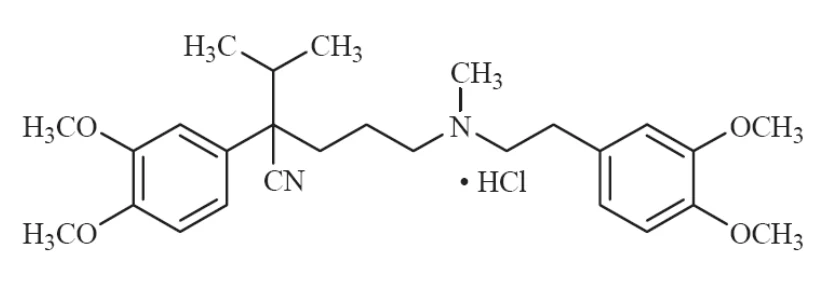
PART II: SCIENTIFIC INFORMATION
PHARMACEUTICAL INFORMATION
Drug Substance
Proper name: verapamil hydrochloride
Chemical name: α-isopropyl-α-[(N-methyl-N-homoveratryl)-γ-aminopropyl]-3,4-dimethoxy-phenylacetonitrile hydrochloride
Molecular formula
and molecular
mass:
C27H38N2O4HCl 491.07
Structural formula:
Physicochemical
properties:
Verapamil, as the hydrochloride, is an almost white, bitter-tasting crystalline powder practically free from odour. It is readily soluble in chloroform and water (1 part in 20), but sparingly soluble in ethanol and practically insoluble in ether. It melts at 140ºC and should be protected from light.
DETAILED PHARMACOLOGY
Animal Pharmacology
Pharmacodynamics
Verapamil hydrochloride was initially investigated in experimental animals as a smooth muscle relaxant, with vasodilator properties. Subsequent studies have demonstrated that verapamil hydrochloride has significant antiarrhythmic effects when tested in a variety of experimental arrhythmias. The mechanism of action of verapamil hydrochloride seems to be the blocking of transmembrane influx of calcium through the slow channels, without affecting to any significant degree, transmembrane influx of sodium through the fast channels. It does not directly modify calcium uptake, binding or exchange by cardiac microsomes. Its main locus of action seems to be the superficially located membrane storage sites for calcium.
In isolated cardiac tissues, at low to moderate concentrations, verapamil exerts little or no effect on action potential amplitude, but suppresses activity in the sinoatrial (S-A) and atrioventricular (A-V) nodes. Any activity within the S-A and A-V nodes seems to be particularly sensitive to the suppressant effects of verapamil because normal impulse formation in the sinus node and conduction in the A-V node appear to be maintained by operation of slow channel mechanisms. The depressant effects exerted by verapamil on A-V nodal conduction may in part explain its effectiveness in treating supraventricular tachycardia.
Verapamil has a marked negative inotropic effect on isolated cardiac muscle. In intact animals, the depressant effect on cardiac output and stroke volume is dose-dependent.
Although verapamil has local anaesthetic properties, in clinically relevant doses it does not affect the rate of either the depolarization or the repolarization phase of the cardiac action potential. Verapamil does not have beta-blocking properties, although it antagonizes beta-adrenergic influences on the heart by a functional antagonism, due to its basic pharmacodynamic properties at the level of the conduction system and the myocardium.
In animal studies, the S-enantiomer has 15 and 50 times the activity of the R-enantiomer in reducing myocardial contractility in isolated blood-perfused dog papillary muscle and isolated rabbit papillary muscle, respectively, and twice the effect in reducing peripheral resistance.
TOXICOLOGY
Acute Toxicity
Table 7. Lethal Dose 50 (LD50) (mg/kg) of Verapamil
| Intravenous | Intraperitoneal | Subcutaneous |
Oral
Rat
| 16 | 67 | 107 |
114
Mouse
| 8 | 68 | 68 |
163
Guinea Pig
| - | - | - |
140
Juvenile Rat
| - | - | - |
93 (M)
| - | - | - |
113 (F)
Juvenile Rabbit
| - | - | - |
114.2 (M)
| - | - | - |
129.8 (F)
Definitions: M = male; F = female
Symptoms preceding death were similar in both sexes with marked sedation, decreased excitability, forced respirations, clonic spasms and convulsions.
Subacute Toxicity
Oral Studies
Verapamil was administered orally in doses of 12.5, 25 and 50 mg/kg per day, to rats via food for 14 weeks (29 animals/group) and to dogs for 6 days/week in capsules, for 15 to 16 weeks (4 animals/ group). Baboons received 2, 4, 8, 16, 32 and 64 mg/kg by mouth daily for 4 weeks (2 animals/group).
In rats, a dose-related increase in heart and lung weights was found. Dogs given 25 to 50 mg/kg showed slight weight loss and a significant reduction in heart rate up to Week 11, followed by a gradual return to normal. In one dog on 12.5 mg/kg, one on 25 mg/kg and in all animals on 50 mg/kg, there was emesis during the first two weeks of the study. Serum glutamic-pyruvic transaminase (SGPT) was elevated for one dog on 25 mg/kg at week 9 and for two animals on 50 mg/kg at the end of the test. Macroscopic examinations at necropsy were negative and there were no drug-attributal histological changes. The baboons showed no drug-related changes.
Intramuscular Studies
Beagle dogs were given 0, 2 and 10 mg/kg, 5 days/week for 30 days (4 animals/group). Injection sites in all animals became edematous and a dose-related reduction in heart rate was observed. At 10 mg/kg, hemoglobin and hematocrit values decreased and one animal had a raised SGPT. At necropsy, edema was noted at injection sites and higher spleen weights were recorded at the 10 mg/kg dose. One dog on this dose also showed increased inflammatory cell infiltration in the liver, with some hepatic cell degenerative changes.
Intravenous Studies
Verapamil was given to Sprague-Dawley rats at 0.2, 1 and 5.0 mg/kg once daily for 4 weeks (30 animals/group) and similarly to beagle dogs at 0.1, 0.4 and 1.6 mg/kg levels (6 animals/group).
At the highest dose level, all dogs showed some restlessness, salivation and laboured breathing, along with delayed A-V conduction in one-half of the animals. In 4 of 6 animals at the highest dose (1.6 mg/kg), sporadic small focal gatherings of Kupffer cells, with death of individual liver cells (necrobioses and/or necrosis of hepatocytes), were found histopathologically.
Chronic Toxicity
Oral
Rats were given verapamil at 10, 15, 25, 30, 60 and 62.5 mg/kg/day (50 animals/group) and beagle dogs at 10, 15, 25, 30, 40, 60, 62.5, 70, 81 and 85 mg/kg (6 animals/group) for 12 and 18 months. Clinical signs were observed and changes in food consumption, consistency of stools, hemograms, clinical chemistry and urinalyses performed. Blood pressure, electrocardiogram (ECG) and ophthalmoscopic examinations were done on the dogs.
In one 18-month rat study, an increase in weight of the thyroid glands in females on the 62.5 mg dose was noted. In a later 12-month study, a slight reduction in weight gain was recorded.
In dogs, at doses of 60 mg and greater, toxic signs such as vomiting, salivation, reversible hyperplasia of the gums, reduced food consumption, slight weight loss and a transitory, slight to moderate elevation of SGPT were noted and three of the animals died. The 40 mg dose caused loss of coat colour and hair, and a delay in A-V conduction.
In another study, atypical lens changes (cataracts) were observed in eight beagles receiving toxic dose levels (62.5 and 70 mg/kg). In a later study, four beagles were given 81 mg/kg for 18 months and none developed cataracts. It was concluded that any changes caused by verapamil in lens transparency are specific to the beagle. This is supported by the absence of similar lesions in other species studied, and by the apparent lack of any impairment by verapamil of carbohydrate or energy metabolism in lenticular tissue. The water-soluble proteins of the canine lens are known to have differences from those in other species.
Mutagenicity and Carcinogenicity
Mutagenicity
In vitro mutagenicity tests showed that verapamil did not have mutagenic properties in five different strains of Salmonella typhimurium, nor in studies on chromosomal aberrations and sister chromatid exchanges (SCE) in human lymphocytes, nor in the hypoxanthine guanine phosphoribosyltransferase (HGPRT)-test with V-79 Chinese hamster cells, and also not in the cell transformation assay with Syrian hamster embryo cells. In addition, verapamil did not show any SCE-inducing activity in vivo (Chinese hamster).
Carcinogenicity
In a 24-month carcinogenicity study, verapamil hydrochloride was administered orally to 50 male and 50 female rats in the diet as actual mean doses of 9.3/9.5, 32.6/33.2, and 112.2/102.5 mg/kg/day, respectively. Two hundred animals served as controls.
Drug-related significant reductions in body weight and mortality were seen in males and females of the high dose group.
Dose-related cardiac lesions (dilatation, atrial thrombi and myocardial metaplasia, combined with hydrothorax) were seen in the high dose group. These cardiac lesions are considered related to a chronic, exaggerated pharmacologic effect at this high dose level.
At the end of the study, all rats were examined histopathologically with regards to tumorigenesis. All non-neoplastic and neoplastic lesions were considered to reflect the spectrum of spontaneous lesions commonly encountered in rats of this age and strain. As compared to the controls, the type and incidence of these lesions were not increased in treated rats.
Reproduction and Teratology
Studies were carried out in rats and rabbits with verapamil given in food and/or by gastric tube. These studies included fertility and general reproduction performance in rats, teratogenicity studies in rats and rabbits and peri- and post-natal studies in rats. Rats were given 2.5, 12.5, 25 and 100 mg/kg body weight, by gastric tube and 1.3, 1.6, 5.2, 7.5, 13.3, 16 and 55 mg/kg body weight in food. In another teratogenicity study, rats were given 5, 10 and 20 mg/kg body weight by gavage three times daily at an interval of about 4.5 hours. Rabbits were given 5 and 15 mg/kg body weight by gastric tube.
There was no evidence of teratogenicity in either species and no embryotoxic effects observed in the rats dosed via food, or with doses up to 12.5 mg/kg body weight given by gastric tube, or with doses up to 10 mg/kg three times a day. The single daily dose of 25 mg/kg body weight or more, caused a higher resorption rate in the rat. The dose of 20 mg/kg three times a day was embryocidal and retarded fetal growth and development, probably because of adverse maternal effects reflected in reduced weight gains of the dams. This oral dose has also been shown to cause hypotension in rats. There was no difference in resorption rates observed in the rabbit and no effect on peri- and post-natal development or fertility in the rat.
REFERENCES
- 1.
Anavekar SN, Christophidis N, Louis WJ, Doyle AE. Verapamil in the Treatment of
Hypertension. J Cardiovasc Pharm 1981; 3:287-92.
- 2.
Bauer LA, et al. Verapamil Inhibits Ethanol Elimination and Prolongs the Perception of
Intoxication. Clin Pharmacol Ther 1992; 52(1):6-10.
- 3.
Bonow RO, Leon MB, Rosing DR, et al. Effects of Verapamil and Propranolol on Left
Ventricular Systolic Function and Diastolic Filling in Patients with Coronary Artery Disease: Radionuclide Angiographic Studies at Rest and During Exercise. Circulation 1981; 65:1337-50.
- 4.
Cubeddu LX, Aranda J, Singh B, et al. A Comparison of Verapamil and Propranolol for the
Initial Treatment of Hypertension - Racial Differences in Response. J Am Med Assoc l986; 256:2214-21.
- 5.
Ferlinz J, Easthope JL. Effects of Verapamil on Myocardial Performance in Coronary
Disease. Circulation 1979; 59:313-9.
- 6.
Ferlinz J, Turbow ME, Aronow WS. Myocardial Metabolism and Anginal Threshold in
Coronary Disease after Verapamil Administration. Clin Invest Med 1980; 3:101-9.
- 7.
Follath F, Fromer M, Meier P, Vozeh S. Pharmacodynamic Comparison of Oral and
Intravenous Verapamil in Atrial Fibrillation. Clin Invest Med 1980; 3:49-52.
- 8.
Frishman WH, Klein NA, Klein P, et al. Comparison of Oral Propranolol and Verapamil for
Combined Systemic Hypertension and Angina Pectoris. A Placebo-controlled Double-blind Randomized Crossover Trial. Amer J Cardiol 1982; 50:1164-1172.
- 9.
Frishman WH, Klein NA, Strom JA, et al. Superiority of Verapamil to Propranolol in Stable
Angina Pectoris: A Double-blind, Randomized Crossover Trial. Circulation 1982; 65(suppl.I):I51-9.
- 10.
Gould BA, Mann S, Kieso H, Balasubramanian V, Raftery EB. The Role of a Slow Channel
Inhibitor, Verapamil, in the Management of Hypertension. Clin Exp Pharmacol Physiol 1982; Suppl 6:113-121
- 11. Johnson SM, Mauritson DR, Corbett JR, Woodward W, Willerson JT, Hillis LD. Double-blind, Randomized, Placebo-controlled Comparison of Propranolol and Verapamil in the Treatment of Patients with Stable Angina Pectoris. Am J Med 1981; 71:443-51.
- 12.
Johnson SM, Mauritson DR, Willerson JT, Hillis LD. A Controlled Trial of Verapamil for
Prinzmetal's Variant Angina. New Eng J Med 1981; 304:862-6.
- 13.
Kaltenbach M, Hopf R, Kober G, Bussmann WD, Keller M, Petersen Y. Treatment of
Hypertrophic Obstructive Cardiomyopathy by Verapamil. Br Heart J 1979; 42:35-42.
- 14.
Klein HO, Lang R, Weiss E, et al. The Influence of Verapamil in Serum Digoxin
Concentrations. Circulation 1982; 65:998-1003.
- 15.
Miller MR, Withers R, Bhamra R, Holt DW. Verapamil and Breast-feeding. Eur J Clin
Pharmacol, 1986; 30:125-6.
- 16.
Nayler WG. Cardioprotective Effects of Calcium Ion Antagonists in Myocardial Ischemia.
Clin Invest Med 1980; 3:91-9.
- 17. Packer M, Meller J, Medina N, et al. Hemodynamic Consequences of Combined Beta-adrenergic and Slow Calcium Channel Blockade in Man. Circulation 1982; 65:660-8.
- 18.
Perez-Reyes M, et al. Interaction Between Ethanol and Calcium Channel Blockers in
Humans. Alcohol Clin Exp Res 1992;16(4):769-775.
- 19.
Pozenel H. Plasma Concentration and Blood Pressure Effect of a Sustained Release
Verapamil Preparation. In Calcium Antagonists & Hypertension Current Status, Excerpta Medica, Amsterdam, 1986, pp 56-65.
- 20.
Rinkenberger RL, Prystowsky EN, Heger JJ, Troup PJ, Jackman WM, Zipes DP. Effects of
Intravenous and Chronic Oral Verapamil Administration in Patients with Supraventricular Tachyarrhythmias. Circulation 1980; 62:996-1010.
- 21.
Rosing DR, Condit JR, Maron BJ, et al. Verapamil Therapy: A New Approach to the
Pharmacologic Treatment of Hypertrophic Cardiomyopathy: III. Effects of Long Term Administration. Am J Cardiol 1981; 48:545-553.
- 22.
Schwartz JB, Keefe DL, Kirsten E, Kates RE, Harrison DC. Prolongation of Verapamil
Elimination Kinetics During Chronic Oral Administration. Am Heart J 1982; 104:198-203.
- 23. Subramanian VB, Bowles MJ, Khurmi NS, Davies AB, Raferty EB. Randomized Double-blind Comparison of Verapamil and Nifedipine in Chronic Stable Angina. Am J Cardiol 1982; 50:696-703.
- 24. Vohra J, Ross D, Cole P, Hunt D, Sloman G. The Effect of Orally Administered Verapamil on Atrioventricular Nodal Conduction and Refractoriness. I.R.C.S., Med Sci 1980; 8:45.
- 25.
Zachariah PK, Sheps SG, Schirger A, Spiekerman RE, O'Brien PC, Simpson KK. Verapamil
& 24-hour Ambulatory Blood Pressure Monitoring in Essential Hypertension. Am J Cardiol 1986; 57:74D-79D.
- 26.
Zacny JP, Yajnik S. Effects of Calcium Channel Inhibitors on Ethanol Effects and
Pharmacokinetics in Healthy Volunteers. Alcohol 1993;10(6):505-509.
- 27. BGP Pharma Inc., Isoptin® SR Product Monograph. Control no.: 180964 Revision Date: March 25, 2015.