


Patient Medication Information: uses, side effects, how to take - Nalcrom
What is NALCROM used for?
NALCROM is used to treat allergic reactions to certain foods.
NALCROM is only used if you have had a test to prove that you are allergic to these foods. As part of your treatment, your healthcare professional should advise you to avoid eating certain foods which may cause an allergic reaction.
If you have life-threatening reactions to food, DO NOT RELY ON NALCROM, as it does not protect you from these serious conditions.
How does NALCROM work?
NALCROM belongs to a group of medicines called anti-allergics. It works by stopping the release of the natural substances in your body that can cause an allergic reaction.
What are the ingredients in NALCROM?
Medicinal ingredients: sodium cromoglicate.
Non-medicinal ingredients: gelatin and iron oxide.
NALCROM comes in the following dosage forms:
Capsules 100 mg
Do not use NALCROM if:
- You have an allergy to sodium cromoglicate or any of the other ingredients in NALCROM (see
What are the ingredients in NALCROM?).
NALCROM should not be used in children under 2 years of age.
To help avoid side effects and ensure proper use, talk to your healthcare professional before you take NALCROM. Talk about any health conditions or problems you may have, including if you:
are pregnant, think you are, or plan to get pregnant
- are breastfeeding, or planning to breastfeed
- have liver and kidney problems, as this may affect the dosage of NALCROM that you need


Other warnings you should know about:
If you have life-threatening reactions to food, DO NOT RELY ON NALCROM, as it does not protect you from these serious conditions. You should not stop taking NALCROM without talking to your healthcare professional.
Tell your healthcare professional about all the medicines you take, including any drugs, vitamins, minerals, natural supplements or alternative medicines.
How to take NALCROM:
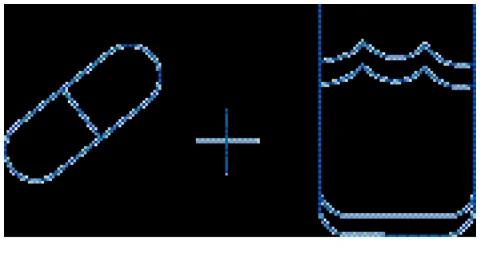
The best way to take NALCROM is to open the capsule(s) and put all of the powder in a cup, dissolve the powder in 1 teaspoonful of very hot water and dilute it with 4 teaspoonfuls of cold water.
Alternatively, you can take the capsules by swallowing them whole with a drink of water.
Usual dose:
Always take NALCROM exactly as your healthcare professional has told you.
Initial dose:
Adults: 200 mg (2 capsules) four times a day 15-20 minutes before meals.
Children (2-14 years of age): 100 mg (1 capsule) four times a day 15-20 minutes before meals.
Maintenance dose:
- Once your symptoms improve, your healthcare professional may reduce your dose. Do not try to change the dose yourself. You should ask your healthcare professional if you are not sure.
- If signs of allergy do not improve within 2-3 weeks, your healthcare professional may double how much you take. Your dose should not be greater than 40 mg per kilogram of your body weight per day.
Prevention:
Patients who are unable to avoid allergenic foods under certain circumstances (i.e., school meals, restaurants) may be able to protect themselves against the effect of these foods by taking a single dose of NALCROM 15 minutes before the meal. Your healthcare professional will decide on the dose that is
right for you. A usual starting dose would be 200 mg (2 capsules) in adults and 100 mg (1 capsule) in children.
Overdose:
If you think you, or a person you are caring for, have taken too much NALCROM, contact a healthcare professional, hospital emergency department, or regional poison control centre immediately, even if there are no symptoms.
Missed Dose:
If you forget a dose, take it as soon as you remember it. However, if it is nearly time for the next dose, skip the missed dose. Do not take a double dose to make up for a forgotten dose.
What are possible side effects from using NALCROM ?
These are not all the possible side effects you may have when taking NALCROM. If you experience any side effects not listed here, tell your healthcare professional.
Side effects may include: vomiting, headache, insomnia, hives, skin rashes, sneezing, cough, unpleasant taste in the mouth, and joint pains.
Serious side effects and what to do about them
| Symptom / effect | Talk to your healthcare professional | Stop taking drug and | |||
| Only if severe | In all cases | get immediate | |||
| medical help | |||||
| Nausea, diarrhea, abdominal discomfort | |||||
| Heart Failure: shortness of breath, cough, leg swelling and fatigue | |||||
| Polymyositis: progressive muscle weakness | |||||
| Pneumonitis: difficulty breathing | |||||
| Allergic Reaction: rash, hives, swelling of the face, lips, tongue or throat, difficulty swallowing or breathing | |||||
If you have a troublesome symptom or side effect that is not listed here or becomes bad enough to interfere with your daily activities, tell your healthcare professional.
NALCROM Sodium Cromoglicate Page 17 of 17
Capsules Reporting Side Effects
You can report any suspected side effects associated with the use of health products to Health Canada by:
- Visiting the Web page on Adverse Reaction Reporting (https://www.canada.ca/en/health-canada/services/drugs-health-products/medeffect-canada.html) for information on how to report online, by mail or by fax; or
- Calling toll-free at 1-866-234-2345.
NOTE: Contact your health professional if you need information about how to manage your side effects. The Canada Vigilance Program does not provide medical advice.
Storage:
Keep out of reach and sight of children.
Store in a dry place between 15°-30°C.
If you want more information about NALCROM:
- Talk to your healthcare professional
Find the full product monograph that is prepared for healthcare professionals and includes this
Patient Medication Information by visiting the Health Canada website:
(https://www.canada.ca/en/health-canada/services/drugs-health-products/drug-products/drug-product-database.html; or by calling 1 844-587-4623.