


Product Monograph - Neuleptil
Recent Major Label Changes
| 2 Contraindications | 2025/09 |
|---|---|
| 4.1 Dosing Considerations | 2025/09 |
| 7 Warnings and Precautions - Cardiovascular | 2025/09 |
| 7 Warnings and Precautions, Driving and Operating Machinery | 2025/09 |
| 7 Warnings and Precautions, Elderly Patients with Dementia | 2025/09 |
| 7 Warnings and Precautions, Endocrine and Metabolism | 2025/09 |
| 7 Warnings and Precautions, Gastrointestinal | 2025/09 |
| 7 Warnings and Precautions, Hematologic | 2025/09 |
| 7 Warnings and Precautions, Hypersensitivity | 2025/09 |
| 7 Warnings and Precautions, Ophthalmologic | 2025/09 |
| 7.1.2 Breastfeeding | 2025/09 |
| 7.1.4 Geriatrics | 2025/09 |
| 8.5 Post-Market Adverse Reactions | 2025/09 |
| 9.4 Drug-Drug Interactions | 2025/09 |
Table of Contents
Recent Major Label Changes ................................................................................................. 2
Table of Contents ................................................................................................................. 2
Part 1: Healthcare Professional Information.......................................................................... 5
- 1.
Indications..................................................................................................................... 5
1.1. Pediatrics ..................................................................................................................... 5
1.2. Geriatrics ...................................................................................................................... 5
- 2. Contraindications .......................................................................................................... 5
- 3. Serious Warnings and Precautions Box ........................................................................... 6
- 4.
Dosage and Administration ............................................................................................ 6
4.1. Dosing Considerations ................................................................................................. 6
4.2. Recommended Dose and Dosage Adjustment ............................................................ 6
4.4. Administration ............................................................................................................. 6
4.5. Missed Dose ................................................................................................................. 6
- 5. Overdose ....................................................................................................................... 6
- 6. Dosage Forms, Strengths, Composition, and Packaging .................................................. 7
- 7.
Warnings and Precautions ............................................................................................. 7
General ................................................................................................................................... 7
Cardiovascular ........................................................................................................................ 8
Driving and Operating Machinery .......................................................................................... 8
Endocrine and Metabolism .................................................................................................... 8
Gastrointestinal ...................................................................................................................... 9
Hematologic ........................................................................................................................... 9
Immune .................................................................................................................................. 9
Monitoring and Laboratory Tests ......................................................................................... 10
Neurologic ............................................................................................................................ 10
Ophthalmologic .................................................................................................................... 11
Reproductive Health ............................................................................................................. 11
Skin ....................................................................................................................................... 11
7.1. Special Populations .................................................................................................... 11
7.1.1. Pregnancy ......................................................................................................... 11
7.1.2. Breastfeeding ................................................................................................... 12
7.1.3. Pediatrics .......................................................................................................... 12
7.1.4. Geriatrics .......................................................................................................... 12
- 8.
Adverse Reactions ....................................................................................................... 12
8.1. Adverse Reaction Overview ....................................................................................... 12
8.5. Post-Market Adverse Reactions ................................................................................ 12
- 9.
Drug Interactions ......................................................................................................... 14
9.2. Drug Interactions Overview ....................................................................................... 14
9.3. Drug-Behaviour Interactions ..................................................................................... 14
9.4. Drug-Drug Interactions .............................................................................................. 14
9.5. Drug-Food Interactions .............................................................................................. 18
9.6. Drug-Herb Interactions .............................................................................................. 18
9.7. Drug-Laboratory Test Interactions ............................................................................ 18
- 10.
Clinical Pharmacology .................................................................................................. 18
10.1. Mechanism of Action ............................................................................................. 18
10.2. Pharmacodynamics ................................................................................................ 19
10.3. Pharmacokinetics ................................................................................................... 19
- 11. Storage, Stability, and Disposal .................................................................................... 19
Part 2: Scientific Information .............................................................................................. 20
- 13. Pharmaceutical Information ........................................................................................ 20
- 14. Clinical Trials ............................................................................................................... 20
- 15. Microbiology ............................................................................................................... 20
- 16. Non-Clinical Toxicology ................................................................................................ 20
Patient Medication Information ......................................................................................... 21
Part 1: Healthcare Professional Information
1. Indications
NEULEPTIL (Periciazine capsules; Periciazine oral drops) is indicated:
- as adjunctive medication in some psychotic patients and;
- for the control of residual prevailing hostility, impulsiveness and aggressiveness.
1.1. Pediatrics
Pediatrics (≥ 5 years): Based on the data submitted and reviewed by Health Canada, the safety and efficacy of NEULEPTIL in pediatric patients above 5 years of age has been established; therefore, Health Canada has authorized an indication for pediatric use (see 7.1 Special Populations, Pediatrics).
1.2. Geriatrics
Geriatrics (≥ 65 years): Evidence from clinical studies and experience suggests that use in the geriatric population is associated with differences in safety or effectiveness (see 3 Serious Warnings and Precautions Box and 7.1 Special Populations, Geriatrics).
2. Contraindications
- NEULEPTIL is contraindicated in patients who are hypersensitive to this drug, to other phenothiazines or to any ingredient in the formulation, including any non-medicinal ingredient, or component of the container. For a complete listing, see 6 Dosage Forms, Strengths, Composition, and Packaging.
- Patients with circulatory collapse.
- Patients with altered states of consciousness or comatose states, particularly when they are due to intoxication with central depressant drugs such as alcohol, hypnotics, analgesics, narcotics, etc.
- NEULEPTIL should not be administered in association with spinal or regional anesthesia.
- Patients with a history of blood dyscrasias or agranulocytosis.
- Patients at risk of angle-closure glaucoma
- Patients at risk of urinary retention due to urethroprostatic disorders
- Children undergoing surgery
- Severely depressed patients
- Patients with renal or liver insufficiency
- Patients with a diagnosis of pheochromocytoma
- Patients with suspected or established subcortical brain damage, with or without hypothalamic damage, since sometimes, a hyperthermic reaction with temperatures above 40⸰C may not occur, until 14 to 16 hours after drug administration
- Patients with a history of liver disease
3. Serious Warnings and Precautions Box
- Studies with various medicines of the group to which NEULEPTIL belongs, when used in the elderly patients with dementia, have been associated with an increased rate of death. NEULEPTIL is not indicated in elderly patients with dementia (see 7.1 Special Populations, Geriatrics).
4. Dosage and Administration
4.1. Dosing Considerations
- Pediatrics: Periciazine is not recommended for use in children under 5 years of age, since limited clinical experience is available.
- Geriatrics: Initiate at a lower than recommended starting dose and titrate based on clinical response and tolerability (see 7.1.4 Warnings and Precautions, Geriatrics).
- Upon periciazine initiation, patients with an established diagnosis of diabetes mellitus or with risk factors for the development of diabetes, should receive appropriate glycaemic monitoring during treatment (see 7.1.4 Warnings and Precautions, Endocrine and Metabolism).
4.2. Recommended Dose and Dosage Adjustment
- Adults: 5 to 20 mg in the morning and 10 to 40 mg in the evening. For maintenance therapy, the dosage should be reduced to the minimum effective dose. Lower doses of 2.5 to 15 mg in the morning, and 5 to 30 mg in the evening have been suggested.
- For elderly patients, the initial total daily dosage should be in the order of 5 mg and increased gradually as tolerated, until an adequate response is obtained. A daily dosage of more than 30 mg will rarely be needed.
- Children and adolescents (5 years of age and over): 2.5 to 10 mg in the morning and 5 to 30 mg in the evening. These dosages approximate a daily dosage range of 1 to 3 mg/year of age.
- In general, for both children and adults, the lower doses should not be exceeded initially. Subsequently, dosage may be gradually increased until the most effective level is reached. Caution is required when these dosages are exceeded.
- Troublesome initial drowsiness has often been observed following periciazine administration. This may be obviated by giving the drug twice daily and reserving the major portion of the daily dosage for the evening.
4.4. Administration
Oral administration.
4.5. Missed Dose
The patient must take the missed dose as soon as they remember. If it is almost time for their next dose, wait until then to take the medicine and skip the missed dose. The patient must not double their dose to make up for the missed dose.
5. Overdose
Symptoms: In milder cases of phenothiazine overdosage the patient may be agitated, delirious and confused. Frequently he is lethargic or in a comatose state. Twitching dystonic movements or convulsions may be present and hypotension, cardiovascular collapse, arrhythmias and hypothermia might be observed.
Treatment: When indicated, gastric lavage can remove significant amounts of the drug. Careful supportive management is required until the patient is well out of drug-induced CNS depression. Shock, arrhythmia, respiratory failure and hypothermia are the main management problems. When a pressor agent is required, norepinephrine or phenylephrine may be used.
For the most recent information in the management of a suspected drug overdose, contact your regional poison control centre or Health Canada’s toll-free number, 1-844 POISON-X (1-844-764-7669).
- 6. Dosage Forms, Strengths, Composition, and Packaging
Table 1 - Dosage Forms, Strengths, and Composition
Description
NEULEPTIL (periciazine capsules; periciazine oral drops) is available as capsules containing 5, 10 and 20 mg of periciazine and as oral drops of 10 mg/mL of periciazine.
5 mg: light blue cap and white body opaque capsules, with black radial impression ‘’ERFA’’ on the cap and 5 mg on the body, bottles of 100. Tartrazine-free.
10 mg: light blue cap and white body opaque capsules, with black radial impression ‘’ERFA’’ on the cap and 10 mg on the body, bottles of 100. Tartrazine-free.
20 mg: light blue cap and white body opaque capsules, with black radial impression ‘’ERFA’’ on the cap and 20 mg on the body, bottles of 100. Tartrazine-free.
Oral Drops: Each mL of liquid contains 10 mg of periciazine. Energy: 4.3 kJ (1.0 kcal)/mL. Bottle of 100 mL with calibrated dropper. Tartrazine-free.
7. Warnings and Precautions
See 3 Serious Warnings and Precautions Box.
General
To lessen the likelihood of adverse reactions related to drug accumulation, patients on long-term therapy, particularly on high doses, should be evaluated periodically to decide whether the maintenance dosage could be lowered or drug therapy discontinued. Sudden onset of severe CNS or
| Route of Administration | Dosage Form/ Strength/Composition | Non-Medicinal Ingredients |
| Oral | Capsules, 5 mg, 10 mg and 20 mg periciazine | Calcium phosphate, croscarmellose sodium, FD&C Blue No 1, FD&C Red No 3, gelatin, magnesium stearate and titanium oxide. |
| Oral | Oral drops, 10 mg/mL periciazine | Alcohol, ascorbic acid, caramel, glycerin, peppermint oil, purified water, sucrose and tartaric acid. |
vasomotor symptoms should be kept in mind.
Cardiovascular
Neuroleptic phenothiazines may potentiate QT interval prolongation which increases the risk of onset of serious ventricular arrhythmias of the torsade de pointes type, which is potentially fatal (sudden death). QT prolongation is exacerbated, in particular, in the presence of bradycardia, hypokalemia, and congenital or acquired (i.e. drug induced) QT prolongation. Medical and laboratory evaluations should be performed to rule out possible risk factors before initiating treatment and as deemed necessary during treatment (see 8 Post-Market Adverse Reactions).
Driving and Operating Machinery
Taking periciazone may cause drowsiness, slowing of reaction time or impaired judgment. Patients should generally not operate a motor vehicle or other machinery or engage in dangerous activities while under the action of the drug. Patients should also be cautioned about the combined effects of phenothiazines with other CNS depressants, including alcohol, opioids, and sedatives/hypnotics.
Elderly Patients with Dementia
Elderly patients with dementia-related psychosis who are treated with antipsychotic drugs are at an increased risk of death. Analyses of seventeen placebo-controlled trials (modal duration of 10 weeks), largely in patients taking atypical antipsychotic drugs, revealed a risk of death in drug-treated patients of between 1.6 to 1.7 times the risk of death in placebo-treated patients. Over the course of a typical 10- week controlled trial, the rate of death in drug-treated patients was about 4.5%, compared to a rate of about 2.6% in the placebo group. Although the causes of death in clinical trials with atypical antipsychotics were varied, most of the deaths appeared to be either cardiovascular (e.g., heart failure, sudden death) or infectious (e.g., pneumonia) in nature. Observational studies suggest that, similar to atypical antipsychotic drugs, treatment with conventional antipsychotic drugs may increase mortality. The extent to which the findings of increased mortality in observational studies may be attributed to the antipsychotic drug as opposed to some characteristic(s) of the patients is not clear (see 3 Serious Warnings and Precautions Box).
Endocrine and Metabolism
Delayed ovulation, menstrual irregularities, lactation, gynecomastia, changes in libido, inhibition of ejaculation, false positive pregnancy tests, weight gain and edemas, have occurred during treatment with phenothiazines. Voracious appetite and weight gain have also been reported in some patients on periciazine therapy.
Some patients receiving periciazine treatment, have experienced hyperglycemia or intolerance to glucose. Diabetic ketoacidosis has occurred in some patients with no reported history of hyperglycemia. Patients should have baseline and periodic monitoring of blood glucose and body weight before initiating treatment. Upon periciazine initiation, patients with an established diagnosis of diabetes mellitus or with risk factors for the development of diabetes, should receive appropriate glycaemic monitoring during treatment (see 8 Adverse Reactions).
Hyperprolactinemia
Long-standing hyperprolactinemia, when associated with hypogonadism, may lead to decreased bone mineral density in both females and males.
Gastrointestinal
Paralytic ileus has occurred in patients, particularly in the elderly, taking one or more drugs with anticholinergic action for extended periods. Therefore, patients should be made aware of the risk of severe constipation during periciazine treatment. Caution should be observed if constipation worsens as laxative use may be necessary.
Hematologic
Venous thromboembolism
Venous thromboembolism (VTE), including fatal pulmonary embolism, has been reported with antipsychotic drugs, including NEULEPTIL, in case reports and/or observational studies. When prescribing NEULEPTIL all potential risk factors for VTE should be identified and preventive measures undertaken.
Cases of venous thromboembolism, sometimes fatal, have been reported with antipsychotic drugs. Therefore, NEULEPTIL should be used with caution in patients with risk factors for thromboembolism. (See 8 Adverse Reactions).
Therapy should be initiated at low doses and caution used in patients with arteriosclerosis, cardiovascular disease, or other conditions where sudden hypotension is undesirable. Careful adjustments of dosage may be necessary if other drugs likely to cause postural hypotension are being administered concurrently. If hypotension should occur and a pressor agent is required, norepinephrine or phenylephrine may be used. Epinephrine should not be used since it may further lower blood pressure.
Thrombocytopenia (including thrombocytopenic purpura) and eosinophilia have been observed with phenothiazine derivatives, including periciazine. The following can be observed: Decreased bone marrow production; sequestration, usually in an enlarged spleen; increased platelet destruction and increased levels of eosinophilic leukocytes in the blood, which result from a variety of conditions, including connective tissue diseases, helminthic infections, neoplasias, and allergic disorders. Patients should be made aware of the potential symptoms of thrombocytopenia. Periciazine should be used with caution in patients who may be at higher risk of developing thrombocytopenia such as children, the elderly, those with a family history of thrombocytopenia or other blood disorders, individuals with certain medical conditions, or those who are taking medications or receiving treatments that are known to cause thrombocytopenia.
Neutropenia, granulocytopenia, agranulocytosis, thrombocytopenia (including thrombocytopenic purpura) and eosinophilia have been reported during antipsychotic use. Therefore, it is recommended that patients have their complete blood count (CBC) tested prior to starting NEULEPTIL and then periodically throughout treatment (see 8.5 Post-Market Adverse Reactions).
Hepatic
Jaundice cholestatic and liver injury, mainly of cholestatic or mixed type, are very rarely reported in patients treated with periciazine. An early sign of development of jaundice may be a sudden onset of fever following one to three weeks of treatment. Neuroleptic jaundice has the biochemical and other characteristics of obstructive jaundice and is associated with obstruction of the canaliculi by bile thrombi; the frequent presence of an accompanying eosinophilia indicates the allergic nature of this phenomenon. Discontinue treatment if jaundice develops.
Hypersensitivity
Hypersensitivity reactions including urticaria and angioedema have been reported with periciazine use. In case of allergic reaction, discontinue periciazine and initiate appropriate symptomatic treatment.
Agranulocytosis and other blood dyscrasias are among the more serious adverse reactions to phenothiazines. They may occur suddenly or follow a fall in blood count, usually during the first 2 or 3 months of treatment. Cholestatic jaundice and liver injury, mainly of cholestatic or mixed type, are very rarely reported in patients treated with periciazine.
Immune
Patients who have demonstrated a hypersensitivity reaction (e.g., blood dyscrasias, jaundice) with a phenothiazine should not be re-exposed to any phenothiazine unless, in the judgment of the physician, the potential benefits of treatment outweigh the possible hazards.
Monitoring and Laboratory Tests
It is generally advisable to perform periodic liver function tests during prolonged medication with periciazine. Periodic blood counts should also be performed, particularly during the first 2 or 3 months of therapy and patients should be observed for any signs or symptoms suggestive of blood dyscrasia.
Neurologic
Periciazine should not be used in patients with convulsive disorders that are not receiving appropriate anticonvulsive medication.
Neuroleptic Malignant Syndrome
Neuroleptic malignant syndrome (NMS) may occur in patients receiving antipsychotic drugs. NMS is characterized by hyperthermia, muscle rigidity, altered consciousness, and signs of autonomic instability including irregular blood pressure, tachycardia, cardiac arrhythmias and diaphoresis. Additional signs may include elevated serum creatine kinase, myoglobinuria (rhabdomyolysis), acute renal failure and leukocytosis. Hyperthermia is often an early sign of this syndrome. Antipsychotic treatment should be withdrawn immediately and appropriate supportive therapy and careful monitoring instituted.
Tardive Dyskinesia
As with all antipsychotic agents, tardive dyskinesia may appear in some patients on long-term therapy with periciazine or after drug discontinuation. The syndrome is mainly characterized by rhythmical involuntary movements of the tongue, face, mouth or jaw. The manifestations may be permanent in some patients. The syndrome may be masked when treatment is reinstituted, when the dosage is increased or when a switch is made to a different antipsychotic drug. Periciazine should be prescribed in a manner that is most likely to minimize the risk of tardive dyskinesia. The lowest effective dose and the shortest duration of treatment should be used, and treatment should be discontinued at the earliest opportunity, or if a satisfactory response cannot be obtained. If the signs and symptoms of tardive dyskinesia appear during treatment, discontinuation of periciazine should be considered.
Risk of Stroke
In randomized clinical trials versus placebo performed in a population of elderly patients with dementia and treated with certain atypical antipsychotic drugs, a 3-fold increase in the risk of cerebrovascular events has been observed. The mechanism of such risk increase is not known. An increase in the risk with other antipsychotic drugs or other populations of patients cannot be excluded. NEULEPTIL should be used with caution in patients with stroke risk factors.
Ophthalmologic
Because of its anticholinergic action, periciazine should not be used in patients with glaucoma.
Retinal changes have been observed with phenothiazines and may occur after prolonged therapy with periciazine. Discontinue therapy if these changes are observed.
Reproductive Health
Fertility
No data are available.
Function
Rare cases of priapism have been reported with antipsychotic use, including NEULEPTIL. This adverse reaction, as with other psychotropic drugs, did not appear to be dose-dependent and did not correlate with the duration of treatment.
Because of its anticholinergic action, periciazine should be used with great caution in patients with prostatic hypertrophy.
Skin
Abnormal skin pigmentation has been observed with phenothiazines and may occur after prolonged therapy. Discontinue therapy if these changes are observed.
7.1. Special Populations
7.1.1. Pregnancy
Non-teratogenic effects: Neonates exposed to antipsychotic drugs including NEULEPTIL during the third trimester of pregnancy are at risk for extrapyramidal and/or withdrawal symptoms following delivery. There have been reports of agitation, hypertonia, hypotonia, tremor, somnolence, various degrees of respiratory disorders ranging from tachypnoea to respiratory distress and bradycardia. Although these events occurred most often when other drugs such as psychotropic or antimuscarinic drugs were coadministered, they may also occur with antipsychotic use alone. Signs related to atropinic properties of phenothiazines such as meconium ileus, delayed meconium passage, abdominal bloating, tachycardia and feeding disorder in neonates can also occur. These complications have varied in severity; while in some cases symptoms have been self-limited, in other cases neonates have required intensive care unit support and prolonged hospitalization. Appropriate monitoring and treatment of neonates born to mothers receiving NEULEPTIL are recommended.
Since the safety of NEULEPTIL during pregnancy has not been established, NEULEPTIL should not be used during pregnancy or in women of childbearing potential unless the expected benefits to the mother markedly outweigh the potential risks to the fetus.
7.1.2. Breastfeeding
Although it is unknown if periciazine is excreted in human milk, other drugs belonging to the phenothiazine class are excreted in human milk in varying concentrations. Breastfeeding is not recommended during treatment with periciazine.
7.1.3. Pediatrics
Pediatrics (≥ 5 years): Based on the data submitted and reviewed by Health Canada, the safety and efficacy of NEULEPTIL in pediatric patients above 5 years of age have been established; therefore, Health Canada has authorized an indication for pediatric use (See 1.1 Pediatrics).
7.1.4. Geriatrics
Geriatrics (≥ 65 years): Periciazine should be used cautiously in the elderly owing to their susceptibility to drugs acting on the central nervous system, as there may be an increased risk of drug-induced Parkinsonism in the elderly particularly after prolonged use. Also, caution should be taken when treating elderly patients with periciazine in very cold or very hot weather to avoid hyper-or hypothermia. Careful monitoring is also required since elderly patients are particularly susceptible to postural hypotension (see 4.1 Dosing Considerations).
Geriatrics and Debilitated Patients
Particular care should be exercised when periciazine is given to elderly or debilitated patients as some appear to be unduly sensitive to the effects of the drug.
8. Adverse Reactions
8.1. Adverse Reaction Overview
Drowsiness, hypotension and extrapyramidal symptoms are the more frequently reported adverse reactions. Autonomic and psychomotor effects are usually observed at the beginning of treatment and frequently resolve while therapy is being continued or subside upon adjustment of dosage. Extrapyramidal reactions usually occur somewhat later and are mainly observed with higher dosages.
8.5. Post-Market Adverse Reactions
Adverse reactions with different phenothiazines vary in type, frequency, and mechanism of occurrence, i.e., some are dose-related, while others involve individual patient sensitivity. Some adverse reactions may be more likely to occur, or occur with greater intensity in, patients with special medical problem e.g., patients with mitral insufficiency or pheochromocytoma have experienced severe hypotension following recommended doses of certain phenothiazines.
Not all of the following adverse reactions have been observed with every phenothiazine derivative, but they have been reported with one or more and should be borne in mind when drugs of this class are administered:
Allergic or Toxic Reactions:
Hypersensitivity, urticaria, angioedema, asthma, laryngeal oedema, angioneurotic oedema, hyperpyrexia and other allergic reactions may also occur (see 7 Warnings and Precautions, Hypersensitivity).
Behavioral: Drowsiness and impaired psychomotor activity are the most frequent initial untoward reactions but tend to subside within 1 to 3 weeks. Small initial doses will test tolerance to the drug. If a toxic-confusional state appears the medication should be stopped immediately. Other events such as confusional state, delirium, anxiety, and altered mood have been reported. Paradoxical effects, such as agitation, insomnia, inversion of sleep, increased aggressiveness and activation of psychotic symptoms, have also been reported.
Cardiovascular: Very rare cases of QT interval prolongation have been reported. There have been isolated reports of sudden death, with possible causes of cardiac origin, as well as cases of unexplained sudden death, in patients receiving neuroleptic phenothiazines (see 7 Warnings and Precautions, Cardiovascular).
Orthostatic hypotension has been commonly reported during treatment. Elderly or volume depleted individuals are particularly susceptible. These reactions occur more frequently in the beginning of treatment or when the drug is initiated at higher than recommended starting doses.
Torsade de pointes, ECG changes include QT prolongation, ST depression, U-waves and T-wave changes. Cardiac arrhythmias, including ventricular arrhythmias and atrial arrhythmias, atrioventricular (A-V) block, ventricular tachycardia, which may result in ventricular fibrillation or cardiac arrest, have been reported during neuroleptic phenothiazine therapy, which may be related to dosage. Pre-existing cardiac disease, old age, hypokalaemia and concurrent tricyclic antidepressant therapy may predispose the patient.
Central and Peripheral Nervous Systems:
- reported, particularly in the elderly, and occur more often at the beginning of treatment or when initial high doses are used. These reactions may be avoided by testing the patient's tolerance with initial low doses. Changes in ECG and cardiac arrhythmias, including AV block paroxysmal tachycardia, and ventricular fibrillation, have been reported with some phenothiazines.
Predominant anticholinergic effects or sympathetic depression may be responsible for the following adverse reactions: tachycardia, blurred vision, aggravation of glaucoma, dry mouth (sometimes with oral infections and dental caries), nausea, vomiting, constipation, fecal impaction, paralytic ileus, perspiration, diarrhea, and nasal congestion. Changes in body temperature and hyperglycemia have been reported during treatment with phenothiazines.
Central Nervous System
The extrapyramidal reactions include: Parkinsonism, dystonic reactions and akathisia.
Parkinsonism occurs more frequently in patients receiving high doses and can usually be controlled by reducing the dose or temporarily discontinuing medication and, when necessary, by administering an antiparkinson drug. The dystonic reactions consist mainly of protrusion of the tongue, hyperextension of the neck and trunk, contraction of muscles of the neck and face, oculogyric crises, myolonic twitches and carpopedal spasm. Dystonic reactions are usually not dose-related but may be quite dramatic and require urgent treatment. Dystonic reactions have been reported with periciazine.
- -resistant tardive dyskinesia has been reported during treatment with phenothiazine drugs (see 7 Warnings and Precautions, Neurologic).
Changes in EEG, disturbed temperature regulation and seizures have also been reported. Periciazine is generally well tolerated by patients with epilepsy who are maintained on stable anticonvulsive therapy. However, epileptic attacks have been reported and it has not been established that periciazine effectively controls arousal or affective tension in these patients.
Hepatic
Jaundice cholestatic and liver injury, mainly of cholestatic or mixed type, are very rarely reported in patients treated with periciazine (see 7 Warnings and Precautions, Hepatic).
Ophthalmologic: Abnormal pigmentation, including corneal and lens deposits have been observed, usually when high doses of phenothiazines are given for prolonged periods.
Miscellaneous: Unexpected sudden deaths, hypostatic pneumonia, and potentiation of other drugs have occurred during phenothiazine therapy. In some unexpected deaths, myocardial lesions have been observed. Previous brain damage or seizures may also be predisposing factors; high doses should be avoided in known seizure patients. Several patients have shown sudden exacerbations of psychotic behavior patterns shortly before death. Autopsy findings have also revealed acute fulminating pneumonia or pneumonitis and aspiration of gastric contents. The physician should therefore be alerted to the possible development of "silent pneumonias".
Reproductive health: Priapism has been very rarely reported in patients treated with periciazine.
Skin: Abnormal pigmentation has been observed, usually when high doses of phenothiazines are given for prolonged periods.
9. Drug Interactions
9.2. Drug Interactions Overview
Periciazine may potentiate the action of other drugs; caution should therefore be exercised when it is prescribed with other phenothiazine derivatives or CNS depressants such as barbiturates, analgesics, narcotics or antihistamines, and the usual doses of these compounds should be reduced by at least half while the new treatment is being gradually introduced.
9.3. Drug-Behaviour Interactions
Patients should also be advised against ingesting alcohol while under treatment.
9.4. Drug-Drug Interactions
The drugs listed in this table are based on either drug interaction case reports or studies, or potential interactions due to the expected magnitude and seriousness of the interaction (i.e., those identified as contraindicated).
Table 2 - Established or Potential Drug-Drug Interactions
| [Non-proprietary name(s) of the drug product(s)] | Source of evidence | Effect | Clinical comment |
| Phenothiazine derivatives | C, T | Periciazine may potentiate the action of other phenothiazine derivatives Phenothiazines are potent inhibitors of CYP2D6. There is a possible pharmacokinetic interaction between inhibitors of CYP2D6 and CYP2D6 substrates. Co-administration of phenothiazines with amitriptyline/amitriptylino xide, a CYP2D6 substrate, may lead to an increase in the plasma levels of amitriptyline/amitriptylino xide | Exercise caution and monitor patients for dose-dependent adverse reactions associated with amitriptyline/amitriptylinoxide. |
| Antiparkinsonism dopaminergic agonists agents such as amantadine, apomorphine, bromocriptine, cabergoline, entacapone, lisuride, pergolide, piribedil, pramiprexole, quinagolide, or ropinirole | T | Such agents exacerbate psychotic disorders and cannot act on receptors blocked by neuroleptics. | Discontinue antiparkinson therapy. |
| Sultopride | T | Increased risk of ventricular arrhythmias, particularly of the torsades de pointes type, by addition of electrophysiological effects. | Combination therapy is not recommended. |
| Levodopa | T | Reciprocal antagonism between levodopa and neuroleptics. | Combination is not recommended. In parkinsonian patients, use the minimum effective doses of both medications. Anticholinergic antiparkinson agents should be used in preference to levodopa. |
| Topical gastro-intestinal agents such as magnesium, aluminium and calcium salts, oxides and hydroxides | T | Reduced gastro-intestinal absorption of phenothiazine neuroleptics | Antacids should not be taken at the same time as phenothiazine neuroleptics (administer at least 2 hours apart, if possible). |
| Lithium | T | Might increase the risk of QT prolongation and neuroleptic malignant syndrome or lithium poisoning. Rare cases of neurotoxicity have been reported with concomitant use. | Regular clinical and biological monitoring of serum (lithium), especially when combination therapy is initiated. |
| Atropine and other atropine-like substances: Imipramine antidepressants, sedative H1 antihistamines, anticholinergic antiparkinsonian agents, atropine-like antispasmodics, disopyramide | T | Cumulative atropine-like side effects such as urinary retention, constipation, dry mouth, constipation, heat stroke, etc. Anticholinergic agents may reduce the antipsychotic effect of neuroleptics. | Exercise caution when administering concomitantly. |
| Antihypertensives | T | Increased antihypertensive effect and risk of orthostatic hypotension (cumulative effect) | Exercise caution when administering concomitantly. |
| Guanethidine | T | Inhibition of the antihypertensive effect of guanethidine (inhibition of guanethidine uptake by sympathetic nerve fibres, the site of action). | Exercise caution when administering concomitantly. |
| Other central nervous system depressants: Morphine derivatives (analgesics, antitussives and replacement therapies), barbiturates, benzodiazepines, anxiolytics other than benzodiazepines (carbamates, captodiame, etifoxine), hypnotics, sedative antidepressants, sedative H1 antihistamines, central antihypertensives, baclofen, thalidomide. | C, T | Enhanced central depression. Impaired vigilance may have serious consequences when driving or using machines. The CNS depressant actions of neuroleptic agents may be intensified (additively) by alcohol, barbiturates and other sedatives. Respiratory depression may occur. The hypotensive effect of most antihypertensive drugs, especially alpha adrenoceptor blocking agents may be exaggerated by neuroleptics. There is an increased risk of arrhythmias when neuroleptics are used with concomitant QT prolonging drugs (including certain antiarrhythmics, antidepressants, and other antipsychotics) and drugs causing electrolyte imbalance | Exercise caution when administering concomitantly. The usual doses of these compounds should be reduced by at least half while the new treatment is being gradually introduced. |
| Hypoglycaemic agents | T | High doses of neuroleptics may reduce the response to hypoglycaemic agents | The dosage of hypoglycemic agents might have to be raised. |
| Desferrioxamine and prochlorperazine | T | Simultaneous administration of desferrioxamine and prochlorperazine has been observed to induce a transient metabolic encephalopathy characterised by loss of consciousness for 48-72 hours. It is possible this may occur with Pericyazine since it shares many of the pharmacological properties of prochlorperazine | Exercise caution when administering concomitantly. |
| Drugs with myelosuppressive potential, such as carbamazepine or certain antibiotics and cytotoxics. | T | There is an increased risk of agranulocytosis when neuroleptics are used concurrently with drugs with myelosuppressive potential, such as carbamazepine or certain antibiotics and cytotoxics. | Exercise caution when administering concomitantly. |
Legend: C = Case Study; CT = Clinical Trial; T = Theoretical
9.5. Drug-Food Interactions
Interactions with food have not been established.
9.6. Drug-Herb Interactions
Interactions with herbal products have not been established.
9.7. Drug-Laboratory Test Interactions
Interactions with laboratory tests have not been established.
10. Clinical Pharmacology
10.1. Mechanism of Action
Periciazine is a phenothiazine of the piperidine group. It has been shown to reduce pathologic arousal and affective tension in some psychotic patients, while the symptoms of abnormal mental integration are relatively unaffected.
It is a sedative phenothiazine with weak antipsychotic properties. It also has adrenolytic, anticholinergic metabolic and endocrine effects, and an action on the extrapyramidal system. Like other phenothiazines, it is presumed to act principally in the subcortical areas, by producing what has been described as a central adrenergic blockade.
10.2. Pharmacodynamics
The pharmacodynamics data on which the original indications were authorized are not available.
10.3. Pharmacokinetics
The pharmacokinetics data on which the original indications were authorized are not available.
- 11. Storage, Stability, and Disposal
Protect from light. Store between 15 – 30°C.
Part 2: Scientific Information
13. Pharmaceutical Information
Drug Substance
Non-proprietary name of the drug substance(s): Periciazine
Chemical name: 10-[3-(4-hydroxypiperidin-1-yl)propyl]-10H-phenothiazine-2-carbonitrile
Molecular formula and molecular mass: C21H23N3OS 365.49 g/mol
Structural formula:
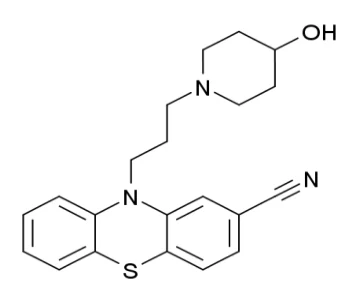
Physicochemical properties: yellow crystalline powder, almost without odour, non-hygroscopic and sensitive to light. Melting point: 115°C. It is insoluble in water, slightly soluble in ether, fairly soluble in ethanol, acetone and benzene and freely soluble in chloroform.
14. Clinical Trials
The clinical trial data on which the original indications were authorized are not available.
15. Microbiology
NEULEPTIL is not an antimicrobial drug.
16. Non-Clinical Toxicology
Genotoxicity
No studies have been performed to evaluate the genotoxic potential of periciazine.
Carcinogenicity
No long-term animal studies have been performed to evaluate the carcinogenic potential of periciazine.
Reproductive and developmental toxicology
No dedicated animal fertility reproductive and developmental studies have been performed for periciazine.