


Product Monograph - Niaspan Fct (Sunovion Pharmaceuticals Canada, 750 mg)
SUMMARY PRODUCT INFORMATION
| Route of Administration | Dosage Form / Strength | Nonmedicinal Ingredients |
| oral | 500 mg, 750 mg, 1000 mg extended-release film coated tablets | Methylcellulose, povidone, stearic acid, polyethylene glycol, FD&C yellow #6/sunset yellow FCF Aluminum Lake, synthetic red and yellow iron oxides, titanium dioxide, shellac, dehydrated alcohol, isopropyl alcohol, butyl alcohol, propylene glycol, ammonia solution, potassium hydroxide and black iron oxide. |
INDICATIONS AND CLINICAL USE
NIASPAN FCT (extended-release niacin) is indicated as an adjunct to diet for reduction of elevated total cholesterol (TC), low-density lipoprotein cholesterol (LDL-C), apolipoprotein B (Apo B) and triglyceride (TG) levels, and to increase high-density lipoprotein cholesterol (HDL-C) in patients with primary hypercholesterolaemia (heterozygous familial and nonfamilial) and mixed dyslipidaemia (Frederickson Types IIa and IIb), when the response to an appropriate diet and other non-pharmacological measures have been inadequate.
Therapy with NIASPAN FCT should be only one component of multiple risk factor intervention in individuals at significantly increased risk for atherosclerotic vascular disease due to hypercholesterolemia. Prior to initiating therapy with NIASPAN FCT, secondary causes for hypercholesterolemia (e.g., poorly controlled diabetes mellitus, hypothyroidism, nephrotic syndrome, dysproteinemias, obstructive liver disease, other drug therapy, alcoholism) should be excluded, and a lipid profile obtained to measure TC, HDL-C, and TG.
Pediatrics:
No studies in patients under 21 years of age have been conducted with NIASPAN FCT.
CONTRAINDICATIONS
- NIASPAN FCT (extended-release niacin) is contraindicated in patients with a known hypersensitivity to niacin or any component of this medication (see DOSAGE FORMS, COMPOSITION AND PACKAGING).
- Active liver disease or unexplained persistent elevations of serum transaminases, active peptic ulcer, or active bleeding.
WARNINGS AND PRECAUTIONS
Clinically significant warnings and precautions are listed below in alphabetical order.
General
Before instituting therapy with NIASPAN FCT, an attempt should be made to control hyperlipidaemia with appropriate diet, exercise, and weight reduction in obese patients, and to treat other underlying medical problems (see INDICATIONS AND CLINICAL USE).
While pretreatment with acetylsalicylic acid (ASA) or other non-steroidal anti-inflammatory drugs (NSAIDs) may reduce flushing of the skin, some patients should not take these medications (e.g., patients who have peptic ulcer or active inflammatory disease of the gastrointestinal system or ASA hypersensitivity; refer to the Product Monograph for the NSAID product).
Concomitant Use with HMG-CoA Reductase Inhibitors (statins)
NIASPAN FCT has not been shown to reduce cardiovascular morbidity or mortality among patients already treated with a statin.
Addition of NIASPAN FCT did not reduce cardiovascular morbidity or mortality among patients treated with simvastatin in a large, randomized controlled trial (AIM-HIGH) and a significant excess of bleeding, serious infections, blood glucose increase and new onset of diabetes mellitus
Serious Warnings and Precautions
- NIASPAN FCT (extended-release niacin) preparations should not be substituted for equivalent doses of immediate-release (crystalline) niacin or nicotinic acid. For patients switching from immediate-release niacin or nicotinic acid to NIASPAN FCT, therapy with NIASPAN FCT should be initiated with low doses (i.e., 500 mg qhs) and the NIASPAN FCT dose should then be titrated to the desired therapeutic response.
- Cases of severe hepatic toxicity, including fulminant hepatic necrosis, have occurred in patients who have substituted sustained-release (modified-release, timed-release) niacin products for immediate-release (crystalline) niacin at equivalent doses.
were reported (see WARNINGS AND PRECAUTIONS, Endocrine and Metabolism, Increase in Blood Glucose and ADVERSE REACTIONS).
Cardiovascular
Data on the safety and efficacy of NIASPAN FCT in patients with unstable angina or in the acute phase of myocardial infarction are not available. Therefore, caution should be used when NIASPAN FCT is used, particularly when such patients are also receiving vasodilator agents.
Endocrine and Metabolism
Increase in Blood Glucose
Niacin treatment can increase fasting blood glucose. Frequent monitoring of blood glucose should be performed to ascertain that the drug is producing no adverse effects. Diabetic patients may experience a dose-related increase in glucose intolerance. Diabetic or potentially diabetic patients with hypercholesterolaemia should be observed closely during treatment with NIASPAN FCT, particularly during the first few months of use or dose adjustment; adjustment of diet and/or hypoglycemic therapy may be necessary (see ADVERSE DRUG REACTIONS).
Uric Acid
Elevated uric acid levels have occurred with niacin therapy, therefore use with caution in patients predisposed to gout.
Phosphorus
In placebo-controlled trials, extended-release niacin has been associated with small but statistically significant, dose-related reductions in phosphorus levels (mean of -13% with 2000 mg). Although these reductions were transient, phosphorus levels should be monitored periodically in patients at risk for hypophosphatemia.
Gastrointestinal
Patients with a past history of jaundice or peptic ulcer should be observed closely during NIASPAN FCT therapy.
Hematologic
Extended-release niacin has been associated with small, but statistically significant dose-related reductions in platelet count (mean of -11% with 2000 mg). In addition, extended-release niacin has been associated with small but statistically significant increases in prothrombin time (mean of approximately +4% with 2000 mg); accordingly, patients undergoing surgery should be carefully evaluated. Caution should be observed when NIASPAN FCT is administered concomitantly with anticoagulants; prothrombin time and platelet counts should be monitored closely in such patients.
Hepatic/Biliary/Pancreatic
No clinical studies have been carried out in patients with impaired liver function.
Patients with a past history of jaundice, hepatobiliary disease, or peptic ulcer should be observed closely during NIASPAN FCT therapy. Frequent monitoring of liver function tests should be performed.
NIASPAN FCT should be used with caution in patients who consume substantial quantities of alcohol and/or have a past history of liver disease
Niacin preparations have been associated with abnormal liver tests. In three placebo-controlled clinical trials involving titration to final daily extended-release niacin doses ranging from 500 to 3000 mg, 245 patients received extended-release niacin for a mean duration of 17 weeks and no patient with normal serum transaminase levels (AST, ALT) at baseline experienced elevations to more than 3 times the upper limit of normal (ULN). In these studies, fewer than 1% (2/245) of extended-release niacin patients discontinued due to transaminase elevations greater than 2 times the ULN.
In three safety and efficacy studies with a combination tablet of extended-release niacin and lovastatin involving titration to final daily doses (expressed as mg of extended-release niacin/mg of lovastatin) 500mg/10mg to 2500mg/40mg, ten of 1028 patients (1.0%) experienced reversible elevations in AST/ALT to more than 3 times the upper limit of normal (ULN). Three of ten elevations occurred at doses outside the recommended dosing limit of 2000mg/40mg; no patient receiving 1000mg/20mg had 3-fold elevations in AST/ALT.
In the placebo-controlled clinical trials and the long-term extension study, elevations in transaminases did not appear to be related to treatment duration. However, elevations in AST levels did appear to be dose related. Transaminase elevations were reversible upon discontinuation of extended-release niacin.
Renal
No clinical studies have been carried out in patients with impaired renal function. Niacin and its metabolites are excreted through the kidneys. NIASPAN FCT should be used with caution in patients with renal dysfunction.
Skeletal Muscle
Rare cases of rhabdomyolysis have been associated with concomitant administration of lipid-altering doses (≥1 g/day) of niacin and HMG-CoA reductase inhibitors. In clinical studies with a combination tablet of extended-release niacin and lovastatin, no cases of rhabdomyolysis and one suspected case of myopathy have been reported in 1079 patients who were treated with doses up to 2000mg of extended-release niacin and 40mg of lovastatin daily for periods up to 2 years. Physicians contemplating combined therapy with HMG-CoA reductase inhibitors and NIASPAN FCT should carefully weigh the potential benefits and risks and should carefully monitor patients for any signs and symptoms of muscle pain, tenderness, or weakness, particularly during the initial months of therapy and during any periods of upward dosage titration of either drug (see DRUG INTERACTIONS). Periodic serum creatine phosphokinase (CPK) and potassium determinations should be carried out, but there is no assurance that such monitoring will prevent the occurrence of severe myopathy.
Special Populations
Pregnant Women: No information is available on the safety of NIASPAN FCT in pregnant women. Animal reproduction studies have not been conducted with niacin or with NIASPAN FCT. It is not known whether niacin at doses used for lipid disorders can cause fetal harm when administered to pregnant women or whether it can affect reproductive capacity. If a woman receiving treatment with NIASPAN FCT becomes pregnant, the drug should be discontinued.
Nursing Women: No information is available on the safety of NIASPAN FCT in nursing women. Niacin has been reported to be excreted in human milk. Because of the potential for serious adverse reactions in nursing infants, a decision should be made whether to discontinue nursing or to discontinue the drug.
Pediatrics: Safety and effectiveness of niacin therapy in pediatric patients have not been established. No studies in patients under 21 years of age have been conducted with NIASPAN FCT.
Geriatrics: No formal studies have been carried out in elderly patients. Patients up to 75 years of age participated in controlled clinical trials of NIASPAN FCT.
Monitoring and Laboratory Tests
Liver tests should be performed on all patients during therapy with NIASPAN FCT. Serum transaminase levels, including AST and ALT (SGOT and SGPT), should be monitored before treatment begins, every 6 to 12 weeks for the first year, and periodically thereafter (e.g., at 6 month intervals). Special attention should be paid to patients who develop elevated serum transaminase levels. In these patients, measurements should be repeated promptly and then performed more frequently. If the transaminase levels show evidence of progression, particularly if they rise to 3 times ULN and are persistent, or if they are associated with symptoms of nausea, fever, and/or malaise, the drug should be discontinued.
ADVERSE REACTIONS
Adverse Drug Reaction Overview
The most frequently-reported events with NIASPAN FCT (extended-release niacin) are flushing episodes, which generally become less common as treatment progresses and which may be reduced by concomitant acetylsalicylic acid (ASA) therapy and by following the recommended dose titration schedule (see WARNINGS AND PRECAUTIONS, General).
In the placebo-controlled clinical trials, flushing episodes (i.e., warmth, redness, itching and/or tingling) were the most common treatment-emergent adverse events for extended-release niacin, reported in up to 88% of patients. Spontaneous reports suggest that flushing may also be accompanied by symptoms of dizziness, tachycardia, palpitations, shortness of breath, sweating, chills, and/or edema, which in rare cases may lead to syncope. In pivotal studies, fewer than 6% (14/245) of extended-release niacin patients discontinued due to flushing. Following 4 weeks of maintenance therapy with extended-release niacin at daily doses of 1500 mg, the incidence of flushing over the 4-week period averaged 8.56 events per patient for IR niacin versus 1.88 events per extended-release niacin patient.
Other commonly reported non-serious events include gastrointestinal symptoms and rash. The majority of adverse events reported were mild and transient.
In general, the incidence of adverse events was higher in women compared to men.
Niacin therapy has been associated with abnormalities of liver function. In patients receiving NIASPAN FCT, liver function should be periodically monitored.
Clinical Trial Adverse Drug Reactions
Because clinical trials are conducted under very specific conditions the adverse reaction rates observed in the clinical trials may not reflect the rates observed in practice and should not be compared to the rates in the clinical trials of another drug. Adverse drug reaction information from clinical trials is useful for identifying drug-related adverse events and for approximating rates.
Based on the experience in a total of 723 patients, of whom 477 were treated with extended-release niacin for one year (48 weeks) and 379 for 2 years (96 weeks), the majority of adverse events were mild and transient.
Adverse events occurring at an incidence of ≥2% in patients treated with extended-release niacin during premarketing controlled studies are shown in Table 1 by body system.
Table 1 - Treatment-Emergent Adverse Events by Dose Level in ∃ 2% of Patients and at an Incidence Greater than Placebo, Regardless of Causality
| PLACEBO-CONTROLLED STUDIES | ||
|---|---|---|
| Placebo | extended-release niacin (All Doses) | |
| Total # of Patients | 157 | 245 |
| Body As a Whole | ||
| Asthenia | 3% | 4% |
| Chills | 1% | 3% |
| Fever | 3% | 7% |
| Flu Syndrome | 5% | 7% |
| Pain, Abdominal | 6% | 8% |
| Pain, Back | 7% | 9% |
| Pain, Chest | 2% | 6% |
| Surgical Procedure | 1% | 2% |
| Cardiovascular System | ||
| Migraine | 1% | 2% |
| Palpitation | 1% | 3% |
| Tachycardia | 0 | 2% |
| Digestive System | ||
| Diarrhea | 13% | 20% |
| Dyspepsia | 12% | 13% |
| Eructation | 1% | 2% |
| PLACEBO-CONTROLLED STUDIES |
|---|
| Placebo | extended-release niacin (All Doses) | |
|---|---|---|
| Nausea | 7% | 13% |
| Vomiting | 4% | 7% |
| Metabolism & Nutritional Disorders | ||
| Edema | 1% | 2% |
| Edema, Peripheral | 0 | 2% |
| Musculoskeletal System. | ||
| Arthralgia | 0 | 3% |
| Arthritis | 2% | 3% |
| Nervous System | ||
| Dry Mouth | 0 | 2% |
| Somnolence | 1% | 2% |
| Respiratory System | ||
| Cough, Increase | 6% | 7% |
| Rhinitis | 31% | 34% |
| Skin & Appendages | ||
| Pruritus | 2% | 6% |
| Rash | 1% | 7% |
| Skin Discoloration | 1% | 3% |
| Sweating | 1% | 2% |
| Urticaria | 1% | 2% |
| Special Senses | ||
| Tinnitus | 1% | 2% |
Atherothrombosis Intervention in Metabolic Syndrome with Low HDL/High Triglycerides: Impact on Global Health Outcomes (AIM-HIGH)
In AIM-HIGH involving 3414 patients (mean age of 64 years, 15% women, 92% Caucasians, 34% with diabetes mellitus) with stable, previously diagnosed cardiovascular disease, all patients received simvastatin, 40 to 80 mg/day, plus ezetimibe 10 mg/day if needed, to maintain an LDL-C level of approximately 1-2 mmol/L and were randomized to receive NIASPAN FCT 1500-2000 mg/day (n=1718) or matching placebo (immediate release niacin, 100-150 mg, n=1696).
Serious adverse events were reported in 34.2% of patients receiving simvastatin plus NIASPAN FCT and 32.5% of patients receiving simvastatin plus placebo. Serious adverse events reported significantly more frequently in patients receiving simvastatin plus NIASPAN FCT included vomiting (1.2% vs. 0.5%), appendicitis (0.5% vs. 0.1%), cellulitis (1.5% vs. 0.8%), and abdominal pain (1.3% vs. 0.6%).
In an ITT analysis, there were 42 cases of first occurrence of ischemic stroke reported, 27 (1.6%) in the simvastatin plus NIASPAN FCT group and 15 (0.9%) in the simvastatin plus placebo group, a non-statistically significant result (HR 1.79, [95%CI = 0.95-3.36], p=0.071). The on-treatment ischemic stroke events were 19 for the simvastatin plus NIASPAN FCT group and 15 for the simvastatin plus placebo group.
A significant increase in the frequency of other adverse reactions consistent with the known effects of niacin and other lipid modifiers were observed in the simvastatin plus NIASPAN FCT group compared to the simvastatin plus placebo group, including blood glucose increased (6.6% vs. 4.7%), diabetes mellitus (4.0% vs. 2.5%), hyperglycemia (1.6% vs. 0.6%), liver function test abnormal (0.4% vs. 0%), thrombocytopenia (0.9% vs. 0.2%) and gastrointestinal events, including diarrhea (8.4% vs. 4.0%) and vomiting (3.7% vs. 2.1%).
There were 5 cases of rhabdomyolysis reported, 4 (0.2%) in the simvastatin plus NIASPAN FCT group and one (<0.1%) in the simvastatin plus placebo group.
Overall adverse events related to System Organ Classes of “hemorrhagic events” (10.1% vs. 8.1%) and “infections and infestations” (39.2% vs. 35.0%) were observed more frequently among patients assigned to the simvastatin plus NIASPAN FCT group than among those assigned to the simvastatin plus placebo group. Within these System Organ Classes, rectal hemorrhage (1.1% vs. 0.5%), epistaxis (1.9% vs. 0.9%) and herpes zoster (3.1% vs. 1.8%) were more frequent among patients receiving simvastatin plus NIASPAN FCT.
Less Common Adverse Drug Reactions (<2%)
The following adverse events have been reported with extended-release niacin or other niacin products, either during clinical trials or in routine patient management, irrespective of causality.
Body as a Whole: enlarged abdomen, cyst, hernia, mucous membrane disorder, face edema Cardiovascular: angina pectoris, cardiovascular disorder, hemorrhage, atrial fibrillation and other cardiac arrhythmias, hypotension, orthostasis, syncope
Digestive: cholelith, dysphagia, esophagitis, GI hemorrhage, fecal incontinence, stomatitis, tongue disorder, flatulence, activation of peptic ulcers and peptic ulceration, jaundice
Hemic and Lymphatic: leucopenia
Hypersensitivity Reactions: An apparent hypersensitivity reaction has been reported rarely that has included one or more of the following features: anaphylaxis, angioedema, urticaria, flushing, dyspnea, tongue edema, larynx edema, face edema, peripheral edema, laryngismus, and vesiculobullous rash, hypotension and circulatory collapse.
Metabolism and Nutritional Disorders: bilirubinemia, xanthoma, decreased glucose tolerance, anorexia, gout
Musculoskeletal: bone disorder, bursitis, myasthenia, rhabdomyolysis, myalgia, myopathy
Nervous: hypertonia, hypesthesia, hypokinesia, increased libido, twitch, vertigo, leg cramps; nervousness; paresthesia, dizziness, headache, insomnia
Respiratory: bronchitis, hemoptysis, hyperventilation, laryngitis, lung disorder, dyspnea
Skin and Appendages: acne, alopecia, application site reaction, contact dermatitis, fungal dermatitis, eczema, herpes zoster, skin neoplasm, vesiculobullous rash, dry skin, skin ulcer, general exanthema, hyperpigmentation, acanthosis nigricans, maculopapular rash
Special Senses: eye disorder, glaucoma, vision abnormal, toxic amblyopia, cystoid macular edema
Urogenital: impotence, breast pain, polyuria, prostatic disorder, UG disorder, urinary retention, vaginitis.
Abnormal Hematologic and Clinical Chemistry Findings
Chemistry: Elevations in serum transaminases (see WARNINGS AND PRECAUTIONS, Hepatic/Biliary/Pancreatic), LDH, fasting glucose, uric acid, total bilirubin, and amylase; reductions in phosphorus.
Hematology: Slight reductions in platelet counts and prolongation in prothrombin time (see WARNINGS AND PRECAUTIONS, Hematologic).
Post-Market Adverse Drug Reactions
In post-market safety surveillance, flushing, headache, tachycardia, asthenia, insomnia, and maculopapular rash were the most frequently reported non-serious adverse events.
DRUG INTERACTIONS
Overview
HMG-CoA Reductase Inhibitors: Rhabdomyolysis has been rarely reported in patients receiving niacin concomitantly with an HMG-CoA reductase inhibitor (statin) (see WARNINGS AND PRECAUTIONS and ADVERSE REACTIONS).
In a clinical trial of extended-release niacin and laropiprant (median follow-up 3.9 years) involving patients at high risk of cardiovascular disease and with well-controlled LDL-C levels on simvastatin 40 mg/day with or without ezetimibe 10 mg, the incidence of myopathy was approximately 0.24% for Chinese patients on simvastatin 40 mg or ezetimibe/simvastatin1 10/40 mg compared with 1.24% for Chinese patients on simvastatin 40 mg or ezetimibe/simvastatin1 10/40 mg coadministered with extended-release niacin/laropiprant1 2 g/40 mg. While the only Asian population assessed in this clinical trial was Chinese, and the incidence of myopathy is higher in Chinese than in non-Chinese patients, coadministration of simvastatin with lipid-modifying doses (1 g/day) of niacin is not recommended in Asian patients.
Alcohol or hot drinks taken at the time of NIASPAN FCT (extended-release niacin) administration may worsen the flushing response and pruritus.
Antihypertensive Therapy: Niacin may potentiate the effects of ganglionic blocking agents and vasoactive drugs resulting in postural hypotension.
Acetylsalicylic acid (ASA): Concomitant administration of ASA may decrease the metabolic clearance of niacin (see WARNINGS AND PRECAUTIONS, General).
Bile-Acid Sequestrants: An interval of 4 to 6 hours, or as great an interval as possible, should elapse between the ingestion of bile acid-binding resins and the administration of NIASPAN FCT. An in vitro study showed that about 98% of available niacin was bound to colestipol, and 10 to 30% was bound to cholestyramine.
1 Not marketed in Canada
Other: Vitamins or other nutritional supplements containing large doses of niacin or related compounds such as nicotinamide may potentiate the adverse effects of NIASPAN FCT.
Drug-Food Interactions
Concomitant alcohol or hot drinks may increase the side effects of flushing and pruritus and should be avoided around the time of NIASPAN FCT ingestion.
Drug-Herb Interactions
Interactions with herbal products have not been studied.
Drug-Laboratory Interactions
Niacin may produce false elevations in some fluorometric determinations of plasma or urinary catecholamines. Niacin may also give false-positive reactions with cupric sulfate solution (Benedict’s reagent) in urine glucose tests.
DOSAGE AND ADMINISTRATION
Patients should be placed on a standard cholesterol-lowering diet at least equivalent to the NCEP Adult Treatment Panel III TLC diet before receiving NIASPAN FCT (extended-release niacin) and should continue on this diet during treatment with NIASPAN FCT. If appropriate, a program of weight control and physical exercise should be implemented.
Dosing Considerations
- Equivalent doses of NIASPAN FCT should not be substituted for immediate-release (crystalline) niacin.
- Women may respond at lower NIASPAN FCT doses than men.
- Flushing of the skin may be reduced in frequency or severity by pretreatment with acetylsalicylic acid and avoiding administration on an empty stomach (see WARNINGS AND PRECAUTIONS, General).
- NIASPAN FCT is contraindicated in patients with significant or unexplained hepatic dysfunction.
- No information is available on the safety of NIASPAN FCT in patients with renal insufficiency.
Recommended Dose and Dosage Adjustment
NIASPAN FCT should be taken only once per day in the evening or before bedtime, after a low-fat snack, and doses should be individualized according to patient response. Therapy with NIASPAN FCT must be initiated at 500 mg, in order to reduce the incidence and severity of side effects which may occur during early therapy. The recommended dose escalation is shown in Table 2 below.
Table 2 - Recommended Dosing and Titration
| Week(s) | Daily dose | |||||
| TITRATION SCHEDULE | 1 to 4 | 500 mg | ||||
| 5 to 8 | 1000 mg | |||||
| FURTHER TITRATION SCHEDULE * | After Week 8 | 1x500 mg plus 1x1000 mg or 3x500 mg** (1500 mg) | ||||
| 2000 mg | ||||||
* After Week 8, titrate to patient response and tolerance. If response to 1000 mg daily is inadequate, increase dose to 1x500 mg plus 1x1000 mg or 3x500 mg (1500 mg) daily; may subsequently increase dose to 2000 mg daily. Daily dose should not be increased more than 500 mg in a 4-week period, and doses above 2000 mg daily are not recommended. ** due to non-interchangeability, do not use 2x750 mg | ||||||
Maintenance Dose:
The daily dosage of NIASPAN FCT should not be increased by more than 500 mg in any 4-week period. The recommended maintenance dose is 1000 mg once daily in the evening or at bedtime with further titration to 2000 mg depending on patient response. Doses greater than 2000 mg daily are not recommended.
Single-dose bioavailability studies have demonstrated that two of the 500 mg and one of the 1000 mg tablet strengths are interchangeable but three of the 500 mg and two of the 750 mg tablet strengths are not interchangeable. The physician should specify the tablet strengths that the patient should use during titration and continue to use for maintenance therapy, accordingly.
Women may respond at lower NIASPAN FCT doses than men (see ACTION AND CLINICAL PHARMACOLOGY, Special Populations and Conditions, Sex).
If lipid response to NIASPAN FCT alone is insufficient or if higher doses of NIASPAN FCT are not well tolerated, some patients may benefit from combination therapy with a bile acid binding resin or an HMG CoA reductase inhibitor (see WARNINGS AND PRECAUTIONS, Drug Interactions).
Flushing of the skin (see Adverse Reactions) may be reduced in frequency or severity by pretreatment with ASA (taken 30 minutes prior to NIASPAN FCT dose) or non-steroidal anti-inflammatory drugs. Tolerance to this flushing develops rapidly over the course of several weeks. Flushing, pruritus, and gastrointestinal distress are also greatly reduced by slowly increasing the dose of NIASPAN FCT and avoiding administration on an empty stomach (see WARNING AND PRECAUTIONS, General).
Equivalent doses of NIASPAN FCT should not be substituted for sustained-release (modified-release, timed-release) niacin preparations or immediate-release (crystalline) niacin and visa versa (see WARNINGS AND PRECAUTIONS). This should be explained to patients. Patients previously receiving other niacin products should be started with the recommended NIASPAN FCT titration schedule (see Table 2).
If NIASPAN FCT therapy is discontinued for an extended period, reinstitution of therapy should include a titration phase (see Table 2).
Dosage in Patients with Renal Insufficiency:
Use of NIASPAN FCT in patients with renal insufficiency has not been studied. No information is available regarding the safety of NIASPAN FCT use in patients with renal insufficiency.
Dosage in Patients with Hepatic Insufficiency:
Use of NIASPAN FCT in patients with hepatic insufficiency has not been studied. NIASPAN FCT is contraindicated in patients with significant or unexplained hepatic dysfunction (see CONTRAINDICATIONS).
Missed Dose
If a dose of this medication is missed, it is not necessary to make up the missed dose. Skip the missed dose and continue with the next scheduled dose. Do not double doses.
Administration
NIASPAN FCT tablets should be taken whole and should not be broken, crushed or chewed before swallowing.
OVERDOSAGE
Supportive measures should be undertaken in the event of an overdose.
For management of a suspected drug overdose, contact your regional Poison Control Centre.
ACTION AND CLINICAL PHARMACOLOGY
Mechanism of Action
The mechanism by which niacin alters lipid profiles has not been well defined. It may involve several actions including partial inhibition of release of free fatty acids from adipose tissue, and increased lipoprotein lipase activity, which may increase the rate of chylomicron triglyceride removal from plasma. Niacin decreases the rate of hepatic synthesis of VLDL and LDL, and does not appear to affect fecal excretion of fats, sterols, or bile acids.
Pharmacodynamics
Niacin functions in the body after conversion to nicotinamide adenine dinucleotide (NAD) in the NAD coenzyme system. Niacin (but not nicotinamide) in gram doses reduces TC, LDL-C and TG, and increases HDL-C. The magnitude of individual lipid and lipoprotein responses may be influenced by the severity and type of underlying lipid abnormality. The increase in HDL-C is associated with an increase in apolipoprotein A-I (Apo A-I) and a shift in the distribution of HDL subfractions. These shifts include an increase in the HDL2:HDL3 ratio, and an elevation in lipoprotein A-I (Lp A-I, an HDL particle containing only Apo A-I). Niacin treatment also decreases serum levels of Apo B, the major protein component of the VLDL and LDL fractions, and of lipoprotein a (Lp(a)), a variant form of LDL independently associated with coronary risk.
In addition, niacin has been shown to cause favourable transformations in LDL particle size subclass distribution, converting the pattern B phenotype (characterised by a predominance of triglyceride-rich, small dense LDL) to pattern A (characterised by a predominance of large bouyant LDL) or the intermediate AB phenotype. Pattern B LDL phenotype is one manifestation of what has been termed the Atherogenic Lipoprotein Profile (ALP), a Mendelian dominant inherited condition which also includes low levels of HDL-C, raised triglyceride, and insulin resistance.
Epidemiologic, clinical and experimental studies have established that high LDL cholesterol (LDL-C), low High Density Lipoprotein cholesterol (HDL-C) and high plasma trigylcerides (TG) promote human atherosclerosis and are risk factors for developing cardiovascular disease. Some studies have also shown that the total cholesterol (TC):HDL-C ratio (TC:HDL-C) is the best predictor of coronary artery disease. In addition, increased levels of HDL-C are associated with decreased cardiovascular risk. Drug therapies that reduce levels of LDL-C or decrease TG while simultaneously increasing HDL-C have demonstrated reductions in rates of cardiovascular mortality and morbidity.
Pharmacokinetics
Absorption: Niacin is rapidly and extensively absorbed (at least 60 to 76% of dose) when administered orally. To maximize bioavailability, administration of NIASPAN FCT (extended-release niacin) with a low-fat meal or snack is recommended.
Distribution: Studies using radiolabeled niacin in mice showed that niacin and its metabolites concentrate in the liver, kidney and adipose tissue.
Metabolism: The pharmacokinetic profile of niacin is complicated due to rapid and extensive first-pass metabolism, which is species and dose-rate specific. In humans, one pathway is through a simple conjugation step with glycine to form nicotinuric acid which is then excreted in the urine, although there may be a small amount of reversible metabolism back to niacin. The other pathway results in the formation of nicotine adenine dinucleotide (NAD). It is unclear whether nicotinamide is formed as a precursor to, or following the synthesis of NAD. Nicotinamide is further metabolized to at least N-methylnicotinamide (MNA) and nicotinamide-N-oxide. MNA is further metabolized to two other compounds, N-methyl-2-pyridone-5-carboxamide (2PY) and N-methyl-4-pyridone-5-carboxamide (4PY). The formation of 2PY appears to predominate over 4PY in humans. At the doses used to treat hyperlipidaemia, these metabolic pathways are saturable, which explains the nonlinear relationship between niacin dose and plasma concentrations following multiple-dose extended-release niacin administration (Table 3).
Table 3 - Mean Steady-State Pharmacokinetic Parameters for Plasma Niacin
| extended-release niacin | Niacin | |||
|---|---|---|---|---|
| dose/day | given as | Peak Concentration (μg /mL) | Time to Peak (hr) | AUC (μg∙hr/mL) |
| 1000 mg | 2x500 mg | 0.6 | 5 | 0.6 |
| 1500 mg | 2x750 mg | 4.9 | 4 | 9.1 |
| 2000 mg | 2x1000 mg | 15.5 | 5 | 46.2 |
Nicotinamide does not have hypolipidaemic activity; the activity of the other metabolites is unknown.
Excretion: Niacin and its metabolites are rapidly eliminated in the urine. Following single and multiple doses, approximately 60 to 75% of the niacin dose administered as extended-release niacin was recovered in urine as niacin and metabolites; up to 12% was recovered as unchanged niacin after multiple dosing. The ratio of metabolites recovered in the urine was dependent on the dose administered.
Special Populations and Conditions
Pediatrics: No studies in patients under 21 years of age have been conducted with NIASPAN FCT.
Geriatrics: No data is available.
Sex: Steady-state plasma concentrations of niacin and metabolites after administration of extended-release niacin are generally higher in women than in men. Recovery of niacin and metabolites in urine, however, is generally similar for men and women, indicating that absorption is similar for both sexes. Data from the clinical trials suggest that women have a greater hypolipidaemic response than men at equivalent doses of extended-release niacin.
Hepatic Insufficiency: No studies have been performed. NIASPAN FCT should be used with caution in patients with a past history of liver disease, who consume substantial quantities of alcohol. NIASPAN FCT is contraindicated in patients with active liver disease or unexplained transaminase elevations (see CONTRAINDICATIONS, and WARNINGS AND PRECAUTIONS, Hepatic/Biliary/Pancreatic).
Renal Insufficiency: There are no data available on the use of NIASPAN FCT in patients with impaired renal function (see WARNINGS AND PRECAUTIONS).
STORAGE AND STABILITY
Temperature:
Store at room temperature, (15 to 30ΕC).
Others:
Keep in a safe place out of the reach of children.
DOSAGE FORMS, COMPOSITION AND PACKAGING
NIASPAN FCT (extended-release niacin) is supplied as unscored, medium-orange, film coated tablets for oral administration and is available in three tablet strengths containing 500 mg, 750 mg, and 1000 mg of niacin in an extended-release formulation.
NIASPAN FCT tablets also contain the inactive ingredients methylcellulose, povidone, stearic acid, polyethylene glycol, and the following coloring agents: FD&C yellow #6/sunset yellow FCF Aluminum Lake, synthetic red and yellow iron oxides, titanium dioxide, shellac, dehydrated alcohol, isopropyl alcohol, butyl alcohol, propylene glycol, ammonia solution, potassium hydroxide and black iron oxide. Tablets are printed with the tablet strength (500, 750 or 1000) on one side. Tablets are supplied in bottles of 90 as shown below. The 500 mg tablet strength is also supplied in a 3 tablet blisterpack.
500 mg tablets: bottles of 90, blisters of 3
750 mg tablets: bottles of 90
1000 mg tablets: bottles of 90
PART II: SCIENTIFIC INFORMATION
PHARMACEUTICAL INFORMATION
Drug Substance
Proper name: Niacin or nicotinic acid
Chemical name: 3-pyridinecarboxylic acid
Molecular formula and molecular mass: C6H5NO2 M.W. = 123.11
Structural formula:
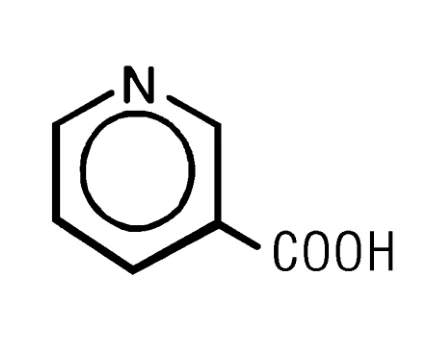
Physicochemical properties: Niacin is a white, crystalline powder, very soluble in water
CLINICAL TRIALS
NIASPAN FCT has not been shown to reduce cardiovascular morbidity or mortality among patients already treated with a statin.
Extended-release niacin has been shown to effectively modify atherogenic dyslipidaemia by lowering LDL-C and apolipoprotien B, triglycerides and Lp(a), increasing HDL-C, and transforming small dense LDL into normal sized LDL. Three pivotal, placebo-controlled studies were conducted to establish the efficacy and safety of extended-release niacin dosed once daily at bedtime. A dose-ranging study was conducted comparing extended-release niacin 1000 mg, 2000 mg and placebo. Another study was conducted to compare extended-release niacin 1500 mg to immediate-release (IR) niacin 1500 and 3000 mg/day and to placebo. The third pivotal study was a dose-escalation study. The primary efficacy endpoints were percent change from baseline in low-density lipoprotein cholesterol (LDL-C) and Apolipoprotein B (Apo B). The secondary endpoints included percent change from baseline in high-density lipoprotein cholesterol (HDL-C), Lipoprotein (a) [Lp(a)], and triglycerides (TG).
Reductions in LDL-C, Apo B, triglycerides, and Lp(a), as well as elevations in HDL-C, were comparable to those seen with equivalent daily doses of IR niacin.
Pooled results for three placebo-controlled studies are provided in Table 4 below.
Table 4 - Selected Lipid Response to extended-release niacin in Placebo-Controlled Clinical Studies (Mean Percent Change from Baseline ± Standard Error)
| Placebo | 500 mg | 1000 mg | 1500 mg | 2000 mg | |
|---|---|---|---|---|---|
| LDL-C | 0.12 ± 1.05 | -3.2 ± 1.32 | -7.6 ± 1.08* | -13.3 ± 1.21* | -15.8 ± 1.49* |
| Apo B | 0.18 ± 1.02 | -2.4 ± 1.12 | -6.8 ± 1.00* | -13.4 ± 1.07* | -16.1 ± 1.35* |
| TC | 0.64 ± 0.85 | -1.9 ± 1.05 | -4.5 ± 0.82* | -9.1 ± 0.87* | -11.5 ± 1.04* |
| HDL-C | 3.4 ± 1.00 | 9.6 ± 1.44* | 16.3 ± 1.33* | 20.9 ± 1.76* | 24.3 ± 2.12* |
| TG | 4.6 ± 3.11 | -5.4 ± 2.91* | -14.2 ± 2.88* | -20.6 ± 2.82* | -32.2 ± 2.56* |
| TC/HDL-C | -2.0 ± 1.06 |
| -17.1 ± 1.12* | -22.9 ± 1.44* | -27.4 ± 1.44* |
| Lp(a) | 0.0 ± 2.98 | -3.4 ± 2.19 | -12.3 ± 2.22* | -17.3 ± 2.36* | -25.0 ± 2.21* |
* ANOVA comparing treatment to corresponding placebo values; Statistically significant at p#0.01
Sex Effect:
Clinical data indicate that in patients with primary hypercholesterolemia and mixed dyslipidaemia treated with extended-release niacin, the changes in lipid concentrations are greater for women than for men.
DETAILED PHARMACOLOGY
Human Pharmacology
Pharmacodynamics
Niacin functions in the body after conversion to NAD in the NAD coenzyme system. Niacin is a potent vasodilator, probably acting directly on vascular smooth muscle of the face and trunk. In gram doses, niacin reduces TC, LDL-C and TG and increases HDL-C. Reductions in VLDL-C and Lp(a) are also seen, and clinical data suggest a favourable effect on the small dense LDL particle phenotype ("pattern B") associated with increased CHD risk. The magnitude of individual effects varies with the underlying hyperlipidaemic condition.
The exact mechanisms by which niacin exerts its effects are not clearly understood, but appear to be diverse. The rates of hepatic synthesis of LDL and VLDL are decreased, for example, as are serum levels of Apo B, while enhanced clearance of VLDL may also occur, possibly due to increased lipoprotein lipase activity. The decreased production of VLDL is thought to result from transient inhibition of lipolysis and from decreases in the delivery of free fatty acids to the liver, in TG synthesis and in VLDL-triglyceride transport. The lowered LDL levels may then result from decreased VLDL production and enhanced hepatic clearance of LDL precursors.
The increase in HDL-C resulting from niacin treatment is associated with a shift in distribution of subfractions, with increases in the proportion of HDL2 relative to HDL3 and in Apo A-I respectively. Niacin is not known to affect either the rate of cholesterol synthesis, or the faecal excretion of fats, sterols or bile acids.
Pharmacokinetics
A total of fifteen open-label studies were conducted to investigate the bioavailability and pharmacokinetics of NIASPAN (extended-release niacin) in humans. Of these, twelve were single-dose, two were multiple dose and one was a dose-rate escalation study.
Extended-release niacin is well absorbed: approximately 89 to 95% is absorbed relative to immediate-release (IR) niacin based on total urine recovery data. Peak plasma niacin concentrations occur 4 to 5 hours after single- or multiple-dose NIASPAN FCT administration.
The rate of niacin absorption appears to affect the metabolic profile: after single doses, plasma concentrations and urine recovery of niacin and nicotinuric acid are higher for IR niacin than for extended-release niacin while plasma concentrations and urine recovery of N-methylnicotinamide and N-methyl-2-pyridone-5-carboxamide are lower.
Once-daily administration of extended-release niacin in the dose range 1000 mg to 3000 mg for six days resulted in nonlinear accumulation of niacin in plasma. Plasma concentrations of nicotinuric acid also accumulated in a nonlinear fashion for extended-release niacin 1000 to 2000 mg doses, but nicotinuric acid formation appeared to be saturated at the 3000 mg dose, based on dose-corrected AUC comparisons. Plasma N-methylnicotinamide appeared to be dose-proportional in the 1000 to 2000 mg dose range, but plasma data suggested MNA formation became saturated above 2000 mg; dose-corrected Cmax and AUC decreased with rising niacin dose through 3000 mg.
Niacin and its major metabolites are eliminated in the urine. After single or multiple doses of 1000 mg to 2000 mg extended-release niacin, approximately 60 to 75% of the dose is recovered in urine as niacin, nicotinuric acid, N-methylnicotinamide and N-methyl-2-pyridone-5-carboxamide. Less than 3% of a single 1500 mg extended-release niacin dose is recovered as unchanged niacin in urine. Under steady-state conditions, the proportion of niacin recovered unchanged increases with increasing extended-release niacin doses from 1000 to 3000 mg. Steady-state recovery of nicotinuric acid increases with increasing extended-release niacin doses from 1000 to 2000 mg; the proportion recovered is similar for 2000 and 3000 mg doses. Steady-state recovery of N-methylnicotinamide is relatively consistent across this dose range, while the proportion recovered as N-methyl-2-pyridone-5-carboxamide decreases with increasing extended-release niacin dose.
Animal Pharmacology
Pharmacodynamics
A number of pharmacodynamic studies have been performed using laboratory animal models, demonstrating the effect of niacin on plasma free-fatty acids. In dog studies, reductions were observed in free fatty acid uptake by the hearts of adult dogs, which were intravenously infused with 2.4 mol niacin/ kg body weight/minute for 30 minutes before coronary occlusion and throughout a 15 minute occlusion period. Improvements in myocardial function and subendocardial blood flow were attributed to the effect of niacin on free-fatty acid uptake. A similar experiment was performed using isolated pig hearts in situ. A reduction in free-fatty acid accumulation was observed after niacin administration. Cardioprotective effects of niacin were shown by decreased release of creatine kinase, and improved coronary blood flow and cardiac contractility.
The plasma free-fatty acid levels in dogs intravenously dosed with 1 to 32 mg/kg of niacin initially decreased in another study, followed by a rebound elevation to plasma levels greater than baseline, in a dose-related fashion. A similar biphasic effect was seen in rats intravenously dosed at 10 mg/kg. The free-fatty acid rebound mechanism was ascribed to a primary role of the pituitary-adrenal system, since the free-fatty acid rebound in rats was paralleled by an increase in plasma corticosterone levels after niacin administration. A further study showed that niacin blocked the norepinephrine effect on plasma-free fatty acid release in dogs when administered intravenously over one hour at a relatively high dose of 100 mg/kg.
Pharmacokinetics
In a cross-over bioavailability study, beagle dogs were dosed once with 500 mg niacin as the extended-release niacin modified-release tablet, once with 500 mg niacin as an oral solution, and once with 187 mg niacin as an iv infusion over three hours. Analysis of plasma for concentrations of niacin and nicotinuric acid were made over suitable time periods (eight hours for the oral doses and four hours for the iv infusion). Nicotinuric acid was found to be a minor metabolite in plasma. The mean plasma niacin Cmax and Tmax for 500 mg niacin in extended-release niacin were 8.9 g/mL and 103 minutes, for 500 mg niacin in the oral solution were 86 g/mL and 37 minutes, and for 187 mg niacin in the iv. infusion were 5.3 g/mL and 103 minutes. The absolute bioavailability of the extended-release niacin formulation was 89%, and absolute bioavailability of the oral solution was approximately 558%, compared to the iv infusion. No adverse effects were observed in the treated dogs from any of the treatment groups.
Metabolism data for laboratory animals from the literature reviewed demonstrate that niacin and nicotinamide are extensively metabolised at levels found endogenously, at therapeutic dose levels (lipid regulating) and higher dose levels. At very high doses, niacin metabolism is saturated.
TOXICOLOGY
Niacin has been shown to be of low acute toxicity in rats, mice and dogs, when administered via oral and parenteral routes. The LD50 for niacin was 5 to 7 g/kg in rats and mice after oral dosing. Dogs tolerated 2 g/kg without adverse effects. At very high lethal or non-lethal doses, signs of toxicity in rodents included cyanosis, slowed respiration, ataxia and clonic convulsions.
In repeat dose studies with rats and dogs, no signs of toxicity were noted at 1g/kg, and 100 mg/kg per day respectively.
Mice administered daily doses, equivalent to approximately 4.1 g/kg per day for females and 5.4 g/kg per day for male, in their drinking water from six weeks of age throughout the remainder of their lives showed no treatment-related carcinogenic effects and no effects on survival rates.
Female rabbits have been dosed with 0.3 g niacin per day from pre-conception to lactation, and gave birth to offspring without teratogenic effects.
REFERENCES
- 1. Capuzzi DM, Guyton JR, Morgan JM, et.al. Efficacy and safety of an extended-release niacin (NIASPAN): a long term study. Am J Cardiol 1998;82:74U-81U.
- 2. Goldberg AC. Clinical trial experience with extended-release niacin (Niaspan): dose-escalation study. Am J Cardiol 1998 Dec 17;82(12A):35U-38U.
- 3. Guyton JR, Blazing MA, Hagar J, et al. Extended-release niacin vs gemfibrozil for the treatment of low levels of high-density lipoprotein cholesterol. Arch Intern Med 2000;160:1177-1184
- 4. Guyton JR, Goldberg AC, Kreisberg RA, et al. Effectiveness of once-nightly dosing of extended-release niacin alone and in combination for hypercholesterolemia. Am J Cardiol 1998 Sep 15;82(6):737-43.
- 5. McKenney J. New perspectives on the use of niacin in the treatment of lipid disorders. Arch Intern Med 2004;164:697-705.
- 6. Morgan JM, Capuzzi DM, Guyton JR, et al. Treatment effect of Niaspan, a controlled-release niacin, in patients with hypercholesterolemia: a placebo-controlled trial. J Cardiovasc Pharmacol Ther 1996;1(3): 195-202.
- 7. Wolfe ML, Vartanian SF, Ross JL, et al. Safety and effectiveness of Niaspan when added sequentially to a statin for treatment of dyslipidemia. Am J Card 2001;87:476-479.
- 8. The AIM-HIGH Investigators. Niacin in Patients with Low HDL Cholesterol Levels Receiving Intensive Statin Therapy. NEJM 2011; 365(24):2255-67.
- 9. Anderson TJ, Boden WE, Desvigne-Nickens P, et al. Safety profile of extended-release niacin in the AIM-HIGH trial. NEJM 2014;371(3):288-90.
- 10. Landray MJ, Haynes, R, Hopewell, JC, et al. Effects of Extended-Release Niacin with Laropiprant in High-Risk Patients. NEJM 2014;371(3): 203-212.