


Product Monograph - Nitrofurantoin
Recent Major Label Changes
| 1 Indications | 2025-10 |
|---|---|
| 2 Contraindications | 2025-10 |
| 4 Dosage and Administration, 4.2 Recommended Dose and Dosage Adjustment | 2025-10 |
| 7 Warnings and Precautions, Carcinogenesis and Genotoxicity | 2025-10 |
| 7 Warnings and Precautions, Gastrointestinal | 2025-10 |
| 7 Warnings and Precautions, Hepatic/Biliary/Pancreatic | 2025-10 |
| 7 Warnings and Precautions, Monitoring and Laboratory Tests | 2026-10 |
| 7 Warnings and Precautions, Neurologic | 2025-10 |
| 7 Warnings and Precautions, Renal | 2026-10 |
| 7 Warnings and Precautions, Reproductive Health | 2025-10 |
| 7 Warnings and Precautions, 7.1.1 Pregnancy | 2025-10 |
| 7 Warnings and Precautions, 7.1.2 Breastfeeding | 2025-10 |
| 7 Warnings and Precautions, 7.1.4 Geriatrics | 2025-10 |
Table of Contents
Certain sections or subsections that are not applicable at the time of the preparation of the most recent authorized product monograph are not listed.
Recent Major Label Changes ................................................................................................................ 2
Table of Contents ................................................................................................................................. 2
Part 1: Health Professional Information ............................................................................................... 4
- 1.
Indications ............................................................................................................................... 4
1.1. Pediatrics ............................................................................................................................... 4
1.2. Geriatrics ............................................................................................................................... 4
- 2. Contraindications .................................................................................................................... 4
- 4.
Dosage and Administration ..................................................................................................... 5
4.2. Recommended Dose and Dosage Adjustment ..................................................................... 5
4.4. Administration ...................................................................................................................... 5
4.5. Missed Dose .......................................................................................................................... 5
- 5. Overdose ................................................................................................................................. 5
- 6. Dosage Forms, Strengths, Composition and Packaging ............................................................. 6
- 7.
Warnings and Precautions ....................................................................................................... 6
Carcinogenesis and Genotoxicity ..................................................................................................... 6
Driving and Operating Machinery .................................................................................................... 7
Gastrointestinal ................................................................................................................................ 7
Hematologic ..................................................................................................................................... 7
Hepatic/Biliary/Pancreatic ............................................................................................................... 7
Monitoring and Laboratory Tests .................................................................................................... 8
Neurologic ........................................................................................................................................ 8
Renal ............................................................................................................................................... 8
Reproductive Health ........................................................................................................................ 8
Respiratory ....................................................................................................................................... 9
Sensitivity/Resistance ...................................................................................................................... 9
7.1. Special Populations ............................................................................................................... 9
7.1.1. Pregnancy ....................................................................................................... 9
7.1.2. Breastfeeding .................................................................................................. 9
7.1.3. Pediatrics ....................................................................................................... 9
7.1.4. Geriatrics ...................................................................................................... 10
- 8.
Adverse Reactions ................................................................................................................. 10
8.1. Adverse Reaction Overview ................................................................................................ 10
- 9.
Drug Interactions ................................................................................................................... 12
9.2. Drug Interactions Overview ................................................................................................ 12
9.4. Drug-Drug Interactions ....................................................................................................... 12
9.5. Drug-Food Interactions ....................................................................................................... 13
9.6. Drug-Herb Interactions ....................................................................................................... 13
9.7. Drug-Laboratory Test Interactions ...................................................................................... 13
- 10.
Clinical Pharmacology ............................................................................................................ 13
10.1. Mechanism of Action .......................................................................................................... 14
10.2. Pharmacodynamics ............................................................................................................. 14
10.3. Pharmacokinetics ................................................................................................................ 14
- 11. Storage, Stability and Disposal ............................................................................................... 14
Part 2: Scientific Information ............................................................................................................. 16
- 13. Pharmaceutical Information .................................................................................................. 16
- 14. Clinical Trials ......................................................................................................................... 16
- 15. Microbiology ......................................................................................................................... 16
- 16. Non-Clinical Toxicology .......................................................................................................... 18
Patient Medication Information ......................................................................................................... 19
Part 1: Health Professional Information
1. Indications
NITROFURANTOIN (Nitrofurantoin Tablets) is indicated for:
- The treatment of pyelonephritis, pyelitis, and cystitis when due to susceptible organisms.
NITROFURANTOIN is not for the treatment of associated renal cortical or perinephric abscesses, nor in prostatitis.
To reduce the development of drug-resistant bacteria and maintain the effectiveness of NITROFURANTOIN and other antibacterial drugs, NITROFURANTOIN should be used only to treat infections that are proven or strongly suspected to be caused by susceptible bacteria. When culture and susceptibility information are available, they should be considered in selecting or modifying antibacterial therapy. In the absence of such data, local epidemiology and susceptibility patterns may contribute to the empiric selection of therapy.
Nitrofurantoins lack the broader tissue distribution of other therapeutic agents approved for urinary tract infections. Consequently, many patients who are treated with NITROFURANTOIN are predisposed to persistence or reappearance of bacteriuria. Urine specimens for culture and susceptibility testing should be obtained before and after completion of therapy. If persistence or reappearance of bacteriuria occurs after treatment with NITROFURANTOIN, other therapeutic agents with broader tissue distribution should be selected. In considering the use of NITROFURANTOIN, lower eradication rates should be balanced against the increased potential for systemic toxicity and for the development of antimicrobial resistance when agents with broader tissue distribution are utilized.
1.1. Pediatrics
Pediatrics (< 1 month of age): Based on the data submitted and reviewed by Health Canada, the safety and efficacy of NITROFURANTOIN in pediatric patients has not been established; therefore, Health Canada has not authorized an indication for pediatric use. See 2 Contraindications.
1.2. Geriatrics
Geriatrics (>65 years of age): Evidence from clinical studies and experience suggests that use in the geriatric population is associated with differences in safety or effectiveness. See 7.1.4 Geriatrics.
2. Contraindications
NITROFURANTOIN is contraindicated in the following conditions:
- Patients who are hypersensitive to this drug or to any ingredient in the formulation, including any non-medicinal ingredient, or component of the container. For a complete listing, see 6 Dosage Forms, Strengths, Composition and Packaging.
Anuria, oliguria, or significant impairment of renal function (creatinine clearance under 60 mL/min or clinically significant elevated serum creatinine) are some of the contraindications
- of nitrofurantoin tablets causing an increased risk of toxicity because of impaired excretion of the drug. For the same reason, the drug is much less effective under these circumstances.
- Pregnant patients during labour and delivery, or when the onset of labor is imminent, and in infants under 1 month of age, because of the possibility of hemolytic anemia in the fetus or the newborn infant due to their immature erythrocyte enzyme systems (glutathione instability).
- Patients with a previous history of cholestatic jaundice/hepatic dysfunction associated with nitrofurantoin.
4. Dosage and Administration
4.2. Recommended Dose and Dosage Adjustment
Adults
50 to 100 mg four times a day.
Continue therapy for at least 1 week and for at least 3 days after sterility of the urine is obtained. Continued infection indicates the need for re-evaluation.
For long-term suppressive therapy in adults, a reduction of dosage to 50 to 100 mg once daily at bedtime may be adequate. See 7 Warnings and Precautions, Carcinogenesis and Genotoxicity section regarding risks associated with long-term therapy.
Pediatrics
Dosage should be calculated on the basis of 5 to 7 mg/kg of body weight per 24 hours given in divided doses four times a day (contraindicated in infants under one month).
For long-term suppressive therapy in children, doses as low as 1 mg/kg/24 hours, given in a single or in two divided doses, may be adequate. See 2 Contraindications.
4.4. Administration
To minimize gastric upset, administer the drug with food or milk.
4.5. Missed Dose
If the patient misses a dose, the patient should take the dose as soon as they remember it. If it is almost time for the next dose, the patient should skip the missed dose and continue the regular dosing schedule.
5. Overdose
Symptoms: Occasional incidents of acute overdose of nitrofurantoin have not resulted in any specific symptomatology other than vomiting.
Treatment: In case vomiting does not occur soon after an excessive dose, induction of emesis is recommended. There is no specific antidote for nitrofurantoin, but a high fluid intake should be maintained to promote urinary excretion of the drug, but only in case of overdosage.
Nitrofurantoin is dialyzable.
| For the most recent information in the management of a suspected drug overdose, contact your regional poison control centre or Health Canada’s toll-free number, 1-844 POISON-X (1-844-764-7669). |
|---|
6. Dosage Forms, Strengths, Composition and Packaging
Table 1 - Dosage Forms, Strengths, Composition
Description
NITROFURANTOIN, 50 mg tablet: yellow, round, biconvex tablet, scored on one side, other side plain. Available in bottles of 100 tablets.
NITROFURANTOIN, 100 mg tablet: yellow, round, biconvex tablet, scored on one side, other side plain. Available in bottles of 100 tablets.
7. Warnings and Precautions
Carcinogenesis and Genotoxicity
Nitrofurantoin presented evidence of carcinogenic activity in female B6C3F1 mice as shown by increased incidences of tubular adenomas, benign mixed tumor and granulosa cell tumor of the ovary. In male F344/N rats, there were increased incidences of uncommon kidney tubular cell neoplasms, osteosarcomas of the bone and neoplasms of the subcutaneous tissue.
Nitrofurantoin was not carcinogenic when fed to female Holtzman rats for 44.5 weeks or to female Sprague-Dawley rats for 75 weeks. Two chronic rodent bioassays utilizing male and female Sprague-Dawley rats and 2 chronic bioassays in Swiss mice and BDF1 mice revealed no evidence of carcinogenicity.
Nitrofurantoin has demonstrated mutagenic potential in a variety of laboratory assays conducted in vitro with mammalian and non-mammalian cells exposed to therapeutically attainable and higher concentrations. Point and possibly other types of mutations were observed in bacteria, yeast and fungi. Damage to DNA or inhibition of DNA synthesis was produced in human fibroblasts and lymphocytes, and Chinese hamster ovaries and lung fibroblasts.
| Route of Administration | Dosage Form/ Strength/Composition | Non-medicinal Ingredients |
| oral | tablet 50 mg, 100 mg of nitrofurantoin | croscarmellose sodium, lactose monohydrate, magnesium stearate and microcrystalline cellulose |
In vivo tests on rodents utilizing a wide range of doses demonstrated similar potential. DNA damage to liver, lung, spleen and kidney were observed in rat (alkaline elution test), immature red blood cells (rat micronucleus test) and sperm (H-test in mouse). Some test results were negative such as the sex-linked recessive lethal assay in Drosophilia where nitrofurantoin was administered by feeding or injection.
The significance of the carcinogenicity and mutagenicity findings relative to the therapeutic use of nitrofurantoin in humans is unknown. Because of the potential toxicity of nitrofurantoin when used for long-term therapy, the benefits of long-term therapy should be weighed against potential risks. See 4.2 Recommended Dose and Dosage Adjustment.
Driving and Operating Machinery
Nitrofurantoin may cause dizziness and drowsiness and the patient should not drive or operate machinery if affected this way.
Gastrointestinal
Clostridium difficile-associated diarrhea: Clostridium difficile associated diarrhea (CDAD) has been reported with use of nearly all antibacterial agents, including nitrofurantoin, and may range in severity from mild diarrhea to fatal colitis. Treatment with antibacterial agents alters the normal flora of the colon leading to overgrowth of C. difficile.
C. difficile produces toxins A and B which contribute to the development of CDAD. Hypertoxin producing strains of C. difficile cause increased morbidity and mortality, as these infections can be refractory to antimicrobial therapy and may require colectomy. CDAD must be considered in all patients who present with diarrhea following antibiotic use. Careful medical history is necessary since CDAD has been reported to occur over two months after the administration of antibacterial agents.
If CDAD is suspected or confirmed, ongoing antibiotic use not directed against C. difficile may need to be discontinued. Appropriate fluid and electrolyte management, protein supplementation, antibiotic treatment of C. difficile, and surgical evaluation should be instituted as clinically indicated.
Hematologic
Hemolytic anemia of the primaquine-sensitivity type has been induced by nitrofurantoin. The hemolysis appears to be linked to a glucose-6-phosphate dehydrogenase deficiency in the affected patients’ red blood cells. This deficiency is found in 10% of people of sub-Saharan African descent and in a small percentage of ethnic groups of Mediterranean and Near-Eastern origin. Any sign of hemolysis is an indication to discontinue the drug. Hemolysis ceases when the drug is withdrawn.
Hepatic/Biliary/Pancreatic
Hepatic reactions, including hepatitis, hepatic necrosis, cholestatic jaundice and chronic active hepatitis, occur rarely. Fatalities have been reported. The onset of chronic active hepatitis may be insidious, and patients should be monitored periodically for changes in liver function. If hepatitis occurs, the drug should be withdrawn immediately and appropriate measures taken. See 8.1 Adverse Reactions, Hepatobiliary disorders.
Monitoring and Laboratory Tests
Nitrofurantoin can interfere with certain laboratory tests like urine glucose (resulting in false positive or spuriously high readings). Urine glucose tests dependent on glucose oxidase are not affected e.g. Clinistix and Testape. See 9.7 Drug-Laboratory Test Interactions.
Neurologic
Predisposing conditions such as renal impairment (creatinine clearance under 60 mL per minute or clinically significant elevated serum creatinine), anemia, diabetes, electrolyte imbalance, vitamin B deficiency, and debilating disease may enhance the occurrence of peripheral neuropathy. Peripheral neuropathy (including optic neuritis), may occur with nitrofurantoin therapy; this may become severe or irreversible. A fatality has been reported. Patients receiving long-term therapy should be monitored periodically for changes in renal function. If numbness or tingling occurs, discontinue the drug.
Renal
Use in Renal impairment: In the presence of impairment of renal function, administer nitrofurantoin with caution.
Do not administer nitrofurantoin concomitantly with drugs which may produce impaired renal function.
Reproductive Health
- Fertility
The administration of high doses of nitrofurantoin to rats causes temporary spermatogenic arrest, which is reversible on discontinuing the drug. Doses of 10 mg/kg/day or greater in healthy human males may, in certain unpredictable instances produce slight to moderate spermatogenic arrest with a decrease in sperm count.
- Teratogenic Risk
Several reproduction studies performed in rabbits and rats with low multiples of human doses and plasma levels revealed no evidence of general reproductive effects, impaired fertility or harm to the fetus. However, in one published study in which pregnant mice were administered 250 mg/kg subcutaneously on 3 days, growth retardation and a low incidence of malformations were observed. These effects were not observed at 100 mg/kg. In another controlled study in which cultured rat embryos were exposed for 26 hours to concentrations of 48 mcg/mL, all were malformed. None of those exposed to 60 mcg/mL of nitrofurantoin survived.
The relevance of these findings to humans is uncertain. There are, however, no adequate well-controlled studies in pregnant women. Though animal reproduction studies are not always predictive of human response, this drug should not be used during pregnancy unless clearly needed.
Non-teratogenic effects: Nitrofurantoin has been shown in one published transplacental carcinogenicity study to induce lung papillary adenomas in the F1 generation mice at doses 19 times the human dose on a mg/kg basis. The relationship of this finding to potential human carcinogenesis is presently unknown. Because of the uncertainty regarding the human implications of these animal data, this drug should be used during pregnancy only if clearly needed.
Respiratory
Acute, subacute and chronic pulmonary reactions have been observed in patients treated with nitrofurantoin products. If these reactions occur, the drug should be withdrawn and appropriate measures taken. Reports have cited pulmonary reactions as a contributing cause of death.
Chronic pulmonary reactions (diffuse interstitial pneumonitis or pulmonary fibrosis, or both) can develop insidiously. These reactions occur rarely and generally in patients receiving therapy for six months or longer. Close monitoring of the pulmonary condition of patients receiving long term therapy, is warranted and requires that the benefits of therapy be weighed against potential risks. See 8.1 Adverse Reaction Overview, Respiratory thoracic and mediastinal disorders.
Sensitivity/Resistance
Development of Drug Resistant Bacteria: Prescribing NITROFURANTOIN in the absence of a proven or strongly suspected bacterial infection is unlikely to provide benefit to the patient and risks the development of drug-resistant bacteria
Pseudomonas is the organism most commonly implicated in superinfections in patients with nitrofurantoin preparations.
Information for Patients
Patients should be advised to take NITROFURANTOIN with food to further enhance tolerance and improve drug absorption. Patients should be instructed to complete the full course of therapy; however, they should be advised to contact their healthcare professional if any unusual symptoms occur during therapy.
7.1. Special Populations
7.1.1. Pregnancy
Nitrofurantoin’s safety during pregnancy has not been established. It should not be used in women of childbearing potential unless the expected benefits outweigh the possible hazards. See 2 Contraindications.
NITROFURANTOIN should not be given to women during labour and delivery, or when the onset of labour is imminent. See 2 Contraindications.
7.1.2. Breastfeeding
Nitrofurantoin’s safety during breastfeeding has not been established.
Nitrofurantoin has been detected in trace amounts in breast milk. Caution should be exercised when nitrofurantoin is administered to a nursing woman, especially if the infant is known or suspected to have a glucose-6-phosphate dehydrogenase deficiency. See 2 Contraindications.
7.1.3. Pediatrics
Pediatrics (< 1 month of age): Based on the data submitted and reviewed by Health Canada, the safety and efficacy of NITROFURANTOIN in pediatric patients has not been established; therefore, Health Canada has not authorized an indication for pediatric use. See 2 Contraindications.
7.1.4. Geriatrics
Geriatrics (>65 years of age): Evidence from clinical studies and experience suggests that use in the geriatric population is associated with differences in safety or effectiveness.
Clinical studies of nitrofurantoin did not include sufficient numbers of subjects aged 65 and over to determine whether they respond differently from younger subjects. Other reported clinical experience has not identified differences in responses between the elderly and younger patients. Spontaneous reports suggest a higher proportion of pulmonary reactions, including fatalities, in elderly patients; these differences appear to be related to the higher proportion of elderly patients receiving long-term nitrofurantoin therapy. As in younger patients, chronic pulmonary reactions generally are observed in patients receiving therapy for six months or longer. Spontaneous reports also suggest an increased proportion of severe hepatic reactions, including fatalities, in elderly patients.
In general, the greater frequency of decreased hepatic, renal, or cardiac function, and of concomitant disease or other drug therapy should be considered when prescribing NITROFURANTOIN. This drug is known to be substantially excreted by the kidney, and the risk of toxic reactions to this drug may be greater in patients with impaired renal function. Anuria, oliguria, or significant impairment of renal function (creatinine clearance under 60 mL per minute or clinically significant elevated serum creatinine) are contraindications. See 2 Contraindications. Because elderly patients are more likely to have decreased renal function, care should be taken in dose selection, and it may be useful to monitor renal function.
8. Adverse Reactions
8.1. Adverse Reaction Overview
Blood and lymphatic system disorders: Glucose-6-phosphate dehydrogenase deficiency anemia (see 7 Warnings and Precautions, Hematologic), agranulocytosis, leukopenia, hemolytic anemia, thrombocytopenia, granulocytopenia, eosinophilia and megaloblastic anemia have occurred. Return of the blood picture to normal has followed cessation of therapy.
Aplastic anemia has been reported rarely.
Cyanosis secondary to methemoglobinemia has been reported rarely.
Ear and labyrinth disorders: Vertigo also have been reported with the use of nitrofurantoin.
Eye disorders: Amblyopia also have been reported with the use of nitrofurantoin.
Gastrointestinal disorders: Nausea, vomiting are the most frequent reactions; less frequently, abdominal pain and diarrhea.
Dyspepsia, constipation, pancreatitis and flatulence have been reported.
General disorders and administration site conditions: Drug fever. Asthenia also have been reported with the use of nitrofurantoin.
Hepatobiliary disorders: Hepatic reactions, including hepatitis, cholestatic jaundice: rarely, hepatitis, chronic active hepatitis and hepatic necrosis occur rarely. This dose-related toxicity reaction can be minimized by reduction of dosage, especially in the female patient.
Immune system disorders: Anaphylactic reaction
Lupus-like syndrome associated with pulmonary reactions to nitrofurantoin has been reported.
Vasculitis (sometimes associated with pulmonary reactions)
Infections and Infestations: As with other antimicrobial agents, superinfections by resistant organism e.g., Pseudomonas species or Candida species may occur. With nitrofurantoin, however, these are limited to the genitourinary tract because suppression of normal bacterial flora elsewhere in the body does not occur.
Sialadenitis.
Pseudomembranous colitis, including that due to an overgrowth by Clostridium difficile, have been reported rarely with the use of nitrofurantoin.
Investigations: Increased AST (SGOT), increased ALT (SGPT), decreased hemoglobin and increased serum phosphorus.
Metabolism and nutrition disorders: Decreased appetite.
Musculoskeletal and connective tissue disorders: Arthralgia, myalgia.
Nervous system disorders: Peripheral neuropathy, including optic neuritis. See 7 Warnings and Precautions, Neurologic. Headache, dizziness, nystagmus and drowsiness also have been reported with the use of nitrofurantoin.
Benign intracranial hypertension has seldom been reported. Fontanelle bulging, as a sign of benign intracranial hypertension in infants, have been reported rarely.
Psychiatric disorders: Confusion, depression, euphoria and psychotic reaction have been reported rarely.
Renal and urinary disorders: Nitrofurantoin may cause a rust-yellow to brown discolouration of the urine. The clinical significance is unknown.
Respiratory thoracic and mediastinal disorders: Pulmonary sensitivity reactions, which can be acute, subacute, or chronic.
Acute reaction is commonly manifested by fever, chills, cough, chest pain, dyspnea, pulmonary infiltration with consolidation or pleural effusion on X-ray, and eosinophilia. The acute reactions usually occur within the first week of treatment and resolve with cessation of the drug therapy.
Resolution often is dramatic.
In subacute pulmonary reactions, fever and eosinophilia occur less often than in the acute form. Upon cessation of therapy, recovery may require several months. If the symptoms are not recognized as being drug related and nitrofurantoin is not stopped, the symptoms may become more severe.
Subacute or chronic pulmonary reaction is associated with prolonged therapy. Insidious onset of malaise, dyspnea on exertion, cough, altered pulmonary function, and roentgenographic and histologic findings of diffuse interstitial pneumonitis or fibrosis or both are common manifestations. Fever is rarely prominent. The severity of chronic pulmonary reactions and the degree of their resolution appear to be related to the duration of therapy after the first clinical signs appear. Impaired pulmonary function may result even after cessation of the drug therapy. The risk is greater when pulmonary reactions are not recognized early.
Changes in ECG may occur associated with pulmonary reactions. Collapse have seldom been reported.
Asthmatic attack in patients with history of asthma.
Skin and subcutaneous tissue disorders: Maculopapular rash, erythematous rash, or eczema, pruritus, urticaria, angioedema, transient alopecia.
Exfoliative dermatitis and erythema multiforme (including Stevens-Johnson Syndrome) have been reported rarely.
9. Drug Interactions
9.2. Drug Interactions Overview
The excretion of nitrofurantoin is decreased by acidifying drugs, whereby potentiation of nitrofurantoin may occur. Conversely, alkalinising drugs increase the rate of excretion and may diminish the effect of nitrofurantoin.
Do not administer NITROFURANTOIN concomitantly with drugs which may produce impaired renal function.
9.4. Drug-Drug Interactions
The drugs listed in this table are based on either drug interaction case reports or studies, or potential interactions due to the expected magnitude and seriousness of the interaction (i.e., those identified as contraindicated).
Table 2 - Established or Potential Drug-Drug Interactions
| Proper/Common name | Source of Evidence | Effect | Clinical comment |
| Antacids | T | Antacids containing magnesium trisilicate, when administered concomitantly with nitrofurantoin, reduce both the rate and extent of absorption. The mechanism for this interaction probably is adsorption of drug onto the surface of magnesium trisilicate. | |
| Quinolone antimicrobials | T | Antagonism has been demonstrated in vitro between nitrofurantoin and quinolone antimicrobials. | Although the clinical significance of this finding is unknown, concomitant NITROFURANTOIN and quinolone therapy should be approached with caution. |
| Uricosuric drugs | T | Uricosuric drugs, such as probenecid and sulfinpyrazone, may inhibit renal tubular secretion of nitrofurantoin. The resulting increase in serum levels may increase toxicity and the decreased urinary levels could lessen its efficacy as a urinary tract antibacterial. |
Legend: T = Theoretical
9.5. Drug-Food Interactions
Interactions with food have not been established.
9.6. Drug-Herb Interactions
Interactions with herbal products have not been established.
9.7. Drug-Laboratory Test Interactions
As a result of administration of nitrofurantoin, a false-positive reaction for glucose in the urine may occur. This has been observed with Benedict’s and Fehling’s solution but not with the glucose enzymatic test.
10. Clinical Pharmacology
10.1. Mechanism of Action
Nitrofurantoin is reduced by bacterial flavoproteins to reactive intermediates which inactivate or alter bacterial ribosomal proteins and other macromolecules. As a result of such inactivations, the vital biochemical processes of protein synthesis, aerobic energy metabolism, DNA synthesis, RNA synthesis and cell wall synthesis are inhibited. The broad based nature of this mode of action may explain the lack of acquired bacterial resistance to nitrofurantoin, as the necessary multiple and simultaneous mutations of the target macromolecules would likely be lethal to the bacteria.
10.2. Pharmacodynamics
See 15 Microbiolology.
10.3. Pharmacokinetics
Absorption
Animal:
In Sprague-Dawley rats nitrofurantoin was rapidly and completely absorbed from the gastrointestinal tract and was widely distributed. Following administration of 0.5 mg/kg of a suspension by gavage it was excreted primarily in the feces (58%, all of which was metabolized) and urine (35%, three quarters of which was metabolized). A Cmax of 0.05 mcg/mL was attained at 0.5 hrs. Admixed to food in long term toxicity studies at average doses of 96 mg/kg/day plasma levels of 0.39 and 1.1 mcg/mL were recorded in males and females respectively. The maximal plasma levels attained in rats appear low relative to those attained in humans.
Human:
Nitrofurantoin taken orally is rapidly absorbed from the gastrointestinal tract and appears to be widely distributed. Based upon urine recovery levels its bioavailability may be increased by as much as 40% when administered with food. In one study in which healthy male adults were provided a single 100 mg tablet of nitrofurantoin with food the Cmax, tmax, AUC and elimination t1/2 were respectively 100 mcg/mL, 3.6 hrs and 1.13 hrs in urine. Plasma levels do not normally exceed 1 mcg/mL following therapeutic administration of nitrofurantoin to subjects with normal kidney function. Levels far exceeding those in plasma have been reported for human bile, seminal fluid and kidney.
Distribution
The plasma half-life of the drug is 20 min.
Metabolism and Elimination
About 20 to 25% of a single dose of nitrofurantoin is recovered in the urine and about 1.5% of urine contents are metabolized. Little is known about nitrofurantoin metabolism and the rate or extent of its excretion by other routes in humans.
Nitrofurantoin is excreted rapidly in the urine. Excretion is via the kidney both in the glomerular filtrate and by tubular secretion.
11. Storage, Stability and Disposal
Store at temperature not exceeding 25°C. Protect from light.
Part 2: Scientific Information
13. Pharmaceutical Information
Drug Substance
Non-proprietary name of the drug substance(s): Nitrofurantoin
Chemical name: 1-[5-Nitrofuran-2-yl) methylene] amino] imidazolidine-2,4-dione
Molecular formula and molecular mass: C8H6N4O5 and 238.16 g/mol
Structural formula:
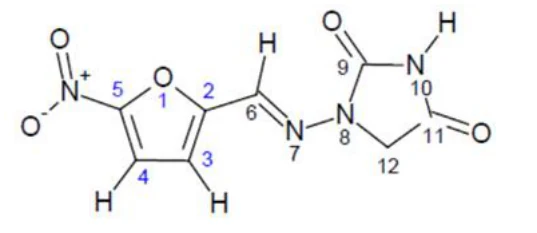
Physicochemical properties: Nitrofurantoin is a synthetic antibacterial nitrofuran derivative. It occurs as lemon-yellow odourless crystals, or fine powder, and soluble in Dimethyl Formamide.
pH: Between 5 and 7 (1% suspension in water)
Melting Point: About 270°C.
Pharmaceutical standard: BP
14. Clinical Trials
The clinical trial data on which the indication was originally authorized is not available.
15. Microbiology
The in vitro antibacterial activity of nitrofurantoin against clinical isolates is given below.
Minimal Inhibitory Concentration (mcg/mL) | ||||||||
|---|---|---|---|---|---|---|---|---|
Minimal Inhibitory Concentration (mcg/mL) | ||||||||
| Organism (# strains tested) | MIC50 | MIC90 | Range | |||||
| Organism (# strains tested) | MIC50 | MIC90 | Range | |||||
Citrobacter freundii (97) Enterobacter aerogenes (75) Enterobacter cloacae (135) Escherichia coli (1792) | 32 64 64 16 | 32 128 128 32 | 16 - >128 32 – 128 4 – 128 8 – 128 | |||||
Klebsiella oxytoca (52) Klebsiella pneumoniae (410) Staphylococcus aureus (84) Staphylococcus epidermidis (25) Staphylococcus saprophyticus (25) Enterococcus faecalis (598) | 32 64 16 16 16 16 | 64 128 32 16 16 16 | ≤16 - >128 32 - >128 16 – 32 8 – 32 8 – 32 8 – 64 | |||||
Nitrofurantoin is not active against most strains of Proteus or Serratia species. It has no activity against Pseudomonas species.
Nitrofurantoin is bactericidal in urine at levels equal to one or two times the MIC. Nitrofurantoin exhibits concentration dependent killing of bacteria.
Antagonism has been demonstrated in vitro between nitrofurantoin and quinolone antimicrobials.
The clinical significance of this finding is unknown.
Development of resistance to nitrofurantoin has not been a significant problem since its introduction in 1953. Cross-resistance with antibiotics and sulfonamides has not been observed, and transferable resistance is, at most, a very rare phenomenon.
Susceptibility Tests - Quantitative methods that require measurement of zone diameters give the most precise estimates of antimicrobial susceptibility. One recommended procedure, (National Committee for Clinical Laboratory Standards, Performance Standards for Antimicrobial Disc Susceptibility Tests, Approved Standard: M2-A4, Vol. 10, Number 7, 1990), uses a disc containing 300 mcg nitrofurantoin for testing susceptibility.
Reports from the laboratory should be interpreted according to the following criteria:
Susceptible organisms produce zones of 17 mm or greater indicating that the tested organism is likely to respond to therapy.
Organisms of intermediate susceptibility produce zones of 15 to 16 mm, indicating that the tested organism may or may not be susceptible.
Resistant organisms produce zones of 14 mm or less, indicating that other therapy should be selected.
Alternatively, a bacterial isolate may be considered susceptible if the MIC value for nitrofurantoin is not more than 32 mcg/mL. A MIC of 64 mcg/mL indicates intermediate susceptibility. Organisms are considered resistant if the MIC is equal to or greater than 128 mcg/mL.
Dilution and diffusion susceptibility tests should give MICs and zone diameters within the ranges listed below for the following quality control organisms.
| Organism | MIC (mcg/mL) | Zone Size Range (mm) |
|---|---|---|
| E. coli (ATCC 25922) | 4-16 | 20-25 |
| S. aureus (ATCC 29213) | 8-32 | 18-22 |
| E. faecalis (ATCC 29212) | 4-16 | - |
16. Non-Clinical Toxicology
Carcinogenicity
Chronic Toxicity and Carcinogenicity Studies:
Nitrofurantoin was not considered carcinogenic when administered for 22 months to male and female Swiss mice at dietary doses up to 181 and 224 mg/kg/day respectively and in male and female BDF1 mice at dietary doses (estimated from feed consumption of Swiss and B6C3F1 mice historical controls) of up to 550 and 560 mg/kg/day respectively for 24 months. There was an increase in mortality in the high dosed males and changes in the urinary system and gonads (increase in ovarian cysts and testicular degeneration/atrophy) observed in Swiss mice. No neoplastic lesions were attributed to the administration of nitrofurantoin for either strain of mouse.
In a chronic study, nitrofurantoin was consumed in the diet for two years by male and female Sprague-Dawley rats in doses of up to 81 and 116 mg/kg/day respectively. In a carcinogenicity study Sprague-Dawley male and female rats consumed dietary nitrofurantoin for 2 years in doses of up to 43 and 56 mg/kg/day respectively. No evidence of carcinogenicity was observed in these studies. In the higher dose groups, increased mortality, testicular degeneration, epididymal fibrosis and sciatic nerve fibrosis was seen in males and an increase in bile duct hyperplasia and sciatic nerve demyelination was seen in females.
In a large carcinogenicity study conducted by the U.S. Department of Health and Human
Services F344/N rats consumed dietary nitrofurantoin for 2 years in average amounts equivalent to 59 or 111 mg/kg/day for males and 29 or 62 mg/kg/day for females. B6C3F1 mice consumed dietary nitrofurantoin for 2 years in average amounts equivalent to 295 or 567 mg/kg/day for males and 277 or 577 mg/kg/day for females. Evidence of tumorigenicity and carcinogenicity was noted.