


Patient Medication Information: uses, side effects, how to take - Noyada
What is Noyada used for?
Noyada can be used in adults:
- to treat high blood pressure with or without other medicines (e.g., diuretics used to lower the level of sodium in the blood);
- to treat heart failure with other medicines (e.g., diuretics);
- after a heart attack to improve survival and delay the symptoms of heart failure; or
- whom have diabetes and retinopathy (disease of the retina) to treat a kidney disease known as “diabetic nephropathy”.
How does Noyada work?
Noyada belongs to a group of medicines called “angiotensin converting enzyme (ACE) inhibitors”. These work by helping to widen your blood vessels, which then make it easier for your heart to pump blood through them.
What are the ingredients in Noyada?
Medicinal ingredient: Captopril.
Non-medicinal ingredients: Citric acid, disodium ethylenediaminetetraacetic acid (EDTA), purified water, sodium benzoate, sodium citrate, and sodium hydroxide (to adjust pH).
Noyada comes in the following dosage forms:
Oral Solution: 5 mg / 5 mL and 25 mg / 5 mL of captopril.
Do not use Noyada if:
Serious Warnings and Precautions
Pregnancy: Angiotensin converting enzyme (ACE) inhibitors, such as Noyada, can cause risks to your unborn baby if you are pregnant. This can include injury and even death. If you think you are pregnant or if you become pregnant while taking Noyada, you should stop your treatment right away and tell your healthcare professional.
- you are allergic to captopril or to any other ingredients in Noyada.
- you have previously had an allergic reaction to any other ACE inhibitors or without a known cause.
- you have previously had an allergic reaction causing angioedema (swelling of the hands, feet, or ankles, face, lips, tongue, or throat).
- you a have a family history of angioedema.
- you have diabetes or moderate to severe kidney problems and are taking medicines that contain aliskiren (used to treat high blood pressure).
- you are pregnant, planning to become pregnant, or are able to become pregnant and you are not taking adequate birth control measures. Talk to your healthcare professional about adequate birth control while taking Noyada.
- you are taking a medicine containing sacubitril and valsartan. This may increase the risk of serious allergic reaction which can cause angioedema when taken with Noyada. Do not take Noyada and sacubitril and valsartan within 36 hours of each other.
- you have a condition known as “renal artery stenosis” (narrowing of the arteries that carry blood to one or both kidneys).
To help avoid side effects and ensure proper use, talk to your healthcare professional before you take Noyada. Talk about any health conditions or problems you may have, including if you:
- have or have had kidney problems.
- have low levels of renin, which helps to control your blood pressure. If you are Afro-Caribbean you may have lower levels of renin.
- have liver problems.
- have heart and/or blood vessel problems.
- have low sodium levels.
- are on a controlled sodium diet. Noyada 5 mg / 5 mL oral solution contains 53.38 mg of sodium per maximum daily dose, while Noyada 25 mg / 5 mL oral solution contains 10.68 mg of sodium per maximum daily dose.
- have diabetes.
- have an autoimmune disease known as “collagen vascular disease” (e.g., systemic lupus erythematosus, and scleroderma).
- are receiving immunosuppressant therapy.
- are at a higher risk of developing high potassium levels in the blood (hyperkalemia).
- have received or are planning to get allergy shots (desensitization) for bee or wasp stings. You should also tell the healthcare professional who is treating you that you are taking Noyada.
- are on or planning to start dialysis.
- are having or planning to have a surgery, especially if anesthesia will be used.
are breast-feeding or plan to breast-feed. Noyada may pass into breast milk and you
- -feed while taking Noyada.
- have anemia (decreased number of red blood cells).
Other warnings you should know about:
Noyada can cause the following serious side effects:
- Allergic reaction, including angioedema (swelling of the tissue under the skin): This can include symptoms such as nausea, abdominal cramps, burning, shortness of breath, and low blood pressure, and swelling to the throat, face, tongue, vocal cords, or intestines. This can be life threatening. Allergic reactions are more likely to happen if you are receiving desensitization treatment for bee or wasp stings and if you on certain dialysis procedures. If angioedema or an allergic reaction is suspected, stop taking Noyada and tell your healthcare professional right away.
- Hypotension (low blood pressure): This may be more likely to happen if you have low sodium levels, at the start of your treatment, and when your dose is adjusted. In addition, if you experience more sweating than usual, feel dehydrated, vomiting or diarrhea, this may lead to a fall in blood pressure. If you have any of these symptoms, tell your healthcare professional.
- Liver problems: This includes abdominal pain, nausea, vomiting, loss of appetite, jaundice, and itching. In addition, viral-like symptoms may also develop (e.g., fever, general discomfort, muscle pain, rash, or swollen lymph nodes). This can happen during the first weeks to months of Noyada treatment. If you experience any symptoms of a liver problem, tell your healthcare professional right away.
- Low white blood cell levels in the blood: This can lead to the development of infections, which can be life-threatening. This is more likely to happen within the first 3 months after starting your treatment with Noyada. If you notice any signs of an infection (e.g., sore throat or fever), tell your healthcare professional right away.
See the Serious side effects and what to do about them table, below, for more information on these and other serious side effects.
Check-ups and testing: Your healthcare professional will assess your health before, during, and after your treatment with Noyada. This will depend on your health condition and may include certain tests to assess the following:
- your blood pressure;
- your heart, kidneys, and liver functions;
- the make-up of your blood (e.g., levels of glucose, white blood cells, potassium, creatinine, etc.);
- the levels of protein in your urine.
Tell your healthcare professional that you are taking Noyada before you have any blood or urine tests as this medicine may interfere with the results of some tests.
Driving and using machines: Noyada can cause you to feel light-headed and dizzy reducing your ability to drive and use machines. This is more likely to happen at the start of your treatment or when your dose is changed. If you do feel light-headed or dizzy when taking Noyada, you should not drive or use machinery.
Tell your healthcare professional about all the medicines you take, including any drugs, vitamins, minerals, natural supplements or alternative medicines.
Serious Drug Interactions Do NOT take Noyada with any of the following:
|
|---|
The following may interact with Noyada:
- other medicines that treat high blood pressure (e.g., dual blockade of the renin-angiotensin-system (RAS), alpha blockers, and beta blockers).
- diuretics, used to increase the amount of water released in the urine (e.g., thiazides).
- injectable gold (sodium aurothiomalate), used to treat a disease that affects your joints known as rheumatoid arthritis.
- medicines that widen or open the blood vessels (e.g., nitroglycerine and other nitrates).
- medicines that affect the sympathetic nervous system (e.g., sympathomimetics, ganglionic blocking agents, and adrenergic neuron blocking agents).
- medicines that can increase potassium levels in the blood (e.g., spironolactone, triamterene, amiloride, heparin, potassium supplements, and salt substitutes that contain potassium).
- non-steroidal anti-inflammatory agents (NSAIDs), used to reduce pain and swelling (e.g., aspirin and indomethacin).
- allopurinol, used to treat kidney stones and gout.
- procainamide, used to treat abnormal heart rhythms.
- medicines used to treat mental health disorders (e.g., lithium, antidepressants and antipsychotics).
- medicines that can affect white blood cells or immune system (mTOR inhibitors such as sirolimus, everolimus, and temsirolimus).
- medicines used to treat diabetes (e.g., sulphonylurea).
How to take Noyada:
- Always take Noyada exactly as directed by your healthcare professional. If you are not sure, check with your healthcare professional.
- Noyada is an oral solution that must be taken by mouth.
Noyada, captopril oral solution, should not be substituted or changed to another
- healthcare professional’s direction and supervision.
Noyada should be taken one hour before meals. SHAKE WELL BEFORE USE.
- The contents of the carton and instructions are provided below for using the dosing syringe. If you have any questions about the dose you should use or how to use the syringe, you should ask your healthcare professional.
5 mg / 5 mL is supplied with:
- 1 mL syringe (orange barrel): Each numbered increment is 0.1 mL (equal to 0.1 mg of captopril). The smaller intermediate increments are 0.05 mL (equal to 0.05 mg of captopril).

- 5 mL syringe (purple barrel): Each numbered increment is 1 mL (equal to 1 mg of captopril). The smaller intermediate increments are 0.2 mL (equal to 0.2 mg of captopril).

25 mg / 5 mL is supplied with:
- 5 mL syringe (purple barrel): Each numbered increment is 1 mL (equal to 5 mg of captopril). The smaller intermediate increments are 0.2 mL (equal to 1 mg of captopril).
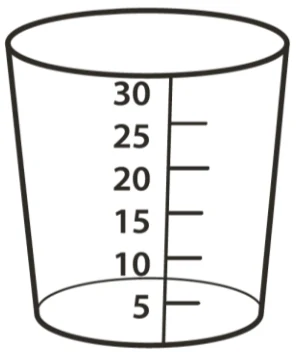
- 30 mL dosing cup: Each numbered increment is 5 mL (equal to 25 mg of captopril). The smaller intermediate increments are 1 mL (equal to 5 mg of captopril).
Instructions for use:
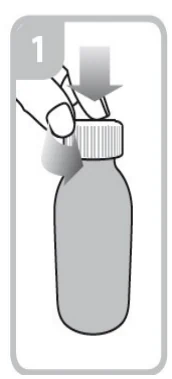
- 1.
Open the bottle by pressing the cap and turning it anti-clockwise (Figure 1). Write the date of the first opening on the label of the bottle.
Figure 1
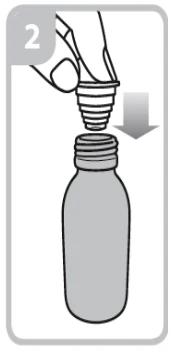
- 2.
Holding the bottle, take the plastic syringe adaptor from the box and insert the adaptor into the bottle neck (Figure 2). Ensure it is well fixed.
Figure 2
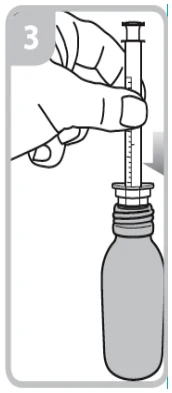
- 3.
Take the syringe and put it in the adaptor opening (Figure 3).
Figure 3
- 4.
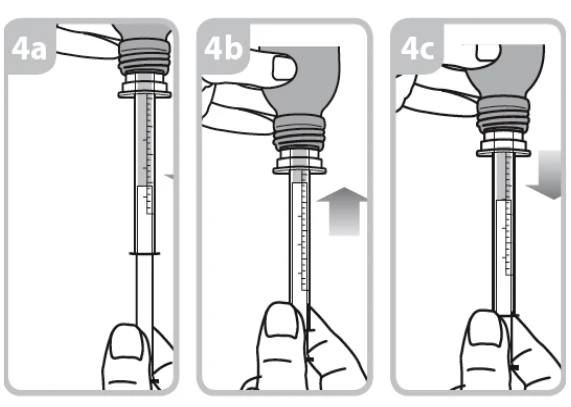
Turn the bottle upside down. Fill the syringe with a small amount of solution by pulling the piston down (Figure 4a), then push the piston upward in order to remove any
- possible bubble (
Figure 4b). Pull the piston down to the graduation mark corresponding to the quantity in millimeters (mL) prescribed by your healthcare professional (Figure 4c).
Figure 4
- possible bubble (
- 5.
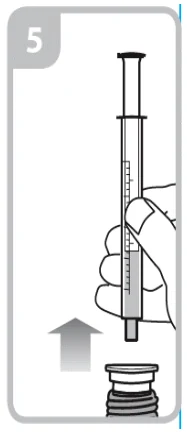
Turn the bottle the right way up. Remove the syringe from the adapter (Figure 5).
Figure 5
- 6.
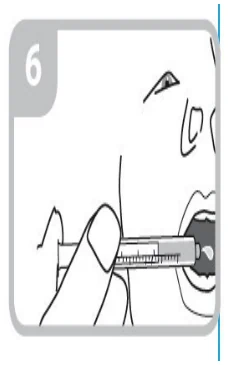
Immediately administer the contents of the syringe into your mouth by pushing the piston to the bottom of the syringe (Figure 6) and ensure all of the medicine is swallowed.
Figure 6
- 7. Remove the adaptor from the bottle and closed the bottle with the plastic screw cap.
- 8. Wash the adaptor, the syringe and the dosing cup where applicable with warm water after use. Dry them with a clean paper towel and replace them into the box with your medicine.
Usual dose:
Your healthcare professional will determine the right dose of Noyada for you. This can depend on your age, health condition, if you take other medicines, and how you respond to Noyada.
The usual adult dose is as follows:
- Treatment of high blood pressure: 25 mg to 150 mg two or three times a day. Maximum of 450 mg per day.
- Treatment of heart failure: 25 mg to 150 mg three times a day. Maximum of 450 mg per day.
- After a heart attack: 12.5 mg to 50 mg three times a day.
- Treatment of diabetic nephropathy (a type of kidney disease): 25 mg three times a day.
Overdose:
| If you think you, or a person you are caring for, have taken too much Noyada, contact a healthcare professional, hospital emergency department, or regional poison control centre immediately, even if there are no symptoms. Take the carton and bottle with any remaining solution you have with you. |
|---|
Missed Dose:
If you miss or forget to take a dose, do not worry. Just carry on taking your normal dose when the next one is due. Do NOT take a double dose to make up for the missed dose.
What are possible side effects from using Noyada?
These are not all the possible side effects you may have when taking Noyada. If you experience any side effects not listed here, tell your healthcare professional.
Side effects of Noyada may include:
- abdominal pain,
- anorexia,
- changes in taste or loss of taste,
- constipation,
- diarrhea,
- disturbed vision,
- drowsiness,
- dry eyes,
- dry mouth,
- fatigue,
- feeling of discomfort,
- fever,
- flushing,
- headache,
- hair loss,
- impotence,
- itching eyes,
- loss of appetite,
- loss of libido,
- mouth inflammation,
- muscle or joint pain,
- nasal congestion,
- nausea,
- problems sleeping,
- reduced or loss of appetite,
- runny nose,
- skin paleness,
- sneezing,
- stomach upset,
- tingling sensation,
- tongue inflammation,
- vomiting.
Serious Side Effects and What to do About Them
| Symptom / Effect | Talk to your Healthcare Professional | Stop Taking Drug and Get Immediate Medical Help | |
|---|---|---|---|
| Only if Severe | In All Cases | ||
| COMMON | |||
| Hypotension (low blood pressure): dizziness, fainting, light-headedness, blurred vision, nausea, vomiting, or fatigue (these may occur when you go from lying or sitting to standing up). | X | ||
| Hyperkalemia (high level of potassium in the blood): irregular heartbeat, muscle weakness, or generally feeling unwell. | X | ||
| UNCOMMON | |||
| Allergic reactions, including angioedema (swelling of the tissue under the skin): difficulty swallowing, difficulty breathing, wheezing, drop in blood pressure, nausea, vomiting, hives, rash, or swelling of the face, eyes, lips, tongue, throat, arms or legs. | X | ||
| Kidney problems: weight loss, poor appetite, swelling, shortness of breath, tiredness, blood in the urine, confusion, nausea, weakness, changes in urine output or frequency, difficulty sleeping (insomnia), or itchy skin. | X | ||
| Myocardial infarction (heart attack): pressure or squeezing pain between the shoulder blades, in the chest, jaw, left arm, or upper abdomen, shortness of breath, dizziness, fatigue, light-headedness, | X | ||
Serious Side Effects and What to do About Them
| Symptom / Effect | Talk to your Healthcare Professional | Stop Taking Drug and Get Immediate Medical Help | |
|---|---|---|---|
| Only if Severe | In All Cases | ||
| clammy skin, sweating, indigestion, anxiety, feeling faint, palpitations, or fast or irregular heartbeat. | |||
| RARE | |||
| Liver problems: abdominal pain, nausea, vomiting, loss of appetite, yellowing of the skin or whites of the eyes, and itching, dark urine. | X | ||
| VERY RARE | |||
| Anemia (decreased number of red blood cells): fatigue, loss of energy, irregular heartbeats, pale complexion, shortness of breath, weakness, headaches, dizziness, or palpitations. | X | ||
| Low white blood cell levels in the blood: infections, fatigue, fever, aches, sore throat, pains, flu-like symptoms, unusual bruising, or more bleeding than usual after an injury. | X | ||
| UNKNOWN FREQUENCY | |||
| Pancreatitis (inflammation of the pancreas): abdominal pain that lasts and gets worse when you lie down, nausea, vomiting, fever, rapid heart beat, tenderness when touching the abdomen. | X | ||
| Stevens Johnson Syndrome (SJS, severe skin rash): redness, blistering or peeling of the skin inside of the lips, eyes, mouth, nasal passages, or genitals, | X | ||
Serious Side Effects and What to do About Them
| Symptom / Effect | Talk to your Healthcare Professional | Stop Taking Drug and Get Immediate Medical Help |
|---|---|---|
| Only if Severe | In All Cases | |
| fever, chills, headache, cough, body aches, or swollen glands. | ||
| Stroke: sudden numbness or weakness of your arm, leg or face, especially on one side of the body; sudden confusion, trouble speaking, difficulty understanding others; sudden difficulty in walking, loss of balance, loss of coordination, dizziness, severe headache, or vision changes. | ||
| X | ||
If you have a troublesome symptom or side effect that is not listed here or becomes bad enough to interfere with your daily activities, tell your healthcare professional.
Reporting Side Effects
You can report any suspected side effects associated with the use of health products to Health Canada by:
NOTE: Contact your healthcare professional if you need information about how to manage your side effects. The Canada Vigilance Program does not provide medical advice. |
Storage:
Store the Noyada bottle:
- at room temperature between 15°C to 30°C,
- in an upright position, and
- in the outer carton to protect from light.
Do not refrigerate. Use within 21 days after opening.
Keep out of reach and sight of children.
If you want more information about Noyada:
- Talk to your healthcare professional
- Find the full Product Monograph that is prepared for healthcare professionals and includes this Patient Medication Information by visiting the Health Canada website (https://www.canada.ca/en/health-canada/services/drugs-health-products/drug-products/drug-product-database.html); or by calling Ethypharm Inc. at 1-800-347-1675.