


Product Monograph - Osphena
1 INDICATIONS
Osphena (ospemifene tablets) is indicated in postmenopausal women for the treatment of moderate to severe dyspareunia and/or vaginal dryness, symptoms of vulvar and vaginal atrophy (VVA), a component of genitourinary syndrome of menopause (GSM).
1.1 Pediatrics
Pediatrics (≤18 years of age): No data are available to Health Canada; therefore, Health Canada has not authorized an indication for pediatric use. Osphena is not indicated in children.
1.2 Geriatrics
Geriatrics (≥65 years of age): Of the 2209 Osphena-treated women enrolled in the ten (10) Phase II/III trials of Osphena, >19 percent were 65 years of age or older. No clinically meaningful differences in safety or effectiveness were observed between these women and younger women less than 65 years of age.
2 CONTRAINDICATIONS
Osphena is contraindicated in patients who are hypersensitive to this drug or to any ingredient in the formulation, including any non-medicinal ingredient, or component of the container. For a complete listing, see Dosage Forms, Strengths, Composition and Packaging.
Osphena is contraindicated in women with any of the following conditions:
- Undiagnosed abnormal genital bleeding
- Known or suspected estrogen-dependent neoplasia
- Active deep vein thrombosis (DVT), pulmonary embolism (PE), or a history of these conditions
- Active arterial thromboembolic disease [for example, stroke and myocardial infarction (MI)], or a history of these conditions
- Severe hepatic impairment (see Warnings and Precautions section)
- Women who are or may become pregnant. Ospemifene may cause fetal harm when administered to a pregnant woman. Ospemifene was embryo-fetal lethal with labor difficulties and increased pup deaths in rats at doses below clinical exposures, and embryo-fetal lethal in rabbits at 10 times the clinical exposure based on mg/m2. If this drug is used during pregnancy, or if a woman becomes pregnant while taking this drug, she should be apprised of the potential hazard to a fetus (see Warnings and Precautions, Special Populations section).
- Hypersensitivity (for example, angioedema, urticaria, rash, pruritus)
3 SERIOUS WARNINGS AND PRECAUTIONS BOX
Serious Warnings and Precautions
Endometrial Cancer:
Cardiovascular Disorders:
|
4 DOSAGE AND ADMINISTRATION
4.1 Dosing Considerations
The following situations may affect dosing of Osphena:
- Concomitant use of ospemifene with estrogens, estrogen agonist/antagonist, fluconazole, rifampin, ketoconazole, highly protein-bound drugs and drugs known to inhibit CYP3A4 and CYP2C9 (see Drug Interactions, Drug-Drug Interactions section).
- Use of Osphena should be for the shortest duration consistent with treatment goals and risks for the individual woman. Postmenopausal women should be re-evaluated periodically as clinically appropriate to determine if treatment is still necessary.
- Osphena patients have significantly greater adherence and persistence compared with non-ring local estrogen therapies (LETs).
4.2 Recommended Dose and Dosage Adjustment
One Osphena (ospemifene) 60 mg tablet with food once daily.
No dose adjustment is required in women with any severity of renal impairment.
No dose adjustment is required with mild (Child-Pugh Class A) or moderate (Child-Pugh Class B) hepatic impairment (see Warnings and Precautions section). Osphena should not be used in women with severe hepatic impairment (see Warnings and Precautions section).
Osphena is indicated for use in postmenopausal women. Osphena is not intended for use in children. Health Canada has not authorized an indication for pediatric use.
4.4 Administration
Osphena (ospemifene) should be consistently taken orally with food, as the presence or absence of food may alter bioavailability.
4.5 Missed Dose
In the event that a dose is missed, the next dose should be taken as soon as possible. If it is almost time for the next dose, the missed dose should be skipped and the next dose should be taken as planned. Doses should not be doubled to make up for a missed dose. The prescribed dosing schedule should be continued.
5 OVERDOSAGE
Osphena (ospemifene) has been administered to subjects in single doses for up to 800mg/day and repeat doses up to 240 mg/day for 7 days and up to 200 mg/day for 12 weeks. There is no specific antidote for Osphena (ospemifene tablets). In the event of overdose, general supportive measures should be initiated based on the patient’s signs and symptoms.
| For management of a suspected drug overdose, contact your regional poison control centre. |
6 DOSAGE FORMS, STRENGTHS, COMPOSITION AND PACKAGING
Table 1– Dosage Forms, Strengths, Composition and Packaging
Description
Osphena tablets are white to off-white, oval, biconvex, film-coated tablets engraved with “60” on one side.
Osphena is supplied in HDPE bottles of 90 tablets with a polypropylene cap or in PVC/PVdC aluminum
| Route of Administration | Dosage Form / Strength/Composition | Non-medicinal Ingredients |
| Oral | Tablet 60 mg ospemifene | Colloidal silicon dioxide, hypromellose, lactose monohydrate, magnesium stearate, mannitol, microcrystalline cellulose, polyethylene glycol, povidone, pregelatinized starch, sodium starch glycolate, titanium dioxide, triacetin. |
foil blisters of 30 tablets (2 strips of 15 tablets).
7 WARNINGS AND PRECAUTIONS
Please see 3 SERIOUS WARNINGS AND PRECAUTIONS BOX.
General
Carcinogenesis and Mutagenesis
Endometrial Cancer:
Osphena (ospemifene tablets) is an estrogen receptor agonist/antagonist with tissue selective effects. In the endometrium, Osphena has weak agonistic effects. In the Osphena clinical trials (60 mg treatment group), no cases of endometrial cancer were seen with exposure up to 52 weeks. There was a single case of simple hyperplasia without atypia. Endometrial thickening equal to 5 mm or greater was seen in the Osphena > 52 weeks treatment groups at a rate of 72.5 per thousand women vs. 11.8 per thousand women for placebo. The incidence of any type of proliferative (weakly plus active plus disordered) endometrium was 26.3 per thousand women in the Osphena > 52 weeks treatment groups vs. 0 per thousand women for placebo. Uterine polyps occurred at an incidence of 11.6 per thousand women in the Osphena > 52 weeks treatment groups vs 8.9 per thousand women for placebo.
An increased risk of endometrial cancer has been reported with the use of unopposed estrogen therapy in a woman with a uterus. The reported endometrial cancer risk among unopposed estrogen users is about 2 to 12 times greater than in non-users and appears dependent on duration of treatment and on estrogen dose. Most studies show no significant increased risk associated with the use of estrogens for less than 1 year. The greatest risk appears to be associated with prolonged use, with increased risks of 15- to 24-fold for 5 to 10 years or more. This risk has been shown to persist for at least 8 to 15 years after estrogen therapy is discontinued. Adding a progestin to postmenopausal estrogen therapy has been shown to reduce the risk of endometrial hyperplasia, which may be a precursor to endometrial cancer. There are, however, possible risks that may be associated with the use of progestins with estrogens compared to estrogen-alone regimens. These include an increased risk of breast cancer. The use of progestins with OSPHENA therapy was not evaluated in the clinical trials.
Clinical surveillance of all women using Osphena is important. If break-through bleeding or spotting appears after some time on therapy, or continues after treatment has been discontinued, the reason should be investigated. Adequate diagnostic measures, including directed or random endometrial sampling when indicated, should be undertaken to rule out malignancy in postmenopausal women with undiagnosed persistent or recurring abnormal genital bleeding.
Breast Cancer:
Osphena (ospemifene tablets) 60 mg has not been adequately studied in women with breast cancer; therefore, it should not be used in women with known or suspected breast cancer.
Cardiovascular
Risk factors for cardiovascular disorders, arterial vascular disease (for example, hypertension, diabetes mellitus, tobacco use, hypercholesterolemia, and obesity) and/or venous thromboembolism (VTE) (for example, personal history or family history of VTE, obesity, and systemic lupus erythematosus), should be managed appropriately.
Stroke:
In the clinical trials for Osphena (ospemifene tablets) (duration of treatment up to 15 months), the incidence rates of thromboembolic and hemorrhagic stroke were 1.13 and 3.39 per thousand women years, respectively in Osphena 60 mg treatment group and 3.15 and 0 per thousand women years in placebo.
Should thromboembolic or hemorrhagic stroke occur or be suspected, Osphena should be discontinued immediately.
In the WHI estrogen-alone substudy, a statistically significant increased risk of stroke was reported in women 50 to 79 years of age receiving daily CE (0.625 mg)-alone compared to women in the same age group receiving placebo (45 versus 33 per ten thousand women years). The increase in risk was demonstrated in year 1 and persisted.
Coronary Heart Disease:
In the Osphena clinical trials, two cases of myocardial infarctions (MI) occurred in women receiving 60 mg of ospemifene.
In the WHI estrogen-alone substudy, no overall effect on coronary heart disease (CHD) events (defined as nonfatal MI, silent MI, or CHD death) was reported in women receiving estrogen-alone compared to placebo.
Venous Thromboembolism:
In the Osphena clinical trials, the incidence of DVT was 2.26 per thousand women years in the 60 mg treatment group and 3.15 per thousand women years in placebo. The incidence of pulmonary embolism (PE) was 0 per thousand women years in the Osphena 60 mg and placebo treatment groups. Should a VTE (including DVT and PE) occur or be suspected, Osphena should be discontinued immediately.
If feasible, Osphena should be discontinued at least 4 to 6 weeks before surgery of the type associated with an increased risk of thromboembolism, or during periods of prolonged immobilization.
In the WHI estrogen-alone substudy, the risk of VTE (DVT and PE) was increased for women receiving daily CE (0.625 mg)-alone compared to placebo (30 versus 22 per ten thousand women years), although only the increased risk of DVT reached statistical significance (23 versus 15 per ten thousand women years). The increase in VTE risk was demonstrated during the first 2 years.
Genitourinary
Vaginal Bleeding
Abnormal vaginal bleeding, due to its prolongation, irregularity or heaviness, occurring during therapy should prompt appropriate diagnostic measures to rule out the possibility of uterine malignancy and the treatment should be re-evaluated.
Hepatic/Biliary/Pancreatic
Osphena 60 mg should not be used in women with severe hepatic impairment (see Pharmacokinetics, Hepatic Insufficiency section).
Reproductive Health: Female and Male Potential
Fertility
Osphena is indicated in postmenopausal women with no childbearing potential. Osphena is contraindicated in women who are or may become pregnant (see Contraindications and Warnings and Precautions, Special Populations sections).
7.1 Special Populations
7.1.1 Pregnant Women
Osphena clinical trials included only postmenopausal women. There were no pregnant women exposed to Osphena (ospemifene tablets) in the clinical trials.
Based on animal data, Osphena is likely to increase the risk of adverse outcomes during pregnancy and labor. Adverse findings at maternally toxic doses included embryo-fetal lethality in rats and rabbits, and neonatal mortality and difficult labor in rats. The reproductive effects observed are consistent with and are considered to be related to estrogen receptor activity of Osphena (see Action and Clinical Pharmacology, Pharmacokinetics and Non-clinical Toxicology sections).
7.1.2 Breast-feeding
It is unknown if the drug is excreted in human milk. There are no data on the effects of Osphena on the breastfed child of the effects on milk production. Patient should not breastfeed while taking Osphena (see Non-clinical Toxicology section).
7.1.3 Pediatrics
Pediatrics (≤18 years of age): No data are available to Health Canada; therefore, Health Canada has not authorized an indication for pediatric use.
7.1.4 Geriatrics
Geriatrics (≥65 years of age): Of the 2209 Osphena-treated women enrolled in the ten (10) Phase II/III trials of Osphena, >19 percent were 65 years of age or older. No clinically meaningful differences in safety or effectiveness were observed between these women and younger women less than 65 years of age.
8 ADVERSE REACTIONS
8.1 Adverse Reaction Overview
The following serious adverse reactions are discussed elsewhere in the Product Monograph:
- Cardiovascular Disorders (see Warnings and Precautions, Cardiovascular section);
- Malignant Neoplasms (see Warnings and Precautions, Carcinogenesis and Mutagenesis section);
The most frequent adverse reactions that occurred in patients treated with Osphena 60 mg once daily in the 12-week double-blind, placebo-controlled clinical trials were hot flush, hyperhidrosis, muscle spasms and vaginal discharge (see Table 2). Pooled analysis of hot flush treatment-emergent adverse events (TEAEs) found that the frequency of hot flushes declined after 4 weeks of ospemifene treatment.
8.2 Clinical Trial Adverse Reactions
Clinical trials are conducted under very specific conditions. The adverse reaction rates observed in the clinical trials; therefore, may not reflect the rates observed in practice and should not be compared to the rates in the clinical trials of another drug. Adverse reaction information from clinical trials may be useful in identifying and approximating drug-related adverse events and for approximating rates.
The safety of Osphena has been assessed in ten (10) Phase II/III trials (n=2209) with doses ranging from 5 to 90 mg per day. The duration of treatment in these studies ranged from 6 weeks to 15 months. Most women (n=1683) had a treatment period of at least 12 weeks, 432 had at least 52 weeks (1 year) of exposure. The long-term safety in patients that had at least 52 weeks of exposure is similar to those listed in Table 2.
The incidence rates of thromboembolic and hemorrhagic stroke were 1.13 per thousand women years (1 reported case of thromboembolic stroke) and 3.39 per thousand women years (3 reported cases of hemorrhagic stroke), respectively in Osphena 60 mg treatment group and 3.15 (1 case of thromboembolic stroke) and 0 per thousand women years, respectively in placebo. The incidence of deep vein thrombosis (DVT) was 2.26 per thousand women years in Osphena 60 mg treatment group (2 reported cases of DVT) and 3.15 (1 case of DVT) in placebo. The incidence of pulmonary embolism was 0 per thousand women years in the Osphena 60 mg and placebo treatment groups.
Table 2 below lists adverse reactions occurring more frequently in the Osphena 60 mg treatment group than in placebo and at a frequency ≥1%.
Table 2 - Adverse Reactions Reported at Frequency ≥ 1.0% in the Osphena Treatment Group (60 mg Once Daily) in the 12-Week Double-Blind, Controlled Clinical Trials with Osphena vs. Placebo
Ospemifene 60 mg n = 1459 (%) | Placebo n = 1136 (%) | |
|---|---|---|
Musculoskeletal and Connective Tissue Disorders Muscle Spasms | 1.8 | 0.6 |
Reproductive System and Breast Disorders Vaginal Discharge | 3.8 | 0.1 |
Skin and Subcutaneous Tissue Disorders Hyperhidrosis | 1.1 | 0.2 |
Vascular Disorders Hot Flush | 6.5 | 2.6 |
8.3 Less Common Clinical Trial Adverse Reactions
The following lists the treatment-related adverse events occurring in > 0.1% and < 1% but exceeding the placebo rate that occurred in women treated with Osphena in the 12-week double-blind, controlled
Phase III clinical trials.
Gastrointestinal Disorders: Abdominal pain, abdominal pain lower, diarrhea, dyspepsia, nausea
General Disorders and Administration Site Conditions: Edema peripheral
Immune System Disorder: Drug hypersensitivity
Infections and Infestations: Fungal infection, urinary tract infection, vulvovaginal candidiasis, vulvovaginal mycotic infection
Investigations: Blood creatine phosphokinase increased; weight increased
Musculoskeletal and Connective Tissue Disorders: Arthralgia, myalgia
Neoplasms Benign, Malignant and Unspecified: Uterine leiomyoma
Nervous System Disorders: Restless legs syndrome
Psychiatric Disorders: Depression, insomnia
Renal and Urinary Disorders: Pollakiuria
Reproductive System and Breast Disorders: Breast mass, breast pain, breast tenderness, endometrial hypertrophy
Respiratory, Thoracic and Mediastinal Disorders: Dyspnea
Skin and Subcutaneous Tissue Disorders: Acne, hirsutism, pruritus, rash
8.5 Post-Market Adverse Reactions
The following adverse reactions have been identified during post-approval use of Osphena. Because these reactions are reported voluntarily from a population of uncertain size, it is not possible to reliably estimate their frequency or establish a causal relationship to drug exposure.
Immune System Disorders: Allergic conditions including hypersensitivity, angioedema
Nervous System Disorders: Headache
Skin and Subcutaneous Tissue Disorders: Rash, rash erythematous, rash generalized, pruritus, urticaria
Vascular Disorders: deep vein thrombosis, thrombosis, pulmonary embolism
9 DRUG INTERACTIONS
9.2 Drug Interactions Overview
Osphena is primarily metabolized by CYP3A4 and CYP2C9. CYP2C19 and other pathways contribute to the metabolism of ospemifene. In order of decreasing potency, ospemifene was suggested to be a weak inhibitor for CYP2B6, CYP2C9, CYP2C19, CYP2C8, CYP2D6 and CYP3A4 in in vitro studies. Ospemifene is not a significant P-glycoprotein substrate in vitro; no in vitro transporter study was conducted.
9.4 Drug-Drug Interactions
The drugs listed in this table are based on either drug interaction case reports or studies, or potential interactions due to the expected magnitude and seriousness of the interaction (i.e., those identified as contraindicated).
Table 3 - Established or Potential Drug-Drug Interactions
| [Proper/Common name] | Source of Evidence | Effect | Clinical comment |
| Fluconazole | CT | Increase the systemic exposure of ospemifene by 2.7-fold | Fluconazole, a moderate CYP3A / strong CYP2C9 / moderate CYP2C19 inhibitor, should not be used with Osphena. Administration of fluconazole with ospemifene may increase the risk of Osphena-related adverse reactions. |
| Rifampin | CT | Decrease the systemic exposure of ospemifene by 58% | Co-administration of Osphena with drugs such as rifampin which induce CYP3A4, CYP2C9 and/or CYP2C19 inducer activity would be expected to decrease the systemic exposure of ospemifene, which may decrease the clinical effect. |
| Ketoconazole | CT | Increase the systemic exposure of ospemifene by 1.4-fold | Administration of ketoconazole, a strong CYP3A4 inhibitor, chronically with ospemifene may increase the risk of Osphena-related adverse reactions. |
| Warfarin | CT | None | Repeated administration of ospemifene had no effect on the pharmacokinetics of a single 10 mg dose of warfarin. No study was conducted with multiple doses of warfarin. The effect of ospemifene on clotting time such as the International Normalized Ratio (INR) or prothrombin time (PT) was not studied. |
| Omeprazole | CT | Increase the systemic exposure of ospemifene by 1.17-fold | Multiple doses of omeprazole in fourteen postmenopausal women increased Cmax and AUC0-inf by 1.20- and 1.17-fold, respectively. It is unclear if ospemifene will affect the pharmacokinetics of drugs metabolized by CYP2C19 due to the significant time gap between ospemifene and omeprazole administration. |
| Bupropion | CT | None | There was no evidence of CYP2B6 inhibition by ospemifene. |
| Midazolam | CT | None | Repeated doses of ospemifene did not affect CYP3A4 activity, for which midazolam is a substrate. |
| Highly Protein-Bound Drugs | T | Increase exposure of ospemifene or another highly protein-bound drug | Ospemifene is more than 99% bound to serum proteins and might affect the protein binding of other drugs. Use of Osphena with other drug products that are highly protein bound may lead to increased exposure of either that drug or ospemifene. |
| Multiple Enzyme Inhibition | T | Increase of Osphena-related adverse reactions | Co-administration of Osphena with a drug known to inhibit CYP3A4 and CYP2C9 isoenzymes may increase the risk of Osphena-related adverse reactions. |
| Estrogens and estrogen receptor agonist/antagonist | T | Unknown | Osphena should not be use concomitantly with estrogens and estrogen receptor agonists/antagonists. The safety of concomitant use of Osphena with estrogens and estrogen receptor agonists/antagonists has not been studied. |
Legend: C = Case Study; CT = Clinical Trial; T = Theoretical
9.5 Drug-Food Interactions
Osphena should be administered with food as the presence of food may increase its bioavailability (see Dosage and Administration and Pharmacokinetics sections).
9.6 Drug-Herb Interactions
Interactions with herbal products have not been established.
9.7 Drug-Laboratory Test Interactions
Interactions with laboratory tests have not been established.
10 CLINICAL PHARMACOLOGY
10.1 Mechanism of Action
Osphena is an estrogen receptor agonist/antagonist (ERAA) with tissue selective effects, commonly referred to as selective estrogen receptor modulator (SERM). Its biological actions are mediated through binding to estrogen receptors. This binding results in activation of estrogenic pathways in some tissues (agonism) and blockade of estrogenic pathways in others (antagonism).
10.2 Pharmacodynamics
Ospemifene has an effect on the receptors of estrogens in the vagina increasing the cellular maturation and mucification of the vaginal epithelium.
Ospemifene has an effect on the receptor of estrogens on the vaginal epithelium in normal and ovariectomized (OVX) rats. In OVX rats, 3 mg/kg/day or higher dose of ospemifene increases the height of the vaginal epithelium to the extent seen with full agonist, 17α-ethinylestradiol. The EC50 dose of orally administered ospemifene for this parameter is 0.39 mg/kg/day. Upon histological analysis, multilayered epithelium with keratinized top layer as seen with estrogen was not evident in ospemifene treated rats. The ospemifene response is often limited to 1 to 3 layers, with prominent mucification and vacuolization. The vacuolization appears to be dose dependent to some extent, being more prominent at doses > 1 mg/kg/day.
In dogs and monkeys in vivo, ospemifene did not cause any effects on ECG parameters, including QT and QTc intervals. A Phase I thorough QTc study with moxifloxacin as a positive control and ospemifene used at the expected therapeutic dose of 60 mg and a supra-therapeutic dose of 240 mg ospemifene was done in healthy men and women. Ospemifene showed no signal of any effect on heart rate, AV conduction or cardiac depolarization as measured by the PR and QRS interval durations.
10.3 Pharmacokinetics
Table 4 - Summary of Ospemifene Pharmacokinetic Parameters in Postmenopausal Women with a High Fat/Calorie Meal
| Cmax | Tmax | t½ (h) | AUC0-last | AUC0-inf | |
|---|---|---|---|---|---|
| Single dose mean | 1198 ng/mL | 2.5 h | 24.2 | 7188 ng·hr/mL | 7521 ng·hr/mL |
Table 5 - Summary of Ospemifene Pharmacokinetic Parameters in Postmenopausal Women in the Fasted State
| Cmax | Tmax | t½ (h) | AUC0-last | AUC0-inf | |
|---|---|---|---|---|---|
| Single dose mean | 533 ng/mL | 2.0 h | 26.4 | 3781 ng·hr/mL | 4165 ng·hr/mL |
Absorption
Following a single oral administration of ospemifene 60 mg tablet in postmenopausal women under fasted condition, peak median serum concentrations was reached at approximately 2 hours (range: 1 to 8 hours) post-dose (see Figure 1). Mean ospemifene Cmax and AUC0-inf were 533 ng/mL and 4165 ng·hr/mL, respectively. After a single oral administration of ospemifene 60 mg tablet in postmenopausal women with a high fat/high calorie (860 kcal) meal, Cmax was reached at approximately 2.5 hours (range: 1 to 6 hours) post-dose. Mean ospemifene Cmax and AUC0-inf were 1198 ng/mL and 7521 ng·hr/mL, respectively. The absolute bioavailability of ospemifene was not evaluated.
Ospemifene exhibits less than dose-proportional pharmacokinetics from 25 to 200 mg with ospemifene capsule formulation. Accumulation of ospemifene with respect to AUC0-inf was approximately 2 after twelve weeks of daily administration. Steady-state was reached after nine days of ospemifene administration.
Figure 1 - Mean Serum Concentration Profile of Ospemifene Following a Single Oral Administration of Ospemifene 60 mg Tablet in Postmenopausal Women Under Fed (n=28) and Fasted (n=91) Conditions
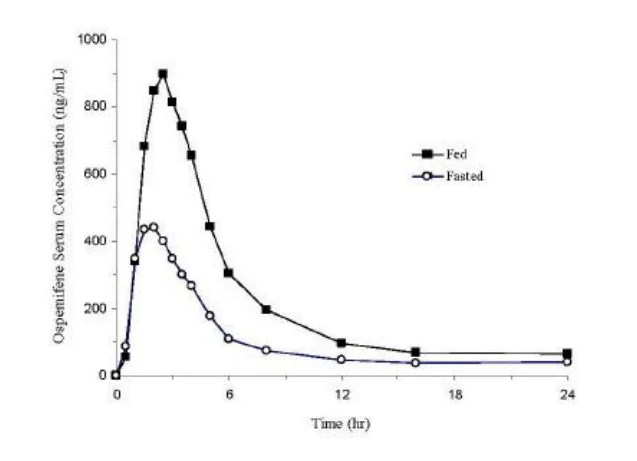
In general, food increased bioavailability of ospemifene by approximately 2-3 fold. In a cross-study comparison, single dose of ospemifene 60 mg tablet administered with a high fat/high calorie meal (860 kcal) in postmenopausal women increased Cmax and AUC0-inf by 2.3- and 1.7-fold, respectively, compared to fasted condition. Elimination half-life and time to maximum concentration (Tmax) were unchanged in the presence of food. In two food effect studies in healthy males using different ospemifene tablet formulations, Cmax and AUC0-inf increased by 2.3- and 1.8-fold, respectively, with a low fat/low calorie meal (300 kcal) and increased by 3.6- and 2.7-fold, respectively, with a high fat/high calorie meal (860 kcal), compared to fasted condition. Ospemifene should be taken with food (see Dosage and Administration section).
Distribution:
Ospemifene is highly (> 99 percent) bound to serum proteins. The apparent volume of distribution is 448 L.
Metabolism:
In vitro experiments with human liver microsomes indicated that ospemifene primarily undergoes metabolism via CYP3A4, CYP2C9 and CYP2C19. The major metabolite was 4-hydroxyospemifene. The apparent total body clearance is 9.16 L/hr using a population approach.
Elimination
The apparent terminal half-life of ospemifene in postmenopausal women is approximately 25 hours. Following an oral administration of ospemifene in postmenopausal women, approximately 75% and 7% of the dose was excreted in feces and urine, respectively. Less than 0.2% of the ospemifene dose was excreted unchanged in urine.
Special Populations and Conditions
- Pediatrics: The pharmacokinetics of ospemifene in pediatric patients has not been evaluated.
- Geriatrics: No differences in ospemifene pharmacokinetics were detected with regard to age (range 40 to 80 years).
- Sex: No significant pharmacokinetics differences have been observed between males and females.
Pregnancy and Breast-feeding: The effects of ospemifene on embryo-fetal development were studied in rats (0.1, 1, or 4 mg/kg/day) and rabbits (3, 10, or 30 mg/kg/day) when treated from implantation through organogenesis. In rabbits, there was an increase in the incidence of total resorptions at 30 mg/kg/day (10 times the human exposure based on the surface area mg/m2). Drug-induced malformations were not observed in either rats or rabbits.
The effects of ospemifene on pre- and post-natal development were studies in pregnant rats (0.01, 0.05, and 0.25 mg/kg/day) treated from implantation through lactation. Pregnant rats given 0.05 or 0.25 mg/kg/day Ospemifene (0.8% to 4% the human exposure based on surface area mg/m2) had significantly prolonged and difficult gestation, increased post-implantation loss, increased number of dead pups at birth, and an increased incidence of post-natal loss. Ospemifene did not induce adverse effects in the surviving offspring of pregnant rats at drug exposures up to 4% the human exposure.
In a non-clinical study, ospemifene was excreted in rat milk and detected at concentrations higher than that in maternal plasma (see Warnings and Precautions, Special Populations section).
- Ethnic Origin: Ethnic origin did not have clinically relevant effect on ospemifene pharmacokinetics.
- Hepatic Insufficiency: Ospemifene is primarily metabolized by the liver. In postmenopausal women with mild hepatic impairment (Child-Pugh Class A), the Cmax and AUC0-inf for ospemifene following a single 60 mg dose administered with a high fat/high calorie meal were lower by 21% and 9.1%, respectively, compared to women with normal hepatic function. In women with moderate hepatic impairment (Child-Pugh Class B), the Cmax and AUC0-inf for ospemifene following a single 60 mg dose administered with a high fat/high calorie meal were higher by 1% and 29%, respectively, compared to women with normal hepatic function. The effect of severe hepatic impairment on the pharmacokinetics of ospemifene has not been evaluated. Osphena should not be used in women with severe hepatic impairment (see Dosage and Administration and Warnings and Precautions sections).
- Renal Insufficiency: In postmenopausal women with severe renal impairment (CrCL < 30 mL/min), the Cmax and AUC0-inf for ospemifene following a single 60 mg dose administered with a high fat/high calorie meal were lower by 21% and higher by 20% respectively. Ospemifene is unlikely to be affected by renal impairment because renal clearance of unchanged drug is a minor pathway of elimination (less than 0.2% of the ospemifene dose is excreted unchanged). Although large pharmacokinetic variability was observed, results indicated that there were no clinically important pharmacokinetic differences between subjects with severe renal impairment and control subjects with normal renal function (see Dosage and Administration section).
11 STORAGE, STABILITY AND DISPOSAL
Store at room temperature (15° to 30°C).
Keep out of reach and sight of children.
12 SPECIAL HANDLING INSTRUCTIONS
This information is not available for this drug product.
PART II: SCIENTIFIC INFORMATION
13 PHARMACEUTICAL INFORMATION
Drug Substance
Proper/Common Name: Ospemifene
Chemical name: Ospemifene
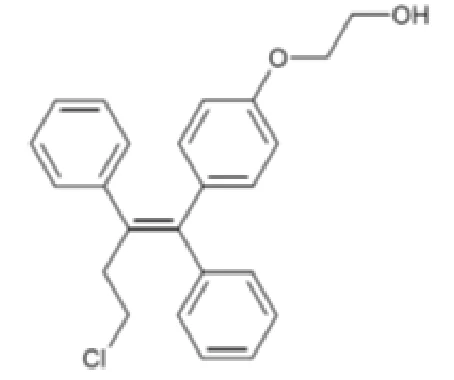
Molecular formula and molecular mass: C24H23ClO2, 378.9 g/mol
Structural formula:
Physicochemical properties:
Ospemifene is a white or almost white, crystalline powder. At room temperature, ospemifene is insoluble in water, freely soluble in acetone, methylehylketone, methylisobutylketone, ethylacetate and tetrahydrofurane, soluble in ethanol, propanol, butanol, butylacetate, toluene and acetonitrile and very slightly soluble in isopropanol. In boiling solvents, ospemifene is insoluble in water and freely soluble in ethanol, isopropanol, n-propanol, butanol, butylacetate, toluene and acetonitrile. The molecule can have two geometrical isomeric forms. Ospemifene is the Z-isomer, which means that the parasubstituted phenyl ring and the chloroalkyl side chain are on the opposite sides of the double bond. No polymorphism was revealed in X-ray powder diffraction studies.
14 CLINICAL TRIALS
14.1 Trial Design and Study Demographics
Table 6 - Summary of patient demographics for phase III clinical trials in postmenopausal women with severe to moderate dyspareunia and/or dryness
| Study # | Study design | Dosage, route of administration and duration | Study subjects (n) | Mean age (Range) | Sex |
| 15-50310 | Multi-center, randomized, double-blind, parallel group, placebo-controlled | Ospemifene 30 mg or 60 mg tablet orally once per day or matching placebo orally once per day | 30 mg: 282 60 mg: 276 Placebo: 268 | 59 (41-80) | Postmenopausal women |
| 15-50821 | Multi-center, randomized, double-blind, parallel group, placebo-controlled | Ospemifene 60 mg tablet orally once per day or matching placebo orally once per day | Ospemifene: 463 Placebo: 456 | 59 (40-79) | Postmenopausal women |
| 1517I0231 | Randomized, double-blind, parallel-group, placebo-controlled | Ospemifene 60 mg orally once per day or matching placebo orally once per day | Ospemifene: 313 Placebo: 314 | 60 (41-80) | Postmenopausal women |
| 15-50718 | Multi-center, randomized, double-blind, parallel group, placebo-controlled | Ospemifene 60 mg tablet orally once per day or matching placebo orally once per day | Ospemifene: 363 Placebo: 63 | 62 (49-79) | Postmenopausal women with an intact uterus |
Study #15-50310 was a 12-week, randomized, double-blind, placebo-controlled, parallel-group study that enrolled 826 generally healthy postmenopausal women between 41 and 80 years of age (mean 59 years of age) who at baseline had ≤5 percent superficial cells on a vaginal smear, a vaginal pH >5.0, and who identified at least one moderate to severe vaginal symptom that was considered the most bothersome to her (vaginal dryness, pain during intercourse (dyspareunia) or vaginal irritation/itching).Treatment groups included 30 mg Osphena (n=282), 60 mg Osphena (n=276), and placebo (n=268). All women were assessed for improvement in the mean change from Baseline to Week 12 for co-primary efficacy variables of: most bothersome symptom (MBS) of vulvar and vaginal atrophy (defined as the individual moderate to severe symptom that was identified by the woman as most bothersome at baseline), percentage of vaginal superficial and vaginal parabasal cells on a vaginal smear, and vaginal pH. Following completion of 12-weeks, women with an intact uterus were allowed to enroll in a 40-week double-blind extension study, and women without an intact uterus were allowed to enroll in a 52-week open-label extension study.
Study #15-50821 was a 12-week, randomized, double-blind, placebo-controlled, parallel-group study that enrolled 919 generally healthy postmenopausal women between 40 and 79 years of age (mean 59 years of age) who, at baseline, had ≤5 percent superficial cells on a vaginal smear, a vaginal pH > 5.0, and who identified either moderate to severe vaginal dryness (dryness cohort) or moderate to severe dyspareunia (dyspareunia cohort) as most bothersome to her at baseline. Treatment groups included 60 mg Osphena (n=463) and placebo (n=456). Primary endpoints and study conduct were similar to those in Study #15-50310.
Study #1517I0231 was a 12-week, randomized, double-blind, placebo-controlled study that enrolled 631 generally healthy postmenopausal women between 41 and 80 years of age (mean 60 years of age) who, at baseline, had ≤5 percent superficial cells on a vaginal smear, a vaginal pH > 5.0 and had moderate to severe vaginal dryness as the self-reported MBS of VVA. Treatment groups included 60 mg Osphena (n=313) and placebo (n=314). All women were assessed for the following primary endpoints of: percentages of parabasal and superficial cells in the maturation index, vaginal pH and severity of MBS of vaginal dryness.
Study #15-50718 was a 52-week, randomized, double-blind, placebo-controlled, long-term safety study that enrolled 426 generally healthy postmenopausal women between 49 and 79 years of age (mean 62 years of age) with an intact uterus. Treatment groups included 60 mg Osphena (n=363) and placebo (n=63).
14.2 Study Results
Study #15-50310:
Study 15-50310 included postmenopausal women who had the following criteria for VVA: 5% or fewer superficial cells confirmed by maturation index in the vaginal smear, at least one moderate or severe symptom of VVA and vaginal pH greater than 5.0.
For the ITT population, ospemifene was found to be effective in the treatment of VVA with an MBS of vaginal dryness and dyspareunia. For all four co-primary endpoints, ospemifene 60 mg/day demonstrated statistically significant superiority over placebo. For all four co-primary endpoints, ospemifene 60 mg/day was more effective than 30 mg/day.
For the modified intent-to-treat population (mITT), results demonstrated a statistically significant improvement in the moderate to severe MBS of dyspareunia (p=0.0012) versus placebo from baseline to Week 12. A statistically significant increase in the proportion of superficial cells and a corresponding statistically significant decrease in the proportion of parabasal cells on a vaginal smear was also demonstrated (p<0.0001) for dyspareunia. The mean reduction in vaginal pH between baseline and Week 12 was also statistically significant (p<0.0001).
The improvement between treatment groups (ospemifene versus placebo) for percentage of parabasal cells, percentage of superficial cells and vaginal pH were also statistically significant and observed at Week 4 and continued at Week 12.
Table 7 - Results of study #15-50310 primary endpoints in the treatment of VVA with MBS of vaginal dryness and dyspareunia in postmenopausal women: mean change from baseline to week 12 (Intent-to-Treat (ITT) population)/Last Observation Carried Forward (LOCF)
| Primary Endpoints | Associated value and statistical significance for ospemifene 60 mg | Associated value for Placebo |
| -30.1% (p<0.001) | 3.98% |
| 10.8% (p<0.001) | 2.18% |
| -1.01% (p<0.001) | -0.10% |
| -1.26 (p<0.05) -1.19 (p<0.05) | -0.84 -0.89 |
a The objective criteria was to decrease parabasal cells.
b The objective criteria was to increase superficial cells.
c The objective criteria was to decrease vaginal pH.
Study #15-50821:
Study 15-50821 included postmenopausal women who had the following criteria: 5% or fewer superficial cells in the maturation index of the vaginal smear, vaginal pH greater than 5.0 and moderate to severe vaginal dryness or dyspareunia as the self-reported MBS.
For the Dyspareunia Stratum (MBS of vaginal pain associated with sexual activity) (Table 9), ospemifene 60 mg daily demonstrated statistically significant superiority over placebo in the ITT population for all 4 co-primary efficacy endpoints with a p-value of ≤ 0.0001.
For the modified intent-to-treat population (mITT), results demonstrated a statistically significant improvement in the moderate to severe MBS of dyspareunia (p<0.0001) versus placebo from baseline to Week 12. A statistically significant increase in the proportion of superficial cells and a corresponding statistically significant decrease in the proportion of parabasal cells on a vaginal smear was also demonstrated (p<0.0001) for dyspareunia. The mean reduction in vaginal pH between baseline and Week 12 was also statistically significant (p<0.0001).
The improvement between the ospemifene 60 mg and placebo treatment groups for percentage of parabasal cells, percentage of superficial cells and vaginal pH were also statistically significant and observed at Week 4 and continued at Week 12.
With LOCF analysis, for the Dryness Stratum (MBS of vaginal dryness) (Table 8), ospemifene 60 mg daily demonstrated statistically significant superiority over placebo in the ITT population for all co-primary efficacy endpoints except for severity of the MBS of vaginal dryness, for which ospemifene approaches statistical significance (p=0.0803) in the intent-to-treat (ITT) population and was statistically significantly superior to placebo in the per-protocol (PP) population (p=0.0143). When the analysis was redone using GEE analysis instead of LOCF, the odds ratio for change from baseline in severity of the MBS of vaginal dryness at Week 12 was 1.84 (p=0.0081). Therefore, subjects in the ospemifene group had a statistically significant greater likelihood (1.84 times) of a decrease in severity of the MBS of vaginal dryness compared with the placebo group at Week 12.
Table 8 - Results of study #15-50821 primary endpoints in the treatment of VVA in postmenopausal women (Dryness Stratum): mean change from baseline to week 12 (ITT population)/LOCF
| Primary Endpoints | Associated value and statistical significance for ospemifene 60 mg | Associated value for Placebo |
p-value vs placebo | -31.7 ± 2.11 (p<0.0001) | -3.9 ± 2.18 |
p-value vs placebo | 7.0 (-4, 65) (p<0.0001) | 0.0 (-11, 57) |
p-value vs placebo | -0.95 ± 0.067 (p<0.0001) | -0.25 ± 0.068 |
| p=0.0803d 23 (14.4%) 51 (31.9%) 39 (24.4%) 44 (27.5%) 3 (1.9%) | 14 (9.1%) 39 (25.3%) 52 (33.8%) 44 (28.6%) 5 (3.2%) |
a The objective criteria was to decrease parabasal cells.
b The objective criteria was to increase superficial cells.
c The objective criteria was to decrease vaginal pH.
d Calculated using the LOCF analysis. When the analysis was redone using GEE analysis instead of LOCF, the odds ratio for change from baseline in severity of the MBS of vaginal dryness at Week 12 was 1.84 (p=0.0081).
Table 9 - Results of study #15-50821 primary endpoints in the treatment of VVA in postmenopausal women (Dyspareunia Stratum): mean change from baseline to week 12 (ITT population)/LOCF
| Primary Endpoints | Associated value and statistical significance for ospemifene 60 mg | Associated value for Placebo |
p-value vs placebo | -40.3 ± 1.56 (p<0.0001) | -0.4 ± 1.57 |
p-value vs placebo | 7.0 (-6, 79) (p<0.0001) | 0.0 (-5, 85) |
p-value vs placebo | -0.94 ± 0.050 (p<0.0001) | -0.07 ± 0.050 |
| p=0.0001 67 (22.1%) 93 (30.7%) 82 (27.1%) 55 (18.2%) 6 (2.0%) | 47 (15.6%) 70 (23.2%) 76 (25.2%) 102 (33.8%) 7 (2.3%) |
a The objective criteria was to decrease parabasal cells.
b The objective criteria was to increase superficial cells.
c The objective criteria was to decrease vaginal pH.
Study #1517I0231:
Study 1517I0231 included postmenopausal women with the following criteria: 5% or fewer superficial cells in the maturation index of the vaginal smear, vaginal pH > 5.0 and moderate to severe vaginal dryness as the self-reported MBS of VVA.
Ospemifene was found to be effective in the treatment of VVA in subjects with the most bothersome
VVA symptom of vaginal dryness. Ospemifene 60 mg daily demonstrated statistically significant superiority over placebo in the ITT population for all co-primary efficacy endpoints. The MBS of vaginal dryness was statistically significant improved at Week 4 and continued to Weeks 8 and 12. Ospemifene was also reconfirmed to be effective in the treatment of VVA with symptoms of severe or moderate vaginal pain associated with sexual activity.
Table 10 - Results of study #1517I0231 primary endpoints in the treatment of VVA in postmenopausal women with vaginal dryness as MBS: mean change from baseline to week 12 (ITT population)/Generalized Estimating Equations (GEE)
| Primary Endpoints | Associated value and statistical significance for ospemifene 60 mga | Associated value for Placebo |
p-value vs placebo | -23.7 ± 1.4 (p<0.0001) | -1.9 ± 1.4 |
p-value vs placebo | 7.8 ± 0.7 (p<0.0001) | 0.6 ± 0.7 |
p-value vs placebo | -1.01 ± 0.04 (p<0.0001) | -0.29 ± 0.04 |
| (p<0.0001) 39 (14.1%) 73 (26.4%) 94 (33.9%) 70 (25.3%) 1 (0.4%) | 15 (5.3%) 63 (22.4%) 94 (33.5%) 99 (35.2%) 10 (3.6%) |
a MMRM model for changes in percentages of parabasal and superficial cells in the maturation index and in vaginal pH; GEE model for changes in percentages of MBS of vaginal dryness.
b The objective criteria was to decrease parabasal cells.
c The objective criteria was to increase superficial cells.
d The objective criteria was to decrease vaginal pH.
Study #15-50718:
The results of the study demonstrated that ospemifene 60 mg once daily was effective, safe and well-tolerated in relieving the signs of VVA in postmenopausal women with an intact uterus. The beneficial effects were sustained over a treatment period of 1 year.
Table 11 - Results of study #15-50718 primary endpoints in the treatment of vulvar and vaginal atrophy (VVA) in postmenopausal women: mean changes from baseline to week 12 (ITT population)/LOCF
| Primary Endpoints | Associated value and statistical significance for ospemifene 60 mg | Associated value for Placebo |
Percentage of parabasal cells in the MI (median (range))a p-value vs placebo | -40 (-100 to 75) (p<0.0001) | 0 (-90 to 98) |
Percentage of superficial cells in the maturation index (MI) (median (range))b p-value vs placebo | 5 (-5 to 60) (p<0.0001) | 0 (-5 to 28) |
Vaginal pH (mean (SD))c p-value vs placebo | -1.21 (0.912) (p<0.0001) | -0.16 (0.945) |
a The objective criteria was to decrease parabasal cells.
b The objective criteria was to increase superficial cells.
c The objective criteria was to decrease vaginal pH.
15 MICROBIOLOGY
No microbiological information is required for this drug product.
16 NON-CLINICAL TOXICOLOGY
General Toxicology:
Single-dose Toxicity:
Three (3) preclinical single dose toxicity studies of ospemifene were conducted in the rat, hamster and minipig.
In the rat and hamster, ospemifene was well-tolerated. No drug-induced mortality/morbidity or abnormal clinical signs were detected. The acute oral toxicity of ospemifene was low. In the rat and hamster, the no observed effect level (NOEL) was more than 2 000 mg/kg and 1 000 mg/kg, respectively.
In the minipig, ospemifene was well-tolerated at single doses up to 500 mg/kg/day in the female minipig; no drug-induced mortality/morbidity or clinical signs were detected. Based on AUC values, the animal exposure increased dose-proportionally from 15 to 50 mg/kg but less than dose-proportionally when the dose was increased further. The NOEL was more than 500 mg/kg.
Repeated-dose Toxicity:
Two (2) preclinical repeated-dose toxicity studies of ospemifene were conducted in the rat and monkey and support the market authorization.
In a 26-week toxicity study in the female Sprague Dawley rats, daily doses of 3, 30 or 300 mg/kg/day were administered by gavage. There were no unscheduled deaths or clinical signs of toxicity. A reduction in mean body weight gain was found in all groups receiving ospemifene, with reductions of 9-11% compared to control; this was accompanied by reduced food consumption throughout the study. A marginal increase in relative liver weights (6-10%) was detected at intermediate and high doses. The main treatment-related effects were observed in the reproductive tract: relative uterus weights were decreased in all treated groups, with a thin uterus observed macroscopically due to atrophy of the endometrial stroma in all animals at all dose levels. Endometrial epithelial hypertrophy/hyperplasia was noted in all treated animals. Relative ovary weights were decreased at the lowest dose, and increased at the highest dose, with a dose-related trend of increased number of cysts considered to be due to cyclic arrest of the ovaries in the follicular stage. In 4/20 high-dose animals, there was cystopapillary hyperplasia of the granulosa cells within the cystic follicles resembling the early phase of neoplasia. In the vagina, the incidence of mucification increased dose-dependently (from 5% to 95%). In the mammary gland, ductal hypertrophy was observed in 4/20 and 12/19 intermediate and high dose animals, respectively. In the pituitary, vacuolation increased dose-dependently in treated animals. Hypertrophy of hepatic cells was found in the high dose animals, and is considered to be a physiological adaptive change to the increased metabolic activity. The changes in the reproductive organs are in line with the SERM-like activity of ospemifene and can be considered to be exaggerated pharmacological actions. The NOEL was < 3 mg/kg/day and NOAEL was ≥ 300 mg/kg/day of ospemifene (with respect to human postmenopausal safety).
In a 39-week toxicity study in female cynomolgus monkeys, ospemifene was administered by gavage at doses of 15, 50 or 150 mg/kg/day. There were no unscheduled deaths or clinical signs. Body weight gain and food consumption were considered to be not affected by treatment. Oral administration of ospemifene at any dose did not produce any major toxicity. Principal drug-related findings included organ weight changes of ovaries, macroscopic necropsy findings of ovarian cysts, and histopathological changes in the ovary, uterus, vagina and mammary gland of dosed females. These findings are considered to be exaggerated pharmacological effects of repeated doses of ospemifene. Elevated serum estradiol levels and ovarian findings suggest that hormonal imbalance was induced in the fertile monkey. Drug-related changes in ALT levels and elevated hepatic glycogen storage across all treated groups may be also related to the SERM-like hepatic activity of ospemifene. Singly elevated γ-GT levels are of unclear origin as no liver toxicity was seen in histopathological studies. Animal exposure to ospemifene increased with increasing dose but less than dose-proportionally. The exposure to the active metabolite was at the same level as the parent drug at the two lowest dose levels but increased at the highest dose level, maybe due to increased metabolism. The NOEL was < 15 mg/kg/day and the NOAEL ≥ 150 mg/kg/day.
Carcinogenicity:
In a 2-year carcinogenicity study in female mice, ospemifene was orally administered at 100, 400, or 1500 mg/kg/day. No evaluation for carcinogenicity was conducted in male mice. There was significant increase in adrenal subcapsular cell adenomas at 4 and 5 times the human exposure based on AUC, and adrenal cortical tumors at 5 times the human exposure. In the ovary, an increase in sex cord/stromal tumors, tubulostromal tumors, granulosa cell tumors, and luteomas were also seen. These findings occurred at doses 2 to 5 times the human exposure based on AUC, and are probably related to estrogenic/antiestrogenic effect of ospemifene in mice.
In a 2-year carcinogenicity study in rats, ospemifene was administered at 10, 50, or 300 mg/kg/day. A significant increase in thymomas was recorded for males and thymomas for females at all ospemifene dose levels, or 0.3 to 1.2 times the human exposure based on AUC. In the liver, an increase in hepatocellular tumors were recorded for females at all ospemifene dose levels.
Genotoxicity:
Ospemifene was not genotoxic in vitro in the Ames test in strains of Salmonella typhimurium or at the thymidine kinase (tk) locus of mouse lymphoma L5178Y cells in the absence and in the presence of a metabolic activator system. In in vivo testing, ospemifene was not genotoxic in a standard mouse bone marrow micronucleus test or in a determination of DNA adducts in the liver of rats.
Reproductive and Developmental Toxicology:
The effect of ospemifene on fertility was not directly evaluated. In female rats and monkeys, decreases in ovarian and uterine weights, decreased corpora lutea number, increased ovarian cysts, uterine atrophy, and disrupted cycles were observed when given repeated daily oral doses. In male rats, atrophy of the prostate and seminal vesicles was noted. The effects on reproductive organs observed in animals are consistent with the estrogen receptor activity of ospemifene and potential for impairment of fertility.
The embryo-fetal studies with ospemifene did not reveal any teratogenic effects. In the two-generation reproductive study in Han Wistar rats, ospemifene did not induce adverse effects in the F1 generation even at the highest dose tested (0.25 mg/kg/day). However, dose range-finding studies revealed that ospemifene doses of 1 mg/kg/day or higher caused severe impairment in maternal body weight gain, dam deaths at delivery, increased post-implantation losses and pup deaths. This reproductive toxicity may be partly explained by the observed severe reduction in body weight gain, but probably the hormonal properties of ospemifene were involved in causing the disability to normal delivery.
In the milk, ospemifene was detected in 2 of 3 animals in the 0.05 mg/kg/day group (6.2 or 7.7 ng/mL, 7.0 in average), and in 3 or 3 animals in the 0.25 mg/kg/day group (15.1-37.2 ng/mL, 24.0 in average). Compared to human average ospemifene plasma level, 654 ng/mL, at clinical doses in steady state, the dam exposure was low.