


Product Monograph - Oxybutynin (Apotex)
SUMMARY PRODUCT INFORMATION
| Route of Administration | Dosage Form / Strength | All Nonmedicinal Ingredients |
| Oral | Tablet, 5 mg | lactose, magnesium stearate, microcrystalline cellulose and FD&C blue #1 Aluminum Lake |
| Syrup, 1 mg/mL | artificial berry flavour, citric acid monohydrate, glycerine, methyl paraben, purified water, sodium citrate dihydrate, sorbitol, sucrose and FD&C green #3 |
INDICATIONS AND CLINICAL USE
OXYBUTYNIN/OXYBUTYNIN SYRUP (oxybutynin chloride) is indicated for the relief of symptoms associated with voiding in patients with uninhibited neurogenic bladder and reflex neurogenic bladder (i.e. urgency, frequency, urinary leakage, urge incontinence, dysuria).
Geriatrics (> 65 years of age):
Clinical studies of oxybutynin chloride did not include sufficient numbers of subjects aged 65 and over to determine whether they respond differently from younger patients. Other reported clinical experience has not identified differences in responses between healthy elderly and younger patients.
Pediatrics (< 5 years of age):
The safety and effectiveness of oxybutynin chloride in pediatric patients under 5 years of age have not been established.
CONTRAINDICATIONS
OXYBUTYNIN/OXYBUTYNIN SYRUP (oxybutynin chloride) is contraindicated in patients with urinary retention, gastric retention and other severe decreased gastrointestinal motility conditions, uncontrolled narrow-angle glaucoma, and in patients who are at risk for these conditions.
OXYBUTYNIN/OXYBUTYNIN SYRUP is contraindicated in patients who have demonstrated hypersensitivity to the drug substance or other components of the product. For a complete listing of the nonmedicinal ingredients, see the DOSAGE FORMS, COMPOSITION AND PACKAGING section of the Product Monograph.
WARNINGS AND PRECAUTIONS
General
Anticholinergics, such as OXYBUTYNIN/OXYBUTYNIN SYRUP, can cause heat prostration (fever and heat stroke due to decreased sweating) when administered in the presence of high environmental temperature.
Because anticholinergic agents, such as OXYBUTYNIN/OXYBUTYNIN SYRUP may produce drowsiness or blurred vision, the patient should be cautioned regarding activities requiring mental alertness, such as operating a motor vehicle or other machinery or performing hazardous work while taking this drug.
Alcohol or other sedative drugs may enhance the drowsiness caused by anticholinergic agents such as OXYBUTYNIN/OXYBUTYNIN SYRUP.
Pretreatment examinations should include cystometry and other appropriate diagnostic procedures. Cystometry should be repeated at appropriate intervals to evaluate response to therapy. The appropriate antibiotic therapy should be instituted in the presence of infection.
Carcinogenesis and Mutagenesis
See Product Monograph Part II: TOXICOLOGY, Carcinogenesis and Mutagenesis, for discussion on animal data.
Cardiovascular
The symptoms of coronary heart disease, congestive heart failure, cardiac arrhythmias, tachycardia and hypertension may be aggravated following administration of OXYBUTYNIN/OXYBUTYNIN SYRUP.
Endocrine and Metabolism
The symptoms of hyperthyroidism and prostatic hypertrophy may be aggravated following administration of OXYBUTYNIN/OXYBUTYNIN SYRUP.
Gastrointestinal
OXYBUTYNIN/OXYBUTYNIN SYRUP should be administered with caution to patients with gastrointestinal obstructive disorders because of the risk of gastric retention (see CONTRAINDICATIONS).
Administration of OXYBUTYNIN/OXYBUTYNIN SYRUP to patients with severe ulcerative colitis may precipitate toxic megacolon.
OXYBUTYNIN/OXYBUTYNIN SYRUP, like other anticholinergic drugs, may decrease gastrointestinal motility and should be used with caution in patients with conditions such as ulcerative colitis and intestinal atony (see CONTRAINDICATIONS).
OXYBUTYNIN/OXYBUTYNIN SYRUP should be used with caution in patients who have gastroesophageal reflux and/or who are concurrently taking drugs (such as bisphosphonates) that can cause or exacerbate esophagitis.
Genitourinary
OXYBUTYNIN/OXYBUTYNIN SYRUP should be administered with caution to patients with clinically significant bladder obstruction because of the risk of urinary retention (see CONTRAINDICATIONS).
Hepatic
OXYBUTYNIN/OXYBUTYNIN SYRUP should be used with caution in patients with hepatic disease.
Neurologic
OXYBUTYNIN/OXYBUTYNIN SYRUP, like other anticholinergic drugs, should be used with caution in patients with pre-existing dementia treated with cholinesterase inhibitors due to the risk of aggravation of symptoms.
OXYBUTYNIN /OXYBUTYNIN SYRUP should be used with caution in patients with myasthenia gravis.
Renal
OXYBUTYNIN/OXYBUTYNIN SYRUP should be used with caution in patients with renal disease.
Special Populations
Pregnant Women: The safety of oxybutynin chloride in pregnancy has not been established.
Therefore, OXYBUTYNIN/OXYBUTYNIN SYRUP should not be used in women of child-bearing potential, unless, in the opinion of the physician, the expected benefit to the patient outweighs the possible risk to the fetus.
Nursing Women: It is not known whether this drug is excreted in human milk. Because many drugs are excreted in human milk, caution should be exercised when OXYBUTYNIN/OXYBUTYNIN SYRUP is administered to a nursing woman.
Pediatrics (< 5 years of age): Because the safety of oxybutynin chloride in children under the age of 5 has not been established, use of the drug in this age group is not recommended.
Geriatrics (> 65 years of age): OXYBUTYNIN/OXYBUTYNIN SYRUP should be used with caution in the frail elderly.
ADVERSE REACTIONS
Adverse Drug Reaction Overview
The most common adverse events reported were the expected side effects of anticholinergic agents which include but are not limited to dry mouth, constipation and blurred vision. The incidence of dry mouth was dose related.
Clinical Trial Adverse Drug Reactions
Because clinical trials are conducted under very specific conditions the adverse reaction rates observed in the clinical trials may not reflect the rates observed in practice and should not be compared to the rates in the clinical trials of another drug. Adverse drug reaction information from clinical trials is useful for identifying drug-related adverse events and for approximating rates.
The safety and efficacy of oxybutynin chloride were evaluated in a total of 199 patients in three clinical trials comparing oxybutynin chloride with oxybutynin chloride (extended-release tablets)(see Table 1.1). These participants were treated with oxybutynin chloride 5-20 mg/day for up to 6 weeks. Table 1.1 shows the incidence of adverse events judged by investigators to be at least possibly related to treatment and reported by at least 1% of patients.
Table 1.1: Incidence (%) of Adverse Events Reported by ≥1% of Patients Using Oxybutynin chloride (5-20 mg/day)
| Body System | |
| Adverse Event | |
| Oxybutynin chloride (5-20 mg/day) (n=199) | |
| Infections and Infestations | |
| Urinary tract infection | 6.5% |
| Nasopharyngitis | 1.5% |
| Upper respiratory tract infection | 2.5% |
| Bronchitis | 2.0% |
| Cystitis | 1.0% |
| Fungal infection | 1.0% |
| Metabolism and Nutrition Disorders | |
| Fluid retention | 1.0% |
| Psychiatric Disorders | |
| Insomnia | 5.5% |
| Nervousness | 6.5% |
| Confusional state | 2.5% |
| Nervous System Disorders | |
| Headache | 7.5% |
| Somnolence | 14.1% |
| Dizziness | 16.6% |
| Dysgeusia | 1.5% |
| Sinus headache | 2.0% |
| Eye Disorders | |
| Keratoconjunctivitis sicca | 2.5% |
| Vision blurred | 9.6% |
| Eye irritation | 1.0% |
| Cardiac Disorders | |
| Palpitations | 4.5% |
| Sinus arrhythmia | 1.0% |
| Vascular Disorders | |
| Flushing | 1.0% |
| Respiratory, Thoracic and | |
| Nasal drying | 4.5% |
| Mediastinal Disorders | |
| Cough | 3.0% |
| Pharyngolaryngeal pain | 1.5% |
| Dry throat | 2.5% |
| Sinus congestion | 2.0% |
| Hoarseness | 1.0% |
| Asthma | 1.0% |
| Nasal congestion | 2.0% |
| Gastrointestinal Disorders | |
| Dry mouth | 71.4% |
| Constipation | 15.1% |
| Diarrhea | 3.5% |
| Nausea | 11.6% |
| Dyspepsia | 6.0% |
| Abdominal pain | 2.5% |
| Loose stools | 3.0% | |
| Flatulence | 2.5% | |
| Vomiting | 1.5% | |
| Abdominal pain upper | 3.0% | |
| Dysphagia | 1.5% | |
| Aptyalism | 1.0% | |
| Eructation | 1.0% | |
| Tongue coated | 1.0% | |
Skin and Subcutaneous Tissue Disorders | Dry skin | 3.0% |
| Pruritus | 1.5% | |
Musculoskeletal and Connective Tissue Disorders | Back pain | 2.0% |
| Arthralgia | 2.0% | |
| Pain in extremity | 1.0% | |
| Flank pain | 1.0% | |
| Renal and Urinary Disorders | Urinary retention | 6.0% |
| Urinary hesitation | 8.5% | |
| Dysuria | 2.5% | |
| Pollakiuria | 1.0% | |
General Disorders and Administration Site Conditions | Fatigue | 3.0% |
| Edema peripheral | 4.0% | |
| Asthenia | 2.5% | |
| Pain | 1.0% | |
| Thirst | 1.0% | |
| Edema | 1.0% | |
| Investigations | Blood pressure increased | 1.5% |
| Blood glucose increased | 1.5% | |
| Blood pressure decreased | 1.0% | |
| Injury, Poisoning and Procedural Complications | Fall | 1.0% |
In addition, the following adverse events were reported by <1% of patients using oxybutynin chloride (5-20 mg/day) in all studies:
Gastrointestinal Disorders: gastroesophageal reflux disease; General Disorders and Administration Site Conditions: chest pain; Infections and Infestations: sinusitis.
Other adverse events that have been reported include: tachycardia, hallucinations, cycloplegia, mydriasis, impotence, suppression of lactation, rash, decreased gastrointestinal motility, convulsions, decreased sweating, difficulty swallowing, increased ocular tension, chest pain, syncope, nose bleed, weakness, mood changes, anorexia, bloated feeling, interference with normal heat regulation, severe allergic reactions or drug idiosyncrasies including urticaria and other dermal manifestations.
DRUG INTERACTIONS
Overview
The concomitant use of oxybutynin with other anticholinergic drugs or with other agents which produce dry mouth, constipation, somnolence (drowsiness), and/or other anticholinergic-like effects may increase the frequency and/or severity of such effects.
Anticholinergic agents may potentially alter the absorption of some concomitantly administered drugs due to anticholinergic effects on gastrointestinal motility. This may be of concern for drugs with a narrow therapeutic index.
Drug-Drug Interactions
Mean oxybutynin plasma concentrations were approximately 3- to 4-fold higher when oxybutynin chloride was administered with ketoconazole, a potent CYP3A4 inhibitor.
Other inhibitors of the cytochrome P450 3A4 enzyme system, such as antimycotic agents (e.g., itraconazole and miconazole) or macrolide antibiotics (e.g., erythromycin and clarithromycin), may alter oxybutynin mean pharmacokinetic parameters (i.e., Cmax and AUC). The clinical relevance of such potential interactions is not known. Caution should be used when such drugs are co-administered.
Drug-Food Interactions
Oxybutynin solution co-administered with food resulted in a slight delay in absorption and an increase in its bioavailability by 25%.
Drug-Herb Interactions
Interactions with herbal products have not been established.
Drug-Lifestyle Interactions
Alcohol may enhance the drowsiness caused by anticholinergic agents such as oxybutynin.
DOSAGE AND ADMINISTRATION
Dosing Considerations
In elderly and debilitated patients, it is advisable to initiate treatment at the lowest recommended dosage and to increase the dosage carefully according to tolerance and response.
Recommended Dose and Dosage Adjustment
Adults
The usual dose is one 5 mg tablet or one teaspoon (5 mL) syrup two to three times a day. The maximum recommended dose is one 5 mg tablet or one teaspoon (5 mL) syrup four times a day.
Children Over 5 Years of Age
The usual dose is one 5 mg tablet or one teaspoon (5 mL) syrup two times a day. The maximum recommended dose is one 5 mg tablet or one teaspoon (5 mL) syrup three times a day.
Missed Dose
The missed dose should be taken as soon as possible. If it is almost time for the next dose, the missed dose should not be taken. Instead, the next scheduled dose should be taken. Doses should not be doubled.
OVERDOSAGE
The symptoms of overdosage with OXYBUTYNIN/OXYBUTYNIN SYRUP may be any of those seen with other anticholinergic agents. Symptoms may include signs of central nervous system excitation (eg., convulsions, restlessness, tremor, irritability, delirium, hallucinations), flushing, fever, nausea, vomiting, tachycardia, hypotension or hypertension, respiratory failure, paralysis, dehydration, cardiac arrhythmia, urinary retention and coma.
In the event of an overdose or exaggerated response, treatment should be symptomatic and supportive. Induce emesis or perform gastric lavage (emesis is contraindicated in precomatose, convulsive, or psychotic state) and maintain respiration. Activated charcoal may be administered as well as magnesium sulphate. Physostigmine may be considered to reverse symptoms of anticholinergic intoxication. Hyperpyrexia may be treated symptomatically with ice bags or other cold applications and alcohol sponges.
Ingestion of 100 mg oxybutynin chloride in association with alcohol has been reported in a 13- year-old boy who experienced memory loss, and a 34-year-old woman who developed stupor, followed by disorientation and agitation on awakening, dilated pupils, dry skin, cardiac arrhythmia, and retention of urine. Both patients fully recovered with symptomatic treatment.
ACTION AND CLINICAL PHARMACOLOGY
Mechanism of Action
Oxybutynin chloride is a tertiary amine anticholinergic agent which exerts antimuscarinic as well as direct antispasmodic action on smooth muscle. In vitro studies have shown that its anticholinergic effects are weaker than those of atropine, but it possesses greater antispasmodic activity. No blocking effects occur at skeletal neuromuscular junctions or in autonomic ganglia (no antinicotinic effects).
In addition to its smooth muscle relaxing effects, oxybutynin chloride exerts an analgesic and a local anesthetic effect. In animal studies, the central nervous system and cardiovascular actions of oxybutynin chloride were shown to be similar to but weaker than those of atropine.
Oxybutynin chloride relaxes bladder smooth muscle. In patients with uninhibited neurogenic and reflex neurogenic bladder, cystometric studies have demonstrated that oxybutynin chloride increases bladder (vesical) capacity, diminishes the frequency of uninhibited contractions of the detrusor muscle, and delays the initial desire to void. Oxybutynin chloride thus decreases urgency and the frequency of both incontinent episodes and voluntary urination. These effects are more consistently improved in patients with uninhibited neurogenic bladder.
Pharmacokinetics
Absorption: Following oral administration of OXYBUTYNIN/OXYBUTYNIN SYRUP, oxybutynin chloride is rapdily absorbed achieving Cmax within an hour, following which plasma concentration decreases with an effective half-life of approximately 2 to 3 hours. The absolute bioavailability of oxybutynin chloride is reported to be about 6% (range 1.6% to 10.9%) for both the tablet and syrup. Wide interindividual variation in pharmacokinetic parameters is evident following oral administration of oxybutynin.
The mean pharmacokinetic parameters for R- and S-oxybutynin are summarized in Table 1.2.
Table 1.2: Mean (SD) R- and S-Oxybutynin Pharmacokinetic Parameters Following Three Doses of oxybutynin chloride 5 mg Administered Every 8 Hours (n = 23)
| Parameters (units) | R-Oxybutynin | S-Oxybutynin |
| Cmax (ng/mL) | 3.6 (2.2) | 7.8 (4.1) |
| Tmax (h) | 0.89 (0.34) | 0.65 (0.32) |
| AUCt (ng•h/mL) | 22.6 (11.3) | 35.0 (17.3) |
| AUCinf (ng•h/mL) | 24.3 (12.3) | 37.3 (18.7) |
Data in the literature suggests that oxybutynin solution co-administered with food resulted in a slight delay in absorption and an increase in its bioavailability by 25% (n=18).
Distribution: Plasma concentrations of oxybutynin decline biexponentially following intravenous or oral administration. The volume of distribution is 193 L after intravenous administration of 5 mg oxybutynin chloride.
Metabolism: Oxybutynin is metabolized primarily by the cytochrome P450 enzyme systems, particularly CYP3A4 found mostly in the liver and gut wall. Its metabolic products include phenylcyclohexylglycolic acid, which is pharmacologically inactive, and desethyloxybutynin, which is pharmacologically active.
Excretion: Oxybutynin is extensively metabolized by the liver, with less than 0.1% of the administered dose excreted unchanged in the urine.
STORAGE AND STABILITY
Store at room temperature (15°C to 30°C) in tight, light-resistant containers.
DOSAGE FORMS, COMPOSITION AND PACKAGING
Dosage Forms and Packaging
OXYBUTYNIN (oxybutynin chloride) 5 mg tablets: each blue, biconvex, scored tablet contains 5 mg of oxybutynin chloride. Available in bottles of 100 and 500.
OXYBUTYNIN SYRUP: each 5 ml of green coloured syrup contains 5 mg of oxybutynin chloride. in bottles of 473 ml.
Composition
OXYBUTYNIN (oxybutynin chloride) tablets contain the following non-medicinal ingredients: lactose, magnesium stearate, microcrystalline cellulose and FD&C blue #1 Aluminum Lake.
OXYBUTYNIN SYRUP contains the following non-medicinal ingredients: artificial berry flavour, citric acid monohydrate, glycerine, methyl paraben, purified water, sodium citrate dihydrate, sorbitol, sucrose and FD&C green #3.
PART II: SCIENTIFIC INFORMATION
PHARMACEUTICAL INFORMATION
Drug Substance
Common Name: Oxybutynin chloride
Chemical Names: 1) Benzeneacetic acid, a-cyclohexyl-a-hydroxy-,
4-(diethylamino)-2-butynyl ester hydrochloride, (±)-
- 2) 4-(Diethylamino)-2-butynyl (±)-a-phenylcyclohexane• glycolate hydrochloride.
Structural Formula:
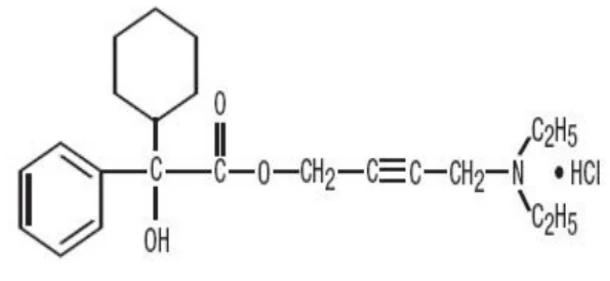
Molecular Formula: C22H31NO3.HCl
Molecular Weight: 393.95 g/mol
Description: White, crystalline, practically odourless powder with a melting point of 124 to 129°C. Oxybutynin chloride is freely soluble in water and in alcohol; very soluble in methanol and in chloroform; soluble in acetone; slightly soluble in ether; very slightly soluble in hexane.
CLINICAL TRIALS
Comparative Bioavailability Studies
A two-way, single-dose, open-label, randomized, crossover comparative bioavailability study of OXYBUTYNIN 5 mg tablets (Apotex Inc.) with Ditropan® 5 mg tablets (Janssen Inc.) was conducted in healthy, adult, male subjects under fasting conditions. Comparative bioavailability data from 18 subjects that were included in the statistical analysis are presented in the following table:
SUMMARY TABLE OF THE COMPARATIVE BIOAVAILABILITY DAT
Oxybutynin (2 x 5 mg) Geometric Mean Arithmetic Mean (CV%) | ||||
| Parameter | Test1 | Reference2 | % Ratio of Geometric Means | 90% Confidence Interval |
AUCT (ng·h/mL) | 16.78 20.12 (69.80) | 15.96 19.04 (69.38) | 105 | 95 – 115 |
AUCI (ng·h/mL) | 18.17 21.54 (66.11) | 17.46 20.39 (65.57) | 104 | 95 - 115 |
Cmax (ng/mL) | 9.97 12.16 (64.56) | 9.68 11.55 (75.13) | 103 | 83 - 120 |
Tmax3 (h) | 0.58 (41.05) | 0.50 (41.26) | ||
T1/24 (h) | 1.49 (26.93) | 1.46 (23.95) | ||
1 OXYBUTYNIN (oxybutynin chloride) tablets, 5 mg (Apotex Inc.)
2 Ditropan® (oxybutynin chloride) tablets, 5 mg (Janssen Inc.)
3 Expressed as the median (CV%) only
4 Expressed as the arithmetic mean (CV%) only
Oxybutynin chloride was well tolerated in patients administered the drug in controlled studies of 30 days duration. Oxybutynin chloride has been used clinically for more than 20 years and has proven to be effective and relatively well tolerated for the relief of symptoms associated with overactive bladder.
DETAILED PHARMACOLOGY
Animal Pharmacology
In Vitro
In a series of in vitro tests, oxybutynin chloride was found to be more effective than propantheline, methantheline and atropine in inhibiting barium chloride-induced contractions in rabbit bladder detrusor muscle. It was, however, less active than the other drugs in inhibiting contractions caused by histamine and carbamylcholine.
In Vivo
Oxybutynin chloride was more effective than atropine in relieving morphine-induced spasm in the anesthetized dog. Atropine had a partial effect, presumably due to the musculotropic component of its action, while methscopolamine, a neurotropic compound, was ineffective. Against neostigmine-induced spasm, oxybutynin chloride showed about 15% of the potency of atropine. These results suggest that the major antispasmodic activity of oxybutynin chloride is musculotropic rather than neurotropic.
Oxybutynin chloride was less potent than atropine in producing mydriasis in the mouse and in inhibiting the sialogogic response in dogs.
In tests for analgesic activity, oxybutynin chloride was shown to be 35% as potent as codeine in the mouse tail-clip test and approximately equal to acetylsalicylic acid in the acetic acid stretch test. It was approximately twice as potent as lidocaine in producing local anesthesia in the rabbit cornea.
Oxybutynin chloride was less potent than atropine but similar in potency to methscopolamine in producing characteristic anticholinergic CNS effects in dogs. The cardiovascular actions of oxybutynin in the anesthetized dog were also relatively weak.
Using oxybutynin chloride doses at least seven times greater than the maximum recommended therapeutic dosage, the following results were obtained in various drug interaction tests: Dicumarol effects were potentiated; hexobarbital sleep time was not significantly affected; zoxazolamine paralysis time was not significantly affected; there were no effects on aniline or hexobarbital hydroxylation; O-demethylation of codeine was possibly inhibited; the nitro-reduction of p-aminobenzoic acid was stimulated; and oxyphenbutazone metabolism was not affected.
TOXICOLOGY
Acute Toxicity
A summary of the acute toxicity studies performed with oxybutynin chloride is presented in Table 2.1.
Table 2.1: Single dose toxicity studies with oxybutynin chloride
| Species | Route | LD50 (95% C.L.)* | Slope (95% C.L.)* |
| Mouse | p.o. | 1550 mg/kg (1372-1751) | 1.69 (1.48-1.93) |
| Mouse | i.p. | 260 mg/kg (186-346) | 2.20 (1.6- 3.1) |
| Mouse | i.v. | 40 mg/kg (36-45) | 1.25 (1.1-1.4) |
| Rat | p.o. | 1600 mg/kg (1176-2176) | 1.94 (1.39 - 2.72) |
| Rat | i.p. | 430 mg/kg (371-499) | 1.32 (1.2-1.4) |
| Newborn rat | p.o. | 560 mg/kg (528-594) | 1.07 (0.82 - 1.39) |
| Approximate Minimum Lethal Dose | |||
| Dog | i.v. | >25 but <50 mg/kg | |
| Dog | p.o. | >750 but <1000 mg/kg | |
| * 95% confidence limits; | |||
Signs and symptoms of toxicity in mice and rats were exophthalmos, CNS stimulation, ataxia and convulsions. In rats receiving the drug orally, intraocular tension was increased in some animals at each dose level. Females were more susceptible to toxicity and mortality than males. In newborn rats, laboured respiration and decreased activity were the only toxic symptoms noted, with most deaths occurring on day 2. Mydriasis, hyperventilation, ataxia, emesis, muscular weakness of hind limbs and convulsions were commonly seen in dogs.
Subacute and Chronic Toxicity
In a three-month study, 0, 50, 100 and 150 mg/kg/day of oxybutynin chloride were administered orally to groups of 20 rats. At the highest dose, mortality was approximately 50%, while at lower doses it did not differ significantly from the control rate. Other effects observed at high dosage were ataxia, depression, hypersensitivity to stimulation and pilomotor erection.
In a six-month rat study, 20-200 mg/kg/day p.o. was administered 6 days per week. At the lowest dose no significant toxic effects were observed, while rats receiving 63-200 mg/kg/day showed signs of continuous acute pharmacologic effects, decreased food consumption with suppression of weight gain, and somewhat dose-related pathological changes consisting primarily of irregular and enlarged hepatic cells and of degenerative changes in kidney tubules.
In a two-year oral study in rats, 0, 20, 80 and 160 mg/kg/day were given to 50 animals of each sex per group. No high dose and only a few mid-dose animals survived beyond 90 weeks. A dose-related reduction in weight gain was observed at all dose levels. Slight mydriasis was noted in a few rats at 20 mg/kg/day and mydriasis, tenseness, hyperactivity and excessive salivation in the higher dose groups. Serum alkaline phosphatase values for most high dose rats were slightly higher than those of controls at most intervals of analysis. Microscopic examination of the urine showed an increase in the number of red and white blood cells in mid-dose males and in the number of red cells in high dose males at termination. No other drug-related changes were observed in hematology, ophthalmologic examinations, organ weights, gross pathology or histopathology. Tumour incidence was similar in the control and experimental groups.
A six-month study in dogs showed no toxic effects following administration of 3 and 6 mg/kg/day of oxybutynin chloride 6 days per week, while higher doses produced anorexia, tremors and nervousness during the first weeks. These signs of toxicity diminished during the remainder of the study and no other abnormalities were observed.
Groups of 4 male and 4 female beagle dogs received 0, 4, 8 and 16 mg/kg/day p.o. for one year. Dogs in the 16 mg/kg/day group were initiated at 4 mg/kg b.i.d. and the dose was gradually increased over 8 weeks to 8 mg/kg b.i.d. There were no mortalities. Dry oral mucous membranes and mydriasis were noted in all treated dogs. Some animals at 8 and 16 mg/kg/day had a dry nose, and at the highest dose level occasional increased activity, purulent ocular or nasal discharge, emaciation and/or dehydration were also observed. A dose-related decrease in body weight was seen at all dose levels, although food consumption did not differ significantly from control values.
Slightly microcytic normochromic erythrocytes were noted in a few treated dogs after one month only. Slight decreases in erythrocyte count, hemoglobin concentration and hematocrit values were noted in the 16 mg/kg/day group at all intervals of analysis. No other drug-related changes were seen in hematologic, biochemical or urinalysis values, in ophthalmoscopic examinations, or in electrocardiograms, and no gross or microscopic pathologic lesions or significant variations in organ weights were observed in any treated dogs.
Reproductive Studies
Twenty female rats per group were administered 0, 20 and 160 mg/kg/day orally from day 6 to 16 of gestation. Dams were sacrificed on day 20 and fetuses examined. One dam in the 20 mg/kg/day group died during the gestation period. Slight mydriasis was noted at the low dose and slight to marked mydriasis and occasional tenseness at the high dose. No drug-related effects on any fetal parameters evaluated were observed at either dose level.
The teratogenic potential of oxybutynin chloride has also been studied in mice, hamsters and rabbits at doses of up to 180 mg/kg/day. No abnormalities were observed.
Carcinogenesis and Mutagenesis
A 24-month study in rats at dosages of oxybutynin chloride of 20, 80, and 160 mg/kg/day showed no evidence of carcinogenicity. These doses are approximately 6, 25, and 50 times the maximum human exposure, based on surface area.
Oxybutynin chloride showed no increase of mutagenic activity when tested in Schizosaccharomyces pompholiciformis, Saccharomyces cerevisiae, and Salmonella typhimurium test systems.
REFERENCES
- 1. Diokno AC, Lapides J. Oxybutynin: A new drug with analgesic and anticholinergic properties. J Urol 1972; 108: 307-309.
- 2. Fredericks CM, Anderson GF, Kreulen DJ. Study of the anticholinergic and antispasmodic activity of oxybutynin (DitropanR) on rabbit detrusor. Invest Urol 1975; 12: 317-319.
- 3. Lish PM L_a Budde JA, Peter EL. Oxybutynin - a musculotropic anti-spasmodic drug with moderate anticholinergic action. Arch Int Pharmacodyn Ther 1965; 156: 467-488.
- 4. Vinson RK, Diokno AC. Uninhibited neurogenic bladder in adults. Urology 1976;7:376- 378.
- 5. Autret E., Jonville A.P., Dutertre J.P., et al. Plasma Levels of Oxybutynine Chloride in Children. Eur J Clin Pharmacol 1994; 46:83-85.
- 6. Douchamps J., Derenne F., Stockis A. et al. The Pharmacokinetics of Oxybutynin in Man. Eur J Clin Pharmacol 1988; 35:515-520.
- 7. Hughes K.M., Lang J.C.T., Lazare R. et al. Measurement of Oxybutynin and its N– desethyl Metabolite in Plasma, and its Application to Pharmacokinetic Studies in Young, Elderly and Frail Elderly Volunteers. Xenobiotica 1992; 22(7):859-869.
- 8. Kachur J.F., Peterson J.S., Carter J.P. et al. R and S Enantiomers of Oxybutynin: Pharmacological Effects in Guinea Pig Bladder and Intestine. JPET 1988; 247(3):867- 872.
- 9. Lukkari E., Juhakoski A., Aranko K., Neuvonen P.J. Itraconazole Moderately Increases Serum Concentrations of Oxybutynin But Does Not Affect Those of the Active Metabolite. Eur J Clin Pharmacol 1997; 52:403-406.
- 10. Noronha-Blob L., Kachur J.F. Enantiomers of Oxybutynin: In Vitro Pharmacological Characterization at M1, M2, and M3 Muscarinic Receptors and in Vivo Effects on Urinary Bladder Contraction, Mydriasis and Salivary Secretion in Guinea Pigs. JPET 1991; 256(2):562-567.
- 11. Omar S.J., Robinson D., Davies HD. et al. Fluoxetine and Visual Hallucinations in Dementia. Biol Psychiatry 1995; 38:556-558
- 12. Waldeck K., Larsson B. and Andersson K-E. Comparison of Oxybutynin and Its Active Metabolite, N-Desethyl-Oxybutynin, in the Human Detrusor and Parotid Gland. Journal of Urology 1997; 157:1093-1097.
- 13. Yaich M., Popon M., Aigrain E.J. The Metabolism of Oxybutynin is Dependent on CYP3A and Not on CYP2D6. JCPT 1995; 67.
- 14. Yarker Y.E., Goa K.L. and Fitton A. Oxybutynin: A Review of Its Pharmacodynamic and Pharmacokinetic Properties, and Its Therapeutic Use in Detrusor Instability. Drugs and Aging 1995; 6(3):243-262.
- 15. Robinson T.G., Castleden C.M. Drugs in Focus: 11. Oxybutynin Hydrochloride. Prescriber’s Journal 1994; 34(1):27-30.
- 16. Product Monograph – DITROPAN (oxybutynin chloride tablets 5 mg and oxybutynin chloride syrup 1 mg/mL), Janssen-Ortho Inc., Date of Revision: December 20, 2006, Submission Control No. 108761.