


Product Monograph - Paxil CR
RECENT MAJOR LABEL CHANGES
| Section | Date |
| 7 WARNINGS AND PRECAUTIONS, Cardiovascular | 09/2022 |
| 7 WARNINGS AND PRECAUTIONS, Hematologic | 10/2021 |
| 7 WARNINGS AND PRECAUTIONS, Neurologic | 10/2021 |
| 7 WARNINGS AND PRECAUTIONS, Psychiatric | 10/2021 |
| 7 WARNINGS AND PRECAUTIONS, Reproductive Health: Female and Male Potential | 06/2020 |
| 7 WARNINGS AND PRECAUTIONS, 7.1.1 Pregnant Women | 10/2021 |
TABLE OF CONTENTS
Sections or subsections that are not applicable at the time of authorization are not listed.
RECENT MAJOR LABEL CHANGES............................................................................................ 2
TABLE OF CONTENTS .............................................................................................................. 2
PART I: HEALTH PROFESSIONAL INFORMATION ..................................................................... 5
1 INDICATIONS .............................................................................................................. 5
1.1 Pediatrics .......................................................................................................... 5
1.2 Geriatrics........................................................................................................... 5
2 CONTRAINDICATIONS ................................................................................................. 5
3 SERIOUS WARNINGS AND PRECAUTIONS BOX ............................................................ 6
4 DOSAGE AND ADMINISTRATION................................................................................. 6
4.1 Dosing Considerations ....................................................................................... 6
4.2 Recommended Dose and Dosage Adjustment..................................................... 7
4.4 Administration................................................................................................... 9
4.5 Missed Dose ...................................................................................................... 9
5 OVERDOSAGE ............................................................................................................. 9
6 DOSAGE FORMS, STRENGTHS, COMPOSITION AND PACKAGING ............................... 10
7 WARNINGS AND PRECAUTIONS ................................................................................ 11
7.1 Special Populations .......................................................................................... 16
7.1.1 Pregnant Women ....................................................................................... 16
7.1.2 Breast-feeding............................................................................................ 18
7.1.3 Pediatrics ................................................................................................... 18
7.1.4 Geriatrics ................................................................................................... 18
8 ADVERSE REACTIONS ................................................................................................ 19
8.1 Adverse Reaction Overview.............................................................................. 19
8.2 Clinical Trial Adverse Reactions ........................................................................ 23
8.2.1 Clinical Trial Adverse Reactions – Pediatrics ................................................ 34
8.3 Less Common Clinical Trial Adverse Reactions .................................................. 35
8.4 Abnormal Laboratory Findings: Hematologic, Clinical Chemistry and Other Quantitative Data ...................................................................................................... 37
8.5 Post-Market Adverse Reactions........................................................................ 37
9 DRUG INTERACTIONS................................................................................................ 38
9.1 Serious Drug Interactions ................................................................................. 38
9.2 Drug Interactions Overview.............................................................................. 38
9.3 Drug-Behavioral Interactions............................................................................ 38
9.4 Drug-Drug Interactions .................................................................................... 38
9.5 Drug-Food Interactions .................................................................................... 46
9.6 Drug-Herb Interactions .................................................................................... 46
9.7 Drug-Laboratory Test Interactions .................................................................... 46
10 CLINICAL PHARMACOLOGY ....................................................................................... 46
10.1 Mechanism of Action.................................................................................. 46
10.2 Pharmacodynamics .................................................................................... 46
10.3 Pharmacokinetics ....................................................................................... 47
11 STORAGE, STABILITY AND DISPOSAL ......................................................................... 50
12 SPECIAL HANDLING INSTRUCTIONS........................................................................... 50
PART II: SCIENTIFIC INFORMATION ...................................................................................... 51
13 PHARMACEUTICAL INFORMATION............................................................................ 51
14 CLINICAL TRIALS........................................................................................................ 52
14.1 Clinical Trials by Indication.......................................................................... 52
Major Depressive Disorder ........................................................................................ 52
Panic Disorder (with or without agoraphobia) ............................................................ 52
Social Phobia (Social Anxiety Disorder)....................................................................... 53
Premenstrual Dysphoric Disorder (PMDD) ................................................................. 53
15 MICROBIOLOGY ........................................................................................................ 53
16 NON-CLINICAL TOXICOLOGY ..................................................................................... 54
PATIENT MEDICATION INFORMATION ................................................................................. 57
PART I: HEALTH PROFESSIONAL INFORMATION
1 INDICATIONS
PAXIL CR (paroxetine hydrochloride) is indicated in adults for the symptomatic relief of:
- Major Depressive Disorder (MDD)
- Panic Disorder (with or without agoraphobia)
- Social Phobia (Social Anxiety Disorder)
- Premenstrual Dysphoric Disorder (PMDD)
Long-Term Use of PAXIL CR: PAXIL CR has not been systematically evaluated beyond 12 weeks in controlled clinical trials; however, the effectiveness of immediate-release paroxetine hydrochloride in maintaining a response in depression for at least 6 months has been demonstrated in a placebo-controlled trial (see 14.1 Clinical Trials by Indication, Major Depressive Disorder). The health professional who elects to use PAXIL CR for extended periods should periodically re-evaluate the long-term usefulness of the drug for the individual patient.
The effectiveness of PAXIL CR in long-term use (i.e. more than 12 weeks for depression, panic disorder and social phobia and more than 3 menstrual cycles for premenstrual dysmorphic disorder) has not yet been established in controlled trials for depression, panic disorder, social phobia or premenstrual dysmorphic disorder. The health professional who elects to use PAXIL CR for extended periods in these indications should periodically re-evaluate the long-term usefulness of the drug for individual patients (see 4.1 Dosing Considerations).
1.1 Pediatrics
Pediatrics (<18 years of age): Health Canada has not authorized an indication for pediatric use (see 7 WARNINGS AND PRECAUTIONS, Potential Association with Behavioural and Emotional Changes, Including Self-Harm).
1.2 Geriatrics
Geriatrics (>65 years of age): Evidence from clinical studies indicates that there are differences in the pharmacokinetic profile of paroxetine in the geriatric population relative to younger adults, which may be associated with differences in safety or effectiveness. A brief discussion can be found in the appropriate sections (see 7.1.4 Geriatrics; 10 CLINICAL PHARMACOLOGY; 4 DOSAGE AND ADMINISTRATION).
2 CONTRAINDICATIONS
PAXIL CR (paroxetine hydrochloride) is contraindicated:
- Hypersensitivity: In patients who are hypersensitive to this drug or any ingredient in the formulation, including any non-medicinal ingredient, or component of the container. For a complete listing, see 6 DOSAGE FORMS, STRENGTHS, COMPOSITION AND PACKAGING.
Monoamine Oxidase Inhibitors: In combination with a monoamine oxidase inhibitor (MAOI) or within a minimum of 2 weeks of terminating or starting treatment with a MAOI (see 7 WARNINGS
- AND PRECAUTIONS, Serotonin Toxicity/Neuroleptic Malignant Syndrome; 9.1 Serious Drug Interactions; 9.4 Drug-Drug Interactions).
- Thioridazine: In combination with thioridazine or within a minimum of 2 weeks of terminating treatment with thioridazine (see 9.1 Serious Drug Interactions; 9.4 Drug-Drug Interactions .
- Pimozide: In combination with pimozide or within a minimum of 2 weeks of terminating treatment with pimozide. (see 9.1 Serious Drug Interactions; 9.4 Drug-Drug Interactions).
3 SERIOUS WARNINGS AND PRECAUTIONS BOX
Serious Warnings and Precautions
| Increased risk of self-harm, harm to others, suicidal thinking and behavior with antidepressants use. Closely monitor all antidepressant-treated patients for clinical worsening and for emergence of agitation-type and/or suicidal thoughts and behaviors (see 7 WARNINGS AND PRECAUTIONS, Psychiatric, Potential Association with Behavioural and Emotional Changes, Including Self-Harm). |
4 DOSAGE AND ADMINISTRATION
4.1 Dosing Considerations
General
- PAXIL CR is not indicated for use in children under the age of 18.
- Paroxetine should only be used during pregnancy if the benefits outweigh the risks, particularly during the third trimester as there are implications for neonatal health (see 4.2 Recommended Dose and Dosage Adjustment and 7.1.1 Pregnant Women).
Due to the potential for life-threatening serotonin toxicity:
- Concurrent use with MAOIs is contraindicated.
- Washout periods are necessary if switching between paroxetine and MAOIs.
- Use with other serotonergic agents is not recommended (see 7 WARNINGS AND PRECAUTIONS, Serotonin Toxicity /Neuroleptic Malignant Syndrome).
- Dose tapering is recommended when switching between antidepressants, including paroxetine.
Dosing:
- Reduced doses may be needed for the elderly, and those with renal impairment.
- All dose changes should be gradual, including discontinuation.
- Monitor for discontinuation symptoms when decreasing or stopping treatment.
- Periodically reassess the need for ongoing therapy.
Monitor for agitation, suicidal tendencies
Rigorous clinical monitoring for suicidal ideation or other indicators of potential for suicidal behaviour is advised in patients of all ages, especially when initiating therapy or during any change in dose or dosage regimen. This includes monitoring for agitation-type emotional and behavioural changes (see 7 WARNINGS AND PRECAUTIONS, Potential Association with Behavioural and Emotional Changes, Including Self-Harm).
4.2 Recommended Dose and Dosage Adjustment
Depression
- Usual Initial Dosage: The recommended initial dose is 25 mg/day. Patients were dosed in a range of 25 to 62.5 mg/day in the clinical trials demonstrating the effectiveness of PAXIL CR in the treatment of depression. As with all drugs effective in the treatment of depression, the full effect may be delayed. Some patients not responding to a 25 mg dose may benefit from dose increases, in 12.5 mg/day increments, up to a maximum of 62.5 mg/day. Dose changes should occur at intervals of at least 1 week.
Maintenance Therapy: There is no body of evidence available to answer the question of how long a patient should continue to be treated with PAXIL CR for the symptoms of panic and depression. It is generally agreed that acute episodes of depression require several months or longer of sustained pharmacologic therapy. Whether the dose of an antidepressant needed to induce remission is identical to the dose needed to maintain and/or sustain euthymia is unknown.
Systematic evaluation of the efficacy of PAXIL IR has shown that efficacy is maintained for at least 6 months with doses that averaged about 30 mg, which corresponds to a 37.5 mg dose of PAXIL CR, based on relative bioavailability considerations.
Panic Disorder
- Usual Initial Dosage: Patients should be started on 12.5 mg/day. Dose changes should occur in 12.5 mg/day increments and at intervals of at least 1 week. Patients were dosed in a range of 12.5 to 75 mg/day in the clinical trials demonstrating the effectiveness of PAXIL CR. The maximum dosage should not exceed 75 mg/day.
- Maintenance Therapy: Panic disorder is a chronic condition, and it is reasonable to consider continuation of treatment for a responding patient. Dosage adjustments should be made to maintain the patient on the lowest effective dosage, and patients should be periodically reassessed to determine the need for continued treatment.
Social Phobia (Social Anxiety Disorder)
- Usual Initial Dosage: The recommended initial dose is 12.5 mg/day. In the clinical trial demonstrating the effectiveness of PAXIL CR in the treatment of social anxiety disorder, patients were dosed in a range of 12.5 to 37.5 mg/day. Some patients not responding to a 12.5 mg dose may benefit from dose increases, in 12.5 mg/day increments, up to a maximum of 37.5 mg/day. Dose changes should occur at intervals of at least 1 week.
- Maintenance Therapy: There is no body of evidence available to answer the question of how long the patient treated with PAXIL CR should remain on it. Although the efficacy of PAXIL CR beyond 12 weeks of dosing has not been demonstrated in controlled clinical trials, social anxiety disorder is recognized as a chronic condition, and it is reasonable to consider continuation of treatment for a responding patient. Dosage adjustments should be made to maintain the patient on the lowest effective dosage, and patients should be periodically reassessed to determine the need for continued treatment.
Premenstrual Dysphoric Disorder
- Usual Initial Dosage: In clinical trials, both 12.5 mg/day and 25 mg/day were shown to be effective with continuous dosing, or intermittent luteal phase dosing.
The recommended dose is 12.5 mg/day limited to the luteal phase of the menstrual cycle, starting 14 days prior to the expected onset of menses, and terminating on the first day of menses. Some patients not responding to a 12.5 mg/day dose may benefit from a dose increase to 25 mg/day. Dose changes should occur at intervals of at least 1 week.
Continuous dosing of PAXIL CR, administered daily throughout the menstrual cycle may be considered if efficacy with luteal phase dosing is sub-optimal. Dose changes should occur at intervals of at least 1 week.
- Maintenance/Continuation Therapy: The effectiveness of PAXIL CR in long-term use, that is, for more than 3 menstrual cycles has not been evaluated in controlled trials. Therefore, the physician who elects to use PAXIL CR for extended periods should periodically re-evaluate the long-term usefulness of the drug for the individual patient.
Discontinuation of Treatment with PAXIL CR: Symptoms associated with the discontinuation of PAXIL IR and PAXIL CR have been reported in clinical trials and post marketing. Patients should be monitored for these and other symptoms when discontinuing treatment, regardless of the indication for which PAXIL CR is being prescribed (see 7 WARNINGS AND PRECAUTIONS, Discontinuation of Treatment with PAXIL CR and 8 ADVERSE REACTIONS, Adverse Reactions Following Discontinuation of Treatment).
A gradual reduction in the dose rather than abrupt cessation is recommended whenever possible. If intolerable symptoms occur following a decrease in the dose or upon discontinuation of treatment, dose titration should be managed on the basis of the patient’s clinical response (see 8 ADVERSE REACTIONS).
Special Patient Populations
For any indication:
- Pediatrics (<18 years): Health Canada has not authorized an indication for pediatric use (see 7 WARNINGS AND PRECAUTIONS, Potential Association with Behavioural and Emotional Changes, Including Self-Harm).
- Geriatrics (> 65 years) or Debilitated: Administration of PAXIL CR to the elderly is associated with increased plasma levels and prolongation of the elimination half-life relative to younger adults (See 10 CLINICAL PHARMACOLOGY). The recommended initial dose of PAXIL CR is 12.5 mg/day for elderly patients and debilitated patients. The dose may be increased, if indicated, up to a maximum of 50 mg/day.
- Renal/Hepatic Insufficiency: PAXIL CR should be used with caution in patients with renal or hepatic impairment. The recommended initial dose is 12.5 mg/day in patients with clinically significant renal or hepatic impairment. A maximum dose of 50 mg/day should not be exceeded (see 7 WARNINGS AND PRECAUTIONS, Renal and 10 CLINICAL PHARMACOLOGY).
Pregnant Women: Epidemiological studies of pregnancy outcomes following maternal exposure to antidepressants in the first trimester have reported an increase in the risk of congenital malformations, particularly cardiovascular (e.g. ventricular and atrial septal defects), associated with the use of paroxetine. If a patient becomes pregnant while taking PAXIL CR, she should be informed of the current estimate of risk to the fetus (see 7.1 Special Populations) and consideration
- should be given to switching to other treatment options. Treatment with PAXIL CR should only be continued for an individual patient if the potential benefits outweigh the potential risks. For women who intend to become pregnant, or are in their first trimester of pregnancy, initiation of paroxetine should be considered only after other treatment options have been evaluated (see 7.1 Special Populations).
Post-marketing reports indicate that some neonates exposed to PAXIL CR, SSRIs, or other newer antidepressants late in the third trimester have developed complications requiring prolonged hospitalization, respiratory support, and tube feeding (see 7.1 Special Populations). When treating pregnant women with PAXIL CR during the third trimester, the health professional should carefully consider the potential risks and benefits of treatment. The health professional may consider tapering PAXIL CR in the third trimester.
4.4 Administration
PAXIL CR should be administered as a single daily dose, usually in the morning, with or without food. Patients should be cautioned that the PAXIL CR tablet should not be chewed or crushed and should be swallowed whole.
4.5 Missed Dose
If a dose of PAXIL CR is missed at its usual time, it should be taken as soon as possible, unless it is too close to the time of the next dose. The missed dose should be skipped if it is almost time for the next regular dose. Two doses should not be taken at the same time.
5 OVERDOSAGE
The largest known ingestion from which a patient has recovered is 2,000 mg. The smallest known dose of paroxetine alone associated with a fatal outcome is approximately 400 mg.
Symptoms
The most commonly reported adverse events subsequent to paroxetine-only overdose include: somnolence, nausea, tremor, dizziness, vomiting, diarrhea, agitation, aggression, anxiety, confused state, headache, fatigue, insomnia, tachycardia, hyperhydrosis, mydriasis, convulsion, paresthesia, serotonin syndrome, fever, blood pressure changes, involuntary muscle contraction and loss of consciousness. It should be noted that in some cases, patients may have consumed alcohol in addition to taking an overdose of paroxetine. Some of these symptoms may also be seen with clinical use.
Events such as coma and ECG changes have also been reported.
Treatment: The health professional should consider contacting a poison control centre for additional information on the treatment of any overdose.
No specific antidote is known. Treatment should consist of those general measures employed in the management of overdose with any antidepressant. Establish and maintain an airway; ensure adequate oxygenation and ventilation.
Induction of emesis is not recommended. Due to the large volume of distribution of PAXIL CR, forced diuresis, dialysis, hemoperfusion and exchange transfusion are unlikely to be of benefit.
Supportive care with frequent monitoring of vital signs and careful observation is indicated. An ECG should be taken and monitoring of cardiac function instituted if there is any evidence of abnormality.
Patient management should be as clinically indicated, or as recommended by the national poisons centre, where available.
In managing overdosage, consider the possibility of multiple drug involvement.
A specific caution involves patients taking or recently having taken PAXIL CR who might ingest, by accident or intent, excessive quantities of a tricyclic antidepressant. In such a case, accumulation of the parent tricyclic and its active metabolite may increase the possibility of clinically significant sequelae and extend the time needed for close medical observation.
| For management of a suspected drug overdose, contact your regional poison control centre. |
6 DOSAGE FORMS, STRENGTHS, COMPOSITION AND PACKAGING
Table 1 – Dosage Forms, Strengths and Composition
PAXIL CR is available as round and biconvex, enteric, film-coated, controlled-release tablet containing paroxetine hydrochloride equivalent to 12.5 mg (yellow tablets) and 25 mg (pink tablets) , paroxetine free base. The tablets have GSK engraved on one side and strength engraved on the other side. Available in bottles of 30 tablets.
| Route of Administration | Dosage Form / Strength / Composition | Non-medicinal Ingredients |
| Oral | Controlled release tablets 12.5 mg, 25 mg | Colloidal silicon dioxide, glyceryl behenate, hydroxypropyl methylcellulose, lactose monohydrate, magnesium stearate, methacrylic acid copolymer type C, polyethylene glycol, polysorbate 80, polyvinylpyrrolidone, sodium lauryl sulphate, talc, titanium dioxide, triethyl citrate. PAXIL CR 12.5 mg tablets also contain D&C yellow No.10 aluminium lake, FD&C yellow No. 6 aluminium lake, and yellow ferric oxide. PAXIL CR 25 mg tablets also contain D&C red No. 30 aluminium lake and red ferric oxide. |
7 WARNINGS AND PRECAUTIONS
General
- Discontinuation of Treatment with PAXIL CR
Discontinuation Symptoms: Patients currently taking PAXIL CR should NOT be discontinued abruptly, due to risk of discontinuation symptoms. At the time that a medical decision is made to discontinue an SSRI or other newer antidepressant drug, a gradual reduction in the dose rather than an abrupt cessation is recommended.
When discontinuing treatment, patients should be monitored for symptoms which may be associated with discontinuation (e.g. dizziness, sleep disturbances including abnormal dreams, sensory disturbances (including paresthesias, electric shock sensations and tinnitus), agitation, anxiety, headache, tremor, confusion, diarrhea, nausea, vomiting and sweating) or other symptoms which may be of clinical significance [see 8 ADVERSE REACTIONS, Adverse Events following Discontinuation of Treatment (or Dose Reduction)]. A gradual reduction in the dose rather than abrupt cessation is recommended whenever possible. If intolerable symptoms occur following a decrease in the dose or upon discontinuation of treatment, dose titration should be managed on the basis of the patient’s clinical response. (see 8 ADVERSE REACTIONS and 4 DOSAGE AND ADMINISTRATION).
- Potential for reduced efficacy of Tamoxifen with concomitant SSRI use, including PAXIL CR
The antitumor agent tamoxifen is a pro-drug requiring metabolic activation by CYP2D6. Inhibition of CYP2D6 can lead to reduced plasma concentrations of a primary active metabolite (endoxifen). Chronic use of CYP2D6 inhibitors, including certain SSRIs, together with tamoxifen can lead to persistent reduction in levels of endoxifen (see also 9 DRUG INTERACTIONS, Tamoxifen). Some studies have shown that the efficacy of tamoxifen, as measured by the risk of breast cancer relapse/mortality, may be reduced when co-prescribed with PAXIL CR as a result of paroxetine’s irreversible inhibition of CYP2D6. This risk may increase with longer duration of co-administration. When tamoxifen is used for the treatment of breast cancer, prescribers should consider using an alternative antidepressant with little or no CYP2D6 inhibition.
- Concomitant Illnesses
Clinical experience with PAXIL CR or PAXIL IR in patients with certain concomitant systemic illnesses is limited. Caution is advisable in using PAXIL CR in patients with diseases or conditions that could affect metabolism or hemodynamic responses.
Carcinogenesis and Mutagenesis
See 16 NON-CLINICAL TOXICOLOGY for animal data.
Cardiovascular
PAXIL CR or PAXIL IR have not been evaluated or used to any appreciable extent in patients with a recent history of myocardial infarction or unstable heart disease. The usual precautions should be observed in patients with cardiac conditions.
QT Prolongation
Cases of QT interval prolongation (with or without ventricular tachycardia) have been reported during post-market use of paroxetine, although causality with PAXIL CR has not been established.
PAXIL CR should be used with caution in patients with a history of QT interval prolongation, patients taking anti-arrhythmic or other medications that may potentially prolong QT interval, or those with relevant pre-existing cardiac disease (see 2 CONTRAINDICATIONS, 9.1 Serious Drug Interactions and 9.4 Drug-Drug Interactions).
Dependence/Tolerance
PAXIL CR or PAXIL IR have not been systematically studied, in animals or humans, for its potential for abuse, tolerance, or physical dependence. Health professionals should carefully evaluate patients for history of drug abuse and follow such patients closely, observing them for signs of misuse or abuse of PAXIL CR.
Driving and Operating Machinery
Although paroxetine did not cause sedation or interfere with psychomotor performance in placebo-controlled studies in normal subjects, patients should be advised to avoid driving a car or operating hazardous machinery until they are reasonably certain that PAXIL CR does not affect them adversely.
Endocrine and Metabolism
Serum Cholesterol Elevation
Several public domain studies have shown increased LDL-cholesterol levels of ~10% in volunteers and patients taking paroxetine for 8 to 12 weeks, which generally normalized after paroxetine discontinuation. In addition, of the patients in placebo-controlled clinical trials for whom baseline and on-treatment measurements were taken, total serum levels of cholesterol showed a mean increase of ~ 1.5 mg/dL in paroxetine-treated patients (n = 653), compared to a mean decrease of ~ 5.0 mg/dL in placebo-treated patients (n = 379). Increases from baseline of 45 mg/dL or greater were recorded in 6.6% of paroxetine-treated patients compared to 2.6% of placebo-treated patients (see 7 WARNINGS AND PRECAUTIONS, Monitoring and Laboratory Tests, Serum Cholesterol Elevation).
These data should be taken into consideration when treating patients with underlying cardiac risk factors.
Hematologic
Abnormal Bleeding
SSRIs and serotonin/norepinephrine reuptake inhibitors (SNRIs), including PAXIL CR may increase the risk of bleeding events by causing abnormal platelet aggregation. Concomitant use of acetylsalicylic acid (ASA), nonsteroidal anti-inflammatory drugs (NSAIDs), warfarin and other anticoagulants may add to the risk. Case reports and epidemiological studies (case-control and cohort design) have demonstrated an association between use of drugs that interfere with serotonin reuptake and the occurrence of gastrointestinal bleeding or gynecological hemorrhage. Bleeding events related to SSRIs and SNRIs use have ranged from ecchymoses, hematomas, epistaxis, and petechiae to life-threatening haemorrhages Gastrointestinal and gynaecological bleeding have also been reported following treatment with PAXIL CR. SSRIs/SNRIs, including PAXIL CR, may increase the risk of postpartum hemorrhage (7.1.1 Pregnant Women, Complications following late third trimester exposure to SSRIs).
Patients should be cautioned about the risk of bleeding associated with the concomitant use of PAXIL CR and NSAIDs, ASA, or other drugs that affect coagulation (see 9 DRUG INTERACTIONS, Drugs Affecting Platelet Function). Caution is advised in patients with a history of bleeding disorder or predisposing conditions (e.g. thrombocytopenia or coagulation disorders.
Hepatic/Biliary/Pancreatic
Hepatic Impairment
Pharmacokinetic studies of PAXIL IR in subjects with clinically significant hepatic impairment suggest that prolongation of the elimination half-life and increased plasma levels can be expected in this patient group. PAXIL CR should be used with caution and dosages restricted to the lower end of the range in patients with clinically significant hepatic impairment (see 4 DOSAGE AND ADMINISTRATION, Special Patient Populations; 10 CLINICAL PHARMACOLOGY, Hepatic Insufficiency).
Immune
Hypersensitivity
The 12.5 mg controlled release tablet coating contains an azo dye (FD&C Yellow No. 6 aluminium lake) which may cause allergic reactions.
Monitoring and Laboratory Tests
Serum Cholesterol Elevation
Of the patients in placebo-controlled clinical trials for whom baseline and on-treatment measurements were taken, increases from baseline of 45 mg/dL or greater were recorded in 6.6% of paroxetine-treated patients compared to 2.6% of placebo-treated patients (see 8 ADVERSE REACTIONS, Laboratory Changes-Cholesterol and 7 WARNINGS AND PRECAUTIONS, Endocrine and Metabolism).
These data should be taken into consideration when treating patients with underlying cardiac risk factors.
Musculoskeletal
Bone Fracture Risk
Epidemiological studies show an increased risk of bone fractures following exposure to some antidepressants, including SSRIs. The risks appear to be greater at the initial stages of treatment, but significant increased risks were also observed at later stages of treatment. The possibility of fracture should be considered in the care of patients treated with PAXIL CR. Elderly patients and patients with important risk factors for bone fractures should be advised of possible adverse events which increase the risk of falls, such as dizziness and orthostatic hypotension, especially at the early stages of treatment but also soon after withdrawal. Preliminary data from observational studies show association of SSRIs and low bone mineral density in older men and women. Until further information becomes available, a possible effect on bone mineral density with long-term treatment with SSRIs, including PAXIL CR, cannot be excluded, and may be a potential concern for patients with osteoporosis or major risk factors for bone fractures.
Neurologic
Epilepsy
As with other antidepressants, PAXIL CR should be used with caution in patients with epilepsy.
Seizures
During clinical trials, the overall incidence of seizures was 0.15% in patients treated with PAXIL IR. However, patients with a history of convulsive disorders were excluded from these studies. Caution is recommended when the drug is administered to patients with a history of seizures. The drug should be discontinued in any patient who develops seizures.
Serotonin Toxicity /Neuroleptic Malignant Syndrome
On rare occasions, serotonin toxicity, also known as serotonin syndrome, has been reported with PAXIL CR, particularly during combined use with other serotonergic drugs (see 9.4 Drug-Drug Interactions).
Serotonin toxicity is characterized by neuromuscular excitation, autonomic stimulation (e.g. tachycardia, flushing) and altered mental state (e.g. anxiety, agitation, hypomania). In accordance with the Hunter criteria, serotonin toxicity diagnosis is likely when, in the presence of at least one serotonergic agent, one of the following is observed:
- Spontaneous clonus
- Inducible clonus or ocular clonus with agitation or diaphoresis
- Tremor and hyperreflexia
- Hypertonia and body temperature > 38°C and ocular clonus or inducible clonus
Neuroleptic malignant syndrome has also been rarely reported with PAXIL CR, particularly during combined use with neuroleptic/antipsychotic drugs. The clinical manifestations of neuroleptic malignant syndrome often overlap with those of serotonin toxicity, including hyperthermia, hypertonia, altered mental status, and autonomic instability. In contrast to serotonin toxicity, patients with neuroleptic malignant syndrome may present with “lead pipe” muscle rigidity as well as hyporeflexia.
The concomitant use of PAXIL CR with monoamine oxidase inhibitors, including linezolid and methylthioninium chloride (methylene blue), is contraindicated (see 2 CONTRAINDICATIONS). PAXIL CR should be used with caution in patients receiving other serotonergic drugs or antipsychotics/neuroleptics. If concomitant treatment with PAXIL CR and other serotonergic drugs and/or antipsychotics/neuroleptics is clinically warranted, careful observation of the patient is advised, particularly during treatment initiation and dose increases (see 9.4 Drug-Drug Interactions). Serotonin toxicity and neuroleptic malignant syndrome may result in potentially life-threatening conditions. If serotonin toxicity or neuroleptic malignant syndrome is suspected, discontinuation of PAXIL CR should be considered.
Ophthalmologic
Angle-Closure Glaucoma
As with other antidepressants, PAXIL CR can cause mydriasis which may trigger an angle-closure attack in a patient with anatomically narrow ocular angles. Caution should be used when PAXIL CR is prescribed for patients with untreated narrow angles. Open-angle glaucoma is not a risk factor for angle-closure glaucoma. Healthcare providers should inform patients to seek immediate medical assistance if they experience eye pain, changes in vision or swelling or redness in or around the eye.
Psychiatric
Potential Association with Behavioral and Emotional Changes, Including Self-Harm
Pediatrics: Placebo-Controlled Clinical Trial Data
- Recent analyses of placebo-controlled clinical trial safety databases from SSRIs and other newer antidepressants suggests that use of these drugs in patients under the age of 18 may be associated with behavioural and emotional changes, including an increased risk of suicidal ideation and behaviour over that of placebo.
- The small denominators in the clinical trial database, as well as the variability in placebo rates, preclude reliable conclusions on the relative safety profiles among these drugs.
Adult and Pediatrics: Additional data
- There are clinical trial and post-marketing reports with SSRIs and other newer antidepressants, in both pediatrics and adults, of severe agitation-type adverse events coupled with self-harm or harm to others. The agitation-type events include: akathisia, agitation, disinhibition, emotional lability, hostility, aggression, and depersonalization. In some cases, the events occurred within several weeks of starting treatment.
Rigorous clinical monitoring for suicidal ideation or other indicators of potential for suicidal behaviour is advised in patients of all ages. This includes monitoring for agitation-type emotional and behavioural changes.
An FDA meta-analysis of placebo-controlled clinical trials of antidepressant drugs in adult patients ages 18 to 24 years with psychiatric disorders showed an increased risk of suicidal behaviour with antidepressant compared to placebo.
Suicide Risk
The possibility of a suicide attempt is inherent in depression and may persist until remission occurs. Patients with depression may experience worsening of their depressive symptoms and/or the emergence of suicidal ideation and behaviours (suicidality) whether or not they are taking antidepressant medications. Notwithstanding, high risk patients should be closely supervised throughout therapy with appropriate consideration to the possible need for hospitalization. Health professionals should encourage patients of all ages, their families, and their caregivers to be alert to the emergence of any new or worsened distressing thoughts or feelings occurring at any time, and especially when initiating therapy or during any change in dose or dosage regimen. In order to minimize the opportunity for overdosage, prescriptions for PAXIL CR should be written for the smallest quantity of drug consistent with good patient management.
Because of the well-established comorbidity between depression and other psychiatric disorders, the same precautions observed when treating patients with depression should be observed when treating patients with other psychiatric disorders (see 7 WARNINGS AND PRECAUTIONS, Potential Association with Behavioral and Emotional Changes, Including Self-Harm).
Activation of Mania/Hypomania
During clinical testing in a patient population comprised primarily of unipolar depressed patients, approximately 1% of PAXIL IR-treated patients experienced manic reactions. When bipolar patients were considered as a sub-group the incidence of mania was 2%. As with all drugs effective in the treatment of depression, PAXIL CR should be used with caution in patients with a history of mania.
A major depressive episode may be the initial presentation of bipolar disorder. Patients with bipolar disorder may be at an increased risk of experiencing manic episodes when treated with antidepressants alone. Therefore, the decision to initiate symptomatic treatment of depression should only be made after patients have been adequately assessed to determine if they are at risk for bipolar disorder.
Electroconvulsive Therapy (ECT)
The efficacy and safety of the concurrent use of PAXIL CR and ECT have not been studied.
Renal
Hyponatremia
Several cases of hyponatremia have been reported. The hyponatremia appeared to be reversible when PAXIL IR was discontinued. The majority of these occurrences have been in elderly individuals, some in patients taking diuretics or who were otherwise volume depleted.
Renal Impairment
Since PAXIL CR is extensively metabolized by the liver, excretion of unchanged drug in urine is a minor route of elimination. However, single dose pharmacokinetic studies in subjects with clinically significant renal impairment suggest that plasma levels of paroxetine are elevated in such subjects. Paroxetine should therefore be used with caution and the dosage restricted to the lower end of the range in patients with clinically significant renal impairment (see 4.2 Recommended Dose and Dosage Adjustment and 10.3 Pharmacokinetics, Renal Insufficiency).
Reproductive Health: Female and Male Potential
Fertility
Some clinical studies have shown that SSRIs (including PAXIL) may affect sperm quality. This effect appears to be reversible following discontinuation of treatment. Changes in sperm quality may affect fertility in some men (see 16 NON-CLINICAL TOXICOLOGY, Reproductive and Developmental Toxicology).
Function
SSRIs may cause symptoms of sexual dysfunction (see 8 ADVERSE REACTIONS, Male and Female Sexual Dysfunction with SSRIs). Patients should be informed that there have been reports of long-lasting sexual dysfunction where the symptoms have continued despite discontinuation of SSRIs.
7.1 Special Populations
7.1.1 Pregnant Women
Risk of Cardiovascular Malformations following first trimester exposure to SSRIs:
Epidemiological studies of pregnancy outcomes following maternal exposure to antidepressants in the first trimester have reported an increase in the risk of congenital malformations, particularly cardiovascular (e.g. ventricular and atrial septal defects), associated with the use of paroxetine. The data suggest that the risk of having an infant with a cardiovascular defect following maternal paroxetine exposure is approximately 1/50 (2%), compared with an expected rate for such defects of approximately 1/100 (1%) infants in the general population. In general, septal defects range from those that are symptomatic and may require surgery, to those that are asymptomatic and may resolve spontaneously. Information about the severity of the septal defects reported in the studies is not available.
While on PAXIL CR: Pregnancy, or intent to become pregnant:
If a patient becomes pregnant while taking PAXIL CR, or intends to become pregnant, she should be informed of the current estimate of increased risk to the fetus with PAXIL CR over other antidepressants. Examinations of additional databases, as well as updated analyses, may result in changes to the current risk estimates. Consideration should be given to switching to other treatment options, including another antidepressant or non-pharmaceutical treatment such as cognitive behavioural therapy. Treatment with PAXIL CR should only be continued for an individual patient, if the potential benefits outweigh the potential risks.
Due to the potential for discontinuation symptoms, if a decision is taken to discontinue PAXIL CR treatment, a gradual reduction in the dose rather than an abrupt cessation is recommended (see 7 WARNINGS AND PRECAUTIONS, Discontinuation of Treatment with PAXIL CR; 8 ADVERSE REACTIONS, Adverse Reactions following Discontinuation of Treatment (or Dose Reduction) and 4.1 Dosing Considerations).
Initiation of PAXIL CR: For women who intend to become pregnant, or are in their first trimester of pregnancy, initiation of PAXIL CR should be considered only after other treatment options have been evaluated.
Complications following late third trimester exposure to SSRIs:
Post-marketing reports indicate that some neonates exposed to PAXIL CR, SSRIs, or other newer antidepressants late in the third trimester have developed complications requiring prolonged hospitalization, respiratory support, and tube feeding. Such complications can arise immediately upon delivery. Reported clinical findings have included respiratory distress, cyanosis, apnea, seizures, temperature instability, feeding difficulty, vomiting, hypoglycaemia, hypotonia, hypertonia, hyperreflexia, tremor, jitteriness, irritability, and constant crying. These features are consistent with either a direct toxic effect of SSRIs and other newer antidepressants, or, possibly, a drug discontinuation syndrome. It should be noted that, in some cases, the clinical picture is consistent with serotonin syndrome (see 7 WARNINGS AND PRECAUTIONS, Serotonin Toxicity/Neuroleptic Malignant Syndrome).
There have been post-marketing reports of premature birth in pregnant women exposed to paroxetine or other SSRIs. The casual relationship between PAXIL CR and the emergence of these events has not been established.
Observational data have provided evidence of an increased risk (less than two-fold) of postpartum haemorrhage following SSRI/SNRI exposure within the month prior to birth (see 7 WARNINGS AND PRECAUTIONS, Hematologic).
When treating a pregnant woman with PAXIL CR during the third trimester, the health professional should carefully consider the potential risks and benefits of treatment (see 4.2 Recommended Dose and Dosage Adjustment, Special Patient Population).
Risk of Persistent Pulmonary Hypertension of the Newborn (PPHN) and exposure to SSRIs (including paroxetine)
Epidemiological studies on PPHN have shown that the use of SSRIs (including PAXIL CR) in pregnancy, particularly use in late pregnancy, was associated with an increased risk of PPHN. PPHN occurs in 1-2 per 1,000 live births in the general population and is associated with substantial neonatal morbidity and mortality. In a retrospective case-control study of 377 women whose infants were born with PPHN and 836 women whose infants were born healthy, the risk for developing PPHN was approximately six-fold higher for infants exposed to SSRIs after the 20th week of gestation compared to infants who had not been exposed to antidepressants during pregnancy (Odds Ratio 6.1, 95% CI 2.2-16.8). A study using data from the Swedish Medical Birth Register for 831,324 infants born between 1997 and 2005 found an increased risk of PPHN of approximately 2-fold associated with patient-reported maternal use of SSRIs in the first trimester of pregnancy (Risk Ratio 2.4, 95% CI 1.2-4.3), and an increased risk of PPHN of approximately 4-fold associated with a combination of patient-reported maternal use of SSRIs in the first trimester and an antenatal SSRI prescription in later pregnancy (Risk Ratio 3.6, 95% CI 1.2-8.3).
7.1.2 Breast-feeding
The concentrations of paroxetine detected in the breast milk of lactating women are similar to those in the mother’s plasma. Lactating women should not nurse their infants while receiving paroxetine unless in the opinion of the treating health professional, breast feeding is necessary, in which case the infant should be closely monitored.
7.1.3 Pediatrics
Pediatrics (< 18 years of age): Health Canada has not authorized an indication for pediatric use (see 7 WARNINGS AND PRECAUTIONS, Potential Association with Behavioral and Emotional Changes, Including Self-Harm). See also 1.1 Pediatrics and 4.2 Recommended Dose and Dosage Adjustment, Pediatrics.
Controlled clinical studies in depression failed to demonstrate efficacy and do not support the use of PAXIL CR in the treatment of children under the age of 18 years with depression. Moreover, a higher incidence of adverse events related to behavioural and emotional changes, including self harm, was reported with paroxetine treatment compared to placebo during controlled clinical trials in depression, OCD and social anxiety disorder (see 8.2.1 Clinical Trial Adverse Drug Reactions – Pediatrics).
7.1.4 Geriatrics
Geriatrics (≥ 65 years of age): Administration of PAXIL CR to the elderly is associated with increased plasma levels and prolongation of the elimination half-life relative to younger adults (see 10 CLINICAL PHARMACOLOGY) Elderly patients should be initiated and maintained at the lowest daily dose of paroxetine which is associated with clinical efficacy (see 4 DOSAGE AND ADMINISTRATION).
Evaluation of approximately 800 elderly patients (≥ 65 years) treated with PAXIL IR (10-40 mg daily) in worldwide premarketing clinical trials revealed no unusual pattern of adverse events relative to the clinical experience in younger patients.
In a controlled study focusing specifically on elderly patients with depression, PAXIL CR (12.5-50 mg daily) was demonstrated to be safe and effective in the treatment of elderly patients (> 60 years of age) with depression (see 14 CLINICAL TRIALS and 8.2 Clinical Trial Adverse Reactions Table 3). However, it is not possible to rule out potential age-related differences in safety and effectiveness during chronic use, particularly in elderly patients who have concomitant systemic illnesses or who are receiving concomitant drugs.
8 ADVERSE REACTIONS
8.1 Adverse Reaction Overview
Commonly Observed Adverse Events
- Major Depressive Disorder
The most commonly observed adverse events associated with the use of PAXIL CR in a pool of two trials (incidence of 5.0% or greater and incidence for PAXIL CR at least twice that for placebo, derived from Table 2 below) were: abnormal ejaculation, abnormal vision, constipation, decreased libido, diarrhea, dizziness, female genital disorders, nausea, somnolence, sweating, trauma, tremor, and yawning.
Using the same criteria, the adverse events associated with the use of PAXIL CR in a study of elderly patients with depression were: abnormal ejaculation, constipation, decreased appetite, dry mouth, impotence, infection, libido decreased, sweating, and tremor.
- Panic Disorder (with or without agoraphobia)
In the pool of panic disorder studies, the adverse events meeting these criteria were: abnormal ejaculation, somnolence, impotence, libido decreased, tremor, sweating, and female genital disorders (generally anorgasmia or difficulty achieving orgasm).
- Social Phobia (Social Anxiety Disorder)
The most commonly observed adverse events associated with the use of PAXIL CR (incidence of 5.0% or greater and incidence for PAXIL CR at least twice that for placebo, derived from Table 5 below) in the social phobia (social anxiety disorder) study were nausea, asthenia, abnormal ejaculation, sweating, somnolence, impotence, insomnia, and decreased libido.
- Premenstrual Dysphoric Disorder
The most commonly observed adverse events associated with the use of PAXIL CR, either during continuous dosing or luteal phase dosing (incidence of 5.0% or greater and incidence for PAXIL CR at least twice that for placebo, derived from Table 6 below) were: nausea, asthenia, decreased libido, somnolence, insomnia, female genital disorders, sweating, dizziness, diarrhea and constipation.
In the luteal phase dosing PMDD trial, which employed dosing of 12.5 mg/day or 25 mg/day of PAXIL CR limited to the 2 weeks prior to the onset of menses over 3 consecutive menstrual cycles, adverse events were evaluated during the first 14 days of each off-drug phase. When the 3 off-drug phases were combined, the following adverse events were reported at an incidence of 2% or greater for PAXIL CR and were at least twice the rate of that reported for placebo: infection (5.3% versus 2.5%), depression (2.8% versus 0.8%), insomnia (2.4% versus 0.8%), sinusitis (2.4% versus 0%) and asthenia (2.0% versus 0.8%).
Adverse Events Leading to Discontinuation of Treatment
The information included under the "Adverse Events Leading to Discontinuation of Treatment" subsection of 8 ADVERSE REACTIONS is based on data from seven short- term, placebo-controlled clinical trials. Three of these studies were conducted in patients with depression, three studies were done in patients with panic disorder, and one study was conducted in patients with social anxiety disorder. Two of the studies in depression, which enrolled patients in the age range 18 to 65 years, are pooled. Information from a third study of depression, which focussed on elderly patients (ages 60 to 88), is presented separately as is the information from the panic disorder studies and the information from the social anxiety disorder study. Information on additional adverse events associated with PAXIL CR and the immediate-release formulation of paroxetine hydrochloride is included in a separate subsection (see 8.3 Less Common Clinical Trial Adverse Reactions).
- Major Depressive Disorder
Ten percent (21/212) of PAXIL CR patients discontinued treatment due to an adverse event in a pool of two studies of patients with depression. The most common events (≥ 1%) associated with discontinuation and considered to be drug related (i.e. those events associated with dropout at a rate approximately twice or greater for PAXIL CR compared to placebo) included the following:
| Adverse Event | PAXIL CR (n=212) | Placebo (n=211) |
| Nausea | 3.7% | 0.5% |
| Asthenia | 1.9% | 0.5% |
| Dizziness | 1.4% | 0.0% |
| Somnolence | 1.4% | 0.0% |
In a placebo-controlled study of elderly patients with depression, 13% (13/104) of PAXIL CR patients discontinued due to an adverse event. Events meeting the above criteria included the following:
| Adverse Event | PAXIL CR (n=104) | Placebo (n=109) |
| Nausea | 2.9% | 0.0% |
| Headache | 1.9% | 0.9% |
| Depression | 1.9% | 0.0% |
| LFT’s abnormal | 1.9% | 0.0% |
- Panic Disorder (with or without agoraphobia)
Eleven percent (50/444) of PAXIL CR patients in panic disorder studies discontinued treatment due to an adverse event. Events meeting the above criteria included the following:
| Adverse Event | PAXIL CR (n=444) | Placebo (n=445) |
| Nausea | 2.9% | 0.4% |
| Insomnia | 1.8% | 0.0% |
| Headache | 1.4% | 0.2% |
| Asthenia | 1.1% | 0.0% |
- Social Phobia (Social Anxiety Disorder)
Three percent (5/186) of patients treated with PAXIL CR in the social anxiety disorder study discontinued treatment due to an adverse event. Events meeting the above criteria included the following:
| Adverse Event | PAXIL CR (n=186) | Placebo (n=184) |
| Nausea | 2.2% | 0.5% |
| Headache | 1.6% | 0.5% |
| Diarrhea | 1.1% | 0.5% |
- Premenstrual Dysphoric Disorder
Thirteen percent (88/681) of patients treated with PAXIL CR in PMDD studies of continuous dosing discontinued treatment due to an adverse event. Nine percent (34/366) of patients treated with PAXIL CR in PMDD studies of luteal phase dosing discontinued treatment due to an adverse event.
The most common events (> 1%) associated with discontinuation and considered to be drug related (i.e. those events associated with dropout at a rate approximately twice or greater for PAXIL CR compared to placebo) included the following:
| Adverse Event | Continuous Dosing | Intermittent Dosing | |||||||||||||||
PAXIL CR 25 mg (n = 348) | PAXIL CR 12.5 mg (n = 333) | Placebo (n = 349) | PAXIL CR 25 mg (n = 116) | PAXIL CR 12.5 mg (n = 130) | Placebo (n = 120) | ||||||||||||
| TOTAL | 15% | 9.9% | 6.3% | 5.2% | 5.4% | 0.0% | |||||||||||
| Nausea* | 6.0% | 2.4% | 0.9% | 3.4% | 2.3% | 0.0% | |||||||||||
| Asthenia | 4.9% | 3.0% | 1.4% | 0.9% | 1.5% | 0.0% | |||||||||||
| Somnolence* | 4.3% | 1.8% | 0.3% | - | - | - | |||||||||||
| Insomnia | 2.3% | 1.5% | 0.0% | 1.7% | 3.1% | 0.0% | |||||||||||
| Concentration Impaired * | 2.0% | 0.6% | 0.3% | - | - | - | |||||||||||
| Dry mouth* | 2.0% | 0.6% | 0.3% | - | - | - | |||||||||||
| Dizziness* | 1.7% | 0.6% | 0.6% | 2.6% | 0.8% | 0.0% | |||||||||||
| Decreased Appetite* | 1.4% | 0.6% | 0.0% | - | - | - | |||||||||||
| Sweating* | 1.4% | 0.0% | 0.3% | - | - | - | |||||||||||
| Tremor* | 1.4% | 0.3% | 0.0% | 1.7% | 0.8% | 0.0% | |||||||||||
| Yawn* | 1.1% | 0.0% | 0.0% | - | - | - | |||||||||||
| Diarrhea | 0.9% | 1.2% | 0.0% | - | - | - | |||||||||||
*Events considered to be dose dependent are defined as events having an incidence rate with 25 mg of PAXIL CR that was at least twice that with 12.5 mg of PAXIL CR (as well as the placebo group).
Adverse Events following Discontinuation of Treatment (or Dose Reduction)
- Clinical Trials
Adverse events while discontinuing therapy with PAXIL CR were not systematically evaluated in most clinical trials. However, in one placebo-controlled clinical trial in social anxiety disorder involving 370 patients (186 on PAXIL CR and 184 on placebo), utilizing daily doses of PAXIL CR up to 37.5 mg/day, spontaneously reported adverse events while discontinuing therapy with PAXIL CR were evaluated. Patients receiving 37.5 mg/day underwent an incremental decrease in the daily dose by 12.5 mg/day to a dose of 25 mg/day for 1 week before treatment was stopped. For patients receiving 25 mg/day or 12.5 mg/day, treatment was stopped without an incremental decrease in dose. With this regimen, the following adverse events were reported at an incidence of 2% or greater for PAXIL CR and were at least twice that reported for placebo: dizziness (13.9 versus 2.2%), insomnia (4.4 versus 2.2%), paresthesia (4.4 versus 0%) vertigo (3.3 versus 0%), and additional symptoms described by the investigator as associated with tapering or discontinuing PAXIL CR including electric shock sensations (5.6 versus 0.6%). These events were reported as serious in 1.7% (3/180) of patients who discontinued therapy with PAXIL CR.
The following adverse events have been reported at an incidence of 2% or greater for PAXIL IR and were at least twice that reported for placebo: abnormal dreams (2.3 vs 0.5%), paresthesias (2.0 vs 0.4%), and dizziness (7.1 vs 1.5%). The majority of these events were mild to moderate, self-limiting and did not require medical intervention. These adverse events were noted in GAD and PTSD clinical trials employing a taper phase regimen for discontinuation of treatment. This regimen involved an incremental decrease in the daily dose by 10 mg/day at weekly intervals. When a daily dose of
20 mg/day was reached, patients were continued on this dose for 1 week before treatment was stopped.
- Post-Marketing
There have been spontaneous reports of adverse events upon the discontinuation of PAXIL and PAXIL CR (particularly when abrupt), including but not limited to the following: dizziness, sensory disturbances (including paresthesias, electric shock sensations and tinnitus), agitation/restlessness, anxiety, nausea, tremor, confusion, diarrhea, vomiting, sweating, headache and sleep disturbances (abnormal dreams). Generally, these symptoms are mild to moderate; however, in some patients they may be severe in intensity. They usually occur within the first few days of discontinuing treatment, but there have been very rare reports of such symptoms in patients who have inadvertently missed a dose. Generally, these symptoms are self-limiting and usually resolve within 2 weeks, though in some individuals they may be prolonged (2-3 months or more). Symptoms associated with discontinuation have been reported for other selective serotonin reuptake inhibitors.
Patients should be monitored for these or any other symptoms when discontinuing treatment. If intolerable symptoms occur following a decrease in the dose or upon discontinuation of treatment, dose titration should be managed on the basis of the patient’s clinical response (see 7 WARNINGS AND PRECAUTIONS and 4 DOSAGE AND ADMINISTRATION).
8.2 Clinical Trial Adverse Reactions
Clinical trials are conducted under very specific conditions. The adverse reaction rates observed in the clinical trials; therefore, may not reflect the rates observed in practice and should not be compared to the rates in the clinical trials of another drug. Adverse reaction information from clinical trials may be useful in identifying and approximating rates of adverse drug reactions in real-world use.
- Incidence in Controlled Clinical Trials
Table 2 enumerates adverse events that occurred at an incidence of 1% or more among PAXIL CR-treated patients, aged 18 to 65, who participated in two short-term (12 week) placebo-controlled trials in depression in which patients were dosed in a range of 25 to 62.5 mg/day. Table 3 enumerates adverse events reported at an incidence of 5% or greater among elderly PAXIL CR-treated patients (ages 60-88) who participated in a short-term (12 week) placebo-controlled trial in depression in which patients were dosed in a range of 12.5 to 50 mg/day. Table 4 enumerates adverse events reported at an incidence of 1% or greater among PAXIL CR treated patients (ages 19-72) who participated in short-term (10 week) placebo-controlled trials in panic disorder in which patients were dosed in a range of 12.5 to 75 mg/day. Table 5 enumerates adverse events reported at an incidence of 1% or greater among adult patients treated with PAXIL CR who participated in a short-term (12 week) double-blind, placebo-controlled trial in Table 6 social anxiety disorder in which patients were dosed at a range of 12.5 to 37.5 mg/day enumerates adverse events that occurred at an incidence of 1% or more among PAXIL CR treated patients who participated in three 12 week placebo-controlled trials in PMDD in which patients were dosed at 12.5 mg/day or 25 mg/day and in one 12 week placebo-controlled trial in which patients were dosed for 2 weeks prior to the onset of menses (luteal phase dosing) at 12.5 mg/day or 25 mg/day. Reported adverse events were classified using a standard COSTART-based dictionary terminology.
The prescriber should be aware that these figures cannot be used to predict the incidence of side effects in the course of usual medical practice where patient characteristics and other factors differ from those which prevailed in the clinical trials. Similarly, the cited frequencies cannot be compared with figures obtained from other clinical investigations involving different treatments, uses and investigators. The cited figures, however, do provide the prescribing health professional with some basis for estimating the relative contribution of drug and nondrug factors to the side effect incidence rate in the population studied.
Table 2 Treatment-Emergent Adverse Events Occurring In ≥ 1% of PAXIL CR Patients in a Pool of Two Studies in Depression1,2
Body System / Adverse Event | % Reporting Event | |
|---|---|---|
| PAXIL CR (n=212) | Placebo (n=211) | |
| Body as a Whole | ||
| Headache | 27% | 20% |
| Asthenia | 14% | 9% |
| Infection3 | 8% | 5% |
| Abdominal Pain | 7% | 4% |
| Back Pain | 5% | 3% |
| Trauma4 | 5% | 1% |
| Pain5 | 3% | 1% |
| Allergic Reaction6 | 2% | 1% |
| Cardiovascular System | ||
| Tachycardia | 1% | 0% |
| Vasodilatation7 | 2% | 0% |
| Digestive System | ||
| Nausea | 22% | 10% |
| Diarrhea | 18% | 7% |
| Dry Mouth | 15% | 8% |
| Constipation | 10% | 4% |
| Flatulence | 6% | 4% |
| Decreased Appetite | 4% | 2% |
| Vomiting | 2% | 1% |
| Nervous System | ||
| Somnolence | 22% | 8% |
| Insomnia | 17% | 9% |
| Dizziness | 14% | 4% |
| Libido Decreased | 7% | 3% |
| Tremor | 7% | 1% |
| Hypertonia | 3% | 1% |
| Paresthesia | 3% | 1% |
| Agitation | 2% | 1% |
| Confusion | 1% | 0% |
| Respiratory System | ||
| Yawn | 5% | 0% |
| Rhinitis | 4% | 1% |
| Cough Increased | 2% | 1% |
| Bronchitis | 1% | 0% |
Body System / Adverse Event | % Reporting Event |
|---|
| PAXIL CR (n=212) | Placebo (n=211) | |
|---|---|---|
| Skin and Appendages | ||
| Sweating | 6% | 2% |
| Photosensitivity | 2% | 0% |
| Special Senses | ||
| Abnormal Vision8 | 5% | 1% |
| Taste Perversion | 2% | 0% |
| Urogenital System | ||
| Abnormal Ejaculation9,10 | 26% | 1% |
| Female Genital Disorder9,11 | 10% | <1% |
| Impotence9 | 5% | 3% |
| Urinary Tract Infection | 3% | 1% |
| Menstrual Disorder9 | 2% | <1% |
| Vaginitis9 | 2% | 0% |
- 1. Adverse events for which the PAXIL CR (paroxetine hydrochloride) reporting incidence was less than or equal to the placebo incidence are not included. These events are: abnormal dreams, anxiety, arthralgia, depersonalization, dysmenorrhea, dyspepsia, hyperkinesia, increased appetite, myalgia, nervousness, pharyngitis, purpura, rash, respiratory disorder, sinusitis, urinary frequency and weight gain.
- 2. <1% means greater than zero and less than 1%.
- 3. Mostly flu.
- 4. A wide variety of injuries with no obvious pattern.
- 5. Pain in a variety of locations with no obvious pattern.
- 6. Most frequently seasonal allergic symptoms.
- 7. Usually flushing.
- 8. Mostly blurred vision.
- 9. Based on the number of males or females.
- 10. Mostly anorgasmia or delayed ejaculation.
- 11. Mostly anorgasmia or delayed orgasm.
Table 3 Treatment-Emergent Adverse Events Occurring in ≥ 5% of PAXIL CR Patients in a Study of Elderly Patients with Depression1,2
Body System / Adverse Event | % Reporting Event | |
PAXIL CR (n=104) | Placebo (n=109) | |
| Body as a Whole | ||
| Headache | 17% | 13% |
| Asthenia | 15% | 14% |
| Trauma | 8% | 5% |
| Infection | 6% | 2% |
| Digestive System | ||
| Dry Mouth | 18% | 7% |
| Diarrhea | 15% | 9% |
| Constipation | 13% | 5% |
| Dyspepsia | 13% | 10% |
| Decreased Appetite | 12% | 5% |
| Flatulence | 8% | 7% |
| Nervous System | ||
| Somnolence | 21% | 12% |
| Insomnia | 10% | 8% |
| Dizziness | 9% | 5% |
| Libido Decreased | 8% | <1% |
| Tremor | 7% | 0% |
| Skin and Appendages | ||
| Sweating | 10% | <1% |
| Urogenital System | ||
| Abnormal Ejaculation3,4 | 17% | 3% |
| Impotence3 | 9% | 3% |
- 1. Adverse events for which the PAXIL CR (paroxetine hydrochloride) reporting incidence was less than or equal to the placebo incidence are not included. These events are nausea and respiratory disorder.
- 2. <1% means greater than zero and less than 1%.
- 3. Based on the number of males.
- 4. Mostly anorgasmia or delayed ejaculation.
Table 4 Treatment-Emergent Adverse Events Occurring in ≥ 1% of PAXIL CR Patients in a Pool of Three Panic Disorder Studies1,2
Body System / Adverse Event | % Reporting Event | |
|---|---|---|
PAXIL CR (n=444) | Placebo (n=445) | |
| Body as a Whole | ||
| Asthenia | 15% | 10% |
| Abdominal Pain | 6% | 4% |
| Trauma3 | 5% | 4% |
| Cardiovascular System | ||
| Vasodilation4 | 3% | 2% |
| Digestive System | ||
| Nausea | 23% | 17% |
| Dry Mouth | 13% | 9% |
| Diarrhea | 12% | 9% |
| Constipation | 9% | 6% |
| Decreased Appetite | 8% | 6% |
| Metabolic/Nutritional Disorders | ||
| Weight Loss | 1% | 0% |
| Musculoskeletal System | ||
| Myalgia | 5% | 3% |
| Nervous System | ||
| Insomnia | 20% | 11% |
| Somnolence | 20% | 9% |
| Libido Decreased | 9% | 4% |
| Nervousness | 8% | 7% |
| Tremor | 8% | 2% |
| Anxiety | 5% | 4% |
| Agitation | 3% | 2% |
| Hypertonia5 | 2% | <1% |
| Myoclonus | 2% | <1% |
| Respiratory System | ||
| Sinusitis | 8% | 5% |
| Yawn | 3% | 0% |
| Skin and Appendages | ||
| Sweating | 7% | 2% |
| Special Senses | ||
| Abnormal Vision6 | 3% | <1% |
Table 4 (Cont.) Treatment-Emergent Adverse Events Occurring in ≥ 1% of PAXIL CR Patients in a Pool of Three Panic Disorder Studies1,2
Body System / Adverse Event | % Reporting Event | |
|---|---|---|
PAXIL CR (n=444) | Placebo (n=445) | |
| Urogenital System | ||
| Abnormal Ejaculation7,8 | 27% | 3% |
| Impotence7 | 10% | 1% |
| Female Genital Disorders9,10 | 7% | 1% |
| Urinary Frequency | 2% | <1% |
| Urination Impaired | 2% | <1% |
| Vaginitis9 | 1% | <1% |
- 1. Adverse events for which the PAXIL CR reporting rate was less than or equal to the placebo rate are not included. These events are: abnormal dreams, allergic reaction, back pain, bronchitis, chest pain, concentration impaired, confusion, cough increased, depression, dizziness, dysmenorrhea, dyspepsia, fever, flatulence, headache, increased appetite, infection, menstrual disorder, migraine, pain, paresthesia, pharyngitis, respiratory disorder, rhinitis, tachycardia, taste perversion, thinking abnormal, urinary tract infection and vomiting.
- 2. <1% means greater than zero and less than 1%.
- 3. Various physical injuries.
- 4. Mostly flushing.
- 5. Mostly muscle tightness or stiffness.
- 6. Mostly blurred vision.
- 7. Based on the number of male patients.
- 8. Mostly anorgasmia or delayed ejaculation.
- 9. Based on the number of female patients.
- 10. Mostly anorgasmia or difficulty achieving orgasm.
Table 5 Treatment-Emergent Adverse Effects Occurring in ≥ 1% of Patients Treated with PAXIL CR in a Social Phobia (Social Anxiety Disorder) Study1,2
Body System / Adverse Event | % Reporting Event | |
PAXIL CR (n=186) | Placebo (n=184) | |
| Body as a Whole | ||
| Headache | 23% | 17% |
| Asthenia | 18% | 7% |
| Abdominal pain | 5% | 4% |
| Back pain | 4% | 1% |
| Trauma3 | 3% | <1% |
| Allergic reaction4 | 2% | <1% |
| Chest pain | 1% | <1% |
| Cardiovascular System | ||
| Hypertension | 2% | 0% |
| Migraine | 2% | 1% |
| Tachycardia | 2% | 1% |
| Digestive System | ||
| Nausea | 22% | 6% |
| Diarrhea | 9% | 8% |
| Constipation | 5% | 2% |
| Dry mouth | 3% | 2% |
| Dyspepsia | 2% | <1% |
| Decreased appetite | 1% | <1% |
| Tooth disorder | 1% | 0% |
| Metabolic/Nutritional Disorders | ||
| Weight gain | 3% | 1% |
| Weight loss | 1% | 0% |
| Nervous System | ||
| Insomnia | 9% | 4% |
| Somnolence | 9% | 4% |
| Libido decreased | 8% | 1% |
| Dizziness | 7% | 4% |
| Tremor | 4% | 2% |
| Anxiety | 2% | 1% |
| Concentration impaired | 2% | 0% |
| Depression | 2% | 1% |
| Myoclonus | 1% | <1% |
| Paresthesia | 1% | <1% |
| Respiratory System | ||
| Yawn | 2% | 0% |
Table 5 (Cont.) Treatment-Emergent Adverse Effects Occurring in ≥ 1% of Patients Treated with PAXIL CR in a Social Phobia (Social Anxiety Disorder) Study1,2
Body System / Adverse Event | % Reporting Event | |
PAXIL CR (n=186) | Placebo (n=184) | |
| Skin and Appendages | ||
| Sweating | 14% | 3% |
| Eczema | 1% | 0% |
| Special Senses | ||
| Abnormal vision5 | 2% | 0% |
| Abnormality of accommodation | 2% | 0% |
| Urogenital System | ||
| Abnormal ejaculation6,7 | 15% | 1% |
| Impotence6 | 9% | 0% |
| Female genital disorders8,9 | 3% | 0% |
1 Adverse events for which the PAXIL CR reporting rate was less than or equal to the placebo rate are not
included. These events are: dysmenorrhea, flatulence, gastroenteritis, hypertonia, infection, pain, pharyngitis, rash, respiratory disorder, rhinitis and vomiting.
- <1% means greater than zero and less than 1%
- Various physical injuries.
- Most frequently seasonal allergic symptoms.
- Mostly blurred vision.
- Based on the number of male patients.
- Mostly anorgasmia or delayed ejaculation.
- Based on the number of female patients.
- Mostly anorgasmia or difficulty achieving orgasm
Table 6 Treatment-Emergent Adverse Events Occurring in >1% of PAXIL CR Patients in a Pool of Three Premenstrual Dysphoric Disorder Studies 1,2 or in 1 Premenstrual Dysphoric Disorder Study with Luteal Phase Dosing
Body System / Adverse Event | % Reporting Event Continuous Dosing | % Reporting Event Luteal Phase Dosing | ||
|---|---|---|---|---|
| PAXIL CR (n=681) | Placebo (n=349) | PAXIL CR (n=246) | Placebo (n=120) | |
| Body as a Whole | ||||
| Asthenia | 17% | 6% | 15% | 4% |
| Headache | 15% | 12% | - | - |
| Infection | 6% | 4% | - | - |
| Abdominal pain | - | - | 3% | 0% |
| Cardiovascular System | ||||
| Migraine | 1% | <1% | - | - |
| Digestive System | ||||
| Nausea | 17% | 7% | 18% | 2% |
| Diarrhea | 6% | 2% | 6% | 0% |
| Constipation | 5% | 1% | 2% | <1% |
| Dry Mouth | 4% | 2% | 2% | <1% |
| Increased Appetite | 3% | <1% | - | - |
| Decreased Appetite | 2% | <1% | 2% | 0% |
| Dyspepsia | 2% | 1% | 2% | 2% |
| Gingivitis | - | - | 1% | 0% |
| Metabolic and Nutritional Disorders | ||||
| Generalized Edema | - | - | 1% | <1% |
| Weight Gain | - | - | 1% | <1% |
| Musculoskeletal System | ||||
| Arthralgia | 2% | 1% | - | - |
| Nervous System | ||||
| Libido Decreased | 12% | 5% | 9% | 6% |
| Somnolence | 9% | 2% | 3% | <1% |
| Insomnia | 8% | 2% | 7% | 3% |
| Dizziness | 7% | 3% | 6% | 3% |
| Tremor | 4% | <1% | 5% | 0% |
| Concentration Impaired | 3% | <1% | 1% | 0% |
| Nervousness | 2% | <1% | 3% | 2% |
| Anxiety | 2% | 1% | - | - |
| Lack of Emotion | 2% | <1% | - | - |
| Depression | - | - | 2% | <1% |
| Vertigo | - | - | 2% | <1% |
| Abnormal Dreams | 1% | <1% | - | - |
| Amnesia | - | - | 1% | 0% |
Table 6 (Cont.) Treatment-Emergent Adverse Events Occurring in >1% of PAXIL CR Patients in a Pool of Three Premenstrual Dysphoric Disorder Studies 1,2 or in 1 Premenstrual Dysphoric Disorder Study with Luteal Phase Dosing
Body System / Adverse Event | % Reporting Event Continuous Dosing | % Reporting Event Luteal Phase Dosing | ||
| PAXIL CR (n=681) | Placebo (n=349) | PAXIL CR (n=246) | Placebo (n=120) | |
| Respiratory System | ||||
| Sinusitis | - | - | 4% | 2% |
| Yawn | 2% | <1% | - | - |
| Bronchitis | - | - | 2% | 0% |
| Cough Increased | 1% | <1% | - | - |
| Skin and Appendages | ||||
| Sweating | 7% | <1% | 6% | <1% |
| Special Senses | ||||
| Abnormal Vision | - | - | 1% | 0% |
| Urogenital System | ||||
| Female Genital Disorders3 | 8% | 1% | 2% | 0% |
| Menorrhagia | 1% | <1% | - | - |
| Vaginal Moniliasis | 1% | <1% | - | - |
| Menstrual Disorder | - | - | 1% | 0% |
- 1 Adverse events for which the PAXIL CR reporting rate was less than or equal to the placebo rate are not included. These events are: abdominal pain, back pain, pain, trauma, weight gain, myalgia, pharyngitis, respiratory disorder, rhinitis, sinusitis, pruritis, dysmenorrhea, menstrual disorder, urinary tract infection and vomiting
- 2 <1% means greater than zero and less than 1%
- 3 Mostly anorgasmia or difficulty achieving orgasm
Dose Dependency of Adverse Events: The following table shows results in PMDD trials of common adverse events, defined as events with an incidence of 1% with 25 mg of PAXIL CR that was at least twice that with 12.5 mg of PAXIL CR and with placebo.
Table 7 Incidence of Common Adverse Events in Placebo, 12.5 mg and 25 mg of PAXIL CR in a Pool of 3 Fixed-Dose Continuous Dosing PMDD Trials
Common Adverse Event | PAXIL CR 25 mg (n = 348) | PAXIL CR 12.5 mg (n = 333) | Placebo (n = 349) |
| Sweating | 8.9% | 4.2% | 0.9% |
| Tremor | 6.0% | 1.5% | 0.3% |
| Concentration Impaired | 4.3% | 1.5% | 0.6% |
| Yawn | 3.2% | 0.9% | 0.3% |
| Paresthesia | 1.4% | 0.3% | 0.3% |
| Hyperkinesia | 1.1% | 0.3% | 0.0% |
| Vaginitis | 1.1% | 0.3% | 0.3% |
A comparison of adverse event rates in a fixed-dose study comparing immediate-release paroxetine with placebo in the treatment of depression revealed a clear dose dependency for some of the more common adverse events associated with the use of immediate-release paroxetine.
Male and Female Sexual Dysfunction with SSRIs
Although changes in sexual desire, sexual performance and sexual satisfaction often occur as manifestations of a psychiatric disorder, they may also be a consequence of pharmacologic treatment. In particular, some evidence suggests that SSRIs can cause such untoward sexual experiences. Furthermore, there have been reports of long-lasting sexual dysfunction where these symptoms have continued despite discontinuation of SSRIs.
Reliable estimates of the incidence and severity of untoward experiences involving sexual desire, performance and satisfaction are difficult to obtain, however, in part because patients and health professionals may be reluctant to discuss them. Accordingly, estimates of the incidence of untoward sexual experience and performance, cited in product labeling, are likely to underestimate their actual incidence.
- Incidence of Sexual Adverse Events in Pooled Data
The percentage of patients reporting symptoms of sexual dysfunction in the pool of two placebo-controlled trials in non-elderly patients with depression, in the pool of three placebo-controlled trials in patients with panic disorder, in the placebo-controlled trial in patients with social anxiety disorder, and in the luteal phase dosing and in the pool of three placebo-controlled trials in female patients with PMDD are as follows:
Table 8 The Percentage of Patients Reporting Symptoms of Sexual Dysfunction
| Depression | Panic Disorder | Social Anxiety Disorder | PMDD Continuous Dosing | PMDD Luteal Phase Dosing | ||||||||||||||||||
| PAXIL CR | Placebo | PAXIL CR | Placebo | PAXIL CR | Placebo | PAXIL CR | Placebo | PAXIL CR | Placebo | |||||||||||||
| n (males) | 78 | 78 | 162 | 194 | 88 | 97 | n/a | n/a | n/a | n/a | ||||||||||||
| Decreased libido | 10% | 5% | 9% | 6% | 13% | 1% | n/a | n/a | n/a | n/a | ||||||||||||
| Ejaculatory disturbance | 26% | 1% | 27% | 3% | 15% | 1% | n/a | n/a | n/a | n/a | ||||||||||||
| Impotence | 5% | 3% | 10% | 1% | 9% | 0% | n/a | n/a | n/a | n/a | ||||||||||||
| n (females) | 134 | 133 | 282 | 251 | 98 | 87 | 681 | 349 | 246 | 120 | ||||||||||||
| Decreased libido | 4% | 2% | 8% | 2% | 4% | 1% | 12% | 5% | 9% | 6% | ||||||||||||
| Orgasmic disturbance | 10% | <1% | 7% | 1% | 3% | 0% | 8% | 1% | 2% | 0% | ||||||||||||
There are no adequate controlled studies examining sexual dysfunction with paroxetine treatment.
Paroxetine treatment has been associated with several cases of priapism. In those cases with a known outcome, patients recovered without sequelae.
While it is difficult to know the precise risk of sexual dysfunction associated with the use of SSRIs, health professionals should routinely inquire about such possible side effects.
8.2.1 Clinical Trial Adverse Reactions – Pediatrics
In placebo-controlled clinical trials conducted with pediatric patients aged 7 to 18 years with depression, OCD and Social Anxiety Disorder (involving 633 patients treated with paroxetine and 542 patients treated with placebo), the following adverse events were reported in at least 2% of pediatric patients treated with PAXIL IR and occurred at a rate at least twice that for pediatric patients receiving placebo: emotional lability (including self-harm, suicidal thoughts, attempted suicide, crying, and mood fluctuations), hostility, (predominantly aggression, oppositional behaviour and anger) decreased appetite, tremor, sweating, hyperkinesia, and agitation (see 7 WARNINGS AND PRECAUTIONS, Potential Association with Behavioral and Emotional Changes, Including Self-Harm ).
In the pediatric clinical trials in depression, OCD and Social Anxiety Disorder that included a taper phase regimen (307 patients aged 7 to 18 years treated with paroxetine and 291 patients treated with placebo), events reported upon discontinuation of treatment, which occurred in at least 2% of patients who received PAXIL IR and which occurred at a rate at least twice that of placebo, were: emotional lability (including suicidal ideation, suicide attempt, mood changes, and tearfulness), nervousness, dizziness, nausea, and abdominal pain (see 7 WARNINGS AND PRECAUTIONS, Discontinuation of Treatment with PAXIL CR).
8.3 Less Common Clinical Trial Adverse Reactions
Other Events Observed During the Clinical Development of Paroxetine
The following adverse events were reported during the clinical development of PAXIL CR tablets and/or the clinical development of the immediate-release formulation of paroxetine.
Adverse events for which frequencies are provided below occurred in clinical trials with the controlled release formulation of paroxetine. During its pre-marketing assessment in depression, panic disorder, social anxiety disorder, and PMDD, multiple doses of PAXIL CR were administered to 1,627 patients in phase 3 double-blind, controlled, out-patient studies. Untoward events associated with this exposure were recorded by clinical investigators using terminology of their own choosing. Consequently, it is not possible to provide a meaningful estimate of the proportion of individuals experiencing adverse events without first grouping similar types of untoward events into a smaller number of standardized event categories.
In the tabulations that follow, reported adverse events were classified using a COSTART-based dictionary. The frequencies presented, therefore, represent the proportion of the 1,627 patients exposed to PAXIL CR controlled release who experienced an event of the type cited on at least one occasion while receiving PAXIL CR. All reported events are included except those already listed in Tables Table 2, Table 3, Table 4, Table 5 or Table 6 and those events where a drug cause was remote. If the COSTART term for an event was so general as to be uninformative, it was deleted or, when possible, replaced with a more informative term. It is important to emphasize that although the events reported occurred during treatment with paroxetine, they were not necessarily caused by it.
Events are further categorized by body system and listed in order of decreasing frequency according to the following definitions: frequent adverse events are those occurring on one or more occasions in at least 1/100 patients (only those not already listed in the tabulated results from placebo-controlled trials appear in this listing); infrequent adverse events are those occurring in 1/100 to 1/1,000 patients; rare events are those occurring in fewer than 1/1,000 patients.
Adverse events for which frequencies are not provided occurred during the premarketing assessment of immediate-release paroxetine in phase 2 and 3 studies of depression, obsessive compulsive disorder, panic disorder, social anxiety disorder, generalized anxiety disorder, and posttraumatic stress disorder. The conditions and duration of exposure to immediate-release paroxetine varied greatly and included (in overlapping categories) open and double-blind studies, uncontrolled and controlled studies, inpatient and outpatient studies, and fixed-dose and titration studies. Only those events not previously listed for controlled release paroxetine are included. The extent to which these events may be associated with PAXIL CR is unknown.
Events are listed alphabetically within the respective body system. Events of major clinical importance are also described in the 7 WARNINGS AND PRECAUTIONS section.
Body as a Whole: Infrequent were chills, face edema, fever, flu syndrome, malaise; rare were abscess, anticholinergic syndrome, hypothermia; also observed were adrenergic syndrome, neck rigidity, sepsis.
Cardiovascular System: Infrequent were angina pectoris, bradycardia, bundle branch block, hematoma, hypertension, hypotension, palpitation, postural hypotension, supraventricular tachycardia, syncope; rare was bundle branch block; also observed were arrhythmia nodal, atrial fibrillation, cerebrovascular accident, congestive heart failure, low cardiac output, myocardial infarct, myocardial ischemia, pallor, phlebitis, pulmonary embolus, supraventricular extrasystoles, thrombophlebitis, thrombosis, vascular headache, ventricular extrasystoles.
Digestive System: Infrequent were bruxism, dysphagia, eructation, gastritis, gastroenteritis, gastroesophageal reflux, gingivitis, hemorrhoids, liver function tests abnormal, melena, pancreatitis, rectal hemorrhage, toothache, ulcerative stomatitis; rare were colitis, glossitis, gum hyperplasia, hepatosplenomegaly, increased salivation, intestinal obstruction, peptic ulcer, stomach ulcer, throat tightness; also observed were aphthous stomatitis, bloody diarrhea, bulimia, cardiospasm, cholelithiasis, duodenitis, enteritis, esophagitis, fecal impactions, fecal incontinence, gum hemorrhage, hematemesis, hepatitis, ileitis, ileus, jaundice, mouth ulceration, salivary gland enlargement, sialadenitis, stomatitis, tongue discoloration, tongue edema.
Endocrine System: Infrequent were ovarian cyst, testes pain; rare were diabetes mellitus, hyperthyroidism; also observed were, goiter, hypothyroidism, thyroiditis.
Hemic and Lymphatic System: Infrequent were anemia, eosinophilia, hypochromic anemia, leukocytosis, leukopenia, lymphadenopathy, purpura; rare was thrombocytopenia; also observed were anisocytosis, basophilia, bleeding time increased, lymphedema, lymphocytosis, lymphopenia, microcytic anemia, monocytosis, normocytic anemia, thrombocythemia.
Immune System Disorders: Very rare were severe allergic reactions (including anaphylactoid reactions and angioedema).
Metabolic and Nutritional Disorders: Frequent were increases in cholesterol levels. Infrequent were generalized edema, hyperglycemia, hyperkalemia, hypokalemia, peripheral edema, SGOT increased, SGPT increased, thirst; rare were billirubinemia, dehydration, hyperkalemia, obesity; also observed were alkaline phosphatase increased, BUN increased, creatinine phosphokinase increased, gamma globulins increased, gout, hypercalcemia, hyperphosphatemia, hypocalcemia, hypoglycemia, hyponatremia, ketosis, lactic dehydrogenase increased, non-protein nitrogen (NPN) increased.
Musculoskeletal System: Infrequent were arthritis, bursitis, tendonitis; rare were myasthenia, myopathy, myositis; also observed were generalized spasm, osteoporosis, tenosynovitis, tetany.
Nervous System: Frequent was depression; infrequent were amnesia, convulsion, depersonalization, dystonia, emotional lability, hallucinations, hyperkinesia, hypesthesia, hypokinesia, incoordination, libido increased, neuralgia, neuropathy, nystagmus, paralysis, vertigo; rare were ataxia, coma, diplopia, dyskinesia, hostility, paranoid reaction, torticollis, withdrawal syndrome; also observed were abnormal gait, akathisis, akinesia, aphasia, choreoathetosis, circumoral paresthesia, delirium, delusions, dysarthria, euphoria, extrapyramidal syndrome, fasciculations, grand mal convulsion, hyperalgesia, irritability, manic reaction, manic-depressive reaction, meningitis, myelitis, peripheral neuritis, psychosis, psychotic depression, reflexes decreased, reflexes increased, stupor, trismus.
Respiratory System: Frequent was pharyngitis; infrequent were asthma, dyspnea, epistaxis, laryngitis, pneumonia; rare was stridor; also observed were dysphonia, emphysema, hemoptysis, hiccups, hyperventilation, lung fibrosis, pulmonary edema, respiratory flu, sputum increased.
Skin and Appendages: Frequent was rash; infrequent were acne, alopecia, dry skin, eczema, pruritus, urticaria; rare were exfoliative dermatitis, furunculosis, pustular rash, seborrhea; also observed were angioedema, ecchymosis, erythema multiforme, erythema nodosum, hirsutism, maculopapular rash, skin discoloration, skin hypertrophy, skin ulcer, sweating decreased, vesiculobullous rash; very rare were severe cutaneous adverse reactions (including erythema multiforme, Stevens-Johnson syndrome and toxic epidermal necrolysis).
Special Senses: Infrequent were conjunctivitis, earache, keratoconjunctivitis, mydriasis, photophobia, retinal hemorrhage, tinnitus; rare were blepharitis, visual field defect; also observed were amblyopia, anisocoria, blurred vision, cataract, conjunctival edema, corneal ulcer, deafness, exophthalmos, glaucoma, hyperacusis, night blindness, parosmia, ptosis, taste loss.
Urogenital System: Frequent was dysmennorhea*; infrequent were albuminuria, amenorrhea*, breast pain*, cystitis, dysuria, prostatitis*, urinary retention; rare were breast enlargement*, breast neoplasm*, female lactation, hematuria, kidney calculus, metrorrhagia, nephritis, nocturia, pregnancy and puerperal disorders*, salpingitis, urinary incontinence, uterine fibroids enlarged*; also observed were breast atrophy, ejaculatory disturbance, endometrial disorder, epididymitis, fibrocystic breast, leukorrhea, mastitis, oliguria, polyuria, pyuria, urethritis, urinary casts, urinary urgency, urolith, uterine spasm, vaginal hemorrhage.
*Based on the number of men and women as appropriate.
8.4 Abnormal Laboratory Findings: Hematologic, Clinical Chemistry and Other Quantitative Data
Laboratory Changes - Cholesterol
Clinically and statistically relevant increases in cholesterol levels have been noted in studies using paroxetine (see 7 WARNINGS AND PRECAUTIONS, Endocrine and Metabolism).
Of the patients in placebo-controlled clinical trials for whom baseline and on-treatment measurements were taken, total serum levels of cholesterol showed a mean increase of ~ 1.5 mg/dL in paroxetine-treated patients (n = 653), compared to a mean decrease of ~ 5.0 mg/dL in placebo-treated patients (n = 379). Increases from baseline of 45 mg/dL or greater were recorded in 6.6% of paroxetine-treated patients compared to 2.6% of placebo-treated patients.
8.5 Post-Market Adverse Reactions
Adverse events not listed above which have been reported since market introduction in patients taking immediate-release paroxetine hydrochloride include: acute pancreatitis, hepatic events such as elevation of hepatic enzymes, and hepatitis, sometimes associated with jaundice, and/or liver failure (in very rare circumstances, with fatal outcomes), Guillain-Barré syndrome, priapism, thrombocytopenia, aggravated hypertension, syndrome of inappropriate ADH secretion, symptoms suggestive of hyperprolactinemia and galactorrhea, menstrual disorders (including menorrhagia, metrorrhagia and amenorrhea), blurred vision, extrapyramidal symptoms which have included akathisia, (characterized by an inner sense of restlessness and psychomotor agitation such as an inability to sit or stand still usually associated with subjective distress), bradykinesia, cogwheel rigidity, dystonia, hypertonia, oculogyric crisis which has been associated with concomitant use of pimozide, tremor and trismus, abnormal dreams (including nightmares), restless legs syndrome (RLS), vomiting, neuroleptic malignant syndrome-like events; serotonin syndrome (see 7 WARNINGS AND PRECAUTIONS, Serotonin Toxicity/Neuroleptic Malignant Syndrome), persistent pulmonary hypertension (see also 7.1.1 Pregnant Women, Risk of PPHN and exposure to SSRIs). There has been a case report of an elevated phenytoin level after 4 weeks of PAXIL IR and phenytoin co-administration.
There has been a case report of severe hypotension when PAXIL IR was added to chronic metoprolol treatment. The causal relationship between PAXIL IR and the emergence of these events has not been established.
There have been spontaneous reports of adverse events upon the discontinuation of PAXIL CR and other selective serotonin reuptake inhibitors (particularly when abrupt) (see 7 WARNINGS AND PRECAUTIONS, Discontinuation of Treatment with PAXIL CR and 8 ADVERSE REACTIONS, Adverse Events following Discontinuation of Treatment (or Dose Reduction)).
9 DRUG INTERACTIONS
9.1 Serious Drug Interactions
Serious Drug Interactions PAXIL CR is contraindicated with:
See 2 CONTRAINDICATIONS and 9.4 Drug-Drug Interactions |
9.2 Drug Interactions Overview
Like some other selective serotonin re-uptake inhibitors, paroxetine inhibits the specific hepatic cytochrome P450 isozyme CYP2D6 which is responsible for the metabolism of debrisoquine and sparteine. Poor metabolizers of debrisoquine/sparteine represent approximately 5-10% of Caucasians. The median Cmin (ss) for PAXIL (20 mg daily) at steady-state in poor metabolizers (n=8) was almost triple that reported for extensive metabolizers (n=9). Although the full clinical significance of this effect has not been established, inhibition of CYP2D6 can lead to elevated plasma levels of co-administered drugs which are metabolized by this isozyme. Consideration should be given to decreasing the dose of the CYP2D6 metabolized drug or paroxetine and/or monitoring of drug plasma levels, especially when PAXIL CR is co-administered with drugs with a narrow therapeutic index.
PAXIL CR co-administration has been associated with elevated levels of the anti-cholinergic procyclidine, certain neuroleptics/antipsychotics (e.g. perphenazine, risperidone), tricyclic antidepressants (e.g. desipramine), atomoxetine, type 1C antiarrhythmics (e.g. propafenone), and theophylline.
Co-administration of phenobarbitol or phenytoin with PAXIL CR has been associated with decreased levels of PAXIL CR or IR. When co-administered with cimetidine, PAXIL CR levels were elevated.
9.3 Drug-Behavioral Interactions
Alcohol: The concomitant use of PAXIL CR and alcohol has not been studied and is not recommended. Patients should be advised to avoid alcohol while taking PAXIL CR.
9.4 Drug-Drug Interactions
The drugs listed in this table are based on either drug interaction case reports or studies, or potential interactions due to the expected magnitude and seriousness of the interaction (i.e., those identified as contraindicated).
Table 9 – Established or Potential Drug-Drug Interactions
| Paroxetine Hydrochloride | Source of Evidence | Effect | Clinical comment |
|---|---|---|---|
| MAOIs including linezolid and methylthioninium chloride (methylene blue) | C | Reports include serious, sometimes fatal, reactions including hyperthermia, rigidity, myoclonus, autonomic instability with possible rapid fluctuations of vital signs, and mental status changes that include extreme agitation progressing to delirium and coma. Some cases showed features of serotonin syndrome or neuroleptic malignant syndrome (see 7 WARNINGS AND PRECAUTIONS, Serotonin Toxicity/Neuroleptic Malignant Syndrome). | Concurrent use of MAOIs and PAXIL CR is contraindicated (see 2 CONTRAINDICATIONS, 9.1 Serious Drug Interactions). PAXIL CR should not be used in combination with MAOIs or within a minimum of 2 weeks of terminating treatment with MAOIs. Treatment with PAXIL CR should then be initiated cautiously and dosage increased gradually until optimal response is reached. MAOIs should not be introduced within 2 weeks of cessation of therapy with PAXIL CR. |
| Thioridazine | T | Possible increase in thioridazine plasma levels due to PK interaction via CYP2D6 based on in vivo studies, therefore, possible increased risk of QT prolongation, which is associated with serious ventricular arrhythmias, such as torsade de pointes-type arrhythmias, and sudden death. | PAXIL CR should not be used in combination with thioridazine or within a minimum of 2 weeks of terminating treatment with paroxetine (see 2 CONTRAINDICATIONS, 9.1 Serious Drug Interactions). |
| Pimozide | CT | Increased systemic exposure to pimozide due to PK interaction likely via CYP2D6. Therefore, possible increased risk of QT prolongation, which is associated with serious ventricular arrhythmias, such as torsade de pointes-type arrhythmias, and sudden death. | In an open label study of healthy volunteers, co-administration of a single dose of 2 mg pimozide, under steady state conditions of PAXIL (titrated to 60 mg daily) was associated with mean increases in pimozide AUC of 151% and Cmax of 62%, compared to pimozide administered alone. Concomitant use of PAXIL CR and pimozide is contraindicated and paroxetine should not be started until a minimum of 2 weeks after pimozide has been discontinued (see 2 CONTRAINDICATIONS, 9.1 Serious Drug Interactions). |
| Paroxetine Hydrochloride | Source of Evidence | Effect | Clinical comment |
|---|---|---|---|
| Antipsychotic drugs | C | Possible increased risk of neuroleptic malignant syndrome (see 7 WARNINGS AND PRECAUTIONS, Serotonin Toxicity/Neuroleptic Malignant Syndrome). | PAXIL CR should be used with caution in patients already receiving antipsychotics/ neuroleptics. |
| Serotonergic drugs such as tryptophan, triptans, serotonin reuptake inhibitors, lithium, fentanyl and its anologues, dextromethorphan, tramadol, tapentadol, meperidine, methadone and pentazocine or St. John's Wort | T | Potential increased risk of serotonin syndrome and neuroleptic malignant syndrome (see 7 WARNINGS AND PRECAUTIONS, Serotonin Toxicity/Neuroleptic Malignant Syndrome). | Caution is advised. Based on the mechanism of action of paroxetine and the potential for serotonin syndrome. |
| Drugs affecting platelet function (e.g. NSAIDs, ASA and other anticoagulants) | E | Serotonin release by platelets plays an important role in hemostasis. Interference with serotonin reuptake and the occurrence of upper gastrointestinal bleeding may be potentiated by the use of NSAIDs, ASAs or other anticoagulants. Altered anticoagulant effects, including increased bleeding, have been reported when SSRIs are co-administered with warfarin. | Based on case-control and epidemiological cohort studies. Patients receiving warfarin therapy should be carefully monitored when PAXIL CR is initiated or discontinued (see 7 WARNINGS AND PRECAUTIONS, Abnormal Bleeding). |
| Lithium | T | Potential increased risk of serotonin syndrome. | In a clinical study, no pharmacokinetic interaction between paroxetine and lithium was observed. However, due to the potential for serotonin syndrome, caution is advised when PAXIL CR is coadministered with lithium. |
| Paroxetine Hydrochloride | Source of Evidence | Effect | Clinical comment |
|---|---|---|---|
| Triptans | C | Weakness, hyperreflexia, incoordination seen after use of SSRI and triptan (see 7 WARNINGS AND PRECAUTIONS, Serotonin Toxicity/Neuroleptic Malignant Syndrome). | Based on rare postmarketing reports. If concomitant treatment with triptan and an SSRI (e.g. fluoxetine, fluvoxamine, paroxetine, sertraline) is clinically warranted, appropriate observation of the patient is advised. |
| Tryptophan | T | Use of PAXIL CR and tryptophan may result in headache, nausea, sweating and dizziness, as well as serotonin syndrome (see 7 WARNINGS AND PRECAUTIONS, Serotonin Toxicity/Neuroleptic Malignant Syndrome). | Tryptophan may be metabolised to serotonin. Concomitant use of PAXIL CR and tryptophan is not recommended. |
| Tamoxifen | CT | Reduced plasma concentrations and possible efficacy of endoxifen, the active metabolite of tamoxifen (see 7 WARNINGS AND PRECAUTIONS, Potential for reduced efficacy of Tamoxifen with concomitant SSRI use, including PAXIL CR). | Tamoxifen is metabolised into endoxifen via CYP2D6. Paroxetine inhibits CYP2D6 thereby reducing endoxifen plasma levels. |
| Paroxetine Hydrochloride | Source of Evidence | Effect | Clinical comment |
|---|---|---|---|
| Drugs metabolised by CYP2D6 | CT | Possible altered systemic exposure of CYP2D6-metabolised drugs due to inhibition of CYP2D6 by paroxetine. | In two studies, daily dosing of PAXIL (20 mg qd) under steady state conditions increased the following mean pharmacokinetic parameters for a single (100 mg) dose of desipramine in extensive metabolizers: Cmax (2 fold), AUC (6 fold), and T½ (3-5 fold). Concomitant steady-state PAXIL treatment did not result in any further impairment of desipramine elimination in poor metabolizers. Insufficient information is available to provide recommendations on the necessary dosage adjustments for tricyclic antidepressants or PAXIL CR, if these drugs are to be used in combination. Plasma tricyclic antidepressant concentrations may need to be monitored in such instances. Concomitant use of PAXIL CR with other drugs metabolized by CYP2D6 has not been formally studied but may require lower doses than usually prescribed for either PAXIL CR or the other drug. Drugs metabolized by CYP2D6 include certain tricyclic antidepressants (e.g. nortriptyline, amitriptyline, imipramine and desipramine), selective serotonin reuptake inhibitors (e.g. fluoxetine), phenothiazine neuroleptics (e.g. perphenazine), risperidone, atomoxetine, Type IC antiarrhythmics (e.g. propafenone and flecainide), and metoprolol. |
| Paroxetine Hydrochloride | Source of Evidence | Effect | Clinical comment |
|---|---|---|---|
| Drugs metabolised by CYP3A4 | T | No expected effect of paroxetine on CYP3A4-metabolised drugs. | An in vivo interaction study involving the co-administration under steady state conditions of PAXIL and terfenadine, a substrate for CYP3A4, revealed no effect of PAXIL on terfenadine pharmacokinetics. In addition, in vitro studies have shown ketoconazole, a potent inhibitor of CYP3A4 activity, to be at least 100 times more potent than paroxetine as an inhibitor of the metabolism of several substrates for this enzyme, including terfenadine, astemizole, cisapride, triazolam and cyclosporin. Based on the assumption that the relationship between paroxetine’s in vitro Ki and its lack of effect on terfenadine’s in vivo clearance predicts its effect on other CYP3A4 substrates, paroxetine’s extent of inhibition of CYP3A4 activity would not be expected to be of clinical significance. |
| Neuromuscular blockers | C | Some antidepressants including paroxetine may reduce plasma cholinesterase activity resulting in a prolongation of the neuromuscular blocking action of succinylcholine. | Based on in vitro studies as well as a small number of clinical reports. |
| Microsomal enzyme inhibition/induction | T | Altered systemic exposure to paroxetine. | The metabolism and pharmacokinetics of PAXIL CR may be affected by the induction or inhibition of drug metabolizing enzymes. |
| Paroxetine Hydrochloride | Source of Evidence | Effect | Clinical comment |
|---|---|---|---|
| Drugs highly bound to plasma protein | T | Administration of PAXIL CR to a patient taking another drug that is highly protein bound may cause increased free concentrations of the other drug, potentially resulting in adverse events. Conversely, adverse effects could result from displacement of paroxetine by other highly bound drugs. | Paroxetine is highly bound to plasma protein. |
| Anti-cholinergic drugs | CT | PAXIL has been reported to increase significantly the systemic bioavailability of procyclidine. Steady state plasma levels of procyclidine (5 mg daily) were elevated by about 40% when 30 mg paroxetine was co-administered to steady-state. | If anti-cholinergic effects are seen, the dose of procyclidine should be reduced. |
| Antiretroviral | CT | Co-administration of fosamprenavir/ritonavir with paroxetine significantly decreased plasma levels of paroxetine (by ~ 60% in one study). | Any dose adjustment should be guided by clinical effect (tolerability and efficacy). |
| Phenobarbital | CT | Chronic daily dosing with phenobarbital (100 mg qid for 14 days) decreased the systemic availability of a single 30 mg dose of paroxetine in some subjects. The AUC and T½ of PAXIL were reduced by an average of 25 and 38% respectively compared to PAXIL administered alone. The effect of PAXIL CR on phenobarbital pharmacokinetics was not studied. | No initial PAXIL CR dosage adjustment is considered necessary when co-administered with phenobarbital; any subsequent adjustment should be guided by clinical effect. |
| Paroxetine Hydrochloride | Source of Evidence | Effect | Clinical comment |
|---|---|---|---|
| Anti-convulsants | CT | The co-administration of PAXIL (30 mg/day for 10 days) had no significant effect on the plasma concentrations of patients with epilepsy on long-term treatment with carbamazepine (600-900 mg/day) n=6, phenytoin (250-400 mg/day) n=6 and sodium valproate (300-2500 mg/day) n=8. In healthy volunteers, co-administration of paroxetine with phenytoin has been associated with decreased plasma levels of paroxetine and an increased incidence of adverse experiences. Co-administration of PAXIL CR with anticonvulsants may be associated with an increased incidence of adverse experiences. | No initial dosage adjustment of PAXIL CR is considered necessary when the drug is to be co-administered with known drug metabolizing enzyme inducers (e.g. carbamazepine, phenytoin, sodium valproate) and any subsequent dosage adjustment should be guided by clinical effect. |
| CNS drugs | CT | Experience in a limited number of healthy subjects has shown that PAXIL does not increase the sedation and drowsiness associated with haloperidol, amylbarbitone or oxazepam, when given in combination. | Since the effects of concomitant administration of PAXIL CR with neuroleptics have not been studied, the use of PAXIL CR with these drugs should be approached with caution. |
| Diazepam | CT | A multiple dose study of the interaction between PAXIL and diazepam showed no alteration in the pharmacokinetics of PAXIL that would warrant changes in the dose of PAXIL CR for patients receiving both drugs. The effects of PAXIL CR on the pharmacokinetics of diazepam were not evaluated. | |
| Cardiovascular drugs | CT | Multiple dose treatment with PAXIL 30 mg/day has little or no effect on the steady-state pharmacokinetics of digoxin (0.25 mg qd) or propanolol (80 mg bid). |
| Paroxetine Hydrochloride | Source of Evidence | Effect | Clinical comment |
|---|---|---|---|
| Theophylline | C | Reports of elevated theophylline levels associated with PAXIL treatment have been reported. | While this interaction has not been formally studied, it is recommended that theophylline levels be monitored when these drugs are concurrently administered. |
| Cimetidine | CT | Steady state levels of PAXIL (30 mg daily) were elevated by about 50% when cimetidine (300 mg tid), a known drug metabolizing enzyme inhibitor, was co-administered to steady-state. | Consideration should be given to using doses of PAXIL CR towards the lower end of the range when co-administered with known drug metabolizing enzyme inhibitors. |
Legend: C = Case Study; CT = Clinical Trial; E = Epidemiological Study; T = Theoretical
9.5 Drug-Food Interactions
At steady-state, the bioavailability of 25 mg PAXIL CR is not affected by food.
9.6 Drug-Herb Interactions
St. John’s Wort: In common with other SSRIs, pharmacodynamic interactions between paroxetine and the herbal remedy St. John’s Wort may occur and may result in an increase in undesirable effects.
9.7 Drug-Laboratory Test Interactions
Interactions with laboratory tests have not been established.
10 CLINICAL PHARMACOLOGY
10.1 Mechanism of Action
Paroxetine is a potent and selective serotonin (5-hydroxytryptamine, 5-HT) reuptake inhibitor (SSRI). This activity of the drug on brain neurons is thought to be responsible for its antidepressant and anxiolytic action in the treatment of depression, panic disorder and social anxiety disorder.
Paroxetine is a phenylpiperidine derivative which is chemically unrelated to the tricyclic or tetracyclic antidepressants. In receptor binding studies, paroxetine did not exhibit significant affinity for the adrenergic (α1, α2, β), dopaminergic, serotonergic (5HT1, 5HT2), or histaminergic receptors of rat brain membrane. A weak affinity for the muscarinic acetylcholine receptor was evident. The predominant metabolites of paroxetine are essentially inactive as 5-HT reuptake inhibitors.
10.2 Pharmacodynamics
Paroxetine 30 mg administered in single doses to healthy non-depressed volunteers did not impair psychomotor function which was measured by psychomotor tasks such as Morse tapping and motor manipulation, assessment of subjective perception and general assessment of arousal.
Paroxetine at doses of up to 40 mg daily produces no clinically significant changes in blood pressure, heart rate or ECG after administration to healthy subjects.
10.3 Pharmacokinetics
PAXIL CR tablets contain a degradable polymeric matrix (Geomatrix™, a trademark of Jago Pharma, Muttenz, Switzerland) designed to control the dissolution rate of paroxetine over a period of approximately 4 to 5 hours. In addition to controlling the rate of drug release in vivo, an enteric coat delays the start of drug release until PAXIL CR tablets have left the stomach.
Absorption
Paroxetine hydrochloride is completely absorbed after oral dosing of a solution of the hydrochloride salt. In a study in which normal male and female subjects (n=23) received single oral doses of PAXIL CR at four dosage strengths (12.5, 25, 37.5 and 50 mg), paroxetine Cmax and AUC0-inf increased disproportionately with dose (as seen also with immediate-release formulations). Mean Cmax and AUC0-inf values at these doses were 2.0, 5.5, 9.0, and 12.5 ng/mL, and 121, 261, 338, and 540 ng/hr/mL, respectively. Tmax was observed typically between 6 and 10 hours post-dose, reflecting a reduction in absorption rate compared with immediate-release formulations (IR). The mean elimination half-life of paroxetine was 15 to 20 hours throughout this range of single PAXIL CR doses. The bioavailability of 25 mg PAXIL CR is not affected by food.
During repeated administration of PAXIL CR (25 mg once daily), steady-state was reached within two weeks (i.e. comparable to immediate-release formulations). In a repeat-dose study in which normal male and female subjects (n=23) received PAXIL CR (25 mg daily), mean steady-state Cmax, Cmin and AUC0-24 values were 30 ng/mL, 20 ng/mL and 550 ng/hr./mL, respectively.
Based on studies using IR formulations, steady-state drug exposure based on AUC0-24 was several-fold greater than would have been predicted from single-dose data. The excess accumulation is a consequence of the fact that one of the enzymes that metabolizes paroxetine is readily saturable.
In steady-state dose proportionality studies involving elderly and nonelderly patients, at doses of the IR formulation of 20 to 40 mg daily for the elderly and 20 to 50 mg daily for the nonelderly, some nonlinearity was observed in both populations, again reflecting a saturable metabolic pathway. In comparison to Cmin values after 20 mg daily, values after 40 mg daily were only about 2 to 3 times greater than doubled.
In healthy young volunteers receiving a 20 mg daily dose of paroxetine IR for 15 days, the mean maximal plasma concentration was 41 ng/mL at steady-state (see Table 10 ). Peak plasma levels generally occurred within 3 to 7 hours.
Distribution
At therapeutic concentrations, the plasma protein binding of paroxetine is approximately 95%.
Metabolism
Paroxetine is subject to a biphasic process of metabolic elimination which involves presystemic (first-pass) and systemic pathways. First-pass metabolism is extensive, but may be partially saturable, accounting for the increased bioavailability observed with multiple dosing. The metabolism of paroxetine is accomplished in part by cytochrome P450 (IID6). Saturation of this enzyme at clinical doses appears to account for the nonlinearity of paroxetine kinetics with increasing dose and increasing duration of treatment. The role of this enzyme in paroxetine metabolism also suggests potential drug-drug interactions (see 9 DRUG INTERACTIONS). The majority of the dose appears to be oxidized to a catechol intermediate which is converted to highly polar glucuronide and sulphate metabolites through methylation and conjugation reactions. The glucuronide and sulphate conjugates of paroxetine are > 10,000 and 3,000 times less potent, respectively, than the parent compound as inhibitors of 5-HT reuptake in rat brain synaptosomes.
Elimination
Approximately 64% of an administered dose of paroxetine is eliminated by the kidneys and 36% in the feces. Less than 2% of the dose is recovered in the form of the parent compound.
Special Populations and Conditions
- Geriatrics: In elderly subjects, increased steady-state plasma concentrations and prolongation of the elimination half life were observed relative to younger adult controls (Table 10 ). Elderly patients should, therefore, be initiated and maintained at the lowest daily dosage of paroxetine which is associated with clinical efficacy (see 4.2 Recommended Dose and Dosage Adjustment).
- Hepatic Insufficiency: The results from a multiple dose pharmacokinetic study with paroxetine IR, in subjects with severe hepatic dysfunction, suggest that the clearance of paroxetine is markedly reduced in this patient group (see Table 10 ). As the elimination of paroxetine is dependent upon extensive hepatic metabolism, its use in patients with hepatic impairment should be undertaken with caution (see 4.2 Recommended Dose and Dosage Adjustment).
Renal Insufficiency: In a single dose pharmacokinetic study in patients with mild to severe renal impairment, plasma levels of paroxetine tended to increase with deteriorating renal function (see Table 11 ).
As multiple-dose pharmacokinetic studies have not been performed in patients with renal disease, paroxetine should be used with caution in such patients (see 4.2 Recommended Dose and Dosage Adjustment).
Table 10 Steady-state pharmacokinetics of paroxetine IR after doses of 20 mg daily (mean and range)
Young Healthy Subjects [n=22] | Elderly Healthy Subjects [n=22] | Hepatically* Impaired Subjects [n=10] | |
| Cmax (ss) (ng/mL) | 41 (12-90) | 87 (18-154) | 87 (11-147) |
| Tmax (ss) (hours) | 5.0 (3-7) | 5.0 (1-10) | 6.4 (2-11) |
| Cmin (ss) (ng/mL) | 21 (4-51) | 58 (9-127) | 66 (7-128) |
| AUC (ss) (ng·h/mL) | 660 (179-1436) | 1580 (221-3286) | 1720 (194-3283) |
| T½ (hour) | 19 (8-43) | 31 (13-92) | 66 (17-152) |
*Galactose elimination capacity 30-70% of normal.
Table 11 Pharmacokinetics of paroxetine IR after a single 30 mg dose in normal subjects and those with renal impairment
aRenally Impaired Severe [n=6] | bRenally Impaired Moderate [n=6] | cHealthy young subjects [n=6] | |
| Cmax (ng/mL) | 46.2 (35.9-56.7) | 36 (3.6-59.4) | 19.8 (1.4-54.8) |
| Tmax (hour) | 6.5 (4.0-11.0) | 4.8 (1.5-9.0) | 4.3 (1-7) |
| AUC4 (ng·h/mL) | 2046 (605-3695) | 1053 (48-2087) | 574 (21-2196) |
| T½ (hour) | 29.7 (10.9-54.8) | 18.3 (11.2-32.0) | 17.3 (9.6-25.1) |
a Creatinine clearance = 13-27 mL/min
b Creatinine clearance = 32-46 mL/min
c Creatinine clearance > 100 mL/min
Abbreviations:
Cmax = maximum plasma concentration; Tmax = time to reach Cmax
AUC∞ = Area under the plasma concentration time curve at infinity.
T½ = terminal elimination half-life
11 STORAGE, STABILITY AND DISPOSAL
Store between 15 and 25 °C.
12 SPECIAL HANDLING INSTRUCTIONS
No Special Handling Instructions are required for this drug product.
PART II: SCIENTIFIC INFORMATION
13 PHARMACEUTICAL INFORMATION
Drug Substance
Proper Name: Paroxetine hydrochloride
Chemical name: (-)-trans-4R-(4'-fluorophenyl)-3S-(3',4'-methylene-dioxyphenoxymethyl)-piperidine hydrochloride hemihydrate.
Molecular formula and molecular mass: C19H20NO3F•HCl
374.8 (as hemihydrate salt)
329.4 (as free base)
Structural formula:
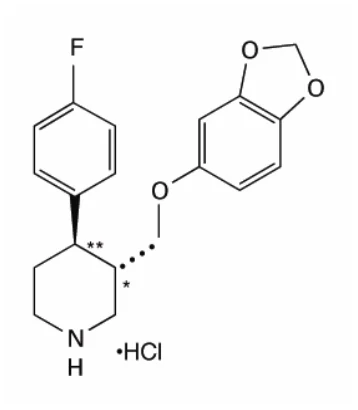
Physicochemical properties:
Description: a white to off-white solid
Melting point: 120-138°C
pKa and pH Values:
It is not possible to measure directly the pKa of paroxetine in water owing to the aliphatic nature of the piperidine ring system and the low solubility of paroxetine base.
Measurements in 50% aqueous dimethyl sulphoxide indicate an aqueous pKa of 9.90 compared to a calculated value of 9.84.
The pH of a saturated solution of paroxetine hydrochloride is 5.7 and a solution containing 2 mg/mL of paroxetine hydrochloride is 6.3.
Oil-Water Coefficient of Partition:
The apparent partition coefficient of paroxetine hydrochloride in the octanol-water system (Poct/water) is 3.38 (log P=0.53).
The partition coefficient of paroxetine base between octanol-water determined using a solution of paroxetine hydrochloride in octanol and an aqueous phase of sodium hydroxide solution (1M) is 222 (log P=2.35).
Paroxetine hydrochloride is slightly soluble in water (4.9 mg pure free base/mL).
14 CLINICAL TRIALS
14.1 Clinical Trials by Indication
Major Depressive Disorder
The efficacy of PAXIL CR controlled release tablets as a treatment for depression has been established in two 12 week, flexible dose, placebo-controlled studies of patients with DSM-IV Major Depressive Disorder. One study included patients in the age range 18-65 years, and a second study included elderly patients, ranging in age from 60-88. In both studies, PAXIL CR was shown to be significantly more effective than placebo in treating depression as measured by the following: Hamilton Depression Rating Scale Total Score (HDRS), the Hamilton depressed mood item, and the Clinical Global Impression (CGI)-Severity of Illness score.
A study of outpatients with recurrent major depressive disorder who had responded to immediate-release paroxetine tablets (HDRS total score < 8) during an initial 8 week open treatment phase and were then randomized to continuation on immediate-release paroxetine tablets or placebo for 1 year demonstrated that a significantly lower proportion of patients treated with PAXIL (15%) compared to placebo (39%) met criteria for partial relapse1. Criteria for full relapse2 were met by a significantly lower percentage of PAXIL treated patients (12%) compared to placebo treated patients (28%). Effectiveness was similar for male and female patients.
1Partial relapse was characterized by requirement for additional antidepressant medication and fulfilment of DSM IIIR criteria for major depressive episode
2Full relapse was characterized by requirement for additional antidepressant treatment, fulfilment of DSM IIIR criteria for major depressive episode, deterioration in depressive symptoms for at least 1 week, increase in CGI-Severity of Illness score by ≥ 2 points and CGI-Severity of Illness score of ≥ 4 (least moderately ill).
Panic Disorder (with or without agoraphobia)
The effectiveness of PAXIL CR in the treatment of panic disorder was evaluated in three 10-week, multicentre, flexible dose studies (Studies 1, 2, and 3) comparing paroxetine controlled release (12.5 to 75 mg daily) to placebo in adult outpatients who had panic disorder (DSM-IV), with or without agoraphobia. These trials were assessed on the basis of their outcomes on three variables: (1) the proportions of patients free of full panic attacks at endpoint; (2) change from baseline to endpoint in the median number of full panic attacks; and (3) change from baseline to endpoint in the median Clinical Global Impression Severity score.
For Studies 1 and 2, PAXIL CR was consistently superior to placebo on two of these three variables. Study 3 failed to consistently demonstrate a significant difference between PAXIL CR and placebo on any of these variables.
For all three studies, the mean PAXIL CR dose for completers at endpoint was approximately 50 mg/day. Subgroup analyses did not indicate that there were any differences in treatment outcomes as a function of age or gender.
Social Phobia (Social Anxiety Disorder)
The effectiveness of PAXIL CR in the treatment of social anxiety disorder was demonstrated in a 12 week, multicentre, double-blind, flexible dose, placebo-controlled study of adult outpatients with a primary diagnosis of social anxiety disorder (DSM-IV). In the study, the effectiveness of PAXIL CR (12.5 to 37.5 mg daily) compared to placebo was evaluated on the basis of (1) change from baseline in the Liebowitz Social Anxiety Scale (LSAS) total score and (2) the proportion of responders who scored 1 or 2 (very much improved or much improved) on the Clinical Global Impression (CGI) Global Improvement score.
PAXIL CR demonstrated statistically significant superiority over placebo on both the LSAS total score and the CGI Improvement responder criterion. For patients who completed the trial, 64% of patients treated with PAXIL CR compared to 34.7% of patients treated with placebo were CGI Improvement responders.
Subgroup analyses did not indicate that there were any differences in treatment outcomes as a function of gender. Subgroup analyses of studies utilizing the immediate-release formulation of paroxetine generally did not indicate differences in treatment outcomes as a function of age, race or gender.
Premenstrual Dysphoric Disorder (PMDD)
The effectiveness of PAXIL CR for the treatment for Premenstrual Dysphoric Disorder (PMDD) has been assessed in 4 placebo-controlled trials. Patients in these trials met DSM-IV criteria for PMDD. In 3 studies, patients (n=1,030) were treated with PAXIL CR 12.5 or 25 mg/day, or placebo, continuously throughout the menstrual cycle for a period of 3 months. In the fourth study, patients (n=366) were treated for the 2 weeks prior to the onset of menses (luteal phase dosing, also known as intermittent dosing) with PAXIL CR 12.5 or 25 mg/day, or placebo, for a period of 3 months.
The Visual Analogue Scale (VAS)-Mood score which consists of the mean VAS scores for the 4 core PMDD symptoms, irritability, tension, depressed mood and affective lability, was the primary efficacy measure. PAXIL CR 25 mg/day as continuous dosing and as luteal phase dosing were significantly more effective than placebo as measured by change from baseline luteal phase VAS-Mood score in all 4 studies. PAXIL CR 12.5 mg/day was significantly more effective than placebo as measured by change from baseline luteal phase VAS-Mood score in 2 of the 3 continuous studies and in the one luteal phase study.
There is insufficient information to determine the effect of race or age on outcome in these studies.
Patients on systemic hormonal contraceptives were excluded from these trials. Therefore, the efficacy of PAXIL CR in combination with systemic (including oral) hormonal contraceptives for the treatment of PMDD is unknown
15 MICROBIOLOGY
No microbiological information is required for this drug product.
16 NON-CLINICAL TOXICOLOGY
Animal Pharmacology
In vitro: Paroxetine showed a high potency for the inhibition of 5-HT reuptake in rat hypothalamic synaptosomes (Ki=1.1nM), but exerted relatively weak effects upon noradrenaline reuptake (Ki=350nM). The predominant metabolites of paroxetine, a sulphate and a glucuronide conjugate, were essentially inactive as 5-HT reuptake inhibitors. Paroxetine has a low affinity for muscarinic cholinergic receptors (Ki of 89 nM for displacement of [3H]quinuclidinyl benzilate). Animal studies have indicated only weak anticholinergic properties.
Radioligand binding techniques in rat brain, in vitro, have indicated that paroxetine has little affinity for α1, α2 and β-adrenoceptors, dopamine (D2), 5-HT1-like, 5-HT2 and histamine (H1) receptors at concentrations below 1 μM. This lack of interaction with post-synaptic receptors in vitro is substantiated by in vivo studies which demonstrate a lack of CNS depressant and hypotensive properties.
In vivo: In mice, paroxetine (ED50=0.4 mg/kg p.o.) was associated with potent and prolonged potentiation of the hypermotility induced by the 5-HT precursor,
5-hydroxytryptophan. Similarly, the anticonvulsant effects of 5-hydroxytryptophan in a mouse electroshock model were potentiated by paroxetine (ED50=0.4 mg/kg p.o.). In rats, paroxetine (ED50=0.8 mg/kg p.o.) inhibited the hypermotility induced by p-chloroamphetamine, an agent which depletes neuronal 5-HT stores.
Paroxetine, 1 mg/kg i.p. in conscious rats with chronically implanted cortical electrodes, produced essentially no changes in the power spectrum and frequency analysis of the EEG.
Electrophysiological measures have demonstrated that paroxetine has a vigilance increasing activity in animals. Oral doses of paroxetine 0.32 to 18 mg/kg to rats lengthened the waking period and shortened the slow-wave and paradoxical sleep periods in a dose-dependent fashion. As with other selective 5-HT uptake inhibitors, paroxetine, at a dose of 5 mg/kg i.p., causes symptoms of excessive 5-HT receptor stimulation when administered to rats previously given monoamine oxidase (MAO) inhibitors such as tranylcypromine or phenelzine, or the 5-HT precursor L-tryptophan.
Behavioural and EEG studies indicate that paroxetine is weakly activating at doses above those generally required to inhibit 5-HT reuptake. The activating properties are not "amphetamine-like" in nature. In rats trained to discriminate d-amphetamine, 1 mg/kg i.p., from saline, no generalization to amphetamine was observed after administration of paroxetine (0.3, 1, 3 or 10 mg/kg i.p.). Paroxetine caused seizures in mice at a lethal dose of 300 mg/kg p.o. At a dose of 50 mg/kg p.o., paroxetine lowered the threshold for electroshock-induced seizures in mice.
Animal studies indicate that paroxetine is well tolerated by the cardiovascular system. When the cardiovascular effects of paroxetine and amitriptyline were compared in the conscious rabbit and anaesthetized cat, intravenous doses of paroxetine approximately 2 to 4 times higher (on a mg/kg basis) than those of amitriptyline were required to produce significant changes in blood pressure, heart rate and electrocardiographic parameters. Similarly, in the pentobarbital anaesthetized dog, i.v. imipramine, amitriptyline and clomipramine (in doses of 10 mg/kg) caused severe atrioventricular block and ventricular arrhythmias, while equivalent doses of paroxetine resulted in only slight prolongation of the PQ interval. In addition, low doses (0.3 to 1 mg/kg) of the tricyclic antidepressants caused marked tachycardia, whereas paroxetine in doses up to 10 mg/kg had no effect on heart rate.
Studies in the spontaneous hypertensive rat indicate that, in contrast to antidepressants which inhibit the uptake of noradrenaline, paroxetine at 5 mg/kg i.v. has a much reduced propensity to inhibit the antihypertensive effects of guanethidine.
5-HT is transported into blood platelets and central neurons by a similar active uptake transporter mechanism in the cell membrane. Thus, in common with other selective 5-HT reuptake inhibitors, administration of paroxetine results in depletion of 5-HT from platelets. This has been reported after repeated daily administration of paroxetine at doses of 0.1, 1 and 10 mg/kg i.p. in mice and rats, 1-7.5 mg/kg p.o. in monkeys and 10-50 mg orally to healthy human volunteers. Similarly, whole blood 5-HT levels were shown to be depleted in depressed patients after paroxetine administration.
General Toxicology
General toxicity studies have been conducted in rhesus monkeys and rats, in both of which the metabolic pathway for paroxetine is the same as in man.
- Acute Toxicity: In relation to the clinical dose, the acute LD50 of paroxetine is very high in both mice and rats (approximately 350 mg/kg).
- Long-Term Toxicity: The no-toxic effect levels in the rhesus monkeys and rats were 4-10 times and 6-15 times the recommended range of clinical doses respectively. At higher doses (40 mg/kg for 3 months and 25 mg/kg for 12 months), lipidosis was observed in several tissues of rats (lungs, mesenteric lymph nodes, epididymides, retinal tissues - the latter by electron microscopy only). As paroxetine is a lipophilic amine with both hydrophobic and hydrophilic moieties, it may accumulate in lysosomes leading to an impairment of lipid catabolism and, hence, the accumulation of lipids within the lysosomes. It should be noted that the slight degree of lipidosis seen in the rat was restricted to doses and plasma levels much higher than those observed in man. In a clinical study investigating lamellated inclusion bodies in peripheral white blood cells during long-term therapy, no difference between placebo and paroxetine could be detected.
Carcinogenicity
No carcinogenic potential was detected in rat (dose levels of 1, 5 and 20 mg/kg/day) and mouse (dose levels of 1, 5 and 25 mg/kg/day) life-span studies. A non dose-related increase in malignant liver cell tumours occurred in male mice at 1 and 5 mg/kg/day which was statistically significant at 5 mg/kg/day. There was no increase at 25 mg/kg/day or in female mice and the incidence was within the historical control range.
Reproductive and Developmental Toxicology
5-Hydroxytryptamine and compounds modulating this amine are known to affect reproductive function in animals and at high dose levels cause marked overt toxicity. Paroxetine at 15 and 50 mg/kg (hydrochloride salt) has been shown to impair reproductive function in rats.
In male rats, chronic administration of a 50 mg/kg dose has been associated with granulomatous reactions in the epididymides accompanied by atrophy and degeneration of the seminiferous tubules. There were no biologically significant effects on fertility of female rats but corpora lutea count was slightly reduced and preimplantation loss slightly increased at 50 mg/kg in association with marked maternal toxicity.
Reproduction studies were performed in rats and rabbits at doses up to 42 and 5 times the maximum recommended daily human dose (60 mg) on a mg/kg basis. These are 8.3 (rat) and 1.7 (rabbit) times the maximum recommended human dose on a mg/m2 basis. These studies have revealed no evidence of teratogenic effects or of selective toxicity to the embryo.
Special Toxicology
- Immunotoxicity:
Specific studies have demonstrated that paroxetine is unlikely to possess the potential for immunotoxicity.
Serum samples were obtained from depressed patients who had received 30 mg of paroxetine daily for between six and twelve months, from groups of rats on a repeat dose toxicity study in which daily doses of 1, 5 and 25 mg/kg of paroxetine were administered for 52 weeks, from guinea pigs epicutaneously exposed (topically under an occlusive patch) to paroxetine and from New Zealand White (NZW) rabbits parenterally (i.m. and s.c.) injected with paroxetine in Freund's adjuvant. In addition as a positive control, sera were obtained from NZW rabbits which had been immunized by i.m. and s.c. injections of Freund's adjuvant emulsions containing paroxetine chemically conjugated to bovine gamma globulin (BGG).
Serum antibody levels were assessed by enzyme- or radio-immunoassays (ELISA or RIA). No anti-paroxetine antibody activity was detected in serum samples from patients, from rats in the toxicity study, from guinea pigs epicutaneously exposed to paroxetine, or from rabbits parenterally injected with paroxetine. Serum anti-paroxetine antibody was detected in rabbits immunized with Freund's adjuvant emulsions containing paroxetine coupled with BGG, verifying that the RIA system employed was capable of detecting antibodies directed against paroxetine.
Paroxetine also did not induce contact sensitivity reactions in guinea pigs following epicutaneous exposure.