


Product Monograph - Pilocarpine Hydrochloride Tablets, USP
SUMMARY PRODUCT INFORMATION
| Route of Administration | Dosage Form / Strength | All Non-medicinal Ingredients |
| oral | tablet 5 mg | microcrystalline cellulose, stearic acid, and coating (titanium dioxide, Polydextrose, hypromellose, macrogol and Triacetin) see Dosage Forms, Composition and Packaging section. |
INDICATIONS AND CLINICAL USE
Pilocarpine Hydrochloride Tablets, USP is indicated for:
- the treatment of the symptoms of xerostomia (dry mouth) due to salivary gland hypofunction caused by radiotherapy for cancer of the head and neck,
- the treatment of the symptoms of xerostomia (dry mouth) and xerophthalmia (dry eyes) in patients with Sjögren's syndrome.
Pediatrics (< 18 years of age): Safety and effectiveness of pilocarpine hydrochloride tablets have not been studied in children under 18 years of age.
CONTRAINDICATIONS
- in patients with uncontrolled asthma,
- when miosis is undesirable (e.g. acute iritis and in narrow-angle (angle closure) glaucoma),
- in patients with known sensitivity to pilocarpine, or to any of the tablet's excipients.
WARNINGS AND PRECAUTIONS
General
Pilocarpine toxicity is characterized by an exaggeration of its parasympathomimetic effects.
Cardiovascular
Cardiovascular Disease: The dose-related cardiovascular pharmacologic effects of pilocarpine include hypotension, hypertension, bradycardia, and tachycardia. Patients with significant cardiovascular disease may be unable to compensate for transient changes in hemodynamics or rhythm induced by pilocarpine. Pulmonary edema has been reported as a complication of pilocarpine toxicity. Pilocarpine Hydrochloride Tablets, USP should be administered with caution and under close medical supervision to patients with significant cardiovascular disease.
Dependence/Tolerance
Dependence Liability: Pilocarpine hydrochloride does not have the potential for addiction; consequently, there have been no reports of addiction with the use of pilocarpine hydrochloride. There are no known withdrawal effects associated with pilocarpine either in animals or in humans. The pharmacologic effects, other than salivation, are not pleasurable, thus, there is no reason to suspect it will be abused.
Gastrointestinal
Gastrointestinal Disease: Pilocarpine Hydrochloride Tablets, USP should be administered with caution to patients with known or suspected cholelithiasis or biliary tract disease. Contractions of the gallbladder and biliary smooth muscle could precipitate complications including cholecystitis, cholangitis, and biliary obstruction.
Cholinergic agonists, like pilocarpine, may cause increased acid secretion. This possibility should be considered when treating patients with active peptic ulcer disease.
Hepatic/Biliary/Pancreatic
Hepatic Impairment: Decreased pilocarpine hydrochloride plasma clearance was observed in patients with mild to moderate hepatic impairment (see ACTION AND CLINICAL PHARMACOLOGY). Patients with mild and moderate hepatic impairment should begin treatment at a reduced daily dose, gradually increasing the dosage up to 5 mg three to four times daily as safety and tolerability allow (see DOSAGE AND ADMINISTRATION – Recommended Dose and Dose Adjustments). No pharmacokinetic data are available for any dose of pilocarpine hydrochloride in patients with severe hepatic impairment (Childs-Pugh Grade C). Therefore, Pilocarpine Hydrochloride Tablets, USP are not recommended for use in patients with severe hepatic impairment. However, should clinical judgement deem it necessary, the drug should be used with extreme caution (see DOSAGE AND ADMINISTRATION – Recommended Dose and Dose Adjustments).
Neurologic
CNS Disorders: Cholinergic agonists, like pilocarpine hydrochloride, may have dose-related central nervous system effects. This should be considered when treating patients with underlying cognitive disturbances.
Ophthalmologic
Vision and Hazardous Activities: Ocular administration of pilocarpine has been reported to cause visual blurring and impairment of depth perception which may result in decreased visual acuity, especially at night and in patients with central lens changes. Patients should be cautioned about driving at night or performing hazardous activities in reduced lighting while receiving therapy with Pilocarpine Hydrochloride Tablets, USP.
Psychiatric
Cholinergic agonists, like pilocarpine hydrochloride, may have dose-related central nervous system effects. This should be considered when treating patients with underlying psychiatric disturbances.
Renal
Renal Disease: Pilocarpine may increase ureteral smooth muscle tone and could theoretically precipitate renal colic or "ureteral reflux" in patients with renal dysfunction (eg. nephrolithiasis).
There is no reliable data for the pharmacokinetics of orally administered pilocarpine in patients with renal disease. Thus, caution should be observed if Pilocarpine Hydrochloride Tablets, USP are to be administered to patients with renal disease (see DOSAGE AND ADMINISTRATION – Recommended Dose and Dose Adjustments).
Respiratory
Pulmonary Disease: Pilocarpine has been reported to increase airway resistance, bronchial smooth muscle tone, and bronchial secretions. Pilocarpine Hydrochloride Tablets, USP should be administered with caution and under close medical supervision to patients with significant pulmonary disease (e.g. controlled asthma, chronic bronchitis, or chronic obstructive pulmonary disease).
Should any adverse changes in the patient's cardiopulmonary condition occur, or be suspected, therapy with Pilocarpine Hydrochloride Tablets, USP should be discontinued immediately.
Sexual Function/Reproduction
Impairment of Fertility: The effects of pilocarpine on male and female fertility are not known. Studies in mice, rats and dogs have shown adverse effects on spermatogenesis. A study in rats has indicated a possible impairment of female fertility (see also TOXICOLOGY). The safety margin for the effects on fertility is unknown.
Based on the results of available studies in animals as a precautionary measure, Pilocarpine Hydrochloride Tablets, USP should be administered to individual men who are attempting to father a child, only, if the expected benefit of the treatment justifies potential impairment of fertility. Pilocarpine Hydrochloride Tablets, USP should be administered to women who are attempting to conceive a child only if the expected benefit of the treatment outweighs the potential risk.
Women of Child-bearing Potential: Pilocarpine Hydrochloride Tablets, USP is not recommended in women of child bearing potential not using contraception.
Special Populations
Pregnant Women: The safety of pilocarpine hydrochloride tablets has not been established in human pregnancy. There are no known human data for the effects of pilocarpine on fetal survival and development. Studies in animals have shown reproductive toxicity (see TOXICOLOGY). Pilocarpine Hydrochloride Tablets, USP should be used in pregnancy only if the expected benefit outweighs the potential risks to the fetus.
Nursing Women: Animal studies have shown excretion of pilocarpine in breast milk at concentrations similar to those seen in plasma. It is not presently known whether this drug is excreted in human milk. Because many drugs are excreted in human milk and because of the potential for serious adverse reactions in nursing infants from Pilocarpine Hydrochloride Tablets, USP, a decision must be made whether to discontinue breastfeeding or to discontinue Pilocarpine Hydrochloride Tablets, USP treatment.
Pediatrics (< 18 years of age): Safety and effectiveness of pilocarpine hydrochloride tablets have not been studied in children under 18 years of age.
ADVERSE REACTIONS
Clinical Trial Adverse Drug Reactions
Because clinical trials are conducted under very specific conditions the adverse reaction rates observed in the clinical trials may not reflect the rates observed in practice and should not be compared to the rates in the clinical trials of another drug. Adverse drug reaction information from clinical trials is useful for identifying drug-related adverse events and for approximating rates.
Head and Neck Cancer Patients: In the controlled clinical studies, 217 patients of whom 147 (68%) were male and 70 (32%) were female were administered pilocarpine hydrochloride. The mean age of the patients was approximately 58 years; the majority of patients were between 50 and 64 years (51%), 33% were 65 years and older, and 16% were younger than 50 years.
No serious drug-related adverse events were reported with use of pilocarpine hydrochloride in these controlled clinical trials.
Table 1 presents the adverse events observed during treatment with pilocarpine hydrochloride tablets which were considered to be a consequence of the expected pharmacologic effects of pilocarpine. These adverse events were dose-dependent and generally of mild or moderate intensity. Such adverse events usually subside within 6 hours of discontinuation of therapy.
Table 1 - The most frequent adverse events, by dose, associated with pilocarpine hydrochloride tablets (Percent of Patients Reporting)
| Adverse Event | Placebo t.i.d. n=152 | 5 mg t.i.d. (15 mg/d) n=141 | 10 mg t.i.d. (30 mg/d) n=121 |
| Hyperhidrosis | 9% | 29% | 68% |
| Nausea | 4 | 6 | 15 |
| Rhinitis | 7 | 5 | 14 |
| Chills | < 1 | 3 | 14 |
| Vasodilation (flushing) | 3 | 8 | 13 |
| Pollakiuria | 7 | 9 | 12 |
| Dizziness* | 4 | 5 | 12 |
| Asthenia | 3 | 6 | 12 |
*There is no indication of a difference between older and younger patients receiving pilocarpine hydrochloride with regards to reporting adverse experiences, except for dizziness, which was reported significantly more often by patients aged over 65 years.
Table 2 - Adverse Events (incidence ≥ 3%) reported at dosages of 15-30 mg/d pilocarpine hydrochloride tablets (Percent of Patients Reporting)
| Adverse Event | Placebo t.i.d. n=152 | 5 - 10 mg t.i.d. (15-30 mg/d) n=217 |
| Headache | 8% | 13% |
| Dyspepsia | 5 | 7 |
| Lacrimation increased | 8 | 6 |
| Diarrhea | 5 | 6 |
| Edema | 4 | 5 |
| Abdominal Pain | 4 | 4 |
| Amblyopia | 2 | 4 |
| Vomiting | 1 | 4 |
| Pharyngitis | 8 | 3 |
| Hypertension | 1 | 3 |
The following events were reported by head and neck cancer patients at incidences of 1 - 2% at dosages of 15 to 30 mg/d:
Cardiovascular: tachycardia,
Digestive: dysphagia, taste perversion,
Musculoskeletal: myalgias,
Nervous: tremor,
Respiratory: epistaxis, sinusitis, voice alteration,
Skin: pruritis, rash, uriticaria,
Immune System Disorders: hypersensitivity
Special Senses: visual impairment, conjunctivitis, eye pain.
In long-term treatment were two patients with underlying cardiovascular disease of whom one experienced a myocardial infarct and another episode of syncope. The association with drug is uncertain.
Sjögren's Syndrome Patients: In the controlled clinical studies, 376 patients of whom 19 (5%) were male and 357 (95%) were female were administered pilocarpine hydrochloride tablets. The mean age of the patients was approximately 55 years; the majority of patients were between 40 and 69 years (70%), 16% were 70 years and older, and 14% were younger than 40 years of age.
No serious drug-related adverse events were reported with use of pilocarpine hydrochloride tablets in these controlled clinical trials.
Table 3 presents the adverse events observed during treatment with pilocarpine hydrochloride tablets which were considered to be a consequence of the expected pharmacologic effects of pilocarpine. These adverse events were dose-dependent and generally of mild or moderate intensity.
Table 3 - The most frequent adverse events, by dose, associated with pilocarpine hydrochloride tablets (Percent of Patients Reporting)
| Adverse Event | Placebo q.i.d. n=253 | 2.5 mg q.i.d. (10 mg/d) n=121 | 5 mg q.i.d. (20 mg/d) n=255 | 5-7.5 mg q.i.d. (20-30 mg/d) n=114 |
|---|---|---|---|---|
| Hyperhidrosis | 7% | 11% | 40% | 47% |
| Pollakiuria | 4 | 11 | 10 | 6 |
| Chills | 2 | 1 | 4 | 6 |
| Vasodilation (flushing) | 2 | 2 | 9 | 3 |
| Salivary Hypersecretion | 0 | 0 | 3 | 4 |
Table 4 - Adverse events (incidence ≥ 3%) reported at dosages of 10-30 mg/d pilocarpine hydrochloride tablets (Percent of Patients Reporting)
| Adverse Event | Placebo q.i.d. (n=253) | 2.5 – 7.5 mg q.i.d. (10-30 mg/d) (n=376) |
| Headache | 19% | 18% |
| Flu Syndrome | 9 | 12 |
| Nausea | 9 | 12 |
| Dyspepsia | 7 | 8 |
| Rhinitis | 8 | 8 |
| Diarrhea | 7 | 7 |
| Dizziness* | 7 | 6 |
| Pain | 2 | 4 |
| Abdominal Pain | 4 | 5 |
| Pharyngitis | 5 | 4 |
| Sinusitis | 5 | 4 |
| Vomiting | 3 | 1 |
| Asthenia | 2 | 4 |
| Rash | 3 | 3 |
| Infection | 6 | 3 |
*There is no indication of a difference between older and younger patients receiving pilocarpine hydrochloride with regards to reporting adverse experiences, except for dizziness, which was reported significantly more often by patients aged over 65 years.
The following events were reported by Sjögren's patients at incidences of 1 - 2% at dosages of 10 to 30 mg/d:
Body as a whole: accidental injury, fever, abnormal lab test
Immune System Disorders: hypersensitivity
Cardiovascular: palpitation, tachycardia,
Digestive: constipation, flatulence, glossitis, stomatitis,
Metabolic and Nutritional: edema, face edema,
Musculoskeletal: back pain, myalgia,
Nervous: somnolence,
Respiratory: cough increased, epistaxis,
Skin: pruritis, urticaria
Special Senses: blurred vision, tinnitus, eye pain
Urogenital: micturition urgency, urinary tract infection, vaginitis.
Based on the pharmacology of pilocarpine other possible adverse effects are: respiratory distress, gastrointestinal pain, atrioventricular block, tachycardia, bradycardia, arrhythmia, hypotension, shock, tremor, mental status changes, amnesia, hallucination, affect lability, confusional state and agitation.
DRUG INTERACTIONS
Overview
Pilocarpine Hydrochloride Tablets, USP should be administered with caution to patients taking beta adrenergic antagonists because of the possibility of conduction disturbances. Drugs with parasympathomimetic effects administered concurrently with Pilocarpine Hydrochloride Tablets, USP would be expected to result in additive pharmacologic effects. Pilocarpine Hydrochloride Tablets, USP might antagonize the anticholinergic effects of drugs used concomitantly. These effects should be considered when anticholinergic properties may be contributing to the therapeutic effect of concomitant medication (e.g. atropine, inhaled ipratropium).
Pilocarpine is known to be an inhibitor of CYP2A6 based on in vitro studies, therefore an in vivo interaction with CYP2A6 substrates (e.g. coumarin) cannot be ruled out.
While no formal drug interaction studies have been performed, the following concomitant drugs were used in at least 10% of patients in either or both Sjögren's pivotal studies: acetylsalicylic acid, artificial tears, calcium, conjugated estrogens, hydroxychloroquine sulfate, ibuprofen, levothyroxine sodium, medroxyprogesterone acetate, methotrexate, multivitamins, naproxen, omeprazole, acetaminophen, and prednisone. There were no reports of drug toxicities during either trial.
DOSAGE AND ADMINISTRATION
Dosing Considerations
Treatment with Pilocarpine Hydrochloride Tablets, USP should begin at the first signs of xerostomia. Clinical experience indicates that the relief of xerostomia and/or xerophthalmia improves over time with the administration of pilocarpine hydrochloride tablets. Administration of Pilocarpine Hydrochloride Tablets, USP, at the above recommended dosage, for 12 or more weeks may be required before relief can be expected. Onset and degree of relief may vary among patients.
Tablets may be taken with or without food. Tablets should not be chewed or bitten.
Hepatic Impairment: Patients with mild and moderate hepatic impairment should begin treatment at a reduced daily dosage, gradually increasing the dosage up to 5 mg three to four times daily as safety and tolerability allow. No pharmacokinetic data are available for any dose of pilocarpine hydrochloride tablets in patients with severe hepatic impairment (Child-Pugh Grade C). Therefore, Pilocarpine Hydrochloride Tablets, USP are not recommended for use in patients with severe hepatic impairment However, should clinical judgment deem it necessary, the drug should be used with extreme caution (see WARNINGS AND PRECAUTIONS – Hepatic/Biliary/Pancreatic and ACTION AND CLINICAL PHARMACOLOGY).
Renal Impairment: There is no reliable data for the pharmacokinetics of orally administered pilocarpine in patients with renal disease. Thus, caution should be observed if Pilocarpine Hydrochloride Tablets, USP are to be administered to patients with renal disease (see WARNINGS AND PRECAUTIONS - Renal).
Recommended Dose and Dosage Adjustment
The usual dose for initiation of treatment is 5 mg Pilocarpine Hydrochloride Tablets, USP three or four times daily. Titration up to 10 mg (2 tablets) per dose, not to exceed a total of 30 mg (6 tablets) per day, may be considered for patients who have not responded adequately and who can tolerate the lower doses. The lowest dose that is tolerated and effective should be used for maintenance.
Missed Dose
If a dose is missed, then the next dose should be taken at the normally scheduled time. Patients should be instructed that a second tablet should not be taken to make up for the missed tablet.
OVERDOSAGE
Symptoms:
Toxicity from pilocarpine is characterized chiefly by exaggeration of parasympathomimetic effects and resembles "muscarinic poisoning" (e.g. consumption of mushrooms of the genus Inocybe). Dose-dependent symptoms include salivation, sweating, vomiting, respiratory distress, hypotension, diarrhea, nausea and shock. Mental confusion and cardiac arrhythmias can also occur.
A fatal overdose with oral administration of ocular pilocarpine, resulting from poisoning, has been reported in the literature. The symptoms included: salivation, pinpoint pupils, sweating, dyspnea, tachypnea, tachycardia, and pulmonary edema.
There are several reports of pilocarpine overdosage reported with the treatment of angle-closure glaucoma. Cardiovascular decompensation has been noted in patients with acute closed-angle glaucoma who have received intraocular instillation of pilocarpine in excess of 60 to 100 mg over short periods prior to eye surgery. Other reported symptoms occurring in this situation include nausea, vomiting, profuse sweating, tremor, hypotension, sinus bradycardia, atrioventricular block, changes in mental state, and shock.
Treatment:
Overdosage with pilocarpine should be treated with atropine titration (0.5 mg to 1.0 mg given subcutaneously or intravenously) and supportive measures to maintain respiration and circulation. Epinephrine (0.3 mg to 1.0 mg, subcutaneously or intramuscularly) may also be of value in the presence of severe cardiovascular depression or bronchoconstriction. It is not known if pilocarpine is dialyzable.
| For management of a suspected drug overdose, contact your regional Poison Control Centre. |
ACTION AND CLINICAL PHARMACOLOGY
Mechanism of Action
Pilocarpine Hydrochloride Tablets, USP are made from the naturally-occurring alkaloid pilocarpine which is obtained from the leaflets of the South American shrub Pilocarpus jaborandi. Pilocarpine hydrochloride is a cholinomimetic (cholinergic parasympathomimetic) agent capable of exerting a broad spectrum of pharmacologic effects with predominant muscarinic action.
Pharmacodynamics
Dependent upon the dosage and the individual, oral pilocarpine hydrochloride will exert the pharmacological activity of a cholinergic parasympathomimetic agent, namely, increase secretion by the exocrine glands (e.g. sweat, salivary, lacrimal, gastric, pancreatic, intestinal, and respiratory mucous cells) and stimulate smooth muscle (e.g. gastrointestinal tract, bronchi, ureters, urinary bladder, gall bladder, and biliary tract). Pilocarpine hydrochloride may also produce arrhythmias and/or paradoxical effects on the cardiovascular system manifest by hypertension after a brief episode of hypotension.
This activity manifests itself clinically by a broad spectrum of dose-dependent effects.
When applied topically to the eye as a single dose, pilocarpine causes miosis, spasm of accommodation, and may cause a transitory rise in intraocular pressure followed by a more persistent fall. This effect is the basis of the therapeutic benefit of ocularly administered pilocarpine for the treatment of glaucoma.
Dependent upon the dosage, pilocarpine hydrochloride administered orally will increase secretion of the salivary, sweat, lacrimal, gastric, pancreatic, and the mucous cells of the respiratory tract. Stimulation of the salivary glands, and the consequent increased secretion of saliva, is the desired pharmacological effect and the basis of the therapeutic benefit for patients with xerostomia.
Dose-related smooth muscle stimulation may cause increased tone, increased motility, spasm and tenesmus of the intestinal tract; increased tone and motility of urinary tract, gallbladder, and biliary duct; and increased bronchial smooth muscle tone.
Paradoxical effects on the cardiovascular system have been observed with pilocarpine. Contrary to the expected vasodepressive effect of a muscarinic agonist, administration of pilocarpine may produce hypertension after a brief episode of hypotension. Tachycardia and bradycardia have also been reported with the use of pilocarpine. Such effects have primarily been reported following parenteral administration, or administration of high doses for the treatment of glaucoma.
In a study in 12 healthy male volunteers there was a dose-related increase in unstimulated salivary flow following single 5 mg and 10 mg oral doses of pilocarpine hydrochloride tablets. The stimulatory effect was time-related with an onset at 20 minutes and peak at 1 hour with duration of 3 to 5 hours.
Pharmacokinetics
Absorption:
In a multiple-dose pharmacokinetic study in healthy male volunteers given 5 or 10 mg of pilocarpine hydrochloride three times daily for two days, the Tmax after the final dose was approximately 1 hour, the elimination half-life (t1/2) was approximately 1 hour, and the mean Cmax values were 15 ng/mL and 41 ng/mL for the 5 and 10 mg doses, respectively (Table 5).
When taken with a high fat meal by 12 healthy male volunteers, there was a decrease in the rate of absorption of pilocarpine from pilocarpine hydrochloride tablets. Mean Tmax's were 1.47 and 0.87 hours, mean Cmax's were 51.8 and 59.2 ng/mL, and mean AUC’s were 174 and 183 ng.hour/mL for fed and fasted conditions in healthy male volunteers, respectively.
Distribution:
The results of an in vitro protein binding study indicate 3H-pilocarpine hydrochloride is not bound to plasma proteins as determined in either rat or human plasma. Animal studies have shown excretion of pilocarpine in breast milk at concentrations similar to those seen in plasma.
Metabolism:
Pilocarpine is primarily metabolized by CYP2A6 and has demonstrated a capacity to inhibit CYP2A6 in vitro. Serum esterases are also involved in the biotransformation of pilocarpine to pilocarpic acid.
Excretion:
Approximately 35% of dose is eliminated as 3-hydroxypilocarpine in urine and 20% of dose is excreted unchanged in the urine. Mean elimination half-lives for pilocarpine are 0.76 and 1.35 hours after repeated oral doses of 5 and 10 mg of pilocarpine hydrochloride, respectively.
Table 5 - Bioavailability parameters following multiple-dose oral pilocarpine HCl tablets1
| Dose | Tmax (hr) | Cmax (ng/mL) | AUC2 (ng.h/mL) | t1/2 (hr) |
5 mg (n=10) | 1.25 | 14.61 | 33.04 | 0.76 |
10 mg (n=9) | 0.85 | 41.35 | 107.96 | 1.35 |
| 1 | pilocarpine HCl tablets given orally, three times daily, for 2 days; the results determined after the final dose | |||
| 2 | trapezoidal values | |||
The bioavailability parameters of an oral single-dose of pilocarpine hydrochloride 5 mg tablets have been determined in 24 healthy male volunteers. A single dose of pilocarpine hydrochloride 5 mg tablets was administered orally to subjects who fasted for 10 hours pre-dose and for 4 hours post-dose. Blood samples were collected pre-dose, and at: 0.33, 0.67, 1.00, 1.50, 2.00, 3.00, 4.00, 5.00, 6.00, 8.00, 10.00, 12.00, 16.00 and 24.00 hours post-dose. The results are presented in Table 6.
Table – 6 Bioavailability parameters following single-dose oral pilocarpine hydrochloride tablets
| Population | No. of Subjects | Sampling Schedule | Dose | Tmax (hr) | Cmax (ng/mL) | AUC1 h·ng/mL | Elim ½ life (hr) |
| Healthy Males | 24 | pre-dose; 0.33, 0.67, 1.00, 1.50, 2.00, 3.00, 4.00, 5.00, 6.00, 8.00, 10.00, 12.00, 16.00, 24.00 hours post-dose | 5 mg | 0.97 | 22.66 | 56.96 | 1.35 |
Healthy Males and Females, elderly (≥ 65 yrs) | 16 | pre-dose; 0.33, 0.67, 1.00, 1.50, 2.00, 3.00, 4.00, 5.00, 6.00, 8.00, 10.00, 12.00, 16.00, 24.00 hours post-dose | 5 mg | 1.032 1.043 1.014 | 27.302 21.573 39.884 | 78.052 63.193 110.744 | 1.382 1.433 1.264 |
1 trapezoidal values 2 Overall (male + female); 3 male; 4 female | |||||||
The bioavailability parameters of an oral single dose of 5 mg pilocarpine hydrochloride tablets have been determined in 16 healthy elderly volunteers (Table 6). The results for the 11 elderly males are comparable to those in young normal male subjects. In the 5 elderly females, the Cmax and AUC are approximately twice that of the male subjects. However, the female subjects weighed approximately 15 kg less, on average, than the male subjects which suggests this difference is probably due to a lower apparent volume of distribution in the females than in the males.
The effect of food on the bioavailability of a single dose of 10 mg pilocarpine tablets has been determined in 12 healthy male volunteers (Table 7). When taken with a high fat meal by 12 healthy male volunteers, there was a decrease in the rate of absorption of pilocarpine from pilocarpine hydrochloride tablets. Mean Tmax's were 1.47 and 0.87 hours, and mean Cmax's were 51.8 and 59.2 ng/mL for fed and fasted, respectively.
Table 7 - Bioavailability parameters following single-dose oral pilocarpine hydrochloride tablets in a fasted/fed state
| Population | No. of Subjects | Sampling Schedule | Dose | Tmax (hr) | Cmax (ng/mL) | AUC1 h·ng/mL | Elim ½ life (hr) |
| Healthy Males | 12 crossover | pre-dose; 0.33, 0.67, 1.00, 1.50, 2.00, 3.00, 4.00, 5.00, 6.00, 8.00, 10.00, 12.00, 16.00, 24.00 hours post-dose | 10 mg fasted: fed: | 0.87 1.47 | 59.19 51.80 | 183.32 173.64 | 1.09 1.14 |
| 1 trapezoidal values | |||||||
The bioavailability parameters of oral multiple-dose pilocarpine hydrochloride tablets have been determined in 19 healthy male volunteers. Pilocarpine hydrochloride tablets 5 mg and 10 mg were administered orally for 2 days, at 8 a.m., noon, and 6 p.m. for a total of 6 doses. Subjects fasted for 10 hours preceding and for 4 hours following the final dose. Blood samples were collected pre-dose, and at: 0.33, 0.67, 1.00, 1.50, 2.00, 3.00, 4.00, 5.00, 6.00, 8.00, 10.00, 12.00, 16.00 and 24.00 hours after the final dose. The bioavailability parameters are presented in Table 8.
Table 8 - Bioavailability parameters following multiple-dose oral pilocarpine hydrochloride tablets
| Population | No. of Subjects | Sampling Schedule | Administration | Dose | Tmax (hr) | Cmax (ng/m L) | AUC1 h·ng/m L | Elim ½ life (hr) | ||||
| Healthy Males | 10 9 | pre-dose; 0.33, 0.67, 1.00, 1.50, 2.00, 3.00, 4.00, 5.00, 6.00, 8.00, 10.00, 12.00, 16.00, 24.00 hours after the final dose. | orally for 2 days, at 8 a.m., noon, and 6 p.m. for a total of 6 doses | 5 mg 10 mg | 1.25 0.85 | 14.61 41.35 | 33.04 107.96 | 0.76 1.35 | ||||
| 1 trapezoidal values | ||||||||||||
Limited information is available about the metabolism and elimination of pilocarpine in humans. Inactivation of pilocarpine is thought to occur at neuronal synapses and probably in plasma. Pilocarpine and its minimally-active or inactive degradation products, which include pilocarpic acid, are excreted in the urine.
Special Populations and Conditions
Geriatrics: Pharmacokinetics in elderly male volunteers (n=11) were comparable to those in younger men. In five healthy elderly female volunteers, the mean Cmax and AUC were approximately twice that of elderly males and young normal male volunteers.
Hepatic Insufficiency: In (n=12) cirrhotic subjects with mild to moderate hepatic impairment (Child-Pugh Grades A, mild (n=9) & B, moderate (n=3)), administration of a single 5 mg oral dose resulted in decreased apparent plasma clearance. Relative to normal volunteers, subjects with mild and moderate hepatic impairment had 1.4- and 3.3-fold lower apparent plasma clearance, respectively. Compared to normal subjects, Cmax values were 20-40% higher in subjects with mild and moderate hepatic impairment. AUC values were 1.4- and 3.3-fold higher in subjects with mild and moderate impairment, respectively. The plasma elimination half-life of pilocarpine hydrochloride was increased by 30% in subjects with mild hepatic impairment but was at least 2-fold higher in subjects with moderate impairment. Moderate or severe hepatic impairment produced markedly different pharmacokinetic profiles and AUC was positively correlated (r2 = 0.669) with Child-Pugh score. Thus, in patients with mild and moderate hepatic impairment, treatment initiation should employ a reduced daily dosage. No pharmacokinetic data are available for any dose of pilocarpine hydrochloride in patients with severe hepatic impairment (Child-Pugh Grade C; see WARNINGS AND PRECAUTIONS – Hepatic/Biliary/Pancreatic and DOSAGE AND ADMINISTRATION).
Renal Insufficiency: There is no reliable data for the pharmacokinetics of orally administered pilocarpine in patients with renal disease (see WARNINGS AND PRECAUTIONS - Renal and DOSAGE AND ADMINISTRATION).
STORAGE AND STABILITY
Store at room temperature (15 - 25°C). Protect from light.
DOSAGE FORMS, COMPOSITION AND PACKAGING
Pilocarpine Hydrochloride Tablets, USP are available as:
Round, white film-coated, ¼ inch (6.35 mm) biconvex bevelled edge tablet, debossed with “54 647” on one side and plain on the other, in bottles of 100 or 500.
Pilocarpine Hydrochloride Tablets, USP contain the following non-medicinal ingredients: microcrystalline cellulose, stearic acid, coating (titanium dioxide, Polydextrose, hypromellose, macrogol and Triacetin).
PART II: SCIENTIFIC INFORMATION
PHARMACEUTICAL INFORMATION
Drug Substance
Proper name: Pilocarpine Hydrochloride
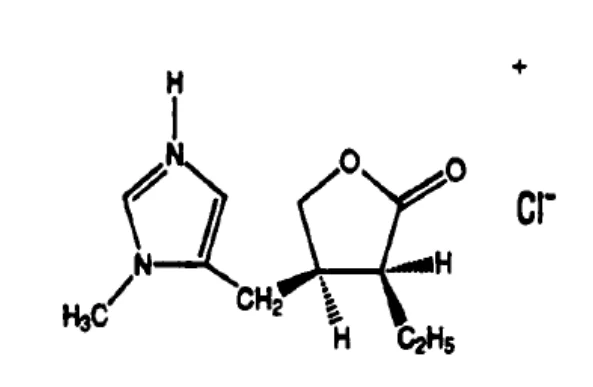
Chemical name: (1) 2(3H)-Furanone, 3-ethyldihydro-4-[(1-methyl-1H-imidazol-5-yl)- methyl]-, monohydrochloride, (3S-cis)-;
(2) Pilocarpine Monohydrochloride
Molecular formula and molecular mass: C11H16N2O2·HCl and 244.72
Structural formula:
Physicochemical properties: Pilocarpine hydrochloride is a white crystalline solid (hygroscopic). Pilocarpine hydrochloride is soluble in water and alcohol and virtually insoluble in most non-polar solvents. The melting point is between 199°C and 205°C. The specific rotation is between + 88.5° and + 91.5°.
CLINICAL TRIALS
Comparative Bioavailability
A single-dose, 2-period, 2-treatment 2-way crossover comparative bioavailability study of Pilocarpine
Hydrochloride Tablets, USP 1 x 5 mg tablets and Salagen® 1 x 5 mg tablets was performed in 24 healthy adult male and female volunteers under fasted conditions. A summary of the bioavailability data is provided in Table 9.
Table 9
Pilocarpine Hydrochloride (1 x 5 mg) From measured data n=24 uncorrected for potency Geometric Mean Arithmetic Mean (CV %) | ||||
|---|---|---|---|---|
| Parameter | Pilocarpine Hydrochloride 5 mg Tablets, SteriMax Inc. | Salagen® 5 mg Tablets, Pfizer Canada Inc. † | % Ratio of Geometric Means | 90% Confidence Interval |
AUClast (hr·ng/mL) | 53.69 59.86 (41.03) | 54.15 58.32 (34.77) | 99.16 | 94.00 – 104.59 |
AUCinf (hr·ng/mL) | 54.58 60.75 (40.66) | 55.12 59.35 (34.64) | 99.02 | 93.94 – 104.37 |
Cmax (ng/mL) | 24.31 25.5 (29.31) | 25.12 26.0 (25.98) | 99.76 | 89.38 – 104.76 |
Tmax§ (h) | 0.75 (0.50 – 2.50) | 0.75 (0.50 – 2.00) | ||
T½€ (h) | 1.60 (23.57) | 1.67 (29.06) | ||
§ Expressed as the median (range)
€ Expressed as the arithmetic mean (CV%)
†Salagen® 5 mg tablets (Pfizer Canada Inc.) purchased in Canada.
Two pivotal, 12 week, randomized, double-blind, placebo-controlled studies were conducted in 369 patients (placebo, n=152; 5mg t.i.d., n=141; 10mg t.i.d., n=121) with xerostomia due to radiation of the head and neck. The mean age of the patients was approximately 58 years of age. In the fixed dose study, increases from baseline (means 0.072 and 0.112 mL/min, ranges -0.690 to 0.728 and -.380 to 1.689) of whole saliva flow for the 5 mg (63%) and 10 mg (90%) tablet, respectively, were seen 1 hour after the first dose of pilocarpine hydrochloride tablets. Increases in unstimulated parotid flow were seen following the first dose (means 0.025 and 0.046 mL/min, ranges 0 to 0.414 and -0.070 to 1.002 mL/min) for the 5 and 10 mg dose, respectively.
Overall, based on the results of both studies, patients with xerostomia due to radiation of the head and neck, who were treated with 5 - 10 mg pilocarpine hydrochloride tablets t.i.d. (15 – 30 mg/d) for 12 weeks, showed a clinical and statistically significant improvement in dryness of the mouth. Patients' global assessment of xerostomia, ability to speak without liquids, and a reduced need for supplemental oral comfort agents were also significantly improved. A greater proportion of pilocarpine-treated patients reported an improvement in the ability to chew, sleep, and wear dentures than patients treated with placebo.
In these two studies, the most common adverse events related to pilocarpine hydrochloride tablets, and increasing in incidence as dose increased, were sweating, nausea, rhinitis, chills, flushing, urinary frequency, dizziness, and asthenia. The most common adverse event causing withdrawal from treatment was sweating (5mg t.i.d. = <1%; 10mg t.i.d. = 12%).
Two pivotal, 12 week, randomized, double-blind, placebo-controlled studies were conducted in 629 patients (placebo, n=253; 2.5mg q.i.d., n=121; 5mg q.i.d., n=255; 5-7.5mg q.i.d., n=114) with Sjögren's syndrome of which 95% (n=599) were female and 5% (n=30) were male. The mean age of the patients was approximately 55 years of age. Significant increases in salivary flow of at least 13-fold over placebo were seen 1 hour after the first 5 mg dose of pilocarpine hydrochloride tablets. An increase of 4-fold after the first 2.5 mg dose was also seen. Increases in salivary flow rates were maintained over the subsequent 12 weeks of treatment with pilocarpine hydrochloride tablets from 2.5 mg to 7.5 mg q.i.d..
Overall, based on the results of both studies, Sjögren's syndrome patients treated with 5 - 7.5 mg pilocarpine hydrochloride tablets q.i.d. (20 - 30 mg/d) showed highly statistically significant global improvements of both dry mouth and dry eyes compared to placebo. Significant improvements were observed after 6 to 12 weeks for patients' assessments of specific dry mouth symptoms such as mouth dryness; mouth discomfort; ability to speak without water; ability to sleep without water; ability to swallow food without water; and a decreased use of saliva substitutes. Significant improvements were observed after 6 to 12 weeks for patients' assessments of specific dry eye symptoms such as general eye discomfort; sensitivity to light; itching; tiredness; redness; sensation of something in the eye; visual blurring; ability to focus; and a decreased use of tear substitutes. In addition, vaginal dryness, skin dryness, nasal dryness, and the ability to cough up mucus were significantly improved after 12 weeks.
The most common adverse events related to drug were sweating, urinary frequency, chills, and flushing. The most common adverse experience involved in withdrawal from treatment was sweating (5mg t.i.d. = 2%; 7.5mg t.i.d. = <1%).
In a vast number of controlled and uncontrolled clinical studies found in the contemporary medical literature, pilocarpine has been used as a safe and effective treatment of xerostomia due to a variety of causes including cancer-related radiotherapy, Sjögren’s Syndrome, and other etiologies. In the studies, pilocarpine has relieved the major symptoms of xerostomia resulting in a reduction in the incidence and severity of oral mucositis, a reduction in the incidence and severity of oral pain (burning sensation), and improvements in oral dryness, taste, speech, chewing, and related conditions. The studies demonstrate that pilocarpine is capable of stimulating saliva secretion from both major and minor salivary glands producing peak responses approximately 30 minutes to 90 minutes post-administration of drug. In some cases, maximal responses occurred weeks after initiation of pilocarpine therapy. Composition of pilocarpine-stimulated saliva is not significantly different from normal, non-pilocarpine-stimulated saliva.
In summary, the data establishes that in the presence of functional salivary gland parenchyma, pilocarpine stimulates salivary secretion from both major and minor salivary glands. Pilocarpine has also been shown to 1) significantly improve the symptoms associated with xerostomia, including (oral) mucositis, oral pain, oral dryness, difficulty chewing, swallowing, speaking, and wearing dentures; and 2) reduce the need for oral comfort agents - resulting in improved patient comfort and quality of life.
DETAILED PHARMACOLOGY
Animal Studies:
Pharmacodynamics:
Pilocarpine exerts virtually all of the parasympathetic activities associated with "muscarinic" or "cholinergic" or "cholinomimetic" drugs. Pilocarpine has direct-acting effect on post-ganglionic, cholinergic receptors on cells of the parasympathetic nervous system. Pilocarpine duplicates the muscarinic, but not the nicotinic effects of acetylcholine, therefore, it has no effect on striated muscles. However, because of its muscarinic action, it will stimulate tissue such as smooth muscles and secretory glands. Pilocarpine can also act directly on effector cells that do not receive extensive parasympathetic innervation but nevertheless possess cholinergic receptors.
The pharmacologic effects of pilocarpine in animals (and humans) are consistent and largely predictable for a parasympathomimetic, cholinergic agonist. Consistent with this class of drug, pilocarpine produces dose-dependent effects on multiple systems including:
Central nervous:
- hypothermia
- catalepsy
- yawning
- tremors
- seizures
- CNS Depression
Cardiovascular/respiratory:
- hypotensive and hypertensive effects
- transient tachycardia or bradycardia
- pressor effects on arteriolar smooth muscle
- excess bronchial mucus and contraction of the smooth muscle
Gastrointestinal:
- increased gastrointestinal mucus flow and acid
- increased motility
- altered transport of salt and water
Genito/urinary:
- stimulate accessory sex gland secretions
- inhibit hormone-activated estrus behaviour in ovariectomized rat
- contraction of rat testicular capsule
- increased duration of ejaculation, volume of semen, number of spermatozoa per ejaculate
Endocrine/exocrine:
- increased salivation
- increased lacrimation
- increased sweating (diaphoresis)
- increased nasal secretions (rhinitis)
- raise blood sugar, plasma insulin
- increased pancreatic amylase secretions
- reduce activity of liver enzymes
- contraction of the spleen
Adrenal:
- increased release of adrenaline
Pharmacokinetics
Although there are several reports documenting the systemic absorption of pilocarpine following ocular administration, information on the absorption, distribution, metabolism, excretion, or pharmacokinetic studies in animals given pilocarpine orally is very limited.
In vitro studies suggest a cation-dependent, pilocarpine-hydrolyzing enzyme exists in rabbit (and human) serum and aqueous humour; however, the significance of this enzyme in vivo is unknown. Subsequent reports suggest that a portion of systemic pilocarpine is broken down by cholinesterases at the synaptic junction or metabolized (eg. pilocarpic acid), and excreted in the urine in combined forms.
In an unpublished report, rats were given 3, 9, 18, and 36 mg/kg/d (14-171 times the intended human daily dose) by oral gavage for 13 weeks (90 days). The results indicate pilocarpine hydrochloride is rapidly absorbed (Tmax ≤ 30 minutes) and eliminated (T½ < 60 minutes). Cmax and AUC values increased with increasing dose, but the increase at the 3 mg/kg/d level was not proportional. Bioaccumulation of pilocarpine did not occur since residual levels of the drug were essentially not detected for the pre-dose determination during week 13.
Pharmacokinetics
In vitro protein binding of 3H-pilocarpine hydrochloride in rat and human plasma was determined using ultrafiltration at nine concentrations ranging from 5 to 25,000 ng/mL. The measured percentage of 3H-pilocarpine hydrochloride bound to plasma proteins ranged from -1.30% to 5.06% (rat) and -4.50% to -0.26% (human). The results indicate pilocarpine hydrochloride was not bound to plasma proteins from either species; no effect of drug concentration on the measured protein binding was found for either species over the concentration range studied. The nonspecific binding of 3H-pilocarpine hydrochloride spiked in human ultrafiltrate was determined to be 7.27% at 5 ng/mL and 6.88% at 25,000 ng/mL. It appears the nonspecific binding of 3H-pilocarpine hydrochloride is diminished in the presence of plasma proteins.
TOXICOLOGY
Acute Toxicity:
In general, the toxic effects observed following single dose administration of pilocarpine are typical for sustained cholinergic activity, and considered a function of the cholinergic, parasympathomimetic activity of pilocarpine, although exaggerated at high doses.
The intraperitoneal LD50 of pilocarpine hydrochloride, in the mouse, ranged from 155 to 181 mg/kg (738 to 862 times the intended human daily dose) depending on the time of day (motor activity).
The LD50 of oral and subcutaneous pilocarpine hydrochloride, in the rat, is reported in Table 9. An "immediate" reaction occurs within 60 minutes of dosing and is characterized by death due to cardio-respiratory failure following tonic-clonic convulsions. A delayed reaction occurs within 5 days and is characterized by death due to respiratory failure following psychotic (catatonic/stuporous) reaction. The significance of these findings is unknown. Following psychotic-like behaviour characterized by excitable and hyperkinetic activity, disorientation, and occasional return to trance-like state, all surviving animals recover and are considered normal (with the exception of small spleen) within 4 to 6 weeks of drug administration.
Table 10- Acute Toxicity (LD50) of Pilocarpine
| Species | Rat | |||||||
| Route | Oral | SC | ||||||
LD50 (mg/kg) (ratio1) | 911 (4338) | 730 (3476) | 570 (2714) | 642 (3057) | 430 (2048) | |||
| Mean Time of Death | ~ 54 min (immed.) | ~ 1-2 d (early delayed) | ~ 5 d (late delayed) | ~ 34 min (immed.) | ~ 4 d (delayed) | |||
| Cause of Death (COD)/Principal Clinical Findings | COD: cardio- respiratory failure following clonic convulsions Observations: marked cholinergic stimulation; hypothermia; hepatic & pulmonary oedema; vascular congestion with or without hemorrhage and thrombosis of many organs | COD: respiratory failure in deep hypothermic catatonia Observations: weight loss due to anorexia; dehydration due to adipsia; congestion or other evidence of toxic change in liver, kidneys, brain, heart, spleen, adrenals, pancreas and testes | COD: respiratory failure in deep hypothermic catatonia Observations: Similar to “early delayed” with progression to atrophy of thymus and testes; pulmonary ischaemia; hemoconcentratio n; ante-mortem blepharitis and phallitis | COD: respiratory failure following convulsions Clinical signs: Sialorrhea, mucous diarrhea, clonic convulsions, hypothermia, listlessness, chromodacryorrhea , impaired righting reflex, nystagmus Histological: Vascular congestion of meninges, heart, renal cortex, lungs; small thrombi and hemorrhage in the lungs; RBCs in sinuses, and excess leucocytes in venous blood of the spleen; vacuole-like areas in the hepatic cells and zona fasciculata of the adrenal cortex | COD: respiratory failure consequent to increasing encephalopathy Clinical signs: Sialorrhea, mucous diarrhea, clonic convulsions, listlessness, chromodacryorrhea, impaired righting reflex, ataxia, upright stance, anal discharge, spatial disorientation Histological: Vascular congestion and hemorrhagic areas in GI tract; cellular necrosis with leucocyte infiltration of the liver; enlarged kidney-coloured adrenal glands due to excessive RBCs; small spleen due to contraction of the red pulp; small thymus due to loss of thymocytes; RBCs and glandular changes in the cells of the kidney; small thrombi and hemorrhage, congestion with edema of the lungs; congestion and granular changes of cardiac muscle; dilation of the meninges; degeneration of the spermatogonium , 1º and 2º spermatocytes, and sperm in testicles | |||
| 1 number of times the intended human daily dose (15 mg), assuming a 70 kg person. | ||||||||
Long-Term Toxicity:
In general, the effects reported in the long-term toxicity studies are dose dependent and consistent with the known muscarinic pharmacological activity of pilocarpine. They have been documented often in the literature. These include salivation, lacrimation, ocular discharge, and increase in gastrointestinal motility (soft feces). The soiling of the haircoat is possibly due to excessive urination or diarrhea. Furthermore, repeated stimulation of the salivary glands did not cause them to increase in weight. And there was no evidence of dependence following the abrupt withdrawal of pilocarpine after 100 days of treatment.
In a report evaluating the long-term toxicity of pilocarpine in rats, pilocarpine in aqueous solution was administered daily by gavage for 6 days/week, for a total of 100 days. The doses used were: 0.39, 0.78, 1.95, 7.80, 19.5, 39.0, 78.0, 156.0, 234.0, 312.0, 390.0, 468.0, 546.0, 624.0, 708.0, 780.0 mg/kg which represent 2 to 3714 times the intended human daily dose. The main clinical signs were: salivation at a dose of 7.8 mg/kg/d (37 times the intended human daily dose); diarrhea, hemodacryorrhea, soiling of fur and irritability at 39 mg/kg/d (186 times the intended human daily dose); and convulsions at 156 mg/kg/d (743 times the intended human daily dose). Salivation and diarrhea were marked at doses of 39 mg/kg/d and higher. In general, body weight loss increased with increasing doses; however, the loss of organ weight was not dose dependent. No toxicologically important histologic changes were seen in any organs at doses up to 19.5 mg/kg/d (about 93 times the intended human daily dose). At all doses above 19.5 mg/kg/d the main findings included: pneumonitis, capillary-venous congestion, signs consistent with some degree of inhibition of spermatogenesis, occasional areas of tubular necrosis in the kidneys, lipoid droplets in the adrenal cortices, and minor fatty degeneration or necrosis in hepatic central zones.
The LD50(100 days) was determined to be 156 mg/kg/day (743 times the intended human daily dose); the LD99(100 days) was determined to be 255 mg/kg/d (1214 times the intended human daily dose). At 255 mg/kg/d and higher doses there appeared convulsions, fever, marked anorexia, loss of body weight - a syndrome similar to that seen at the range of the oral LD50 (911 mg/kg/d).
Carcinogenicity:
Pilocarpine hydrochloride was administered orally for 104 weeks to rats in dosage groups of 3,9,or 18 mg/kg/day. Plasma pilocarpine AUC values at these doses in rats represent exposures 3.9-, 15-, and 44-fold higher, respectively, than human exposure to the maximum daily dose of 30 mg. There was a statistically significant increase in the incidence of benign adrenal medullary tumors at the highest dose (18 mg/kg/day) in both male and female rats (44-fold greater than human exposure) compared to control animals. There were no increases in adrenal medullary tumors compared to controls at the 9 mg/kg dose (15-fold greater than human exposure). These findings are of uncertain clinical relevance, because of the high background incidence of benign adrenal medullary tumors in rats and the increased incidence only being observed at exposures that significantly exceed maximum human exposures.
In the decades of ophthalmic administration for the treatment of glaucoma, pilocarpine has not demonstrated a potential to cause ocular tumours. It is expected a carcinogenic potential would have been identified from the frequent eye examinations of glaucoma patients whose eye(s) would be exposed continually to drug, and thus a likely candidate to develop cancer.
Genotoxicity:
No evidence that pilocarpine has the potential to cause genetic toxicity was obtained in a series of studies that included: 1) bacterial assays (Salmonella and E. coli) for reverse gene mutations; 2) an in vitro chromosome aberration assay in a Chinese hamster ovary cell line; 3) an in vivo chromosome aberration assay (micronucleus test) in mice; and 4) a primary DNA damage assay (unscheduled DNA synthesis) in rat hepatocyte primary cultures.
Reproduction and Teratology:
In non-reproductive studies, pilocarpine has been reported to increase ejaculation duration, semen volume and spermatozoa concentration in males of some animals (e.g., rats and bulls) but not others (e.g., boars). Such effects are expected with cholinergic stimulation of secretion of accessory sex glands and movement of spermatozoa through the epididymis and vas deferens.
Oral administration of pilocarpine to male and female rats at a dosage of 18 mg/kg/day (approximately 5 times the maximum recommended dose for a 50kg human when compared on the basis of body surface area (mg/m2 ) estimates) resulted in impaired reproductive function, including reduced fertility, decreased sperm motility, and morphologic evidence of abnormal sperm. It is unclear whether the reduction in fertility was due to effects on male animals, female animals, or both males and females. The data obtained in this study suggest that pilocarpine may impair the fertility of male and female humans.
Pilocarpine was associated with a reduction in the mean fetal body weight and an increase in the incidence of skeletal variations when given to pregnant rats at a dosage of 90 mg/kg/day (approximately 26 times the maximum recommended dose for a 50kg human when compared on the basis of body surface area (mg/m2) estimates). These effects may have been secondary to maternal toxicity. In another study, oral administration of pilocarpine to female rats during gestation and lactation at a dosage of 36 mg/kg/day (approximately 10 times the maximum recommended dose for a 50kg human when compared on the basis of body surface area (mg/m2) estimates) resulted in an increased incidence of stillbirths; decreased neonatal survival and reduced mean body weight of pups were observed at dosages of 18 mg/kg/day (approximately 5 times the maximum recommended dose for a 50kg human when compared on the basis of body surface area (mg/m2) estimates) and above. There are no adequate and well-controlled studies in pregnant women.
REFERENCES
- 1. Boyd EM, Fulford RA. Pilocarpine-induced convulsions and delayed psychotic-like reaction. Can J Biochem Physiol 1961;39:1287-94.
- 2. Boyd EM, Jarzylo SV. Daily oral doses of pilocarpine tolerated by albino rats. Arch Int Pharmacodyn 1968;175:84-98.
- 3. Bruchhausen D, Haschem J, Dardenne MU. Effect of intraconjunctival application of pilocarpine on bronchial resistance in asthmatics. German Med Monthly 1969;14:587-9.
- 4. Butt GM. Drug-induced xerostomia. J Can Dent Assoc 1991;57:391-3.
- 5. Cordner SM, Fysh RR, Gordon H, Whitaker SJ. Deaths of two hospital inpatients poisoned by pilocarpine. Br Med J 1986;293:1285-7.
- 6. Covert EL, Boyd EM. The acute oral toxicity of pilocarpine. I. Clinical observations. Pharmacologist 1962;4:176.
- 7. Ellis PP, Littlejohn K. Pilocarpine hydrolysis: clinical significance. Invest Ophthalmol 1973;12:931-3.
- 8. Epstein E, Kaufman I. Systemic pilocarpine toxicity from overdosage in treatment of an attack of angle-closure glaucoma. Am J Ophthal 1965;59:109-10.
- 9.
Everitt DE, Avorn J. Systemic effects of medications used to treat glaucoma. Ann Int Med
1990;112:120-5.
- 10. Ferguson MM. Pilocarpine and other cholinergic drugs in the management of salivary gland dysfunction. Oral Surg Oral Med Oral Pathol 1993;75:186-91.
- 11. Fox PC. Systemic therapy of salivary gland hypofunction. J Dent Res 1987;66 (Spec Iss):689-92.
- 12. Fox PC, Atkinson JC, Macynski AA, et al. Pilocarpine treatment of salivary gland hypofunction and dry mouth (xerostomia). Arch Intern Med 1991;151:1149-52.
- 13. Fox PC, van der Ven PF, Baum BJ, et al. Pilocarpine for the treatment of xerostomia associated with salivary gland dysfunction. Oral Surg Oral Med Oral Pathol 1986;61:243-8.
- 14. Greco JJ, Kelman CD. Systemic pilocarpine toxicity in the treatment of angle closure glaucoma. Ann Ophthalmol 1973;5:57-9.
- 15.
Greenspan D, Daniels TE. Effectiveness of pilocarpine in postradiation xerostomia. Cancer
1987;59:1123-5.
- 16. Greenspan D. Management of salivary dysfunction. NCI Monograph 1990;9:159-61.
- 17. LeVeque FG. Montgomery M, Potter D, et al. A multicenter, randomized, double-blind, placebo-controlled, dose-titration study of oral pilocarpine for treatment of radiation-induced xerostomia in head and neck cancer patients. J Clin Oncol 1993;11:1124-31.
- 18. Newell FW. Ophthalmology: Principles and concepts. 5th ed. St. Louis. Toronto. London: The C.V. Mosby Company, 1982.
- 19. Pour PM, Lawson T, Donnelly T, Stepan K. Modification of pancreatic carcinogenesis in the hamster model. XI. Inhibitory effect of pilocarpine hydrochloride. J Natl Cancer Inst 1984;72:191-4.
- 20. Riker WF. Cholinergic drugs. In: Drill VA, ed. Pharmacology in Medicine. 2nd ed. New York: Edition McGraw-Hill 1958;349-77.
- 21. Rhodus NL, Schuh MJ. Effects of pilocarpine on salivary flow in patients with Sjögren’s syndrome. Oral Surg Oral Med Oral Pathol 1991;72:545-9.
- 22. Schmahl D, Mundt D, Schmidt KG. Experimental investigations on the influence upon the chemical carcinogenesis. 1st Communication: Studies with ethylnitroso-urea. Z Krebsforsch 1974;82:91-100.
- 23. Selvin BL. Systemic effects of topical ophthalmic medications. Southern Med J 1983;76:349-58.
- 24. Sreebny LM, Valdini A. Xerosomia: a neglected symptom. Arch Intern Med 1987;147:1333-7.
- 25. Taylor P. Cholinergic agonists. In: Gilman AG, Goodman LS, Rall TW, Murod F, editors. Goodman and Gillman's the pharmacologic basis of therapeutics. 8th ed. New York: Pergamon Press, MacMillan-Pergamon Publishing Corp, 1991:122-30.
- 26. Wiseman LR, Faulds D. Oral Pilocarpine: A review of its pharmacological properties and clinical potential in xerostomia. Drugs 1995;49(1):143-55.
- 27. Zimmerman TJ. Pilocarpine. Ophthalmology 1981;88:85-8.
- 28. Product Monograph for Salagen® (Pfizer Canada Inc.) Date of Preparation: September 25, 2014, Control # 175412.