


Product Monograph - PMS-Colchicine ER
RECENT MAJOR LABEL CHANGES
Not applicable
TABLE OF CONTENTS
Sections or subsections that are not applicable at the time of authorization are not listed.
RECENT MAJOR LABEL CHANGES ........................................................................................... 2
TABLE OF CONTENTS ............................................................................................................. 2
PART I: HEALTH PROFESSIONAL INFORMATION ..................................................................... 4
1 INDICATIONS .............................................................................................................. 4
1.1 Pediatrics ................................................................................................................... 4
1.2 Geriatrics ................................................................................................................... 4
2 CONTRAINDICATIONS ................................................................................................. 4
4 DOSAGE AND ADMINISTRATION ................................................................................. 4
4.1 Dosing Considerations .............................................................................................. 4
4.2 Recommended Dose and Dosage Adjustment ......................................................... 4
4.4 Administration .......................................................................................................... 5
4.5 Missed Dose .............................................................................................................. 5
5 OVERDOSAGE ............................................................................................................. 5
6 DOSAGE FORMS, STRENGTHS, COMPOSITION AND PACKAGING ................................. 6
7 WARNINGS AND PRECAUTIONS .................................................................................. 6
7.1 Special Populations ................................................................................................... 8
7.1.1 Pregnant Women ................................................................................................ 8
7.1.2 Breast-feeding ..................................................................................................... 8
7.1.3 Pediatrics ............................................................................................................. 8
7.1.4 Geriatrics ............................................................................................................. 9
8 ADVERSE REACTIONS.................................................................................................. 9
8.1 Adverse Reaction Overview ...................................................................................... 9
8.2 Clinical Trial Adverse Reactions ................................................................................ 9
8.3 Less Common Clinical Trial Adverse Reactions ....................................................... 10
8.4 Abnormal Laboratory Findings: Hematologic, Clinical Chemistry and Other Quantitative Data .............................................................................................................. 10
8.5 Post-Market Adverse Reactions .............................................................................. 10
9 DRUG INTERACTIONS ............................................................................................... 11
9.1 Serious Drug Interactions ....................................................................................... 11
9.2 Drug Interactions Overview .................................................................................... 11
9.3 Drug-Behavioural Interactions ................................................................................ 11
9.4 Drug-Drug Interactions ........................................................................................... 11
9.5 Drug-Food Interactions ........................................................................................... 13
9.6 Drug-Herb Interactions ........................................................................................... 14
9.7 Drug-Laboratory Test Interactions.......................................................................... 14
10 CLINICAL PHARMACOLOGY ....................................................................................... 14
10.1 Mechanism of Action ........................................................................................ 14
10.2 Pharmacodynamics ........................................................................................... 14
10.3 Pharmacokinetics .............................................................................................. 14
11 STORAGE, STABILITY AND DISPOSAL ......................................................................... 17
12 SPECIAL HANDLING INSTRUCTIONS ........................................................................... 17
PART II: SCIENTIFIC INFORMATION ...................................................................................... 18
13 PHARMACEUTICAL INFORMATION ........................................................................... 18
14 CLINICAL TRIALS ....................................................................................................... 19
14.1 Trial Design and Study Demographics .............................................................. 19
14.2 Study Results ..................................................................................................... 21
15 MICROBIOLOGY ....................................................................................................... 22
16 NON-CLINICAL TOXICOLOGY ..................................................................................... 22
PATIENT MEDICATION INFORMATION ................................................................................. 23
PART I: HEALTH PROFESSIONAL INFORMATION
1 INDICATIONS
pms-COLCHICINE ER (colchicine extended-release tablets) is indicated for the reduction of atherothrombotic events in adult patients with existing coronary artery disease, in addition to standard therapies, including LDL-C lowering and antithrombotic drug treatment.
1.1 Pediatrics
Pediatrics (<18 years): No data are available to Health Canada; therefore, Health Canada has not authorized an indication for pediatric use.
1.2 Geriatrics
Geriatrics (≥ 65 years): Evidence from clinical studies and experience suggests that use in the geriatric population may be associated with differences in safety or effectiveness. Because of the increased incidence of decreased renal function in the elderly population, and the higher incidence of other co-morbid conditions in this population requiring the use of other medications, pms-COLCHICINE ER should be used with caution in the elderly.
2 CONTRAINDICATIONS
pms-COLCHICINE ER is contraindicated
with strong P-glycoprotein (P-gp) inhibitors or strong CYP3A4 inhibitors (see 7 WARNINGS AND
PRECAUTIONS, Endocrine and Metabolism, and 9 DRUG INTERACTIONS)
- in severe renal impairment (eGFR < 30 mL/min)
- in severe hepatic impairment
- in patients with existing blood dyscrasias, and
- in patients who are hypersensitive to this drug or to any ingredient in the formulation, including any non-medicinal ingredient, or component of the container. For a complete listing, see 6 DOSAGE FORMS, STRENGTHS, COMPOSITION AND PACKAGING.
4 DOSAGE AND ADMINISTRATION
4.1 Dosing Considerations
Review of concomitant medications and assessment of renal and hepatic function should be performed prior to initiating pms-COLCHICINE ER (see 7 WARNINGS AND PRECAUTIONS, and 9 DRUG INTERACTIONS).
4.2 Recommended Dose and Dosage Adjustment
pms-COLCHICINE ER is to be administered orally as a single 0.5 mg tablet once daily. The maximum dose is 0.5 mg daily.
Geriatrics (≥ 65 years): Use with caution in geriatric patients, because of the increased incidence of decreased renal function in this population, and the higher incidence of other co-morbid conditions requiring use of other medications.
Pediatrics (< 18 years): Health Canada has not authorized an indication for pediatric use.
Patients with renal impairment: Patients with renal impairment should be monitored closely for adverse effects of colchicine (see 7 WARNINGS AND PRECAUTIONS, Endocrine and Metabolism, and 10.3 ACTION AND CLINICAL PHARMACOLOGY, Pharmacokinetics, Renal Insufficiency). Patients with any degree of renal impairment should not be given pms-COLCHICINE ER in conjunction with strong P-gp inhibitors or strong CYP3A4 inhibitors (see 2 CONTRAINDICATIONS). pms-COLCHICINE ER itself is contraindicated in patients with severe renal impairment (see 2 CONTRAINDICATIONS).
Patients with hepatic impairment: Patients with hepatic impairment should be monitored closely for adverse effects of colchicine (see 7 WARNINGS AND PRECAUTIONS, Endocrine and Metabolism, and 10.3 ACTION AND CLINICAL PHARMACOLOGY, Pharmacokinetics, Hepatic Insufficiency). Patients with any degree of hepatic impairment should not be given pms-COLCHICINE ER in conjunction with strong P-gp inhibitors or strong CYP3A4 inhibitors (see 2 CONTRAINDICATIONS). pms-COLCHICINE ER itself is contraindicated in patients with severe hepatic impairment (see 2 CONTRAINDICATIONS).
4.4 Administration
pms-COLCHICINE ER may be administered with or without food.
Avoid taking grapefruit juice, a moderate CYP3A4 inhibitor, with pms-COLCHICINE ER (see 9 DRUG INTERACTIONS, Drug-Food Interactions).
4.5 Missed Dose
If a dose is missed, patients should take their next dose as soon as possible. However, taking two doses of pms-COLCHICINE ER at the same time should not be undertaken to make up for missed doses.
5 OVERDOSAGE
Colchicine has a narrow therapeutic window and is highly toxic in overdose. Fatal overdoses, whether accidental and intentional, have been reported in adults and children who have ingested colchicine.
pms-COLCHICINE ER should be kept out of the reach of children.
There is usually a latent period of 2 to 12 hours between overdosage and the onset of symptoms, regardless of the route of administration. Deaths have been reported with as little as 7 mg, although higher doses have been taken without fatal results.
The exact dose of colchicine that produces significant toxicity is unknown. Following colchicine overdose, all patients, even in the absence of early symptoms, should be referred for immediate medical assessment.
Symptoms: The first stage of acute colchicine toxicity typically begins within 24 hours of ingestion and includes gastrointestinal symptoms such as abdominal pain, nausea, vomiting, diarrhea and significant fluid loss, leading to volume depletion. Peripheral leukocytosis may also be seen.
The second phase with life threatening complications develops 24 to 72 hours after drug administration: multisystem organ dysfunction, acute renal failure, confusion, coma, ascending peripheral motor and sensory neuropathy, myocardial depression, pancytopenia, dysrhythmias, respiratory failure, and consumption coagulopathy. Death is usually a result of respiratory depression and cardiovascular collapse. If the patient survives, recovery may be accompanied by rebound leukocytosis and reversible alopecia starting about one week after the initial ingestion.
Treatment: No specific antidote exists. Discontinue therapy immediately. Elimination of toxins by gastric lavage within one hour of acute poisoning. Consider oral activated charcoal in adults who have ingested more than 0.1 mg/kg bodyweight within 1 hour of presentation and in children who have ingested any amount within 1 hour of presentation. Hemodialysis has no efficacy (high apparent distribution volume). Close clinical and biological monitoring in hospital environment is required.
Symptomatic and supportive treatment: Control of respiration, maintenance of blood pressure and circulation, correction of fluid and electrolytes imbalance. The lethal dose varies widely (7-65 mg single dose) for adults but is generally about 20 mg.
For management of a suspected drug overdose, contact your regional poison control centre.
6 DOSAGE FORMS, STRENGTHS, COMPOSITION AND PACKAGING
Table 1 – Dosage Forms, Strengths, Composition and Packaging
pms-COLCHICINE ER extended-release tablets are blue-green, with a translucent to white finish, round, biconvex coated tablets, debossed with ‘’P‘’ on one side and ‘’05‘’ on the other side.
pms-COLCHICINE ER is supplied in bottles of 100 tablets.
7 WARNINGS AND PRECAUTIONS
Endocrine and Metabolism
Co-administration of pms-COLCHICINE ER with strong P-gp inhibitors and/or strong CYP3A4 inhibitors will increase exposure to colchicine, which may lead to colchicine-induced toxicity including fatalities. Such concomitant use is contraindicated (see 2 CONTRAINDICATIONS).
pms-COLCHICINE ER should be used with caution in patients having other risk factors for increased systemic exposure of colchicine, such as moderate renal impairment, moderate hepatic impairment, or in geriatric patients. In these patients, concomitant use of pms-COLCHICINE ER with moderate inhibitors of CYP3A4 should be avoided (see 9 DRUG INTERACTIONS).
| Route of | Dosage Form / | Non-medicinal Ingredients | ||||
| Administration | Strength/Composition | |||||
| Oral | Extended-release tablet, 0.5 mg | Ammonio methacrylate copolymer, FD&C Blue #1, glyceryl monostearate, invert sugar syrup, iron oxide yellow, magnesium stearate, maltodextrin, polyethylene glycol, polyvinyl alcohol-part hydrolyzed, polysorbate 80, povidone, sodium starch glycolate, sucrose, talc, titanium dioxide, triethyl citrate, water. | ||||
Colchicine has been shown to induce reversible malabsorption of Vitamin B12 (see 9 DRUG INTERACTIONS).
Gastrointestinal
Gastrointestinal disorders are the most common adverse reactions with colchicine. They are often the first signs of toxicity and may indicate that the colchicine dose needs to be interrupted. These adverse reactions include abdominal pain or cramping, diarrhea, nausea, and vomiting (see 8 ADVERSE REACTIONS).
Patients with significant underlying gastrointestinal diseases, e.g., inflammatory bowel diseases, chronic diarrhea, etc. should not be treated with pms-COLCHICINE ER.
Hematologic
Blood dyscrasias: Myelosuppression, leucopenia, granulocytopenia, thrombocytopenia, pancytopenia and aplastic anemia have been reported with colchicine use. Periodic blood tests are recommended since prolonged administration of colchicine may cause blood dyscrasias.
Use of pms-COLCHICINE ER in patients with pre-existing blood dyscrasias is contraindicated (see 2 CONTRAINDICATIONS).
Hepatic/Biliary/Pancreatic
Colchicine is known to be metabolized by the liver and the presence of severe hepatic impairment has been associated with colchicine toxicity. Hepatic clearance of colchicine may be significantly reduced, and plasma half-life prolonged in patients with chronic hepatic impairment. Use of pms-COLCHICINE ER is contraindicated in patients with severe hepatic impairment (see 2 CONTRAINDICATIONS).
pms-COLCHICINE ER should not be prescribed in conjunction with strong P-gp inhibitors or strong CYP3A4 inhibitors, including to patients with hepatic impairment (see 2 CONTRAINDICATIONS, and 9 DRUG INTERACTIONS). In these patients, life-threatening and fatal colchicine toxicity has been reported with colchicine taken in therapeutic doses. Concomitant use of moderate CYP3A4 inhibitors with pms-COLCHICINE ER should be avoided in patients with risk factors for increased systemic exposure of colchicine, including moderate hepatic impairment (see 7 WARNINGS AND PRECAUTIONS, Endocrine and Metabolism).
Patients with hepatic impairment should be monitored closely for adverse effects of colchicine.
Musculoskeletal
Neuromuscular Toxicity: Colchicine-induced neuromuscular toxicity and rhabdomyolysis have been reported with chronic treatment in other indications (e.g. chronic gout). Patients with renal dysfunction, and geriatric patients even with normal renal and hepatic function, are at increased risk. Concomitant use of statins, including atorvastatin, rosuvastatin, and simvastatin, as well as gemfibrozil, fenofibrate, fenofibric acid, or bezafibrate (all associated with myotoxicity), or cyclosporine, with colchicine may potentiate the development of myopathy (see 9 DRUG INTERACTIONS, Table 3). Once colchicine is stopped, the symptoms generally resolve within one week to several months.
Renal
Colchicine is known to be excreted renally and the presence of severe renal impairment has been associated with colchicine toxicity. Urinary clearance of colchicine and its metabolites may be decreased in patients with impaired renal function. Use of pms-COLCHICINE ER is contraindicated in patients with severe renal impairment (see 2 CONTRAINDICATIONS).
pms-COLCHICINE ER should not be prescribed in conjunction with strong P-gp inhibitors or strong CYP3A4 inhibitors, including to patients with renal impairment (see 2 CONTRAINDICATIONS, and 9 DRUG INTERACTIONS). Concomitant use of moderate CYP3A4 inhibitors with pms-COLCHICINE ER should be avoided in patients with risk factors for increased systemic exposure of colchicine, including moderate renal impairment (see 7 WARNINGS AND PRECAUTIONS, Endocrine and Metabolism).
Patients with renal impairment should be monitored closely for adverse effects of colchicine.
Reproductive Health: Female and Male Potential
Fertility
Case reports and epidemiology studies in human male subjects on colchicine therapy indicated that infertility from colchicine is rare and may be reversible. A case report indicated that azoospermia was reversed when therapy was stopped. Case reports and epidemiology studies in female subjects on colchicine therapy have not established a clear relationship between colchicine use and female infertility.
Function
No data are available for pms-COLCHICINE ER.
Teratogenic Risk
Cell division in animals and plants can be arrested by colchicine. In certain species of animal under certain conditions it has produced teratogenic effects and has adversely affected spermatogenesis (see 16 NON-CLINICAL TOXICOLOGY).
7.1 Special Populations
7.1.1 Pregnant Women
Colchicine crosses the human placenta. Although animal reproductive and developmental studies were not conducted with pms-COLCHICINE ER, published animal reproduction and development studies indicate that colchicine causes embryofetal toxicity, teratogenicity and altered postnatal development at exposures within or above the clinical therapeutic range (see 16 NON-CLINICAL TOXICOLOGY).
Available data from published literature on colchicine use in pregnancy over several decades have not identified any drug-associated risks for major birth defects, miscarriage, or adverse maternal or fetal outcomes. Nevertheless, use of pms-COLCHICINE ER during pregnancy is not recommended.
7.1.2 Breast-feeding
Limited published data from case reports and a small lactation study demonstrate that colchicine is excreted in breast milk. A systematic review of literature reported no adverse effects in 149 breastfed children. There are no data on the effects of colchicine on milk production. Use of pms-COLCHICINE ER during breast-feeding is not recommended.
7.1.3 Pediatrics
Pediatrics (< 18 years): No data are available to Health Canada; therefore, Health Canada has not authorized an indication for pediatric use.
7.1.4 Geriatrics
Geriatrics (≥ 65 years): Because of the increased incidence of decreased renal function in the geriatric population, and the higher incidence of other co-morbid conditions in this population requiring the use of other medications, pms-COLCHICINE ER should be used with caution in these patients.
8 ADVERSE REACTIONS
8.1 Adverse Reaction Overview
Gastrointestinal disorders are the most common adverse reactions with colchicine. They are often the first signs of toxicity and may indicate that the colchicine dose needs to be interrupted. These adverse reactions include abdominal pain and/or cramping, diarrhea, nausea, and vomiting.
8.2 Clinical Trial Adverse Reactions
Clinical trials are conducted under very specific conditions. The adverse reaction rates observed in the clinical trials, therefore, may not reflect the rates observed in practice and should not be compared to the rates in the clinical trials of another drug. Adverse reaction information from clinical trials may be useful in identifying and approximating rates of adverse drug reactions in real-world use.
The safety of pms-COLCHICINE ER was evaluated in 4,745 patients in the COLCOT cardiovascular outcomes trial, with 2,366 patients receiving pms-COLCHICINE ER and 2,379 patients receiving placebo. The median time on study medication was 19.6 months. No pre-randomisation exposure to colchicine occurred in this trial.
In the COLCOT trial, related treatment-emergent adverse events (TEAEs) were reported in 16.0% of patients treated with pms-COLCHICINE ER and in 15.8% of patients in the placebo group. Severe drug treatment related TEAEs occurred in 1.1% of patients in the pms-COLCHICINE ER group and in 0.8% of patients in the placebo group. Diarrhea and nausea were reported with a higher incidence in the pms-COLCHICINE ER group (8.0% and 1.2% respectively), compared to the placebo group (7.3% and 0.6% respectively), see Table 2.
Table 2 - Related TEAEs in ≥ 1% of Patients in the COLCOT Trial (Safety Population)
| pms-COLCHICINE ER | Placebo | |||||||
| System Organ Class | N = 2330 | N = 2346 | ||||||
| Preferred Term | n (%) | n (%) | ||||||
Gastrointestinal Disorders Abdominal pain Diarrhea Nausea | 267 (11.5) 17 (0.7) 186 (8.0) 28 (1.2) | 255 (10.9) 24 (1.0) 172 (7.3) 15 (0.6) | ||||||
| Laboratory Investigations+ | 66 (2.8) | 72 (3.1) | ||||||
| Skin and Subcutaneous Tissue Disorders* | 34 (1.5) | 26 (1.1) | ||||||
+ no noteworthy imbalance of specific laboratory values observed across treatment groups
* includes alopecia 0.3%, allergic dermatitis 0.1%, erythema 0.1%, and pruritic rash 0.1%, in colchicine-treated patients
In the pms-COLCHICINE ER group, 16.4% of patients had Serious TEAEs, compared to 17.2% in the placebo group. The most frequently reported serious adverse events (SAEs) were chest pain (1.6%) and angina pectoris (1.2%), with a similar incidence across the groups. Pneumonia, as a SAE, occurred in 0.9% of colchicine-treated patients and 0.4% of placebo-treated patients.
A total of 1,227 gastrointestinal (GI) TEAEs were reported in 17.5% of patients in the pms-COLCHICINE ER group and in 17.6% of patients in the placebo group. Serious GI adverse events were reported in 2.0% of colchicine-treated patients, and 1.5% of those treated with placebo, with GI hemorrhage the most frequently reported of these adverse events at 0.3% in the colchicine group, and 0.2% in the placebo group. Study drug was stopped permanently due to a GI TEAE in 4.4% of colchicine-treated patients and 3.8% of placebo-treated patients.
8.3 Less Common Clinical Trial Adverse Reactions
Less common adverse reactions (< 1%) reported more frequently with pms-COLCHICINE ER than placebo in the COLCOT trial include:
Blood and lymphatic system disorders: anemia
Gastrointestinal disorders: upper abdominal pain, flatulence, frequent bowel movements, gastrointestinal inflammation
Hepatobiliary disorders: cholestasis
Investigations: alanine aminotransferase increased, blood bilirubin increased, glomerular filtration rate abnormal, hepatic enzyme abnormal, weight decreased
Musculoskeletal and connective tissue disorders: arthralgia
Nervous system disorders: dysgeusia
Skin and subcutaneous tissue disorders: alopecia, allergic dermatitis, erythema, pruritic rash
8.4 Abnormal Laboratory Findings: Hematologic, Clinical Chemistry and Other Quantitative Data
Clinical Trial Findings
No noteworthy imbalances of laboratory investigations were observed.
Post-Market Findings
No post-marketing data exist for pms-COLCHICINE ER.
8.5 Post-Market Adverse Reactions
No post-marketing data exist for pms-COLCHICINE ER.
Historical use of colchicine has been reported to cause neuromuscular toxicity, which may present as muscle pain or weakness (see 7 WARNINGS AND PRECAUTIONS, Musculoskeletal). Serious toxic manifestations associated with colchicine include myelosuppression, disseminated intravascular coagulation, and impairment of renal, hepatic, circulatory, and central nervous systems. These toxicities most often occur with excessive accumulation or overdosage (see 5 OVERDOSAGE).
The following adverse reactions have been reported when colchicine has been used in other indications. These have been generally reversible upon temporarily interrupting treatment or lowering
the dose of colchicine. Because these reactions are reported voluntarily from a population of uncertain size, it is not possible to reliably estimate their frequency or establish a causal relationship to drug exposure.
Dermatological: alopecia, maculopapular rash, purpura, rash
Digestive: abdominal cramping, lactose intolerance, vomiting
Hematological: leukopenia, granulocytopenia, thrombocytopenia, pancytopenia, aplastic anemia
Hepatobiliary: elevated AST, elevated ALT
Musculoskeletal: myopathy, elevated CPK, myotonia, muscle weakness, muscle pain, rhabdomyolysis
Neurological: neuropathy, peripheral neuritis
Reproductive: azoospermia, oligospermia
Cases of severe cutaneous adverse reactions, i.e., Stevens-Johnson syndrome (SJS), toxic epidermal necrolysis (TEN), and drug reaction with eosinophilia and systemic symptoms (DRESS) have been observed with colchicine use.
9 DRUG INTERACTIONS
9.1 Serious Drug Interactions
Serious Drug Interactions
Co-administration of pms-COLCHICINE ER with strong P-gp inhibitors and/or strong CYP3A4 inhibitors will increase exposure to colchicine, which may lead to colchicine-induced toxicity, including fatalities. Such concomitant use is contraindicated (see 2 CONTRAINDICATIONS, and 9.4 Drug-Drug Interactions, Table 3).
9.2 Drug Interactions Overview
pms-COLCHICINE ER has not been studied for drug-drug interactions, however data and information available in the public domain related to the drug interaction potential of colchicine are presented.
Colchicine is a substrate of the efflux transporter P-glycoprotein (P-gp). Of the cytochrome P450 enzymes tested, CYP3A4 was mainly involved in the metabolism of colchicine. If pms-COLCHICINE ER is administered with drugs that inhibit P-gp, most of which also inhibit CYP3A4, increased concentrations of colchicine are likely.
9.3 Drug-Behavioural Interactions
No data are available for pms-COLCHICINE ER.
9.4 Drug-Drug Interactions
The drugs listed in this table are based on either drug interaction case reports or studies, or potential interactions due to the expected magnitude and seriousness of the interaction.
Table 3 - Established or Potential Drug-Drug Interactions
| Drug Class | Source of | Effect | Clinical Comment | ||
| Evidence | |||||
Strong CYP3A4 Inhibitors: Atazanavir, clarithromycin, darunavir/ritonavir, indinavir, itraconazole, ketoconazole, lopinavir/ritonavir, nefazodone, nelfinavir, ritonavir, saquinavir, telithromycin, tipranavir/ritonavir | C, T | Significant increases in colchicine plasma levels, up to 3.5-fold; fatal colchicine toxicity has been reported with clarithromycin, a strong CYP3A4 inhibitor. Similarly, significant increase in colchicine plasma levels is anticipated with other strong CYP3A4 inhibitors. | Concomitant use of pms-COLCHICINE ER with strong CYP3A4 inhibitors is contraindicated (see 2 CONTRAINDICATIONS). | ||
Moderate CYP3A4 Inhibitors: Amprenavir, aprepitant, diltiazem, erythromycin, fluconazole, fosamprenavir (pro-drug of amprenavir), grapefruit juice, verapamil | C, T | Significant increases in colchicine plasma concentration, up to 2-fold, have been observed. Neuromuscular toxicity has been reported with diltiazem and verapamil interactions. | Weigh the potential benefits and risks and carefully monitor patients for any signs or symptoms of toxicity. Avoid concomitant use of pms-COLCHICINE ER with moderate CYP3A4 inhibitors in elderly patients, and in patients with moderate renal or hepatic impairment (see 7 WARNINGS AND PRECAUTIONS, Endocrine and Metabolism). | ||
Strong P-gp Inhibitors: Cyclosporine, ranolazine | C, T | Significant increases in colchicine plasma levels, up to 3.2-fold. Fatal colchicine toxicity has been reported with cyclosporine, a P-gp inhibitor. Similarly, significant increase in colchicine plasma levels is anticipated with other P-gp inhibitors. | Concomitant use of pms-COLCHICINE ER with strong P-gp inhibitors is contraindicated (see 2 CONTRAINDICATIONS). | ||
| Drug Class | Source of | Effect | Clinical Comment | ||
| Evidence | |||||
HMG-Co A Reductase Inhibitors: atorvastatin, rosuvastatin, simvastatin | C, T | Pharmacokinetic and/or pharmacodynamic interaction: the addition of one drug to a stable long-term regimen of the other has resulted in myopathy and rhabdomyolysis (including fatality) | Carefully monitor patients for any signs or symptoms of muscle pain, tenderness, or weakness, particularly during initial therapy; monitoring CPK (creatine phosphokinase) will not necessarily prevent the occurrence of severe myopathy. | ||
Other Lipid-Lowering Drugs: fibrates, gemfibrozil | C, T | ||||
Digitalis Glycosides: digoxin | C | P-gp substrate; rhabdomyolysis has been reported | |||
Legend: C = Case Study; CT = Clinical Trial; T = Theoretical
Strong P-gp inhibitors: When a single dose of cyclosporine 100 mg was co-administered with a dose of colchicine 0.6 mg, both the AUC and Cmax of colchicine were increased by 3.2-fold.
Strong CYP3A4 inhibitors: When a single dose of colchicine 0.6 mg was administered following a seven-day course of clarithromycin 250 mg bid, the AUC of colchicine was increased 3.4-fold and its Cmax increased 3.0-fold.
When a single dose of colchicine 0.6 mg was administered following a five-day course of ritonavir 100 mg bid, the AUC of colchicine was increased 3.5-fold and its Cmax increased 2.7-fold.
When a single dose of colchicine 0.6 mg was administered following a five-day course of ketoconazole 200 mg bid, the AUC of colchicine was increased 2.9-fold and its Cmax increased 1.9-fold.
Moderate CYP3A4 inhibitors: When a single dose of colchicine 0.6 mg was administered following a five-day course of verapamil ER 240 mg OD, the AUC of colchicine was increased 2.0-fold and its Cmax increased 1.3-fold.
When a single dose of colchicine 0.6 mg was administered following a seven-day course of diltiazem ER 240 mg OD, the AUC of colchicine was increased 1.8-fold and its Cmax increased 1.3-fold.
Interaction with Vitamin B12: Reversible malabsorption of vitamin B12 has been observed with chronic administration of colchicine.
9.5 Drug-Food Interactions
When pms-COLCHICINE ER was administered with food in a bioavailability study, the results showed a lack of a significant food effect (see 10 CLINICAL PHARMACOLOGY, Pharmacokinetics, Table 4). pms-COLCHICINE ER may be administered with or without food.
Study data of potential interaction between grapefruit juice (a moderate CYP3A4 inhibitor) and colchicine suggests that grapefruit juice may augment colchicine oral bioavailability. Avoid grapefruit or grapefruit juice when taking pms-COLCHICINE ER.
9.6 Drug-Herb Interactions
Interactions with herbal products have not been established.
9.7 Drug-Laboratory Test Interactions
Colchicine treatment has been shown to produce alterations to laboratory test results. The effects of potentially clinical significance include false positive test results for red blood cells (RBC) and haemoglobin levels in diagnostic urine tests and interference of the Reddy, Jenkins and Thorn procedure when determining 17-hydroxycorticosteroid levels in urine.
10 CLINICAL PHARMACOLOGY
10.1 Mechanism of Action
The exact mechanism of action of colchicine in secondary prevention of major cardiovascular events is not completely understood. However, it is known that colchicine disrupts cytoskeletal functions through inhibition of β-tubulin polymerization into microtubules and consequently prevents the activation, degranulation and migration of neutrophils. Evidence suggests that colchicine may also interfere with the intracellular assembly of the inflammasome complex present in neutrophils and monocytes that mediates activation of interleukin-1β.
Recently, colchicine has been shown to suppress the activation of caspase-1, the enzymatic component of the nucleotide-binding oligomerization domain receptor (NOD-like receptor) family pyrin 3 (NLRP3) inflammasome. Colchicine may increase the threshold for initiation of full-blown inflammasome activation in part by diminishing (without eliminating) subclinical inflammation.
Other potential anti-inflammatory activities of colchicine include modulation of pyrin expression, downregulation of lipopolysaccharide-induced TNF-a mRNA production, inhibition of histamine release by mast cells, suppression of procollagen synthesis, and promotion of collagenase activity.
10.2 Pharmacodynamics
The pharmacodynamics of colchicine in prevention of atherothrombotic cardiovascular events is not completely understood; however, colchicine has been shown to exert cardioprotective, anti-inflammatory and anti-atherosclerotic effects in several animal models in vivo and may stabilize atherosclerotic plaques by reducing inflammatory activity and plaque burden. Favorable plaque-modifying effects of daily 0.5 mg colchicine therapy, independent of substantial low-density lipoprotein reduction or high-dose statin intensification in patients with post-acute coronary syndrome have been observed.
10.3 Pharmacokinetics
In healthy adults, colchicine exhibits linear pharmacokinetics within a dose range of 0.5 to 1.5 mg.
Mean pharmacokinetic parameter values of pms-COLCHICINE ER in healthy adults are shown in Table 4.
Table 4 - Summary of pms-COLCHICINE ER Pharmacokinetic Parameters in Healthy Adults Under Fast and Fed Conditions
| Cmax | Tmax | t½ | AUC0-72 | |||||||||
| ng/mL | hoursa | hours | ng·h/mL | |||||||||
Single dose mean (CV%) (fasting) | 1.95 (41.1) | 1.33 (range 0.75 – 2.67) | 26.44 (16.7) | 14.01 (35.4) | ||||||||
Single dose mean (CV%) (fed) | 1.99 (41.6) | 1.67 (range 0.50 – 3.00) | 26.66 (16.6) | 12.87 (31.9) | ||||||||
a Median and range are presented.
Absorption
Oral colchicine intake undergoes an entero-hepatic cycle. It is absorbed rapidly by the gastrointestinal tract. In healthy adults, pms-COLCHICINE ER is absorbed when given orally, reaching a mean Cmax of just under 2 ng/mL (range 0.8 to 3.9 ng/mL) in approximately 1.3 hours (range 0.75 to 4 hours) after a single dose administered under fasting conditions.
When pms-COLCHICINE ER was administered with or following a high-fat, high-calorie meal in a bioavailability study, the results showed a lack of a significant food effect, see Table 4, above. pms-COLCHICINE ER may be administered with or without food.
In some subjects, secondary colchicine peaks are seen, occurring between 3 and 36 hours post-dose and ranging from 39% to 155% of the height of the initial peak. These observations are attributed to intestinal secretion and reabsorption and/or biliary recirculation.
Absolute bioavailability is reported to be approximately 45%.
Distribution
The mean apparent volume of distribution in healthy young volunteers is approximately 5 to 8 L/kg.
Colchicine binding to serum protein is low, 39% ± 5, primarily to albumin regardless of concentration. After reabsorption, colchicine is rapidly removed from the plasma and distributed to various tissues. Colchicine is found in high concentrations in leucocytes, kidneys, the liver and spleen and consequently, accumulation in these tissues may lead to toxicity. Colchicine is rapidly distributed to peripheral leucocytes and concentrations in these cells may exceed those in plasma.
Metabolism
Colchicine is partly acetylated in the liver and is slowly metabolized in other tissues. It is demethylated to two primary metabolites, 2-O-demethylcolchicine and 3-O-demethylcolchicine (2-and 3-DMC, respectively) and one minor metabolite, 10-O-demethylcolchicine (also known as colchiceine). In vitro studies using human liver microsomes have shown that CYP3A4 is involved in the metabolism of colchicine to 2-and 3-DMC. Plasma levels of these metabolites are minimal (less than 5% of parent drug). Colchicine is a substrate of P-gp. Co-administration with strong P-gp inhibitors and/or strong CYP3A4 inhibitors will increase the exposure to colchicine, which may lead to colchicine-induced toxicity including fatalities (see 9 DRUG INTERACTIONS).
Elimination
In healthy volunteers, 40% to 65% of 1 mg orally administered colchicine was recovered unchanged in urine. Enterohepatic recirculation and biliary excretion are also postulated to play a role in colchicine elimination. Following multiple oral doses (0.6 mg twice daily), the mean elimination half-lives in young healthy volunteers (mean age 25 to 28 years of age) is 26.6 to 31.2 hours.
Extracorporeal elimination: Colchicine is not removed by hemodialysis.
Special Populations and Conditions
- Pediatrics: No data are available for pms-COLCHICINE ER. Health Canada has not authorized an indication for pediatric use.
Geriatrics: A published report described the pharmacokinetics of 1 mg oral colchicine tablet in four elderly women compared to six young healthy males. The mean age of the four elderly women was 83 years (range 75 to 93), mean weight was 47 kg (38 to 61 kg) and mean creatinine clearance was 46 mL/min (range 25 to 75 mL/min). Mean peak plasma levels and AUC of colchicine were two times higher in elderly subjects compared to young healthy males. A pharmacokinetic study using a single oral dose of one 0.6 mg colchicine tablet was conducted in young healthy subjects (n=20) between the ages of 18 and 30 years and elderly subjects (n=18) between the ages of 60 and 70 years. Elderly subjects in this study had a median age of 62 years and a mean (±SD) age of 62.83 ± 2.83 years. A statistically significant difference in creatinine clearance (mean ± SD) was found between the two age groups (132.56 ± 23.16 mL/min for young vs. 87.02 ± 17.92 mL/min for elderly subjects, respectively). The following pharmacokinetic parameter values (mean ± SD) were observed for colchicine in the young and elderly subjects, respectively: AUC0-inf (ng·hr/mL) 22.39 ± 6.95 and 25.01 ± 6.92; Cmax (ng/mL) 2.61 ± 0.71 and 2.56 ± 0.97; Tmax (hr) 1.38 ± 0.42 and 1.25 ± 0.43; apparent elimination half-life (hr) 24.92 ± 5.34 and 30.06 ± 10.78; and clearance (mL/min) 0.0321 ± 0.0091 and 0.0292 ± 0.0071.
pms-COLCHICINE ER should be used with caution in geriatric patients, reflecting the greater frequency of decreased renal function, concomitant disease or other drug therapies (see 7 WARNINGS AND PRECAUTIONS, Geriatrics).
- Sex: There is no difference between men and women in the pharmacokinetic disposition of colchicine.
- Pregnancy and Breast-feeding: Colchicine crosses the placenta (plasma levels in the fetus are reported to be approximately 15% of the maternal concentration). Colchicine also distributes into breast milk at concentrations similar to those found in the maternal serum (see 7 WARNINGS AND PRECAUTIONS, 7.1.1 Pregnant Women, and 7.1.2 Breast-feeding).
- Genetic Polymorphism: No data are available for pms-COLCHICINE ER.
- Ethnic Origin: No data are available for pms-COLCHICINE ER.
- Hepatic Insufficiency: No dedicated pharmacokinetic study using pms-COLCHICINE ER has been conducted in patients with varying degrees of hepatic impairment. Published reports on the pharmacokinetics of IV colchicine in patients with severe chronic liver disease, as well as those with alcoholic or primary biliary cirrhosis and normal renal function suggest wide interpatient variability. In some subjects with mild to moderate cirrhosis, the clearance of colchicine is significantly reduced and plasma half-life prolonged compared to healthy subjects. In subjects with primary biliary cirrhosis, no consistent trends were noted. No pharmacokinetic data are available for patients with severe hepatic impairment (Child-Pugh C).
- Renal Insufficiency: No dedicated pharmacokinetic study has been conducted using pms-COLCHICINE ER in patients with varying degrees of renal impairment. A published report described the disposition of colchicine (1 mg) in young adult men and women with familial Mediterranean fever (FMF) who had normal renal function or end-stage renal disease requiring dialysis. Patients with end-stage renal disease (ESRD) had 75% lower colchicine clearance (0.17 vs. 0.73 L/hr/kg) and prolonged plasma elimination half-life (18.8 hours vs. 4.4 hours) as compared to subjects with FMF and normal renal function. In another study, 8 healthy subjects with normal renal function, 8 subjects each with mild, moderate, or severe renal impairment, and 8 subjects with ESRD received a single 0.6 mg dose of colchicine prior to receiving, and again following, hemodialysis. The results showed that colchicine exposure was similar for subjects with normal renal function, mild impairment, or ESRD prior to and during hemodialysis (24.7-31.7 ng·h/mL), but was up to two-fold higher in subjects with moderate or severe renal impairment (48.9 and 48.0 ng·h/mL, respectively). A very small amount of the colchicine dose (mean of 5.2%) was recovered in dialysate.
- Obesity: No data are available for pms-COLCHICINE ER.
11 STORAGE, STABILITY AND DISPOSAL
Store at room temperature (15 to 30oC). Keep out of reach and sight of children.
Dispense in a tight, light-resistant container.
Any unused medicine or waste material should be disposed of at the local pharmacy.
12 SPECIAL HANDLING INSTRUCTIONS
None.
PART II: SCIENTIFIC INFORMATION
13 PHARMACEUTICAL INFORMATION
Drug Substance
Proper name: Colchicine
Chemical name: N-[(7S)-1,2,3,10-Tetramethoxy-9-oxo-5,6,7,9-tetrahydrobenzo[a]heptalen-7-yl]
acetamide
Molecular formula and molecular mass: C22H25NO6; 399.44 g/mol
Structural formula:
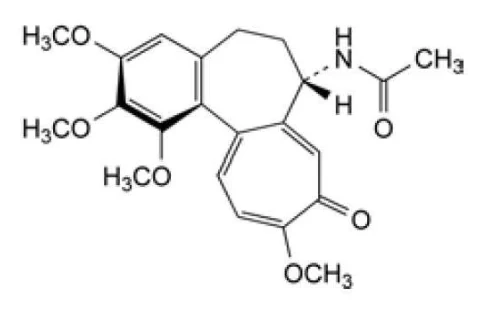
Physicochemical properties: Yellowish white to pale yellow to pale greenish-yellow powder which darkens on exposure to light. Freely soluble in chloroform. Soluble in water, absolute ethanol, chloroform and benzene, slightly soluble in ether.
14 CLINICAL TRIALS
14.1 Trial Design and Study Demographics
Table 5 - Summary of patient demographics for clinical trials in secondary prevention of major cardiovascular events
| Study | Study design | Dosage, route of | Study subjects (n) | Mean age (Range) | Sex | ||
| administration and | |||||||
| duration | |||||||
| COLCOT | Randomized, double-blind, placebo- controlled, multicenter, event-driven trial | 0.5 mg pms- COLCHICINE ER, or matching placebo, administered once daily, orally Median time on study medication: pms-COLCHICINE ER: 19.6 months Placebo: 19.5 months | N=4745 pms-COLCHICINE ER: n=2366 Placebo: n=2379 | 60.6 years (20 – 94 years) | M: 80.8% F: 19.2% | ||
Adult patients were eligible for participation in the COLCOT trial if they had experienced a myocardial infarction (Ml) within 30 days before enrolment, had completed any planned percutaneous revascularization procedures, and were treated according to national guidelines that included intensive use of statins. Patients were not eligible to participate if they had a poorly controlled medical condition such as Class III-IV heart failure, a left ventricular ejection fraction of < 35%, recent stroke (within the past 3 months), Type 2 index MI (secondary to ischemic imbalance), planned or prior completed coronary artery bypass graft (within the past 3 years), history of cancer or lymphoproliferative disease within the last 3 years, inflammatory bowel disease (Crohn’s disease or ulcerative colitis), chronic diarrhea, pre-existing progressive neuromuscular disease, certain abnormal laboratory parameters, were taking certain concomitant therapies, had a history of cirrhosis, chronic active hepatitis or severe hepatic disease, or were pregnant or breastfeeding.
Patient demographic and baseline characteristics in the COLCOT trial were well-balanced with no clinically relevant differences observed when comparing the different treatment groups. The majority of patients were male (80.8%) and Caucasian (72.5%). The mean age was 60.6 years, with an age range between 20 and 94 years. The mean BMI was 28.3 kg/m2, with no difference observed between the groups. Patients were randomized at a mean time of 13.5 days after MI, with most (93.0%) undergoing percutaneous coronary intervention (PCI) for their index MI.
No clinically relevant differences regarding medical history and concomitant medications were observed when comparing the different treatment groups. Most patients were either smokers (29.9%) or had previously been a smoker (36.7%), had a history of hypertension (51.0%) or dyslipidemia (45.0%). The majority of patients received standard medical care including anti-thrombotic agents (99.8%), lipid-modifying agents (99.3%) and beta-blocking agents (88.9%).
The primary endpoint was the time from randomization to the first event of cardiovascular mortality, resuscitated cardiac arrest, acute MI, stroke, or urgent hospitalisation for angina requiring coronary revascularisation (UHARCR). The primary endpoint was compared between the two trial groups with the use of a log-rank test, and the hazard ratio, with a 95% confidence interval, calculated from a Cox proportional hazards model.
The secondary endpoints consisted of times to total mortality, to components of the primary endpoint, and to the composite of cardiovascular death, resuscitated cardiac arrest, acute Ml, or stroke. Recurrent cardiovascular events were also evaluated on a pre-specified basis.
14.2 Study Results
Table 6 - Results of the COLCOT trial (Intent-to-Treat Population)
| Clinical Outcome | pms- | Placebo N=2379 n (%) | Hazard Ratio (95% CI) | P-value | ||
| COLCHICINE | ||||||
| ER | ||||||
| N=2366 | ||||||
| n (%) | ||||||
| Primary Composite Endpoint | 131 (5.5) | 170 (7.1) | 0.77 (0.61-0.96) | 0.02† | ||
| Cardiovascular Death | 20 (0.8) | 24 (1.0) | 0.84 (0.46-1.52) | 0.56 | ||
| Resuscitated Cardiac Arrest | 5 (0.2) | 6 (0.3) | 0.83 (0.25-2.73) | 0.76 | ||
| Acute MI | 89 (3.8) | 98 (4.1) | 0.91 (0.68-1.21) | 0.52 | ||
| Stroke | 5 (0.2) | 19 (0.8) | 0.26 (0.10-0.70) | 0.01 | ||
| UHARCR | 25 (1.1) | 50 (2.1) | 0.50 (0.31-0.81) | 0.005 | ||
†The log-rank test and the multivariable Cox proportional hazard model including age, history of diabetes, prior coronary revascularization, and prior heart failure yielded similar p-values.
MI: myocardial infarction, UHARCR: urgent hospitalization for angina requiring coronary revascularization
The primary endpoint occurred in 5.5% of the patients treated with pms-COLCHICINE ER and 7.1% of placebo, see Table 6, above. The difference between the treatment groups was statistically significant (HR: 0.77; 95% CI, 0.61 to 0.96; p=0.02).
Sensitivity analysis of the primary endpoint (HR 0.72; 95% CI, 0.56 to 0.93; p=0.01) for the pre-specified per-protocol (PP) population (patients without major protocol deviations) and on-treatment analysis (patients receiving their therapy) (HR 0.65; 95% CI, 0.50 to 0.84; p=0.001) also showed statistically significant differences between groups.
Subgroup analysis (by gender, age, smoking status, history of diabetes, history of hypertension, prior MI, prior PCI or coronary artery bypass graft surgery (CABG), prior stroke or transient ischemic attack (TIA), and baseline white blood cell (WBC) count) of the primary endpoint showed no significant interaction effects.
The primary endpoint occurred in 7.4% of patients > 65 years of age treated with colchicine and in 9.4% of those > 65 years treated with placebo (HR 0.79: 95% CI 0.55 to 1.13; p=0.20). This endpoint occurred in 11.2% of patients > 75 years of age treated with colchicine and in 14.7% of those > 75 years of age treated with placebo (HR 0.76: 95% CI 0.43 to 1.34; p=0.35).
Analysis of the secondary endpoints showed that the composite of cardiovascular death, cardiac arrest, acute MI or stroke occurred in 4.7% of the patients treated with pms-COLCHICINE ER, as compared with 5.5% of the patients in the placebo group (HR 0.85; 95% CI, 0.66 to 1.10, p=0.22). Lower observed event rates were noted with pms-COLCHICINE ER as compared with placebo for all components of the primary endpoint, with significance shown for the stroke (HR: 0.26; 95% CI, 0.10 to 0.70; p=0.01) and UHARCR (HR: 0.50; 95% CI, 0.31 to 0.81; p=0.005) outcomes. Mortality, for any reason, occurred in 44 patients in each study group in this study.
The rate of total (first and recurrent) primary endpoint events was significantly reduced by 34% with pms-COLCHICINE ER (rate ratio vs. placebo, 0.66; 95% CI, 0.51 to 0.86, p=0.002) in the ITT study population.
15 MICROBIOLOGY
No microbiological information is required for this drug product.
16 NON-CLINICAL TOXICOLOGY
The non-clinical toxicology of pms-COLCHICINE ER has not been studied, however data and information available in the public domain related to the non-clinical toxicology of colchicine are presented.
General Toxicology: No general toxicology studies have been conducted with pms-COLCHICINE ER.
Any overdose with colchicine is potentially lethal.
Carcinogenicity: Two-year studies were conducted in mice and rats to assess the carcinogenic potential of colchicine. No evidence of colchicine-related tumorigenicity was observed in mice or rats at colchicine oral doses up to 3 mg/kg/day and 2 mg/kg/day, respectively.
Genotoxicity: Colchicine was negative for mutagenicity in the bacterial reverse mutation assay. In a chromosomal aberration assay in cultured human white blood cells, colchicine treatment resulted in the formation of micronuclei. Since published studies demonstrated that colchicine induces aneuploidy from the process of mitotic nondisjunction without structural DNA changes, colchicine is not considered clastogenic, although micronuclei are formed.
Reproductive and Developmental Toxicology: Published nonclinical studies demonstrated that colchicine-induced disruption of microtubule formation affects meiosis and mitosis. Reproductive studies also reported abnormal sperm morphology and reduced sperm counts in males, and interference with sperm penetration, second meiotic division and normal cleavage in females when exposed to colchicine. Colchicine administered to pregnant animals resulted in fetal death and teratogenicity. These effects were dose-dependent, with the timing of exposure critical for the effects on embryofetal development. The nonclinical doses evaluated were generally higher than an equivalent human therapeutic dose, but safety margins for reproductive and developmental toxicity could not be determined (see 7 WARNINGS AND PRECAUTIONS - Reproductive Health: Female and Male Potential, and 7.1.1 Pregnant Women).
Special Toxicology: No special toxicology studies have been conducted with pms-COLCHICINE ER.
Juvenile Toxicity: No juvenile toxicity studies have been conducted with pms-COLCHICINE ER. Health Canada has not authorized an indication for pediatric use.