


Product Monograph - PMS-Irbesartan
Recent Major Label Changes
| 2026-04 |
|---|
Table of contents
Certain sections or subsections that are not applicable at the time of the preparation of the most recent authorized product monograph are not listed.
Recent Major Label Changes ................................................................................................................... 2
Table of contents .................................................................................................................................... 2
Part 1: Health Professional Information ................................................................................................. 4
- 1.
Indications ........................................................................................................................................ 4
1.1. Pediatrics ................................................................................................................................ 4
1.2. Geriatrics ................................................................................................................................. 4
- 2. Contraindications ............................................................................................................................. 4
- 3. Serious Warnings and Precautions Box............................................................................................. 4
- 4.
Dosage and Administration .............................................................................................................. 5
4.1. Dosing Considerations ............................................................................................................. 5
4.2. Recommended Dose and Dosage Adjustment ......................................................................... 5
4.4. Administration ........................................................................................................................ 5
4.5. Missed Dose ............................................................................................................................ 6
- 5. Overdosage ...................................................................................................................................... 6
- 6. Dosage Forms, Strengths, Composition and Packaging ..................................................................... 6
- 7.
Warnings and Precautions ................................................................................................................ 7
Cardiovascular................................................................................................................................... 7
Driving and Operating Machinery ...................................................................................................... 7
Endocrine and Metabolism ................................................................................................................ 8
Gastrointestinal ................................................................................................................................. 8
Renal ............................................................................................................................................ 8
Skin ............................................................................................................................................ 8
7.1. Special Populations ................................................................................................................. 9
7.1.1. Pregnant Women ............................................................................................................... 9
7.1.2. Breastfeeding ..................................................................................................................... 9
7.1.3. Pediatrics............................................................................................................................ 9
7.1.4. Geriatrics ............................................................................................................................ 9
- 8.
Adverse Reactions .......................................................................................................................... 10
8.2. Clinical Trial Adverse Reactions.............................................................................................. 10
8.4. Abnormal Laboratory Findings: Hematologic, Clinical Chemistry, and Other Quantitative Data ...................................................................................................................................... 12
8.5. Post-Market Adverse Reactions ............................................................................................. 12
- 9.
Drug Interactions ............................................................................................................................ 13
9.2. Drug Interactions Overview ................................................................................................... 13
9.3. Drug-Behaviour Interactions .................................................................................................. 13
9.4. Drug-Drug Interactions .......................................................................................................... 13
9.5. Drug-Food Interactions .......................................................................................................... 16
9.6. Drug-Herb Interactions .......................................................................................................... 16
- 10.
Clinical Pharmacology ..................................................................................................................... 16
10.1 Mechanism of Action ............................................................................................................. 16
10.2. Pharmacodynamics ............................................................................................................... 17
10.3. Pharmacokinetics .................................................................................................................. 17
- 11. Storage, Stability and Disposal ....................................................................................................... 18
Part 2. Scientific Information ................................................................................................................ 19
- 13. Pharmaceutical Information ........................................................................................................... 19
- 14.
Clinical Trials ................................................................................................................................... 20
14.1. Clinical Trials by Indication .................................................................................................... 20
14.3. Comparative Bioavailability Studies ....................................................................................... 24
- 15. Microbiology .................................................................................................................................. 25
- 16. Non-Clinical Toxicology................................................................................................................... 25
- 17. Supporting Product Monographs.................................................................................................... 30
Patient Medication Information ........................................................................................................... 31
Part 1: Health Professional Information
1. Indications
pms-IRBESARTAN (irbesartan) is indicated for the treatment of:
- essential hypertension. pms-IRBESARTAN may be used alone or concomitantly with thiazide diuretics.
- hypertensive patients with type 2 diabetes mellitus and renal disease to reduce the rate of progression of nephropathy as measured by the reduction of microalbuminuria, and the occurrence of doubling of serum creatinine (see 10. Clinical Trials).
1.1. Pediatrics
Pediatrics (< 18 years of age): The safety and efficacy of pms-IRBESARTAN in patients < 18 years of age have not been established. Therefore, Health Canada has not authorized an indication for pediatric use (see 7.1. Special Populations).
1.2. Geriatrics
Geriatrics (> 65 years of age): In clinical studies, no overall differences in safety or efficacy were observed between patients > 65 years of age and younger patients (see 7.1. Special Populations).
2. Contraindications
pms-IRBESARTAN (irbesartan) is contraindicated in:
- Patients who are hypersensitive to this drug or to any ingredient in the formulation, including any non-medicinal ingredient, or component of the container. For a complete listing, see 6. Dosage Forms, Strengths, Composition and Packaging.
- Combination with aliskiren-containing drugs in patients with diabetes mellitus (type 1 or type 2) or moderate to severe renal impairment (GFR < 60 mL/min/1.73m2) (see 7. Warnings and Precautions, Cardiovascular and Renal; and 9. Drug Interactions).
- Combination with Angiotensin-Converting Enzyme Inhibitors (ACEIs) in patients with diabetic nephropathy (see 7. Warnings and Precautions, Cardiovascular and Renal; and 9. Drug Interactions).
- Patients with rare hereditary problems of galactose intolerance, the Lapp lactase deficiency or glucose-galactose malabsorption (due to the lactose component of pms-IRBESARTAN tablets).
- Pregnant women (see 7.1. Special Populations).
- Nursing women (see 7.1. Special Populations).
3. Serious Warnings and Precautions Box
When used in pregnancy, angiotensin receptor (AT1) blockers (ARB) can cause injury or even death of the developing fetus. When pregnancy is detected, pms-IRBESARTAN (irbesartan) should be discontinued as soon as possible (see 7.1. Special Populations).
4. Dosage and Administration
4.1. Dosing Considerations
Initiation of therapy requires consideration of recent antihypertensive drug treatment, the extent of blood pressure (BP) elevation, salt restriction, and other pertinent clinical factors. The dosage of other antihypertensive agents used with pms-IRBESARTAN (irbesartan) may need to be adjusted.
4.2. Recommended Dose and Dosage Adjustment
Essential Hypertension
The recommended initial dose of pms-IRBESARTAN is 150 mg once daily. In patients whose BP is not adequately controlled, the daily dose may be increased to 300 mg.
Essential Hypertension with Type 2 Diabetic Renal Disease
The recommended initial dose of pms-IRBESARTAN is 150 mg once daily. In patients whose BP is not adequately controlled, the daily dose may be increased to 300 mg once daily, the preferred maintenance dose.
Geriatrics
No initial dosage adjustment is required in the elderly (see 10.3. Pharmacokinetics, Special Population and Conditions; and 7. Warnings and Precautions).
Renal Insufficiency
No initial dosage adjustment is required in patients with renal impairment (see 10.3. Pharmacokinetics, Special Population and Conditions). However, due to the apparent greater sensitivity of hemodialysis patients, an initial dose of 75 mg is recommended in this group of patients.
Hepatic Insufficiency
No initial dosage adjustment is required in patients with mild-to-moderate hepatic impairment (see 10.3. Pharmacokinetics, Special Population and Conditions
Concomitant Diuretic Therapy
In patients receiving diuretics, pms-IRBESARTAN therapy should be initiated with caution, since these patients may be volume-depleted and thus more likely to experience hypotension following initiation of additional antihypertensive therapy. Whenever possible, all diuretics should be discontinued 2 – 3 days prior to the administration of pms-IRBESARTAN to reduce the likelihood of hypotension (see 7. Warnings and Precautions, Cardiovascular; and 9. Drug Interactions). If this is not possible because of the patient’s condition, pms-IRBESARTAN should be administered with caution and the blood pressure monitored closely. The recommended starting dose of pms-IRBESARTAN is 75 mg once daily in hypovolemic patients (see 7. Warnings and Precautions, Cardiovascular). Thereafter, the dosage should be adjusted according to the individual response of the patient.
4.4. Administration
pms-IRBESARTAN may be administered with or without food.
4.5. Missed Dose
Patients should be instructed to take pms-IRBESARTAN at the next scheduled dose and not take two doses at the same time if they miss a dose.
5. Overdosage
Few cases of overdosage with irbesartan have been reported, with no complaints and no significant clinical sequelae. Reported overdoses ranged from 600 - 900 mg daily. Durations of overdosing ranged from 2 - 3 weeks up to 30 days and over. Experience in adults exposed to doses of up to 900 mg/day for 8 weeks revealed no toxicity.
The most likely manifestations of overdosage are hypotension and tachycardia; bradycardia might also occur.
No specific information is available on the treatment of overdosage with irbesartan. The patient should be closely monitored, and the treatment should be supportive and relieve symptoms. Suggested measures include induction of emesis and/or gastric lavage. Activated charcoal may be useful in the treatment of overdosage.
Irbesartan is not removed by hemodialysis.
For the most recent information in the management of a suspected drug overdose, contact your regional poison control centre, or Health Canada’s toll-free number, 1-844 POISON-X (1-844-764-7669).
6. Dosage Forms, Strengths, Composition and Packaging
Table – Dosage Forms, Strengths, Composition and Packaging
| Route of Administration | Dosage Form / Strength / Composition | Non-medicinal Ingredients |
|---|---|---|
| Oral | Tablets / 75 mg, 150 mg and 300 mg | Colloidal Silicon Dioxide, Copovidone, Croscarmellose Sodium, Lactose Monohydrate and Magnesium Stearate. |
Description
pms-IRBESARTAN (irbesartan) 75 mg are white to off-white, oval and biconvex tablets, debossed with “IS” on one side and “75” on the other side.
pms-IRBESARTAN (irbesartan) 150 mg are white to off-white, oval and biconvex tablets, debossed with “IS” on one side and “150” on the other side.
pms-IRBESARTAN (irbesartan) 300 mg are white to off-white, oval and biconvex tablets, debossed with “IS” on one side and “300” on the other side.
pms-IRBESARTAN is available in bottles of 100 tablets (75, 150 and 300 mg).
7. Warnings and Precautions
See 3 Serious Warnings and Precautions Box.
Cardiovascular
Hypotension - Volume- Depleted Patients
Occasionally, symptomatic hypotension has occurred after administration of irbesartan, in some cases after the first dose. It is more likely to occur in patients who are volume- depleted by diuretic therapy, dietary salt restriction, dialysis, diarrhea, or vomiting. In these patients, because of the potential fall in BP, therapy should be started under close medical supervision (see 4. Dosage and Administration). Similar considerations apply to patients with ischemic heart or cerebrovascular disease, in whom an excessive fall in BP could result in myocardial infarction or cerebrovascular accident.
Dual Blockade of the Renin-Angiotensin System (RAS)
There is evidence that co-administration of angiotensin receptor antagonists (ARBs), such as irbesartan, or of angiotensin converting enzyme (ACE) inhibitors with aliskiren increases the risk of hypotension, syncope, stroke, hyperkalemia and deterioration of renal function, including renal failure, in patients with diabetes mellitus (type 1 or type 2) and/or moderate to severe renal impairment (GFR < 60 ml/min/1.73m2). Therefore, the use of pms-IRBESARTAN in combination with aliskiren-containing drugs is contraindicated in these patients (see 2. Contraindications).
The use of pms-IRBESARTAN in combination with of ACE inhibitors is contraindicated in patients with diabetic nephropathy (see 2. Contraindications).
Further, co-administration of ARBs, including irbesartan, with other agents blocking the RAS, such as ACE inhibitors or aliskiren-containing drugs, is generally not recommended in other patients, since such treatment has been associated with an increased incidence of severe hypotension, renal failure, and hyperkalemia.
Lithium
Increases in serum lithium concentrations and lithium toxicity (including fatal outcome) have been reported with concomitant use of irbesartan and lithium (see 9. Drug Interactions). Therefore, this combination is not recommended. Serum lithium levels should be monitored carefully in patients receiving irbesartan and lithium if the combination is necessary.
Valvular Stenosis
There is concern on theoretical grounds that patients with aortic stenosis might be at particular risk of decreased coronary perfusion when treated with vasodilators because they do not develop as much afterload reduction.
Driving and Operating Machinery
The effect of irbesartan on the ability to drive and use of machinery has not been studied, but based on its pharmacodynamic properties, irbesartan is unlikely to affect this ability. When driving vehicles or operating machinery, it should be taken into account that occasionally, dizziness or weariness may occur during treatment of hypertension.
Endocrine and Metabolism
Irbesartan may induce hypoglycemia, particularly in patients treated for diabetes. Therefore, dose adjustment of antidiabetic treatment such as repaglinide or insulin may be required (see
- 8. Adverse Reactions)
Gastrointestinal
Intestinal angioedema has been reported in patients treated with angiotensin II receptor antagonists, including irbesartan. These patients presented with abdominal pain, (with or without nausea, vomiting and diarrhea). Symptoms resolved after discontinuation of angiotensin II receptor antagonists. Intestinal angioedema should be included in the differential diagnosis of patients treated with angiotensin II receptor antagonists presenting with abdominal pain. If intestinal angioedema is diagnosed, pms-IRBESARTAN should be discontinued, and appropriate monitoring should be initiated until complete resolution of symptoms has occurred.
Renal
Renal Impairment
As a consequence of inhibiting the renin-angiotensin-aldosterone system (RAAS), changes in renal function have been seen in susceptible individuals. In patients whose renal function may depend on the activity of the RAAS, such as patients with bilateral renal artery stenosis, unilateral renal artery stenosis to a solitary kidney, or severe congestive heart failure, treatment with agents that inhibit this system has been associated with oliguria, progressive azotemia, and rarely, acute renal failure and/or death. In susceptible patients, concomitant diuretic use may further increase risk.
The use of ARBs including irbesartan, or of ACE inhibitors, with aliskiren-containing drugs is contraindicated in patients with moderate to severe renal impairment (GFR < 60 ml/min/1.73m2) (see 2. Contraindications; and 9. Drug Interactions).
The use of ARBs including irbesartan in combination with an ACEI is contraindicated in patients with diabetic nephropathy due to risk of hyperkalemia, hypotension and renal impairment (see 2. Contraindications; and 9. Drug Interactions).
Use of irbesartan should include appropriate assessment of renal function.
In hypertensive type 2 diabetic patients with proteinuria (≥ 900 mg/day), a population which has a high risk of renal artery stenosis, no patient treated with irbesartan in IDNT had an early acute rise in serum creatinine attributable to renal artery disease (see 10. Clinical Pharmacology).
Skin
The use of pms-IRBESARTAN in patients with psoriasis or a history of psoriasis should be carefully weighed as it may exacerbate psoriasis.
7.1. Special Populations
7.1.1. Pregnant Women
Drugs that act directly on the renin-angiotensin-aldosterone system (RAAS) can cause fetal and neonatal morbidity and death when administered to pregnant women. When pregnancy is detected, pms-IRBESARTAN should be discontinued as soon as possible.
The use of ARBs is contraindicated during pregnancy. Epidemiological evidence regarding the risk of teratogenicity following exposure to ACE inhibitors (another class of therapeutic products interfering with the RAAS) during the first trimester of pregnancy has not been conclusive; however, a small increase in risk cannot be excluded. Given the current evidence available on the risk with ARBs, similar risks may exist for this class of drugs. Patients planning pregnancy should be changed to alternative anti-hypertensive treatments which have an established safety profile for use in pregnancy. When pregnancy is diagnosed, treatment with angiotensin II antagonists should be stopped immediately, and, if appropriate, alternative therapy should be started.
The use of ARBs during the second and third trimesters is known to induce human fetotoxicity (decreased renal function, oligohydramnios, skull ossification, retardation) and neonatal toxicity (renal failure, hypotension, hyperkalemia).
Infants with histories of in utero exposure to an ARB should be closely observed for hypotension, oliguria, and hyperkalemia. If oliguria occurs, attention should be directed toward support of BP and renal perfusion. Exchange transfusion may be required as means of reversing hypotension and/or substituting for impaired renal function; however, limited experience with those procedures has not been associated with significant clinical benefit.
Irbesartan is not removed by hemodialysis.
7.1.2. Breastfeeding
It is not known whether irbesartan is excreted in human milk, but significant levels have been found in the milk of lactating rats. Because many drugs are excreted in human milk, and because of their potential for affecting the nursing infant adversely, a decision should be made whether to discontinue nursing or discontinue the drug, taking into account the importance of the drug to the mother.
7.1.3. Pediatrics
Pediatrics (< 18 years of age): The safety and efficacy of irbesartan have not been established in children < 18 years of age. Therefore, pms-IRBESARTAN is not indicated in this patient population.
7.1.4. Geriatrics
Geriatrics (> 65 years of age): Of the 4,140 hypertensive patients receiving irbesartan in clinical studies, 793 patients were ≥ 65 years of age. No overall age-related differences were seen in the adverse effect profile but greater sensitivity in some older individuals cannot be ruled out.
8. Adverse Reactions
8.2. Clinical Trial Adverse Reactions
Clinical trials are conducted under very specific conditions. Therefore, the frequencies of adverse reactions observed in the clinical trials may not reflect the rates observed in practice and should not be compared to the rates in the clinical trials of another drug. Adverse reaction information from clinical trials may be useful in identifying and approximating rates of adverse drug reactions in real-world use.
Irbesartan was evaluated for safety in > 4,100 patients with essential hypertension including approximately 1,300 patients treated for > 6 months and 400 patients for ≥ 1 year.
In placebo-controlled clinical trials, therapy was discontinued due to a clinical adverse event (AE) in 3.3% of patients treated with irbesartan, versus 4.5% of patients given placebo.
The following potentially serious adverse reactions have been reported rarely with irbesartan in controlled clinical trials: syncope, hypotension.
AEs occurring in ≥ 1% of the 2,606 hypertensive patients in placebo-controlled clinical trials include the following (see Table 1):
Table 1: Adverse Events Occurring in ≥ 1% of the 2,606 Hypertensive Patients
in Placebo-Controlled Clinical Trials
Irbesartan n = 1,965 Incidence (%) | Placebo n = 641 Incidence (%) | |
Irbesartan n = 1,965 Incidence (%) | Placebo n = 641 Incidence (%) | |
| General | ||
| Abdominal Pain | 1.4 | 2.0 |
| Chest pain | 1.8 | 1.7 |
| Edema | 1.5 | 2.3 |
| Fatigue | 4.3 | 3.7 |
| Cardiovascular | ||
| Tachycardia | 1.2 | 0.9 |
| Dermatologic | ||
| Rash | 1.3 | 2 |
| Gastrointestinal | ||
| Diarrhea | 3.1 | 2.2 |
| Dyspepsia/Heartburn | 1.7 | 1.1 |
| Nausea/Vomiting | 2.1 | 2.8 |
| Musculoskeletal / Connective Tissue | ||
| Musculoskeletal pain | 6.6 | 6.6 |
| Nervous System | ||
| Anxiety/Nervousness | 1.1 | 0.9 |
| Headache | 12.3 | 16.7 |
| Dizziness | 4.9 | 5.0 |
| Respiratory | ||
| Cough | 2.8 | 2.7 |
| Urogenital System | ||
| Urinary Tract Infection | 1.1 | 1.4 |
AEs of hypotension or orthostatic hypotension, unrelated to dosage, occurred in 0.4% of irbesartan treated patients and in 0.2% of patients receiving placebo.
In addition, the following potentially important events occurred in < 1% of patients receiving irbesartan, regardless of drug relationship:
Body as a Whole: fever;
Cardiovascular: angina pectoris, arrhythmic/conduction disorder, cardio-respiratory arrest, flushing, heart failure, hypertension, hypertensive crisis, myocardial infarction;
Dermatologic: dermatitis, ecchymosis, erythema, photosensitivity, pruritus, urticaria;
Endocrine: gout, libido change, sexual dysfunction;
Gastrointestinal: constipation, distension abdomen, flatulence, gastroenteritis, hepatitis;
Hematologic: anemia, lymphocytopenia, thrombocytopenia;
Musculoskeletal: arthritis, muscle cramp, muscle weakness, myalgia;
Nervous System: cerebrovascular accident, depression, numbness, paresthesia, sleep disturbance, somnolence, transient ischemic attack, tremor, vertigo;
Renal/Genitourinary: abnormal urination;
Respiratory: dyspnea, epistaxis, pulmonary congestion, tracheobronchitis, wheezing;
Special Senses: conjunctivitis, hearing abnormality, taste disturbance, visual disturbance.
Clinical Studies in Hypertension and Type 2 Diabetic Renal Disease
In clinical studies in patients with hypertension and type 2 diabetic renal disease, the adverse drug experiences were similar to those seen in clinical trials of hypertensive patients with the exception of orthostatic symptoms (dizziness, orthostatic dizziness, and orthostatic hypotension) observed in IDNT (The Irbesartan Diabetic Nephropathy Trial) (proteinuria ≥ 900mg/day, and serum creatinine from 1.0 – 3.0 mg/dL). In IDNT, orthostatic symptoms occurred more frequently in the irbesartan group (dizziness 10.2%, orthostatic dizziness 5.4%, orthostatic hypotension 5.4%) than in the placebo group (dizziness 6.0%, orthostatic dizziness 2.7%, orthostatic hypotension 3.2%). The rates of discontinuations due to orthostatic symptoms for irbesartan versus placebo were: dizziness 0.3% vs 0.5%; orthostatic dizziness 0.2% vs. 0.0%; and orthostatic hypotension, 0.0% vs 0.0%.
8.4. Abnormal Laboratory Findings: Hematologic, Clinical Chemistry, and Other Quantitative Data
In controlled clinical trials of hypertension, clinically important differences in laboratory tests were rarely associated with irbesartan.
Creatine Phosphokinase: Significant increases in plasma creatine phosphokinase (CPK) were commonly observed (1.6%) in irbesartan treated subjects.
Creatinine, Blood Urea Nitrogen: Minor increases in blood urea nitrogen (BUN) or serum creatinine were observed in less than 0.7% of patients with essential hypertension treated with irbesartan alone versus 0.9% on placebo.
Hemoglobin: Mean decreases in hemoglobin of 0.16 g/dL were observed in patients receiving irbesartan. No patients were discontinued due to anemia.
Hyperkalemia: The laboratory test parameter profile was similar in clinical trials conducted in patients with hypertension, type 2 diabetes and renal disease compared to that of patients with hypertension only, with the exception of hyperkalemia. In a placebo-controlled trial in 590 patients with hypertension, type 2 diabetes, microalbuminuria, and normal renal function (IRMA 2), hyperkalemia ≥ 5.5 mEq/L occurred in 29.4% of the patients in the irbesartan 300 mg group compared to 22% of the patients in the placebo group. Discontinuation for hyperkalemia occurred in 0.5% of the patients in the irbesartan group.
In another placebo-controlled trial in 1,715 patients with hypertension, type 2 diabetes, proteinuria ≥ 900 mg/day, and serum creatinine ranging from 1.0 - 3.0 mg/dl (IDNT), hyperkalemia ≥ 5.5 mEq/L occurred in 46.3% of the patients in the irbesartan group compared to 26.3% of the patients in the placebo group. Discontinuation for hyperkalemia occurred in 2.1% and 0.4% of the patients in the irbesartan and placebo groups, respectively.
Liver Function Tests: In placebo-controlled trials, elevations of AST and ALT ≥ 3X upper limit of normal (ULN) occurred in 0.1% and 0.2%, respectively, of irbesartan treated patients compared to 0.3% and 0.3%, respectively, of patients receiving placebo. In patients treated with irbesartan for a mean duration of over 1 year, the cumulative incidence of AST and/or ALT elevations ≥ 3X ULN was 0.4%.
Neutropenia: Neutropenia (< 1,000 cells/mm3) was observed in 0.3% of irbesartan treated patients compared to 0.5% of patients receiving placebo.
8.5. Post-Market Adverse Reactions
General: asthenia, syncope.
Ear/Nose/Throat: tinnitus
Endocrine and Metabolism: hypoglycemia (see 7. Warnings and Precautions).
Hematologic: thrombocytopenia (including thrombocytopenic purpura), anemia (cases of positive dechallenge and rechallenge have been reported post-market).
Hepatic/Biliary/Pancreatic: elevated liver function tests, jaundice.
Immune: anaphylactic shock, angioedema (involving swelling of the face, lips, and/or tongue) has been reported rarely in post-marketing use. Photosensitivity.
Musculoskeletal: muscle pain, muscle weakness, myositis and rhabdomyolysis have been reported in patients receiving ARBs. Myalgia.
Renal: impaired renal function including cases of renal failure in patients at risk (see 7. Warnings and Precautions, Renal).
Skin: psoriasis (and psoriasis exacerbation).
9. Drug Interactions
9.2. Drug Interactions Overview
Irbesartan does not substantially induce or inhibit the following isoenzymes: CYP 1A1, 1A2, 2A6, 2B6, 2D6, 2E1. There was no induction or inhibition of CYP 3A4.
9.3. Drug-Behaviour Interactions
The interaction of pms-IRBESARTAN with individual behavioural risks (e.g. cigarette smoking, cannabis use, and/or alcohol consumption) has not been studied.
9.4. Drug-Drug Interactions
The drugs listed in this table are based on either drug interaction case reports or studies, or potential interactions due to the expected magnitude and seriousness of the interaction (i.e., those identified as contraindicated).
Table 2: Established or Potential Drug-Drug Interactions
| Proper / Common Name | Source of Evidence | Effect | Clinical Comment |
|---|---|---|---|
| Proper / Common Name | Source of Evidence | Effect | Clinical Comment |
| Proper / Common Name | Source of Evidence | Effect | Clinical Comment |
| Proper / Common Name | Source of Evidence | Effect | Clinical Comment |
| Agents increasing Serum Potassium | RCS | Based on experience with the use of other drugs that affect the renin-angiotensin system, concomitant use of irbesartan with potassium-sparing diuretics, potassium supplements, salt substitutes containing potassium or other potassium-raising medicinal products may lead to increases in serum potassium, sometimes severe. Such coadministration requires close monitoring of serum potassium. | |
Antidiabetic agents (e.g., insulin and oral antihypoglycemic agents) (e.g., repaglinide) | CT | Irbesartan reduces blood glucose level due to potential effects on glucose metabolism. May induce hyporglycemia. Irbesartan has the potential to inhibit OATP1B1. In a clinical study, coadministration of irbesartan and repaglinide, 300 mg irbesartan once daily for 4 days, then followed by a single dose of 2 mg repaglinide, 1 hour after irbesartan (with consideration of the Tmax difference between the two drugs), increased the Cmax and AUC of repaglinide (substrate of OATP1B1) by 1.8-fold and 1.3-fold, respectively. | The patient should be monitored for hypoglycemia when coadministration of irbesartan with oral antidiabetic agents or insulin is required. Dose adjustment of oral antidiabetic treatment or insulin may be required. Dose adjustment of repaglinide may be required when repaglinide is coadministered with irbesartan (see 7. Warnings and Precautions). |
| Digoxin | CT | When irbesartan was administered as 150 mg once daily under steady-state conditions, no effect was seen on the pharmacokinetics of digoxin at steady-state. | |
| Diuretics | T | Patients on diuretics, and especially those in whom diuretic therapy was recently instituted, may occasionally experience an excessive reduction of blood pressure after initiation of therapy with irbesartan. | The possibility of symptomatic hypotension with the use of pms-IRBESARTAN can be minimized by discontinuing the diuretic prior to initiation of treatment and/or lowering the initial dose of pms-IRBESARTAN (see 7. Warnings and Precautions, Cardiovascular; and 4. Dosage and Administration). No drug interaction of clinical significance has been |
| identified with thiazide diuretics. | |||
| Dual Blockade of the Renin-Angiotensin- System (RAS) with ARBs, ACE inhibitors or aliskiren-containing drugs | CT | Dual Blockade of the Renin-Angiotensin-System with ARBs and ACE inhibitors or aliskiren-containing drugs is contraindicated in patients with diabetes and/or moderate to severe renal impairment, and is generally not recommended in other patients, since such treatment has been associated with an increased incidence of severe hypotension, renal failure, and hyperkalemia. The use of pms-IRBESARTAN in combination with an ACE inhibitor is contraindicated in patients with diabetic nephropathy and is generally not recommended in other patients, since such treatment has been associated with an increased incidence of hyperkalemia, severe hypotension, and renal failure. | See 2. Contraindications; and 7. Warnings and Precautions, Cardiovascular). |
| Lithium | CT | As with other drugs which eliminate sodium, lithium clearance may be reduced. Increases in serum lithium concentrations and lithium toxicity (including fatal outcome) have been reported with concomitant use of irbesartan and lithium. | Serum lithium levels should be monitored carefully in patients receiving irbesartan and lithium (see 7. Warnings and Precautions). |
| Nonsteroidal anti-inflammatory drugs (NSAID) (including selective COX-2 inhibitors) | CT | In patients who are elderly, volume-depleted (including those on diuretic therapy), or with compromised renal function, coadministration of NSAIDs, including selective COX-2 inhibitors, with ARBs, including irbesartan, may result in deterioration of renal function, | Monitor renal function periodically in patients receiving irbesartan and NSAID therapy. |
| including possible acute renal failure. These effects are usually reversible. The antihypertensive effect of ARBs, including irbesartan, may be attenuated by NSAIDs including selective COX-2 inhibitors. | |||
| Simvastatin | CT | When irbesartan was administered in a small single-dose study with 12 young, healthy males aged 19 – 39, the single-dose pharmacokinetics of simvastatin were not affected by the concomitant administration of 300 mg irbesartan. Simvastatin values were highly variable whether simvastatin was administered alone or in combination with irbesartan. | |
| Warfarin | CT | When irbesartan was administered as 300 mg once daily under steady-state conditions, no pharmacodynamic effect on PT (prothrombin time) was demonstrated in subjects stabilized on warfarin. | |
Legend: C = Case Study; RCS = Retrospective Cohort Study; CT = Clinical Trial; T = Theoretical
9.5. Drug-Food Interactions
This drug may be taken with or without food
9.6. Drug-Herb Interactions
Interactions with herbal products have not been established.
10. Clinical Pharmacology
10.1 Mechanism of Action
pms-IRBESARTAN (irbesartan) antagonizes angiotensin II by blocking AT1 receptors.
Angiotensin II is the primary vasoactive hormone in the renin-angiotensin system. Its effects include vasoconstriction and the stimulation of aldosterone secretion by the adrenal cortex.
Irbesartan blocks the vasoconstrictor and aldosterone-secreting effects of angiotensin II by selectively blocking in a non-competitive manner the binding of angiotensin II to the AT1 receptor found in many tissues. Irbesartan has no agonist activity at the AT1 receptor. AT2 receptors have been found in many tissues, but to date they have not been associated with cardiovascular homeostasis. Irbesartan has essentially no affinity for the AT2 receptors.
Irbesartan does not inhibit angiotensin-converting enzyme, also known as kinase II, the enzyme that converts angiotensin I to angiotensin II and degrades bradykinin, nor does it affect renin or other hormone receptors or ion channels involved in cardiovascular regulation of blood pressure and sodium homeostasis.
10.2. Pharmacodynamics
Healthy Subjects: Single oral doses of irbesartan ≤ 300 mg produced dose-dependent inhibition of the pressor effect of angiotensin II infusions. The inhibition was complete (100%) 4 hours following oral doses of 150 mg or 300 mg. Partial inhibition of 40% and 60% was still present 24 hours post-dose with 150 mg and 300 mg irbesartan respectively.
Hypertensive Patients: Angiotensin II receptor inhibition following chronic administration of irbesartan causes a 1.5 – 2-fold rise in angiotensin II plasma concentration and a 2 – 3-fold increase in plasma renin levels. Aldosterone plasma concentrations generally decline following irbesartan administration; however, at recommended dose, serum potassium levels are not significantly affected.
During clinical trials, minimal incremental blood pressure (BP) response was observed at doses > 300 mg.
The BP lowering effect of irbesartan was apparent after the first dose and substantially present within 1 – 2 weeks, with the maximal effect occurring by 4 – 6 weeks. In long-term studies, the effect of irbesartan appeared to be maintained for more than one year. In controlled trials, there was essentially no change in average heart rate in patients treated with irbesartan.
There was no rebound effect after withdrawal of irbesartan.
Race: Black hypertensive patients had a smaller BP response to irbesartan monotherapy than Caucasians.
10.3. Pharmacokinetics
Absorption
Irbesartan is an orally active agent. The oral absorption of irbesartan is rapid and complete with an average absolute bioavailability of 60%-80%. Irbesartan exhibits linear pharmacokinetics over the therapeutic dose range with an average terminal elimination half-life of 11 –15 hours. Following oral administration, peak plasma concentrations are attained at 1.5 –2 hours after dosing. Steady-state concentrations are achieved within 3 days.
Distribution
Irbesartan is approximately 96% protein-bound in the plasma, primarily to albumin and α1-acid glycoprotein.
The average volume of distribution of irbesartan is 53 – 93 L. Total plasma and renal clearances are in the range of 157 – 176 mL/min and 3.0 –3.5 mL/minute, respectively.
Metabolism
Irbesartan is metabolized via glucuronide conjugation, and oxidation primarily by the cytochrome P-450 isoenzyme CYP 2C9. Metabolism of irbesartan by CYP 3A4 is negligible. In addition, irbesartan is not metabolized by the following isoenzymes: CYP 1A1, 1A2, 2A6, 2B6, 2D6, 2E1.
Following either oral or intravenous administration of 14C-labeled irbesartan, more than 80% of the circulating plasma radioactivity is attributable to unchanged irbesartan. The primary circulating metabolite is the inactive irbesartan glucuronide (approximately 6%). The remaining oxidative metabolites do not add appreciably to the pharmacologic activity.
Elimination
Irbesartan and its metabolites are excreted by both biliary and renal routes. Following either oral or intravenous administration of 14C-labeled irbesartan, about 20% of radioactivity is recovered in the urine and the remainder in the feces. Less than 2% of the dose is excreted in urine as unchanged irbesartan.
Special Populations and Conditions
Geriatrics
In subjects > 65 years of age, irbesartan elimination half-life was not significantly altered, but AUC and Cmax values were about 20 – 50% greater than those of young subjects.
Hepatic Insufficiency
The pharmacokinetics of irbesartan following repeated oral administration were not significantly affected in patients with mild to moderate cirrhosis of the liver. No data is available in patients with severe liver disease.
Renal Insufficiency
The mean AUC and Cmax were not altered in patients with any degree of renal impairment, including patients on hemodialysis. However, a wide variance was seen in patients with severe renal impairment.
11. Storage, Stability and Disposal
pms-IRBESARTAN can be stored at room temperature (15°C – 30°C).
Part 2. Scientific Information
13. Pharmaceutical Information
Drug Substance
Non-proprietary name of the drug substance: Irbesartan
Chemical name:
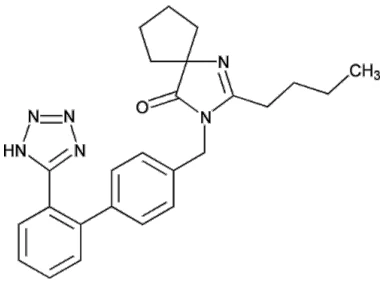
- 1,3-Diazaspiro[4,4]non-1-en-4-one, 2-butyl-3-[[2’-(1H-tetra-zol-5-yl)[1,1’-biphenyl]-4-yl]methyl]-
- 2-Butyl-3-[p-(O-1H-tetrazol-5-ylphenyl)benzyl]-1,3-diazaspiro[4,4]non-1-en-4-one.
Molecular formula and molecular mass: C25H28N6O; 428.5 g/mol
Structural formula:
Physicochemical properties:
Description: Irbesartan is a white to off-white crystalline powder. It is a nonpolar compound with a partition coefficient (octanol/water) of 10.1 at a pH of 7.4
Solubility: Irbesartan is slightly soluble in alcohol and methylene chloride and practically insoluble in water.
14. Clinical Trials
14.1. Clinical Trials by Indication
Two trials were done to investigate the effects of irbesartan in patients with hypertension and type 2 diabetic nephropathy, the IDNT and IRMA 2 trials.
IDNT
The Irbesartan Diabetic Nephropathy Trial (IDNT) was a multicenter, randomized, controlled, double-blind, morbidity and mortality trial comparing irbesartan, amlodipine and placebo. In 1,715 hypertensive patients with type 2 diabetes (proteinuria ≥ 900 mg/day and serum creatinine 1.0 – 3.0 mg/dL) the long-term effects (mean 2.6 years) of irbesartan on the progression of renal disease and all-cause mortality were examined. In addition, as a secondary endpoint, the effect of irbesartan on the risk of fatal or non-fatal cardiovascular events was assessed. The most important exclusion criteria were: onset of type II diabetes mellitus at < 20 years of age, renovascular occlusive disease affecting both kidneys or a solitary kidney, and unstable angina pectoris.
Patients were randomized to receive once daily irbesartan 75 mg (n=579), amlodipine 2.5 mg (n = 567), or matching placebo (n = 569). Patients were then titrated to a maintenance dose of 300 mg irbesartan, 10 mg amlodipine, or placebo as tolerated. Additional antihypertensive agents for the 3 study arms (excluding ACE inhibitors, other angiotensin II receptor blockers [ARBs] and calcium channel blockers [CCBs]) were added as needed to help achieve a BP goal of ≤ 135/85 mmHg in all groups, or a 10 mmHg reduction in systolic blood pressure (SBD) if baseline was > 160 mmHg. Of the total of 579 patients randomized to irbesartan, 442 completed the double-blind phase. All analyses were conducted on the intent to treat (ITT) patient population.
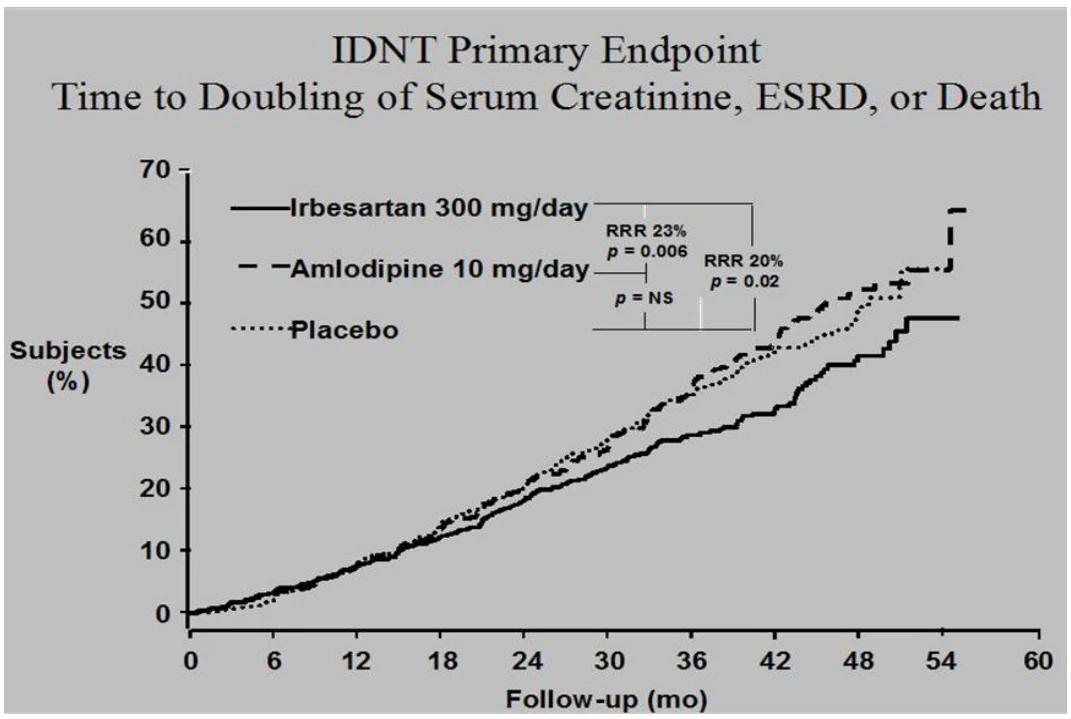
Table 3: Primary Composite Endpoint Comparison (IDNT)
| Number (%) of Subjects | Relative Risk | ||||||||||||||
| Event | Placebo N = 569 | Irbesartan N = 579 | Amlodipine N = 567 | Estimate (% Reduction) | 95% Confidence Interval | p | |||||||||
| Irbesartan vs. Placebo | |||||||||||||||
Primary Composite Endpoint* | 222 (39.0) | 189 (32.6) | - | 0.80 (20) | 0.66 – 0.97 | 0.023 | |||||||||
| Irbesartan vs. Amlodipine | |||||||||||||||
Primary Composite Endpoint* | - | 189 (32.6) | 233 (41.1) | 0.77 (23) | 0.63 – 0.93 | 0.006 | |||||||||
* First occurrence of any of the following: doubling of serum creatinine, end-stage renal disease (ESRD) or all-cause mortality.
Irbesartan demonstrated a 20% relative risk reduction (absolute risk reduction 6.4%) in the composite primary endpoint (1st occurrence of any of the following: doubling of serum creatinine, end-stage renal disease (ESRD) or all-cause mortality) compared to placebo (p=0.023), and a 23% relative risk reduction (absolute risk reduction 8.5%) compared to amlodipine (p=0.006). When the individual components of the primary composite endpoint were analysed, no effect in all-cause mortality and no significant effect on time to ESRD were observed. However, a significant reduction in doubling of serum creatinine was observed. Irbesartan decreased the progression of renal disease in patients with chronic renal insufficiency and overt proteinuria. Irbesartan also produced significant reduction in the rate of urine excretion of protein and albumin relative to placebo or amlodipine (p< 0.001 for both comparisons). Similar BP was achieved in the irbesartan 300 mg and amlodipine 10 mg groups.
Treatment with irbesartan reduced the occurrence of sustained doubling of serum creatinine as a separate endpoint (33%) with an absolute risk reduction of 6.8%.
The risk of developing a doubling of serum creatinine or ESRD was reduced by 26% relative to placebo with an absolute risk reduction of 6.2% and by 34% relative to amlodipine with an absolute risk reduction of 10.0% (pooled risk reduction 30%, p=0.0005). This renal protective effect of irbesartan appeared to be independent of systemic BP reduction.
There was no significant difference in the assessment of fatal or non-fatal cardiovascular events (cardiovascular death, non-fatal myocardial infarction, hospitalization for heart failure, permanent neurologic deficit attributed to stroke, or above-the-ankle amputation) among the 3 treatment groups.
Safety data from this trial are reported in the 8. Adverse Reactions section.
IRMA 2
The study of the Effects of Irbesartan on Microalbuminuria in Hypertensive Patients with Type 2 Diabetes Mellitus (IRMA 2) was a multicenter, randomized, placebo-controlled, double-blind morbidity study, conducted in 590 hypertensive patients with type 2 diabetes, microalbuminuria (20 – 200 mcg/min; 30 – 300mg/day) and normal renal function (serum creatinine ≤ 1.5 mg/dL in males and ≤ 1.1 mg/dL in females). Screening of urine for albumin has revealed that patients with microalbuminuria have a 10 – 20-fold higher risk of developing diabetic nephropathy than patients with normoalbuminuria. Of the 590 patients, 201 received placebo, 195 received irbesartan 150 mg and 194 patients received irbesartan 300 mg.
The primary endpoint was the long-term effects (2 years) of irbesartan on the progression to clinical (overt) proteinuria (urinary albumin excretion rate [AER] > 200 mcg/min [> 300mg/day] and an increase in AER of ≥ 30% from baseline). In addition, after 1 and 2 years of treatment, the effect of irbesartan on the change in overnight AER and the change in 24-hour creatinine clearance was assessed. The most important exclusion criteria were: onset of type II diabetes mellitus at < 20 years of age, renovascular occlusive disease affecting both kidneys or a solitary kidney, and unstable angina pectoris.
Irbesartan 300 mg demonstrated a 70% relative risk reduction (absolute risk reduction 9.8%) in the development of clinical (overt) proteinuria compared to placebo (p=0.0004). Relative risk reduction in the development of proteinuria with 150 mg irbesartan was not statistically significant. The slowing of progression to clinical (overt) proteinuria was evident as early as 3 months and continued over the 2-year period.
IRMA 2: Primary Endpoint
Time to Overt Proteinuria
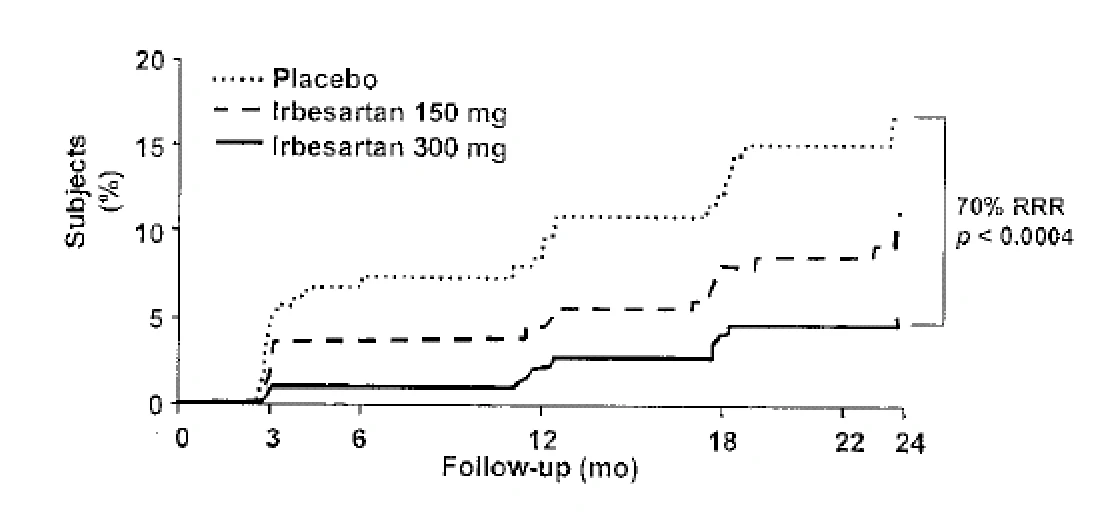
Table 4: Time to Occurrence of Overt Proteinuria (Irbesartan 300 mg vs. Placebo Comparison) (IRMA 2)
| Event | Number (%) of Subjects | Relative Risk |
Placebo N = 201 | ||
Irbesartan N = 195 | ||
Estimate (% Reduction) | 95%Confidence Interval | |
| p | ||
| Primary Endpoint | 30 (14.9) | |
| 10 (5.2) | ||
| 0.295 (70) | 0.144 – 0.606 | |
| 0.0004 | ||
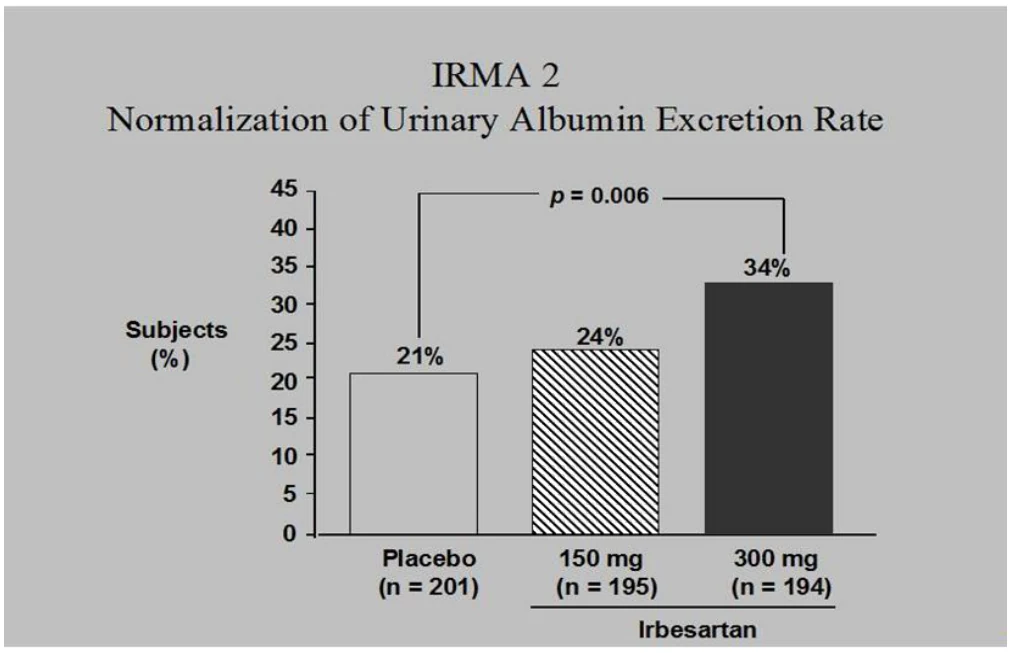
Regression to normoalbuminuria (< 20 mcg/min; < 30 mg/day) was more frequent in the irbesartan 300 mg group (34%) than in the placebo group (21%). Irbesartan 300 mg reduced the level of urinary albumin excretion at 24 months by 43% (p = 0.0001).
Safety data from this trial has been reported in the 8. Adverse Reactions section.
14.3. Comparative Bioavailability Studies
The objective of this study was to evaluate and compare the relative bioavailability and therefore the bioequivalence of two formulations of irbesartan tablets after a single oral dose administration under fasting conditions. The study was a single center, randomized, single dose, blinded, 2-way crossover study design performed in twenty-one healthy male subjects.
Summary Table of the Comparative Bioavailability Data
Irbesartan (1 x 300 mg tablet) From measured data Uncorrected for potency Geometric Mean Arithmetic Mean (CV %) | ||||
| Parameter | Test1 | Reference2 | % Ratio of Geometric Means5 | Confidence Interval (90%)5 |
AUCT (ng·h/mL) | 19,409.28 20,847.82 (37.29) | 19,672.29 20,813.02 (34.75) | 98.66 | 88.56 – 109.92 |
AUCI (ng·h/mL) | 22,490.59 23,763.90 (31.74) | 22,269.26 23,251.43 (30.07) | 100.99 | 91.95 – 110.92 |
Cmax (ng/mL) | 3,613.1 3,693.8 (21.55) | 3,643.2 3,832.9 (31.12) | 99.17 | 91.29 – 107.74 |
Tmax3 (h) | 1.25 (0.500 – 5.00) | 1.25 (0.500 – 5.00) | ||
T½4 (h) | 12.82 (41.09) | 13.23 (49.74) | ||
1 pms-IRBESARTAN 300 mg Tablets (Pharmascience Inc.)
2 AVAPRO® 300 mg Tablets (Sanofi-Synthelabo Canada Inc.) were purchased in Canada
3 Expressed as the median (range)
4 Expressed as the arithmetic mean (CV %)
5 based on least-squares mean estimates.
15. Microbiology
No microbiological information is required for this drug product.
16. Non-Clinical Toxicology
General Toxicology Table 5: Acute Toxicity
| Species | Sex (N) | Route | LD50 (mg/kg) |
| Mouse | M (5) F (5) | PO | > 2,000 |
| Rat | M (5) F (5) | PO | > 2,000 |
| Mouse | M (5) F (5) | IV | > 50 |
| Rat | M (5) F (5) | IV | > 50 |
| Mouse | M (5) F (5) | IP | 200 – 2,000 |
| Rat | M (5) F (5) | IP | 200 – 2,000 |
After single administration, toxicity was slight, and no target organ was identified. Very few toxic effects, characterized by pilo-erection and/or somnolence were noted at 2,000 mg/kg by the oral route, 200 mg/kg by the intraperitoneal route and 50 mg/kg by the intravenous route. Acute oral toxicity studies with irbesartan in mice and rats indicated acute lethal doses were in excess of 2,000 mg/kg, about 25 – 50-fold the maximum human dose (300 mg) on a mg/m2 basis, respectively.
Table 6: Subacute and Chronic Toxicity
Species/ Strain | Sex (N/Dose) | Dose (mg/kg/day) | Route | Time | Effects | |||||||||
|---|---|---|---|---|---|---|---|---|---|---|---|---|---|---|
Species/ Strain | Sex (N/Dose) | Dose (mg/kg/day) | Route | Time | Effects | |||||||||
Species/ Strain | Sex (N/Dose) | Dose (mg/kg/day) | Route | Time | Effects | |||||||||
| SUBACUTE TOXICITY | ||||||||||||||
| Rat | M (10) F (10) | 0, 30, 70, 150 | po | 4 weeks |
| |||||||||
| Rat | M (10) F (10) | 0, 0.8, 2, 5 | IV | 16 days |
| |||||||||
| Monkey | M (3) F (3) | 0, 10, 30, 90 | po | 4 weeks |
| |||||||||
| Monkey | M (3) F (3) | 0, 250, 500, 1,000 | po | 4 weeks |
| |||||||||
| Monkey | M (3) F (3) | 0, 0.8, 2, 5 | IV | 2 weeks |
| |||||||||
| Rat | M (20) - F (20) [main study] M (10) - F (10) [reversibility study for control and high dose groups] M (5) - F (5) [toxicokinetics study] | 0, 10, 30, 90 | po | 26 weeks |
| |||||||||
| CHRONIC TOXICITY | ||||||||||||||
| Rat | M (20) - F (20) [main study] M (10) - F (10) [reversibility study for control and high dose groups] M (5) - F (5) [toxicokinetics study] | 0, 0, 250, 500, 1,000 | po | 26 weeks |
| |||||||||
| Monkey | M (5) - F (5) [main study] M (3) - F (3) [reversibility study for control and high dose groups)] | 0, 10, 30, 90 | po | 6 months |
| |||||||||
| Monkey | M (5) F (5) | 0, 20, 100, 500 | po | 52 weeks | Irbesartan was well tolerated and most of the changes observed were considered to be due to the pharmacological activity of the drug:
| |||||||||
Subacute and Chronic Toxicity (Cont’d)
After repeated oral administrations at dose levels up to 1,000 mg/kg per day, most of the treatment-related effects noted in all species are linked to the pharmacological activity of irbesartan. The kidney can be considered as the primary target organ: hyperplasia/hypertrophy of the juxtaglomerular apparatus, which was observed in all species, is a direct consequence of the interaction with the renin-angiotensin system. Irbesartan also induced some hematology (slight decrease in erythrocyte parameters) and blood biochemistry variations (slight increase in urea, creatinine, phosphorus, potassium and calcium levels) likely due to a disturbance in the renal blood flow, and a slight decrease in heart weight which could result from a decrease in cardiac workload due to decreased peripheral vascular resistance. At high doses (> 500 mg/kg per day), degenerative changes of the kidney were noted which could be secondary to prolonged hypotensive effects.
Genotoxicity
Irbesartan was not mutagenic in a battery of in vitro tests (Ames microbial test, rat hepatocyte DNA repair test, V79 mammalian cell forward gene mutation assay). Irbesartan was negative in several tests for induction of chromosomal aberrations (in vitro- human lymphocyte assay; in vivo- mouse micronucleus study).
Carcinogenicity
No evidence of carcinogenicity was observed when irbesartan was administered at doses of up to 500/1,000 mg/kg/day (males/females, respectively) in rats and 1,000 mg/kg/day in mice for 2 years. These doses provided systemic exposures of 3.6 – 24.9 times (rats) and 3.8 – 6.2 times (mice) the exposures in humans receiving 300 mg daily.
Reproduction and Developmental Toxicology
Fertility and reproductive performance were not affected in studies of male and female rats even at oral doses of irbesartan causing pronounced toxicity (up to 650 mg/kg/day). No significant effects on the number of corpora lutea, implants, or live fetuses were observed. Irbesartan did not affect survival, development, or reproduction of offspring except for a slight decrease of body weight gain during lactation which was reversible after weaning.
In a study of rats receiving maternally toxic doses of irbesartan (650 mg/kg/day), transient effects were observed in fetuses. These effects included increased incidences of renal pelvic cavitation at doses ≥ 50 mg/kg/day and subcutaneous edema at doses ≥ 180 mg/kg/day. Slight decreases in body weight gain were noted (prior to weaning) in offspring of females receiving irbesartan at doses ≥ 50 mg/kg/day. In rabbits, maternally toxic doses of irbesartan (30 mg/kg/day) were associated with maternal mortality and abortion. Surviving females receiving this dose had a slight increase in early resorption. However, no teratogenic effect was observed. Radioactivity was present in the rat and rabbit fetus during late gestation and in rat milk following oral doses of radiolabeled irbesartan. These findings are attributed to drug exposure in late gestation and during lactation.
17. Supporting Product Monographs
PrAVAPRO® tablets, 75, 150 and 300 mg, submission control no. 294898, Product Monograph, sanofi-aventis Canada Inc. July 25, 2025.