


Product Monograph - PMS-Letrozole
RECENT MAJOR LABEL CHANGES
| 7 WARNINGS AND PRECAUTIONS, Musculoskeletal | 05/2023 |
|---|
TABLE OF CONTENTS
Sections or subsections that are not applicable at the time of authorization are not listed.
RECENT MAJOR LABEL CHANGES ............................................................................................. 2
TABLE OF CONTENTS ............................................................................................................... 2
PART I: HEALTH PROFESSIONAL INFORMATION ....................................................................... 4
1 INDICATIONS ..................................................................................................................... 4
1.1 Pediatrics ..................................................................................................................... 4
1.2 Geriatrics ..................................................................................................................... 5
2 CONTRAINDICATIONS ........................................................................................................ 5
3 SERIOUS WARNINGS AND PRECAUTIONS BOX ................................................................... 5
4 DOSAGE AND ADMINISTRATION ........................................................................................ 5
4.1 Dosing Considerations ................................................................................................. 5
4.2 Recommended Dose and Dosage Adjustment ............................................................ 5
4.4 Administration ............................................................................................................. 6
4.5 Missed Dose ................................................................................................................ 6
5 OVERDOSAGE .................................................................................................................... 6
6 DOSAGE FORMS, STRENGTHS, COMPOSITION AND PACKAGING ........................................ 7
7 WARNINGS AND PRECAUTIONS ......................................................................................... 7
7.1 Special Populations ................................................................................................... 11
7.1.1 Pregnant Women ...................................................................................................... 11
7.1.2 Breast-feeding ........................................................................................................... 11
7.1.3 Pediatrics (< 18 years of age): .................................................................................... 11
7.1.4 Geriatrics (≥ 65 years of age): .................................................................................... 12
8 ADVERSE REACTIONS ....................................................................................................... 12
8.1 Adverse Reaction Overview ....................................................................................... 12
8.2 Clinical Trial Adverse Reactions ................................................................................. 16
8.5 Post-Market Adverse Reactions ................................................................................ 28
9 DRUG INTERACTIONS ....................................................................................................... 29
9.2 Drug Interactions Overview ....................................................................................... 29
9.4 Drug-Drug Interactions .............................................................................................. 29
9.5 Drug-Food Interactions.............................................................................................. 30
9.7 Drug-Laboratory Test Interactions ............................................................................ 30
10 CLINICAL PHARMACOLOGY .............................................................................................. 30
10.1 Mechanism of Action ................................................................................................. 30
10.2 Pharmacodynamics ................................................................................................... 31
10.3 Pharmacokinetics ...................................................................................................... 35
11 STORAGE, STABILITY AND DISPOSAL ................................................................................ 37
12 SPECIAL HANDLING INSTRUCTIONS .................................................................................. 37
PART II: SCIENTIFIC INFORMATION ........................................................................................ 38
13 PHARMACEUTICAL INFORMATION ................................................................................... 38
14 CLINICAL TRIALS ............................................................................................................... 39
14.3 Comparative Bioavailability Studies .......................................................................... 56
15 MICROBIOLOGY ............................................................................................................... 56
16 NON-CLINICAL TOXICOLOGY ............................................................................................ 56
17 SUPPORTING PRODUCT MONOGRAPHS ........................................................................... 58
PATIENT MEDICATION INFORMATION ................................................................................... 59
PART I: HEALTH PROFESSIONAL INFORMATION
1 INDICATIONS
pms-LETROZOLE (Letrozole Tablets) is indicated for:
The adjuvant treatment of postmenopausal women with hormone receptor-positive invasive early breast cancer.
Clinical effectiveness is based on superior Disease-Free Survival (DFS) compared to tamoxifen. Overall survival was not significantly different between the two treatments (see 14 CLINICAL TRIALS).
The extended adjuvant treatment of hormone receptor positive invasive early breast cancer in postmenopausal women who have received approximately 5 years of prior standard adjuvant tamoxifen therapy.
Clinical effectiveness is based on superior Disease-Free Survival (DFS) compared to placebo in the overall study population, at a median follow-up of 28 months. However, overall survival was not significantly different between the two treatments for the overall population and an increase in deaths was seen in node-negative patients in the letrozole arm versus the placebo arm (see 7 WARNINGS AND PRECAUTIONS and 14 CLINICAL TRIALS).
- First-line therapy in postmenopausal women with advanced breast cancer.
- The hormonal treatment of advanced/metastatic breast cancer after relapse or disease progression, in women with natural or artificially-induced postmenopausal endocrine status, who have previously been treated with anti-estrogens.
pms-LETROZOLE is not indicated in hormone-receptor negative disease.
Men
Use of letrozole in men with breast cancer has not been studied (see 7 WARNINGS AND PRECAUTIONS: Reproductive Health: Female and Male Potential).
1.1 Pediatrics
Pediatrics (< 18 years of age): pms-LETROZOLE is contraindicated in children and adolescents. The safety and efficacy of letrozole in children and adolescents (under 18 years of age) have not been established.
1.2 Geriatrics
Geriatrics (≥ 65 years of age): No age-related pharmacokinetic effects were observed with the use of letrozole. No major differences in efficacy and general safety were observed in patients aged < 65 years versus ≥ 65 years (see 7.1.4 Geriatrics).
2 CONTRAINDICATIONS
pms-LETROZOLE is contraindicated in:
- Patients who are hypersensitive to letrozole, other aromatase inhibitors, or to any ingredient in the formulation or component of the container. For a complete listing, see 6 DOSAGE FORMS, STRENGTHS, COMPOSITION AND PACKAGING.
- Premenopausal women (see 7 WARNINGS AND PRECAUTIONS).
- Pregnant women (see 7.1.1 Pregnant Women).
- Breast-feeding women (see 7.1.2 Breast-feeding).
- Children or adolescents under 18 years of age.
3 SERIOUS WARNINGS AND PRECAUTIONS BOX
Serious Warnings and Precautions
pms-LETROZOLE should be prescribed and managed by a qualified physician who is experienced in the use of anti-cancer agents. pms-LETROZOLE increases the risk of osteoporosis and bone fractures (see 7 WARNINGS AND PRECAUTIONS, Musculoskeletal). |
|---|
4 DOSAGE AND ADMINISTRATION
4.1 Dosing Considerations
4.2 Recommended Dose and Dosage Adjustment
Adults: The recommended dose is one 2.5 mg tablet once daily.
In the adjuvant setting, the intended duration of treatment is 5 years.
In the extended adjuvant setting, treatment with pms-LETROZOLE (letrozole) is intended for 5 years and should be initiated within 3 months of completion of approximately 5 years of prior standard adjuvant tamoxifen therapy.
In the first- and second-line advanced breast cancer settings, pms-LETROZOLE treatment should continue until further tumour progression is evident.
Special Populations
Hepatic Impairment: No dose adjustment of pms-LETROZOLE is required for patients with mild to moderate hepatic impairment (Child-Pugh score A or B). Insufficient data are available to recommend a dose adjustment in breast cancer patients with severe hepatic impairment (Child-Pugh C). However, since letrozole elimination depends mainly on intrinsic metabolic clearance, caution is recommended. Therefore, patients with severe hepatic impairment should be kept under close supervision for adverse events (see 10.3 Pharmacokinetics).
Renal Impairment: No dosage adjustment is required for patients with renal impairment with a creatinine clearance (CLcr) ≥10 mL/min. Insufficient data are available in cases of renal impairment with CLcr <10 mL/min (see 10.3 Pharmacokinetics).
Pediatrics (< 18 years of age): pms-LETROZOLE is contraindicated in children and adolescents. The safety and efficacy of letrozole in children and adolescents (under 18 years of age) have not been established.
Geriatrics (≥ 65 years of age): No dose adjustment is required for elderly patients.
4.4 Administration
pms-LETROZOLE should be taken orally with or without food (see 9.5 Drug-Food Interactions and 10.3 Pharmacokinetics, Absorption).
4.5 Missed Dose
The missed dose should be taken as soon as the patient remembers. However, if it is almost time for the next dose, the missed dose should be skipped, and the patient should go back to the regular dosage schedule. Doses should not be doubled because with daily doses at 2.5 mg or above over-proportionality in systemic exposure was observed (see 10.3 Pharmacokinetics).
5 OVERDOSAGE
Isolated cases of letrozole overdose have been reported. In these instances, the highest single dose ingested was 125 mg or 50 tablets. While no serious adverse events were reported in these cases, because of the limited data available, no firm recommendations for treatment can be made. In single dose studies the highest dose used was 30 mg, which was well-tolerated; in multiple dose trials, the largest dose of 10 mg was well-tolerated.
In general, treatment of overdose with letrozole should be supportive and symptomatic. Vital signs should be monitored in all patients. Complete blood count (CBC) and liver function tests should be monitored in symptomatic patients. Fluid and electrolyte status should be monitored in patients with significant vomiting and/or diarrhea. Administration of activated charcoal may be appropriate in some cases.
6 DOSAGE FORMS, STRENGTHS, COMPOSITION AND PACKAGING
Table 1 – Dosage Forms, Strengths, Composition and Packaging
Route of Administration | Dosage Form/ Strength/ Composition | Non-medicinal Ingredients |
|---|---|---|
| Oral | Tablets, 2.5 mg | Colloidal Anhydrous Silica, FD&C Yellow No.5 (Tartrazine) Aluminum Lake, Hypromellose, Lactose, Magnesium Stearate, Microcrystalline Cellulose, Polyethylene Glycol, Red Iron Oxide, Sodium Starch Glycolate, Titanium Dioxide and Yellow Iron Oxide |
Description
Each dark yellow, slightly biconvex, bevel-edged, round tablet is debossed with ″LT″ on one side and ″2.5″ on the other side.
Available in blister packages containing 30 tablets.
7 WARNINGS AND PRECAUTIONS
Please see 3 SERIOUS WARNINGS AND PRECAUTIONS BOX.
General
Co-administration of letrozole with tamoxifen, other anti-estrogens or estrogen-containing therapies should be avoided as these substances may diminish the efficacy of letrozole (see 9.4 Drug-Drug Interactions).
The benefit risk assessment should be carefully considered prior to prescribing pms-LETROZOLE as extended adjuvant treatment for early breast cancer patients with low risk of recurrence. The risk of death in the node-negative subgroup was increased by ~35% in patients treated with letrozole compared to patients receiving placebo at median follow-up of 28 months (HR: 1.36; 95% CI: 0.68, 1.81) and 62 months (HR 1.34; 95% CI: 0.99, 1.81) in the MA-17 study (see 14 CLINICAL TRIALS).
For management of a suspected drug overdose, contact your regional poison control centre.
Cardiovascular
The use of aromatase inhibitors, including pms-LETROZOLE, may increase the risk of cardiovascular events (see 8 ADVERSE REACTIONS).
The overall incidence of cardiovascular events in the BIG 1-98 study at a median treatment duration of 25 months for letrozole and tamoxifen was 10.1% vs. 11.4%, respectively. A significantly higher incidence of events was seen for letrozole vs. tamoxifen in cardiac failure (0.8% vs. 0.3%), and a significantly lower incidence in thromboembolic events (1.2% vs. 3.0%). Numerically (but not significantly) more cases of myocardial infarction were seen with letrozole (20, 0.5%) than with tamoxifen (15, 0.4%), as well as hypertension (151, 3.8% vs. 137, 3.4%, respectively), ischemic cardiovascular events (60, 1.5% vs. 55, 1.4%, respectively), and cerebrovascular events (55, 1.4% vs. 50, 1.3%, respectively); and, reported any time after randomization (irrespective of treatment and irrespective of a cancer event) at a median follow up of 30 months, fatal cardiac events (18, 0.4% vs. 7, 0.2% respectively) and fatal stroke (7, 0.2% vs. 5, 0.2% respectively).
The overall incidence of cardiovascular events (including cerebrovascular and thromboembolic events) in the BIG 1-98 study for letrozole and tamoxifen at a median treatment duration of 60 months and a median follow-up of 96 months was 15.3 % vs. 16.3%, respectively (a non- significant difference). During treatment, or within 30 days of stopping treatment, a significantly higher risk of myocardial infarction was observed for letrozole (1.0%) than for tamoxifen (0.5%) (Risk Ratio, RR: 2.00; 95% CI 1.00, 3.99) while a significantly lower risk of thromboembolic events was seen for letrozole (2.1%) than for tamoxifen (3.6%) (RR: 0.57; 95% CI 0.41, 0.80). Numerically (but not significantly) more cases of cardiac failure were seen with letrozole (1.1%) than with tamoxifen. (0.6%) (RR 1.80; 95% CI 0.96, 3.37).
In the extended adjuvant setting, in the updated analysis of MA-17, the overall incidence of cardiovascular events (including cerebrovascular and thromboembolic events) during treatment or within 30 days of stopping treatment (median duration of treatment of 60 months) was significantly higher for letrozole (9.8%) than for placebo (7.0%) (RR: 1.39; 95% CI 1.16, 1.67). There was a higher risk of stroke/transient ischemic attack with letrozole (1.5%) than with placebo (0.8%) (RR 1.86; 95% CI 1.10, 3.16) and of thromboembolic events with letrozole (0.9%) than with placebo (0.3%) (RR 2.57; 95% CI 1.19, 5.53) (see 8 ADVERSE REACTIONS).
At a median treatment period of 60 months, the number of deaths during treatment or within 30 days of stopping treatment was slightly higher in the placebo arm [82/2,577 (3.2%)] than in the letrozole arm [77/2,567 (3.0%)], but the difference was not statistically significant. Of the 19 deaths attributed to a cardiovascular cause in the placebo arm, 12 occurred in the group of 1,026 patients who did not switch to letrozole after study unblinding, and 7 occurred in the group of 1,551 patients who switched to letrozole. A total of 7 patients died from a stroke – 6 in the letrozole arm and 1 after switching from placebo to letrozole after study unblinding.
Driving and Operating Machinery
No studies on the effects of letrozole on the ability to drive and use machines have been performed. However, since fatigue, dizziness, and uncommonly somnolence have been observed with the use of letrozole, caution is advised when driving or operating machinery while such symptoms persist.
Endocrine and Metabolism
Hyperlipidemia: The use of aromatase inhibitors, including letrozole, may increase lipid levels. In the adjuvant therapy trial (BIG 1-98), at a median treatment duration of 60 months, hypercholesterolemia was reported in 52.3% of patients treated with letrozole compared to 28.6% of patients treated with tamoxifen. In a smaller study (D2407) comparing 2 years of adjuvant treatment with letrozole or tamoxifen, significant differences were observed between treatments at all time-points in total cholesterol, LDL cholesterol and the HDL: LDL ratio in favour of tamoxifen. Clinically relevant changes in total cholesterol at 2 years occurred significantly more often for patients treated with letrozole (17%) than with tamoxifen (5%). Monitoring of serum cholesterol is advised for patients treated with pms-LETROZOLE. (see also 8 ADVERSE REACTIONS; 14 CLINICAL TRIALS).
Monitoring and Laboratory Tests
Plasma Lipids: Women should have their cholesterol levels assessed and managed according to current clinical practice and guidelines (see 7 WARNINGS & PRECAUTIONS, Endocrine and Metabolism).
Bone Mineral Density: Monitoring of overall bone health is recommended during treatment with pms-LETROZOLE (see 7 WARNINGS AND PRECAUTIONS, Musculoskeletal). In patients whose menopausal status is unclear or who become amenorrheic after chemotherapy, luteinising hormone (LH), follicle-stimulating hormone (FSH) and/or estradiol levels should be measured before initiating treatment with pms-LETROZOLE and regularly during the first 6 months of treatment.
Musculoskeletal
Bone Mineral Density: The use of estrogen lowering agents, including pms-LETROZOLE, may cause a reduction in bone mineral density (BMD) with a possible consequent increased risk of osteoporosis and fracture.
During study treatment or within 30 days of stopping treatment in study BIG 1-98 (median treatment duration of 60 months and a median follow-up of 96 months), there was a significantly higher incidence of osteoporosis in patients treated with letrozole (5.1%) than with tamoxifen (2.7%). Similarly, significantly more patients receiving letrozole experienced bone fractures (10.2%) than those receiving tamoxifen (7.2%). During treatment or within 30 days of stopping treatment (median duration of treatment of 60 months) in study MA-17, there was a significantly higher incidence of osteoporosis in patients treated with letrozole (12.2%) than with placebo (6.4%). Similarly, significantly more patients receiving letrozole experienced bone fractures (10.4%) than those receiving placebo (5.8%). Therefore, monitoring of overall bone health is recommended during treatment with pms-LETROZOLE. Women should have their osteoporosis risk assessed and managed according to local clinical practice and guidelines (see also 7.1.4 Geriatrics; 10 CLINICAL PHARMACOLOGY; 14 CLINICAL TRIALS; and 16 NON-CLINICAL TOXICOLOGY).
Arthralgia/arthritis: In the adjuvant setting, a significantly increased risk of arthralgia/arthritis was reported with letrozole (25.4%) compared to tamoxifen (20.6%) at a median treatment duration of 60 months. In a smaller study (D2407) which reported two years adjuvant treatment, arthralgia/arthritis was reported in 26% of patients who received letrozole compared with 15% who received tamoxifen (significant difference).
In the extended adjuvant setting, in the original analysis of the double-blind study, significantly more patients treated with letrozole (28%) than with placebo (22%) experienced arthralgia/arthritis (median duration of treatment 24 months).
Myalgia: In the adjuvant setting, the risk of myalgia was not significantly higher for letrozole (9.0%) than for tamoxifen (8.7%) (study BIG 1-98). In a smaller study (D2407) after two years of adjuvant therapy, myalgia was reported for 3.8% of patients with letrozole and for 0.8% of patients with tamoxifen (difference not statistically significant).
In the extended adjuvant setting, myalgia was reported significantly more often for letrozole, (9.5%) than for placebo (6.7%) (median duration of treatment 24 months).
Tendon Disorders: The use of third generation aromatase inhibitors, including letrozole, was found to be associated with tendonitis and tenosynovitis as reported in randomized controlled trials. Tendon rupture was found to be a potential risk. Tendonitis and tenosynovitis were estimated to be of uncommon occurrence, and tendon rupture of rare occurrence. Treating physicians should monitor patients for these adverse drug reactions.
Reproductive Health: Female and Male Potential
Fertility: The pharmacological action of letrozole is to reduce estrogen production by aromatase inhibition. In premenopausal women, the inhibition of estrogen synthesis leads to feedback increases in gonadotropin (LH, FSH) levels, stimulation of follicular growth, and ovulation induction (see 7 WARNINGS & PRECAUTIONS-Monitoring and Laboratory Tests). In premenopausal women, these feedback mechanisms increase the risk of inducing ovarian hyperstimulation syndrome.
Based on animal studies, letrozole may impair fertility in males of reproductive potential (see 16 NON-CLINICAL TOXICOLOGY- Reproductive and Developmental Toxicity)
Teratogenic Risk: Spontaneous abortions and congenital anomalies have been reported in infants born to women exposed to letrozole while pregnant.
In animal reproductive toxicology studies letrozole resulted in maternal toxicity embryotoxicity, fetotoxicity and teratogenicity (see 16 NON-CLINICAL TOXICOLOGY: Reproductive and Developmental Toxicology).
7.1 Special Populations
7.1.1 Pregnant Women
pms-LETROZOLE is contraindicated in pregnant women (see 2 CONTRAINDICATIONS section).
Isolated cases of birth defects (labial fusion, ambiguous genitalia) have been reported in infants born to women exposed to letrozole during pregnancy.
pms-LETROZOLE is contraindicated in premenopausal women (see 2 CONTRAINDICATIONS section).
Women who are not premenopausal but have the potential to become pregnant, including women who are perimenopausal or who recently became postmenopausal, should use appropriate contraception (methods that result in less than 1 % pregnancy rates) while being treated with pms-LETROZOLE and for 20 days after stopping treatment with pms-LETROZOLE (see also 7 WARNINGS & PRECAUTIONS: Reproductive health: Female and Male Potential).
Women of Unclear Menopausal Status: Women treated with pms-LETROZOLE whose menopausal status has not been confirmed are at an increased risk of becoming pregnant and experiencing spontaneous abortions or congenital anomalies in their infants (see also 7 WARNINGS & PRECAUTIONS: Reproductive health: Female and Male Potential). In patients whose menopausal status is unclear or who become amenorrheic after chemotherapy, luteinising hormone (LH), follicle-stimulating hormone (FSH) and/or estradiol levels should be measured before initiating treatment with pms-LETROZOLE and regularly during the first 6 months of treatment. Appropriate contraception should be used to avoid pregnancy. Only women of confirmed postmenopausal endocrine status should receive pms-LETROZOLE.
7.1.2 Breast-feeding
Nursing Women: pms-LETROZOLE is contraindicated in breast feeding women (see 2 CONTRAINDICATIONS). It is not known if letrozole is excreted in human milk. There are no data on the effects of letrozole on the breastfed child or the effects of letrozole on milk production, however, exposure of letrozole in lactating rats led to impaired fertility of male offspring (see 16 NON-CLINICAL TOXICOLOGY: Reproductive and Developmental Toxicology).
7.1.3 Pediatrics (< 18 years of age):
pms-LETROZOLE is contraindicated in children and adolescents. The safety and efficacy of letrozole in children and adolescents (under 18 years of age) have not been established.
7.1.4 Geriatrics (≥ 65 years of age):
There have been no age-related effects observed on the pharmacokinetics of letrozole. No major difference in general safety was observed in patients aged < 65 years versus ≥ 65 years; however, patients ≥ 65 years experienced more bone fractures and more osteoporosis, irrespective of treatment.
In the adjuvant setting, more than 8,000 postmenopausal women were enrolled in the clinical study (see 14 CLINICAL TRIALS). In total, 36% of patients were aged 65 years or older at enrolment, while 12% were 75 or older. Although more adverse events were generally reported in elderly patients irrespective of study treatment allocation, the differences between the two treatment groups were similar to those of younger patients.
In the extended adjuvant study, more than 5,000 postmenopausal women were enrolled in the study; 41% of the patients were aged 65 years or older at enrolment, while 12% were 75 or older.
In the extended adjuvant study, after a median follow-up of 28 months, fracture rates recorded any time after randomization in patients 65 years and older at study enrolment were 7.1% (77/1,090) in the letrozole arm compared to 7.5 % (77/1,033) in the placebo arm; the difference is not statistically significant (P= 0.74). These results were obtained prior to study unblinding.
In the extended adjuvant study, after a median treatment of 60 months for letrozole, fracture rates reported during treatment or within 30 days of stopping treatment in patients aged 65 years or older at enrollment were 11.4% (124/1,091) for letrozole compared to 7.7% (79/1,032) for placebo until switch, and 11.2% (59/528) for patients switching from placebo to letrozole. After a median follow-up of 62 months for letrozole, fracture rates reported any time after randomization in patients aged 65 years or older at enrollment were 15.7% (171/1,091) for letrozole compared to 11.5% (119/1,032) for placebo, and 11.9% (63/528) for letrozole after switch.
8 ADVERSE REACTIONS
8.1 Adverse Reaction Overview
Letrozole was generally well-tolerated across all studies as first-line and second-line treatment for advanced breast cancer, as adjuvant treatment of early breast cancer and as extended adjuvant treatment in women who had completed prior standard adjuvant therapy with tamoxifen. Approximately one third of the patients treated with letrozole in the metastatic setting, and approximately 80% of the patients in the adjuvant setting (both letrozole and tamoxifen arms, at a median treatment duration of 60 months), and extended adjuvant setting (both letrozole and placebo arms, at a median treatment duration of 60 months) experienced adverse reactions (“Adverse reactions” defined as adverse events [AEs] suspected of being related to study treatment [including AEs with missing relationship]). The observed adverse reactions are mainly mild or moderate in nature, and many are associated with estrogen deprivation. The updated safety profile of letrozole in both the adjuvant (96 months median follow-up, median treatment duration 60 months) and the extended adjuvant (62 months median follow-up, median treatment duration 60 months) settings did not reveal any new adverse reaction and was consistent with the profile reported at earlier analyses.
Adverse Events in Adjuvant Study BIG 1-98
After reviewing the results of the Primary Core Analysis, at a median treatment duration of 25 months, the independent Data and Safety Monitoring Committee, observed a difference in incidence in grade 5 myocardial infarctions (9 vs. 2 in the letrozole and tamoxifen arms, respectively) and recommended that cardiac events and certain other safety data be reviewed. Consequently, a blinded medical review of more than 2,000 patients with pre-specified adverse events (Common Toxicity Criteria, CTC grade 3-5 cardiovascular events, fractures, arthritis/arthralgia, myalgia, any adverse event leading to discontinuation) or death without a prior cancer event was conducted. This medical review resulted in a change in the cause of death for 25 patients, 19 of which were reclassified from a cardiac cause to either “sudden death, cause unknown” (9 cases in letrozole arm, 7 cases in tamoxifen arm) or to “other” (3 cases in letrozole arm). Some adverse events (such as arthritis/arthralgia and edema) reported in the primary analysis did not meet the definition of a treatment-emergent adverse event as they were present at baseline and did not worsen in severity during treatment. Patients in the BIG 1-98 study continued to be monitored by blinded medical review for cardiovascular, skeletal and endometrial events, survival status and breast cancer status as well as for events leading to discontinuation of trial treatment, throughout the trial for median treatment duration of 60 months and a median follow-up of 96 months.
Patients with other non-malignant systemic diseases (cardiovascular, renal, hepatic, lung embolism, etc.) which would prevent prolonged follow-up were ineligible for enrolment in the BIG 1-98 trial. Patients with previous DVT (deep vein thrombosis) were only included if medically suitable.
Letrozole was generally well-tolerated as adjuvant treatment of early breast cancer. At the primary analysis (25 months median treatment) approximately 92% vs. 87% of the patients allocated letrozole or tamoxifen, respectively, experienced adverse events, irrespective of suspected relationship to study drug. The most frequently reported adverse events in the adjuvant setting were hot flushes (letrozole: 34%, tamoxifen: 38%), arthralgia/arthritis (letrozole: 21%, tamoxifen 13%), night sweats (letrozole: 14%, tamoxifen: 16%) and weight increased (letrozole: 11%, tamoxifen: 13%). Most adverse events reported (81%) were grade 1 and grade 2 applying the Common Toxicity Criteria Version 2.0.
At a median treatment duration of 60 months and a median follow-up of 96 months, more than 90% of the patients in each treatment arm experienced adverse events, irrespective of suspected relationship to study drug. The observed adverse events were mainly mild or moderate in nature (a quarter of the patients in each treatment arm reported CTC grade 3 or 4 adverse events), and many events were associated with estrogen deprivation (see 8.2 Clinical Trial Adverse Drug Reactions, Table 2).
At a median treatment duration of 60 months, there was a significantly lower risk of endometrial hyperplasia or cancer with letrozole (0.2%) than with tamoxifen (2.3%) (RR 0.11; 95% CI 0.05, 0.24). At a median follow-up of 96 months, there remained a significantly lower risk of endometrial hyperplasia or cancer with letrozole (0.4%) than with tamoxifen (2.9%) (RR 0.15; 95% CI 0.08, 0.29). Apart from the occurrence of endometrial cancer, no major differences in the frequency of second non-breast primary malignancies were observed (see 14 CLINICAL TRIALS).
Adverse Events in Extended Adjuvant Study MA-17
Adverse events discussed below were analyzed irrespective of relationship to study treatment.
Letrozole was generally well-tolerated as extended adjuvant treatment in women who had received prior standard adjuvant tamoxifen treatment. After a median treatment duration of 24 months for letrozole, 87% vs. 84% of the patients on letrozole vs. placebo experienced adverse events.
The most frequent adverse events (CTC grades 1-4), irrespective of suspected relationship to study treatment, reported during treatment by at least 2% of the patients in any treatment arm are presented in Table 3. The initial safety results, reported after a median treatment duration of 24 months, were: hot flushes (letrozole 50% vs. placebo 43%), fatigue (lethargy, asthenia, malaise) (letrozole 34% vs. placebo 32%), arthralgia/arthritis (letrozole 28% vs. placebo 22%), and sweating (diaphoresis) (letrozole 24% vs. placebo 22%). Most adverse events reported were grade 1 or grade 2 based on the Common Toxicity Criteria version 2.0. At a median treatment duration of 60 months for letrozole, adverse events were reported for more than 90% of the patients in each treatment arm.
When the study was unblinded (at a median follow-up of 28 months), patients randomized placebo were offered to switch to letrozole. The placebo results beyond 28 months median follow-up are confounded by the fact that 60% of patients in the placebo arm opted to switch to letrozole, resulting in different median exposure to treatment (60 months for letrozole, 28 months for placebo generally and 40 months for letrozole after switch); cardiovascular and skeletal events had a median exposure of 37 months to placebo/standard care. Dates of onset were recorded for targeted adverse events of fracture, osteoporosis and cardiovascular events (including cerebrovascular and thromboembolic events). Many general adverse events were collected by check-lists without dates of onset. In most cases it cannot be determined if the adverse events in the placebo group occurred before switch to letrozole or after switch to letrozole. General adverse event data after unblinding of the study should be interpreted with caution. The majority of these general adverse events, however, were observed during the first year of treatment (see 8.2 Clinical Trial Adverse Drug Reactions, Table 3, updated results).
In the updated results, hot flashes were reported significantly more often with letrozole (61%)
than with placebo (58%). Arthralgia/arthritis and myalgia tended to be reported more often with letrozole (including in patients who switched to letrozole) than with placebo (see also 7 WARNINGS AND PRECAUTIONS).
The risk of osteoporosis during treatment or within 30 days of stopping treatment was significantly higher for letrozole (12.2%) than for placebo until switch (6.4%) (RR 1.90; 95% CI 1.59, 2.27). Clinical fractures were reported more often for letrozole (10.4%) than for placebo until switch (5.8%) (RR 1.79; 95% CI 1.48, 2.17). In patients who switched to letrozole, osteoporosis was reported in 5.4% of patients and fractures in 7.7% of patients.
Irrespective of treatment, patients ≥ 65 years at study entry experienced more bone fractures and more osteoporosis.
Updated results (median follow-up of 61 months) from the bone mineral density (BMD) substudy conducted in a subset of 219 patients (117 on letrozole and 102 on placebo, including 77 who switched from placebo to letrozole) showed that, at 2 years, patients receiving letrozole had a median decrease of 3.8% compared to baseline in hip BMD compared to 2.0% for patients receiving placebo until switch (P=0.02). There was no significant difference between treatments in changes in lumbar spine BMD (see Table 8). All patients should have received vitamin D and calcium supplementation. Vitamin D was not recorded. Calcium supplementation was reported for 44-66% of patients. Bisphosphonates were received by approximately a third of the patients treated with letrozole, compared with a quarter or fewer patients in the placebo arm.
Updated results (median follow-up of 62 months) from the lipid substudy showed no significant differences between treatments in changes in total cholesterol or in any lipid fraction. The lipid substudy included 309 patients: 168 allocated letrozole and 141 allocated placebo. In total, 94 (67%) of the patients in the placebo arm switched to letrozole after the study was unblinded. None of the patients received lipid-lowering agents at enrolment to the substudy. Lipid-lowering agents were introduced during treatment for 22% (37/168 patients) of the patients in the randomized letrozole arm, 21% (29/141 patients) of the patients in the placebo until switch group, and 15% (14/94 patients) of patients after switching to letrozole (see Table 10).
In the updated analysis of cardiovascular events (including cerebrovascular and thromboembolic events) the overall incidence of events during treatment or within 30 days of stopping treatment was significantly higher for letrozole (9.8%) than for placebo until switch (7.8%). The reported frequency of thromboembolic events was significantly higher for letrozole (0.9%) than for placebo until switch (0.3%). The reported frequency of stroke/transient ischemic attack was also significantly higher for letrozole (1.5%) than for placebo until switch (0.8%).
Adverse Events in First-Line and Second-Line Treatment of Advanced Breast Cancer
Letrozole was generally well-tolerated across all studies as first-line and second-line treatment for advanced breast cancer. Approximately one third of patients treated with letrozole in the metastatic setting experienced adverse reactions. The most frequently reported adverse reactions in the clinical trials were hot flushes, nausea and fatigue. The adverse drug reactions reported from clinical trials are summarized in Tables 5 and 6 for first- line and second-line treatment with letrozole.
8.2 Clinical Trial Adverse Reactions
Adverse Events in Adjuvant Treatment of Early Breast Cancer in Postmenopausal Women, Median Treatment Duration 25 Months
At a median duration of treatment of 25 months, serious adverse events (SAEs) suspected to be related to study treatment were significantly less frequent with letrozole (204/3,975 patients, 5.1%) than with tamoxifen (319/3,988 patients, 8.0%). Table 2 summarizes adverse events during study treatment (median duration of treatment 25 months; median follow-up 28 months). The most frequent SAEs were thromboembolic event (letrozole 0.6%, tamoxifen 1.7%); fracture (letrozole 1.2%, tamoxifen 0.9%); transient ischemic attack (letrozole 0.6%, tamoxifen 0.8%); uterine polyp (letrozole% <0.1%, tamoxifen 0.8%); vaginal hemorrhage (letrozole 0.1%, tamoxifen 0.7%); myocardial infarction (letrozole 0.3%, tamoxifen 0.3%); endometrial hyperplasia (letrozole 0%, tamoxifen 0.6%) and angina pectoris (letrozole 0.3%, tamoxifen 0.3%).
Hypercholesterolemia determined from non-fasting laboratory evaluations was defined as an increase in total serum cholesterol in patients who had baseline values of total serum cholesterol within the normal range, and then subsequently, had an increase in total serum cholesterol of ≥ 1.5* ULN at least once. The incidence of laboratory evaluated hypercholesterolemia was more frequent in patients treated with letrozole (5.6%) compared to tamoxifen (1.1%) (see Table 2).
Letrozole treatment was associated with a significantly higher risk of osteoporosis (2.2 vs. 1.2% with tamoxifen). Bone fractures were significantly higher in the letrozole arm than the tamoxifen arm (6.3 vs. 4.7%, respectively) (see Table 2).
Adverse Events in Adjuvant Treatment of Early Breast Cancer in Postmenopausal Women, Median Treatment Duration 60 Months
In study BIG 1-98, at a median treatment duration of 60 months and a median follow-up of 96 months for reporting cardiovascular, skeletal and urogenital/endometrial events for patients receiving letrozole and tamoxifen, the side effects seen were consistent with the safety profile of the drug.
Certain adverse events were prospectively specified for analysis, based on the known pharmacologic properties and side effect profiles of the two drugs.
Most adverse events reported (75%) were grade 1 and grade 2 applying the Common Toxicity Criteria (CTC) Version 2.0 / Common Terminology Criteria for Adverse Events (CTCAE), version
3.0. Table 2 summarizes adverse events during study treatment (median duration of treatment 60 months; median follow-up 96 months).
At a median duration of follow-up of 96 months, the following adverse events were reported for letrozole and tamoxifen, respectively: bone fracture (14.7% vs 11.4%), osteoporosis (5.1% vs 2.7%), thromboembolic events (3.2% vs 4.6%), myocardial infarction (1.7% vs 1.1%), endometrial hyperplasia/endometrial cancer (0.4% vs 2.9%).
At a median duration of follow-up of 96 months, serious adverse events suspected of being related to study treatment were significantly less frequent with letrozole (199/2,448 patients, 8.1%) than with tamoxifen (270/2,447 patients, 11%). The most frequent SAEs were fracture (letrozole 2.2%, tamoxifen group (1.6%); thromboembolic event (letrozole 0.8%, tamoxifen 1.6%); transient ischemic attack (letrozole 1.0%, tamoxifen 1.0%); uterine polyp (letrozole <0.1%, tamoxifen 1.2%); myocardial infarction (letrozole 0.6%, tamoxifen 0.4%); angina pectoris (letrozole 0.5%, tamoxifen 0.4%); endometrial hyperplasia (letrozole 0%, tamoxifen 0.9%); vaginal hemorrhage (letrozole 0.2%, tamoxifen 0.9%); cataract (letrozole 0.4%, tamoxifen 0.3%); ovarian cyst (letrozole 0.1%, tamoxifen 0.4%) and endometrial hypertrophy (letrozole 0%, tamoxifen 0.3%).
Table 2: Adverse Events, Irrespective of Relationship to Study Treatment, Reported in the Adjuvant Study, Big 1-98, In 2% or More Patients in Any Treatment Arm (Safety population)
| Median duration of treatment | 25 months (PCA) 1 | 60 months (MAA) | ||
|---|---|---|---|---|
| Median duration of follow-up | 26 months (PCA) | 96 months (MAA) | ||
| Letrozole | Tamoxifen | Letrozole | Tamoxifen | |
| N=3,975 | N=3,988 | N=2,448 | N=2,447 | |
| Preferred term | (%) | (%) | (%) | (%) |
| No. of patients with ≥ 1 AE gr 1-5 | 92.1 % | 86.8 % | 94.4 % | 90.5 % |
| No. of patients with ≥ 1 AE gr 1-4 | 92.0 % | 86.8 % | 94.3 % | 90.4 % |
| No. of patients with ≥ 1 AE gr 3-4 | 18.9 % | 18.9 % | 26.0 % | 24.8 % |
| Vascular disorders | ||||
| Hot flashes * | 34.4 % | 38.5 % | 33.5 % | 38.0 % |
| Hypertension* 2 | 3.3 % | 3.0 % | 5.6 % | 5.7 % |
| Hypertension* 3 | 3.8 % | 3.4 % | 6.5 % | 7.2 % |
| Thromboembolic event * 2 | 1.2 % | 3.0 % | 2.1 % | 3.6 % |
| Thromboembolic event * 3 | 1.5 % | 3.2% | 3.2 % | 4.6 % |
| General disorders | ||||
| Fatigue (lethargy,malaise, asthenia) * | 8.8 % | 8.8 % | 9.6 % | 10.2 % |
| Edema * | 5.9 % | 5.8 % | 6.7 % | 6.5 % |
| Investigations | ||||
| Weight increased | 11.2 % | 13.5 % | 12.9 % | 15.4 % |
| Weight decreased | 4.7 % | 4.2 % | 5.7 % | 5.3 % |
| Median duration of treatment | 25 months (PCA) 1 | 60 months (MAA) | ||
|---|---|---|---|---|
| Median duration of follow-up | 26 months (PCA) | 96 months (MAA) | ||
| Letrozole | Tamoxifen | Letrozole | Tamoxifen | |
| N=3,975 | N=3,988 | N=2,448 | N=2,447 | |
| Preferred term | (%) | (%) | (%) | (%) |
| Musculoskeletal and connective tissue disorders | ||||
| Arthralgia/arthritis * | 20.2 % | 13.0 % | 25.4 % | 20.6 % |
| Myalgia * | 6.7 % | 5.9 % | 9.0 % | 8.7 % |
| Back pain | 3.4 % | 3.7 % | 5.1 % | 5.6 % |
| Bone pain | 4.2 % | 3.2 % | 5.0 % | 4.5 % |
| Pain in extremity | 3.8 % | 2.9 % | 4.2 % | 3.2 % |
| Osteopenia | 1.0 % | 0.7 % | 3.6 % | 3.1 % |
| Osteoporosis * 2,3 | 2.2 % | 1.2 % | 5.1 % | 2.7 % |
| Skin & subcutaneous tissue disorders | ||||
| Night sweats * | 14.5 % | 16.6 % | 14.5 % | 17.4 % |
| Alopecia | 3.0 % | 2.8 % | 3.4 % | 3.4 % |
| Nervous system disorders | ||||
| Headache * | 3.7 % | 3.5 % | 4.3 % | 3.8 % |
| Dizziness/light-headedness * | 2.5 % | 3.0 % | 3.4 % | 3.4 % |
| Cerebrovascular accident/ transient ischemic attack * 2 | 1.2 % | 1.2 % | 2.1 % | 1.9 % |
| Cerebrovascular accident/ transient ischemic attack * 3 | 1.4 % | 1.4 % | 3.4 % | 2.8 % |
| Metabolism & nutritional disorders | ||||
| Hypercholesterolemia * | 45.9 % | 19.9 % | 52.3 % | 28.6 % |
| Total cholesterol > 1.5*ULN 5 | 5.6 % | 1.1 % | 8.4 % | 3.9 % |
| Gastrointestinal disorders | ||||
| Nausea * | 9.9 % | 10.6 % | 11.6 % | 11.3 % |
| Constipation * | 1.6 % | 2.6 % | 2.0 % | 2.9 % |
| Diarrhea NOS | 2.1 | 1.4 % | 2.6 % | 1.6 % |
| Vomiting * | 2.8 | 2.7 % | 3.3 % | 3.3 % |
| Abdominal pain upper | 1.5 | 1.3 % | 2.4 % | 1.8 % |
| Respiratory, thoracic & mediastinal disorders | ||||
| Dyspnea | 2.2 | 2.3 % | 2.8 % | 3.1 % |
| Cough | 1.6 % | 2.1 % | 2.0 % | 2.5 % |
| Endometrial hyperplasia/cancer2,4 | 0.3 % | 2.0 % | 0.3 % | 2.9 % |
| Endometrial hyperplasia/cancer3,4 | 0.4 % | 2.2 % | 0.6 % | 3.6 % |
| Psychiatric disorders | ||||
| Insomnia | 1.8 % | 1.5 % | 2.2 % | 1.9 % |
| Depression | 3.9 % | 4.1 % | 4.9 % | 4.7 % |
| Reproductive system & breast disorders | ||||
| Median duration of treatment | 25 months (PCA) 1 | 60 months (MAA) | ||
|---|---|---|---|---|
| Median duration of follow-up | 26 months (PCA) | 96 months (MAA) | ||
| Letrozole | Tamoxifen | Letrozole | Tamoxifen | |
| N=3,975 | N=3,988 | N=2,448 | N=2,447 | |
| Preferred term | (%) | (%) | (%) | (%) |
| Endometrial proliferative disorders | 0.6 % | 3.5 % | ||
| Vaginal haemorrhage * | 4.8 % | 10.9 % | 5.3 % | 13.1 % |
| Vaginal irritation | 3.6 % | 3.1 % | 4.6 % | 3.1 % |
| Vulvovaginal dryness | 2.8 % | 1.8 % | 3.6 % | 1.7 % |
| Eye disorders | ||||
| Cataract | 1.2 % | 1.0 % | 2.0 % | 2.2 % |
| Injury, poisoning & procedural complications | ||||
| Bone fracture * 2 | 6.3 % | 4.7 % | 10.2 % | 7.2 % |
| Bone fracture * 3 | 7.1 % | 5.7 % | 14.7 % | 11.4 % |
| Neoplasms benign, malignant& unspecified (including cysts & polyps) | ||||
| Second malignancies * 2 | -- | -- | 2.2 % | 3.2 % |
| Second malignancies * 3, 6 | 1.9 % | 2.4 % | 5.3 % | 6.1 % |
PCA = Primary Core Analysis; MAA = Monotherapy Arms Analysis NOS = Not otherwise specified; ULN = Upper limit of normal
AEs marked * are specific target events consisting of multiple MedDRA terms
Note: Cardiovascular, skeletal, endometrial events and second malignancies were collected life-long.
1 Based on PCA 120-day safety update
2 During study treatment + 30 days. Median duration of treatment for PCA 120-day safety update 25 months; for MAA median is 60 months
3 Any time after randomization. Median follow-up 28 months for PCA 120-day safety update; median 96months for MAA
4 Excluding women who had undergone hysterectomy prior to study enrollment
5 Denominator is patients who had baseline total cholesterol ≤ 1.5*ULN
6 Second malignancies included as DFS events – based on original PCA analysis, median duration of follow- up 26 months; no breakdown of DFS events conducted in 120-day safety update analysis
Deaths during study treatment or within 30 days of stopping treatment due to any cause were reported for 2.2% patients in each treatment arm. Deaths due to cardiac cause were infrequent in both treatment arms (9 patients in the letrozole arm versus 7 patients in the tamoxifen arm). Myocardial infarction was reported as cause of death for 4 patients (0.2%) treated with letrozole compared to 1 patient (<0.1%) in the tamoxifen arm. Death from cardiac failure was reported for 3 patients treated with letrozole and for 3 patients treated with tamoxifen. Deaths related to stroke/CVA were observed in 9 patients (5 for letrozole, 4 for tamoxifen). There were no major differences regarding fatal thromboembolic events and deaths related to second non-breast malignancy.
In the adjuvant setting, total cholesterol levels remained relatively stable over 6 years (median 0 to 5.5% decrease) in the letrozole arm whereas there was an expected decrease (median 10- 14% decrease) over 5 years observed in the tamoxifen arm, Hypercholesterolemia recorded at least once as a check-listed adverse event was more frequent in patients treated with letrozole
(52%) compared with tamoxifen (29%). Hypercholesterolemia determined from non-fasting laboratory evaluations was defined as an increase in total serum cholesterol in patients who had baseline values of total serum cholesterol within the normal range, and then subsequently, had an increase in total serum cholesterol of ≥ 1.5* ULN at least once. The incidence of laboratory evaluated hypercholesterolemia was more frequent in patients treated with letrozole (8.4%) than with tamoxifen (3.9%) (see Table 2).
See Adverse Events in Extended Adjuvant Treatment below for data with respect to placebo.
Adverse Events in Extended Adjuvant Treatment of Early Breast Cancer in Postmenopausal Women, Median Treatment Duration 24 Months
At a median follow-up of 28 months, the incidence of cardiovascular events from the MA-17 core study was not significantly different between patients who received letrozole 6.8% (175) and those who received placebo 6.5% (167). The most frequent cardiovascular events were: new or worsening angina (1.4% in the letrozole arm vs. 1.0% in the placebo arm), myocardial infarction (0.6% in the letrozole arm vs. 0.7% in the placebo arm), and stroke/transient ischemic attack (0.9% in the letrozole arm vs. 0.9% in the placebo arm). These results were obtained prior to unblinding the study.
At a median follow-up of 28 months, the incidence of osteoporosis any time after randomization was higher in patients who received letrozole (6.9%) than in patients who received placebo (5.5%) (P=0.04). The incidence of clinical fractures any time after randomization was slightly (non-significantly) higher in patients who received letrozole than in those who received placebo (5.9% vs. 5.5% respectively). Fracture rates any time after randomization in patients with a history of osteoporosis were 10.6% in the letrozole arm compared to 7.3% in the placebo arm; the difference is not statistically significant. In patients with a previous history of fractures, fracture rates were 12.2% in the letrozole arm compared to 8.7% in the placebo arm; the difference is not statistically significant. These results were obtained prior to study unblinding.
Adverse Events in Extended Adjuvant Treatment of Early Breast Cancer in Postmenopausal Women, Median Treatment Duration 60 Months
Table 3 summarizes general adverse events reported in at least 2% of the patients in either treatment arm (collected during treatment) (median treatment duration 24 months for letrozole and placebo and 60 months for letrozole); table 4 summarizes cardiovascular and skeletal events collected life-long (including after discontinuation or completion of study treatment) in the study of letrozole versus placebo as extended adjuvant therapy.
The median duration of extended adjuvant treatment was 60 months for patients receiving letrozole and 28 months for placebo. The median duration of letrozole treatment was 60 months (median follow-up 62 months) and the median duration of placebo/standard care until switch was 37 months (same median follow-up). The median duration of letrozole treatment after switch was 40 months (median follow-up 42 months). Most adverse events reported were grade 1 or grade 2 based on the Common Toxicity Criteria Version 2.0.
Table 3: Adverse events, irrespective of relationship to study treatment, reported at a frequency of 2% or greater in any treatment arm in study MA-17 (Safety population)
| Median treatment duration | 24 months1 | 60 months | ||||||||
|---|---|---|---|---|---|---|---|---|---|---|
| Letrozole | Placebo | Letrozole | ||||||||
| N=2,563 | N=2,573 | N=2,5672 | ||||||||
| Preferred term | (%) | (%) | (%) | |||||||
| No. of patients with ≥ 1 grade 1-5 AE | 87.2 % | 84.5 % | 93.7 % | |||||||
| No. of patients with ≥ 1 grade 1-4 AE | 87.0 % | 84.3 % | 94.6 % | |||||||
| No. of patients with ≥ 1 grade 3-4 AE | 16.3 % | 15.1 % | 26.2 % | |||||||
| Vascular disorders | ||||||||||
| Hot flashes * | 49.7 % | 43.3 % | 60.9 % | |||||||
| Hypertension NOS | 4.8 % | 4.3 % | 8.0 % | |||||||
| General disorders | ||||||||||
| Fatigue (lethargy, malaise, asthenia) * | 33.8 % | 32.3 % | 46.8 % | |||||||
| Edema * | 20.9 % | 18.9 % | 27.9 % | |||||||
| Chest pain | 2.3 % | 2.7 % | 3.4 % | |||||||
| Investigations | ||||||||||
| Weight decreased | 2.0 % | 1.5 % | 3.3 % | |||||||
| Weight increased | 2.1 % | 2.0 % | 2.9 % | |||||||
| Musculoskeletal and connective tissue disorders | ||||||||||
| Arthralgia/arthritis * | 27.7 % | 22.2 % | 41.5 % | |||||||
| Myalgia * | 9.5 % | 6.7 % | 17.7 % | |||||||
| Bone pain | 2.7 % | 3.1 % | 7.7 % | |||||||
| Back pain | 5.0 % | 4.4 % | 6.6 % | |||||||
| Pain in extremity | 2.7 % | 2.4 % | 3.6 % | |||||||
| Osteopenia | 0.5 % | 0.3 % | 2.1 % | |||||||
| Skin & subcutaneous tissue disorders | ||||||||||
| Sweating (diaphoresis) * | 24.3 % | 22.5 % | 34.7 % | |||||||
| Alopecia | 4.4 % | 3.2 % | 6.3 % | |||||||
| Dermatitis exfoliative NOS | 1.3 % | 1.7 % | 2.3 % | |||||||
| Rash NOS | 1.6 % | 2.1 % | 2.3 % | |||||||
| Dry skin | 1.6 % | 1.9 | 2.4 % | |||||||
| Nervous system disorders | ||||||||||
| Headache * | 20.5 % | 19.9 | 31.6 % | |||||||
| Dizziness/light-headedness * | 14.2 % | 13.4 | 22.1 % | |||||||
| Memory impairment | 1.4 % | 1.3 | 2.2 % | |||||||
| Metabolism and nutrition disorders | ||||||||||
| Hypercholesterolemia * | 15.6 % | 15.5 | 23.3 % | |||||||
| Hypergylcemia NOS | 1.9 % | 1.6 | 3.3 % | |||||||
| Median treatment duration | 24 months1 | 60 months | |||||||||
|---|---|---|---|---|---|---|---|---|---|---|---|
| Letrozole | Placebo | Letrozole | |||||||||
| N=2,563 | N=2,573 | N=2,5672 | |||||||||
| Preferred term | (%) | (%) | (%) | ||||||||
| Gastrointestinal disorders | |||||||||||
| Nausea * | 10.7 % | 10.8 % | 18.1 % | ||||||||
| Constipation * | 11.3 % | 11.8 % | 17.5 % | ||||||||
| Diarrhea NOS | 5.0 % | 5.3 % | 8.1 % | ||||||||
| Anorexia * | 4.6 % | 3.7 % | 7.6 % | ||||||||
| Dyspepsia | 2.8 % | 3.2 % | 5.3% | ||||||||
| Vomiting * | 2.9 % | 3.2 % | 4.9 % | ||||||||
| Abdominal pain NOS | 2.9 % | 3.3 % | 4.5 % | ||||||||
| Flatulence | 1.8 % | 1.9 % | 2.2 % | ||||||||
| Respiratory, thoracic and mediastinal disorders | |||||||||||
| Dyspnea | 5.5 % | 5.3 % | 8.9 % | ||||||||
| Cough | 3.7 % | 3.7 % | 6.1 % | ||||||||
| Psychiatric disorders | |||||||||||
| Insomnia | 5.8 % | 4.7 % | 9.0 % | ||||||||
| Depression | 4.5 % | 4.0 % | 6.8 % | ||||||||
| Anxiety | 3.0 % | 2.8 % | 4.3 % | ||||||||
| Reproductive system and breast disorders | |||||||||||
| Vaginal haemorrhage * | 5.7 % | 7.9 % | 7.6 % | ||||||||
| Vulvovaginal dryness | 5.3 % | 4.9 % | 7.8 % | ||||||||
| Renal and urinary disorders | |||||||||||
| Pollakiuria | 1.8 % | 1.5 % | 2.7 % | ||||||||
| Incontinence NOS | 1.8 % | 1.2 % | 2.4 % | ||||||||
| Infections and infestations | |||||||||||
| Infection NOS | 1.6 % | 1.2 % | 2.4 % | ||||||||
1 AEs after the first month of treatment
2 Additional patients documented as having taken treatment for at least 1 day NOS = Not otherwise specified
* Specific events that may include multiple MedDRA preferred terms
Table 4: Cardiovascular and skeletal events in the extended adjuvant study, MA-17 (Safety population)
| Initial analysis | Update | |||||||||||||
|---|---|---|---|---|---|---|---|---|---|---|---|---|---|---|
| Letrozole | Placebo | Letrozole | ||||||||||||
| N=2,563 | N=2,573 | N=2,5671 | ||||||||||||
| Reporting period / event | (%) | (%) | (%) | |||||||||||
| During treatment or within 30 days of stopping treatment | ||||||||||||||
| Median duration of treatment | 24 months | 24 months | 60 months | |||||||||||
| Cardiovascular events | 5.6 % | 5.4 % | 9.8 % | |||||||||||
| Myocardial infarction | 0.4 % | 0.5 % | 1.0 % | |||||||||||
| New or worsening angina | 1.2 % | 0.9 % | 1.4 % | |||||||||||
| Angina requiring surgery | 0.2 % | 0.5 % | 0.8 % | |||||||||||
| Thromboembolic event | 0.4 % | 0.2 % | 0.9 % | |||||||||||
| Stroke/transient ischemic attack | 0.7 % | 0.6 % | 1.5 % | |||||||||||
| Other | 3.7 % | 3.2 % | 6.1 % | |||||||||||
| CNS/Cerebrovascular | 0.1 % | 0.1 % | 0.3 % | |||||||||||
| Cardiac | 0.9 % | 0.8 % | 2.1 % | |||||||||||
| Arrhythmia | 1.6 % | 1.9 % | 2.7 % | |||||||||||
| Vascular | 0.5 % | 0.2 % | 0.9 % | |||||||||||
| Valvular | 0.2 % | 0.1 % | 0.3 % | |||||||||||
| Other | 0.6 % | 0.4 % | 0.3 % | |||||||||||
| Skeletal events | ||||||||||||||
| Fracture (clinical) | 5.2 % | 4.5 % | 10.4 % | |||||||||||
| Patients with 1 fracture | 4.5 % | 4.0 % | 8.6 % | |||||||||||
| Patients with > 1 fracture | 0.7 % | 0.5 % | 1.7 % | |||||||||||
| Osteoporosis | 6.4 % | 4.9 % | 12.2 % | |||||||||||
| Any time after randomization | ||||||||||||||
| Median duration of follow-up | 28 months | 28 months | 62 months | |||||||||||
| Cardiovascular events | 6.8 % | 6.5 % | 14.4 % | |||||||||||
| Myocardial infarction | 0.6 % | 0.7 % | 1.7 % | |||||||||||
| New or worsening angina | 1.4 % | 1.0 % | 2.0 % | |||||||||||
| Angina requiring surgery | 0.5 % | 0.7 % | 1.2 % | |||||||||||
| Thromboembolic event | 0.5 % | 0.4 % | 1.3 % | |||||||||||
| Stroke/transient ischemic attack | 0.9 % | 0.9 % | 2.6 % | |||||||||||
| Other | 4.3 % | 4.1 % | 8.8 % | |||||||||||
| CNS/Cerebrovascular | 0.1 % | 0.1 % | 0.4 % | |||||||||||
| Cardiac | 1.2 % | 1.0 % | 3.0 % | |||||||||||
| Arrhythmia | 2.0 % | 2.3 % | 4.1 % | |||||||||||
| Vascular | 0.5 % | 0.3 % | 1.2 % | |||||||||||
| Valvular | 0.2 % | 0.1 % | 0.4 % | |||||||||||
| Initial analysis | Update | |||||||||||
|---|---|---|---|---|---|---|---|---|---|---|---|---|
| Letrozole | Placebo | Letrozole | ||||||||||
| N=2,563 | N=2,573 | N=2,5671 | ||||||||||
| Reporting period / event | (%) | (%) | (%) | |||||||||
| Other | 0.6% | 0.5 % | 0.8 % | |||||||||
| Skeletal events | ||||||||||||
| Fracture (clinical) | 5.9 % | 5.5 % | 13.3 % | |||||||||
| Patients with 1 fracture | 5.0 % | 4.7 % | 10.8 % | |||||||||
| Patients with > 1 fracture | 0.9 % | 0.8 % | 2.5 % | |||||||||
| Osteoporosis | 6.9 % | 5.5 % | 14.5 % | |||||||||
1 Additional patients documented as having taken study treatment
Note: Patients are counted once in each row but may have multiple events, so that numbers are not additive
The most frequent adverse events irrespective of drug relationship (cut-off frequency of at least 2%) reported in the 1,251/2,567 (49%) patients randomized letrozole who completed 5 years of treatment were: hot flashes (823, 66%), asthenia (610, 49%), arthralgia (514, 41%), increased sweating (490, 39%), headache (425, 34%), hypercholesterolemia (367, 29%), edema NOS (337, 27%), dizziness (294, 23%) and myalgia (236, 19%).
The incidence of reported osteoporosis in the extended adjuvant study was significantly higher in patients who received letrozole (during treatment: 12.2%; any time after randomization: 14.5%) than in those who received placebo/no treatment (during treatment: 6.4%; any time after randomization: 7.8%). Amongst women who switched from placebo to letrozole, osteoporosis was reported by 5.4% during treatment (median duration of treatment after switching was 40 months) and 5.9% any time after randomization. During treatment, the incidence of clinical fractures was 10.4% for letrozole compared to 5.8% for placebo. Any time after randomization, the incidence increased to 13.3% for patients in the letrozole arm and to 7.8% for patients in the placebo arm. Amongst patients who switched from placebo to letrozole, clinical fractures were reported for 7.7% during treatment (median duration of letrozole after switching was 40 months), rising to 8.3% if the post treatment follow-up was included.
Irrespective of treatment, patients with a history of osteoporosis reported fractures at a higher rate than patients without such a history, as did patients with a history of bone fractures – e.g., during treatment or within 30 days of stopping treatment, fractures were reported for letrozole in 16% of patients with a history of osteoporosis and 17% with a history of previous fractures compared with 9.5% (history of osteoporosis) and 9.9% (history of fractures) for placebo; letrozole 9.6%, placebo 5.3% (no history of osteoporosis); letrozole 9.5%, placebo 5.2% (no previous fractures). Amongst patients who switched from placebo to letrozole, fractures were reported by 10% of patients with a history of osteoporosis, 7.4% for patients with no such history, and by 14.7% of patients who had previously experienced bone fractures compared with 6.8% for those without a history of fractures.
Results (median duration of letrozole treatment was 60 months) from the MA-17 bone sub- study demonstrated that, at 2 years, compared to baseline, patients receiving letrozole had a median decrease (versus baseline) of 3.8% versus 2.0% (P=0.022) for placebo in total hip bone mineral density. Although there was a similar reduction in lumbar spine (L2-L4) bone mineral density at 2 years (letrozole median 3.8% decrease versus 2.0% for placebo), this difference was not statistically significant.
During study treatment or within 30 days of stopping treatment (median duration of treatment 60 months for letrozole and 28 months for placebo), the incidence of cardiovascular events overall in study MA-17 was significantly higher for letrozole (9.8%) than for placebo (7.0%). Most of the difference was accounted for by cerebrovascular events (letrozole 1.5% vs. placebo 0.8%), thromboembolic events (letrozole 0.9% vs. placebo 0.3%) and “other” cardiovascular events (letrozole 6.1% vs. placebo 4.2%). At any time after randomization (i.e. including the post-treatment follow-up period, median duration of follow-up 62 months for letrozole, 37 months for placebo), the overall incidence of cardiovascular events was higher in the letrozole arm (14.4%) than in the placebo arm (9.8%). In the letrozole arm, there was a significantly higher reported incidence of myocardial infarction (letrozole 1.7% vs. placebo 1.0%), thromboembolic events (letrozole 1.3% vs. placebo 0.7%), stroke/transient ischemic attack (letrozole 8.8% vs. placebo 6.3%) (see Table 4).
There was no significant difference between treatments in the overall number of patients dying during treatment or within 30 days of stopping treatment (letrozole 3.0% vs. placebo 3.2%; placebo not switching 4.5%; letrozole after switching 2.3%). There were, however, differences in cause of death: approximately twice as many patients who had received placebo died of the underlying breast cancer (placebo not switching 1.3% vs. letrozole 0.7% and letrozole after switching 0.6%); fatal strokes occurred in 6 cases (0.2%) in the letrozole randomized arm and in 1 case (0.1%) after switching to letrozole (0 cases for placebo).
During treatment or within 30 days of stopping treatment (median duration of treatment 60 months), in the randomized letrozole arm, 1.7% of patients experienced more than one fracture, compared with 1.3% in the placebo until switch group and 2.3% in the letrozole after switch from placebo group. Of the 120/1,551 patients who experienced a fracture after switching to letrozole from placebo, 76 patients had previously experienced a fracture on placebo (and 7 of these patients had experienced more than one fracture on placebo).
In the 77 patients who switched from placebo to letrozole, BMD in the hip and lumbar spine showed a median decrease from baseline of approximately 1-3% at each of the first, second, third and fourth annual visits after switching to letrozole. The median treatment duration in each group was 60 months for letrozole, 22 months for placebo until switch and 43 months for letrozole after switch from placebo respectively.
Results from the MA-17 lipid sub-study (median duration of letrozole was 60 months) did not show significant differences between the letrozole and placebo groups. Patients in the sub- study had no prior history of hyperlipidemia. As per normal clinical practice and guidelines for postmenopausal women, physicians should continue their routine monitoring of lipid levels on a regular basis.
Adverse Events in First-Line Treatment
Overall, 455 postmenopausal women with locally advanced or metastatic breast cancer were treated with letrozole in a well-controlled clinical trial and the median time of exposure was 11 months. The incidence of adverse events was similar for letrozole and tamoxifen. The most frequently reported adverse events were bone pain, hot flushes, back pain, nausea, arthralgia and dyspnea. Discontinuations for adverse events other than progression of tumour occurred in 10/455 (2%) of patients on letrozole and in 15/455 (3%) of patients on tamoxifen.
Table 5 below shows the frequency of adverse reactions considered possibly related to trial drug that have been reported with an incidence of more than 2.0% (whether for letrozole or for tamoxifen) in a well-controlled clinical study with letrozole (2.5 mg daily) and tamoxifen (20 mg daily).
Table 5
Adverse Reaction System Organ Class / Preferred term | Letrozole N= 455 (%) | Tamoxifen N=455 (%) |
|---|---|---|
| Gastrointestinal Disorders | ||
| Nausea | 6.6 | 6.4 |
| Constipation | 2.4 | 1.3 |
| Vomiting | 2.2 | 1.5 |
| General Disorders and Administration Site Conditions | ||
| Fatigue | 2.6 | 2.4 |
| Metabolism and Nutrition Disorders | ||
| Decreased Appetite | 1.6 | 3.3 |
| Increased Appetite | 1.8 | 2.0 |
| Nervous System Disorders | ||
| Headache | 2.2 | 2.4 |
| Skin and Subcutaneous Tissue Disorders | ||
| Alopecia | 5.5 | 3.3 |
| Hyperhidrosis | 2.0 | 2.9 |
| Vascular Disorders | ||
| Hot Flush | 16.7 | 14.3 |
| Thromboembolic Events | 1.5 | 1.9 |
Adverse Events in Second-Line Treatment
Table 6 below shows in decreasing order of frequency the adverse reactions - considered possibly related to trial drug according to the investigator - that have been reported with an incidence of more than 1.0% for letrozole in a controlled clinical trial with letrozole (2.5 mg daily) and megestrol acetate (160 mg daily) for up to 33 months.
Table 6
| Adverse Reaction | Letrozole N=174 % | Megestrol Acetate N=189 % |
|---|---|---|
| Nervous system disorders | ||
| Headache | 6.9 | 4.8 |
| Dizziness | 1.1 | 3.7 |
| Gastrointestinal disorders | ||
| Nausea | 6.3 | 4.2 |
| Vomiting | 2.9 | 1.6 |
| Dyspepsia | 2.9 | 1.6 |
| Constipation | 1.7 | 2.1 |
| General disorders and administration site conditions | ||
| Peripheral edema | 6.3 | 3.7 |
| Fatigue | 5.2 | 6.3 |
| Anorexia | 2.3 | 1.1 |
| Vascular disorders | ||
| Hot flush | 5.2 | 3.7 |
| Skin and subcutaneous tissue disorders | ||
| Hair thinning | 3.4 | 1.1 |
| Rash1 | 3.4 | 0.5 |
| Hyperhidrosis | 1.1 | 2.1 |
| Investigations | ||
| Weight increase | 2.3 | 8.5 |
| Musculoskeletal and connective tissue disorders | ||
| Musculoskeletal pain2 | 2.3 | 1.1 |
| Reproductive system and breast disorders | ||
| Vaginal haemorrhage | 1.7 | 3.2 |
| Leukorrhea | 1.7 | 2.6 |
| Metabolism and nutrition disorders | ||
| Increased appetite | 1.1 | 3.7 |
1 Including: erythematous rash, maculopapular rash.
2 Including: arm pain, back pain, leg pain, skeletal pain.
There were no differences in the incidence and severity of adverse reactions in patients
< 55 years, 55-69 years and ≥70 years.
8.5 Post-Market Adverse Reactions
Other adverse drug reactions are presented below (Table 7); some of them are reported spontaneously. Because spontaneous events are reported voluntarily from a population of uncertain size, it is not always possible to reliably estimate their frequency or clearly establish a causal relationship to letrozole exposure.
Table 7: Other Adverse Drug Reactions Reported Post-Marketing in Patients Receiving Letrozole
Blood and lymphatic system disorders | Leukopenia |
|---|---|
| Cardiac disorders | Palpitations, tachycardia, ischemic cardiac events (including new or worsening angina, angina requiring surgery, myocardial infarction and myocardial ischemia), atrial fibrillation, atrial flutter, cardiac failure |
| Eye disorders | Cataract, eye irritation, blurred vision |
| Gastrointestinal disorders | Dyspepsia, abdominal pain, stomatitis, dry mouth |
General disorders and administration site conditions | Pyrexia, mucosal dryness, thirst |
| Hepato-biliary disorders | Increased hepatic enzymes, hyperbilirubinaemia, jaundice, hepatitis |
| Immune system disorders | Anaphylactic reaction |
| Infections and infestations | Urinary tract infection |
| Injury, poisoning and procedural complications | Fall1 |
| Investigations | Weight increased, weight decreased, increase in aminotransferases |
| Musculoskeletal and connective tissue disorders | Myalgia, osteoporosis, bone fractures, trigger finger, tendonitis and tendon rupture |
| Neoplasms benign, malignant and unspecified (incl. cysts and polyps) | Tumour pain2 |
| Nervous system disorders | Somnolence, memory impairment, dysaesthesia (including paresthesia, hypoesthesia), dysgeusia, cerebrovascular accident, carpal tunnel syndrome |
| Psychiatric disorders | Anxiety (including nervousness), irritability |
| Renal and urinary disorders | Pollakiuria |
| Reproductive system and breast | Vaginal discharge, breast pain |
| disorders | |
|---|---|
Respiratory, thoracic and mediastinal disorders | Cough |
| Skin and subcutaneous tissue disorders | Rash (including erythematous, maculopapular, psoriaform and vesicular rash), pruritis, dry skin, urticaria, angioedema, erythema multiforme, toxic epidermal necrolysis |
| Vascular disorders | Thrombophlebitis (including superficial and deep vein thrombophlebitis), hypertension, pulmonary embolism, arterial thrombosis, cerebral infarction |
1In some post-marketing cases, fall was reported as a consequence of other adverse events such as dizziness and vertigo
2Tumour pain was reported only in the metastatic setting
9 DRUG INTERACTIONS
9.2 Drug Interactions Overview
Letrozole is mainly metabolized in the liver and the cytochrome P450 enzymes CYP3A4 and CYP2A6 mediate the metabolic clearance of letrozole. Therefore, the systemic elimination of letrozole may be influenced by drugs known to affect the CYP3A4 and CYP2A6 (see 10 CLINICAL PHARMACOLOGY).
9.4 Drug-Drug Interactions
Drugs that may alter letrozole serum concentrations
A clinical interaction study with cimetidine (a non-specific inhibitor of CYP2C19 and CYP3A4) indicated that co-administration with letrozole does not result in a clinically significant drug interaction.
Drugs that may increase letrozole serum concentrations
Inhibitors of CYP3A4 and CYP2A6 activities could decrease the metabolism of letrozole and thereby increase plasma concentrations of letrozole. The concomitant administration of strong CYP3A4 inhibitors (e.g., ketoconazole, itraconazole, voriconazole, ritonavir, clarithromycin, and telithromycin) or strong CYP2A6 inhibitors (e.g., methoxsalen) may increase exposure to letrozole. Therefore, caution is recommended for patients administered strong CYP3A4 and CYP2A6 inhibitors.
Drugs that may decrease letrozole serum concentrations
Inducers of CYP3A4 activity could increase the metabolism of letrozole and thereby decrease plasma concentrations of letrozole. The concomitant administration of medications that induce CYP3A4 (e.g., phenytoin, rifampicin, carbamazepine, phenobarbital, and St. John’s Wort) may reduce exposure to letrozole. Therefore caution is recommended in patients for whom strong CYP3A4 inducers are administered. No drug inducer is known for CYP2A6.
Co-administration of letrozole and tamoxifen 20 mg daily resulted in a mean reduction of letrozole plasma levels of 37.6%. The mechanism of this interaction is unknown (see Use with Other Anticancer Agents).
Drugs that may have their systemic serum concentrations altered by letrozole: In vitro, letrozole inhibits the cytochrome P450 isoenzymes CYP2A6 and, moderately, CYP2C19, but the clinical relevance is unknown. Medicinal products with a narrow therapeutic index that are substrates for CYP2C19 (e.g., phenytoin, clopidogrel) should be used with caution when administered concomitantly with letrozole. No substrate with a narrow therapeutic index is known for CYP2A6.
A clinical interaction study with warfarin (a CYP2C9 substrate) indicated that co-administration with letrozole does not result in a clinically significant drug interaction.
A review of the clinical trial database indicated no evidence of other clinically relevant interactions with other commonly prescribed drugs.
Use with Other Anticancer Agents: Co-administration of letrozole and tamoxifen 20 mg daily resulted in a reduction of letrozole plasma levels by 38% on average. The clinical significance of this finding has not been explored in prospective clinical trials.
There is no clinical experience to date on the use of letrozole in combination with other anti- cancer agents.
9.5 Drug-Food Interactions
Food consumption slightly decreases the absorption of letrozole (see 4 DOSAGE AND ADMINISTRATION; and 10 CLINICAL PHARMACOLOGY).
9.7 Drug-Laboratory Test Interactions
No clinically significant changes in the results of clinical laboratory tests have been observed.
10 CLINICAL PHARMACOLOGY
10.1 Mechanism of Action
Letrozole is a potent and highly specific non-steroidal aromatase inhibitor. It inhibits the aromatase enzyme by competitively binding to the heme of the cytochrome P450 subunit of the enzyme, resulting in a reduction of estrogen biosynthesis in all tissues.
10.2 Pharmacodynamics
Letrozole exerts its anti-tumour effect by depriving estrogen-dependent breast cancer cells of one of their growth stimuli. In postmenopausal women, estrogens are derived mainly from the action of the aromatase enzyme, which converts adrenal androgens - primarily androstenedione and testosterone - to estrone (E1) and estradiol (E2). The suppression of estrogen biosynthesis in peripheral tissues and the malignant tissue can be achieved by specifically inhibiting the aromatase enzyme.
In healthy postmenopausal women, single oral doses of 0.1, 0.5 and 2.5 mg letrozole suppressed serum estrone by 75-78% and estradiol by 78% from baseline. Maximum suppression is achieved in 48-78 hours.
In postmenopausal women with advanced breast cancer, daily letrozole doses of 0.1 to 5 mg suppress estradiol, estrone and estrone sulphate plasma levels by 75-95% from baseline in all patients treated. With 0.5 mg doses and higher, many plasma levels of estrone and estrone sulphate are below the limit of detection of the assays, indicating that higher estrogen suppression is achieved with these doses. Estrogen suppression was maintained throughout treatment in all patients.
Letrozole is highly specific in inhibiting aromatase activity. Impairment of adrenal steroidogenesis has not been observed. No clinically relevant changes in the plasma levels of cortisol, aldosterone, 11-deoxycortisol, 17-hydroxy-progesterone, ACTH (adrenocorticotropic hormone) or in plasma renin activity were found in postmenopausal patients treated with 0.1 to 5 mg letrozole daily. The ACTH stimulation test performed after 6 and 12 weeks of treatment with daily doses of 0.1 to 5 mg letrozole did not indicate any attenuation of aldosterone or cortisol production. Thus, glucocorticoid or mineralocorticoid supplementation is not required.
Letrozole had no effect on plasma androgen concentrations (androstenedione and testosterone) among healthy postmenopausal women after single doses of 0.1, 0.5 and
2.5 mg, or on plasma androstenedione concentrations among postmenopausal patients treated with daily doses of 0.1 to 5 mg. These results indicate that accumulation of androgenic precursors does not occur. Plasma levels of LH and FSH are not affected by letrozole in patients, nor is thyroid function as evaluated by TSH, T4 and T3 uptake.
The effect of aromatase inhibitors, including letrozole, on estrogen suppression may consequently decrease bone mineral density (BMD) and increase the rate of bone fractures and of osteoporosis. In both the adjuvant setting and extended adjuvant setting, at a median treatment duration of 60 months, a significantly higher risk of osteoporosis as well as of clinical bone fractures was seen with letrozole compared with tamoxifen (adjuvant treatment) or placebo (extended adjuvant treatment) (see also 10 CLINICAL PHARMACOLOGY).
In a bone substudy (median follow-up of 61 months) in the extended adjuvant setting, a significantly greater decrease in median total hip BMD change from baseline was seen at 2 years for letrozole compared with placebo, but no significant changes were observed in lumbar spine BMD (see also 10 CLINICAL PHARMACOLOGY).
In a study comparing 2 years of adjuvant treatment with letrozole or tamoxifen (D2407), significant differences in favour of tamoxifen were observed over the 2 years in BMD changes from baseline (see also 14 CLINICAL TRIALS; and 10 CLINICAL PHARMACOLOGY).
In a lipid substudy (median follow-up of 62 months) in the extended adjuvant setting, no significant differences between letrozole and placebo were observed in total cholesterol or in any lipid fraction (see also 14 CLINICAL TRIALS; and 10 CLINICAL PHARMACOLOGY).
In the adjuvant setting study comparing 2 years of treatment with letrozole or tamoxifen, median levels of total cholesterol and LDL cholesterol remained stable with letrozole, but decreased with tamoxifen. Consequently, total cholesterol, LDL cholesterol and the HDL:LDL ratio differed significantly between treatments in favour of tamoxifen (see also 10 CLINICAL PHARMACOLOGY).
Adjuvant and Extended Adjuvant Setting
Updated results from the extended adjuvant study bone substudy (median follow-up of 61 months) indicated a significantly greater decrease in BMD from baseline for hip BMD at 24 months (Table 8).
Table 8: Percentage Change from Baseline in Bone Mineral Density (BMD) of Total Hip and Lumbar Spine in Extended Adjuvant Bone Substudy (Per Protocol Bone Substudy Population)
| MA-17 bone substudy | Lumbar spine (L2-L4)1 | Total hip2 | |||
|---|---|---|---|---|---|
| Month | Statistic | Letrozole | Placebo3 | Letrozole | Placebo3 |
| 12 | N | 99 | 87 | 98 | 88 |
| Median | -2.4 | -2.4 | -2.2 | -2.3 | |
| 24 | N | 94 | 44 | 94 | 45 |
| Median | -3.7 | -2.0 | -3.84 | -2.0 | |
| 36 | N | 81 | 12 | 80 | 11 |
| Median | -2.9 | -0.4 | -3.7 | -1.7 | |
| 48 | N | 78 | 2 | 76 | 2 |
| Median | -2.8 | -4.0 | -4.2 | -5.0 | |
| 60 | N | 73 | 2 | 71 | 2 |
| Median | -3.0 | -5.3 | -3.6 | -6.7 | |
1 Primary endpoint in bone substudy
2 Secondary endpoint
3 Placebo until switch (if a switch occurred)
4 Statistically significant difference from placebo on Wilcoxon signed rank test (adjusted for bisphosphonate use)
Note: All patients should have received vitamin D and calcium supplementation. Vitamin D was not recorded. Calcium supplementation was reported for 44-66% of patients. Bisphosphonates were received by approximately a third of the patients treated with letrozole, compared with a quarter or fewer patients in the placebo arm.
Table 9 summarizes clinically relevant changes in study D2407 after adjuvant treatment with letrozole or tamoxifen for 2 years.
Table 9: Clinically Relevant Changes in Lumbar Spine and Total Hip BMD in Adjuvant Study After 2 Years Treatment (Per Protocol Population)
| D2407 study | Lumbar spine (L2-L4) | Total hip | ||
|---|---|---|---|---|
| Letrozole | Tamoxifen | Letrozole | Tamoxifen | |
| Clinically relevant change | N=103 | N=97 | N=103 | N=97 |
| from baseline | n (%) | n (%) | n (%) | n (%) |
| No. of pts with ≥ 1 change | 34 (33.0) | 22 (22.7) | 25 (24.3) | 25 (25.8) |
| 6% reduction in 1 year | 21 (20.4) | 2 (2.1) | 9 (8.7) | 4 (4.1) |
| 8% cumulative reduction | 16 (15.5) | 1 (1.0) | 8 (7.8) | 3 (3.1) |
| T-score -2.5 or lower | 1 (1.0) | - | - | - |
| Clinical fracture | 4 (3.9) | 6 (6.2) | 4 (3.9) | 6 (6.2) |
| Impending fracture | 11 (10.7) | 15 (15.5) | 11 (10.7) | 15 (15.5) |
There was no significant difference between treatments in the number of patients who had 1 or more clinically relevant change in BMD over 2 years (odds ratio).
Note: All patients should have received vitamin D and calcium supplementation. Post baseline bisphosphonates were given in 14% of patients treated with letrozole, 5% of those treated with tamoxifen.
Table 10 summarizes clinically relevant changes in study D2407 after adjuvant treatment with letrozole at 5 years.
Table 10: Clinically Relevant Changes In Lumbar Spine (L2-L4) and Total Hip BMD at 5 Years by Central Assessment (Safety Population)
| Letrozole | ||||||
|---|---|---|---|---|---|---|
| Lumbar spine | Total hip | |||||
| N=133 | N=130 | |||||
| n (%) | n (%) | |||||
| Number of patients with one or more of following changes: | 68 (51.1) | 60 (45.1) | ||||
| 6% reduction over a year | 32 (24.1) | 14 (10.5) | ||||
| 8% reduction at any time up to 5 years | 33 (24.8) | 26 (19.5) | ||||
| Letrozole | |
|---|---|
| Lumbar spine | Total hip |
| N=133 | N=130 |
| n (%) | n (%) |
| T-score ≤ -2.5 at any time up to 5 years 1 | 9 (6.8) |
| Fracture at or before 5 years 2 | 17 (12.8) |
| Impending fracture at or before 5 years 3 | 19 (14.3) |
1 Based on DXA readings centrally assessed, all 9 patients had either a lumbar spine or a total hip T- score below -2.5 at baseline.
2 Clinical fractures evaluated centrally on DXA scans and/or on X-ray. Clinical fractures include fractures at any site.
3 Impending fractures evaluated centrally only, seen on X-ray.
Table 11 summarizes updated results from the extended adjuvant lipid substudy (median follow-up of 62 months). There were no significant differences between letrozole and placebo in changes from baseline in total cholesterol or any lipid fraction.
Table 11: Percentage Change in Total Cholesterol and LDL Cholesterol in the Extended Adjuvant Lipid Substudy (Per Protocol Lipid Population)
| MA-17 lipid substudy | Total cholesterol | LDL cholesterol | |||
|---|---|---|---|---|---|
| Month | Statistic | Letrozole | Placebo1 | Letrozole | Placebo1 |
| 6 | N | 140 | 115 | 140 | 114 |
| Median | 13.70 | 11.79 | 21.31 | 21.28 | |
| 12 | N | 137 | 114 | 136 | 113 |
| Median | 16.81 | 11.71 | 28.14 | 23.13 | |
| 24 | N | 128 | 84 | 128 | 84 |
| Median | 14.40 | 12.18 | 22.11 | 24.94 | |
| 36 | N | 120 | 50 | 120 | 49 |
| Median | 9.69 | 11.06 | 19.18 | 21.60 | |
| 48 | N | 12 | 19 | 102 | 19 |
| Median | 6.16 | 7.92 | 13.02 | 12.21 | |
| 60 | N | 85 | 8 | 85 | 8 |
| Median | 9.29 | 11.40 | 15.74 | 9.93 | |
1 Placebo until switch (if switch occurred)
In the adjuvant study, D2407, although total cholesterol and LDL cholesterol values remained stable over 2 years in the letrozole arm, a median decrease of around 16% in total cholesterol and around 20% in LDL cholesterol was observed at 6 months in the tamoxifen arm, with subsequent values remaining around the same decreased levels, leading to significant differences between treatments at all time-points in total cholesterol, LDL cholesterol and the HDL:LDL ratio. No significant treatment differences were observed over the 2 years in triglyceride levels.
In the large adjuvant study BIG 1-98, total cholesterol levels (generally measured under non- fasting conditions) remained stable over 5 years of treatment in the letrozole arm. In the tamoxifen arm, there was an immediate decrease of around 14% observed at 6 months with subsequent median decreases of 10-14% over 5 years of treatment, returning to baseline levels 1 year after treatment completion (Figure 1).
Figure 1: Total Cholesterol Values Over Time in Adjuvant Study, BIG 1-98 (Safety Population)
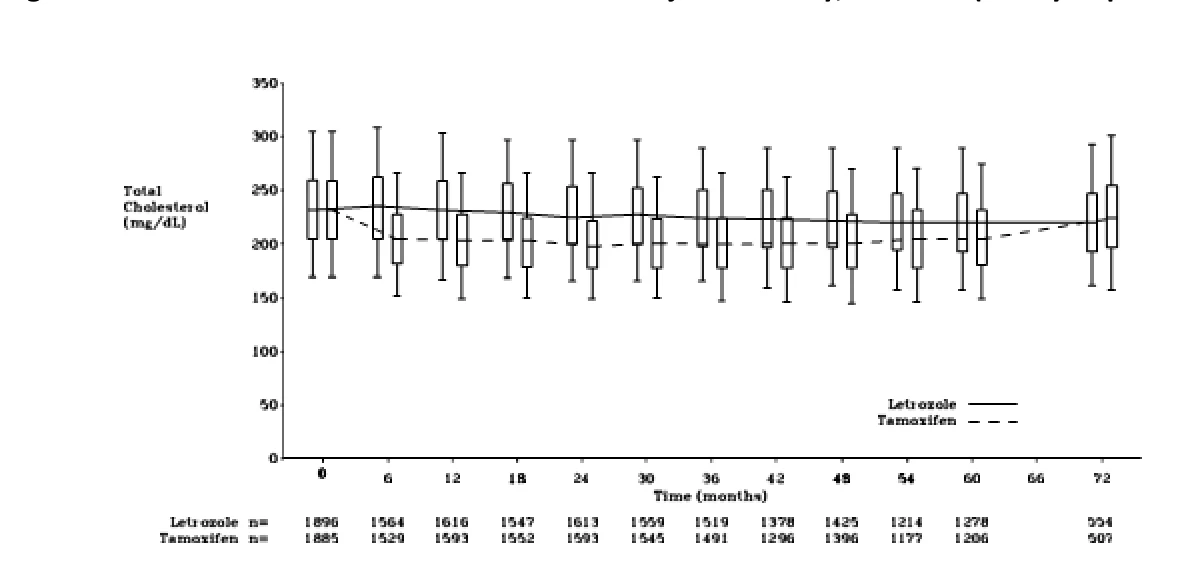
Overall, in the large adjuvant study BIG 1-98, there was a significantly higher risk of hypercholesterolemia for letrozole relative to tamoxifen (RR 1.83; 95% CI 1.70, 1.97), albeit at low CTC grades (0.4% of patients receiving letrozole had CTC grade 3-4 hypercholesterolemia). Lipid-lowering agents were given post baseline in approximately 25 % of patients treated with letrozole, compared with approximately 16% treated with tamoxifen.
10.3 Pharmacokinetics
Absorption: Letrozole is rapidly and completely absorbed from the gastrointestinal tract (absolute bioavailability = 99.9%).
Table 12 - Summary of LETROZOLE Pharmacokinetic Parameters
| Cmax | Tmax | t½ (h) | CL | Vd | |
|---|---|---|---|---|---|
| Single dose mean | 129±20.3 nmol/L fasted vs. | 1 hour fasted vs. | 2 to 5 days | 2.1 L/h | 1.87 ± 0.47 L/kg |
98.7±18.6 nmol/L fed | 2 hours fed |
Food Effect
Food slightly decreases the rate of absorption (median tmax 1 hour fasted vs. 2 hours fed and mean Cmax 129±20.3 nmol/L fasted vs. 98.7±18.6 nmol/L fed), but the extent of absorption (area under the curve (AUC)) remains unchanged. This minor effect on absorption rate is not considered to be of clinical relevance and therefore letrozole may be taken with or without food.
Distribution: Letrozole is rapidly and extensively distributed into tissues (VdSS = 1.87 ± 0.47 L/kg). Plasma protein binding is approximately 60%, mainly to albumin. The letrozole concentration in erythrocytes is about 80% of that in plasma. After administration of 2.5 mg 14C-labelled letrozole, approximately 82% of the radioactivity in plasma was unchanged compound. Systemic exposure to metabolites is therefore low.
Metabolism: Metabolic clearance to a pharmacologically inactive carbinol metabolite, CGP 44,645, is the major elimination pathway of letrozole (Clm = 2.1 L/h), but it is relatively slow when compared to hepatic blood flow (about 90 L/h). The cytochrome P450 isoenzymes 3A4 and 2A6 were found to be capable of converting letrozole to this metabolite. With CYP3A4, the metabolism of letrozole was not saturable up to concentrations of 100 µmol/L, while with CYP 2A6 apparent saturation was observed at concentrations above 12.5 µmol/L. Formation of minor unidentified metabolites and direct renal and fecal excretion play only a minor role in the overall elimination of letrozole. Within 2 weeks after administration of 2.5 mg 14C-labelled letrozole to healthy postmenopausal volunteers, 88.2 ± 7.6% of the radioactivity was recovered in urine and 3.8 ± 0.9% in feces. At least 75% of the radioactivity recovered in urine up to 216 hours (84.7 ± 7.8% of the dose) was attributed to the glucuronide of the carbinol metabolite, about 9% to two unidentified metabolites, and 6% to unchanged letrozole.
Elimination: The apparent mean terminal elimination half-life in plasma ranges from approximately 2 to 5 days. After daily administration of 2.5 mg steady-state levels are reached within 2 to 6 weeks. Plasma concentrations at steady-state are approximately 7 times higher than concentrations measured after a single dose of 2.5 mg, while they are 1.5 to 2 times higher than steady-state values predicted from the concentrations measured after a single dose, indicating a slight non-linearity in the pharmacokinetics of letrozole upon daily administration of 2.5 mg. Since steady state levels are maintained over time, it can be concluded that no continuous accumulation of letrozole occurs.
Linearity/non-linearity
The pharmacokinetics of letrozole were dose proportional after single oral doses up to 10 mg (dose range: 0.01 to 30 mg) and after daily doses up to 1.0 mg (dose range: 0.1 to 5 mg). After a 30 mg single oral dose there was up to a 7.5-fold dose over-proportional increase in AUC value. With daily doses of 2.5 and 5 mg the AUC values increased about 3.8 and 12-fold instead of 2.5 and 5-fold, respectively, when compared to the 1.0 mg/day dose. The recommended dose of
2.5 mg/day may thus be a borderline dose at which an onset of over-proportionality becomes apparent, whereas at 5 mg/day the over-proportionality is more pronounced. The dose over- proportionality may be the result of a saturation of metabolic elimination processes.
Special Populations and Conditions
Hepatic Insufficiency: In a single dose trial with 2.5 mg letrozole in volunteers with impairment of hepatic function, mean AUC values of the volunteers with moderate hepatic impairment (Child Pugh score B) was 37% higher than in normal volunteers, but still within the range seen in volunteers with normal hepatic function. In a study comparing the pharmacokinetics of letrozole after a single oral dose of 2.5 mg in eight volunteers with liver cirrhosis and severe non metastatic hepatic impairment (Child Pugh score C) to those in healthy volunteers (N=8), AUC and t½ increased by 95% and 187%, respectively. Breast cancer patients with severe hepatic impairment are thus expected to be exposed to higher levels of letrozole than patients without severe hepatic dysfunction. Long term effects of this increased exposure have not been studied.
Renal Insufficiency: Pharmacokinetics of a single 2.5 mg letrozole dose were unchanged in a study in postmenopausal women with varying degrees of renal function (24-hour creatinine clearance = 9 – 116 mL/min). In a study in 364 patients with advanced breast cancer there was no significant association between letrozole plasma levels and calculated CLcr (range
22.9 – 211.9 mL/min).
Geriatrics: Age had no effect on the pharmacokinetics of letrozole.
Pediatrics: pms-LETROZOLE is contraindicated in children and adolescents. No studies have been conducted to investigate the pharmacokinetics in pediatric patients below the age of 18 years.
11 STORAGE, STABILITY AND DISPOSAL
Store at room temperature 15°C to 30°C. Protect from heat and from moisture.
Keep out of reach and sight of children and pets.
12 SPECIAL HANDLING INSTRUCTIONS
Not applicable
PART II: SCIENTIFIC INFORMATION
13 PHARMACEUTICAL INFORMATION
Drug Substance
Proper name: Letrozole
Chemical name: 4,4'-[(1H-1,2,4-triazol-1-yl) methylene] bis-benzonitrile
Molecular formula and molecular mass: C17 H11 N5; 285.3 g/mol
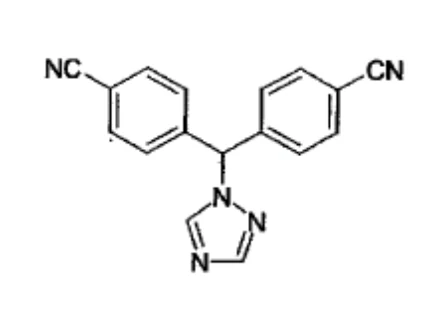
Structural formula:
Physicochemical properties:
Solubility:
| Solvent | Temperature | Solubility |
|---|---|---|
| Water | 25°C | 0.144 mmol/L |
| Water | 37°C | 0.235 mmol/L |
| 0.1N HCL | 25°C | 0.26 mmol/L |
| 0.1N HCL | 37°C | 0.428 mmol/L |
| 0.067 M Phosphate buffer | 25°C | 0.123 mmol/L |
| Simulated intestinal fluid | 37°C | 0.218 mmol/L |
| Dichloromethane | 25°C | 410-440 mmol/L |
| 96% Ethanol | 25°C | 21-23 mmol/L |
| Methanol | 25°C | 40-50 mmol/L |
| Toluene | 25°C | 6-7 mmol/L |
Melting range: 184°C - 185°C
pK value: 0.7 ± 0.2 in water at 22°C (triazole)
14 CLINICAL TRIALS
Clinical Trials by Indication
Adjuvant Treatment of Early Breast Cancer in Postmenopausal Women, Study BIG 1-98
Table 13: Summary of Patient Demographics for Clinical Trials in Adjuvant Treatment of Early Breast Cancer in Postmenopausal Women
| Study # | Study design | Dosage, route of administration and duration | Study subjects (n) | Mean age (Range) | Sex |
|---|---|---|---|---|---|
| BIG 1-98 | Multi-centre, randomised, double- blind study (BIG 1-98) in the adjuvant setting |
| 8,000 postmenopausal women with resected, receptor-positive early breast cancer | --- | Female |
In a multi-centre, double-blind study (BIG 1-98) in the adjuvant setting, enrolling over 8,000 postmenopausal women with resected, receptor-positive early breast cancer, patients were randomly allocated one of the following treatments:
- A. tamoxifen for 5 years
- B. letrozole for 5 years
- C. tamoxifen for 2 years followed by letrozole for 3 years
- D. letrozole for 2 years followed by tamoxifen for 3 years
The primary endpoint of this trial was disease-free survival (DFS) (i.e., interval between randomization and earliest occurrence of a local, regional, or distant recurrence, or invasive contralateral breast cancer, second primary cancer, or death from any cause). The secondary endpoints were overall survival (OS), systemic disease-free survival (SDFS), invasive contralateral breast cancer, distant disease-free survival (DDFS), time to breast cancer recurrence (TBR) and time to distant metastasis (TDM).
The Primary Core Analysis (PCA) included patients in all treatment arms, but follow-up in the two sequencing arms was truncated to 30 days after the switch in treatments. The original PCA analysis was conducted at a median treatment duration of 24 months and a median follow-up of 26 months (Table 13 and Figures 2 and 3). In 2005, based on the original PCA data showing a significant advantage in DFS with letrozole compared with tamoxifen (HR 0.81; 95% CI 0.70, 0.93; P=0.003) (Table13) and on the recommendations of the independent Data Monitoring Committee, the protocol was amended, the tamoxifen arms were unblinded and patients were allowed to cross over to letrozole to complete their adjuvant therapy if tamoxifen had been given for 2 to 4.5 years, or to start extended adjuvant therapy if tamoxifen had been given for at least 4.5 years. In total, 632 (26%) patients opted to cross to letrozole, 448 patients to complete adjuvant therapy and 184 to start extended adjuvant therapy. (These 184 patients include 12 women who crossed to another aromatase inhibitor.)
The design of the PCA is not optimal to evaluate the effect of letrozole after a longer time because follow-up was truncated in two arms at around 25 months. The Monotherapy Arms Analysis (MAA), despite the confounding of the tamoxifen reference arm by a selective crossover to letrozole, provides the comparison of 5 years of letrozole monotherapy compared to tamoxifen monotherapy (Table 14). Approximately 7% of the total patient-years follow-up time in the tamoxifen-alone arms was affected by the selective crossover in the MAA.
Selected baseline characteristics for the study population are shown in Table 14.
Table 14: Selected Study Population Demographics for Adjuvant Study (ITT population)
| Primary Core Ana/lysis (PCA) | Monotherapy Arms Analysis (MAA) | ||||||||||||||||||
|---|---|---|---|---|---|---|---|---|---|---|---|---|---|---|---|---|---|---|---|
| Characteristic | Letrozole N=4,003 (%) | Tamoxifen N=4,007 (%) | Letrozole N=2,463 (%) | Tamoxifen N=2,459 (%) | |||||||||||||||
| Age (median, years) | 61 | 61 | 61 | 61 | |||||||||||||||
| Age range (years) | 38-89 | 39-90 | 38-88 | 39-90 | |||||||||||||||
| Hormone receptor status (%) | |||||||||||||||||||
| ER+ and/or PgR+ | 99.7 | 99.7 | 99.7 | 99.7 | |||||||||||||||
| Both unknown | 0.3 | 0.3 | 0.3 | 0.3 | |||||||||||||||
| Nodal status (%) | |||||||||||||||||||
| Node negative | 52 | 52 | 50 | 52 | |||||||||||||||
| Node positive | 41 | 41 | 43 | 41 | |||||||||||||||
| Nodal status unknown | 7 | 7 | 7 | 7 | |||||||||||||||
| Prior adjuvant chemotherapy | 24 | 24 | 24 | 24 | |||||||||||||||
| Race | |||||||||||||||||||
| White / Caucasian | 97.4 | 97.6 | 97.6 | 98.2 | |||||||||||||||
| 0.3 | 0.1 | 0.2 | <0.1 | ||||||||||||||||
| Primary Core Ana/lysis (PCA) | Monotherapy Arms Analysis (MAA) | ||||||||||
|---|---|---|---|---|---|---|---|---|---|---|---|
| Characteristic | Letrozole N=4,003 (%) | Tamoxifen N=4,007 (%) | Letrozole N=2,463 (%) | Tamoxifen N=2,459 (%) | |||||||
| Asian | 0.4 | 0.4 | 0.5 | 0.4 | |||||||
| Other / Missing | 1.9 | 1.8 | 1.6 | 1.3 | |||||||
PCA Efficacy Results
Data in Table 15 and Figures 2 and 3 reflect results of the Primary Core Analysis (PCA) including data from non-switching arms (arms A and B) together with data truncated 30 days after the switch in the two switching arms (arms C and D). Data in Table 15 report results of the PCA at both 26 months and 60 months median follow-up, respectively.
In the initial analysis, conducted after a median follow-up of 26 months, the estimated 5-year DFS rates were 84.0% for letrozole and 81.4% for tamoxifen.
Table 15: Disease-free and Overall Survival (PCA ITT population) at a Median Follow-up of 26 Months and of 60 Months
| Original PCA | Updated PCA | |||||||
|---|---|---|---|---|---|---|---|---|
Median follow-up 26 months Median treatment 24 months | Median follow-up 60months* Median treatment 32 months | |||||||
| Endpoint | Hazard ratio (95% CI); | Hazard ratio (95% CI); | ||||||
| DFS 1 | 0.81 (0.70, 0.93); P=0.003 | 0.86 (0.77, 0.96); P=0.008 | ||||||
| DFS excluding second primaries | 0.79 (0.68, 0.92); P=0.002 | 0.85 (0.76, 0.96); P=0.008 | ||||||
| Time to distant metastases2 | 0.73 (0.60, 0.88) | 0.79 (0.68, 0.92) | ||||||
| DDFS3 | 0.82 (0.70, 0.97) | 0.84 (0.74, 0.95) | ||||||
| SDFS4 | 0.83 (0.72, 0.97) | 0.87 (0.77, 0.98) | ||||||
Contralateral breast cancer (invasive) | 0.61 (0.35, 1.08) | 0.76 (0.50, 1.15) | ||||||
| OS | 0.86 (0.70, 1.06) | 0.87 (0.75, 1.01) | ||||||
1 DFS events: Loco-regional recurrence, distant metastasis, invasive contralateral breast cancer, second non-breast primary cancer or death without prior cancer event, from any cause
2 Risk of distant metastases only.
3 Distant disease-free survival events: Earlier event of either distant metastasis or death from any cause
4 Systemic disease-free survival events: Same as protocol definition, but excluding all breast events
*Note: At original analysis, median duration of treatment was 24 months. In the updated analysis, the two sequencing treatment arms were truncated 30 days after the switch (at approximately 2 years), while in the monotherapy arms, median treatment duration was 60 months. Overall, the truncation in two arms brought the median duration of treatment to approximately 32 months.
Figure 2: Forest Plot for DFS by Subgroup (median follow-up of 26 months)
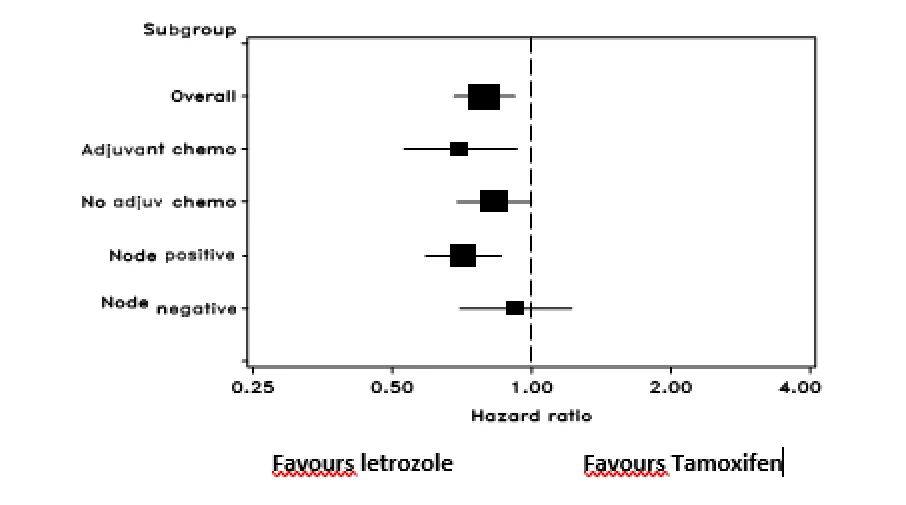
Figure 3: Forest Plot for Time to Distant Metastasis by Subgroup (median follow-up of 26 months)
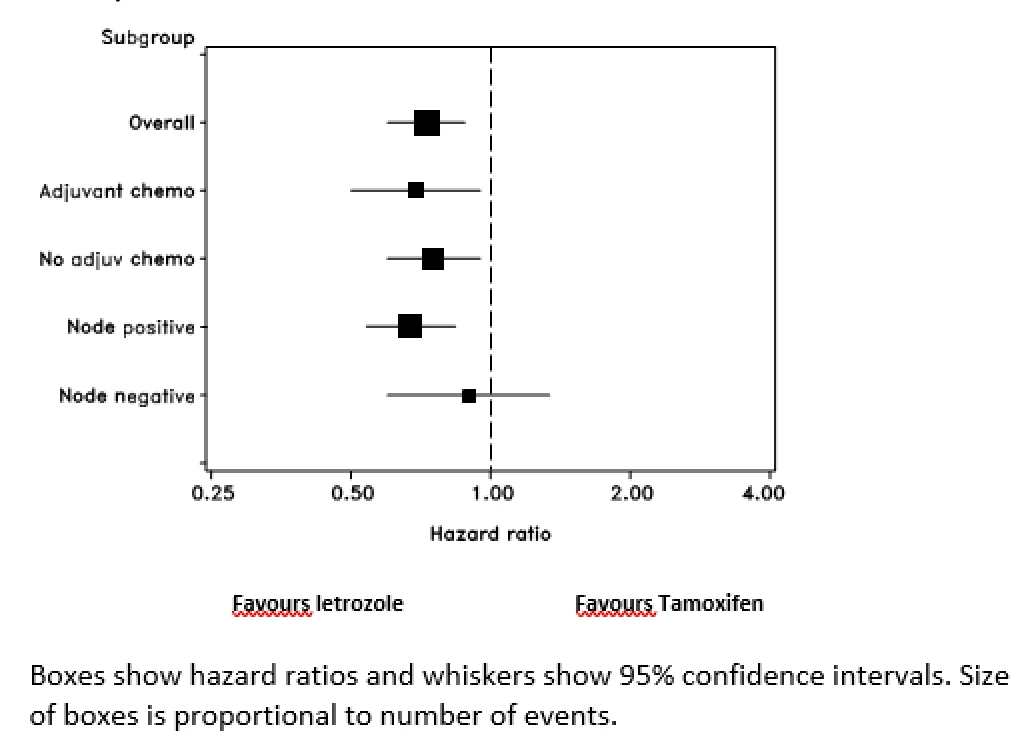
MAA Efficacy Results
The Monotherapy Arms Analysis (MAA) comparing the efficacy of letrozole monotherapy to tamoxifen monotherapy at a median duration of treatment of 5 years and a median follow-up of 96 months is presented in Table 16.
Table 16: Key Efficacy Results at A Median Duration of 60 Months and a Median Follow-up of 96 Months (MAA ITT population)
| Letrozole N=2,463 | Tamoxifen N=2,459 | Hazard ratio (95% CI) | P value 1 | |||||||
|---|---|---|---|---|---|---|---|---|---|---|
| Disease-free survival (primary) | ||||||||||
| Events (protocol definition)2 | 626 | 698 | 0.87 (0.78, 0.97) | 0.01 | ||||||
| 5-year DFS rate (%) | 85.5 | 82.5 | ||||||||
| Events (excluding second non- breast primary malignancies) | 552 | 619 | 0.87 (0.77, 0.97) | 0.01 | ||||||
| 5-year DFS rate (%) | 87.4 | 84.7 | ||||||||
| Overall survival (secondary) | ||||||||||
| Number of deaths | 393 | 436 | 0.89 (0.77, 1.02) | |||||||
| Distant metastasis (secondary) | 301 | 342 | 0.86 (0.74, 1.01) | |||||||
Distant disease-free survival (secondary) | 477 | 525 | 0.89 (0.78, 1.01) | |||||||
| Systemic disease-free survival (secondary) | ||||||||||
| Protocol definition | 571 | 625 | 0.89 (0.80, 1.00) | |||||||
| Excluding second non-breast primary malignancies | 496 | 544 | 0.89 (0.79, 1.01) | |||||||
| Contralateral breast cancer (invasive) (secondary) | 45 | 71 | 0.62 (0.43, 0.90) | |||||||
1 Logrank test, stratified by randomization option and use of chemotherapy (yes/no)
2 DFS events: loco-regional recurrence, distant metastasis, invasive contralateral breast cancer, second (non-breast) primary malignancy, death from any cause without a prior cancer event
Adjuvant Treatment of Early Breast Cancer in Postmenopausal Women, Study D2407 (see also 10.2 Pharmacodynamics)
Table 17: Summary of Patient Demographics for Clinical Trials in Adjuvant Treatment of Early Breast Cancer in Postmenopausal Women
| Study # | Study design | Dosage, route of administration and duration | Study subjects (n) | Mean age (Range) | Sex |
|---|---|---|---|---|---|
| D2407 | Phase III, open-label, randomized, multi- centre study designed to compare the effects of adjuvant treatment with letrozole to tamoxifen on bone mineral density (BMD), bone markers and fasting serum lipid profiles. | Subjects were randomly assigned either letrozole 2.5 mg daily for 5 years or tamoxifen 20 mg daily for 2 years followed by 3 years of letrozole daily. | 263 postmenopausal women with hormone sensitive resected primary breast cancer | -- | Female |
Study D2407 was a phase III, open-label, randomized, multi-centre study designed to compare the effects of adjuvant treatment with letrozole to tamoxifen on bone mineral density (BMD), bone markers and fasting serum lipid profiles. In total, 263 postmenopausal women with hormone sensitive resected primary breast cancer were randomly assigned either letrozole 2.5 mg daily for 5 years or tamoxifen 20 mg daily for 2 years followed by 3 years of letrozole daily.
The primary objective was to compare the effects on lumbar spine (L2-L4) BMD of letrozole versus tamoxifen, evaluated as percent change from baseline lumbar spine BMD at 2 years.
(assessment by central review, based on dual X-ray absorptiometry, DXA).
At 24 months, the lumbar spine (L2-L4) BMD showed a median decrease of 4.1% in the letrozole arm compared to a median increase of 0.3% in the tamoxifen arm (difference = 4.4%) a statistically significant difference in favour of tamoxifen (P < 0.0001). Significant differences in favour of tamoxifen were noted irrespective of category of initial T-score.
At 24 months, total hip BMD showed a median decrease of 3.0% from baseline with letrozole compared to a median increase of 1.2% for tamoxifen (difference = 4.2%, a significant difference). Significant differences in favour of tamoxifen were noted irrespective of category of initial T-score.
Significantly more patients receiving letrozole than tamoxifen were found by central review to have had a decrease of 8% or greater from baseline over 2 years in lumbar spine BMD (letrozole, 15.5%; tamoxifen, 1.0%) or in total hip BMD (letrozole, 7.8%; tamoxifen, 3.1%).
During the 2-year period, fractures were reported (central review, treatment-blinded) for 20 patients (15%) in the letrozole arm, and 22 patients (17%) in the tamoxifen arm. Of these, 7 patients (5%) in each treatment arm had clinical fractures. There was no significant difference between treatments in fracture rate. All patients should have received vitamin D and calcium supplementation. Post baseline bisphosphonates were given in 14% of patients treated with letrozole, 5% of those treated with tamoxifen.
At 5 years, in the letrozole arm, there was a median decrease of 5.66% from baseline in the lumbar spine BMD (n=56) and a median decrease of 5.77% in total hip (n=62). There was a general shift downwards in T-score over the 5 years. Amongst patients whose DXA readings were centrally evaluated and who had received bisphosphonate therapy, for lumbar spine and total hip normal T-scores (> 1.0), there were 51 patients each at baseline and 39 and 47, respectively, at 5 years. For lumbar spine and total hip osteopenic T-scores (≤ -1.0 and > -2.5), there were 5 and 11 patients, respectively, at baseline and 17 and 15, respectively, at 5 years. No patient with a normal BMD (normal T score) at baseline became osteoporotic during 5 years as evaluated by central review. One patient evaluated as having osteopenia at baseline (T score of -1.9) was diagnosed with osteoporosis during the treatment period by central review, despite unevaluable T-scores in L2-L4 (due to severe degenerative disk disease) and hip T-scores that remained higher than -2.5 at all times. Over the 5-year study, 37% of patients treated with letrozole received bisphosphate therapy, including 18% of patients who started bisphosphonate therapy after initiating treatment with letrozole.
Tamoxifen is known to decrease total cholesterol and particularly, LDL cholesterol. Over the first 2 years of the study, median LDL cholesterol levels remained stable for letrozole, but decreased by up to 28% for tamoxifen. Median HDL cholesterol levels remained relatively stable over the 2 years in both treatment arms, giving rise to significant differences in favour of tamoxifen in the HDL:LDL ratio. No significant treatment differences were observed in triglyceride levels. Clinically relevant changes in total cholesterol at 2 years occurred significantly more often for patients treated with letrozole (17%) than with tamoxifen (5%). Significantly more patients receiving letrozole received lipid lowering agents (20%) than receiving tamoxifen (8%). Dietary measures for reducing lipids were reported for 4% of patients in each treatment arm. At 5 years, on the letrozole arm, 23% of patients experienced clinically relevant changes in total cholesterol.
At 2 years, significantly more patients treated with letrozole received lipid-lowering drugs (20%) than patients treated with tamoxifen (8%). Dietary control of lipids occurre d equally often in both treatment arms (4%). Lipid-lowering agents were generally introduced when total cholesterol values rose above 6 mmol/L. At 5 years, on the letrozole arm, 32% of patients received lipid lowering drugs.
Extended Adjuvant Treatment of Early Breast Cancer in Postmenopausal Women
Table 18 - Summary of Patient Demographics for Clinical Trials in Locally Advance or Metastatic Breast Cancer
| Study # | Study design | Dosage, route of administration and duration | Study subjects (n) | Mean age (Range) | Sex |
|---|---|---|---|---|---|
| MA 17 (CFEM345 G MA-17) | Multi-center, double- blind, randomized, placebo-controlled phase III clinical trial | Patients who had remained disease-free after completion of adjuvant treatment with tamoxifen (4.5-6 years) were randomly assigned either letrozole 2.5 mg daily or placebo for 5 years | 5,100 post- menopausal women with receptor positive (or unknown) primary breast cancer | -- | Female |
The MA-17 (CFEM345G MA-17) trial was a multi-centre, double-blind, randomized, placebo-controlled phase III trial, performed in over 5,100 postmenopausal women with receptor-positive (or unknown) primary breast cancer. Patients who had remained disease-free after completion of adjuvant treatment with tamoxifen (4.5-6 years) were randomly assigned either letrozole 2.5 mg daily or placebo for 5 years.
Disease-free survival (DFS) was the primary endpoint, defined according to the study protocol as the time from randomization to the earliest event of time to recurrence of the primary disease (i.e., loco-regional recurrence or distant metastasis) or development of contralateral breast cancer (i.e., breast cancer recurrence). (The protocol definition excluded deaths.) Secondary endpoints included: overall survival (OS), time to distant metastasis, contralateral breast cancer, and other clinical and laboratory safety parameters.
Following review of the results of the first planned interim analysis, conducted after a median follow-up of 28 months and a median treatment duration of 24 months, in light of the statistically significant benefit in DFS in favour of letrozole, the study was unblinded and women who were disease-free in the placebo arm were allowed to switch to letrozole for up to 5 years. MA-17 transformed into an open-label, observational, non-randomized study, with a substantial impact on the subsequent safety and efficacy results.
Updated analyses were conducted at a median overall follow-up of 62 months and median duration of treatment in the randomized letrozole arm of 60 months. 48.7% of the patients in the original randomized letrozole arm have completed 5 years of extended adjuvant treatment with letrozole. Following study unblinding, 1,551 women (60% of those eligible to switch) switched from placebo to letrozole at a median 31 months after completion of adjuvant tamoxifen therapy (range 12-106 months). Subsequent patient-years of follow-up under letrozole after switch account for 64% of the total years of follow-up in the randomized placebo arm. Median duration of follow-up in the letrozole after switch group was 42 months and median duration of letrozole treatment after switch was 40 months. Following study unblinding, open-label letrozole was continued in the randomized letrozole arm and was given to those women who opted to switch from placebo to letrozole. In patients who opted not to switch, placebo was no longer dispensed – these women received standard care (i.e. observation). Median duration of placebo/standard care (up until any switch to letrozole that may have occurred) was 37 months.
Selected baseline characteristics for the study population are shown in Table 19.
Table 19: Selected Study Population Demographics (ITT population)
| Baseline status | Letrozole | Placebo |
|---|---|---|
| N=2,583 | N=2,587 | |
| Age: Median (years) at enrolment | 62 | 62 |
| Minimum-maximum (years) | 32-90 | 34-94 |
| < 65 years at enrolment (%) | 58 | 60 |
| ≥ 65 years at enrolment (%) | 42 | 40 |
| Race (%) | ||
| Caucasian | 88 | 90 |
| 3.2 | 3.5 | |
| Oriental | 1.8 | 0.9 |
| Other | 6.5 | 5.2 |
| Hormone receptor status (%) | ||
| Node negative | 50 | 50 |
| Node positive | 46 | 46 |
| Nodal status unknown | 4 | 4 |
| Chemotherapy (%) | 46 | 46 |
Note: Prior treatment with tamoxifen in both arms ranged from 4.5 to 6 years, with a median duration of 5 years
Figure 4: Time to Breast Cancer Recurrence (MA-17 protocol definition of DFS event) in updated analysis
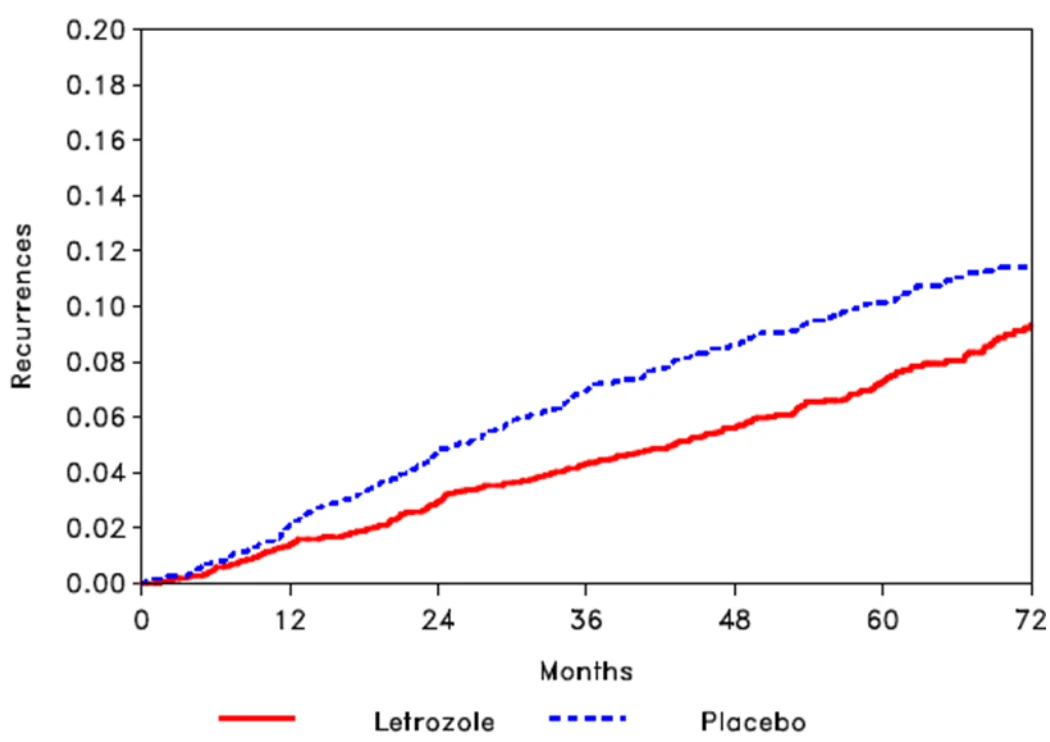
Note: Switches in the placebo arm to letrozole are ignored.
Tables 20 and 21 show disease-free and overall survival with subset analysis by receptor status, nodal status and previous chemotherapy at median follow-up of 28 months and 62 months.
In the primary analysis (conducted at a median follow-up of 28 months), letrozole was shown to reduce the risk of breast cancer recurrence (protocol definition of DFS) by 42% compared with placebo (hazard ratio 0.58; 95% CI 0.45, 0.76; P=0.00003). Subgroup sensitivity analysis confirmed the robustness of the data. The statistically significant benefit in DFS in favour of letrozole was observed regardless of nodal status (node negative, hazard ratio 0.48; 95% CI 0.30, 0.78; P=0.002; node positive, hazard ratio 0.61; 95% CI 0.44, 0.83; P=0.002).
The risk of distant metastases was significantly lower with letrozole than with placebo (hazard ratio 0.61; 95% CI 0.44, 0.83; P=0.003).
The risk of developing contralateral breast cancer was also substantially reduce d with letrozole compared with placebo (40% reduction in the risk) although the difference between treatments was not statistically significant (P=0.12).
Overall survival did not show significant differences between treatments; relatively few deaths had occurred at the time of the analysis. Subgroup analysis indicated a more pronounced benefit in node positive patients (hazard ratio 0. 61, 95% CI 0.38, 0.97). In node -negative patients, there was an increase in the number of deaths in the letrozole arm (19/1,298 patients, 1.5%) compared with the placebo arm (14/1,301 patients, 1.1%) (hazard ratio 1.36; 95% CI 0.68, 2.71).
The updated final analysis, conducted at a median follow-up of 62 months, confirmed the significant reduction in the risk of recurrence of the primary disease with letrozole compared with placebo. For time to distant metastases and overall survival, however, there was no significant difference between treatments. In addition, in the subgroup of patients with node negative disease, an increase in the number of deaths was observed in the letrozole arm (90/1,298 patients, 6.9%) compared with the placebo arm (79/1,301 patients, 6.1%) (hazard ratio 1.34; 95% CI 0.99, 1.81). There was no difference between treatments in the risk of death in patients with node-positive disease (letrozole 128/1,184 patients, 10.8%; placebo 145/1,187 patients, 12.2%; hazard ratio 0.96; 95% CI 0.75, 1.29). Figures 5 and 6 show Kaplan-Meier curves for the overall population for the node-negative and node-positive subgroups. All updated analyses were affected by the confounding effects of around 60% of the patients in the placebo arm switching to letrozole when the study was unblinded.
Table 20: Disease-free Survival, Time to distant Metastases, Contralateral Breast Cancer and Overall Survival (Modified ITT population)
2004 primary analysis – median follow-up 28 months | 2008 updated analysis1 – median follow-up 62 months | ||||||||||||||||||
|---|---|---|---|---|---|---|---|---|---|---|---|---|---|---|---|---|---|---|---|
| Letrozole | Placebo | HR (95% CI)2 | Letrozole | Placebo | HR (95% CI)2 | ||||||||||||||
| N=2,582 | N=2,586 | P value | N=2,582 | N=2,586 | P value | ||||||||||||||
| Disease-free survival (protocol definition)3 | |||||||||||||||||||
| Events | 92 (3.6%) | 155 (6.0%) | 0.58 (0.45, 0.76) 0.00003 | 209 (8.1%) | 286 (11.1%) | 0.75 (0.63, 0.89) 0.001 | |||||||||||||
| 4-year DFS rate | 94.4% | 89.8% | 94.4% | 91.4% | |||||||||||||||
| Disease-free survival including deaths from any cause | |||||||||||||||||||
| Events | 122 (4.7%) | 193 (7.5%) | 0.62 (0.49, 0.78) 0.00003 | 344 (13.3%) | 402 (15.5%) | 0.89 (0.77, 1.03) 0.120 | |||||||||||||
| 5-year DFS rate | 90.5% | 80.8% | 88.8% | 86.7% | |||||||||||||||
| Time to distant metastases | |||||||||||||||||||
| Events | 57 (2.2%) | 93 (3.6%) | 0.61 (0.44, 0.84) - | 142 (5.5%) | 169 (6.5%) | 0.88 (0.70, 1.10) - | |||||||||||||
| Overall survival | |||||||||||||||||||
| Deaths | 51 (2.0%) | 62 (2.4%) | 0.82 | 236 | 232 | 1.13 | |||||||||||||
2004 primary analysis – median follow-up 28 months | 2008 updated analysis1 – median follow-up 62 months | |||||
|---|---|---|---|---|---|---|
| Letrozole | Placebo | HR (95% CI)2 | Letrozole | Placebo | HR (95% CI)2 | |
| N=2,582 | N=2,586 | P value | N=2,582 | N=2,586 | P value | |
(0.56, 1.19) - | (9.1%) | (9.0%) | (0.95, 1.36) - | |||
| Contralateral breast cancer | ||||||
| Invasive | ||||||
| 15 (0.6%) | 25 (1.0%) | 0.60 (0.31, 1.14) - | 33 (1.3%) | 51 (2.0%) | 0.644 (0.41, 1.00) - | |
HR = Hazards ratio; CI = Confidence Interval
1 When the study was unblinded in 2003, 1,551 patients in the randomized placebo arm (60% of those eligible to switch – i.e. who were disease-free) switched to letrozole at a median 31 months after randomization. The analyses presented here ignore the switching under the ITT principle.
2 Stratified by receptor status, nodal status and prior adjuvant chemotherapy.
3 Protocol definition of disease-free survival events: loco-regional recurrence, distant metastasis or contralateral breast cancer.
4 Odds ratio and 95% CI for the odds ratio.
Table 21: Disease-free and Overall Survival by Receptor Status, Nodal Status and Previous Chemotherapy (Modified ITT population)
| 2004 analysis – median follow-up 28 months | 2008 analysis – median follow-up 62 months1 | ||||||||||||
|---|---|---|---|---|---|---|---|---|---|---|---|---|---|
| HR (95% CI)2 | P value | HR (95% CI)2 | P value | ||||||||||
| Disease-free survival (protocol definition) | |||||||||||||
Receptor status positive | 0.57 (0.44, 0.75) | 0.00003 | 0.74 (0.62, 0.89) | 0.001 | |||||||||
| Nodal status | |||||||||||||
| Negative | 0.48 (0.30, 0.78) | 0.002 | 0.67 (0.49, 0.93) | 0.015 | |||||||||
| Positive | 0.61 (0.44, 0.83) | 0.002 | 0.78 (0.62, 0.97) | 0.027 | |||||||||
| Chemotherapy | |||||||||||||
| None | 0.58 (0.40, 0.84) | 0.003 | 0.71 (0.54, 0.92) | 0.010 | |||||||||
| Received | 0.59 (0.41, 0.84) | 0.003 | 0.79 (0.62, 1.01) | 0.055 | |||||||||
| Overall survival | |||||||||||||
| Nodal status | |||||||||||||
| Negative | 1.36 (0.68, 2.71) | - | 1.34 (0.99, 1.81) | - | |||||||||
| Positive | 0.61 (0.38, 0.97) | - | 0.96 (0.75, 1.21) | - | |||||||||
HR = Hazards ratio; CI = Confidence Interval
1 Including 60% of eligible patients who switched from placebo to letrozole after the study was unblinded in 2003
2 From Cox regression models
Figure 5: Overall Survival (Time to death) - Randomised Treatment Group Regardless of Switch (Modified ITT population)
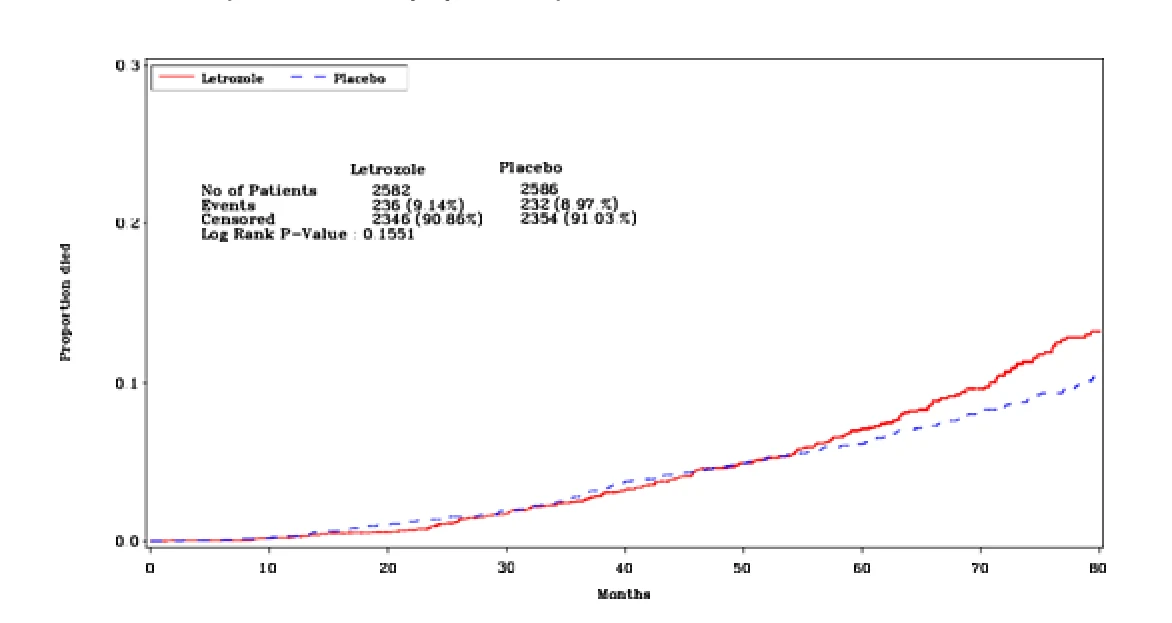
Figure 6: Overall Survival (Time to death) by Nodal Status - Randomised Treatment Group Regardless of Switch (Modified ITT population)
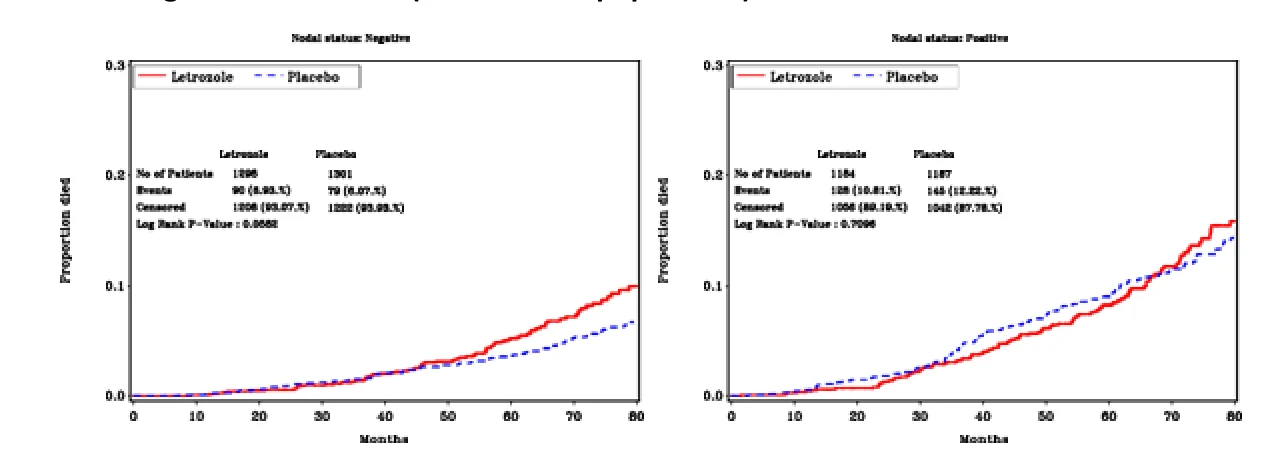
Health related quality of life was also assessed in the MA-17 study using the SF-36 Health Survey Questionnaire as well as the MENQOL, a quality of life scale specifically addressing menopausal symptoms. The SF-36 instrument has 36 questions, which yield two summary scores: physical and mental health summary measures. In the initial analysis, no significant differences were observed in global physical or mental summary scores. Treatment differences in favour of placebo were observed in assessments by patients particularly in the measures of physical functioning, bodily pain, vitality, sexual and vasomotor items.
In the updated analysis of quality of life, restricting the analysis to women who had received letrozole or placebo/no treatment for at least 3 years, there were no significant differences between treatments in physical component summary score or mental component summary score, or in any domain score (physical health; role function-physical; bodily pain; general health; vitality; social function; role function-emotional; or mental health – all SF-36 scale). There was no significant difference from baseline between treatments in any domain on the specific menopausal symptoms scale (MENQOL) (vasomotor; psychological; physical or sexual).
Considering all women in the sub-study and looking at the individual symptoms of the MENQOL scale, significantly more women who received letrozole than who received placebo/no treatment were most bothered (generally in the first year of treatment) by those symptoms deriving from estrogen deprivation – hot flashes and vaginal dryness. The symptom that bothered most patients in both arms (but significantly more in the letrozole arm than in the placebo arm) was aching muscles.
First-Line Treatment - Advanced Breast Cancer
Table 22: Summary of Patient Demographics for Clinical Trials in Locally Advance or Metastatic Breast Cancer
| Study # | Study design | Dosage, route of administration and duration | Study subjects (n) | Mean age (Range) | Sex |
|---|---|---|---|---|---|
| CFEM345C P025 | Randomized, well- Controlled double- blind phase III clinical trial | Letrozole 2.5 mg daily or tamoxifen 20 mg daily | 907 post- menopausal patients | -- | Female |
One large, randomized, well-controlled, multinational, double-blind Phase III trial (CFEM345C P025) was conducted in 907 postmenopausal patients with locally advanced or metastatic breast cancer. Patients were randomized to letrozole 2.5 mg daily or tamoxifen 20 mg daily.
Time to progression (TTP) was the primary endpoint of the trial. In 907 women, letrozole was superior to tamoxifen in TTP (P<0.0001). Median TTP was 9.4 months for letrozole versus 6.0 months for tamoxifen. letrozole was also superior to tamoxifen in secondary endpoints consisting of overall objective tumour response [Complete Response (CR) + Partial Response (PR)], time to treatment failure (TTF) and clinical benefit (CR+PR+NC ≥ 24 weeks). Objective response rate (ORR) was statistically significant (P=0.0002) for letrozole as compared to tamoxifen: 32% of patients in the letrozole arm achieved a confirmed response (CR, 9%; PR, 23%; 95% CI for ORR 28 to 36 %), compared with 21% (CR, 3%; PR, 18%; CI for ORR 17 to 25%) in the tamoxifen arm. Median duration of objective tumour response was 25 months for letrozole (95% CI 21 to 36 months) compared with a median 23 months for tamoxifen (95% CI 20 to 26 months). Although the difference was not statistically significant (P=0.0578), the difference favoured letrozole. The hazard ratio comparing the subsequent risk of progression in responding patients treated with letrozole to the risk in responding patients treated with tamoxifen was 0.74 (95% CI 0.54 to 1.01), P=0.0578. In addition to a significantly higher response rate with letrozole, where response occurred, the subsequent risk of progression was reduced by 26% with letrozole compared to the risk with tamoxifen (hazard ratio 0.74; 95% CI for the hazard ratio: 46% reduction in the subsequent risk of progression with letrozole to 1% increase in the subsequent risk of progression with letrozole compared with tamoxifen in responding patients).
TTF was statistically significant for letrozole as compared to tamoxifen (P<0.0001). Median TTF was 9.0 months for letrozole versus 5.7 months for tamoxifen. Clinical benefit was statistically significant for letrozole when compared to tamoxifen (50% vs. 38%, P=0.0004).
Data from this trial were further analyzed to determine the impact of prior adjuvant tamoxifen therapy on TTP. The superiority of letrozole was observed in the sub-group of patients who received no prior adjuvant tamoxifen therapy. Patients treated with letrozole had a median TTP of 9.5 months (n=369) vs. 6.0 months for tamoxifen-treated patients (n=371), P=0.0003.
Similar results were seen in those patients who had received prior adjuvant tamoxifen. The median TTP for letrozole-treated patients was significantly longer at 8.9 months (n=84), vs. the tamoxifen-treated group at 5.9 months (n=83), P=0.0033. Treatment with letrozole lead to a significantly longer TTP compared with tamoxifen, irrespective of whether patients had received prior adjuvant therapy.
Sub-group analysis was also performed on the Objective Response Rate (CR+PR). Patients who received no prior adjuvant tamoxifen had an objective response rate of 33% in the letrozole arm (n=369) vs. 24% in the tamoxifen arm (n=371), P=0.0039. In patients who had received prior adjuvant tamoxifen, significantly more patients achieved an objective response rate with letrozole (26%) vs. tamoxifen (8%), P=0.0038. These data demonstrate that the Objective Response Rate with letrozole is superior to tamoxifen regardless of whether prior adjuvant therapy was initiated.
Letrozole treatment in first-line therapy of advanced breast cancer patients is associated with an early survival advantage over tamoxifen. The median overall survival was 34 months for letrozole and 30 months for tamoxifen. Although this difference in overall survival was not statistically significant (logrank P=0.53), there was a statistically significant early survival advantage for patients in the randomized letrozole arm compared to the randomized tamoxifen arm over the first 2 years, as shown in the primary analysis (Kolmogorov-Smirnov- type test, P=0.005). Supportive analyses (repeated logrank tests) confirmed the early survival advantage (see Figure 7). The total duration of endocrine therapy (time to chemotherapy) was significantly longer for letrozole (median 16 months, 95% CI 15 to 18 months) than for tamoxifen [(median 9 months, 95% CI 8 to 12 months) (logrank P=0.0047)].
Figure 7
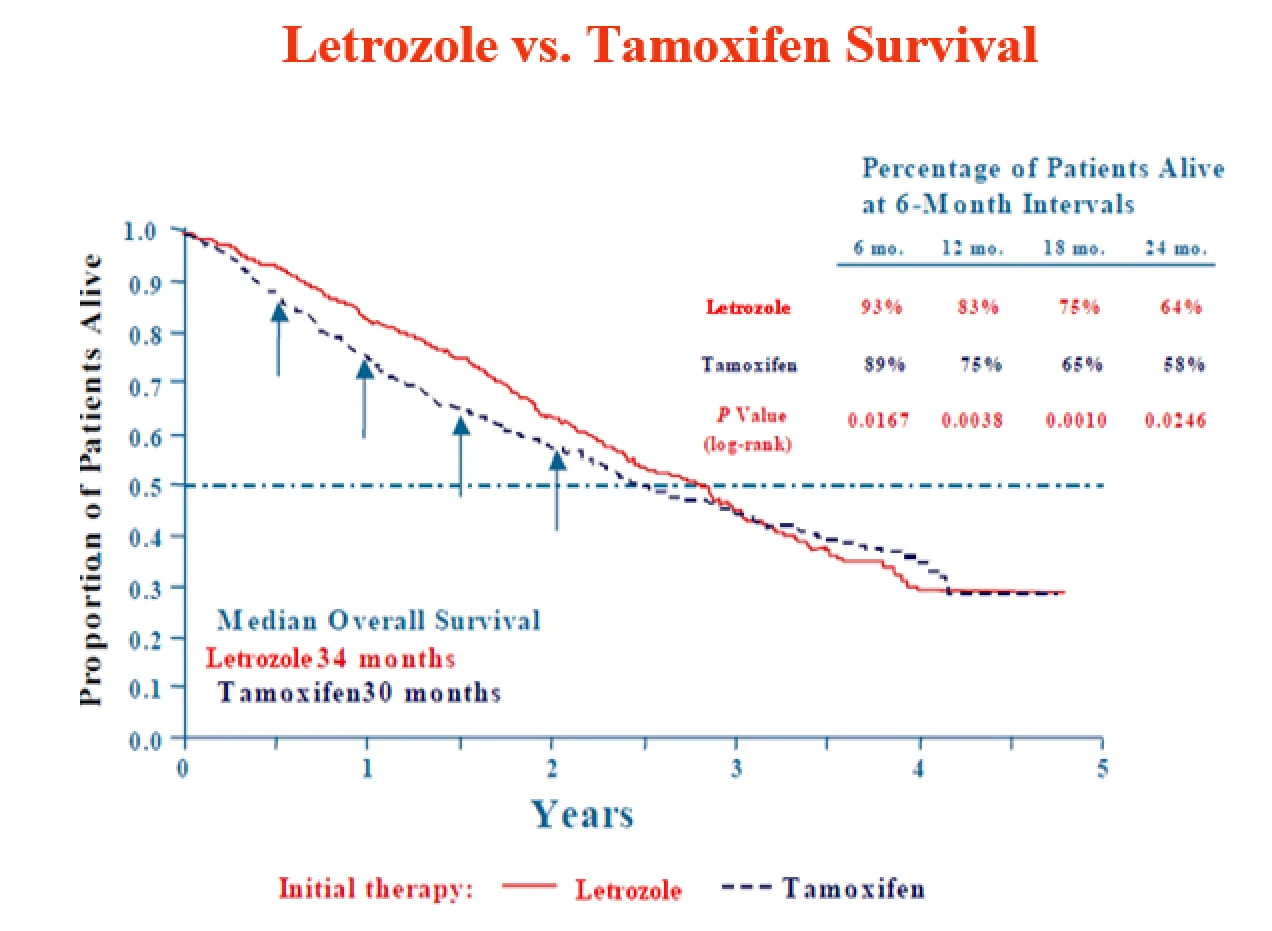
Second-Line Treatment- Advanced Breast Cancer
Table 23: Summary of Patient Demographics for Clinical Trials in Second Line Treatment of Advanced Breast Cancer – Study AR/BC2
| Study # | Study design | Dosage, route of administration and duration | Study subjects (n) | Mean age (Range) | Sex |
|---|---|---|---|---|---|
Study AR/BC2 | Controlled double- blind clinical trial | Letrozole 2.5 mg or 0.5 mg once daily, or megestrol acetate 160 mg once daily | Letrozole 2.5 mg (n=174) Letrozole 0.5 mg (n=188) Megestrol acetate (n=189) | Letrozole 2.5 mg (63.6 years [± 9.1]) Letrozole 0.5 mg (64.6 years [± 10.5]) Megestrol acetate (64 years [± 9.5]) | Female |
In a controlled double-blind clinical trial, the overall objective tumour response rate (complete and partial response) was 23.6% in letrozole-treated patients compared to 16.4% in patients on 160 mg megestrol acetate. Treatment comparison of the response rate showed a statistically significant difference in favour of 2.5 mg letrozole (p=0.04).
Table 24: Summary of Patient Demographics for Clinical Trials in Second Line Treatment of Advanced Breast Cancer – Study AR/BC3
| Study # | Study design | Dosage, route of administration and duration | Study subjects (n) | Median age | Sex |
|---|---|---|---|---|---|
| Study AR/BC3 | Open-label, randomized clinical trial | Letrozole 2.5 mg or 0.5 mg once daily, or aminoglutethimide 250 mg twice daily | Letrozole 2.5 mg (n=185) Letrozole 0.5 mg (n=192) Aminoglutethimide (n=178) | Letrozole 2.5 mg (66 years) Letrozole 0.5 mg (64 years) Aminoglutethimide (n=65 years) | Female |
In an open-label, randomized clinical trial, survival at 2 years was 55.1% for patients treated with letrozole compared to 38.8% for patients treated with 500 mg aminoglutethimide.
Treatment comparison showed a statistically significantly prolonged overall survival with letrozole (adjusted Cox regression hazard ratio 0.68, 95% CI 0.52-0.87, p=0.003).
14.3 Comparative Bioavailability Studies
A randomized, single-dose (1 x 2.5 mg), two-way crossover comparative bioavailability study of pms-LETROZOLE tablets, 2.5 mg (Pharmascience Inc.) with FEMARA tablets, 2.5 mg (Novartis Pharmaceuticals Canada Inc.) was conducted in healthy, adult male and post-menopausal female subjects under fasting conditions. Comparative bioavailability data from 21 subjects that were included in the statistical analysis are presented in the following table:
SUMMARY TABLE OF THE COMPARATIVE BIOAVAILABILITY DATA
Letrozole (1 x 2.5 mg) Geometric Mean Arithmetic Mean (CV %) | ||||
| Parameter | Test1 | Reference2 | % Ratio of Geometric Means | 90% Confidence Interval |
AUC0-72h (ng·h/mL) | 879.2 902.9 (24.5) | 857.1 884.1 (26.7) | 102.6 | 100.6– 104.6 |
Cmax (ng/mL) | 33.6 34.3 (21.6) | 31.4 31.9 (19.7) | 107.0 | 100.1 – 114.4 |
Tmax3 (h) | 1.00 (0.67 – 2.00) | 1.50 (0.83 – 5.00) | ||
1pms-LETROZOLE (letrozole) tablets, 2.5 mg (Pharmascience Inc.)
2FEMARA (letrozole) tablets, 2.5 mg (Novartis Pharmaceuticals Canada Inc.)
3Expressed as the median (range) only
Due to the long elimination half-life of letrozole, AUCI and T1/2 could not be accurately calculated from the data obtained in this study.
15 MICROBIOLOGY
No microbiological information is required for this drug product.
16 NON-CLINICAL TOXICOLOGY
General Toxicology:
In a variety of preclinical safety studies conducted in standard animal species, there was no evidence of systemic or target organ toxicity.
Acute Toxicity Studies
Letrozole showed a low degree of acute toxicity in rodents exposed up to 2,000 mg/kg. In dogs, letrozole caused signs of moderate toxicity at 100 mg/kg.
Long Term Toxicity Studies
In repeated dose toxicity studies of up to 12 months duration in rats treated with 0.3, 3 and 30 mg/kg and dogs treated with 0.03, 0.3 and 3 mg/kg, the main findings can be attributed to the pharmacological action of the compound. Effects on the liver (increased weight, hepatocellular hypertrophy, fatty changes) were observed, mainly at the high dose level. The no-adverse effect level was 0.3 mg/kg in both species Increased incidences of hepatic vacuolation (both sexes, high dose) and necrosis (intermediate and high dose females) were also noted in rats treated for 104 weeks in a carcinogenicity study. They may have been associated with the endocrine effects and hepatic enzyme-inducing properties of letrozole. However, a direct drug effect cannot be ruled out.
The pharmacological effects of letrozole resulted in skeletal, neuroendocrine and reproductive findings in a juvenile rat study at doses between 0.003 mg/kg/day and 0.3 mg/kg/day. Bone growth and maturation were decreased from the lowest dose (0.003 mg/kg/day) in males and increased from the lowest dose (0.003 mg/kg) in females. Bone mineral density (BMD) was also decreased at that dose in females. In the same study, decreased fertility at all doses was accompanied by hypertrophy of the hypophysis, testicular changes which included a degeneration of the seminiferous tubular epithelium, ovarian edema, ovarian cysts and atrophy of the female reproductive tract. Effects on bone size in females at 0.3 mg/kg/day and males at 0.03 mg/kg/day and morphological changes in the testes were not reversible. All other effects were at least partially reversible at 0.003 mg/kg/day and 0.03 mg/kg/day.
Carcinogenicity:
Two 104-week carcinogenicity studies have been conducted. In one study, rats were treated with letrozole, administered orally, in doses of 0.1, 1.0 and 10 mg/kg/day; in the second study, mice were treated with letrozole orally at doses of 0.6, 6 and 60 mg/kg/day. No treatment related tumours were noted in male animals. In female animals, treatment related changes in genital tract tumours (a reduced incidence of benign and malignant mammary tumours at all doses in rats and an increased incidence of benign ovarian granulosa theca cell tumours at all doses in mice) were secondary to the pharmacological effect of the compound. In the mouse carcinogenicity study, dermal and systemic inflammations were also noted, particularly in the high dose group, leading to increased mortality at this dose level. It is not known whether these findings were an indirect consequence of the pharmacological activity of letrozole (i.e., linked to long-term estrogen deprivation) or a direct drug effect.
Genotoxicity:
In vitro and in vivo investigations on Letrozole's genotoxic potential revealed no indications of mutagenicity, aneugenicity and/or clastogenicity.
Reproductive and Developmental Toxicology:
Letrozole was evaluated for maternal toxicity as well as embryotoxic, fetotoxic and teratogenic potential in female rats and rabbits. Oral administration of letrozole to pregnant Sprague- Dawley rats resulted in teratogenicity and maternal toxicity at 0.03 mg/kg (about 1/10 the daily maximum recommended human dose (MRHD)), and embryotoxicity and fetotoxicity at doses
≥0.003 mg/kg (about 1/100 the daily MRHD). Teratogenic effects included fetal domed head and cervical/centrum vertebral fusion. Embryotoxic and fetotoxic effects included intrauterine mortality, increased resorption, increased postimplantation loss, decreased numbers of live fetuses and fetal anomalies including absence and shortening of renal papilla, dilation of ureter, edema and incomplete ossification of frontal skull and metatarsals. In New Zealand White rabbits, letrozole was embryotoxic at doses ≥ 0.002 mg/kg, and fetotoxic when administered at 0.02 mg/kg (about 1/100,000 and 1/10,000 the daily MRHD). Fetal anomalies included incomplete ossification of the skull, sternebrae, and forelegs and hind legs. It is not known whether these effects are an indirect consequence of the pharmacological activity of letrozole (inhibition of estrogen biosynthesis) or a direct drug effect.
Oral administration of letrozole to female rats resulted in a decrease in mating ratio at 0.03 mg/kg. No animals mated at 0.3 mg/kg. Decreases in pregnancy ratios were noted at doses as low as 0.003 mg/kg and increases in pre-implantation loss at doses of 0.003 and 0.03 mg/kg.
Oral administration of letrozole to male rats at doses of 0, 0.03, 0.3 or 3 mg/kg/day resulted in adverse effects on male fertility at all doses, and included alterations in sperm parameters (decreased counts and motility) as well as testicular changes (decreased weights, pallor, tubular atrophy). Secondary to these effects, severe reductions in the number of sperm- positive and pregnant females were evident in all treatment groups.
Exposure of lactating rats to letrozole was associated with an impaired reproductive performance of the male offspring at a letrozole dose as low as 0.003 mg/kg/day. There were no effects on the reproductive performance of female offspring.
17 SUPPORTING PRODUCT MONOGRAPHS
FEMARA® (letrozole tablets, 2,5 mg), submission control 263091, Product Monograph, Novartis Pharmaceuticals Canada Inc., November 18, 2022.