


Product Monograph - PMS-Loxapine (Pharmascience, 5 mg, ..., 2.5 mg)
1 INDICATIONS
pms-LOXAPINE (loxapine succinate tablets) is indicated in the management of the manifestations of schizophrenia.
Pediatrics
Pediatrics (under 18 years of age): No data are available to Health Canada; therefore, Health Canada has not authorized an indication for pediatric use.
Geriatrics
Geriatrics (over 65 years of age): Elderly patients with dementia treated with atypical antipsychotic drugs are at an increased risk of death compared to placebo. pms-LOXAPINE is not indicated for the treatment of elderly patients with dementia. (See 3 SERIOUS WARNINGS AND PRECAUTIONS BOX and 7 WARNINGS AND PRECAUTIONS, 7.1 Special Populations, 7.1.4 Geriatrics.)
2 CONTRAINDICATIONS
pms-LOXAPINE (loxapine) is contraindicated in patients with:
- Known hypersensitivity to loxapine or to any ingredient in the formulation of pms-LOXAPINE, including any non-medicinal ingredient, or component of the container. For a complete listing, see 6 DOSAGE FORMS, STRENGTHS, COMPOSITION AND PACKAGING;
- Brain damage, liver disorders, renal insufficiency, pheochromocytoma and blood dyscrasias;
- Comatose or severe, drug-induced depressed states (alcohol, barbiturates, narcotics, etc.);
- Circulatory collapse or severe heart disorder;
- Concomitant use of metoclopramide;
- A scheduled regional or spinal anesthesia.
3 SERIOUS WARNINGS AND PRECAUTIONS BOX
Serious Warnings and Precautions
Increased Mortality in Elderly Patients with Dementia Elderly patients with dementia treated with antipsychotic drugs are at an increased risk of death compared to placebo. Analyses of thirteen placebo-controlled trials with various atypical antipsychotics (modal duration of 10 weeks) in these patients showed a mean 1.6-fold increase in the death rate in the drug-treated patients. Although the causes of death were varied, most of the deaths appeared to be either cardiovascular (e.g., heart failure, sudden death) or infectious (e.g., pneumonia) in nature. Observational studies suggest that, similar to atypical antipsychotic drugs, treatment with conventional antipsychotic drugs may increase mortality. (See 7 WARNINGS AND PRECAUTIONS, 7.1 Special Populations, 7.1.4 Geriatrics, Use in Geriatric Patients with Dementia.) pms-LOXAPINE is not indicated for the treatment of elderly patients with dementia. |
|---|
4 DOSAGE AND ADMINISTRATION
4.2 Recommended Dose and Dosage Adjustment
Adult
pms-LOXAPINE is administered orally, usually in divided doses two to four times a day. Daily dosage should be adjusted to the individual patient's needs, as assessed by the severity of symptoms and previous history of response to antipsychotic drugs. Initial dosage of 10 mg twice daily is recommended, although, in severely disturbed patients, initial dosage up to a total of 50 mg daily may be desirable.
Based on initial response to the drug, dosage may then be increased fairly rapidly over the first seven to ten days until there is effective control of psychotic symptoms. The usual therapeutic range is 60 mg to 100 mg daily. However, as with other antipsychotic drugs, some patients respond to lower dosage and others require higher dosage for optimal benefit. Daily dosage higher than 250 mg is not recommended.
For maintenance therapy, dosage should be reduced to the lowest level compatible with symptom control; many patients have been maintained satisfactorily at dosage in the range of 20 mg to 60 mg daily.
Dosage Adjustments for Special Populations
Elderly
Given the higher incidence of concomitant illness (renal, hepatic and cardiovascular) and concomitant medication in the elderly, pms-LOXAPINE should be used with caution in this population.
Pediatrics
Health Canada has not authorized an indication for patients < 18 years of age (see 1 INDICATIONS).
Administration
The tablets should be taken with a full glass of water.
Missed Dose
If a patient misses a dose, advise the patient to take the dose as soon as possible and continue with their regular schedule. If it is almost time for the next dose, advise the patient to skip the missed dose and continue with the next scheduled dose. Advise patients not to take 2 doses of pms-LOXAPINE at the same time to make up for a missed dose.
5 OVERDOSAGE
Symptoms: Signs and symptoms of overdosage of pms-LOXAPINE would be expected to range from mild depression of the CNS and cardiovascular systems to profound hypotension, respiratory depression and unconsciousness. The possibility of occurrence of extrapyramidal symptoms and/or convulsive seizures should be kept in mind.
Renal failure following pms-LOXAPINE overdosage has also been reported.
Treatment: No specific antidote against pms-LOXAPINE is known. The treatment of overdosage would be essentially symptomatic and supportive. Early gastric lavage would be expected to be beneficial as might be extended dialysis. Additional supportive measures include the administration of oxygen and intravenous fluids. Centrally acting emetics may have little effect because of the anti-emetic action of pms-LOXAPINE. In addition, emesis should be avoided because of the possibility of aspiration of vomitus. Avoid analeptics, which may cause convulsions. Severe hypotension might occur following the administration of levarterenol or phenylephrine. EPINEPHRINE SHOULD NOT BE USED SINCE ITS USE IN A PATIENT WITH PARTIAL ADRENERGIC BLOCKADE MAY FURTHER LOWER THE BLOOD PRESSURE. Severe extrapyramidal reactions should be treated with anticholinergic antiparkinson agents or diphenhydramine hydrochloride, and anticonvulsant therapy should be initiated as indicated.
| For the most recent information in the management of a suspected drug overdose, contact your regional poison control centre or Health Canada’s toll-free number, 1-844 POISON-X (1-844-764-7669). |
|---|
6 DOSAGE FORMS, STRENGTHS, COMPOSITION AND PACKAGING
Table 1 – Dosage Forms, Strengths, Composition and Packaging
| Route of Administration | Dosage Form / Strength/Composition | Non-medicinal Ingredients* |
| oral | Tablet 2.5 mg | Colloidal Silicon Dioxide, Croscarmellose Sodium, FD&C Blue No. 1 Aluminum Lake, FD&C Yellow No. 6 Aluminum Lake, Hydroxypropyl Methylcellulose, Lactose Monohydrate, Magnesium Stearate, Microcrystalline Cellulose, Polyethylene Glycol, Polysorbate 80, Pregelatinized Starch and Titanium Dioxide |
| oral | Tablet 5 mg | Colloidal Silicon Dioxide, Croscarmellose Sodium, D&C Yellow No. 10 Aluminum Lake, FD&C Blue No. 2 Aluminum Lake, FD&C Yellow No. 6 Aluminum Lake, Hydroxypropyl Methylcellulose, Lactose Monohydrate, Magnesium Stearate, Microcrystalline Cellulose, Polyethylene Glycol, Polysorbate 80, Pregelatinized Starch and Titanium Dioxide |
| oral | Tablet 10 mg | Colloidal Silicon Dioxide, Croscarmellose Sodium, D&C Yellow No. 10 Aluminum Lake, FD&C Blue No. 1 Aluminum Lake, FD&C Red No. 40 Aluminum Lake, Hydroxypropyl Methylcellulose, Lactose Monohydrate, Magnesium Stearate, Microcrystalline Cellulose, Polyethylene Glycol, Polysorbate 80, Pregelatinized Starch and Titanium Dioxide |
* Including components of coating solutions
pms-LOXAPINE are available for oral use in doses of 2.5, 5, 10, 25 and 50 mg of loxapine as the succinate salt. All tablets are color film coated and have the following description:
2.5 mg: Blue, round, biconvex, film-coated tablet embossed “L” over “2.5” on the scored side and nothing on the other side. Available in white HDPE bottles of 100 tablets.
5 mg: Yellow, round, biconvex, film-coated tablet embossed “L” over “5” on the scored side and nothing on the other side. Available in white HDPE bottles of 100 tablets.
10 mg: Green, round, biconvex, film-coated tablet embossed “L” over “10” on the scored side and nothing on the other side. Available in white HDPE bottles of 100 tablets.
25 mg: Pink, round, biconvex, film-coated tablet, embossed “L” over “25” on the scored side and nothing on the other side. Available in white HDPE bottles of 100 tablets.
50 mg: White, round, biconvex, film-coated tablet, embossed “L” over “50” on the scored side and nothing on the other side. Available in white HDPE bottles of 100 tablets.
7 WARNINGS AND PRECAUTIONS
Please see 3 SERIOUS WARNINGS AND PRECAUTIONS BOX.
General
Body Temperature Regulation: Disruption of the body’s ability to reduce core body temperature has been attributed to antipsychotic agents. Appropriate care is advised when prescribing pms-LOXAPINE to patients who will be experiencing conditions which may contribute to an elevation in core body temperature, e.g., exercising strenuously, exposure to
| oral | Tablet 25 mg | Colloidal Silicon Dioxide, Croscarmellose Sodium, D&C Red No. 27 Aluminum Lake, FD&C Red No. 40 Aluminum Lake, Hydroxypropyl Methylcellulose, Lactose Monohydrate, Magnesium Stearate, Microcrystalline Cellulose, Polyethylene Glycol, Polysorbate 80, Pregelatinized Starch and Titanium Dioxide |
| oral | Tablet 50 mg | Colloidal Silicon Dioxide, Croscarmellose Sodium, Hydroxypropyl Cellulose, Hydroxypropyl Methylcellulose, Lactose Monohydrate, Magnesium Stearate, Microcrystalline Cellulose, Polyethylene Glycol, Pregelatinized Starch and Titanium Dioxide |
extreme heat, receiving concomitant medication with anticholinergic activity, or being subject to dehydration.
Falls: Somnolence, postural hypotension, motor and sensory instability have been reported with the use of antipsychotics, which may lead to falls and, consequently, fractures or other fall-related injuries. For patients, particularly the elderly, with diseases, conditions, or medications that could exacerbate these effects, assess the risk of falls when initiating antipsychotic treatment and recurrently for patients on long-term antipsychotic therapy.
Cardiovascular
pms-LOXAPINE should be used with caution in patients with cardiovascular disease. Increased pulse rate and transient hypotension have both been reported in patients receiving antipsychotic doses.
In the presence of severe hypotension requiring vasopressor therapy, the preferred drugs would be levarterenol or phenylephrine. The use of epinephrine in these cases should be avoided.
Driving and Operating Machinery
Potential Effect on Cognitive and Motor Performance: Antipsychotics, including pms-LOXAPINE, have the potential to impair judgment, thinking, or motor skills and may have visual effects (e.g., blurred vision) especially during initiation of therapy. Patients should be cautioned about performing activities requiring mental alertness, such as operating hazardous machinery or operating a motor vehicle, until they are reasonably certain that pms-LOXAPINE therapy does not adversely affect them. Patients should also be warned about concomitant use of alcohol and other CNS depressants (see also 9 DRUG INTERACTIONS).
Endocrine and Metabolism
Hyperprolactinemia: Neuroleptic drugs elevate prolactin levels; the elevation persists during chronic administration. Tissue culture experiments indicate that approximately one-third of human breast cancers are prolactin-dependent in-vitro, a factor of potential importance if the prescription of these drugs is contemplated in a patient with a previously detected breast cancer.
Although disturbances such as galactorrhea, amenorrhea, gynecomastia and impotence have been reported, the clinical significance of elevated serum prolactin levels is unknown for most patients. An increase in mammary neoplasms has been found in rodents after chronic administration of neuroleptic drugs. Neither clinical studies, nor epidemiologic studies conducted to date, however, have shown an association between chronic administration of these drugs and mammary tumorogenesis; the available evidence is considered too limited to be conclusive at this time.
Long-standing hyperprolactinemia when associated with hypogonadism may lead to decreased bone mineral density in both female and male subjects.
Hyperglycemia: Diabetic ketoacidosis (DKA) has occurred in patients with no reported history of hyperglycemia. Patients should have baseline and periodic monitoring of blood glucose and body weight.
Weight Gain: Weight gain has been observed with atypical antipsychotic use. Regular clinical monitoring of weight is recommended.
Dyslipidemia: Undesirable alterations in lipids have been observed in patients treated with atypical antipsychotics.
Gastrointestinal
Severe Constipation: Patients should be advised of the risk of severe constipation during pms-LOXAPINE treatment, and that they should tell their doctor if constipation occurs or worsens, as they may need laxatives.
Anti-Emetic Effect: pms-LOXAPINE has an anti-emetic effect in animals. Since this effect may also occur in human, pms-LOXAPINE may mask signs of overdosage of toxic drugs and may obscure conditions such as intestinal obstruction, Reye’s syndrome, and brain tumour.
Dysphagia: Esophageal dysmotility and aspiration have been associated with antipsychotic drug use. Aspiration pneumonia is a common cause of morbidity and mortality in patients with advanced Alzheimer’s dementia. pms-LOXAPINE and other antipsychotic drugs should be used cautiously in patients at risk for aspiration pneumonia.
Genitourinary
Priapism: Rare cases of priapism have been reported with antipsychotic use, such as pms-LOXAPINE. This adverse reaction, as with other psychotropic drugs, did not appear to be dose-dependent and did not correlate with the duration of treatment.
Urinary Retention: Because of possible anticholinergic action, the drug should be used with caution in patients with a tendency to urinary retention, particularly with concomitant administration of anticholinergic type of anti-Parkinson medication.
Hematologic
Neutropenia, granulocytopenia and agranulocytosis have been reported during antipsychotic use. Rarely, thrombocytopenia and leukopenia have been observed. Therefore, it is recommended that patients have their complete blood count (CBC) tested prior to starting pms-LOXAPINE and then periodically throughout treatment.
Venous thromboembolism (VTE): VTE, including fatal pulmonary embolism, has been reported with antipsychotic drugs, including pms-LOXAPINE, in case reports and/or observational studies. When prescribing pms-LOXAPINE, all potential risk factors for VTE should be identified and preventative measures undertaken.
This drug is not recommended for use in patients with blood dyscrasias.
Hepatic/Biliary/Pancreatic
This drug is not recommended for use in patients with liver disorders of significant severity (see also 2 CONTRAINDICATIONS).
Neurologic
Tardive Dyskinesia: (See also 8 ADVERSE REACTIONS, 8.1 Adverse Reaction Overview, Tardive Dyskinesia). A syndrome consisting of potentially irreversible, involuntary, dyskinetic movements may develop in patients treated with conventional antipsychotic drugs. Although the prevalence of tardive dyskinesia with conventional antipsychotics appears to be highest among the elderly, especially elderly women, it is impossible to rely upon prevalence estimates to predict, at the beginning of treatment, which patients are likely to develop the syndrome.
Both the risk of developing tardive dyskinesia and the likelihood that it will become irreversible are believed to increase as the duration of treatment and the total cumulative dose of antipsychotic drugs administered to the patient increase. However, the syndrome can develop, although much less commonly, after relatively brief treatment periods at low doses. There is no known treatment for established cases of tardive dyskinesia, although the syndrome may remit, partially or completely, if antipsychotic drug treatment is withdrawn. Antipsychotic drug treatment itself, however, may suppress (or partially suppress) the signs and symptoms of tardive dyskinesia and thereby may possibly mask the underlying process. The effect that symptom suppression has upon the long-term course of the syndrome is unknown.
Given this consideration, pms-LOXAPINE should be prescribed in a manner that is most likely to minimize the risk of the occurrence of tardive dyskinesia. As with any antipsychotic drug, chronic pms-LOXAPINE use should be reserved for patients who appear to be obtaining substantial benefit from the drug. In such patients, the smallest dose and the shortest duration of treatment should be sought. The need for continued treatment should be reassessed periodically.
If signs and symptoms of tardive dyskinesia appear in a patient on pms-LOXAPINE, drug discontinuation should be considered. However, some patients may require treatment with pms-LOXAPINEC despite the presence of the syndrome.
Neuroleptic Malignant Syndrome (NMS): A potentially fatal symptom complex sometimes referred to as Neuroleptic Malignant Syndrome (NMS) has been reported in association with antipsychotic drugs including pms-LOXAPINE. Clinical manifestations of NMS are hyperpyrexia, muscle rigidity, altered mental status and evidence of autonomic instability (irregular pulse or blood pressure, tachycardia, diaphoresis, and cardiac dysrhythmias). Additional signs may include elevated creatine phosphokinase, myoglobinuria (rhabdomyolysis), and acute renal failure.
In arriving at a diagnosis, it is important to identify cases where the clinical presentation includes both serious medical illness (e.g., pneumonia, systemic infection, etc.) and untreated or inadequately treated extrapyramidal signs and symptoms (EPS). Other important considerations in the differential diagnosis include central anticholinergic toxicity, heat stroke, drug fever and primary central nervous system (CNS) pathology.
The management of NMS should include: (1) immediate discontinuation of antipsychotic drugs and other drugs not essential to concurrent therapy, (2) intensive symptomatic treatment and medical monitoring, and (3) treatment of any concomitant serious medical problems for which specific treatment is available. There is no general agreement about specific pharmacological treatment regimens for uncomplicated NMS.
If a patient requires antipsychotic drug treatment after recovery from NMS, the potential reintroduction of drug therapy should be carefully considered. The patient should be carefully monitored, since recurrences of NMS have been reported.
Seizures: pms-LOXAPINE should be used with extreme caution in patients with a history of convulsive disorders, since it lowers the convulsive threshold. Seizures have been reported in epileptic patients receiving pms-LOXAPINE at antipsychotic dose levels, and may occur even with maintenance of routine anticonvulsant drug therapy.
Withdrawal-Emergent Neurological Signs: Abrupt withdrawal after short-term administration of antipsychotic drugs does not generally pose problems. However, transient dyskinetic signs are experienced by some patients on maintenance therapy after abrupt withdrawal. The signs are very similar to those described under Tardive Dyskinesia, except for duration. Although it is not known whether gradual withdrawal of antipsychotic drugs will decrease the incidence of withdrawal emergent neurological signs, gradual withdrawal would appear to be advisable.
Parkinson’s Disease and Dementia with Lewy Bodies: Physicians should weigh the risks versus the benefits when prescribing antipsychotic drugs, including pms-LOXAPINE, to patients with Parkinson’s disease or dementia with Lewy bodies (DLB) since both groups may be at increased risk of neuroleptic malignant syndrome as well as having an increased sensitivity to antipsychotic medications. Manifestation of this increased sensitivity can include confusion, obtundation, postural instability with frequent falls, in addition to extrapyramidal symptoms.
Ophthalmologic
Although clinical experience has not demonstrated ocular toxicity, careful observation should be made for pigmentary retinopathy and lenticular pigmentation, since these have been observed in some patients receiving certain other antipsychotic drugs for prolonged periods.
Because of possible anticholinergic action, the drug should be used with caution in patients with glaucoma particularly with concomitant administration of anticholinergic type of anti-Parkinson medication.
Psychiatric
Mental Retardation: pms-LOXAPINE has not been evaluated for the management of behavioural complications in patients with mental retardation, and therefore cannot be recommended in these patients.
Suicide: The possibility of suicide or attempted suicide is inherent in psychosis, and thus, close supervision and appropriate clinical management of high-risk patients should accompany drug therapy.
Renal
This drug should not be used in patients with renal insufficiency (see 2 CONTRAINDICATIONS).
Skin
There is a possibility of photosensitivity and/or phototoxicity; skin rashes of uncertain etiology have been observed in a few patients during the hot summer months.
Special Populations
7.1.1 Pregnant Women
Teratogenic Effects: Safe use of pms-LOXAPINE during pregnancy has not been studied; therefore, pms-LOXAPINE should not be used during pregnancy unless the expected benefits to the mother markedly outweigh the potential risks to the fetus.
Non-Teratogenic Effects: Neonates exposed to antipsychotic drugs (including pms-LOXAPINE) during the third trimester of pregnancy are at risk for extrapyramidal and/or withdrawal symptoms following delivery. There have been reports of agitation, hypertonia, hypotonia, tremor, somnolence, respiratory distress and feeding disorder in these neonates. These complications have varied in severity; while in some cases symptoms have been self-limited, in other cases neonates have required intensive care unit support and prolonged hospitalization.
The effect of pms-LOXAPINE on labour and delivery in humans is unknown.
7.1.2 Breast-feeding
Safe use of pms-LOXAPINE during lactation has not been studied in nursing women. Although no human data are available, animal studies indicate that pms-LOXAPINE crosses the placenta and distributes into milk. Therefore, pms-LOXAPINE should not be used in nursing women unless the expected benefits to the mother markedly outweigh the potential risks to the baby.
7.1.3 Pediatrics
Pediatrics (under 18 years of age): No data are available to Health Canada; therefore, Health Canada has not authorized an indication for pediatric use.
7.1.4 Geriatrics
The safety and efficacy of pms-LOXAPINE in patients 65 years of age or older have not been studied. Caution should be exercised with the use of pms-LOXAPINE in the elderly patient, recognizing the more frequent hepatic, renal, central nervous system, and cardiovascular dysfunctions, and more frequent use of concomitant medication in this population.
Use in Geriatric Patients with Dementia
Overall Mortality
In a meta-analysis of 13 controlled clinical trials, elderly patients with dementia treated with atypical antipsychotic drugs had an increased risk of mortality compared to placebo. Observational studies suggest that, similar to atypical antipsychotic drugs, treatment with conventional antipsychotic drugs may increase mortality. The extent to which the findings of increased mortality in observational studies may be attributed to the antipsychotic drug as opposed to some characteristic(s) of the patients is not clear.
pms-LOXAPINE is not indicated for the treatment of elderly patients with dementia.
Aspiration Pneumonia: Due to risk of esophageal dysphagia with antipsychotics, pms-LOXAPINE and other antipsychotic drugs should be used cautiously in patients at risk for aspiration pneumonia. (See also 7 WARNING AND PRECAUTIONS, Gastrointestinal.)
8 ADVERSE REACTIONS
Adverse Reaction Overview
CNS Effects: The incidence of sedation following pms-LOXAPINE administration has been less than that of certain aliphatic phenothiazines and slightly more than the piperazine phenothiazines. Drowsiness, usually mild, may occur at the beginning of therapy or when dosage is increased. It usually subsides with continued pms-LOXAPINE therapy. Dizziness, faintness, headache, staggering gait, shuffling gait, muscle twitching, weakness, insomnia, agitation, tension, seizures, akinesia, slurred speech, numbness, paresthesia and confusional states have been reported. Neuroleptic malignant syndrome has been reported (see 7 WARNINGS AND PRECAUTIONS, Neurologic).
Extrapyramidal Reactions: Neuromuscular (extrapyramidal) reactions during the administration of pms-LOXAPINE have been reported frequently, often during the first few days of treatment. In most patients, these reactions involved Parkinson-like symptoms such as tremor, rigidity, excessive salivation and masked facies. Akathisia (motor restlessness) also has been reported relatively frequently. These symptoms are usually not severe and can be controlled by reduction of pms-LOXAPINE dosage or by administration of anti-Parkinson drugs in usual dosage.
Dystonic and dyskinetic reactions have occurred less frequently, but may be more severe and may occur during the first few days of treatment. Dystonias include spasms of muscles of the neck and face, tongue protrusion and oculogyric movement. Dyskinetic reaction has been described in the form of choreo-athetoid movements. These reactions sometimes require reduction or temporary withdrawal of pms-LOXAPINE dosage in addition to appropriate counter-active drugs.
Tardive Dyskinesia: As with all antipsychotic agents, tardive dyskinesia may appear in some patients on long-term therapy or may appear after drug therapy has been discontinued. The risk appears to be greater in elderly patients on high-dose therapy, especially females. The symptoms are persistent and, in some patients, appear to be irreversible. The syndrome is characterized by rhythmical involuntary movement of the tongue, face, mouth or jaw (e.g. protrusion of tongue, puffing of cheeks, puckering of mouth, chewing movements). Sometimes these may be accompanied by involuntary movements of the extremities (see 7 WARNINGS AND PRECAUTIONS, Neurologic).
There is no known effective treatment for tardive dyskinesia; anti-Parkinson agents usually do not alleviate the symptoms of this syndrome. It is suggested that all antipsychotic agents be discontinued if these symptoms appear. Should it be necessary to reinstitute treatment, or increase the dosage of the agent, or switch to a different antipsychotic agent, the syndrome may be masked. The physician may be able to reduce the risk of this syndrome by minimizing the unnecessary use of neuroleptic drugs and reducing the dose or discontinuing the drug, if possible, when manifestations of this syndrome are recognized, particularly in patients over the age of 50.
It has been reported that fine vermicular movements of the tongue may be an early sign of the syndrome and if the medication is stopped at that time the syndrome may not develop.
Autonomic Reactions: Dry mouth, nasal congestion, constipation and blurred vision, urinary retention and paralytic ileus have occurred.
Cardiovascular Effects: Tachycardia, hypotension, hypertension, light-headedness and syncope have been reported. A few cases of ECG changes similar to those seen with phenothiazines have been reported. It is not known whether these were related to pms-LOXAPINE administration.
Hematologic Effects: Rarely, thrombocytopenia and leukopenia have been observed. In addition, neutropenia, granulocytopenia and agranulocytosis have been reported during antipsychotic use. Therefore, it is recommended that patients have their complete blood count (CBC) tested prior to starting pms-LOXAPINE and then periodically throughout treatment.
Gastrointestinal Effects: Nausea and vomiting have been reported in some patients. There is risk of severe constipation (see 7 WARNINGS AND PRECAUTIONS, Gastrointestinal).
Hepatic Effects: Hepatocellular injury (i.e. SGOT/SGPT elevation) has been reported in association with pms-LOXAPINE administration and rarely, jaundice and/or hepatitis questionably related to pms-LOXAPINE treatment.
Dermatological Effects: Dermatitis, edema (puffiness of face), pruritus and seborrhea have been reported with pms-LOXAPINE. There is also a possibility of photosensitivity and/or phototoxicity; skin rashes of uncertain etiology have been observed in a few patients during the hot summer months.
Endocrine Effects: Rarely, galactorrhea, amenorrhea, gynecomastia and menstrual irregularity of uncertain etiology have been reported.
Other Adverse Reactions: Weight gain, weight loss, dyspnea, ptosis, hyperpyrexia, flushed facies, polydipsia, hyperprolactinemia have been reported in some patients.
Clinical Trial Adverse Reactions
The clinical trial data on which the original indication was authorized are not available.
Post-Market Adverse Reactions
The following serious and unexpected adverse events not listed in the Adverse Drug Reaction Overview section have been reported. Because these events are reported voluntarily from a population of uncertain size, it is generally not possible to reliably estimate their frequency or establish a causal relationship to drug exposure.
Cardiac disorders: Bradycardia, cardiac tamponade, cyanosis, absent pulse
Eye disorders: Ocular hyperaemia, mydriasis
Gastrointestinal disorders: Dysphagia
General disorders and administration site conditions: Fatigue
Hepatobiliary disorders: Fulminant hepatitis
Infections and infestations: Sepsis
Injury, poisoning and procedural complications: Fall, intentional overdose, medication error, overdose, toxicity to various agents
Investigations: Increased blood bilirubin, increased blood creatine phosphokinase, absent pulse
Metabolism and nutrition disorders: Decreased appetite, dehydration, increased appetite, lactic acidosis, non-ketotic hyperglycemic coma
Musculoskeletal and connective tissue disorders: Pathological fracture, rhabdomyolysis
Nervous system disorders: Coma, status epilepticus
Psychiatric disorders: Aggression, catatonia, drug dependence, major depression, suicide attempt
Renal and urinary disorders: Insipidus nephrogenic diabetes, acute renal failure, urinary incontinence
Respiratory, thoracic and mediastinal disorders: Hyperventilation, pulmonary embolism, respiratory arrest
Skin and subcutaneous tissue disorders: Hyperhidrosis, flaky skin
9 DRUG INTERACTIONS
Drug-Behavioural Interactions
pms-LOXAPINE, like other antipsychotics, may impair mental and/or physical abilities, especially during the first few days of therapy. Therefore, ambulatory patients should be warned about activities requiring alertness (e.g. operating vehicles or machinery) and about concomitant use of alcohol and other CNS depressants (see 7 WARNINGS AND PRECAUTIONS).
Drug-Drug Interactions
CNS Depressants: pms-LOXAPINE may be additive with or may potentiate the action of other CNS depressants (including barbiturates and alcohol) or anticholinergic agents. If pms-LOXAPINE is used concomitantly with other depressant drugs, including alcohol, caution should be used to avoid overdosage.
Epinephrine: pms-LOXAPINE inhibits the vasopressor effect of epinephrine. If patients receiving pms-LOXAPINE require a vasopressor agent, norepinephrine, levarterenol or phenylephrine should be used; epinephrine should not be used.
Organophosphorus Insecticides: Interactions with organophosphorus insecticides are a possibility with anti-muscarinic agents such as conventional antipsychotics, including pms-LOXAPINE. Patients should be cautious if these products must be used while taking pms-LOXAPINE.
The drugs listed in this table are based on either drug interaction case reports or studies, or potential interactions due to the expected magnitude and seriousness of the interaction (i.e., those identified as contraindicated).
Table 2 - Established or Potential Drug-Drug Interactions
| Proper / Common name | Source of Evidence | Effect | Clinical comment |
| Carbamazepine | C | Increased risk of carbamazepine toxicity (ataxia, nystagmus, diplopia, headache, vomiting, apnea, seizures, coma) | The concurrent use f carbamazepine and pms-LOXAPINE has resulted in neurotoxicity in one case report. For patients receiving concurrent carbamazepine and pms-LOXAPINE therapy, monitor for signs of carbamazepine toxicity and adjust doses accordingly. |
| Dehydro-epiandrosterone (DHEA) | T | Reduced effectiveness of pms-LOXAPINE | In case reports, patients have been resistant to antipsychotics when DHEA levels were elevated. Patients being treated with pms-LOXAPINE should avoid DHEA supplementation. |
| Hydromorphone | T | Increase in CNS or respiratory depression | The concomitant use of hydromorphone and other CNS depressants, such as antipsychotics, may result in additive CNS depressant effects, including respiratory depression, hypotension, profound sedation, and coma. When administering hydromorphone and an antipsychotic together, dose reduction of one or both of the medications should be considered. |
| Lithium | T | Weakness, dyskinesias, increased extrapyramidal symptoms, encephalopathy, and brain damage | Coadministration of lithium and a number of antipsychotic drugs has caused a wide variety of encephalopathic symptoms, brain damage, extrapyramidal symptoms, and dyskinesias in isolated case reports. In most cases, these effects have occurred with therapeutic lithium levels. However, many series and trials have reported using such combinations with no severe adverse consequences. Monitor patients closely for any signs of toxicity or extrapyramidal symptoms. Serum lithium levels should be monitored periodically. Some clinicians advocate maintaining levels in the low therapeutic range. |
| Metoclopramide | T | Increased risk of extrapyramidal reactions or neuroleptic malignant syndrome | Concomitant use of metoclopramide with antipsychotic agents may increase the risk of extrapyramidal symptoms, such as tardive dyskinesia or neuroleptic malignant syndrome, and is contraindicated. If concurrent therapy is required, monitor patients for signs and symptoms of extrapyramidal reactions or neuroleptic malignant syndrome (fever, sweating, confusion, muscle stiffness). Discontinue metoclopramide if patient develops signs and symptoms of extrapyramidal reactions. |
| Milnacipran | T | Increased risk of serotonin syndrome (hypertension, hyperthermia, myoclonus, mental status changes) | Concomitant use of milnacipran and an antipsychotic may result in hypertension, coronary artery vasoconstriction or serotonin syndrome, which may be life-threatening. When concomitant use of milnacipran and an antipsychotic is required, caution should be used. If symptoms of serotonin syndrome develop (e.g., restlessness, hallucinations, loss of coordination, fast heartbeat, rapid changes in blood pressure, increased body temperature, overreactive reflexes, nausea, vomiting, and diarrhea), treatment should be immediately discontinued, and the appropriate supportive therapy initiated. |
| Tramadol | T | Increased risk of seizures | Seizures have been reported in patients using tramadol. Caution should be used if tramadol is to be administered to patients receiving neuroleptic therapy. If possible, avoid this combination, especially in patients with underlying conditions that might predispose to seizures. |
| Zotepine | T | Increased risk of seizures | Zotepine used concurrently with neuroleptics may increase the risk of seizures. Caution should be used in those patients who: (1) are taking large doses of zotepine; (2) have a history of seizure disorders; (3) are of young age; or (4) have a past history of brain injury. |
Legend: C = Case Study; CT = Clinical Trial; T = Theoretical
Drug-Food Interactions
Interactions with food have not been established.
Drug-Herb Interactions
Belladonna: The anticholinergic activity of the active alkaloids present in belladonna may predispose the patient to excessive anticholinergic activity if taken with pms-LOXAPINE. Excessive anticholinergic activity may be manifested by dry mouth, constipation, urinary retention, tachycardia, decreased sweating, mydriasis, blurred vision, elevated temperature, muscular weakness, and sedation. If such effects are noted, belladonna should be discontinued immediately.
Because belladonna is typically available as a homeopathic preparation, the clinical severity of the interaction with pms-LOXAPINE is unknown. Caution is advised.
Betel Nut: Case reports have described increased extrapyramidal side effects when betel nut was chewed by patients taking fluphenazine and fluphenthixol for schizophrenia. The extrapyramidal effects were not improved with anticholinergic therapy with procyclidine, and resolved with betel nut discontinuation. Case reports suggest the onset of betel nut activity to be within 2 weeks with resolution within 4 to 7 days after discontinuation.
It is unclear to what extent the cholinergic effect of betel nut may increase the incidence of extrapyramidal side effects of pms-LOXAPINE, especially if patients are treated with anticholinergic agents to control these side effects.
Deterioration in symptoms of patients with Parkinson's disease or other extrapyramidal movement disorders may be expected.
Drug-Laboratory Test Interactions
Interactions with laboratory tests have not been established.
10 CLINICAL PHARMACOLOGY
Mechanism of Action
Loxapine, a tricyclic dibenzoxazepine antipsychotic agent, which is chemically distinct from the phenothiazines, thioxanthenes and butyrophenones, produces pharmacologic responses in various animal species which are characteristic of those seen with the majority of anti-psychotic drugs.
Loxapine is an antipsychotic drug which exhibits many of the actions common to this broad class of drugs. Loxapine has proven to be of value in the management of both acute and chronic schizophrenia. As in the case of other antipsychotics, the mode of action has not been clearly established, but is postulated to involve changes in synaptic transmission at the subcortical level of the brain, resulting in strong inhibition of spontaneous motor activity.
Loxapine appears to act by reducing the firing thresholds of CNS neurons acting in polysynaptic pathways, particularly those in the reticular formation.
Pharmacodynamics
Signs of sedation in normal volunteers appear generally within 30 minutes for oral and parenteral administration. Duration of sedation with the tablets may last through a 12-hour period; the average was found to be close to three hours. When multiple doses were given by the oral or intramuscular route, the onset and duration of sedative effects were generally comparable. Initially, the sedation occurred within 1.5 hours of the dose and lasted 8 hours; thereafter the duration was shortened to 1 - 2.5 hours.
The drug does not appear to have antidepressant or anticonvulsant activity and may lower the seizure threshold. In addition, in patients with a history of seizure disorders, generalized tonic-clonic (grand mal) seizures have been associated with usual therapeutic doses of loxapine. (See 7 WARNINGS AND PRECAUTIONS, Neurologic.)
Pharmacokinetics
Absorption
Absorption of orally administered loxapine tablets in human is rapid and virtually complete following a single 25 mg dose. The mean serum concentrations of unmetabolized loxapine during the period of 1 to 4 hours after oral dosage were approximately half the concentrations following intramuscular injection of 25 mg.
Distribution
Animal studies with radioactive drug indicate that loxapine and/or its metabolites are widely distributed in body tissues with highest concentrations in brain, lungs, heart, liver, and pancreas. The drug appears in the cerebrospinal fluid. Although no human data are available, animal studies indicate that loxapine crosses the placenta and distributes into milk.
Metabolism
Loxapine is rapidly and extensively metabolized in the liver by aromatic hydroxylation, N-demethylation, and N-oxidation. The major metabolites of loxapine are 8-hydroxyloxapine and 7-hydroxyloxapine which are active and 8-hydroxydesmethylloxapine, 7-hydroxydesmethylloxapine, and loxapine N-oxide which are inactive. Significant amounts of the N-oxides of the hydroxyloxapines are also present.
The major metabolite in serum is reported to be 8-hydroxyloxapine, an active metabolite, which reaches maximum concentrations of 0.012 - 0.038 mcg/mL 2 - 4 hours following oral administration of loxapine.
The serum half-life of loxapine is approximately 3 hours. The serum concentration time curve of total drug related materials (loxapine plus metabolites), as shown by studies with radio-labelled drug, is biphasic in nature and shows larger half-lives, viz., five hours for the alpha-phase and 19 hours for the beta-phase.
In healthy men, systemic bioavailability of the parent drug after oral administration of loxapine reportedly was approximately one-third that found after IM administration of an equivalent dose, which may be related to first-pass metabolism after oral administration.
Elimination
Five metabolites have been identified in the urine: loxapine N-oxide, 8-hydroxyloxapine, 7-hydroxyloxapine, 8-hydroxyamoxapine and 7-hydroxyamoxapine. The phenolic metabolites are excreted in the urine largely in the form of conjugates and in the feces primarily in the free form. In man, the greater proportion of the dose (56 - 70%) is excreted in the urine.
Special Populations and Conditions
This information is not available for this drug product.
11 STORAGE, STABILITY AND DISPOSAL
Store tablets at room temperature (15°C to 30°C) in tightly closed containers.
Keep out of reach and sight of children. Bring unused and expired prescription drugs to your local pharmacist for proper disposal.
PART II: SCIENTIFIC INFORMATION
13 PHARMACEUTICAL INFORMATION
Drug Substance
Proper name: Loxapine succinate
Chemical name: 2-Chloro-11-(4-methyl-1-piperazinyl)dibenz[b,f][1,4]oxazepine succinate (1:1)
Molecular formula and molecular mass: C22H24ClN3O5 / 445.9
Structural formula:
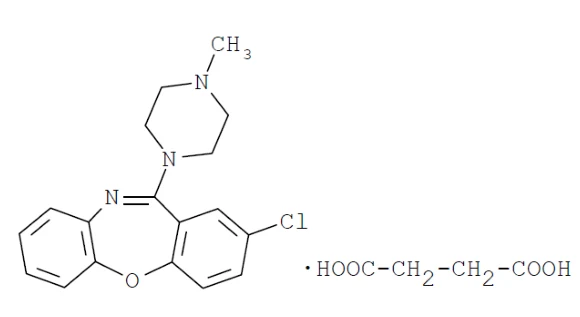
Physicochemical properties: White to yellowish crystalline, odourless powder. Melting point 150-153°C. The pKa of Loxapine base is 6.6. Solubility: Slightly soluble in water and in alcohol.
14 CLINICAL TRIALS
Comparative Bioavailability Studies
pms-LOXAPINE is a bioequivalent drug to LOXAPAC® and was approved solely on its bioequivalence profile. A two-way cross-over study between pms-LOXAPINE 10 mg tablets and LOXAPAC® 10 mg tablets (2 x 10 mg, single oral administration) was conducted to compare the bioavailability and evaluate the pharmacokinetic profiles of the two formulations of loxapine tablets under fasting conditions. A summary table of the comparative bioavailability data follows.
Loxapine (2 x 10 mg) From measured data Geometric Mean Arithmetic Mean (CV %) | ||||
| Parameter | Test1 | Reference2 | % Ratio of Geometric Means | 90% Confidence Interval |
AUCT (ng•h/mL) | 80.02 91.80 (51.6) | 81.23 90.98 (46.9) | 99 | 90-108 |
AUCI (ng•h/mL) | 91.93 104.44 (49.8) | 91.00 100.94 (44.5) | 101 | 92-111 |
CMAX (ng/mL) | 21.36 23.47 (42.7) | 21.65 24.32 (51.8) | 99 | - |
TMAX3 (h) | 1.14 (38.1) | 1.24 (28.9) | Not applicable | Not applicable |
| T½4 (h) | 6.03 (74.0) | 4.69 (57.6) | Not applicable | Not applicable |
1 pms-LOXAPINE (Pharmascience Inc.).
2 LOXAPAC® (Wyeth-Ayerst Canada Inc.).
3 Expressed as the arithmetic mean (CV%) only.
4 Expressed as the arithmetic mean (CV%) only.
A two-way cross-over study between pms-LOXAPINE 25 mg tablets and LOXAPAC® 25 mg tablets (1 x 25 mg, single oral administration) was also conducted to compare the bioavailability and evaluate the pharmacokinetic profiles of the two formulations of loxapine 25 mg tablets under fasting conditions. The summary table for this strength follows.
Loxapine (1 x 25 mg) From measured data Geometric Mean Arithmetic Mean (CV %) | ||||
| Parameter | Test5 | Reference6 | % Ratio of Geometric Means | 90% Confidence Interval |
AUCT (ng•h/mL) | 128.47 143.47 (44.15) | 121.70 137.78 (46.81) | 105.56 | 97.27-114.55 |
AUCI (ng•h/mL) | 136.83 151.28 (42.66) | 130.32 145.63 (44.87) | 104.99 | 97.31-113.28 |
CMAX (ng/mL) | 31.02 34.79 (44.35) | 29.77 33.70 (45.79) | 104.20 | 91.28-118.91 |
TMAX7 (h) | 1.12 (0.34) | 1.13 (0.42) | Not applicable | Not applicable |
| T½8 (h) | 4.25 (1.28) | 4.03 (1.14) | Not applicable | Not applicable |
15 MICROBIOLOGY
No microbiological information is required for this drug product.
5 pms-LOXAPINE (Pharmascience Inc.).
6 LOXAPAC® (Lederle Cyanamid Canada Inc.).
7 Expressed as the arithmetic mean (CV%) only.
8 Expressed as the arithmetic mean (CV%) only.
16 NON-CLINICAL TOXICOLOGY
General Toxicology
Acute LD50 doses of orally administered loxapine in mice and rats are, respectively, 65 and 40 mg/kg. The LD50 of loxapine parenteral after intravenous administration to mice is 17.4 mg/kg. In dogs, single oral doses of 5 to 10 mg/kg induced decreased locomotor activity, catatonia and sedation. Extrapyramidal signs appeared with increasing severity at doses of 20 to 50 mg/kg. Doses of 60 mg/kg caused premonitory signs of convulsions: higher doses (90 - 120 mg/kg) caused convulsions and mortality.
In chronic toxicity studies over a 19-month period of diet administration of loxapine to rats (0.23 - 5.57 mg/kg/day), the major toxic signs observed were the reduction in food and water intake and decreased body weight gain. There were no significant clinical or post-mortem drug-related findings. In dogs dosed daily for one year with 1 to 30 mg/kg of loxapine, the most prominent clinical findings were sedation, miosis and ptosis. There were no drug-related findings in either species.
Carcinogenicity
No long-term animal studies have been performed to evaluate carcinogenic potential.
Genotoxicity
No long-term animal studies have been performed to evaluate mutagenic potential.
Reproductive and Developmental Toxicology
The effect of loxapine up to 1.7 mg/kg/day on fertility and general reproductive performance in rats consisted of reduction in food consumption and body weight gain of males and females fed drug during the pre-mating period, reduction in the percentage of copulating pairs and, at the high dose, the absence of coitus. Examination of vaginal smears during mating showed females which failed to copulate to be in continuous diestrus. Re-mating of treated males with non-treated females failed to demonstrate any antifertility effect in males.
Oral administration of loxapine (1 - 12 mg/kg/day) to pregnant mice and rats during the period of organogenesis resulted in an increase in fetal resorptions. No teratogenic potential was demonstrated.
Administration of loxapine up to 1.86 mg/kg/day to rats from day 16 of pregnancy up to weaning resulted in parturition difficulties in some rats, in increased neonatal mortality and in generalized growth retardation of the pups, characterized by reduced pup weight, retarded kidney development and delayed skeletal ossification. Administration of chlorpromazine produced similar findings. Kidney and skeletal development and weight of surviving offspring from rats that received loxapine were comparable to controls by the middle of the lactation period.
Oral administration of loxapine to the rabbit at doses up to 0.8 mg/kg/day 10 days before the first mating and through three reproductive cycles produced no changes in fertility, reproduction, or lactation and did not affect embryonal or fetal development.
In a teratology study with New Zealand white rabbits, no embryotoxic or fetotoxic effects which could be attributed to treatment were observed in fetuses from dams treated by intramuscular injection with doses of 2.5, 5.0 and 10.0 mg/kg/day (1.25, 2.5 and 5.0 mg/kg twice daily) of loxapine base on gestation days 6 through 18. In animals treated orally with 10 mg/kg/day (5 mg/kg calculated as base, twice daily) of loxapine succinate, two fetuses with multiple malformations from separate litters exhibited exencephaly and three fetuses from a third litter had internal hydrocephaly.
In a teratogenic study in the beagle dog, intramuscular doses of 5 or 10 mg/kg/day (2.5 or 5.0 mg/kg twice daily) loxapine, or oral doses of 10 mg/kg/day (5 mg/kg twice daily) of loxapine succinate, were administered on gestation days 14 through 38. Postnatal survival of offspring from littering dams was markedly reduced in all drug treated groups for the first week following parturition. No teratogenic effects due to treatment were demonstrated.
In previous teratology studies with loxapine succinate, oral doses up to 10 mg/kg/day were administered to brown rabbits for gestation days 6 through 18 and to beagle dogs for gestation days 18 through 39. In these studies, no teratogenic or other embryotoxic or fetotoxic effects were observed in the offspring of treated animals which could be attributed to treatment with loxapine succinate.