


Product Monograph - PMS-Salbutamol Oral Liquid
INDICATIONS AND CLINICAL USE
Prevention or relief of bronchospasm due to bronchial asthma, chronic bronchitis and other chronic bronchopulmonary disorders in which bronchospasm is a complicating factor.
CONTRAINDICATIONS
- Patients who are hypersensitive to salbutamol sulphate or any of the ingredients of pms-SALBUTAMOL ORAL LIQUID. For a complete listing of ingredients, see PHARMACEUTICAL INFORMATION, COMPOSITION.
- Patients with tachyarrhythmias.
- Children 2 years of age and younger.
- As a tocolytic in patients at risk of premature labour or threatened abortion.
WARNINGS
USE OF ANTI-INFLAMMATORY AGENTS: In accordance with the present practice for asthma treatment, concomitant anti-inflammatory therapy should be part of the regimen if salbutamol needs to be used on a regular daily basis (see DOSAGE AND ADMINISTRATION). It is essential that the physician instruct the patient in the need for further evaluation if the patient’s asthma becomes worse.
DETERIORATION OF ASTHMA: The management of asthma should normally follow a stepwise program and patient response should be monitored clinically and by lung function tests. The increasing use of fast acting, short duration inhaled beta2-adrenergic agonists to control symptoms indicates deterioration of asthma control and the patient’s therapy plan should be reassessed. Sudden or progressive deterioration in asthma control is potentially life threatening; the treatment plan must be re-evaluated, and consideration be given to corticosteroid therapy.
CARDIOVASCULAR EFFECTS: In individual patients, any beta2-adrenergic agonist, including salbutamol, may have a clinically significant cardiac effect. Care should be taken with patients suffering from cardiovascular disorders, especially coronary insufficiency, cardiac arrhythmias and hypertension. Special care and supervision are required in patients with idiopathic hypertrophic subvalvular aortic stenosis, in whom an increase in the pressure gradient between the left ventricle and the aorta may occur, causing increased strain on the left ventricle.
Fatalities have been reported following excessive use of inhaled sympathomimetic drugs in patients with asthma. The exact cause of death is unknown but cardiac arrest following an unexpected development of a severe acute asthmatic crisis and subsequent hypoxia is suspected. Therefore, it is essential that the physician instruct the patient in the need for further evaluation in case of deterioration.
ENDOCRINE AND METABOLISM:
In common with other beta-adrenergic agents, salbutamol can induce reversible metabolic changes such as potentially serious hypokalemia, particularly following nebulised or especially infused administration. Particular caution is advised in acute severe asthma since hypokalemia may be potentiated by concomitant treatment with xanthine derivatives, steroids, diuretics and by hypoxia. Hypokalemia will increase the susceptibility of digitalis-treated patients to cardiac arrhythmias. It is recommended that serum potassium levels be monitored in such situations.
Care should be taken with patients with diabetes mellitus. Salbutamol can induce reversible hyperglycemia during oral or nebulized administration or especially during infusions of the drug. The diabetic patient may be unable to compensate for this and the development of ketoacidosis has been reported. Concurrent administration of corticosteroids can exaggerate this effect.
Care should be taken with patients with hyperthyroidism
HYPERSENSITIVITY: Immediate hypersensitivity reactions may occur after administration of salbutamol or salbutamol sulphate, as demonstrated by rare cases of urticaria, angioedema, rash, bronchospasm, hypotension, anaphylaxis and oropharyngeal edema.
Care should be taken in patients who are unusually responsive to sympathomimetic amines.
NEUROLOGIC: Care should be taken with patients suffering from convulsive disorders.
PEDIATRICS: Rarely, erythema multiforme and Stevens-Johnson syndrome have been associated with the administration of salbutamol sulfate in children.
PRECAUTIONS
GENERAL
If therapy does not produce a significant improvement or if the patient's condition worsens, medical advice must be sought in order to determine a new plan of treatment. In the case of acute or rapidly worsening dyspnea, a doctor should be consulted immediately.
Failure to respond to a previously effective dose of salbutamol indicates a deterioration of the condition and the physician should be contacted promptly. Patients should be warned not to exceed the recommended dose. The increasing use of beta2-agonists to control symptoms is usually a sign of worsening asthma. In worsening asthma it is inadequate to increase beta2-agonists use only, especially over an extended period of time. Instead, a reassessment of the patient's therapy plan is required and concomitant anti-inflammatory therapy should be considered (see DOSAGE AND ADMINISTRATION). Patients should be advised to always carry their salbutamol aerosol or drug powder inhaler to use immediately if an episode of asthma is experienced.
USE IN WOMEN
Pregnant Women
Salbutamol has been in widespread use for many years in human beings without apparent ill consequence. However, there are no adequate and well-controlled studies in pregnant women and there is little published evidence of its safety in the early stages of human pregnancy. Administration of drugs during pregnancy should only be considered if the anticipated benefits to the expectant woman are greater than any possible risks to the foetus.
A reproduction study in CD-1 mice with salbutamol showed cleft palate formation in 5 of 111 (4.5%) foetuses at 0.25 mg/kg and in 10 of 108 (9.3%) foetuses at 2.5 mg/kg. None was observed at 0.025 mg/kg. Cleft palate also occurred in 22 of 72 (30.5%) foetuses treated with 2.5 mg/kg isoproterenol positive control. A reproduction study in Stride Dutch rabbits revealed cranioschisis in 7 of 19 (37%) foetuses at 50 mg/kg, corresponding to 78 times the maximum human oral dose of salbutamol.
During worldwide marketing experience, rare cases of various congenital anomalies, including cleft palate and limb defects have been reported in the offspring of patients being treated with salbutamol. Some of the mothers were taking multiple medications during their pregnancies. Because no consistent pattern of defects can be discerned, and baseline rate for congenital anomalies is 2-3%, a relationship with salbutamol use cannot be established.
Labour and Delivery
Oral salbutamol has been shown to delay preterm labour in some reports, but there are no well-controlled studies which demonstrate that it will stop preterm labour or prevent labour at term. Therefore, cautious use of pms-SALBUTAMOL ORAL LIQUID is required in pregnant patients when it is given for relief of bronchospasm so as to avoid interference with uterine contractility.
There is insufficient evidence to support use of oral beta2-agonists for prevention of premature delivery. No statistically significant effect on perinatal mortality or morbidity has been observed in controlled trials. Further, maternal pulmonary oedema and myocardial ischemia have been reported during or following premature labour in patients receiving beta2-agonists.
Lactating Mothers
Since salbutamol is probably excreted in breast milk and because of its observed tumorigenicity in animal studies, a decision should be made whether to discontinue nursing or to discontinue the drug to the mother. It is not known whether salbutamol in breast milk has a harmful effect on the neonate.
Paediatrics
The safety and efficacy in children below the age of 2 years have not been established.
DRUG INTERACTIONS
Monoamine oxidase inhibitors or tricyclic antidepressants: Salbutamol should be administered with extreme caution to patients being treated with monoamine oxidase inhibitors tricyclic antidepressants since the action of salbutamol on the cardiovascular system may be potentiated.
Other sympathomimetic bronchodilators or epinephrine: Other sympathomimetic bronchodilators or epinephrine should not be used concomitantly with salbutamol. If additional adrenergic drugs are to be administered by any route to the patient using salbutamol, the adrenergic drugs should be used with caution to avoid deleterious cardiovascular effects. Such concomitant use must be individualized and not given on a routine basis. If regular co-administration is required then alternative therapy must be considered.
Beta-blockers: Beta-adrenergic blocking drugs, especially the non-cardioselective ones, may effectively antagonise the action of salbutamol, and therefore salbutamol and non-selective beta-blocking drugs, such as propranolol, should not usually be prescribed together.
Diuretics: The ECG changes and/or hypokalemia that may result from the administration of non-potassium sparing diuretics (such as loop or thiazide diuretics) can be acutely worsened by beta-agonists, especially when the recommended dose of the beta-agonist is exceeded. Although the clinical significance of these effects is not known, caution is advised in the co-administration of beta-agonists with non-potassium sparing diuretics.
Digoxin: Mean decreases of 16-22% in serum digoxin levels were demonstrated after single doses intravenous and oral administration of salbutamol, respectively, to normal volunteers who had received digoxin for 10 days. The clinical significance of these findings for patients with obstructive airways disease who are receiving salbutamol and digoxin on a chronic basis is unclear. Nevertheless, it would be prudent to carefully evaluate serum digoxin levels in patients who are currently receiving digoxin and salbutamol.
ADVERSE REACTIONS
The most frequent adverse reactions are nervousness and tremor. In some patients, salbutamol sulphate solution may cause a fine tremor of skeletal muscle, particularly in the hands. This effect is common to all beta2-adrenergic stimulants. Adaptation occurs during the first few days of dosing and the tremor usually disappears as treatment continues. A few patients experience a feeling of tension; this is also due to the effects on the skeletal muscle and not to direct CNS stimulation. Headache, tachycardia, palpitations, muscle cramps, insomnia, nausea, weakness and dizziness have also been reported.
Peripheral vasodilation and a compensatory small increase in heart rate may occur in some patients. Cardiac arrhythmias (including atrial fibrillation, supraventricular tachycardia and extrasystoles) have been reported, usually in susceptible patients.
Rarely reported adverse effects include drowsiness, flushing, restlessness, irritability, chest discomfort, difficulty in micturition, hypertension, angina, vomiting, vertigo, central nervous system stimulation, hyperactivity in children, unusual taste, and drying or irritation of the oropharynx.
Immediate hypersensitivity reactions including angioedema, urticaria, bronchospasm, hypotension, rash, oropharyngeal oedema, anaphylaxis and collapse have been reported very rarely.
SYMPTOMS AND TREATMENT OF OVERDOSAGE
Overdosage may cause peripheral vasodilation and increased irritability of skeletal muscle, hypokalemia, tachycardia, arrhythmia, hypertension and, in extreme cases, sudden death. In case of overdosage, gastric lavage should be performed. In order to antagonize the effect of salbutamol, the use of a beta-adrenergic blocking agent preferably one of the relatively cardioselective ones (e.g. metoprolol, atenolol) may be considered, bearing in mind the danger of inducing an asthmatic attack. Serum potassium levels should be monitored.
Lactic acidosis has been reported in association with high therapeutic doses as well as overdoses of short-acting beta-agonist therapy, therefore monitoring for elevated serum lactate and consequent metabolic acidosis (particularly if there is persistence or worsening of tachypnea despite resolution of other signs of bronchospasm such as wheezing) may be indicated in the setting of overdose.
| For management of a suspected drug overdose, contact your regional Poison Control Centre immediately. |
DOSAGE AND ADMINISTRATION
Dosing Considerations:
The dosage should be individualized, and patient response should be monitored by the prescribing physician on an ongoing basis. If a previously effective dosage regimen fails to provide the usual relief, medical advice should be sought immediately; this is a sign of seriously worsening asthma that could require reassessment of therapy.
If salbutamol is required for relief of symptoms more than twice a day on a regular daily basis or for an extended period of time, anti-inflammatory therapy (e.g., corticosteroid) should be part of the regimen.
pms-SALBUTAMOL ORAL LIQUID is not intended for patients experiencing an acute episode of bronchospasm. Patients should always carry their salbutamol aerosol or dry powder inhaler to use immediately if an episode of asthma is experienced.
When pms-SALBUTAMOL ORAL LIQUID is prescribed, the patient should be advised that the action of this medication may last for 6 to 8 hours. As there may be adverse effects associated with excessive dosing, the dosage or frequency of administration should only be increased upon medical advice.
The safety and efficacy of salbutamol sulphate solution in children under 2 years of age have not been established.
Recommended Dose and Dosage Adjustment
In elderly patients or in those known to be unusually sensitive to beta-adrenergic stimulant drugs, it is advisable to initiate treatment with 5 mL (2 mg) three or four times per day.
Adults and children over 12 years of age: 5 to 10 mL (2 to 4 mg) 3 to 4 times daily.
Children (6 and 12 years of age): 5 mL (2 mg) 3 to 4 times daily.
Children (2 to 6 years of age): 0.25 mL (0.1 mg) per kg body weight 3 to 4 times daily.
The safety and efficacy of salbutamol sulphate solution in children under 2 years of age, and for chronic therapy in children 2 - 6 years of age have not been established.
PHARMACEUTICAL INFORMATION
Drug Substance:
Proper Name: Salbutamol sulphate
Chemical Name: 2-t-butylamino-1-(4-hydroxy-3-hydroxymethyl) phenylethanol hemisulphate
Structural Formula:
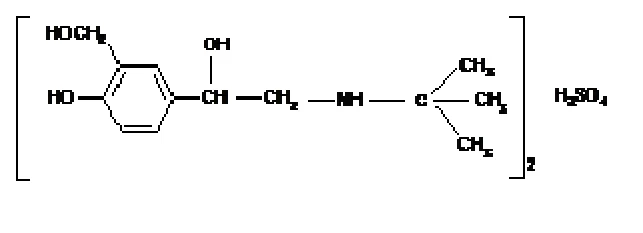
Molecular Formula: [C13H21NO3]2H2SO4
Molecular Weight: 576.71 g/mol
Physical Form: Salbutamol sulphate is white or almost white powder. It is odourless or almost odourless.
Solubility: Salbutamol sulphate is soluble in 4 parts of water; slightly soluble in ethanol (96%), in chloroform and in ether.
pH and pKa: A 5% solution of salbutamol sulphate in distilled water has a pH value of 4.3. Salbutamol has pKa values of 9.3 and 10.3.
Distribution Coefficient: The distribution coefficient of salbutamol between two phases of octanol and water, as determined by HPLC, is log D=-0.5 at pH 7.42 at room temperature.
Melting Point: Salbutamol melts at approximately 155°C, with decomposition
Composition:
pms-SALBUTAMOL ORAL LIQUID contains salbutamol sulphate and the following excipients: citric acid monohydrate, ethyl alcohol, hydroxypropyl methylcellulose, orange flavour, purified water, sodium benzoate, sodium citrate dihydrate and sodium cyclamate.
Storage Recommendations:
Store between 15°C and 25°C. Protect from light. Keep out of reach of children.
AVAILABILITY OF DOSAGE FORMS
Solution
0.4 mg/mL: Clear, colourless, orange-flavoured liquid containing 0.4 mg salbutamol per mL. Available in high density polyethylene bottles of 250 mL. The bottles are closed with white polypropylene caps lined with pulp and vinyl.
PHARMACOLOGY
Animal studies
Salbutamol has a relatively selective action of salbutamol on the beta2-adrenergic receptors of the bronchial and vascular smooth muscles. In anesthetized guinea pigs, salbutamol completely prevents acetylcholine-induced bronchospasm at the dose of 100 mcg/kg intravenously.
In anesthetized dogs, salbutamol is one-fifth as potent as isoprenaline in skeletal muscle vasodilation.
In the isolated atrium preparation of guinea pigs, salbutamol was 500 to 2500 times less potent than isoprenaline in increasing the rate and force of contraction, respectively.
Administration of salbutamol aerosol at a dose of 250 mcg/mL for one minute to guinea pigs, prevented acetylcholine-induced bronchospasm without any effect on the heart rate.
In anesthetized cats and dogs, salbutamol prevented the bronchospasm elicited by vagal stimulation, without any significant effect on heart rate and blood pressure. Comparative tests of salbutamol and isoprenaline in isolated dog papillary muscle, guinea pig atrial muscle and human heart muscle, have shown that the effect of salbutamol on beta-adrenergic receptors in the heart is minimal.
In 6 dogs with right-sided cardiac bypass, salbutamol, given at the dose of 25 mcg/mL, improved left ventricular efficiency and increased coronary blood flow.
Human Studies
A single dose of 5 mg of salbutamol orally produced an increase of FEV1 greater than that obtained from inhalation of 200 mcg of isoprenaline. The effect was sustained for more than five hours with an onset after fifteen minutes and a peak effect at three hours. Salbutamol is not inactivated by catechol-o-methyl transferase and this contributes to the prolonged action of the drug.
Following oral administration of tritiated salbutamol sulphate to man, peak plasma levels were attained within 2.5 hours and declined with a terminal half-life of 3 to 5 hours. Roughly 70% of the administered dose was excreted in the urine within 24 hours.
Salbutamol sulphate, administered orally to healthy volunteers in a dose of 4 mg. raised plasma levels of insulin, glucose, and non-esterified fatty acids, had no effect on triglyceride levels, and lowered serum potassium.
It was found in asthmatic patients that salbutamol, administered orally, by aerosol, or intravenously, was metabolized to its 4'-o-sulphate ester. Both free salbutamol and the metabolite were excreted in the urine, the ratio of the two varying with the route of administration and suggesting that metabolism occurred in the gut and /or the liver. Pharmacological testing showed that the metabolite had negligible beta-adrenoceptor stimulant and no blocking activity.
TOXICOLOGY
Acute Toxicity
| Species (n) | Oral LD50 | Intravenous LD50 |
| Mouse (10) | > 2000 mg/kg | 72 mg/kg |
| Rat (10) | > 2000 mg/kg | 60 mg/kg |
| Rat (n) | Intraperitoneal LD50 |
| Newborn (155) | 216 mg/kg |
| Weanling (100) | 524 mg/kg |
| 6-weeks (90) | 437 mg/kg |
Animals which died had convulsions and cyanosis. Death occurred mostly within 4 hours after administration. Respiration first increased, and then decreased to abnormally slow and deep.
Rabbits, cats and dogs survived a single oral dose of 50 mg/kg salbutamol.
Recent studies in laboratory animals (minipigs, rodents, and dogs) recorded the occurrence of cardiac arrhythmias and sudden deaths (with histologic evidence of myocardial necrosis) when beta-agonists and methylxanthines were administered concurrently. The significance of these findings when applied to humans is concurrently unknown.
Intermediate (Four Months) Toxicity
Rats: Salbutamol was given in oral doses from 0.5 up to 25 mg/kg daily on an increasing scale. There were no significant haematological changes except a small increase in haemoglobin and packed cell volumes. BUN and SGOT values were elevated while blood glucose and plasma protein levels remained unchanged. Pituitaries had increased amount of PAS-positive material in the cleft at higher dose levels.
Dogs: Salbutamol was given in oral doses from 0.05 up to 12.5 mg/kg daily, on an increasing scale. The rate of increase of haemoglobin and packed cell volume was depressed, particularly at higher doses. Leukocyte count decreased after 16 weeks of treatment at each dose level. Platelet count was increased after 8 weeks at the highest dose. No significant effects were seen on biochemical values. The only significant histological change was the appearance of corpora amylacea in the stomach which was attributed to altered mucus secretion. Inhalation of 1000 μg of salbutamol aerosol for 3 months did not produce any morphological changes in lungs, trachea, lymph nodes, liver and heart.
Long-term Toxicity
Chronic toxicity studies were carried out in 2 separate centres. Fifty female, Charles River CD Albino rats received salbutamol orally at 2, 10, and 50 mg/kg/day for 104 weeks: 50 female
Charles River CD Sprague-Dawley derived rats received 20 mg/kg/day salbutamol orally for 50 weeks, and 50 female Charles River Long-Evans rats received 20 mg/kg/day salbutamol orally for 96 weeks. These studies demonstrated a dose-related incidence of mesovarium leiomyomas. No similar tumours were seen in mice.
Mutagenicity
In vitro tests involving 4 different microorganisms revealed no mutagenic activity.
Carcinogenicity
In a two-year study in the rat, salbutamol sulphate caused a significant dose-related increase in the incidence of benign leiomyomas of the mesovarium at doses corresponding to 111, 555, and 2800 times the maximum human inhalation dose. In another study, the effect was blocked by the co-administration of propranolol. The relevance of these findings to human is not known. An 18-month study in mice and a lifetime study in hamsters revealed no evidence of tumorigenicity.
Teratogenicity Studies
Salbutamol has been shown to be teratogenic in mice when given in doses corresponding to 14 times the human aerosol dose; when given subcutaneously in doses corresponding to 0.2 times the maximum human (child weighing 21 kg) oral dose; and when given the subcutaneously in doses corresponding to 0.4 times the maximum human oral dose.
A reproduction study in CD-1 mice given salbutamol at doses of 0.025, 0.25, and 2.5 mg/kg subcutaneously, corresponding to 1.4, 14 and 140 times the maximum human aerosol doses respectively, showed cleft palate formation in 5 of 111 (4.5%) foetuses at 0.25 mg/kg and in 10 of 108 (9.3%) foetuses at 2.5 mg/kg. No cleft palates were observed at a dose of 0.025 mg/kg salbutamol. Cleft palate occurred in 22 of 72 (30.5%) foetuses treated with 2.5 mg/kg isoprenaline (positive control).
In rats, salbutamol treatment was given orally at 0.5, 2.32, 10.75 and 50 mg/kg/day throughout pregnancy resulted in no significant foetal abnormalities. However, at the highest dose level there was an increase in neonatal mortality. Reproduction studies in rats revealed no evidence of impaired fertility.
Salbutamol had no adverse effect when given orally to Stride Dutch rabbits, at doses of 0.5, 2.32, and 10.75 mg/kg/day throughout pregnancy. At a dose of 50 mg/kg/day, which represents 2800 times the maximum human inhalation dose, cranioschisis was observed in 7 of 19 (37%) foetuses.
REFERENCE
- 1. Kamburoff PL, Prime FJ: Oral and inhaled salbutamol as a bronchodilator. Br J Dis Chest 1970; 64: 46-54.
- 2. Warrel DA, Robertson DG et al: Comparison of cardio-respiratory effects of isoprenaline and salbutamol in patients with bronchial asthma. Br Med J 1970; 1: 65-70.
- 3. Legge JS, Gaddie J, Palmer KNV: Comparison of two oral selective beta2-adrenergic stimulant drugs in bronchial asthma. Br Med J 1971; 1: 637-639.
- 4. Anonymous: Salbutamol: a review. Drugs 1971; 1: 274-302.
- 5. Connolly NM: Dosage of oral salbutamol in asthmatic children. Arch Dis Childh 1971; 46: 869-871.
- 6. Walker SR, Evans ME et al: The clinical pharmacology of oral and inhaled salbutamol. Clin Pharmacol Ther 1972; 13(6): 861-867.
- 7. Evans ME, Walker SR et al: The metabolism of salbutamol in man. Xenobiotica 1973; 3(2): 113-120.
- 8. Taylor MW, Gaddie J et al: Metabolic effects of oral salbutamol. Br Med J 1976; 1:22.
- 9. Lin MT, Collins-Williams C: Oral salbutamol therapy of asthma in young children. J Asthma Res 1977; 15(1): 1-3.
- 10. Pagtakham RD, Simons FER: Efficacy and safety of salbutamol in asthmatic children aged 1 to 6 years. Ann Allergy 1977; 38:297.
- 11. Groggins RC, Lenny W et al: Efficacy of orally administered salbutamol and theophylline in pre-school children with asthma. Arch Dis Childh 1980; 55: 204-206.
- 12. Rachelefsky GS, Katz RM, Siegel SC: Albuterol syrup in the treatment of the young asthmatic child. Ann Allergy 1981; 47(3): 143-146.
- 13. Rachelefsky GS, Katz RM, Siegel SC: Oral albuterol in the treatment of childhood asthma. Pediatrics 1982; 69(4): 397-403.
- 14. Ahrens RC, Snith GD: Albuterol: an adrenergic agent for the use in the treatment of asthma. Pharmacology, pharmacokinetics and clinical use. Pharmacother 1984; 4(3); 105-121.