


Product Monograph - Portrazza
SUMMARY PRODUCT INFORMATION
| Route of Administration | Dosage Form / Strength | Clinically Relevant Nonmedicinal Ingredients |
| Intravenous infusion | 800 mg/50 mL (16 mg/mL) in a single dose vial | For a complete listing see Dosage Forms, Composition and Packaging section. |
DESCRIPTION
PORTRAZZA is a recombinant human monoclonal antibody (mAb) of the immunoglobulin (Ig) G1 class, which targets the epidermal growth factor receptor (EGFR).
INDICATIONS AND CLINICAL USE
Squamous Non-Small Cell Lung Cancer (NSCLC)
PORTRAZZA (necitumumab) is indicated, in combination with gemcitabine and cisplatin, for the treatment of patients with locally advanced or metastatic squamous non-small cell lung cancer who have not received prior chemotherapy for this condition. Patients with locally advanced disease should be considered surgically incurable or incurable by virtue of ineligibility to receive curative surgery.
Geriatrics (≥70 years of age)
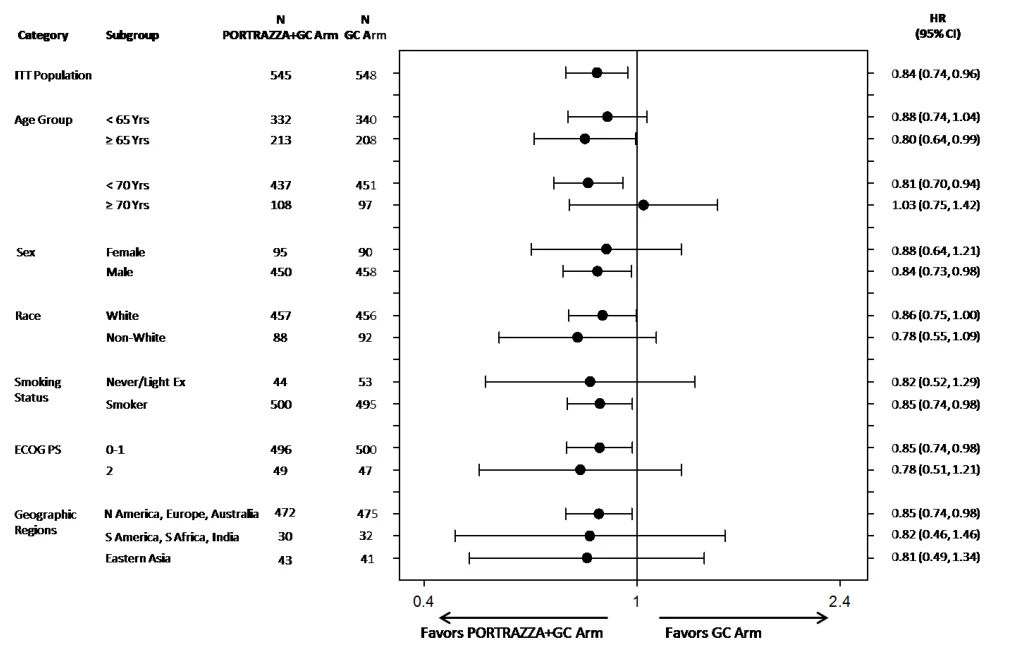
In an exploratory analysis, for patients ≥70 years, no apparent benefit toward improved overall survival or progression-free survival was observed. Thus, a thorough assessment should be considered regarding the benefit-risk of adding PORTRAZZA to chemotherapy when making individual treatment decisions (see Special Populations and CLINICAL TRIALS).
Pediatrics (<18 years of age)
The safety and effectiveness of PORTRAZZA in children and adolescents have not been established.
CONTRAINDICATIONS
PORTRAZZA (necitumumab) is contraindicated in patients with previous severe (Grade 3-4) hypersensitivity to necitumumab or to any other ingredient used in the formulation. For a complete listing, see DOSAGE FORMS, COMPOSITION AND PACKAGING.
WARNINGS AND PRECAUTIONS
Serious Warnings and Precautions
- Increased frequency of cardiorespiratory arrest or sudden death (see Cardiovascular, Cardiorespiratory Disorders below)
- Increased risk of venous or arterial thromboembolic events (see Cardiovascular, Thromboembolic Events below)
- Increased risk of electrolyte disorders (magnesium, calcium, potassium, and/or phosphate) (see Monitoring and Laboratory Tests below)
Cardiovascular
Thromboembolic Events
Venous thromboembolic events (VTE) and arterial thromboembolic events (ATE) were observed with PORTRAZZA in combination with gemcitabine and cisplatin (see ADVERSE REACTIONS).
In SQUIRE, the incidence of any grade VTE was 8.2% versus 5.4% (Grade ≥3: 4.3% versus 2.6%) in the PORTRAZZA containing arm compared to the gemcitabine and cisplatin arm. The incidence of any grade ATE was 4.3% versus 3.9% (Grade ≥3: 3.0% versus 2.0%) in the PORTRAZZA containing arm compared to the gemcitabine and cisplatin arm. Administration of PORTRAZZA should be carefully considered in those patients with a history of thromboembolic events (such as pulmonary embolism, deep vein thrombosis, myocardial infarction, and stroke). The relative risk of VTE or ATE was approximately 3-fold higher in patients with a reported history of VTE or ATE than in patients with no reported history of VTE or ATE.
Thromboprophylaxis should be considered after careful assessment of a patient's risk factors (including the increased risk of serious bleeding in patients with tumour cavitation or tumour involvement of large central blood vessels).
Patients and physicians should be aware of signs and symptoms of thromboembolism. Patients should be instructed to seek medical care if they develop symptoms such as shortness of breath, chest pain, arm or leg swelling. Discontinuation of PORTRAZZA in patients who experience a VTE or ATE should be considered after a thorough benefit risk assessment for the individual patient.
Cardiorespiratory Disorders
An increased frequency of cardiorespiratory arrest or sudden death was observed with PORTRAZZA. Cardiorespiratory arrest or sudden death was reported in 2.8% (15/538) of patients treated with PORTRAZZA in combination with gemcitabine and cisplatin compared to 0.6% (3/541) of patients treated with gemcitabine and cisplatin alone. Twelve of the fifteen patients died within 30 days of the last dose of PORTRAZZA and had comorbid conditions including history of coronary artery disease (n=3), severe hypomagnesemia (n=4) (see WARNINGS AND PRECAUTIONS, Monitoring and Laboratory Tests), chronic obstructive pulmonary disease (n=7), and hypertension (n=5). Eleven of the 12 patients had an unwitnessed death.
Patients with significant coronary artery disease, myocardial infarction within 6 months, uncontrolled hypertension, and uncontrolled congestive heart failure were not enrolled in SQUIRE. The incremental risk of cardiopulmonary arrest or sudden death in patients with a history of coronary artery disease, congestive heart failure, or arrhythmias as compared to those without these comorbid conditions is not known.
Monitoring and Laboratory Tests
In the SQUIRE trial, hypomagnesemia was observed frequently (81.3% when PORTRAZZA was administered with gemcitabine and cisplatin versus 70.2% with gemcitabine and cisplatin alone); this includes Grade ≥3 hypomagnesemia (18.7% versus 7.2%) (see ADVERSE REACTIONS, Table 1). Hypomagnesemia may reoccur at the same grade or worse after a dose delay. Grade ≥3 hypocalcemia (albumin-corrected) was observed in 4.2% of the patients treated on the PORTRAZZA containing arm versus 2.3% of patients treated with gemcitabine and cisplatin alone. When comparing the PORTRAZZA containing arm to the gemcitabine and cisplatin arm, it should be noted that 1.1% versus 0.2% of patients had both Grade ≥3 hypomagnesemia and hypocalcemia (albumin-corrected); furthermore, both Grade ≥3 hypomagnesemia and hypokalemia occurred in 1.7% versus 0.4% of patients. Such concurrent electrolyte abnormalities may increase the risk of potentially serious clinical consequences, although such consequences that could be attributable to such abnormalities were not observed in the SQUIRE trial. In light of these laboratory observations, patients should be carefully monitored for serum electrolytes, including serum magnesium, calcium, potassium and phosphate prior to each PORTRAZZA administration and after completion of PORTRAZZA treatment, until within normal limits. Prompt repletion of electrolytes is recommended, as appropriate.
Sensitivity/Resistance
Hypersensitivity/Infusion-Related Reactions
Hypersensitivity/infusion-related reactions (IRRs) were reported with PORTRAZZA. The onset of events usually occurred after the first or second administration of PORTRAZZA. Monitor patients during and following the infusion for signs of hypersensitivity and infusion-related reactions with resuscitation equipment and appropriate medical resources readily available. In patients who have experienced a previous Grade 1 or 2 hypersensitivity or infusion related reaction to PORTRAZZA, adjust the dose per Table 2 in DOSAGE AND ADMINISTRATION. Immediately and permanently discontinue PORTRAZZA for severe (grade 3 or 4) IRRs.
For management and dose adjustments, see Table 2, DOSAGE AND ADMINISTRATION.
Dermatologic Toxicity
Skin reactions were reported by 77.9% of patients treated with PORTRAZZA in SQUIRE. The skin reactions mainly presented as acneiform rash, dermatitis acneiform, dry skin, pruritus, skin fissures, paronychia and palmar-plantar erythrodysesthesia syndrome. Severe skin reactions were reported in 6.3% of patients. (see Table 1). The onset of events occurred mainly during the first cycle of treatment and resolved within 17 weeks after onset. Immediately and permanently discontinue PORTRAZZA for severe (grade 4) skin reactions (see ADVERSE REACTIONS, Clinical Trial Adverse Drug Reactions).
For management and dose adjustments, see Table 3, DOSAGE AND ADMINISTRATION.
Eye Disorders
In SQUIRE, eye disorders were more frequently reported in patients treated with PORTRAZZA in combination with gemcitabine and cisplatin compared to patients treated with gemcitabine and cisplatin alone; Grade ≥3 adverse events were reported only in patients treated with PORTRAZZA. Conjunctivitis was the most commonly reported eye disorder; Grade ≥3 conjunctivitis was only reported in two patients during the PORTRAZZA single agent phase. No cases of keratitis were reported.
Patients presenting with signs and symptoms suggestive of keratitis such as acute or worsening blepharitis, conjunctivitis, or keratitis/ulcerative keratitis with decreased visual acuity should be referred promptly to an ophthalmology specialist.
Warnings and Precautions for Special Populations
Pregnant Women: There are no data from the use of PORTRAZZA in pregnant women. Animal reproduction studies have not been conducted with PORTRAZZA. Based on its mechanism of action and animal models where EGFR expression is disrupted, PORTRAZZA may cause fetal harm or developmental anomalies. PORTRAZZA should not be used during pregnancy or in women not using effective contraception, unless the potential benefit justifies the potential risk to the fetus.
Patients should use effective contraception while receiving PORTRAZZA and for at least 3 months after the last dose of PORTRAZZA (see TOXICOLOGY, Reproductive and Developmental Toxicity).
Fertility in Females and Males of Reproductive Potential: There are no data on the effect of PORTRAZZA on human fertility. Animal studies to assess fertility directly have not been conducted (see TOXICOLOGY).
Nursing Women: It is unknown whether PORTRAZZA is excreted in human milk. Excretion in milk and oral absorption is expected to be low. A risk to newborns/infants cannot be excluded. Breast-feeding should be discontinued during treatment with PORTRAZZA and for at least 4 months after the last dose.
Pediatrics (< 18 years): The safety and effectiveness of PORTRAZZA in children and adolescents have not been established.
≥65 years of age: Of the 545 patients in the PORTRAZZA plus gemcitabine and cisplatin arm in SQUIRE, 213 (39.1%) were ≥65 years, including 108 (19.8%) who were ≥70 years. No overall differences in efficacy were reported between patients ≥65 years and <65 years (see CLINICAL TRIALS). There was no evidence of increased incidence of adverse drug reactions in the PORTRAZZA plus gemcitabine and cisplatin arm for patients ≥65 years.
≥70 years of age: Among patients ≥70 years, OS and PFS benefit of PORTRAZZA plus gemcitabine and cisplatin (108 patients [19.8%]) compared to the gemcitabine and cisplatin arm (97 patients [17.7%]) was not demonstrated (see CLINICAL TRIALS). Of the adverse reactions listed in ADVERSE REACTIONS, there was a higher incidence (≥3%) of venous thromboembolic events including pulmonary embolism in patients ≥70 compared to those <70 years. In light of these findings, cardiovascular comorbidities, performance status, and the likely tolerability to chemotherapy with add-on PORTRAZZA should be thoroughly evaluated prior to the initiation of treatment in patients ≥70 years.
PORTRAZZA in Combination with Pemetrexed and Cisplatin
Administration of PORTRAZZA in combination with pemetrexed and cisplatin is not recommended. In a clinical trial in advanced non-squamous NSCLC, patients experienced an increased rate of serious thromboembolic events (including fatal events) in the PORTRAZZA plus pemetrexed and cisplatin arm as compared to the pemetrexed and cisplatin arm (see ADVERSE REACTIONS). The addition of PORTRAZZA did not improve the efficacy outcome over pemetrexed and cisplatin alone in advanced non-squamous NSCLC.
ADVERSE REACTIONS
Adverse Drug Reaction Overview
The safety of PORTRAZZA was evaluated in the SQUIRE study, a global, multicenter, two-arm, randomized, open-label trial comparing PORTRAZZA plus gemcitabine and cisplatin to gemcitabine and cisplatin alone in patients with squamous NSCLC. All patients had ECOG PS 0-2.
Clinical Trial Adverse Drug Reactions
Because clinical trials are conducted under very specific conditions the adverse reaction rates observed in the clinical trials may not reflect the rates observed in practice and should not be compared to the rates in the clinical trials of another drug. Adverse drug reaction information from clinical trials is useful for identifying drug-related adverse events and for approximating rates.
Squamous NSCLC – Combination with Gemcitabine and Cisplatin
Patients received PORTRAZZA 800 mg intravenously on days 1 and 8 of each 21 day cycle in combination with up to six cycles of gemcitabine (1250 mg/m2 on days 1 and 8) and cisplatin (75 mg/m2 on day 1); hereafter referred to as the chemotherapy phase. Patients in the PORTRAZZA plus gemcitabine and cisplatin arm who demonstrated at least stable disease were permitted to continue to receive additional cycles of PORTRAZZA single agent until disease progression or unacceptable toxicity; hereafter referred to as the PORTRAZZA single agent phase. Patients in the gemcitabine and cisplatin alone arm received a maximum of 6 cycles (chemotherapy phase).
Over the entire PORTRAZZA treatment period (chemotherapy phase and single-agent phase combined), the median duration of exposure to PORTRAZZA in 538 patients who received at least 1 dose of treatment was 4.6 months (range 0.5 months to 34 months), including 182 patients exposed for at least 6 months and 41 patients exposed for greater than 1 year. Patients were monitored for safety until 30 days after treatment discontinuation or resolution of treatment-emergent adverse events.
In SQUIRE (chemotherapy phase), 28.4% of the patients on the PORTRAZZA plus gemcitabine and cisplatin arm discontinued any study drug due to a treatment emergent adverse event compared to 24.6% on the gemcitabine and cisplatin alone arm. The most common TEAEs leading to discontinuation of any study drug, with a rate of ≥1% higher on the PORTRAZZA plus gemcitabine and cisplatin arm, compared to the gemcitabine and cisplatin alone arm were: thrombocytopenia (3.5% versus 1.5%), ATE (2.4% versus 1.3%), anemia (1.9% versus 0.7%), VTE (1.7% versus 0.4%), and skin reactions (1.7% versus 0.2).
For the chemotherapy phase, the most common adverse reactions (all grades) observed in PORTRAZZA-treated patients at a rate of ≥15% and ≥2% higher than gemcitabine and cisplatin alone were skin reactions, vomiting and laboratory abnormalities (hypomagnesemia, albumin-corrected hypocalcemia, hypophosphatemia, and hypokalemia). The most common severe (Grade 3 or higher) adverse events that occurred at a ≥2% higher rate in PORTRAZZA-treated patients compared to patients treated with gemcitabine and cisplatin alone were skin reactions and laboratory abnormalities (hypomagnesemia) (see Table 1).
Table 1: ADRs reported in ≥1% of PORTRAZZA-Treated Patients in SQUIRE (Chemotherapy Phase)
System Organ Class Preferred Terma |
| Number Of Patients (%) |
PORTRAZZA + GCb (N=538) | GC (N=541) | |||
| Any Grade | Grade ≥3 | Any Grade | Grade ≥3 | |
| Eye Disorders | ||||
| Conjunctivitisc | 5.6 | 0 | 2.2 | 0 |
| Gastrointestinal Disorders | ||||
| Dysphagia | 2.2 | 0.6 | 2.2 | 0.2 |
| Mouth ulceration | 1.5 | 0 | 0.4 | 0 |
| Stomatitis | 10.4 | 1.1 | 6.3 | 0.6 |
| Vomiting | 28.8 | 2.8 | 25.0 | 0.9 | ||
| General Disorders and Administration Site Conditions | ||||||
| Pyrexia | 12.3 | 1.1 | 11.1 | 0.4 | ||
| Infections and Infestations | ||||||
| Urinary Tract Infection | 4.1 | 0.2 | 1.7 | 0.2 | ||
| Investigations | ||||||
| Albumin-Corrected Hypocalcemiad | 33.0 | 4.2 | 22.9 | 2.3 | ||
| Hypokalemiad | 23.6 | 4.4 | 17.6 | 3.2 | ||
| Hypomagnesemiad | 81.3 | 18.7 | 70.2 | 7.2 | ||
| Hypophosphatemiad | 28.9 | 6.3 | 22.7 | 5.7 | ||
| Weight Decreased | 12.1 | 0.6 | 6.3 | 0.6 | ||
| Musculoskeletal and Connective Tissue Disorders | ||||||
| Muscle Spasms | 1.7 | 0 | 0.6 | 0 | ||
| Nervous System Disorders | ||||||
| Dysgeusia | 5.9 | 0.2 | 3.3 | 0 | ||
| Headache | 8.6 | 0 | 5.7 | 0.4 | ||
| Renal and Urinary Disorders | ||||||
| Dysuria | 2.4 | 0 | 0.9 | 0 | ||
| Respiratory, Thoracic and Mediastinal Disorders | ||||||
| Epistaxis | 7.1 | 0 | 3.1 | 0.2 | ||
| Hemoptysis | 8.2 | 0.9 | 5.0 | 0.9 | ||
| Oropharyngeal pain | 1.1 | 0 | 0.7 | 0 | ||
| Skin and Subcutaneous Tissue Disorders | ||||||
| Hypersensitivity Reactions/Infusion-Related reactions | 1.5 | 0.4 | 2.0 | 0 | ||
| Skin reactionse | 77.9 | 6.3 | 11.8 | 0.6 | ||
| Vascular Disorders | ||||||
| Arterial Thromboembolic Eventsf | 4.3 | 3.0 | 3.9 | 2.0 | ||
| Venous Thromboembolic Eventsg | 8.2 | 4.3 | 5.4 | 2.6 | ||
| Phlebitis | 1.7 | 0 | 0.4 | 0 | ||
Abbreviations: GC = gemcitabine and cisplatin alone; PORTRAZZA+GC = necitumumab plus gemcitabine and cisplatin; MedDRA = Medical Dictionary for Regulatory Activities.
a MedDRA preferred term (Version 16).
b The table reflects the frequency of ADRs during the chemotherapy phase of study treatment in which PORTRAZZA+GC was directly compared with GC.
c Conjunctivitis mainly presenting as conjunctivitis, eye irritation, vision blurred, conjunctivitis bacterial, dry eye, and visual acuity reduced.
d Based on laboratory assessments. Only patients with baseline and at least one post-baseline result are included.
e Skin reactions mainly presenting as acneiform rash, dermatitis acneiform, dry skin, pruritus, skin fissures, paronychia, and palmar-plantar erythrodysesthesia syndrome.
f ATE mainly presenting as ischemic stroke, cerebral ischemia, and myocardial infarction.
g VTE mainly presenting as pulmonary embolism, deep vein thrombosis, and thrombosis.
Less Common Clinical Trial Adverse Drug Reactions (<1%)
There were no clinically important adverse drug reactions reported in <1% of patients treated with PORTRAZZA in the SQUIRE study.
Description of Selected Adverse Reactions
Thromboembolic events
In SQUIRE (chemotherapy phase), venous thromboembolic events (VTEs) were reported in 8.2% of patients treated with PORTRAZZA in combination with gemcitabine and cisplatin (versus 5.4% in the gemcitabine and cisplatin alone arm) and mainly presented as pulmonary embolism and deep vein thrombosis. Severe VTEs were reported in 4.3% of patients treated with PORTRAZZA in combination with gemcitabine and cisplatin (versus 2.6% in the gemcitabine and cisplatin alone arm). The incidence of fatal VTEs was similar between treatment arms (0.2%). Arterial thromboembolic events (ATEs) were reported in 4.3% of patients treated with PORTRAZZA in combination with gemcitabine and cisplatin (versus 3.9% in the gemcitabine and cisplatin alone arm) and mainly presented as stroke and myocardial infarction. Severe ATEs were reported in 3.0% of patients treated with PORTRAZZA in combination with gemcitabine and cisplatin (versus 2.0% in the gemcitabine and cisplatin alone arm). The incidence of fatal ATEs was 0.6% in the experimental arm versus 0.2% in the control arm (see WARNINGS AND PRECAUTIONS). The relative risk of VTE or ATE was approximately 3-fold higher in patients with a reported history of VTE or ATE than in patients with no reported history of VTE or ATE.
In a clinical trial in advanced non-squamous NSCLC (chemotherapy phase), VTEs were reported in 10.5% of patients treated with PORTRAZZA in combination with pemetrexed and cisplatin (versus 8.3% in the pemetrexed and cisplatin alone arm) and mainly presented as pulmonary embolism and deep vein thrombosis. Severe VTEs were reported in 5.9% of patients treated with PORTRAZZA in combination with pemetrexed and cisplatin (versus 3.5% in the pemetrexed and cisplatin alone arm). ATEs were reported in 3.9% of patients treated with PORTRAZZA in combination with pemetrexed and cisplatin (versus 5.8% in the pemetrexed and cisplatin alone arm) and mainly presented as stroke and myocardial infarction. Severe ATEs were reported in 2.6% of patients treated with PORTRAZZA in combination with pemetrexed and cisplatin (versus 3.5% in the pemetrexed and cisplatin alone arm).
Skin reactions
In the PORTRAZZA plus gemcitabine and cisplatin arm (chemotherapy phase), skin reactions were reported in 77.9% of patients and mainly presented as acneiform rash, dermatitis acneiform, dry skin, pruritus, skin fissures, paronychia and palmar-plantar erythrodysesthesia syndrome. Severe skin reactions were reported in 6.3% of patients. Skin reactions resulted in 1.7% of patients discontinuing any study drug. The majority of skin reactions developed during the first cycle of treatment and resolved within 17 weeks after onset (see WARNINGS AND PRECAUTIONS). In the gemcitabine and cisplatin alone arm, 11.8% reported skin reactions and 0.6% were severe. Skin reactions resulted in 0.2% of patients discontinuing any study drug.
Infusion-related reactions
In the PORTRAZZA plus gemcitabine and cisplatin arm (chemotherapy phase), infusion-related reactions were reported in 1.5% of patients and mainly presented as chills, fever or dyspnea.
Severe infusion-related reactions were reported in 0.4% of patients. The majority of infusion-related reactions developed after the first or second administration of PORTRAZZA. In the gemcitabine and cisplatin alone arm, the IRR and severe IRR rates were 2.0% and 0%, respectively.
Eye Disorders
Eye disorders (MedDRA System Organ Class) occurred approximately 2-fold more frequently in PORTRAZZA plus gemcitabine and cisplatin arm (6.7% in the N + GC arm versus 3.0% in the GC arm). Two patients experienced Grade ≥3 events in the necitumumab arm; both cases occurred during the PORTRAZZA single agent phase. Conjunctivitis (MedDRA Preferred Term) was the most commonly reported adverse event under Eye Disorders (in 3.0% in the N + GC arm versus 0.2% in the GC arm); one case of Grade ≥3 conjunctivitis led to treatment discontinuation.
Monitoring and Laboratory Tests
According to laboratory assessment, the following occurred more frequently in the PORTRAZZA plus gemcitabine and cisplatin arm compared to the gemcitabine and cisplatin alone arm for the chemotherapy phase: hypomagnesemia (any grade, 81.3% versus 70.2%; grade 3 or 4, 18.7% versus 7.2%), albumin-corrected hypocalcemia (any grade, 33.0% versus 22.9%; grade 3 or 4, 4.2% versus 2.3%), hypophosphatemia (any grade, 28.9% versus 22.7%; grade 3 or 4, 6.3% versus 5.7%), hypokalemia (all grade, 23.6% versus 17.6%; grade 3 or 4, 4.4% versus 3.2%) (see Table 1).
Immunogenicity
As with all therapeutic proteins, there is the potential for immunogenicity. In clinical trials, treatment-emergent anti-necitumumab antibodies (ADA) were detected in 4.0% (34/861) of patients, and neutralizing antibodies were detected in 1.5% (13/861) of patients post exposure to PORTRAZZA. No relationship was found between the presence of ADA and incidence of infusion-related reactions.
DRUG INTERACTIONS
Drug-Drug Interactions
In 12 patients with advanced solid tumors who received gemcitabine and cisplatin in combination with PORTRAZZA, the geometric mean dose-normalized AUC of gemcitabine was increased by 18% and Cmax increased by 66% compared to administration of gemcitabine alone. The pharmacokinetics of cisplatin were not affected when co-administered with PORTRAZZA. The pharmacokinetics of PORTRAZZA were not affected when co-administered with gemcitabine and cisplatin.
Drug-Food Interactions
Interactions with food have not been established.
Drug-Herb Interactions
Interactions with herbal products have not been established.
Drug-Laboratory Interactions
Interactions with laboratory tests have not been established.
DOSAGE AND ADMINISTRATION
Recommended Dose and Dosage Adjustment
PORTRAZZA is administered in addition to gemcitabine and cisplatin-based chemotherapy for up to 6 cycles of treatment followed by PORTRAZZA as a single agent in patients whose disease has not progressed, until disease progression or unacceptable toxicity.
The recommended dose of PORTRAZZA is 800 mg (absolute dose) administered as an intravenous infusion over 60 minutes on Days 1 and 8 of each 3-week cycle. If a decreased infusion rate is indicated, the infusion duration should not exceed 2 hours.
Premedication
In patients who have experienced a previous Grade 1-2 hypersensitivity or infusion-related reaction to PORTRAZZA, premedication with a corticosteroid and an antipyretic in addition to an antihistamine is recommended.
Prior to each PORTRAZZA infusion, premedication for possible skin reactions must be considered.
Dose Adjustments
Recommendations for the management of hypersensitivity/infusion-related and skin reactions are provided in Tables 2 and 3.
Hypersensitivity/Infusion-related reactions
Table 2: Management Recommendations for Hypersensitivity/Infusion-Related Reactions
| Toxicity Gradea | Management Recommendations (any occurrence) |
| Grade 1 |
|
| Grade 2 |
|
| Grade 3-4 |
|
a Grade per NCI-CTCAE, Version 3.0
b Once the infusion rate has been reduced for a Grade 1 or 2 hypersensitivity/infusion-related reaction, it is recommended that the lower infusion rate be utilized for all subsequent infusions. The infusion duration should not exceed 2 hours.
Skin reactions
Table 3: Management Recommendations for Skin Reactionsa
| Toxicity Gradeb | Management Recommendations (any occurrence) |
| Grade 3 |
|
| Grade 4 |
|
a Skin reactions mainly presenting as acneiform rash, dermatitis acneiform, dry skin, pruritus, skin fissures, paronychia and palmar-plantar erythrodysesthesia syndrome.
b Grade per NCI-CTCAE, Version 3.0.
Administration
Only use sodium chloride 9 mg/mL (0.9%) solution for injection as a diluent. Do not administer or mix with dextrose solution.
Instructions for Use/Handling
- 1. Prepare the infusion solution using aseptic technique to ensure the sterility of the prepared solution.
- 2. Each vial is intended for single use only. Inspect the contents of the vials for particulate matter and discoloration. The concentrate for solution for infusion must be clear to slightly opalescent and colorless to slightly yellow prior to dilution. If particulate matter or discoloration is identified, discard the vial.
- 3. Vials contain 800 mg as a 16 mg/mL solution of PORTRAZZA; one 50 mL vial contains the complete dose. Only use sodium chloride 9 mg/mL (0.9%) solution for injection as a diluent.
To administer using pre-filled intravenous infusion containers
Aseptically remove 50 mL of 0.9% sodium chloride injection, USP from the prefilled 250 mL container and transfer 50 mL of PORTRAZZA medicinal product into the container to bring the final volume in the container back to 250 mL. Gently invert the container to mix. DO NOT FREEZE OR SHAKE the infusion solution. DO NOT dilute with other solutions or co-infuse with other electrolytes or medicines.
To administer using empty intravenous infusion containers
Aseptically transfer 50 mL of PORTRAZZA medicinal product into an empty intravenous container and add 200 mL of 0.9% sodium chloride, injection, USP to the container to bring the total volume to 250 mL. Gently invert the container to mix. DO NOT FREEZE OR SHAKE the infusion solution. DO NOT dilute with other solutions or co-infuse with other electrolytes or medicines.
- 1. Parenteral medicinal products should be inspected visually for particulate matter and discoloration prior to administration. If particulate matter is identified, discard the infusion solution.
- 2. Discard any unused portion of PORTRAZZA left in a vial, as the product contains no antimicrobial preservatives.
- 3. Administer over 60 minutes via an infusion pump. A separate infusion line must be used and the line must be flushed with sodium chloride 9 mg/mL (0.9%) solution for injection at the end of the infusion.
OVERDOSAGE
There has been limited experience with PORTRAZZA overdose in human clinical trials. The highest dose of PORTRAZZA studied clinically in a human dose-escalation Phase 1 study is 1,000 mg once a week or once every other week. Two out of 9 patients in the every other week cohort experienced dose-limiting adverse events including Grade 3 headache, vomiting, and nausea. There is no known antidote for PORTRAZZA overdose.
| For management of a suspected drug overdose, contact your regional Poison Control Center. |
ACTION AND CLINICAL PHARMACOLOGY
Mechanism of Action
Necitumumab is a recombinant human IgG1 monoclonal antibody that binds with high affinity and specificity to the human epidermal growth factor receptor 1 (EGFR) and blocks the ligand binding site, blocking activation by all known ligands and inhibiting relevant biological effects in vitro. Studies demonstrate that PORTRAZZA inhibits EGFR-dependent tumor cell proliferation, and can exert cytotoxic effect in tumor cells through antibody-dependent cell-mediated cytotoxicity.
Pharmacodynamics
Activation of EGFR has been correlated with malignant progression, inhibition of tumor cell death (apoptosis) and induction of angiogenesis. In addition, PORTRAZZA induces EGFR internalization and degradation in vitro. Studies in cell line-derived xenograft models of human cancer, including non-small cell lung carcinoma, demonstrate that PORTRAZZA has antitumor activity both in monotherapy and in combination with gemcitabine and cisplatin.
A study on the impact of necitumumab treatment on the QT/QTc interval in heavily pre-treated patients with advanced solid tumors treated with necitumumab 800 mg once a week over a 6- week cycle, demonstrated lack of effect on QTc interval (per ICH E14 guidelines). However, treatment-emergent adverse events of QTc prolongation were reported in one third of patients. QTc prolongation may be caused by electrolyte disturbances. Electrolyte disturbances are a known side effect of cytotoxic drugs and EGFR mAbs.
Pharmacokinetics
PORTRAZZA is a large protein drug, which is administered through intravenous infusion. Following the dose regimen of 800 mg PORTRAZZA on day 1 and day 8 of a 21 day schedule, the geometric mean of PORTRAZZA Cmin was 98.5 μg/mL (Coefficient of Variation 80%) in serum from patients with squamous NSCLC after five cycles of treatment in combination with gemcitabine and cisplatin. A population pharmacokinetic model used to analyse the pharmacokinetics of PORTRAZZA reflects that inter-patient variability was moderate to high for primary parameters (see Table 4).
Table 4: Summary of PORTRAZZA Pharmacokinetic Parameters Obtained From Population Analysis of Data in Cancer Patients
| Parameter Description | Population Estimate (%RSE) | Inter-Patient Variability (%RSE) | η shrinkage | ||||
| Clearancea (CLtot) | 28.8% (10.5) | 10.3% | |||||
| CL (L/h) | 0.0114 (4.0) | ||||||
| Km (μg/mL) | 7.97 (24.1) | ||||||
| Vmax (mg/h) | 0.565 (13.2) | ||||||
| Central Volume of Distribution, V1 (L)b | 3.41 (2.9) | 21.1% (18.8) | 44.7% | ||||
| Inter-compartmental Clearance, Q (L/h) | 0.0183 (8.3) | ||||||
| Peripheral Volume of Distribution, V2 (L)b | 3.29 (4.1) | 55.4% (20.7) | 46.0% | ||||
| Weight-CLc and Qd | 0.768 (8.7) | ||||||
| Weight-V1e and V2f | 0.498 (15.7) | ||||||
| Inter-Patient Variability Correlation Coefficient (CLtot and V1) | 0.609 (19.4) | ||||||
| Residual Error | |||||||
| Additive (μg/mL) | 10.8 (11.5) | ||||||
| Proportional | 23.7% (3.4) | ||||||
Abbreviations: RSE= relative standard error.
a Total clearance (CLtot) is the sum of linear and nonlinear clearances. CLtot=CL + Vmax/(C+Km)
b Volume at steady state (Vss) is the sum of central and peripheral volumes of distribution. Vss=V1+V2 c Cind = CL * (bodyweight/70)0.768
d Qind = Q * (bodyweight/70)0.768
e V1,ind = V1 * (bodyweight/70)0.498
f V2,ind = V2 * (bodyweight/70)0.498
Absorption: PORTRAZZA is administered as an intravenous infusion. There have been no studies performed with other routes of administration.
Distribution: After an initial peak, the concentration with time of PORTRAZZA can be approximated with a biphasic decline. Based on a noncompartmental analysis, the parameter for the combined conceptual volume of distribution at steady state (Vss) for necitumumab was estimated to be 3.92 L. The observed maximum serum concentration (Cmax) after the first 800 mg dose of PORTRAZZA was 288 µg/mL).
Elimination: Necitumumab exhibits concentration-dependent clearance, through target mediated drug distribution. The current PopPK model for necitumumab predicted that the time to reach steady state was approximately 100 days and that the serum drug concentrations produced from 800 mg PORTRAZZA on day 1 and day 8 of a 21-day schedule would be greater than the EC50 of 82 µg/mL and thus sufficient for therapeutic efficacy.
Changes in PK Variables in the Presence of Anti-drug Antibodies:
In the SQUIRE study, the PopPK model estimated the parameter CLtot of necitumumab to be 27% higher and the parameter Css,ave to be 34% lower in patients who tested positive for ADA post-treatment than patients who tested negative for ADA post-treatment.
Special Populations and Conditions
Population pharmacokinetic analysis could not detect any effect of age, gender, race, liver status, and kidney function on the pharmacokinetics of PORTRAZZA, while CL and volume of distribution had a less than proportional positive correlation with body weight. Although modeling results suggest that the disposition of PORTRAZZA was statistically dependent on body weight, simulations indicated that weight-based dosing would not significantly decrease PK variability.
Geriatrics: A population pharmacokinetic analysis could not detect an impact of age on PORTRAZZA exposure.
Hepatic Insufficiency: No formal studies have been conducted to evaluate the effect of hepatic impairment on the PK of PORTRAZZA.
Renal Insufficiency: No formal studies have been conducted to evaluate the effect of renal impairment on the PK of PORTRAZZA.
STORAGE AND STABILITY
Vials: Store in a refrigerator (2°C – 8°C). Do not freeze or shake. Keep the vial in the outer carton in order to protect from light.
Infusion Solution: After dilution and preparation, the medicine should be used immediately. The chemical and physical stability for the necitumumab infusion solution was demonstrated for up to 24 hours at 2° to 8°C, or for 4 hours at up to 30°C. DO NOT FREEZE OR SHAKE the infusion solution. Do not administer the solution if you notice any particulate matter or discoloration. The color of the solution may vary from a slightly opalescent and colorless to slightly yellow without visible particles.
Dosage Forms, Composition and Packaging
PORTRAZZA is supplied in a 50 mL single-dose vial as a sterile, preservative-free solution for intravenous infusion. Vials are individually packaged in a carton. Each vial contains 800 mg necitumumab in 50 mL (16 mg/mL). Non-medicinal ingredients are: citric acid anhydrous, glycine, mannitol, polysorbate 80, sodium chloride, sodium citrate dihydrate and water for injection.
PART II: SCIENTIFIC INFORMATION
PHARMACEUTICAL INFORMATION
Drug Substance
Proper name: Necitumumab
Chemical name: Immunoglobulin G1, anti-(human epidermal growth factor receptor) (human monoclonal IMC-11F8 γ1-chain), disulfide with human monoclonal IMC-11F8 κ-chain, dimer
Immunoglobulin G1, anti-(human endothelial growth factor receptor (receptor tyrosine-protein kinase ErbB1, EC 2.7.10.1)); human monoclonal IMC-11F8 γ1 heavy chain (224-214’)-disulfide with human monoclonal IMC-11F8 κ light chain dimer (230-230”:233-233”)-bisdisulfide
Structure: PORTRAZZA (necitumumab) is an anti-EGFR recombinant human monoclonal antibody of the IgG1 class, designed to block the ligand binding site of the human EGFR. It is composed of four polypeptide chains, two identical gamma (γ) heavy chains consisting of 451 amino acids each, and two identical kappa light chains consisting of 214 amino acids each. The antibody contains one conserved N-linked glycosylation site at each heavy chain, in the Fc region.
Molecular mass: PORTRAZZA has an approximate molecular weight of 144.8 kDa.
Physicochemical properties: Clear to slightly opalescent and colorless to slightly yellow liquid. The solution pH is 5.7-6.3. The osmolality is 250 to 320 mOsm/kg.
Product Characteristics
Necitumumab is produced in genetically engineered mammalian NS0 cells.
Necitumumab drug product is a sterile, preservative-free solution for infusion of necitumumab formulated in an aqueous solution at a concentration of 16 mg/mL.
All excipients used for the manufacture of necitumumab drug product are of pharmacopeial grade.
The excipients used in the necitumumab drug product are not of human or animal origin.
CLINICAL TRIALS
Study Demographics and Trial Design
Table 5: Study Demographics and Trial Design - SQUIRE
| Trial design | Dosage, route of administration and duration | Study subjects (n = number) | Median age years (range) | Gender (%) |
| Global, multicenter, two-arm, randomized open label study | PORTRAZZA+GC PORTRAZZA at 800 mg (days 1 and 8) plus chemotherapy consisting of gemcitabine at 1,250 mg/m2 (days 1 and 8) and cisplatin at 75 mg/m2 (day 1); every 3 weeks GC Alone Gemcitabine-cisplati n chemotherapy alone consisting of gemcitabine at 1,250 mg/m2 (days 1 and 8) and cisplatin at 75 mg/m2 (day 1); every 3 weeks | PORTRAZZA+GC n = 545 GC Alone n = 548 | PORTRAZZA+GC 62 (32-84) GC Alone 62 (32-86) | PORTRAZZA+GC Male - 450 (83%) Female – 95 (17%) GC Alone Male - 458 (84%) Female – 90 (16%) |
SQUIRE, a global, multicenter open-label, two-arm, randomized study of PORTRAZZA, was conducted in 1,093 patients with stage IV (American Joint Committee on Cancer Version 7) squamous NSCLC, including patients with ECOG PS2, who had received no prior anticancer therapy for metastatic disease (see Table 5). Patients were randomized to receive PORTRAZZA at 800 mg plus chemotherapy consisting of gemcitabine at 1,250 mg/m2 and cisplatin at 75 mg/m2 (PORTRAZZA plus gemcitabine and cisplatin Arm), or gemcitabine-cisplatin chemotherapy alone. Stratification factors were ECOG performance status (0, 1 versus 2) and geographic region (North America, Europe, and Australia versus South America, South Africa, and India versus Eastern Asia). PORTRAZZA and gemcitabine were administered on days 1 and 8 of each 3-week treatment cycle, and cisplatin was administered on day 1 of each 3-week treatment cycle. There was no premedication for PORTRAZZA mandated by the study. Pre-emptive treatment for skin reaction was not permitted prior to the beginning of the second treatment cycle. Patients received a maximum of six cycles of chemotherapy in each arm; patients in the PORTRAZZA plus gemcitabine and cisplatin arm who had no progression continued to receive single-agent PORTRAZZA until disease progression or unacceptable toxicity. The primary efficacy endpoint was overall survival (OS) and the main secondary efficacy endpoints included progression-free survival (PFS), objective response rate (ORR), and disease control rate (DCR). Patients underwent radiographic assessment of disease status every six weeks, until radiographic documentation of progressive disease (PD).
Study Results
Demographics and baseline characteristics were balanced between arms (see Table 6). In the
PORTRAZZA plus gemcitabine and cisplatin arm, 51% of patients continued with single-agent PORTRAZZA after completing chemotherapy. Use of post-study systemic therapy was similar in the 2 arms (47.3% in the PORTRAZZA plus gemcitabine and cisplatin arm and 44.7% in the gemcitabine and cisplatin alone arm).
Table 6: SQUIRE Demographics and Disease Characteristics (ITT Population)
| Characteristic | GC+N N = 545 n (%) | GC N = 548 n (%) | Total N = 1093 n (%) | ||||||||||
|---|---|---|---|---|---|---|---|---|---|---|---|---|---|
| Age (years) | |||||||||||||
| Median | 62.0 | 62.0 | 62.0 | ||||||||||
| Range` | 32 – 84 | 32 - 86 | 32 - 86 | ||||||||||
| Age Group, n (%) | |||||||||||||
| <65 years | 332 (60.9) | 340 (62.0) | 672 (61.5) | ||||||||||
| ≥65 years | 213 (39.1) | 208 (38.0) | 421 (38.5) | ||||||||||
| <70 years | 437 (80.2) | 451 (82.3) | 888 (81.2) | ||||||||||
| ≥70 years | 108 (19.8) | 97 (17.7) | 205 (18.8) | ||||||||||
| Sex, n (%) | |||||||||||||
| Male | 450 (82.6) | 458 (83.6) | 908 (83.1) | ||||||||||
| Female | 95 (17.4) | 90 (16.4) | 185 (16.9) | ||||||||||
| ECOG PS at baseline, n (%) | |||||||||||||
| 0 | 164 (30.1) | 180 (32.8) | 344 (31.5) | ||||||||||
| 1 | 332 (60.9) | 320 (58.4) | 652 (59.7) | ||||||||||
| 2 | 49 (9.0) | 47 (8.6)a | 96 (8.8)a | ||||||||||
| Race, n (%) | |||||||||||||
| White | 457 (83.9) | 456 (83.2) | 913 (83.5) | ||||||||||
| Asian | 43 (7.9) | 42 (7.7) | 85 (7.8) | ||||||||||
| Black or African American | 5 (0.9) | 6 (1.1) | 11 (1.0) | ||||||||||
| All Others | 40 (7.3) | 44 (8.0) | 84 (7.7) | ||||||||||
| Smoking History | |||||||||||||
| Ex-Light Smoker | 18 (3.3) | 26 (4.7) | 44 (4.0) | ||||||||||
| Non-Smoker | 26 (4.8) | 27 (4.9) | 53 (4.8) | ||||||||||
| Smoker | 500 (91.7) | 495 (90.3) | 995 (91.0) | ||||||||||
| Missing | 1 (0.2) | 0 | 1 (0.1) | ||||||||||
| Geographic Region | |||||||||||||
| North America, Europe, Australia | 472 (86.6) | 475 (86.7) | 947 (86.6) | ||||||||||
| South America, South Africa, India | 30 (5.5) | 32 (5.8) | 62 (5.7) | ||||||||||
| Eastern Asia | 43 (7.9) | 41 (7.5) | 84 (7.7) | ||||||||||
| Disease Stage at Study Entryb, n (%) | |||||||||||||
| IIIB without malignant pleural effusion (AJCC 6) | 1 (0.2) | 1 (0.2) | 2 (0.2) | ||||||||||
| IVc | 543 (99.6) | 546 (99.6) | 1089 (99.6) | ||||||||||
| Missing | 1 (0.2) | 1 (0.2) | 2 (0.2) | ||||||||||
| Number of Metastatic Organ Systems, n (%) | |||||||||||||
| 1 organ system | 51 (9.4) | 50 (9.1) | 101 (9.2) | ||||||||||
| 2 organ systems | 193 (35.4) | 193 (35.2) | 386 (35.3) | ||||||||||
| >2 organ systems | 301 (55.2) | 304 (55.5) | 605 (55.3) | ||||||||||
| Disease Histology, n (%) | |||||||||||||
| Squamous | 543 (99.6) | 545 (99.5) | 1088 (99.5) | ||||||||||
| Other Histologyd | 2 (0.4) | 3 (0.5) | 5 (0.5) | ||||||||||
Abbreviations: AJCC = American Joint Committee on Cancer Staging Manual; CRF = case report form; ECOG = Eastern Cooperative Oncology Group; GC = gemcitabine and cisplatin; GC+N = gemcitabine plus cisplatin plus necitumumab; ITT = intent to treat; N = number of randomized patients; n = number of patients in category; NSCLC = non-small cell lung cancer; PS = performance status.
a One patient with ECOG PS = 3 at baseline was randomized to the GC Arm; this patient did not receive treatment.
b Per AJCC Staging Manual, edition effective at the time of randomization (Sixth or Seventh Edition).
c Includes patients with Stage IIIb disease with malignant pleural effusion, defined as Stage IV under AJCC7.
d No confirmation of squamous NSCLC (considered as major protocol deviation).
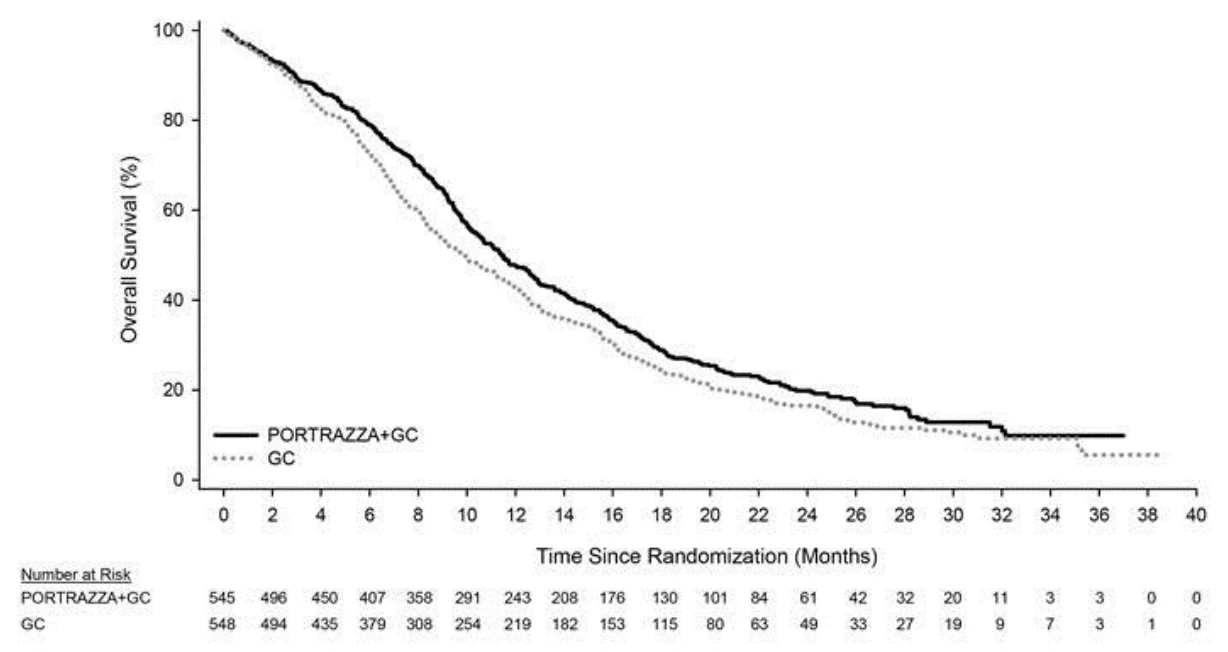
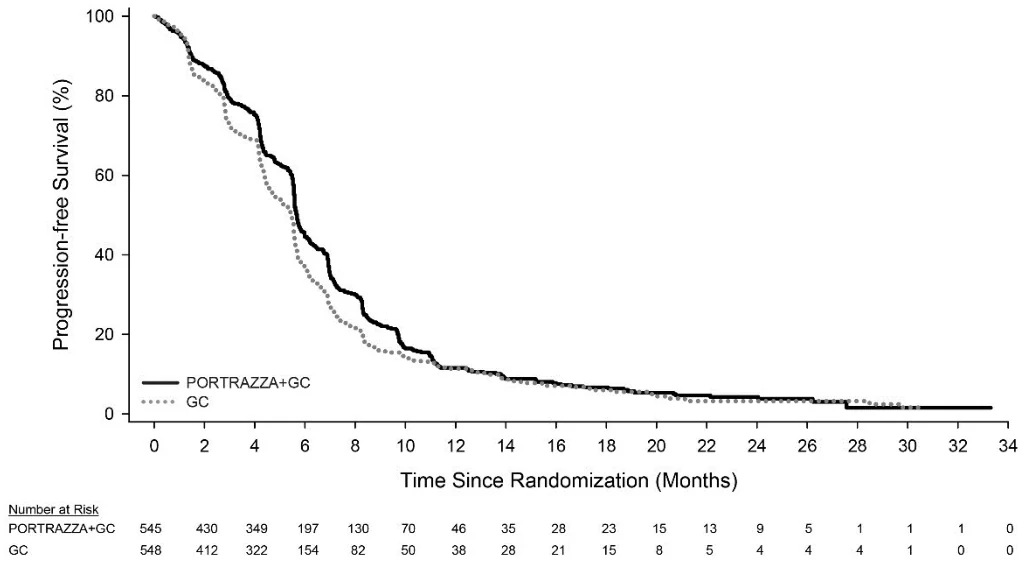
The SQUIRE study met its primary endpoint by demonstrating a statistically significant improvement in OS in the PORTRAZZA plus gemcitabine and cisplatin arm versus the gemcitabine and cisplatin alone arm, with a 16% reduction in the risk of death (HR = 0.842; p=.0120). The OS data were supported by a statistically significant improvement in PFS (HR = 0.851; p=.0201), with a risk reduction for progression or death of 15% in the necitumumab arm (see Table 7 and Figure 3).
There was no statistical difference in ORR between arms, with an ORR of 31% (95% CI 27, 35) for PORTRAZZA plus gemcitabine and cisplatin arm and an ORR of 29% (95% CI 25, 33) for gemcitabine and cisplatin alone arm, p-value = 0.40. The DCR (CR+PR+SD) was 81.8% (78.4, 84.8) for the PORTRAZZA plus gemcitabine and cisplatin Arm compared with 77.0% (73.3, 80.3) for the GC Arm.
Table7: Summary of Efficacy Data (ITT population) – SQUIRE
PORTRAZZA+GC Arm N=545 | GC Arm N=548 | |||||||||
| Overall survival | ||||||||||
| Number of events (n) | 418 | 442 | ||||||||
| Median – months (95% CIa) | 11.5 (10.4, 12.6) | 9.9 (8.9, 11.1) | ||||||||
| Hazard ratio (95% CI)b, c | 0.84 (0.74, 0.96) | |||||||||
| Two-sided log-rank p-valuec | 0.012 | |||||||||
| 1-year Overall survival rate (%) | 47.7 | 42.8 | ||||||||
| 2-year Overall survival rate (%) | 19.9 | 16.5 | ||||||||
| Progression free survival | ||||||||||
| Number of events (n) | 431 | 417 | ||||||||
| Median – months (95% CI) | 5.7 (5.6, 6.0) | 5.5 (4.8, 5.6) | ||||||||
| Hazard ratio (95% CI) b, c | 0.85 (0.74, 0.98) | |||||||||
| Two-sided log-rank p-valuec, d | 0.020 | |||||||||
a Abbreviations: CI = confidence interval.
b Hazard ratio is expressed as treatment/control and estimated from Cox model.
c Stratified by the randomization strata (ECOG PS [0-1 vs. 2], and geographic region [North America, Europe, and Australia vs. South America, South Africa, and India vs. Eastern Asia]).
d Hochberg’s method was used to adjust for multiplicity testing for the secondary endpoints.
Figure 1. Kaplan-Meier curve for overall survival in the ITT population
An improvement was observed in all but one of the pre-specified subgroups for OS, including those defined by stratification factors (ECOG PS score [0-1 versus 2] and geographic region [North America, Europe, and Australia versus South America, South Africa, and India versus Eastern Asia]). No improvement in OS was seen for patients ≥70, for whom the hazard ratio for overall survival was 1.03 (0.75, 1.42) (see Figure 2).
Figure 2. Forest plot for subgroup analysis of overall survival (ITT population)
Abbreviations: C = cisplatin; G = gemcitabine; ITT = intent-to-treat.
Figure 3. Kaplan-Meier curve for PFS in the ITT population
DETAILED PHARMACOLOGY
Nonclinical Pharmacodynamics
In vitro
Nonclinical pharmacodynamic studies of necitumumab in vitro demonstrate EGFR selectivity, high affinity binding to human (Kd = 0.320 nM) and cynomolgus monkey EGFR, and ability to potently inhibit ligand binding to EGFR (IC50 < 0.700 nM). The results of in vitro functional studies indicate that necitumumab inhibits ligand-induced EGFR phosphorylation, whereby receptor activation and downstream signaling effectors such as Erk1/2 are inhibited, modestly promotes EGFR internalization and degradation and is capable of eliciting immune effector mechanisms such as ADCC.
In vivo
Nonclinical studies in xenograft tumor models indicate that treatment with necitumumab results in tumor growth inhibition in the setting of NSCLC (lung adenocarcinoma and squamous carcinoma of the lung), CRC and other tumor types. Necitumumab exhibits antitumor activity in vivo as single agent and in combination with gemcitabine and cisplatin, paclitaxel and cisplatin (NSCLC), irinotecan or oxaliplatin (CRC) in a subset of lung and colon xenograft tumor models. Inhibition of tumor cell proliferation and/or survival appears to be a mechanism of action of this antibody. Results of pharmacokinetic/pharmacodynamic (PK/PD) study in xenograft BxPC-3 model in which necitumumab was administered by the ip route showed that tumor growth was inhibited at doses ranging from 6 to 60 mg/kg, with 50% tumor growth inhibition occurring when plasma antibody concentration was maintained above 60 μg/mL.
Nonclinical Pharmacokinetics
The pharmacokinetic profile of necitumumab is consistent with that expected for a monoclonal antibody in both mice and monkeys. In mice, the half-life was approximately 4.8 days after both intravenous and intraperitoneal administrations. The half-life in monkeys after intravenous administration ranged from 3.1 days to 4.8 days resulting in accumulation after 26-weeks of dosing that ranged from 1.1 to 1.7-fold based on Cmax. Systemic exposure to necitumumab increased with increasing dose in both mice and monkeys. After repeat dosing in monkeys, dose-dependent changes in clearance and half-life resulted in a greater than proportional increase in exposure following intravenous administration. No consistent sex-related differences in exposure were observed in monkeys. Steady-state volume of distribution was approximately equal to the vascular space in monkeys suggesting that distribution of necitumumab was limited to the vasculature. Necitumumab, similar to other antibodies, is expected to be eliminated via catabolism to small peptides and amino acids.
TOXICOLOGY
The nonclinical testing strategy for necitumumab was designed to demonstrate the potential efficacy of necitumumab and to support its chronic administration to patients with advanced cancer. Completed animal studies with necitumumab to assess the safety of necitumumab include 5-week and 26-week repeat-dose toxicology studies with toxicokinetic evaluation in monkeys. These Good Laboratory Practices (GLP)-compliant nonclinical studies were conducted in the cynomolgus monkey, which was established as an appropriate species for toxicity testing based on similar tissue cross-reactivity patterns and similar EGFR binding affinity in humans and monkeys
Single-Dose Toxicity
No dedicated single-dose toxicity studies were conducted with necitumumab. However, no unexpected toxicities were observed in monkeys exposed to high systemic concentrations of necitumumab (doses up to 60 mg/kg) during the 26-week, repeat-dose monkey study.
Repeat-Dose Toxicity
GLP-compliant 5-week and 26-week, repeat-dose toxicity studies of necitumumab given once weekly by intravenous infusion to cynomolgus monkeys were conducted to support clinical trials and the chronic administration of necitumumab to oncology patients.
The high doses for each of the toxicity studies were chosen to generate animal exposure that substantially exceeded the anticipated clinical dose and exposure. Standard toxicological, local tolerance and toxicokinetic parameters were monitored in both studies. Effects on major organ systems were evaluated as part of these repeat-dose studies.
A no-observed-adverse-effect level (NOAEL) was not established in the 26-week repeat-dose study in monkeys, as skin toxicity was observed at all dose levels, with dose dependent severity and time of onset. Skin effects were described as hyperplastic dermatitis which presented as rash, erythema, and scaling macroscopically and epidermal hyperplasia, hyperkeratosis and lymphocytic interface inflammation microscopically. This type of skin lesion is characteristic of many EGFR-inhibitors.. Once skin lesions were observed (starting in week 5), animals were given palliative treatment, including antibiotic ointment. One animal died due to septicemia, that was possibly related to skin lesions. No unexpected toxicities were identified in monkeys exposed to high systemic concentrations of necitumumab.
Exposure levels in the 5-week repeat-dose monkey study were similar to the median clinically efficacious exposure level, while exposure in the 26-week monkey study exceeded the clinically efficacious exposure level by approximately 2-fold. Overall, the toxicology data suggest that patients can be exposed to therapeutically effective necitumumab concentrations while only experiencing monitorable and clinically manageable skin effects.
Carcinogenesis, Mutagenesis, Impairment of Fertility
Specific animal studies to test necitumumab for carcinogenic potential or potential to impair fertility have not been performed. The risk of fertility impairment is unknown. However, no adverse effects on male or female reproductive organs were observed in monkeys treated during the 26-week, repeat-dose monkey study.
Reproductive and Developmental Toxicity
Human IgG1 is known to cross the placenta; therefore, necitumumab has the potential to be transmitted from the mother to the developing fetus. No animal studies have been specifically conducted to evaluate the effect of necitumumab on reproduction and fetal development . Epidermal growth factor receptor (EGFR) is involved in very early to late gestational development processes and may be essential for normal organogenesis, proliferation, and differentiation in the developing embryo. Disruption or depletion of EGFR expression in animal models resulted in fetal harm or developmental anomalies including effects on placental, lung, cardiac, skin, and neural development. In mice, the disruption of the EGF/EGFR signaling pathway resulted in embryo-fetal lethality, teratogenicity, and post-natal death.
Local Tolerance
Local tolerance was investigated during the 26-week, repeat-dose monkey study. Dose dependent reversible skin toxicity was observed. The skin effects were consistent with the known class effects of EGFR inhibitors.
REFERENCES
- 1. Thatcher N, Hirsch FR, Luft AV, Szczesna A, Ciuleanu TE, Dediu M, Ramlau R, Galiulin RK, Bálint B, Losonczy G, Kazarnowicz A, Park K, Schumann C, Reck M, Depenbrock H, Nanda S, Kruljac-Letunic A, Kurek R, Paz-Ares L, Socinski MA; SQUIRE Investigators. Necitumumab plus gemcitabine and cisplatin versus gemcitabine and cisplatin alone as firstline therapy in patients with stage IV squamous non-small-cell lung cancer (SQUIRE): an open-label, randomized, controlled phase 3 trial. Lancet Oncol. 2015;16(7):763-774.