


Product Monograph - Primaquine
Recent Major Label Changes
| 7 Warnings and Precautions, Reproductive Health | 2025-06 |
|---|---|
| 7 Warnings and Precautions, 7.1.1. Pregnancy | 2025-06 |
Table of Contents
Certain sections or subsections that are not applicable at the time of the preparation of the most recent authorized product are not listed.
Recent Major Label Changes .................................................................................................... 2
Table of Contents .................................................................................................................... 2
Part 1: Healthcare Professional Information ............................................................................ 4
- 1.
Indications ................................................................................................................... 4
1.1. Pediatrics ............................................................................................................... 4
1.2. Geriatrics ............................................................................................................... 4
- 2. Contraindications ......................................................................................................... 4
- 4.
Dosage and Administration .......................................................................................... 5
4.1. Dosing Considerations ........................................................................................... 5
4.2. Recommended Dose and Dosage Adjustment ...................................................... 5
4.4. Administration ....................................................................................................... 6
4.5. Missed Dose .......................................................................................................... 6
- 5. Overdose...................................................................................................................... 6
- 6. Dosage Forms, Strengths, Composition and Packaging ................................................. 7
- 7.
Warnings and Precautions ............................................................................................ 8
Carcinogenesis and Genotoxicity ...................................................................................... 8
Cardiovascular ................................................................................................................... 8
Driving and Operating Machinery ..................................................................................... 8
Hematologic ...................................................................................................................... 8
Hepatic/Biliary/Pancreatic ................................................................................................ 9
Reproductive Health ......................................................................................................... 9
7.1. Special Populations .............................................................................................. 10
7.1.1. Pregnancy ........................................................................................................ 10
7.1.2. Breastfeeding .................................................................................................. 10
7.1.3. Pediatrics ......................................................................................................... 10
7.1.4. Geriatrics ......................................................................................................... 10
- 8.
Adverse Reactions ...................................................................................................... 11
8.1. Adverse Reaction Overview ................................................................................. 11
8.2. Clinical Trial Adverse Reactions ........................................................................... 11
8.2.1. Clinical Trial Adverse Reactions – Pediatrics .................................................... 11
8.3. Less Common Clinical Trial Adverse Reactions .................................................... 11
8.5. Post-Market Adverse Reactions .......................................................................... 11
- 9.
Drug Interactions ....................................................................................................... 12
9.3. Drug-Behaviour Interactions ............................................................................... 12
9.4. Drug-Drug Interactions ........................................................................................ 12
9.5. Drug-Food Interactions ........................................................................................ 13
9.6. Drug-Herb Interactions ........................................................................................ 13
9.7. Drug-Laboratory Test Interactions ....................................................................... 14
- 10.
Clinical Pharmacology ................................................................................................ 14
10.1. Mechanism of Action ....................................................................................... 14
10.2. Pharmacodynamics ......................................................................................... 14
10.3. Pharmacokinetics ............................................................................................ 14
- 11. Storage, Stability and Disposal ................................................................................... 17
Part 2: Scientific Information ................................................................................................. 18
- 13. Pharmaceutical Information ....................................................................................... 18
- 14.
Clinical Trials .............................................................................................................. 18
14.1. Clinical Trials by Indication .............................................................................. 18
- 16. Non-Clinical Toxicology .............................................................................................. 19
Patient Medication Information ............................................................................................ 21
Part 1: Healthcare Professional Information
1. Indications
PRIMAQUINE (primaquine phosphate) is indicated for the radical cure (prevention of relapse) of Plasmodium vivax and Plasmodium ovale malaria.
Consideration should be given to official guidance on the appropriate use of antimalarial medicinal products.
1.1. Pediatrics
Pediatric patients without G6PD deficiency (≥ 30 kg body weight and able to swallow tablets): Based on the data submitted and reviewed by Health Canada, the safety and efficacy of primaquine in pediatric patients without G6PD deficiency, weighing 30 kg or above and able to swallow tablets has been established; therefore, Health Canada has authorized an indication for pediatric use (see 4 Dosage and Administration).
Pediatric patients with mild-to-moderate G6PD deficiency (≥ 20 kg body weight and able to swallow tablets): Based on the data submitted and reviewed by Health Canada, the safety and efficacy of primaquine in pediatric patients with mild-to-moderate G6PD deficiency, weighing 20 kg or above and able to swallow tablets has been established; therefore, Health Canada has authorized an indication for pediatric use (see 4 Dosage and Administration).
1.2. Geriatrics
Geriatrics (> 65 years of age): Efficacy and safety of primaquine have not been assessed in elderly patients with P. vivax and P. ovale malaria. Due to the greater frequency of decreased renal, hepatic or cardiac function, and of concomitant disease or other drug therapy in the elderly, monitoring of efficacy and adverse reactions is needed (see 7 Warnings and Precautions).
2. Contraindications
PRIMAQUINE is contraindicated in:
- Patients who are hypersensitive to primaquine or to any ingredient in the formulation or components of the container. For a complete listing of the excipients, see 6 Dosage Forms, Strengths, Composition and Packaging.
- Acutely ill patients suffering from systemic disease manifested by tendency to granulocytopenia, such as rheumatoid arthritis and lupus erythematosus since primaquine may cause leukopenia in those patients.
- Patients receiving concurrently other potentially hemolytic drugs or depressants of myeloid elements of the bone marrow.
- Patients who have recently received or are receiving quinacrine. Quinacrine appears to potentiate the toxicity of antimalarial compounds which are structurally related to primaquine.
- Patients with severe glucose-6-phosphate dehydrogenase (G6PD) deficiency.
- Pregnancy.
4. Dosage and Administration
4.1. Dosing Considerations
Primaquine is recommended only for the radical cure of P. vivax and P. ovale malaria (the prevention of relapse in P. vivax and P. ovale malaria), or following the termination of chloroquine phosphate suppressive therapy in an area where P. vivax or P. ovale malaria are endemic.
Patients suffering from an attack of P. vivax or P. ovale malaria or having parasitized red blood cells should initially receive a course of a blood schizontocide, which quickly destroys the erythrocytic parasites and terminates the paroxysm. Primaquine phosphate should then be administered in order to eradicate the exo-erythrocytic parasites.
When primaquine is used for the prevention of delayed primary attacks and relapse of P. vivax or P. ovale malaria in individuals who have returned home from areas where these plasmodial species are endemic, primaquine is generally initiated during the last 2 weeks of, or immediately following, therapy with chloroquine or another suitable antimalarial agent.
The G6PD status of patients should be used to guide administration of primaquine for preventing relapse.
4.2. Recommended Dose and Dosage Adjustment
Adult patients without G6PD deficiency:
For patients weighing up to 70 kg:
- For temperate strains: 1 tablet of 15 mg (primaquine base) daily for 14 days.
- For tropical, frequently relapsing strains: 2 tablets of 15 mg (primaquine base), i.e. 30 mg daily for 14 days.
For patients weighing > 70 kg:
- A dose of at least 30 mg daily is to be used, whatever the strain, to reach a total dose of 3.5 to 7 mg/kg (primaquine base) over 14 days (see 14 Clinical Trials).
Adult patients with mild to moderate G6PD deficiency:
- 0.75 mg/kg of primaquine base once a week for 8 weeks (see 7 Warnings and Precautions), not exceeding a 45 mg unit dose.
Pediatric patients without G6PD deficiency:
- The usual dose is 0.25 to 0.5 mg/kg/day for 14 days to reach a total dose of 3.5 to 7 mg/kg (primaquine base) (see 14 Clinical Trials).
- PRIMAQUINE is not suited for children weighing less than 30 kg or not able to swallow tablets.
- In children weighing 30 to 59 kg, administer 1 tablet daily for 14 days, whatever the strain.
- In children and adolescents of 60 kg and above, use the adult dose.
Pediatric patients with mild to moderate G6PD deficiency:
- 0.75 mg/kg of primaquine base once a week for 8 weeks (see 7 Warnings and Precautions), not exceeding a 45 mg unit dose (see table below).
- PRIMAQUINE is not suited for children weighing less than 20 kg or not able to swallow tablets.
| Patient bodyweight | Once weekly dose for 8 weeks |
|---|---|
| 20-39 kg | 1 tablet |
| 40-59 kg | 2 tablets |
| ≥ 60 kg | 3 tablets |
Elderly patients:
There are no specific studies in the elderly. Due to the greater frequency of decreased renal, hepatic or cardiac function, and of concomitant disease or other drug therapy in the elderly, monitoring of efficacy and adverse reactions is needed (see 7 Warnings and Precautions).
Hepatic impairment:
Efficacy and safety of primaquine have not been assessed in patients with hepatic impairment. Primaquine is metabolized in the liver to generate active metabolites, and it is not known if efficacy could be affected in patients with hepatic impairment. If primaquine is administered to such patients, monitoring of efficacy and adverse reactions is needed, in particular in patients with severe hepatic impairment (see 10.3 Pharmacokinetics).
Renal impairment:
Safety of primaquine after repeated dose has not been assessed in patients with renal impairment. If primaquine is administered to such patients, monitoring for adverse reactions is needed, in particular in patients with severe renal impairment (see 10.3 Pharmacokinetics).
4.4. Administration
Taking primaquine after a meal may reduce abdominal pain or cramps associated with ingestion of the drug.
4.5. Missed Dose
If a dose is missed, it must be taken as soon as possible. However, if it is time for the next dose, the regular dosing schedule should be resumed. A double dose should not be taken.
5. Overdose
Symptoms
Abdominal cramps, vomiting, jaundice, burning epigastric distress, CNS disturbances (including headache and insomnia), cardiovascular disturbances (including cardiac arrhythmia and QT interval prolongation), methemoglobinemia (indicated by cyanosis), moderate leukocytosis or leukopenia, granulocytopenia, and anemia. Acute hemolysis may occur, with particular severity in G6PD deficient patients.
Management should include either activated charcoal administration or appropriate attempts to recover primaquine from the stomach by emesis or gastric lavage and provision of respiratory and cardiovascular support.
Sodium lactate i.v. may be used to counter the depressant effects of primaquine on the heart. Electrical pacing of the heart may be needed.
Ammonium chloride in doses up to 12 g daily orally may be given to enhance urinary excretion.
Symptomatic methemoglobinemia should be treated with 1 to 2 mg per kg of methylene blue.
6. Dosage Forms, Strengths, Composition and Packaging
Table – Dosage Forms, Strengths, and Composition
Description
Each pink, film-coated, convex round tablet imprinted in black ink with a stylized W and P97 on one side and plain on the other side contains: primaquine phosphate USP 26.3 mg (equivalent to primaquine base 15 mg).
Gluten and tartrazine-free.
Available in bottles of 100.
For the most recent information in the management of a suspected drug overdose, contact your regional poison control centre or Health Canada’s toll-free number, 1-844 POISON-X (1-844-764-7669).
| Route of Administration | Dosage Form / Strength/Composition | Non-medicinal Ingredients |
| Oral | Tablet, 26.3 mg primaquine phosphate (equivalent to 15 mg primaquine base) | Carnauba wax, cellulose (microcrystalline), lactose, magnesium stearate, Opacode Black ink S-1-177003 (contains shellac glaze; propylene glycol; N-butyl alcohol; black iron oxide; ethanol and methanol), Opadry white YS-1-7443 (contains hypromellose; polyethylene glycol 400; titanium dioxide; and polysorbate 80), polyethylene glycol 400, red iron oxide, starch and talc. |
7. Warnings and Precautions
Carcinogenesis and Genotoxicity
Preclinical data show a potential risk of genotoxicity. See 16 Non-Clinical Toxicology.
Cardiovascular
QT Interval Prolongation
Due to potential for QT interval prolongation, caution is advised in patients with cardiac disease, a history of ventricular dysrhythmias, uncorrected hypokalemia and/or hypomagnesemia, or bradycardia (<50 bpm), and during concomitant administration with QT interval prolonging agents (see 8 Adverse Reactions and 5 Overdose).
Driving and Operating Machinery
Some adverse reactions (e.g. dizziness) may impair the patient’s ability to concentrate and react, and therefore may constitute a risk in situations where these abilities are of special importance (e.g. driving a car or operating machinery).
Hematologic
In all patients, the concurrent administration of hemolytic agents should be avoided (see 9 Drug Interactions). Patients should be warned to discontinue the use of PRIMAQUINE promptly if signs suggestive of hemolytic anemia occur (such as darkening of the urine, pale skin, shortness of breath, dizziness and fatigue) and to contact their healthcare professional immediately.
Anemia, methemoglobinemia and leukopenia have been observed following administration of large doses of primaquine (see 5 Overdose); therefore, the recommended dose should not be exceeded. It is also advisable to make routine blood examinations, particularly blood cell counts and hemoglobin determinations, during therapy.
Hemolytic anemia and G6PD deficiency
Due to the risk of hemolytic anemia in G6PD deficient patients, G6PD testing has to be performed before using primaquine. Before initiating treatment, it is advisable to check the patients for clinical signs of severe anemia or test hemoglobin level. In case of severe anemia, the G6PD testing and primaquine treatment should be postponed until recovery of anemia, in order to avoid false diagnosis due to reticulocytosis.
Baseline hematocrit and hemoglobin must be checked before treatment and close hematological monitoring (e.g. at day 3 and 8) is required. Due to the limitations of G6PD tests, physicians need to be aware of residual risk of hemolysis and adequate medical support and follow-up to manage hemolytic risk should be available. Observe particular caution in individuals with a personal or family history of hemolytic anemia.
In case of mild to moderate G6PD deficiency, a decision to prescribe primaquine must be based on an assessment of the risks and benefits of using primaquine; if primaquine administration is considered, the dosage regimen should be adapted accordingly (see 4 Dosage and Administration) and close hematological monitoring is required.
Methemoglobinemia
Primaquine may cause transient increase in methemoglobin levels up to 10% in patients without risk factors (see 8 Adverse Reactions). Methemoglobinemia may be severe in patients who are deficient in nicotinamide adenine dinucleotide (NADH) methemoglobin reductase or treated with methemoglobinemia-inducing drugs (such as dapsone, or sulfonamides, see 9 Drug Interactions). In these cases, close blood monitoring is required.
All patients should be advised to seek immediate medical attention if signs of methemoglobinemia occur (such as bluish lips or nails).
Hepatic/Biliary/Pancreatic
CYP2D6 genotype
Based on non-clinical data, primaquine activity probably depends on the formation of CYP2D6 metabolite(s). Therefore, CYP2D6 polymorphism may be associated with variability in clinical response to primaquine.
Limited clinical data reported more elevated treatment failure rates in patients with CYP2D6 poor or intermediate metabolizer status than in patients with normal/extensive metabolizer status (10 Clinical Pharmacology).
In case of treatment failure, after checking the patient’s compliance to treatment, it may be useful to reconsider potential concomitant use of CYP2D6 inhibitors (see 9 Drug Interactions) and to assess the patient’s CYP2D6 status if feasible. For poor CYP2D6 metabolizers, alternative treatment should be considered.
Reproductive Health
Fertility
There are no data in humans.
Contraception
Due to the genotoxic potential of primaquine, both men and women of childbearing potential must use effective contraception during and after treatment (7.1.1 Pregnancy and 16 Non-Clinical Toxicology). Women of childbearing potential treated with primaquine must use effective contraception during treatment and for 6 months after the end of treatment. Treated men whose partners may become pregnant must use effective contraception during treatment and for 3 months after the end of treatment.
7.1. Special Populations
7.1.1. Pregnancy
The safety of primaquine in human pregnancy has not been established. The use of primaquine is contraindicated during pregnancy (2 Contraindications). Even if a pregnant woman is G6PD normal, the fetus may not be.
Preclinical data show a potential risk of genotoxicity and a potential embryo-fetal developmental toxicity (16 Non-Clinical Toxicology). Although no clinical consequences have been identified, human data are limited.
Patients must be informed of the potential genotoxic risk. Patients must avoid pregnancy and must use adequate contraception during treatment and for the following period after end of treatment:
- in treated women of childbearing potential, for 6 months
- in treated males whose partners may become pregnant, for 3 months.
7.1.2. Breastfeeding
After administration of primaquine in women breastfeeding normal G6PD infants aged more than 1 month, low level of primaquine was measured both in milk and in infant plasma (estimated infant absorbed dose is less than 1% of a 0.5 mg/kg daily dose). There are very limited safety data in breastfed infants.
Because of the potential of primaquine or its metabolites to produce serious hematological adverse reactions in breastfed infants, especially those who may be G6PD deficient, a decision should be made whether to interrupt breastfeeding or to delay maternal PRIMAQUINE treatment until end of breastfeeding.
7.1.3. Pediatrics
Efficacy and safety of primaquine have been established in pediatric patients without G6PD deficiency (≥ 30 kg body weight and able to swallow tablets) and with mild-to-moderate G6PD deficiency (≥ 20 kg body weight and able to swallow tablets). See 1.1 Pediatrics.
7.1.4. Geriatrics
Efficacy and safety of primaquine have not been assessed in elderly patients with P. vivax and P. ovale malaria. Due to the greater frequency of decreased renal, hepatic or cardiac function, and of concomitant disease or other drug therapy in the elderly, monitoring of efficacy and adverse reactions is needed.
8. Adverse Reactions
8.1. Adverse Reaction Overview
Blood and lymphatic system disorders:
- In patients with G6PD deficiency, hemolytic anemia occurs very commonly and may be severe or fatal in patients with severe G6PD deficiency (see 2 Contraindications and 7 Warnings and Precautions).
- In patients without G6PD deficiency, hemoglobin loss and hemolytic anemia were reported with a frequency of < 0.1%.
8.2. Clinical Trial Adverse Reactions
8.2.1. Clinical Trial Adverse Reactions – Pediatrics
The safety profile in children > 4 years old is similar to adults, with the exception of higher frequency of gastro intestinal disorders.
8.3. Less Common Clinical Trial Adverse Reactions
Blood and lymphatic system disorders:
- Methemoglobinemia (see 7 Warnings and Precautions)
Cardiac disorders:
- QT interval prolongation
Gastrointestinal disorders:
- Abdominal pain
- Nausea
- Vomiting
- Epigastric distress
Skin and subcutaneous tissue disorders:
- Pruritus
- Rash maculo-papular
8.5. Post-Market Adverse Reactions
Blood and lymphatic system disorders:
- Methemoglobinemia levels are usually < 10%, but methemoglobinemia may be severe in NADH methemoglobin reductase deficient individuals or in patients with other risk factors (see 7 Warnings and Precautions and 5 Overdose).
- Leukopenia was observed in patients with rheumatoid arthritis or lupus erythematosus (see 2 Contraindications).
Cardiac disorders:
- Cardiac arrhythmia and QT interval prolongation, occur mainly with higher doses (see 7 Warnings and Precautions and 5 Overdose).
Gastrointestinal disorders:
- Symptoms often are alleviated by taking the drug at mealtime (see 4 Dosage and Administration).
Nervous system disorders:
- Dizziness
9. Drug Interactions
9.3. Drug-Behaviour Interactions
The interaction of PRIMAQUINE with individual behavioural risks (e.g. cigarette smoking, cannabis use, and/or alcohol consumption) has not been studied.
9.4. Drug-Drug Interactions
Pharmacodynamics interactions
Concurrent use of quinacrine (mepacrine) and primaquine is contraindicated as increased toxicity was seen when quinacrine was used with pamaquine, another 8-aminoquinoline (see 2 Contraindications).
The concurrent administration of hemolytic agents or methemoglobinemia-inducing drugs should be avoided (see 7 Warnings and Precautions). If the association cannot be avoided, close blood monitoring is required.
Caution is advised if primaquine is used concomitantly with other drugs that prolong the QT interval such as class IA and III antiarrhythmics, some tricyclic antidepressants, some antipsychotics, some anti-infectives, some antimalarials especially halofantrine, some antiparasitics (pentamidine) (see 7 Warnings and Precautions).
Pharmacokinetics interactions
Effect of other agents on primaquine:
Caution is advised in case of concomitant use with potent CYP2D6 inhibitors (such as SSRIs) as they might impact the formation of active metabolites of primaquine (see 7 Warnings and Precautions and 10.3 Pharmacokinetics).
Primaquine exposure was slightly increased following co-administration with mild to moderate CYP2D6 inhibitors (such as chloroquine or pyronaridine-artesunate) or with mild to moderate CYP3A inhibitors (such as dihydroartemisinin-piperaquine or grapefruit juice), with no evidence of clinical significance.
The impact of MAO-A inhibitors has not been assessed on primaquine. For patients without altered CYP2D6 activity, no clinically significant drug-drug interaction is expected when primaquine is co-administered with MAO-A inhibitors. In patients with altered CYP2D6 activity or unknown CYP2D6 phenotype, caution should be advised, and administration of MAO-A inhibitors should be delayed until completion of primaquine treatment.
Primaquine pharmacokinetics were not significantly affected in the presence of mefloquine, artemether or quinine.
Effect of primaquine on other drugs:
Primaquine inhibits CYP1A2 thus potentially leading to increased exposure of CYP1A2 substrates, such as duloxetine, alosetron, theophylline and tizanidine. Since the data are limited, no predictions can be made regarding the extent of the impact on pharmacokinetics parameters of drugs metabolized by CYP1A2. Caution is advised (i.e. monitoring for adverse reactions) when CYP1A2 substrates are concomitantly administered.
In vitro observations suggest that primaquine may inhibit CYP3A4 at the intestinal level but not at the hepatic level. In vivo studies performed after 30 or 45 mg of primaquine with different CYP3A4 substrates (mefloquine, piperaquine, levonorgestrel, ethinylestradiol) did not demonstrate an increase in exposure (AUC) for the different CYP3A4 substrates except a 1.32-fold increase in AUC with levonorgestrel, thus indicating that inhibitory potential of primaquine for CYP3A4 is low. However, for substances with a narrow therapeutic index and metabolized by CYP3A4 (e.g., rivaroxaban, ciclosporin, ergot derivatives, tyrosine kinase inhibitors), caution is advised (e.g., monitoring for adverse reactions, laboratory tests) when CYP3A4 substrates are concomitantly administered, and reference should be made to each substrate's product information.
The effect of primaquine on the pharmacokinetics of permeability glycoprotein (P-gp) substrates in vivo is unknown. However, in vitro observations suggest that primaquine inhibits P-gp. Therefore, there is a potential for increased concentrations of P-gp substrates. Caution is advised (i.e. monitoring for adverse reactions) when P-gp substrates with narrow therapeutic index such as digoxin and dabigatran are concomitantly administered.
Coadministration of primaquine with antimalarials (chloroquine, mefloquine, artemether or dihydroartemisinin-piperaquine and pyronaridine-artesunate), ethinyl-estradiol/levonorgestrel or paracetamol has no relevant impact on their pharmacokinetics.
9.5. Drug-Food Interactions
Taking PRIMAQUINE after a meal may improve tolerability (4.4 Administration). Primaquine exposure may be slightly increased following grapefruit juice, with no evidence of clinical significance (see 9.4 Drug-Drug Interactions).
9.6. Drug-Herb Interactions
Interactions with herbal products have not been established.
9.7. Drug-Laboratory Test Interactions
Interactions with laboratory tests have not been established.
10. Clinical Pharmacology
10.1. Mechanism of Action
Primaquine is an 8-aminoquinoline anti-protozoal agent.
The mechanism of action has not been fully established. The major assumptions have been an inhibition of mitochondrial system of dormant parasites, and an oxidative stress generated through reactive metabolites in infected cells.
10.2. Pharmacodynamics
Primaquine was found to be active against the dormant liver form of P. vivax and P. ovale, namely the hypnozoites, as well as the primary and secondary exoerythrocytic stages of the parasites, namely the schizonts and schizogonies, respectively. In humans, primaquine activity is probably related to hydroxylated metabolites generated intrahepatically by CYP2D6, as demonstrated in mice models infected by P. berghei.
In addition, primaquine is active against the primary exoerythrocytic forms of P. falciparum and has gametocytocidal effect on all plasmodia gametocytes, in particular against P. falciparum gametocytes.
Relapse and resistance
Sufficiently long duration of treatment is needed to suppress P. vivax hypnozoites from liver, as primaquine is rapidly eliminated from the blood.
The origin of P. vivax relapses after primaquine treatment appears multifactorial, such as the origin of P. vivax strain, the discrimination between recrudescence, reinfection and relapse, the adherence to primaquine treatment and the CYP2D6 phenotype. No genetic marker of resistance has been highlighted, giving little support to an actual primaquine resistance.
The prevalence of frequent relapsing P. vivax strains may vary geographically and over time and local recommendations on treatments should be considered. As necessary, expert advice should be sought.
10.3. Pharmacokinetics
Absorption
After oral dosing, primaquine is rapidly absorbed (1-3 hour tmax), then plasma concentration decreases with a monophasic profile. The absolute bioavailability is high (> 70%). Cmax is about 65 ng/mL for a 15 mg single dose, 122 ng/mL for a 30 mg single dose and 174 ng/mL for a 45 mg single dose.
The effect of food on primaquine pharmacokinetics is limited, with a slight increase in mean Cmax (not exceeding 26%) and less than a 15% increase in AUC, as compared to fasting conditions in healthy adults with a 30 mg dose.
Distribution
Primaquine is bound to plasma proteins (mainly to alpha-1 glycoprotein). The volume of distribution is high (approximately 243 L).
After administration of primaquine in lactating women (N = 21) feeding babies > 1 month of age, low level of primaquine and carboxyprimaquine were measured both in milk and in infant plasma. As a mean, 3 mcg/kg/day of primaquine are ingested by the infant i.e. 0.6 % of the 0.5 mg/kg daily dose over 14 days.
Metabolism
Primaquine is highly metabolized; its main circulating metabolite is carboxyprimaquine that is not expected to be active. After single dose, carboxyprimaquine exposure in plasma is approximately 30-fold higher as compared to primaquine.
In vitro, primaquine is metabolized by several enzymes: CYP1A2, 2C19, 2D6, 3A4, and Monoamine Oxidase A (MAO-A). Three major metabolism pathways have been identified:
- Oxidative deamination of the terminal amine involved in the formation of carboxyprimaquine through MAO-A. Carboxyprimaquine is further metabolized mainly into a glucuronide conjugate and into quinone imine carboxyprimaquine. In vivo activity and toxicity of quinone imine carboxyprimaquine is not yet fully known. Involvement of CYP2D6 in the formation of quinone imine carboxyprimaquine cannot be excluded.
- The hydroxylation of the quinoline ring leads to the formation of hydroxylated metabolites with major involvement of CYP2D6. The CYP2D6 hydroxylated metabolites are believed to play a role in efficacy and primaquine-induced hemolytic activity (see 7 Warnings and Precautions and 10.2 Pharmacodynamics).
- Direct conjugation of primaquine, leading to formation of glucuronide conjugates.
Metabolites other than carboxyprimaquine were not monitored in pharmacokinetic studies.
Effect of other agents on primaquine:
In vitro, primaquine is not considered as a P-gp substrate nor as a BCRP substrate.
The impact of CYP2D6 inhibition has been assessed through in vivo findings obtained in CYP2D6 poor and intermediate metabolizers (see section 10.3 CYP2D6 polymorphism).
Effect of primaquine on other drugs:
In vitro, primaquine has no or low potential to inhibit any of the major human MAO or CYP450 isoforms (2A6, 2C8, 2C9, 2C19, 2D6, 3A4) involved in drug biotransformation except CYP1A2.
In vitro, primaquine has potential to inhibit P-gp. There are no in vivo data.
Elimination
Primaquine is mainly metabolized and minimally excreted unchanged in urine (less than 4%).
The main circulating metabolite, carboxyprimaquine is subjected to further metabolism and not eliminated through urine. After administration of [14C]-primaquine by oral route, 64% of the dose was recovered in urine over 143 hours (no data in feces), thus suggesting that urine is the main excretion pathway for other primaquine metabolites.
The terminal half-life is around 6 hours for primaquine and 22 hours for carboxyprimaquine.
No accumulation of primaquine is observed after repeated daily dosing, while a 1.7-fold higher Cmax and AUC0-24 are observed for carboxyprimaquine after 14 days of treatment as compared to single dose.
Linearity/Non-Linearity
The pharmacokinetics of primaquine and carboxyprimaquine are linear between 15 and 45 mg.
Special Populations and Conditions
Pediatrics
Population pharmacokinetics analysis performed in a limited pediatric population indicate that in children > 15 kg, no major age or body weight effect was evidenced in primaquine pharmacokinetics parameters when doses were adjusted to body weight.
Geriatrics
There are no pharmacokinetic studies in elderly.
Sex
No gender effect has been evidenced.
Genetic Polymorphism
G6PD deficiency
The pharmacokinetic parameters in G6PD-deficient patients were not different from non-deficient patients.
CYP polymorphism
Based on experiments in mice, primaquine activity probably depends on the formation of CYP2D6 metabolite(s). CYP2D6 polymorphism may be associated with variability in clinical response to primaquine (10.2 Pharmacodynamics, 10.3 Pharmacokinetics).
CYP2D6 polymorphism
Exposure parameters of primaquine were higher in CYP2D6 intermediate metabolizer (IM) and poor metabolizer (PM) subjects, with 1.7 and 2.5-fold higher AUC and 1.3 and 1.8-fold higher Cmax, respectively. The terminal half-life was also increased by about 1.7 and 1.8-fold in IM and PM, respectively. As there is no evidence of increased safety concern in patients with CYP2D6 PM polymorphism, no dose adjustment is recommended. Similarly, an increase in exposure parameters is expected when co-administered with CYP2D6 inhibitors: however, this is unlikely to result in an increased safety concern (see section 7 Warnings and Precautions).
Ethnic origin
No ethnicity effect has been evidenced.
Hepatic Insufficiency
No data are available in patients with hepatic impairment. It is not known whether in patients with hepatic impairment, accumulation of primaquine and its metabolites could occur or if there could be an impact on generation of metabolites contributing to pharmacological activity.
Renal Insufficiency
Single dose pharmacokinetics studies performed in patients with stages IV and V chronic kidney disease indicate higher primaquine Cmax (up to 1.7-fold higher as compared to healthy subjects) but no evidence of major difference in AUC or t1/2. It is not known whether after repeated dosing there could be an accumulation of metabolites that are mainly excreted by renal route.
11. Storage, Stability and Disposal
Store between 15-30°C.
Keep out of reach and sight of children.
Part 2: Scientific Information
13. Pharmaceutical Information
Drug Substance
Proper name: Primaquine phosphate
Chemical name: (RS)-8-(4-Amino-1-methylbutylamino)-6-methoxyquinoline diphosphate
Molecular formula: C15H21N3O·2H3PO4
Molecular mass: 455.34
Structural formula:
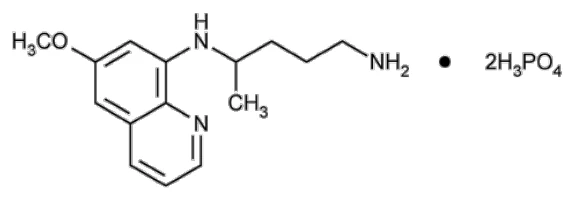
Physicochemical
properties: Primaquine phosphate is an orange-red crystalline solid. According to the pharmacopoeial standards, it is described as “soluble” in water. Primaquine is a dibasic compound, having pKa values of 3.2 and 10.4. Primaquine phosphate possesses a chiral carbon in the diamine side chain and hence shows stereoisomerism. It exists as both R(+) and S(–) enantiomers, but only preparations containing the racemic mixture are commercially available. No polymorphism has been reported for Primaquine phosphate.
14. Clinical Trials
14.1. Clinical Trials by Indication
Radical Cure (Prevention of Relapse) of Plasmodium vivax and Plasmodium ovale Malaria
Based on extensive clinical experience, reviewed in several meta-analyses for P. vivax, primaquine provides efficient radical cure for both P. vivax and P. ovale infections (cure rate of relapses > 60 to 100%) in patients receiving regimens of 15 to 30 mg daily for 14 days after an appropriate schizonticidal treatment. Factors affecting the efficacy are: the total dose over a sufficient treatment duration, the bodyweight of patient, adherence to therapy and the type of P. vivax strain. A minimal total dose of 3.5 mg/kg bodyweight, i.e. 0.25 mg/kg/day for 14 days of treatment is needed for temperate strains. This corresponds to 15 mg of primaquine daily for 14 days for patients with average bodyweight of 60 kg.
For tropical, frequent-relapsing P. vivax strains prevalent in East Asia and Oceania: a minimal total dose of 7 mg/kg bodyweight, i.e. 0.5 mg/kg/day for 14 days of treatment is needed. This corresponds to 30 mg of primaquine daily for 14 days for patients with average bodyweight of 60 kg. Patients with a body weight above 70 kg may be at higher risk of therapy failure if treated with low doses; a limited number of published studies have used higher primaquine daily dosages (30 or 45 mg daily) in these patients to reach the recommended primaquine total doses.
Data in children
In pediatric randomized controlled efficacy studies with a follow up of at least 8 weeks, on over 600 patients, most children were aged > 5 years and most (> 80%) received the daily high dose of 0.50 mg/kg in various treatment regimens. In the patients receiving the 0.5 mg/kg dose for 14 days (about 140 patients), efficacy was similar to that observed in adult patients.
G6PD deficient patients
The total dose of primaquine prevails over its rhythm of administration (“total dose” effect), therefore a weekly administration (i.e. a 0.75 mg/kg weekly regimen for 8 weeks) allows to mitigate the hemolysis risk in mild to moderate/intermediate G6PD deficient patients, while maintaining primaquine efficacy.
16. Non-Clinical Toxicology
General toxicology
Adverse reactions not observed in clinical studies, but seen in animals at exposure levels close to the clinical exposure levels (estimated at 9-fold the human 30 mg dose exposure in cynomolgus monkeys and at 1.9-fold the human exposure in rats) and with possible relevance to clinical use were as follows: In 28 days sub-chronic toxicity studies, inflammatory and degenerative changes in the liver and kidney, elevated levels of AST and ALT (less than 10-fold), alkaline phosphatase, creatine phosphokinase and lactate dehydrogenase and lower levels fasting blood glucose levels were reported. Histopathologic findings consisting of inflammatory and degenerative changes of the striated muscle, involving the myocardium, diaphragm, tongue and skeletal muscle occurred in rats. Thymus involution, edema and gliosis in the cerebral cortex also occurred in monkeys.
In addition, mild reduction in platelets numbers was observed in rats at exposure lower than human exposure.
Genotoxicity
Primaquine is reported in the literature to be a weak genotoxic agent which elicits both gene mutations and chromosomal/DNA breaks. The publications reported positive results in the in vitro reverse gene mutation assays using bacteria (Ames test) and in the in vivo studies using rodents (mouse bone marrow cell sister chromatid exchange, mouse bone marrow cell chromosome abnormality, and rat DNA strand-breaks in multiple organs). The genotoxicity data obtained in vitro or in rodent models are suggestive of a potential human risk.
Carcinogenicity
No carcinogenicity studies have been conducted with primaquine.
Reproductive and developmental toxicology
Literature data on reproductive toxicology identified potential embryo-fetal development toxicity. In studies in rats, adverse effects on fetus (visceral anomaly, skeletal variation, etc.) were observed at dose levels toxic to the dams.
No fertility studies have been conducted with primaquine; nevertheless no effects on gonads were observed in the repeated dose studies.