


Product Monograph - Primidone
Recent Major Label Changes
| 4 Dosage and Administration, 4.1 Dosing Considerations | 2025-10 |
|---|---|
| 4 Dosage and Administration, 4.2 Recommended Dose and Dosage Adjustment | 2025-10 |
| 7 Warnings and Precautions, Musculoskeletal | 2025-10 |
| 7 Warnings and Precautions, Neurologic | 2025-10 |
| 7 Warnings and Precautions, Reproductive Health: Female and Male Potential | 2025-10 |
| 7 Warnings and Precautions, 7.1.1 Pregnancy | 2025-10 |
| 7 Warnings and Precautions, 7.1.3 Pediatrics | 2025-10 |
Table of Contents
Certain sections or subsections that are not applicable at the time of the preparation of the most recent authorized product monograph are not listed.
Recent Major Label Changes .................................................................................................... 2
Table of Contents .................................................................................................................... 2
Part 1: Healthcare Professional Information ............................................................................ 5
- 1.
Indications ................................................................................................................... 5
1.1. Pediatric.............................................................................................................5
1.2. Geriatrics ...........................................................................................................5
- 2. Contraindications ......................................................................................................... 5
- 3. Serious Warnings and Precautions Box ......................................................................... 5
- 4.
Dosage and Administration .......................................................................................... 6
4.1. Dosing Considerations ........................................................................................6
4.2. Recommended Dose and Dosage Adjustment .....................................................6
4.5. Missed Dose .......................................................................................................6
- 5. Overdose ..................................................................................................................... 7
- 6. Dosage Forms, Strengths, Composition and Packaging.................................................. 8
- 7.
Warnings and Precautions............................................................................................ 8
Cardiovascular...............................................................................................................8
Dependence/Tolerance .................................................................................................8
Driving and Operating Machinery...................................................................................8
Endocrine and Metabolism ............................................................................................8
Hematologic ..................................................................................................................8
Hepatic/biliary/pancreatic .............................................................................................8
Musculoskeletal ............................................................................................................9
Neurologic.....................................................................................................................9
Psychiatric .....................................................................................................................9
Renal ........................................................................................................................ 10
Respiratory.................................................................................................................. 10
Skin ........................................................................................................................ 10
7.1. Special Population ............................................................................................ 11
7.1.1. Pregnancy ........................................................................................................ 11
7.1.2. Breastfeeding ................................................................................................... 12
7.1.3. Pediatrics ......................................................................................................... 13
7.1.4. Geriatrics ......................................................................................................... 13
- 8.
Adverse Reactions.......................................................................................................13
8.1. Adverse Reaction Overview .............................................................................. 13
8.5. Post-Market Adverse Reactions ........................................................................ 14
- 9.
Drug Interactions ........................................................................................................15
9.2. Drug Interactions Overview .............................................................................. 15
9.3. Drug-Behaviour Interactions ............................................................................. 15
9.4. Drug-Drug Interactions ..................................................................................... 15
9.5. Drug-Food Interactions ..................................................................................... 22
9.6. Drug-Herb Interactions ..................................................................................... 22
9.7. Drug-Laboratory Test Interactions..................................................................... 22
- 10.
Clinical Pharmacology .................................................................................................22
10.1. Mechanism of Action ........................................................................................ 22
10.2. Pharmacodynamics .......................................................................................... 23
10.3. Pharmacokinetics ............................................................................................. 23
- 11. Storage, Stability, and Disposal ...................................................................................24
- 12. Special Handling Instructions.......................................................................................24
Part 2: Scientific Information ..................................................................................................25
- 13. Pharmaceutical Information ........................................................................................25
- 14. Clinical Trials ...............................................................................................................25
- 15. Microbiology ...............................................................................................................25
- 16. Non-Clinical Toxicology ...............................................................................................25
Patient Medication Information .............................................................................................27
Part 1: Healthcare Professional Information
1. Indications
PRIMIDONE (primidone tablets) is indicated for use alone or in combination with other anticonvulsants for the control of grand mal and psychomotor seizure in patients 8 years of age and older.
1.1. Pediatric
Pediatrics (< 8 years of age): Based on the data submitted and reviewed by Health Canada, the safety and efficacy of PRIMIDONE in pediatric patients has not been established; therefore, Health Canada has not authorized an indication for pediatric use.
Pediatrics (8 to 18 years of age): See 4.2. Recommended Dose and Dosage Adjustment and 7.1.3. Pediatrics.
1.2. Geriatrics
Geriatrics (> 65 years of age): Evidence from clinical studies and experience suggests that use in the geriatric population is associated with differences in safety or effectiveness. See 4.1. Dosing Considerations and 7.1.4. Geriatrics.
2. Contraindications
PRIMIDONE (primidone tablets) is contraindicated in:
- Patients who are hypersensitive to this drug or to barbituric acid derivatives, or to any ingredient in the formulation, including any non-medicinal ingredient, or component of the container. For a complete listing, see 6. Dosage Forms, Strengths, Composition and Packaging.
- Patients with porphyria, severe respiratory depression or pulmonary insufficiency, renal impairment, hepatic impairment, sleep apnea, suicidal potential, alcoholism, drug dependence or in the presence of uncontrolled pain (paradoxical excitement may be produced).
3. Serious Warnings and Precautions Box
- Serious Dermatological Reactions: There have been rare post-marketing reports of serious and sometimes fatal skin reactions, including Stevens Johnson Syndrome (SJS), Toxic Epidermal Necrolysis (TEN), and drug reaction with eosinophilia and systemic symptoms (DRESS) with primidone tablets use. See 7. Warnings and Precautions, Skin.
4. Dosage and Administration
4.1. Dosing Considerations
- Dosage should be individualized to provide maximum benefit. In some cases, serum blood level determinations of PRIMIDONE may be necessary for optimal dosage adjustment. The clinically effective serum level for primidone is between 5 to 12 mcg/mL.
- Lower doses are required in elderly and debilitated patients in order to preclude oversedation.
4.2. Recommended Dose and Dosage Adjustment
Table 1 - Recommended Dose and Dosage Adjustment
| Week | Adults and Children over 8 years | Children under 8 years |
|---|---|---|
| 1 | 250 mg hs (at bedtime) | 125 mg hs (at bedtime) |
| 2 | 250 mg bid (morning & evening) | 125 mg bid (morning & evening) |
| 3 | 250 mg tid | 125 mg tid |
| 4 | 250 mg qid | 125 mg qid |
The therapeutic efficacy of a dosage regimen takes several days before it can be assessed. If necessary, continue similar weekly increments until seizures are controlled. Dosage exceeding 2 g daily is not recommended.
Patients taking other anticonvulsants:
In patients already receiving other anticonvulsants, the usual dosage range of PRIMIDONE in adults and children 8 years and older is between 125 mg and 1500 mg daily in divided doses. The dosage of PRIMIDONE is gradually increased while the dosage of other drug (s) is gradually decreased. This regimen should be continued until satisfactory dosage level is achieved for the combination, or the other medication is completely withdrawn. When therapy with PRIMIDONE alone is the objective, the transition should be completed over a period of at least two weeks.
Withdrawal of previous treatment should not be too rapid or status epilepticus may occur. Where phenobarbital formed the major part of the previous treatment, however, both its withdrawal and PRIMIDONE substitution should be completed over a shorter period, so as to prevent excessive drowsiness from interfering with accurate assessment of the optimum dosage of PRIMIDONE.
4.5. Missed Dose
If a patient misses one or more doses, it is recommended that they take a single dose as soon as they remember. After taking the missed dose, enough time should elapse before taking the next dose to assure that the recommended maximum daily dose of 2 g is not exceeded. Then, the normal dosing schedule should be resumed.
5. Overdose
Symptoms
As for phenobarbital (the major metabolite of primidone) poisoning, acute overdose with PRIMIDONE primarily affects the CNS and the cardiovascular system. Mild overdose resembles alcohol intoxication. Drowsiness, confusion, stupor, respiratory depression, ataxia, loss of consciousness sluggish or absent reflexes, early hypothermia, late fever, cardiovascular depression with hypotension, renal failure, cardiac arrhythmias, pulmonary edema, aspiration pneumonia, bullae over pressure points and decreased gastrointestinal motility are all possible symptoms. Severe overdose may progress to shock, coma and death.
Doses that result in toxicity vary widely among patients and depend on co-ingestion of other drugs and the patient's underlying comorbidities. The lethal dose of phenobarbital is believed to be 5 g.
The lowest dose of phenobarbital reported to have led to fatality is 1.41 g.
According to literature, the highest acute dose of phenobarbital that has not resulted in fatality was 27 g, which corresponded to 253 mcg/mL phenobarbital in human plasma.
Chronic ingestion of phenobarbital results in the development of tolerance and large doses can be ingested without overt toxicity. Serious toxicity can result at lower phenobarbital levels if combined with alcohol or other CNS depressant drugs.
Treatment
General supportive therapy is recommended. There is no specific antidote.
Patients who have ingested phenobarbital in overdose often require respiratory and hemodynamic support. This may include intubation, ventilation, boluses of isotonic IV fluids, and inotrope infusions. Once a patient's airway is protected, activated charcoal should be administered to minimize absorption of orally administered phenobarbital. Administering multiple doses of activated charcoal enhances the clearance of phenobarbital, though there is no evidence that it actually improves clinical outcomes such as duration of intubation. In patients with normal renal and cardiac function, urinary alkalinization also enhances phenobarbital clearance. Likewise, urinary alkalinization has not actually been shown to improve clinical outcomes.
As for barbiturate poisoning; general supportive therapy is recommended.
For the most recent information in the management of a suspected drug overdose, contact your regional poison control centre or Health Canada’s toll-free number, 1-844 POISON-X (1-844-764-7669).
6. Dosage Forms, Strengths, Composition and Packaging
Table 2 – Dosage Forms, Strengths, and Composition
Description
PRIMIDONE 125 mg Tablets: White, round, flat-faced, bevelled-edge tablet. Engraved 125 on one side, other side plain. Bottles of 100.
PRIMIDONE 250 mg Tablets: White, round, flat-faced, bevelled-edge tablet. Engraved score over 250 on one side, other side plain. Bottles of 100.
7. Warnings and Precautions
Please see 3. Serious Warnings and Precautions Box.
Cardiovascular
Administer PRIMIDONE with caution to patients with hypotension or with cardiac impairment.
Dependence/Tolerance
Prolonged use of phenobarbital (the major metabolite of primidone), may result in addiction and physical dependence. Patients may escalate dosage without medical advice. PRIMIDONE should be used with caution in patients with a history of drug addiction/dependence or drug abuse.
Driving and Operating Machinery
PRIMIDONE may impair the mental and/or physical abilities required for the performance of potentially hazardous tasks such as driving a vehicle or operating machinery. The concomitant use of alcohol or other CNS depressants may have strong additive effect. Patients should be warned accordingly.
Endocrine and Metabolism
Administer PRIMIDONE with caution to patients with myxedema and diabetes mellitus.
Hematologic
Administer PRIMIDONE with caution to patients in hemorrhagic shock or in patients with severe anemia.
Hepatic/biliary/pancreatic
| Route of Administration | Dosage Form / Strength / Composition | Non-Medicinal Ingredients |
| Oral | Tablet 125 mg, 250 mg of primidone | Colloidal silicon dioxide, croscarmellose sodium, magnesium stearate, methylcellulose. |
PRIMIDONE, as with other anticonvulsants, can induce liver enzymes and there is a theoretical risk of hepatic damage.
PRIMIDONE should be used with caution in patients with hepatic impairment. Reduced dosage may be required.
Musculoskeletal
Bone Disorders: PRIMIDONE may affect Vitamin D metabolism, which can lead to development of bone disease. Long-term use of antiepileptics such as carbamazepine, phenobarbital (major metabolite of primidone), phenytoin, primidone, oxcarbazepine, lamotrigine and sodium valproate is associated with a risk of decreased bone mineral density that may lead to weakened or brittle bones and therefore development of osteoporosis. In such cases, discontinuation of PRIMIDONE should be considered.
Rarely, rickets and osteomalacia have been reported following prolonged usage of phenobarbital due to increased metabolism of vitamin D. See 8.1. Adverse Reaction Overview, Metabolism and nutrition disorders.
Patients on long term treatment should be monitored for bone density and supplementation with Vitamin D should be considered.
Neurologic
Administer PRIMIDONE with caution to patients with myasthenia gravis, central nervous system depression, and in patients with hyperkinesis tendencies.
PRIMIDONE should be given with caution and lower doses are required in debilitated patients in order to preclude oversedation.
The abrupt withdrawal of antiepileptic medications may precipitate convulsive fits and status epilepticus. Withdrawal of primidone should be gradual and conducted under medical supervision. The risk of status epilepticus is heightened in individuals with a history of chronic alcohol use or alcohol dependence.
Aggravated convulsions: As with other antiepileptic drugs, some patients may experience, a worsening of convulsion frequency and severity (including status epilepticus), or the onset of new types of convulsions with primidone. This may be indicative of an inadequate choice of treatment for the epileptic syndrome, a result of a change of the concomitant anti-epileptic treatment or a pharmacokinetic interaction, a toxicity or overdose.
Psychiatric
Suicidal Ideation and Behaviour:
Suicidal ideation and behaviour have been reported in patients treated with antiepileptic agents for any indication. All patients treated with antiepileptic drugs, irrespective of indication, should be monitored for signs of depression and/or suicidal ideation and behaviour and appropriate treatment should be considered. Patients (and caregivers of patients) should be advised to seek medical advice should signs of suicidal ideation or behaviour emerge.
A FDA meta-analysis of randomized placebo controlled trials, in which antiepileptic drugs were used for various indications, has shown a small increased risk of suicidal ideation and behaviour in patients treated with these drugs. The mechanism of this risk is not known. There were 43892 patients treated in the placebo controlled clinical trials that were included in the meta-analysis. Approximately 75% of patients in these clinical trials were treated for indications other than epilepsy and, for the majority of non-epilepsy indications the treatment (antiepileptic drug or placebo) was administered as monotherapy. Patients with epilepsy represented approximately 25% of the total number of patients treated in the placebo controlled clinical trials and, for the majority of epilepsy patients, treatment (antiepileptic drug or placebo) was administered as adjunct to other antiepileptic agents (i.e., patients in both treatment arms were being treated with one or more antiepileptic drug). Therefore, the small increased risk of suicidal ideation and behavior reported from the meta-analysis (0.43% for patients on antiepileptic drugs compared to 0.24% for patients on placebo) is based largely on patients that received monotherapy treatment (antiepileptic drug or placebo) for non-epilepsy indications. The study design does not allow an estimation of the risk of suicidal ideation and behavior for patients with epilepsy that are taking antiepileptic drugs, due both to this population being the minority in the study, and the drug-placebo comparison in this population being confounded by the presence of adjunct antiepileptic drug treatment in both arms.
Renal
Administer PRIMIDONE with caution to patients with renal impairment.
Reproductive Health: Female and Male Potential
Contraception: Women of childbearing potential should use effective contraception during treatment with primidone and for two months after stopping treatment. Due to enzyme induction, PRIMIDONE may result in a failure of the therapeutic effect of oral contraceptive drugs. See 9.4 Drug-Drug Interactions, Oral Contraceptives.
Women should be advised that at least one highly effective method of contraception (such as an intra-uterine device) or two complementary forms of contraception including a barrier method should be used. Individual circumstances should be evaluated in each case, involving the patient in the discussion, when choosing the contraception method.
Respiratory
PRIMIDONE should be used with caution when administered to patients with any respiratory difficulty or after recent administration of other respiratory depressants and require a reduced dosage.
Skin
Serious Dermatological Reactions: There have been rare post-marketing reports of serious and sometimes fatal skin reactions, including Stevens Johnson Syndrome (SJS), Toxic Epidermal Necrolysis (TEN), and drug reaction with eosinophilia and systemic symptoms (DRESS) with primidone tablets use. Post-marketing reporting rate is generally accepted to be an underestimate due to under-reporting. Recurrence of serious skin reactions following re-challenge with primidone tablets has also been reported. Patients should be advised of the signs and symptoms and monitored closely for skin reactions. The highest risk for occurrence of SJS or TEN is within the first weeks of treatment but the time to onset of DRESS may be longer (e.g. 6 weeks or more after treatment initiation). Therefore, if a patient develops a skin reaction, symptoms or signs of SJS, TEN (e.g. progressive skin rash often with blisters of mucosal lesions) or DRESS during PRIMIDONE treatment, consideration should be given to permanent discontinuation and replacement of PRIMIDONE with alternative treatment. PRIMIDONE must not be re-started at any time.
7.1. Special Population
7.1.1. Pregnancy
To provide information regarding the effects of in utero exposure to PRIMIDONE tablets, physicians are advised to recommend that pregnant patients taking PRIMIDONE tablets enroll in the North American Antiepileptic Drug (NAAED) Pregnancy Registry. This can be done by calling the toll-free number 1-888-233-2334, and must be done by patients themselves. Information on the registry can also be found at the website http://www.aedpregnancyregistry.org/.
Use in pregnancy: Primidone tablets are extensively metabolised to phenobarbital. Phenobarbital metabolites readily cross the placenta following oral administration and are distributed throughout fetal tissue. As a consequence, PRIMIDONE may cause fetal harm when administered to a pregnant woman.
Administer PRIMIDONE with caution to pregnant women. Recent reports strongly suggest an association between the use of anticonvulsant drugs by women with epilepsy and elevated incidence of birth defects in children born to these women.
Primidone and phenobarbital therapy in epileptic pregnant women presents a risk to the fetus in-terms of major and minor congenital defects including congenital craniofacial and cardiac defects, digital abnormalities and, less commonly, cleft lip and palate. Studies in women with epilepsy who were exposed to phenobarbital during pregnancy identified a frequency of 6 to 7% in their offspring compared to the background rate in the general population of 2 to 3%. Studies have found the risk of congenital malformations following in-utero exposure to phenobarbital to be dose-dependent, however no dose has been found to be without risk. Therefore, the lowest effective dose should be used.
Adverse effects on neurobehavioral development have also been reported. Studies investigating neurodevelopmental effects of prenatally administered phenobarbital were mostly small in numbers; however, significant negative effects on neurodevelopment and IQ were found following in utero and postnatal exposure.
Data from a registry study suggest an increase in the risk of infants born small for gestational age or with reduced body length to women with epilepsy who were exposed to phenobarbital during pregnancy compared to women exposed to lamotrigine monotherapy during pregnancy. As primidone is extensively metabolised to phenobarbital, this is a potential risk for infants exposed to primidone.
Antiepileptic treatment should be reviewed regularly and especially when a woman is planning to become pregnant. PRIMIDONE should not be discontinued in patients in whom the drugs are administered to prevent major seizures because of the strong possibility of precipitating status epilepticus with attendant hypoxia and risk to both the mother and the unborn child. With regard to drugs given for minor seizures, the risk of discontinuing medication prior to or during pregnancy should be weighed against the risk of congenital defects in the particular case and with the particular family history. However, it is not guaranteed with confidence that even minor seizures do not pose some hazards to the developing embryo or fetus. AEDs should be continued during pregnancy at the lowest effective dose and monotherapy should be used if appropriate. Specialist prenatal diagnosis including detailed mid-trimester ultrasound should be considered.
If women receiving PRIMIDONE become pregnant, plan to become pregnant, or if the need to initiate treatment with PRIMIDONE arises during pregnancy, the drug’s potential benefits must carefully be weighed against its hazards, particularly during the first 3 months of pregnancy. Women planning a pregnancy should be advised to consult in advance with their physician so that specialist medical advice can be provided, and appropriate alternative treatment options can be discussed prior to conception and before contraception is discontinued. Women should be advised to contact their doctor immediately if they become pregnant or think they may be pregnant and are taking PRIMIDONE. A pregnancy test to rule out pregnancy should be considered prior to commencing treatment with PRIMIDONE in women of childbearing potential. The total daily dosage of PRIMIDONE should not exceed 2 g. Since PRIMIDONE therapy generally extends over prolonged periods, a complete blood count and sequential multiple analysis test (e.g., SMA-12) should be made every six months.
Neonatal hemorrhage, with coagulation defect resembling vitamin K deficiency, has been described within the first 24 hours in newborns whose mothers were taking PRIMIDONE or other anticonvulsants. Vitamin K has been shown to prevent or correct this defect and has been recommended to be given to the mother before delivery and to the neonate after birth. Pregnant women under anticonvulsant therapy should receive prophylactic vitamin K therapy for one month prior to, and during delivery as well as the neonate after birth. Neonate should be monitored for signs of bleeding.
Folic acid deficiency is known to occur in pregnancy and can contribute to the increased incidence of birth defects in the offspring of treated epileptic women. Like many other anti-epileptic drugs, PRIMIDONE may contribute to, or aggravate, folic acid deficiency. Folic acid supplementation is recommended before and during pregnancy.
Phenobarbital (a major active metabolite of primidone) withdrawal symptoms have occurred in newborns exposed to the drug in utero and may be characterized by hypotonia, irritability and vomiting.
7.1.2. Breastfeeding
There is evidence that in mothers treated with primidone tablets, the drug, or its metabolites, appear in the milk in substantial quantities. Therefore, the benefits of breast feeding should be weighed against the possible risks to the infant and a decision should be made whether to discontinue nursing or to discontinue PRIMIDONE, taking into account the importance of the drug to the mother. During breast-feeding, the baby should be monitored for sedation and the presence of undue somnolence and drowsiness in nursing newborns of PRIMIDONE-treated mothers be taken as an indication that nursing should be discontinued. When breastfeeding is discontinued there is a potential for withdrawal symptoms in infants.
7.1.3. Pediatrics
Pediatrics (< 8 years of age): Based on the data submitted and reviewed by Health Canada, the safety and efficacy of primidone tablets in pediatric patients has not been established; therefore, Health Canada has not authorized an indication for pediatric use.
Pediatrics (8 to 18 years of age): Based on the data submitted and reviewed by Health Canada, the safety and efficacy of primidone tablets in pediatric patients aged 8 years and older has been established. Therefore, Health Canada has authorized an indication for pediatric use. PRIMIDONE should be given with caution and may be required in reduced dosage in children. See 4.2 Recommended Dose and Dosage Adjustment.
7.1.4. Geriatrics
Geriatrics (>65 years of age): PRIMIDONE should be given with caution and lower doses are required in elderly patients in order to preclude oversedation. See 4.1 Dosing Considerations.
8. Adverse Reactions
8.1. Adverse Reaction Overview
Adverse reactions tend to disappear with continued therapy or reduction of dosage. On rare occasions, persistent or severe side effects may necessitate withdrawal of the drug. The occurrence of the following, particularly in the early treatment program, has been reported:
Blood and lymphatic system disorders: Megaloblastic can occur and may require discontinuation. The anemia usually responds to folic acid 15 mg daily and/or cyanocobalamin (vitamin B12), without the necessity of discontinuing therapy. There have been reports of other blood dyscrias, such as granulocytopenia, agranulocytosis, thrombocytopenia and red-cell hypoplasia and aplasia, have been reported rarely.
Eye disorders: Visual disturbances.
Gastrointestinal disorders: Epigastric pain, nausea, vomiting, diarrhea and constipation.
General disorders and administration site conditions: Fatigue, oedema Exacerbation of pre-existing pain may occur.
Hepatobiliary disorders: Severe allergic reactions may result in jaundice due to degenerative changes in the liver. Toxic hepatitis is rare.
Immune system disorders: Facial edema. Hypersensitivity reactions have a greater tendency to occur in patients with a history of asthma, urticaria or angioedema.
Investigations: Decreased bone density. Elevation in hepatic enzymes, including gamma glutamyl transferase and alkaline phosphatase.
Metabolism and nutrition disorders: Anorexia. Phenobarbital (a major active metabolite of primidone) may increase vitamin D requirements, possibly by increasing vitamin D metabolism via enzyme induction. Rarely, rickets and osteomalacia have been reported following prolonged use of phenobarbital. See 7. Warnings and Precautions, Musculoskeletal, Bone disorders.
Exacerbation of porphyria. See 2. Contraindications.
Musculoskeletal and connective tissue disorders: Occasional cases of arthralgia have been reported.
As with phenobarbital, in rare cases Dupuytren's contracture has been reported in patients administered PRIMIDONE.
Nervous system disorders: Ataxia, diplopia, nystagmus. Drowsiness is frequent, especially at initiation of therapy. Mild impairment of concentration, judgment, memory, and fine motor skills may occur. Dizziness, vertigo, headache may occur. In children, hyperactivity is not uncommon; behavioural disturbances and cognitive impairment may occur.
Psychiatric disorders: Hyperirritability, emotional disturbances, apathy, and rarely personality changes (which may include psychotic reactions) have been reported.
Disturbances of sleep and depression may occur. Patients with uncontrolled pain may experience paradoxical euphoria, elation, excitement and confusion. Geriatric patients may experience excitation, confusion or depression.
Renal and urinary disorders: Polyuria and thirst occur only rarely.
Reproductive system and breast disorders: Impotence.
Respiratory, thoracic and mediastinal disorders: Respiratory depression.
Skin and subcutaneous tissue disorders: Skin rash (vesicular or erythematous). Exfoliative dermatitis and erythema multiforme are rare. Morbilliform skin eruptions are occasionally seen.
8.5. Post-Market Adverse Reactions
There have been reports of decreased bone mineral density, osteopenia, osteoporosis and fractures in patients on long-term therapy with antiepileptic drugs.
Serious Dermatological Reactions: There have been rare post-marketing reports of serious and sometimes fatal skin reactions, including Stevens Johnson Syndrome (SJS), Toxic Epidermal Necrolysis (TEN), and drug reaction with eosinophilia and systemic symptoms (DRESS) with primidone tablets use. Post-marketing reporting rate is generally accepted to be an underestimate due to under-reporting. Recurrence of serious skin reactions following re - challenge with primidone tablets has also been reported.
9. Drug Interactions
9.2. Drug Interactions Overview
Most drug interactions have been documented with phenobarbital, however, as PRIMIDONE major active metabolite is phenobarbital, the following drug interactions are likely applicable to PRIMIDONE. Both PRIMIDONE and phenobarbital are strong inducers of cytochrome P450 isoenzymes CYP1A2, CYP2C9, CYP2C19 and CYP3A4, and are capable of increasing the clearance of many hepatically metabolized drugs. This can result in: i) decrease in, or loss of, effectiveness of other drug(s); ii) increase in effect, or frank toxicity of, the other drug(s) on discontinuation of PRIMIDONE. When adding or deleting any barbiturate to, or from, the patient's therapeutic regimen, pharmacotherapy must be monitored closely as dosage adjustment may be necessary.
Concomitant use with other drugs: Concomitant use of the following should be avoided as much as possible because of likely occurrence of adverse reactions: anaesthetics and CNS depressants and to a lesser extent, acetaminophen, oral anticoagulants, carbamazepine, oral contraceptives, estrogens, corticosteroids, digitalis, digitoxin, tricyclic antidepressants, cyclophosphamide, doxycycline, griseofulvin, monoamine oxidase inhibitors, phenytoin, quinidine, sodium valproate, and valproic acid. See 9.4. Drug-Drug Interactions.
9.3. Drug-Behaviour Interactions
Concomitant use of alcohol should be avoided as much as possible because of likely occurrence of adverse reactions.
Alcohol used concurrently with PRIMIDONE may result in excessive CNS depression.
9.4. Drug-Drug Interactions
The drugs listed in this table are based on either drug interaction case reports or studies, or potential interactions due to the expected magnitude and seriousness of the interaction (i.e., those identified as contraindicated).
Table 3 - Established or Potential Drug-Drug Interactions
| [Non-proprietary name(s) of the drug product(s)] | Source of evidence | Effect | Clinical comment |
| [Non-proprietary name(s) of the drug product(s)] | Source of evidence | Effect | Clinical comment |
| [Non-proprietary name(s) of the drug product(s)] | Source of evidence | Effect | Clinical comment |
| [Non-proprietary name(s) of the drug product(s)] | Source of evidence | Effect | Clinical comment |
| [Non-proprietary name(s) of the drug product(s)] | Source of evidence | Effect | Clinical comment |
| [Non-proprietary name(s) of the drug product(s)] | Source of evidence | Effect | Clinical comment |
| [Non-proprietary name(s) of the drug product(s)] | Source of evidence | Effect | Clinical comment |
| [Non-proprietary name(s) of the drug product(s)] | Source of evidence | Effect | Clinical comment |
| Anticonvulsants | |||
| Carbamazepine | T | When PRIMIDONE and carbamazepine are used together, the metabolism of carbamazepine can be accelerated and plasma concentrations may be decreased. The clinical significance of this interaction is not known. | Caution and dosage adjustment may be required with concomitant use with PRIMIDONE. |
| Felbamate, lamotrigine, perampanel, stiripentol, tiagabine, zonisamide. | T | PRIMIDONE decreases the plasma concentration levels of the listed drugs. | Caution and dosage adjustment may be required with concomitant use with PRIMIDONE. |
| Oxcarbazepine | T | PRIMIDONE decreases the plasma concentration levels of oxycarbazepine. | Caution and dosage adjustment may be required with concomitant use with PRIMIDONE. |
| Phenytoin | T | When PRIMIDONE is used with phenytoin, concentrations of either phenytoin or phenobarbital may be increased, decreased or remain unchanged. While PRIMIDONE may induce the metabolism of phenytoin, it may also decrease it because both drugs compete for the same metabolic pathway. Possible toxicity with phenytoin on stopping PRIMIDONE. | Caution and dosage adjustment may be required with concomitant use with PRIMIDONE. |
| Valproic acid | T | Concomitant administration of valproic acid and PRIMIDONE may result in increased levels of phenobarbital and resultant oversedation. | Caution and dosage adjustment may be required with concomitant use with PRIMIDONE. |
| Antidepressants | |||
| MAO Inhibitors | T | MAO inhibitors may inhibit PRIMIDONE metabolism, resulting in increased CNS depressant effects. | Concomitant use of MAO inhibitors and PRIMIDONE should be avoided. |
| Tricyclic Antidepressants | T | Phenobarbital may increase metabolism of tricyclic antidepressants resulting in their lack of effect. The use of both drugs concomitantly may result in additive respiratory depressant effects. | Plasma tricyclic concentrations should be monitored if possible, especially if the patient is not responding to standard dosages of antidepressant. |
| Antifungal agents: | |||
| Albendazole, Posaconazole. | T | Risk of decreased plasma concentrations of the listed drugs due to increased metabolism induced by PRIMIDONE. | Caution and dosage adjustment may be required with concomitant use with PRIMIDONE |
| Griseofulvin | T | Phenobarbital has been reported to increase the metabolism and correspondingly reduce the effectiveness of griseofulvin. | Concomitant use of griseofulvin and PRIMIDONE should be avoided. |
| Voriconazole, isavuconazole, itraconazole. | T | Risk of decreased plasma concentrations of the listed drugs due to increased metabolism induced by PRIMIDONE. | Concomitant use of PRIMIDONE is not recommended. |
| Anti-infective agents | |||
| Delamanide, telithromycine, bedaquiline. | T | Risk of decreased plasma concentrations of the listed drugs due to increased metabolism induced by PRIMIDONE. | Concomitant use of PRIMIDONE is not recommended. |
| Doxycycline, metronidazole. | T | Phenobarbital has been reported to increase the metabolism and correspondingly reduce the effectiveness of effectiveness of doxycycline and metronidazole. | Caution and dosage adjustment may be required with concomitant use with PRIMIDONE. |
| Quinine | T | Risk of increased phenobarbital concentrations and possible toxicity. | Caution and dosage adjustment may be required with concomitant use with PRIMIDONE. |
| Anti-neoplastic agents | |||
| Carbazitaxel, docetaxel, irinotecan, procarbazine. | T | Risk of increased hypersensitivity reactions: hypereosinophilia, rash. Risk of decreased plasma concentrations of the listed drugs due to increased metabolism induced by PRIMIDONE. | Caution and dosage adjustment may be required with concomitant use with PRIMIDONE. |
| Ifosfamide | T | Risk of increased neurotoxicity of ifosfamide due to increased metabolism induced by PRIMIDONE. | Concomitant use of PRIMIDONE is not recommended. |
| Tyrosine kinase inhibitors | T | Risk of decreased plasma concentrations of the listed drugs due to increased metabolism induced by PRIMIDONE. | Concomitant use of PRIMIDONE is not recommended. |
| Antivirals | |||
| Cobicistat, daclatasvir, dasabuvir, ledipasvir, nelfinavir, rilpivirine, ombitasvir+paritaprevir, sofosbuvir, telaprevir, boceprevir, simeprevir. | T | Risk of decreased plasma concentrations of the listed drugs due to increased metabolism induced by PRIMIDONE. | Concomitant use of PRIMIDONE is not recommended. |
| Dolutegravir; maraviroc; protease inhibitors in combination with ritonavir (amprenavir, atazanavir, darunavir, fosamprenavir, indinavir, lopinavir, saquinavir, tipranavir). | T | Risk of decreased primidone concentrations due to CYP3A4 significant inhibition properties of the combination protease inhibitors-ritonavir. | Caution and dosage adjustment may be required with concomitant with PRIMIDONE. |
| Cardiovascular agents | |||
| Bosentan, nimodipine, dronedarone, macitentan, ranolazine. | T | Risk of decreased plasma concentrations of the listed drugs due to increased metabolism induced by PRIMIDONE. | Concomitant use of PRIMIDONE is not recommended. |
| Calcium channel blockers; beta-blockers (metoprolol, propranolol); class I A antiarrhythmic, ivabradine, propafenone. | T | PRIMIDONE decreases the plasma concentration levels of the listed drugs. | Caution and dosage adjustment may be required with concomitant use with PRIMIDONE. |
| Digitoxin | T | Phenobarbital has been reported to increase the metabolism and correspondingly reduce the effectiveness of digitoxin. | Concomitant use of digitoxin and PRIMIDONE should be avoided. |
| CNS Depressants | |||
| Benzodiazepines, opioids and other CNS depressants. | T | Benzodiazepines and other CNS depressants used concurrently with PRIMIDONE may result in excessive CNS depression. | Concomitant use of benzodiazepines, other CNS depressants and PRIMIDONE should be avoided. |
| Drugs affecting nervous system (except anti-epileptics) | |||
| Lurasidone, mianserin, oxycodone, quetiapine, sertraline. | T | PRIMIDONE decreases the plasma concentration levels of the listed drugs. | Concomitant use of PRIMIDONE is not recommended. |
| Hormonal agents | |||
| Abiraterone, ulipristal. | T | Risk of decreased plasma concentrations of the listed drugs due to increased metabolism induced by PRIMIDONE. | Concomitant use of PRIMIDONE is not recommended. |
Androgens; Corticosteroids (glucocorticosteroids and mineralocorticosteroid); thyroid hormones. | T | Risk of decreased plasma concentrations of the listed drugs due to increased metabolism induced by PRIMIDONE. Exacerbation of asthma and other conditions may occur if PRIMIDONE is added to regimens containing corticosteroids. | Caution and dosage adjustment may be required with concomitant use with PRIMIDONE. |
| Oral anticoagulants | |||
| Oral anticoagulants | T | Metabolism of coumarin anticoagulants may be accelerated, resulting in decreased anticoagulant response. Correspondingly, if PRIMIDONE is discontinued from a stabilized regimen, the hypoprothrombinemic response may be greatly increased, potentially resulting in hemorrhagic complications. | Prothrombin times should be monitored closely when PRIMIDONE is added to, or deleted from, a regimen that includes oral anticoagulants. |
| Oral Contraceptives | |||
| Oral Contraceptives | T | PRIMIDONE may accelerate the metabolism of both the estrogenic and progestagenic components of the contraceptive, resulting in decreased effectiveness, which may or may not be signaled by breakthrough bleeding. | It would be advisable to use some other form of contraception. |
| Other therapeutic classes | |||
| Ivacaftor, praziquantel | T | Risk of decreased plasma concentrations of the listed drugs due to increased metabolism induced by PRIMIDONE. | Concomitant use of PRIMIDONE is not recommended. |
| Non-contraceptive estrogens; folates; immunosuppressant agents (cyclosporin, tacrolimus, sirolimus, everolimus); iron-chelators (deferasirox); theophylline. | T | Risk of decreased plasma concentrations of the listed drugs due to increased metabolism induced by PRIMIDONE. | Caution and dosage adjustment may be required with concomitant use with PRIMIDONE. |
T = Theoretical
9.5. Drug-Food Interactions
Interactions with food have not been established.
9.6. Drug-Herb Interactions
Concomitant use of PRIMIDONE with St. John’s wort is not recommended because of risk of decreased primidone plasma concentrations and risk of lack of efficacy for St John's wort.
9.7. Drug-Laboratory Test Interactions
Interactions with laboratory tests have not been established.
10. Clinical Pharmacology
10.1. Mechanism of Action
PRIMIDONE has anticonvulsant activity as do its two metabolites, phenobarbital (PB) and phenylethylmalonamide (PEMA). In addition to its anticonvulsant activity, PEMA potentiates the anticonvulsant activity of phenobarbital in experimental animals.
The drug reduces the sensitivity of the central nervous system to fit inducing stimuli but its precise mode of action is obscure, although enhancement of release of inhibitory transmitters may possibly occur.
10.2. Pharmacodynamics
Primidone tablets raises electro- or chemoshock seizure thresholds or alters seizure patterns in experimental animals. The mechanism(s) of primidone's antiepileptic action is not known.
Like phenobarbital and phenytoin, primidone modifies the maximal (tonic-clonic) seizure pattern induced in rats by electrical stimulation, and at 5 mg/kg it is twice as potent as phenobarbital in abolishing the tonic extensor component of the seizure.
Primidone has been shown to be an effective antagonist to leptazol-induced convulsions. Unlike phenytoin, it will prevent the tonic component of maximal convulsions as well as raise the seizure threshold.
10.3. Pharmacokinetics
Absorption
The rate of absorption of primidone in humans is relatively rapid, though somewhat variable between individuals. In epileptic patients a single 500 mg dose gave a peak plasma concentration of 2.7 +/- 0.4 microgram/mL, even though the time to peak varied markedly. The elimination half-life in epileptic patients is 8 +/- 1 hours, and similar values have been obtained in healthy volunteers and in epileptic children. In uraemic subjects, the half-life increased to 13.9 hours, but this reduced to 5.1 hours during dialysis. Steady-state drug levels in chronic seizure patients (3.2 to 12.7 microgram/mL) were directly proportional to the daily dose (250 to 1,250 mg).
Distribution
Primidone and its metabolites readily cross the blood-brain barrier with ratios in cerebrospinal fluid/plasma of 1.1, 0.8 and 0.4 for parent drug, phenylethylmalonamide and phenobarbital respectively. Penetration of brain tissue has also been demonstrated with tissue/plasma ratios of about 1 for parent drug and PB. Primidone also crosses the human placenta. Primidone is only partially bound to plasma proteins (approximately 35%), whereas approximately half of phenobarbital is bound.
Metabolism
Primidone is metabolized in the liver into two major metabolites, phenylethylmalonamide and phenobarbital, both of which have some degree of anticonvulsant activity. Metabolism to PB is slow and not linearly related to dose. Conversion to PEMA is proportional to dose and this compound is cleared with an apparent half-life of 22 to 24 hours. The hydroxylated parent drug has also been identified as a minor metabolite.
Elimination
In a group of epileptic children, 92% of the administered dose could be accounted for by parent drug and metabolites in urine, indicating that renal excretion was the major route of elimination and suggesting virtually complete oral bioavailability.
Primidone has an elimination half-life of approximately 10 hours which is considerably shorter than those of its principal metabolites: PEMA (10 to 25 hours) and phenobarbital (50 to 160 hours). Elimination is mainly urinary with 40% as unchanged drug and 28% as PEMA.
Special populations and conditions
- Pediatrics. The safety and efficacy of primidone tablets in pediatric patients (<8 years of age) has not been established. PRIMIDONE should be given with caution and may be required in reduced dosage in children (See 4 Dosage and Administration).
- Geriatrics: PRIMIDONE should be given with caution and lower doses are required in elderly patients in order to preclude oversedation.
- Sex: This information is not available for this drug product.
Pregnancy and Breast-feeding: Primidone crosses into the placenta and is excreted into breast milk. If women receiving PRIMIDONE become pregnant, plan to become pregnant, or if the need to initiate treatment with PRIMIDONE arises during pregnancy, the drug’s potential benefits must carefully be weighed against its hazards.
The benefits of breast-feeding should be weighed against the possible risks to the infant and a decision should be made whether to discontinue breast-feeding or to discontinue PRIMIDONE, taking into account the importance of the drug to the mother (See 7 Warnings and Precautions, 7.1.1 Pregnancy and 7 Warnings and Precautions, 7.1.2 Breast-feeding ).
- Genetic Polymorphism: This information is not available for this drug product.
- Ethnic Origin: This information is not available for this drug product.
- Hepatic Insufficiency: PRIMIDONE must be used with caution in patients with hepatic impairment (See 7 Warnings and Precautions and 4 Dosage and Administration)
- Renal Insufficiency: PRIMIDONE must be used with caution in patients with renal impairment (See 7 Warnings and Precautions and 4 Dosage and Administration).
- Obesity: This information is not available for this drug product.
- Storage, Stability, and Disposal
Store at controlled room temperature (between 15°C to 30°C). Preserve in a well closed container.
12. Special Handling Instructions
None.
Part 2: Scientific Information
13. Pharmaceutical Information
Drug Substance
Non-proprietary name of the drug substance: Primidone
Chemical name: 4,6(1H,5H)-Pyrimidinedione, 5-ethyldihydro-5-phenyl-; 5-Ethyldihydro-5-phenyl-4,6(1H,5H)-pyrimidinedione
Molecular formula and molecular mass: C12H14N2O2 and 218.3 g/mol
Structural formula:
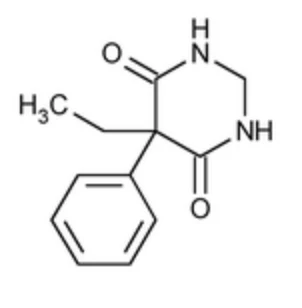
Physicochemical properties:
Description: A white or almost white, crystalline powder, very slightly soluble in water, slightly soluble in ethanol, practically insoluble in ether.
Melting Range: 279-284°C
14. Clinical Trials
The clinical trial data on which the original indication was authorized is not available.
15. Microbiology
No microbiological information is required for this drug product.
16. Non-Clinical Toxicology
General Toxicology
Centrilobular hepatocyte hypertrophy and chronic nephropathy have been observed in rats administered clinically relevant doses of primidone for 14 weeks. Hepatocellular hypertrophy has also been observed in dogs administered clinically relevant doses of primidone for 6 months.
Carcinogenicity
Standard 2-year carcinogenicity studies have identified an increased incidence of hepatocellular neoplasms in male and female mice, thyroid adenomas in male mice and male rats, and combined incidences of renal tubule adenomas or carcinomas in male rats at doses considered clinically relevant. The risk of carcinogenicity to humans is unknown.
Genotoxicity
Primidone was shown to be mutagenic in one strain of Salmonella typhimurium (TA1535). Other in vitro and in vivo tests did not demonstrate genotoxicity. Therefore, the risk of genotoxicity in humans is unknown.
Reproductive and Developmental Toxicology
Animal studies have shown that primidone is teratogenic and impairs post-natal development at doses considered to be clinically relevant. Teratogenic effects in mice included palatal defects, enlargement of cerebral ventricles, club foot, open eyes and haemorrhages within the subarachnoid space. Primidone was also shown to be embryo lethal in mice and rats at clinically relevant doses. Post-natal development effects include impairment of memory and learning development in male rats from litters of dosed female rats. Effects on fertility in animals have been observed at doses considered to be clinically relevant. Primidone induced a reduction in seminal vesicle weight and an increase in estrous cycle length in mice. In a 5-day study in male mice, primidone induced a dose-dependent increase in sperm-head abnormalities.
Juvenile Toxicity
Information is not available.
.