


Product Monograph - Priorix
Recent Major Label Changes
| 2026-02 |
|---|---|
| 2024-05 |
| 2026-02 |
| 2026-02 |
| 2026-02 |
Table of Contents
Certain sections or subsections that are not applicable at the time of the preparation of the most recent authorized product monograph are not listed.
Recent Major Label Changes ......................................................................................... 2
Table of Contents ......................................................................................................... 2
Part 1: Healthcare Professional Information ................................................................. 4
- 1.
Indications ............................................................................................................. 4
1.1. Pediatrics ....................................................................................................... 4
1.2. Geriatrics ....................................................................................................... 4
- 2. Contraindications .................................................................................................. 4
- 4.
Dosage and Administration ................................................................................... 5
4.2. Recommended Dose and Dosage Adjustment .............................................. 5
4.3. Reconstitution ............................................................................................... 5
4.4. Administration ............................................................................................... 7
- 5. Overdose ............................................................................................................... 7
- 6. Dosage Forms, Strengths, Composition, and Packaging ......................................... 7
- 7.
Warnings and Precautions ..................................................................................... 8
General ...................................................................................................................... 8
Hematologic .............................................................................................................. 9
Immune ..................................................................................................................... 9
7.1. Special Populations ....................................................................................... 9
7.1.1. Pregnancy .................................................................................................. 9
7.1.2. Breastfeeding .......................................................................................... 10
7.1.3. Pediatrics ................................................................................................. 10
- 8.
Adverse Reactions ............................................................................................... 11
8.2. Clinical Trial Adverse Reactions ................................................................... 11
8.5. Post-Market Adverse Reactions .................................................................. 12
- 9.
Drug Interactions ................................................................................................. 13
9.4. Drug-Drug Interactions ................................................................................ 13
9.7. Drug-Laboratory Test Interactions .............................................................. 13
- 10.
Clinical Pharmacology ......................................................................................... 14
10.1. Mechanism of Action ................................................................................... 14
- 11. Storage, Stability, and Disposal ............................................................................ 14
Part 2: Scientific Information ...................................................................................... 15
- 13. Pharmaceutical Information ................................................................................ 15
- 14.
Clinical Trials ........................................................................................................ 15
14.1. Clinical Trials by Indication .......................................................................... 15
14.3. Immunogenicity ........................................................................................... 15
- 16. Non-Clinical Toxicology ........................................................................................ 16
Patient Medication Information .................................................................................. 17
Part 1: Healthcare Professional Information
1. Indications
PRIORIX (combined measles, mumps and rubella vaccine, live, attenuated) is indicated for active immunization against infection by measles, mumps and rubella in persons 12 months of age and older. Refer to the Canadian Immunization Guide for further information on the use of PRIORIX below 12 months of age.1,2,3
1.1. Pediatrics
Pediatrics: A single dose is recommended routinely for children on, or as soon as practicable after, their first birthday. Older children who have no documented evidence of having received the vaccine should also be vaccinated.
1.2. Geriatrics
Geriatrics (65 years of age and older): The safety, immunogenicity and efficacy in individuals 65 years of age and older have not been assessed in clinical trials.
2. Contraindications
PRIORIX (combined measles, mumps and rubella vaccine, live, attenuated) is contraindicated in:
- individuals with known hypersensitivity to neomycin or to any other component of the vaccine (for egg allergy, see 7. Warnings and Precautions). A history of contact dermatitis to neomycin is not a contraindication.
- individuals having shown signs of hypersensitivity after previous administration of measles, mumps and/or rubella vaccines.
Measles-containing vaccines are contraindicated in:
- individuals with severe humoral or cellular (primary or acquired) immunodeficiency e.g., symptomatic HIV infection, hypogammaglobulinemic and dysgammaglobulinemic states, as well as blood dyscrasias, leukemia, lymphomas of any type, or other malignant neoplasms affecting the bone marrow or lymphatic systems. Individuals with a family history of congenital or hereditary immunodeficiency, until the immune competence of the potential vaccine recipient is demonstrated. Post-marketing repots of measles inclusion body encephalitis (MIBE), pneumonitis and death as a direct consequence of disseminated measles vaccine virus infection have been rarely reported in severely immunocompromised individuals inadvertently vaccinated with measles-containing vaccine. See 7. Warnings and Precautions.
- patients on current or recent immunosuppressive therapy (includes high doses of corticosteroids but not topical or low-dose parenteral corticosteroids, adrenocorticotropic hormone (ACTH), irradiation, alkylating agents or antimetabolites) (see 7. Warnings and Precautions).
- individuals suffering from acute severe febrile illness
1,2,3 Local recommendations are provided in the Canadian Immunization guide: June 2025 for measles, mumps and rubella vaccines.
- individuals with active untreated tuberculosis.
- pregnant women. Pregnancy should be avoided for one month after vaccination (see 7. Warnings and Precautions, Pregnancy).
When other susceptible persons with immune deficiencies are exposed to measles, passive immunization with immune globulin [human (IG)] should be given as soon as possible. It is desirable to immunize close contacts of immunocompromised individuals in order to minimize the risk of exposure of the latter to measles.
4. Dosage and Administration
4.2. Recommended Dose and Dosage Adjustment
The Canadian Immunization Guide recommends immunization at 12 months of age, or as soon as practicable thereafter. A second dose of MMR is recommended at least 1 month after the first dose, for the purpose of better measles protection. For convenience, options include giving it with the next scheduled vaccination at 18 months of age or with school entry (4-6 years) vaccinations (depending on the provincial/territorial policy), or at any intervening age that is practicable. The need for a second dose of mumps and rubella vaccine is not established but may benefit (given for convenience as MMR).
A single dose of the reconstituted vaccine is 0.5 mL.
4.3. Reconstitution
The diluent (sterile water for injection) and the reconstituted vaccine should be inspected visually for any foreign particulate matter and/or variation of physical aspects prior to reconstitution or administration. In the event of either being observed, do not use the diluent or the reconstituted vaccine as appropriate.
Instructions for reconstitution of the vaccine with the diluent presented in pre-filled syringe
PRIORIX must be reconstituted by adding the entire contents of the pre-filled syringe of diluent to the vial containing the powder.
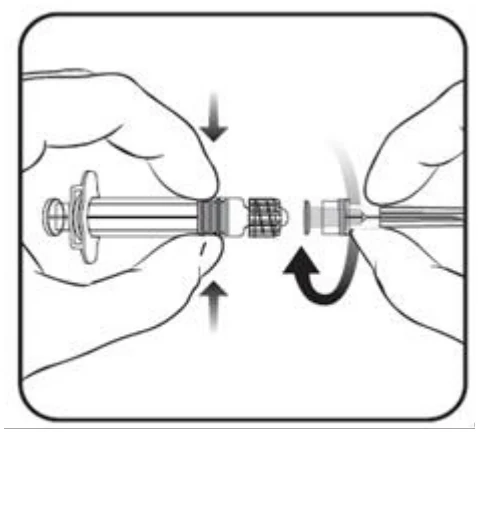
To attach the needle to the syringe, carefully read the instructions given with pictures 1 and 2.
Note: The syringe provided with PRIORIX might be slightly different (without screw thread) than the syringe illustrated. In that case, the needle should be attached without screwing.
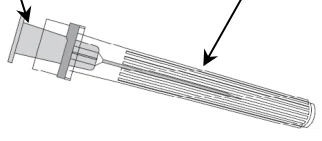
Needle
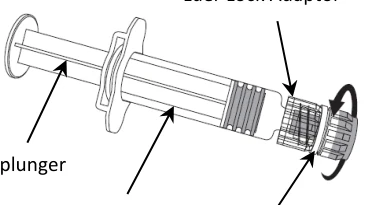
Syringe
Picture 1
Picture 2
Always hold the syringe by the barrel, not by the syringe plunger or the Luer Lock Adaptor (LLA), and maintain the needle in the axis of the syringe (as illustrated in picture 2). Failure to do this may cause the LLA to become distorted and leak.
During assembly of the syringe, if the LLA comes off, a new vaccine dose (new syringe and vial) should be used.
- 1. Unscrew the syringe cap by twisting it anticlockwise (as illustrated in picture 1).
- 2. Attach the needle to the syringe by gently connecting the needle hub into the LLA and rotate a quarter turn clockwise until you feel it lock (as illustrated in picture 2).
- 3. Remove the needle protector, which may be stiff.
- 4. Add the diluent to the vial of powder. The mixture should be well shaken until the powder is completely dissolved in the diluent.
After reconstitution, the vaccine should be used promptly.
- 5. Withdraw the entire contents of the vial.
- 6. A new needle should be used to administer the vaccine. Unscrew the needle from the syringe and attach the injection needle by repeating step 2 above.
The colour of the reconstituted vaccine may vary from clear peach to fuchsia pink (bright pink) due to minor variations of its pH. This is normal and does not impair the performance of the vaccine. In the event of other variation being observed, do not use the vaccine.
Alcohol and other disinfecting agents must be allowed to evaporate from the skin before injection of the vaccine since they may inactivate the virus.
Reconstituted vaccine should be injected promptly, or within 8 hours of reconstitution if it is stored refrigerated (2 to 8°C).
Syringe barrel
Syringe plunger
Luer Lock Adaptor
Syringe cap
Needle protector
Needle hub
Any unused product or waste material should be disposed of in accordance with local requirements.
4.4. Administration
It is recommended that PRIORIX (combined measles, mumps and rubella vaccine, live, attenuated) be given by subcutaneous injection, although it may also be given by intramuscular injection, in the deltoid region or in the anterolateral area of the thigh (see 7. Warnings and Precautions). PRIORIX must not be administered intravascularly.
The vaccine should be administered subcutaneously in individuals with bleeding disorders (e.g. thrombocytopenia or any coagulation disorder).
5. Overdose
Cases of overdose (up to 2 times the recommended dose) have been reported during post-marketing surveillance. No adverse events have been associated to the overdose.
For the most recent information in the management of a suspected drug overdose, contact your regional poison control centre or Health Canada’s toll-free number, 1-844 POISON-X (1-844-764-7669).
- 6. Dosage Forms, Strengths, Composition, and Packaging
Table 1– Dosage Forms, Strengths, and Composition
| Route of Administration | Dosage Form/ Strength/Composition | Non-Medicinal Ingredients |
| Subcutaneous or Intramuscular injection | Lyophilized powder for injection After reconstitution, 1 dose (0.5 mL) contains: Live attenuated measles virusa (Schwarz strain) - not less than 103.0 CCID50c Live attenuated mumps virusa (RIT 4385 strain, derived from Jeryl Lynn strain) - not less than 103.7 CCID50c Live attenuated rubella virusb (Wistar RA 27/3 strain) - not less than 103.0 CCID50c | Amino acids, lactose, mannitol, sorbitol, and water for injection. Residue: neomycin sulphate |
a Produced in chick embryo cells
b Produced in human diploid (MRC-5) cells
c Cell Culture Infective Dose 50%
Dosage Form
PRIORIX (combined measles, mumps and rubella vaccine, live, attenuated) is supplied as a sterile white powder (vial) and diluent (prefilled syringe) with or without needles.
Packaging
PRIORIX is supplied in packages of 10 as single monodose vials of lyophilized powder with prefilled syringes of diluent (sterile WFI), with or without needle(s).
Due to minor variation of its pH, the colour of the reconstituted vaccine may vary from clear peach to fuchsia-pink coloured solution without deterioration of the vaccine potency
PRIORIX meets the World Health Organization requirements for manufacture of biological substances and for measles, mumps and rubella vaccines and combined vaccines (live).
7. Warnings and Precautions
General
As with other vaccines, the administration of PRIORIX should be postponed in individuals suffering from acute severe febrile illness. The presence of a minor infection, however, is not a contraindication for vaccination.
PRIORIX (combined measles, mumps and rubella vaccine, live, attenuated) must not be administered intravascularly. Accidental intravascular administration may give rise to severe reactions or even shock. Immediate measures depend on the severity of the reaction.
A limited number of individuals received PRIORIX intramuscularly. An adequate immune response was obtained for all three components.
As with any vaccine, a protective immune response may not be elicited in all vaccines.
Alcohol and other disinfecting agents must be allowed to evaporate from the skin before injection of the vaccine since they may inactivate the attenuated viruses in the vaccine.
Limited protection against measles may be obtained by vaccination up to 72 hours after exposure to natural measles.
As with all injectable vaccines, appropriate medical treatment and supervision should be readily available in case of a rare anaphylactic event following the administration of the vaccine.
The measles and mumps components of the vaccine are produced in chick embryo cell culture and may therefore contain traces of egg protein. Persons with a history of anaphylactic, anaphylactoid, or other immediate reactions (e.g. generalized urticaria, swelling of the mouth and throat, difficulty breathing, hypotension or shock) subsequent to egg ingestion may be at an enhanced risk of immediate-type hypersensitivity reactions after vaccination, although these types of reactions have been shown to be very rare. Individuals who have experienced anaphylaxis after egg ingestion should be vaccinated with extreme caution, with adequate treatment for anaphylaxis on hand should such a reaction occur.
No special precautions are necessary for children with minor egg hypersensitivity who are able to ingest small quantities of egg uneventfully. No special measures are necessary in children who have never been fed eggs before MMR immunization. Prior egg ingestion should not be a prerequisite for MMR immunization.
PRIORIX should be given with caution to persons with a history or family history of allergic diseases or those with a history or family history of convulsions.
Transmission of measles and mumps virus from vaccinees to susceptible contacts has not been documented. Pharyngeal excretion of the rubella virus is known to occur approximately 7 to 28 days after vaccination, with peak excretion around the 11th day. However, there is no evidence of transmission of this excreted vaccine virus to susceptible contacts.
Syncope (fainting) can occur following, or even before, any vaccination as a psychogenic response to the needle injection. It is important that procedures are in place to avoid injury from faints.
Hematologic
Individuals with current thrombocytopenia may develop more severe thrombocytopenia following vaccination with measles-mumps-rubella vaccines. In addition, individuals who experienced thrombocytopenia with the first dose of vaccine may develop thrombocytopenia with repeat doses. Serologic status may be evaluated to determine whether or not additional doses of vaccine are needed. The potential risk to benefit ratio should be carefully evaluated before considering vaccination in such cases (see 8. Adverse Reactions).
Immune
There are limited data on the use of PRIORIX in immunocompromised individuals, therefore vaccination should be considered with caution and only when, in the opinion of the physician, the benefits outweigh the risks (e.g. asymptomatic HIV individuals).
Immunocompromised individuals who have no contraindication for this vaccination (see 2. Contraindications) may not respond as well as immunocompetent individuals, therefore some of these individuals may acquire measles, mumps or rubella despite appropriate vaccine administration. Immunocompromised individuals should be monitored carefully for signs of measles, mumps and rubella.
Due to the potential risk of decreased vaccine response and/or disseminated diseases, consideration should be given to the time interval between PRIORIX vaccination and immunosuppressive therapy (see 2. Contraindications).
7.1. Special Populations
7.1.1. Pregnancy
Pregnant women must not be vaccinated with PRIORIX. Pregnancy should be avoided for one month after vaccination. Women of reproductive age or those who intend to become pregnant should be advised to delay pregnancy.
Studies have not been conducted with PRIORIX in pregnant women.
In a literature review of more than 3,500 susceptible individuals who were unknowingly in early stages of pregnancy when vaccinated with a rubella-containing vaccine, no cases of congenital rubella syndrome were reported. Post-marketing surveillance identified congenital rubella syndrome associated with a rubella vaccine strain (Wistar RA 27/3) following inadvertent vaccination of a pregnant individual with measles, mumps and rubella vaccine.
Fetal damage has not been documented when measles or mumps vaccines have been given to pregnant women.
7.1.2. Breastfeeding
There are no human data regarding use in breastfeeding women. It is not known whether measles, mumps, or varicella virus is secreted in human milk. Studies of other rubella-containing vaccine(s) have shown that lactating postpartum women vaccinated with live attenuated rubella vaccine may secrete the virus in breast milk and transmit it to breast-fed infants. In the infants who developed serological evidence of rubella infection, none exhibited severe disease; however, one exhibited mild clinical illness typical of acquired rubella. Therefore, caution should be exercised if PRIORIX is inadvertently administered to a nursing woman. Breastfeeding women may be vaccinated where, in the judgement of the health professional, the benefit outweighs the risk. Breastfeeding women may be vaccinated where, in the judgement of the health professional, the benefit outweighs the risk.
7.1.3. Pediatrics
Infants below 12 months of age may not respond sufficiently to the measles component of the vaccine, due to the possible persistence of maternal measles antibodies. This should not preclude the use of the vaccine in younger infants (< 12 months) since vaccination may be indicated in some situations such as high risk areas. In these circumstances revaccination at or after 12 months of age should be considered.
Febrile seizures occasionally follow vaccination, particularly in children who have previously had convulsions or whose sibling or parents have a history of convulsions. However, the risk is low and the benefit of immunizing children greatly outweighs any potential risk associated with febrile seizures.
Under certain conditions, the vaccine may be recommended for children < 1 year of age. When an infant < 12 months of age is at high risk of exposure for measles or is travelling abroad to an area where measles is common, measles vaccine alone or as MMR may be given as early as 6 months of age.
Under these circumstances, or if vaccine was inappropriately given before the child's first birthday, such children should receive two additional doses of MMR after the first birthday.
Susceptible persons > 12 months of age who are exposed to measles may be protected from disease if measles vaccine is given within 72 hours after exposure. There are no known adverse effects of vaccine given to persons incubating measles. However, immune globulin (IG) given within 6 days after exposure can modify or prevent disease and may be used for this purpose in infants < 12 months of age, persons for whom vaccine is contraindicated or those for whom more than 72 hours but less than 1 week have elapsed since exposure. Unless contraindicated, individuals who receive IG should receive measles vaccine later, at the intervals specified in the Canadian Immunization Guide.
PRIORIX is indicated for most infants infected with the human immunodeficiency virus (HIV) whose immune function at 12 to 15 months of age is compatible with safe MMR vaccination. Consultation with an expert is required in the case of HIV-infected children to determine the presence or absence of significant immunodeficiency in individual cases. Measles revaccination may still be appropriate for HIV-infected persons with moderate immunodeficiency if there is a high risk of measles in the local community or travel to an area where measles is endemic. Consultation with local public health authorities will help determine the local level of measles activity and risk to travellers abroad. Because the response to prior immunization may be impaired, HIV-infected children should receive IG after recognized exposure to measles.
8. Adverse Reactions
8.2. Clinical Trial Adverse Reactions
Clinical trials are conducted under very specific conditions. Therefore, the frequencies of adverse reactions observed in the clinical trials may not reflect frequencies observed in clinical practice and should not be compared to frequencies reported in clinical trials of another drug.
In controlled clinical studies, signs and symptoms were actively monitored during a 42-day follow-up period. The vaccinees were also requested to report any clinical events during the study period. There were no major study-to-study differences with regards to the frequency of adverse events.
In comparative studies, a statistically significant lower incidence of local pain, redness and swelling was reported with PRIORIX compared with the comparator. The incidence of other adverse reactions listed below was similar in both vaccines.
There is no difference between the first and second vaccine doses with regard to the frequency category for the adverse reactions, except for pain at the injection site which was "Common" after the first vaccine dose and "Very common" after the second vaccine dose.
Nevertheless, despite being classified in the same frequency category, higher incidences of temperature and rash were observed after the first vaccine dose as compared to the second vaccine dose. Likewise, the incidences of redness and swelling were higher after the second vaccine dose as compared to the first vaccine dose.
A total of 10 serious adverse events that were considered as at least possibly related to vaccination have been reported after the first vaccine dose (N=10,267). None have been reported following the administration of the second vaccine dose (N=1,909).
The safety profile presented below is based on a total of approximately 12,000 subjects administered PRIORIX in clinical trials.
Frequencies are reported as:
Very common: ≥10%
Common: ≥1% and <10%
Uncommon: ≥0.1% and <1%
Rare: ≥0.01% and <0.1%
Very rare: <0.01%
Very Common ≥ 10%
General disorders and administration site conditions: Redness at the injection site, fever ≥38°C
(rectal) or ≥37.5°C (axillary/oral)
Common ≥ 1% and < 10%
General disorders and administration site conditions: Pain and swelling at the injection site, fever >39.5°C (rectal) or >39°C (axillary/oral)
Infections and infestations disorders: Upper respiratory tract infection
Skin and subcutaneous tissue disorders: Rash
Uncommon ≥ 0.1% and < 1%
Blood and lymphatic system disorders: Lymphadenopathy
Eye disorders: Conjunctivitis
Gastrointestinal disorders: Parotid gland enlargement, diarrhoea, vomiting
Infections and infestations: Otitis media
Metabolism and nutrition disorders: Anorexia
Psychiatric disorders: Nervousness, abnormal crying, insomnia
Respiratory, thoracic and mediastinal disorders: Bronchitis, cough
Rare ≥ 0.01% and < 0.1%
Immune system disorders: Allergic reactions
Nervous system disorders: Febrile convulsions
8.5. Post-Market Adverse Reactions
During post-marketing surveillance, the following reactions have been rarely reported additionally in temporal association with PRIORIX vaccination:
Blood and lymphatic system disorders: thrombocytopenia, thrombocytopenic purpura
Immune system disorders: anaphylactic reactions
Infections and infestations: meningitis, measles-like syndrome, mumps-like syndrome (including orchitis, epididymitis and parotitis)
Musculoskeletal and connective tissue disorders: arthralgia, arthritis
Nervous system disorders: encephalitis, cerebellitis, cerebellitis like symptoms (including transient gait disturbance and transient ataxia), aseptic meningitis, transverse myelitis, Guillain Barré syndrome, peripheral neuritis
Vascular disorders: vasculitis (including Henoch Schonlein purpura and Kawasaki syndrome)
Skin and subcutaneous tissue disorders: erythema multiforme
9. Drug Interactions
9.4. Drug-Drug Interactions
Limited comparative data from clinical studies with PRIORIX given concomitantly with other vaccines in children during their vaccination schedules, and comparative data extrapolated from clinical studies with PRIORIX-TETRA (combined measles, mumps, rubella and varicella vaccine, live, attenuated) which has similar active substances and excipients with the additional varicella component, suggest that PRIORIX can be safely given with the following monovalent or combination vaccines: diphtheria-tetanus-acellular pertussis vaccine (DTPa), reduced antigen diphtheria-tetanus-acellular pertussis vaccine (dTpa), Haemophilus influenzae type b vaccine (Hib), inactivated polio vaccine (IPV), hepatitis B vaccine (HBV), hepatitis A vaccine (HAV), BEXSERO [meningococcal serogroup B vaccine (MenB)], meningococcal serogroup C conjugate vaccine (MenC), meningococcal serogroups A, C, W-135 and Y conjugate vaccine (MenACWY), varicella zoster vaccine (VZV), and 10-valent pneumococcal conjugate vaccine (PCV).
See the Product Monograph of PRIORIX-TETRA and of the co-administered vaccines.
As higher percentages of individuals reported systemic reactions, including fever, change in eating habits, tenderness at the injection site and irritability, following BEXSERO given concomitantly with routine vaccines than after BEXSERO alone, separate vaccinations can be considered when possible.
If PRIORIX is to be given at the same time as another injectable vaccine, the vaccines should always be administered at different injection sites.
If it is not possible to administer PRIORIX at the same time as other live attenuated vaccines, such as VARILRIX, it is recommended that an interval of at least one month should be left between vaccinations.
PRIORIX may be given as a booster dose in individuals who have previously been vaccinated with another measles, mumps and rubella combined vaccine.
PRIORIX should not be mixed with other vaccines in the same syringe.
Administration of PRIORIX to individuals who have received human gammaglobulins or a blood transfusion should be delayed for a minimum of three months as there is a possibility of vaccine failure due to passively acquired mumps, measles and rubella antibodies.
According to the Canadian Immunization Guide, if administration of an IG preparation becomes necessary after MMR vaccine or its individual component vaccines have been given, interference can also occur. If the interval between administration of any of these vaccines and subsequent administration of an IG preparation is < 14 days, immunization should be repeated at 3 months or longer, unless serologic test results indicate that antibodies were produced. If the IG product is given more than 14 days after the vaccine, immunization does not have to be repeated.
9.7. Drug-Laboratory Test Interactions
If tuberculin testing is required, it should be carried out before or simultaneously with vaccination since it has been reported that live measles (and possibly mumps) vaccine may cause a temporary depression of tuberculin skin sensitivity. This anergy may last for 4-6 weeks and tuberculin testing should not be performed within that period after vaccination in order to avoid false negative results.
10. Clinical Pharmacology
10.1. Mechanism of Action
PRIORIX is a combined live, attenuated measles (Schwarz strain), mumps (RIT 4385 strain, derived from Jeryl Lynn strain), and rubella (Wistar RA 27/3 strain) vaccine. In general, live attenuated viral vaccines contain whole, weakened viruses that have the capacity to replicate within a host. PRIORIX induces a mild, usually inapparent version of measles, mumps, and rubella infection in susceptible patients that resembles natural infection and in turn trains the immune system through induction of humoral and cell-mediated immune responses. The relative contributions of humoral immunity and cell-mediated immunity to protection from measles, mumps, and rubella are unknown.
- 11. Storage, Stability, and Disposal
PRIORIX (combined measles, mumps and rubella vaccine, live, attenuated) should be stored in a refrigerator at 2 to 8°C. Do not freeze. Care should be taken to ensure appropriate storage conditions during transport.
The vaccine should not be used beyond the expiry date stamped on the vial label and outer packaging. The diluent should not be used beyond the expiry date stamped on the syringe label and outer packaging.
The reconstituted vaccine should be administered as soon as possible. It may be kept up to 8 hours in the refrigerator.
Store in the original packaging in order to protect from light.
Keep out of the reach and sight of children.
Part 2: Scientific Information
13. Pharmaceutical Information
Non-proprietary name: combined measles, mumps and rubella vaccine, live, attenuated
PRIORIX (combined measles, mumps and rubella vaccine, live, attenuated) is a lyophilized mixed preparation of the attenuated Schwarz measles, RIT 4385 mumps (derived from Jeryl Lynn strain) and Wistar RA 27/3 rubella strains of viruses, separately obtained by propagation either in chick embryo tissue cultures (mumps and measles) or MRC5 human diploid cells (rubella).
14. Clinical Trials
14.1. Clinical Trials by Indication
See 14.3. Immunogenicity.
14.3. Immunogenicity
In clinical studies, PRIORIX (combined measles, mumps and rubella vaccine, live, attenuated) has been demonstrated to be highly immunogenic.
In clinical studies involving 899 subjects, antibodies against measles were detected in 98.0%, against mumps in 96.1% and against rubella in 99.3% of previously seronegative vaccinees.
In comparative studies involving 1,094 subjects, antibodies against measles, mumps and rubella were detected in 98.7%, 95.5% and 99.5% respectively of previously seronegative vaccinees who received PRIORIX compared to 96.9%, 96.9% and 99.5% respectively in the group receiving a commercially available measles, mumps and rubella combined vaccine.
Study MeMuRu-OKA-155 was a phase II study evaluating the persistence of measles, mumps and rubella antibodies approximately two years after the initial vaccination study (study MeMuRu-OKA-151). As seen in Table 2 below, the seropositivity rates remained high (ranging from 93.4% to 100%) in subjects in the PRIORIX group who participated in the follow-up study.
Table 2 – Seropositivity rates observed in Study 155
| Antibody | Time point | N | % | 95% CI |
|---|---|---|---|---|
| Measles | Day 42 Year 2 | 76 76 | 98.7 93.4 | 92.9 to 100 85.3 to 97.8 |
| Mumps | Day 42 Year 2 | 72 72 | 98.6 94.4 | 92.5 to 100 86.4 to 98.5 |
| Rubella | Day 42 Year 2 | 76 76 | 100 100 | 95.3 to 100 95.3 to 100 |
Notes:
Seropositivity cut-off levels: Measles (≥ 150mIU/mL), Mumps (≥ 231mIU/mL), Rubella (≥4 IU/mL)
All subjects were vaccinated on Day 0
N = number of subjects with pre-vaccination results available
% = percentage of subjects with antibody titre within the specified range
95% CI = 95% confidence interval
Day 42: Post-vaccination blood sample obtained 42 days after vaccination
Year 2: Post-vaccination blood sample obtained two years after vaccination
Duration of effect
All subjects followed up to 12 months after vaccination remained seropositive for anti-measles and anti-rubella antibodies. At month 12, 88.4% were still seropositive for anti-mumps antibody. This percentage is comparable to that observed for the commercially available measles, mumps and rubella combined vaccine (87%).
16. Non-Clinical Toxicology
Not applicable.