


Patient Medication Information: uses, side effects, how to take - Priva-Rivastigmine
ABOUT THIS MEDICATION
What the medication is used for:
Priva-RIVASTIGMINE is one of a group of drugs known as “cholinesterase inhibitors” which is used for the treatment of the symptoms of patients with mild to moderately severe Alzheimer’s disease.
The symptoms include progressive memory loss, increasing confusion and behavioural changes, as a result of which it becomes more and more difficult to carry out activities of daily living.
This medication should only be taken after proper diagnosis of your condition has been made by your doctor.
What it does:
People with Alzheimer’s disease have decreased levels of acetylcholine, a substance which is found in the brain and which is thought to be necessary for memory and other mental functions. Priva-RIVASTIGMINE works by inhibiting an enzyme (acetylcholinesterase) which breaks down acetylcholine. This in turn increases the amount of acetylcholine in the brain. Priva-RIVASTIGMINE is a treatment of symptoms, not a cure of the disease.
When it should not be used:
If any of the following conditions apply to you, tell your doctor and do not use Priva-RIVASTIGMINE.
- If you know that you are allergic (hypersensitive) to rivastigmine (including rivastigmine capsules or oral solution) or to any of the other ingredients listed in this leaflet (see ‘What the nonmedicinal ingredients are’).
- If you have ever had an allergic reaction to a similar type of medicine (e.g. carbamate derivate).
- If you have severe liver disease.
- If you have had a previous allergic skin reaction with rivastigmine transdermal patches that spread beyond the patch size and/or if there was a more severe reaction at the patch site (such as blisters, increasing skin inflammation, swelling) that did not improve within 48 hours after removal of the transdermal patch.
- If you have had severe rash on large areas of your body or blistering of the skin, mouth, eyes, or genitals when taking rivastigmine transdermal patches, rivastigmine capsules or oral solution.
What the medicinal ingredient is:
The active substance of Priva-RIVASTIGMINE is rivastigmine.
What the nonmedicinal ingredients are:
Priva-RIVASTIGMINE contains the following nonmedicinal ingredients: acrylates copolymer poly(butyl methacrylate-co methyl methacrylate), acrylic adhesive, ethyl acetate, silicon adhesive applied to a polyester backing film imprinted with thermal transfer ribbon ink AXR 600 (resin, wax), silicone-coated polyester film and fluoro-coated polyester film.
What dosage forms it comes in:
Transdermal patch providing continuous smooth delivery of the medication.
Priva-RIVASTIGMINE 5 cm2: each 5 cm2 transdermal patch contains 9 mg rivastigmine. The release rate is 4.6mg/24h. Priva-RIVASTIGMINE is available in cartons of 30.
Priva-RIVASTIGMINE 10 cm2: each 10 cm2 transdermal patch contains 18 mg rivastigmine. The release rate is 9.5mg/24h. Priva-RIVASTIGMINE is available in cartons of 30.
Priva-RIVASTIGMINE 15 cm2: each 15 cm2 transdermal patch contains 27 mg rivastigmine. The release rate is 13.3 mg/24h. Priva-RIVASTIGMINE is available in cartons of 30.
WARNINGS AND PRECAUTIONS
BEFORE you use Priva-RIVASTIGMINE talk to your doctor or pharmacist if you:
- Have, or ever had an irregular heartbeat;
- Have, or ever had an active stomach ulcer;
- Have, or ever had difficulties in passing urine;
- Have, or ever had seizures;
- Have, or ever had asthma or a severe respiratory disease;
- Suffer from trembling; or are being treated with medications that can cause trembling, such as antipsychotic medications;
- Have a low body weight (for example less than 50 kg);
- Have, or ever had liver or kidney problems;
- Have, or ever had inflammation of the pancreas;
Are pregnant, planning to become pregnant, or breast-feeding;
- Have fainting episodes.
- Experience gastro-intestinal reactions such as severe nausea (feeling sick), vomiting (being sick) and diarrhea. You may become dehydrated (losing too much fluid) if vomiting or diarrhea are prolonged.
If any of these apply to you, your doctor may need to monitor you more closely while you are on this medicine.
Talk to your doctor right away if you have skin inflammation, blisters or swelling of the skin that are increasing and spreading.
If you have not applied Priva-RIVASTIGMINE for more than 3 days do not apply the next patch until you have talked to your doctor.
Your doctor will tell you whether your illness allows you to drive vehicles and use machines safely. If you feel dizzy or drowsy, do not drive, use machines or perform any other tasks that require your attention.
INTERACTIONS WITH THIS MEDICATION
Tell your doctor or pharmacist about any other medicines you are taking or have recently taken, including drugs, or herbal (natural) products that you have bought without a prescription.
Priva-RIVASTIGMINE should not be given together with other medicines that work similar to rivastigmine transdermal patches (cholinomimetic agents) or with anticholinergic medicines (e.g. medicines used to relieve stomach cramps or spasms, or to treat Parkinson’s disease or to prevent travel sickness).
Priva-RIVASTIGMINE should not be given together with metoclopramide (a medicine used to alleviate or prevent nausea and vomiting). There may be additive effects such as stiff limbs and trembling hands.
If you have to undergo surgery while using Priva-RIVASTIGMINE, you should inform your doctor because Priva-RIVASTIGMINE may exaggerate the effects of some muscle relaxants during anesthesia.
Caution when Priva-RIVASTIGMINE is given together with beta- blockers (medicines such as atenolol used to treat hypertension, angina, and other heart conditions). There may be additive effects such as bradycardia (slow heartbeat) that may result in syncope (fainting, loss of consciousness).
PROPER USE OF THIS MEDICATION
Follow all instructions given to you by your doctor carefully, even if they differ from the ones given in this leaflet.
This medicine must not be given to children. Do not eat Priva-RIVASTIGMINE.
IMPORTANT:
- ONLY ONE patch should be worn at a time.
- You must remove the previous day’s Priva-RIVASTIGMINE patch before applying a new one.
- Having multiple patches on your body could expose you to an excessive amount of this
- medicine which is potentially dangerous.
- Do not cut the patch into pieces. Priva-RIVASTIGMINE will not work properly or may not be safe if it is damaged in any way.
Usual adult dose:
Your doctor will tell you which Priva-RIVASTIGMINE patch is more suitable for you. Treatment usually starts with Priva-RIVASTIGMINE 5 cm2 patch (4.6 mg/24h) applied once a day. The usual daily dose is Priva-RIVASTIGMINE 10 cm2 patch (9.5 mg/24h) or Priva-RIVASTIGMINE 15 cm2 (13.3 mg/24h), applied once a day, depending on your individual condition.
ONLY ONE patch should be worn at a time and the patch should be replaced by a new one after 24 hours.
During the course of the treatment your doctor may adjust the dose to suit your individual needs.
If you have not been applying Priva-RIVASTIGMINE for more than 3 days do not apply the next patch before you have talked to your doctor.
Application of Priva-RIVASTIGMINE
Where to apply Priva-RIVASTIGMINE
EVERY 24 HOURS, ALWAYS GENTLY REMOVE THE PREVIOUS DAY’S Priva-RIVASTIGMINE PATCH BEFORE PUTTING ON A NEW ONE.
ONLY ONE PATCH SHOULD BE WORN AT A TIME.
Before you apply Priva-RIVASTIGMINE, make sure that your skin is:
- clean, dry and hairless
- free of any powder, oil, moisturiser, or lotion (that could keep the patch from sticking to your skin properly)
- free of cuts, rashes and/or irritations.
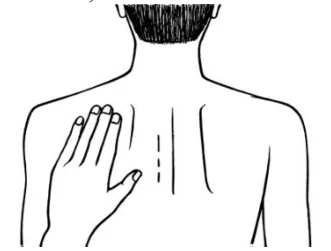
Apply ONLY ONE patch per day to ONLY ONE of the following locations: the upper OR lower back, OR upper arm OR chest. Applying the patch to other areas (e.g. abdomen and thighs) may decrease the amount of medication you receive from the patch and may also cause more skin irritation on the spot where the patch is applied. Avoid places where the patch can be rubbed off by tight clothing.
When changing your patch, you must remove the previous day’s patch before you apply your new patch to a different area of skin (for example on the right side of your body one day, then on the left side the next day). Do not apply a new patch to that same spot for at least 14 days.
How to apply Priva-RIVASTIGMINE
The patch is a thin, opaque, plastic patch that sticks to the skin. Each patch is sealed in a pouch that protects it until you are ready to put it on. Do not open the pouch or remove a patch from your skin until just before you apply a new one.
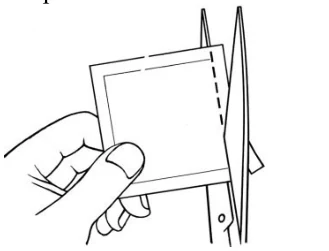
Cut the pouch along the dotted line or at the notch and remove the patch.
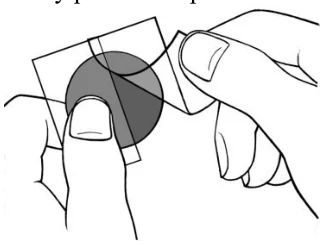
A protective liner covers the adhesive side of the patch.
Peel off one side of the protective liner and do not touch the sticky part of the patch with the fingers.
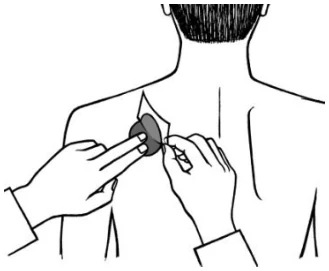
Put the sticky side of the patch on the upper OR lower back, OR upper arm OR chest and then peel off the second side of the protective liner.
Then press the patch firmly in place using the palm of the hand, applying pressure over the entire patch for at least 30 seconds, to make sure that the edges stick well.
If it helps you, you may write (e.g. the day of the week) on the patch with a thin ball point pen.
Priva-RIVASTIGMINE should be worn continuously until it is time to replace it with a new patch. You may wish to experiment with different locations when applying a new patch, to find ones that are most comfortable for you and where clothing will not rub on the patch.
Safety and Handling
How to remove Priva-RIVASTIGMINE
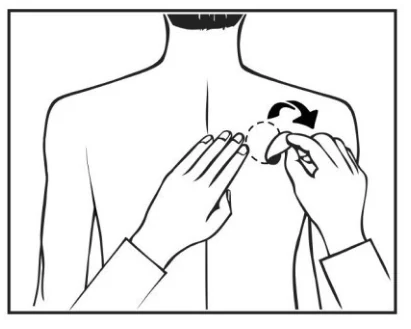
Gently pull at one edge of the Priva-RIVASTIGMINE patch to remove it completely from the skin. In case the adhesive residue is left over on your skin, gently use mild soap or baby oil to remove it. Alcohol or other dissolving liquids (nail polish remover or other solvents) should not be used.
How to dispose of the used Priva-RIVASTIGMINE
After the patch has been removed, fold it in half with the adhesive sides on the inside and press them together. Return the used patch in the pouch from today’s patch and discard safely out of the reach and sight of children and pets, as there is still drug in the patch after 24-hour usage. You can dispose of the patch in your waste container.
Do not touch your eyes with your fingers and wash your hands with soap and water after handling the patch. In case of contact with eyes, rinse immediately with plenty of water and seek medical advice if eyes become red and do not resolve.
Can you wear Priva-RIVASTIGMINE when bathing, swimming, or in the sun?
Bathing, swimming, or showering should not affect the patch. To help ensure that the patch sticks well, do not place on wet or damp skin. When swimming, you can wear the patch under your bathing suit. Make sure the patch does not loosen during these activities by checking it regularly.
While wearing Priva-RIVASTIGMINE you should not expose the patch area to external sources of heat as this may increase the amount of drug that may enter your body through the skin. Such external heat sources include intensive sunbathing, heat lamps, heating pads, saunas and hot tubs, etc. This may also occur if you develop a fever while wearing Priva-RIVASTIGMINE.
What to do if Priva-RIVASTIGMINE falls off
If the patch falls off, a new patch should be applied for the rest of the day, then replace the patch the next day at the same time as usual.
Accidental transfer of Priva-RIVASTIGMINE to another person
If your patch dislodges and accidentally sticks to the skin of another person, take the patch off immediately and call a doctor. This is true for both fresh and used patches, as a considerable amount of drug remains in the patch after use.
When and for how long to apply Priva-RIVASTIGMINE
To benefit from your medicine a new patch must be applied every day, after removal of the old patch. Taking Priva-RIVASTIGMINE at the same time each day will help you remember when to take your medicine. Wear ONLY ONE Priva-RIVASTIGMINE patch at a time and replace the patch by a new one after 24 hours.
If you are applying your own patch, tell your caregiver that you are applying Priva-RIVASTIGMINE. Also tell your caregiver if you have not been applying Priva-RIVASTIGMINE for more than 3 days.
The prescription of this medicine needs specialized advice before its initiation and a periodic assessment of therapeutic benefits. Your doctor will also monitor your weight while you are taking this medicine.
If you have questions about how long to take Priva-RIVASTIGMINE talk to your doctor or your pharmacist
Overdose:
| If you accidentally apply more than one Priva-RIVASTIGMINE, remove all the patches from your skin, then contact a hospital emergency department, the regional Poison Control Center or your doctor immediately and tell them that you have accidentally applied more than one Priva-RIVASTIGMINE patch. You may require medical attention even if there are no symptoms. |
- Some people who have accidentally taken too much oral rivastigmine have experienced nausea (feeling sick), vomiting (being sick), and diarrhea. You may become dehydrated (losing too much fluid) if vomiting or diarrhea are prolonged.
- Some people may also experience high blood pressure, hallucinations, slow heart beat and fainting.
Missed Dose:
If you find you have forgotten to apply your Priva-RIVASTIGMINE patch, apply a new patch immediately. You may apply the next patch at the usual time the next day, after removing the previous day’s patch. Do not apply two patches to make up for the one that you missed. ONLY ONE patch should be worn at a time.
Do not stop taking Priva-RIVASTIGMINE or change your dose without talking with your doctor. If you have not been applying Priva-RIVASTIGMINE for more than 3 days do not apply the next patch before you have talked to your doctor.
SIDE EFFECTS AND WHAT TO DO ABOUT THEM
As with all medicines, patients using Priva-RIVASTIGMINE may experience side effects, although not everybody gets them. Do not be alarmed by this list of possible side effects. You may not experience any of them.
You may see side effects more frequently when you start your medication or increase to a higher dose. In most cases side effects will gradually disappear as your body gets used to the medicine.
Nausea and vomiting are the most common side effects (affect between 1 and 10 in every 100 patients). If you experience persistent or severe nausea and/or vomiting, contact your doctor about temporarily stopping your treatment with Priva-RIVASTIGMINE. Your doctor will decide how you should restart your treatment when you are feeling better.
Other common side effects:
- loss of appetite, weight loss,
- anxiety,
- difficulty in sleeping,
- dizziness,
- trembling,
- accidental falls,
- headache,
diarrhea, stomach discomfort after meals, stomach pain,
- dehydration,
- inability to adequately retain urine (urinary incontinence),
- redness, itching, irritation, swelling at the application site (skins reactions at the application site),
- tiredness,
- weakness,
- worsening of extrapyramidal symptoms (e.g. stiff limbs and trembling hands) if you take other medications, such as antipsychotics, that cause these symptoms.
Uncommon side effects (affect between 1 and 10 in every 1,000 patients):
- agitation,
- drowsiness (common in Chinese patients),
- unusual high level of activity, restlessness (hyperactivity),
- sweating,
- general feeling of being unwell.
Rare side effects (affect between 1 and 10 in every 10,000 patients):
- high blood pressure,
- rash and itching or skin reddening on contact with the patch (very common in Japanese patients),
itching,
- rash
- skin reddening
- blister (at the patch site and/or on other parts of the body),
- skin inflammation with rash.
- fall.
Very rare side effects (affect less than 1 in 10,000 patients):
- muscle stiffness, difficulty in carrying out movements (worsening of Parkinson’s disease symptoms).
Additional side effects reported with rivastigmine transdermal patch at an unknown frequency:
- changes in blood test results related to liver function,
- restlessness,
- trembling,
- nightmares,
- heart disorders (alternating heart rhythms),
- skin inflammation, blisters or swelling of the skin that are increasing and spreading.
If you feel unwell in this or any other way or have any symptoms that you do not understand, or find distressing, you should contact your doctor immediately. Tell your doctor if any side effects become severe or troublesome to you. If you experience severe adverse events and cannot contact your doctor, stop taking the drug until you can discuss your symptoms with your doctor.
| SERIOUS SIDE EFFECTS, HOW OFTEN THEY HAPPEN AND WHAT TO DO ABOUT THEM | ||||
|---|---|---|---|---|
| Symptom / effect | Talk with your doctor or pharmacist right away | Stop taking drug and seek immediate emergency medical assistance | ||
| Only if severe | In all cases | |||
| Common | Depression | √ | ||
| Urinary tract infection: infection involving the part of the body producing urine | √ | |||
| Dehydration: losing too much fluid | √ | |||
| Anemia: fatigue, loss of energy, weakness, shortness of breath | √ | |||
| Uncommon | Severe confusion | √ | ||
| Hallucinations: seeing, feeling or hearing things that are not there | √ | |||
| Chest pain | √ | |||
| Stroke: loss of coordination, | √ | |||
| SERIOUS SIDE EFFECTS, HOW OFTEN THEY HAPPEN AND WHAT TO DO ABOUT THEM |
|---|
| Symptom / effect | Talk with your doctor or pharmacist right away | Stop taking drug and seek immediate emergency medical assistance |
|---|
| Only if severe | In all cases | |||
|---|---|---|---|---|
| difficulty in speaking and signs of brain disorder | ||||
| Heart attack: crushing chest pain | √ | |||
| Fainting | √ | |||
| Problems with heart rhythm (irregular or fast or slow heart beat) | √ | |||
| Allergic Reaction: rash | √ | |||
| Stomach ulcer and gastrointestinal hemorrhage: blood in stools or when vomiting | √ | |||
| Very rare | Inflammation of the pancreas: severe upper stomach pain, often with nausea and vomiting | √ | ||
| Seizures: fits or convulsions | √ | |||
| Liver disorders: yellowing of skin and the whites of eyes, darkening of the urine, unexplained nausea, vomiting, loss of appetite, itching, upper stomach pain, tiredness | √ | |||
| Stevens-Johnson Syndrome: Blistering of the skin, mouth, eyes and genitals | √ | |||
| Not known | Stiff limbs, trembling hands, body spasms, upward eye rolling, exaggeration of reflexes, drooling, difficulty moving how and when you want | √ |
| SERIOUS SIDE EFFECTS, HOW OFTEN THEY HAPPEN AND WHAT TO DO ABOUT THEM |
|---|
| Symptom / effect | Talk with your doctor or pharmacist right away | Stop taking drug and seek immediate emergency medical assistance |
|---|
| Only if severe | In all cases |
|---|---|
| (extrapyramidal symptoms) | |
† If you experience any of these, remove the Priva-RIVASTIGMINE patch and tell your doctor right away.
Additional side effects which have been reported with rivastigmine capsules or oral solution that are not listed above for rivastigmine transdermal patches include:
Common: confusion.
Rare: ulcer in the intestines.
Very rare: severe vomiting that can lead to a rupture of the oesophagus.
If you have any of these effects, if you feel unwell in any other way, or have symptoms that you do not understand or find distressing during treatment with Priva-RIVASTIGMINE, tell your doctor.
This is not a complete list of side effects. For any unexpected effects while taking Priva-RIVASTIGMINE, contact your doctor or pharmacist.
HOW TO STORE IT
- Do not use Priva-RIVASTIGMINE after the expiry date shown on the carton and pouch.
- Store Priva-RIVASTIGMINE between 15°C and 30°C.
- Do not use any Priva-RIVASTIGMINE that is damaged or shows signs of tampering.
- Keep Priva-RIVASTIGMINE out of the reach and sight of children and pets.
- Keep Priva-RIVASTIGMINE in the individual sealed pouch until just prior to use.
Reporting Side Effects
You can report any suspected side effects associated with the use of health products to Health Canada by:
NOTE: Contact your health professional if you need information about how to manage your side effects. The Canada Vigilance Program does not provide medical advice. |
MORE INFORMATION
Please consult your doctor or pharmacist with any questions or concerns you may have regarding your individual condition. This document plus the full product monograph, prepared for health professionals can be found by contacting the sponsor: Pharmapar Inc. 1565 boul. Lionel-Boulet Varennes, Québec J3X 1P7 Phone: (514) 731-2003; Fax: (514) 731-2004 Or by e-mail: info@pharmapar.ca Last revised: July 5, 2019