


Product Monograph - Pro-Rosuvastatin
1 Indications
| PRO-ROSUVASTATIN (rosuvastatin tablets) is indicated in adults as an adjunct to diet, at least | ||||
| equivalent to the Adult Treatment Panel III (ATP III TLC diet), for the reduction of elevated total | ||||
| cholesterol (Total-C), LDL-C, ApoB, the Total-C/HDL-C ratio and triglycerides (TG) and for | ||||
| increasing HDL-C; in hyperlipidemic and dyslipidemic conditions, when response to diet and | ||||
| exercise alone has been inadequate including: | ||||
| ||||
| hypercholesterolemia and severe non-familial hypercholesterolemia) | ||||
| ||||
| ||||
| alone or as an adjunct to diet and other lipid lowering treatments such as apheresis. | ||||
| In adult patients without documented history of cardiovascular or cerebrovascular events, but | ||||
| with at least two conventional risk factors for cardiovascular disease (see 14 Clinical Trials), PRO- | ||||
| ROSUVASTATIN is indicated to: | ||||
| ||||
| ||||
| ||||
1.1 Pediatrics
Pediatrics (10 to <18 years): Based on the data submitted and reviewed by Health Canada, the safety and efficacy of rosuvastatin calcium tablets in pediatric patients has been established. Therefore, Health Canada has authorized an indication for pediatric use as an adjunct to diet to reduce elevated total cholesterol (Total-C), LDL-C and ApoB in boys and girls who are at least one year post-menarche with heterozygous familial hypercholesterolemia (see 14 Clinical Trials), when response to diet alone has been inadequate.
Pediatrics (<10 years of age): No data are available to Health Canada for pediatric patients under the age of 10; therefore, Health Canada has not authorized an indication for pediatric use in this age range.
1.2 Geriatrics
Geriatrics (≥ 65 years of age): Evidence from clinical studies and experience suggests that use in the geriatric population is not associated with differences in effectiveness. However, elderly patients may be more susceptible to myopathy (see 7.1.4 Geriatrics).
2 Contraindications
| PRO-ROSUVASTATIN is contraindicated in: | |
| |
| Forms, Strengths, Composition, and Packaging). | |
| |
| transaminases exceeding 3 times the upper limit of normal (see 7 Warnings and | |
| Precautions). | |
| |
| |
| Breastfeeding is contraindicated in women taking PRO-ROSUVASTATIN (see 7.1.2 | |
| Breastfeeding). | |
| PRO-ROSUVASTATIN 40 mg is contraindicated in: | |
| |
| |
4 Dosage and Administration
4.1 Dosing Considerations
Patients should be placed on a standard cholesterol-lowering diet (at least equivalent to the Adult Treatment Panel III (ATP III TLC diet)) before receiving PRO-ROSUVASTATIN and should continue on this diet during treatment with PRO-ROSUVASTATIN. If appropriate, a program of weight control and physical exercise should be implemented.
Prior to initiating therapy with PRO-ROSUVASTATIN, secondary causes for elevations in plasma lipid levels should be excluded. A lipid profile should also be performed.
4.2 Recommended Dose and Dosage Adjustment
Hypercholesterolemia
The dose range of PRO-ROSUVASTATIN in adults is 5 to 40 mg orally once a day. The recommended starting dose of PRO-ROSUVASTATIN in most adult patients is 10 mg orally once daily. The majority of adult patients are controlled at the 10 mg dose. If necessary, dose adjustment can be made at 2-4 week intervals. The maximum response is usually achieved within 2-4 weeks and is maintained during chronic therapy.
Initiation of therapy with PRO-ROSUVASTATIN 5 mg once daily may be considered for adult patients requiring less aggressive LDL-C reductions or who have predisposing factors for myopathy (see Musculoskeletal).
Adult patients who are switched to PRO-ROSUVASTATIN from treatment with another HMG-CoA reductase inhibitor should be started on 10 mg even if they were on a high dose of the previous HMG-CoA reductase inhibitor. A switch dose of 20 mg may be considered for patients with severe hypercholesterolemia.
For adult patients with severe hypercholesterolemia (including those with familial hypercholesterolemia), a 20 mg start dose may be considered. These patients should be carefully followed.
A dose of 40 mg once daily should only be used in adult patients with severe hypercholesterolemia who do not achieve the desired effect on 20 mg and have no predisposing factors for myopathy/rhabdomyolysis (see 2 Contraindications). Consultation with a specialist is recommended when initiating PRO-ROSUVASTATIN 40 mg dose.
The dosage of PRO-ROSUVASTATIN should be individualized according to baseline LDL-C, total C/HDL-C ratio and/or TG levels to achieve the recommended desired lipid values at the lowest possible dose.
Prevention of Major Cardiovascular Events
A dose of 20 mg once daily has been found to reduce the risk of major cardiovascular events (see 14 Clinical Trials).
Dosing Considerations in Special Populations
|
| moderate hepatic impairment. Increased systemic exposure has been observed in |
| patients with severe hepatic impairment and, therefore, in these patients the dose of |
| PRO-ROSUVASTATIN should not exceed 20 mg once daily (see 2 Contraindications and |
| Hepatic/Biliary/Pancreatic). |
|
| moderate renal impairment. Increased systemic exposure to rosuvastatin has been |
| observed in patients with severe renal impairment. For patients with severe renal |
| impairment (creatinine clearance < 30 mL/min/1.73 m2) the starting dose of PRO- |
| ROSUVASTATIN should be 5 mg and not exceed 10 mg once daily (see 2 |
| Contraindications and Renal). |
|
| once daily. The potential for increases in systemic exposure must be considered when |
| making treatment decisions. The maximum dose should not exceed PRO-ROSUVASTATIN |
| 20 mg once daily (see 2 Contraindications , 7 Warnings and Precautions, Ethnic Origin |
| and 10.3 Pharmacokinetics, Ethnic origin). |
| |
| hypercholesterolemia the recommended starting dose of PRO-ROSUVASTATIN is 5 mg | |
| taken orally once daily. The PRO-ROSUVASTATIN dose should be individualized according | |
| to baseline LDL-C levels and the recommended goal of therapy. The maximum daily dose | |
| in this patient population is 10 mg. | |
| The safety and efficacy of rosuvastatin calcium tablets doses greater than 20 mg have not | |
| been studied in this population. | |
| Treatment experience with rosuvastatin calcium tablets in pediatric patients (aged 8 | |
| years and above) with homozygous familial hypercholesterolemia is limited to 8 patients. | |
| Use in this patient population should be supervised by specialists (see 7.1.3 Pediatrics). | |
| |
| Geriatrics). | |
| |
| c.421AA have been shown to be associated with an increase in rosuvastatin exposure | |
| (AUC) compared to SLCO1B1 c.521TT and ABCG2 c.421CC. For patients known to have the | |
| c.521CC or c.421AA genotype, a maximum once daily dose of 20 mg of PRO- | |
| ROSUVASTATIN is recommended (see 7 Warnings and Precautions, 9 Drug Interactions | |
| and special populations and conditions). | |
| |
| OATP1B1 and BCRP). The risk of myopathy (including rhabdomyolysis) is increased when | |
| PRO-ROSUVASTATIN is administered concomitantly with certain medicines that may | |
| increase the plasma concentration of rosuvastatin due to interactions with these | |
| transporter proteins (see Table 4). Whenever possible, alternative medications should be | |
| considered, and if necessary, consider temporarily discontinuing PRO-ROSUVASTATIN | |
| therapy. In situations where coadministration of these medicines with PRO- | |
| ROSUVASTATIN is unavoidable, the benefit and the risk of concurrent treatment and | |
| PRO-ROSUVASTATIN dosing adjustments should be carefully considered (see 7 Warnings | |
| and Precautions and special populations and conditions). | |
Drug discontinuation: PRO-ROSUVASTATIN should be discontinued as soon as pregnancy is recognized. However, the ongoing therapeutic need and the benefit risk in individual patients with very high risk of cardiovascular events should be considered (see 7.1.1 Pregnancy).
PRO-ROSUVASTATIN therapy should be temporarily withheld or discontinued in any patient with an acute serious condition suggestive of myopathy or predisposing to the development of rhabdomyolysis (e.g. sepsis, hypotension, major surgery, trauma, severe metabolic endocrine and electrolyte disorders, or uncontrolled seizures).
PRO-ROSUVASTATIN should be discontinued or the dose reduced if the level of transaminases is greater than 3 times the upper limit of normal.
PRO-ROSUVASTATIN therapy should be discontinued if markedly elevated CK levels (> 10 x ULN) are measured or myopathy is diagnosed or suspected.
Treatment should be discontinued if hypersensitivity is suspected.
If it is suspected a patient has developed interstitial lung disease, statin therapy should be discontinued.
PRO-ROSUVASTATIN therapy should be discontinued if induction or aggravation of myasthenia gravis is suspected (see 7 Warnings and Precautions).
4.4 Administration
PRO-ROSUVASTATIN may be taken in the morning or evening, with or without food.
4.5 Missed Dose
A missed dose should be taken as soon as possible. If it is almost time for the next dose, skip the missed dose and take the next scheduled dose at the appropriate time. A double dose should not be taken.
5 Overdose
There is no specific treatment in the event of overdosage. Should an overdose occur, the patient should be treated symptomatically and supportive measures instituted as required. Hemodialysis does not significantly enhance clearance of rosuvastatin.
For the most recent information in the management of a suspected drug overdose, contact your regional poison control centre or Health Canada’s toll-free number, 1-844 POISON-X (1-844-764-7669).
6 Dosage Forms, Strengths, Composition, and Packaging
Table 1 Dosage Forms, Strengths, and Composition
Route of Administration | Dosage Form/Strength/ Composition | Non-Medicinal Ingredients |
| Oral use | Tablet 5 mg, 10 mg, 20 mg or 40 mg rosuvastatin (as rosuvastatin calcium) | Crospovidone, hydroxypropyl cellulose, hydroxypropyl methyl cellulose, iron oxide red (10 mg, 20 mg and 40 mg tablets), iron oxide yellow (5 mg tablets), |
| lactose monohydrate, magnesium stearate, microcrystalline cellulose, sodium bicarbonate, titanium dioxide and triacetin. |
| Description | |
| PRO-ROSUVASTATIN is available in tablets of 5 mg, 10 mg, 20 mg and 40 mg. | |
| 5 mg: Round, biconvex, yellow coloured, film-coated tablet plain on one side and | |
| debossed with “5” on the other. Available in bottles of 100, and 500 tablets and | |
| blisters of 30 tablets. | |
| 10 mg: Round, biconvex, pink coloured, film-coated tablet with breakline on one side | |
| and debossed with “10” on the other side. Available in bottles of 100, and 500 | |
| tablets and blisters of 30 tablets. | |
| 20 mg: Round, biconvex, pink coloured, film-coated tablet with breakline on one side | |
| and debossed with “20” on the other side. Available in bottles of 100, and 500 | |
| tablets and blisters of 30 tablets. | |
| 40 mg: Oval, biconvex, pink coloured, film-coated tablet with breakline on one side and | |
| debossed with “40” on the other side. Available in bottles of 100, and 500 tablets | |
| and blisters of 30 tablets. |
7 Warnings and Precautions
General
The patient should be advised to inform subsequent health professionals of the prior use of PRO-ROSUVASTATIN or any other lipid-lowering agent.
Cardiovascular
Co-enzyme Q10 (ubiquinone): Ubiquinone levels were not measured in rosuvastatin calcium tablets clinical trials. Significant decreases in circulating ubiquinone levels in patients treated with other statins have been observed. The clinical significance of a potential long-term statin-induced deficiency of ubiquinone has not been established. It has been reported that a decrease in myocardial ubiquinone levels could lead to impaired cardiac function in patients with borderline congestive heart failure.
Endocrine and Metabolism
Endocrine Function: HMG-CoA reductase inhibitors interfere with cholesterol synthesis and lower cholesterol levels and, as such, might theoretically blunt adrenal or gonadal steroid hormone production. Rosuvastatin demonstrated no effect upon nonstimulated cortisol levels and no effect on thyroid metabolism as assessed by TSH plasma concentration. In rosuvastatin calcium tablets treated patients, there was no impairment of adrenocortical reserve and no reduction in plasma cortisol concentrations. Clinical studies with other HMG-CoA reductase inhibitors have suggested that these agents do not reduce plasma testosterone concentration. The effects of HMG-CoA reductase inhibitors on male fertility have not been studied. The effects, if any, on the pituitary-gonadal axis in premenopausal women are unknown.
Patients treated with rosuvastatin who develop clinical evidence of endocrine dysfunction should be evaluated appropriately. Caution should be exercised if an HMG-CoA reductase inhibitor or other agent used to lower cholesterol levels is administered to patients receiving other drugs (e.g. ketoconazole, spironolactone or cimetidine) that may decrease the levels of endogenous steroid hormones.
Plasma Glucose: Increases in fasting glucose and HbA1c levels have been reported with inhibitors of HMG-CoA reductase as a class. For some patients, at high risk of diabetes mellitus, hyperglycemia was sufficient to shift them to the diabetes status. The benefit of treatment continues to outweigh the small increased risk. Periodic monitoring of these patients is recommended.
In the JUPITER trial, rosuvastatin 20 mg was observed to increase plasma glucose levels, which were sufficient to shift some prediabetic subjects to the diabetes mellitus status (see 8 Adverse Reactions).
Lipoprotein(a): In some patients, the beneficial effect of lowered total cholesterol and LDL-C levels may be partly blunted by a concomitant increase in the Lipoprotein(a) [Lp(a)] concentrations. Present knowledge suggests the importance of high Lp(a) levels as an emerging risk factor for coronary heart disease. It is thus desirable to maintain and reinforce lifestyle changes in high-risk patients placed on rosuvastatin therapy.
Genetic Polymorphism: In patients with SLCO1B1 (OATP1B1) and/or ABCG2 (BCRP) genetic polymorphisms there is a risk of increased rosuvastatin exposure (see 9 Drug Interactions and special populations and conditions).
Ethnic Origin
Results of pharmacokinetic studies, including a large study conducted in North America, have demonstrated an approximate 2-fold elevation in median exposure in Asian subjects (having either Filipino, Chinese, Japanese, Korean, Vietnamese or Asian-Indian origin) when compared with a Caucasian control group. This increase should be considered when making rosuvastatin dosing decisions for Asian patients and the dose of 40 mg is contraindicated in these patients (see 2 Contraindications, 4.2 Recommended Dose and Dosage Adjustment, Ethnic Origin and 10.3 pharmacokinetics, ethnic origin).
Hepatic/Biliary/Pancreatic
Hepatic Effects: As with other HMG-CoA reductase inhibitors, it is recommended that a liver function test be carried out prior to, and 3 months following, the initiation of PRO-ROSUVASTATIN or if the patient is titrated to the dose of 40 mg.
PRO-ROSUVASTATIN, as well as other HMG-CoA reductase inhibitors should be used with caution in patients who consume substantial quantities of alcohol and/or have a past history of liver disease.
As with other HMG-CoA reductase inhibitors, a dose-related increase in transaminases has been observed in a small number of patients taking rosuvastatin (< 0.5%); the majority of cases were mild, asymptomatic and transient.
There have been rare post-marketing reports of fatal and non-fatal hepatic failure in patients taking statins, including rosuvastatin (see 8.5 Post-Market Adverse Reactions). If serious liver injury with clinical symptoms and/or hyperbilirubinemia or jaundice occurs during treatment with PRO-ROSUVASTATIN, promptly interrupt therapy. If an alternate etiology is not found, do not restart PRO-ROSUVASTATIN.
Hepatic Impairment: In subjects with varying degrees of hepatic impairment there was no evidence of increased exposure to rosuvastatin other than in 2 subjects with the most severe liver disease (Child-Pugh scores of 8 and 9). In these subjects, systemic exposure was increased by at least 2-fold compared to subjects with lower Child-Pugh scores (see 4.2 Recommended Dose and Dosage Adjustment, Patients with Hepatic Impairment).
Musculoskeletal
Rare cases of rhabdomyolysis with acute renal failure secondary to myoglobinuria have been reported with rosuvastatin calcium tablets and with other HMG-CoA reductase inhibitors.
Effects on skeletal muscle such as myalgia, myopathy and, rarely, rhabdomyolysis have been reported in patients treated with rosuvastatin calcium tablets at all doses and in particular with the 40 mg dose.
Myopathy, defined as muscle pain or muscle weakness in conjunction with increases in creatine kinase (CK) values to greater than ten times the upper limit of normal, should be considered in any patient with diffuse myalgias, muscle tenderness or weakness and/or marked elevation of CK. Patients should be advised to report promptly any unexplained muscle pain, tenderness or weakness, particularly if associated with malaise or fever. Patients who develop any signs or symptoms suggestive of myopathy should have their CK levels measured.
There have been rare reports of immune-mediated necrotizing myopathy (IMNM), an autoimmune myopathy associated with statin use. IMNM is characterized by:
- persistent proximal muscle weakness and elevated creatine kinase, which persist despite discontinuation of statin treatment
- muscle biopsy showing necrotizing myopathy without significant inflammation
- improvement with immunosuppressive agents
- positive anti-HMG CoA reductase antibody
Pre-disposing Factors for Myopathy/Rhabdomyolysis
PRO-ROSUVASTATIN, as with other HMG-CoA reductase inhibitors, should be prescribed with caution in patients with pre-disposing factors for myopathy/rhabdomyolysis. Such factors include:
- Personal or family history of hereditary muscular disorders
- Previous history of muscle toxicity with another HMG-CoA reductase inhibitor
- Concomitant use of a fibrate or niacin
- Hypothyroidism
- Alcohol abuse
- Excessive physical exercise
- Age > 70 years
- Renal impairment
- Hepatic impairment
- Diabetes with hepatic fatty change
- Surgery and trauma
- Frailty
Situations where an increase in plasma levels of rosuvastatin may occur (see 2
Contraindications, 4 Dosage and Administration, 9 Drug Interactions, and Special populations and conditions).
Statins may in rare instances induce or aggravate myasthenia gravis or ocular myasthenia (see 8.5 Post-Market Adverse Reactions) including reports of recurrence when the same or a different statin was administered. PRO-ROSUVASTATIN should be used with caution in patients with these conditions and should be discontinued if they are induced or aggravated.
In rosuvastatin calcium tablets trials there was no evidence of increased skeletal muscle effects when rosuvastatin calcium tablets was dosed with concomitant therapy such as fibric acid derivatives (including fenofibrate and gemfibrozil), nicotinic acid, azole antifungals and macrolide antibiotics. However, an increase in the incidence of myositis and myopathy has been seen in patients receiving other HMG-CoA reductase inhibitors together with these medicines.
Renal
Renal Impairment: Subjects with severe renal impairment (CrCl < 30 mL/min/1.73m2) had a 3-fold increase in plasma concentration of rosuvastatin compared to healthy volunteers and, therefore, PRO-ROSUVASTATIN 40 mg is contraindicated in these patients (see 2 Contraindications and 4.2 Recommended Dose and Dosage Adjustment, Patients with Renal Impairment).
In subjects with varying degrees of renal impairment, mild to moderate renal disease had little influence on plasma concentrations of rosuvastatin.
During the clinical development program, dipstick-positive proteinuria and microscopic hematuria were observed among rosuvastatin-treated patients, predominantly in patients dosed above the recommended dose range (i.e. 80 mg). Abnormal urinalysis testing (dipstick-positive proteinuria) has been seen in patients taking rosuvastatin calcium tablets and other HMG-CoA reductase inhibitors. This finding was more frequent in patients taking 40 mg when compared to lower doses of rosuvastatin or comparator statins. Shifts in urine protein from none or trace to ++ (dipstick) or more were seen in < 1% of patients at some time during treatment with 10 and 20 mg, and in approximately 3% of patients treated with 40 mg. The protein detected was mostly tubular in origin. In most cases, proteinuria was generally transient, and it decreased or disappeared spontaneously on continued therapy. It has not been shown to be predictive of acute or progressive renal disease.
Nevertheless, a dose reduction may be considered for patients with unexplained persistent proteinuria during routine testing.
Reproductive Health
Cholesterol and other products of cholesterol biosynthesis are essential components for fetal development (including synthesis of steroids and cell membranes). PRO-ROSUVASTATIN is not recommended for use in pregnant women. Atherosclerosis being a chronic process, discontinuation of lipid metabolism regulating drugs during pregnancy should have little impact on the outcome of long-term therapy of primary hypercholesterolemia. However, the ongoing therapeutic need and the benefit risk in individual patients with very high risk of cardiovascular events should be considered (see 7.1.1 Pregnancy and 7.1.2 Breastfeeding).
Sensitivity/Resistance
Hypersensitivity: An apparent hypersensitivity syndrome has been reported rarely with other HMG-CoA reductase inhibitors. This has included one or more of the following features: anaphylaxis, angioedema, lupus erythematosus-like syndrome, polymyalgia rheumatica, vasculitis, purpura, thrombocytopenia, leukopenia, hemolytic anemia, positive antinuclear antibody (ANA), erythrocyte sedimentation rate (ESR) increase, eosinophilia, arthritis, arthralgia, urticaria, asthenia, photosensitivity, fever, chills, flushing, malaise, dyspnea, toxic epidermal necrolysis and erythema multiforme including Stevens-Johnson syndrome (see 2 Contraindications).
7.1 Special Populations
7.1.1 Pregnancy
PRO-ROSUVASTATIN is not recommended for use in pregnant women and should be discontinued as soon as pregnancy is recognized.
Due to the mechanism of action of PRO-ROSUVASTATIN, there is a potential risk for adverse reactions in the fetus and fetal harm. The data is insufficient to assess the risk of miscarriage. However, the ongoing therapeutic need and the benefit risk in individual patients with very high risk of cardiovascular events should be considered.
7.1.2 Breastfeeding
Data from published reports indicate that rosuvastatin is present in human milk. Due to the mechanism of action of rosuvastatin, there is a potential risk for adverse reactions in the infant. There is no available information on the effects of the drug on the breastfed infant, the lipid profile of breast milk or the effects of the drug on milk production. Therefore, women taking PRO-ROSUVASTATIN should not breastfeed (see 2 Contraindications).
Where an assessment of the risk to benefit ratio suggests the use of PRO-ROSUVASTATIN in nursing mothers, formula feeding should be substituted for breastfeeding.
7.1.3 Pediatrics
Pediatrics (10 – <18 years of age): Elevations in serum creatine phosphokinase (CK) > 10 x ULN were observed more frequently in pediatric patients treated with rosuvastatin calcium tablets compared with placebo. CK elevation > 10 x ULN (with or without muscle symptoms) was more frequent with increasing rosuvastatin calcium tablets dose (see 8.2.1 Clinical Trial Adverse Reactions - Pediatrics).
The evaluation of linear growth (height), weight, BMI (body mass index), and secondary characteristics of sexual maturation by Tanner staging in boys and girls who are at least one year post-menarche (10 to 17 years of age) with heterozygous familial hypercholesterolemia treated with rosuvastatin calcium tablets was limited to a one-year period. Although endocrinology function, such as hormone disturbances, was not assessed, rosuvastatin calcium tablets had no detectable effect on growth or sexual maturation. The effects on menstrual cycle were not assessed. Rosuvastatin calcium tablets doses greater than 20 mg have not been studied in this patient population (see 4.2 Recommended Dose and Dosage Adjustment, Pediatrics (10 – <18 years of age), 8.2.1 Clinical Trial Adverse Reactions - Pediatrics and 14 Clinical Trials, Pediatrics (10 – <18 years of age).
Treatment experience with rosuvastatin calcium tablets in pediatric patients (aged 8 years and above) with homozygous familial hypercholesterolemia is limited to 8 patients.
7.1.4 Geriatrics
Geriatrics (≥65 years of age): There were no clinically significant pharmacokinetic differences between young and elderly patients (≥ 65 years) (see 4.2 Recommended Dose and Dosage Adjustment, Geriatrics (≥65 years of age)). However, elderly patients may be more susceptible to myopathy (see Musculoskeletal, Pre-disposing Factors for Myopathy/Rhabdomyolysis).
8 Adverse Reactions
8.1 Adverse Reaction Overview
Rosuvastatin calcium tablets is generally well tolerated. The adverse events seen with rosuvastatin calcium tablets are generally mild and transient.
Rosuvastatin calcium tablets clinical trial experience is extensive, involving 9800 patients treated with rosuvastatin calcium tablets in placebo controlled trials and 9855 patients treated with rosuvastatin calcium tablets in active controlled clinical trials. Discontinuation of therapy due to adverse events occurred in 2.6% of patients receiving rosuvastatin calcium tablets and 1.8% of patients receiving placebo. The most frequently reported adverse events at an incidence ≥ 1% and at a rate greater than placebo were arthralgia, upper abdominal pain and ALT increase. Adverse events observed or reported in short- and long-term trials are as follows.
8.2 Clinical Trial Adverse Reactions
Clinical trials are conducted under very specific conditions. Therefore, the frequencies of adverse reactions observed in the clinical trials may not reflect frequencies observed in practice and should not be compared to frequencies reported in clinical trials of another drug.
Short-term Controlled Trials
Short-term controlled trials involved 1290 adult patients within placebo-controlled trials of 6 to 16 weeks’ duration (768 of which were treated with rosuvastatin) and 11641 patients within placebo and active controlled clinical trials of 6 to 52 weeks duration (5319 of which were treated with rosuvastatin). In all controlled clinical trials, 3.2% of patients were withdrawn from rosuvastatin calcium tablets therapy due to adverse events. This withdrawal rate was comparable to that reported in placebo-controlled studies.
Associated adverse events occurring at an incidence ≥ 1% in patients participating in placebo-controlled clinical studies of rosuvastatin, are shown in Table 2.
| Table 2 Number (%) of Subjects with Associated Adverse Events Occurring with | ||||
| ≥ 1% Incidence in any Treatment Group: Placebo Controlled Pool | ||||
| Placebo | ||||
| System organ | Total Rosuvastatin | |||
| n = 367 | ||||
| class/preferred term | n = 768 (%) | |||
| (%) | ||||
| Gastrointestinal | ||||
| Nausea | 2.2 | 1.6 | ||
| Flatulence | 1.8 | 2.7 | ||
| Abdominal pain | 1.7 | 2.2 | ||
| Diarrhea | 1.3 | 1.6 | ||
| Constipation | 1.0 | 1.4 | ||
| Dyspepsia | 0.7 | 1.9 | ||
| Musculoskeletal | ||||
| Myalgia | 1.6 | 0.5 | ||
| Nervous System | ||||
| Dizziness | 0.5 | 1.6 | ||
| Insomnia | 0.4 | 1.9 | ||
| Whole Body | ||||
| Headache | 1.4 | 2.2 | ||
| Asthenia | 1.3 | 0.5 | ||
| Long-term Controlled Morbidity and Mortality Trials | ||||
| In the Justification for the Use of Statins in Primary Prevention: An Intervention Trial Evaluating | ||||
| Rosuvastatin (JUPITER) study (see Part 2: 14 Clinical Trials) involving 17,802 adult participants | ||||
| treated with rosuvastatin calcium tablets 20 mg once daily (n=8901) or placebo (n=8901), | ||||
| rosuvastatin calcium tablets 20 mg was generally well tolerated. Subjects were followed for a | ||||
| mean duration of 2 years. | ||||
| Discontinuation of therapy due to an adverse event occurred in 5.6% of subjects treated with | ||||
| rosuvastatin calcium tablets and 5.5% of subjects treated with placebo. The most common | ||||
| adverse events that led to discontinuation from the study were: myalgia, arthralgia, abdominal | ||||
| pain and constipation. The associated adverse reaction reported in ≥ 1% of patients and at a rate | ||||
| greater than or equal to placebo was myalgia (2.4 % rosuvastatin calcium tablets, 2.0 % | ||||
| placebo). | ||||
| Treatment emergent adverse events regardless of causality occurring at an incidence ≥ 1% and | ||||
| at a rate greater than placebo in patients participating in the JUPITER trial are shown in Table | ||||
| 3. | ||||
Table 3 Number (%) of Subjects with Treatment Emergent Adverse Events
Regardless of Causality Occurring with ≥ 1% Incidence and > than Placebo: JUPITER
| Placebo | ||
| Total Rosuvastatin | ||
| n = 8901 | ||
| System organ | 20 mg | |
| (%) | ||
| class/preferred term | n = 8901 | |
| (%) | ||
| Blood | ||
| Anemia | 2.2 | 2.1 |
| Cardiac | ||
| Palpitations | 1.0 | 0.9 |
| Gastrointestinal | ||
| Diarrhea | 4.7 | 4.6 |
| Constipation | 3.3 | 3.0 |
| Nausea | 2.4 | 2.3 |
| General disorders | ||
| Edema peripheral | 3.7 | 3.0 |
| Fatigue | 3.7 | 3.5 |
| Hepatobiliary | ||
| Cholelithiasis | 1.0 | 0.9 |
| Infections | ||
| Urinary tract | 8.7 | 8.6 |
| Nasopharyngitis | 7.6 | 7.2 |
| Bronchitis | 7.2 | 7.1 |
| Sinusitis | 4.0 | 3.7 |
| Influenza | 4.0 | 3.6 |
| Lower Respiratory tract | 2.9 | 2.7 |
| Gastroenteritis | 1.9 | 1.7 |
| Herpes zoster | 1.6 | 1.4 |
| Injury | ||
| Contusion | 1.7 | 1.4 |
| Investigation | ||
| ALT increased | 1.4 | 1.0 |
| Blood glucose increased | 1.0 | 0.7 |
| Metabolism | ||
| Diabetes mellitus | 3.0 | 2.5 |
| Musculoskeletal | ||
| Back pain | 7.6 | 6.9 |
| Myalgia | 7.6 | 6.6 |
| Arthritis | 5.8 | 5.6 |
| Arthralgia | 3.8 | 3.2 |
| Muscle spasms | 3.6 | 3.2 |
| Placebo | ||
| Total Rosuvastatin | ||
| n = 8901 | ||
| System organ | 20 mg | |
| (%) | ||
| class/preferred term | n = 8901 | |
| (%) | ||
| Osteoarthritis | 1.8 | 1.4 |
| Bursitis | 1.5 | 1.3 |
| Neck pain | 1.1 | 1.0 |
| Osteoporosis | 1.0 | 0.8 |
| Neoplasms | ||
| Basal cell carcinoma | 1.0 | 0.9 |
| Psychiatric | ||
| Insomnia | 2.5 | 2.3 |
| Renal | ||
| Hematuria | 2.4 | 2.0 |
| Proteinuria | 1.4 | 1.3 |
| Respiratory | ||
| Epistaxis | 1.0 | 0.8 |
8.2.1 Clinical Trial Adverse Reactions – Pediatrics
Pediatrics (10 - <18 years of age)
The safety profile of rosuvastatin calcium tablets in pediatric patients (boys and girls who are at least one year post-menarche, 10-<18 years of age with heterozygous familial hypercholesterolemia) is similar to adults although CK elevations > 10 x ULN (with or without muscle symptoms) were observed more frequently in a clinical trial of pediatric patients.
Rosuvastatin calcium tablets was evaluated in a multicentre double-blind, placebo-controlled study of pediatric patients with heterozygous familial hypercholesterolemia. During the 12-week double-blind phase (n=176), patients were randomized to rosuvastatin calcium tablets 5 mg, 10 mg or 20 mg or placebo. Four of 130 (3.0%) pediatric patients treated with rosuvastatin calcium tablets (2 treated with 10 mg and 2 treated with 20 mg) had increased CK > 10 x ULN compared to 0 of 46 patients on placebo. Myopathy was reported in 2 patients receiving rosuvastatin calcium tablets, one on 10 mg and one on 20 mg. During the 40-week open label titration-to-goal phase of the study (n=173), 122 of 173 patients were titrated to rosuvastatin calcium tablets 20 mg; 4 of the 173 (2.3%) pediatric patients treated with rosuvastatin calcium tablets 20 mg had increased CK > 10 x ULN (with or without muscle symptoms). All patients with CK elevations either continued treatment or resumed treatment after an interruption.
Myalgia was reported in 4 of the 130 (3.0%) pediatric patients treated with rosuvastatin calcium tablets (1 treated with 5 mg, 1 treated with 10 mg and 2 treated with 20 mg) compared with 0 of 46 on placebo in the 12-week double-blind phase. In the 40-week open label titration-to-goal phase, myalgia was reported in 5 of 173 (2.9%) pediatric patients treated with rosuvastatin calcium tablets.
Mean change in ALT and AST values from baseline were slightly higher in the rosuvastatin calcium tablets group versus placebo; however, were not considered to be clinically significant. One patient experienced an ALT elevation > 3 x ULN which returned to normal subsequent to an interruption in treatment.
Two adverse events of depression were reported in pediatric patients treated with rosuvastatin calcium tablets 20 mg, one of which was determined to be causally related to treatment by the investigator.
Not all adverse reactions that have been identified in the adult populations have been observed in the clinical trials of pediatric patients. However, the same warnings and precautions for use and adverse events in adults also apply to pediatric patients (see 7 Warnings and Precautions and 8 Adverse Reactions).
8.3 Less Common Clinical Trial Adverse Reactions
The frequency of adverse events in all clinical trials and considered possibly, probably or definitely drug related are as follows:
Uncommon (≥ 0.1% and < 1%):
Endocrine disorders: diabetes mellitus
Gastrointestinal disorders: dyspepsia, gastroesophageal reflux disease, nausea
General disorders and administration site conditions: general pain
Hepatobiliary disorders: abnormal hepatic function ALT increase
Investigations: creatinine increase, creatine phosphokinase increase, hepatic enzyme increase
Musculoskeletal and connective tissue disorders: muscle weakness
Nervous system disorders: insomnia, paraesthesia, tremor, vertigo
Skin and subcutaneous tissue disorders: pruritus, rash, urticaria
Rare (≥ 0.01% and < 0.1%):
Immune system disorders: hypersensitivity reactions including angioedema
Musculoskeletal and connective tissue disorders: myopathy (including myositis), rhabdomyolysis
The following additional adverse events were reported in controlled clinical trials, regardless of causality:
Gastrointestinal disorders: flatulence, gastroenteritis
General disorders and administration site conditions: accidental injury, chest pain
Infections and infestations: flu syndrome, infection, pharyngitis, rhinitis, urinary tract infection
Nervous system disorders: hypertonia
Respiratory, thoracic and mediastinal disorders: increased cough.
In long-term controlled clinical trials rosuvastatin calcium tablets was shown to have no harmful effect on the ocular lens.
8.4 Abnormal Laboratory Findings: Hematologic, Clinical Chemistry, and Other Quantitative Data
Clinical Trial Findings
As with other HMG-CoA reductase inhibitors, a dose-related increase in liver transaminases and CK has been observed in a small number of patients taking rosuvastatin (see Hepatic/Biliary/Pancreatic).
Abnormal urinalysis testing (dipstick-positive proteinuria) has been seen in a small number of patients taking rosuvastatin calcium tablets and other HMG-CoA reductase inhibitors. The protein detected was mostly tubular in origin. In most cases, proteinuria decreases or disappears spontaneously on continued therapy and is not predictive of acute or progressive renal disease (see Renal).
In the JUPITER trial, occurrences of diabetes mellitus as a pre-specified secondary outcome were reported more frequently in the rosuvastatin calcium tablets-treated patients (2.8%) than in placebo (2.3%) and a slight increase in the number of subjects whose fasting glucose levels increased to ≥ 7.0 mmol/L (126 mg/dL) was observed in subjects treated with rosuvastatin calcium tablets who were primarily already at high risk for developing diabetes. There was a 0.1% increase in mean HbA1c with rosuvastatin calcium tablets compared to placebo. A causal relationship with statins and diabetes mellitus has not been definitely established.
8.5 Post-Market Adverse Reactions
Because post-market reactions are reported voluntarily from a population of uncertain size, it is not always possible to estimate reliably their frequency or establish a causal relationship to drug exposure. In addition to the events reported above, the following adverse events have been reported during post-marketing experience with rosuvastatin calcium tablets, regardless of causality assessment.
Endocrine disorders: Increases in fasting glucose and HbA1c levels
Eye disorders: ocular myasthenia (frequency: unknown)
Hematological disorders: Thrombocytopenia (frequency: unknown)
Hepatobiliary/Pancreatic disorders: pancreatitis (frequency: rare); jaundice, hepatitis (frequency: very rare)
Musculoskeletal disorders: arthralgia, immune-mediated necrotizing myopathy (frequency: very rare); myasthenia gravis (frequency: unknown)
It has been observed that as with other HMG-CoA reductase inhibitors, the reporting rate for rhabdomyolysis in post-marketing use is higher at the highest marketed dose (see Musculoskeletal).
Nervous system disorders: memory loss (frequency: very rare); peripheral neuropathy (frequency: unknown).
Reproductive system and breast disorders: gynecomastia (frequency: very rare)
Skin and subcutaneous tissue disorders: drug reaction with eosinophilia and systemic symptoms (DRESS), lichenoid drug eruption (frequency: unknown)
The following adverse events have been reported with some statins:
Sleep Disturbances, including insomnia and nightmares.
Mood related disorders including depression.
Fatal and non-fatal hepatic failure.
Cases of erectile dysfunction have been reported in association with the use of statins.
Interstitial lung disease: very rare cases of interstitial lung disease, especially with long term therapy.
There have been rare post-marketing reports of cognitive impairment (e.g., memory loss, forgetfulness, amnesia, memory impairment, confusion) associated with statin use. These cognitive issues have been reported for all statins. The reports are generally non-serious and reversible upon statin discontinuation, with variable times to symptom onset (1 day to years) and symptom resolution (median of 3 weeks).
9 Drug Interactions
9.1 Serious Drug Interactions
Serious Drug Interactions
- Concomitant treatment with cyclosporine (see 9.4 Drug-Drug Interactions)
Concomitant treatment with sofosbuvir/velpatasvir/voxilaprevir (see 9.4 Drug-Drug
Interactions)
9.2 Drug Interactions Overview
Overview
In rosuvastatin calcium tablets clinical trials there was no evidence of increased skeletal muscle effects when rosuvastatin was dosed with any concomitant therapy. However, PRO-ROSUVASTATIN and other HMG-CoA reductase inhibitors may cause dose-related increases in serum transaminases and CK levels. An increase in the incidence of myositis and myopathy has been seen in patients receiving other HMG-CoA reductase inhibitors with cyclosporine, fibric acid derivatives (including gemfibrozil), nicotinic acid, azole antifungals and macrolide antibiotics.
Cytochrome P450 Inhibitors
In vitro and in vivo data indicate that rosuvastatin has no clinically significant cytochrome P450 interactions (as substrate, inhibitor or inducer). Consequently, there is little potential for drug-drug interactions upon coadministration with agents that are metabolised by cytochrome P450. Rosuvastatin clearance is not dependent on metabolism by cytochrome P450 3A4 to a clinically significant extent. This has been confirmed in studies with known cytochrome P450 2C9, 2C19 and 3A inhibitors (ketoconazole, fluconazole).
Protease Inhibitors
Coadministration of rosuvastatin with certain protease inhibitors may increase the rosuvastatin exposure, (AUC) up to 7-fold (see Table 4). Stop using PRO-ROSUVASTATIN or dose adjust depending on the level of effect on rosuvastatin exposure (see 2 Contraindications, 7 Warnings and Precautions and 4 Dosage and Administration).
Transporter Protein Inhibitors
Rosuvastatin is a substrate for certain transporter proteins including the hepatic uptake transporter OATP1B1 and efflux transporter BCRP. Concomitant administration of PRO-ROSUVASTATIN with medicines that are inhibitors of these transporter proteins may result in increased rosuvastatin plasma concentrations and an increased risk of myopathy (see 4 Dosage and Administration, Dosing Considerations in Special Populations, 7 Warnings and Precautions, and Table 4).
Concomitant Therapy with Other Lipid Metabolism Regulators
Coadministration of fenofibrate and rosuvastatin calcium tablets 10 mg did not lead to a clinically significant change in the plasma concentrations of either drug. In addition, neither myopathy nor marked CK elevations (>10 x ULN) were observed in a study of 128 patients who received rosuvastatin calcium tablets 10, 20 and 40 mg plus extended-release niacin or in a second study of 103 patients who received rosuvastatin calcium tablets 5 and 10 mg plus fenofibrate. Based on the above data, no pharmacokinetic or pharmacodynamic interaction was observed. No data is available with other fibrates.
Based on post-marketing surveillance, gemfibrozil, fenofibrate, other fibrates and lipid lowering doses of niacin (nicotinic acid) may increase the risk of myopathy when given concomitantly with HMG-CoA reductase inhibitors, probably because they can produce myopathy when given alone (see Musculoskeletal, Pre-disposing Factors for Myopathy/Rhabdomyolysis). Therefore, combined drug therapy should be approached with caution.
Concomitant Therapies Without Clinically Significant Interactions
Bile Acid Sequestrants: PRO-ROSUVASTATIN can be used in combination with bile acid sequestrant (e.g. cholestyramine).
Ezetimibe: Coadministration of ezetimibe with rosuvastatin calcium tablets resulted in a 19% increase in the AUC of rosuvastatin. This small increase is not considered clinically significant.
Ketoconazole: Coadministration of ketoconazole with rosuvastatin calcium tablets resulted in no change in plasma concentrations of rosuvastatin.
Erythromycin: Coadministration of erythromycin with rosuvastatin calcium tablets resulted in small decreases in plasma concentrations of rosuvastatin. These reductions were not considered clinically significant.
Fluconazole: Coadministration of fluconazole with rosuvastatin calcium tablets resulted in a 14% increase in the AUC of rosuvastatin. This small increase is not considered clinically significant.
Fosamprenavir: Coadministration of fosamprenavir 700 mg /ritonavir 100 mg (BID, 8 days) with rosuvastatin calcium tablets 10 mg (single dose) resulted in no clinically significant effect on the AUC of rosuvastatin.
Digoxin: Coadministration of digoxin and rosuvastatin calcium tablets did not lead to any clinically significant interactions.
Rifampin: Coadministration of rifampin with rosuvastatin calcium tablets resulted in no change in plasma concentrations of rosuvastatin.
Other Drugs: Although specific interaction studies were not performed, rosuvastatin calcium tablets has been studied in over 5300 patients in clinical trials. Many patients were receiving a variety of medications including antihypertensive agents (beta-adrenergic blocking agents, calcium channel blockers, angiotensin-converting enzyme inhibitors, angiotensin receptor blockers and diuretics), antidiabetic agents (biguanides, sulfonylureas, alpha glucosidase inhibitors and thiazolidinediones) and hormone replacement therapy without evidence of clinically significant adverse interactions.
9.3 Drug-Behaviour Interactions
The interactions of rosuvastatin calcium tablets with individual behavioural risks (e.g. cigarette smoking, cannabis use, and/or alcohol consumption) has not been studied.
9.4 Drug-Drug Interactions
| The drugs listed in Table 4 are based on either drug interaction case reports or studies or | |
| potential interactions due to the expected magnitude and seriousness of the interaction (i.e. | |
| those identified as contraindicated). | |
| Table 4 Established or Potential Drug-Drug Interactions | |
| Non-proprietary | |
| name of the drug | |
| product | |
Source of Evidence | Effect | Clinical comment | ||||||
| Antacids | CT | Simultaneous dosing of rosuvastatin calcium tablets with an antacid suspension containing aluminium and magnesium hydroxide resulted in a decrease of rosuvastatin plasma concentration by approximately 50%. | The clinical relevance of this | |||||
| interaction has not been studied. | ||||||||
| However, the effect was | ||||||||
| mitigated when the antacid was | ||||||||
| dosed 2 hours after rosuvastatin | ||||||||
| calcium tablets. This interaction | ||||||||
| should not be clinically relevant | ||||||||
| in patients using this type of | ||||||||
| antacid infrequently. A frequent | ||||||||
| antacid user should be instructed | ||||||||
| to take PRO-ROSUVASTATIN at a | ||||||||
| time of day when they are less | ||||||||
| likely to need the antacid. | ||||||||
| Belumosudil | CT | Coadministration of | For coadministration, the dose of PRO-ROSUVASTATIN should not exceed 5 mg daily. | |||||
| rosuvastatin calcium | ||||||||
| tablets 10 mg (single | ||||||||
| dose on two separate | ||||||||
| days) with belumosudil | ||||||||
| Non-proprietary name of the drug product | Source of Evidence | Effect | Clinical comment | ||
| 200 mg (OD, 8 days) | |||||
| resulted in a 4.6-fold | |||||
| increase in the AUC of | |||||
| rosuvastatin. | |||||
| Capmatinib | CT | Coadministration of rosuvastatin calcium tablets 10 mg (single dose) and capmatinib 400 mg (BID) to adult patients with mesenchymal-epithelial transition-dysregulated advanced solid tumours resulted in a 2.08-fold increase in the mean AUC of rosuvastatin. | The dose of PRO-ROSUVASTATIN should not exceed 20 mg daily when used concomitantly with capmatinib. | ||
| Clopidogrel | CT/T | Coadministration of | The dose of PRO-ROSUVASTATIN should not exceed 20 mg daily when used concomitantly with clopidogrel. | ||
| rosuvastatin calcium | |||||
| tablets 20 mg (single | |||||
| dose) with clopidogrel | |||||
| 300 mg loading, | |||||
| followed by 75 mg at 24 | |||||
| hours resulted in | |||||
| approximately a 2-fold | |||||
| increase in the mean | |||||
| AUC of rosuvastatin. | |||||
Coumarin Anticoagulants | CT | As with other HMG-CoA | In patients taking coumarin, monitoring of INR is recommended at initiation or cessation of therapy with rosuvastatin or following dose adjustment. Rosuvastatin therapy has not been associated with bleeding or changes in INR in patients not taking anticoagulants. | ||
| reductase inhibitors, | |||||
| coadministration of | |||||
| PRO-ROSUVASTATIN and | |||||
| coumarin (e.g. warfarin) | |||||
| may result in a rise in | |||||
| International | |||||
| Normalized Ratio (INR) | |||||
| compared to coumarin | |||||
| alone. In healthy | |||||
| subjects, the | |||||
| coadministration of | |||||
| rosuvastatin 40 mg (10 | |||||
| days) and warfarin 25 | |||||
| Non-proprietary name of the drug product | Source of Evidence | Effect | Clinical comment | ||
| mg (single dose) | |||||
| produced a higher mean | |||||
| maxINR and AUC-INR than | |||||
| achieved with warfarin | |||||
| alone. Coadministration | |||||
| of rosuvastatin calcium | |||||
| tablets 10 and 80 mg to | |||||
| patients on stable | |||||
| warfarin therapy | |||||
| resulted in clinically | |||||
| significant rises in INR (> | |||||
| 4, baseline 2-3). The | |||||
| mechanism for this | |||||
| effect is unknown, but is | |||||
| likely due to a | |||||
| pharmacodynamic | |||||
| interaction with | |||||
| warfarin rather than a | |||||
| pharmacokinetic | |||||
| interaction as no | |||||
| relevant differences in | |||||
| the pharmacokinetics of | |||||
| either drug were | |||||
| observed. | |||||
| Darolutamide | CT | Coadministration of | For coadministration, the dose of PRO-ROSUVASTATIN should not exceed 5 mg once daily. | ||
| rosuvastatin calcium | |||||
| tablets 5 mg (single | |||||
| dose) with darolutamide | |||||
| 600 mg BID, 5 days; | |||||
| approximately a 5.2-fold | |||||
| increase in rosuvastatin | |||||
| AUC and 5-fold increase | |||||
| in rosuvastatin Cmax. | |||||
| Dronedarone | CT | Coadministration of | The dose of PRO-ROSUVASTATIN should not exceed 20 mg daily when used concomitantly with dronedarone. | ||
| rosuvastatin calcium | |||||
| tablets and dronedarone | |||||
| 400 mg (bid) resulted in | |||||
| approximately a 1.4-fold | |||||
| increase in mean AUC of | |||||
| rosuvastatin. | |||||
| Non-proprietary name of the drug product | Source of Evidence | Effect | Clinical comment | ||
| Eltrombopag | CT | Coadministration of | The dose of PRO-ROSUVASTATIN should not exceed 20 mg daily when used concomitantly with eltrombopag. | ||
| rosuvastatin calcium | |||||
| tablets 10 mg (single | |||||
| dose) and eltrombopag | |||||
| 75 mg (OD, 5 days) to | |||||
| healthy volunteers | |||||
| resulted in | |||||
| approximately a 1.6-fold | |||||
| increase in the mean | |||||
| AUC of rosuvastatin. | |||||
| Enasidenib | CT | Coadministration of | The dose of rosuvastatin tablets should not exceed 10 mg daily when used concomitantly with enasidenib. | ||
| enasidenib (100 mg, OD | |||||
| for 28 days) and | |||||
| rosuvastatin calcium | |||||
| tablets 10 mg (single | |||||
| dose) in patients with | |||||
| relapsed or refractory | |||||
| acute myeloid leukemia | |||||
| or myelodysplastic | |||||
| syndrome resulted in a | |||||
| 3.4-fold increase in the | |||||
| AUC of rosuvastatin. | |||||
| Febuxostat | CT | Coadministration of | The dose of PRO-ROSUVASTATIN should not exceed 20 mg daily when used concomitantly with febuxostat. | ||
| rosuvastatin calcium | |||||
| tablets 10 mg (single | |||||
| dose) and febuxostat | |||||
| 120 mg (OD) to healthy | |||||
| volunteers resulted in a | |||||
| 1.9-fold increase in the | |||||
| mean AUC of | |||||
| rosuvastatin. | |||||
| Fostamatinib | CT | Coadministration of | The dose of PRO-ROSUVASTATIN should not exceed 20 mg daily when used concomitantly with fostamatinib. | ||
| rosuvastatin calcium | |||||
| tablets 20 mg (single | |||||
| dose) and fostamatinib | |||||
| 100 mg (BID) to healthy | |||||
| volunteers resulted in a | |||||
| 1.96-fold increase in the | |||||
| mean AUC of | |||||
| rosuvastatin. | |||||
| Non-proprietary name of the drug product | Source of Evidence | Effect | Clinical comment | ||
| Fusidic Acid | C | Interaction studies with | Coadministration of PRO-ROSUVASTATIN with fusidic acid should be avoided. Temporary suspension of PRO- ROSUVASTATIN treatment may be appropriate when the use of fusidic acid is necessary. | ||
| rosuvastatin and fusidic | |||||
| acid have not been | |||||
| conducted. As with | |||||
| other statins, muscle | |||||
| related events, including | |||||
| rhabdomyolysis, have | |||||
| been reported in post- | |||||
| marketing experience | |||||
| with rosuvastatin and | |||||
| fusidic acid given | |||||
| concurrently. | |||||
| Gemfibrozil | CT | Coadministration of a | Due to an observed increased risk of myopathy/rhabdomyolysis, combination therapy with PRO-ROSUVASTATIN and gemfibrozil should be avoided. If used together, the dose of PRO-ROSUVASTATIN should not exceed 20 mg once daily. | ||
| single rosuvastatin dose | |||||
| (80 mg) to healthy | |||||
| volunteers on | |||||
| gemfibrozil (600 mg bid) | |||||
| resulted in a 2.2- and | |||||
| 1.9-fold increase in | |||||
| mean Cmax and mean | |||||
| AUC of rosuvastatin | |||||
| respectively. | |||||
Immunosuppressants (Including Cyclosporine) | CT | Rosuvastatin calcium | The concomitant use of PRO-ROSUVASTATIN and cyclosporine is contraindicated (see 2 Contraindications). | ||
| tablets 10 and 20 mg | |||||
| were administered to | |||||
| cardiac transplant | |||||
| patients (at least 6 | |||||
| months post-transplant) | |||||
| whose concomitant | |||||
| medication included | |||||
| cyclosporine, | |||||
| prednisone and | |||||
| azathioprine. Results | |||||
| showed | |||||
| that cyclosporine | |||||
| pharmacokinetics were | |||||
| not affected by | |||||
| rosuvastatin. However, | |||||
| cyclosporine did | |||||
| increase the systemic | |||||
| Non-proprietary name of the drug product | Source of Evidence | Effect | Clinical comment | ||
| exposure of rosuvastatin | |||||
| by 11-fold (Cmax) and | |||||
| 7.1-fold (AUC[0-24]) | |||||
| compared with historical | |||||
| data in healthy | |||||
| individuals. | |||||
| Itraconazole | CT | Coadministration of | The dose of PRO-ROSUVASTATIN should not exceed 20 mg daily when used concomitantly with itraconazole. | ||
| rosuvastatin calcium | |||||
| tablets 10 mg (single | |||||
| dose) with itraconzaole | |||||
| 200 mg (OD, 5 days) to | |||||
| healthy volunteers | |||||
| resulted in a 1.4-fold | |||||
| increase in the mean | |||||
| AUC of rosuvastatin. | |||||
| Momelotinib | CT | Coadministration of | For coadministration, the dose of PRO-ROSUVASTATIN should not exceed 10 mg daily. | ||
| rosuvastatin calcium | |||||
| tablets 10 mg (single | |||||
| dose) with momelotinib | |||||
| 200 mg (OD, 5 days) | |||||
| resulted in a 2.7-fold | |||||
| increase in the AUC of | |||||
| rosuvastatin. | |||||
| Oral Contraceptives | CT | When rosuvastatin | These increased plasma levels should be considered when selecting oral contraceptive doses. | ||
| calcium 40 mg was | |||||
| coadministered with a | |||||
| representative oral | |||||
| contraceptive (ethinyl | |||||
| estradiol [35 μg] and | |||||
| norgestrel [180 μg on | |||||
| days 1 to 7, 215 μg on | |||||
| days 8 to 15, and 250 μg | |||||
| on days 16 to 21]) no | |||||
| reduction in | |||||
| contraceptive efficacy | |||||
| was observed. An | |||||
| increase in plasma | |||||
| concentrations (AUC) of | |||||
| ethinyl estradiol (26%) | |||||
| and norgestrel (34%) | |||||
| Non-proprietary name of the drug product | Source of Evidence | Effect | Clinical comment | ||
| occurred. | |||||
| Protease Inhibitors | CT | Coadministration of | |||
| rosuvastatin calcium | |||||
| tablets with various | |||||
| protease inhibitors, | |||||
| including several in | |||||
| combination with | |||||
| ritonavir, to healthy | |||||
| volunteers resulted in | |||||
| the following changes to | |||||
| rosuvastatin plasma | |||||
| levels: | |||||
| CT | Atazanavir 300 mg | For coadministration with atazanavir/ritonavir, the dose of PRO-ROSUVASTATIN should not exceed 10 mg daily. | |||
| /ritonavir 100 mg (OD, 8 | |||||
| days), rosuvastatin | |||||
| calcium tablets 10 mg | |||||
| (single dose); | |||||
| approximately a 3.1-fold | |||||
| increase in rosuvastatin | |||||
| mean AUC(0-24). | |||||
| CT | Darunavir 600 mg | For coadministration with darunavir/ritonavir the dose of PRO-ROSUVASTATIN should not exceed 20 mg daily. | |||
| /ritonavir 100 mg (BID, 7 | |||||
| days), rosuvastatin | |||||
| calcium tablets 10 mg | |||||
| (OD, 7 days); | |||||
| approximately a 1.5-fold | |||||
| increase in rosuvastatin | |||||
| mean AUC(0-24). | |||||
| CT | Glecaprevir 400 | For coadministration, the dose of PRO-ROSUVASTATIN should not exceed 10 mg daily. | |||
| mg/pibrentasvir 120 mg | |||||
| (OD, 7 days), | |||||
| rosuvastatin calcium | |||||
| tablets 5 mg OD; | |||||
| approximately 2.2-fold | |||||
| increase in rosuvastatin | |||||
| AUC. | |||||
| Non-proprietary name of the drug product | Source of Evidence | Effect | Clinical comment | ||
| CT | Grazoprevir 200 mg OD, | For coadministration, the dose of PRO-ROSUVASTATIN should not exceed 10 mg daily with grazoprevir/elbasvir and 20 mg daily with grazoprevir alone. | |||
| rosuvastatin calcium | |||||
| tablets 10 mg (single | |||||
| dose); approximately | |||||
| 1.85-fold increase in | |||||
| rosuvastatin AUC; | |||||
| Grazoprevir 200 | |||||
| mg/elbasvir 50 mg OD, | |||||
| rosuvastatin calcium | |||||
| tablets 10 mg (single | |||||
| dose); approximately | |||||
| 2.26-fold increase in | |||||
| rosuvastatin AUC. | |||||
| CT | Lopinavir 400 mg | For coadministration with lopinavir/ritonavir, the dose of PRO-ROSUVASTATIN should not exceed 20 mg daily. | |||
| /ritonavir 100 mg (BID, | |||||
| 17 days), rosuvastatin | |||||
| calcium tablets 20 mg | |||||
| (OD, 7 days); | |||||
| approximately a 2.1-fold | |||||
| increase in rosuvastatin | |||||
| mean AUC(0-24). | |||||
| CT | Ombitasvir 25 | For coadministration, the dose of PRO-ROSUVASTATIN should not exceed 10 mg daily in combination with 3D treatment and 20 mg daily for combination with 2D treatment. | |||
| mg/paritaprevir 150 | |||||
| mg/ritonavir 100 | |||||
| mg/dasabuvir 400 mg | |||||
| BID, rosuvastatin | |||||
| calcium tablets 5 mg | |||||
| (single dose); | |||||
| approximately 7.13-fold | |||||
| and 2.59-fold respective | |||||
| increases for Cmax and | |||||
| AUC in three direct- | |||||
| acting antiviral agents | |||||
| (3D) and 2.61-fold and | |||||
| 1.32-fold increases for | |||||
| Cmax and AUC in two | |||||
| direct-acting antiviral | |||||
| agents (2D) treatment. | |||||
| Non-proprietary name of the drug product | Source of Evidence | Effect | Clinical comment | ||
| CT | Simeprevir 150 mg (OD, | For coadministration, the dose of PRO-ROSUVASTATIN should not exceed 10 mg daily. | |||
| 7 days), rosuvastatin | |||||
| calcium tablets 10 mg | |||||
| (single dose); | |||||
| approximately a 3.2-fold | |||||
| increase in rosuvastatin | |||||
| Cmax and 2.8-fold | |||||
| increase in rosuvastatin | |||||
| AUC. | |||||
| CT | Sofosbuvir 400 | The concomitant use of PRO-ROSUVASTATIN with sofosbuvir/velpatasvir/ voxilaprevir is contraindicated (see 2 Contraindications). | |||
| mg/velpatasvir 100 | |||||
| mg/voxilaprevir 100 mg | |||||
| + voxilaprevir 100 mg | |||||
| (OD, 15 days), | |||||
| rosuvastatin calcium | |||||
| tablets 10 mg (single | |||||
| dose); approximately a | |||||
| 7.39-fold increase in | |||||
| rosuvastatin AUC. | |||||
| CT | Tipranavir 500 mg | For coadministration with tipranavir/ritonavir the dose of PRO-ROSUVASTATIN should not exceed 20 mg daily. | |||
| /ritonavir 200 mg (BID, | |||||
| 11 days), rosuvastatin | |||||
| calcium tablets 10 mg | |||||
| (single dose); | |||||
| approximately a 1.4-fold | |||||
| increase in rosuvastatin | |||||
| mean AUC(0-24). | |||||
| CT | Velpatasvir 100 mg OD, | For coadministration, the dose of PRO-ROSUVASTATIN should not exceed 10 mg daily. | |||
| rosuvastatin calcium | |||||
| tablets 10 mg (single | |||||
| dose); approximately | |||||
| 2.69-fold increase in | |||||
| rosuvastatin AUC. | |||||
| Regorafenib | Coadministration of rosuvastatin calcium tablets 5 mg (single dose) with regorafenib 160 mg OD, 14 days; approximately a 3.8-fold increase in rosuvastatin | For coadministration, the dose of PRO-ROSUVASTATIN should not exceed 10 mg daily. | |||
| Non-proprietary name of the drug product | Source of Evidence | Effect | Clinical comment |
AUC and 4.6-fold increase in rosuvastatin Cmax. | |||
| Roxadustat | CT | Coadministration of rosuvastatin calcium tablets 10 mg (single dose) with roxadustat 200 mg (QOD) to healthy volunteers; 2.9-fold increase in rosuvastatin AUC. | The dose of PRO-ROSUVASTATIN should not exceed 10 mg daily when used concomitantly with roxadustat. |
| Tafamidis | CT | Coadministration of rosuvastatin calcium tablets 10 mg (single dose) with tafamidis 61 mg (BID on Days 1 & 2, followed by OD on Days 3 to 9) to healthy volunteers; 1.97-fold increase in the AUC of rosuvastatin. | The dose of PRO-ROSUVASTATIN should not exceed 20 mg daily when used concomitantly with tafamidis. |
| Teriflunomide | CT | Coadministration of rosuvastatin calcium tablets with teriflunomide can result in a 2.51-fold increase in the mean AUC of rosuvastatin. | The dose of PRO-ROSUVASTATIN should not exceed 10 mg daily when used concomitantly with teriflunomide. |
| Ticagrelor (BCRP inhibitor) | CT | When co-administered, ticagrelor has been shown to increase rosuvastatin AUC by 2.3-fold. | The increase in rosuvastatin concentrations may increase the risk of myopathy including rhabdomyolysis. Consideration should be given to the benefits of prevention of major adverse cardiovascular events by use of rosuvastatin and the risks with increased rosuvastatin plasma concentrations. |
| Non-proprietary name of the drug product | Source of Evidence | Effect | Clinical comment |
| The dose of PRO-ROSUVASTATIN should not exceed 20 mg daily when used concomitantly with ticagrelor. |
Legend: C = Case Study; CT = Clinical Trial; T = Theoretical; AUC = area under curve; OD = once daily; BID = twice daily; QOD = every other day
When it is necessary to coadminister PRO-ROSUVASTATIN with other medicines known to increase exposure to rosuvastatin, doses of PRO-ROSUVASTATIN should be adjusted. It is recommended that prescribers consult the relevant product information when considering administration of such products together with PRO-ROSUVASTATIN.
If the expected increase in rosuvastatin exposure (AUC) is approximately 2-fold or higher, the starting dose of PRO-ROSUVASTATIN should not exceed 5 mg once daily. The maximum daily dose of PRO-ROSUVASTATIN should be adjusted so that the expected rosuvastatin exposure would not likely exceed that of a 40 mg daily dose of PRO-ROSUVASTATIN taken without interacting medicines (see 2 Contraindications and Table 4).
Drug-drug interaction studies have not been performed in pediatric patients (boys and girls who are at least one year post-menarche, 10 to <18 years of age) with heterozygous familial hypercholesterolemia.
9.5 Drug-Food Interactions
PRO-ROSUVASTATIN can be taken with or without food (see 4 Dosage and Administration).
9.6 Drug-Herb Interactions
Baicalin: Coadministration of baicalin (50 mg TID, 14 days) with rosuvastatin calcium tablets (20 mg, single dose) resulted in a 47% decrease in the AUC of rosuvastatin.
Silymarin (from milk thistle): Coadministration of silymarin (140 mg TID, 5 days) with rosuvastatin calcium tablets (10 mg, single dose) resulted in no change in plasma concentrations of rosuvastatin.
9.7 Drug-Laboratory Test Interactions
Interactions with laboratory tests have not been established.
10 Clinical Pharmacology
10.1 Mechanism of Action
PRO-ROSUVASTATIN is a synthetic, enantiomerically pure lipid-lowering agent. It is a selective, potent and competitive inhibitor of 3-hydroxy-3-methylglutaryl-coenzyme A (HMG-CoA) reductase. This enzyme catalyses the conversion of HMG-CoA to mevalonate, which is an early and rate-limiting step in cholesterol biosynthesis.
Studies have shown that rosuvastatin calcium tablets lowers plasma cholesterol and lipoprotein levels by inhibiting HMG-CoA reductase and cholesterol synthesis in the liver by increasing the number of hepatic Low Density Lipoprotein (LDL) receptors on the cell-surface for enhanced uptake and catabolism of LDL. Additionally, rosuvastatin calcium tablets inhibits the hepatic synthesis of Very Low Density Lipoprotein (VLDL), thereby reducing the total number of VLDL and LDL particles.
10.2 Pharmacodynamics
Epidemiologic, clinical and experimental studies have established that high LDL-C, low HDL-C and high plasma triglyceride (TG) promote human atherosclerosis and are risk factors for developing cardiovascular disease. Some studies have also shown that the total cholesterol (total-C)/HDL-C ratio is the best predictor of coronary artery disease. In contrast, increased levels of HDL-C are associated with decreased cardiovascular risk. Drug therapies that reduce levels of LDL-C or decrease TG while simultaneously increasing HDL-C have demonstrated reductions in rates of cardiovascular mortality and morbidity.
Human Pharmacology
Rosuvastatin calcium tablets decreases elevated Total-C, LDL-C, TG and increases HDL-C in patients with homozygous and heterozygous familial hypercholesterolemia (FH), nonfamilial forms of hypercholesterolemia and mixed dyslipidemia. In these patients rosuvastatin calcium also lowers Apolipoprotein B, nonHDL-C, VLDL-C, VLDL-TG, the LDL-C/HDL-C, Total-C/HDL-C, nonHDL-C/HDL-C, ApoB/ApoA-I ratios and increases ApoA-I.
A therapeutic response to rosuvastatin calcium tablets is evident within 1 week after initiation of therapy and 90% of the maximum response is usually obtained after 2 weeks. The maximum response is generally attained in 4 weeks and has been maintained in clinical trial patients followed-up for up to 1 year.
10.3 Pharmacokinetics
Absorption
PRO-ROSUVASTATIN is administered orally following which rosuvastatin, the active moiety, is rapidly absorbed, reaching peak plasma concentration 3 to 5 hours after dosing.
| Both peak concentration (Cmax) and area under the plasma concentration-time curve (AUC) | |
| increase in proportion to rosuvastatin dose. The absolute bioavailability of rosuvastatin is | |
| approximately 20% and there is no accumulation on repeated dosing. PRO-ROSUVASTATIN may | |
| be given with or without food. Administration in the morning or evening did not affect the rate | |
| and extent of absorption nor the ability of rosuvastatin to reduce LDL-C. | |
| Distribution | |
| Rosuvastatin undergoes first pass extraction in the liver, which is the primary site of cholesterol | |
| synthesis and LDL-C clearance. The mean volume of distribution at steady state of rosuvastatin is | |
| approximately 134 litres. Rosuvastatin is approximately 90% bound to plasma proteins, mostly | |
| albumin. This binding is reversible and independent of plasma concentrations. | |
| Metabolism | |
| Rosuvastatin is not extensively metabolised with approximately 10% of a radiolabeled dose | |
| recovered as metabolite. The major metabolite is N-desmethyl rosuvastatin, which is formed | |
| principally by cytochrome P450 2C9, and in in vitro studies has demonstrated to have | |
| approximately one-half the HMG-CoA reductase inhibitory activity of rosuvastatin. The parent | |
| compound accounts for greater than 87% of the circulating active HMG-CoA reductase inhibitor | |
| activity. | |
| Elimination | |
| Following an oral dose, rosuvastatin and its metabolites are primarily excreted in the faeces | |
| (90%) with the remainder being excreted in the urine. Fecal recovery represents absorbed drug, | |
| metabolites in the bile and unabsorbed drug. The elimination half-life (t½) of rosuvastatin is | |
| approximately 19 hours and does not increase with increasing doses. | |
| Special populations and conditions | |
| |
| the pharmacokinetics of rosuvastatin in adults. The pharmacokinetics of rosuvastatin in | |
| pediatric patients 10 to 17 years of age with heterozygous familial hypercholesterolemia | |
| was similar to that of adult volunteers. Following single dose administration of rosuvastatin | |
| calcium tablets 10 mg, the Cmax values in two studies of healthy adult volunteers were 5.8 | |
| ng/mL (n=12) and 3.8 ng/mL (n=18) compared to 6.3 ng/mL (n=6) in pediatric patients with | |
| heterozygous familial hypercholesterolemia. The AUC(0-t) values in healthy adult volunteers | |
| were 45.9 ng·h/mL (n=12) and 31.6 ng·h/mL (n=18) compared to 52.2 ng·h/mL in pediatric | |
| patients with heterozygous familial hypercholesterolemia. | |
| |
| rosuvastatin, involves OATP1B1 and BCRP transporter proteins. In patients with SLCO1B1 | |
| (OATP1B1) and/or ABCG2 (BCRP) genetic polymorphisms there is a risk of increased | |
| rosuvastatin exposure. Individual polymorphisms of SLCO1B1 c.521CC and ABCG2 c.421AA | |
| are associated with an approximate 1.7-fold higher rosuvastatin exposure (AUC) or 2.4-fold | |
| higher exposure, respectively, compared to the SLCO1B1 c.521TT or ABCG2 c.421CC | |||
| genotypes. | |||
| Primary dysbetalipoproteinemia (Fredrickson Type III hyperlipoproteinemia): | |||
| In a randomized, multicenter, double-blind crossover study, 32 patients (27 with ε2/ε2 | |||
| genotype and 4 with apo E mutation [Arg145Cys]) with dysbetalipoproteinemia | |||
| (Fredrickson Type III) received rosuvastatin calcium tablets 10 or 20 mg daily for 6 weeks. | |||
| Rosuvastatin calcium tablets 10 and 20 mg reduced non-HDL-C (primary end point) by 48% | |||
| (95% CI: 45.6, 56.7) and 56% (95% CI: 48.5, 61.4), respectively. Rosuvastatin calcium tablets | |||
| 10 and 20 mg respectively, also reduced Total-C (43% and 48%), TG (40% and 43%), VLDL-C | |||
| + IDL-C (47% and 56%), LDL-C (54% and 57%), Remnant Lipoprotein Cholesterol (56% and | |||
| 65%), Apo E (43% and 43%) and increased HDL-C (10% and 11%). The effect of rosuvastatin | |||
| calcium tablets on morbidity and mortality in this patient population has not been studied. | |||
- Ethnic origin: A population pharmacokinetic analysis revealed no clinically relevant differences in pharmacokinetics among Caucasian, Hispanic and Black or Afro-Caribbean groups. However, pharmacokinetic studies with rosuvastatin, including one conducted in North America, have demonstrated an approximate 2-fold elevation in median exposure (AUC and Cmax) in Asian subjects when compared with a Caucasian control group (see 2 Contraindications, 4.2 Recommended Dose and Dosage Adjustment, Ethnic Origin and 7.Warnings and Precautions, Ethnic Origin).
11 Storage, Stability, and Disposal
Store between 15°C and 30°C. Keep container tightly closed. Protect from moisture. Part 2: Scientific Information
13 Pharmaceutical Information
| Drug Substance | |
| Non-proprietary name of the drug substance(s): rosuvastatin calcium | |
| Chemical name: bis [(E)-7-[4-(4-fluorophenyl)-6-isopropyl-2-[methyl | |
| (methylsulfonyl)amino]pyrimidin-5-yl](3R,5S)-3,5-dihydroxyhept- 6-enoic | |
| acid] calcium salt | |
Molecular formula and molecular mass: (C22H27FN3O6S)2 Ca and 1001.14 g/mol
Structural formula: 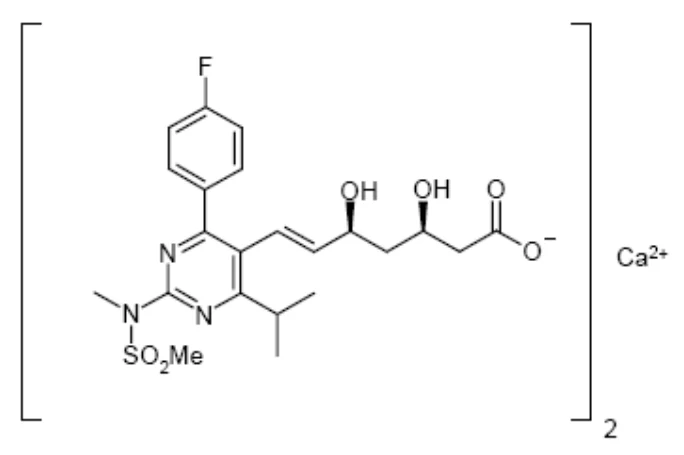
Physicochemical properties:
Rosuvastatin calcium is a white, off-white to yellow coloured powder that is sparingly soluble in water and methanol, and slightly soluble in ethanol.
14 Clinical Trials
14.1 Clinical Trials by Indication
Hypercholesterolemia
Adults
The lowering of total cholesterol, LDL-C, Total-C/HDL-C ratio and ApoB has been shown to reduce the risk of cardiovascular events and mortality.
Rosuvastatin calcium tablets has been shown to significantly improve lipid profiles in patients with a variety of dyslipidemic conditions. Rosuvastatin calcium tablets is highly effective in reducing total-C and LDL-C, TG and ApoB and increasing HDL-C in patients with primary hypercholesterolemia (with and without hypertriglyceridemia), familial and non-familial hypercholesterolemia, mixed hyperlipidemia, and in patients with non-insulin dependent diabetes mellitus (NIDDM). Rosuvastatin calcium tablets also lowers the LDL-C/HDL-C, Total-C/HDL-C, nonHDL-C/HDL-C and the ApoB/ApoA-I ratios.
The following reductions in total cholesterol, LDL-C, TG, Total-C/HDL-C and increases in HDL-C have been observed in a dose-response study and may serve as a guide to treatment of patients with mild to moderate hypercholesterolemia:
Table 5 Dose-Response in Patients with Mild to Moderate Hypercholesterolemia (Mean
Percent Change from Baseline)
| Rosuvastatin Calcium Tablets Dose (mg/day) | N | Total-C | LDL-C | TG | HDL-C | Total-C /HDL-C | Apo B |
| Placebo | 13 | -5 | -7 | -3 | 3 | -8 | -3 |
| 5 | 17 | -33 | -45 | -35 | 13 | -41 | -38 |
| 10 | 17 | -36 | -52 | -10 | 14 | -43 | -42 |
| 20 | 17 | -40 | -55 | -23 | 8 | -44 | -46 |
| 40 | 18 | -46 | -63 | -28 | 10 | -51 | -54 |
Dose-Ranging Studies
In clinical trials, rosuvastatin calcium tablets (5 to 40 mg/day) corrected lipid abnormalities in a wide variety of hyperlipidemic and dyslipidemic conditions.
In one multicenter, double-blind, placebo-controlled, dose range study in patients with mild to moderate hypercholesterolemia (Fredrickson Types IIa and IIb), rosuvastatin calcium tablets (given as a single daily dose for 6 weeks) significantly reduced the levels of Total-C (33-46%), LDL-C (45-63%), Total-C/HDL-C (41-51%), ApoB (38-54%), TG (10-35%) , and increased HDL-C levels (8-14%) across the dose range. Approximately 60% of the LDL-C reduction at 6 weeks was attained within 1 week and 90% of the LDL-C reduction was attained within the first 2 weeks after the beginning of therapy.
| Pediatrics (10 – <18 years of age) | |
| In a multicenter, double-blind, placebo-controlled, 12-week study (n=176, 97 male and 79 | |
| female) followed by a 40-week (n=173, 96 male and 77 female), open label, titration-to-goal | |
| phase, patients 10-17 years of age (Tanner stage II-V, females at least 1 year post- | |
| menarche) with heterozygous familial hypercholesterolemia1 received rosuvastatin calcium | |
| tablets 5, 10 or 20 mg or placebo daily for 12 weeks and then all received rosuvastatin | |
| calcium tablets daily for 40 weeks. At study entry, approximately 30% of the patients were | |
| 10-13 years and approximately 17%, 18%, 40%, and 25% were Tanner stage II, III, IV, and V | |
| respectively. | |
| The majority of pediatric patients, who met the study inclusion criteria, had a baseline LDL- | |
| C ≥ 4.9 mmol/L or LDL-C > 4.1 mmol/L and a positive family history of premature | |
| cardiovascular disease. | |
| Rosuvastatin calcium tablets significantly reduced LDL-C, total cholesterol and ApoB levels | |
| during the 12-week double-blind phase. Results are shown in Table 6. | |
| Table 6: Lipid-modifying effects of Rosuvastatin Calcium Tablets in pediatric patients with | |
| heterozygous familial hypercholesterolemia (least-squares mean percent change from baseline | |
| to week 12) | |
| Rosuvastatin | N | LDL-C * | HDL-C | Total-C * | TG | Non- | ApoB * | ApoA-1 | ||
| Calcium Tablets | HDL-C * | |||||||||
| Dose (mg/day) | ||||||||||
| Placebo | 46 | -0.7 | 6.9 | -0.0 | 5.1 | -0.9 | -1.7 | 2.8 | ||
| 5 | 42 | -38.3 | 4.2 | -29.9 | 0.3 | -36.1 | -31.7 | 1.8 | ||
| 10 | 44 | -44.6 | 11.2 | -34.2 | -13.6 | -43.0 | -38.1 | 5.4 | ||
| 20 | 44 | -50.0 | 8.9 | -38.7 | -8.1 | -47.5 | -40.7 | 4.0 | ||
| * p < 0.001 vs. placebo for all rosuvastatin calcium tablets doses. | ||||||||||
| At the end of the 12-week double-blind phase, 12%, 41% and 41% of patients treated with | ||||||||||
| rosuvastatin calcium tablets 5, 10 and 20 mg, respectively, achieved an LDL-C of less than 2.8 | ||||||||||
| mmol/L (110 mg/dL). | ||||||||||
| At the end of the 40-week, open label, titration to goal phase, dosing up to a maximum of 20 mg | ||||||||||
| once daily, 70 of 173 patients (40.5%) had achieved an LDL-C of less than 2.8 mmol/L (110 | ||||||||||
| mg/dL). | ||||||||||
1 Defined as documented genetic defect in LDL receptor or ApoB by DNA analysis or documented evidence of familial hypercholesterolemia in a first-degree relative (i.e. LDL-C > 4.9 mmol/L in an adult not receiving a statin or LDL-C > 2.5 mmol/L in an adult receiving a statin; LDL-C > 4.1 mmol/L in a child < 18 years of age not receiving a statin or LDL > 2.1 mmol/L in a child < 18 years of age receiving a statin).
The long-term efficacy of rosuvastatin calcium tablets therapy in the treatment of pediatric patients has not been studied and has therefore not been demonstrated to reduce mortality or morbidity in adulthood.
During the 12-week double-blind phase, 4 of 130 (3.0%) pediatric patients treated with rosuvastatin calcium tablets (2 treated with 10 mg and 2 treated with 20 mg) had increased CK > 10 x ULN compared to 0 of 46 patients on placebo. Myopathy was reported in 2 patients receiving rosuvastatin calcium tablets, one on 10 mg and one on 20 mg. During the 40-week open label titration-to-goal phase of the study, 122 of 173 patients were titrated to rosuvastatin calcium tablets 20 mg; 4 of the 173 (2.3%) pediatric patients treated with rosuvastatin calcium tablets 20 mg had increased CK > 10 x ULN (with or without muscle symptoms). All patients with CK elevations either continued treatment or resumed treatment after an interruption.
Myalgia was reported in 4 of the 130 (3.0%) pediatric patients treated with rosuvastatin calcium tablets (1 treated with 5 mg, 1 treated with 10 mg and 2 treated with 20 mg) compared with 0 of 46 on placebo in the 12-week placebo-controlled phase. In the 40-week open label titration-to-goal phase, myalgia was reported in 5 of 173 (2.9%) pediatric patients treated with rosuvastatin calcium tablets.
After 52 weeks of study treatment, although endocrinology function, such as hormone disturbances, was not assessed, no effect on growth or sexual maturation was detected (see 7.1.3 Pediatrics).
Prevention of Major Cardiovascular Events
| In the JUPITER study (Justification for the Use of Statins in Primary Prevention: An | |
| Intervention Trial Evaluating Rosuvastatin) 89,846 people with no pre-existing | |
| cardiovascular disease were screened and 17,802 (19.8%) were double-blindly randomized | |
| to rosuvastatin calcium tablets 20 mg once daily (n=8901) or placebo (n=8901). Patients | |
| were followed for a median duration of 1.9 years. The main reasons for exclusion of | |
| patients were due to LDL-C ≥ 3.3 mmol/L (52%) or high sensitivity C-reactive protein | |
| (hsCRP) < 2 mg/L (36%). The study population consisted of 11,001 men (≥ 50 years) and | |
| 6801 women (≥ 60 years) without history of cardiovascular disease, LDL-C levels < 3.3 | |
| mmol/L and hsCRP levels ≥ 2 mg/L. Approximately 50% of the patients had an intermediate | |
| (10-20%) Framingham risk category and less than 10% were in the Framingham high (> | |
| 20%) risk category. It also included a high percentage of patients with additional risk factors | |
| such as hypertension (58%), low HDL-C levels (23%), cigarette smoking (16%), a family | |
| history of premature coronary heart disease (CHD) (12%) or prediabetes (31%). Most had | |
| two (49%) or three (22%) coronary risk factors at baseline. The JUPITER study was stopped | |
| early by the Data Safety Monitoring Board due to meeting predefined stopping rules for | |
| efficacy in rosuvastatin calcium tablets-treated subjects. | |
| The primary endpoint was a composite consisting of the time-to-first occurrence of any of the | |
| following cardiovascular events: cardiovascular death, nonfatal myocardial infarction, nonfatal | |
stroke, unstable angina or an arterial revascularization procedure.
Treatment with rosuvastatin calcium tablets significantly reduced the risk of cardiovascular events (p<0.001). When the study was prematurely terminated (median follow-up of 1.9 years and maximal follow-up of 5 years), 142 events in the rosuvastatin calcium tablets group and 252 events in the placebo group had occurred for a relative risk reduction of 44% and absolute risk reduction of 1.23% (see Figure 1). The benefit was apparent within the first 6 months of treatment (p=0.029).
Figure 1 Time to First Occurrence of Major Cardiovascular Events 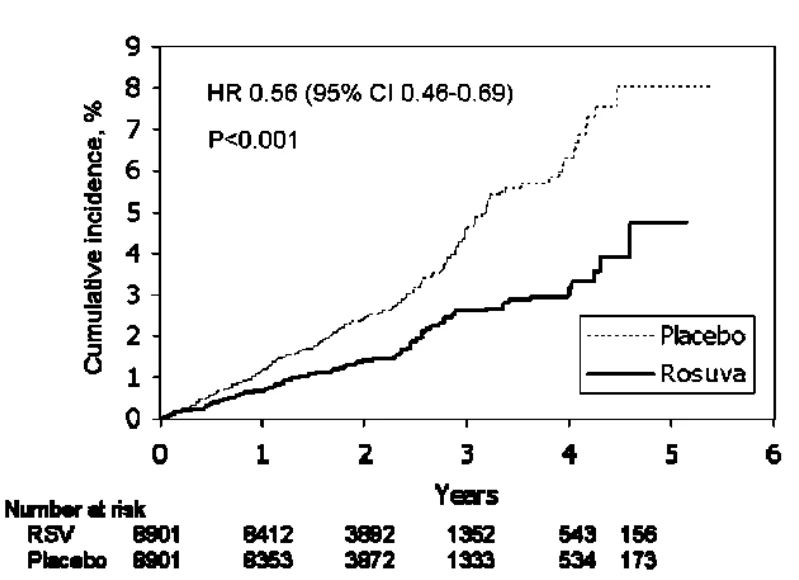
| The results of the primary composite endpoint and the individual components are presented in | |
| Table 7. Rosuvastatin calcium tablets significantly reduced the risk of nonfatal myocardial | |
| infarction (p<0.0001), nonfatal stroke (p=0.004) and arterial revascularization procedures | |
| (p=0.034). There were no statistically significant treatment differences between the | |
| rosuvastatin calcium tablets and placebo groups for death due to cardiovascular causes or | |
| hospitalizations for unstable angina. |
| Table 7 Number of First Events by Treatment Group for the Composite Primary | |
| Endpoint (ITT population) | |
Rosuvastatin Calcium Tablets N = 8901 n (%) | Placebo N= 8901 n (%) | Relative risk | Absolute Risk Reduction (%) | 1.9 year NNT | |||||||||||||||||||||||||
| Reduction£ | |||||||||||||||||||||||||||||
| (95% CI) | |||||||||||||||||||||||||||||
| PRIMARY | 142 (1.6) | 252 (2.83) | 44% (31, 54) | 1.23 | 81 | ||||||||||||||||||||||||
| (composite) | |||||||||||||||||||||||||||||
| ENDPOINT | |||||||||||||||||||||||||||||
| COMPONENTS OF PRIMARY ENDPOINT | |||||||||||||||||||||||||||||
| Cardiovascular | 29 (0.33) | 37 (0.42) | 22% (-27, 52) | 0.09 | 1112 | ||||||||||||||||||||||||
| death∞ | |||||||||||||||||||||||||||||
| Nonfatal stroke | 30 (0.34) | 57 (0.64) | 48% (18, 66) | 0.30 | 329 | ||||||||||||||||||||||||
| Nonfatal MI | 21 (0.24) | 61 (0.69) | 66% (44, 79) | 0.45 | 222 | ||||||||||||||||||||||||
| Unstable angina | 15 (0.17) | 27 (0.30) | 45% (-4, 71) | 0.13 | 741 | ||||||||||||||||||||||||
| Arterial | 47 (0.53) | 70 (0.79) | 33% (3, 54) | 0.26 | 387 | ||||||||||||||||||||||||
| revascularization | |||||||||||||||||||||||||||||
| ∞ Cardiovascular death included fatal MI, fatal stroke, sudden death, and other adjudicated causes | |||||||||||||||||||||||||||||
| of CV death | |||||||||||||||||||||||||||||
£ Negative numbers imply a risk increase
CI Confidence interval, ITT Intent-to-treat, MI myocardial infarction, NNT number needed to treat.
| Rosuvastatin calcium tablets significantly reduced the risk of the combined secondary endpoint |
| of fatal and nonfatal myocardial infarction (HR 0.46, 95% CI 0.30-0.70, p<0.0002) (6 fatal events |
| and 62 nonfatal events in placebo treated subjects versus 9 fatal events and 22 nonfatal events |
| in rosuvastatin calcium tablets-treated subjects) and the risk of the combined secondary |
| endpoint of fatal and nonfatal stroke (HR 0.52, 95% CI 0.34-0.79, p=0.002) (6 fatal events and |
| 58 nonfatal events in placebo-treated subjects versus 3 fatal events and 30 nonfatal events in |
| rosuvastatin calcium tablets-treated subjects). |
| Risk reduction observed was as a rule similar across multiple predefined population subsets |
| based on age, gender, race, smoking status, family history of premature CHD, body mass index, |
| LDL-C, HDL-C, serum triglyceride, fasting glucose level (<5.6 mM and ≥5.6 mM), metabolic |
| syndrome, or hsCRP levels (above and below the median 4.2 mg/L) at the time of entry into the |
| study. |
14.3 Comparative Bioavailability Studies
20 mg Tablet
A single dose, blinded, randomized, 2-way crossover bioequivalence study of PRO-ROSUVASTATIN 20 mg tablets (Pro Doc Ltée.) and CRESTOR® 20 mg Tablets (AstraZeneca Canada Inc.) administered at 1 x 20 mg in 31 healthy adult male subjects was conducted under fasting conditions. The summary of results is presented in the following table:
SUMMARY TABLE OF THE COMPARATIVE BIOAVAILABILITY DATA
| Rosuvastatin | ||||||
| (1 x 20 mg) | ||||||
| Geometric Mean | ||||||
| Arithmetic Mean (CV %) | ||||||
| Parameter | Test1 | Reference2 | % Ratio of Geometric Means | 90% Confidence Interval | ||
AUCT (ng·h/mL) | 74.08 82.09 (43) | 72.31 80.29 (43) | 102.5 | 95.6 – 109.8 | ||
AUCI (ng·h/mL) | 77.94 85.72 (42) | 75.35 83.43 (46) | 103.4 | 96.94 – 110.4 | ||
Cmax (ng/mL) | 88.33 9.86 (46) | 86.27 9.66 (49) | 102.4 | 94.8 – 110.6 | ||
Tmax3 (h) | 4.19 (2.00 – 5.50) | 3.80 (1.00 – 5.00) | ||||
T½ 4 (h) | 18.36 (36.10) | 17.85 (32.34) | ||||
1PRO-ROSUVASTATIN (rosuvastatin tablets) 20 mg Tablets (Pro Doc Ltée.)
2 CRESTOR® (rosuvastatin calcium) 20 mg Tablets (AstraZeneca Canada Inc.)
3 Expressed as the median (range) only
4 Expressed as the arithmetic mean (CV %) only
40 mg Tablet
A single dose, blinded, randomized, 2-way crossover bioequivalence study of PRO-ROSUVASTATIN 40 mg tablets (Pro Doc Ltée.) and CRESTOR® 40 mg Tablets (AstraZeneca Canada Inc.) administered at 1 x 40 mg in 30 healthy adult male subjects was conducted under fasting conditions. The summary of results is presented in the following table:
SUMMARY TABLE OF THE COMPARATIVE BIOAVAILABILITY DATA
| Rosuvastatin | ||||||
| (1 x 40 mg) | ||||||
| Geometric Mean | ||||||
| Arithmetic Mean (CV %) | ||||||
| Parameter | Test1 | Reference2 | % Ratio of Geometric Means | 90% Confidence Interval | ||
AUCT (ng·h/mL) | 137.13 150.04 (43) | 142.95 156.65 (44) | 96.0 | 89.5 – 102.8 | ||
AUCI (ng·h/mL) | 144.63 157.86 (41) | 151.50 165.11 (41) | 95.5 | 88.9 – 102.5 | ||
Cmax
(ng/mL)
141.96 159.13 (52)
147.99 170.12 (56)
| 95.9 | 85.9 – 107.1 | |
| Rosuvastatin | ||||||
| (1 x 40 mg) | ||||||
| Geometric Mean | ||||||
| Arithmetic Mean (CV %) | ||||||
| Parameter | Test1 | Reference2 | % Ratio of Geometric Means | 90% Confidence Interval | ||
Tmax3 (h) | 4.31 (1.00 – 5.00) | 4.41 (1.00 – 5.00) | ||||
T½ 4 (h) | 17.59 (49.70) | 16.98 (38.04) | ||||
1PRO-ROSUVASTATIN (rosuvastatin tablets) 40 mg Tablets (Pro Doc Ltée.)
2 CRESTOR® (rosuvastatin calcium) 40 mg Tablets (AstraZeneca Canada Inc.)
3 Expressed as the median (range) only
4 Expressed as the arithmetic mean (CV %) only
16 Non-Clinical Toxicology
General toxicology
Acute Toxicity: Rosuvastatin was shown to be of low acute toxicity following administration of single doses to rats and dogs by oral and intravenous routes. There were no mortalities in rats given an oral dose of 1000 mg/kg or 2000 mg/kg, and other than depression of bodyweight at 2000 mg/kg, there were no treatment-related effects at either dose level. Dogs received oral doses of 1000 mg/kg or 2000 mg/kg with vomiting on the day of dosing observed as the major clinical finding in both sexes. Biochemical changes (increased plasma enzymes, decreased lipids) and hematological change (increased white blood cells) were found in dogs given an oral dose of up to and including 2000 mg/kg. Lethality was observed immediately after dosing in 1/1 of rats given an intravenous dose of 500 mg/kg but two rats given 250 mg/kg intravenously showed slight hypopnea and weakness soon after dosing with no subsequent effects. The results are summarized below:
Table 8 Acute Oral and Intravenous Toxicity Studies with Rosuvastatin
| Species | Route | Dose Levels for One or Both Sexes (mg/kg) | Mortalities |
| Rat | Oral | 1000 and 2000 | 0/1 at 1000 mg/kg; 0/2 at 2000 mg/kg |
| Rat | Intravenous | 250 and 500 | 1/1 died at 500 mg/kg; 0/2 at 250 mg/kg |
| Rat | Oral | 1000 and 2000 | 0/12 at 1000 mg/kg; 0/12 at 2000 mg/kg |
| Dog | Oral | 1000 and 2000 | 0/2 at 1000 mg/kg; 0/2 at 2000 mg/kg |
Subacute and Chronic Toxicity: The significant target organs affected by rosuvastatin in multiple dose toxicity studies in rats (14 days to 6 months), mice (2 weeks to 13 weeks), Cynomolgus monkeys (30 days to 6 months), dogs (14 days to 12 months) and rabbits (developmental toxicity study) are summarized in Table 9 below.
Table 9 Rosuvastatin: Target Organs Affected in Animal Studies
| Mouse | Rat | Cynomolgus | Dog | Rabbit |
| Monkey | ||||
| Liver - increased | Liver - increased | Testis - reduced | Liver – increased | Skeletal Muscle - |
| weight and | weight, | spermatogenic | liver-related | focal |
| centrilobular | eosinophilia, | epithelium with | plasma enzymes | degeneration and |
| hypertrophy | periportal necrosis | vacuolation | necrosis of | |
| and intralobular | perivascular | |||
| bile duct | myocardium and | |||
| hypertrophy, | other skeletal | |||
| increased liver- | muscle tissue | |||
| related plasma | ||||
| enzymes | ||||
| Stomach (non- | Stomach (non- | Kidney - cortical | Gallbladder - | |
| glandular)**- | glandular)** - | tubular epithelial | hemorrhage, | |
| hyperplasia of | hyperplasia of | cell necrosis with | edema and/or | |
| squamous | squamous | regeneration | inflammatory cell | |
| epithelium and | epithelium and | infiltrate in lamina | ||
| hyperkeratosis of | hyperkeratosis of | propria mucosa | ||
| forestomach | forestomach | |||
| mucosa | mucosa | |||
| Gall bladder* - | Lens*** - | |||
| hemorrhage, | punctate or striate | |||
| edema and/or | opacities in | |||
| inflammatory cell | anterior portion of | |||
| infiltration in | the lens | |||
| lamina propria | ||||
| mucosa | ||||
| Brain* - edema, | ||||
| hemorrhage and | ||||
| partial necrosis in | ||||
| choroid plexus | ||||
| Testis - tubular | ||||
| degeneration and | ||||
| atrophy | ||||
| *Occurred after administration of high, intolerable doses (250 mg/kg/day [mouse gall bladder], 90 | ||||
mg/kg/day [dog brain]
**Unique anatomical structure not relevant to human
***Not a consequence of prolonged dosing
Table 10 summarizes the significant adverse changes observed during chronic toxicology studies in the mouse (104 weeks), rat (6 months), dog (12 months), Cynomolgus monkey (6 months) and rabbit (developmental toxicity study).
Table 10 Rosuvastatin: Significant Adverse Changes in Subacute and Chronic Studies
| Margin vs. NOAEL: 40 mg | ||||||||
| Species/Finding | No-Effect Dose (mg/kg/day) | Minimal Toxic Dose (mg/kg/day) | Cmax | AUC | ||||
| (adjusted for | (adjusted for | |||||||
| protein binding | protein binding) | |||||||
| (ng/mL) | (ng•h/mL) | |||||||
| Mouse | ||||||||
| Liver carcinoma | 60 | 200 | 19 | 4.9 | ||||
| Rat | ||||||||
| Forestomach hyperkeratosis | >20 | >20 | 12 | 4 | ||||
| Plasma liver enzymes | >20 | >20 | 12 | 4 | ||||
| Hepatocellular necrosis | 2 | 6 | 0.44 | 0.3 | ||||
| Muscle necrosis | 80 (2 yr study) | 80 (13 wk study) | 26 | 6.5 | ||||
| Uterine polyps | 60 | 80 | 23 | 5 | ||||
| Dog | ||||||||
| Plasma liver enzymes | 3 | 6 | 3.9 | 4 | ||||
| Hepatocellular atrophy | 3 | 6 | 3.9 | 4 | ||||
| Gall bladder edema and hemorrhage | 3 | 6 | 3.9 | 4 | ||||
| Ocular opacity | 15 | 30 | 19 | 2.4 | ||||
| Margin vs. NOAEL: 40 mg | ||||||||
| Species/Finding | No-Effect Dose (mg/kg/day) | Minimal Toxic Dose (mg/kg/day) | Cmax | AUC | ||||
| (adjusted for | (adjusted for | |||||||
| protein binding | protein binding) | |||||||
| (ng/mL) | (ng•h/mL) | |||||||
Testicular tubular degeneration | 30 | 90 | 33 | 20 | ||||
| Monkey | ||||||||
Testicular tubular degeneration | 10 | 30 | 2.3 | 4 | ||||
| Renal tubular necrosis | 10 | 30 | 2.3 | 4 | ||||
| Rabbit | ||||||||
| Muscle necrosis | 1* | 3* | 0.2** | Not available | ||||
*rabbit teratology study
**exposure determined in a separate toxicokinetic study
The toxicology profile of rosuvastatin appears similar to that observed with other statins and is a consequence of its primary pharmacology action (i.e. inhibition of the enzyme, HMG-CoA reductase) which leads to reduced cholesterol synthesis.
Genotoxicity
In vitro, rosuvastatin was not mutagenic or clastogenic with or without metabolic activation in the Ames test with Salmonella typhimurium and Escherichia coli, L-5178 y ± mouse lymphomas and the chromosomal aberration assay in Chinese hamster lung cells. Rosuvastatin was negative in the in vivo mouse micronucleus test.
Carcinogenicity
In a 104-week carcinogenicity study in rats at dose levels of 2, 20, 60 or 80 mg/kg/day, the incidence of uterine polyps was statistically significantly increased only in females at the dose of 80 mg/kg/day. This dose produced a plasma AUC(0-24) value approximately 8 times higher (after correction for interspecies differences in protein binding) than the human plasma drug exposure after a 40 mg dose at steady-state. Increased incidences of polyps observed at 2, 20 and 60 mg/kg/day were not statistically different from the control group not exposed to rosuvastatin. The 60 mg/kg/day dose produced a plasma AUC(0-24) value approximately 5 times higher (after correction for interspecies differences in protein binding) than the mean human exposure after a 40 mg dose at steady-state. The occurrence of uterine polyps in old female rats is well-known and is considered benign tumors and lesions termed non-neoplastic in humans.
In a 107-week carcinogenicity study in mice given 10, 60, 200 or 400 mg/kg/day, the 400 mg/kg/day dose was poorly tolerated, resulting in early termination of this dose group. An increased incidence of hepatocellular carcinomas was observed at 200 mg/kg/day and an increase in hepatocellular adenomas was seen at 60 and 200 mg/kg/day. The dose of 200 mg/kg/day produced a plasma AUC(0-24) value approximately 37 times higher (after correction for interspecies differences in protein binding) than the mean human plasma drug exposure after a 40 mg dose at steady state. An increased incidence of hepatocellular tumors was not seen at 10 mg/kg/day. The 60 mg/kg/day dose produced a plasma AUC(0-24) value approximately 4.9 times higher (after correction for interspecies differences in protein binding) than the mean human plasma drug exposure after a 40 mg dose at steady state. These hepatocellular effects are known to occur in rodents treated with statins without evidence of similar effects in humans.
Genotoxicity
In vitro, rosuvastatin was not mutagenic or clastogenic with or without metabolic activation in the Ames test with Salmonella typhimurium and Escherichia coli, L-5178 y ± mouse lymphomas and the chromosomal aberration assay in Chinese hamster lung cells. Rosuvastatin was negative in the in vivo mouse micronucleus test.
Reproductive and developmental toxicology
The reproductive toxicity of rosuvastatin has been evaluated in fertility and pre- and post-natal developmental studies, at doses up to 50 mg/kg/day. Slight reductions in maternal body weight gain and food consumption were observed at 50 mg/kg/day. Rosuvastatin had no adverse effects on mating, fertility in both sexes, implantation and maintenance of pregnancy, pup morphology or survival at 50 mg/kg/day in the fertility study. In a pre- and post-natal sighting study in rats given ≥ 75 mg/kg/day there was reduced pup survival at birth at 125 and 150 mg/kg/day and during early lactation at 75 and 100 mg/kg/day. In the main pre - and post-natal developmental study, rosuvastatin showed no adverse effects on the duration of pregnancy, delivery and lactation in the dams in either generation at the high dose of 50 mg/kg/day. In the absence of plasma AUC exposure data in pregnant rats, comparisons with human data have been made on a received dose basis. The dose of 50 mg/kg/day equates to 90 times the human dose of 40 mg given to a 70 kg human.
The potential of rosuvastatin to cause developmental toxicity has been examined in the pregnant rat at doses up to 100 mg/kg/day and in the pregnant rabbit at doses up to 3 mg/kg/day. Rosuvastatin was shown to be neither embryo-fetolethal nor teratogenic in rats. At a maternally toxic dose of 3 mg/kg/day in rabbits, fetal examination showed no evidence of fetolethality or teratogenicity.
Overall, rosuvastatin has shown no reproductive or developmental toxicity.
17 Supporting Product Monographs
1 CRESTOR® (rosuvastatin calcium tablets; 5 mg, 10 mg, 20 mg and 40 mg), control 301623, product monograph, AstraZeneca Canada Inc. (2026-02-05).