


Product Monograph - Procan SR (Searchlight Pharma)
RECENT MAJOR LABEL CHANGES
N/A
TABLE OF CONTENTS
Sections or subsections that are not applicable at the time of authorization are not listed.
RECENT MAJOR LABEL CHANGES .......................................................................................... 2
TABLE OF CONTENTS ............................................................................................................ 2
PART I: HEALTH PROFESSIONAL INFORMATION .................................................................... 4
1 INDICATIONS ............................................................................................................. 4
1.1 Pediatrics .................................................................................................................. 4
1.2 Geriatrics .................................................................................................................. 4
2 CONTRAINDICATIONS ................................................................................................ 4
3 SERIOUS WARNINGS AND PRECAUTIONS BOX ........................................................... 5
4 DOSAGE AND ADMINISTRATION ................................................................................ 5
4.1 Dosing Considerations ............................................................................................. 5
4.2 Recommended Dose and Dosage Adjustment ........................................................ 5
4.4 Administration ......................................................................................................... 6
4.5 Missed Dose ............................................................................................................. 6
5 OVERDOSAGE ............................................................................................................ 6
6 DOSAGE FORMS, STRENGTHS, COMPOSITION AND PACKAGING ................................ 7
7 WARNINGS AND PRECAUTIONS ................................................................................. 7
7.1 Special Populations .................................................................................................. 9
7.1.1 Pregnant Women ............................................................................................... 9
7.1.2 Breast-feeding .................................................................................................. 10
7.1.3 Pediatrics .......................................................................................................... 10
7.1.4 Geriatrics .......................................................................................................... 10
8 ADVERSE REACTIONS............................................................................................... 10
8.1 Adverse Reaction Overview ................................................................................... 10
8.2 Clinical Trial Adverse Reactions ............................................................................. 10
8.3 Less Common Clinical Trial Adverse Reactions ...................................................... 11
9 DRUG INTERACTIONS .............................................................................................. 12
9.4 Drug-Drug Interactions .......................................................................................... 12
9.5 Drug-Food Interactions .......................................................................................... 13
9.6 Drug-Herb Interactions .......................................................................................... 13
9.7 Drug-Laboratory Test Interactions......................................................................... 13
10 CLINICAL PHARMACOLOGY ...................................................................................... 13
10.1 Mechanism of Action ....................................................................................... 13
10.2 Pharmacodynamics .......................................................................................... 14
10.3 Pharmacokinetics ............................................................................................. 14
11 STORAGE, STABILITY AND DISPOSAL ........................................................................ 15
12 SPECIAL HANDLING INSTRUCTIONS .......................................................................... 15
PART II: SCIENTIFIC INFORMATION ..................................................................................... 16
13 PHARMACEUTICAL INFORMATION .......................................................................... 16
14 CLINICAL TRIALS ...................................................................................................... 16
15 MICROBIOLOGY ...................................................................................................... 16
16 NON-CLINICAL TOXICOLOGY .................................................................................... 16
PATIENT MEDICATION INFORMATION ................................................................................ 17
PART I: HEALTH PROFESSIONAL INFORMATION
1 INDICATIONS
PROCAN SR (Procainamide Hydrochloride) is indicated for:
- the treatment of documented life-threatening ventricular arrhythmias, such as sustained ventricular tachycardia. PROCAN SR may also be used for the treatment of patients with documented symptomatic ventricular arrhythmias when the symptoms are of sufficient severity to require treatment.
- the treatment of atrial fibrillation, particularly if the condition is of recent development and the treatments of choice cannot be used or are ineffective. The drug may also be used in paroxysmal atrial tachycardia which cannot be controlled by reflex stimulation or by other measures.
Ventricular Arrhythmias
Because of the proarrhythmic effects of PROCAN SR its use should be reserved for patients in whom, in the opinion of the physician, the benefit of treatment clearly outweighs the risks.
For patients with sustained ventricular tachycardia, PROCAN SR therapy should be initiated in the hospital. Hospitalization may also be required for certain other patients depending on their cardiac status and underlying cardiac disease.
The effects of PROCAN SR in patients with recent myocardial infarction have not been adequately studied and, therefore, its use in this condition cannot be recommended.
1.1 Pediatrics
Pediatrics (<18 years): No data are available to Health Canada; therefore, Health Canada has not authorized an indication for pediatric use.
1.2 Geriatrics
Geriatrics: Evidence from clinical studies and experience suggests that use in the geriatric population is associated with differences in safety or effectiveness (see 7.1.4 Geriatrics).
2 CONTRAINDICATIONS
- PROCAN SR is contraindicated in patients who are hypersensitive to this drug or to any ingredient in the formulation, including any non-medicinal ingredient, or component of the container. For a complete listing, see 6 DOSAGE FORMS, STRENGTHS, COMPOSITION AND PACKAGING. Cross-sensitivity to procaine and related drugs must be borne in mind.
- Patients with complete atrioventricular (AV) heart block (see 7 WARNINGS AND PRECAUTIONS);
- Patients with second-degree or third-degree AV block unless an electrical pacemaker is operative (see 7 WARNINGS AND PRECAUTIONS);
- Patients with systemic lupus erythematosus (see 7 WARNINGS AND PRECAUTIONS, 8 ADVERSE REACTIONS);
- Patients having "torsades de pointes" ventricular arrhythmias (see 7 WARNINGS AND PRECAUTIONS);
- Patients with myasthenia gravis (see 9.4 Drug-Drug Interactions).
3 SERIOUS WARNINGS AND PRECAUTIONS BOX
Serious Warnings and Precautions
|
|---|
4 DOSAGE AND ADMINISTRATION
4.1 Dosing Considerations
- PROCAN SR is a sustained release dosage form not intended for initial therapy. For initial therapy by oral administration, an immediate-release form of procainamide is recommended. Patients stabilized to an appropriate dosage level can be transferred to an equivalent daily dosage regimen of PROCAN SR tablets.
- In elderly patients and in patients with impaired renal function (decreased creatinine clearance), excretion is delayed and reduced frequency of administration is required (see 7 WARNINGS AND PRECAUTIONS).
4.2 Recommended Dose and Dosage Adjustment
Atrial Fibrillation and Paroxysmal Atrial Tachycardia:
Suggested Titration Dosage: (immediate-release tablets should be used) Initial dose of 1.25 g of immediate-release oral procainamide hydrochloride preparation, followed in one hour by 0.75 g if there have been no electrocardiographic changes, and then given at a dose of 0.5 to 1.0 g every 2 hours until arrhythmia is interrupted or the limit of tolerance is reached.
Ventricular Tachycardia:
Suggested Titration Dosage: (immediate-release tablets should be used) Initial dose of 1 g of immediate-release procainamide preparation, followed by total daily dose of 50 mg/kg of body weight, given in divided doses at 3-hour intervals, to be increased until arrhythmia is interrupted or the limit of tolerance is reached.
Suggested Maintenance Dosage of PROCAN SR:
50 mg/kg of body weight daily given in divided doses at 6-hour intervals starting 2 to 3 hours after the last dose of the immediate-release formulation of procainamide. Although the dosage for each patient must be determined on an individual basis, the Table 1 presented below may be used as a guide for providing the total daily dosage using PROCAN SR.
Table 1: PROCAN SR total daily dosage
| Patient's Weight | Approximate Total Daily Dosage | Dosage with PROCAN SR |
|---|---|---|
| Less than 55 kg | 2000 mg | Two 250 mg tablets q6h |
| 55 to 91 kg | 3000 mg | Three 250 mg tablet q6h |
| More than 91 kg | 4000 mg | Four 250 mg tablets q6h |
Pediatric Patients
Safety and efficacy of PROCAN SR have not been established in patients less than 18 years of age. Health Canada has not authorized an indication for pediatric use (see 7.1.3 Pediatrics).
4.4 Administration
PROCAN SR tablets should not be crushed or chewed as this would interfere with the designed dissolution characteristics. The tablet matrix of PROCAN SR may be seen in the stool since it does not disintegrate following release of procainamide.
The duration of action of procainamide hydrochloride supplied in this sustained release dosage form allows dosing at intervals of every 6-hours, which may encourage patient compliance.
4.5 Missed Dose
If a dose is missed by an hour or less, patient should take it as soon as possible then go back to the regular schedule. Do not double the next dose.
5 OVERDOSAGE
Signs and symptoms of overdosage of PROCAN SR include severe hypotension, ventricular fibrillation, widening of the QRS complex, junctional tachycardia, intraventricular conduction delay, oliguria, lethargy, confusion, nausea and vomiting.
If ingestion is recent, emesis may reduce absorption. Dopamine, phenylephrine or norepinephrine may be helpful in reversing severe hypotensive responses. Management of overdosage includes symptomatic treatment with ECG and blood pressure monitoring. Procainamide toxicity can usually be treated, if necessary, by administering vasopressors after adequate fluid volume replacement. Intravenous infusion of 1/6 molar sodium lactate injection reportedly reduces the cardiotoxic effects of procainamide.
The urinary elimination of procainamide is proportional to the glomerular filtration rate but is also affected by changes in urinary pH. Procainamide is relatively lipidsoluble as a free base but the ionized form is not. Acid urine, therefore leads to ion trapping of procainamide which enters the urine by passive diffusion from the plasma. Accordingly, renal clearance of procainamide can be considerably increased by maintaining a low urinary pH and high flow rates.
If procainamide toxicity causes severe hypotension and renal insufficiency, urinary elimination of procainamide and N-acetylprocainamide (NAPA) is decreased and hemodialysis may be required.
Hemodialysis significantly reduces the serum half-life of procainamide and effectively removes procainamide and NAPA. Peritoneal dialysis is not effective.
Overdosage symptoms may result following a single 2 g dose of conventional immediate-release procainamide; 3 g may be dangerous, especially if patient is a slow acetylator, has decreased renal function or underlying organic heart disease.
It has been reported that one patient who ingested approximately 7 g of procainamide recovered after treatment consisting of intravenous (IV) norepinephrine, IV furosemide, attempted volume expansion with albumin, and hemodialysis. Also reported, is the case of an elderly patient who recovered after ingestion of approximately 19 g of procainamide. The patient was treated with IV isoproterenol and IV epinephrine. The latter report suggested that insertion of a ventricular pacing electrode is a reasonable precautionary measure in case high grade AV block develops.
| For management of a suspected drug overdose, contact your regional poison control centre. |
|---|
6 DOSAGE FORMS, STRENGTHS, COMPOSITION AND PACKAGING
Table 2 - Dosage Forms, Strengths, Composition and Packaging
PROCAN SR 250 mg Tablets: Elliptical, green, film-coated, sustained-release tablet, imprinted PROCAN SR 250 mg.
Energy: 2.67 kJ (0.64 kcal). Sodium: <1 mmol (0.04 mg). Gluten-, sulfite- and tartrazine-free.
Bottles of 100.
7 WARNINGS AND PRECAUTIONS
Please see 3 SERIOUS WARNINGS AND PRECAUTIONS BOX.
General
In patients with cardiac failure or shock or in patients with low cardiac output and extrarenal azotemia, the apparent volume of distribution and/or the elimination rate of procainamide can decrease considerably for a given dose, thereby resulting in increased plasma concentrations. Such patients should therefore be carefully monitored and the dose or frequency of administration reduced, if warranted.
Plasma concentrations of procainamide and NAPA should be monitored in patients with renal disease, hepatic disease, cardiac failure, or low cardiac output states.
| Route of Administration | Dosage Form / Strength / Composition | Non-medicinal Ingredients |
| Oral | Extended-release tablet 250 mg procainamide hydrochloride | Carnauba wax, hydrogenated soybean oil, lactose, magnesium stearate and silicon dioxide colloidal Coating: candelilla wax, hydroxypropyl methylcellulose, methylparaben, opaspray green, polyethylene glycol, propylparaben and vanillin. |
Cardiovascular
During administration of PROCAN SR, evidence of untoward myocardial responses should be carefully watched for in all patients. In the presence of an abnormal myocardium, procainamide may at times produce untoward responses. In atrial fibrillation or flutter, the ventricular rate may increase suddenly as the atrial rate is slowed. Adequate digitalization reduces, but does not abolish, this danger. If myocardial damage exists ventricular tachycardia is particularly hazardous.
Correction of atrial fibrillation, with resultant forceful contractions of the atrium, may cause a dislodgement of mural thrombi and produce an embolic episode. However, it has been suggested that, in a patient who is already discharging emboli, procainamide is more likely to stop than to aggravate the process.
Attempts to adjust the heart rate in a patient who has developed ventricular tachycardia during an occlusive coronary episode should be carried out with extreme caution. Caution is also required in marked disturbances of atrioventricular conduction such as AV block, bundle branch block, or severe digitalis intoxication, where the use of procainamide may result in additional depression of conduction and ventricular asystole or fibrillation. Widening of QRS complex on ECG calls for extreme caution. The effects of procainamide in digitalis intoxication, particularly where the arrhythmia is accompanied by marked conduction disturbances, are unpredictable and fatalities have occurred.
Because patients with severe organic heart disease and ventricular tachycardia may also have complete heart block, which is difficult to diagnose under these circumstances, this complication should always be kept in mind when treating ventricular arrhythmias with procainamide. If the ventricular rate is significantly slowed by procainamide without attainment of regular atrioventricular conduction, the drug should be stopped, and the patient re-evaluated because asystole may result under these circumstances.
Serious hypotension can result from peripheral vasodilation, and by depressing myocardial contractility and cardiac output. At high plasma levels, procainamide may produce sinus tachycardia due to reflex sympathetic response to its hypotensive effect. Large doses may increase cardiac automaticity and can induce complete atrioventricular block, cardiac standstill or ventricular extrasystoles that may proceed to ventricular fibrillation. These effects on the myocardium are reflected in the electrocardiogram; a widening of the QRS complex occurs most consistently; less regularly, the PR and QT intervals are prolonged; the QRS and T waves show some decrease in voltage. These actions of procainamide may be intensified in patients with congestive heart failure (see 10.2 Pharmacodynamics).
Hematologic
Blood Dyscrasias: Agranulocytosis, bone marrow depression, neutropenia, hypoplastic anemia and thrombocytopenia have been reported at a rate of approximately 0.5% in patients receiving procainamide hydrochloride. Most of these patients received procainamide hydrochloride within the recommended dosage range. Fatalities have occurred (with approximately 20 to 25% mortality in reported cases of agranulocytosis). Since most of these events have been noted during the first 12 weeks of therapy, it is recommended that complete blood counts including white cell, differential and platelet counts be performed at weekly intervals for the first three months of therapy; and periodically thereafter. Complete blood counts should be performed promptly if the patient develops any signs of infection (such as fever, chills, sore throat or stomatitis), bruising or bleeding. If any of these hematologic disorders are identified, procainamide hydrochloride should be discontinued. Blood counts usually return to normal within 1 month of discontinuation. Caution should be used in patients with pre-existing marrow failure or cytopenia of any type (see 8 ADVERSE REACTIONS).
Patients should be instructed to report promptly any flu-type symptoms such as malaise and aches, as well as any soreness of the mouth, throat or gums, unexplained fever, skin rash, unusual bleeding or bruising, symptoms that resemble arthritis or symptoms of an upper respiratory tract infection.
Hepatic/Biliary/Pancreatic
Plasma procainamide and NAPA concentrations rise markedly with increases in blood urea nitrogen and correlate well with creatinine clearance. Should patients with impaired liver disease receive unadjusted dosage, symptoms of overdosage (principally ventricular tachycardia and severe hypotension) may occur due to drug accumulation. The frequency of administration should be reduced in patients with hepatic insufficiency.
Immune
Positive Antinuclear Antibody: The prolonged administration of procainamide often leads to the development of a positive antinuclear antibody (ANA) test with or without symptoms of lupus erythematosus-like syndrome. If a positive ANA titer develops, the benefit/risk ratio related to continued procainamide therapy should be assessed. This may necessitate a discontinuation of procainamide and substitution of alternative antiarrhythmic therapy.
The induction of ANA appears to be independent of dosage. Patients with procainamide-induced increases in ANA titers may develop a syndrome resembling systemic lupus erythematosus (SLE). The mechanism of this syndrome is uncertain. Polyarthralgia, arthritic symptoms, fever, skin lesions and pleuritic pain are common symptoms; to a lesser extent, myalgia, pleural effusion, pericarditis, headache, fatigue, weakness, nausea, and abdominal pain may occur. Rare cases of thrombocytopenia, Coombs' positive hemolytic anemia, increased aspartate aminotransferase (AST), alanine transaminase (ALT), and serum amylase have been reported which may be related to this SLE-like syndrome.
It is recommended that tests for SLE be carried out at regular intervals in patients receiving maintenance procainamide therapy. The drug should be discontinued if there is rising ANA titer or clinical symptoms of SLE appear. The SLE-like syndrome may be reversible upon discontinuation of the drug. If discontinuation does not cause remission of the symptoms, corticosteroid therapy may be effective. If the SLE-like syndrome develops in a patient with recurrent life-threatening arrhythmias not controllable by other antiarrhythmic agents, corticosteroid suppressive therapy may be used concomitantly with procainamide.
Renal
Plasma procainamide and NAPA concentrations rise markedly with increases in blood urea nitrogen and correlate well with creatinine clearance. Should patients with impaired kidney function receive unadjusted dosage, symptoms of overdosage (principally ventricular tachycardia and severe hypotension) may occur due to drug accumulation. Similarly, plasma concentrations have been found to be increased in elderly patients possibly due to declining renal function in this age group. The frequency of administration should be reduced in patients with renal insufficiency or in elderly patients.
7.1 Special Populations
7.1.1 Pregnant Women
Animal reproduction studies have not been conducted with procainamide. It is also not known whether procainamide can cause fetal harm when administered to a pregnant woman or can affect reproduction capacity.
There has been some evidence of the diffusion of procainamide across the placental membrane. Therefore, due to the potential accumulation and slow rate of elimination of procainamide and N-acetylprocainamide in the fetus, the potential benefit of the use of procainamide during pregnancy should be weighed against the possible hazard to the fetus.
7.1.2 Breast-feeding
Both procainamide and N-acetylprocainamide are secreted in human milk and absorbed by the nursing infant. Because of the potential for serious adverse reactions in nursing infants, a decision to discontinue nursing or the drug should be made, taking into account the importance of the drug to the mother.
7.1.3 Pediatrics
Pediatrics (<18 years): No data are available to Health Canada; therefore, Health Canada has not authorized an indication for pediatric use.
7.1.4 Geriatrics
In elderly patients and in patients with impaired renal function (decreased creatinine clearance), excretion is delayed and reduced frequency of administration is required.
8 ADVERSE REACTIONS
8.1 Adverse Reaction Overview
The overall incidence of adverse effects with procainamide is about 9.2%. The most commonly occurring are gastrointestinal upset 3.9%, cardiovascular effects (ventricular dysrhythmias, bradycardia, hypotension and shock) 3.3% and drug fever 1.6%.
The most serious adverse reactions reported are granulocytopenia and the development of antinuclear antibodies (ANA). Granulocytopenia is most likely to occur within the first 3 months of therapy. Prolonged administration of procainamide often leads to the development of a positive ANA test with or without symptoms of lupus erythematosus-like syndrome (see 7 WARNINGS AND PRECAUTIONS).
8.2 Clinical Trial Adverse Reactions
Clinical trials are conducted under very specific conditions. The adverse reaction rates observed in the clinical trials; therefore, may not reflect the rates observed in practice and should not be compared to the rates in the clinical trials of another drug. Adverse reaction information from clinical trials may be useful in identifying and approximating rates of adverse drug reactions in real-world use.
Incidence Greater Than 1%
- 1. Elevated ANA (antinuclear antibodies), sometimes associated with drug-induced lupus syndrome.*
- 2.
Gastrointestinal symptoms*, especially with large oral doses:
- a) Anorexia
- b) Nausea
- c) Vomiting
- d) Diarrhea
- 3.
Cardiovascular Effects:
- a) Bradycardia
- b) Arrhythmias
- c) Cardiac failure
- d) Shock
- 4.
Hypersensitivity reactions, which may be manifested by one or more of the following:
- a) Pruritus
- b) Urticaria
- c) Angioneurotic edema
- d) Maculopapular rash
- e) Fever
- f) Eosinophilia
- g) Hypergammaglobulinemia
* In patients on long term procainamide therapy with sustained release preparations, the above reactions have been reported with an incidence greater than 5%.
8.3 Less Common Clinical Trial Adverse Reactions
Incidence Less Than 1%
- 1. Granulocytopenia (incidence about 0.5%), sometimes resulting in death
- 2. Thrombocytopenia
- 3. Immune hemolytic anemia
- 4. Convulsions
- 5. Psychosis with hallucinations
- 6. Confusion
- 7. Mental depression
- 8. Giddiness
- 9. Lightheadedness
- 10. Weakness
- 11. Bitter taste
Rare:
- 1. Hypotension
- 2. A case was reported with fever and chills, plus nausea, vomiting, abdominal pain, acute hepatomegaly and a rise in serum glutamic oxaloacetic transaminase following a single dose of the drug.
- 3. Vasculitis (hypersensitivity-type).
9 DRUG INTERACTIONS
9.4 Drug-Drug Interactions
Table 3 - Established or Potential Drug-Drug Interactions
| Drug name or class | Source of Evidence | Effect | Clinical comment |
| Antiarrhythmics | T | Concurrent use with procainamide may result in additive cardiac effects and/or additive toxic effects. In acute myocardial infarctions procainamide may potentiate the cardiac depressant action of beta blocking agents such as propranolol. | Caution is warranted. |
| Anticholinergics | C | Procainamide enhances the anticholinergic effects. | Extreme caution must be exercised with such a combination. |
| Anticholinesterases | C | Procainamide antagonizes the effects of anticholinesterases in myasthenia gravis, and paralysis returns. | Caution is warranted. |
| Antihypertensives | T | Procainamide may potentiate the hypotensive effects of thiazide diuretics and other antihypertensive agents. | Adjustment of dosage may be required. |
| Cimetidine | C | It has been reported that the histamine H2-antagonist cimetidine reduces renal clearance of procainamide and NAPA resulting in higher plasma concentrations for longer durations. | Caution should be exercised when administering these drugs concurrently especially in the elderly who have a reduced ability to clear all three. Dosage modification may be required. |
| Drug name or class | Source of Evidence | Effect | Clinical comment |
| Neuromuscular Blocking Agents | C | Procainamide potentiates the effects of skeletal muscle relaxants such as succinylcholine. It also may enhance or prolong the neuromuscular blocking activity of bacitracin, colistimethate, dihydrostreptomycin, gentamicin, gramicidin, kanamycin, neomycin, polymyxin B, streptomycin and viomycin, producing respiratory depression. | Caution is warranted. |
| Antibiotics | C | Procainamide has also been reported to interact with kanamycin, neomycin and streptomycin to cause apnea and muscle weakness, due to an additive neuromuscular blocking effect. | Caution is warranted. |
Legend: C = Case Study; CT = Clinical Trial; T = Theoretical
9.5 Drug-Food Interactions
Interactions with food have not been established.
9.6 Drug-Herb Interactions
Interactions with herbal products have not been established.
9.7 Drug-Laboratory Test Interactions
Interactions with laboratory tests have not been established.
10 CLINICAL PHARMACOLOGY
10.1 Mechanism of Action
Procainamide hydrochloride depresses the excitability of cardiac muscle to electrical stimulation, and slows conduction in the atrium, the bundle of His, and the ventricle. The refractory period of the atrium is considerably more prolonged than that of the ventricle. With therapeutic plasma levels of the drug, contractility of the heart is usually not affected nor is cardiac output decreased to any extent unless myocardial damage exists. In the absence of any arrhythmia, the heart rate may occasionally be accelerated by conventional doses, suggesting that the drug possesses anticholinergic properties. Larger doses can induce atrioventricular block and ventricular extrasystoles which may proceed to ventricular fibrillation. These effects on the myocardium are reflected in the electrocardiogram; a widening of the QRS complex occurs most consistently; less regularly, the PR and QT intervals are prolonged, and the QRS and T-waves show some decrease in voltage.
According to the Vaughn Williams antiarrhythmic drug classification, procainamide is a Class IA drug. Thus, procainamide reduces the maximal rate of phase-O depolarization, prolongs repolarization and refractory periods, and in general, decreases automaticity of cardiac cells.
10.2 Pharmacodynamics
Procainamide exerts many actions on the heart and the circulation. It slows conduction in the atrium, ventricle and the bundle of His. The effect is greatest across the AV node, suggesting the greater sensitivity of this tissue to the drug. The refractory period is prolonged with the atrium being much more affected than the ventricle. Contractility of the heart is usually not affected by procainamide unless myocardial damage exists. Excitability of the ventricle and the atrium to electric stimulation is profoundly depressed. In addition, the rate of pacemaker is also depressed. Procainamide has been shown to be effective in preventing the development of epinephrine-induced ventricular arrhythmia in dogs under cyclopropane anesthesia. It also suppresses ventricular tachycardia produced by ligation of coronary arteries in the dog.
10.3 Pharmacokinetics
Absorption
Oral administration of conventional immediate-release procainamide hydrochloride capsules produces a therapeutic effect approximately 1 hour after a 1 gram loading dose or 4 hours after initiating treatment every 3 hours with the maintenance dose. Peak plasma concentrations occur about 1 hour after oral administration, indicating an overall half-time for absorption of approximately 20 minutes. For ventricular arrhythmias, therapeutic plasma levels have been reported to be 13 to 43 mcmol/L (3 to 10 mcg/mL), with those for the majority of patients in the range of 17 to 34 mcmol/L (4 to 8 mcg/mL).
Distribution:
Procainamide's apparent volume of distribution (Vd) is usually between 1.75 and 2.5 L/kg body weight. About 75% of the procainamide is concentrated in highly perfused tissues. Approximately 20% is bound to plasma albumin.
Metabolism:
In humans, procainamide is acetylated, and N-acetylprocainamide (NAPA) an active metabolite can be detected in both plasma and urine. The dose fraction of procainamide excreted as N-acetylprocainamide is extremely variable, ranging from 6 to 52%.
Elimination
Following oral administration of conventional immediate-release procainamide capsules, over 90% is recovered in the urine as unchanged drug or metabolites indicating almost complete absorption of the drug. On the average, about 60% (range 30 to 80%) of the drug is excreted unchanged. The half-time for elimination from the body may vary from 2.5 to 6 hours or longer. The plasma clearance of procainamide is 400-600 mL/minute; renal clearance is 200-400 mL/minute.
Following oral administration of PROCAN SR tablets every 6 hours, the mean steady- state serum concentrations of procainamide and N-acetylprocainamide achieved are approximately equivalent to those of a comparable dose of the conventional immediate- release capsule administered every 3 hours.
When 500 mg sustained-release tablets were administered for 3 days, approximately 48% and 15% were recovered in the urine as procainamide and N-acetylprocainamide, respectively. Other metabolites e.g. free and conjugated p-aminobenzoic acid which usually account for about 10% of the dose, were not analyzed in this study.
11 STORAGE, STABILITY AND DISPOSAL
Store at controlled room temperature, 15-30°C. Protect from moisture.
Keep out of reach and sight of children.
12 SPECIAL HANDLING INSTRUCTIONS
N/A
PART II: SCIENTIFIC INFORMATION
13 PHARMACEUTICAL INFORMATION
Drug Substance
Proper name: Procainamide Hydrochloride
Chemical name: p-Amino-N-[2-(diethylamino) ethyl] benzamide monohydrochloride
Molecular formula and molecular mass: C13H21N3O • HCl 271.79 g/mol
Structural formula:
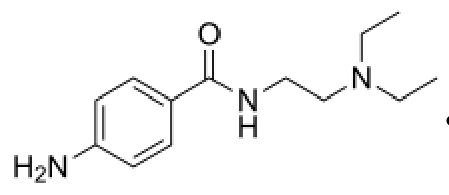
- HCl
14 CLINICAL TRIALS
The clinical trial data on which the original indication was authorized are not available.
15 MICROBIOLOGY
No microbiological information is required for this drug product.
16 NON-CLINICAL TOXICOLOGY
General Toxicology:
The acute toxicity of procainamide hydrochloride (LD50) in rodents is as follows:
| Species | Route of Administration | LD50 (mg/kg) |
|---|---|---|
| Mouse | Oral | 1110 |
| i.p. | 40 | |
| Rat | i.v. | 150 |
| i.v. | 95 |